You Can’t Take It with You, but You Can Send It on Ahead! Five Teachings on Wealth

This Sunday’s Gospel is not merely a warning against greed; it is a teaching on income and wealth given by Jesus to help us root out greed. The Gospel begins by presenting the problem of greed and then prescribes the proper perspective on wealth.

I. The Problem that is Portrayed The text begins, Someone in the crowd said to Jesus, “Teacher, tell my brother to share the inheritance with me.” He replied to him, “Friend, who appointed me as your judge and arbitrator?” Then he said to the crowd, “Take care to guard against all greed, for though one may be rich, one’s life does not consist of possessions.”

Notice that Jesus turns to the crowd (to avoid limiting his cautionary advice to just the one man) and warns without ambiguity that we all must guard against greed. Greed is the insatiable desire for more. It is to want possessions inordinately, beyond what is reasonable or necessary.

Greed is often downplayed today; accumulation and the ostentatious display of wealth are often celebrated. Massive houses, fancy cars, and the latest electronic gadgets are shamelessly flaunted.

Greed is at the root of a lot of evils and much suffering. Scripture says,

For we brought nothing into the world, and we cannot take anything out of the world; but if we have food and clothing, with these we shall be content. But those who desire to be rich fall into temptation, into a snare, into many senseless and hurtful desires that plunge men into ruin and destruction. For the love of money is the root of all evils; it is through this craving that some have wandered away from the faith and pierced their hearts with many pangs (1 Tim 6:7-10).

These are strong words indeed. Greed causes us discontent and ungratefulness, both of which are signs of unhappiness. It also leads us into temptations, into snares or traps that set loose harmful desires that seem to expand in ever increasing ways. This inordinate desire for more too easily leads us to personal destruction and to inflicting harm and injustice upon others.

On account of greed we almost never say, “I have enough; I will give away the rest or use it for the benefit of others.” Greed is also a reason that many people wander away from the faith; because wealth is generally tied to this world and its demands, and they feel they have “too much to lose,” they set aside faith in favor of the world; greed overrules God and the demands of the gospel.

II. The Perspective that is Prescribed The Lord does not simply condemn greed; He goes on to relate a parable that illustrates the proper perspective on wealth. Wealth is not evil in itself, but without the proper perspective it is easy to fall into greed. The parable contains five teachings on wealth to help us to keep it in proper perspective and to avoid greed.

1. The INITIATION of wealth The text says, There was a rich man whose land produced a bountiful harvest.

Notice that it is the land, not the man, that yields the increased harvest. Whatever we have has come from God. Scripture says,

          • But remember the LORD your God, for it is he who gives you the ability to produce wealth (Deuteronomy 8:18).
          • The earth is the Lord’s and the fullness thereof, the world and those who dwell therein (Psalm 24:1).
          • Every good and perfect gift is from above, and comes down from the Father of lights, with whom is no variableness, neither shadow of turning (James 1:17).
          • What do you have that you did not receive? And if you did receive it, why do you boast as though you did not? (1 Cor 4:7)

We must never forget that God is the true owner of all things; we are merely the stewards. There’s a 1980s Christian song with these appropriate lyrics: “God and God alone created all these things we call our own. From the mighty to the small the glory in them all is God’s and God’s alone.”

God provides the increase and is the initiator of every blessing, but He remains the owner. As stewards, we are expected to use what belongs to God in accord with what He, the true owner, wills. It is easy to forget this and thereby usher in many woes.

What is the will of God regarding our wealth? The Catechism of the Catholic Church speaks of God’s will in this matter as the “universal destination of goods.”

The goods of creation are destined for the whole human race. … “In his use of things man should regard the external goods he legitimately owns not merely as exclusive to himself but common to others also, in the sense that they can benefit others as well as himself.” The ownership of any property makes its holder a steward of Providence, with the task of making it fruitful and communicating its benefits to others, first of all his family (Catechism 2402, 2404).

If we remember that we are stewards of God’s gifts and that He ultimately intends all to be blessed, we can understand that greed is a form of theft, for it inordinately clings to what should be given to another out of justice. If I have two coats, one of them belongs to the poor.

Remembering that the initiation of wealth is God, we can help to avoid greed by using our wealth for the purposes He intends. It is not just for us; it is for all people.

2. The INCONVENIENCE of wealth The parable continues, He asked himself, ‘What shall I do, for I do not have space to store my harvest?”

The man is burdened by his wealth because he does not consider generosity an option. “What shall I do?” he asks anxiously. Great wealth does bring comfort, but it is also a source of inconvenience. Consider just a few things that usually go along with wealth: locks, alarms, storage facilities, insurance, worries, fears, maintenance, and repairs. We live in an affluent age, but one in which many are overly stressed. Consider also the loss of more important values as we concentrate on the accumulation of wealth. We have bigger houses but smaller families; our increasingly massive residences are really more houses than homes.

Scripture says,

          • The rest of a laborer is sweet, whether he eats little or much, but the abundance of a rich man permits him no sleep (Eccl 5:12).
          • Better is a little with the fear of the LORD than great treasure and trouble with it (Prov 15:16).
          • Better a dry crust with peace and quiet than a house full of feasting, with strife (Prov 17:1).
          • Whoever loves money never has money enough; whoever loves wealth is never satisfied with his income. This too is meaningless (Eccl 5:10).

Wealth certainly has its comforts, but it also brings with it many inconveniences that make our lives more stressful and complicated. Better to be free of excessive wealth in accordance with God’s will than to be burdened by it.

3. The ILLUSION of wealth- The parable goes on to say, And [the man] said, “This is what I shall do: I shall tear down my barns and build larger ones. There I shall store all my grain and other goods and I shall say to myself, ‘Now as for you, you have so many good things stored up for many years, rest, eat, drink, be merry.’”

Here we are taught that riches easily lead us to an illusion of self-sufficiency. We begin to rely more on our own self and our riches than on God.

Riches can buy us out of temporary troubles, but it cannot help with the central problem we face. No amount of money can postpone our appointment with death and judgment. Riches can get us a first-class cabin on the ship, but on the Titanic of this world those in first class are in no better shape than the people in steerage. In fact, because of the illusion it creates, wealth will more likely hinder us in our final passage, for it is only in trusting in God that we can make it to the other shore. Too much wealth and self-reliance can hinder our capacity to call on the Lord and trust Him. Yes, wealth tends to create an illusion that cripples us from reaching our goal. Scripture says,

          • But man, despite his riches, does not endure; he is like the beasts that perish. This is the fate of those who trust in themselves, and of their followers, who approve their sayings (Ps 49:12).
          • Command those who are rich in this present world not to be arrogant nor to put their hope in wealth, which is so uncertain, but to put their hope in God, who richly provides us with everything for our enjoyment (1 Tim 6:17).
          • Whoever trusts in his riches will fall (Prov 11:28).
          • For the sun rises with its scorching heat and withers the grass; its flower falls, and its beauty perishes. So will the rich man fade away in the midst of his pursuits (James 1:11).
          • Give me neither poverty nor riches, but give me only my daily bread. Otherwise, I may have too much and disown you and say, “Who is the LORD?” Or I may become poor and steal, and so dishonor the name of my God (Prov 30:8).

There’s a gospel song that says, “Well the way may not be easy, but you never said it would be, ’cause when my way gets a little too easy you know I tend to stray from thee.”

The illusion of riches is well illustrated in the modern age. Our wealth has tended to make us less religious, less dependent on God. Deep down we know that all the wealth in the world cannot ultimately save us, but we buy into the illusion anyway. Like the man in the parable, we think, “Now I’ve got it; now I’m all set.” This is an illusion, a set up. Coming to recognize that will help us to avoid greed.

4. The INSUFFICIENCY of wealth But God said to him, “You fool, this night your life will be demanded of you; and the things you have prepared, to whom will they belong?”

Here we see the illusion give way to the reality of insufficiency. Scripture says,

          • There are men who trust in their wealth and boast of the vastness of their riches. But no man can buy his own ransom, or pay a price to God for his life. The ransom of his soul is beyond him. He cannot buy life without end nor avoid coming to the grave. He knows that wise men and fools must perish and leave their wealth to others. Their graves are their homes for ever, their dwelling place from age to age though their names spread wide through the land. In his riches man lacks wisdom, he is like the beast that perish (Psalm 49:5).
          • For what will it profit a man, if he gains the whole world and forfeits his life? Or what shall a man give in return for his life? (Mat 16:26)

Money, wealth, power, popularity, and prestige can never get us what we need. We have sought so many saviors in this world, thinking they can somehow save us.

          • SCIENCE, can’t you save me? I can tell you how far it is from the Earth to the Sun. I can tell you how to fly in rocket ships into outer space, but I can’t tell you how to climb to Heaven. No, I can’t save you.
          • PHILOSOPHY, can’t you save me? I can tell you more and more about less and less until you know everything about very little. I can tell you about the thoughts and opinions of the greatest thinkers, but no, I can’t save you.
          • EDUCATION, can’t you save me? I can make you smart, but I can’t make you wise. No, I can’t save you.
          • CULTURE, can’t you save me? I can make the world a more beautiful and entertaining place from which to go to Hell, but no, I can’t save you.
          • ECONOMICS, can’t you save me? I can make you richer, but not rich enough to buy your salvation. No, I can’t save you.
          • POLITICS, can’t you save me? I can give you access to worldly power, but the world as we know it is passing away. No, I can’t save you.

At the end of the day, this world and all of its riches cannot save us; only God can.

5. The INSTRUCTION about wealth The parable concludes, Thus will it be for all who store up treasure for themselves but are not rich in what matters to God.

Again, wealth is not intrinsically evil. It is our greed that is sinful and gets us into trouble. Greed clings to wealth unreasonably and excessively. With greed, we “store up treasure for [ourselves] but are not rich in what matters to God.”

What matters to God? What matters is that we be rich in justice, mercy, love, holiness, and truth; that we be generous sharers of the bounty He bestows. The Lord instructs us to share what we have generously, above what we do not need. Consider the following teachings from Scripture:

          • I tell you, use worldly wealth to gain friends for yourselves, so that when it is gone, you will be welcomed into eternal dwellings (Luke 16:9).
          • Do not store up for yourselves treasures on earth, where moth and rust destroy, and where thieves break in and steal. But store up for yourselves treasures in heaven, where moth and rust do not destroy, and where thieves do not break in and steal (Mat 6:19).
          • Command those who are rich in this present world not to be arrogant nor to put their hope in wealth, which is so uncertain, but to put their hope in God, who richly provides us with everything for our enjoyment. Command them to do good, to be rich in good deeds, and to be generous and willing to share. In this way they will lay up treasure for themselves as a firm foundation for the coming age, so that they may take hold of the life that is truly life (1 Tim 6:17-19).

It is said that you can’t take it with you, but this is only partially true. The Lord suggests that we can send our wealth on ahead, that we can store it up in Heaven, that we can invest it in eternity. Do we put our gold in a balloon and float it up into the sky? No, we send it up, we send it on ahead, by bestowing it on the poor and the needy. This includes our family members, for charity begins at home, but it does not end there. Our generosity should extend beyond the family.

If we do this, the Lord teaches that the poor will welcome us to Heaven and speak on our behalf before the judgment seat. God says that when we bless the poor our treasure will be great, and it will be safe in Heaven. Further, our generosity and mercy will benefit us greatly on the day of judgment and help us to lay hold of the life that is truly life.

So, you can’t take it with you, but you can send it on ahead.

In a single parable we have five teachings on wealth meant to give us perspective so that we can avoid greed.

Trust God! Greed is rooted in fear, but generosity trusts that God will not be outdone. While our greatest rewards remain in Heaven, God sends “interest payments” to the generous even now. Scripture says,

      • One man gives freely yet grows all the richer; another withholds what he should give, and only suffers want. A generous man will be enriched, and one who waters will himself be watered (Prov 11:24).
      • Cast your bread upon the waters: after many days it will come back to you (Eccl 11:1).
      • Give, and it will be given to you; good measure, pressed down, shaken together, running over, will be put into your lap. For the measure you give will be the measure you get back (Luke 6:38).

Guard against greed by allowing these five teachings on wealth to give you the proper perspective.

Cross-posted at the Catholic Standard: You Can’t Take It with You, but You Can Send It on Ahead! Five Teachings on Wealth

What Not to Do, As Seen in a Commercial

I often post and comment on commercials that seem to hint at the gospel or some virtue, but today I focus on one that shows something wrong.

The commercial features a man who is a new father. Apparently, marriage and fatherhood have caused him to lose his “swagger.” The Merriam-Webster Dictionary defines swagger as follows:

to conduct oneself in an arrogant or superciliously pompous manner; especially: to walk with an air of overbearing self-confidence [*]

The word also brings to my mind the life of some young, single men: drinking, partying, and generally irresponsible, boastful behavior. This, is course, is not something to be desired.

While youthful vigor may have its place, life is supposed to move in stages. Once a man is married, and surely once he is a father, youthful swagger is hardly appropriate. It is time to leave the single life behind and accept the calling to be a good husband and father.

As a priest I often help younger couples in making this transition. They cannot and should not go on living as they did when they were single. Marriage is a new reality. Nothing helps you to grow up the way getting married and having children do!

This is a good thing, though. Swagger usually bespeaks frivolity, phoniness, and immaturity. Our modern culture holds up youth as an ideal and seems to want to extend adolescence interminably.

In the commercial, the “friend” who comes to rescue his buddy from the world of marriage and fatherhood and get him back his swagger is not a friend at all; he is more of a tempter. There’s nothing wrong with feeling young, but maturing and accepting responsibilities is a good thing, not something from which to be rescued.

Cross-posted at the Catholic Standard: What Not to Do, As Seen in a Commercial

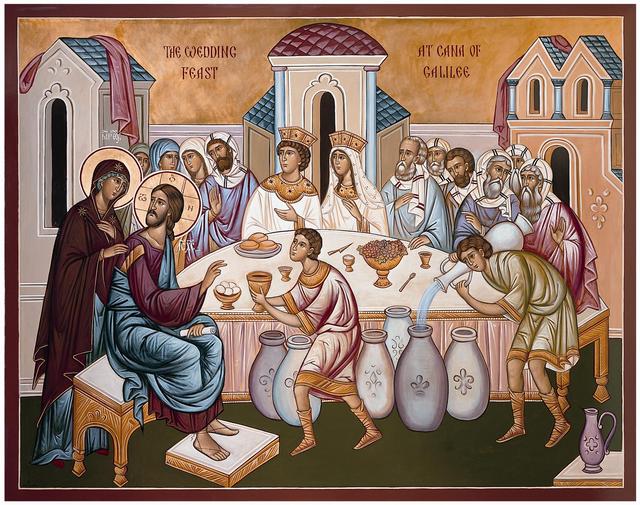
What Were Weddings Like in Jesus’ Day?

The word family had a wider meaning in both Aramaic and Hebrew than it does in English today. The Hebrew ah and the Aramaic aha could be used to refer to those who were brothers, half-brothers, cousins, and even other near relations. Extended family networks were both insisted upon and essential for survival. To have these ties and be dependent upon them was every Jewish person’s duty.

Marriage – Of course, marriage is the heart of family. The very first order that God gave Adam and Eve was that a man should leave his father and mother cling to his wife, that the two of them should become one flesh, and that they should be fruitful and multiply. Ancient rabbis said that a man really wasn’t a man until he did so. However, especially by the time of Christ, there were some men and women who lived celibate lives so as to be particularly free to serve God, whether by studying the Torah, teaching, or engaging in some great work for God’s people. Paul seems to have been in this category. Jesus praised those who did so in Matthew 19 as did Paul in 1 Corinthians 7.

In the earliest years of Israel there was some tolerance for polygamy even though it was a departure from what God had set forth. Many overlooked it given the urgent need to grow the family of God, the chosen people. Men were often killed in war, leading to an abundance of women who needed husbands. Generally, only wealthier men could afford to have more than one wife. Although the Bible does not explicitly condemn polygamists, it does show that polygamy led to intractable troubles, sometimes between the women but more often between the sons over inheritance rights. By the time of Jesus, polygamy among the Jews had greatly decreased if not altogether vanished; there is simply no mention of it in the New Testament. Jesus summoned each man to love his wife and prohibited other Mosaic leniencies in marriage. He re-proposed God’s original plan of one man and one woman until death.

The call to marriage and engagement – Marriage took place at a very young age for the ancient Jews. Most rabbis proposed age 18 as most appropriate for men, though often a bit younger especially when war was less common. Young women married almost as soon as they were physically ready, generally around age 13 or 14.

In most cases, marriages were arranged by the parents. There were exceptions, however, and arranged marriages were seldom forced on young people who had absolutely no interest in each other. Nevertheless, the view in the ancient world, and even in many places today, was that marriage was more about survival than romantic feelings. Further, it was not merely the individuals who married; the families came together in mutual support. Beauty and romance, while considered pleasant things, were known to be passing; life and survival had to be based on sturdier foundations.

Once a future bride had been chosen for a young man, there followed a one-year period of betrothal. During this time the couple still lived apart while delicate, often-protracted negotiations occurred between the families, especially regarding the dowry. The groom or his family paid the dowry to the father of the bride in recognition of the loss incurred by the bride’s family as a result of her departure as a working member of the household. It was also understood that some money should be set aside for the woman in the event that her husband died prematurely.

Marriage ceremonies – After the period of betrothal was finished and all the agreements had been reached, the wedding could take place. Weddings typically extended over a period of five to seven days. Autumn was the best time for marriage because the harvest was in, the vintage over, minds were free, and hearts were at rest. It was a season when the evenings were cool, and it was comfortable to sit up late at night. Usually the entire village gathered for a wedding.

At the beginning of the wedding celebration, in the evening, the bridegroom, accompanied by his friends, went to fetch his betrothed from her father’s house. He would wear particularly splendid clothing and sometimes even a crown. A procession was formed under the direction of one of the bridegroom’s friends, who acted as the master of ceremonies and remained by his side throughout the rejoicing.

The beautifully dressed bride was carried in a litter and in procession. Along the way people sang traditional wedding songs largely drawn from the Song of Songs in the Bible: Who is this coming up from the wilderness like a column of smoke, perfumed with myrrh and incense made from all the spices of the merchant? (Song of Songs 3:6) When the procession reached the bridegroom’s house, his parents bestowed a traditional blessing, drawn from Scripture and other sources. After the prayers, the evening was passed in games and dancing, and the bridegroom took part in the festivities. The bride, however, withdrew with her bridesmaids and friends to another room.

The next day was the wedding feast and once again there was general rejoicing and a sort of holiday in the village. Toward the end of the day there was a meal at which the men and women were served separately. This was the time for the giving of presents. The bride, dressed in white, was surrounded by her bridesmaids, usually ten of them. She sat under a canopy while traditional songs and blessings were sung and recited. During this time, in the evening, the groom arrived. While the exact ritual words are not known, there seems to have been a dialogue between bride and groom. This is recorded in the Song of Songs. The bride says, Let him kiss me with the kisses of his mouth—for your love is more delightful than wine. Pleasing is the fragrance of your perfumes; your name is like perfume poured out. No wonder the young women love you! Take me away with you—let us hurry! Let the king bring me into his chambers (Song 1:2-4). The groom responds, Arise, come, my darling; my beautiful one, come with me. My dove in the clefts of the rock, in the hiding places on the mountainside, show me your face, let me hear your voice; for your voice is sweet, and your face is lovely (Song 2:13-14).

Now that the couple was together, all the other men and women also came together. It would seem that synagogue or other religious leaders imparted blessings to the couple, who were together under the canopy. The words of these blessings and rituals are not definitively known and seem to have varied. After these came the evening feast.

Later that first evening the couple would vanish to consummate the marriage. They did not go on a “honeymoon” but rather remained for the rest of the celebration, which often went on for several more days, sharing in the songs, dancing, and general merriment.

Below is a recording of Palestrina’s composition of Surge, Propera Amica Mea (Arise My Love). There is a wonderful musical onomatopoeia in the opening word, “surge,” as the notes run up the scale. Enjoy!

Cross-posted at the Catholic Standard: What Were Weddings Like in Jesus’ Day?

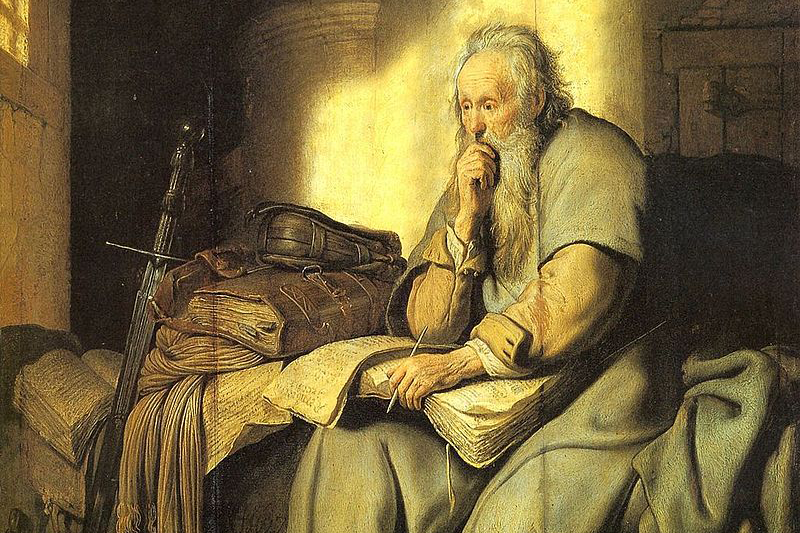
Was St. Paul a Poor Preacher?

For many years, the image I had of St. Paul was that of a bold evangelist who went from town to town teaching and preaching powerfully about Christ. I envisioned his audience mesmerized as he preached and took on his opponents.

I ultimately altered my view a bit based on scriptural descriptions, some of which we are currently reading in the Office of Readings. I have no doubt that he was a brilliant theologian. Paul was reputed to have been one of the greatest students of one of the greatest rabbis of the time, Gamaliel (Acts 22:3). I also do not question his zeal for Christ, and I can picture that fervor reflected on his face as he preached and taught. However, it would seem that Paul was not in fact recognized as a particularly gifted preacher. Consider the following texts from Scripture:

    • Now I myself, Paul, urge you through the gentleness and clemency of Christ, I who (you say) am humble when present in your midst, but bold toward you when absent … (2 Cor 10:1)

The key element to glean from this passage is that people regarded Paul as rather humble in person but in contrast quite bold and assertive in his letters. This does not paint the picture of a bold, fearsome preacher.

    • For someone will say, “His [Paul’s] letters are severe and forceful, but his bodily presence is weak and his speech contemptible” (2 Cor 10:10).

Here is even clearer evidence that some (though surely not all or even most) thought of Paul’s presence and preaching as weak and of no account. The Greek phrase λόγος ἐξουθενημένος (logos exouthenhmenos), translated here as “speech contemptible,” can also be translated as “words or speech of no account,” or “words or speech to be despised.” Of course, because Paul himself is reporting this, he may well be exaggerating the perception of his preaching out of a kind of humility. However, this is further evidence that Paul may not have been a highly gifted or bold preacher, at least from a worldly perspective.

    • For I think that I am not in any way inferior to these “superapostles.” Even if I am untrained in speaking, I am not so in knowledge; in every way we have made this plain to you in all things (2 Cor 11:5-6).

The identity of the “superapostles” is debated, but there is wide agreement that it does not refer to the twelve apostles chosen by Christ. Rather, Paul is likely alluding to itinerant preachers of the time, most of  whom were well known for their oratorical skills. Some of them may have been Judaizers who opposed Paul, but it would seem that they could draw a crowd. Perhaps they are somewhat like the revivalists of today. Paul seems to acknowledge that he is not a great speaker but refuses to concede that he is inferior to anyone in knowledge of the faith.

    • For Christ did not send me to baptize but to preach the gospel, and not with the cleverness of human eloquence, so that the cross of Christ might not be emptied of its meaning (1 Cor 1:17).

Paul claims no “clever” oratorical skill; rather, he underscores his lack of eloquence to emphasize that the power is in the cross of Christ.

    • On the first day of the week we came together to break bread. Paul spoke to the people and, because he intended to leave the next day, kept on talking until midnight. … Seated in a window was a young man named Eutychus, who was sinking into a deep sleep as Paul talked on and on. When he was sound asleep, he fell to the ground from the third story and was picked up dead. Paul went down, threw himself on the young man and put his arms around him. “Don’t be alarmed,” he said. “He’s alive.” Then he went upstairs again and broke bread (Acts 20:7-11).

Luke describes Paul as talking “on and on.” The sermon seems to have put the young Eutychus right to sleep, and results in his falling three flights to his death. Paul runs down and raises him from the dead. (All in a night’s work, I guess!) Paul then goes back upstairs to complete the Mass. It is a humorous and touching anecdote in many ways, but it is also a story that illustrates the somewhat soporific effect of Paul’s preaching.

So, it would seem that Paul did not possess great oratorical. This is somewhat surprising given his astonishing missionary accomplishments, but we must avoid superficiality in understanding the power of God’s Word. The power is in God; the battle is His. We may prefer to listen to skilled speakers, but God can write straight with crooked lines and make a way out of no way. If God could speak through Balaam’s donkey (see Num 22:21), He can speak through us, too.

Avoiding Superficiality – As a priest, I work hard to develop my preaching skills because I think the people of God deserve this. In the end, though, none of us should ignore the fact that God can speak in and through the humblest of people and in the most unlikely circumstances. Paul may not have had the rhetorical skills we think he should have had, but he was blessed with many other gifts. He was a brilliant theologian, had amazing zeal and energy, and was committed enough to walk thousands of miles and endure horrible sufferings so that he could proclaim Christ crucified and risen. Paul was also a natural leader and one of the most fruitful evangelizers the Church has ever known. We tend to prize oratorical skill and force of personality, but there is obviously more to evangelizing effectively than eloquence and charisma.

Our culture—particularly since the advent of television, radio, and the Internet—has come to focus primarily on personal magnetism and the ability to “turn a phrase.” The ability to communicate well is surely a great gift, but there are many others as well. In valuing certain gifts over others, we risk injustice and superficiality. The Church needs all our gifts.

What gifts do you have? God can use them!

https://youtu.be/TWZKprMCFp4?t=7959

Cross-posted at the Catholic Standard: Was St. Paul a Poor Preacher?

Investment Advice from St. Basil the Great

In the Breviary this week, we read a reflection from St. Basil the Great that amounts to an “investment strategy,” not just for the near future but for eternity. Challenging though his thoughts are, they are also sensible and consoling.

St. Basil’s words are shown below in bold, black italics, while my comments appear in red. I have changed the order of his remarks somewhat from the original; the complete text of St. Basil’s commentary, in its original order, can be found here: On Generosity.

St. Basil begins with a challenge, rooted in a blessing:

Man should be like the earth and bear fruit; he should not let inanimate matter appear to surpass him. The earth bears crops for your benefit, not for its own, but when you give to the poor, you are bearing fruit which you will gather in for yourself, since the reward for good deeds goes to those who perform them (Hom. De caritate, 3, 6: pp. 31, 266-267, 275).

Here is St. Basil’s “humbling” challenge: Do not let dirt/soil (humus) be more virtuous and beneficial than you are! In a way it is a play on the Lord’s image that if we, who are called to be salt of the earth, become flat, we are good for nothing except to be thrown out and trampled underfoot (see Matt 5:13).

In a magnificent description of grace and mercy, St. Basil reminds us that God in His mercy allows His grace to become our merit. That is to say, God, who will never be outdone in generosity, will not let our deeds of mercy go unrewarded, even though they are the result of His grace rather than our unaided flesh. God will not forget the mercy we have shown, and if we stay in the grace of friendship with Him as a member of Christ’s Body, we will not lose our reward. Scripture says,

        • Give and it shall be given unto you (Luke 6:38).
        • Blessed are the merciful for they shall obtain mercy (Matt 5:7).
        • Whoever is kind to the poor lends to the LORD, and he will reward them for what they have done (Prov 19:17).
        • A generous person will prosper; whoever refreshes others will be refreshed. (Prov 11:25).

Those who remain faithful will be rewarded for their generosity to the poor. Do not be afraid to be generous, for God will not be outdone in generosity. He will reward; He will repay!

Give to a hungry man, and what you give becomes yours, and indeed it returns to you with interest. As the sower profits from wheat that falls onto the ground, so will you profit greatly in the world to come from the bread that you place before a hungry man. In the presence of the universal judge, all the people will surround you, acclaim you as a public benefactor, and tell of your generosity and kindness.

St. Basil invokes the “investment strategy” given by the Lord Himself and echoed by St. Paul:

        • Do not store up for yourselves treasures on earth, where moth and rust destroy, and where thieves break in and steal. But store up for yourselves treasures in heaven, where moth and rust do not destroy, and where thieves do not break in and steal (Mat 6:19).
        • I tell you, use worldly wealth to gain friends for yourselves, so that when it is gone, you will be welcomed into eternal dwellings (Luke 16:9).
        • Command [the wealthy] to do good, to be rich in good deeds, and to be generous and willing to share. In this way they will lay up treasure for themselves as a firm foundation for the coming age, so that they may take hold of the life that is truly life (1 Timothy 6:18-19).

The investment strategy works like this: We do not store up treasure in Heaven by putting it in some sort of balloon or rocket and sending it up, but by placing it in the hands of the needy and poor. What we give generously does not just go away; it goes up and is “stored” in Heaven for us, where it earns heavenly interest. Scripture says, Cast your bread upon the waters: after many days it will come back to you (Ecclesiastes 11:1).

Not only is it “stored up” in Heaven, but it also acts as an assurance on the day of judgment. Jesus says that we ought to make friends through the generous use of our wealth.

Who are these friends? The poor and the needy! They are our “investment brokers” for the day of judgment and the world to come. The Lord says that when our wealth ultimately fails us (and it will fail us at death), they (the poor) will welcome us to eternal dwellings.

Imagine that as you go before the judgment seat, multitudes of poor cry out, “Have mercy on this one, Lord, for he was merciful to us.” Yes, the Lord says that they (the poor) will welcome you to eternal dwellings, and St. Paul affirms that the wealthy who bless the poor will lay up a firm foundation for the coming age.

To be sure, generosity to the poor will not be the only thing upon which we are judged, but it certainly will help on that day when we stand before the Lord. Frankly, most of us are going to need all the help we can get!

You are going to leave your money behind you here whether you wish to or not. On the other hand, you will take with you to the Lord the honor that you have won through good works.

Here, St. Basil echoes Scripture, which says, Henceforth, blessed are those who die in the Lord. Let them rest from their labors, for their good deeds go with them. Even so, saith the Spirit (Rev 14:13).

Do you not see how people throw away their wealth on theatrical performances, boxing contests, mimes, and fights between men and wild beasts, which are sickening to see, and all for the sake of fleeting honor and popular applause? If you are miserly with your money, how can you expect any similar honor?

Pay attention here. We do well to consider whether we throw a lot of money away on passing, foolish, or empty things. What are our versions of theatrical performances, boxing contests, and mimes?

The Lord is not saying that we should never go see a movie or watch a sports event, but if we are willing to spend a lot of money on such things, why not on things that are more important and from which we will profit eternally? We all have questions we should ask ourselves: Is everything I spend my money on necessary? Does my extravagance harm the poor and needy? Do I use my money wisely from an eternal perspective?

Your reward for the right use of the things in this world will be everlasting glory, a crown of righteousness, and the kingdom of heaven; God will welcome you, the angels will praise you, all men who have existed since the world began will call you blessed. Do you care nothing for these things, and spurn the hopes that lie in the future for the sake of your present enjoyment?

What is more important to us: comfort here in this world or glory in Heaven?

Come, distribute your wealth freely, give generously to those who are in need. Earn for yourself the psalmist’s praise: He gave freely to the poor; his righteousness will endure forever.

How grateful you should be to your own benefactor; how you should beam with joy at the honor of having other people come to your door, instead of being obliged to go to theirs! But you are now ill-humored and unapproachable; you avoid meeting people in case you might be forced to loosen your purse-strings even a little. You can say only one thing: “I have nothing to give you. I am only a poor man.” A poor man you certainly are, and destitute of all real riches; you are poor in love, generosity, faith in God, and hope for eternal happiness.

Don’t be poor in things eternal, in what matters to God.

This song sums it up: “You may have all this world …. Give me Jesus.”

Cross-posted at the Catholic Standard: Investment Advice from St. Basil the Great

The Wheat and the Tares

In daily Mass we have been pondering the Parable of the Wheat and the Tares, from the Gospel of Matthew. In these difficult times for the Church, when there is a legitimate cry for reform, we do well to ponder its cautionary lesson. Beyond the sexual abuse scandal there are also deep concerns regarding the uncertain trumpet of Catholic preaching and leadership, the overall lack of self-discipline among Catholics, and the failure of bishops and clergy to discipline those Catholics (lay and clergy) who cause scandal. The list of concerns is long, and in general I have been sympathetic to the need for reform and greater zeal in the Church.

However, the Parable of the Wheat and the Tares cautions against overzealousness in the attempt to root out sin and sinners from the Church. The Lord’s warning to the farmhands who wanted to tear out the weeds was that they might harm the wheat as well. He wants them to wait until the harvest. In many cases there will come a day of reckoning, but it is not now.

This does not mean that we are never to take notice of sin or to rebuke a sinner. There is certainly the need for discipline in the Church; other texts (e.g., Mat 18:15-17; 1 Cor 5) call for it as well. However, this parable is meant to warn against a scouring that is too thorough, a puritanical clean sweep that overrules God’s patience and seeks to change the Church from a hospital for sinners into a germ-free (and hence people-free) zone.

We are going to need to depend on God’s patience and mercy if any of us are to stand a chance. People who summon the wrath of God upon (other) sinners may end up destroying themselves as well. We all have a journey to make from being an “ain’t” to being a saint.

This parable summons us to find the proper balance between reform and patience. The guidance consists of four steps.

I. Wake up. Jesus proposed another parable to the crowds, saying, “The kingdom of heaven may be likened to a man who sowed good seed in his field. While everyone was asleep his enemy came and sowed weeds all through the wheat, and then went off.”

Notice that everyone was sleeping when the enemy sowed weeds. It is a great mystery as to why God allowed Satan to do this in the first place, but there is far less mystery as to why Satan has been so successful in our times. The weeds are numerous and are vigorously growing. Part of the reason for this is that we in the Church have been sleeping while Satan has been steadily sowing his weeds among us.

Don’t just blame the Church leadership (although we certainly deserve plenty of the blame). Many throughout the Church have been in a deep moral slumber. Too many Catholics will watch anything, listen to anything, and expose themselves to anything. We just “go with the flow,” living unreflective, sleepy lives. We also allow our children to be exposed to almost anything. Too many parents don’t know enough about what their children’s lives: what they are watching, what they listening to, where they are surfing on the Internet, and who their friends are. We rarely think of God or His plan for our lives. On the whole, our priorities are more worldly than spiritual. We are not awake and wary of sin and its incursions; we are not outraged. We take little action other than to shrug our shoulders. We seem to be more concerned with fitting in than in living as a sign of contradiction to the ways of the world.

Church leadership has been too inwardly focused. Too many in the clergy have failed to warn of the wolf who wanders about looking to savage us. Clear teaching on moral issues has been sorely lacking in many ways and at many levels in the Church.

It’s time to wake up and go out. There is work to be done in reclaiming the culture for Christ and in re-proposing the gospel to a world that has lost it.

II. Wise up. When the crop grew and bore fruit, the weeds appeared as well. The slaves of the householder came to him and said, “Master, did you not sow good seed in your field? Where have the weeds come from?” He answered, “An enemy has done this.”

We must regain sobriety, part of which is understanding that we have an enemy who hates us: Satan. He is responsible for much of the spiritual, moral, and even physical ruin we see around us. We have been dismissive of his presence for far too long, as though he were a merely the villain in a fairy tale. While we cannot blame everything on him—for we connive with him and also suffer from weakness of the flesh and susceptibility to the bad influence of the world—Satan is real. He is our enemy; he hates us, our children, and the Church. He hates anything and anyone holy or even on the path to holiness.

III. Wait up. His slaves said to him, “Do you want us to go and pull them up?” He replied, “No, if you pull up the weeds you might uproot the wheat along with them. Let them grow together until harvest.”

We have already laid the groundwork for the Lord’s rebuke to these overly zealous reformers. Today in the Church we are well aware of the need for reform; so is the Lord. He says, clearly, an enemy has done this. Yet to those who want to go through the Church rooting out every sinner and ne’er-do-well, the Lord presents a balancing notion.

The Lord directs us to be prepared, in some cases to wait, and to not be overly anxious to pull out weeds lest we harm the wheat. Remarkably, the Lord says, let them grow together. Notice that now is the time to grow; the harvest comes later. In certain (rare) instances the harm may be so egregious that the Church must act to remove the sinner or to discipline him or her more severely, but there is also a place for waiting and allowing the wheat and the weeds to grow together. After all, sinners may repent; the Lord wants to give people the time they need to do that. Scripture says, God’s patience is directed to our salvation (2 Peter 3:9).

So, while there is sometimes a need for strong discipline in the Church, there is also this directive to balance it with patience. Wait. Place it in the hands of God. Give the sinner time to repent. Keep working and praying and teaching against all error, but do not act precipitously.

IV. Wash up. Then at harvest time I will say to the harvesters, “First collect the weeds and tie them in bundles for burning; but gather the wheat into my barn.”

There is a harvest. Those who have sinned (or led others to sin) and have not repented are going to have to answer to the Lord for it.

The Lord is no pushover; He does not make light of sin. In telling us to wait He does not mean to say that judgment will never come, but His general advice is to leave it to Him. To us He says, in effect, “As for you, wash up, get ready, and help others to get ready as well. Judgment day is surely coming, and every knee will bend to me. Everyone will have to render an account.”

That’s it. Wash up. Get ready! For now, the wheat and tares grow together, but later the weeds will be gathered and cast into the fire.

Here is the balance: God is patient, but there is ultimately a harvest. By God’s grace we must get ready for it. To the overly zealous God says, “Wait,” but to the complacent He says, “Wake up, wise up, and wash up.”

Cross-posted at the Catholic Standard: The Wheat and the Tares

Towering Pride: What the Story of the Tower of Babel Can Teach Us

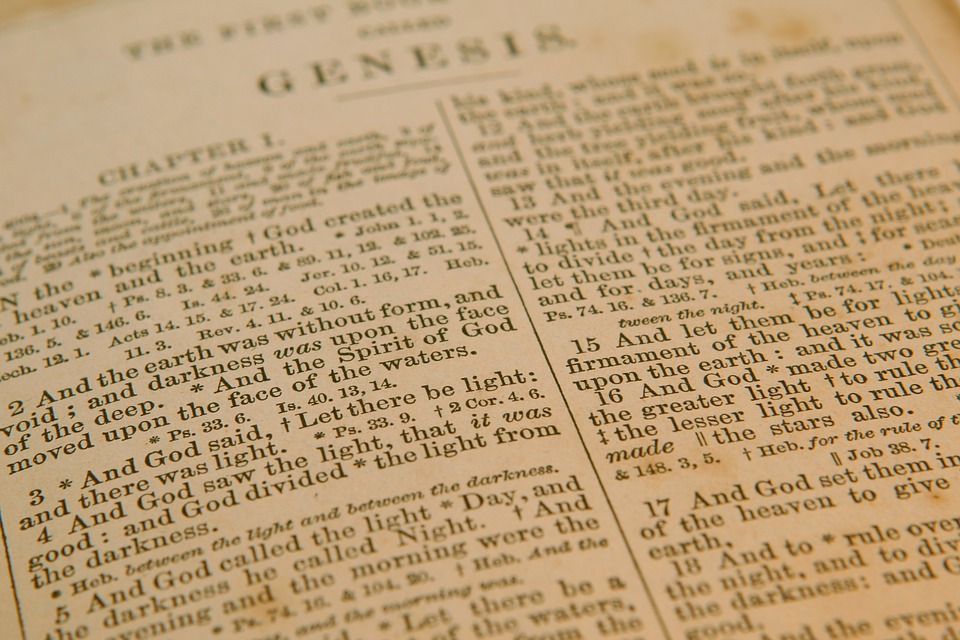
The story of the Tower of Babel (Genesis 11:1-9) is a memorable one. In Genesis 10, we read the genealogy of Noah’s sons and their dispersion across many different lands with many different languages. The beginning of Chapter 11 describes the scattering of Noah’s descendants and the multiplication of languages in story form:

Now the whole earth had one language and few words. And as men migrated from the east, they found a plain in the land of Shinar and settled there. And they said to one another, “Come, let us make bricks, and burn them thoroughly.” And they had brick for stone, and bitumen for mortar. Then they said, “Come, let us build ourselves a city, and a tower with its top in the heavens, and let us make a name for ourselves, lest we be scattered abroad upon the face of the whole earth.” And the LORD came down to see the city and the tower, which the sons of men had built. And the LORD said, “If now, while they are one people, all speaking the same language, they have started to do this, nothing will later stop them from doing whatever they presume to do. Come, let us go down, and there confuse their language, that they may not understand one another’s speech.” So the LORD scattered them abroad from there over the face of all the earth, and they left off building the city. Therefore, its name was called Babel, because there the LORD confused the language of all the earth; and from there the LORD scattered them abroad over the face of all the earth (Gen 11:1-9).

One language? The text states that the human family originally spoke a single language. Other (i.e., non-biblical) ancient texts seem to confirm this. For example, there is a Sumerian tablet that tells the story of a time when all languages were one on the earth (see Samuel Noah Kramer, “The Babel of Tongues: A Sumerian Version,” Journal of the American Oriental Society 88, 108-111).

They build a tower with its top in the heavens. Such towers, called ziggurats, were common in ancient Mesopotamia; they resembled tall, stepped pyramids. The remains of some of them can still be seen today.

What was the problem? The tower itself wasn’t the problem. The sin was in thinking they could build a tower that could reach to God in Heaven. (St. Augustine sees pride in that they thought they could avoid a future flood (as if anything could be too high for God!) (Tractates on John 6.10.2).) The later verse calling this place Babel is significant. Babel is a Hebrew word meaning “gate of God,” or by extension, “gate of (to) heaven.” What they really think they can do is to ascend to Heaven, and God, by their own strength. Bad idea! Remember, Adam and Eve had been barred from paradise because they could no longer endure the presence of God. Never think that you can walk into God’s presence by your own unaided power. Only grace can do this. We cannot achieve Heaven by our power. We do not have a ladder tall enough or a rocket ship powerful enough.

To make matters worse, they say, let us make a name for ourselves. Not only are they seeking to enter Heaven by their own power, but also to make a name for themselves. Now that’s pride with a capital P, and that rhymes with T, and that stands for trouble. Yes (to quote the Music Man), we’ve got trouble right here in River City (Mesopotamia is the land between the rivers).

A further insight into the pride involved in trying to make a name for oneself comes from the concept of naming. Recall that Adam named all the animals (Genesis 2), but God named man (Gen 5:1). To name something is to have superiority over it and to know something of its essence. Parents name their children. In the ancient world naming was very significant. Today this is less so. Ultimately, it is God who names us. In so doing, it is He who declares our essence. It is pride, in this ancient sense, for man to try to “make a name” for himself. Only God can really name us and assign us any lasting glory.

Why did they do it? According to the text, the purpose for this prideful act is that is must be done lest we be scattered abroad upon the face of the whole earth. Hence, they want to build the tower to make a name for themselves and to preserve unity among themselves.

Wait, isn’t this good? Yes, but although unity is precious, it is not a work of Man; it must be based on God and His truth. Without God, unity can become a source of despotic power. Consider atheistic communism and secular socialism. Concentrated, centralized power can be a serious problem if God is not its center and source. If God is not the source of our unity, you can be sure that despotism is on the way.

Comical! The text goes on to say, And the LORD came down to see the city and the tower, which the sons of men had built. This great tower, so high as to reach to the heavens, was really so puny that God had to come down to see it.

What is God worried about? The text describes God’s concern for the growing pride of the human race: If now … they have started to do this, nothing will later stop them from doing whatever they presume to do.

God almost seems worried that Man will become too powerful, but what he is really saying is that if He does not intervene, there will be no limit to our pride or the depths of our depravity. God intervenes and puts limits on us lest our wickedness grow uncontrolled. He does two specific things: He confuses their speech, and He scatters them abroad. We prideful moderns, who seem to know few limits to our depravity (or even celebrate it), ought to heed this story. God may well have to fell our towers.

Conclusion – Our greatest enemy is pride. In terms of our salvation, the greatest virtue is humility. Unity is indeed a good to be sought, but if it fuels our pride, we’ll all just end up all going to Hell together! In this case God saw fit to humble us by scattering us and confusing our language. Unity in wickedness is best scattered. Only unity for good is praiseworthy. Of this St. Jerome says,

Just as when holy men live together, it is a great grace and blessing; so likewise, that congregation is the worst kind when sinners dwell together. The more sinners there are at one time, the worse they are! Indeed, when the tower was being built up against God, those who were building it were disbanded for their own welfare. The conspiracy was evil. The dispersion was of true benefit even to those who were dispersed (Homilies 21).

Bringing it close to home. To those who like to build and to make a name for themselves, St. John Chrysostom has this to say:

There are many people even today who in imitation of [the builders at Babel] want to be remembered for such achievements, by building splendid homes, baths, porches, and drives. I mean, if you were to ask each one of them why they toil and labor and lay out such great expense to no good purpose, you would hear nothing but these very words [Let us make a name for ourselves]. They would be seeking to ensure that their memory survives in perpetuity and to have it said, “this house belonged to so-and-so,” “This is the property of so-and-so.” This, on the contrary, is worthy not of commemoration but of condemnation. For hard upon those words come other remarks equivalent to countless accusations—“belonging to so-and-so, the grasping miser and despoiler of widows and orphans.” [Such behavior will] incite the tongues of onlookers to calumny and condemnation of the person who amassed these goods. But if you are anxious to for undying reputation, I will show you the way to succeed in being remembered … along with an excellent name … in the age to come … If you give away these goods of yours into the hands of the poor, letting go of precious stones, magnificent homes, properties and baths (Homilies on Genesis 30.7).

What are you and I building? Be careful! Babel might not be a long, long time ago in a galaxy far, far away, after all.

Cross-posted at the Catholic Standard: Towering Pride: What the Story of the Tower of Babel Can Teach Us

Three Teachings from the Lord on Prayer

Last week’s Gospel featured the Lord insisting that prayer was “the one thing necessary.” This week, we see the disciples’ request that the Lord teach them on prayer. In answer, the Lord gives three basic teachings or prescriptions for prayer.

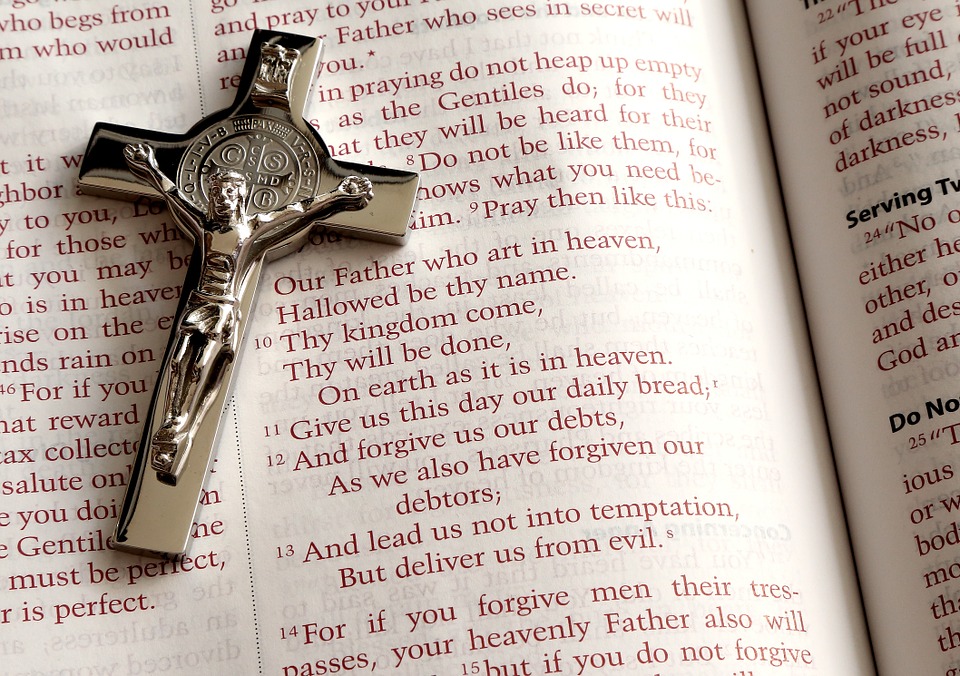
I. Pattern of Prayer The Gospel opens in this way: Jesus was praying in a certain place, and when he had finished, one of his disciples said to him, “Lord, teach us to pray just as John taught his disciples.” He said to them, “When you pray, say: Father, hallowed be your name, your kingdom come. Give us each day our daily bread and forgive us our sins for we ourselves forgive everyone in debt to us, and do not subject us to the final test.”

We must be careful to understand that in giving us the “Our Father,” the Lord Jesus is not simply providing us with words to say. He is giving us a pattern for prayer; He is “teaching us to pray.” The disciples did not ask to be given words to say but to be taught how to pray.

Thus, while the words of the Our Father are precious, it is also important to look at the underlying structure implicit in the prayer so as to learn “how to pray.” Through these words, Jesus is illustrating what should be going on in our mind and heart as we pray.

There are five basic disciplines taught in the Our Father, and they form a kind of pattern or structure for prayer. I use here the Matthean version of the prayer only because it is more familiar to most people, but all the basic elements are the same.

1. RELATE Our Father who art in Heaven – Here begins true spirituality. Relate to the Father! Relate to Him with familial intimacy, affection, reverence, and love. We are not merely praying to “the deity” or “the Godhead.” We are praying to our Father, who loves us and provides for us, and who sent His only Son to die for us and save us. When Jesus lives His life in us and His Spirit dwells in us, we begin to experience God as our Abba, our Father.

As developed in other New Testament texts, the deeper Christian word Abba underlies the prayer. Abba is the familiar form of the more formal “Father.” When my own father was alive, I called him “Dad” not “Father.” The word Abba indicates family ties, intimacy, close bonds. Why Abba is not used in the Our Father is uncertain. St. Paul develops the theme: For you did not receive the spirit of slavery to fall back into fear, but you have received the spirit of sonship. When we cry, “Abba! Father!” (Rom 8:15) And because you are sons, God has sent the Spirit of his Son into our hearts, crying, “Abba! Father!” (Gal 4:6)

Ask God for the gift to experience Him as Abba. At the heart of our worship and prayer is a deep and personal experience of God’s love and fatherly care for us. The first discipline or practice of the spiritual life is to relate to God as to a father who loves us, and to experience Him as Abba.

2. REJOICE hallowed by thy name Praise of God is an essential discipline and element of our spiritual life. He is the giver of every good and perfect gift and to Him our praise is due. Praise and thanksgiving make us people of hope and joy. It is for this that we were made. God created us, so that we … might live for his praise and glory (Eph 1:12).

Our prayer life should feature much joyful praise. Take a psalm of praise and pray it joyfully. Take the Gloria of the Mass and pray it with gusto! Rejoice in God; praise His name. Give glory to Him who rides above the clouds.

There may be times when we do not feel like praising God. Praise Him anyway! Scripture says, I will bless the LORD at all times; his praise shall continually be in my mouth (Psalm 34:1). Praise is to be a regular discipline of prayer, rooted even more in the will than in feelings. God is worthy our praise.

Ultimately, praise is a refreshing way to pray because we were made to praise God, and when we do what we were made to do, we experience a kind of satisfaction and a sense of fulfillment.

3. RECEIVE thy kingdom come, thy will be done on earth as it is in heaven – At the heart of this petition is an openness to God’s will, His instruction, and His plan for us and this world. When Jesus lives in us, we hunger for God’s Word; we strive to know His will and make it operative in our life.

A basic component and discipline of prayer and the spiritual life is receiving the Word and instruction of God so that His will is manifest to us and we can obey. We ought to pray the Scriptures (lectio divina) and study the faith through the Catechism or other means. These are ways that we become open to God’s will, that His Kingdom might be manifest in our lives.

4. REQUEST Give us today our daily bread – Intercessory prayer is at the heart of the Christian life. Allow “bread” to be a symbol of all our needs. Our greatest need, of course, is to be fed by God, and thus bread also points to the faithful reception of the Eucharist.

Through intercessory prayer, we ask for God’s help in every need. Take every opportunity to pray for others. When watching or reading the news, pray. Pray for victims of crime, natural disaster, or war. Pray for the unemployed, the homeless, the afflicted. Pray for those locked in sin, bad behavior, corruption, confusion, misplaced priorities. Many are away from the sacraments and no longer seek their Eucharistic bread, who is Christ. Pray, pray, pray.

There are also good things we hear and read about, and we should be grateful, asking that solutions be lasting. Intercessory prayer flows from our love for and solidarity with others. We see the world with the compassion of Christ and pray, for others as well as ourselves.

5. REPENT and forgive us our trespasses, as we forgive those who trespass against us, and lead us not into temptation but deliver us from evil – Sin is understood on two levels here: (1) sin (lowercase) refers to our personal sins (referred to here as “trespasses”), and (2) Sin (upper case) refers to the whole climate of sin, the structures of sin (referred to here as “evil”) that reinforce and underlie our own personal sins.

An essential element of our spiritual life is recognizing our sins and the deep drives of sin in our life so that we can beg for mercy as well as for deliverance from them.

We live in a sin-soaked world, a world in which the powers and principalities of evil have great influence. We must recognize this and pray that this power will be curbed.

We must also pray for the grace to show mercy to others, for it often happens that sin escalates through resentment and the desire for retribution rooted in an unforgiving attitude. We must pray to be delivered from these in order to break the cycle of violence and revenge that keeps sin multiplying.

We must pray for the Lord’s grace and mercy to end evil in our own life and in the whole world.

This, then, is a structure for our prayer life and our spiritual life, contained in the Our Father. Jesus teaches us to pray and gives us a basic pattern. Some may use it as an actual structure for daily prayer. For example, if praying for twenty-five minutes, one might spend about five minutes on each aspect. Others may use it as an overall pattern for their spiritual life in general, trying to reflect these aspects and disciplines well.

II. The Persistence of Prayer Jesus goes on to say, Suppose one of you has a friend to whom he goes at midnight and says, “Friend, lend me three loaves of bread, for a friend of mine has arrived at my house from a journey and I have nothing to offer him,” and he says in reply from within, “Do not bother me; the door has already been locked and my children and I are already in bed. I cannot get up to give you anything.” I tell you, if he does not get up to give the visitor the loaves because of their friendship, he will get up to give him whatever he needs because of his persistence. And I tell you, ask and you will receive; seek and you will find; knock and the door will be opened to you. For everyone who asks, receives; and the one who seeks, finds; and to the one who knocks, the door will be opened.

The teaching that we persist in prayer is something of a mystery. God is not deaf, or forgetful or stubborn, yet He teaches in many places that we are to persevere, even to the point of pestering, in our prayer.

Some may wonder why our prayers are not always effective. Here are some of the usual explanations from Scripture:

    • Our faith is not strong enough. Jesus said, “If you believe, you will receive whatever you ask for in prayer” (Matthew 21:22). The Book of James says, But when he asks, he must believe and not doubt, because he who doubts is like a wave of the sea, blown and tossed by the wind. That man should not think he will receive anything from the Lord (James 1:6-7). There is also the sad case of Nazareth, where the Lord could work few miracles so much did their lack of faith disturb him (Matt 13:58).
    • We ask for improper things or we ask with wrong motives. The Book of James says, When you ask, you do not receive, because you ask with wrong motives, that you may spend what you get on your pleasures (James 4:3).
    • Unrepented sin sets up a barrier between us and God so that our prayer is blocked. Surely the arm of the Lord is not too short to save, nor His ear too dull to hear. But your iniquities (sins) have separated you from God; your sins have hidden his face from you so that He will not hear (Isaiah 59:1-2).
    • We have not been generous with the requests and needs of others. If a man shuts his ears to the cry of the poor, he too will cry out and not be answered (Proverbs 21:13).
    • God cannot trust us with blessings because we are not conformed to His word or have proved untrustworthy with lesser things. If you remain in me and my word remains in you, ask whatever you wish, and it will be given to you (John 15:7). So if you have not been trustworthy in handling worldly wealth, who will trust you with true riches? And if you have not been trustworthy with someone else’s property, who will give you property of your own? (Lk 16:11-12)

There is nothing wrong with any of these explanations, but even if not a single one of them applies to us, God often delays anyway.

There’s an old joke that goes something like this:

One day a man prayed to God and asked, “How long is a million years to you?” The Lord replied, “About a minute.” The man then asked, “How much is a million dollars to you?” God answered, “About a penny.” Seeing an opportunity, the man then asked, “Well, then, may I have a penny?” And God said, “In a minute.”

God’s “delay” and our need to persist and persevere in prayer are mysterious aspects of God’s providence, but they are taught; there is no doubt about that.

Pray, Pray, Pray! Persistence is taught to us all, not just to the sinful and the weak in faith. Realize that this is part of what is required of the Christian. Prayer is about more than “calling and hauling” or “naming and claiming.” It is also about persevering, persisting. St. Monica prayed for thirty years, it would seem, for her son Augustine to accept the Faith. Some of us have prayed even longer for loved ones. In the end, God seems to require persistence for some things, and we dare not give up or become discouraged. We just have to keep praying.

III. The Point of Prayer Jesus then concludes, What father among you would hand his son a snake when he asks for a fish? Or hand him a scorpion when he asks for an egg? If you then, who are wicked, know how to give good gifts to your children, how much more will the Father in heaven give the Holy Spirit to those who ask him?

The rhythm of the Lord’s analogy seems a bit odd here. If an earthly father knows how to “give good gifts” to his son, then we would expect Jesus to say that the Heavenly Father also knows how to give “good gifts” to those who ask. But Jesus does not say this. Rather, He says that the Father gives “the Holy Spirit.”

Why is this? Because it is the highest gift and contains all others. To receive the Holy Spirit is to receive the love of God, the glory of God, the life of God, and the wisdom of God. It is to receive God Himself, who comes to live in us as in a temple. And with this gift comes every other gift and consolation, for by the Holy Spirit we begin to think and see more as God does. We attain to His priorities and desire what He desires. We see sins and worldly attachments begin to go away; the world loses its hold on us and can no longer vex us.

Jesus says elsewhere, Seek first his kingdom and his righteousness, and all these things will be given to you as well (Matt 6:33). Yes, to receive the gift of God the Holy Spirit is to receive all other things as well, for nothing more can disturb us. One day, St. Thomas Aquinas sensed that the Lord was asking him what he would like. St. Thomas replied, Nil nisi te, Domine (Nothing except you, O Lord). For those who love God and have progressed in prayer, that really is all that is wanted. God can give cars, jobs, and financial blessings—and for some people such things are needed—but why not aim for the highest and best gift as well? Ask for the Gift of the Holy Spirit: Nil nisi te Domine!

Ultimately, the point of all prayer is deep communion with the Lord. This is our high calling: to be in communion with the Lord here in this world and one day fully in the glory of Heaven. Don’t miss the ultimate point of prayer.

Sweet hour of prayer! sweet hour of prayer!
Thy wings shall my petition bear
To Him whose truth and faithfulness
Engage the waiting soul to bless.
And since He bids me seek His face,
Believe His Word and trust His grace,
I’ll cast on Him my every care,
And wait for thee, sweet hour of prayer!

Cross-posted at the Catholic Standard: Three Teachings from the Lord on Prayer