Pondering Our Judgment, One of the Four Last Things

This is the fourth in a series of articles on the Four Last Things: Death, Judgment, Heaven and Hell.
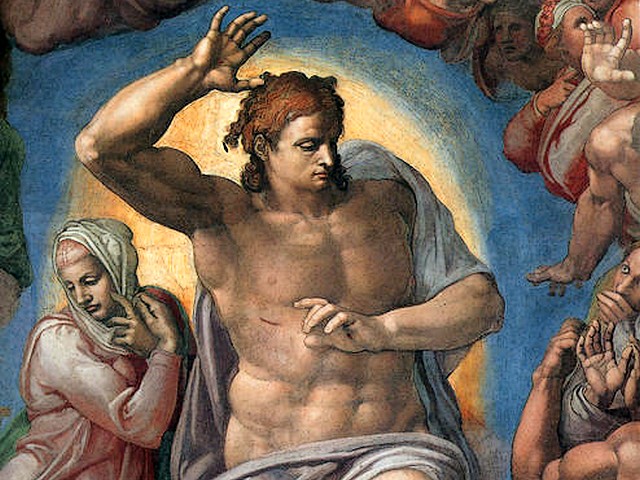
We turn our attention now to the judgment that awaits us all. Scripture speaks in the Book of Hebrews speaks rather plainly to this day for us all:

It is appointed for us to die once, and after that to face judgment (Heb 9:27).

For we must all appear before the judgment seat of Christ, so that each one may receive what is due for what he has done in the body, whether good or evil (2 Cor 5:10).

Furthermore, the Father judges no one, but has assigned all judgment to the Son, so that all may honor the Son just as they honor the Father (Jn 5:22-23).

The Gospel of Luke emphasizes the reverence we should have for Jesus and for His role as our judge:

But I will show you whom you should fear: Fear the One who, after you have been killed, has power to throw you into hell. Yes, I tell you, fear Him (Lk 12:5).

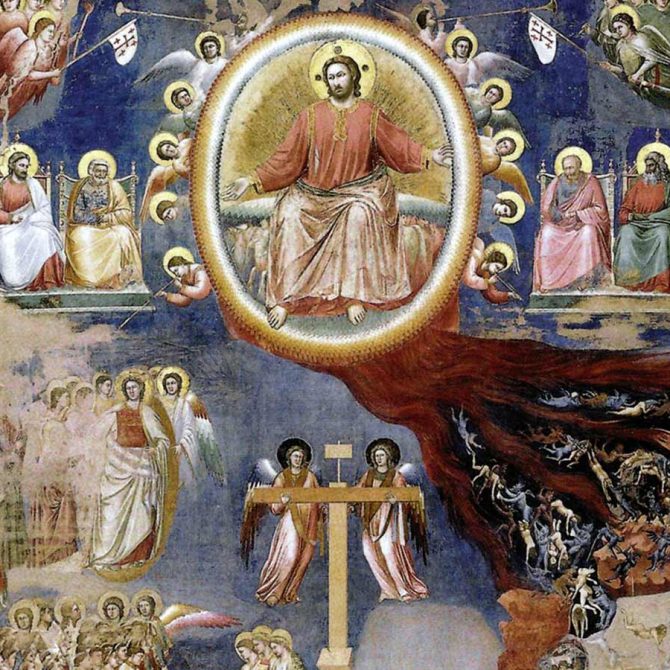
There is a distinction to be made between our personal judgment and the general judgment of the whole world (e.g., Matt 24:31ff). In the general judgment, God’s truth and justice will be made manifest; all those who have loved evil will be seen by all for who and what they were. Further, every evil and foolish philosophy will be seen for the darkness it is. Today I will not be discussing this general judgment, but rather our personal judgment.

We need to attend to our own judgment and prepare for it by seeking God and His grace so as to be ready. St. Paul entrusts us to Jesus, who alone can save us from the coming wrath (see 1 Thess 3:13).

Indeed, Jesus was quite urgent and persistent in warning us of the judgment that is coming upon us. He did this in many ways, but most urgently in the parables.

In the posts over the next few days, we will be examining our certain and coming judgment. We will look at Jesus’ consistent warnings to prepare for our judgment. We will reflect on our tendency to be inattentive to our day of judgment. We will then ponder a way to prepare. Finally, we will consider how we can tip the scales of judgment toward mercy.

Today, let’s begin by pondering the text of the Dies Irae, which sets forth the biblical themes of our judgment as well as a plea for mercy. The context in this case is the general judgment, but its themes also apply in many ways to our personal judgment:

The hymn opens by referring to God’s “wrath.”  (I’ve written more on wrath here.) Wrath is a term used to describe the complete incompatibility of sin in the presence of the All Holy One, a sinner brought into the Lord’s presence. We have every reason to be sober that the awesome holiness of God will disclose all that is in need of purification. The hymn begins as follows:

Day of wrath and doom impending,
Heaven and earth in ashes ending,
David’s words with Sibyl’s blending.

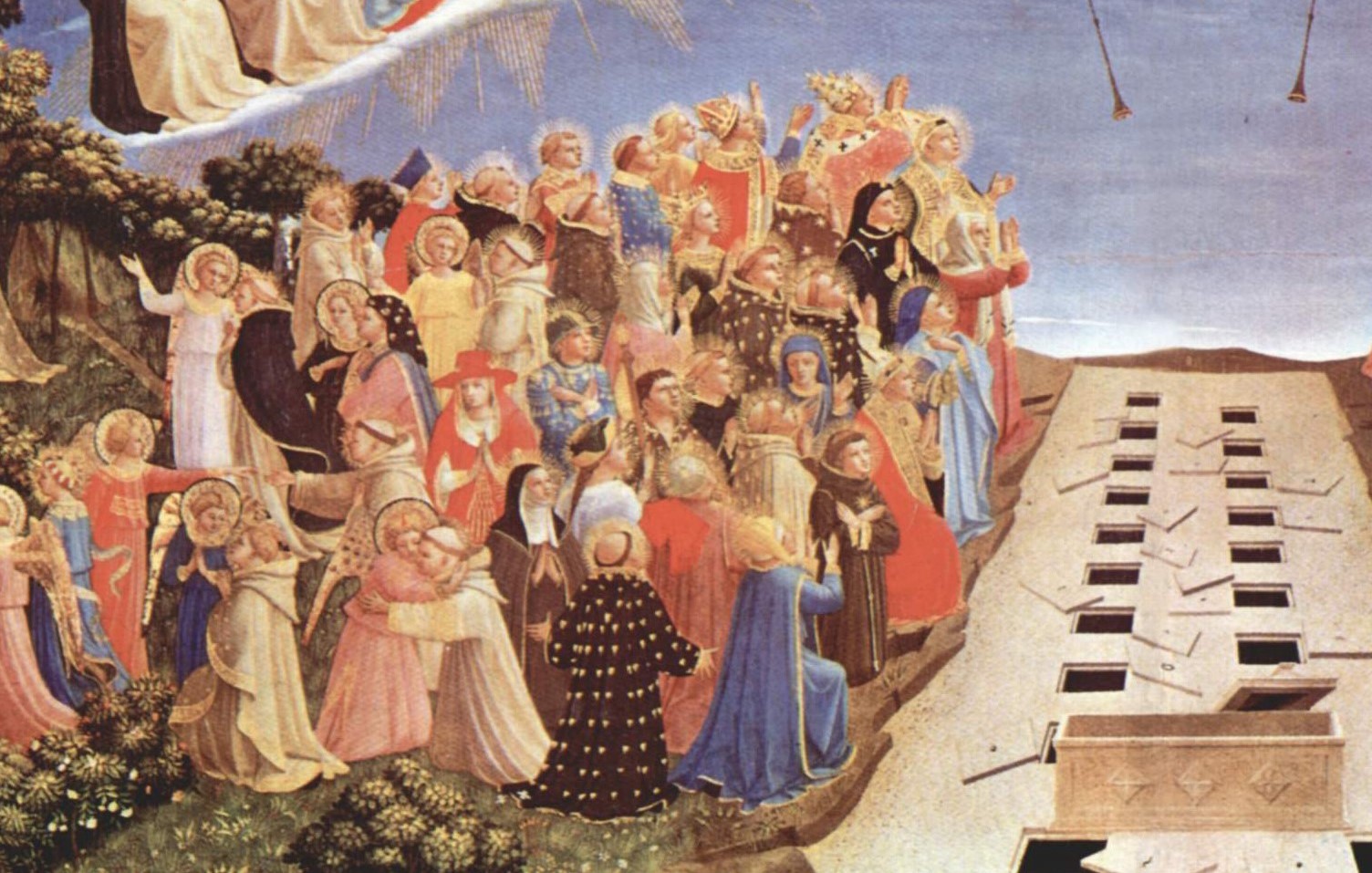
No one can treat this moment lightly: all are summoned to holy fear. At the sound of the trumpet, the bodies of the dead will come forth from their tombs and all of creation will answer to Jesus, the Judge and Lord of all:

Oh what fear man’s bosom rendeth,
When from heaven the judge descendeth,
On whose sentence all dependeth.

Wondrous sound the trumpet flingeth,
Through earth’s sepulchers it ringeth,
All before the throne it bringeth.

Death is struck and nature quaking,
All creation is awaking,
To its judge an answer making.

Lo the book exactly worded,
Wherein all hath been recorded,
Thence shall judgement be awarded.

When the Judge his seat attaineth,
And each hidden deed arraigneth,
Nothing unavenged remaineth.

Judgment shall be according to our deeds, whatever is written in the Book (Rev 20:12; Romans 2:6). Ah, but also in God’s Word is the hope for mercy. And so our hymn turns to pondering the need for mercy and appealing to God for it. The hope for mercy is based on the grace of God, His mercy, His incarnation, His seeking love, His passion and death, and the forgiveness He showed to Mary Magdalene and the good thief crucified on His right.

What shall I, frail man, be pleading?
Who for me be interceding
When the just are mercy needing?

King of majesty tremendous,
Who does free salvation send us,
Font of pity then befriend us.

Think kind Jesus, my salvation,
Caused thy wondrous incarnation.
Leave me not to reprobation.

Faint and weary thou hast sought me,
On the cross of suffering bought me.
Shall such grace be vainly brought me?

Righteous judge for sin’s pollution,
Grant thy gift of absolution,
Before the day of retribution.

Guilty now I pour my moaning,
All my shame and anguish owning.
Spare, O God my suppliant groaning.

Through the sinful Mary shriven,
Through the dying thief forgiven,
Thou to me a hope has given.

Yes, there is a basis for hope! God is rich in mercy. Pondering the Day of Judgment is salutary because now we can call on that mercy. In the end, it is only grace and mercy that can see us through that day. So the hymn calls on the Lord, who said, No one who calls on me will I ever reject (Jn 6:37).

Worthless are my tears and sighing.
Yet good Lord in grace complying,
Rescue me from fire undying.

With thy sheep a place provide me.
From the goats afar divide me,
To thy right hand do thou guide me.

When the wicked are confounded,
Doomed to flames of woe unbounded.
Call me with thy saints surrounded.

Lo I kneel with heart-submission.
See like ashes my contrition.
Help me in my last condition.

Now comes the great summation: Judgment Day is surely coming. Grant me, O Lord, your grace to be ready:

Lo, that day of tears and mourning,
from the dust of earth returning.

Man for judgement must prepare him,
Spare O God, in mercy spare him.

Sweet Jesus Lord most blest,
Grant the dead eternal rest.
I’m Gonna Ride the Chariot in the Morning Lord! A Homily for the 32nd Sunday of the Year

resurrectionIn the readings today the Church presents us with a strong reminder and teaching on the resurrection. Jesus Himself leads the charge against those who would deny the resurrection from the dead, and the seven brothers and their mother from the first reading bring up the rear. Let’s take a look at what we are taught.

I. Ridicule of the Resurrection – The Gospel opens with the observation that Some Sadducees, who deny there is a resurrection, came forward and put [a] question to Jesus. They propose a hypothetical situation in which a woman is married seven times, to brothers who successively die, having no children by any of them. They suggest that at the resurrection there will be confusion as to whose wife she really is! We’re supposed to laugh, according to these Sadducees, and conclude that the idea of resurrection is absurd.

Jesus will dismiss their absurdity handily, as we shall see in a moment, but let’s consider why the Sadducees disbelieved the resurrection.

Fundamentally, they rejected the resurrection because they only accepted the first five books of the Bible: Genesis, Exodus, Leviticus, Numbers, and Deuteronomy. This is point is debated among scholars, but we can surely say that if something was not explicitly in the Law of Moses, the Sadducees were unlikely to accept it. All the other Old Testament books such as the prophets, the historical books, the psalms, and the wisdom tradition, were not considered authoritative sources.

They claimed that the resurrection of the dead was not taught in these first five books. While most other Jews of Jesus’ time did accept the complete Old Testament (and teachings such as the resurrection of the dead which are set forth there), the Sadducees simply did not. They were a small party within Judaism (Josephus said that they were able to persuade none but the rich). Nevertheless, they were influential due to their wealth and to the fact that they predominated among the Temple leadership. You can read more about them here: Sadducees.

Hence, the Sadducees approached Jesus to poke fun at Him and all others who believed that the dead would rise.

They are no match for Jesus, who easily dispatches their arguments using the Book of Exodus (a book they accept) to do it. In effect, Jesus’ argument proceeds as follows:

  1. You accept Moses, do you not?
  2. (To which they would surely reply yes)
  3. But Moses teaches that the dead will rise.
  4. (Jesus must have gotten puzzled looks but He presses on).
  5. You accept that God is a God of the living and not the dead?
  6. (To which they would surely reply yes).
  7. Then why does God (in Exodus) identify Himself as the God of Abraham, Isaac, and Jacob, all of whom have been dead some 400 years? How can He call himself their God if they are dead?
  8. Obviously they are alive or He could not call Himself their God, for He is not a God of the dead but of the living.
  9. Therefore, they are alive to God; they are not dead.

In this way, Jesus dispatches their view. For us, the point is to see how forcefully and clearly Jesus upholds the fact that the dead are alive in the Lord. He powerfully asserts an essential doctrine of the Church. We should rejoice at how firmly Jesus rebukes their disbelief in the resurrection of the dead.

Rejoice, for your loved ones are alive before God! To this world they may seem dead, but Jesus tells us firmly and clearly that they live. And we, who will also face physical death, will live on. Let the world ridicule this, but hear what Jesus says and how he easily dispatches them. Though the idea is ridiculed, the resurrection is real.

II. Resplendence of the Resurrection – Jesus also sets aside the absurd hypothetical scenario that the Sadducees pose, by teaching earthly realities cannot simply be projected into Heaven. Marriage scenarios, perceived in earthly ways, cannot be used to understand heavenly realities. The saints in Heaven live beyond earthly categories.

Heaven is more than the absence of bad things and the accumulation of good things. It is far beyond anything this world can offer. Scripture says, No eye has seen, no ear has heard, and no human mind has conceived—the things God has prepared for those who love him (1 Cor 2:9). The sufferings of this world cannot compare to the glory that will be revealed in us (Rom 8:18).

Do you see the majesty of this teaching? We have a glory waiting for us beyond imagining. Consider your greatest pleasure, your happiest experience, your most fulfilled moment. Then multiply it by a thousand, or a million, or a trillion, and you are still not even close understanding the glory that awaits.

And this glory will transform us. The Lord once told Catherine of Siena that if she ever saw the glory of a saint in Heaven she would fall down and worship, because she would think she was looking at God. This is our dignity: to be transformed into the very likeness of God and reflect His glory. The following is a summary of St. Catherine’s vision of the soul of a saint in Heaven:

It was so beautiful that she could not look on it; the brightness of that soul dazzled her. Blessed Raymond, her confessor, asked her to describe to him, as far as she was able, the beauty of the soul she had seen. St. Catherine thought of the sweet light of that morning, and of the beautiful colors of the rainbow, but that soul was far more beautiful. She remembered the dazzling beams of the noonday sun, but the light which beamed from that soul was far brighter. She thought of the pure whiteness of the lily and of the fresh snow, but that is only an earthly whiteness. The soul she had seen was bright with the whiteness of Heaven, such as there is not to be found on earth. “My father,” she answered. “I cannot find anything in this world that can give you the smallest idea of what I have seen. Oh, if you could but see the beauty of a soul in the state of grace, you would sacrifice your life a thousand times for its salvation. I asked the angel who was with me what had made that soul so beautiful, and he answered me, “It is the image and likeness of God in that soul, and the Divine Grace which made it so beautiful.” [1].

Yes, Heaven is glorious and we shall be changed. Scripture says, we shall be like the Lord for we shall see him as he is (1 John 3:2). He will change our lowly body to conform with his glorified Body by the power that enables him also to bring all things into subjection to himself (Phil 3:19). I have written more on our resurrected bodies here: What will our resurrected bodies be like?

Too many people have egocentric notions of Heaven, where I will have a mansion, I will see my relatives, and I will be able to play all the golf I want. But the heart of Heaven is to be with God, for whom our heart longs. In God we will experience fulfillment and peace that is beyond earthly imagination. Heaven is far greater than golf, mansions, and family reunions. There is certainly more to it than clouds and harps. Heaven can never be described because it is beyond words. St Paul speaks of a man (himself) who was caught up into Heaven; he affirms that it cannot be described; it is ineffable; it is unspeakable.

I know a man in Christ who fourteen years ago was caught up to the third heaven …. And I know that this man—whether in the body or apart from the body I do not know, but God knows—was caught up to paradise and heard inexpressible things, things that no one is permitted to tell (2 Cor 12:2-3).

Do you long for heaven? Do you meditate on it? Is there a part of you that can’t wait to get there? There’s an old spiritual that says, “I’m gonna ride the Chariot in the morning, Lord. I’m gettin’ ready for the judgment day, my Lord, my Lord!”

III. Response to the Resurrection – What difference does the resurrection make other than to give us joy if we meditate upon it? To see that answer, consider today’s first reading, in which the seven brothers are willing to accept torture and death rather than violate God’s Law. If there is a great reward awaiting those who remain faithful, then we will endure anything to get there. Notice how the vision of Heaven inspires them stand firm in their refusal to deny their faith:

We are ready to die rather than transgress the laws of our ancestors. … [Y]ou are depriving us of this present life, but the King of the world will raise us up to live again forever. It is for his laws that we are dying. … Even the king and his attendants marveled at the young man’s courage, because he regarded his sufferings as nothing (2 Maccabees, 7:2,9, 12).

Their vision of the rewards awaiting them motivated them to endure the awful sufferings described in the 7th Chapter of 2nd Maccabees.

And what of us? Do we meditate on Heaven and value its reward enough to be willing to endure suffering to get there? We need a strong vision of Heaven to be able to endure and stand firm. Too many people today have lost a deep appreciation of Heaven. Too many pray to God merely for worldly comforts and rewards—but these will pass. We ought to ask God for a deep desire for Heaven and the things awaiting us there.

What athlete would discipline his body as severely as he does without the deep motivation of the satisfaction and rewards that will come upon meeting his goals? What college student would attend hundreds of hours of classes, read scores of books, and write lengthy papers if it were not for the rewarding career at the end of the trail? Who of us will endure the trials of faith if we are not deeply imbued with the vision of glory and deeply desirous of its fulfillment no matter the cost? Without this, our spiritual life becomes tepid and our willingness to endure trials falls away. An old hymn says,

When peace, like a river, attendeth my way,
When sorrows like sea billows roll;
Whatever my lot, Thou has taught me to say,
It is well, it is well, with my soul.

And Lord, haste the day when my faith shall be sight,
The clouds be rolled back as a scroll;
The trump shall resound, and the Lord shall descend,
Even so, it is well with my soul.

Meditate on Heaven often. Although we can never fully grasp its glory, we ought not to let that stop us from imagining it as best we can. In particular, read Revelation chapters 4,5, 8, 21, and 22. But above all, ask God for an ever-deepening desire for Him and the good things that await you in Heaven. Look to Heaven; long for Heaven. Desire God and deeply root your life in Him. Heaven will not disappoint!

This African-American spiritual says,

I’m gonna ride the chariot in the morning, Lord.
I’m getting’ ready for the judgment day, my Lord, my Lord!
Are you ready my brother? (Oh yes!)
Are you ready for the journey? (Oh Yes!)
Do you want to see Jesus (Yes, Yes!)
I’m waiting for the chariot ’cause I ready to go.
I never can forget that day,
(Ride in the chariot to see my Lord!).
My feet were snatched from the miry clay!
(Ride in the chariot to see my Lord!)

Three Images of a Christian—Which One Are You?

Consider the commercial below. It says a lot about how we can conceive of Christ and of the desire of some to refashion Him. Perhaps we do well to look at it by analyzing the dramatis personae (cast of characters) and weaving in the plot.

As the scene opens, three women come upon a car belonging to one of them. The car has been damaged, and this little crisis sets the stage for the different notions of the sort of savior who is needed. Let’s look at each person in the drama and see what we can learn:

  1. The woman in the center is a sensible Christian. She is the owner of the car. Unfazed by the damage to her car, she knows exactly what to do. She summons her insurance agent, who appears as if out of nowhere. She trusts him to handle everything and even encourages her friends to call on him.

The insurance agent is a Christ figure. He wears a red tie, reminding us of the blood that was shed for us. He has a book in his hand in which everything is recorded. He arrives not only to bring help but to make a judgment. He consults his book and gets to work (cf Rev 20:12ff). His name is Rich; Christ is surely “rich” in grace (cf 2 Cor 8:9). Later in the ad he will rebuke the darkness.

  1. The woman on the left is a worldly Christian. Although the Christ figure stands in her midst, she ignores him, wanting to see if she can come up with her own helper, a savior of her own making. It would seem that Rich, the Christ figure already standing there, does not suit her fancy. She wants one who is cute and more “sensitive.” An unchallenging agent is what she wants, one who will be more soothing, surely not one dressed in a business suit (Rich, the Christ figure with the red tie, means business).
  2. The woman on the right is a carnal Christian. She is lustful, impetuous, and daring; she wants a man who is similar. She hardly notices the Christ figure except to reject him with a sneer. She calls for her “savior,” one with a dark side, and he appears on the scene. He is a rogue, a thug; lustful, arrogant, irresponsible, and immature. He is the perfect projection of her carnal, lustful, fallen nature, and you can see it by the look in her eyes.

In the background, the Christ figure just keeps on working, as if to say, My Father is always at his work to this very day, and I, too, am working (Jn 5:17).

Now the carnal thug is sitting on the car. Not only is he not helping, he’s making things worse. So the Christ figure says to him, “Hey, Darkside, get your feet off the car.” It’s as if he’s saying, “Be gone, Satan.”

Yes, there it is: the light rebuking the darkness. The light shines in the darkness and the darkness has not overcome it.

Which one are you in this story: the carnal Christian, the worldly Christian, or the sensible Christian? What sort of a savior are you looking for?

And Death Is Gain: A Reflection on the Proper Christian Sense of Death

This is the third in a series of articles on the Four Last Things: Death, Judgment, Heaven, and Hell.

Yesterday we pondered the fear of death and some understandable reasons for it, but we also considered how a lack of lively faith can lead to a fear of death that is unchristian. As St. Paul admonishes regarding death,

We do not want you to … grieve as others do who have no hope. For since we believe that Jesus died and rose again, even so, through Jesus, God will bring with him those who have fallen asleep (1 Thess 4:13-14).

How do you see death? Do you long to one day depart this life and go home to God? St. Paul wrote to the Philippians of his longing to leave this world. He was not suicidal; he just wanted to be with God:


Christ will be magnified in my body, whether by life or by death. For to me life is Christ, and death is gain. If I go on living in the flesh, that means fruitful labor for me. And I do not know which I shall choose. I am caught between the two. I long to depart this life and be with Christ, for that is far better. Yet that I remain in the flesh is more necessary for your benefit (Phil 1:20-23).

I am struck by the fact that almost no one speaks publicly of a longing to depart this life and be with God. I suspect that it is because we live very comfortably, at least in the affluent West. Many of the daily hardships with which even our most recent ancestors struggled have been minimized if not eliminated. I suppose that when the struggles of this life are minimized, fewer people long to leave it and go to Heaven. They set their sights, hopes, and prayers on having things be better here. “God, please give me better health, a better marriage, more money, a promotion at work.” In other words, “Make this world an even better place for me and I’ll be perfectly content to stay right here.”

Longing to be with God was more evident in the older prayers, many of which were written just a few generations ago. Consider, for example, the well-known Salve Regina and note (especially in the words I have highlighted in bold) this longing.


Hail, Holy Queen, Mother of Mercy, our life, our sweetness, and our hope. To thee do we cry, poor banished children of Eve. To thee do we send up our sighs, mourning, and weeping in this valley of tears. Turn then, most gracious advocate, thine eyes of mercy towards us, and after this our exile, show unto us the blessed fruit of thy womb, Jesus. O clement, O loving, O sweet Virgin Mary.

This prayer acknowledges in a realistic and sober way that life here can be very difficult. Rather than ask for deliverance from all of it—for this world is an exile, after all—it simply expresses a longing to go to Heaven and be worthy to see Jesus. It is this longing that I sense is somewhat absent in our modern world, even among regular churchgoers.

When was the last time you meditated on Heaven? When was the last time you heard a sermon on Heaven? I understand that we all have a natural fear of and aversion to dying, but a Christian should have a deepening thirst for God that begins to erode this. St. Francis praised God for sister bodily death, which no one can escape (Canticum Fratris Solis). And why not praise God for death? It is what ultimately brings us home.

In regard to death as gain, St. Ambrose had this to say in a meditation on the occasion of his brother’s death:


Death was not part of nature; it became part of nature. God did not decree death from the beginning; he prescribed it as a remedy. Human life was condemned because of sin to unremitting labor and unbearable sorrow and so began to experience the burden of wretchedness. There had to be a limit to its evils; death had to restore what life had forfeited. Without the assistance of grace, immortality is more of a burden than a blessing.


We see that death is gain, life is loss. Paul says: For me life is Christ, and death a gain. What does “Christ” mean but to die in the body, and receive the breath of life? Let us then die with Christ, to live with Christ.


We should have a daily familiarity with death, a daily desire for death. By this kind of detachment our soul must learn to free itself from the desires of the body. It must soar above earthly lusts to a place where they cannot come near, to hold it fast. It must take on the likeness of death, to avoid the punishment of death.


The law of our fallen nature is at war with the law of our reason and subjects the law of reason to the law of error. What is the remedy? Who will set me free from this body of death? The grace of God, through Jesus Christ, our Lord (taken from a book by St. Ambrose, bishop, on the death of his brother, Satyrus (Lib. 2, 40. 41. 46. 47. 132. 133)).

As for me, I will say it: I long to leave this world one day and go home to be with God. I am not suicidal and I love what I do here, but I can’t wait to be with Him. I don’t mind getting older because it means I’m that much closer to home. In our youth-centered culture, people (women, especially) are encouraged to be anxious about aging. When I hit forty, I said, “Hallelujah, I’m closer to home.” Now nearing 60, I rejoice even more. I’m glad to be getting older. God has made me wiser and He is preparing me to meet Him. I can’t wait!

Even a necessary stopover in Purgatory cannot eclipse the joy of the day we die. There will surely be suffering preceding our death, but deep in our hearts—if we are believers—must ring forth the word, “Soon!” An old spiritual says, “Soon I will be done with the troubles of this world, going home to live with God.”

So I ask you again: How do you see death? Do you long for Heaven? Do you long to depart this world and be with God? I know that you want to finish raising your children first, but do you rejoice as the years tick by and the goal becomes closer? A prayer in the Roman Missal says,


O God, who makes the minds of the faithful to be of one accord, grant to your people to love what you command and to desire what you promise, that, among the changes of this world, our hearts may there be fixed where true joys are (Collect, 21st Sunday of the Year).

I close with some words from Psalm 27:


One thing I ask from the LORD, this only do I seek: that I may dwell in the house of the LORD all the days of my life, to gaze on the beauty of the LORD … My heart says of you, “Seek his face!” Your face, LORD, I will seek. Do not hide your face from me (Psalm, 27:4, 8-9).

As you listen to this spiritual, think about the harsh conditions endured by the slaves who wrote it:

On the Fear of Death

This is the second in a series of articles on the Four Last Things: Death, Judgment, Heaven, and Hell.

For us faithful, the day we die is the greatest day of our life on this earth. Even if some final purification awaits us, the beatific vision for which we long lies just ahead; our exile in this valley of tears is ended.

Is calling the day we die the greatest day of our life too strong a statement? I have seen some fellow Christians wince at it. In this age of emphasis on worldly comforts, medicine, and the secular, we rarely speak of Heaven—or Hell for that matter. I wonder if we have lost some of our longing for Heaven and cling too strongly to the trinkets of this life.

At the funeral of a relative several years ago, I was approached by a friend of the family. She was an unbeliever, a self-described secular humanist, and she made the following comment to me: “Perhaps there is Heaven for the faithful who believe that there is life after death, and perhaps for them the day they die is the greatest day of their life, but I do not observe that Christians live as if they believe this. It seems to me that they are as anxious as anyone else about dying and earnestly seek to avoid death just as much as anyone else.”

It was a very interesting observation, one that I found mildly embarrassing. I quickly thought of some legitimate explanations and proposed them to her, but the embarrassment remained. We Christians sometimes fail to give witness to our most fundamental values. Based on her remark—and I’ve heard it before—most of us don’t manifest a very ardent longing for Heaven.

There are, of course, some legitimate and understandable reasons that we do not rush towards death:

  1. There is a natural fear of dying. It is part of our physical makeup and, it would seem, hard-wired into our psyche as well. Every sentient being on this planet, man or animal, has a strong instinct for survival. Without this instinct, strongly tied to both hunger and sexual desire, we might die not only as individuals but as a species. It also drives us to look to the future, as we work to ensure the survival, even thriving, of our children and those who will come after us. It is a basic human instinct that we ought not to expect to disappear because it has necessary and useful aspects.
  2. We would like to finish certain important things before we die. It makes sense, for example, that parents would like to see their children well into adulthood. Parents rightly view their existence in this world as critical to their children. Hence, we cling to our life here not just for our own sake but because others depend upon us.
  3. The Christian is called to love life at every stage. Most of us realize that we are called to love and appreciate what we have here, for it is the gift of God. To so utterly despise this world that we wish only to leave it manifests a strange sort of ingratitude. It also shows a lack of understanding that life here prepares us for the fuller life that is to come. I remember that at a low point in my own life, afflicted with anxiety and depression, I asked the Lord to please end my life quickly and take me home out of this misery. Without hearing words, I felt the Lord’s silent rebuke: “Until you learn to love the life you have now, you will not love eternal life. If you can’t learn to appreciate the glory of the gifts of this life, then you will not and cannot embrace the fullness of eternal life.” Indeed, I was seeing eternal life merely in terms of relief or escape from this life, rather than as the full blossoming of a life that has been healed and made whole. We don’t embrace life by trying to escape from it. A healthy Christian attitude is to love life as we have it now, even as we yearn and strive for a life that we do not yet fully comprehend: a life that eye has not seen nor ear heard, what God has prepared for those who love Him.
  4. We seek to set our life in order before facing judgment. While it is true that we can procrastinate, there is a proper sense of wanting time to make amends and to prepare to meet God.
  5. We fear the experience of dying. Dying is something none of us has ever done before and we have a natural fear of the unknown. Further, most of us realize that the dying process likely involves some degree of pain. Instinctively and understandably, we draw back from such things.

Even Jesus, in His human nature, recoiled at the thought of the agony before Him—so much so that He sweat blood and asked that the cup of suffering be taken from Him if possible. Manfully, though, He embraced His Father’s will, and our benefit rather than His own. Still, in His humanity, He did recoil at the suffering soon to befall Him.

Despite this hesitancy to meet death, the day we die is indeed the greatest day of our life. While we ought to regard the day of our judgment with sober reverence, we should go with joyful hope to the Lord, who loves us and for whom we have longed. That day of judgment, awesome though it is, will for the future saint disclose only that which needs final healing in purgation, not that which merits damnation.

We don’t hear much longing for our last day on this earth or for God and Heaven. Instead, we hear fretting about how we’re getting older. We’re anxious about our health, even the natural effects of aging. And there are such grim looks as death approaches! Where is the joy one might expect? Does our faith really make a difference for us or are we like those who have no hope? Older prayers referred to life in this world as an exile and expressed a longing for God and Heaven, but few of today’s prayers or sermons speak this way.

Here are some of the not-so-legitimate reasons that we may draw back from dying:

  1. Our life in this world is comfortable. While comfort is not the same as happiness, it is very appealing. It is also deceiving, seductive, and addictive. It is deceiving because it tends to make us think that this world can be our paradise. It is seductive because it draws our focus away from the God of comforts to the comforts of God. We would rather have the gift than the Giver. It is addictive because we can’t ever seem to get enough of it; we seem to spend our whole life working toward gaining more and more comforts. We become preoccupied by achieving rather than working toward our truest happiness, which is to be with God in Heaven.
  2. We are worldly. Comfort leads to worldliness. Here, worldliness means focusing on making the world more comfortable while allowing notions of God and Heaven to recede into the background. Even the so-called spiritual life of many Christians is almost wholly devoted to prayers asking to make this world a better place: Improve my health; fix my finances; grant me that promotion. While it is not wrong to pray about such things, the cumulative effect, combined with our silence on more spiritual and eternal things, gives the impression that we are saying to God, “Make this world a better place and I’ll just be happy to stay here forever.” What a total loss! This world is not the point. It is not the goal; Heaven is. Being with God forever is the goal.
  3. Being with God seems abstract and less desirable than our life in this world. With this magnificent comfort that leads to worldly preoccupation, longing for Heaven and being with God recedes into the background of our thoughts. Few speak of Heaven or even long for it inwardly. They’d rather have that new cell phone or the cable upgrade with the enhanced sports package. Some say that they never hear about Hell in sermons, and in many parishes (though not in mine) that is regrettably the case. They almost never hear about Heaven, either (except in some cheesy funeral moments that miss the target altogether and make Heaven seem trivial rather than a glorious gift to be sought). Heaven just isn’t on most people’s radar except as a vague abstraction for some far-off time—certainly not now.

This perfect storm of comfort and worldliness leads to slothful aversion to heavenly gifts. That may be why, when I say that the day we die is the greatest day of our life, or that I’m glad to be getting older because I’m getting closer to the time when I can go home to God, or that I can’t wait to meet Him, people look at me strangely and seem to wonder whether I need therapy.

No, I don’t need therapy—at least not for this. I’m simply verbalizing the ultimate longing of every human heart. Addiction to comfort has deceived and seduced us such that we are no longer in touch with our heart’s greatest longing; we cling to passing things. I would argue (as did my family friend) that we seem little different from those who have no hope. We no longer witness to a joyful journey to God that says, “I’m closer to home. Soon and very soon I am going to see the King. Soon I will be done with the troubles of this world. I’m going home to be with God!”

There are legitimate, understandable reasons for being averse to dying, but how about even a glimmer of excitement from the faithful as we see that our journey is coming to an end? St. Paul wrote the following to the Thessalonians regarding death: We do not want you to be like those who have no hope (1 Thess 4:13). Do we witness to the glory of going to be with God or not? On the whole, it would seem that we do not.

The video below features a rendition of the hymn “For All the Saints Who from Their Labors Rest.” Here is a brief passage from the lyrics:

The golden evening brightens in the West,
Soon, soon, to faithful warriors cometh rest.
Sweet is the calm of Paradise most blest. Alleluia!

The Mystery of Life and Death

This is the first in a series of articles on the Four Last Things: Death, Judgment, Heaven, and Hell.

You are going to die and you don’t get to say when or how. I say this at every funeral, both to those present and to myself. This solemn reminder is hard to process. It is one thing to assent to this obvious truth intellectually, but it is another thing to internalize it in our depths and really know what it means.

What is death? Some speak of heartbeats that stop or brain waves that cease, but that is not what death is. The cessation of vital indicators is the effect of death, not death itself.

Part of the mystery of death is that it is presupposed by another equally deep and mysterious question: What is life? Some say that life is organized energy, but this answer also misses the mark. It describes what life does, not what it is.

The force we call life is mysterious. We see its effects. We know when it is present and when it is gone, but we do not know exactly what it is. Just because we have a word for something doesn’t mean we understand it. Similarly, death is mysterious. I have been at the bedside of parishioners and my own loved ones at the moment of death and I cannot adequately articulate how strangely baffling it is. There is labored breathing; sometimes there are nervous twitches. Occasionally some words are spoken. Then, suddenly, there is a great stillness. The mysterious force that we call life has departed; the soul, the animating principle of living things, is gone.

I remember looking at my sister, my father, and my mother as each lay in the casket. They were there and yet they were not. When I looked at my mother, she seemed alive; I fully expected her to look at me and tell me to comb my hair or that she loved me—but she was not there. Her body had lost that mysterious spark and force we call life. Her soul had departed.

Looking at my father’s still body in the hospital room where he died was overwhelming. He had been a giant in my life. He still looms large in my memory; his voice rings in my soul. But there he was lying still in that hospital bed—and yet he was not there. Something deeply mysterious had happened. The hidden, mysterious life force of his soul was gone even though there seemed to have been no change in the appearance of his body.

Sadly, I have had to have several of my pets put down over the years. In those cases, too, the mystery of life and death is evident. An animal is alive one moment and then suddenly grows still. Even with plants and trees, I have seen them healthy and green only to be astonished when they die. What happened? The life is gone; a mysterious, organizing principle and force has departed—but what it is we do not know. We do not see death, only its effects.

I am overwhelmed in the face of death, at the mystery of it and the mystery of what has departed: life, a force that cannot be seen or measured, that does not tip the scales of scientists or involve our senses but that is nonetheless very real.

Especially in its inception, life is mysterious. Consider an acorn. In appearance, it is not so different from a small stone. Yet if you were to put both in the soil, the stone would sit there forever and do nothing; the acorn, though has a mysterious spark, a life force in or around it that springs forth to become a mighty oak. What is that spark? Where is it? An acorn has it but a stone does not. Why? Only God really knows.

It was my father who first taught me of the mystery of life. When I was a child, he told me that one of the deepest experiences of his life had occurred when he was about my age:

It had suddenly occurred to him, coming into his mind like a bolt out of the blue, that he existed. He cried out, “I exist!” and then grew silent in astonishment.

He said that ever since that moment he had never ceased to be amazed and awed at the mysterious fact of his existence. Indeed, it is an awesome mystery. Why do I exist? Why do you exist? Why is there anything at all?

As my Father grew silent in amazement, so must I. I have already said too much. The word mystery comes from the Greek muein, meaning to shut the mouth or close the eyes. As we begin a meditation on the Four Last Things, (death, judgment, Heaven, and Hell), ponder with awe and reverential silence the great mystery of life and death.

Tomorrow I will discuss some of the more practical aspects of death.

The End is the Beginning and the Guide to All of Life’s Decisions

I will be away for ten days leading a group on a “Footsteps of St. Paul” pilgrimage in Greece. We will visit Athens, Corinth, Thessalonica, Ephesus, Philippi, and Patmos, among other locations. More than sixty of us are going, many from my own parish, some from other parishes within the Archdiocese of Washington, D.C., and still others from elsewhere in the country. I ask for your prayers during our journey.

I have scheduled a series of posts to run during my absence, related to the four last things: death, judgment, Heaven, and Hell. In November, when we see the leaves fall and winter approach, we are mindful of the passing quality of this world and of the inevitability of these last things: we will die, face judgment, and spend eternity in either Heaven or Hell.

In a way, the last things are actually the first—in terms of importance. Consider that it is the destination that guides one on a trip. Each decision about which road to take or which turn to make is based on the journey’s end. Without a goal, we are lost; we wander aimlessly. Sadly, this is the way many live their lives: going here and there but without a real purpose or destination in mind. They are like leaves blown about by the wind, going wherever their passions or popular culture take them. Those of us who strive to live by faith must base all life’s decisions on our goal: Heaven. Does this course of action move me toward the goal or away from it? Does it help me or hinder me? I want to die loving God and my neighbor so that I can attain the beautiful glory of being with God and the saints forever.

St. Paul said, This one thing I do: Forgetting what is behind and straining toward what is ahead, I press on toward the goal to win the prize of God’s heavenly calling in Christ Jesus (Philippians 3:13-14). This is the secret to a meaningful, productive, and holy life: knowing the one goal and subordinating all else in order to achieve it. It is so simple, yet it is so easy to get lost in the many distractions that complicate our life.

Meditation on the four last things helps us to refocus on the fact that our life is heading somewhere. We all will die, face judgment, and ultimately be forever in Heaven or Hell.

As for me, I am currently heading for Greece, but I pray, Lord, that this trip will draw me closer to the goal of knowing, loving, and serving you in this life so as to be happy forever in Heaven with you. Amen.

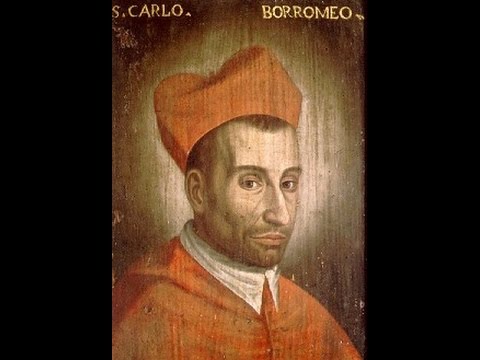
In Times Like These We Need St. Charles Borromeo!

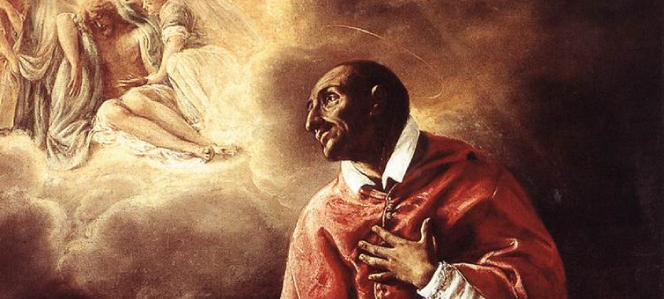
In my attendance at missions, meetings, and functions, it has become clear to me that many people are hungering for clergy—especially bishops—who will uphold the faith more boldly and defend the flock against heresy and error. Too many clergy, they say, either remain silent or are vague in addressing sin; instead, when they see the wolf approaching, they neither warn the flock nor chase him away. Some seem to welcome the wolf and introduce him to the sheep! I hear many heartbreaking stories, which both pain and anger me. As I go before the Lord, I add the concerns of God’s people to my own. I also take great comfort in turning to my patron saint, St. Charles Borromeo. His life provides both perspective and a model of what to do and how to be in times like these.

St. Charles Borromeo was born in 1538, a time when the Church was in the midst of perhaps her greatest crisis. Martin Luther had begun his revolt in 1522 with the publication of his 95 Theses. In the aftermath of the Protestant revolt, some 12 million Europeans (a huge number for those days) left the Church; more would follow in successive waves.

The once-strong medieval Church was breaking up. Indeed, the whole medieval synthesis of Christendom was in turmoil, hopelessly intertwined with politics and intrigue both within the Church and outside.

This of course sounds quite familiar to us. The Church today is deeply divided, seemingly on the verge of another great schism. The recent reemergence of a clergy sexual abuse scandal and the justifiable anger over that has now been followed by the tumultuous Amazonian Synod, which was filled with confusing and shocking images and has suggested radical changes that, if executed, may even split the Church. In December, a German Synod will begin that also promises to place a severe strain on unity—and most of this terrible disunity comes from the clergy, not God’s faithful.

The problems in St. Charles Borromeo’s day were similar. The clergy were in tremendous need of reform. It was an era of absentee bishops and clergy. Wealthy European families collected parishes, monasteries, and other benefices more as elements in their portfolio than out of any spiritual love or interest. It was common that benefices were given to the sons in these families. Although ordained as priests, they seldom served as such, instead farming out the pastoral duties of their many parishes (and even dioceses) to other priests (often poorly trained ones). Knowledge of Latin, Scripture, and indeed the Lord Himself, was noticeably absent in many of these “clergy for hire.” Preaching was poor, the moral life of the clergy was degraded, and the faithful had little leadership. In this climate it is no wonder that Luther and other so-called reformers were so easily able to attract large numbers of the laity, who were not only poorly served but poorly catechized.

Recognizing the criticality of the revolts (by Luther and others) and her own need for internal reform, the Church summoned the Council of Trent, which met sporadically between 1545 and 1563. St. Charles Borromeo play a crucial role during the Council and in its aftermath.

Perhaps his chief work (as the Papal Secretary of State under the direction of Pope Pius IV) was to reconvene the Council of Trent, which had been suspended due to war. After many months of negotiation and political intrigue, the Council reconvened in 1561. Charles Borromeo not only coordinated the activities of the Council sessions but also engaged in many delicate negotiations as the Pope’s personal representative. He had to work carefully to overcome the differences between certain delegates. The Council of Trent finally concluded in December of 1563, just prior to the death of Pope Pius IV.

The importance of the Council of Trent cannot be overstated. Its decrees rejuvenated the huge and complex medieval Church and would serve as a guiding light for the next four centuries. Then, as now, the decrees of a council were not always welcomed, understood, or well applied. The work of Charles Borromeo was just beginning.

St. Charles lost no time in applying the decrees of the Council wherever his authority extended.

Cardinal Borromeo’s next step was to have a catechism written and published. He appointed three Dominican theologians to work under his supervision, and the Catechism of the Council of Trent was completed within a year. He then ordered it translated into the vernacular in order that it be taught to the faithful by all pastors. Charles also set to work founding seminaries and colleges for the clergy, who were woefully undertrained.

St. Charles was also involved in implementing liturgical norms, even taking a hand at reforming the music by encouraging the development of sacred polyphony. It needed a guiding hand to ensure that the music did not become too florid, eclipsing the sacred. In this matter he worked closely with Palestrina.

Having used his position of influence in Rome to help implement the Council, St. Charles Borromeo then petitioned Pope Pius V that he might implement it in his own life, for although the Pope had named him Cardinal Archbishop of Milan, he had been an absentee bishop, remaining in Rome as papal Secretary of State. Such absenteeism was common at the time; in fact, it was rare in the larger cosmopolitan dioceses that the bishop would be present at all. These larger dioceses were usually benefices for rich families whose sons merely collected the income and did not actually serve in any pastoral capacity. Dioceses were usually administered by underlings.

It does not take much to understand why abuses flourished under this system. With no resident bishop, no true shepherd in place, errors went unaddressed and corruption abounded.

After some months of negotiation with the new pope, Pius V (who was resistant to the idea), St. Charles was finally permitted to take up residence in his diocese of Milan. He went with great eagerness to implement the reforms of the Council of Trent. He called several local councils of the Church there and set up seminaries for the training of clergy. Charles insisted that priests be present in, and minister to, their own parishes. He also established the Confraternity for Christian Doctrine (CCD) for the training of children in the faith, enrolling some 40,000 children in the first few years. He set about visiting every parish in his archdiocese, even the small ones in the remote alpine regions.

Not everyone appreciated the reforms Charles sought to institute. Some of the greatest resistance came from his own clergy and monks, one of whom pulled out a gun and shot him at Vespers (luckily, the bullet only grazed him)! Despite the resistance, St. Charles began many successful reforms in the Church at Milan. These reforms centered on the liturgy; the life, training, and discipline of the clergy; and the training of the laity in the ways of faith.

As I observe our difficult state today, I turn to St. Charles Borromeo, who lived in similar times. His example inspires my own desire to teach the faith with zeal and to bring the faithful a word of instruction. I do not have the power of a bishop, but I try to the best of my ability to give clear instruction, drawing the faithful more fully to the Lord. I also try to reach as many others as I can through my writing.

Above all, I ask St. Charles’ intercession to inspire in me and all clergy a great and joyful zeal for the Lord and the faith. I pray he will also inspire bishops to imitate his example. St. Charles Borromeo offered his life sacrificially and endured many trials to preach the faith and to visit the faithful. He courageously ministered to the sick during a plague and worked tirelessly to promote liturgical excellence.

All of these vigorous efforts took a toll on his health and St. Charles Borromeo died at the age of 46, in the early hours of November 4, 1584. He had been on his way to visit a parish in the Alps and was stricken with a high fever.

I ask you, Lord Jesus, to inspire bishops and priests through the example of St. Charles Borromeo. Remove whatever fear or sloth keeps so many of us sinfully silent and strangely uninvolved while the culture and the Church collapse around us. May bishops attend carefully to the formation of priests and give them good example through clear teaching and heroic witness to the truth of the Faith. May priests and deacons, too, have a tender care for their people and a zeal to drive away, through preaching and teaching, the wolves of error, dissent, deceit, and half-truth. May we all celebrate the sacraments with devotion, respect for norms, and sacrificial love for our people.

St. Charles Borromeo, pray for us. We need a lot of help right now! As you well know, we clergy can be a stubborn lot; frightened, too, and anxious about things we should not be (e.g., position and rank). Intercede for us. Ask a miracle of God that, as individuals and as a group, we can become more courageous, more zealous for God’s Kingdom, and more willing to endure suffering and even martyrdom to announce God’s truth and bring the sacraments to His faithful. Yes, St. Charles, pray for us! We need your prayer and example more than ever. Amen.

I have written more about St. Charles Borromeo here.