An Early Lenten Meditation on Spiritual Warfare

2.10blogAs we begin Lent, we do well to recall that we are engaged in a great and dramatic battle for our souls. The opening prayer for Ash Wednesday Mass makes use of the image of a military “campaign” and mentions weapons and battle: Grant, O Lord, that we may begin with holy fasting this campaign of Christian service, so that, as we take up battle against spiritual evils, we may be armed with weapons of self-restraint. The First Sunday of Lent lays out the tactics of the devil in terms of temptation, and relates how we must be prepared to refute and resist such things.

Every ancient prayer manual and guide to spirituality until about fifty years ago had at least one large section devoted to what was known as Pugna Spiritualis (spiritual battle or spiritual warfare). In more recent decades, many spiritual books have either downplayed or completely deleted references to spiritual battle or spiritual warfare.

Many modern approaches to faith, religion, and spirituality prefer to emphasize consoling themes rooted in self-esteem and affirmation. To be sure, the authentic faith can and does offer great consolation, but the truest and deepest consolation often comes after one has persevered along the sometimes-difficult path, along the “narrow way” of the cross. But too many today, in the name of affirmation and pseudo-self-esteem, are all too ready to excuse or even support grave moral disorders rather than fight them.

It is true that the Holy Father would have us focus on mercy this year. And so we should. But, paradoxically, mercy is a tactic of battle. Satan would “love” nothing more than for us to hold grudges and intensify our divisions through prideful resistance. He would prefer that we despair of God’s mercy or despair that it is even possible for us to live apart from sinful habits. Thus mercy is a tool of tactical genius; it breaks the cycle of negativity and sin and robs Satan of victories and of souls, snatching them back from the downward spiral of anger and despair.

Mercy does not mean saying that God doesn’t mind what you do. Rather, it means that saying that God loves you despite your sins and is extending to you a way out of the misery your sins have caused.

Grace and mercy are marvelously extended to us, but it is repentance that opens the door to these gifts. Repentance, too, is a battle tactic, because it embraces God’s daring move to break the satanic cycle of anger and despair. Repentance (metanoia) most literally means to come to a new mind, to a new way of thinking. Repentance is accepting God as our general and following His battle plans for our life. It is recognizing that sin is awful, but that grace and mercy are still extended to us and that we ought to accept and depend upon them. By unlocking grace and mercy, repentance deals serious blows to satanic plans and powers. To repent is to engage in the battle on the right side of the war.

In our times it is rare to hear spiritual realities being spoken of in warlike terms. Many prefer softer terms and images. Some are even outright offended at concepts such as spiritual warfare. Many hymnals have dropped older hymns that reference being on the battlefield for the Lord, or being soldiers in the army of the Lord.

With spiritual battle having been removed from many people’s spiritual landscape, the idea that the Lord would summon us to battle, or to ask us to choose sides, seems foreign, intolerant, and uncompassionate.

Even more dangerous, these modern conceptions not only distort Jesus, but they downplay the presence and influence of Satan. This is a very, very bad idea. Even if we cease fighting against Satan, he will never cease his sometimes very subtle attacks on us.

Jesus called consistently for prayerful, sober vigilance against the powers of evil and sin. Like it or not, we are in a battle. Either we will undertake the battle soberly and vigilantly, or we will be conquered and led off like sheep to the slaughter.

Contrary to the modern spiritual approaches, Christianity has been a militant religion since its inception. Jesus was exposed to every kind of danger from the beginning. Herod sought His life. Satan tried to tempt Him in the desert. Many enemies plotted on all sides as He worked His public ministry, misrepresenting Him, levying false charges, and conspiring to sentence Him to death (eventually succeeding, though only for a moment).

And as for Jesus, so also for His mystical Body, the Church: Saul, Saul why do you persecute me? (Acts 9:4) Jesus warned that the world would hate us (Luke 21:17, John 15:20), that in this world we would have tribulation (Jn 16:33), and that we should watch and pray lest we give way to temptation (Matt 26:41). He summons us to persevere to the end if we would be saved (Mk 13:13). Jesus rather vividly described the kind of struggle with which we live when He said, From the time of John the Baptist until now, the Kingdom of Heaven has suffered violence, and men of violence take it by force (Matthew 11:12). Indeed, no Christian until the time that Jesus returns can consider himself dismissed from this great spiritual battle, this great drama in which we exist, this battle between good and evil.

Unpopular theme or not, we do well to remember that we are in the midst of a great cosmic and spiritual battle. And in that battle we must be willing to choose sides and fight with the Lord for the Kingdom of God. Either we will gather with Him or we will be scattered. We are to fight for our own soul and the souls of those whom we love.

In Lent we move toward the awesome battle we call the Paschal Mystery, in which Jesus will conquer Satan’s pride by humility and obedience. We are reminded once again of the great cosmic battle that the Lord waged and that is still being waged today. Though already victorious in His mystical Body the Church, the Lord in His faithful members still suffers violence, rejection, and ridicule. Lent is a time to reclaim territory from the evil one, to take back what the devil stole from us. We are to advance the glory of God’s Kingdom through the fruits of great spiritual struggle, sacrifice, prayer, fasting, preaching, and an extensive missionary campaign to which the Lord has summoned and commissioned us.

The battle is on; the struggle is engaged! To spiritual arms, one and all! Fight the good fight for the Lord.

Still not convinced that we are at war? Let the Lord pull back the veil just a bit and let you look at what’s really going on. The final words of this article will not be mine; they will be the Lord’s. Here is described the cosmic battle that is responsible for most of the suffering and confusion you experience:

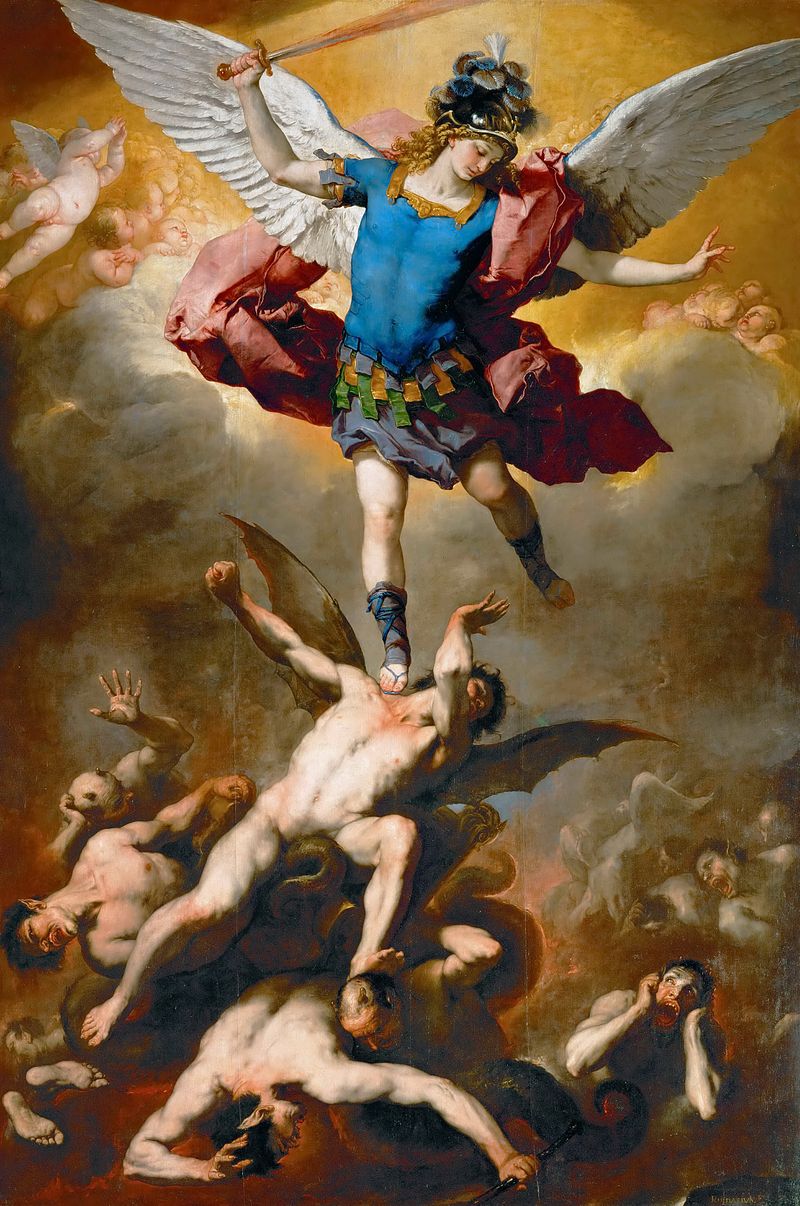
A great sign appeared in heaven: a woman clothed with the sun, with the moon under her feet and a crown of twelve stars on her head. She was pregnant and cried out in pain as she was about to give birth. Then another sign appeared in heaven: an enormous red dragon with seven heads and ten horns and seven crowns on its heads. Its tail swept a third of the stars out of the sky and flung them to the earth. The dragon stood in front of the woman who was about to give birth, so that it might devour her child the moment he was born. She gave birth to a son, a male child, who “will rule all the nations with an iron scepter.” And her child was snatched up to God and to his throne. The woman fled into the wilderness to a place prepared for her by God, where she might be taken care of for 1,260 days. Then war broke out in heaven. Michael and his angels fought against the dragon, and the dragon and his angels fought back. But he was not strong enough, and they lost their place in heaven. The great dragon was hurled down—that ancient serpent called the devil, or Satan, who leads the whole world astray. He was hurled to the earth, and his angels with him. Then I heard a loud voice in heaven say, “Now have come the salvation and the power and the kingdom of our God, and the authority of his Messiah. For the accuser of our brothers who accuses them before our God day and night, has been hurled down. They triumphed over him by the blood of the Lamb and by the word of their testimony; they did not love their lives so much as to shrink from death. Therefore rejoice, you heavens and you who dwell in them! But woe to the earth and the sea, because the devil has gone down to you! He is filled with fury, because he knows that his time is short.” When the dragon saw that he had been hurled to the earth, he pursued the woman who had given birth to the male child. The woman was given the two wings of a great eagle, so that she might fly to the place prepared for her in the wilderness, where she would be taken care of for a time, times and half a time, out of the serpent’s reach. Then from his mouth the serpent spewed water like a river, to overtake the woman and sweep her away with the torrent. But the earth helped the woman by opening its mouth and swallowing the river that the dragon had spewed out of his mouth. Then the dragon was enraged at the woman and went off to wage war against the rest of her offspring—those who keep God’s commands and hold fast their testimony about Jesus (Rev 12).

Here’s a great video reminding us that the Church is more a battleship than a cruise ship:

Order, Order! A Meditation on the Glory of Order in God’s Creation

In a series of two posts I would like to ponder the glory of something we call order. I do this more in the form of a meditation than a treatise. Some may argue that I am oversimplifying complex philosophical concepts. That may be true, but I am a pastor not an academic. And though I summarize here, I do not think I have been inauthentic in setting forth the concepts and problems that have birthed the modern age. My intended audience is people who seek some understanding of the mess we’re in today, but don’t have all day or all week to study it.

Thus permit me this meditation on the glory of order. In this first part, I set forth how the appreciation and understanding of order has suffered in the modern age. In part two (tomorrow’s post), I will meditate on the glory of order under four headings. For now, though, here is part one.

The English word “order” comes from the Latin ordo, which is a row or series ranked in some intelligible way. It indicates that something is arranged methodically toward some desired end or purpose. To give someone an order is to give authoritative direction for the purpose of attaining a willed outcome.

We live in times that are marked by increasing disorder. Socially, a lot of our disorder stems from the disorder at the heart of our families. As the family, the basic unit of society, breaks down, a fundamental order is lost; this brings disorder to the community, Church, state, and nation. But even here, there is a deeper disorder at work, more intellectual than merely social.

Intellectually, many today fail to appreciate order. Why is this?

In ancient and biblical times people saw the world as ordered by God and imbued with a wisdom that ordered it intricately. God created everything through His Word. He said, “Let there be light,” and there was light. By His Word (Logos) He spoke things into existence. But also by His Word He imbued everything with a logic (logike, a word that comes from Logos).

In the Old Testament this was known as the wisdom tradition. In the New Testament this vision is carried forward but with a glorious transposition, for the Word (Logos) became flesh and dwelt among us. Thus Jesus is the wisdom of God, the Second Person of the Trinity among us.

Yes, the ancient and biblical world saw creation as ordered. Jewish and Greek philosophers alike esteemed order and sought to learn from it. When chaos or disorder was noted it was seen as a departure from the normal order, as an anomaly, or as a paradoxical example of some deeper, hidden order.

This thinking and this respect for order continued largely intact from biblical times through the age of the Fathers and on to the High Middle Ages. God is a God of order. His creation, even this fallen version of it, bespeaks that order.

But this appreciation and understanding of order began to break down as early as the 14th Century with the rise of nominalism. Nominalism (from the Latin nomina (name)) was a theory of knowledge that came to dispute the existence of “universals.” Universals are the “form” in which similar things participate. For example, a tree participates in the universal we designate “treeness.” And while individual trees have unique qualities, they all share similarities in a basic form that we perceive as “treeness.”

As I stated above, this is not a philosophical paper and I cannot adequately summarize hundreds of years of debate in a paragraph, but fundamentally the nominalists (William of Occam, et. al.) argued that universals do not actually exist but rather are merely constructions or abstractions of the human mind. They are only names or categories into which we intellectually place things that are similar. In this case trees are stored in the category named “treeness.” (As an aside, the word nominalism comes from the Latin nomina, meaning name.)

Now whether “treeness” is real or just an abstraction may seem debatable and highly academic. But as nominalism became very influential in the 14th century, the focus started to shift away from the physical world to our minds. Reality used to be something we went out to meet, and having observed its order and its laws, learned from it and sought to base our thinking and our life upon what was actually out there.

After the dawn of nominalism, what we call reality became increasingly understood as more of a projection of the human mind than something that the human mind receives and learns to obey. As the centuries ticked by, man moved toward the center; creation and creation’s God were pushed to the edges. Perceived order came to be more of a projected order. And if man projects order and meaning then he can also change it. There is less to obey and more to command.

Welcome to the beginnings of the modern age and the seeds of thinking that one can, for example, create reality by deciding whether one is male or female, rather than determining it from the obvious physical data. Of course all of this took time to trickle down through the centuries, through the Cartesian divide and the Enlightenment.

Increasingly gone was the notion that order existed in creation and could easily be discovered and obeyed. The human mind, not creation, was the locus of order. Darwin spoke of creation having evolved, not out of order and someone who ordered it, but as the result of blind, random chance. There was thus no order, intelligent cause, purpose, or finality to be discovered. It was just all there by chance.

All sorts of other movements (e.g., nihilism) came from the shift that nominalism introduced, the shift of focus from reality to the mind. Since order could not be discovered and agreed upon, but rather just existed in the minds of individuals, the result was disorder, the tyranny of relativism, and a sort of despair in the modern age that anything really has intrinsic or universal meaning at all. The mind is a very lonely place when we sever it from what God has set forth in the Book of Creation and in His revealed Word.

As a believer, I have strongly resisted these modern notions, rooted ultimately in nominalism. I cannot say that I haven’t been influenced by such notions, but I have consistently resisted them since early adulthood. To me, the world shouts, “Order, order, order! I was designed! Come and meet my designer!”

Order is a beautiful thing. In creation God’s order is deep and intricate, vast and wide. It is apparent in the vastness of the entire cosmos and in the intricate workings of cells, molecules, and atoms. What glorious order is all about us! Discovering God’s order, I find peace, meaning, and order in my own life. Reverence for God’s order, an order that is actually out there and not just in my mind, gives me joy and helps me to trust. God has a plan. God has a purpose for every human person as well as for creation itself. Creation does not exist merely in my mind. It is an aspect of what God has created and permeates it. It is “out there” to be discovered and obeyed. It reaches my mind and includes my mind, but it is not just in my mind; it is actually there in what God has made through His Logos, which gives it a logike (logic) that I discover.

In tomorrow’s post, I will offer a brief spiritual meditation on order under four different headings that help to define the experience of order in practical ways:

  1. Life is ordered energy.
  2. Beauty is the splendor of order.
  3. Virtue is ordered love.
  4. Peace is resting in order.

Here are some words related to order/disorder:

Chaos – utter confusion. It comes from the late-Greek word khaos, referring to the primeval emptiness of the universe; this was as opposed to Kosmos, the ordered Universe. The extended sense of chaos (the void at the beginning of creation) has thus come to mean “orderless” confusion.

Pandæmonium (pan- (all) + daemonium (evil spirit)) literally means “all demon.” More figuratively it means “demons everywhere.” John Milton coined the word in Paradise Lost as the name of the palace built in the middle of Hell.

Anarchy – without a ruler, chief or principal

Disarray – lack of arrangement or order

Discord – without a common heart (dis (without) + cor (heart))

Disorder – without order

Lawlessness – the state of living apart from law

On Triple Troubles and Quadruple Quagmires – As Seen in a Commercial and Commented on in Scripture

Sometimes when you’re having a bad day, troubles multiply; I’m not sure why. Perhaps one distraction leads to another, one trip leads to successive stumbles, until we fall headlong. It’s said that trouble comes in threes, but sometimes they come in even longer sequences. The poor soul in the video below is having one of those really bad days. Some of the following psalms came to mind as I watched this painfully humorous video:

The troubles of my heart are enlarged;
bring me out of my distresses O Lord.
Consider my affliction and my trouble,
and forgive all my sins.
Consider how many are my foes,
and with what violent hatred they hate me.
Oh, guard my soul, and deliver me!
Let me not be put to shame, for I take refuge in you.
May integrity and uprightness preserve me,
for I wait for you.
Redeem Israel, O God,
out of all his troubles.
(Psalm 25:17-22)

Do not withhold your mercy from me, Lord;
may your love and faithfulness always protect me.
For troubles without number surround me;
my sins have overtaken me, and I cannot see.
They are more than the hairs of my head,
and my heart fails within me.
Be pleased to save me, Lord;
come quickly, Lord, to help me.
(Psalm 40:11-13)

Though you have made me see troubles,
many and bitter,
you will restore my life again;
from the depths of the earth
you will again bring me up.
You will increase my honor
and comfort me once more.
(Psalm 71:20-21)

I wonder if he could have avoided all of his troubles if he’d been in Church on this Sunday morning instead of at home cooking breakfast. 😉

What Is Meant by the “Sacrifice of Praise” in Scripture?

Corpus Christi

Please consider the following reflection more of a pastoral meditation than a formal exegesis. I do not seek here to compare every use of the phrase in the Scriptures but rather to ponder how we seem to have lost the connection of personal sacrifice to liturgy and worship. Scripture clearly connects them. Let’s look at a few examples from Scripture and then examine how we have strayed from the concept.

So Jesus … suffered outside the gate in order to sanctify the people through his own blood. Therefore, let us go to him outside the camp and bear the reproach he endured. For here we have no lasting city, but we seek the city that is to come. Through him then let us continually offer up a sacrifice of praise to God, that is, the fruit of lips that acknowledge his name. Do not neglect to do good and to share what you have, for such sacrifices are pleasing to God (Heb 13:12-16).

The fundamental principle is that praise (or worship) is connected to sacrifice. Scripture notes this in many places, using expressions such as “a sacrifice of praise” and “a sacrifice of thanksgiving.”

On one level, Tradition insists that there be a connection to true worship of God and to living a holy life in charity to the poor.

If anyone thinks he is religious and does not bridle his tongue but deceives his heart, this person’s religion is worthless. Religion that is pure and undefiled before God, the Father, is this: to visit orphans and widows in their affliction, and to keep oneself unstained from the world (James 1:26-27).

Now consider this, you who forget God, Or I will tear you in pieces, and there will be none to deliver you. He who offers a sacrifice of thanksgiving honors Me. And to him who orders his way aright I shall show the salvation of God (Psalm 50).

Thus, the first meaning of a “sacrifice of praise” is that our worship, our praise and thanksgiving, must flow from a heart that is obedient to God, generous to the poor, and unsullied by worldly affections. There is an intrinsic connection between worship and holiness. The greatest risks of worship and praise are that we think we can use it to “buy God off,” or that mere lip service in worship is sufficient. True worship should lead to integrity, such that we become more and more like the One we praise.

There is also some value in pondering the sacrificial nature of the act of worship/praise itself. This is surely the case for Christ, who as our High priest is also the victim. In the Old Covenant the priest and victim were distinct, but in the New Covenant they are one and the same. Jesus did not offer up some poor animal; He offered Himself. And so, too, for us, who are baptized into the priesthood of Jesus Christ as members of the royal priesthood of the baptized or who are ordained to the ministerial priesthood.

Simply put, our worship and praise does cost something—and it should. It takes some effort; there is a cost to worshiping God in the way He is worthy of. Though it is not easy, it is our obligation; it is something that can and ought to challenge us.

This obligation is underappreciated today, when too often the notion is that “going to Church” should entertain me, feed me, minister to me, and be relevant to me. The focus is on man and what pleases him or is sensible to him, rather than on God. Liturgy today seems far more about man than about God. Modern worship too easily resembles a closed circle in which we congratulate, entertain, and excessively reference one another. Either God is something of an afterthought, or it is presumed that He will be pleased simply by the fact that we are there regardless of what we actually do when there.

The first goal seems to be to please and “reach” the faithful. The faithful are seldom asked to make sacrifices of any sort. For indeed, worship that elevates may also challenge. The challenge might be in listening to the content of the sermon, or ancient language, or complex concepts, or something lasting more than a sound bite. Many Church leaders simply reject what challenges or requires sacrifice on the part of the faithful. Heaven forfend one might be required to attend patiently to the worship of God, or to consider things that are of a higher order than the merely banal, or to devote a little time and study!

If Mass must last no longer than 45 minutes, if sermons ought not challenge, if attending Mass on holy days is “too hard,” then where is the sacrifice? And what about tithing or sacrificial giving? Is the way we worship God merely what pleases me or us? Is the purpose of liturgical music to please and edify me or is it to praise God in a dignified way? Is the liturgy today really about God or is it more about us?

Such a non-sacrificial, misdirected notion of worship is certainly much on display in certain “mega-churches,” whose services resemble rock concerts and motivational talks more than a sacrifice of praise. But these notions have infected the Catholic setting, too, in the ways described above.

Worship should involve work. It is not merely an experience akin to going to a movie or concert and sitting in one’s seat being passively entertained or pleased. Some demands should be made of us beyond the collection plate. Higher things are less easily understood than the merely mundane, and to comprehend them we must be drawn out of our comfort zone and challenged.

I was not born loving either Bach fugues or the intricacies of renaissance polyphony. But, like fine wine, they have attained pride of place in my life—through the power of the liturgy (patiently prayed and experienced) to elevate my mind and personality to higher things. Further, in my earlier years, the joy of gospel music was not relevant to me; today it is. The sacrifice of praise is not, therefore, merely arduous and painful to no end. Like most sacrifices, it brings forth new life.

Mahatma Gandhi (a Hindu) recognized the strange development in the West of worship without sacrifice and called it one of the seven deadly sins of culture. In the West, “going to church” has increasingly come to resemble entertainment. And the attitude seems to be that if things don’t please me and cater to my tastes, I have a perfect right either to go somewhere else or to not go at all.

Where is the sacrifice of praise of which Scripture speaks?

Granted, parishes should strive for excellent liturgy and preaching. Every liturgical aspect should be done well, first and foremost because it is directed to God, who is worthy of our very best. But at the end of the day, no liturgy will be 100% pleasing to everyone. It is not the job of the liturgy to please the faithful. The purpose of the liturgy is to worship God fittingly. It is my task (and dignity) to offer a sacrifice of praise to God the Father through Jesus Christ. Priest and victim are one and the same.

I will end by posing a few questions:

  1. Do we go to the Mass with the attitude “Peel me a grape” (i.e., please me), or ready to offer God a sacrifice of praise?
  2. Is our liturgy focused on God or merely on us?
  3. Do the liturgy and the clergy place proper demands on God’s faithful? Are the faithful willing to accept those demands?
  4. If you are a priest, whom do you hope to please on Sunday? Is it God or just your parishioners?
  5. Is God central in our liturgy today? How is He or is He not?
  6. Are we willing to accept that the primary purpose of the liturgy is not to please us or even to speak in ways relevant to us?
  7. What do you think it means for you to offer God a sacrifice of praise?

Psalm 116 offers a good description of the attitude we should bring to worship and the Liturgy:

LORD, surely I am Your servant, I am Your servant, the son of Your handmaid, You have loosed my bonds. To You I shall offer a sacrifice of thanksgiving, And call upon the name of the LORD. I shall pay my vows to the LORD, in the presence of all His people … (Psalm 116:16-18).

Amen.

100 Questions that Jesus asked and YOU should answer

12.9.15 blog postJesus asked a lot of questions. And rightly so, for he was a supreme teacher. And as any good teacher knows, simply supplying information is not enough. A good teacher wants to teach students to think and go probe more deeply not just the answers, but why they are true. A good teacher also wants the students to examine their own premises, and discover where they stand in relation to the truth. Yes, asking questions of students is a great way to make them think, and the word disciple means “learner” or “student.” Socrates used a similar strategy of asking questions and his method has come down to us today as the “Socratic Method.”

So Jesus, the supreme teaches asks a lot of questions. But note this, YOU are supposed to answer them! Don’t just read how Peter, James, John or Mary Magdalene answered them. When Jesus asks a question, stop, ponder it and answer it! It is a great way to pray the Scriptures and let Jesus be your teacher.

Indeed, one of the bigger mistakes people make in reading Scripture is that they read it as a spectator. For them Scripture is a collection of stories and events that took place thousands of years ago. True enough, we are reading historical accounts.

But, truth be told these ancient stories are our stories. We are in the narrative. You are Abraham, Sarah, Moses, Deborah, Jeremiah, Ruth, Peter, Paul, Magdalene, Mother Mary, and, if you are prepared to accept it, you are also Jesus. As the narrative we read unfolds, we are in the story. We cannot simply watch what others say or do or answer. For what Peter and Magdalene and others did, we do. Peter denied and ran. So do we. Magdalene loved and never gave up, should should we. Magdalene had a sinful past and a promising future, so do we. Peter was passionate and had a temper so do we. But Peter also loved the Lord and ultimately gave his life for the Lord. So can we. Jesus suffered and died but rose again and ascended to glory. So have we and so will we.

The scriptures are our own story. We are in it. To read scripture as a mere spectator looking on is to miss the keynote. Scripture is our story.

And thus we return to the central task when Jesus asks a question: YOU, Answer the Question! This brings Scripture powerfully alive.

So twenty years ago Bishop John Marshall, Bishop of Burlington VT., and later Springfield Mass compiled a book: But Who Do You Say That I Am? In the book he collected and listed all the questions Jesus asked in the Gospels. And he encourages us to answer the question. Bishop Marshall, in listing the question, gives extra verses for context and adds brief commentaries. However, I would like to list just the raw questions.

I will give the verse reference so you can look it up. But, unless you really think it necessary, avoid looking it up at first. Just let the question meet you where you are right now. The question may mean something for you that is very different that its original context. But that is OK. Just pick a question, read it, consider it and answer it, by talking to the Lord.

Read the list slowly, perhaps over days or weeks, often taking just one question at a time. I have attached a PDF version of the List here: 100 Questions that Jesus asked and YOU must answer. Again, ponder each question. Answer each question prayerfully and reflectively. This is not the complete list of questions but it is surely food for thought. Now, answer the questions:

100 Questions that Jesus asked and YOU must answer:

  1. And if you greet your brethren only, what is unusual about that? Do not the unbelievers do the same? (Matt 5:47)
  2. Can any of you by worrying add a single moment to your lifespan? Matt 6:27
  3. Why are you anxious about clothes? Matt 6:28
  4. Why do you notice the splinter in your brother’s eye yet fail to perceive the wooden beam in your own eye? (Matt 7:2)
  5. Do people pick grapes from thornbushes or figs from thistles? (Matt 7:16)
  6. Why are you terrified? (Matt 8:26)
  7. Why do you harbor evil thoughts? (Matt 9:4)
  8. Can the wedding guests mourn so long as the Bridegroom is with them? (Matt 9:15)
  9. Do you believe I can do this? (Matt 9:28)
  10. What did you go out to the desert to see? (Matt 11:8)
  11. To what shall I compare this generation? (Matt 11:6)
  12. Which of you who has a sheep that falls into a pit on the Sabbath will not take hold of it and lift it out? (Matt 12:11)
  13. How can anyone enter a strong man’s house and take hold of his possessions unless he first ties up the strong man? (Matt 12:29)
  14. You brood of vipers! How can you say god things when you are evil? (Matt 12:34)
  15. Who is my mother? Who are my brothers? (Matt 12:48)
  16. Why did you doubt? (Matt 14:31)
  17. And why do you break the commandments of God for the sake of your tradition? (Matt 15:3)
  18. How many loaves do you have? (Matt 15:34)
  19. Do you not yet understand? (Matt 16:8)
  20. Who do people say the Son of Man is? (Matt 16:13)
  21. But who do you say that I am? (Matt 16:15)
  22. What profit would there be for one to gain the whole world and forfeit his life and what can one give in exchange for his life? (Matt 16:26)
  23. O faithless and perverse generation how long must I endure you? (Matt 17:17)
  24. Why do you ask me about what is good? (Matt 19:16)
  25. Can you drink the cup that I am going to drink? (Matt 20:22)
  26. What do you want me to do for you? (Matt 20:32)
  27. Did you never read the scriptures? (Matt 21:42)
  28. Why are you testing me? (Matt 22:18)
  29. Blind fools, which is greater, the gold or the temple that makes the gold sacred….the gift of the altar that makes the gift sacred? (Matt 23:17-19)
  30. How are you to avoid being sentenced to hell? (Matt 23:33)
  31. Why do you make trouble for the woman? (Matt 26:10)
  32. Could you not watch for me one brief hour? (Matt 26:40)
  33. Do you think I cannot call upon my Father and he will not provide me at this moment with more than 12 legions of angels? (Matt 26:53)
  34. Have you come out as against a robber with swords and clubs to seize me? (Matt 26:53)
  35. My God, My God, Why have you forsaken me? (Matt 27:46)
  36. Why are you thinking such things in your heart? (Mark 2:8)
  37. Is a lamp brought to be put under a basket or under a bed rather than on a lamp stand? (Mark 4:21)
  38. Who has touched my clothes? (Mark 5:30)
  39. Why this commotion and weeping? (Mark 5:39)
  40. Are even you likewise without understanding? (Mark 7:18)
  41. Why does this generation seek a sign? (Mark 8:12)
  42. Do you not yet understand or comprehend? Are your hearts hardened? Do you have eyes and still not see? Ears and not hear? (Mark 8:17-18)
  43. How many wicker baskets full of leftover fragments did you pick up? (Mark 8:19)
  44. [To the Blind man] Do you see anything? (Mark 8:23)
  45. What were arguing about on the way? (Mark 9:33)
  46. Salt is good, but what if salt becomes flat? (Mark 9:50)
  47. What did Moses command you? (Mark 10:3)
  48. Do you see these great buildings? They will all be thrown down. (Mark 13:2)
  49. Simon, are you asleep? (Mark 14:37)
  50. Why were you looking for me? (Luke 2:49)
  51. What are you thinking in your hearts? (Luke 5:22)
  52. Why do you call me ‘Lord, Lord’ and not do what I command? (Luke 6:46)
  53. Where is your faith (Luke 8:25)
  54. What is your name? (Luke 8:30)
  55. Who touched me? (Luke 8:45)
  56. Will you be exalted to heaven? (Luke 10:15)
  57. What is written in the law? How do you read it? (Luke 10:26)
  58. Which of these three in your opinion was neighbor to the robber’s victim? (Luke 10:36)
  59. Did not the maker of the outside also make the inside? (Luke 11:40)
  60. Friend, who appointed me as your judge and arbiter? (Luke 12:14)
  61. If even the smallest things are beyond your control, why are you anxious about the rest? (Luke 12:26)
  62. Why do you not judge for yourself what is right? (Luke 12:57)
  63. What king, marching into battle would not first sit down and decide whether with ten thousand troops he can successfully oppose another king marching upon him with twenty thousand troops? (Luke 14:31)
  64. If therefore you are not trustworthy with worldly wealth, who will trust you with true wealth? (Luke 16:11)
  65. Has none but this foreigner returned to give thanks to God? (Luke 17:18)
  66. Will not God then secure the rights of his chosen ones who call out to him day and night? (Luke 18:7)
  67. But when the Son of Man comes, will he find any faith on earth? (Luke 18:8)
  68. For who is greater, the one seated a table or the one who serves? (Luke 22:27)
  69. Why are you sleeping? (Luke 22:46)
  70. For if these things are done when the wood is green, what will happen when it is dry? (Luke 23:31)
  71. What are you discussing as you walk along? (Luke 24:17)
  72. Was it not necessary that the Messiah should suffer these things and then enter his glory? (Luke 24:26)
  73. Have you anything here to eat? (Luke 24:41)
  74. What are you looking for? (John 1:38)
  75. How does this concern of your affect me? (John 2:4)
  76. You are a teacher in Israel and you do not understand this? (John 3: 10)
  77. If I tell you about earthly things and you will not believe, how will you believe when I tell you of heavenly things? (John 3: 12)
  78. Do you want to be well? (John 5:6)
  79. How is it that you seek praise from one another and not seek the praise that comes from God? (John 5:44)
  80. If you do not believe Moses’ writings how will you believe me? (John 5:47)
  81. Where can we buy enough food for them to eat? (John 6:5)
  82. Does this (teaching of the Eucharist) shock you? (John 6:61)
  83. Do you also want to leave me? (John 6:67)
  84. Why are you trying to kill me? (John 7:19)
  85. Woman where are they, has no one condemned you? (John 8:10)
  86. Why do you not understand what I am saying? (John 8:43)
  87. Can any of you charge me with sin? (John 8:46)
  88. If I am telling you the truth, why do you not believe me? (John 8:46)
  89. Are there not twelve hours in a day? (John 11:9)
  90. Do you believe this? (John 11:26)
  91. Do you realize what I have done for you? (John 13:12)
  92. Have I been with you for so long and still you do not know me? (John 14:9)
  93. Whom are you looking for? (John 18:4)
  94. Shall I not drink the cup the Father gave me? (John 18:11)
  95. If I have spoken rightly, why did you strike me? (John 18:23)
  96. Do you say [what you say about me] on your own or have others been telling you about me? (John 18:34)
  97. Have you come to believe because you have seen me? (John 20:29)
  98. Do you love me? (John 21:16)
  99. What if I want John to remain until I come? (John 21:22)
  100. What concern is it of yours? (John 21:22)

After all this you might have a few questions for God:

Transformation or Misinformation? Are Jesus’ Promises Real? What Hinders the Promises of Christ in Us?

blog10-5-2015A text that was read at daily Mass last week features Jesus describing remarkable blessings received by the disciples. He states these blessings as a simple and obvious fact for them, blessings never before received by anyone!

Do you see your life this way? Are your blessings obvious to you? Do they distinguish you from those who never knew Christ? Does your relationship with Jesus Christ grant you obvious transformation or is that just misinformation and exaggeration?

Consider the following, which Jesus said to the disciples:

Blessed are the eyes that see what you see. For I say to you, many prophets and kings desired to see what you see, but did not see it, and to hear what you hear, but did not hear it (Lk 10:22-24).

What did they see and hear?

At one level, they saw and heard the fulfillment of hundreds of prophesies of the Messiah. What prophets pointed to and longed to see, these disciples were seeing fulfilled before their very eyes.

But more richly, what they saw and heard was the experience of having their lives changed—by having met, seen, and heard the Lord Jesus. They felt the God-sized hole in their heart beginning to fill, the deepest longings of the heart being satisfied. For the first time, they began to experience what the first Christians called “grace.”

Grace is the free gift of God that ushers forth in us a life-changing, transformative relationship with Jesus Christ. And by this relationship we begin to experience the life, love, joy, and serenity of God. God’s thoughts and priorities gradually become ours. We think more as He thinks and love more as He does. We start to see our life change. Sins are put to death and many particular graces spring from the sanctifying grace we receive. We become more joyful, confident, serene, chaste, patient, loving, forgiving, and generous. We are more courageous. We love the truth more and proclaim it with love and clarity less than with fear; we proclaim it with greater conviction and knowledge.

In short, by sanctifying grace and the actual graces that flow from and support it, we see our life changed. The old Adam dies and is buried in Baptism. In that same baptism we rise with Christ to new life, to His life, to the life of the New Adam; this becomes ours.

It was to the early apostles and disciples that Jesus spoke the words above. Indeed, they had seen their lives changed by the Lord whom they had met. His teachings set their hearts ablaze. They saw wonders and witnessed countless scriptures fulfilled. They heard a Word that unsettled them at times, but also undeniably gave them peace. They would never again be the same; they had met Jesus, the desire of the everlasting hills. For indeed, Scripture had said,

The blessings of thy father are strengthened with the blessings of his fathers: until the desire of the everlasting hills should come (Gen 49:26).

And now they looked upon Jesus, whom their forbearers had longed to see. Here was the desire of the everlasting hills. And they were blessed; they were whole, complete, and changed (all but the one who would betray Him).

But again, for us the question remains. Are your eyes and ears blessed? Is your life really all that different from the prophets, who longed to see what you see but did not see it, who longed to hear what you hear but did not hear it? Has your life been changed? Have you met Christ? Are you different and blessed, changed and transformed?

Many people I talk to wonder how such a text of Christ’s is really true in their own lives. They know they are blessed somehow in a way that exceeds the faithful of the Old Testament, but they are not sure how. Is their life really all that different from that of a Jew who lived in 290 B.C.? Jesus says it is and calls it being “blessed.” The theologians say it is and call it “grace.” But honestly, is there a noticeable difference?

There is! And any saint will swear it is so. So, too, will those who have met Christ and are experiencing deeper prayer and the first stages of contemplative prayer. Yes, I will testify and say to you, along with the saints and those blessed with deeper prayer, Jesus is real! He is changing my life and filling the God-sized hole in my heart. Yes, Jesus is real; grace is real. The difference is enormous; the desire of the everlasting hills has come. Blessed, blessed are we.

But why do so many, including faithful Catholics, never experience this? Perhaps because they have never been taught to expect it! Yet of course Jesus says it in the text above. But, sadly, few priests preach new life or total transformation. Low expectations bring poor results.

But then, too, there is also the mediocrity that sin so easily causes in us. This stymies the work of the Holy Spirit in us and means that many of us never attain to the normal Christian Life. Consider a text from Fr. Reginald Garrigou-LaGrange:

How is it possible that so many persons, after living forty or fifty years in the state of grace, receiving Holy Communion frequently, give almost no indication of the gifts of the Holy Spirit in their conduct and actions, take offense at a trifle, show great eagerness for praise, and live a very natural life?

This condition springs from venial sins which they often commit without any concern for them; these sins, and the inclinations arising from them, lead the souls toward the earth and hold the gift of the Holy Spirit as it were, bound like wings that cannot spread. These souls lack recollection; they are not attentive to the inspiration of the Holy Spirit which passes unperceived … (The Three Ages of the Interior Life, Vol II, Tan Publications, P 233)

So, even venial sins have a way of clouding the lightsome work of the Holy Spirit in bringing us to the new life that prophets and kings longed for, that desire of the everlasting hills. Too easily do we minimize venial sins simply because they are not mortal. And while this is good, venial sins too easily accumulate like soot on a window and hinder the light from getting through.

The problem with venial sins is that because they are light, we make light of them. A BB is not a bowling ball. But thousands of BBs can add up to more than a bowling ball and weigh down the soul. Venial sins can be to us like the death by a thousand cuts. Individually, a venial sin is a small cut, but the collective loss of blood from many of them can leave one increasingly lifeless.

Fr. LaGrange also details another issue that hinders spiritual growth and the enjoyment of the new order grace:

If silence does not reign in our soul, if the voice of excessively human affections troubles it, we cannot of a certainty hear the inspiration to our interior Master. For this reason, the Lord subjects our sensible appetites to severe trials and in a way crucifies them that they may eventually become silent or fully submissive to our will animated by charity. If we are ordinarily preoccupied with ourselves, we shall certainly hear ourselves or perhaps a more perfidious, more dangerous voice which seeks to lead us astray. Consequently our Lord invites us to die to ourselves like the grain of wheat placed in the ground (Ibid).

So the lack of living a reflective life stymies growth and the inheritance of the blessings that the Lord offers. Most people today are in a big hurry. Most people reflect little, if at all. There is little or no interiority. An unreflective life is unmoored. It has little in the way of a destination and little sense of how to progress let alone measure that progress.

But the blessings of the Lord require a stillness and a recollection that says, “Here am I, Lord. Speak, your servant is listening.” Here is the quiet place where we meet the true desire of our heart and of the everlasting hills. Here is where we can finally hear the Lord say, “Blessed are your eyes and blessed are your ears. Indeed, blessed are you.”

In our hurrying about and our preoccupation with the world and our own self, we forfeit many blessings. Dulled in mind by overstimulation and lack of recollection, we cannot have eyes that are blessed because they see the Lord, or ears that are blessed because they hear the Lord, who alone can satisfy.

Tragically, as Fr. LaGrange notes, we hear only our own self and other even more sinister voices. Indeed, how pitiable it is to be no different from our ancestors, who lived before Christ and had not grace!

Don’t block your blessings! Find time to pray and reflect. Find time to seek Him, who alone can fill the God-sized hole in your heart.

Are you blessed more than were the kings and prophets of old who longed for what you have? Only if you have it! Pray and work for that blessedness that Jesus described:

Blessed are the eyes that see what you see. For I say to you, many prophets and kings desired to see what you see, but did not see it, and to hear what you hear, but did not hear it (Lk 10:22-24).

What is at the Core of Original Sin?

Sometimes Original Sin gets simplified into the eating of an apple. But the core of the apple is not the “core” I speak of in the title. Actually an apple is not mentioned. It is fruit surely but what fruit we do not know. But what’s the big deal about eating an apple or piece of fruit? OK, maybe they shouldn’t have eaten it. But really, did an apple lead to all the pain and grief we experience today?

As you may have guessed, No, it was not an apple or fruit  per se that led to all this. What was the Original Sin, what did it consist of? Consider that Original Sin was actually of cluster of sins: pride, disobedience, ingratitude, lack of trust, and a complete disregard for the wisdom and love of God. I am struck by how the Catechism describes Original Sin:

Man, tempted by the devil, let his trust in his Creator die in his heart and, abusing his freedom, disobeyed God’s command. This is what man’s first sin consisted of.  All subsequent sin would be disobedience toward God and lack of trust in his goodness. In that sin man preferred himself to God and by that very act scorned him. He chose himself over and against God…Seduced by the devil, he wanted to “be like God”, but “without God, before God, and not in accordance with God” (CCC #s 397-398)

Notice the cascading effect that begins with a lack of trust. How did Adam and Eve (and all of us) fail to trust God? Simply in this, God had warned them of a certain tree, the tree of the Knowledge of Good and Evil. Pure and simple he warned they stay away from it for it would bring death to their souls. Now to “know” in the Bible always means more than intellectual knowing. To ”know” in the Bible means to have deep intimate and personal experience of the the thing or person known. Hence it is clear that God did not want Adam and Eve ever to have to experience the horrible reality of evil. He sought to protect them from its devastating effects. So God’s forbidding was made in protective love. We were called simply to trust God that evil is dreadful and we shouldn’t insist on knowing  that for ourselves, just trust God.

But the Devil tempted us in this sort of way:

“You can’t trust God! He is hold something back from you. Sure he gave this nice garden and all but that is just to placate you. He knows that if you eat that fruit you will become like gods and begin to rival him. No! God is trying to keep you from your true destiny, to rule and even to tell him what to do! Do not trust Him or what he is telling you. it is only to keep you down, he isn’t really good at all. Listen to me. I promise you will not die, you will become like gods!

So there it is Adam and Eve. Who are you going to trust? God who gave you everything or the Devil who has given you nothing but promises something on the other side of the sin? Who will it be?

Sadly, you know the rest of the story. And Adam and Eve’s temptation is repeated in every sin we are tempted to commit.

 ”Come on” says the Devil, “God is trying to limit your freedom, keep you down and doesn’t want you to be happy! His demands are unreasonable, he is trying to take away your fun and fulfillment. Sin will make you happy. God’s way is restrictive. Do as you please. Don’t let anyone tell you what to do!”

And so often we buy into it. And are we happy? Maybe for a moment, but the misery of sin is too clear to be denied. The Devil is a liar. But what do we do when we sin? We trust him over God. In so doing the Catechism says we abuse our freedom. How? Because freedom for a Christian is “the capacity to obey God.” We are free when are able to carry out what God says. Now the world and the Devil say that freedom is about doing whatever you please. No, not if it is sin because sin never leads to freedom, it leads to bondage. Jesus says, “Whoever sins is a slave to sin.” (Jn 8:34)  Look at the world today and try to tell me that sin leads to freedom. Look at the addiction to drugs, alcohol, sex, anger, revenge and greed and tell me that sin leads to freedom. No, sin is never freedom, it is bondage and many get so stuck in destructive behaviors that they don’t know how to stop. The video below powerfully illustrates the horror and bondage of sin, it shows its awful reality. It is not freedom at all, it is sorrow, bondage and humiliation.

In sin, we choose ourselves over God as the text from the Catechism says. We think we will become like gods, but in reality we sink lower than the animals and do things to each other and ourselves that even animals don’t do. God wants to raise us to share in his nature to be sure but we insist that we can do it ourselves. We cannot. Look at our grandiose attempts and tell me if you think we have been successful.

The following video does a pretty good job of depicting where Satan’s promises to Adam and Eve led. Watch it if you dare and remember that the Devil is a liar. And God is still calling you!

Every Life is a Story, Only Known Fully by God – A Meditation on a Moving Video

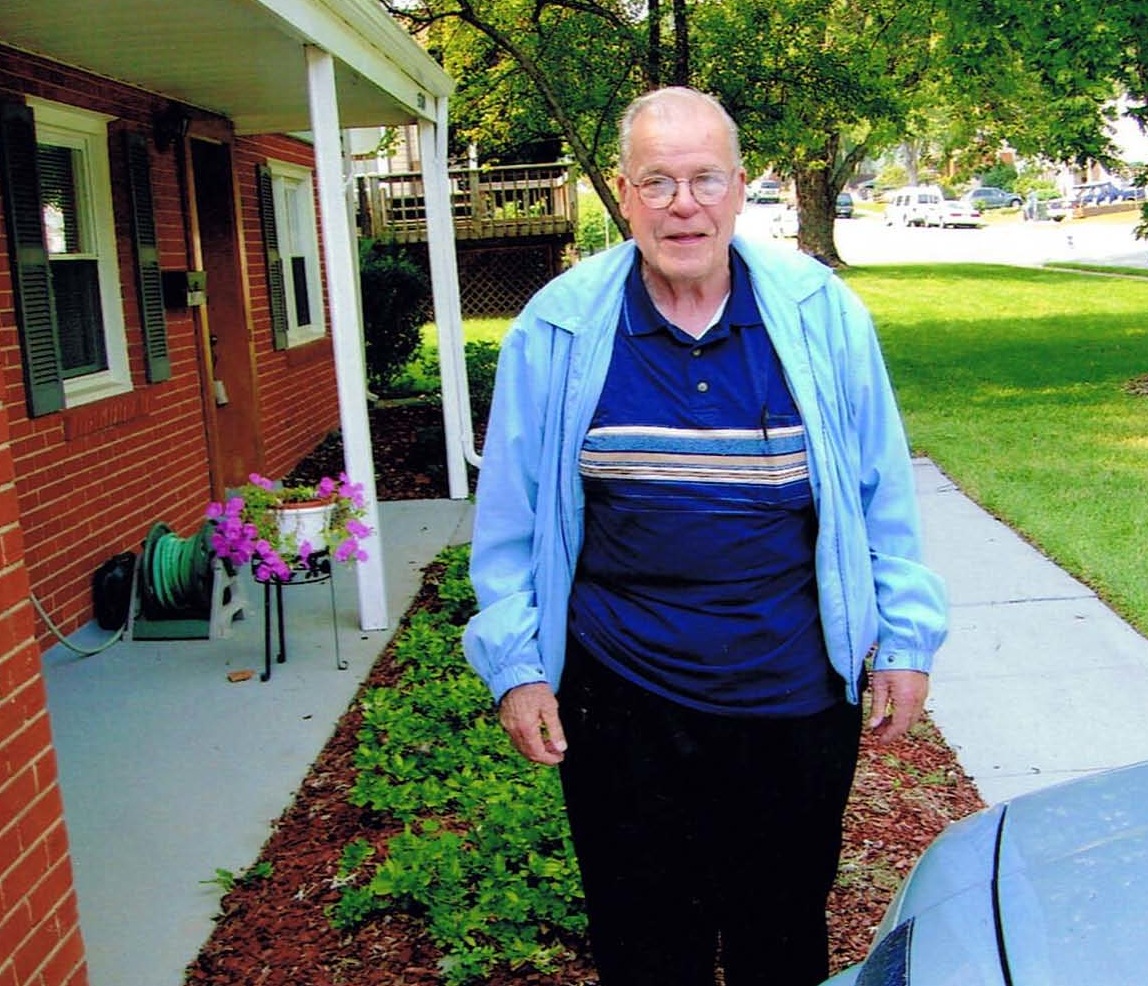
Last Known Picture of Charles Pope Oct 2006When my father lay dying, I remember that one of the losses I began to grieve was that he was the keeper of so many family stories. He was the one who could look at an old family photograph, identify all the people, and tell you something about each one. As I saw him lying there, no longer able to talk much, I thought of all the memories stored up in his mind, all the stories, all the people he once knew and had spoken of so vividly.

And it was not just the family stories he held; he was also a great historian and a great wellspring of the classics. He had read all of the “Great Books,” all of Shakespeare, all of Sacred Scripture, and so many other worthy writings. And he had memorized many lengthy quotes from each.

Such an encyclopedic mind! He was full of vivid thoughts and vivid memories. He was the keeper of our family story. And though I knew he would take it with him in his soul, I grieved that his magnificent mind was now closing to me. I regret that I did not more carefully retain all he told me over the years.

Thankfully, he wrote a family history that stays with us. All his many photos and family films, that we worked to preserve, stay with us. We, his sons, are moving much of this to the digital realm, but it took Dad’s living presence to really bring these things home.

The video below put me in this reflective mood. It depicts an old man who lies dying in a hospital bed. In various flashbacks we see his life, told almost as if from God’s perspective. We see his story, his good moments and his tragedies—and then he passes.

I remember a Bible verse my father jotted down on the frontispiece of a book he was reading at the time of his own father’s death:

But as for man, his days are like the grass, or as the flower that flourishes in the field. The wind blows, and he is gone, and his place never sees him again (Psalm 103:16).

Reading that as a young teenager, I realized for the first time that the Bible was very beautiful. And I was startled to think that the house in which I was sitting would one day “never see me again.” All the stories, all the memories would be gone with the proverbial winds.

The photo at the upper right is the last one I ever took of my father. He standing in front of our family home. I took the picture as he was leaving it for the last time. He moved into a retirement community for a brief time, but was not much longer for this world. There he is, standing in front of the place that would “never see him again.”

Yes, there is something very precious about our memories, our stories. They are meant to be shared, handed down. But there is something irreplaceable, something that dies with each person: a personal glimpse of history, a personal story, something that can never be fully shared with anyone but the Lord.

Only the Lord really knows our story, and he knows it better than we ourselves do:

O LORD, you search me and you know me.
You yourself know my resting and my rising;
you discern my thoughts from afar.
You mark when I walk or lie down;
you know all my ways through and through.

Before ever a word is on my tongue,
you know it, O LORD, through and through …

For it was you who formed my inmost being,
knit me together in my mother’s womb.
I thank you who wonderfully made me;

My frame was not hidden from you,
when I was being fashioned in secret
and molded in the depths of the earth.
Your eyes saw me yet unformed;
and all my days were recorded in your book,
before one of them came into being …

at the end I am still at your side … (Ps 139:varia)

Yes, the Lord knows. He knows all about us.

An old spiritual says, “Nobody knows the trouble I seen, nobody but Jesus.” For in the end, He is the keeper of every story: my father’s, mine, and yours. And whatever is lost in death will be restored a hundredfold, with understanding besides, in the great parousia. Not a story, not a word will be lost. We shall recover it all and tell the old, old stories once again.

Enjoy this poignant and moving video of a man’s life, told almost as if from the standpoint of God, the God who knows. Though the man seems to die alone, someone is remembering his story. Maybe it’s God who is doing the remembering.