Seeing More as God Does

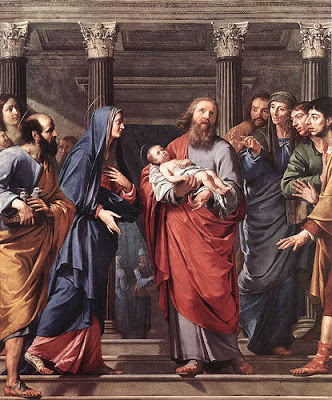
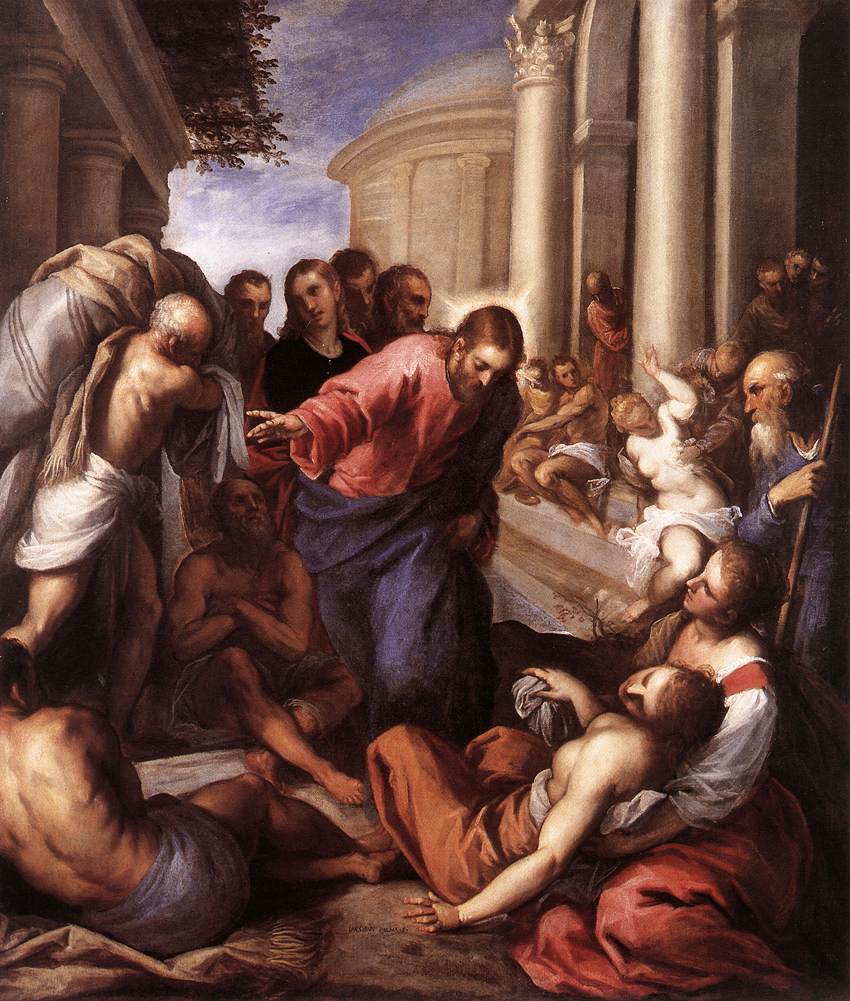
Today I’d like to reflect further on the Gospel reading from today’s Mass (Thursday of the 13th week of the year). It tells the story of the paralyzed man whom Jesus tells to have courage because his sins are forgiven.

In one sense this is a rather peculiar response to a paralyzed man: Jesus looks at him and says, “Courage, child, your sins are forgiven.” Now we might be tempted to tap Jesus on the shoulder and say, “Excuse me, Lord, but this man is paralyzed. His problem is paralysis; that’s what he needs healing for!” (The Pharisees and scribes get all worked up for a different reason: they don’t think that Jesus has the authority to forgive sins.)

Of course, Jesus is neither blind nor lacking in intelligence. Unlike us, however, when Jesus looks at the man he does not consider paralysis to be the most serious problem. To Jesus, the man’s biggest issue is his sin.

Living as we do in this world, most of us have the world’s priorities. The Lord sees something more serious than paralysis, while we wonder what could possibly be more serious than paralysis! But not as man sees does God see. For God, the most serious problem we have is our sin. We don’t think like this even if we are told we should think like this.

Influenced by the flesh as we are, most of us are far more devastated by the thought of losing our health, or our money, or our job, than we are by the fact that we have sin. Threaten our health, well-being, or finances, and we’re on our knees begging God for help. Yet most people are far less concerned for their spiritual well-being. Most of us are not nearly so devastated by our sin (which can deprive us of eternal life) as we are by the loss of our health or some worldly possession.

Even many of us who have some sense of the spiritual life still struggle with this obtuseness and with misplaced priorities. Even in our so-called spiritual life, our prayers are often dominated by requests that God fix our health, improve our finances, or help us to find a job. It is not wrong to pray for these things, but how often do we pray to be freed of our sins? Do we earnestly pray to grow in holiness and to be prepared to see God face-to-face? Sometimes it almost sounds as if we are asking God to make this world more comfortable so that we can just stay here forever. This attitude is an affront to the truer gifts that God offers us.

So it is that Jesus, looking at the paralyzed man, says to him, Your sins are forgiven. In so doing, Jesus addresses the man’s most serious problem first. Only secondarily does He speak to the man’s paralysis, which He almost seems to have overlooked in comparison to the issue of his sin.

We have much to learn about how God sees and about what are the most crucial issues in our life.

Joseph and Mary were told to call the child “Jesus” because He would save the people from their sins. In his book Jesus of Nazareth: The Infancy Narratives, Pope Benedict XVI writes,

Joseph is entrusted with a further task: “Mary will bear a son, and you shall call his name Jesus, for he will save his people from their sins” (Matthew 1:21). … On the one hand, a lofty theological task is assigned to the child, for only God can forgive sins. So this child is immediately associated with God, directly linked with God’s holy and saving power. On the other hand, though, this definition of the Messiah’s mission could appear disappointing. The prevailing expectations of salvation were primarily focused upon Israel’s concrete sufferings—on the reestablishment of the kingdom of David, on Israel’s freedom and independence, and naturally that included material prosperity for this largely impoverished people. The promise of forgiveness of sins seems both too little and too much: too much, because it trespasses upon God’s exclusive sphere; too little, because there seems to be no thought of Israel’s concrete suffering or its true need for salvation.

Benedict then cites the story of the paralytic and comments,

Jesus responded [to the presence of the paralyzed man] in a way that was quite contrary to the expectation of the bearers and the sick man himself, saying: “My son, your sins are forgiven” (Mark 2:5). This was the last thing anyone was expecting; this was the last thing they were concerned about.

The Pope Emeritus concludes,

Man is a relational being. And if his first, fundamental relationship is disturbed—his relationship with God—then nothing else can be truly in order. This is where the priority lies in Jesus’ message and ministry: before all else he wants to point man toward the essence of his malady.

Yes, God sees things rather differently than we do. There is much to ponder about the fact that Jesus said to the paralyzed man, Your sins are forgiven.

>
Two Teachings on Discipleship from Jesus

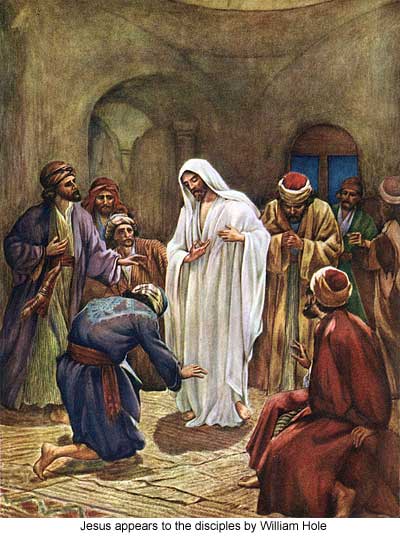
In the Gospel for today (Monday of the 13thWeek of the Year) Jesus gives two teachings on discipleship. They are not easy, and they challenge us—especially those of us who live in the affluent West.

Poverty– The text says, As they were proceeding on their journey someone said to him, “I will follow you wherever you go.” Jesus answered him, “Foxes have dens and birds of the sky have nests, but the Son of Man has nowhere to rest his head.”

Here is a critical discipline of discipleship: following Jesus even if worldly gain not only eludes us but is outright taken from us.Do you love the consolations of God or the God of all consolation? Do you seek the gifts of God, or the Giver of every good and perfect gift? What if following Jesus gives you no earthly gain? What if being a disciple brings you ridicule, loss, prison, or even death? Would you still follow Him? Would you still be a disciple?

In this verse, the potential disciple of Jesus seems to have had power, prestige, or worldly gain in mind. Perhaps he saw Jesus as a political messiah and wanted to get on the “inside track.” Jesus warns him that this is not what discipleship is about. The Son of Man’s kingdom is not of this world.

We need to heed Jesus’ warning. Riches are actually a great danger. Not only do they not help us in what we really need, they can actually hinder us! Poverty is the not the worst thing. There’s a risk in riches, a peril in prosperity, and a worry in wealth.

The Lord Jesus points to poverty and powerlessness (in worldly matters) when it comes to being disciples. This is not merely a remote possibility or an abstraction. If we live as true disciples, we are going to find that piles of wealth are seldom our lot. Why? Well, our lack of wealth comes from the fact that if we are true disciples, we won’t make easy compromises with sin or evil. We won’t take just any job. We won’t be ruthless in the workplace or deal with people unscrupulously. We won’t lie on our resumes, cheat on our taxes, or take easy and sinful shortcuts. We will observe the Sabbath, be generous to the poor, pay a just wage, provide necessary benefits to workers, and observe the tithe. The world hands out (temporary) rewards if we do these sorts of things, but true disciples refuse such compromises with evil. In so doing, they reject the temporary rewards of this earth and may thus have a less comfortable place to lay their head. They may not get every promotion and they may not become powerful.

Thus “poverty” is a discipline of discipleship.What is “poverty”? It is freedom from the snares of power, popularity, and possessions.

Jesus had nowhere to rest his head. Now that is poor. However, it also means being free of the many obligations and compromises that come with wealth. If you’re poor no one can steal from you or threaten take away your possessions. You’re free; you have nothing to lose.

Most of us have too much to lose and so we are not free; our discipleship is hindered. Yes, poverty is an important discipline of discipleship.

Promptness (readiness)The text says, And to another he said, “Follow me.” But he replied, “Lord, let me go first and bury my father.” But he answered him, “Let the dead bury their dead. But you, go and proclaim the kingdom of God.”

The Lord seems harsh here. However, note that the Greek text can be understood in the following way: “My Father is getting older. I want to wait until he dies and then I will really be able to devote myself to being a disciple!”

Jesus’ point is that if the man didn’t have this excuse, he’d have some other one. He does not have a prompt or willing spirit. We can always find some reason that we can’t follow wholeheartedly today because. There are always a few things resolved first.

It’s the familiar refrain: I’ll do tomorrow!

There is peril in procrastination. Too many people always look to tomorrow. But remember that tomorrow is not promised. In Scripture there is one word that jumps out repeatedly; it’s the word now. There are many references to the importance of now or today rather than tomorrow:

  • Come now, and let us reason together, saith the LORD (Isaiah 1:18).
  • behold, now is the day of salvation (2 Cor 6:2).
  • Today if ye will hear his voice, Harden not your heart (Ps 95:7).
  • Boast not thyself of tomorrow; for you know not what a day may bring forth (Prov 27:1).

That’s right, tomorrow is not promised! You’d better choose the Lord today because tomorrow might very well be too late. Now is the day of salvation.

There is an old preacher’s story about delay: There were three demons who told Satan about their plan to destroy a certain man.The first demon said, “I’m going to tell him that there is no Hell.” But Satan said, “People know that there’s a Hell and most have already visited here.” The second demon said, “I’m going to tell him that there is no God.” But Satan said, “Despite atheism being fashionable of late, most people know, deep down, that there is a God, for He has written His name in their hearts.” The third demon said, “I’m not going to tell them that there’s no Hell or that there’s no God; I’m going to tell them that there’s no hurry.” And Satan said, “You’re the man! That’s the plan!”

Yes, promptness is a discipline of discipleship. It is a great gift to be sought from God. It is the gift to run joyfully and without delay to what God promises.

Here are two disciplines of discipleship. They are not easy, but the Lord only commands what truly blesses. There is freedom in poverty and joy in quickly following the Lord!

<p class=”videowrapper”><iframe width=”560″ height=”315″ src=”https://www.youtube.com/embed/kgM1Df76S5c” frameborder=”0″ allow=”autoplay; encrypted-media” allowfullscreen></iframe></p>

In Times of Harsh Political Discourse, What Do the Scriptures Say?

We are in times of strident political protest that includes a lot of harsh language, personal attacks, name calling, and even debased and profane terms. There are tweets, and angry monologues, harsh commentary on news networks, and interruptive press conferences and news interviews that sound more like a brawl than a debate. To put it all more pleasantly, these are times of “colorful” discourse.

What is the overall teaching of Scripture when it comes to this sort of colorful language? Are there some limits and ground rules? Let’s take a look.

The word “civility”dates back to the mid-16th century and has an older meaning that referred to one who possessed the quality of having been schooled in the humanities. In academic settings, debate (at least historically) was governed by a tendency to be nuanced, careful, cautious, formal, and trained in rhetoric. Its rules often included referring to one’s opponents with honorary titles (Doctor, Professor, etc.) and euphemisms such as “my worthy opponent.” Hence as the word entered common usage, it has come to mean speech or behavior that is polite, courteous, gentle, and measured.

As one might guess, there are a lot of cultural variancesin what is civil. And this insight is very important when we look at the biblical data on what constituted civil discourse. Frankly, the biblical world was far less dainty about discourse than we have become in 21st-century America. The Scriptures, including the New Testament, are filled with vigorous discourse. Jesus, for example, really mixes it up with His opponents—even calling them names. We shall see more of this in a moment. But the Scriptures also counsel charity and warn of unnecessarily angry speech. In the end, a balance of the scriptural witness to civility must be sought along with an appreciation of the cultural variables at work.

Let’s examine a few of the texts that counsel charityas well as a modern and American notion of civility:

  1. Anyone who says to his brother, “Raqa” is answerable to the Sanhedrin. But anyone who says, “You fool!” will be in danger of the fire of hell(Matt 5:22).
  2. Do not let any unwholesome talk come out of your mouths, but only what is helpful for building others up according to their needs, that it may benefit those who listen(Eph 4:29).
  3. Fathers, do not provoke your children, lest they become discouraged(Col 3:21).
  4. With the tongue we praise our Lord and Father, and with it we curse men, who have been made in God’s likeness. Out of the same mouth come praise and cursing. My brothers, this should not be (James 3:9-10).
  5. Everyone should be quick to listen, slow to speak, and slow to become angry(James 1:19).
  6. Let your conversation be always full of grace, seasoned with salt(Col 4:6).
  7. Therefore encourage one another and build each other up(1 Thess 5:11).
  8. But now you must rid yourselves of all such things as these: anger, rage, malice, slander, and filthy language from your lips(Col 3:8).
  9. Words from a wise man’s mouth are gracious, but a fool is consumed by his own lips(Eccl 10:12).
  10. The quiet words of the wise are more to be heeded than the shouts of a ruler of fools(Eccles 9:17).
  11. Let us therefore make every effort to do what leads to peace and to mutual edification(Rom 14:19).
  12. Brothers, if anyone is caught in any transgression, you who are spiritual should restore him in a spirit of gentleness. Yet do not regard him as an enemy, but warn him as a brother(Gal 6:1).
  13. Now instead, you ought to forgive and comfort [the repentant sinner], so that he will not be overwhelmed by excessive sorrow(2 Cor 2:7).

All these texts counsel a measured, charitable, and edifying discourse. Name-calling and hateful or unnecessary expressions of anger are out of place. And this is a strong biblical tradition, especially in the New Testament.

But there are also strong contrasts to this instruction evident in the Bible. And a lot of it comes from an unlikely source: Jesus. Paul too, who wrote many of the counsels above, often engages in strident denunciations of his opponents and even members of the early Church. Consider some of the passages below, first by Jesus, then by Paul and other Apostles:

  1. Jesus said, “You brood of vipers, how can you who are evil say anything good?”(Matthew 12:34)
  2. And Jesus turned on them and said, “Woe to you, teachers of the law and Pharisees, you hypocrites! You shut the kingdom of heaven in men’s faces. You yourselves do not enter, nor will you let those enter who are trying to. “Woe to you, teachers of the law and Pharisees, you hypocrites! You travel over land and sea to win a single convert, and when he becomes one, you make him twice as much a son of hell as you are. “Woe to you, blind guides! … You strain out a gnat but swallow a camel. “Woe to you, teachers of the law and Pharisees, you hypocrites! You clean the outside of the cup and dish, but inside they are full of greed and self-indulgence. … You hypocrites! You are like whitewashed tombs, which look beautiful on the outside but on the inside are full of dead men’s bones and everything unclean. … And you say, ‘If we had lived in the days of our forefathers, we would not have taken part with them in shedding the blood of the prophets.’ So you testify against yourselves that you are the descendants of those who murdered the prophets. Fill up, then, the measure of the sin of your forefathers! “You snakes! You brood of vipers! How will you escape being condemned to hell?”(Matt 23 varia)
  3. Jesus said to them, “If God were your Father, you would love me, for I came from God and now am here. I have not come on my own; but he sent me. … You belong to your father, the devil, and you want to carry out your father’s desire. … He who belongs to God hears what God says. The reason you do not hear is that you do not belong to God” (John 8:42-47).
  4. Jesus said, Isaiah was right when he prophesied about you hypocrites; as it is written: “These people honor me with their lips, but their hearts are far from me”(Mark 7:6).
  5. And Jesus answered them, O faithless generation, how long am I to be with you? How long must I tolerate you?(Mark 9:19)
  6. Jesus said to the disciples, “If you, then, though you are evil, know how to give good gifts to your children, how much more will your Father in heaven give good gifts to those who ask him!” (Matt 7:11)
  7. Jesus said to the crowd, “I do not acceptpraise from men, but I know you. I know that you do not have the love of God in your hearts”(Jn 5:41-42).
  8. So he made a whip out of cords, and drove all from the temple area, both sheep and cattle; he scattered the coins of the money changers and overturned their tables(John 2:15).
  9. Then Jesus replied, “Have I not chosen you, the Twelve? Yet one of you is a devil!”(John 6:70)
  10. Paul: O senseless Galatians, who hath bewitched you that you should not obey the truth … As for those circumcisers, I wish they would go the whole way and emasculate themselves!(Galatians 3, 5)
  11. Paul against the false apostles:And I will keep on doing what I am doing in order to cut the ground from under those who want an opportunity to be considered equal with us in the things they boast about. For such men are false apostles, deceitful workmen, masquerading as apostles of Christ. And no wonder, for Satan himself masquerades as an angel of light. It is not surprising, then, if his servants masquerade as servants of righteousness. Their end will be what their actions deserve (2 Cor 11:11-14).
  12. Paul on the Cretans:Even one of their own prophets has said, “Cretans are always liars, evil brutes, lazy gluttons.” This testimony is true. Therefore, rebuke them sharply, so that they will be sound in the faith(Titus 1:12-13).
  13. Peter against dissenters:Bold and arrogant, these men are not afraid to slander celestial beings…these men blaspheme in matters they do not understand. They are like brute beasts, creatures of instinct, born only to be caught and destroyed, and like beasts they too will perish. … They will be paid back with harm for the harm they have done. … They are blots and blemishes, reveling in their pleasures while they feast with you. With eyes full of adultery, they never stop sinning; they seduce the unstable; they are experts in greed—an accursed brood! … Of them the proverbs are true: “A dog returns to its vomit,” and, “A sow that is washed goes back to her wallowing in the mud”(2 Peter 2, varia).
  14. Jude against dissenters:These dreamers pollute their own bodies, reject authority and slander celestial beings….these men speak abusively against whatever they do not understand; and what things they do understand by instinct, like unreasoning animals—these are the very things that destroy them. Woe to them! They have taken the way of Cain; … These men are blemishes at your love feasts, eating with you without the slightest qualm—shepherds who feed only themselves. They are clouds without rain, blown along by the wind; autumn trees, without fruit and uprooted—twice dead. They are wild waves of the sea, foaming up their shame; wandering stars, for whom blackest darkness has been reserved forever. … These men are grumblers and fault finders; they follow their own evil desires; they boast about themselves and flatter others for their own advantage(Jude 1:varia).

Now most of the passages above would violate modern norms about civil discourse.Are they sinful? They are God’s word! And yet they seem rather shocking to modern ears. Imagine getting into your time machine and going to hear Jesus denounce the crowds and calling them children of the devil. It really blows a 21st-century mind!

I want to suggest to you that these sorts of quotes go a long way toward illustrating the cultural dimension of what it means to be civil.The bottom line is that there is a great deal of variability in what people consider civil discourse. In some cultures there is a greater tolerance for anger. In New York and Boston, edgy comments and passionate interruptive debate are common. But in the upper-Midwest and parts of the Deep South, conversation is more gentle and reserved.

At the time of Jesus, angry discourse was apparently more “normal,”for as we see, Jesus Himself engages in a lot of it, even calling people names like “hypocrites,” “brood of vipers,” “liars,” and “wicked.” Yet the same Scriptures that record these facts about Jesus also teach that He never sinned. Hence at that time, the utterance of such terms was not considered sinful.

Careful, now—be careful here. This does not mean it is simply OK for us to talk like this because Jesus did. We do not live then; we live now; and in our culture such dialogue is seldom acceptable and often backfires. There ARE cultural norms we have to respect to remain in the realm of Charity. Exactly how to define civility in every instance is not always clear. An old answer to these hard-to-define things is “I know it when I see it.” So perhaps it is more art than science to define civility. But clearly we tend to prefer gentler discourse in this day and age.

On the other hand, we also tend to be a little thin-skinnedand hyper-sensitive. And the paradoxical result of insisting on greater civility is that we are too easily “outraged” (one of the more overused words in English today). We take offense where none is intended and we presume that the mere act of disagreeing is somehow arrogant, intentionally hurtful, or even hateful. We seem so easily provoked and so quick to be offended. All of this escalates anger further, and charges of hate and intolerance are launched back and forth when there is merely sincere disagreement.

Balance– The Scriptures give us two balanced reminders. First, that we should speak the truth in love, and with compassion and understanding. But it also portrays to us a time when people had thicker skin and were less sensitive and anxious in the presence of disagreement. We can learn from both biblical traditions. The biblical formula seems to be “clarity” with “charity,” the truth with a balance of toughness and tenderness. An old saying comes to mind: “Say what you mean, mean what you say, but don’t say it mean.”

Here is a video that depicts the zeal of Jesus and a bit of his anger.

How Christ’s Ascension is to Be Manifested in Us

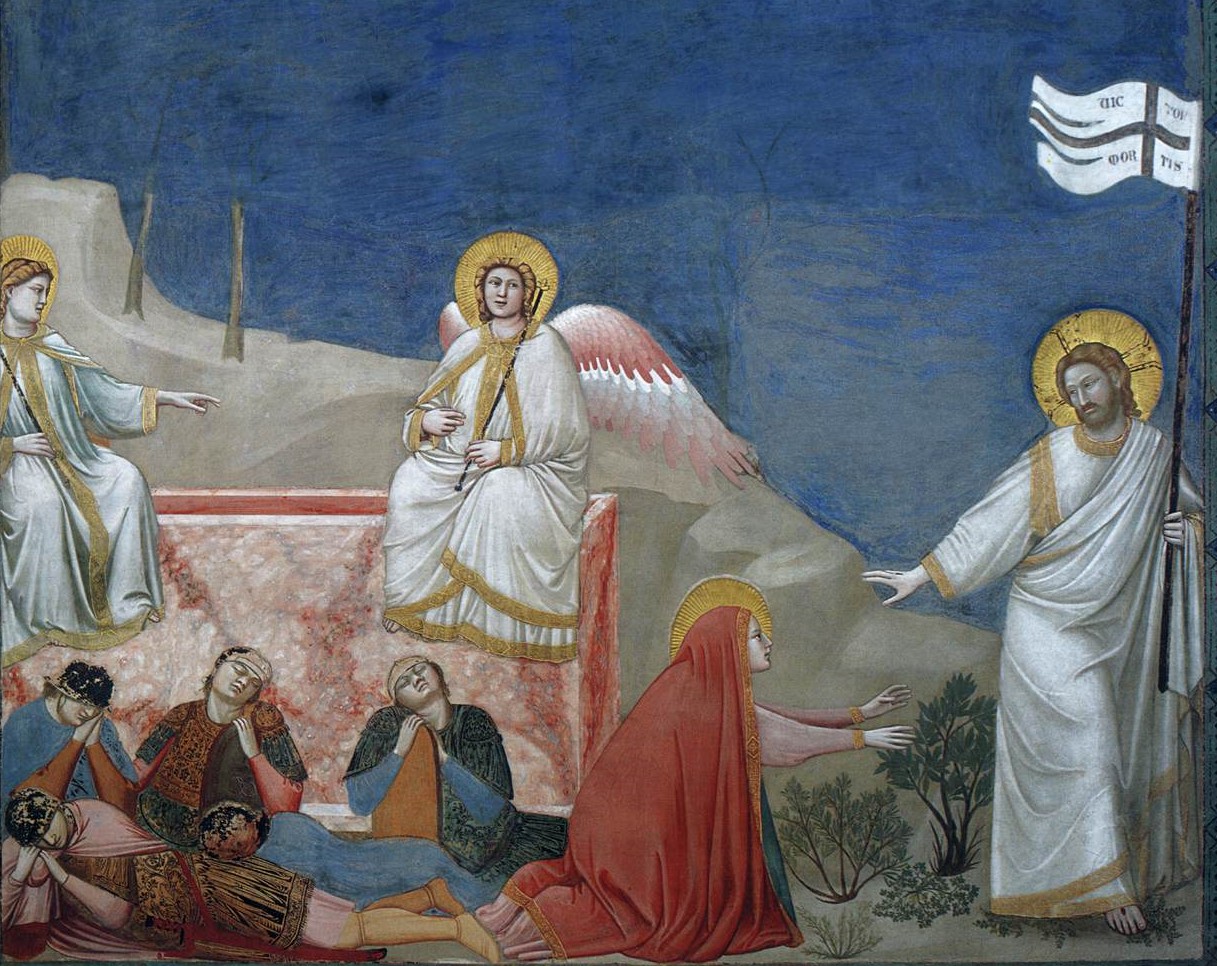
Noli Me Tangere,” Giotto (1304-06)
There is an interaction between Jesus and Mary Magdalene, recounted in John’s Gospel, teaching that Christ’s ascension is about more than just His going up to Heaven. In this, His ascension is like all of His actions: they are not just for Him but also for us.

As Christ ascends, we are called to ascend in at least two ways:

The event with Mary Magdalene takes place early in the morning on the day of His resurrection. Mary recognizes the Lord and runs to embrace Him:

Jesus said to her, “Mary.” She turned and said to Him in Aramaic, “Rabboni!” (which means Teacher). “Do not cling to Me,” Jesus said, “for I have not yet ascended to the Father. But go and tell My brothers, ‘I am ascending to My Father and your Father, to My God and your God.’” Mary Magdalene went and announced to the disciples, “I have seen the Lord!” And she told them what He had said to her (Jn 20:16-18).

Mary’s first reaction is to call Jesus by His earthly title, Rabboni. He is that, but much more. At one point, Jesus bids her to look at Him again. She is clinging to Him, not just to His Body but to her earthly notions of Him as well. To her, He is Jesus, teacher, the hoped-for Messiah. Jesus has her step back and take another look:

Go instead to my brothers and tell them, ‘I am ascending to my Father and your Father, to My God and your God.’

Mary steps back and does see something more. When she returns to the brethren she says, “I have seen the Lord!”

This is the full proclamation of the resurrection. Yes, a corpse has come back to life, but it is more than that. Jesus’ humanity is gloriously transformed and He is now seen as “the Lord.” He has always been, but except at His transfiguration, this has not been seen by any of the disciples.

This is our first understanding of ascension as it applies to us. The Lord is ascending in the sight of the apostles in the sense that they are seeing more of who He really is. He is exalted in their sight. He is ascending in their minds, hearts, and understanding.

Pope St. Leo the Great said,

They made such progress through his ascension that … they were able to fix their minds on Christ’s divinity … What was presented to their bodily eyes no longer hindered them from turning all their attention to the realization that he had not left his Father when he came down to earth, nor had he abandoned his disciples as he ascended into heaven.

The truth is that the Son of Man was revealed as Son of God in a more perfect and transcendent way once he had entered into his Father’s glory; he now began to be indescribably more present in his divinity to those from whom he was further removed in his humanity.

A more mature faith enabled their minds to stretch upward to the Son in his equality with the Father; it no longer needed contact with Christ’s tangible body, in which as man he is inferior to the Father. For while his glorified body retained the same nature, the faith of those who believed in him was now summoned to heights where, as the Father’s equal, the only-begotten Son is reached not by physical handling but by spiritual discernment (from a sermon by Saint Leo the Great, pope (Sermo 2 de Ascensione 1-4: PL 54,397-399)).

Thus, the Lord ascends in their minds and hearts as He ascends to glory. Even prior to his ascension forty days after the resurrection, He was ascending in their estimation and understanding.

So, too, for us, who must come to understand the Lord more deeply as we go. He is a teacher, savior, brother, and friend to be sure, but above all His is the Lord. In our understanding, He is ascending and must ascend so that we see Him more clearly as Lord and God.

There is another sense in which the Lord ascends for us and we must ascend with Him. As He passes beyond our physical sight, we must learn to see Him by faith. We must ascend to a higher place through faith, for faith concerns what is not seen. Scripture says, Now faith is the substance of things hoped for, the evidence of things not seen (Heb 11:1).

Pope St. Leo the Great continued,

Our present rejoicing is on account of his ascension into heaven. With all due solemnity we are commemorating that day on which our poor human nature was carried up, in Christ, above all the hosts of heaven, above all the ranks of angels, beyond the highest heavenly powers to the very throne of God the Father …. And so our Redeemer’s visible presence has passed into the sacraments. Our faith is nobler and stronger because sight has been replaced by a doctrine whose authority is accepted by believing hearts, enlightened from on high.

This faith was increased by the Lord’s ascension and strengthened by the gift of the Spirit; it would remain unshaken by fetters and imprisonment, exile and hunger, fire and ravening beasts, and the most refined tortures ever devised by brutal persecutors … (Ibid).

So, the ascension is not merely something that the Lord did for His own sake as He rose to Heaven. It was for us as well. It is something that must be happening with us in a different way as we gain insight into His glory and move from mere seeing to faith.

Is the Lord ascending in your life? Is your faith ascending to new heights? Is your vision upward? Do you see Him more clearly as the Lord?

Ascend!

“And in the Morning Watch the Lord … Cast a Glance …” A Meditation on the Look of the Lord

There is an astonishing verse in the Exodus account, which was read at the Easter Vigil. The Lord has parted the waters of the Red Sea by a strong eastern wind and the Israelites have just made the crossing and the Egyptians pursued them. The verse says:

And in the morning watch the Lord in the pillar of fire and of cloud cast a glace on the Egyptian forces and threw the Egyptian forces into a panic (Ex 14:24).

Just one look … that’s all it took! One can imagine many other ways that God could have despoiled them: lightning, angelic forces, etc. Instead, the Lord merely “cast a glance.”

Was it an angry glance? The text does not say. I would propose, based purely on speculation, that it was a look of love. For if God is love, then how could it have been anything else?

Why then the panic among the Egyptian army forces? Perhaps it is like the reaction of those accustomed to the darkness, who wince in pain when beautiful light shines. Love confronts and drives out hate the way light drives out darkness. Love is what it is; it cannot be something else. But to those held bound by hatred, love is like kryptonite. And thus the Egyptian army falls at the glance of God, panics at the weakness it experiences. Yes, love can be like kryptonite.

So I propose that, despite the panicked result, God’s glance was one of love. God does not change. Even when we speak of His wrath or anger, we are speaking more of our experience than of what is in God. God is love and so He looks with love. That we experience something other than love is a problem in us, not in God.

Indeed, sometimes we see the look but miss the love. In the Gospel of Mark is told the story of a rich young man who sought perfection, but somewhat on his own terms. Jesus looked at him with love and said to him, “You lack one thing: go, sell all that you have and give to the poor, and you will have treasure in heaven; and come, follow me” (Mk 10:21). The young man saw the look and heard the words, but missed the love. Thus he was sad and fell away.

And lest we reduce God’s look of love to one of mere sentimentality, we ought to recall that God’s look of love can also convict us and move us to repentance. Peter’s denial of the Lord is recounted in all four of the Gospels. The Gospel of Luke describes it in this way: Simon Peter was in the courtyard of the high priest warming himself by the fire. He had just denied knowing the Lord for the third time when the cock crowed. The Lord turned and looked at Peter. And Peter remembered the word of the Lord, how He had told him, “Before a rooster crows today, you will deny Me three times.” And he went out and wept bitterly (Lk 22:61-62). Here was a look of love that caused pain, but it was a healing pain that led to repentance.

For those of us with deeper faith, we learn to count on the look, the glance of God, to save us. An old hymn says, “Though billows roll, He keeps my soul. My heav’nly Father watches over me.” And another song says, “His eye is on the sparrow and I know he watches me.”

Yes, the glance of God may make you feel sad, mad, or glad; but it is the look of love, always seeking to console, or to set us right and bring about healing.

I have a large icon of Christ in my room. In my opinion, what icons from the Eastern tradition do best is to capture “the look.” No matter where I move in the room, it seems that Christ is looking right at me. His look is intense, though not severe. In the Eastern spirituality, icons are windows into Heaven. Hence this icon is no mere portrait that reminds one of Christ; it is an image that mediates His presence. When I look upon Him, I experience that He knows me. He is looking at me with a knowing, comprehensive look.

The Book of Hebrews says of Jesus, No creature is concealed from him, but everything is naked and exposed to the eyes of him to whom we must render an account (Heb 4:13). Christ’s look in the icon in my room is not fearsome; it is serene and confident.

Particularly in Mark’s Gospel there is great emphasis on the eyes and the look of Jesus. The following expression, or one like it, appears more than 25 times in the Gospel of Mark: And looking at them He said, …

Looking on Christ and allowing Him to look on you is a powerful moment of conversion. Jesus Himself said, For my Father’s will is that everyone who looks to the Son and believes in him shall have eternal life, and I will raise him up at the last day (Jn 6:40). And in the First Letter of John we read, What we shall later be has not yet been revealed. We do know that when it is revealed we shall be like him, for we shall see him as he is (1 Jn 3:2).

Keep looking to the Lord during this Easter season, through the art that most moves you and especially in the Most Blessed Sacrament. Look at Him and let Him look at you. Be not dismayed like the Egyptians of old. God is love and therefore His look is always one of love, no matter how we experience it.

The Lord is casting a glance at you right now. What do you see?

This video is a collection of clips from the movie The Passion of the Christ, set to music. It shows many of the looks of Jesus as well as some that come from us. Look for the “looks.”

What Does Jesus Mean When He Says, “I Am Ascending”?

Noli Me Tangere, Fra Bartolomeo (1506)

Even as Easter moves swiftly on, it is valuable to ponder some of the puzzling aspects of the resurrection. In this, St. Thomas Aquinas remains our teacher, along with the Fathers of the Church whom he references.

Let’s explore the enigmatic statement of our Lord Jesus to Mary Magdalene:

Do not cling to me, for I have not yet ascended to the Father; but go to my brothers and say to them, “I am ascending to my Father and your Father, to my God and your God” (John 20:17).

There is much to ponder and distinguish here.

First, we should set aside certain previous translations (e.g., the King James and the Douay-Rheims), which rendered “Do not cling to me” as “Do not touch me.” The Greek text has subtleties that were missed in these early English translations. “Do not touch me” sounds almost rude. The Greek expression Μή μου ἅπτου (Me mou haptou) is best rendered, “Do not go on clinging to me” because haptou is a verb in the middle voice.

The middle voice is one that English lacks. It is midway between the active and passive voices and indicates that the subject of the verb (in this case, Mary) both acts and is acted upon. Mary lays hold of the Lord, but needs to do so in light of the fact that something is different. Something deeper is being shown to her and she is missing that. Mary actively sees as alive the Jesus she has known, but passively needs to receive something new about Him. This is the middle voice, with elements of the active and the passive.

Further as Strong’s Greek dictionary sets forth, ἅπτω (haptou) means, “to fasten to,” “to adhere to,” or “to cling to.” The translation “Do not touch me” misses a subtle difference. What the Lord asks of Mary is that she not merely cling to what is familiar, but step back and see what is new. He is no longer a mere rabbi or teacher. He is not merely the Jesus she knew; He is Lord and He is risen.

Second, we must ponder what Jesus means when He says that He is ascending. St. Thomas Aquinas teaches that these words can be understood in two ways.

As Augustine says (Tract. cxxi super Joan.), “these words of our Lord, ‘Do not touch Me, for I am not yet ascended to My Father,’” show “that in that woman there is a figure of the Church of the Gentiles, which did not believe in Christ until He was ascended to the Father. …” (Summa Theologiae III, Q. 55, Art. 6, Reply to Obj. 3)

This seems weak to me because although Scripture does speak to later ages, it also speaks to those who experienced it contemporaneously. Thus, to say that it refers to the Church of the Gentiles should not be understood exclusively, for it also must have spoken to Mary and the non-Gentiles of the time. St. Augustine is and was far holier than I, so if there is doubt, listen to him, not me, but I don’t believe that we should reduce the Lord’s meaning only to this.

[Augustine says] “… Jesus would have us to believe in Him, i.e. to touch Him spiritually, as being Himself one with the Father. For to that man’s innermost perceptions He is, in some sort, ascended unto the Father, who has become so far proficient in Him, as to recognize in Him the equal with the Father … whereas she as yet believed in Him but carnally, since she wept for Him as for a man.” Or as Chrysostom says (Hom. lxxxvi in Joan.): “This woman wanted to converse with Christ just as before the Passion, and out of joy was thinking of nothing great, although Christ’s flesh had become much nobler by rising again.” And therefore He said: “I have not yet ascended to My Father”; as if to say: “Do not suppose I am leading an earthly life; for if you see Me upon earth, it is because I have not yet ascended to My Father, but I am going to ascend shortly.” Hence He goes on to say: “I ascend to My Father, and to your Father” (Ibid).

In other words, Jesus’ ascent in Mary (and in every other follower) must take place. He is far more than a man resuming mortal nature. He is more; He is Lord. We must come to see Him as Lord and God. In this way, He must ascend in our sight. We must see Him at a higher level and in a higher way. He is no mere sage or rabbi; He is Lord and God! He must ascend in this way, in our understanding.

In recent years, Mary had rightly reverenced Jesus as teacher and rabbi, but Jesus the Lord is doing more now than merely leading an earthly life and fitting into earthly categories.

In effect, Jesus is saying to Mary, “Don’t go on clinging to what in Me is familiar to you. Step back, take a good look, and then go tell my brothers what you see.”

When Mary Magdalene did this, she ran to the apostles and said, “I have seen the LORD (emphasis mine)” (Jn 20:18). I presented “LORD” in uppercase here because up until this point, Mary had used the word “Lord” as a title of human respect. She had said, “They have taken my Lord and I don’t know where they have put him.” Of course, regarding the divine LORD, you don’t take Him and put Him anywhere. He is LORD and He does as He pleases. Now, no longer clinging to him in merely a familiar way, Mary says, “I have seen the LORD (emphasis mine),” meaning it in a plenary and divine sense.

For Mary, the Lord is ascending. She is seeing Him in a higher way. The Lord has ascended for Mary Magdalene. How about for you?

Finally, what of the Lord’s expression that He was ascending to “My Father and your Father, to My God and your God”?

In English, we can use the word “and” in either an equivalent or a comparative sense. I could say to someone, “You are my brother and my friend.” This uses the “and of equivalence” because it indicates that you are both a brother and a friend to me in the same, or in an equivalent way.

Other uses of the word “and” indicate a more comparative sense. When we say that Jesus is “Son of God and Son of Mary,” we mean that He is the Son of His Father in a different way than He is Son of Mary. He is Son of both, but in very different ways. In the liturgy, when the priest says, “Pray, brethren, that my sacrifice and yours may be acceptable to God the almighty Father,” he indicates that while both his sacrifice and the sacrifice of the people are both sacrifices, they are sacrifices in different ways. The priest acts in persona Christi capitis (in the person of Christ the head), while the faithful act as members of the body. Both are rightly called sacrifices, but they are so in different ways.

Thus, when Jesus says that He is ascending to “My Father and your Father,” He does not use the “and of equivalence” but the “and of comparison.” As a man, Jesus can speak of God as His Father, but His human nature is hypostatically united to His divine nature as God, the Second Person of the Trinity. So, although God is our Father and also Christ’s Father, He is Christ’s Father in a far richer and more profound way.

He says to them, “My God and your God,” not by way of equivalence, but by way of comparison.

In all these ways, the Lord Jesus must ascend in our understanding. He will do so, as long as we do not go on clinging to Him in a merely human and familiar way.

Let the Lord ascend in your life.

Four Proofs Advanced by Jesus to Show His Divinity

In the Gospel for Thursday of the Fourth Week of Lent (John 5:31-47), Jesus sets forth a case for his divinity and presents evidence to his Jewish listeners of his divine status. He does not just come out of Galilee calling himself God. He demonstrates his power and calls other witnesses to testify. More of this case he presents in a moment. But ponder first just some of the ways Jesus describes himself to the crowd including claims of his divinity:

Jesus teaches that He is superior to the angels.

  • The angels are His servants and minister to Him (Mt 4:11 Mk 1:13; Lk 4:13).
  • The angels are His army (Mt 26:53).
  • The angels will accompany Him at His second coming and do His will (Mt 16:27; 25:31; Mk 8:38; Lk 9:26).

Jesus appropriates divine actions unto Himself and thus sets forth an assimilation unto the Lord God.

  • He declares that it was He who sent the prophets and doctors of the Law (Mt 23:34; Lk 11:49).
  • He gives the promise of His assistance and grace (Lk 21:15).
  • He forgives sins, which power belongs to God alone (e.g., Mt 9:2).
  • He, by His own authority, completes and changes some precepts of the Law (Mt 5:21ff).
  • He declares Himself to be Lord of the Sabbath (Mt 12:8; Mk 2:28; Lk 6:5; Jn 5:17).
  • Like the Heavenly Father, He makes a covenant with His followers (Mt 26:28; Mk 14:24; Lk 22:20).

Jesus makes divine demands upon his followers.

  • He rebukes some for lack of faith in Him (Mt 8:10-12; 15:28).
  • He rewards faith in Him (Mt 8:13; 9:2; 22:29; 15:28; Mk 10:52; Lk 7:50; 17:19).
  • He demands faith in His own person (Jn 14:1; 5:24; 6:40,47; 8:51; 11:25ff).
  • He teaches that rejection of Him and His teachings will be the standard of final judgement (Lk 9:26; Mt 11:6).
  • Jesus demands supreme Love for Him, which surpasses all earthly loves (Mt 10:37,39; Lk 17:33).
  • He accepts religious veneration by allowing the falling to the feet, a veneration due to God alone (Mt 15:25; 8:2; 9:18; 14:33; 28:9,17).

Jesus teaches that His own death will be an adequate atonement for the forgiveness of the sins of the whole human race (Mt 20:28; 26:28).

Jesus appropriates to Himself the office of Judge of the World, which according to the Old Testament (e.g., Ps 49:1-6), God would exercise (e.g., Mt 16:27). His judgment extends to every idle word (Mt 12:36), and will be final and executed immediately (Mt 25:46).

In John’s Gospel, Jesus indicates that

  • He is eternal “Before Abraham was, I am” (Jn 8:58);
  • He has full knowledge of the Father (Jn 7:29; 8:55; 10:14ff);
  • He has equal power and efficacy with the Father (Jn 5:17);
  • He can forgive sins (Jn 8:11);
  • He is Judge of the World (Jn 5:22,27);
  • He is rightly to be adored (Jn 5:23);
  • He is the light of the world (Jn 8:12);
  • He is the way, the truth, and the light (Jn 14:6);
  • His disciples may and ought to pray to the Father in His name (Jn 14:13ff, 16:23ff);
  • His disciples may pray to Him (Jesus) (Jn 14:13ff, 16:23ff);
  • the solemn confession of the Apostle Thomas, “My Lord and my God,” is acceptable and in fact an act of faith (Jn 20:28).

Jesus calls himself the Son of God.

  • Jesus first reveals Himself to be the Son of God in the temple, when He remarked to Mary and Joseph that He must be about His Father’s business (Lk 2:49).
  • Jesus claims to be both Messiah and Son of God in the presence of the Sanhedrin (Mk 14:62). The Sanhedrin perceive this as blasphemous.
  • Jesus tells a story of himself in the Parable of the vineyard and the evil tenants, thus confessing himself to be the only Son of God.
  • Jesus speaks of being one with the Father (“The Father and I are one” (Jn 10:30,38). The Jews respond by accusing Him of blasphemy.

And many other passages could be listed.

Consider for a moment being a Jew of the First Century, deeply rooted in an understanding of monotheism (i.e. there is only One God) and hearing this sort of talk and these sorts of claims. Would you believe? Or scoff and even shout “blasphemy!”

In a certain sense it is a frightening question. But consider this too, Jesus did give evidence in abundance as to who he was and that his claims were true. In today’s Gospel Jesus makes it clear that there are four things that made the unbelief of some inexcusable. It is combination of external evidence, testimony and internal testimony. Lets look at the case Jesus sets forth: 

I. The Testimony of John the BaptistBut there is another who testifies on my behalf, and I know that the testimony he gives on my behalf is true. You sent emissaries to John, and he testified to the truth. I do not accept human testimony, but I say this so that you may be saved. He was a burning and shining lamp, and for a while you were content to rejoice in his light.

John was a revered prophet. Even his enemies admitted his holiness and that he feared no man and sought to flatter no one. John spoke truthfully of Jesus even when it cost him his followers and his own fame. Scripture says,  They came to John and said to him, “Rabbi, that man who was with you on the other side of the Jordan–the one you testified about–look, he is baptizing, and everyone is going to him. John replied, “A man can receive only what is given him from heaven….The bride belongs to the bridegroom. The friend of the bridegroom stands and listens for him and is overjoyed to hear the bridegroom’s voice. That joy is mine, and it is now complete. He must increase; I must decrease. The One who comes from above is above all. (Jn 3:26-32).

So John the Baptist, a revered and respected prophet testified to Jesus.

II. The Miracles He Wrought But I have testimony greater than John’s. The works that the Father gave me to accomplish, these works that I perform testify on my behalf that the Father has sent me.

The scriptures record 37 miracles by Jesus (you can see the list here: 37 Miracles) which included the miraculous multiplication of loaves and fishes, walking on water, raising the dead, healing multitudes from countless illnesses, casting out fierce demons, and calming storms. Of course, the 37 recorded miracles (some which affected multitudes) were only some of the miracles he worked. As St. John notes There are many more things that Jesus did. If all of them were written down, I suppose that not even the world itself would have space for the books that would be written. (Jn 21:25)

So, the miracles testify to his divinity.

III. The Testimony of the Father Moreover, the Father who sent me has testified on my behalf. But you have never heard his voice nor seen his form, and you do not have his word remaining in you, because you do not believe in the one whom he has sent.

The Father testified at Jesus’ Baptism, “This is my beloved Son, with whom I am well pleased.” But Jesus is more likely speaking here of the interior graces the Father is sending to them so that they may believe. Jesus says elsewhere: No one can come to Me unless the Father who sent Me draws him, and I will raise him up at the last day. It is written in the Prophets: ‘And they will all be taught by God.’ Everyone who has heard the Father and learned from Him comes to Me. (Jn 6:44-45). This indicates an inner inspiration and assistance the Father is providing for them (and us) to believe in Jesus. Even if it is not the grace of faith per se, it is an antecedent grace calling them to faith.

Therefore they are not without supernatural help, and are without excuse for their stubbornness to be docile to the promptings of the Father.

IV. The Scriptures – You search the Scriptures, because you think you have eternal life through them; even they testify on my behalf. But you do not want to come to me to have life.

Jesus fulfilled hundreds of Scriptures that pointed to his coming, his miracles, his divinity (e.g. Psalm 110), his virgin birth, that he would be born in Bethlehem, be called a Nazorean, feed the multitudes, heal the blind, weak, lame and deaf, raise the dead, and bear our sins, and that by his wounds we would be healed. The list goes on and on. Anyone wishing to look at the evidence cannot honestly deny that he is the promised Messiah and Lord. 

This video is from John 8, not the passage for Thursday. But here he speaks in greater depth about their resistance to the Father’s testimony.

A Dramatic Biblical Moment That Nearly Everyone Missed

The moment of the Presentation of Jesus was one of the most dramatic in biblical history, yet almost no one noticed.

The first part of this post is review for those of you who read my blog regularly. To skip to the newer insights, skip down to the sentence in red.

Joseph and Mary have gone to Jerusalem to fulfill two ancient mandates: the Rite of Purification for a woman after childbirth and the Rite of Presentation for a firstborn male child. These rites set the stage for a dramatic moment in biblical history, a moment missed by almost everyone.

Jewish law considered that after a woman gave birth she was ritually impure for a period of time. This was based on the flow of blood that occurred during childbirth. At that time, just about anyone who came in contact with blood incurred a ritual uncleanness for a period of time. The Book of Leviticus has this to say regarding a woman who has given birth:

The LORD said to Moses, “Say to the Israelites: A woman who becomes pregnant and gives birth to a son will be ceremonially unclean for seven days, just as she is unclean during her monthly period. On the eighth day the boy is to be circumcised. Then the woman must wait thirty-three days to be purified from her bleeding. She must not touch anything sacred or go to the sanctuary until the days of her purification are over. If she gives birth to a daughter, for two weeks the woman will be unclean, as during her period. Then she must wait sixty-six days to be purified from her bleeding. When the days of her purification for a son or daughter are over, she is to bring to the priest at the entrance to the Tent of Meeting a year-old lamb for a burnt offering and a young pigeon or a dove for a sin offering. He shall offer them before the LORD to make atonement for her, and then she will be ceremonially clean from her flow of blood.” ‘These are the regulations for the woman who gives birth to a boy or a girl. If she cannot afford a lamb, she is to bring two doves or two young pigeons, one for a burnt offering and the other for a sin offering. In this way the priest will make atonement for her, and she will be clean” (Lev 12:1-8).

Some see a fairly negative concept at work here: a woman becomes ritually unclean by giving birth. This was due not to giving birth per se but to the flow of blood and other fluids during the process. Even more distressing to modern sensibilities is that a woman who gave birth to a daughter was considered ritually unclean for an even longer period of time. Alas, it is well that the power of the Church to bind and loose has freed us from this thinking. Keep in mind that this was ceremonial law, not moral law; hence, the Church is not setting aside immutable moral law in abrogating such notions of ritual impurity.

Obedient to the Law – Nevertheless Joseph and Mary, obedient to law, make the dramatic ascent to the Temple with the Son of God carried in Mary’s arms. It has been forty days since the birth of the Lord in fulfillment of the Law.

As they ascend the glorious steps to the Temple Mount they also fulfill another requirement of the Law:

You are to give over to the LORD the first offspring of every womb. All the firstborn males of your livestock belong to the LORD. Redeem with a lamb every firstborn donkey, but if you do not redeem it, break its neck. Redeem every firstborn among your sons. In days to come, when your son asks you, ‘What does this mean?’ say to him, ‘With a mighty hand the LORD brought us out of Egypt, out of the land of slavery. When Pharaoh stubbornly refused to let us go, the LORD killed the firstborn of both people and animals in Egypt. This is why I sacrifice to the LORD the first male offspring of every womb and redeem each of my firstborn sons’’ (Ex 13:12-15).

Something even more dramatic takes place here. To understand what it is, let’s look back to 587 B.C.

The Babylonians had invaded Jerusalem and the unthinkable had happened. The Holy City was destroyed and, along with it, the Temple of God. Inside the Temple something even more precious than the building had been housed: the Ark of the Covenant.

Recall what the Ark of Covenant was in the Old Testament. It was a box of acacia wood, covered in gold. Inside it were placed the two tablets on which God had inscribed the Ten Commandments. Also in it was the staff of Aaron and a vial of the manna. Even more important, in this box, this ark, dwelt the very Presence of God in Israel. God mysteriously dwelt within, much as is the case today in our understanding of the tabernacle in our Catholic churches.

The Lost Ark – Incredibly, however, the Ark was lost when the Babylonians destroyed the Temple and Jerusalem in 587 BC. Some thought that Jeremiah had hidden it in the mountains. Others, that the priests had hastily hidden it in the maze of caves beneath the Temple Mount. Still others argued that it was taken to Ethiopia. But the Ark was gone.

Empty Temple – When the Temple was rebuilt some eighty years later, the Holy of Holies was restored but the Ark was still missing. The High Priest still performed the yearly ritual and entered the Holy of Holies, but the room was empty. Some argued for a spiritual presence in the Temple, but in fact the Ark and the certain presence of God were missing in the Temple after 587 B.C. Something—someone—was missing. The very Holy of Holies was an empty room. The Ark and the presence of God it carried were missing. The Ark, the mercy seat, was gone. Would it ever be found? Would it ever be returned to the Temple? Would the Holy Presence of God ever find its way to the Temple again?

The ascent to Jerusalem is a steep one. Mountains surround Jerusalem and it sits up at a higher altitude than the area around it. As the ancient Jews made the climb they sang the psalms of ascent (120-134). As Joseph and Mary ascended, they too sang the words that instilled joy: I Lift up mine eye to the mountains from whence cometh my help (Ps 121). I rejoiced when they said to me let us go up to the House of the Lord (Ps 122). To you O Lord I have lifted my eyes (Ps 123). Like Mount Zion are those who trust in the Lord (Ps 125). Out of the depths I call unto you O Lord (Ps 130). Let us enter God’s dwelling, let us worship at the Lord’s footstool. Arise O Lord and enter your dwelling place, You and the Ark of your strength (132). Come and bless the Lord. You who stand in the House of the Lord Lift your hands to the Sanctuary and bless the Lord. The Lord bless you from Zion (134).

Singing these songs, Mary carried Jesus. The climb was even more difficult when carrying a newborn, but the burden was sweet. Then came the final ascent up the stairs to the Temple Mount. They probably entered on the southern side through the Huldah gates. They went up the steep stairs, through the tunnel in the walls, and emerged on the bright Temple platform above.

God had returned to His Temple. He and the Ark who carried Him were now found. Mary, the Ark, carrying Jesus in her arms. Jesus, very God, true God from True God. Yes, God and the Ark had been found and God was once again present among His people on the Temple Mount. Scripture says,

And the Lord, whom ye seek, shall suddenly come to his Temple, even the messenger of the covenant, whom ye delight in: behold, he shall come, saith the LORD of hosts. But who may abide the day of his coming? and who shall stand when he appeareth? (Mal 3:1-2)

What a dramatic moment and yet what a remarkable understatement by God! If I had directed the moment I would have called for blaring trumpet, claps of thunder, and multitudes of angels! And everyone would have fallen to his knees in recognition of the great fulfillment and the great return of God to His Temple.

Yet it would seem that only an elderly man and woman (Simeon and Anna) took any note at all. They alone understood that they were in the presence of greatness and beheld the drama of the moment.

Now there was a man in Jerusalem called Simeon, who was righteous and devout. He was waiting for the consolation of Israel, and the Holy Spirit was upon him. It had been revealed to him by the Holy Spirit that he would not die before he had seen the Lord’s Christ. Moved by the Spirit, he went into the temple courts. When the parents brought in the child Jesus to do for him what the custom of the Law required, Simeon took him in his arms and praised God, saying: “Sovereign Lord, as you have promised, you now dismiss your servant in peace. For my eyes have seen your salvation, which you have prepared in the sight of all people, a light for revelation to the Gentiles and for glory to your people Israel.” The child’s father and mother marveled at what was said about him. Then Simeon blessed them and said to Mary, his mother: “This child is destined to cause the falling and rising of many in Israel, and to be a sign that will be spoken against, so that the thoughts of many hearts will be revealed. And a sword will pierce your own soul too.” There was also a prophetess, Anna … Coming up to them at that very moment, she gave thanks to God and spoke about the child to all who were looking forward to the redemption of Jerusalem (Luke 2).

Yes, this was the dramatic moment that had been anticipated for centuries. The Ark of God was found (Mary) and God (Jesus) returned to His temple, but only a few noticed. Just a few understood and celebrated.

What about us? At every Mass, Jesus, God Himself, is present. Do you notice? Do you really see Him? Or do you see only the priest and the human elements of the Mass? Are you Simeon? Anna? Mary? Joseph? Or are you just among those on the Temple Mount who miss the dramatic moment of God with us?