There is a song about the sadness of moral relativism in an unusual place: “The Greatest Hits of the Monkees.”
Some who are old enough may remember growing up with the songs of the Monkees. I confess their song “Only Shades of Gray” was not one I remember well from those days. But it is a fascinating song about moral relativism.
Some think it’s just a song about growing up. But to most it speaks of a time when things were more certain and compares it to these more modern times when it seems everything is disputed and up for grabs, no more black and white, only shades of gray.
It is all the more poignant that the song was written in the turbulent 60s and, perhaps, represented the anxiety generated by those times when just about everything was being thrown overboard.
Now I know that it is wrong to point any particular age as the “golden age.” Scripture itself warns against this: Do not say: How is it that former times were better than these? For it is not in wisdom that you speak this (Ecclesiastes 7:10). I am also aware that not everyone feels the same about the “good old days.” For some they were not all that good. We should not forget the terrible wars of the early half of the 20th Century. Further, I serve in a parish that is predominantly African American and for many of my parishioners previous days featured “Jim Crow” laws, disenfranchisement, lynching and enforced segregation.
And yet, it remains also true that some fifty years ago we had a much wider consensus on basic moral teachings and appropriate behaviors.
Premarital sex was considered gravely wrong and guarded against, even if it was not perfectly observed. Remember chaperons and separate dormitory facilities?
Easy divorce and remarriage was considered wrong, and it was in fact legally difficult to get divorced.
Abortion was illegal
And it never even entered our minds to give children in school contraceptives.
There was also strong consensus against homosexual activity and the thought of homosexuals demanding to marry and being taken seriously was something that would have seemed from an episode the Twilight Zone.
Families were larger and most were intact.
There was also a general appreciation of the role of faith and prayer in American life.
I could go on but perhaps this is enough.
Here too I can hear the objections: “We might have had those standards but we didn’t live them well…. Things went on behind the scenes, families weren’t perfect, many kids still had sex etc. etc….”
But I will respond by saying, At least we had those standards and saw them as truths to be respected. It is an extreme measure, a kind of nihilism, to say that since we do not live up to our standards perfectly we should not have them at all.
And I also know we were more wrong about some things in the past. We were more racist and less open to legitimate diversity, less concerned about pollution. But here too it is extreme to say that because we were wrong about some things in the past the whole thing should be thrown out. Why not keep the best and purify what is needed?
So here we are today, is a radically relativistic and nihilistic time where there is less and less agreement about the most basic of moral issues. And, without a common basis for discussion, such as Natural Law, or the Judeo-Christian worldview, we are left to a battle of wills, an increasing power struggle where the one who shouts the loudest, has the most money, wins an election or has the most access wins, at least for the moment.
It is what Pope Benedict has described as the “Tyranny of Relativism.” Reason and principles increasingly do not transcend political, economic and social distinctions. There are fewer and fewer shared values that every one agrees on no matter what their party or background. Public policy is rooted more in power than in right reason. We are a culture without a “cultus” i.e. without God, or even a higher truth outside ourselves to which we all look and have general agreement. Closed in ourselves and our own little world we are like crabs in a basket, fighting and clawing for the top. There is nothing we acknowledge from above to order us.
Whatever our struggles of the past, we used to agree on more. Many of those certainties have been replaced by a wide presumption that everything is just shades of gray.
Listen to the song. Don’t forget my disclaimers. I do not propose a simplistic old=good; new=bad scenario. I just write to provoke thought. Please feel free to comment. . First the words, then the video.
A quick word of thanks for your patience, as the Blog has been down for three days. We got hacked in a bad way. Terrible malicious software brought the whole server down. Every thing had to be cleansed and copied to a new server. We are back on Firefox, Safari and Explorer but Google Chrome is still mad at us. Hopefully they too will be back on line after we prove we’ve been cleansed by the Blood of the Lamb, and also by IT experts!
It is impossible for us to know why we were attacked, it may be something that was said or posted here or it may just be that it was “our turn.” Either way, Satan has been busy and he and his minions will answer to God someday for things far more serious than this, but not to exclude things like this.
And that leads me to today’s commentary on a Mercedes Benz commercial. In the video below Satan appears with promises to the whole world and all its pleasures if the man in the video will just sign on the dotted line. Not only will the man get a free Mercedes Benz but he will also get all the things that are supposed to go with a Benz: beautiful women, caviar, luxurious receptions, fancy homes, access, victory, popularity, you name it. “It’s all yours! Just sign here!” says Satan.
But the man considers the price of a Mercedes without the devil as a partner versus everything with the Devil as a partner. Do not miss the meaning of the name “Mercedes” which means mercy, and Benz which is a name meaning “brave”. Mercy is worth more than anything else, no matter how pleasurable in passing. For the mercy of the Lord endures forever, while the trinkets of the devil are but for a time. You might say, in financial terms, mercy has positive leverage while the Devil’s payouts have diminishing returns. If the Devil gives you a payout, you’ll watch it diminish with each passing day. But God’s grace and mercy grow to yield an abundant harvest. There may be the payout of the cross and deferred pleasure, but wait till you say the harvest. Thus once must bravely (“benz”) reach out for Mercy (“mercedes”).
Thus, in the commercial the man considers all Satan’s trinkets against the glories of mercy and he chooses mercy. He know the cost, but considers it acceptable if he can but have mercy for himself, without the Devil as a partner. How about you?
A final detail worth noting in the commercial: At the bottom of the proposed contract held out by Satan is a backward Chi Rho (The Greek abbreviation for “Christ”) and the Latin Inscription Sigilla posuere magisterdiabolus et daemones (Master seal of the Devil and demons. The backward initials recalls an image of the anti-Christ. And the Latin is more literally means “A seal to set the Devil and demons (as) Master.”
In the end that is the choice. You will have the master your choose. And of this the Lord reminds we must choose one and only one:
No one can serve two masters. Either he will hate the one and love the other, or he will be devoted to the one and despise the other. You cannot serve both God and Money. (Matt 6:24)
Whose coins are in your pocket and whose seal is on them? The choice is yours. You are free to choose, but you are not free NOT to choose. You can have it all now, or store it up bravely for later:
Do not store up for yourselves treasures on earth, where moth and rust destroy, and where thieves break in and steal. But store up for yourselves treasures in heaven, where moth and rust do not destroy, and where thieves do not break in and steal. For where your treasure is, there your heart will be also (Matt 6:19-21)
Why not be Benz (brave) and choose Mercedes (mercy)?
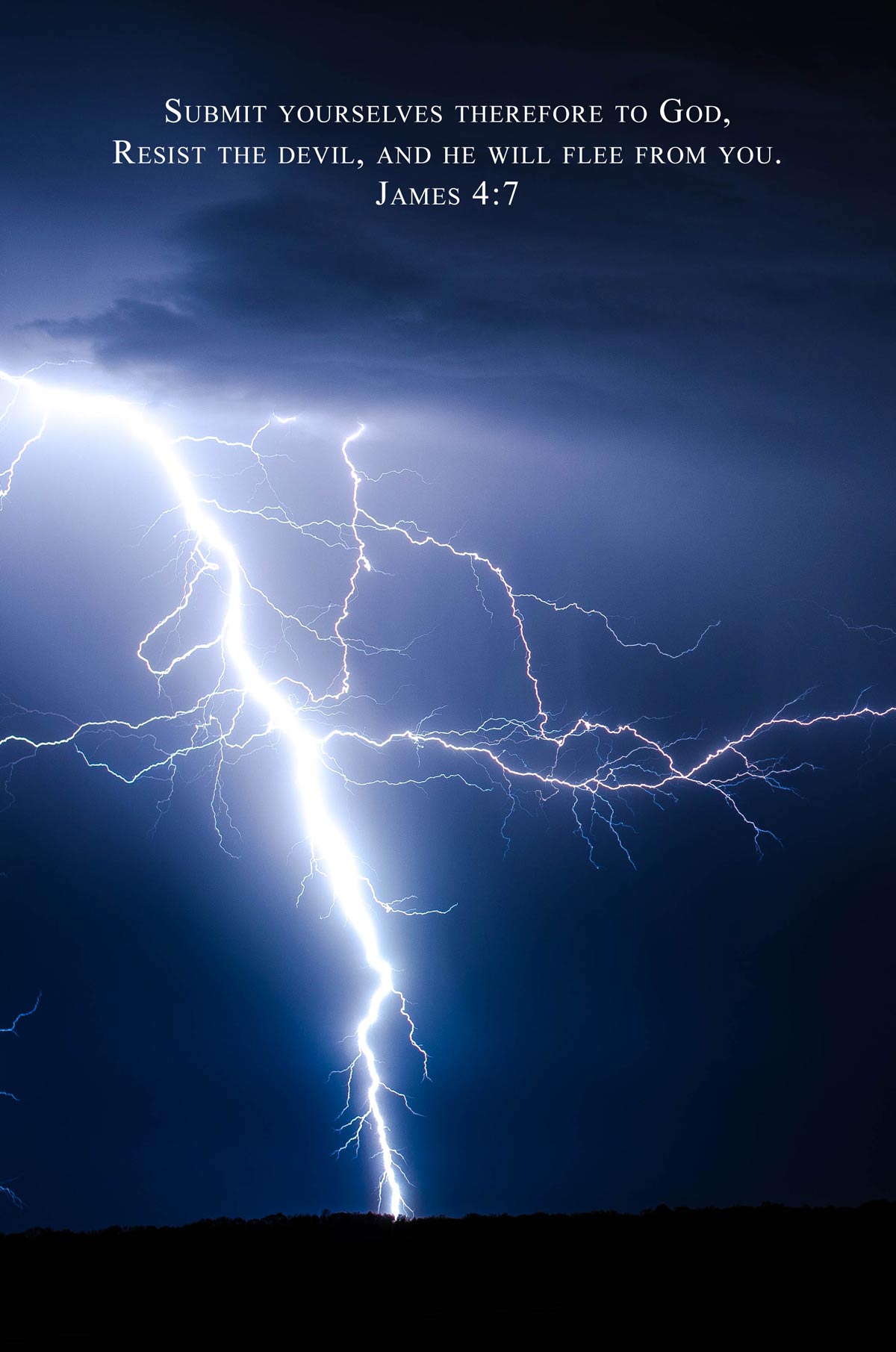
In the end the Scripture is fulfilled for the man which says, Resist the Devil and he will flee (James 4:2)
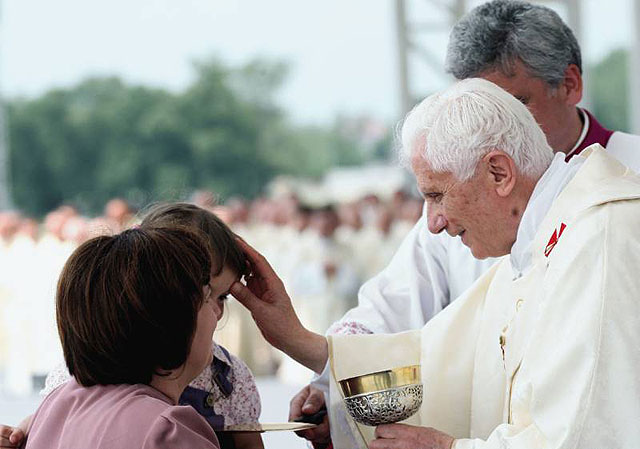
“Pope Benedict XVI in Zagreb 04” by The Catholic news agency of the Bishops’ Conference of Bosnia and Herzegovina (Katolička tiskovna agencija Biskupske konferencije Bosne i Hercegovine) Licensed under attribution via Wikimedia Commons
We have all be moved and shaken by the Pope’s resignation. And yet it is remarkable to consider that he is 85 years old. How many 85 year olds are working at all, let alone trying to shepherd a worldwide Church of over a billion souls with the expectation of a “jet-set” Papacy and almost daily public exposure.
Yes, it is a remarkable thing to ask of an 85 year old. Age has its burdens. And while I have never been 85, I have walked with many who have come to experience that age has its glorious moments but also it grueling ones. A good priest friend of mine finally had to leave a rectory he loved because, at 85, he can no longer ascend the stairs.
Yes there is something about aging. It is painful, but it is also poignant and beautiful if we accept it. There is a kind of gentle letting go that God effects in us as we age. Little by little we hand things back to God and learn to depend on him more, and those he sends us. To be sure, I am aware that old age is not easy, but there is something strangely beautiful about what God does in old age if we are willing to see and accept it.
One of the more beautiful passages in the Old Testament is the 12th Chapter of Ecclesiastes. It is a melancholy but soulful meditation on old age. It’s poetic imagery is masterful as it draws from the increasingly difficult effects of old age such as hearing loss, fading eyesight, difficulty walking, digestive issues, even gray hair. I have presented this reflection here before, but it occurs to me to present it anew in the wake of the Pope’s gentle admission that his physical and mental strength is failing.
Consider then this passage from Ecclesiastes and then some line by line commentary from me.
Remember your Creator in the days of your youth, before the evil days come And the years approach of which you will say, I have no pleasure in them; Before the sun is darkened. and the light, and the moon, and the stars, while the clouds return after the rain; When the guardians of the house tremble, and the strong men are bent, And the grinders are idle because they are few, and they who look through the windows grow blind; When the doors to the street are shut, and the sound of the mill is low; When one waits for the chirp of a bird, but all the daughters of song are suppressed; And one fears heights, and perils in the street; When the almond tree blooms, and the locust grows sluggish and the caper berry is without effect, Because man goes to his lasting home, and mourners go about the streets; Before the silver cord is snapped and the golden bowl is broken, And the pitcher is shattered at the spring, and the broken pulley falls into the well, And the dust returns to the earth as it once was, and the life breath returns to God who gave it. Vanity of vanities, says Qoheleth, all things are vanity! (Ecclesiastes 12:1-8)
And now, if you will, some commentary on each verse. My comments are in red:
1. Remember your Creator in the days of your youth, before the evil days come And the years approach of which you will say, I have no pleasure in them –
We are advised to give thanks to God for the vigor of youth for “evil” days will come. Here evil does not mean evil in the sense of “sinfully evil.” Rather, evil here means the days that are difficult and bad, days that bring challenge and pain.
We might want to be thankful for living in the modern age since the burdens of old age are far less than in the ancient world. Consider all the medicines and helps that make aging less difficult. Pain medicines alleviate arthritis, calcium supplements help with osteoporosis, blood pressure meds help prevent stroke and partial paralysis, motorized scooters help mobility, eye glasses and hearing aids improve our ability to interact and so forth.
But most all of this was missing in the ancient world. Age brought increasing and cumulative burdens so that our author says regarding these days, “I have no pleasure in them.”
2. Before the sun is darkened. and the light, and the moon, and the stars, while the clouds return after the rain – Here is a poignantly poetic description of eyesight going bad. The light darkens, stars and moon are less visible (perhaps blurry) and the clouds of cataracts begin to afflict the elderly.
3. When the guardians of the house tremble, and the strong men are bent, And the grinders are idle because they are few, and they who look through the windows grow blind –
The “guardians of the house” are the biblical reference to our arms, and they start to tremble with the tremors common to old age even without Parkinson’s disease.
The “strong men” are the legs, and they are bent, less able to carry the weight of the body, Bent also indicates the legs when we are seated, unable to walk.
The “grinders” are the teeth and they are few! We have better dental health today, but then, it was common for the elderly to have lost many if not most of their teeth. This made it difficult to eat, requiring food to be mashed.
The image of an elderly person sitting in a window looking out but growing blind is surely sad, but also vivid. I remember my Grandmother in her last years. She could no longer read much because her eyes were bad and her mind could not concentrate on the text. So she sat for hours and just looked out the window.
4. When the doors to the street are shut, and the sound of the mill is low; When one waits for the chirp of a bird, but all the daughters of song are suppressed–
The “doors to the street” are the tightly compressed lips common to the very elderly, especially when teeth are missing. This also depicts how many of the elderly stop talking much. Their mouths are shut tight.
The sound of the mill may be another reference to chewing. Many of the elderly lose their appetite. One the psalms says regarding the elderly “I moan like a dove and forget to eat my bread” (Psalm 102:4).
Waiting for the chirp of the bird may be a reference to the silence of the elderly but it may also be a reference to deafness of the elderly who can no longer hear the singing and chirping of the birds. Something the young take for granted.
5. And one fears heights, and perils in the street; When the almond tree blooms, and the locust grows sluggish and the caper berry is without effect, –
Walking is difficult and treacherous and requires great effort for many of the elderly. Whereas the young may not think twice about a flight of stairs, the elderly may see them as insurmountable. Perils in the street like loose or upturned stones cause fear since a fall for the elderly can be devastating. They may also not be able to get up if they fall.
The almond tree blooming is a symbol for gray hair since almond trees had white blooms. The caper berry had several uses in the ancient world. It was an appetite stimulant, an aphrodisiac, it also was used to treat Rheumatism! But in old age, it would seem that the desired effects are hard to come by.
6. Because man goes to his lasting home, and mourners go about the streets; Before the silver cord is snapped and the golden bowl is broken, And the pitcher is shattered at the spring, and the broken pulley falls into the well, And the dust returns to the earth as it once was, and the life breath returns to God who gave it. –
And finally death comes, as symbolized by the mourners in the street, the silver cord, the golden bowl, symbols of life now snapped and broken.
The broken pitcher symbolizes that the body no longer contains the soul.
The pulley, a device used to lift is now broken, indicating that the body too will no longer rise from its place but falls into the well of the grave.
And we return to the dust and the soul goes to God.
7. Vanity of vanities, says Qoheleth, all things are vanity! – In the end, all things pass. Nothing remains. Since all things are to pass they are vain (empty). The physical world is less real than the spiritual for the physical passes but the spiritual remains. Since you have been raised to new life with Christ, seek the things that are above, where Christ is seated at God’s right hand (Col 1:3)
A sad but powerfully beautiful description of old age and of the dignity of the elderly.
I have often shared it with the very elderly and those who are suffering the ill effects of old age. I remember reading it slowly to my Father as he lay dying in his hospital room. He could no longer talk much. But as I read it to him I saw him nod and raise his hands as if to say “Amen!” Almost too as if he meant to say, “Somebody understands, God understands.”
Perhaps you also know an elderly person who could benefit from this passage. I know it is sad and not everyone is in a place where they can hear such a stark and sad description. But some are in that place where they can derive peace as God, through his word, says He knows exactly what they are going through.
Perhaps too this reflection helps to understand what Pope Benedict is saying about experiencing his limits.
Here are a couple of videos I put together on the Pope a couple of years ago. Once celebrates his world travels to the Tune by Johnny Cash “I’ve Been Everywhere.” The other celebrates the photogenic quality of Pope Benedict to the tune “Get my Picture Took with You”
Some recent data available over at the CARA Blog presents a sober picture for the Church in the decade ahead. I have long suspected that the 25% of Catholics who attend Mass today was a number that is going to drop quickly, as the last generation to be widely taught that missing Mass is a mortal sin steps off the scene. It would seem that the stage is happening for that.
Here are some excerpts from the CARA blog written by Mark Gray:
…Despite a decade of turmoil and change, many things among the adult Catholic population have remained quite steady. Mass attendance levels have shown no significant change since CARA began measuring these nationally…. Affiliation has hovered just under a quarter [25%] of the population for decades with a considerable number of reverts coming back to the Church after leaving in their youth. Immigration has also bolstered Catholic ranks—albeit not to the magnitude most assume. But there is also a potentially significant problem looming.
From 1995 to 2004 there was about one Catholic infant baptism for every four births in the United States. This is how Catholicism remains a quarter of the population…..[But]…The U.S. birth cohort for 2011 was 20.1% Catholic. It has never been this low in the post-World War II era.
This leads to two possibilities-one being more likely than the other:
1. Catholics are just as likely to baptize their children now as in the past but they are having significantly fewer children than non-Catholics. Possible but unlikely.
2. Catholics are just as likely as non-Catholics to have children but are less likely to baptize these children than in the past. More probable.
The type of ground being lost by the Church will not be easy to make up. Without many baptisms of tweens and teens the Catholic population percentage will begin to decline later in the next decade as older Catholics…pass on to be replaced in the adult population by these smaller percentage younger cohorts.
But the news may be even worse. Not all those baptized remain Catholic as adults. Many who leave the faith do so before reaching the age of 18….It is true that the Catholic retention rate is among the highest of any of the Christian faiths. But this has also been declining in recent years.
Why is this happening? It’s difficult to say. Jumping to “common sense” conclusions can often lead to embarrassing results once the data are all in. Recall that…many seemed to think that the Catholics who had left the faith must have done so in response to clergy sex abuse of minors…a follow-up study in 2009 found that few who had left cited this as a cause…I’d also be hesitant to say this is simply secularization (another favorite theory of those who report/comment on religion but who seem mostly unaware of the academic research on the topic) as it does not appear some of these parents are personally leaving the faith themselves.
There are other possible explanations:
1. Are some Catholics in interfaith marriages navigating the baptism decision differently than Catholics who marry other Catholics?
2. Are Catholics who have children outside of marriage less likely to baptize them as infants?
3. Are many foreign-born parents taking their infants to their country of origin for baptism?
4. Has there been a shift in culture regarding the appropriate age for baptism?
5. Has a reversal of immigration patterns since the recession led to fewer Catholics of child bearing age in the U.S. population?
6. Are changing conceptions of God, heaven, and hell creeping into baptismal decision making (i.e., “my child doesn’t need baptism right away”)
7. Is this simply a case of Catholicism losing its “periphery” with self-identified Catholics who used to baptize children but rarely go to church no longer even choosing to baptize (…while maintaining their own Catholic identity)?
We may one day call the post-2004 Catholic cohorts the “Baby Buster Generation” if current trends continue. I am often one to caution overreactions to any piece of data. But its hard not to think that there is a pressing need to solve this mystery. Oddly it’s not about what so many others highlight about Catholics personally leaving the faith. Instead it’s about too few infants entering it.
I would choose to highlight # 6 just above since I tend to think in pastoral terms. I also highlight it because, frankly, I find very little sense of urgency among Catholics in anything related to death, judgement, Heaven and Hell.
After a fairly steady diet of the “everyone is basically going to heaven” mentality in the last fifty years, it is pretty hard to rouse Catholics as a group to any sense of urgency, or that their decisions ultimately matter all that much. To most Catholics whether a person goes to Mass or not, prays or does not, is baptized or is not, goes to confession or does not, none of this really seems to matter much. In the end God is just going to take every one in except a few very mean people like Stalin and Hitler.
Never mind that all of this runs directly counter to the consistent Biblical teaching, most of it right from the mouth of Jesus. No one loves us more than Jesus Christ, and yet no one spoke of judgement, and Hell more than Jesus. And frankly he spoke of it in vivid and even shocking terms! The parables of judgement and the utterances of some very vivid and shocking phrases such as
I will tell them plainly, ‘I never knew you. Away from me, you evildoers!’ (Mat 7:23)
Depart from me, you who are cursed, into the eternal fire prepared for the devil and his angels. (Mat 25:41),
Once the owner of the house gets up and closes the door, you will stand outside knocking and pleading, ‘Sir, open the door for us.’ “But he will answer, ‘I don’t know you or where you come from.’ (Lk 13:25)
And throw that worthless servant outside, into the darkness, where there will be weeping and gnashing of teeth.’ (Matt 25:30).
Enter through the narrow gate. For wide is the gate and broad is the road that leads to destruction, and many enter through it. But small is the gate and narrow the road that leads to life, and only a few find it. (Matt 7:13-14)
But never mind all this. The modern Catholic has either forgotten all this, thinks of it merely as an exaggeration, or has collected teachers to tickle his ears and tell him that what the texts plainly say and teach, they don’t actually mean.
So why come to Church, why hasten to receive sacraments? And who really needs to get their baby baptized in the first weeks after birth as Canon Law requires (canon 867; cf also Catechism # 1250).
There is very little urgency among Catholics for anything, very little sense of drama when it comes to the decisions people make.
Are we clergy to blame? Sure. We’re not the only ones, frankly a lot of lay people don’t really want to hear too much of the unvarnished truth either, and some can give the few clergy who dare to utter it a real headache for doing it.
But in the end we clergy have failed to sound an alarm. And, if the trumpet does not sound a clear call, who will get ready for battle? (1 Cor 14:8) Somewhere along the line we stopped talking about sin and its consequences, or of the necessity of grace and the sacraments to even stand a chance of overcoming stubborn, sinful and disordered human drives. The medicine of the sacraments only makes sense if I know that I am sick and that the Sacraments can help.Yes we clergy, at least collectively have failed to sound an alarm. Centuries ago, Pope St. Gregory reproached such silence with these words: Anyone ordained a priest undertakes the task of preaching, so that with a loud cry he may go on ahead of the terrible judge who follows. If, then, a priest does not know how to preach, what kind of cry can such a dumb herald utter? …The Lord reproaches them through the prophet: They are dumb dogs that cannot bark. (Pastoral Guide, (Lib 2, 4: PL 77, 30-31))
Now again, I don’t have all sorts of survey data to back up my hunch about the reason for the drop that seems to be occurring. Take it for what it is, the hunch of a pastor whose been at the helm awhile.
I will say, I have tried to be very frank with my people over the years. I am well known to say, “Go to Mass or go to Hell” (i.e. missing Mass is a mortal sin). I am also always quoting John 6:53 “Unless you eat the flesh of the Son of Man and drink his Blood you have no life in you.” I am also (in)famous for my funeral sermons wherein I usually hit hard with a come to Jesus talk. I was not born yesterday and I know that most people at most funerals are unchurched, so I exhort them at one of the few times I have them as a captive audience.
In the end there are probably a good number of reasons for the drop. But something tells me it is long past time for some unvarnished truth, truth given in love to be sure, but dainty and subtle methods have been tried and found wanting.
Here’s an excerpt from my (in)famous funeral sermon:
There is wide interest today in the topic of exorcism. The publication a couple of years of the The Rite: The Making of a Modern Exorcist by Matt Baglio, and the subsequent movie and interviews with Fr. Gary Thomas have sparked some of this interest. Prior to this other books such as An Exorcist Tells His Story by Fr. Gabriel Amorth and other such books had paved the way for the renewed interest.
But frankly, another reason is that, as our world becomes more secular, families disintegrate and the outright celebration of sinful practices spreads, bondage to sinful drives, psychological trauma, and openness to demonic influence is also on the increase.
Sadly a whole generation of priests were often taught to distrust traditional understandings of trauma and dysfunction that gave significant weight to spiritual causes. These priests were often trained to see most such things as merely psychological in nature and, thus the only recommended course was psychotherapy. Parishioners were sent, often without even a prayer being said.
Gratefully the tide is turning back to a more balanced approach and Catholics are right asking for spiritual help, along with other helpful approaches such as psychotherapy and the use of psychtropic medicines.
But with the renewed emphasis on exorcism in the news and other sources, it must be said that some of the increased requests for the formal Rite of Exorcism, often manifests and misunderstanding of that rite, and also a lack of information on other avenues for healing.
For the truth is, outright demonic possession is rare, and that is what the formal Rite of Exorcism is meant to address. Most people who present themselves, or someone they love, to the Church are not possessed by the devil or demons. There may be lesser forms of trouble such as obsession, oppression or torment at work, along with psychological trauma, and other more natural sources of struggle.
For such people, who are not possessed, what is needed is deliverance, not exorcism.
What is deliverance? Deliverance is prayer and on-going ministry that uses numerous approaches to bring healing and wholeness to those who, in some way after baptism, have come to struggle significantly with bondage to sin, the influence of demons, sinful drives, or the effects of significant psychological and/or spiritual trauma.
Deliverance involves taking hold of the full freedom that God is given us, of helping the faithful who struggle to lay hold of the glorious freedom of the children of God (cf Rom 8:21). St. Paul says, that the Father has rescued us from the power of darkness and has brought us into the kingdom of his beloved Son, in whom we have redemption, the forgiveness of our sins (Colossians 1:13 – 14).
There is also a magnificent passage in the Acts of the Apostles where St. Paul is told of his mission to the Gentiles by the Lord: I am sending you to [the Gentiles] to open their eyes and turn them from darkness to light, and from the power of Satan to God. Acts 26:17–18.
This fundamentally is a description of the ongoing work of deliverance that the whole Church must accomplish for God’s chosen people. Deliverance seeks to take people out from under Satan’s power and place them under the Authority and Lordship of Jesus Christ. It is to bring people to, or restore them to, their true identity as sons and daughters of God.
For, even after baptism, it is possible that we open doors to Satan, and he is able to gain some degree of access to our hearts and minds. When this is the case, a Christian, working with others, clergy and fellow believers alike, must take a stand against the schemes of the devil by repenting of sin, and renouncing any form of agreement with the deceptions of the enemy.
Deliverance involves coming to an understandingof the tactics of the evil one and also the flawed thinking which often infects our minds. It involves coming to know and name these tactics of the evil one, and these deep drives of sin within us. It involves repenting of them, and steadily renouncing their influence so that we come to greater serenity, peace, and healing; in other words, to deliverance.
This deliverance is effected in many ways: by the Word of God proclaimed and devoutly read, through the frequent reception of sacraments of Holy Communion and confession, through spiritual direction, through the experience of the Sacred Liturgy, praise and worship, through authentic and close fellowship with other believers, through personal prayer, through psychotherapy where necessary, and through what might be called a deliverance ministry that often involves both clergy and lay people praying together with those who struggle, and offering support, and encouragement.
Here is therefore, the description of a wider ministry of deliverance that looks past exorcism, alone, (and which only applies rather rare circumstances of possession). Deliverance ministry seeks to broaden healing to the large number of people, (to some extent all of us a certain times) who need healing and deliverance.
Who needs deliverance? While everyone can benefit from such a ministry in a general sort of a way, there are more particularly those among us who go through intense crises and need special and focused ministry. This ministry may occasionally involve formal exorcism, but it usually involves a more general need that we would call a need for deliverance. And this deliverance should be a multidisciplinary approach as described just above.
My own experience with the need for deliverance ministry, is quite personal. For I myself, at a critical point in my life, needed deliverance. The specific area where I needed deliverance concerned grave, and increasingly debilitating bouts with severe anxiety.
This significant torment had begun for me, at an early age. As early as age 10, I began to experience long periods of sleeplessness due to extreme worry. At the time in my family there were many crises underway, related to my sister’s severe mental illness and my parents’ struggle with alcohol. These bouts of extreme anxiety I began to endure, usually lasting for months at a time, were sporadic at first, coming in going somewhat mysteriously.
Through my teenage years these episodes of extreme anxiety became more frequent, and troublesome enough that my parents placed me in outpatient psychotherapeutic counseling and I was prescribed psychotropic medicines. Some benefits were attained hereby, and my college and seminary years were largely serene.
But for me a major crisis ensued in my 33rd year, when, as a young priest, I was asked to take a very challenging assignment. While I initially agreed to the assignment, I was soon assailed by extreme anxiety, sleeplessness, frequent panic attacks, almost non-stop rumination and depression. I was certain that I was losing my mind. This led to brief hospitalization, and the need to step back from the assignment.
But my crisis only deepened into post traumatic stress syndrome and into deeper and darker depression. I also began to experience a demonic presence. Even on sunny days my peripheral vision was shrouded in a palpable darkness and I experienced demonic presence in my bedroom, a brooding dark presence, which tormented me throughout the night. I found it necessary to sleep in my outer room with the door open for fear of this presence.
Knowing and seeing my declining condition, a brother priest prayed with me and insisted that I seek help. It was clear that I was in need of deliverance that I was not living the normal and promised Christian life. I was tormented by fear and locked in depression, and self-loathing. My accuser, the evil one, had shown his face and largely robbed me of the glorious freedom of the children of God. Deliverance was needed, and I knew it wasn’t going to be easy.
Eighteen years later, I want to tell you I have been delivered, Thank you Jesus! I rarely worry about anything now.
But I also want to say that deliverance takes time, and involves a multidisciplinary approach. Unfortunately most people just seek relief, but God is in the healing business, and healing takes time, courage, lots of prayer, patience and waiting on the Lord.
The elements of my deliverance and healing included daily Mass, daily prayer and the reading of Scripture, spiritual direction, psychotherapy, group therapy, weekly Alanon meetings, weekly confession, deliverance prayers, and walking in fellowship with the people of God. Slowly, through all these means, the dark moments grew briefer the light grew brighter. My priestly ministry also grew richer and I became more compassionate and more able to help others in their struggles
One of the things I had to discover was that my deliverance was linked to uncovering and naming sinful drives, and distorted thinking, which provided doorways for the devil to rob me of my freedom.
The primary sinful drive with which I struggled was that of control, which is a form of pride. Growing up in an often troubled home, one of my strategies had been to carve out small areas in my life that I could strictly control. For example I kept my room very clean, and often kept it locked when I was away from the house. There were many other such things that I did, and the little areas of life I could control gave me some sense of safety.
But as I grew older and my responsibilities increased, I took this attitude of control into those areas and often insisted unreasonably in being in control of things that cannot reasonably be controlled. Finally, I was given a challenging assignment, and realizing I could never possibly keep everything under control, I went into great crisis.
Ultimately I needed to repent of my strong drive to control and see it for the pride that it was. I needed to learn to rely on God more. But striving to rely on someone other than myself, even God, was frankly terrifying. It took lots of repentance, growing self-knowledge, and learning the moves of pride and control, as well as developing better and more reasonable strrategies that accepted the fact that there are many things I cannot control.
And through it all, there were great battles with Satan who did not want to easily relax his grip. Thanks be to God I had many helpers, many counselors and people who were praying for me. Deliverance did come. It came slowly at first, but with increasing speed.
This is deliverance ministry. And yes it takes time, and many helpers from many disciplines. Sacraments are essential and fundamental, as is prayer, and the Word of God. But deliverance, in most cases also requires psycho-therapeutic and medical interventions as well. This was my journey to deliverance.
In my years as a priest I have had also had to walk with others, slowly helping them to find serenity and to appreciate that there is a big difference between relief and healing. Little by little, building trust and striving to increase the “healing team” I have seen many make progress similar to my own. But, frankly, it takes time. It is a journey and God proceeds very delicately in these matters, often waiting till we are ready. For, healing takes courage, and God often waits till we are ready.
So, while recent interest in exorcism is encouraging, it is also necessary to have care that we not focus too much on what is rare, even exotic, and thereby overlook what is often more necessary and applicable to most cases: deliverance prayer and ministry.
A few resources to recommend to you.
Two excellent books on deliverance have been written by Neal Lozano:
Here are some deliverance prayers and I others in this work often prayer with the faithful and encourage them to pray with others: Deliverance prayers
Here is a minor exorcism prayer that Pope Leo XIII made available for priests to say. Please note, this is not from the prayers of formal exorcism that only an exorcist authorized by the Bishop may pray. This is a minor exorcism prayer that assists priests in vigorously denouncing the presence and incursions of demons in a general sort of way and it should not be confused with a solemn exorcism performed on an individual whom the Church has deemed likely to be possessed :
The Archdiocese of Washington, DC is hosting daily reflections on its Facebook page for the Year of Faith. Have you missed them? Today we are starting the next weekly series on hope. Please visit our page and “like” us, so you can follow along with the rest of the series. Here is the roundup of the previous week’s reflections.
Theme: Faith.
1. What is faith?
When God comes in power and reveals Himself to us—we listen. Faith means putting our entire selves at God’s disposal, our minds and hearts. But faith isn’t an exercise of our ordinary human powers. Grace comes before faith and prompts it. Grace runs along with our minds and hearts, elevating them from within to reach up to Him. Grace makes our faith perfect. Faith is a gift. “What do you have that you have not received?” We are saved by grace through faith. Faith makes us pleasing to God.
Do you want to grow in faith? Ask for it.
2. What does it mean to have a crisis of faith?
It is common to talk about crises within the Church. One crisis that pervades our times is a crisis of faith. Faith reminds us that it takes more than our eyes to see. Faith teaches us to look for the cause, rather than the effect – the source rather than the solution. By faith we can know the Truth. By faith we can truly see.
Does your faith make you see the world differently?
3. How are faith and understanding related?
The relationship between faith and understanding reminds us that faith is neither blind nor ignorant. How does this work? Through faith, the mind is wed to God. Although faith is shrouded in darkness, God gives us real understanding in faith. The gift of understanding is a gift of the Holy Spirit and helps us to know the Truth more deeply than our eyes can see. God gives us this ability to “see within.” He allows us to have an intuitive understanding.
Which divine mysteries does the Lord want you to understand more deeply?
4. How can we help those who do not have faith?
Ultimately, faith is God’s grace working in us to understand and believe things far beyond our natural abilities. We cannot simply argue someone into believing unless God works in their heart. Still, God can work through us to present the truths of the faith to others and remove confusion or misunderstandings about them. We should try our best to present the truths of the faith clearly to others, but even more we should lift up those who do not believe in our prayers, asking God to give them the grace of faith.
Take a moment and pray for someone who doesn’t have the Catholic faith.
5. How can we grow in faith?
Faith lifts us beyond our human nature to believe in supernatural truths, but it does not contradict that human nature. We see this clearly in the Virgin Mary. By faith she believed that “nothing was impossible for God” as was able to assent with her whole will to His plan. But her faith did not simply replace her reason, as we read how she “pondered all these things in her heart.” Following her example we can seek to more perfectly understand the truths of our faith and assent to them, even when it seems beyond our natural understanding.
Having trouble with something? Pray a “Hail Mary.” Ask for our Mother’s intercession.
Please don’t forget to visit our Facebook page and “like” it to follow this week’s daily reflections on the theme “hope.”
In his great treatise on the Theological Virtue of Love, St. Paul sets forth a kind of symphony in three movements. In yesterday’s post we saw the first movement, wherein he teaches on the primacy and prerequisite of love to inform other virtues, lest they lack either a proper balance or proper object. Indeed, without love many of our excellencies, good though they are can become detached, disordered, and even dangerous.
Today is set forth the second movement wherein St. Paul and the Holy Spirit describe love in a litany-like manner. The litany is both memorable and vivid.
MOVEMENT II. The PORTRAIT of Love – The text says,
Love is patient, love is kind. It is not jealous, it is not pompous, It is not inflated, it is not rude, it does not seek its own interests, it is not quick-tempered, it does not brood over injury, it does not rejoice over wrongdoing but rejoices with the truth. It bears all things, believes all things, hopes all things, endures all things. (1 Cor 13:4-7)
Perhaps what first occurs to us the CHALLENGE of these things. Indeed the list may overwhelm us with its sweeping and perfect contours. We may wonder how we can ever be patient at all times, never brood over injury, and so forth.
But that leads us to the CAUSE of these things- Note that Love causes these things. These things are the result of Love not the cause of it.
It is too easy for us to turn a litany like this into a moralism such that I must somehow accomplish them out of my own flesh power and, having done so, “accomplish” love, or meet the demands of love. But the reality is the opposite. Namely, as I receive love from God and experience it in my life, I begin to see these fruits which Paul lists, in my life. Love as a Theological Virtue is infused (i.e. poured into) the soul and, if we allow it, it has the effects St. Paul describes here.
St. Augustine’s oft quoted maxim comes to mind:Once for all, then, a short precept is given unto you: Love God, and do what you will: whether you hold your peace, through love hold your peace; whether you cry out, through love cry out; whether you correct, through love correct; whether you spare, through love do you spare: In all things, let the root of love be within, for of this root can nothing spring but what is good. [In epistulam Ioannis ad Parthos (Tractatus VII, 8)]
Properly understood this links our will, rightly ordered, to the Love of God. For when I love God, I want what God wants and do not want what he wants. And I do this not as a mere human work, but as the result of a supernatural virtue, Love.
Thus what St. Paul and the Holy Spirit are about to do is to paint a kind of picture of what the human person, transformed by Grace and Love, is like. The portrait is not an exhaustive list, but uses what we might call “focal instances” which use certain traits to illustrate what is in fact a far greater reality. So, more than a prescription here, we have a description of what happens to the person indwelt by the Holy Spirit and transformed by Love.
So lets look to the description,
1. Love is Patient – The Greek word μακροθυμεῖ (makrothumei) describes a person who has it easily in his power to avenge himself but does not do so. More literally it means to suffer long or be “long-suffering,” refusing to retaliate with anger. Our translation says love is patient. To be patient is the capacity or willingness to suffer on account of others, or on account of a situation.
Love moderates anger and increases our ability to suffer on account of others by giving us a positive disposition toward them.
Many years ago when I was High School and trying to date a girl, I was delighted when she asked me to carry some heavy books for her, (and they were very heavy). But love lightens every load and I was excited and happy to help. (By the way, I got the date).
While, properly speaking, the “love” described in this example is not the Theological virtue per se, it is like unto it and can serve to illustrate that when we love God and our neighbor, our positive disposition toward the beloved is increased and this makes whatever burdens or hardships seem light, and whatever slights or misunderstandings might arise, they will tend to be interpreted by us in a more benign light. Jesus beautifully illustrates when from the Cross he says, “Father forgive them, they know not what they do.”
2. Love isKind – The Greek word here is χρηστεύομαι (chresteuomai) and while properly translated as “kind” is also rooted in the Greek word chrestos which describes the capacity to furnish what is suitable, useful, productive, well-fitting or beneficial.
Jesus said, “For my yoke is easy and my burden is light” (Matt 11:30) and the Greek word used is chrestos. Thus what Jesus most clearly means is that the yoke he has for us is “well fitted” to us. The Lord does not impose the cross light some cruel task-master, but rather gives a cross that is well suited to us, that fits our condition and will ultimately benefit us.
Thus, those who love have the capacity to act toward others in ways that are most helpful or beneficial. To be “kind” is not just to please, but is to act in the way most appropriate for the true needs of the other, not merely according to the wants of the other. Even if at times there must be some action the other does not prefer, love empowers us to act benevolently, and with proper gentleness and reserve. This capacity to act with clarity moderated by reserve and gentleness emerges from the serene state love creates since we experience that we are acting out of love and what is truly best, our conscience is clear and we feel no need to be stridently defensive about what we do. This brings serenity, and serenity brings a kindness and gentleness.
3. Love is not Jealous – The Greek word is ζηλοῖ (zeloi) and is better translated as envy. In fact zeloi describes a kind of boiling anger in its root meaning. Envy is sorrow or anger at the goodness or excellence of another because I take it to lessen my own excellence. In other words, seeing some goodness or excellence in someone else makes me mad or sad because I think I look bad by comparison. But rather than seeking to imitate the good I see in another or at least to rejoice in their gift or good fortune, I seek to destroy what is good in them or denigrate it somehow. St. Augustine called envy, THE diabolical sin since it seeks to destroy goodness. At least jealousy and greed seek to possess, but envy seeks to destroy.
But Love is glad of the gifts of others and seeks to imitate them where possible. When we really love others we rejoice in the gifts they have received and delight to praise them. We seek for opportunities to encourage and celebrate with people we love, we look for opportunities to build them up and encourage them. In short, we are happy when those we love are flourishing and blessed.
Again this happens as the result of the good and positive dispositions that love creates in us toward those whom we love.
4. Love isnot pompous – The Greek word here is περπερεύεται (perpereuetai) which comes from the Greek word for “braggart.” It describes a “show off” who needs too much attention. But love naturally focuses more on the beloved than on one’s own self. Love is naturally directed outward at the other, and has its attention there rather than inward to the self. Love does not need to brag for it is content to rejoice in the presence and goodness of others.
5. Love isnot inflated – The Greek Word φυσιοῦται (physioutai) comes from the word physa, meaning “air-bellows.” Thus the word describes a blustery person, swelled up like a bellows, full of hot air. Thus, an egotistical person blustering arrogant, puffed-up thoughts.But here again, as we see, Love is outward toward the beloved, not inward toward the self. Thus love remedies this tendency by shifting our focus away from our ego and self-aggrandizement toward others and delight in them.
6. Love isnot quick tempered – Our given translation here is a bit interpretive but not incorrect. The Greek term is ἀσχημονεῖ (aschemuonei). The Greek root of this is asxḗmōn, meaning “without proper shape or form.” Thus, by extension it means to act improperly, to lack proper form, to act or be indecent and unbecoming. But in the presence of those we love acting rudely, and in such manner in unlikely. While we may be relaxed and not need lots of formalities, still we will not be impolite or ill-mannered. We will tend to defer to the needs of others whom we love and seek their comfort and well-being. Again, Love does this naturally, and the theological virtue does this supernaturally. We simply do not want to be rude, impolite or discourteous to those we love.
7. nor does [love] brood over injury – The Greek word translated here as “brood” is λογίζομαι (logizomai) and is actually an accounting term meaning, “to keep books”, compute, “take into account” or reckon. But love gives understanding and accepts the struggles and shortfalls of others. It tends to be forgetful of shortfalls and remember the good.
Neither does love presume the worst motives, and so does not as easily take offense in the first place.
Once again, love supplies us with a positive disposition toward the other which tends to overlook offenses or interpret them in more benign and less vivid ways. Hence we are (super)naturally less likely to brood, to keep books on the other and demand a strict accounting that says, “did this so you have to do that.” Love gives because it wants to, not because it will get something back.
8. Love rejoices over the truth rather than over wrong-doing – The Greek word translated here as “rejoice” is χαίρω (chairo), which, while it does mean rejoice also contains the notion in its root xar, of being favorably disposed, or leaning leaning towards something. Thus, we are dealing with a joy that inclines one toward something.
Now, if you really love God then you will love what and who he loves. The saints say, “If God wants it, I want it. If God doesn’t want it, I don’t want it.” Again, back in High School I dated a girl who liked Square-dancing. I had no interest in that before I met her, but I got to like it because I loved her, besides, it was a steady Saturday date! 🙂 I also began to know and love her family. Love naturally loves what the beloved loves.
Now God loves what is true and good, what is just and merciful, what is chaste and generous, and so forth. Thus, as one who loves him more and more, I too rejoice in and am inclined to these very things. Further, I am averse, increasingly to sin, injustice, greed, unchastity and so forth. Love puts me in sync with the Beloved.
This also shows why love cannot ignore wrong-doing in our relationships but summons us to honestly acknowledge what is in need of reproof and correction and to address it in charity.
9. Love bears all things, The Greek word here στέγει (stegei) more literally means to put something under a roof. And thus one can endure or bear things because they are shielded, in this case under the Lord’s protection or covering. As was stated above, lightens every load. Love gives us a glad heart, and along with that joy and gladness is the energy, the capacity to endure, to bear with hardships. Covered as we are by the Lord’s love, we can endure.
10. Love endures all things –Here is a related concept. The Greek Word here is ὑπομένει (hypomenei) which means more literally to remain under something, remain behind, or endure, to stand one’s ground, and thus to show endurance. Here again, love supplies the zeal and interest in doing this. When we love someone or something we are will to exert effort to attain what or who we love. We are willing to endure difficulties, even gladly. Love does this willingly, naturally, or in the case of the Theological virtue, supernaturally.
11. Love believes all things. The Greek word here is rooted in the common word used in the Scriptures to faith and belief: πιστεύει (pisteuei). This word mean is derived from peíthō, meaning to “persuade, or be persuaded” and as a consequence to believe and have confidence. Now again, when we love someone we are going to be more inclined to trust and have confidence in what they tell us. Love opens a door of relationship, and relationship roots us in trust and to communion in thoughts and vision. Thus our love for God helps to deepen our faith and trust in him.
Even at the human level our love for others deepens our faith in them. We usually are more confident, trusting and believe the best and for the best of those we love. Love stirs us to believe that the best is possible for those whom he love and we are will to take risks for them in this regard. Thus Love inspires Faith in God, and even a human faith in others.
12. Love hopes all things – The Greek word here is ἐλπίζει (elpizei) and is from the root word elpomai, meaning to anticipate or expect. Thus note that hope is more than a vague wish for some positive outcome. Hope is the confident expectation of God’s help.
Here too love inspires and causes a deepening hope, for when we love and experience love, we do not doubt God’s favorable disposition, and his will to ultimately save us from this present evil age. Love fuels confidence, and confidence fuels the vigorous expectation of God’s help that we call Hope.
All these things love does. Note again this very important point. The litany of love we have just reflected on speaks of the fruits of Love. We must not understand this litany as a “to do” list, as if to say, “Do these things and you’ll love.” No, no! “Love and you’ll do these things.” Or rather, God will do them in you. It is true that we can look to a list like this and see ways to intentionally act, and practices to foster, but in the end, if these things are going to last, they must be the work of God in us, the fruit of His love.
Tomorrow the Final of the Three Movements of this Symphony on Love.
Yesterday’s (Sunday of the 4th Week) reading from St. Paul (1 Cor 13) is too magnificent to overlook. I chose to preach out of the Jeremiah text on Sunday, but in the mode of “Sunday and one day” there must be offered, this second reflection on the Pauline treatise on Love.
St. Paul speaks in essentially three movements on the theological Virtue of of Love: Its primacy and prerequisite, in Movement One, and its portrait and power in Movement Two. Lets look at both, Movement One today, and Movement Two, tomorrow.
In this first movement, St. Paul and the Holy Spirit teach us, indeed, I would say warn us, that without love, even good deeds run afoul and can become not only less effective, but even dangerous. Unless the theological virtue of Love instill humanly good acts, they too easily devolve into grandiosity, pride, and a dangerous paternalism that crushes rather than elevates. Lets see what St. Paul and the Holy Spirit have to teach us in this regard.
Movement I – The PRIMACY and PREREQUISITE of Love – St. Paul says, Brothers and sisters: Strive eagerly for the greatest spiritual gifts. But I shall show you a still more excellent way. If I speak in human and angelic tongues, but do not have love, I am a resounding gong or a clashing cymbal. And if I have the gift of prophecy, and comprehend all mysteries and all knowledge; if I have all faith so as to move mountains, but do not have love, I am nothing. If I give away everything I own, and if I hand my body over to be burned, but do not have love, I gain nothing.
And thus the Holy Spirit through St. Paul says, Love is the greatest gift and the gift by which all other gifts are properly governed and moderated. Let us reiterate, Love is the gift by which all other gifts are assessed, understood, moderated and properly set forth.
Read the following litany first then look at each. If love does not infuse each of these gifts they are NOTHING. Not just something, not just imperfect, but NOTHING, nothing at all. Thus the text teaches that preaching, prophesying, powerful faith, passion for the poor, and even martyrdom are NOTHING without love. In fact, as we have reflected, they may even be dangerous. Let’s look at each and try to understand why this is so.
1. PREACHING – The text says, If I speak in human and angelic tongues, but do not have love, I am a resounding gong or a clashing cymbal.
It is possible that some preach well, but without love. Some preachers are eloquent and powerful, but are not really interested in the conversion of their hearers. They wish more to win an argument or to appear eloquent and feed their own egos. They want to impress them and be impressive rather than save. Some are arrogant and look down upon their hearers.
All of this is worse than no preaching at all. The word of God is brought into contempt, and because it is proclaimed without love, has no effect, or an “anti-effect” by alienating the listeners who detect arrogance and feel humiliated rather than encouraged.
Truth expressed without love can seem impossible and condemning. Only with love is the door open to explore the actual wealth of the truth.
Avoid being a noisy gong or irritating and clashing cymbal. Ask for the gift to love the people you address. Comboxes and blogs need more love and less venom, more light and less heat. Love must precede preaching and correction.
2. PROPHESY – The text also warns of prophesy without love: And if I have the gift of prophecy
A danger to avoid is to pursue Scripture and its application without love. Some folks are interested in grasping all the details of scripture but they miss the main point, which is to give us the loving and merciful mind of God, in all truth. And thus, there are endless debates over details of hermeneutics, but a forgetfulness of the focus on grace, mercy and love.
Yes, some can tell you all about the third toe on the right paw of the second beast in the Book of Revelation, and what it means, and the evil person in our times to whom it refers, but they miss the larger point of praying for conversion, loving our enemies and manifesting a confident joy in the midst of grave affliction.
To illustrate this lack of priority imagine with me two people in a train station. First there is the Station master whose focus is time schedules, trains, destinations, tracks etc. Second there is a young woman awaiting the return of her new husband form the war. Which person really grasps the significance of the arrival?
Honestly, arrival times, track numbers and the like are good to know, but the deeper meaning of the moment is the love of reunion, the happiness of return and safety. The track number and arrival time are good, but they are in service of the beautiful and grateful young woman being reunited with her husband. The urgent points to the important and supports it.
In the same way, it is love that helps us helps us grasp the full significance of God’s word.
The biblical image at work here is that of St. John, the mystic, and the one who knew he was loved by Jesus, he got to the tomb first, he saw and believed, before St. Peter. He defers to Peter, for the Magisterium must ultimately reckon the insights of love and mysticism with the Holy Tradition, but Love grants insights and proposes what the Church must reckon.
Pure reason untempered by love can be dangerous. Love without reason is also dangerous. But here, note this, love must infuse reason and draw it beyond simple logic and human limits and the Magisterium of the Church has respected this.
3. PERCEPTION – The text says, and if I comprehend all mysteries and all knowledge.
Here is a related teaching. Knowledge without love too easily becomes arrogance. The knower gets a spirit of contempt and snobbery, prefers jargon and superiority to clarity and communion with others.
Think of the saying, “Knowledge is power,” as though the purpose of knowledge was to gain power over others, to beat others or gain mastery over them.
Love tempers such arrogance as may come with knowledge and shares knowledge with humility and respect. Without love, my knowledge is nothing.
3. POWERFUL FAITH – The text says, if I have all faith so as to move mountains, but do not have love, I am nothing.
Here too, Faith without love can be a very harsh and critical thing. Believers can too easily become arrogant and impatient with the weaker faith of others. Faith is a gift and every true believer knows this. I am not better because I believe, I have only received the gift to believe, and must earnestly work for others to be open to the gift.
Frankly, the fact that I believe, and believe strongly, is a mystery to me. Why is it easier for me to believe than many others I know? I am not sure! I am only grateful and pray that I not be put to the test.
Scripture advises, We who are strong in faith must patient with the concerns of those who are weaker in faith (cf Rom 14:1) In the end love and understanding often gains more ground than anger or contempt. Here too Love tempers and informs faith.
4. PASSION FOR THE POOR – The text goes on to say, If I give away everything I own
Now social action and care for the poor is a very great thing. But even here, if Love does not inform and inspire it, it can be merely another extension of pride and ego, a mere “limousine liberalism.” Indeed, care for the poor without real love for them can be downright destructive.
And old proverb says, “Bread, given without love, is poison.” Yes, too many people give with pride in their hearts. They look down on the poor, or patronize them. Many give more to assuage their own guilt or build their own prestige than out of true love for the poor. They are those of whom the Lord said blow a horn before them as they give. In other words, they give to be seen, esteemed and applauded, and may not have the truer care of the poor in mind.
Listen to this quote from some one who loved the poor, even looked up to them, and had his care for them purified by love, not merely sentimental love, but a theologically virtuous Love rooted in esteem, justice and respect. The quote is from St. Vincent De Paul:
You will find that charity is a heavy burden to carry, heavier than the bowl of soup and full basket. It is not enough to give soup and bread. This the rich can do. You are the servant of the poor. They are your masters, terribly sensitive and exacting. The more unjust and insulting, the more love you must give them. It is only for your love alone that the poor will forgive you the bread you give to them.
5. PREPARED FOR MARTYRDOM – The text says, and if I hand my body over to be burned, but do not have love, I gain nothing.
Even martyrdom, without love to inform it could be a form of grandiosity. It could be possible that glorious martyrdom is the easier way. I can go out in a blaze of glory! Sometimes it is the daily martyrdom of the Christian life that is more difficult and more hidden, less glorious, less likely to land us in the martyrology.
Yes, daily duty is sometimes more difficult. It’s one thing to do the big things, but it’s the little daily things that often matter most.
Without love, doing some big dramatic thing can make me smug so that I overlook the daily duties I have. Too easily I can be grandiose, so that what I do is about me, rather than Christ, and Him crucified. Only love can make true the words, He must increase, I must decrease. (Jn 3:30).
Love too can save us from the trap of comparing ourselves too favorably too others if we make great sacrifices and they make “fewer.” For true and eager Love does not compare, it only loves the Beloved (the Lord) and willingly makes whatever sacrifices love requires.
So in all these ways, St. Paul and the Holy Spirit teach us that even glorious things like preaching, prophesy, powerful faith, passion for the poor, and preparation for martyrdom, are nothing if they are not imbued with love and have love for their origin. Indeed, they can be dangerous and delusional without love. Only love (along with humility) can temper such virtues so that they do not become grandiosity.
Tomorrow we look to movement two in the Litany of Love, the portrait and power of Love.

 There is a song about the sadness of moral relativism in an unusual place: “The Greatest Hits of the Monkees.”