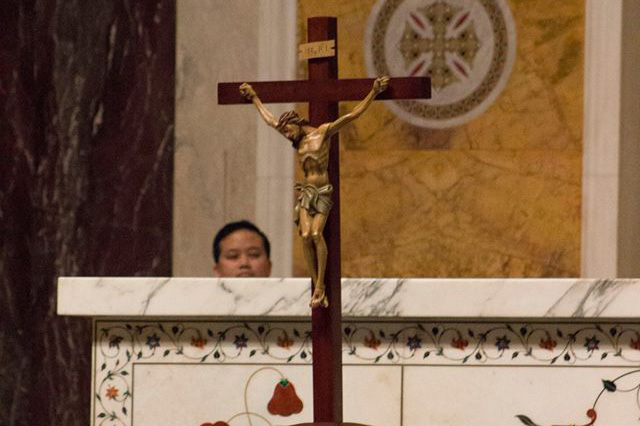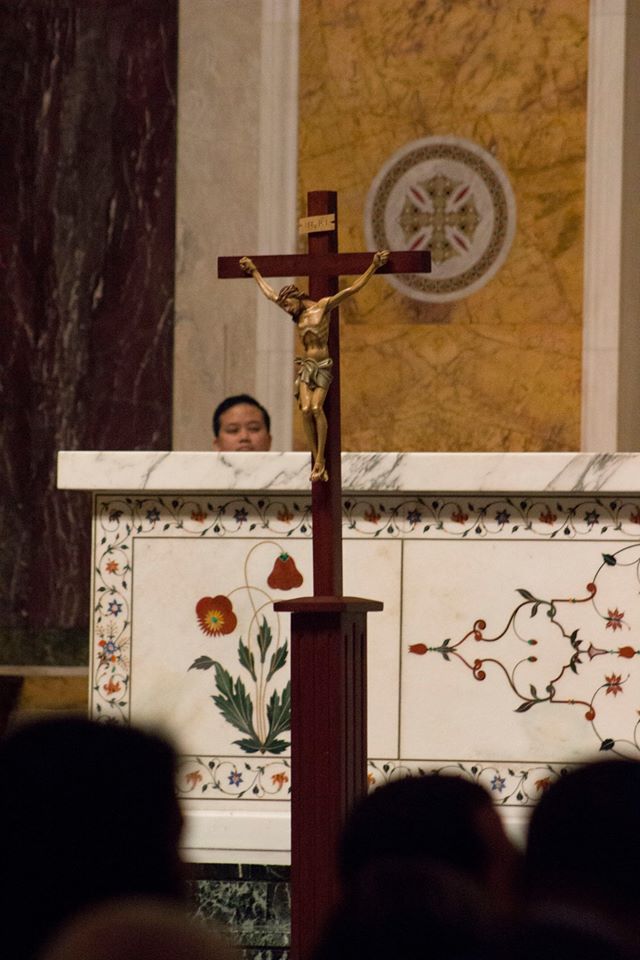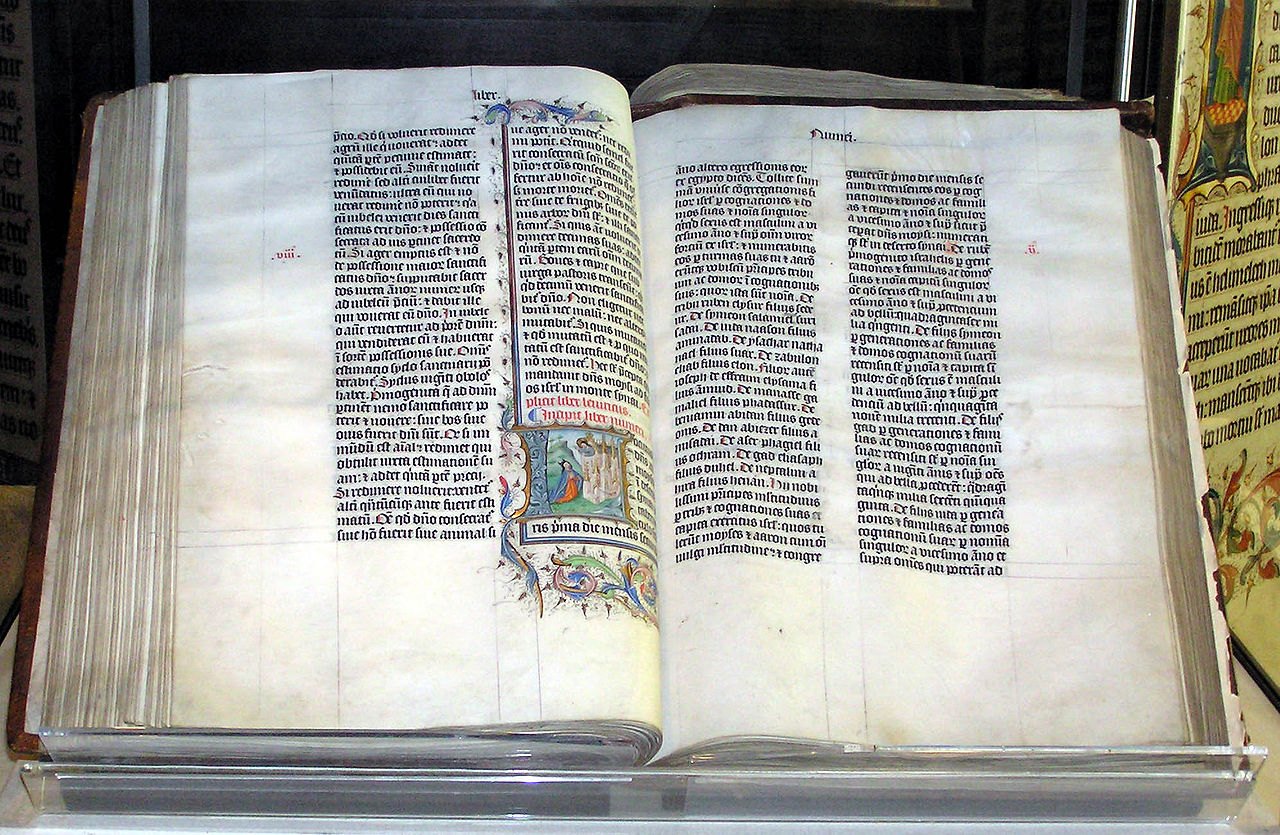
The video below is a humorous reminder that, in times like these, when technology changes so rapidly, a few of us can easily get left behind.
There is also something in the video of an admonition to the Church lest we be too much like the old man in the video. And this is so for several reasons:
1. It would seem that the little man has been too long sheltered away in his apartment while the world has passed him by. And we in the Church may also have too long hunkered down in our churches and been afraid to engage the outside world.
For the last 50 years we have been very inwardly focused, debating about liturgy, debating who has power and authority in the Church, how to structure this or that internal program better etc. And while none of these are unimportant things, while we were focused inwardly, we lost the culture which has headed into warp drive away from us.
Job 1, (“Go and make disciples”) was set aside and almost wholly eclipsed by other important but lesser matters. And thus we see an old man in his apartment seemingly very out of touch with what has happened on the outside.
2. The text of the letter he writes is also telling for the Church. The gist of the letter, written in German is, Dear Friend, It is about time I write you again, not simply because I owe you some long lines, or my guilty conscience has gotten to me…. Indeed, as we have well remarked, in too many ways the Church has been too silent, at least collectively speaking. So many Catholics tell me they never hear of so many things from their pulpits that need addressing: Abortion, divorce, homosexuality, same sex “unions,” fornication, modesty, that missing Mass is a mortal sin, death, judgement, heaven and hell, euthanasia, witness, courage, and so forth.
Yes many Catholics would attest that Church leaders might well begin by saying, “It is about time that I write you, that I speak to you….”
And if that be the case of Catholics in the pew, how much more so unbelievers in the street. A Church too silent, to inward in her preoccupation, needs to begin the conversation with many again, and begin from scratch: “It is long past time that I speak with you…!”
3. And he is still typing using an old and outdated method of communication, the manual typewriter. For the Church, this too is a danger. While it is true that we proclaim an ancient and unchanging wisdom, the challenge for us it that our proclamation of it be non nova, sed novae (not a new thing, but newly or freshly)) proclaimed.
Not only have we been slow to pick up on the “new media” but we also struggle to proclaim our magnificent faith in compelling ways. We are doing much better, but have a long way to go. Many parishes and priests still have little Internet presence. Too many homilies are filled with abstractions and generalities and do not often enough apply the faith to modern issues and problems. Too many catechisms look like comic books from the 1970s.
And while some may ponder how to stay abreast of all the latest technology, it is too important merely to ignore as of utmost importance. Parishes and dioceses must invest resources and enlist skilled staff to ensure that all forms of modern communication are being used and are professional.
Please be certain dear reader that I do NOT mean the Church’s job is to be merely “relevant” and reflect today. That is not our job. Our job is to represent the teachings of our founder and head, Jesus Christ. But we cannot be content to use the equivalent of a manual typewriter.
We have to be wise as serpents in the use of new technology, and innocent as doves when it comes to embracing the false relevance insisted on by the worldly minded. The message cannot change, but the means must move along and be professional and savvy.
4. At last our little man journeys into the world and finds out what has been going on. A crisis and the inability to do business as usual drives our little man into the world. And thus finally the Church too, is now, like a sleeping giant coming alive and going back into the world. We cannot do business as usual and various crises in and out of the Church has driven us forth. The Church’s presence in the new media is growing and getting more professional. EWTN, Catholic Answers, NewAdvent.org, and huge numbers of Catholic sites are now on line and engaging the culture.
5. But then comes the twist– For the little man in the video, while having made progress, still misses the boat and we discover that his use of the technology, and understanding of it, is flawed, to say the least.
And thus we too in the Church must not simply think that having all the latest equipment etc is enough. We have to know how best and most effectively to use it. Otherwise we make silly mistakes similar to the man in the cartoon.
Enjoy this cartoon and strive to learn its lesson. Pray too for the Church that we learn to get it right and have the courage to journey outside the comfort of our four walls to preach the truth we have received effectively.
In the Gospel for the Thursday of this 6 week of Easter, there is a phrase that goes back and forth between Jesus and the apostles 3 times, the phrase says, “
A little while and you will no longer see me, and again a little while later you will see me. (John 16:16)
That this phrase is repeated three times in the short course of eight verses, means it is significant for us, and we ought to ponder it. For, there is a kind of “sacrament” to seeing. Yes, the Lord asks us to ponder what it means to see, and he calls us to move deeper, and to develop a kind of interiority that understands seeing beyond the demands of the flesh, and the merely physical act of seeing.
By “flesh” here, we mean flesh in the biblical sense, not as our physical bodies per se. The flesh, (sarx) is the biblical word for our sinful and fallen nature, a nature that is rebellious, and seeks everything only on its own terms. It is that part of us that is alienated from God, averse to the truth, it is that part of us that does not want to have a thing to do with God or the spiritual life.
As regards to seeing, the flesh demands to see only on his own terms. But the flesh will only regard the physical, and will not see, and thus denies, the metaphysical, the mysterious, the spiritual.
And therefore, the Lord summons us to something far deeper, saying, In a little while you will no longer see me. While some may wish to simply read this mechanistically as a reference to the fact that he would be three days in the tomb, as is always the case with John, and Scripture in general, we must look to deeper meanings, even if the text has an historical fulfillment. This text speaks not only to a situation 2000 years ago, but it also speaks to us.
And thus, the Lord teaches them and us, that we must become accustomed to seeing him no longer according to the flesh, merely, but we must learn to see him, mystically, in the sacraments, and in the deep moments of our prayer. We must also learn to see him in the face of the infant, the poor, our beloved family, even our enemies.
And so the Lord says, In a little while you will no longer see me, That is, you will no longer see me in the way you have been accustomed to see me, according merely to the flesh, according to my physical appearance in the physical world.
And then he says, a little later, you will see me. And here too, while this refers historically, to the resurrection, it must also speak to us. And both to the disciples, 2000 years ago, and to us, this text means more than the resurrection appearances. It means that, but it also means that we will learn to see him, in the Breaking of the Bread, we will learn to experience in the Eucharist, and mystically in our prayer, and throughout our day. Yes, our spirit must come alive with mystical vision, with the seeing beyond the flesh, and according to the spirit.
Again, we must be very sober, realizing that our flesh demands to see him on its own terms. It demands that our retinas be lit up with physical light waves. But God will not be seen simply on our own terms, for, in his Divine nature, He is pure spirit and will not be seen by merely fleshly eyes. His effects in the physical order are clearly seen, to those who have eyes to see it. But even here, many deny the obvious evidence that creation shouts the creator, and design, bespeaks the designer. Indeed, order requires one to order it reasonably and intelligently. But many simply refuse to see this, even though this evidence is plainly available even to our fleshly eyes.
If that be the case with our fleshly seeing, how much more is spiritual seeing difficult for the flesh to accept. But that is what the Lord Jesus is summoning us to in this passage. He is saying to us in effect,
In a little while you will no longer go on seeing me as you have been accustomed to seeing me. I am passing into the mysteries, into the sacraments, and you must learn to see me there, and to experience my power and presence. But I am no less present to you that I have been in your fleshly seeing. In fact, I am more present to you than ever, for I have been glorified in my humanity, and am now more present to you than ever before.
To our flesh, to our fallen sinful and rebellious human nature, to that part of us that only prizes the physical, the material, and the temporal, such an invitation is an insult! Again, as we have already stated, the flesh desires to see on its own terms, and it resents the journey that it must make out of the physical and into the spiritual. It resists this spiritual journey at every step, at every stage. It idolizes the material, and the physical.
And thus, the battle is engaged! The demand of the flesh to see on its own terms versus the desire of the spirit to see on God’s terms, to look beyond the merely physical and to see deeper into the mystical, and the truer meaning of all things.
A few thoughts, on the sacrament of seeing, both physical and spiritual.
1. Our strengths are our struggles. One of the great glories of the human person is our capacity to see. Of all the five senses, vision is the most acute. The animals with which I have associated, mostly dogs and cats, navigate the world more by smell than by sight. This is especially with dogs, which have long olfactory bulbs, but even with cats and most other mammals. Seeing seems quite secondary, it is smell which mostly informs their interaction with the world.
But with we human beings, vision is king. Our acute vision, has enabled us to see out to the stars, and also into the tiniest bits of inner space. Our vision is also given rise to glorious art, and intricate forms of communication involving letters and words, and the picture, which is 1000 words. Yes, for us, the world is lit up with meaning.
But our strength is also our struggle. For faith comes by hearing (Rom 10:17), and the obedience that accepts what is heard. Scripture says we walk by faith, not by sight (2 Cor 5:7). This stabs at the heart of our most precious sense. Too many of us are from Missouri, the “show-me state.” We say “seeing is believing!” But in reality, seeing is only seeing. And when we do in fact see, that in no way guarantees that we will believe at all. I’ve been to many a magic show and watch these illusionists pull off things that seem quite miraculous. I do not conclude that they are gods. I figure they have some way of doing that. Seeing is only seeing, is not believing.
Scripture is right, faith comes by hearing, and hearing by the word of God. It is only by the hearing of faith, that we learn to see the world as it really is. Though we prize seeing so highly, our eyes easily deceive us. Optical illusions are one of the simplest things to pull off. The Internet is filled with optical illusions, entertainment halls are filled with magicians, etc. Though we glory in our eyes, they are very easily deceived.
But because we glory in our ability to see, because our capacity to see is our most powerful of the five senses, our flesh finds it difficult to believe. Our strength, is our struggle. Demanding to see on fleshly terms, we close our minds and hearts to the deeper realities. Our fleshly eyes see only the physical, which is only the surface. But the truer reality and mystery meaning of all things is deeper in the metaphysical world of meaning, of purpose, of formal and final causality. The the flesh scoffs at all this and will only accept the physical, and what is on the surface. Thus, our strength, our glorious capacity to see, becomes our struggle, our weakness.
2. Some biblical illustrations. In recording the saying of Jesus that, “In a little while you will no longer see me. Later you will see me again” the Scriptures themselves give portraits of the necessary transition from merely fleshly, and physical seeing to spiritual insight.
For example, most of the apostles and disciples who saw the risen Lord took some time to recognize him. Mary Magdalene only recognized him, upon hearing his voice call her name. Yes, faith comes by hearing. The disciples on the road to Emmaus also did not recognize the Lord was walking right along with them! Scripture says, their eyes, that is the eyes of the flesh, were downcast. This does not likely mean they were simply sullen, but that their eyes were fleshly, looking down toward the world rather than up toward heaven and glory. But, hearing a word from the Lord, and having their hearts set on fire, they recognize him “in the breaking of the bread.” In this, the Lord teaches them by faith, that they were now no longer see them and merely earthly, and fleshly ways, but they will see him in the sacraments, especially the Eucharist, they will experience him in the Word, in the liturgy of the Church, and in other ways.
Regarding the triumph of spiritual seeing over fleshly seeing, the Lord says, For judgment I have come into this world, so that the blind will see, and those who see will become blind (John 9:39). Yet, those of this world prefer the darkness to the light (cf John 3:19).
The biblical verdict of the demand of the flesh to see on its own terms is a rather firm and general refusal. While God does grant occasional visions and miracles, the general insistence is that we believe in obedience to what is heard.
3. Presbyopia– as most of us age, our eyesight declines. Doctors call this presbyopia. The clarity of our youthful vision, gives way to the soft and blurry focus of age. In my own life, at age 40, my eyesight deteriorated rapidly. I needed no eyeglasses at all before 40, now at 52, I am crippled without them. I am incapable of even recognizing faces. At best, I can discern general shapes and contours, but I cannot even read large signs; Presbyopia.
But there is something of a sacrament in this decline in eyesight. For, as our eyesight declines, our glorious certitude in everything that we think, is also humbled a bit. It often pertains to young people to be absolutely certain about what they think. As people age, they come to accept that absolute certitude in many things, (other than revealed truth), in a world filled with mysteries, is prideful. There is a kind of a wisdom that comes with accepting that there is much that we do not know or understand.
Young people claim to know a few things. With the wisdom of age comes the insight that we do know only a very few things, and that things often have deeper meanings and we often first appreciated.
The very word, “insight” describes a capacity of wisdom to see deeper than what is apparent, and what is merely on the surface. To have insight, is “to see in,” to see inwardly, to see more deeply.
In a sense, for most of us, especially those who walk with faith, as our physical eyes decline, our spiritual vision, and the wisdom of insight grows. The world that is passing away becomes blurry to us, we see its apparent certainties less clearly, and we learn a kind of interiority. We see more deeply, and beyond the merely surface and physical, because, in a way we have to! Deeper spiritual vision grows within, as our fleshly eyes begin to fail us.
Allow a humorous example. When I counsel young couples getting ready to get married, they usually come to me youthful, they are sound and sleek. The brides are so pretty and they look with love to their handsome groom. But with glee, at my 52 years of age, I like to remind them that their physical attractiveness is going to head south. They will gain weight, and other less appealing things will manifest! 🙂 But, I tell them, God has a plan! It is his will, that as our physical attractiveness declines, he also, wills that our eyes grow dim with the presbyopia, the blindness of old age. Thus, we do not notice how physically less attractive we have become! But of course, our problem in the modern world, is it we’ve overruled God and invented eyeglasses. Of course, I say all this in good humor and do not suggest we not wear eyeglasses.
But my point is simply this, that ideally as we age, we are less focused on and obssessed with physical appearances, and more able to see the inner beauty of people. Yes, if we are faithful, we begin to see the magnificent mystery of every human person, that every one of us was known and loved by God before we were ever made or formed in our mother’s womb (cf Jeremiah 1:5). Yes, we begin to see the beauty and the magnificence, the mystery and the glory of human life. Here is the insight, and in a way, it requires that our fleshly sight be dulled and overruled by a deeper spiritual insight which comes from interiority and Spirit of God within us.
4. Contemplative prayer–from the Carmelite tradition of St. Teresa of Avila, and St. John of the Cross, comes the also biblical teaching that, as prayer deepens, we move beyond images, words and other discursive and mediated forms of prayer, and we moved towards immediate and deeper forms of contemplative prayer.
Contemplative prayer is a manner of relating to God beyond images, words, or any discourse at all, it is an immediate and ineffable union with God, (cor ad cor loquitur), heart speaking to heart, without words being necessary or vision, even imagined vision required. It is a deep union, beyond sight, beyond words.
The idolatry of fleshly seeing is being put to death, as we move toward deep and mystical vision, and insight beyond the senses. Paradoxically, the true contemplative, and true mystic, does not become utterly blind to this world of senses. But now, by this gift, the contemplative and mystic sees everything and everyone in this world more deeply, mystically, and more richly. Now everything is seen to reveal God.
The true mystic does not simply see God on the pages of the Bible, he sees him, beyond fleshly seeing, in the sacraments, in the beauty of the human person, in creation, in the events and moments of daily life.
Here then is mystical vision, not seeing things as they simply and physically appear. Rather it is seeing that everything, everyone has deeper meaning, is caught up in God, caught up in his love, and his will. God is encountered everywhere, in everything, and everyone. The true mystic is able to fulfill Paul’s edict of praying always (Eph 6:18), not by sitting in a chapel, but by being in living, conscious contact with God at every moment of the day. As this begins to happen, insight, the unfolding of mystery, becomes our daily fare and our eyes become truly open to the deeper reality of all things. As the seeing of the flesh dies, seeing of the Spirit, and in a spiritual way comes alive.
And thus Jesus says, in a little while you will no longer see me, but later, he will see me again…and your hearts will rejoice.
Think of these beautiful windows in the video. They are but sand and lead. Yet, having been subjected to the fire (of God’s love) they have been transformed to radiate (by Christ the light of the world) and communicate the deeper reality of the paschal mystery into the interior of a mausoleum, where I took the photos. Light and life shine in the midst of those whose eyes have closed but will reopen, gloriously transformed.
In the first reading from yesterday’s (Sunday) liturgy from the Acts of the Apostles (Full text here) we encounter Apostles and see that they are changed men. Prior to Pentecost, these had been frightened man, men who fled at the sight of trouble, en who could not be (except for John) found anywhere near the foot of the Cross. Even after the resurrection, these were men who gathered only behind locked doors “for fear of the Jews.”
But in this reading, which took place at yesterday’s liturgy, we see men who are no longer afraid. The Holy Spirit has quickened their faith and courage. In this passage, having been arrested for speaking of Jesus, then miraculously released by the angel of the Lord, we find them right back in the public square announcing Jesus. The temple leaders having apprehended them yet again, say to them, We gave you strict orders [did we not?] to stop teaching in that name. Yet you have filled Jerusalem with your teaching (Acts 5:28). In response to the is second arrest, the Apostles once again display courage, also known as “Foritude,” one of the seven gifts of the Holy Spirit, which they had received it Pentecost. But, in effect, they root their courage in another of the seven gifts, the gift of the “Fear the Lord.” They say, We must obey God rather than men (Acts 5:29)
Note therefore how their confidence, their courage, is paradoxically rooted in Fear. It is not a cringing fear, but rather, a holy Fear, the Fear of the Lord. In effect, the Apostles fight fear with fear. More specifically, they conquer unholy fear with Holy Fear.
What is the fear the Lord? It is, as we have already noted, not a cringing fear, a fear merely rooted in servile anxiety about consequences or punishments. Rather, the Fear the Lord is the gift to hold God in awe. It is a gift, rooted in love of Him. Because I love God, love him with all my heart, I want to please him, obey him. I hold him in loving awe and respect, and I fear offending him who has loved me so, and done so much for me. We do not have time to fully set forth here the biblical basis for this definition of the Fear the Lord. But I have written elsewhere on this and have analyzed quite extensively a biblical understanding of what is meant by the fear of the Lord. You can read it here: Understanding the Fear of the Lord and here: Studying the Fear of the Lord in the Psalms
Our context in this post, is that to Fear the Lord, as is counseled and commanded of us in Scripture, is not some mere egocentric demand of of a demanding God. Rather, it is his loving way of both simplifying our life, (making it about one thing), and also, by this Holy Fear, of helping us to cancel and diminish all other fears.
For if I truly fear the Lord, and to the degree that this becomes a reality not just a slogan in my life, but I really Fear him, I do not need to fear anyone else, and my life also becomes simpler because I do not have to please ten thousand people, but only my loving Father in heaven.
But as it is, many of us struggle to experience this magnificent gift of the Holy Spirit, called the fear the Lord, because we either have resisted it or have not laid hold of it. And on this account, our fears are many, our lives are disordered and focused on many things, rather than one thing. Because we have not received the gift and the desire to please and Fear God, we end up trying to please everyone, and our fears multiply because there are many contradictory and contrary demands by the ten thousand voices we seek to please and pacify.
Jesus speaks to this grave condition by saying, No one can serve two masters. Either you will hate the one and love the other, or you will be devoted to the one and despise the other. You cannot serve both God and money (Mat 6:24). To be frank, our condition is far worse than simply trying to serve two masters. Most of us have many more masters, and our lives are too easy dominated by many anxieties and fears, rooted in many contradictory, complex and conflicting priorities, given by the many different people, groups, and ideologies we seek to please, placate and serve.
The book of James says,The double minded man is unstable in all his ways (James 1:8). Would that we were simply double-minded, but in today’s complex situations we are often divided fifty-fold, even a hundredfold: so many things to do, so many people to please. Frankly, too many of us are afraid of everyone and everything. What if person A is displeased with me?! But what if pleasing person A displeases person B, and how will I explain things to person C?!! And thus our lives are divided, anxious, full of fears.
The Lord’s plan is to fight fear with Fear. His plan is to fight unholy fear with Holy Fear. God’s loving plan is, in effect, Fear me, reverence, respect and seek to please me out of love, and you will be less obsessed with what others think. “Yes,” says the Lord, come to know me, not as some stranger, some abstract Deity running the universe, come to know me as your Father, someone who loves you, someone whom you deeply reverence and want to please. And to the degree that this happens in your life, that you receive this anointing of the Holy Spirit, this gift of the Holy Spirit called the Fear the Lord, you will be set free from ten thousand other fears and anxieties.
And this leads us back to the Apostles in Sunday’s reading. A mere few weeks ago they were frightened, even terrified men, behind locked doors. Now they boldly go about preaching Christ and him crucified. What happened to them? The Holy Spirit has happened, and in particular, His gifts of courage (fortitude), and the Fear the Lord. And thus the apostles are boldly able to speak to those who demand their loyalty, demand obedience, and they say We must obey God rather than men.
They say this with serenity because they’ve come to know the Father, have come to know Jesus and the power the Holy Spirit. Fearing God, they no longer fear any weapon waged against them, they no longer fear any man. And this is how fear is fought with Fear. One Fear eclipses all others fears. It is Holy Fear, loving Fear, yes, even a joyful Fear. When I fear God I need fear no one else. When I kneel before God, I can stand before any man.
Here then is the gift of the fear the Lord. Seek it, lay hold of it, allow it to have its effects. If we can do this, so many other fears go away, so many other conflicts are resolved. When we need to please only One, we no longer need to please many. When we Fear one, the fear the others goes away.
One of the more common issues faced today in proclaiming the faith is the problem that many, who reject some truth of the faith, set up false dichotomies. A false dichotomy is when one argues that there are only two possible and mutually exclusive alternatives, when in fact there are other alternatives, or the categories are not in fact mutually exclusive.
What makes false dichotomies particularly problematic when it comes to faith is that orthodoxy often requires careful balance and distinction. Since we are dealing with mysteries that often go beyond merely worldly categories, we must be careful in insisting that everything fit into worldly categories and boxes. Orthodoxy quite often says “both” whereas heresy chooses one apparently exclusive truth over and against the the other in order to resolve the tension between them. Orthodoxy also makes distinctions which false dichotomies fail to respect and holds the tension that is often required in two balancing truths.
A few examples of common false dichotomies that are directed against the biblical orthodox faith are:
1. The false dichotomy between Law and Love. In this mode of thinking, somehow law, or rules, or boundaries of any sort are a kind of anti-type to love.
Thus when the Church proposes any sort of limits to behaviors, teaches that certain acts or attitudes are sins, and so forth, the answer is often forthcoming that “God is Love” and that this somehow means that He doesn’t really care that I am doing what you, with all your rules, say is wrong.
A mitigated form of this, is to admit that perhaps a certain behavior is clearly described as wrong in Scripture but that since “God is Love” he therefore “understands” and won’t really care all that much.
But of course to oppose law and love is a false dichotomy. In fact all God’s commandments can be understood to flow quite beautifully from his love for us. The truth sets us free. In commanding us God seeks to preserve us from harmful behaviors that may harm or even destroy us and/or others. Because God loves, he commands.
2. The False dichotomy between Law and Freedom. In this mode of thinking somehow law exists only to limit my freedom. And therefore God, commandments and law belief are an assault on human freedom and exist only to limit and enslave human beings.
But of course law does not only limit freedom, it also enhances it. Since we humans are contingent and limited beings freedom can neither be absolute nor can it be a mere abstraction. Freedom must exist in a context wherein certain freedoms are limited to enhance others.
For example, I am free to write and you to read this post only if we both couch these words and letters within the limits of the rules of grammar and spelling. If you try to insist that you are free to read this post as a German language post, you are not going to really be free to read it. Without the limiting context of rules, the capacity to act stalls, and freedom breaks down. You and I are not free to drive, unless we also accept the limits that traffic law insists upon.
Hence Law and Freedom go together to a significant degree and are not directly opposed. They are not per se a false dichotomy. God gives us his law, not to destroy our freedom but to enhance and enable it. His laws are not prison walls, they are defending walls. The Catechism teaches: The more one does what is good, the freer one becomes. There is no true freedom except in the service of what is good and just. The choice to disobey and do evil is an abuse of freedom and leads to “the slavery of sin” (# 1733)
3. The false dichotomy between Love and punishment. In this mode of thinking, that God might punish us is wholly dismissed as inconsistent with the fact that he loves us. Hence any mention by the Church that punishment might be due for sin, or any move by the Church to apply punitive measures is is called unloving and something Jesus would never do.
But here too is a false dichotomy since love and punishment are not utterly opposed. Any parent who truly loves a child will punish the child when necessary. Surely love will ameliorate unnecessary severity, but to fail to punish or discipline at all is the opposite of love. Punishment exists to help an offender experience in a lesser way the consequences of sin so that they do not experience something worse. To fail to apply proper punishment when necessary is unloving.
Scripture says,
My son, do not make light of the Lord’s discipline, and do not lose heart when he rebukes you,because the Lord disciplines the one he loves, and he chastens everyone he accepts as his son.Endure hardship as discipline; God is treating you as his sons. For what children are not disciplined by their father?If you are not disciplined—and everyone undergoes discipline—then you are not legitimate children, but bastards.Moreover, we have all had human fathers who disciplined us and we respected them for it. How much more should we submit to the Father of spirits and live! They disciplined us for a little while as they thought best; but God disciplines us for our good, in order that we may share in his holiness. No discipline seems pleasant at the time, but painful. Later on, however, it produces a harvest of righteousness and peace for those who have been trained by it. (Heb 12:5-11)
4. The False dichotomy between Love and Hell. In this mode of thinking the cry goes up, “How can an all loving and merciful God send anyone to Hell? – He would not!”
But here too is false dichotomy between love and Hell. For in fact love requires Hell since love first requires freedom. Without freedom there can be no love. And if somehow God could force a solution and require our presence in his heavenly kingdom no matter our final disposition to his kingship and sovereignty, then God is not a lover, He is a slave owner.
Hell is ultimately God’s respect of our freedom and of his loving refusal to force his will or law upon us.
That Hell is eternal is mysterious, but seems rooted in the fact that our decision for or against God and his Kingdom values (such as mercy, love of enemies, chastity, forgiveness, etc) at some point becomes final and forever fixed.
That Hell is unpleasant is certainly taught. But to refuse the end for which we were intended leads to unpleasant results. Yet that unpleasantness seems self inflicted, rather than merely a punitive measure of God who respectfully permits (I would suppose with reluctance – for He does wish to save us) those who reject him to live apart from Him.
And, while Scripture does speak allegorically of the suffering in Hell, we ought not claim to know precisely the nature and degree of that unhappiness which remains mysterious to us to a large degree, despite the glimpses Scripture gives us.
For now allow these examples to begin a discussion on the false dichotomies that we often face in the world today as we seek to teach the faith. The modern and Western world that is often poorly trained not only in the faith, but also in philosophy and logic. It will also be noted that many of these dichotomies are rooted in the ego-centrism of our times that somehow eschews any notion that God would in anyway inconvenience, punish or demand any sort of accounting from me.
I am interested in having some of you list some of the false dichotomies you encounter as well. There are many of them. I have only listed a few generic ones here.
For all the almost 25 years of my priesthood I have been privileged to say the Extraordinary Form of the Mass, known more widely as the “Traditional Latin Mass.” And one of the more memorable aspects of that form, remembered even by those who haven’t attended in years, are the prayers at the foot of the altar. Most prominent in those prayers is the recitation of Psalm 42. The key text which gives context to the moment are these lines:
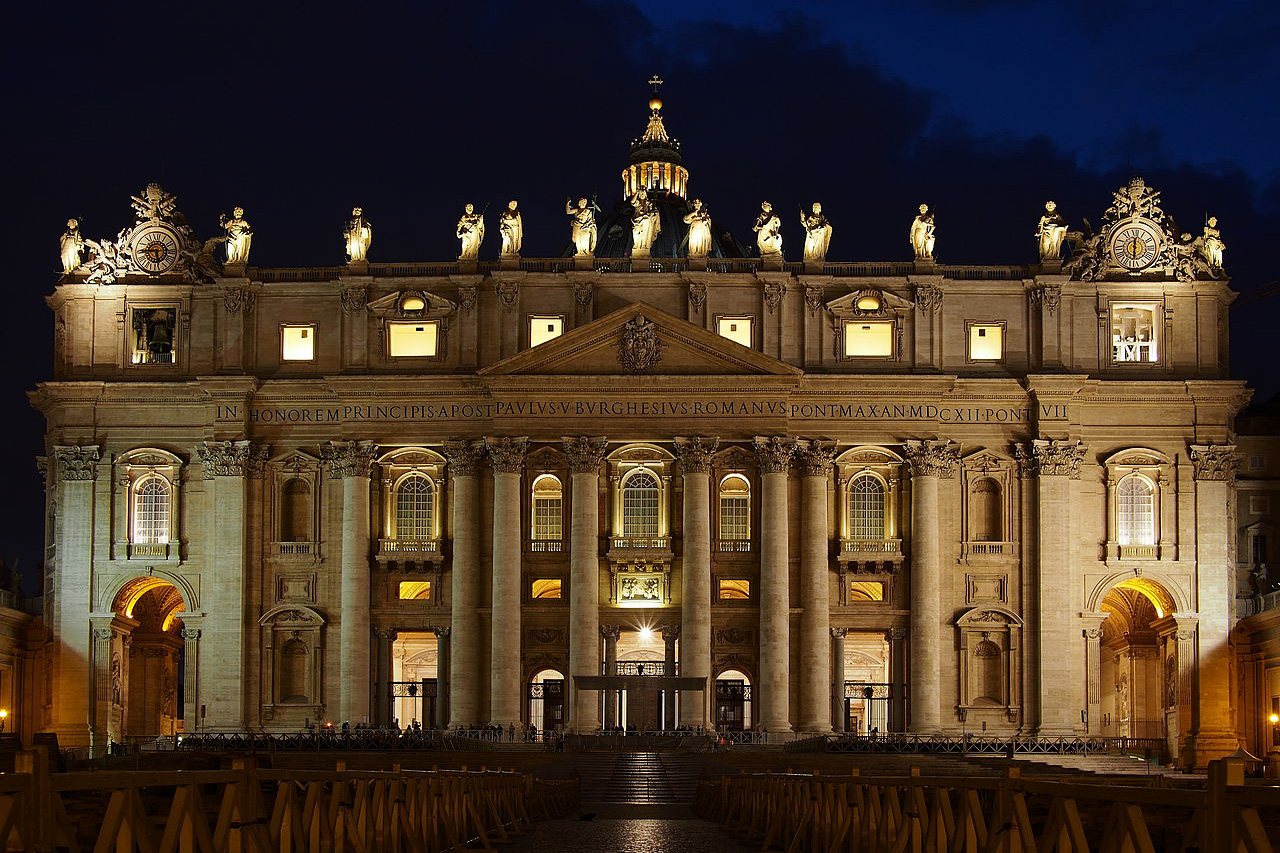
Et introibo ad altare Dei: ad Deum qui laetificat juventutem meam.
And I will go to the altar of God: to God who gives the joy of my youth.
I will not wade in the waters of debate over how best to translate the Latin. The difficulty is rooted in the Hebrew word giyl which usually means joy, but is also used elsewhere (e.g. Daniel 1:10) to refer to youth. The Latin text elaborates both senses into the phrase “who gives joy to my youth” or by extension “who gives my youthful joy.”
I’ll be honest, my youth wasn’t all that joyful. I am happier now than then. God has been good to me and delivered me from many personal trials that originated even in my earliest days.
But that said, there is a great beauty in the line, indeed the whole psalm, which speaks of deliverance. The Psalmist asks himself, “Why are you cast down my soul, why groan within me? Hope in God, I will praise him still! My savior and my God!
And thus as we go to God’s altar, we seek to leave our troubles behind. We go to praise him, to forget our troubles, to lay down our burdens. And, coming now so close to him at his altar, he gives us a youthful joy, a gladness.
To me, the notion of a youthful joy is that of a joy that comes from innocence, from a time before the all to common cynicism and jadedness of this world has reached us. Here is a simple joy, a joy that is in the moment. Here is an innocent joy like that of a youth who, without pretension look wide-eyed at a gift and says, “Wow! Gee! Thanks!” and vigorously and exultantly enjoys it. Yes, a youthful joy, an innocent and unpretentious joy, a simple joy, A Christian son or daughter in the presence of Abba, our loving Father.
Et introibo ad altare Dei: ad Deum qui laetificat juventutem meam.
And I will go to the altar of God: to God who gives the joy of my youth.
I thought of all this as I saw the video below. As it opens, it is clear we are in the autumn of life. A song plays in the background called “The Last Song.” Our focus shifts to an elderly woman who, looking out on the world from her window, casts a whimsical look at the autumn scene. She shuts her window (for the last time).
She is clearly living more now on memories more than the present. A picture of her family from long ago hangs over the mantle and she grabs a photo of her dead husband, looking as he did when she first met and fell in love with him. Yes, her last thoughts are of love.
She sits in her chair and dozes off. Suddenly the radio goes dead, but it is really she who has died. Her final and fading memories, as she clutches the memory of her love are those of her youth, when she was strong and could dance to life’s rhythms.
And then it happens. God gives her the joy of her youth. She awakens, forever young.
Enjoy this beautiful video. It is told in secular terms but its message is of youthful joy, and the endurance of love.
One day, if we die thinking of Love and longing for Him, Our Lord will sing us to sleep and awaken us, forever young.
For now, I will go to the altar of God, to God who gives me youthful joy.
I’ve been asked by a few readers of this blog to record a few thoughts about the events surrounding the resignation of Pope Benedict. Over the weekend especially, many rumors circulated, regarding a seedy backstory to the resignation.
I am not surprised to read of such rumors in secular media sources, but I must admit I was surprised to read some of these things reported in Catholic sources.
As for me, it remains a rumor, and rumors are best unrepeated.
I prefer simply to take Pope Benedict at his word. He indicates that, given the effects of age, he thinks is best step back for the sake of the Church. I know of no other walk of life where we have, or expect 85-year-old man to hold a position that would tax a man half his age.
The fact is, the Papacy has changed, even in my own brief lifetime. When I was a child, it was common to refer to the Pope as the “prisoner the Vatican.” For, when a man was elected pope, he went into the Vatican, and was not seen outside again except at the window.
Pope Paul VI began to change this when he flew to the United Nations, and made other trips to the Holy Land and a few other places. At that time it was a stunning and bold move, that the Pope would actually emerge from the Vatican, get on a plane, and go somewhere!
This move opened the door on the modern papacy. Pope John Paul II obviously ushered it in full force. And now the papacy is a jet-set and very vigorous public presence in the world. The Pope is expected to be out and about, and make quick responses to worldwide issues. The pace is quick and the mileage long. All day, there are exhausting meetings with heads of state, and many other significant individuals who expect to meet with the Pope.
Yes, the days are very long and taxing. Even at age 51 I think I would be taxed by such a pace such high expectations. That an 85-year-old man thinks it’s best for younger man to take the position makes a lot of sense. The other alternative would be to dramatically scale back Pope Benedict’s calendar and duties. But his judgment is the Church needs a Pope to meet the current duties and that these are reasonable expectations for the office of the papacy.
This is how I understand the Pope’s resignation, according to what he himself is said. And the rumors and accusations of grave scandals are of no interest to me. Scandals will inevitably arise, but woe to those through whom they come (Lk 17:1).
In all of this let me also state my firm position that I remain very optimistic about the state of the Church today. Not only does she have the promise of the indefectability from the Lord, but I am seeing sure signs of great renewal especially here in America.
While I am less certain about the state of the Church in Europe, here in America our seminaries are beginning to fill again, many new and reformed religious communities are coming back alive, many superb Lay movements, and great clerical and lay leadership is developing. Our numbers in the pews do continue to decline, but I see many things being put in place that will address and prepare the Church for the near future.
It may well be, that a smaller and disciplined army is necessary for what may be difficult days ahead for Western culture as it continues to descend into deeper darkness. Yes, the Church is getting increasingly focused on her main mission, which is to be a light in the darkness, to continuously strive to make disciples, and to bring people into a life-changing, transformative relationship with Jesus Christ.
I think persecutions will probably arise in the near future but maybe that’s just what we need. And besides, the Church has a good track record of not only enduring persecution, but thriving in the midst of it
Even this weekend I have been able to celebrate many great signs of life. In Lent, the preaching circuit really lights up for me, and I’ve had a very busy weekend. I spent Friday and all day Saturday preaching a retreat 30 seminarians from the Archdiocese of Washington. Altogether we have well over 70 seminarians, and we are having to add a new wing to the seminary to accommodate more. These are good men, men who love the Church, who love the truth and are preparing to speak the truth in love. I am confident that all them I met will make great priests. The Seminary named for Blessed John Paul II, is a great place. The Priests who staff the seminary and teach are very solid and orthodox. Liturgies are well celebrated and in the men, both priests and seminarians show a strong faith.
In my parish convent we are blessed with the Servant Sisters of the Lord, a newer order who outgrew their last Juniorate and recently had to move to larger quarters. These are great religious sisters, joyful and passionate for the Lord and His Church. Vocations for their order and of several other orders like them are going strong.
Having completed preaching the retreat at the seminary, I was privileged to celebrate masses of my own parish on Sunday, the Church was filled with many lively and wonderful Catholics, who came to hear the Word of God and to receive Holy Communion.
And then, just this evening, I am returning from Southern Maryland where I preached the first night of a three-night revival in one of our parishes. The Church was filled with people eager to hear a word from God and have their faith strengthened.
Yes, God is alive and he’s gathering his faithful. Even if the overall numbers in the Church are down a bit, those who remain are becoming increasingly vigorous and vibrant in their faith, more clear about what it means to be a Catholic in these days and times.
So put me in the optimist camp, I think God is doing great work in purifying his Church. So many things are improving! I remember some very dark times in the early and mid-80s when I was in seminary and I must say that, in many ways, the tide has completely turned. On-going purification is necessary, but so much has been accomplished!
The Lord Jesus loves his Bride the Church, and His love for the Church is becoming increasingly evident to me.
Yes, call me an optimist, and call me uninterested in the rumors swirling, about Vatican corruption. If there is need for reform in the Vatican bureaucracy, the Lord Jesus will accomplish it. Jesus loves his Bride. I know that first-hand experience what he can do by way of reform.
I realize there are some who read this who will consider my remarks wrong or naïve They will recite to me let me of things they think are still wrong, everything ranging from liturgy to authority and discipline. I do not say the Church is perfect and I know on-going reform is still necessary. But I am saying that I see what God has done is doing and I know He will continue to do.
As we head for conclave, call me the optimist, call me the joyful son of Mother Church, everything will be alright, indeed, everything already is alright because Jesus is the Head of the Body the Church, and the beloved groom of the Church the Bride.
If you call me a fool, at least add that I was a fool for Christ. Call me naïve but at least said that my naïveté is rooted in an undying confidence in the love of Jesus for his bride the Church.
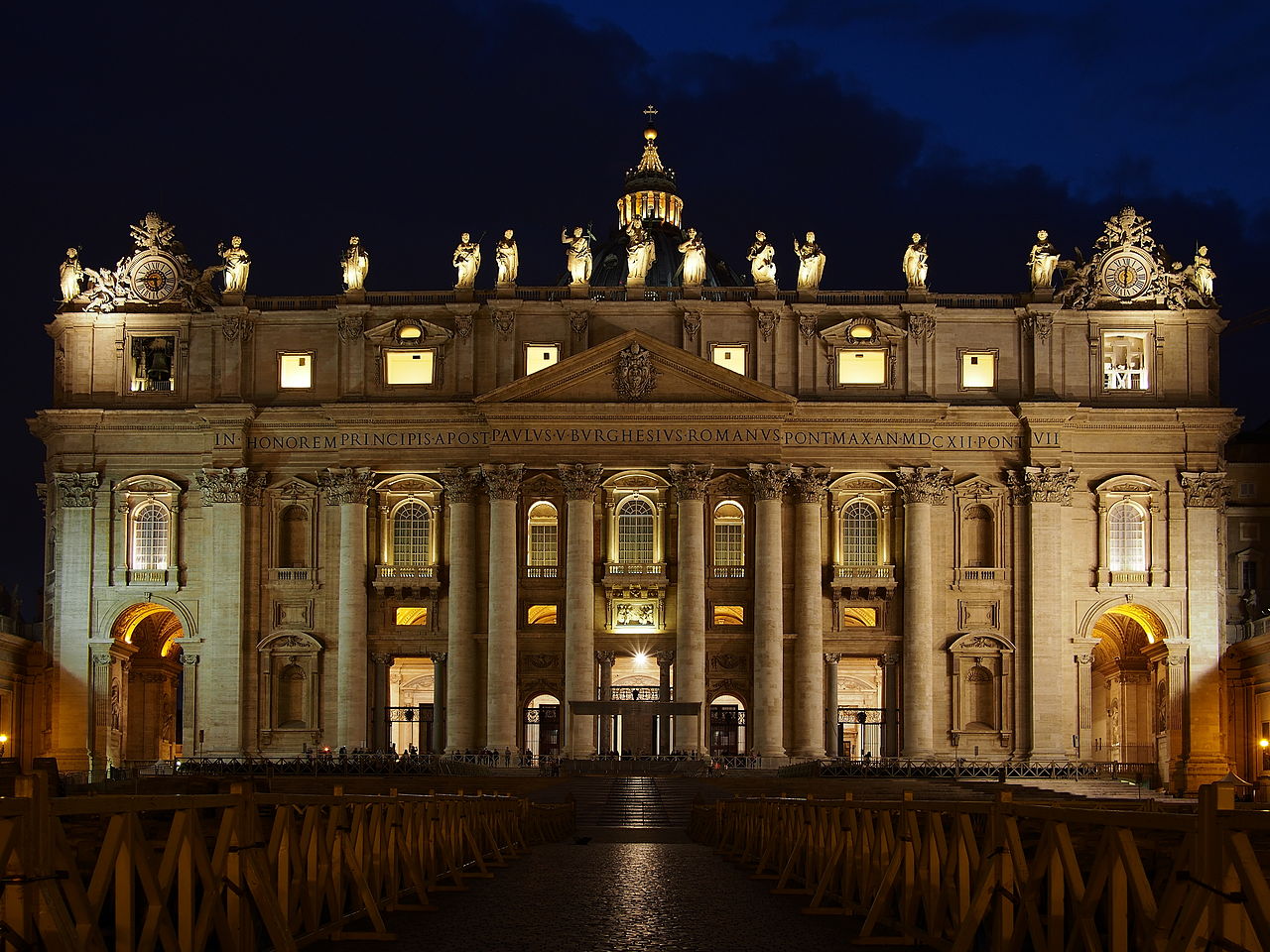
Was that a lightning bolt that struck the Vatican or was it a divine dose of refining fire and dynamic power from on high?
It is a very brief word that begins the Lord’s prayer, “Our”, as in “Our Father.” Note that it is in the first person plural. Such a little insight, yet such a powerful one.
We live in times that emphasize the first person singular: I, me, mine my rights, my opinion, my choice, my lifestyle, my personal statement, my personal relationship with God, the God of my understanding, etc.
We could probably do with a little more the first person plural. Our Lord, our Father, our family, our children, our Catholic faith, our heritage, our common lot.
Yes, just a little more of the first person plural.
At a funeral yesterday, a priest friend of mine said of the deceased simply, “She lived her life in the first person plural.” And all the assembled nodded their heads as they recalled how she had summoned them to family unity, and lived her life caring for others. Yes, and Ms. Lillie insisted that her children and grandchildren. and great-grandchildren should do the same, living decent, God-fearing lives, living in a way that was respectable, and respected others. And she insisted on justice, caring for those in need in the family, and beyond.
Yes, living our lives in the first person plural, something to think about, something to recover.
It is true, there is a certain glory in the insistence of our modern age on the dignity and the rights of the individual. But too often, we fail to balance it properly with the common good. We do well to remember once again the first person plural. Are we individuals? Yes, but we’re all in this together.
Am I my brother’s keeper? You are indeed. First person plural: “Our Father…”
There is a song about the sadness of moral relativism in an unusual place: “The Greatest Hits of the Monkees.”
Some who are old enough may remember growing up with the songs of the Monkees. I confess their song “Only Shades of Gray” was not one I remember well from those days. But it is a fascinating song about moral relativism.
Some think it’s just a song about growing up. But to most it speaks of a time when things were more certain and compares it to these more modern times when it seems everything is disputed and up for grabs, no more black and white, only shades of gray.
It is all the more poignant that the song was written in the turbulent 60s and, perhaps, represented the anxiety generated by those times when just about everything was being thrown overboard.
Now I know that it is wrong to point any particular age as the “golden age.” Scripture itself warns against this: Do not say: How is it that former times were better than these? For it is not in wisdom that you speak this (Ecclesiastes 7:10). I am also aware that not everyone feels the same about the “good old days.” For some they were not all that good. We should not forget the terrible wars of the early half of the 20th Century. Further, I serve in a parish that is predominantly African American and for many of my parishioners previous days featured “Jim Crow” laws, disenfranchisement, lynching and enforced segregation.
And yet, it remains also true that some fifty years ago we had a much wider consensus on basic moral teachings and appropriate behaviors.
Premarital sex was considered gravely wrong and guarded against, even if it was not perfectly observed. Remember chaperons and separate dormitory facilities?
Easy divorce and remarriage was considered wrong, and it was in fact legally difficult to get divorced.
Abortion was illegal
And it never even entered our minds to give children in school contraceptives.
There was also strong consensus against homosexual activity and the thought of homosexuals demanding to marry and being taken seriously was something that would have seemed from an episode the Twilight Zone.
Families were larger and most were intact.
There was also a general appreciation of the role of faith and prayer in American life.
I could go on but perhaps this is enough.
Here too I can hear the objections: “We might have had those standards but we didn’t live them well…. Things went on behind the scenes, families weren’t perfect, many kids still had sex etc. etc….”
But I will respond by saying, At least we had those standards and saw them as truths to be respected. It is an extreme measure, a kind of nihilism, to say that since we do not live up to our standards perfectly we should not have them at all.
And I also know we were more wrong about some things in the past. We were more racist and less open to legitimate diversity, less concerned about pollution. But here too it is extreme to say that because we were wrong about some things in the past the whole thing should be thrown out. Why not keep the best and purify what is needed?
So here we are today, is a radically relativistic and nihilistic time where there is less and less agreement about the most basic of moral issues. And, without a common basis for discussion, such as Natural Law, or the Judeo-Christian worldview, we are left to a battle of wills, an increasing power struggle where the one who shouts the loudest, has the most money, wins an election or has the most access wins, at least for the moment.
It is what Pope Benedict has described as the “Tyranny of Relativism.” Reason and principles increasingly do not transcend political, economic and social distinctions. There are fewer and fewer shared values that every one agrees on no matter what their party or background. Public policy is rooted more in power than in right reason. We are a culture without a “cultus” i.e. without God, or even a higher truth outside ourselves to which we all look and have general agreement. Closed in ourselves and our own little world we are like crabs in a basket, fighting and clawing for the top. There is nothing we acknowledge from above to order us.
Whatever our struggles of the past, we used to agree on more. Many of those certainties have been replaced by a wide presumption that everything is just shades of gray.
Listen to the song. Don’t forget my disclaimers. I do not propose a simplistic old=good; new=bad scenario. I just write to provoke thought. Please feel free to comment. . First the words, then the video.