
Pondering St. Paul’s Lament of Savage Wolves

In the first reading for Wednesday of the 7th Week of Easter, St. Paul warns of perhaps the most damaging and wrenching evil that the Church must face: dissension from within.

I know that after my departure savage wolves will come among you, and they will not spare the flock. And from your own group, men will come forward perverting the truth to draw the disciples away after them. (Acts 20:30-31).

St. Paul calls them savage wolves. Is this hyperbole? No, for their work is to devour the flock. They may do this with subtlety and smooth words, but they (and the evil one who inspires them) devour the flock nonetheless. Let’s ponder this troubling truth in three ways:

I. There are false prophets.

Scripture warns of this repeatedly:

  • Beware of false prophets, who come to you in sheep’s clothing but inwardly are ravenous wolves. You will recognize them by their fruits …. Every tree that does not bear good fruit is cut down and thrown into the fire (Mat 7:15, 19-20).
  • And many false prophets will arise and lead many astray …. For false christs and false prophets will arise and perform great signs and wonders, so as to lead astray, if possible, even the elect. See, I have told you beforehand (Mat 24:11, 24-25).
  • But false prophets also arose among the people, just as there will be false teachers among you, who will secretly bring in destructive heresies, even denying the Master who bought them, bringing upon themselves swift destruction. And many will follow their sensuality, and because of them the way of truth will be blasphemed. And in their greed, they will exploit you with false words. Their condemnation from long ago is not idle, and their destruction is not asleep. For if God did not spare angels when they sinned, but cast them into hell … (2 Peter 2:1-4).
  • There are some things in them that are hard to understand, which the ignorant and unstable twist to their own destruction, as they do the other Scriptures. You therefore, beloved, knowing this beforehand, take care that you are not carried away with the error of lawless people and lose your own stability (2 Peter 3:16-17).
  • But you must remember, beloved, the predictions of the apostles of our Lord Jesus Christ. They said to you, “In the last time there will be scoffers, following their own ungodly passions.” It is these who cause divisions, worldly people, devoid of the Spirit (Jude 1:17-23).
  • Children, it is the last hour; and just as you have heard that the antichrist is coming, so now many antichrists have appeared. This is how we know it is the last hour. They went out from us, but they did not belong to us. For if they had belonged to us, they would have remained with us. But their departure made it clear that none of them belonged to us (1 John 2:18-19).

There are more passages like these, but allow this sample to demonstrate the consistent warning of the apostles that deceivers, scoffers, and false prophets would arise.

II. Of special concern are false prophets who come from within.

There is a special subtlety in this kind of deceiver, especially if he wears a collar or priestly robes, and even more if he be of the rank of bishop. Down through the centuries there has been particular harm caused by wayward clergy. The grief is especially deep because so many of the faithful have been rightly encouraged to love and listen to the clergy.

Therefore, in the passage from the Acts of the Apostles, St. Paul calls them savage wolves. This terminology is true on its face because their goal is to devour and scatter the flock, but St. Paul’s language also indicates an especially sharp pain caused by this sort of betrayal. Other scriptures affirm this deep pain:

  • For it is not an enemy who taunts me—then I could bear it; it is not an adversary who deals insolently with me— then I could hide from him. But it is you, a man, my equal, my companion, my familiar friend. We used to take sweet counsel together; within God’s house we walked in the throng. Let death steal over them; let them go down to Sheol alive; for evil is in their dwelling place and in their heart (Psalm 55:12-15).
  • Even my close friend in whom I trusted, who ate my bread, has lifted up his heel against me (Psalm 41:9).
  • Even my trusted friends, watching for my fall, say, “Perhaps he will be deceived, so that we may prevail against him and take our revenge on him” (Jer 20:21).
  • The one who has dipped his hand into the bowl with Me will betray Me (Mat 26:23).
  • Look! The hand of My betrayer is with Me, even at the table (Luke 22:21).
  • Judas, would you betray the Son of Man with a kiss? (Luke 22:48)

Yes, there is a special grief when error and sin come from within the Church. It should be enough that the world hates and derides us, but internal wounds are the most painful of all.

Our Lady spoke to St. Agnes Sasagawa in Akita, Japan (an approved apparition) and said with sadness,

The work of the devil will infiltrate even into the Church in such a way that one will see cardinals opposing cardinals, bishops against bishops. The priests who venerate me will be scorned and opposed by their confreres … churches and altars sacked; the Church will be full of those who accept compromises and the demon will press many priests and consecrated souls to leave the service of the Lord. The demon will be especially implacable against souls consecrated to God (Message of Oct 13, 1973).

III. What are the faithful to do?

First, from the Scriptures above, we must understand the warning that such things would happen. Indeed, they have happened down through history. False prophets arise, even from within. The Lord says thorough His apostles, “Remember that I have told these things would inevitably occur.” Therefore, we ought not be dismayed, but rather sober.

The first Letter of St. John says,

Who is the liar, if it is not the one who denies that Jesus is the Christ? This is the antichrist, who denies the Father and the Son. No one who denies the Son can have the Father; whoever confesses the Son has the Father as well. As for you, let what you have heard from the beginning remain in you. If it does, you will also remain in the Son and in the Father. And this is the promise that He Himself made to us: eternal life. I have written these things to you about those who are trying to deceive you…And now, little children, remain in Him, so that when He appears, we may be confident and unashamed before Him at His coming. (1 John 2:15ff).

St. Paul adds,

Evidently some people are troubling you and trying to distort the gospel of Christ. But even if we or an angel from heaven should preach a gospel contrary to the one we preached to you, let him be anathema (under a divine curse!) As we have said before, so now I say again: If anyone is preaching to you a gospel contrary to the one you embraced from us, let him be under a divine curse! (Galatians 1:7-9)

The Letter of Jude says,

But you, beloved, build yourselves up in your most holy faith and praying in the Holy Spirit, keep yourselves in the love of God, waiting for the mercy of our Lord Jesus Christ that leads to eternal life. And have mercy on those who doubt; save others by snatching them out of the fire; to others show mercy with fear, hating even the garment stained by the flesh (Jude 1:20-23).

Catholics today must remember that the teaching of the faith is not simply anything that any clergy of any rank utters. The magisterium is more than that! Everything we hear is to be squared with the consistent teaching of the Church, back through the centuries, as articulated in Scripture and in the doctrinal and dogmatic teachings of the Church. Stay close to the catechism, close to Scripture, close to the Fathers of the Church!

We began with St. Paul’s lament of savage wolves who would seek to mislead and scatter the flock he had labored so hard to build. Mysteriously, the Lord allows some degree of dissent, but He has left us with warnings. Our task is to heed these warnings and judge everything we hear by the deposit of the faith as articulated consistently in the Church down through the ages. Look to the most certain sources: Scripture, the fundamental dogmas of the Faith, the Fathers of the Church, the Catechism, and St. Thomas Aquinas. These are bulwarks for us.

I look to the faithful in the land
that they may dwell with me.
He who walk in the way of perfection
shall be my friend
(Psalm 101:6).
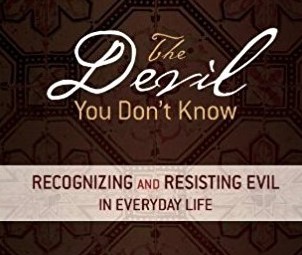
Four Common Tactics of the Devil

One of the key elements in any contest is understanding the strategy of your opponent. In the spiritual battle of life, we must be able to recognize, name, and understand the subtleties of the Devil’s tactics. While we often emphasize his more obvious and frightening maneuvers (especially on Halloween), his usual tactics are subtler and more pervasive.

A 2011 book by Fr. Louis Cameli, The Devil You Don’t Know, is of great assistance in this matter. Having read it a few years ago, I think it would be of value to reflect on four broad categories of the Devil’s tactics, which Fr. Cameli analyzes in this book.

While the four categories are Fr. Cameli’s, the reflections here are largely my own, though surely rooted in his excellent work. I highly recommend reading the book, in which Fr. Cameli describes the categories more fully.

I. Deception – Jesus says, The devil was a murderer from the beginning and does not stand in the truth, because there is no truth in him. When he lies he speaks according to his own nature, he is a liar and the father of lies (John 8:44).

The Devil deceives us with false and empty promises. Most of these relate to the lie that we will be happier and more fulfilled if we sin or deny aspects of the truth. Whatever passing pleasures come with sin, they are just that—passing. Great suffering eventually comes from almost all sinful activity. Yet despite this experience, we humans remain very gullible; we seem to love empty promises and put all sorts of false hopes in them.

The Devil deceives us by suggesting all sorts of complexities, especially in our thinking. He seeks to confuse us and to conceal the fundamental truth about our actions. Our minds are very wily; we try to avoid the truth by making excuses. Conniving with the Devil, we entertain endless potential complications by asking, “But what if this? And what about that?” Along with the Devil, we propose all sorts of difficulties, exceptions, and sob stories in order to avoid insisting that we behave well and live according to the truth.

The Devil deceives us with euphemisms, exaggerations, and false labeling. The dismemberment and murder of a child through abortion becomes “reproductive freedom” or “choice.” Our luminous Faith and ancient wisdom are called “darkness” and “ignorance.” Fornication is called “cohabitation.” The redefinition of marriage (as it has been known for millennia) is labeled “marriage freedom” or “marriage equality.” We too easily cooperate with the Devil by calling “good,” or “no big deal,” what God calls sinful.

The Devil deceives us through the misuse of information. Information is not the same as truth. Data can be assembled very craftily to make deceptive points. Further, certain facts and figures can be emphasized to the exclusion of other balancing truths. In this way, information that is true in itself can be used to deceive. The news media sometimes exercise their greatest power in what they do not report. This, too, is a way that the Devil deceives us.

We do well to carefully assess the many ways in which Satan tries to deceive us. Do not believe everything you think or hear. While we ought not to be cynical, we should be sober. We should attempt to verify what we see and hear and then square it with God’s revealed truth.

II. Division – One of Jesus’ final prayers for us was that we would be one (cf John 17:22). He prayed this at the Last Supper just before He went out to suffer and die for us. In so doing, He highlights that a chief aspect of His work on the cross is to overcome the divisions intensified by Satan. Some point out that the Greek root of the word “diabolical,” diabolein, means to cut, tear, or divide. Jesus prays and works to reunify what the Devil divides.

The Devil’s work of division starts within each one of us as we experience many contrary drives: some noble, creative, and edifying; others base, sinful, and destructive. So often we struggle internally and feel torn apart, much as Paul describes in Romans chapter 7: The good that I want to do, I do not do … and when I try to do good, evil is at hand. This is the work of the Devil: to divide us within. St. Paul lays out in Romans chapter 8 that the chief work of the Lord is to establish within us the unity of soul and body, in accordance with the unity of His truth.

The Devil’s attack against our inner unity spills out into many divisions among us externally. So many things help to drive this division and the Devil surely taps into them all: anger, past hurts, resentments, fears, misunderstandings, greed, pride, and arrogance. There is also the impatience that we so easily develop with those we love and the flawed notion that we should seek other more perfect and desirable people. Many abandon their marriages, families, churches, and communities in search of the elusive goal of finding better and more perfect people and situations.

Yes, the Devil has a real field day tapping into a plethora of sinful drives within us. His goal is always to divide us, internally as well as from one another. We do well to recognize that regardless of our struggles with others, we all share a common enemy. As St Paul writes, For our struggle is not against flesh and blood, but against the rulers, against the authorities, against the powers of this dark world and against the spiritual forces of evil in the heavenly realms (Eph 6:12). Feuding brothers will reconcile when there is a maniac at the door, but the first step is noticing the maniac and then setting aside lesser divisions.

III. Diversion – To be diverted is to be turned away from our primary goal or task. For all of us, the most critical focus is God and the good things awaiting us in Heaven. Our path is toward Heaven, along the path of faith, obedience to the truth, love of God, and love of neighbor. The Devil does all that he can to turn us away from our one true goal.

The Devil tries to make us too absorbed in the passing things of the world. Many claim that they are too busy to pray, go to Mass, or seek other forms of spiritual nourishment. They become absorbed in passing, worldly things and ignore the lasting reality that looms.

The Devil seeks to distracts us with anxieties and fears. He causes us to fixate on fears about passing things rather than having the proper fear of the judgment awaiting us. Jesus says, Do not be afraid of those who kill the body but cannot kill the soul. Rather, be afraid of the One who can destroy both soul and body in hell (Matt 10:28). In other words, we should have a holy reverence and fear directed towards the Lord. If we do this, many of our other fears will be seen in better perspective or will even go away altogether. The Devil says just the opposite: we should be afraid of the thousands of things that might afflict us in this passing world, and not think about the one most significant thing that awaits us—our judgment.

The reason for this diversion is that the Devil wants us to focus on lesser things so that we do not focus on greater things such as a moral decisions and the overall direction of our life. We must learn to focus on what matters most and refuse to allow our attention to be diverted to lesser things.

IV. Discouragement – As human beings, and certainly as Christians, we should have high aspirations, but Satan often seeks to poison that. Along with high aspirations can come pride. We sometimes lack the humility to recognize that we must make a journey to what is good and best. Too easily, then, Satan tempts us to be impatient with ourselves and others. We sometimes expect to reach our aspirations in an unreasonably short amount of time and show a lack charity toward ourselves or others. Some grow discouraged and give up on the pursuit of holiness. Others give up on the Church because of the human imperfections found there.

The Devil discourages us with open-ended aspirations. There is always room for improvement; we can always do more. But here the Devil enters, for if we can always do more, then it is also possible to think that we’ve never done enough. The devil discourages us, encouraging these unreasonable demands within us as to what we can or should do each day.

The Devil discourages us through simple things like fatigue, personal failings, setbacks, and other obstacles that are common to our human condition and to living in a fallen world with limited resources.

In all these ways the Devil seeks to discourage us, to make us want to give up. Only a properly developed sense of humility can help to save us from these discouraging works of Satan. Humility, which is reverence for the truth about ourselves, teaches us that we grow and develop slowly, that we do have setbacks, and that we live in a world that is hard and far from perfect. Being humble and recognizing these things helps us to lean more on the Lord and to trust in His providential help, which grows in us incrementally.

Here, then, are four of the Devil’s common tactics. Learn to recognize and name them. In this way we can start to gain authority over them. Consider reading Fr. Louis Cameli’s book to learn more.

I have compiled a list of demonic titles and descriptions from the Rite of Major Exorcism that refer to some of these tactics of the Father of Lies (Titles of Satan from the Rite).