False Teachers – What is a Catholic to Do?

In the first reading at daily Mass for Monday of the 27th Week, St. Paul warns of perhaps the most damaging evil facing the Church: dissension from within.

I am amazed that you are so quickly forsaking the one who called you by the grace of Christ for a different gospel (not that there is another). But there are some who are disturbing you and wish to pervert the Gospel of Christ. But even if we or an angel from heaven should preach to you a gospel other than the one that we preached to you, let that one be accursed! (Galatians 1:6-8)

St. Paul says that such false teachers pervert the Gospel. They once received it but now distort it. Sadly, there are many today, clerics among them, who mislead people into thinking that what God calls sin is no big deal or is something to celebrate. They are false teachers, false prophets. Let’s ponder this troubling truth in three ways:

There are false prophets.

Here are some of the many passages in which Scripture warns that deceivers, scoffers, and false prophets would inevitably arise:

  • Beware of false prophets, who come to you in sheep’s clothing but inwardly are ravenous wolves. You will recognize them by their fruits. … Every tree that does not bear good fruit is cut down and thrown into the fire (Mat 7:15, 19-20).
  • I know that after my departure savage wolves will come among you, and they will not spare the flock. And from your own group, men will come forward perverting the truth to draw the disciples away after them (Acts 20:30-31).
  • And many false prophets will arise and lead many astray …. For false christs and false prophets will arise and perform great signs and wonders, so as to lead astray, if possible, even the elect. See, I have told you beforehand (Mat 24:11, 24-25).
  • But false prophets also arose among the people, just as there will be false teachers among you, who will secretly bring in destructive heresies, even denying the Master who bought them, bringing upon themselves swift destruction. And many will follow their sensuality, and because of them the way of truth will be blasphemed. And in their greed, they will exploit you with false words. Their condemnation from long ago is not idle, and their destruction is not asleep. For if God did not spare angels when they sinned, but cast them into hell … (2 Peter 2:1-4).
  • There are some things in them that are hard to understand, which the ignorant and unstable twist to their own destruction, as they do the other Scriptures. You therefore, beloved, knowing this beforehand, take care that you are not carried away with the error of lawless people and lose your own stability (2 Peter 3:16-17).
  • But you must remember, beloved, the predictions of the apostles of our Lord Jesus Christ. They said to you, “In the last time there will be scoffers, following their own ungodly passions.” It is these who cause divisions, worldly people, devoid of the Spirit (Jude 1:17-23).
  • Children, it is the last hour; and just as you have heard that the antichrist is coming, so now many antichrists have appeared. This is how we know it is the last hour. They went out from us, but they did not belong to us. For if they had belonged to us, they would have remained with us. But their departure made it clear that none of them belonged to us (1 John 2:18-19).

Of particular concern are false prophets who come from within.

There is a special subtlety in this kind of deceiver, especially if he wears a collar or priestly robes; even more if he is of the rank of bishop. Great harm has been inflicted by wayward clergy over the centuries. The grief is especially deep because the faithful have rightly been encouraged to love and listen to the clergy.

Both Jesus and St. Paul call them wolves because they devour and scatter the flock. St. Paul’s language also indicates an especially sharp pain caused by this sort of betrayal. Other scriptures affirm this deep pain:

  • For it is not an enemy who taunts me—then I could bear it; it is not an adversary who deals insolently with me—then I could hide from him. But it is you, a man, my equal, my companion, my familiar friend. We used to take sweet counsel together; within God’s house we walked in the throng. Let death steal over them; let them go down to Sheol alive; for evil is in their dwelling place and in their heart (Psalm 55:12-15).
  • Even my close friend in whom I trusted, who ate my bread, has lifted up his heel against me (Psalm 41:9).
  • Even my trusted friends, watching for my fall, say, “Perhaps he will be deceived, so that we may prevail against him and take our revenge on him” (Jer 20:21).
  • The one who has dipped his hand into the bowl with Me will betray Me (Mat 26:23).
  • Look! The hand of My betrayer is with Me, even at the table (Luke 22:21).
  • Judas, would you betray the Son of Man with a kiss? (Luke 22:48)

Yes, there is a special grief when error and sin come from within the Church. That the world hates and derides us is difficult enough, but internal wounds are the most painful of all.

Our Lady spoke to St. Agnes Sasagawa in Akita, Japan (an approved apparition) and said with sadness,

The work of the devil will infiltrate even into the Church in such a way that one will see cardinals opposing cardinals, bishops against bishops. The priests who venerate me will be scorned and opposed by their confreres … churches and altars sacked; the Church will be full of those who accept compromises and the demon will press many priests and consecrated souls to leave the service of the Lord. The demon will be especially implacable against souls consecrated to God (Message of Oct 13, 1973).

What are the faithful to do?

First, from the Scriptures above, we must understand the warning that such things would happen. Indeed, they have happened throughout history. False prophets arise, even from within. The Lord says through His apostles, Remember that I have told these things would inevitably occur. Therefore, we ought not to be dismayed, but rather sober.

  • Who is the liar, if it is not the one who denies that Jesus is the Christ? This is the antichrist, who denies the Father and the Son. No one who denies the Son can have the Father; whoever confesses the Son has the Father as well. As for you, let what you have heard from the beginning remain in you. If it does, you will also remain in the Son and in the Father. And this is the promise that He Himself made to us: eternal life. I have written these things to you about those who are trying to deceive you…And now, little children, remain in Him, so that when He appears, we may be confident and unashamed before Him at His coming. (1 John 2:15ff).
  • But there are some who are disturbing you and wish to pervert the Gospel of Christ. But even if we or an angel from heaven should preach to you a gospel other than the one that we preached to you, let that one be accursed! As we have said before, so now I say again: If anyone is preaching to you a gospel contrary to the one you embraced from us, let him be under a divine curse! (Galatians 1:7-9)
  • But you, beloved, build yourselves up in your most holy faith and praying in the Holy Spirit, keep yourselves in the love of God, waiting for the mercy of our Lord Jesus Christ that leads to eternal life. And have mercy on those who doubt; save others by snatching them out of the fire; to others show mercy with fear, hating even the garment stained by the flesh (Jude 1:20-23).

Catholics today must remember that the faith is not simply anything uttered by a clergyman of any rank. The magisterium is more than that! Everything we hear is to be squared with the consistent teaching of the Church, back through the centuries, as articulated in Scripture and in the doctrinal and dogmatic teachings of the Church. Stay close to the catechism, close to Scripture, close to the Fathers of the Church!

We began with St. Paul’s lament about savage wolves who seek to mislead and scatter the flock he labored so hard to build. Mysteriously, the Lord allows some degree of dissent, but He has left us with warnings. Our task is to heed these warnings and judge everything we hear by the deposit of the faith as articulated consistently in the Church down through the ages. Look to the most certain sources: Scripture, Catholic dogma, the Catechism, the Fathers of the Church, and St. Thomas Aquinas. These are bulwarks for us.

I look to the faithful in the land
that they may dwell with me.
He who walk in the way of perfection
shall be my friend
(Psalm 101:6).
Learning to Name Sins Is to Have More Power Over Them – Part Two

Recently I wrote about the need to recover a vocabulary of sin and posted an example related to lying. A good number of readers asked for the other lists I have been compiling. I include them here along with introductory material similar to that in the first post. These lists are always a work in progress, so please feel free to send me any additions you have.

Indeed, over the years we have steadily been losing the vocabulary of sin. Saying “I have sinned” is often replaced by “I made a mistake,” or “I made a poor decision,” or “I’m sorry if my behavior was hurtful in some way.”

Not only are we slow to say we have sinned, we are also ignorant of the subtleties of sin, in part because our vocabulary about sin is so limited. In this state we lose a certain advantage over sin because to name something is the beginning of isolating it and having increasing authority over it. When I can name something, I can focus on it and work on it. It moves from the realm of the abstract and theoretical to the real world.

Over the years I have been compiling lists of the names for various sins. I do this as an outgrowth of deliverance ministry, in which the importance of naming demons cannot be overestimated. Most demons resist disclosing their names mightily because once the exorcist knows the name of a demon, his authority over it is magnified in Jesus.

This is also true in the ordinary situations of life, where demons tempt us, and where the world and our own flesh compound the problem. The more we can name the subtleties of sin the less difficult it is to gain mastery over them.

There are not many people who will call themselves sinners easily. They have very little awareness of subtleties of sin. Most will say things like this: “I don’t tell lies—at least not big ones,” “I’m not really that prideful,” or “I’m not that narcissistic, at least not as much as so-and-so is.” In the case of fear or low self-esteem, many don’t see it as sinful at all. We consider ourselves victims of these drives and fail to recognize how many sinful actions proceed from them. It’s hard to get far into these lists without realizing that such drives are alarmingly common to us, even if by other means and words. Don’t be discouraged; pick a few and work on overcoming them. Naming them gives us focus and power; by God’s grace, progress can be made by naming the demons that serve these evils.

Pray this prayer: “All evil thoughts and demon-spirits, we name you and reject you in the name of Jesus. We ask every grace from God to be rooted in His truth about who we are and out of this proper vision to do and say what is right, not what is evil, self-serving, or harmful. Jesus, you said, ‘I am the Truth.’ Live in us and drive from us all that is not true.”

Many exorcists use lists like the ones below against demons that refuse to state their name. In effect, the exorcist says, “If you won’t tell me your name then I will name you.” This typically causes the demon great pain in addition to that caused by the reading of the Rite of Exorcism itself.

For all of us, naming the drives of sin has a similar effect. It brings them out of obscurity and into the light of reason where their darkness can be scattered. It takes time, but these drives will surely diminish if we name them and consistently rebuke them when they arise.

Here, then, are all the lists of words and phrases I am currently compiling:

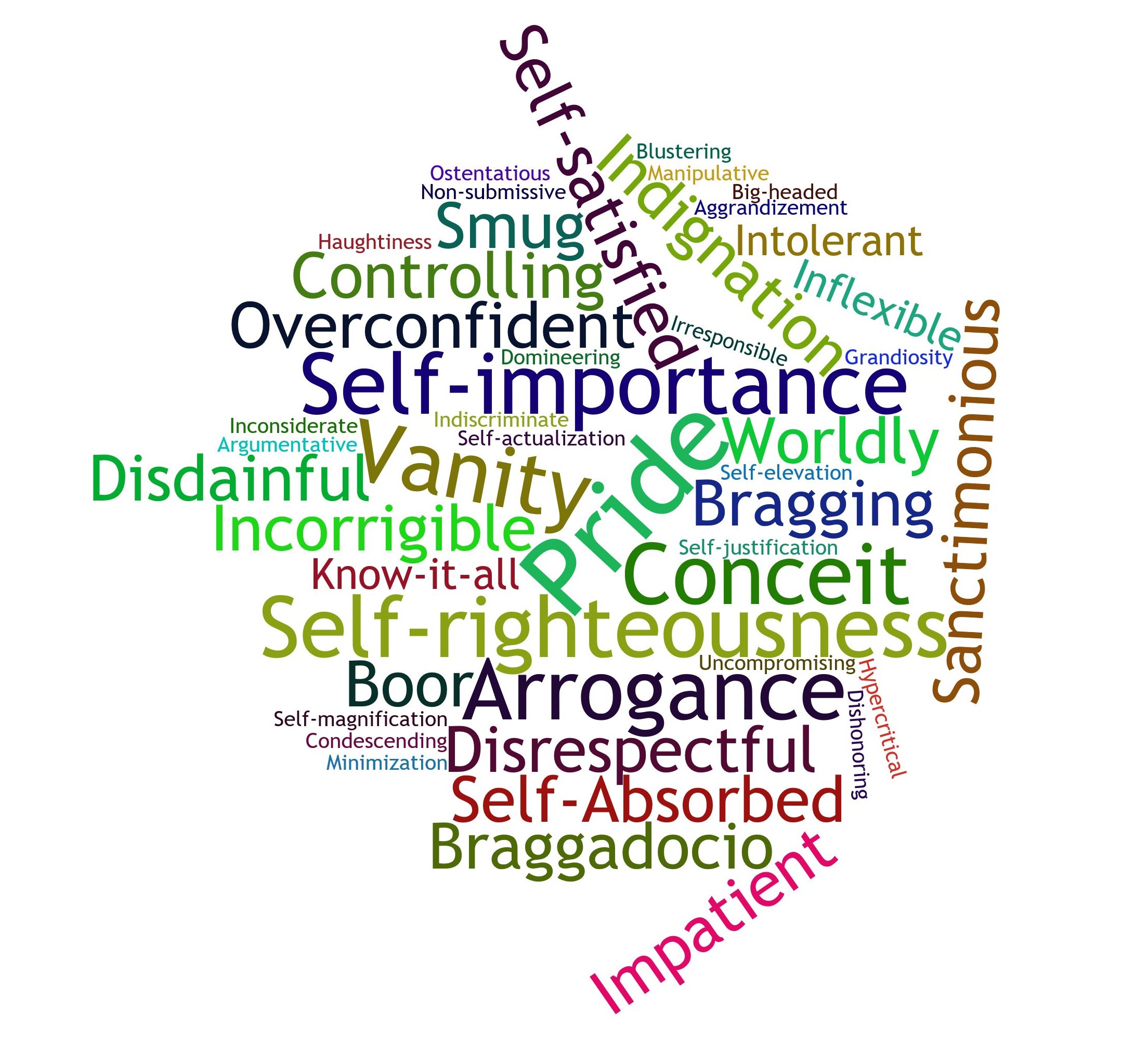
Pride:

Boasting, Conceit, Bragging, Haughtiness, Arrogance, Detraction, Aggrandizement, Braggadocio, Puffery, Grandiosity, Self-importance, Imposing, Obdurate, Judgmental, Wrath at God, Pride of vocation, Pride of place, Nursing wounds, Insolence, Rudeness, Vanity, Vainglory, Superiority, Indignation, Self-righteousness, Resistance, Non-submissive, Repelling, Open ears to evil, Politicizing, Polarization, Supremacy, Preeminence, Defiance, Challenge, Opposition, Antagonism, Spoiled, Snooty, Incorrigible, Willfulness, Worldly success, Worldly achievement, Prowess, Fanaticism, Radicalism, Self-magnification, Self-satisfied, Overconfident, Opinionated, Machismo, Egotism, Unspiritual, Competitive, Bloated, Controlling, Manipulative, Dominating, Domineering, Raw power, Exalted feelings, Scheming, Plotting, Dishonoring, Disproving, Discrediting, Argumentative, Contrarian, Playing devil’s advocate, Cunning, Conniving, Condescending, Idolatry, Intellectualizing, Self-actualization, Self-elevation, Comparison, Envy, Party factions, Minimization of sin, Unruly, Wild, Shocking, Ostentatious, Portentous, Pretentious, Showy, Free-spirited, Indignation, Spiritual superiority, Supervisory, Regulatory, Grandiose, “It’s beneath my dignity,” Self-justification, Refusal to forgive, Indiscriminate sermonizing, Excessive correction of others, Touchy, Hypercritical, Sacrilegious, Blithe, Unconcerned, Dismissive, Disdainful, Disrespectful, Flippant, Trivializing, Exorbitant, Scornful, Poverty of Judas, Pharisaical, Sanctimonious, Contemptuous, Smug, Lawlessness, Supercilious, Grudging, Big-headed, Patronizing, Pompous, Stubborn, Immovable, Inflexible, Intransigent, Obstinate, Uncompromising, Unyielding, Controlling, “Only I can do it,” Workaholic, Arrogant expertise, Sinful curiosity, Demand to know, Insistent on rights, Bullying, Aggressive, Pig-headed, Impatient, Refusing to wait, “I am more important,” Bigotry, Racism, Chauvinism, Inconsiderate, Careless, Intolerant of others’ weaknesses and foibles, Noncompliant, Dissenting, Recalcitrant, Incorrigible, Unreasonable, Ungrateful, Arbitrary, Churlish, Coarse, Impolite, Truculent, Aggressively defiant, Self-Absorbed, Sociopathic, Know-it-all, Blustering, Vociferous, Loudmouth, Boor, Unrepentant, Shameless, Unremorseful, Unapologetic, Irresponsible, Unaware.

All pride and prideful spirits depart!

Narcissism:

Egotistical, Insistent, Picky, Fussy, Choosy, Particular, Demanding, Nitpicking, Hyper-independence, Hypersensitivity, Antipathy, Daintiness, Thin-skinned, Pettiness, Willfulness, Preconceived notions, Presumptions, “Because I say so,” “That’s not fair,” “Me first,” “Why are you taking so long?”, “Who do you think you are?”, “It’s not my fault,” “I can do it myself,” “Gimme,” “Mine,” Unreflective, Unapologetic, Unashamed, Unrepentant, Perfectionism, Rigidity, Paranoia, Suspicion, Irrationality, Instability, Fickle, Immovable, Moody, Unpredictable, Inconsistent, Careless, Complex, Unbalanced, Deaf, Distorted hearing, Perverted judgment, Perverted (selfish) thinking, Refusal to be taught, Ill-formed conscience, Spiritual blindness, Hardness of heart, Duality, Imprudence, Impulsiveness, Compulsiveness, Recklessness, Interruption, Cutting off, Dismissal, Entrenchment, Excessively self-aware, Excessive self-love, Self-seeking, Self-gratification, Self-glorification, Self-aggrandizement, Self-absorbency, Self-idolatry, Self-indulgence, Self-reliance, Self-sufficiency, Self-promotion, Self-importance.

All narcissistic demons, depart!

Lying:

Pretension, Affectation, Posing, Posturing, Finessing, Unreality, Denial, Disavowal, Delusion, Labyrinth, Convoluted thinking, Cheating, Deliberate omission, Duplicity, Deceit, Dishonesty, Neglect of duty, Irreverence, Circumvention, Folly, Concealment, Suppression, Rationalization, Covering up, Blindness of spirit, Evasiveness, Caginess, Equivocation, Untruthfulness, Avoidance, Masking, Game-playing, Deception, Trickery, Sham, Illusion, Wishful thinking, Diversion, Entertaining error, Drama, Falsifying, Farce, Hallucination and dreaminess, Smoke and mirrors, Imitation, Aping, Phoniness, Fakery, Fraud, Scamming, Swindling, Libel, Slander, Defamation, Coyness, Cunning, Wiliness, Pretense, Calculating, Crafty, Undermining, Setting up false dichotomy, Distraction, Diversion, Changing the subject, Euphemisms, Understating, Overstating, Embellishment, Taking out of context, Absolutizing, Falsifying, Manipulating, Preconception, Prejudice, Rash judgment, Flattery, Fawning, Ingratiating, Insincerity, Artificiality, Hypocrisy, Sycophancy, Hedging, Juggling, Altering, Misrepresenting , Disguising, Vincible ignorance, Façade, Boasting, Showmanship, Theatrics, Acting, Trickery, Mockery, Appearances, Fantasy, Heresy, Deviance, Dissent, sheep’s clothing, Subversive, Cunning, Secretive, Substituting, Enigmatic, Irony, Mimicry, Mendacity, Fabrication, False witness, Spreading rumors, Evasion, Side-stepping, Dodging, Unreliable, Undependable, Unpredictable, Untrustworthy, Skirting, Shirking, Fudging, Ducking, Partial truth, Inaccuracy, Careless with the facts, Prevaricating, Stonewalling, Obstructing, Complicating.

All lies and lying spirits, depart!

Fear:

Restless, Agitated, Edgy, Terror, Fright, Worry, Apprehension, Trepidation, Dismay, Shock, Anguish, Anxiety, Uneasiness, Darkness, Grief, Trauma, Troubled, Weeping, Oppression, Conflict, Morbidity, Fixation, Nervousness, Jumpiness, Mania, Hysteria, Obsession, Preoccupation, Helplessness, Vulnerability, Feeling naked and exposed, Defenseless, Hopeless, Insomnia, Nightmares, Commotion, Disturbances, Disorders, Troubles,  Shaky, Tense, Excitement, Turmoil, Confusion, Mayhem, Horror, Overcome, Over my head, Dread, Disgust, Gloom and doom, Desperation, Disappointment, Distraction, Negativity, Tremors, Tension, Headaches, Roaming around, Rumination, Nervous habits, Shackled, Bound, Pressured, Squeezed, Captive, Frozen, Isolated, Restricted, Paralyzed, Immobilized, Shut down, Walls, Coldness, Listlessness, Sluggishness, Sleepiness, Stress, Fatigue, Lethargy, Withdrawal from others and God, Discouragement, Loneliness, Foreboding, Ominous, Threatening, Ruining, Sadness, Despair, Despondency, Distressed, Disheartened, Powerless, Melancholy, Joyless, Crisis, Implosion, Recoiling, “I’m not able,” “I’m not worthy,” Self-condemnation, Perfectionism, Fear of pain, Fear of the cross, Fear of being hurt, Repression, Depression, Panic, Hurt, Rehearsing trouble, Paranoia, Suspicion, Fear of condemnation, Fear of judgment, Scrupulosity, Disordered fear of God, Excessive fear of Hell, Pessimism, Filtering out good news, Ingratitude, Discounting blessings and praise, Staying alone, Abandonment, Betrayal, Untrusting, Indifference, Blockages, Numbness, Closed up/in, Shut up/in, Locked up/in, Stupor, Separation anxiety, Strangulation, Suffocation, “Leave me alone,” Heaviness, Neglect, Loss, Defeat, Weakness of will, Excessive sentimentality, Drama, Blues, Bondage, Bound and gagged, Overly serious, Tied up in knots, Chained, Caught, Snared, Barbed wire, Imprisoned, Impossible, Nettling, Webbing, Avoidance, Humiliation, Inability to overcome, “All is lost.”

Phobias related to Heights, Crowds, Bridges, Planes, Water, Elevators, Hospitals, Close spaces, etc.

All demons and spirits of fear, depart!

Low self-esteem:

Insecurity, Ineptness, Shy, Nervous, Wary, Inhibited, Lonely, Cowardly, Inability to accept or give love, Inability to accept praise, Shame, Embarrassment, Humiliation, Guilt, Feeling accused or blamed, Feeling ugly, Aversion, Avoidance, Feeling unloved, Feeling unwanted, Pessimism, Indifference, No pity, Lukewarmness, Defeat, Inadequacy, Labor, Toil, Drudgery, Self-rejection, Self-pity, Self-contempt, Self-destruction, Self-doubt, Self-abandonment, Lack of confidence, Poor self-image, Self-deprecation, Inferiority, Feeling useless, Disordered or excessive feelings of responsibility, Disordered or misplaced compassion, Introspection, Incredulity at Praise or accomplishment, Unforgiving of self and God, Indecisiveness, Scrupulosity, Sloth, Procrastination, Postponement, Anesthetized, Numbness, Building walls, Dazed, Forgetful, Indecision, Obstruction, Hyper-analytical, Distorted thinking, Wounded heart, Disconnectedness of thoughts and feelings, Disjointed spirit, Past wounds, Paralysis, Passivity, Forgetfulness, Attention deficit, Memory lapse, Memory loss, Obsessive-compulsive, Hesitancy, Compromise, Drama, Transferred feelings, Projection, Negativity, Noncreative, Dimorphic, Preoccupation with appearance, Overly focused on body, Controlling, Overly concerned with things out of one’s control, Passive-aggressive, Dead end, Holding in, Hiding, Avoiding, Dodging, Masks, Resentments, “I must be punished,” “I’m not allowed,” “This can’t happen for me,” “I’m not worthy,” “I can’t,” “I won’t,” “God can’t,” “God won’t,” “You can’t help me,” “I can’t be healed,” “They don’t like me,” “I’m not as able,” “I’m not as good”, “I’m not as attractive,” “They’re all laughing at me,” “I’m unwanted.”

Demons of low self-esteem, depart! I am a gifted child of God; even my weaknesses serve His purposes. I reject your defeatism!

Learning to Name Sins Is to Have More Power Over Them

Over the years we have steadily been losing the vocabulary of sin. Saying “I have sinned” is often replaced by “I made a mistake,” or “I made a poor decision,” or “I’m sorry if my behavior was hurtful in some way.”

Not only are we slow to say we have sinned, we are also ignorant of the subtleties of sin, in part because our vocabulary about sin is so limited. In this state we lose a certain advantage over sin because to name something is the beginning of isolating it and having increasing authority over it. When I can name something, I can focus on it and work on it. It moves from the realm of the abstract and theoretical to the real world.

Over the years I have been compiling lists of the names for various sins. I do this as an outgrowth of deliverance ministry, in which the importance of naming demons cannot be overestimated. Most demons resist disclosing their names mightily because once the exorcist knows the name of a demon, his authority over it is magnified in Jesus.

This is also true in the ordinary situations of life, where demons tempt us, and where the world and our own flesh compound the problem. The more we can name the subtleties of sin the less difficult it is to gain mastery over them.

A good place to begin is with lying. Satan is the consummate liar and seeks to draw us into is web in hundreds of ways. Jesus says this of Satan:

He was a murderer from the beginning, refusing to uphold the truth, because there is no truth in him. When he lies, he speaks his native language, because he is a liar and the father of lies (John 8:44).

The list below on lying is a work in progress. I am working on similar ones related to pride, sensuality, and the like; perhaps I will post these in the future. However, consider this a starting point of moving from an abstract notion of sin to something more real, more concrete.

There are not many people who will call themselves liars. Most will say, “I don’t tell lies—at least not big ones.” Lying and deceit come in many subtle forms, so don’t be so certain that you are free of the tendency. It’s hard to get far into this list without realizing that lying is alarmingly common to us, even if by other means and words. Don’t be discouraged; pick a few and work on overcoming them. Naming them gives us focus and power; by God’s grace, progress can be made by naming the demons that serve these evils.

Here are some words and phrases associated with lying:

Pretension, Affectation, Posing, Posturing, Unreality, Denial, Disavowal, Delusion, Labyrinth, Convoluted thinking, Cheating, Deliberate omission, Duplicity, Deceit, Dishonesty, Neglect of duty, Irreverence, Circumvention, Folly, Concealment, Suppression, Rationalization, Covering up, Blindness of spirit, Evasiveness, Caginess, Equivocation, Untruthfulness, Avoidance, Masking, Game-playing, Deception, Trickery, Sham, Illusion, Wishful thinking, Diversion, Entertaining error, Drama, Falsifying, Farce, Hallucination and dreaminess, Smoke and mirrors, Imitation, Aping, Phoniness, Fakery, Fraud, Scamming, Swindling, Libel, Slander, Defamation, Coyness, Cunning, Wiliness, Pretense, Calculating, Crafty, Undermining, Setting up false dichotomy, Distraction, Diversion, Changing the subject, Euphemisms, Understating, Overstating, Embellishment, Taking out of context, Absolutizing, Falsifying, Manipulating, Preconception, Prejudice, Rash judgment, Flattery, Fawning, Ingratiating, Insincerity, Artificiality, Hypocrisy, Sycophancy, Hedging, Juggling, Altering, Misrepresenting , Disguising, Vincible ignorance , Façade, Boasting, Showmanship, Theatrics, Acting , Trickery , Mockery, Appearances, Fantasy, Heresy, Deviance, Dissent, sheep’s clothing, Subversive, Cunning, Secretive, Substituting, Enigmatic, Irony, Mimicry, Mendacity, Fabrication, False witness, Spreading rumors, Evasion, Side-stepping, Dodging, Unreliable, Undependable, Unpredictable, Untrustworthy, Skirting, Shirking, Fudging, Ducking, Partial truth, Inaccuracy, Careless with the facts, Prevaricating, Stonewalling, Obstructing, Complicating.

All lying spirits, we name you and reject you in the name of Jesus. We ask every grace from God to be more honest, truthful, upright, and trustworthy. Jesus, you said, “I am the Truth.” Live in us and drive from us all that is not true.

Many exorcists use such lists against demons that refuse to state their name. In effect, the exorcist says, “If you won’t tell me your name then I will name you.” This typically causes the demon great pain in addition to that caused by the reading of the Rite of Exorcism itself.

For all of us, naming the drives of sin has a similar effect. It brings them out of obscurity and into the light of reason where their darkness can be scattered. It takes time, but these drives will surely diminish if we name them and consistently rebuke them when they arise.

Knowing the Bad News Unlocks the Good News

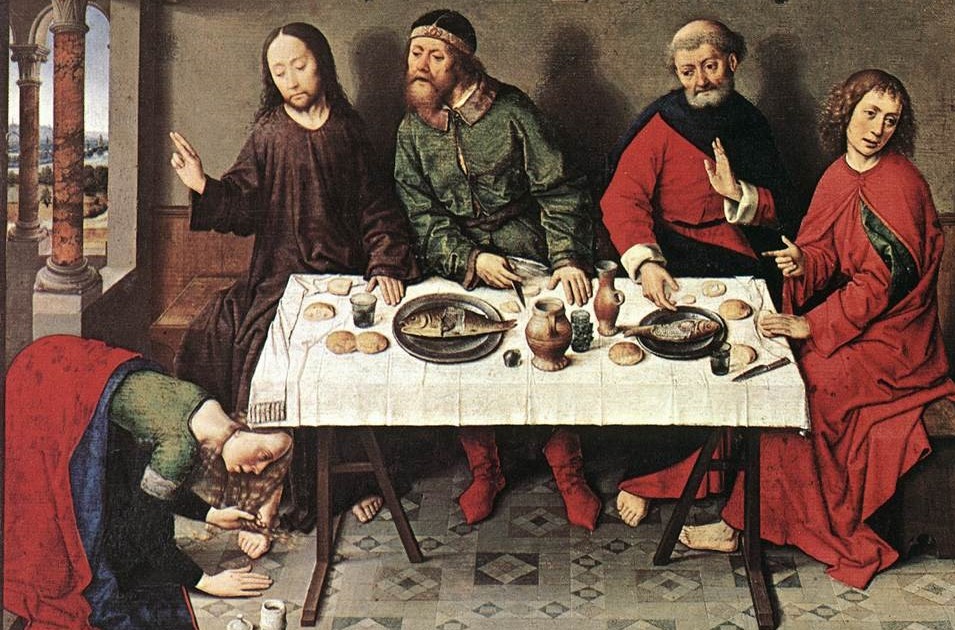
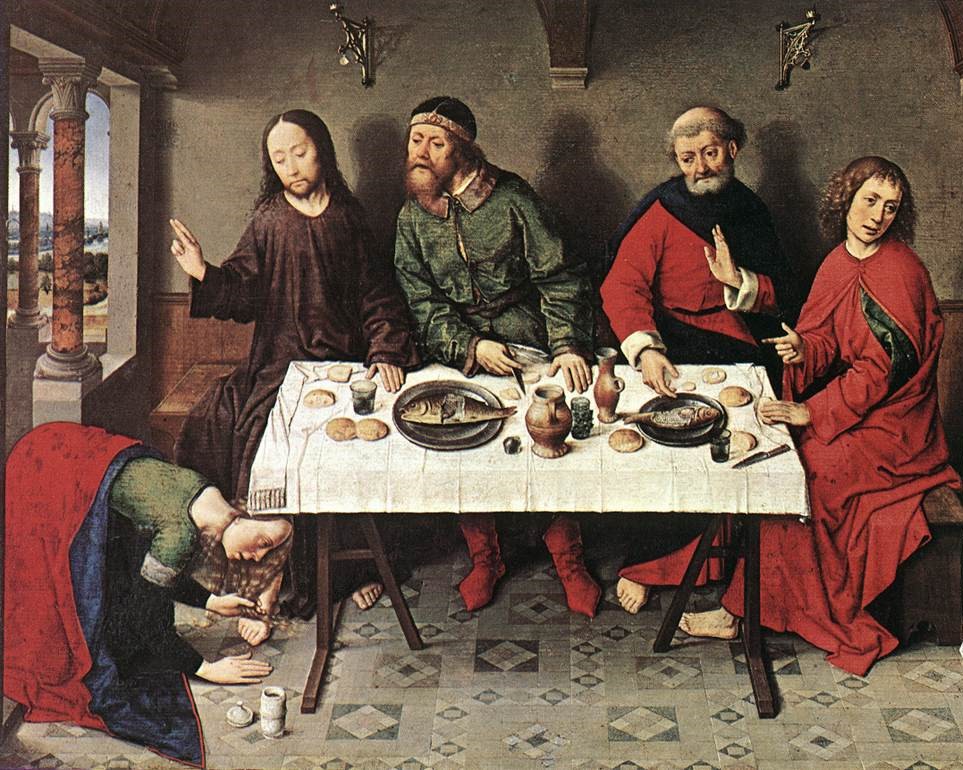
Christ in the House of Simon, Dirk Bouts (1440)

Some people suggest that the Church should speak less of sin and instead emphasize positive things. After all, it is said that one can attract more flies with honey than with vinegar. In that vein, we in the Church have been collectively de-emphasizing sin to a large degree for decades, and yet our churches have been getting emptier and emptier. Maybe this is because people are just a little more complicated than the flies in the old saying.

In the Gospel for Thursday of this week (the 24th week in Ordinary Time), Jesus provides the reason our churches are getting emptier. Simply put, there is less love. He says, But the one to whom little is forgiven loves little (Luke 7:47).

Why is this? We love little because we have little appreciation for what the Lord has done for us and for the debt He paid on our behalf. And why is that? Because our debt of sin is no longer preached about the way it should be and thus we are less aware of the gravity of our condition. This diminishes love, and a lack of love leads to neglect and absence.

Understanding sin is essential to fully comprehending what the Lord has done for us. Remembering what the Lord has done for us brings gratitude and love. Again, to those who want the Church to de-emphasize sin, Jesus provides this warning: But the one to whom little is forgiven, loves little (Luke 7:47).

Let’s take a brief look at Thursday’s Gospel:

A Pharisee invited Jesus to dine with him, and he entered the Pharisee’s house and reclined at table. Now there was a sinful woman in the city who learned that he was at table in the house of the Pharisee. Bringing an alabaster flask of ointment, she stood behind him at his feet weeping and began to bathe his feet with her tears. Then she wiped them with her hair, kissed them, and anointed them with the ointment. When the Pharisee who had invited him saw this he said to himself, “If this man were a prophet, he would know who and what sort of woman this is who is touching him, that she is a sinner.”

Here is a woman imbued with sorrow for her sins and joy at the Lord’s mercy. The Pharisee’s exasperation is born out of blindness to his own sin. Being blind in this way, his heart is ill-equipped to love or even to experience love. He has no sense at all that he even needs it. His sense is that he has earned God’s love and that God somehow owes him! The Pharisee’s only hope is grace, love, and mercy from God.

Jesus said to him in reply, “Simon, I have something to say to you.” “Tell me, teacher,” he said. “Two people were in debt to a certain creditor; one owed five hundred days’ wages and the other owed fifty. Since they were unable to repay the debt, he forgave it for both. Which of them will love him more?” Simon said in reply, “The one, I suppose, whose larger debt was forgiven.” He said to him, “You have judged rightly.”

The central point of this Gospel is that to appreciate the glory of the good news we must first lay hold of the bad news. We must grasp the depths of our sinfulness in order to appreciate the height of God’s love and mercy.

In this “I’m OK; you’re OK,” world, there is little understanding of the enormity of sin and thus little appreciation for the glory of God’s steadfast love and mercy.

Jesus could not be clearer. Until we recognize the “bill” for our sins and grasp that we cannot even come close to paying it, we will make light of mercy and consider the gift of salvation that was earned for us with His blood as of little or no account.

How tragic it is, then, that many in the Church have either stopped preaching about sin or preach only about selected sins. The effect has been to minimize love and to empty our churches. Knowledge of our sin, if such knowledge is of the Holy Spirit, leads to love. In this Gospel, Jesus points to the woman as a picture of what is necessary.

How Can a Demon, Driven Out, Return with Seven More?

The Gospel for Tuesday of the 22nd Week of the Year features Jesus casting out a demon, easily dispatching it. There is another parable, however, in which a cast-out demon returns with seven others. It is puzzling that the house (soul) being “swept and clean” brings further trouble. One would think that a house in such a state would be a good thing!

For reference, here is the parable:

When the unclean spirit has gone out of a man, he roams through waterless places in search of rest; and finding none, he says, “I will return to my house which I left.” And when he has come to it, he finds the place swept and clean. Then he goes and takes seven other spirits more evil than himself, and they enter in and dwell there; and the last state of that man becomes worse that the first (Lk 11:24-25).

As is often the case, recourse to both the subtleties of the Greek text and the context can help us.

In examining different Greek manuscripts, one finds that some of the texts describe the house using three adjectives while others use only two; some of the Greek manuscripts do not include the third word, which is translated as “empty.” Almost every English translation uses only two, lacking the adjective “empty.”

While I can read the Greek text of the New Testament with relative ease, I am not an expert in ancient Greek nor can I speak to the relative value of the differing Greek manuscripts. The translation as either “swept and clean” or “swept and ordered” is almost universal among English renderings of this text. (See an example here.)

I believe that the inclusion of the word “empty” is essential; without it something very important is lost. Let’s look at the description of the “house” (soul) to which the demon returns:

καὶ ἐλθὸν εὑρίσκει σχολάζοντα, σεσαρωμένον καὶ κεκοσμημένον.
Kai elthon heuriskei scholazonta, sesarōmenon kai kekosmēmenon.
And having come, it finds (it) empty, swept, and put in order (ornate).

The fact that the house (soul) is empty (scholazonta) is the chief problem. Empty things need filling. Sadly, if good things do not fill empty spaces, then evil things will. This seems to be at the heart of the Lord’s warning.

A second issue is the translation of the word “kekosmēmenon.” Does “ordered,” or “put in order” really capture what the word is trying to convey? Most of us hear the word “order” and think of either physical or moral order.

However, the Greek lexicon defines the root of kekosmēmenon, kosméō, as “to beautify, having the right arrangement (sequence) by ordering; to adorn, make compellingly attractive, very appealing (inviting, awesomely gorgeous).” Kosméō is also the root of the English word “cosmetics,” which are things that adorn or “order” the face.

Thus, the “order” described in this passage is one related to beauty. Hence, the translation “ornate” may better capture what is meant by this word than either “clean” or “orderly.” So, as we read this parable we should consider that the description of the house as “swept and clean” may lack the subtlety of the Greek words. While we should be wary of etymological fallacy, the original root meaning (kosméō = cosmetic = ornate, rather than merely “ordered”) ought not to be wholly forgotten.

With these in mind, let’s consider the richer possibility that the Lord describes the “house” (an image for the soul) in three ways:

Empty

This is the key description that some ancient manuscripts omit, yet it is the main problem. An empty house is a vulnerable house. An empty house, devoid of human presence, can no longer repel threats or repair damage. More significantly, from the standpoint of grace, an empty house, devoid of the presence of God, is a vacuum ready to be filled with demons and with every form of human sin, pride, and confusion.

Empty buildings are vulnerable, open to attack by termites, extreme weather, mold, and rodents. Just as an uncultivated field goes to weed, so an unattended house slides into decline and decay. So, too, goes the empty human soul, a soul devoid of the presence of God, of gratitude to Him, and of openness to His satisfying presence.

Yes, here is the spiritual lesson: let the Lord and the good things of the Kingdom of God fill every void, every empty space! Emptiness is too easily filled with evil things.

Consider a man who gives up alcohol for Lent. He does well by ending a lawful pleasure and making greater room for God, but what if God, or something of God, does not fill the space? Often something of the devil, or something of the flesh, will fill it. Perhaps the man will think, “I am approved because I, by my own power, have given this up.” Sadly, though, this thought shows that pride has filled the empty space rather than God. The man’s new state is worse than it was before he gave up the lawful pleasure!

Swept

It is good if a person has, by God’s grace, been able to sweep sin from his life, but praise be to the Lord, not to the man or woman! Otherwise, this is an open door for pride. Perhaps the sinner who succeeds in a Lenten observance will say, “Look what I have done! I am approved and am better than others who are less committed!” In this way, grace is snatched by Satan. The house (soul), swept and in good order, must also be filled with humble gratitude to God. Thus, the Lord warns of a house that is “swept” but empty of humility and gratitude.

Ornate

While some translate this as “ordered,” given the context, “ornate” would be a better rendering. We are warned to beware of vanity and also of esteeming beauty more than charity. The warning is for those who, though they appreciate beauty, become smug and disdainful of all others who do not share their aesthetic preferences.

A connoisseur of fine wine may scoff at people who enjoy wine sold in a box (“cow”), or White Zinfandel, or heaven forbid beer! In this way, an appreciation for the finer things (like wine) becomes pride and leads to the last state of the man being worse than the first.

The appreciation of beauty has its place, but if it cancels charity, the last state of the man is worse than the first.

One may appreciate the beauty of the Latin Mass, but if love for the aesthetic causes one to scorn a priest who forgets to bow at the Gloria Patri or who wears gothic vestments instead of the preferred Roman fiddlebacks, then the love of beauty (a good thing) destroys charity (a better thing).

Thus, there is here a warning to religiously observant (a good thing) people that we can allow our lives to be all swept and clean but empty; or worse, to be filled with scorn and pride.

Watch out! The devil can use even our piety to ensnare us in his seven-fold bondage. Do you engage in some active purifications? If so, you do well, but be sure that the space opened, all swept and ordered, is filled with God, with humility, and with gratitude. Otherwise, it will too easily be filled with seven ugly demons and sins: pride, greed, lust, anger, gluttony, envy, and sloth. These are the seven demon friends that accompany a once-cast-out demon.

Exorcism’s Ultimate Power Is the Word of God and the Prayer of the Church

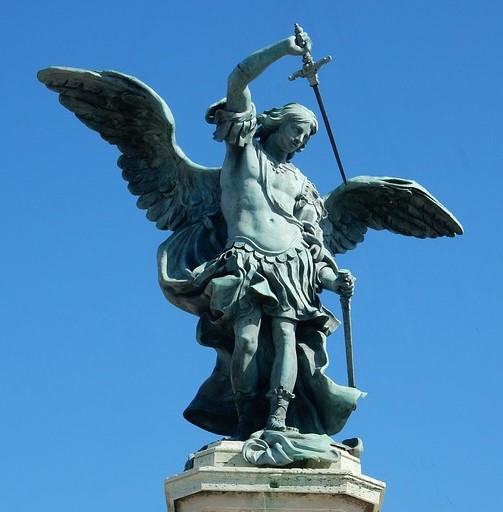
St. Michael, Castel Sant’Angelo

The following essay is a companion essay to another post I wrote on deliverance: God is More Powerful than Satan.

When thinking of deliverance and exorcism there is a tendency to imagine that they involve wresting demons from their place through the menacing use of sacramentals (e.g., crosses, holy water, relics) and a battle of personalities between priest and demon. All of these are commonly and rightly used in both formal exorcism and many types of deliverance prayers.

However, the truest power of exorcism is as a ministry of the Word and a battle for the mind. At the heart of the formal Rite of Exorcism are the officially sanctioned prayers of the Church along with selected Scriptures. These remind the demons of the authority of God, shine the light of truth on what they have become in their fallen state, and underscore to them that they have already lost.

Consider one of the most common images of exorcism and the battle against Satan: St. Michael the Archangel. He holds a sword, ready to deliver the death blow as he stands over the fallen demon. Of course, St. Michael doesn’t wield a real sword. A sword cannot harm a spiritual being. Angels and demons are real persons, but as spiritual beings are not affected by physical attacks. The sword that St. Michael wields is the sword of the truth of God’s Word, of which Scripture says,

  • For the word of God is living and active. Sharper than any double-edged sword, it pierces even to dividing soul and spirit, joints and marrow. It is able to judge the thoughts and intentions of the heart. Nothing in all creation is hidden from God’s sight; everything is uncovered and exposed before the eyes of Him to whom we must give account … (Hebrews 4:12-13).
  • And from [the Lord’s] mouth proceeds a sharp sword with which to strike down the nations, and He will rule them with an iron scepter. He treads the winepress of the fury of the wrath of God, the Almighty (Rev 19:15).
  • But the beast was captured, and with him the false prophet who had performed signs on his behalf, by which he deceived those who had the mark of the beast and worshiped its image. Both of them were thrown alive into the fiery lake of burning sulfur. And the rest were killed with the sword that proceeded from the mouth of the One seated on the horse (Rev 19:20-21).
  • To the angel of the church in Pergamum write: These are the words of the One who holds the sharp, double-edged sword …. Some of you also hold to the teaching of the Nicolaitans. Therefore repent! Otherwise I will come to you shortly and wage war against them with the sword of My mouth Rev 2:2, 15-16).
  • Take the helmet of salvation and the sword of the Spirit, which is the word of God. (Eph 6:17).

The sword of St. Michael, the sword of truth, scatters lies and falsehood as light scatters darkness. The clash between angels and demons is a battle of thought, of truth versus falsehood. The ancient battle in which Lucifer fell like lightning from the sky (Lk 10:18) is often imagined as a war between angels and demons wielding swords and clubs, but it was a war of ideas: the Word of God’s truth against the lies of Lucifer. By the sword of the Spirit, which is the Word of God, St. Michael and the angels won.

It is ultimately the same in exorcism, deliverance, and every other battle we wage against evil in our life (e.g., temptation).

Consider Satan’s efforts to tempt Jesus in the desert. Jesus battled Satan thought for thought; He rejected every lie and temptation with the sword of the Spirit, the Word of God.

In the Rite of Exorcism, the words are to have prominence. Ideally, every exorcism has two priests, one of whom continuously reads the rite while the other uses sacramentals and briefly engages the demons to gain necessary information (e.g., names, how they entered, when they will leave) and tries to find weak points. While the use of sacramentals such as holy water, the touch of a stole, or relics torment the demons, most every exorcist agrees that the truest power of the rite are the approved words of the prayers. In fact, sometimes demons show exaggerated pain in response to lesser things so as to distract from the reading of the rite.

The words of the rite have the effect of shining the light of truth on demons and reminding them of their ultimate destiny. All of this is painful to the demons. Some of the following things, rooted in Scripture, are said to the demons:

  • The Lord has defeated the demons in numerous ways and given them the ultimate defeat that seals their fate at the cross. Jesus withstood Satan in the desert, overcame him in the garden, defeated him on the cross, and bore off his trophies in Sheol to the Kingdom of Heaven. They are also reminded of other embarrassing incidents such as when they begged to be driven into swine and ran in a panic over the bluff into the water. In effect, they are told that they have lost and are losers here, too.
  • The demons are told that the possessed person has turned to the Church for help, rejecting them and any legal claims they ever had; the possessed person is a redeemed son or daughter of God, made in His image, and is a temple of the Holy Spirit.
  • The demons are told of their future: a fiery Gehenna where the worm dies not, and the fire is never extinguished. Indeed, the longer they delay their departure the worse their punishment will be. They are commanded to tremble in fear before the Lord. They are reminded that their place is in solitude and their abode is in the nest of serpents; they are told to get down and crawl with them.
  • The demons are reminded of the power of the Lord Jesus and that they must ultimately confess that He is Lord and ruler over them. They are commanded to fear Him and admit their ultimate powerlessness before Him. They are asked, “Why, then, do you stand and resist, knowing as you must that Christ the Lord brings your plans to nothing?”
  • The demons are reminded that they were once glorious and beautiful angels but are now fallen and ugly. They are named in the rite as abominable creatures, profligate dragons, horrible monsters, scourges, seducers, full of lies and cunning, foes of virtue, persecutors of the innocent, begetters of death, robbers of life, corrupters of justice, the root of all evil and vice, seducers of men, betrayers of nations, instigators of envy, fonts of avarice, fomenters of discord, authors of pain and sorrow, accursed murderers, sources of lechery, instigators of sacrilege, models of vileness, promoters of heresies, and inventors of every obscenity.
  • Ultimately, the demons are commanded to depart, to flee and give way to God in the power of Jesus’ Name.

All these words and many more shine the light of truth on the demons and cause them pain. It is the Word, the prayer of the Church, that ultimately defeats the father of lies. Of him, Jesus said,

He was a murderer from the beginning, refusing to uphold the truth, because there is no truth in him. When he lies, he speaks his native language, because he is a liar and the father of lies (Jn 8:44).

This teaching on exorcism is an important lesson for all of us. The truest battleground for all of us is our mind; the battle is one of thoughts. We will either dwell in God’s truth and study His Word or be lost in Satan’s lies. We must learn to fight every temptation with the sword of God’s Word. We must test every thought we have to see if it conforms to God’s Word. We must decide either to believe in God or in Satan. The sword of God’s Word can drive out every temptation, fear, sorrow, and depression. The more we grow in God’s Word the less authority and influence Satan can have in our lives.

This is why exorcism sometimes takes time: it is ultimately a journey in faith and trust. It requires that the possessed take more and more seriously the truth that God is more powerful than Satan and then live out of that truth. If we let it in, light scatters darkness. If we accept it, truth defeats lies. Jesus is the Light and the Truth, and by these the Way to deliverance.

On the Punishment of Complete Loss

In Mass for Monday of the 20th Week of the Year we read from the prophet Ezekiel. The reading warns of the possibility that moral conditions in the Church and the world can get so awful that God must take the strongest and most severe of measures.

Ezekiel experienced the coming disaster upon Israel very personally as a last warning to the people.

Thus the word of the Lord came to me: Son of man, by a sudden blow I am taking away from you the delight of your eyes …. That evening my wife died (Ez 24:15, 17).

Ezekiel wrote in the period just before the Babylonian destruction of Jerusalem. The loss of his wife was a portent of the coming disaster. God instructed him not to mourn but to turn to the people and say,

Thus says the Lord God: I will now desecrate my sanctuary, the stronghold of your pride, the delight of your eyes, the desire of your soul. The sons and daughters you left behind shall fall by the sword. Ezekiel shall be a sign for you: all that he did you shall do when it happens. … you shall rot away because of your sins and groan one to another.

As for you, son of man (Ezekiel) truly, on the day I take away from them their bulwark, their glorious joy, the delight of their eyes, the desire of their soul, and the pride of their hearts, their sons and daughters …. Thus you [are now] a sign to them, and they shall know that I am the Lord (Ezekiel 24, selected verses).

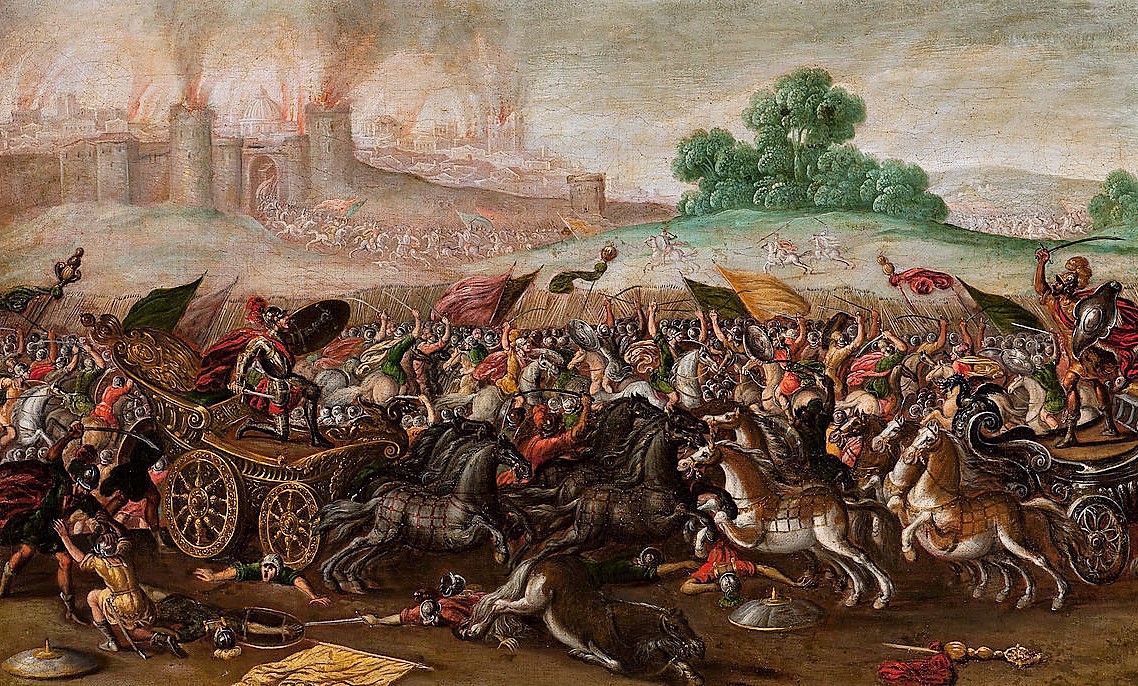
The tragic moment for Judah came in 587 B.C. The Babylonians utterly destroyed Jerusalem. The Temple was burned, and the Ark of the Covenant was lost, never again to be found (until its fulfillment in the Blessed Mother Mary). One could not imagine a more unlikely or complete destruction. Why would God allow His glorious Temple to fall at the hands of an unbelieving nation?

God is not egocentric. He does not need buildings or holy cities to show His power. His most central work is to fashion a holy people and to draw each of us to holiness. God cares more about our holiness and salvation than His own external glory or buildings and shrines in His honor.

The terrible state of affairs of ancient Israel and Judah is well documented by the prophets. God’s own people had become depraved in many ways. There was idolatry, injustice, promiscuity, and a tendency to imitate the nations around them. Further, they had become incorrigible. God often described them has having necks of iron and foreheads of brass; He called them a rebellious house. Moreover, they made the presumption that God would never destroy His own temple or allow Jerusalem to fall.

There comes a time when warnings and minor punishments are no longer effective; only the most severe and widespread of losses will purge the evil. Surely this is evident in the smoking ruins of Jerusalem in 587 B.C. Those who survived were taken to live in exile.

By the waters of Babylon, there we sat down and wept, when we remembered Zion. On the willows there we hung up our harps (Ps 137:1-2).

We should not delude ourselves into thinking that such a terrible event could only occur in the ancient world. We must consider that our condition can become so debased, so corrupted, that the only solution is the most severe of punishments, one so onerous that we cannot possibly return to our former ways, one that levels the very sources of our pride and many of our occasions for sin.

Today, we kill shocking numbers of children in the womb; no amount of preaching or teaching of medical truth seems capable of ending this shedding of innocent blood. Our families are collapsing; we are suffering the ravages of our sexual sins. In our national and international greed, we cannot seem to control our spending or ever say no to ourselves. We are saddling future generations with insurmountable debt. No matter the warnings, we don’t seem to be able to, or will not, stop. Many of the clergy have also become lost in sin; some even go about teaching error and misleading God’s people. There is indeed confusion and silence in the Church, where one would hope for clarity and words of sanity. Corruptio optimi pessima (The corruption of the best is the worst thing). Many of the faith are silent, weak, and divided, while the wicked and secular are fierce, committed, and focused.

All the while, in our affluence, we cannot imagine that a crushing end might come. Yet God said to the ancient, affluent city of Laodicea,

You say, I am rich, I have prospered, and I need nothing, not realizing that you are wretched, pitiable, poor, blind, and naked. I counsel you to buy from me gold refined by fire, so that you may be rich, and white garments so that you may clothe yourself and the shame of your nakedness may not be seen, and salve to anoint your eyes, so that you may see (Revelation 3:17-18).

It becomes hard to see how God might bring us to conversion without the severest of blows.

Nevertheless, do not wish for this. Continue to pray for conversion! The alternative is almost too awful to imagine. Most of us are too comfortable to endure what might come. Saints, sinners, and everyone in between will suffer. Ezekiel was the first to suffer in the collapse of his times, even though he was one who tried to listen and to warn.

The message of this week’s readings from Ezekiel is clear: Pray, pray, pray. Be sober that God will not hesitate to inflict severe blows if necessary, so that He might save at least some, a remnant.

This song says,

Ne irascaris, Domine, satis (Be not angry, O Lord, enough)
et ne ultra memineris iniquitatis nostrae. (And remember our iniquities no longer)
Ecce, respice, populus tuus omnes nos. (Behold, see, we are all your people)
Civitas sancti tui facta est deserta. (Your Holy City is deserted)
Sion deserta facta est, (Sion is deserted)
Jerusalem desolata est (Jerusalem is destroyed)

The Battle of Anger in God’s Prophets

Jeremiah, by Lorenzo Monaco (1407)

We recently read a passage from the Book of the Jeremiah in daily Mass (Wednesday of the 17th Week of the Year) that provides an important teaching on righteous anger and the need for meekness. Meekness is the virtue that moderates anger; it is a form of temperance that controls resentment.

The biblical prophets were people too, and one of the human passions that most drove and affected them was anger. The focus in the passage is on “righteous anger,” not the sinful anger rooted in ego, vanity, and/or desire to have everything on our terms. Righteous anger is our response to sin and injustice. Seeing injustice and observing the sinful behaviors of the very people who should have exemplified holiness, provoked the prophets to anger, to disappointment, and to rebuke rooted in love for God and His people. Of itself, anger is neither sin nor virtue. It is simply a response in the face of perceived danger or injustice. Sometimes we have to get angry enough to do something about a problem and work at it until it is resolved.

Even righteous anger is difficult to balance and navigate well. There is a difference between being creatively angry and simply being angry. At its best, anger alerts us to a problem and then supplies the creative energy and resolve to correct it. At its worst, anger is too easily vented in destructive and unhelpful ways or is carried about like a heavy weight. Anger turned inward is depression and sullenness. Anger vented is often mere wrath and/or vengeance.

In the following passage we see a description of Jeremiah’s struggle with anger and of God’s call for him to engage in an internal battle with his own anger so that he can engage in the external battle for righteousness among God’s people. As the passage opens we see a sullen and depressed Jeremiah:

Woe to me, mother, that you gave me birth!
a man of strife and contention to all the land!
I neither borrow nor lend,
yet all curse me.

Why is my pain continuous,
my wound incurable, refusing to be healed?
You have indeed become for me a treacherous brook,
whose waters do not abide!
(Jer 15:10ff)

Jeremiah is weary of the weight of his anger. He has contended for righteousness among God’s people but has encountered much resistance. (Welcome to the life of a prophet!) Based on the limited information in the passage, it would seem that Jeremiah’s anger has turned inward and become depression.

One error in the face of anger is to vent it. Often this involves fits of temper, invective, and lashing out that misses the target and causes a good bit of collateral damage. Vented anger brings more heat than light, more tense reaction than true reform.

Jeremiah, however, seems to suffer from the other error in the face of anger: he suppresses it or turns it inward. One definition of depression is this: anger turned inward. When we do this, we begin to carry our anger like a heavy weight. We ruminate and feel blue. This is especially the case when we experience resistance or feel powerless to effect the change our anger energizes us to address. The desired outcome of our anger seems too distant, but instead of redirecting the energy of our anger (e.g., prayer, fasting, educating God’s people in first principles of justice and holiness), we carry the anger as a kind of bitterness and defeat that we take personally.

Jeremiah describes his life as one of woe, so much so that he wishes he had never been born. He sees all as strife and takes personally the fact that all curse him. He is weighed down with this suppressed anger and feels it continuously. He is stuck in his anger and depression.

To some degree, his sorrow is multiplied by his memory of the joy that God’s righteousness inspired in him. God’s word gave him a joyful idealism wherein he could live God’s ways and call others to do the same:

When I found your words, I devoured them;
they became my joy and the happiness of my heart,
Because I bore your name,
O LORD, God of hosts.
I did not sit celebrating
in the circle of merrymakers;
Under the weight of your hand I sat alone
because you filled me with indignation.

In the early stages, Jeremiah’s anger was like an energy that supplied a resolve for him to do what was right, even if it cost him some of the carnal pleasures and the relationships that preoccupy most people. He was content with the joy of God’s teaching and perhaps that God was preparing him to draw others to that joy.

When results are lacking, though, joy can turn to sorrow. The soul can cry out, why do others not see and desire the joy I have found? Why do they prefer vain and sinful things? Where is the harvest of justice and righteousness that God has promised?

It has been said that expectations are premeditated resentments. The joy and hopeful expectations of Jeremiah have not come to fruition. Given the intensity of the joy and zeal, the disappointment is all the more deep and dark. Jeremiah’s anger has turned dark and inward; it is experienced as a heavy weight and brings him weariness and depression.

Therefore, the Lord speaks to Jeremiah in the following way:

Thus the LORD answered me:
If you repent, so that I restore you,
in my presence you shall stand;
If you bring forth the precious without the vile,
you shall be my mouthpiece.

Then it shall be they who turn to you,
and you shall not turn to them;
And I will make you toward this people
a solid wall of brass.
Though they fight against you,
they shall not prevail,
For I am with you,
to deliver and rescue you, says the LORD.
I will free you from the hand of the wicked,
and rescue you from the grasp of the violent
.

God counsels Jeremiah to repent of this unhelpful use of his anger. God has supplied him with righteous anger to give him resolve, fortitude, patience, a steady dependence on Him, and a confident expectation of ultimate victory. The battle will be long; there will be no quick resolution here. The people are stiff-necked and resistant. Jeremiah must learn to bring forth the precious truth without the negative aspects of anger: wrath, vengeance, arrogance, impatience, and the thin-skinned quality that comes from forgetting that the battle is the Lord’s not his.

Many of us who have worked for justice and respect for life in this increasingly selfish and greedy culture know Jeremiah’s struggle. Sometimes in our zeal we vent our anger and say hateful or unhelpful things. At other times we grow weary and carry our anger around like an anchor rather than channeling it to creative ends.

The virtue that controls anger is meekness. Meekness is not weakness; it does not mean being easily manipulated or free from all anger. It is the virtue that gives us authority over our anger. It is the proper middle ground between too much anger and not enough. The meek are in fact strong because they have authority over perhaps the strongest and most unruly of the passions. Jesus says in the beatitudes that the meek will inherit the earth. Why? Because it is they who will consistently work to build a better world; it is they who will use their anger like a creative energy to establish a more just and holy order.

Another beatitude that applies to anger is this one: Blessed are those who mourn for they will be comforted. Who are those who mourn? It is those who see the awful state of God’s people, that they are often lost and searching for meaning in vain things. Seeing this, they mourn, but it is not the mourning of depression. It is a creative mourning. It is a grief, an anger, that motivates them to pray and to try to reach as many of God’s people as possible. God comforts them (more literally he strengthens them) to channel their grief and anger to resolve, patience, and persistence.

Jeremiah, though a great prophet, was flesh and blood like us; he had his struggles and dark moments. In speaking to him, God also speaks to us:

Stay close to me in daily repentance and realize that your strengths and struggles are very closely related. Your anger and resolve are gifts I offer you to strengthen you and summon you to battle. Make sure that you fight the right battle against the right foe. Satan and his unjust vision are the enemy, not the people I send you to correct, nor your very self. Neither vent your anger at the wrong foe nor turn it inward to depression. Receive my gift of meekness to have authority over your anger. Receive the comfort and strength I offer to those who mourn the state of my people. The battle is mine and I have already won the final victory.

Be angry, but sin not.

The song below is from the Carmina Burana. The man in the poem laments that his anger is based in sinful rootlessness and indulgence of his passions. This is wholly different from “righteous anger” because its source is carnal and sinful drives rather than sorrow at injustice. Here is the English translation of the Latin text:

Burning inwardly with strong anger, in my bitterness I speak to my soul; created out of matter, ashes of the earth, I am like a leaf with which the winds play.

Whereas it is proper for a wise man to place his foundations on rock, I, in my folly, am like a flowing river, never staying on the same course.

I am borne along like a ship without a sailor, just as a wandering bird is carried along paths of air; chains do not keep me nor does a key; I seek men like myself, and I am joined with rogues.

For me a serious heart is too serious a matter; a joke is pleasant and sweeter than honeycombs; whatever Venus orders is pleasant toil; she never dwells in faint hearts.

I go on the broad way after the manner of youth; and I entangle myself in vice, forgetful of virtue; greedy for pleasure more than for salvation, I, dead in my soul, attend to the needs of my flesh.