
What Was the Lord Doing on Monday of Holy Week?

According to Matthew 21:10-17, Mark 11:15-17, and Luke 19:45-46, Jesus returns to Jerusalem today. Seeing shameful practices in the Temple area, He cleanses it. The Gospels also recount His weeping over Jerusalem and His cursing of the fig tree. Matthew and Mark relate that He returned to Bethany that night. Let’s look to the details. 

Prelude: The Scriptures record that Jesus went to Bethany on the Sunday evening after His triumphal entrance into Jerusalem (Palm Sunday):

[Jesus] went into the temple courts. He looked around at everything, but since it was already late, He went out to Bethany with the Twelve (Mk 11:11).

It is likely that Jesus stayed at the house of Martha, Mary, and Lazarus. Bethany was a mere two miles from Jerusalem (though a steep climb), just over the Mount of Olives.

Pain: The next morning (Monday) Jesus arises and goes back toward Jerusalem. Luke records that as He came over the crest of the hill on the Mount of Olives He wept:

As Jesus approached Jerusalem and saw the city, He wept over it and said, “If only you had known on this day what would bring you peace! But now it is hidden from your eyes. For the days will come upon you when your enemies will barricade you and surround you and hem you in on every side. They will level you to the ground—you and the children within your walls. They will not leave one stone on another, because you did not recognize the time of your visitation from God” (Lk 19:41-44).

Today on this spot there is a chapel named Dominus Flevit (the Lord wept), which is in the shape of a teardrop. From here Jesus could see the whole city spread out below. He could also see forty years into the future to the time when the Romans would destroy the city and Temple, the culmination of a horrible and pointless war (64-70 A.D.) for liberation from the Romans. Had Jesus’ message been heeded, the Romans would not have been regarded as enemies to kill but rather as brothers to convert to the gospel.

Passionate Anger: Mark recalls an event as they come down the hillside:

The next day, when they had left Bethany, Jesus was hungry. Seeing in the distance a fig tree in leaf, He went to see if there was any fruit on it. But when He reached it, He found nothing on it except leaves, since it was not the season for figs. Then He said to the tree, “May no one ever eat of your fruit again.” And His disciples heard this statement (Mk 11:12-14).

The fig tree is widely interpreted as representing the Jewish people. The Lord looked for fruits among His chosen people but found none. Jesus’ rebuke of the tree illustrates His righteous anger at and disappointment in their lack of the fruits of faith. Scripture says elsewhere,

And the men of Judah are [the Lord’s] pleasant planting; and he looked for justice, but behold, bloodshed; for righteousness, but behold, the outcry! (Is 5:6-7)

And Jesus told this parable: “A man had a fig tree planted in his vineyard, and he came seeking fruit on it and found none. And he said to the vinedresser, ‘Look, for three years now I have come seeking fruit on this fig tree, and I find none. Cut it down. Why should it use up the ground?’ And he answered him, ‘Sir, let it alone this year also, until I dig around it and put on manure. Then if it should bear fruit next year, well and good; but if not, you can cut it down’” (Luke 13:6-9).

Seeing no fruit in this last hour, Jesus in effect finishes the parable. The hour of judgment has come upon ancient Judah.

Many misunderstand the phrase that it was “not the season for figs,” falsely concluding that it was thus “unfair” to expect figs on the branches. However, it is for this very reason that one would expect to find figs growing in the branches, for if it were the harvest one would expect bare branches as the figs would have just been harvested. It is before the harvest that one expects to find figs, even if not fully ripe, growing in the branches. Seeing nothing but leaves, Jesus curses the tree.

Pivotal Event: The cleansing of the Temple was indeed a pivotal event. Here is Mark’s account:

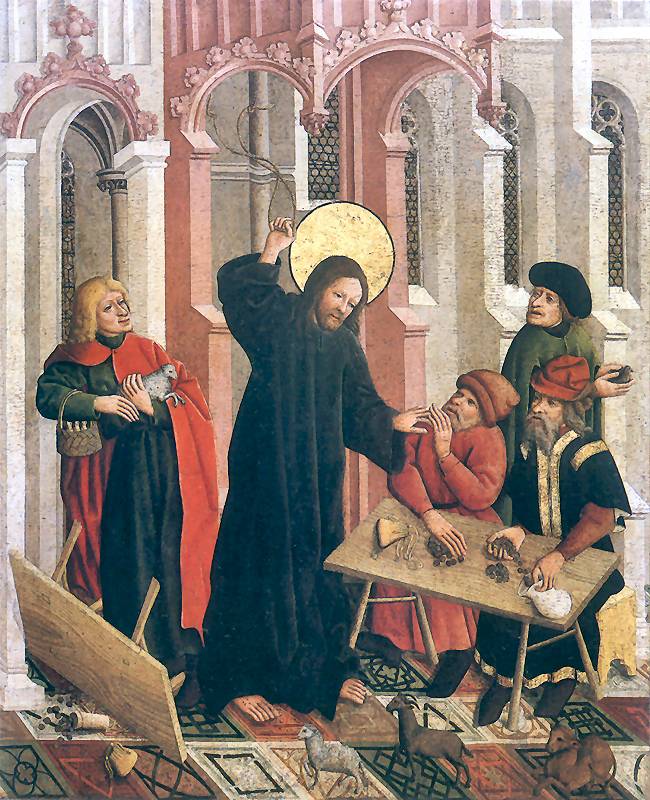
And they came to Jerusalem. And he entered the temple and began to drive out those who sold and those who bought in the temple, and he overturned the tables of the money-changers and the seats of those who sold pigeons. And he would not allow anyone to carry anything through the temple. And he was teaching them and saying to them, “Is it not written, ‘My house shall be called a house of prayer for all the nations’? But you have made it a den of robbers.” And the chief priests and the scribes heard it and were seeking a way to destroy him, for they feared him, because all the crowd was astonished at his teaching (Mk 11:15-18).

The Lord’s grief and anger grow worse as He enters the Temple. What made him so angry? Mark’s Gospel states the reason most clearly: It is not the selling of animals (which were needed for the sacrifices) per se, but that they were being sold in a part of the Temple grounds reserved for the Gentiles to pray. This is an insult and amounts to a denial that the prayers of the Gentiles mattered at all. Jesus was about to die in order to reunite God’s scattered children. And I, when I be lifted up from the earth, will draw all people unto me (Jn 12:32).

As for the Temple being a den of robbers, the implication is that the dealings there are unjust and exploitative.

Why is this a pivotal moment? The action of Jesus is a prophetic judgment made in the very center of the Temple leaders’ power. The Temple was the locus of their power and prestige. It is not lost on them for a moment that Jesus has threatened all of this, not merely by what He has said but by his popularity among the people.

According to John’s Gospel (which actually remarks on this earlier in Jesus’ ministry), when the Temple leaders demanded a sign and an explanation for this action Jesus said,

Destroy this temple, and in three days I will raise it up again.” “This temple took forty-six years to build,” the Jews replied, “and You are going to raise it up in three days?” But Jesus was speaking about the temple of His Body (Jn 2:19-21).

This had a further impact on the Temple leaders, who would later accuse Jesus (at His trial) of threatening to destroy the temple (e.g., Mk 14:58).

Theologically, Jesus is saying that Temple worship is over. He is the temple. He is the priest. He is the lamb. It is His blood that will cleanse us. Temple worship is ended because what it pointed to (Jesus) is now here. Its purpose is fulfilled in Him.

Quite a day, this Monday of Holy Week! Can you sense the grief and anger of the Lord? Remember, His anger is a righteous one. Everything was being fulfilled for the ancient people, but many are rejecting the very one God has sent to save them. Jesus cannot remain indifferent to their tragic rejection. He both weeps and has a grieving anger.

Do we weep for the condition of our world? Do we pray and seek to call forth the fruits of faith, justice, and truth?

Jesus does not give up. He will spend the next day teaching and seeking to win as many as possible to the truth of the gospel.

The Scriptures conclude Monday of Holy Week in this way:

And he left them and went out of the city to Bethany, where he spent the night (Matt 21:17).

Perhaps Jesus is consoled in His grief and anger by the presence of friends like Martha, Mary, and Lazarus. Perhaps He finds solace in the company of His apostles and others. Scripture says,

A faithful friend is a sturdy shelter:
he that has found one has found a treasure.
There is nothing so precious as a faithful friend,
and no scales can measure his excellence.
A faithful friend is a medicine of life;
and those who fear the Lord will find him
(Sirach 6:14-16).

Stay close to the heart of the Lord. Be His “consolation.” Be the reparation for the rejection by so many others.
 

What Was the Lord Doing on Monday of Holy Week?

According to Matthew 21:10-17, Mark 11:15-17, and Luke 19:45-46, Jesus returns to Jerusalem today. Seeing shameful practices in the Temple area, He cleanses it. The Gospels also recount His weeping over Jerusalem and His cursing of the fig tree. Matthew and Mark relate that He returned to Bethany that night. Let’s look to the details. 

Prelude: The Scriptures record that Jesus went to Bethany on the Sunday evening after His triumphal entrance into Jerusalem (Palm Sunday):

[Jesus] went into the temple courts. He looked around at everything, but since it was already late, He went out to Bethany with the Twelve (Mk 11:11).

It is likely that Jesus stayed at the house of Martha, Mary, and Lazarus. Bethany was a mere two miles from Jerusalem (though a steep climb), just over the Mount of Olives.

Pain: The next morning (Monday) Jesus arises and goes back toward Jerusalem. Luke records that as He came over the crest of the hill on the Mount of Olives He wept:

As Jesus approached Jerusalem and saw the city, He wept over it and said, “If only you had known on this day what would bring you peace! But now it is hidden from your eyes. For the days will come upon you when your enemies will barricade you and surround you and hem you in on every side. They will level you to the ground—you and the children within your walls. They will not leave one stone on another, because you did not recognize the time of your visitation from God” (Lk 19:41-44).

Today on this spot there is a chapel named Dominus Flevit (the Lord wept), which is in the shape of a teardrop. From here Jesus could see the whole city spread out below. He could also see forty years into the future to the time when the Romans would destroy the city and Temple, the culmination of a horrible and pointless war (64-70 A.D.) for liberation from the Romans. Had Jesus’ message been heeded, the Romans would not have been regarded as enemies to kill but rather as brothers to convert to the gospel.

Passionate Anger: Mark recalls an event as they come down the hillside:

The next day, when they had left Bethany, Jesus was hungry. Seeing in the distance a fig tree in leaf, He went to see if there was any fruit on it. But when He reached it, He found nothing on it except leaves, since it was not the season for figs. Then He said to the tree, “May no one ever eat of your fruit again.” And His disciples heard this statement (Mk 11:12-14).

The fig tree is widely interpreted as representing the Jewish people. The Lord looked for fruits among His chosen people but found none. Jesus’ rebuke of the tree illustrates His righteous anger at and disappointment in their lack of the fruits of faith. Scripture says elsewhere,

And the men of Judah are [the Lord’s] pleasant planting; and he looked for justice, but behold, bloodshed; for righteousness, but behold, the outcry! (Is 5:6-7)

And Jesus told this parable: “A man had a fig tree planted in his vineyard, and he came seeking fruit on it and found none. And he said to the vinedresser, ‘Look, for three years now I have come seeking fruit on this fig tree, and I find none. Cut it down. Why should it use up the ground?’ And he answered him, ‘Sir, let it alone this year also, until I dig around it and put on manure. Then if it should bear fruit next year, well and good; but if not, you can cut it down’” (Luke 13:6-9).

Seeing no fruit in this last hour, Jesus in effect finishes the parable. The hour of judgment has come upon ancient Judah.

Many misunderstand the phrase that it was “not the season for figs,” falsely concluding that it was thus “unfair” to expect figs on the branches. However, it is for this very reason that one would expect to find figs growing in the branches, for if it were the harvest one would expect bare branches as the figs would have just been harvested. It is before the harvest that one expects to find figs, even if not fully ripe, growing in the branches. Seeing nothing but leaves, Jesus curses the tree.

Pivotal Event: The cleansing of the Temple was indeed a pivotal event. Here is Mark’s account:

And they came to Jerusalem. And he entered the temple and began to drive out those who sold and those who bought in the temple, and he overturned the tables of the money-changers and the seats of those who sold pigeons. And he would not allow anyone to carry anything through the temple. And he was teaching them and saying to them, “Is it not written, ‘My house shall be called a house of prayer for all the nations’? But you have made it a den of robbers.” And the chief priests and the scribes heard it and were seeking a way to destroy him, for they feared him, because all the crowd was astonished at his teaching (Mk 11:15-18).

The Lord’s grief and anger grow worse as He enters the Temple. What made him so angry? Mark’s Gospel states the reason most clearly: It is not the selling of animals (which were needed for the sacrifices) per se, but that they were being sold in a part of the Temple grounds reserved for the Gentiles to pray. This is an insult and amounts to a denial that the prayers of the Gentiles mattered at all. Jesus was about to die in order to reunite God’s scattered children. And I, when I be lifted up from the earth, will draw all people unto me (Jn 12:32).

As for the Temple being a den of robbers, the implication is that the dealings there are unjust and exploitative.

Why is this a pivotal moment? The action of Jesus is a prophetic judgment made in the very center of the Temple leaders’ power. The Temple was the locus of their power and prestige. It is not lost on them for a moment that Jesus has threatened all of this, not merely by what He has said but by his popularity among the people.

According to John’s Gospel (which actually remarks on this earlier in Jesus’ ministry), when the Temple leaders demanded a sign and an explanation for this action Jesus said,

Destroy this temple, and in three days I will raise it up again.” “This temple took forty-six years to build,” the Jews replied, “and You are going to raise it up in three days?” But Jesus was speaking about the temple of His Body (Jn 2:19-21).

This had a further impact on the Temple leaders, who would later accuse Jesus (at His trial) of threatening to destroy the temple (e.g., Mk 14:58).

Theologically, Jesus is saying that Temple worship is over. He is the temple. He is the priest. He is the lamb. It is His blood that will cleanse us. Temple worship is ended because what it pointed to (Jesus) is now here. Its purpose is fulfilled in Him.

Quite a day, this Monday of Holy Week! Can you sense the grief and anger of the Lord? Remember, His anger is a righteous one. Everything was being fulfilled for the ancient people, but many are rejecting the very one God has sent to save them. Jesus cannot remain indifferent to their tragic rejection. He both weeps and has a grieving anger.

Do we weep for the condition of our world? Do we pray and seek to call forth the fruits of faith, justice, and truth?

Jesus does not give up. He will spend the next day teaching and seeking to win as many as possible to the truth of the gospel.

The Scriptures conclude Monday of Holy Week in this way:

And he left them and went out of the city to Bethany, where he spent the night (Matt 21:17).

Perhaps Jesus is consoled in His grief and anger by the presence of friends like Martha, Mary, and Lazarus. Perhaps He finds solace in the company of His apostles and others. Scripture says,

A faithful friend is a sturdy shelter:
he that has found one has found a treasure.
There is nothing so precious as a faithful friend,
and no scales can measure his excellence.
A faithful friend is a medicine of life;
and those who fear the Lord will find him
(Sirach 6:14-16).

Stay close to the heart of the Lord. Be His “consolation.” Be the reparation for the rejection by so many others.


What Was the Lord Doing on Monday of Holy Week?

According to Matthew 21:10-17, Mark 11:15-17, and Luke 19:45-46, Jesus returns to Jerusalem today. Seeing shameful practices in the Temple area, He cleanses it. The Gospels also recount His weeping over Jerusalem and His cursing of the fig tree. Matthew and Mark relate that He returned to Bethany that night. Let’s look to the details. 

Prelude: The Scriptures record that Jesus went to Bethany on the Sunday evening after His triumphal entrance into Jerusalem (Palm Sunday):

[Jesus] went into the temple courts. He looked around at everything, but since it was already late, He went out to Bethany with the Twelve (Mk 11:11).

It is likely that Jesus stayed at the house of Martha, Mary, and Lazarus. Bethany was a mere two miles from Jerusalem (though a steep climb), just over the Mount of Olives.

Pain: The next morning (Monday) Jesus arises and goes back toward Jerusalem. Luke records that as He came over the crest of the hill on the Mount of Olives He wept:

As Jesus approached Jerusalem and saw the city, He wept over it and said, “If only you had known on this day what would bring you peace! But now it is hidden from your eyes. For the days will come upon you when your enemies will barricade you and surround you and hem you in on every side. They will level you to the ground—you and the children within your walls. They will not leave one stone on another, because you did not recognize the time of your visitation from God” (Lk 19:41-44).

Today on this spot there is a chapel named Dominus Flevit (the Lord wept), which is in the shape of a teardrop. From here Jesus could see the whole city spread out below. He could also see forty years into the future to the time when the Romans would destroy the city and Temple, the culmination of a horrible and pointless war (64-70 A.D.) for liberation from the Romans. Had Jesus’ message been heeded, the Romans would not have been regarded as enemies to kill but rather as brothers to convert to the gospel.

Passionate Anger: Mark recalls an event as they come down the hillside:

The next day, when they had left Bethany, Jesus was hungry. Seeing in the distance a fig tree in leaf, He went to see if there was any fruit on it. But when He reached it, He found nothing on it except leaves, since it was not the season for figs. Then He said to the tree, “May no one ever eat of your fruit again.” And His disciples heard this statement (Mk 11:12-14).

The fig tree is widely interpreted as representing the Jewish people. The Lord looked for fruits among His chosen people but found none. Jesus’ rebuke of the tree illustrates His righteous anger at and disappointment in their lack of the fruits of faith. Scripture says elsewhere,

And the men of Judah are [the Lord’s] pleasant planting; and he looked for justice, but behold, bloodshed; for righteousness, but behold, the outcry! (Is 5:6-7)

And Jesus told this parable: “A man had a fig tree planted in his vineyard, and he came seeking fruit on it and found none. And he said to the vinedresser, ‘Look, for three years now I have come seeking fruit on this fig tree, and I find none. Cut it down. Why should it use up the ground?’ And he answered him, ‘Sir, let it alone this year also, until I dig around it and put on manure. Then if it should bear fruit next year, well and good; but if not, you can cut it down’” (Luke 13:6-9).

Seeing no fruit in this last hour, Jesus in effect finishes the parable. The hour of judgment has come upon ancient Judah.

Many misunderstand the phrase that it was “not the season for figs,” falsely concluding that it was thus “unfair” to expect figs on the branches. However, it is for this very reason that one would expect to find figs growing in the branches, for if it were the harvest one would expect bare branches as the figs would have just been harvested. It is before the harvest that one expects to find figs, even if not fully ripe, growing in the branches. Seeing nothing but leaves, Jesus curses the tree.

Pivotal Event: The cleansing of the Temple was indeed a pivotal event. Here is Mark’s account:

And they came to Jerusalem. And he entered the temple and began to drive out those who sold and those who bought in the temple, and he overturned the tables of the money-changers and the seats of those who sold pigeons. And he would not allow anyone to carry anything through the temple. And he was teaching them and saying to them, “Is it not written, ‘My house shall be called a house of prayer for all the nations’? But you have made it a den of robbers.” And the chief priests and the scribes heard it and were seeking a way to destroy him, for they feared him, because all the crowd was astonished at his teaching (Mk 11:15-18).

The Lord’s grief and anger grow worse as He enters the Temple. What made him so angry? Mark’s Gospel states the reason most clearly: It is not the selling of animals (which were needed for the sacrifices) per se, but that they were being sold in a part of the Temple grounds reserved for the Gentiles to pray. This is an insult and amounts to a denial that the prayers of the Gentiles mattered at all. Jesus was about to die in order to reunite God’s scattered children. And I, when I be lifted up from the earth, will draw all people unto me (Jn 12:32).

As for the Temple being a den of robbers, the implication is that the dealings there are unjust and exploitative.

Why is this a pivotal moment? The action of Jesus is a prophetic judgment made in the very center of the Temple leaders’ power. The Temple was the locus of their power and prestige. It is not lost on them for a moment that Jesus has threatened all of this, not merely by what He has said but by his popularity among the people.

According to John’s Gospel (which actually remarks on this earlier in Jesus’ ministry), when the Temple leaders demanded a sign and an explanation for this action Jesus said,

Destroy this temple, and in three days I will raise it up again.” “This temple took forty-six years to build,” the Jews replied, “and You are going to raise it up in three days?” But Jesus was speaking about the temple of His Body (Jn 2:19-21).

This had a further impact on the Temple leaders, who would later accuse Jesus (at His trial) of threatening to destroy the temple (e.g., Mk 14:58).

Theologically, Jesus is saying that Temple worship is over. He is the temple. He is the priest. He is the lamb. It is His blood that will cleanse us. Temple worship is ended because what it pointed to (Jesus) is now here. Its purpose is fulfilled in Him.

Quite a day, this Monday of Holy Week! Can you sense the grief and anger of the Lord? Remember, His anger is a righteous one. Everything was being fulfilled for the ancient people, but many are rejecting the very one God has sent to save them. Jesus cannot remain indifferent to their tragic rejection. He both weeps and has a grieving anger.

Do we weep for the condition of our world? Do we pray and seek to call forth the fruits of faith, justice, and truth?

Jesus does not give up. He will spend the next day teaching and seeking to win as many as possible to the truth of the gospel.

The Scriptures conclude Monday of Holy Week in this way:

And he left them and went out of the city to Bethany, where he spent the night (Matt 21:17).

Perhaps Jesus is consoled in His grief and anger by the presence of friends like Martha, Mary, and Lazarus. Perhaps He finds solace in the company of His apostles and others. Scripture says,

A faithful friend is a sturdy shelter:
he that has found one has found a treasure.
There is nothing so precious as a faithful friend,
and no scales can measure his excellence.
A faithful friend is a medicine of life;
and those who fear the Lord will find him
(Sirach 6:14-16).

Stay close to the heart of the Lord. Be His “consolation.” Be the reparation for the rejection by so many others.


What Was the Lord Doing on Monday of Holy Week?

According to Matthew 21:10-17, Mark 11:15-17, and Luke 19:45-46, Jesus returns to Jerusalem today. Seeing shameful practices in the Temple area, He cleanses it. The Gospels also recount His weeping over Jerusalem and His cursing of the fig tree. Matthew and Mark relate that He returned to Bethany that night. Let’s look to the details. 

Prelude: The Scriptures record that Jesus went to Bethany on the Sunday evening after His triumphal entrance into Jerusalem (Palm Sunday):

[Jesus] went into the temple courts. He looked around at everything, but since it was already late, He went out to Bethany with the Twelve (Mk 11:11).

It is likely that Jesus stayed at the house of Martha, Mary, and Lazarus. Bethany was a mere two miles from Jerusalem (though a steep climb), just over the Mount of Olives.

Pain: The next morning (Monday) Jesus arises and goes back toward Jerusalem. Luke records that as He came over the crest of the hill on the Mount of Olives He wept:

As Jesus approached Jerusalem and saw the city, He wept over it and said, “If only you had known on this day what would bring you peace! But now it is hidden from your eyes. For the days will come upon you when your enemies will barricade you and surround you and hem you in on every side. They will level you to the ground—you and the children within your walls. They will not leave one stone on another, because you did not recognize the time of your visitation from God” (Lk 19:41-44).

Today on this spot there is a chapel named Dominus Flevit (the Lord wept), which is in the shape of a teardrop. From here Jesus could see the whole city spread out below. He could also see forty years into the future to the time when the Romans would destroy the city and Temple, the culmination of a horrible and pointless war (64-70 A.D.) for liberation from the Romans. Had Jesus’ message been heeded, the Romans would not have been regarded as enemies to kill but rather as brothers to convert to the gospel.

Passionate Anger: Mark recalls an event as they come down the hillside:

The next day, when they had left Bethany, Jesus was hungry. Seeing in the distance a fig tree in leaf, He went to see if there was any fruit on it. But when He reached it, He found nothing on it except leaves, since it was not the season for figs. Then He said to the tree, “May no one ever eat of your fruit again.” And His disciples heard this statement (Mk 11:12-14).

The fig tree is widely interpreted as representing the Jewish people. The Lord looked for fruits among His chosen people but found none. Jesus’ rebuke of the tree illustrates His righteous anger at and disappointment in their lack of the fruits of faith. Scripture says elsewhere,

And the men of Judah are [the Lord’s] pleasant planting; and he looked for justice, but behold, bloodshed; for righteousness, but behold, the outcry! (Is 5:6-7)

And Jesus told this parable: “A man had a fig tree planted in his vineyard, and he came seeking fruit on it and found none. And he said to the vinedresser, ‘Look, for three years now I have come seeking fruit on this fig tree, and I find none. Cut it down. Why should it use up the ground?’ And he answered him, ‘Sir, let it alone this year also, until I dig around it and put on manure. Then if it should bear fruit next year, well and good; but if not, you can cut it down’” (Luke 13:6-9).

Seeing no fruit in this last hour, Jesus in effect finishes the parable. The hour of judgment has come upon ancient Judah.

Many misunderstand the phrase that it was “not the season for figs,” falsely concluding that it was thus “unfair” to expect figs on the branches. However, it is for this very reason that one would expect to find figs growing in the branches, for if it were the harvest one would expect bare branches as the figs would have just been harvested. It is before the harvest that one expects to find figs, even if not fully ripe, growing in the branches. Seeing nothing but leaves, Jesus curses the tree.

Pivotal Event: The cleansing of the Temple was indeed a pivotal event. Here is Mark’s account:

And they came to Jerusalem. And he entered the temple and began to drive out those who sold and those who bought in the temple, and he overturned the tables of the money-changers and the seats of those who sold pigeons. And he would not allow anyone to carry anything through the temple. And he was teaching them and saying to them, “Is it not written, ‘My house shall be called a house of prayer for all the nations’? But you have made it a den of robbers.” And the chief priests and the scribes heard it and were seeking a way to destroy him, for they feared him, because all the crowd was astonished at his teaching (Mk 11:15-18).

The Lord’s grief and anger grow worse as He enters the Temple. What made him so angry? Mark’s Gospel states the reason most clearly: It is not the selling of animals (which were needed for the sacrifices) per se, but that they were being sold in a part of the Temple grounds reserved for the Gentiles to pray. This is an insult and amounts to a denial that the prayers of the Gentiles mattered at all. Jesus was about to die in order to reunite God’s scattered children. And I, when I be lifted up from the earth, will draw all people unto me (Jn 12:32).

As for the Temple being a den of robbers, the implication is that the dealings there are unjust and exploitative.

Why is this a pivotal moment? The action of Jesus is a prophetic judgment made in the very center of the Temple leaders’ power. The Temple was the locus of their power and prestige. It is not lost on them for a moment that Jesus has threatened all of this, not merely by what He has said but by his popularity among the people.

According to John’s Gospel (which actually remarks on this earlier in Jesus’ ministry), when the Temple leaders demanded a sign and an explanation for this action Jesus said,

Destroy this temple, and in three days I will raise it up again.” “This temple took forty-six years to build,” the Jews replied, “and You are going to raise it up in three days?” But Jesus was speaking about the temple of His Body (Jn 2:19-21).

This had a further impact on the Temple leaders, who would later accuse Jesus (at His trial) of threatening to destroy the temple (e.g., Mk 14:58).

Theologically, Jesus is saying that Temple worship is over. He is the temple. He is the priest. He is the lamb. It is His blood that will cleanse us. Temple worship is ended because what it pointed to (Jesus) is now here. Its purpose is fulfilled in Him.

Quite a day, this Monday of Holy Week! Can you sense the grief and anger of the Lord? Remember, His anger is a righteous one. Everything was being fulfilled for the ancient people, but many are rejecting the very one God has sent to save them. Jesus cannot remain indifferent to their tragic rejection. He both weeps and has a grieving anger.

Do we weep for the condition of our world? Do we pray and seek to call forth the fruits of faith, justice, and truth?

Jesus does not give up. He will spend the next day teaching and seeking to win as many as possible to the truth of the gospel.

The Scriptures conclude Monday of Holy Week in this way:

And he left them and went out of the city to Bethany, where he spent the night (Matt 21:17).

Perhaps Jesus is consoled in His grief and anger by the presence of friends like Martha, Mary, and Lazarus. Perhaps He finds solace in the company of His apostles and others. Scripture says,

A faithful friend is a sturdy shelter:
he that has found one has found a treasure.
There is nothing so precious as a faithful friend,
and no scales can measure his excellence.
A faithful friend is a medicine of life;
and those who fear the Lord will find him
(Sirach 6:14-16).

Stay close to the heart of the Lord. Be His “consolation.” Be the reparation for the rejection by so many others.


A More Awful Thing – Jesus’ Lament on the Culture of Death as He Is on His Way to the Cross

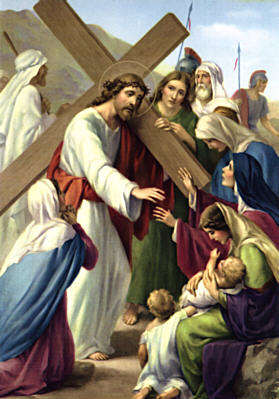
8th-stationIn the Stations of the Cross Jesus says a rather extraordinary thing. He addresses it to the women who have gathered to lament Him:

Daughters of Jerusalem, do not weep for me; weep instead for yourselves and for your children, for indeed, the days are coming when people will say, “Blessed are the barren, the wombs that never bore and the breasts that never nursed.” At that time people will say to the mountains, “Fall upon us!” and to the hills, “Cover us!” for if these things are done when the wood is green what will happen when it is dry? (Luke 23:28-31)

As awful as the crucifixion would be, as mightily sinful as it was for us to have condemned the Lord, Jesus says that something worse is coming, something even more awful. What was He talking about? Is it a prophecy for our times?

When we read any biblical text, we should ask three questions: What did it mean then? What does it mean now? What does it mean for me? Too often today an almost exclusive focus is placed on the historical meaning of a text. While this is interesting it is also important to apply the text to our own times and to our own self. This is usually the goal of good preaching. Let’s look at this passage with all three questions in mind.

1. What did it mean then? Jesus had often spoken of a great destruction soon to come upon Jerusalem for her lack of belief. He did this primarily in the Olivet Discourse, which is recorded in the Synoptic Gospels (Mt 24:1-51; Mk 13:1-37; Lk 21:5-36). Jerusalem will be surrounded by armies, nation will rise against nation, the temple will be destroyed and there will be great distress, unequaled from the beginning of the world until now—and never to be equaled again (Mat 24:21). Many misinterpret this discourse as referring to the end of the world, but Jesus is clearly referring to the destruction of the Temple and Jerusalem (which in fact took place in 70 A.D.) (cf Matt 24:2-4; Mark 13:2-5; Luk 21:5-7). In many ways, the Jewish war with the Romans was one of the bloodiest and most awful wars ever fought. Josephus indicates that 1.2 million Jews lost their lives in this devastating war. Jerusalem was destroyed and the Temple was thrown down, never to be rebuilt.

Jesus seems to be saying to the women, “Women of Jerusalem, though you weep for me in my suffering, be aware that something far worse will come upon you and your children. It will be so awful that people will actually call those who died ‘blessed’ and those who never existed ‘lucky.’ It will be so awful that people will long for death.”

He then refers to green wood and dry wood, in a sentence that basically means, “If I, who am innocent, meet this fate of crucifixion, what will be in store for the guilty?”

Hence, what this passage meant then was that Jesus was summoning the women to prayer, to a deep and mournful prayer that would call people to conversion. Otherwise, difficult days would lie ahead.

2. What does it mean now? Jesus spoke not only to his times but to ages yet unborn. His words fit our times like a glove. For indeed these are times when many say, “Blessed are the wombs that have borne no children. Blessed are the wombs that bear fewer children. Blessed are those who practice contraception. Blessed are the surgically sterilized.”  In other words, Blessed are the barren, the wombs that never bore, the breast that never nursed. Throughout the Western world, birth rates have plummeted; in some countries they are dangerously low. Some Western Christian nations and societies are practicing contraception and inflicting abortion to the extent that they are approaching a point of no return. Years of fear-mongering about overpopulation, extolling the virtues of contraception, and preferring the single life to marriage and family has led to a dramatic shift in the attitudes of many Westerners toward children, who are now seen as more a burden than a blessing. Sterility and barrenness were considered a terrible curse until quite recently. But in what Pope John Paul II termed a “culture of death,” many have come to say “Blessed are the barren.” And although nations such as Germany, France, and Italy are practically begging their citizens to have more children (even providing tax incentives) it seems that most Western Christians can’t be bothered with such things as marriage and family.

In addition, many in the radical environmentalist movement today see humanity as a great scourge on the planet and would seem to prefer that “the mountains fall on us and the hills cover us.” There are bumper stickers that say, “Earth First.” There is a show on The History Channel fantasizes about “Life after Humans” (actually, it’s a rather creative show).

In looking forward to our times, perhaps Jesus’ words to the women would be: “Women of Jerusalem, do not weep for me; weep for your descendants. For the days are actually coming when people will say ‘Blessed are the barren.’ The days are actually coming when people will prefer not to have children at all or at least to have as few as possible. The days are actually coming when children will be aborted in the womb and the ability to do this will be called a ‘right,’ when women in difficult situations will be taken to abortionists by people who they are doing something good. The days are actually coming when depression, self-loathing, hopelessness, and misplaced priorities will so consume your descendants that they will prefer nonexistence to existence, when death will become a kind of ‘therapy’ through abortion, euthanasia, contraception, and stem-cell research. Yes, dear women, prayerful weeping may push off these grievous times for a while, but the days are coming when these things shall come to pass. For if you think things are bad now when the wood is green, what will happen when the wood becomes dry?”

You may think that the picture I paint with those words is a bit extreme. But there is a stunning quality to Jesus’ words as He warns these women of very difficult days ahead. They are just as stunning in our times. Though our historical moment is different, it actually seems to be a more literal fulfillment of Jesus’ words!

3. What does it mean for me? Now do you really think I am going to do your work for you? It remains for each of us to answer this question for him/herself. What do we weep about? Do we weep about things that really matter or merely over worldly losses—things that will be lost anyway? What kind of a world are we bequeathing to our children? Do we love life? Is new life a sign of hope for us or is it a burden? Do we speak prophetically about the culture of death? Do we encourage marriage and praise childbearing? Do we help young parents through some of the difficulties of raising children? The Lord surely has many more of these personal questions for us. Ponder the text slowly and consider what the Lord might be saying to you.

As a child, I remember being taught in school to fear overpopulation; we were told that the Earth would soon run out of room. The video below is a clip from “The Mark of Gideon,” a 1969 episode of Star Trek that showcases the overpopulation anxiety of the time. In this episode, Captain Kirk is abducted by Ambassador Hodin of the germ-free, overpopulated planet, Gideon. Hodin has a plan to use Kirk to introduce a deadly virus (which Kirk carries but to which he is immune) to Gideon in order to reduce the population. Kirk exhorts Hodin to instead encourage the population to use contraceptives and sterilization. The segment goes on to paint the inhabitants’ love for life as somewhat pathetic. Kirk even gets angry when they demonstrate respect for life from conception until natural death.


What Was the Lord Doing on Monday of Holy Week?

According to Matthew 21:10-17, Mark 11:15-17, and Luke 19:45-46, Jesus returns to Jerusalem today. Seeing shameful practices in the Temple area, He cleanses it. The Gospels also recount His weeping over Jerusalem and His cursing of the fig tree. Matthew and Mark relate that He returned to Bethany that night. Let’s look to the details. 

Prelude: The Scriptures record that Jesus went to Bethany on the Sunday evening after His triumphal entrance into Jerusalem (Palm Sunday):

[Jesus] went into the temple courts. He looked around at everything, but since it was already late, He went out to Bethany with the Twelve (Mk 11:11).

It is likely that Jesus stayed at the house of Martha, Mary, and Lazarus. Bethany was a mere two miles from Jerusalem (though a steep climb), just over the Mount of Olives.

Pain: The next morning (Monday) Jesus arises and goes back toward Jerusalem. Luke records that as He came over the crest of the hill on the Mount of Olives He wept:

As Jesus approached Jerusalem and saw the city, He wept over it and said, “If only you had known on this day what would bring you peace! But now it is hidden from your eyes. For the days will come upon you when your enemies will barricade you and surround you and hem you in on every side. They will level you to the ground—you and the children within your walls. They will not leave one stone on another, because you did not recognize the time of your visitation from God” (Lk 19:41-44).

Today on this spot there is a chapel named Dominus Flevit (the Lord wept), which is in the shape of a teardrop. From here Jesus could see the whole city spread out below. He could also see forty years into the future to the time when the Romans would destroy the city and Temple, the culmination of a horrible and pointless war (64-70 A.D.) for liberation from the Romans. Had Jesus’ message been heeded, the Romans would not have been regarded as enemies to kill but rather as brothers to convert to the gospel.

Passionate Anger: Mark recalls an event as they come down the hillside:

The next day, when they had left Bethany, Jesus was hungry. Seeing in the distance a fig tree in leaf, He went to see if there was any fruit on it. But when He reached it, He found nothing on it except leaves, since it was not the season for figs. Then He said to the tree, “May no one ever eat of your fruit again.” And His disciples heard this statement (Mk 11:12-14).

The fig tree is widely interpreted as representing the Jewish people. The Lord looked for fruits among His chosen people but found none. Jesus’ rebuke of the tree illustrates His righteous anger at and disappointment in their lack of the fruits of faith. Scripture says elsewhere,

And the men of Judah are [the Lord’s] pleasant planting; and he looked for justice, but behold, bloodshed; for righteousness, but behold, the outcry! (Is 5:6-7)

And Jesus told this parable: “A man had a fig tree planted in his vineyard, and he came seeking fruit on it and found none. And he said to the vinedresser, ‘Look, for three years now I have come seeking fruit on this fig tree, and I find none. Cut it down. Why should it use up the ground?’ And he answered him, ‘Sir, let it alone this year also, until I dig around it and put on manure. Then if it should bear fruit next year, well and good; but if not, you can cut it down’” (Luke 13:6-9).

Seeing no fruit in this last hour, Jesus in effect finishes the parable. The hour of judgment has come upon ancient Judah.

Many misunderstand the phrase that it was “not the season for figs,” falsely concluding that it was thus “unfair” to expect figs on the branches. However, it is for this very reason that one would expect to find figs growing in the branches, for if it were the harvest one would expect bare branches as the figs would have just been harvested. It is before the harvest that one expects to find figs, even if not fully ripe, growing in the branches. Seeing nothing but leaves, Jesus curses the tree.

Pivotal Event: The cleansing of the Temple was indeed a pivotal event. Here is Mark’s account:

And they came to Jerusalem. And he entered the temple and began to drive out those who sold and those who bought in the temple, and he overturned the tables of the money-changers and the seats of those who sold pigeons. And he would not allow anyone to carry anything through the temple. And he was teaching them and saying to them, “Is it not written, ‘My house shall be called a house of prayer for all the nations’? But you have made it a den of robbers.” And the chief priests and the scribes heard it and were seeking a way to destroy him, for they feared him, because all the crowd was astonished at his teaching (Mk 11:15-18).

The Lord’s grief and anger grow worse as He enters the Temple. What made him so angry? Mark’s Gospel states the reason most clearly: It is not the selling of animals (which were needed for the sacrifices) per se, but that they were being sold in a part of the Temple grounds reserved for the Gentiles to pray. This is an insult and amounts to a denial that the prayers of the Gentiles mattered at all. Jesus was about to die in order to reunite God’s scattered children. And I, when I be lifted up from the earth, will draw all people unto me (Jn 12:32).

As for the Temple being a den of robbers, the implication is that the dealings there are unjust and exploitative.

Why is this a pivotal moment? The action of Jesus is a prophetic judgment made in the very center of the Temple leaders’ power. The Temple was the locus of their power and prestige. It is not lost on them for a moment that Jesus has threatened all of this, not merely by what He has said but by his popularity among the people.

According to John’s Gospel (which actually remarks on this earlier in Jesus’ ministry), when the Temple leaders demanded a sign and an explanation for this action Jesus said,

Destroy this temple, and in three days I will raise it up again.” “This temple took forty-six years to build,” the Jews replied, “and You are going to raise it up in three days?” But Jesus was speaking about the temple of His Body (Jn 2:19-21).

This had a further impact on the Temple leaders, who would later accuse Jesus (at His trial) of threatening to destroy the temple (e.g., Mk 14:58).

Theologically, Jesus is saying that Temple worship is over. He is the temple. He is the priest. He is the lamb. It is His blood that will cleanse us. Temple worship is ended because what it pointed to (Jesus) is now here. Its purpose is fulfilled in Him.

Quite a day, this Monday of Holy Week! Can you sense the grief and anger of the Lord? Remember, His anger is a righteous one. Everything was being fulfilled for the ancient people, but many are rejecting the very one God has sent to save them. Jesus cannot remain indifferent to their tragic rejection. He both weeps and has a grieving anger.

Do we weep for the condition of our world? Do we pray and seek to call forth the fruits of faith, justice, and truth?

Jesus does not give up. He will spend the next day teaching and seeking to win as many as possible to the truth of the gospel.

The Scriptures conclude Monday of Holy Week in this way:

And he left them and went out of the city to Bethany, where he spent the night (Matt 21:17).

Perhaps Jesus is consoled in His grief and anger by the presence of friends like Martha, Mary, and Lazarus. Perhaps He finds solace in the company of His apostles and others. Scripture says,

A faithful friend is a sturdy shelter:
he that has found one has found a treasure.
There is nothing so precious as a faithful friend,
and no scales can measure his excellence.
A faithful friend is a medicine of life;
and those who fear the Lord will find him
(Sirach 6:14-16).

Stay close to the heart of the Lord. Be His “consolation.” Be the reparation for the rejection by so many others.


Passiontide Chronology: Walking with the Lord on Monday of Holy Week

According to Matthew 21:10-17, Mark 11:15-17, and Luke 19:45-46, Jesus returns to Jerusalem today. Seeing shameful practices in the Temple area, He cleanses it. The Gospels also recount His weeping over Jerusalem and His cursing of the fig tree. Matthew and Mark relate that He returned to Bethany that night.

Prelude: The Scriptures record that Jesus went to Bethany on the Sunday evening after His triumphal entrance into Jerusalem (Palm Sunday):

[Jesus] went into the temple courts. He looked around at everything, but since it was already late, He went out to Bethany with the Twelve (Mk 11:11).

It is likely that Jesus stayed at the house of Martha, Mary, and Lazarus. Bethany was a mere two miles from Jerusalem (though a steep climb), just over the Mount of Olives.

Pain: The next morning (Monday) Jesus arises and goes back toward Jerusalem. Luke records that as He came over the crest of the hill on the Mount of Olives He wept:

As Jesus approached Jerusalem and saw the city, He wept over it and said, “If only you had known on this day what would bring you peace! But now it is hidden from your eyes. For the days will come upon you when your enemies will barricade you and surround you and hem you in on every side. They will level you to the ground—you and the children within your walls. They will not leave one stone on another, because you did not recognize the time of your visitation from God” (Lk 19:41-44).

Today on this spot there is a chapel named Dominus Flevit (the Lord wept), which is in the shape of a teardrop. From here Jesus could see the whole city spread out below. He could also see forty years into the future to the time when the Romans would destroy the city and Temple, the culmination of a horrible and pointless war (64-70 A.D.) for liberation from the Romans. Had Jesus’ message been heeded, the Romans would not have been regarded as enemies to kill but rather as brothers to convert to the gospel.

Passionate Anger: Mark recalls an event as they come down the hillside:

The next day, when they had left Bethany, Jesus was hungry. Seeing in the distance a fig tree in leaf, He went to see if there was any fruit on it. But when He reached it, He found nothing on it except leaves, since it was not the season for figs. Then He said to the tree, “May no one ever eat of your fruit again.” And His disciples heard this statement (Mk 11:12-14).

The fig tree is widely interpreted as representing the Jewish people. The Lord looked for fruits among His chosen people but found none. Jesus’ rebuke of the tree illustrates His righteous anger at and disappointment in their lack of the fruits of faith. Scripture says elsewhere,

And the men of Judah are [the Lord’s] pleasant planting; and he looked for justice, but behold, bloodshed; for righteousness, but behold, the outcry! (Is 5:6-7)

And Jesus told this parable: “A man had a fig tree planted in his vineyard, and he came seeking fruit on it and found none. And he said to the vinedresser, ‘Look, for three years now I have come seeking fruit on this fig tree, and I find none. Cut it down. Why should it use up the ground?’ And he answered him, ‘Sir, let it alone this year also, until I dig around it and put on manure. Then if it should bear fruit next year, well and good; but if not, you can cut it down’” (Luke 13:6-9).

Seeing no fruit in this last hour, Jesus in effect finishes the parable. The hour of judgment has come upon ancient Judah.

Many misunderstand the phrase that it was “not the season for figs,” falsely concluding that it was thus “unfair” to expect figs on the branches. However, it is for this very reason that one would expect to find figs growing in the branches, for if it were the harvest one would expect bare branches as the figs would have just been harvested. It is before the harvest that one expects to find figs, even if not fully ripe, growing in the branches. Seeing nothing but leaves, Jesus curses the tree.

Pivotal Event: The cleansing of the Temple was indeed a pivotal event. Here is Mark’s account:

And they came to Jerusalem. And he entered the temple and began to drive out those who sold and those who bought in the temple, and he overturned the tables of the money-changers and the seats of those who sold pigeons. And he would not allow anyone to carry anything through the temple. And he was teaching them and saying to them, “Is it not written, ‘My house shall be called a house of prayer for all the nations’? But you have made it a den of robbers.” And the chief priests and the scribes heard it and were seeking a way to destroy him, for they feared him, because all the crowd was astonished at his teaching (Mk 11:15-18).

The Lord’s grief and anger grow worse as He enters the Temple. What made him so angry? Mark’s Gospel states the reason most clearly: It is not the selling of animals (which were needed for the sacrifices) per se, but that they were being sold in a part of the Temple grounds reserved for the Gentiles to pray. This is an insult and amounts to a denial that the prayers of the Gentiles mattered at all. Jesus was about to die in order to reunite God’s scattered children. And I, when I be lifted up from the earth, will draw all people unto me (Jn 12:32).

As for the Temple being a den of robbers, the implication is that the dealings there are unjust and exploitative.

Why is this a pivotal moment? The action of Jesus is a prophetic judgment made in the very center of the Temple leaders’ power. The Temple was the locus of their power and prestige. It is not lost on them for a moment that Jesus has threatened all of this, not merely by what He has said but by his popularity among the people.

According to John’s Gospel (which actually remarks on this earlier in Jesus’ ministry), when the Temple leaders demanded a sign and an explanation for this action Jesus said,

Destroy this temple, and in three days I will raise it up again.” “This temple took forty-six years to build,” the Jews replied, “and You are going to raise it up in three days?” But Jesus was speaking about the temple of His Body (Jn 2:19-21).

This had a further impact on the Temple leaders, who would later accuse Jesus (at His trial) of threatening to destroy the temple (e.g., Mk 14:58).

Theologically, Jesus is saying that Temple worship is over. He is the temple. He is the priest. He is the lamb. It is His blood that will cleanse us. Temple worship is ended because what it pointed to (Jesus) is now here. Its purpose is fulfilled in Him.

Quite a day, this Monday of Holy Week! Can you sense the grief and anger of the Lord? Remember, His anger is a righteous one. Everything was being fulfilled for the ancient people, but many are rejecting the very one God has sent to save them. Jesus cannot remain indifferent to their tragic rejection. He both weeps and has a grieving anger.

Do we weep for the condition of our world? Do we pray and seek to call forth the fruits of faith, justice, and truth?

Jesus does not give up. He will spend the next day teaching and seeking to win as many as possible to the truth of the gospel.

The Scriptures conclude Monday of Holy Week in this way:

And he left them and went out of the city to Bethany, where he spent the night (Matt 21:17).

Perhaps Jesus is consoled in His grief and anger by the presence of friends like Martha, Mary, and Lazarus. Perhaps He finds solace in the company of His apostles and others. Scripture says,

A faithful friend is a sturdy shelter:
he that has found one has found a treasure.
There is nothing so precious as a faithful friend,
and no scales can measure his excellence.
A faithful friend is a medicine of life;
and those who fear the Lord will find him
(Sirach 6:14-16).

Stay close to the heart of the Lord. Be His “consolation.” Be the reparation for the rejection by so many others.


A More Awful Thing – Jesus’ Lament on the Culture of Death as He Is on His Way to the Cross

8th-stationIn the Gospel we read on Palm Sunday, Jesus says a rather extraordinary thing as He is on His way to the cross. He addresses it to the women who have gathered to lament Him:

Daughters of Jerusalem, do not weep for me; weep instead for yourselves and for your children, for indeed, the days are coming when people will say, “Blessed are the barren, the wombs that never bore and the breasts that never nursed.” At that time people will say to the mountains, “Fall upon us!” and to the hills, “Cover us!” for if these things are done when the wood is green what will happen when it is dry? (Luke 23:28-31)

As awful as the crucifixion would be, as mightily sinful as it was for us to have condemned the Lord, Jesus says that something worse is coming, something even more awful. What was He talking about? Is it a prophecy for our times?

When we read any biblical text, we should ask three questions: What did it mean then? What does it mean now? What does it mean for me? Too often today an almost exclusive focus is placed on the historical meaning of a text. While this is interesting it is also important to apply the text to our own times and to our own self. This is usually the goal of good preaching. Let’s look at this passage with all three questions in mind.

1. What did it mean then? Jesus had often spoken of a great destruction soon to come upon Jerusalem for her lack of belief. He did this primarily in the Olivet Discourse, which is recorded in the Synoptic Gospels (Mt 24:1-51; Mk 13:1-37; Lk 21:5-36). Jerusalem will be surrounded by armies, nation will rise against nation, the temple will be destroyed and there will be great distress, unequaled from the beginning of the world until now—and never to be equaled again (Mat 24:21). Many misinterpret this discourse as referring to the end of the world, but Jesus is clearly referring to the destruction of the Temple and Jerusalem (which in fact took place in 70 A.D.) (cf Matt 24:2-4; Mark 13:2-5; Luk 21:5-7). In many ways, the Jewish war with the Romans was one of the bloodiest and most awful wars ever fought. Josephus indicates that 1.2 million Jews lost their lives in this devastating war. Jerusalem was destroyed and the Temple was thrown down, never to be rebuilt.

Jesus seems to be saying to the women, “Women of Jerusalem, though you weep for me in my suffering, be aware that something far worse will come upon you and your children. It will be so awful that people will actually call those who died ‘blessed’ and those who never existed ‘lucky.’ It will be so awful that people will long for death.”

He then refers to green wood and dry wood, in a sentence that basically means, “If I, who am innocent, meet this fate of crucifixion, what will be in store for the guilty?”

Hence, what this passage meant then was that Jesus was summoning the women to prayer, to a deep and mournful prayer that would call people to conversion. Otherwise, difficult days would lie ahead.

2. What does it mean now? Jesus spoke not only to his times but to ages yet unborn. His words fit our times like a glove. For indeed these are times when many say, “Blessed are the wombs that have borne no children. Blessed are the wombs that bear fewer children. Blessed are those who practice contraception. Blessed are the surgically sterilized.”  In other words, Blessed are the barren, the wombs that never bore, the breast that never nursed. Throughout the Western world, birth rates have plummeted; in some countries they are dangerously low. Some Western Christian nations and societies are practicing contraception and inflicting abortion to the extent that they are approaching a point of no return. Years of fear-mongering about overpopulation, extolling the virtues of contraception, and preferring the single life to marriage and family has led to a dramatic shift in the attitudes of many Westerners toward children, who are now seen as more a burden than a blessing. Sterility and barrenness were considered a terrible curse until quite recently. But in what Pope John Paul II termed a “culture of death,” many have come to say “Blessed are the barren.” And although nations such as Germany, France, and Italy are practically begging their citizens to have more children (even providing tax incentives) it seems that most Western Christians can’t be bothered with such things as marriage and family.

In addition, many in the radical environmentalist movement today see humanity as a great scourge on the planet and would seem to prefer that “the mountains fall on us and the hills cover us.” There are bumper stickers that say, “Earth First.” There is a show on The History Channel fantasizes about “Life after Humans” (actually, it’s a rather creative show).

In looking forward to our times, perhaps Jesus’ words to the women would be: “Women of Jerusalem, do not weep for me; weep for your descendants. For the days are actually coming when people will say ‘Blessed are the barren.’ The days are actually coming when people will prefer not to have children at all or at least to have as few as possible. The days are actually coming when children will be aborted in the womb and the ability to do this will be called a ‘right,’ when women in difficult situations will be taken to abortionists by people who they are doing something good. The days are actually coming when depression, self-loathing, hopelessness, and misplaced priorities will so consume your descendants that they will prefer nonexistence to existence, when death will become a kind of ‘therapy’ through abortion, euthanasia, contraception, and stem-cell research. Yes, dear women, prayerful weeping may push off these grievous times for a while, but the days are coming when these things shall come to pass. For if you think things are bad now when the wood is green, what will happen when the wood becomes dry?”

You may think that the picture I paint with those words is a bit extreme. But there is a stunning quality to Jesus’ words as He warns these women of very difficult days ahead. They are just as stunning in our times. Though our historical moment is different, it actually seems to be a more literal fulfillment of Jesus’ words!

3. What does it mean for me? Now do you really think I am going to do your work for you? It remains for each of us to answer this question for him/herself. What do we weep about? Do we weep about things that really matter or merely over worldly losses—things that will be lost anyway? What kind of a world are we bequeathing to our children? Do we love life? Is new life a sign of hope for us or is it a burden? Do we speak prophetically about the culture of death? Do we encourage marriage and praise childbearing? Do we help young parents through some of the difficulties of raising children? The Lord surely has many more of these personal questions for us. Ponder the text slowly and consider what the Lord might be saying to you.

As a child, I remember being taught in school to fear overpopulation; we were told that the Earth would soon run out of room. The video below is a clip from “The Mark of Gideon,” a 1969 episode of Star Trek that showcases the overpopulation anxiety of the time. In this episode, Captain Kirk is abducted by Ambassador Hodin of the germ-free, overpopulated planet, Gideon. Hodin has a plan to use Kirk to introduce a deadly virus (which Kirk carries but to which he is immune) to Gideon in order to reduce the population. Kirk exhorts Hodin to instead encourage the population to use contraceptives and sterilization. The segment goes on to paint the inhabitants’ love for life as somewhat pathetic. Kirk even gets angry when they demonstrate respect for life from conception until natural death.