On Friday evenings when I blog I often like to feature some commercial or poignant video and today is no exception. The videos at the bottom all highlight the fact that men and women are very different.
The first two videos are Verizon commercials that illustrate how men and women handle a farewell ritual. The mother and her daughter departing for college interact very emotionally, while in the second commercial the father and departing son interact very subtly, but with no less affection.
Granted, the differences are exaggerated, but exaggeration only makes sense if there is some kernel of truth in its observation. Men and women are different, and thank God.
Early in the pages of Scripture God decreed that It is not good for the man to be alone. I will make a suitable helpmate for him (Gen 2:18). And God made woman. And she is quite different from Adam and yet one with him.
The physical differences are obvious, but, in Christian and biblical anthropology, these physical differences arise from important differences in the soul. It is the soul that is the form of the body. In other words it is the qualities of the male and female soul give rise to physical differences.
This is to some, politically incorrect today, yet it remains true. It is a common modern error to be dismissive of the profound differences between the sexes. No one can deny the physical differences, but they are dismissed as surface only, of no real, deeper significance. But the truth is that our bodies are expressions of the faculties of our soul and male and female differences are far more than skin deep.
It also remains true that these differences often give rise to tensions in the marriage and the overall relationships between men and women. That men and women perceive differently, think differently, and have different emotional experiences, is just a fact and it is always healthy to recognize and accept reality.
Too often, in the modern age there has been a tendency to dismiss these deep differences as just archetypes of bygone “sexist” era. But what ends up happening is that an expectation is created that these differences will just go away when we decide to ignore them, or pretend they don’t exist. And thus resentments and anger follow, because these differences do exist. Too many marriages end in power struggles because neither spouse can accept that it was not good for them to be alone and that God gave them a spouse who, by design, is very different, so that they could be challenged and completed.
It is true, Original Sin has intensified our pain at the experience of these given differences. The Catechism links the tension surrounding these difference to the Fall of Adam and Eve:
[The] union [of husband and wife] has always been threatened by discord, a spirit of domination, infidelity, jealousy, and conflicts that can escalate into hatred and separation. This disorder can manifest itself more or less acutely, and can be more or less overcome according to the circumstances of cultures, eras, and individuals, but it does seem to have a universal character. According to faith the disorder we notice so painfully does not stem from the nature of man and woman, nor from the nature of their relations, but from sin. As a break with God, the first sin had for its first consequence the rupture of the original communion between man and woman. Their relations were distorted by mutual recriminations;their mutual attraction, the Creator’s own gift, changed into a relationship of domination and lust; and the beautiful vocation of man and woman to be fruitful, multiply, and subdue the earth was burdened by the pain of childbirth and the toil of work. Nevertheless, the order of creation persists, though seriously disturbed. To heal the wounds of sin, man and woman need the help of the grace that God in his infinite mercy never refuses them. Without his help man and woman cannot achieve the union of their lives for which God created them “in the beginning.” (CCC #s 1606-1608)
In the end, it seems clear that we need to return to an appreciation of the necessity of our differences. Though our differences can be be intensified by sin, it is a fact that God made us different for a reason. These differences help spouses to complete each other. A husband should say, “My wife has some things important to teach me. I am incomplete without her.” Likewise the wife should be able to say that her husband has important things to teach her and that he somehow completes her. In this way we move beyond power struggles and what is right and wrong in every case and learn to experience that some tension is good. No tension, no change. God intends many of these differences to change and complete spouses. God calls the very difference humans he has made “suitable” partners.
And humor never hurts. So here are some videos. The first two I have already mentioned. The Third video contains the classic and wonderful comedy routine about the differences between a man’s brain and a woman’s brain. Humor is often the best of medicines to defuse some of the tensions that arise from our differences. Vive la difference!
In the first reading at Mass today (Wednesday of Week 10), we have recounted for us one of the great prophetic actions of all time. It takes place at Mt. Carmel on the beautiful slopes overlooking the Mediterranean Sea.
Elijah Calls the Question – Grieved and angry that his own people had largely abandoned the Lord God, and gone over to the worship of god Baal (the god of the cruel and oppressive Queen Jezebel), Elijah called the question:
How long will you straddle between two opinions? If the Lord is God, follow him; but if Baal is God, follow him! (1 Kings 18:21)
Then Elijah challenged the prophets of Baal, the Canaanite god, to a kind of prophetic duel. Both he and they would prepare sacrifices and see whose deity would respond. After many hours of calling on their god to no avail, and even being taunted by Elijah, the prophets of Baal were told to stand aside and watch a real God go to work. And Elijah prayed, and God sent fire from on high to consume the sacrifice:
When all the people saw this, they fell prostrate and cried, “The LORD–he is God! The LORD–he is God!” (1 Kings 18:39).
The passage ends darkly: Then Elijah said to them, “Seize the prophets of Baal; do not let one of them escape.” So they seized them; and Elijah brought them down to the brook Kishon, and slew them there. (1 Kings 18:40)
As you may have guessed, none of this pleased the wicked Queen Jezebel much, and she announced that Elijah must die. Elijah fled into the desert and there began to despair.
And here is where it may be of some benefit to stop a moment and ponder a possible inner struggle of Elijah, one that we all likely share from time to time. For it is too easy in times like these to fear that all are falling away, that all is lost, and that there is little hope for recovery. And even recalling the promise of the Lord that hell would not prevail over the Church (Matt. 16:18), yet still, many remembering the days of full churches and schools, seeing the increasing emptiness may wonder, “Whither the Church?”
Did Elijah struggle in this way? It would seem so. For, even as he boldly challenged the prophets of Baal he said,
I am the only surviving prophet of the LORD, and there are four hundred and fifty prophets of Baal. (1 Kings 18:22).
Whether this was literally true is dubious, as we shall see later. Yet it is Elijah’s sense that he is all but alone and that the whole of the people and even the religious leaders have all defected.
As he flees his despair deepens:
Elijah was afraid and ran for his life…. He went a day’s journey into the desert. He came to a broom tree, sat down under it and prayed that he might die. “I have had enough, Lord,” he said. “Take my life; I am no better than my ancestors.” Then he lay down under the tree and fell asleep…..All at once an angel touched him and said, “Get up and eat.” He looked around, and there by his head was a cake of bread baked over hot coals, and a jar of water. He ate and drank and then lay down again. The angel of the Lord came back a second time and touched him and said, “Get up and eat, for the journey is too much for you.”
So he got up and ate and drank. Strengthened by that food, he traveled forty days and forty nights until he reached Horeb, the mountain of God. There he went into a cave and spent the night…..
And the word of the Lord came to him: “What are you doing here, Elijah?” He replied, “I have been very zealous for the Lord God Almighty. The Israelites have rejected your covenant, broken down your altars, and put your prophets to death with the sword. I am the only one left, and now they are trying to kill me too.” (1 Kings 19:3-12 varia)
Thus we see Elijah’s despair and his sense of being all alone. And some among the faithful today struggle also with this to one degree or another.
But note how God answers Elijah.
Yet I have seven thousand in Israel—all whose knees have not bowed down to Baal and all whose mouths have not kissed him. (1 Kings 19:19)
In other words, you are far from alone Elijah. I have seven thousand like you though your despairing eyes see them not!
God then says,
“Go back the way you came, and go to the Desert of Damascus. When you get there, anoint Hazael king over Aram. Also, anoint Jehu son of Nimshi king over Israel, and anoint Elisha son of Shaphat from Abel Meholah to succeed you as prophet. Jehu will put to death any who escape the sword of Hazael, and Elisha will put to death any who escape the sword of Jehu..” (1 Kings 19:15-18
In other words, find these seven thousand and go rebuild my people, go rebuild my Church. Now is not a time for despair, now is a time for action. Gather them, appoint leaders and I will be with you to win this battle and reestablish the faith in glory.
In speaking this way to Elijah, the Lord also speaks to us. Though all seem in decline, and losses mount, Yet God still has “seven thousand” who have not bent the knee to Baal of this present evil age, who have not departed. And from this faithful remnant he expects us to draw hope and continue our work.
Most of you who read my blog regularly know that I have often chronicled the decline in numbers and, like most, insistent on the need to evangelize. There is indeed much to be sober about when glancing at the downward trend in Mass attendance, the closing of parishes and schools and the weak faith evidenced in our culture.
But to be sober is not to be in despair. For God has accomplished revivals before, and he can and will do so again. There are any number of famous figures who pronounced the end and doom of the Church. Yet where is Caesar now, where is Napoleon, where is the Soviet Socialist Republic? And when the latest neo-gnostic, rationalist, materialist, and atheist movements of the post Cartesian West have run their course, the Church will still remain, and still be speaking of Jesus. It is for us to stay the course and for God to win through to the end.
There have been times when the “practicing” Church got very small. On Good Friday all but five had fled: Mary of Magdala, Mary Clopas, Mary Solome, Mary, Mother of Jesus and John. And there they were with Jesus. They even added a sixth that day, the repentant thief. Small, and things looked pretty grim, but still the Church at worship, looking to Christ her head.
Yes, like Elijah we can sometimes think there is little hope, that we are all but alone. But it was not so for him, and it is not so for us. God always has his “seven thousand.”
We often like to read from and quote the prophets. But if you’ve ever met a real prophet you know that being in the presence of a real prophet can be very disturbing. Prophets love God’s people, but they love them too much to gainsay the truth.
Prophets were famous for goring every one’s ox. No one left the presence of a prophet untouched.
So troubling were the prophets of old, including Jesus, that most of them were persecuted, jailed, stoned, exiled and killed. Most of the Biblical prophets were beyond controversial, they were way over the top. Prophets denounced sin and injustice in the strongest language, announcing doom to a nation that refused to repent. Many Israelites thus considered them unpatriotic and downright dangerous. They justified throwing them into prison for their lack of patriotism and for the way their words questioned and upset the status quo and the judgements of those who held power.
To many, these were dangerous men who had to be stopped.
Jesus, though essentially our savior, also adopted the role of a prophet. Listen to these words as he denounces the people of his day for their rejection of his prophetic message. In this they are just like their fore-bearers who rejected the prophets:
Woe to you, scribes and Pharisees, you hypocrites. You build the tombs of the prophets and adorn the memorials of the righteous, and you say, ‘If we had lived in the days of our ancestors, we would not have joined them in shedding the prophets’ blood.’ Thus you bear witness against yourselves that you are the children of those who murdered the prophets; now fill up what your ancestors measured out! You serpents, you brood of vipers, how can you avoid being sentenced to Hell?! (Matt 23:29ff)
Many of us today like to think that, had we lived in Jesus’ time we would surely be on his side. But, truth be told, prophets can be hard to endure and Jesus had “difficult” things to say for everyone.
Honestly, most of us struggle with the truth to some extent. And especially we moderns who prefer a more gentle discourse with large doses of honey, and very little vinegar. We probably would wince as we walked along with Jesus. Jesus was very disconcerting. Jesus was more “plain spoken” than we are usually comfortable with. If we are honest, when we read the prophets and Jesus, we will come away with much to repent of.
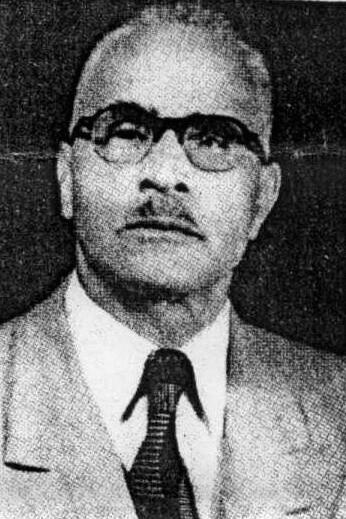
A picture is worth a thousand words. Consider this video clip. It is of a modern prophet named Vernon Johns (see photo – upper right). In the early 1950s he was Pastor of the Dexter Avenue Baptist Church, in Montgomery Alabama. The Black Congregation that hired him was a rather sleepy congregation. In the face of rather awful racial discrimination, they preferred to remain silent and therefore safe. Vernon Johns tried to wake them from their sleep, but to no avail. They were too afraid (yet) to take a prophetic stand. Eventually Vernon Johns was arrested as a trouble maker, and the Board of Deacons fired him.
But Johns had laid a foundation for the next Pastor of Dexter Baptist, Dr. Martin Luther King Jr. Within a few years Rosa Parks refused to give up her seat and the Bus Boycott was on. The rest is history.
This clip is of Vernon Johns’ final sermon where, in finest prophetic tradition he denounces racism. But NO ONE escapes his vivid denunciations, even his own congregation. Watch this clip and behold what it must have been like with the prophets of old, even Jesus.
Behold the prophet! No one escapes! In the end of the clip, his daughter who had stood against her Father’s zeal sings “Go Down Moses.” The choir director who had also opposed him likewise stands to sing. The seed is planted even as the prophet is led away by the police.
He was central to some of the most crucial moments in early Church history. He smoothed the entry of Saul, (St. Paul), the recent persecutor, into the Christian community, and summoned him to his first ministry. He sallied forth with Paul on the first great missionary outreach to the Gentiles and gave critical testimony at the Council of Jerusalem that welcomed Gentile converts as Gentiles. And then, quite suddenly, and for a rather sad reason, he disappears and we hear all but nothing of him again.A rift in the Christian community takes him from our sight.
Who was St. Barnabas and what can we learn from his story and near disappearance?
St. Barnabas was a Jew, a native of Cyprus, and was of the tribe of Levi. As such he likely served in the Temple as a priest, depending on his age at his conversion to Christianity. His given name was Joseph, but the Apostles called him Barnabas, which means “Son of Encouragement” (cf Acts 4:36).
Likewise he was probably a wealthy man, for St. Luke presents him early in the book of Acts as a generous man who sold land to support the growing Church.
Most critically, it was he who vouched for the new convert Saul of Tarsus later known as Paul. For Paul was viewed with suspicion by those in Jerusalem, including the Apostles, who only been recently targets of his persecutions (cf Acts 9:26).
Talk about one of the most pivotal introductions in history! Indeed it may be argued that this introduction changed the course of Western History and surely that of the Church. Barnabas smoothed the way for the Church’s most zealous missionary and her greatest Biblical Theologian, St. Paul. After Barnabas’ introduction, Paul was able to move freely about the disciples.
Some time after this, the apostles in Jerusalem sent Barnabas to Antioch which was now growing and thriving congregation of both Jews and Gentiles. It seems clear he was not considered yet to be of the rank of apostle or bishop, (for Acts 13:1 calls him a teacher), it appears he went more to observe and be of help. Under his leadership and the leadership of others, the Church there thrived and grew quite quickly.
So Barnabas sent for Paul to come and join him. They work together for the period of at least a year, and it was at Antioch the disciples were called Christians for the first time (Acts 11:26). In so doing he continues to advance and build up Paul’s ministry in the Church. Frankly this too is a stunning moment in Church history, given us by Barnabas. It is not wrong to call St. Paul the protege of Barnabas.
At a certain critical moment leaders at Antioch laid hands on Barnabas and Saul. And while it is debated by some, this is the clearest moment when we can now say they are ordained, and given the rank of Bishop and the title “Apostle.”
Missionaries – Having done this, the Church leaders at Antioch, directed by the Holy Spirit, send them forth on missionary work. This journey is what is now come to be known as Paul’s first missionary journey. It is interesting to note, that early in the missionary journey, Barnabas is always listed first, and then Paul. But rather quickly, in Acts 13:43, the order changes, and Paul is always listed first. This suggests a change in leadership.
They took with them on this first journey the cousin of Barnabas, John, who was called Mark. Somewhat early on this missionary journey, Mark decides he can no longer go on and turns away from the missionary trip. This will prove significant later on.
The last major role for Barnabas was in Acts, in the 15th chapter, at the Council of Jerusalem which was called to decide whether Gentile converts could become full members of the church without converting to Judaism. Barnabas, along with Paul, provided important evidence as to the zeal and conversion of the Gentiles.
A Sad moment – After the Council in Jerusalem Paul and Barnabas returned to Antioch in triumph, their ministry vindicated. They planned another missionary journey together. But here comes the critical and sad moment, that sets forth our teaching:
Some time later Paul said to Barnabas, “Let us go back and visit the believers in all the towns where we preached the word of the Lord and see how they are doing.” Barnabas wanted to take John, also called Mark, with them, but Paul did not think it wise to take him, because he had deserted them in Pamphylia and had not continued with them in the work. They had such a sharp disagreement that they parted company. Barnabas took Mark and sailed for Cyprus, but Paul chose Silas and left….(Acts 15:36-40)
A sad moment, but illustrating the human situation. Here are two men who have been like brothers. Paul owes his inclusion in leadership largely to Barnabas, and together they had taught together, and journeyed hundreds of miles by ship and then by foot into the northern mountains making converts in effective ministry together. And, more recently they have just returned from Jerusalem, their vision and ministry approved and vindicated against nay-sayers among the brethren. And yet, at this magnificent moment Paul and Barnabas argue and part company over Mark, the cousin of Barnabas.
One of the things I admire most about the Biblical text is that it does not “clean up” stuff like this. Our heroes are not perfect men, they are flawed, and emblematic of the human condition: gifted and strong, but struggling too with the same issues and demons that haunt us all.
The lesson? God uses us even in our weakness. Who was right and who was wrong here? It is difficult to say. Two gifted men unable to overcome an impasse, alas, the fallen human condition. But God will continue to work. He can make a way out of no way and write straight with crooked lines.
Even more sad, this is the last we hear of Barnabas in any substantial way. He who had been so instrumental in the life of his protege Paul, and in the early Church, now exits the stage in the heat of an argument. The text says he and Mark sailed for Cyprus, then silence……
There is mention of him in Galatians but, given the vague timeline it is difficult to assume it takes place after the disagreement. It likely took place earlier and may illustrate that there were already tensions between Paul and Barnabas before the “Mark incident.” For it would seem that Barnabas was following Peter’s weak example of not eating with Gentiles, and this clearly upset Paul (cf Gal 2:13).
Healing? Yet, It would also seem that Barnabas continued to labor as a missionary for Paul makes mention of him to the Corinthians (cf 1 Cor 9:6). And although his reference is passing, it is not unrespectful. This suggests some healing of the rift, even if it does not mean they labored together again.
More healing? And even for John, called Mark (likely the same Mark who became secretary to Peter and authored the Gospel of Mark), it would seem Paul and he overcame their difficulties. For St Paul wrote to Timothy, likely about the same Mark: Get Mark and bring him with you, because he is helpful to me in my ministry (2 Tim 4:11). Something of a redemption here for Mark and a healing for Paul. The “useless” deserter Mark, now one who is helpful to Paul.
So, there is some sadness in the Story of Barnabas, Paul and Mark. Yet, God’s work continues. And, it would seem, healing came later. Yes, even in our weakness God can use us and heal us. And for those who despair of sin in the Church, and sin among the clergy, factions an infighting, always remember that, though sinful it is, God can make a way out of no way. Even in our weakness, (and often only because our weakness keeps us humble), God can do great things.
Maybe Barnabas (“Son of Encouragement”) can encourage us too. For if even saints struggled, were still used by God, and overcame, perhaps for us too. Be encouraged.
There are different ways to look at life. One saying goes: “The good is the enemy of the best.” Meaning, that we sometimes settle for second best when we should aim higher. This statement is not without its place, for excellence is something for which to strive.
And yet, there is another saying that goes: “The Best is the enemy of the good.” For it sometimes happens that, in striving for the perfect thing, we miss the truly good in other things. Frankly this world is in a fallen state, and less the fully perfect. Likewise you and I are incomplete, unfinished, imperfect. Yet this does not mean that we lack anything good, or that this imperfect world has nothing to offer.
I suppose that, being more than midway through my expected life, I have moved from the perfectionist world of the first saying to the contented world of the second saying, though both have their place. But I have come to learn that contentedness is a very great gift, and that true perfection waits till heaven.
There is yet another saying that goes: “Unrealistic expectations are premeditated resentments.” For it frequently happens that many, having an insistence that life should be a peach, are resentful to discover that, even a peach has a pit. And expecting everything to be just peachy is a sure-fire recipe for resentment, discouragement and depression.
I think this is one problem with marriage today. Despite our current tendency to be cynical regarding just about everything, I have noticed that many still have very high ideals about marriage: that it will be romantic, joyful, fulfilling, and that love will solve every problem.
But this not realistic. Marriage is life. And life has ups and downs, things we like, and things we wish were different. There is no perfect spouse, and there is no perfect marriage. There are many good marriages that are far from perfect. Many decent spouses who do not live or act perfectly.
And when one enters a marriage with high expectations, they may be tempted to seize on the negative things, and magnify them, because they are not perfect, and resentments begin to build. And its sad really, but the marriage may not actually be that bad, and the less than ideal spouse not really so awful.
But the best becomes the enemy of the good, and decent things are trampled underfoot in an illusive search for the perfect, the best, the ideal.
Indeed, there is yet another saying that goes: “Many people want their marriage to be ideal, and if there is any ordeal, they want a new deal.”
We do a lot of this, discarding the good in an illusive search for the best or the perfect. There is always a better parish, a better Church, a better job, a better boss, a better house, a better car, a better neighborhood, a better deal.
But there is something about being able to accept the good, even the imperfect, and to be content with it. There’s something freeing and serene about not letting the best become the enemy of the good. The perfect will come, but probably not before heaven. In the meantime the good will suffice. And sometimes we don’t see it as good until we accept that the best and the perfect will have to wait.
And all this occurred to me as I watched this video about a “man” who creates a work of art. And he loves it. But then notices an imperfection and goes on a reckless errand to make it perfect. In the end he learns to love what is. To some extent this has been my journey, and I pray yours too.
Back in the early 1980s I was in college, majoring in computer science, and dating a beautiful young woman. An older priest, Msgr. Curlin told me that he thought I was called to be a priest. I was puzzled as to how to react. No one had ever said this to me before. So I asked him if he’d like to meet my girlfriend. He was unfazed and told me stories of other men, now priests, who had said the same. In some ways he spoke like a military recruiter: “The Church needs good men, Chuck. God needs good, strong men.”
I was surprised to hear a priest speak this way. I was born in 1961 but came of age in the Church of the 1970s. It was a time of crossless Christianity. Crosses had literally been removed from my parish church and replaced by a “resurrection Jesus.” Notions of sacrifice and fighting against sin had largely been replaced by a kind of “God is Love, self-acceptance” emphasis. Not wrong, but wholly emphasized. It was a time of “beige Catholicism” which demanded little and saw its main task to be as non-offensive as possible.
As a young man, none of this appealed much to me. I think most young men are “up for a battle.” They want to change the world, or at least make a key difference. Now suddenly a priest was summoning me to manhood and to something sacrificial, something that would take a “strong” man. And my services were needed, God and the Church depended on men like me saying yes. Imagine that!
I didn’t say yes that day. I continued to date and worked toward finishing my Computer Science Degree. But I had heard a summons to a great battle, the ancient battle between Christ and our adversary the Devil. And the call grew. For various reasons my steady girl and I broke up. Saddened though I was, I saw an opened door before me and the call quickened. I walked through and began a process of discernment with the Archdiocese that led to my Ordination to the Priesthood in 1989.
I suppose there are many ways of seeing my priesthood. But one powerful way is that I see myself as a soldier in the army of the Lord. The battle today is fierce. We live in a world increasingly hostile to our holy faith and the teachings of the Church. And the call must go out as never before: The Church needs good men to be priests, strong and courageous. Men who will speak the truth in love, clearly and without compromise and celebrate the sacraments with devotion and faith. Men who know that the eternal salvation of many is dependent on them being zealous priests after God’s own heart. Men who by the grace of God are willing to fight for souls in the battle that matters most.
So there it is men. The Lord is looking for good men to engage the great battle for souls. And there’s an old saying, “If you find a good fight…get in it!”
Vocations for Men: Fr. Carter Griffin 301-853-4580
Here’s a video I stitched together with scenes from Fishers of Men and set to Lyle Lovett’s “I’m A Soldier in the Army of the Lord”
As a priest and pastor I am often called to spend time with people discerning the voice and the will of God in their life. I have about twenty lay people in spiritual direction. There are also times in other people’s lives, where careful guidance is necessary, either due to a crisis, or simply to a moment of decision about career, about vocations, or some other significant event.
And thank God many of the faithful are actually trying to learn what God would have them do. For, too many people run off and make big decisions about things like marriage or major career moves without asking God. It is always refreshing when someone says, “What would God have me do?”
How to discern in moments like these? Are there any rules, or at least a structure to follow in being reasonably certain of what course of action to take? Are there any ways to learn to how to recognize the voice of God and distinguish it from my own voice, the voices of others, or even the voice of the devil? There are of course.
And while many great spiritual masters have written far more eloquently than I of the art of discernment, I would like to offer a few things I have learned in my own discernment, and in walking with others on their own journey. What I offer here is by no means complete, and others will add, distinguish and write more profoundly on these than I. But these principles I have collected based on my study and experience as a parish priest dealing with ordinary members of the lay faithful. Take what you like and leave the rest. For a far richer treatment of the topic of discernment I recommend Fr. Thomas Dubay’s Authenticity: A Biblical Theology of Discernment.
Let’s just begin with a definition of the word discernment. Many people just use discernment as a synonym for “decide.” But discernment is a richer and deeper concept that, while related and antecedent to “deciding” is distinct from it. The goal of discernment is to see beyond the mere external dimensions of something, and to probe to its deeper significance.
The word discern comes from the Latindis- “off, or away” + cernere – “to distinguish, separate, sift, set apart, divide, or distinguish. Thus, to discern is to distinguish or sort out what is of God, and what is of the flesh, the world or even the devil. As such, discernment, in its root meaning is something that ought to precede decision and aid it.
Thus as we discern, either a course of action or simply whether what we think or “hear” is of God or not, we must often admit that, while some things are purely from God, it is also the case that there may be other things admixed, things not of God, which must be sifted or separated out. Discernment regards these sorts of things.
And so we come to some basic norms or principles that I offer, humbly, and not as a spiritual master, just as a simple parish priest. These principles are most often applicable to discern about a course of action, but many of them can also apply to discerning the promptings and urges that the faithful often sense in their walk with God, and which cause them to wonder, is this of God or just me?
Disclaimers. – None of these principles should be read in an absolute sense. They all admit of limits and distinctions. They are merely principles that guide further reflection. In a brief blog, not everything can be said about them, and you may wish to use the comments to elaborate some of your own thoughts and distinctions. Secondly, while not every principle applies to every situation, as a general rule, these principles ought to be used together and in tandem. It would be wrong merely to use one principle, and think discernment is complete. Generally these are all part of a process and their evidence should be considered collectively.
Principle 1 – State of life. There are many different states in life, some permanent, some long-lasting, some only temporary. We may be single, married, a priest, a religious, young, old, healthy, or fragile in health. We may be a student, a parent, rich or poor. Being clear about our state in life can help us discern if a call is from God or not.
For example, a young woman may sense a call to spend extended hours before the Blessed Sacrament. Of itself this is surely a good and fine thing. But what if she is the mother of four young children? Would God ask this of her? Probably not. Perhaps one hour will be more in keeping with her state in life. On the other hand a single woman, may be free to do this, and it may even be a part of her learning of her vocation to the religious life. Other things being equal it is more likely we can be open to this call being of God in her case.
State in life helps to do a lot of sorting out. A priest is not going to hear from God to leave the priesthood and marry the pretty woman in the front pew. An elderly and feeble man is not going to hear a call to go to walk the Camino in Spain, etc. We can be pretty clear that such notions are not of God. Yet other calls that seem to be in keeping with one’s state in life are something to remain open to, and apply other principles that follow.
Principle 2 – Gifts and talents –It is a clear fact that people have different combinations of virtues and talents, gifts and skills. In discerning the will of God, regarding a course of action, or of accepting an offer or opportunity, we ought to carefully ponder if it will make good sense based on our skills and talents.
God has surely equipped us for some things and not others. I am a reasonably good teacher of adults, I am not a good teacher of young children. Thus, in being offered opportunities to teach or preach, I am much more open to the possibility that God wants it, if it is for adults. If I am asked to address young children for more than 5 minutes, I am quite clear God is not asking.
Hence we do well to ask at this stage of discernment to ask, “Is what I am being asked to do, or what I want to do, a good match to the gifts and talents God has given me? Does it make sense based on what I am equipped to do?” And while it is a true fact that God does sometimes want us to try new things, and discover new abilities, it more usually the case that God will ask of us things that are at least somewhat in the range of the possible, based on our gifts.
Age is something of a factor here too. Young people are often still in a process of discovery as to their gifts and talents, and should try more new and challenging things. Older adults are more likely to discern God’s will a little closer to their current skill set.
Principle 3 – Desire –Desire as a principle of discernment surprises some people. We are often suspicious of our desires, and not without reason. When it comes to most things regarding the Moral Law and Doctrine, our feelings and desires are largely irrelevant, and should not be determinative of understanding God’s will. For example that we should not commit adultery remains the clear will of God, no matter how we feel about. That Jesus is God is true, no matter our feelings.
But when it comes to discerning between various courses of action that are both good (e.g. marriage and priesthood), feelings and desires do matter and may help indicate the will of God for us. For when God wants us to move in a direction of something good, he most often inspires some level of desire for it. He leads us to appreciate that it is good, attractive and desirable.
Learning to listen to our heart therefore is an important way of discernment. There may, for example, be a good thing proposed for us to do, yet we feel no joy or desire to do it. Such feelings should not be wholly dismissed as mere selfishness or laziness. It is possible that our lack of desire is a sign of a “no” from God. On the other hand, we may experience a joy and zeal to do, even things that are challenging, and these desires too may help us to discern that God has prepared and wills for us to do that very thing. Hence desire is an important indicator, among others, in deciding between courses of action that are both, or all, good. Ultimately God’s will for us gives joy.
Principle 4 – Organic development – This principle simply articulates that God most often moves us in stages rather than in sudden and dramatic ways. While it is true, in most lives, there are times of dramatic change, loss, and gain, it is more usual for God to lead us gently and in stages toward what he wills for us.
Hence, in discernment, it is valuable to ask, “Does this change…, does this course of action, seem to build on what God has generally been doing in my life? Is there some continuity at work if I move in this direction? Does moving into the future in this particular way make sense based on how and where God has led me thus far?”
It is generally a good idea to exercise great caution about “biggie-wow” projects and “out of the blue” rapid changes. It is better to ask, “What is the next best step in my life?”
While it sometimes happens that “life comes at you fast,” God more often works with slow, steady, incremental growth, and asks us to be open to changes that make sense for us as the “next best step.” Discernment will respect this as a general principle, though not an absolute law.
Principle 5 – Serenity – When God leads us, the usual result is serenity (peace) and joy. In my own priestly life I have at times, been asked to move from one assignment to another. At such moments there is great sadness, since I had to say goodbye to people I greatly love. And yet, when it is God’s will that the time has come for moving on, in spite of the sadness, I also feel an inner peace, a serenity.
Serenity should not be underestimated as a tool for discernment. For it often happens that to ponder change is stressful, even fearful. But beneath the turmoil of difficult decisions, we must listen carefully for a deeper serenity that signals God’s will.
If serenity is wholly lacking, if there are no consolations, but only desolation, we should carefully consider the possibility that the proposed course of action is not God’s will. To be sure, in the stress that decisions often bring, being able to sense serenity is more difficult, and hence we ought not quickly conclude it is lacking.
Sometimes we must wait a while to sense serenity’s still, small voice. And when it is present we have an important indicator that this is God’s will.
Principle 6 – Conformity to Scripture and Tradition. – Some may think that this principle should be at the top of the list, and you are free to put it there. But I prefer to say that the Word of God and the teachings of the Church has the last word in any decision.
For it may well be that one goes through principles like these and feels quite certain of a course of action or of an insight. But the final and most important step is to be sure that our insight or conclusion squares with the Lord’s stated revelation in Scripture and Church Teaching.
If a person were to strangely think God was telling her of a fourth person in the Godhead, and that she should build an altar, and spread devotion to this fourth person, we will rightly and surely conclude she is dead wrong.
God’s Revelation trumps every discernment in the end. Were a wayward priest to think God had summoned him to found a new Church featuring more ‘up-to-date’ teachings, it does not matter that he thinks it comports with his state in life, matches his skills, is an organic development for him, and gives him serenity. Sorry Father, you’re overruled. God is saying no such thing.
On the other hand, it may be one hears a call from God to be more faithful in prayer, and more generous to the poor and has gone through the discernments above. And, while Scripture and Church teaching may have little to say on the exact way of prayer, or the precise amount of money, surely, as a general principle, such notions are in keeping with God’s revelation and would not be overruled by it. One can confidently proceed to discern how, and when to pray, or what amount and to whom alms should best be directed.
Just a few principles for discernment. Remember the disclaimers above. They are to be considered together and held in balance. They are also not understood in an absolute sense, (except perhaps the last one) and may admit of exceptions and distinctions. Take what you like and leave the rest. Add to them if you like. Comments are open.
Here is a sermon excerpt in which I developed the last principle in a context wider than this article. For the context of the sermon was not discerning between various good options, but rather the discernment that distinguishes God from the idols and errors of this world.
The Tenth Commandment is, You shall not covet your neighbor’s house; you shall not covet. your neighbor’s wife, or his manservant, or his maidservant, or his ox, or his ass, or anything that is your neighbor’s.” (Ex 20:17). It is one of more rarely quoted commandments in conversation, and frankly is often confessed than most of the other Commandments. Yet in a way it may be one of the most commonly breached of the commandments since it directly addresses our desire to possess things unreasonably. This is a very deep and disordered drive that gives way to many other sins as well.
Fundamentally to covet means to be possessed of a strong and unreasonable and inordinate desire to possess the things of another. It’s Latin root is cupere, meaning simply “to desire.” But in the Biblical usage, coveting is more than mere desire. It is a nurtured desire that is excessive, unreasonable and thus sinful.
Let’s begin with a little background on desire itself. There exists within each of us a whole range of appetites or desires. We desire everything from food, security, and temporal goods, to affection, friendship, sexual union, and a sense of being loved and respected. In themselves these desires are good and they help protect and foster important aspects of ourselves. However, since the human race labors under the effects of original sin, our desires tend also to have an unruly dimension. Frequently we desire things beyond what we know is reasonable or just. And this is where coveting enters. Coveting does not include momentary desires that occur to us and which we dismiss as being unreasonable or inappropriate. Rather, coveting involves the willful entertaining or eliciting of inappropriate or excessive desires.
Thus, the Tenth Commandment points to the gift that God can give us, the gift of self control. For, a significant truth about our desires and passions is that if we overindulge them they become more and more demanding and powerful in their influences over our conduct. Self control becomes increasingly difficult to those who are self indulgent. The Catechism teaches,
If we do not learn to temper our desires we quickly become dominated by them. The alternative is clear: either man governs his passions and finds peace or he lets himself be dominated by them and becomes unhappy..Man’s dignity therefore requires him to act out of conscious and free choice…and not by blind impulses in himself…Man gains such dignity when, ridding himself from all slavery to the passions, he presses forward to his goal by freely choosing what is good…. (Catechism 2339).
The Tenth Commandment reminds us of our freedom and dignity and solemnly instructs us in the importance of self control in terms of our desires. The significance of this issue for our well-being and happiness is emphasized by the fact that two commandments the 9th and 10th) are devoted to matters of covetousness.
Self control may seem difficult since our desires do not usually change in an instant. Just because we know that our heart desires things or persons in ways that are excessive or inappropriate, does not make these desires disappear. Yet through consistent self discipline, custody of the eyes and the other senses, recourse to prayer and sacraments, all with the help of God’s grace, the desires of our heart change. We begin to love what God loves. What is sinful becomes less tempting and the thought of sin eventually becomes even abhorrent to us. By God’s grace our hearts change.
The command not to covet is not merely a rule to follow, it is a gift to be sought.
The Tenth Commandment itself: Since it is the last of the Ten Commandments, it is fitting that the tenth commandment flow from and complete many of the other commandments.
It forbids coveting the goods of another, which is at the root of theft, robbery, and fraud, which the seventh commandment forbids.
Coveting, or “lust of the eyes” as scripture calls it (1 Jn 2:16), many times leads to the violence and injustice forbidden by the Fifth and Seventh Commandments.
Likewise, covetousness tends to originate in the idolatry prohibited by the first three commandments. This is because of the way that covetousness frequently leads to a kind of worship of material goods.
The tenth commandment also completes the ninth since coveting involves far more than sexual matters.
The scriptures specify the wide scope of coveting:You shall not covet your neighbor’s house; you shall not covet. your neighbor’s wife, or his manservant, or his maidservant, or his ox, or his ass, or anything that is your neighbor’s. (Ex 20:17).
A Distinction – We should recall that coveting by definition involves the willful entertaining of excessive or inappropriate desires. Thus, it is not wrong to desire the things we reasonably need. Clearly it is essential for our survival that we desire food, water, warmth and shelter. Love, affection, family, and work are also essential for us and it is proper that we desire and seek fulfillment in these areas.
Even seemingly non-essential things like recreation and entertainment are in fact necessary ingredients in life and our desire for such things is an important aspect of every healthy person.
So long as our desires for any of these things is not unreasonable and we do not seek to fulfill them in inappropriate ways we can say that they are good, even holy aspects of the human person.
The Catechism goes on to elaborate on coveting:
The tenth commandment forbids greed and the desire to amass earthly goods without limit. It forbids avarice arising from a passion for riches and their attendant power. It also forbids the desire to commit injustice by harming our neighbor in his temporal goods (Catechism 2536).
Greed is the insatiable desire for more and, as we have already noted, excessive desires once indulged grow very insatiable and become increasingly difficult to control. The Book of Ecclesiastes says, The eye never has enough of seeing, nor the ear its fill of hearing (Eccl 1:8). And Again, Whoever loves money never has money enough; whoever loves wealth is never satisfied with his income (Eccl 5:10). St Augustine says, For my will was perverse and lust had grown from it, and when I gave in to lust, habit was born, and when I did not resist the habit, it became a necessity (Conf., Book 10). Thus, again we see the Tenth Commandment’s summons to freedom from lusts, excessive desires and many bad habits and addictive or compulsive behaviors.
The Catechism also connects the Tenth Commandment to Envy:
The tenth commandment requires that envy be banished from the human heart…Envy refers to the sadness at the sight of another’s good…When it wishes grave harm to a neighbor it is a mortal sin. St. Augustine saw envy as “the diabolical sin: “From envy are born hatred, detraction, calumny, joy caused by the misfortune of a neighbor, and displeasure caused by his prosperity.” (Catechism 2538-2539).
What then are some antidotes to Covetousness?
Gratitude – In the first place there must be gratitude for what we do have, an abiding and deep gratitude for the things and people in my life.
Contentment and Satisfaction – Another gift to be sought is contentment and an abiding sense of satisfaction. Satisfaction is the ability to say to God, “It is enough O Lord!” Contentment is the capacity to hold gratefully to what one has, rather than to constantly reach for more.
Appreciation – Yet another related gift is appreciation which is the gift to regard as precious what one has received.
Moderation should be sought also from God. Moderation is the capacity to observe the “mode” or middle range of something so that we do it neither to excess or defect. Since severe asceticism is rare in our culture, most of us know that moderation will mean recognizing our tendency to excess and the need by God’s grace to curb it.
Trust – Another gift to be sought is trust. For is often happens that we excessively desire, grasp at, and hoard out of fear that we will not have enough. But if we trust that God can provide for our basic needs, fear diminishes and inordinate desires diminish too.
Generosity is still another gift to seek. Once our basic needs are met we are essentially dealing with surplus. Generosity is a freedom that recognizes surplus and gladly shares.
Thus as we see, the Tenth Commandment points to gifts and calls us higher. It calls us to recognize the freedom and the healing which God offers us through his grace. For in terms of our passions and desires we can easily become enslaved. How easily we become inebriated with the things of this world and become trapped by the seemingly insatiable desire for more.
One look at the credit card balances of many Americans reveals that we live beyond our means and have difficulty controlling our desires. In some cases individuals are unable or unwilling to delay gratifications. Others consider as essential, things which they could do without.
The tenth commandment calls us away from the illusions of necessity and immediacy. We are summoned to a freedom which recognizes that we can discipline our desires and master our passions so that we make sound, wise, and just decisions in acquiring and using the goods of this world.
Finally, the Tenth Commandment calls us to remember something very important about our desires. As we master our passions and desires we also learn more clearly what they are truly saying to us. Fundamentally every desire represents a deeper longing for God who is the giver of every good gift. In the deepest part of our heart there is a song, I’d rather have Jesus, than silver or gold.
The tragedy is that many become lost searching for happiness in the things of this world. This ends in frustration and emptiness for our deepest longings are infinite. The finite things of the world cannot fulfill the infinite longings of our heart. The Catechism concludes,
Jesus enjoins his disciples to prefer him to everything and everyone, and bids them “renounce all that [they have]” for his sake and that of the Gospel [Lk 14:33]. The precept of detachment from riches is obligatory for entrance into the Kingdom of heaven…The Lord grieves over the rich, because they find their consolation in the abundance of goods.[Lk 6:24] But blessed are the poor in spirit for theirs is the Kingdom of heaven.”[Mat 5:2] (Catechism 2544, 2547).
This song says, You may have all this world. Just give me Jesus.’