In one of last week’s blog posts I made use of the term, Kerygma, and a number of people asked me to expand on the meaning of this term. To some extent, it is an example of one of those “Church words” which is rich in meaning to those who know, and have perhaps had been to seminary or studied advanced theology, but is largely unknown to many others. So let’s take a look at this term since it seems to be coming more central as we look to evangelizing a culture, almost from scratch.
The term κήρυγμα, (Kerugma) is a Greek word meaning “proclamation”. The Greek word κηρύσσω, (kerusso) means “herald,” or one who proclaims. And thus the Kerygma is what is proclaimed.
As the apostles began the work of preaching and proclaiming Christ, they proclaimed a message that was rather basic and simple. More extended teaching or instruction (Διδαχή, (didache), in Greek) would come later, after baptism. But the initial proclamation of Christ was simple, and to the point.
This does not mean that later development was both necessary and good. It simply means that the initial proclamation sought to get right to the point. In effect, this kerygmatic approach was seen more as a proclamation addressed directly to the hearer, and is a call to conversion, rather than as an extended appeal to the reason or to motives of credibility.
The basic curricula of the kerygma emphasizes that Jesus is the chosen Messiah of God, the one who was promised. And though he was crucified, He rose gloriously from the dead, appearing to his disciples, and having been exulted at the right hand of the Father through his ascension, now summons all to him, through the ministry of the Church. This proclamation (kerygma) requires a response from us, that we should repent of our sins accept baptism and live in the new life which Christ is offering. This alone will prepare us for the coming judgment that is to come upon all humanity. There is an urgent need to conform ourselves to Christ and be prepared by him for the coming judgment.
This was the basic Kerygma. The Apostles would surely go on to develop more, for example, the theology of grace, extended moral treatises, Christology, Ecclesiology, Trinitarian theology, and so forth. But the deeper things and concepts wait until the soul has first been cleansed of sin, and the darkness of mind that sin brings. Once initiated into the mysteries through baptism, the soul is now able to go on to maturity in Christ.
But step one is the announcement of the kerygma, and the acceptance of it by the believer, so as to enter into the deeper mysteries.
Thus, it would seem that the early Church, and the Apostles tended to preach the basics, and then to draw those who would accept and believe, into the deeper mysteries.
Our tendency today is to unload the entire bale of hay, to instruct converts in the whole counsel of Christ, before they are even initiated, and ask that they ascent to all of it, before they are baptized, or received into the Church.
This is not wrong per se, but there are some today who argue that we should get back to the original plan of proclaiming the basic kerygma, repentance, baptism, and the faith that that implies, and then continue instruction in the deeper things after the enlightenment that baptism brings.
It is too easy today for people to get lost in the weeds, and to miss the essential point. Often for example, people rush to the demands fo the moral norms with little understanding or experience of the grace that life in Christ provides. Within days of entering a catechumenate, the students are being asked to ponder sophisticated notions of sanctifying versus actual grace, transubstantiation, Trinitarian mysteries, and so forth.
It would seem that the earliest days of the church reserved a good deal of this for a time ofμυσταγωγia (mystagogia), a kind of ongoing instruction into the mysteries to which one has already been initiated. In fact, the early church often kept the deeper things hidden until after baptism. There was a kind of a discipline of the secret (disciplina arcanis). And those who were unbaptized could not experience the liturgy, or expect that deeper things should be revealed to them until after they had been enlightened by Baptism, Confirmation and Holy Eucharist.
Today, this sort of notion is generally set aside in favor of the laying out the whole doctrine of Christ to the uninitiated, insistence on their assent to it all, and only after this, an offer a baptism is extended. Again, this modern approach is not per se wrong, but it is different from the approach of the earliest days.
And thus, one approach of the new evangelization today is the proposal to return to a more kerygmatic approach. This is especially the case when we are in effect, starting from scratch with many people today.
In some sense, the current times are not unlike the pagan world in which the apostles first proclaimed the Gospel of Jesus Christ. It is true, that the West is more an “angry divorcee,” and the ancient Gentile world which was more like a virgin awaiting her groom. But there are still some parallels, and our presumption that most people heard the basics of Scripture, and the gospel is generally a poor presumption today. Most have not heard Christ, or the Scriptures authentically proclaimed. And to the degree that they have, it has been proclaimed to them with hostility and cynicism by a world and a culture that scoffs at the claims of Christ, his Church, the Christian tradition.
In this current climate and context, there are some who argue for a return to basic apostolic preaching as a fundamental schema in speaking to an unbelieving world. Deeper doctrines can and should be enunciated later but the initial proclamation should stick to basics:
That we are lost in our sins, that those deep drives are destroying us, and that God has sent the Savior, Jesus Christ, who died to set us free and offer us whole new life. It is he who calls to you now, who is drawing you to himself, that he might save you and give to you a whole new life. He died to give you this life, and having been raised from the dead, he ascended to the Father, where he is drawing you to himself even now, calling you by name, and offering you deliverance from every sinful and destructive drive, establishing you in a new, more glorious, and hopeful life. Come to him now, the repent of your sins, and let him begin the good work in you.
This is the basic Kerygma. It is the starting point, the initial proclamation, the summons, the invitation: the conviction of sins, but the announcement of loving hope..
There are eight kerygmatic sermons set forth in the Acts of the Apostles. In tomorrow’s blog post I would like to explore each of these sermons, and extracted their basic details. Today for the sake of brevity, let this be enough, to introduced the concept of what we mean by kerygma.
Here again is a trailer about a catechetical program rooted in the basic Kerygma:
The video below is a humorous commercial that illustrates that sometimes our enemy, Satan disguises himself in very unlikely ways.
It would seem that one of the more common tactics of Satan in our times is to hide and/or disguise himself. Indeed, in our times he is never more powerful than when he is denied or forgotten. In secular and rationalistic times why should he tip his hand too frequently or do anything that might cause further belief in the supernatural?
In other ages, more noted for faith, and where few denied either the existence of God nor the presences of demons and angels, it would seem that Satan was far more likely to use fear and would often disclose his presence more widely. Demonic torments, obsessions and possessions were more frequent, and people took the presence of demons for granted. Jesus Frequently drove demons out, and exorcism was once a widely used sacramental in the Church.
But the fact is, Satan is no less present today, in fact he may be more present given the widespread darkness of these times.
I can tell you I have surely had to wrestle with him, and there terrible torments for me in my mid thirties. There was a dark presence in my bedroom and I often could nit sleep there for both fear and torment. I slept often in those years in my outer room with the hallway door open. In my own bedroom, terrible demons of anxiety would torment me and deprive me of sleep. And often, when I had finally found relief, and the demons, which may have been gone for weeks, would often suddenly assail me for no apparent cause or activating event.
It was all quite inexplicable from any merely psychological or physical reason. When people would notice my tense looks, I would just say that my anxiety demon had jumped my back, once again. It took me the better part of 15 years to be wholly free from their sudden influence.
Oh, I know there is a devil and that demons are about. I also know that the Lord has rescued me. Thank you Lord, I am largely free of anxiety and my terrors now.
As a spiritual director I can also say I have a few directees who are sorely assailed by demons, much like many of the saints of old were. They are not possessed, but they are tormented, just as I was. And it takes a constant barrage of deliverance prayers and holy water to keep things in check. I will not recount the details, for discretion prevents me from speaking of confidential matters. But let me just say, their torments are real. These are not crazy people.
Yes, Satan is real. I have surely encountered him, and know others who have as well.
But more often today with most, he is quieter. And we moderns are more prone to attribute physical causes to things rather than spiritual ones. Never mind that demons can effect physical things, Satan is quite content not to get the credit in these current times and draws a greater harvest from our foolish denial and redefinition of him and his effects.
Of Satan’s many disguises I have written more HERE.
But for today just this brief reflection that some how this commercial inspired. You may count yourself lucky if you have never encountered Satan or demons in any obvious way. But don’t be too sure about that. Satan and his fallen demons often have their greatest power when we deny or ignore them, or insist that their work is simply explained by disease, insanity or foolish superstition. And while such things are sometimes operative, Satan prefers and relishes the fact that we so quickly conclude that today.
The commercial actually gives some good advice in a humorous way. Namely that we should proceed with caution and not conclude so quickly that our enemy may be lurking in unlikely situations.
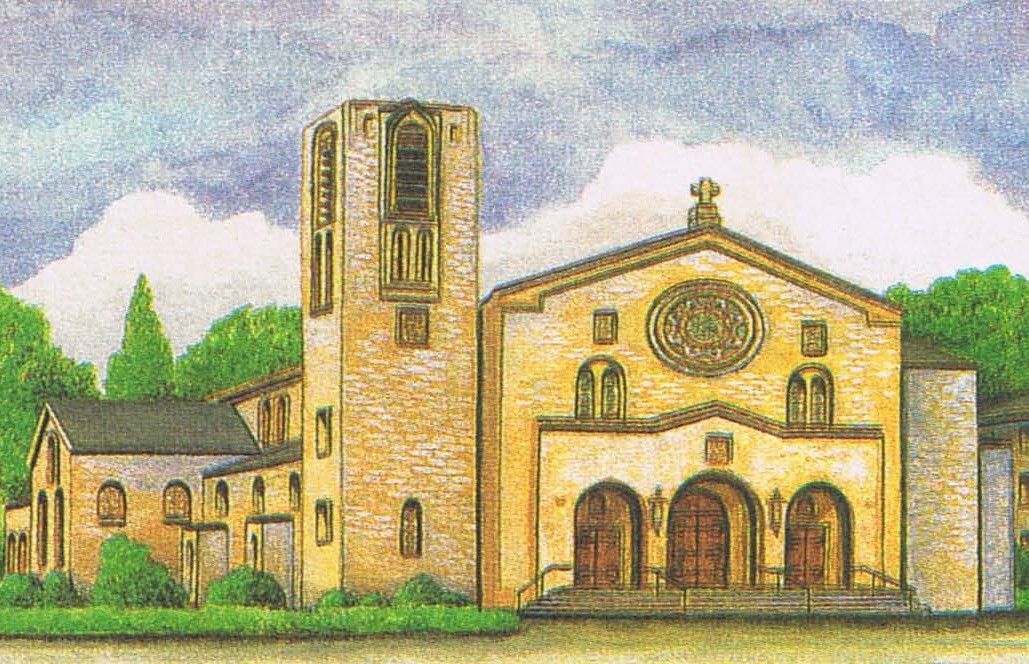
I live in Washington DC on East Capitol Street. If you picture the United States Capitol in your mind, one side faces the long grassy Mall where so many large gatherings and protests take place. Behind the Capitol, on the exact opposite side is a long street that stretches through the Capitol Hill Neighborhood called “East Capitol Street.” My parish is just 14 blocks up on the right. It is a “merged” Parish of St. Cyprian (building lost in 1966) and Holy Comforter (a title of the Holy Spirit).
I want to tell you of the two most important buildings on East Capitol Street. Let me begin with the second most important building, the United States Capitol.
The United States Capitol is the epicenter of the free world. It is the nerve center in the Capital of the most powerful country on this planet. It is here that some of the most powerful people in the world craft legislation and ponder great issues. Presidents have stood in the well of the House chamber to deliver important addresses. Other heads of state have also visited here. In fact people from all over the world travel to this country just to visit and perhaps transact business with the United States Government.
Decisions are made in this building that impact the lives of over 300 million Americans and even more all around the world. Decisions are made here that change world history. Decisions about more money than you can imagine are made in this building on a daily basis.
Perhaps no other building is more identified with this great country of ours than the US Capitol. It’s beauty and grandeur bespeak a powerful and confident land. The US Capitol: the second most important building on East Capitol Street in Washington DC.
What then you ask is the MOST important building on East Capitol Street in Washington DC?! It is Holy Comforter – St Cyprian Roman Catholic Church at 1357 East Capitol Street. In this holy place, some one greater than any head of state, God himself, dwells in the tabernacle. Jesus the Lord and King of the whole universe dwells here, speaks here, ministers here. The prayers and worship that take place in Holy Comforter Church not only change world history but these prayers are also what enable the decisions at the second most important building on East Capitol to have any good effect.
In the US Capitol human work takes place. In Holy Comforter Catholic Church God’s work takes place. In the US Capitol important but ordinary things happen. In Holy Comforter Church miracles happen as ordinary bread and wine become the Body and Blood of Jesus, as sins are forgiven, as heaven is opened. In the US Capitol many words are exchanged and written that impact the day to day activities of America. In Holy Comforter Catholic Church, the Word of God does not just inform, it performs and it transforms.
Many people come to visit the US Capitol. But in Holy Comforter Catholic Church the congregation is joined in worship by myriads upon myriads of angels and a company of saints which cannot be numbered. The US Capitol represents a government that we hope will endure for a long time but Holy Comforter is an outpost of a Church that the gates of Hell will never prevail against. In the US Capitol laws are passed that may one day be changed. But in Holy Comforter Church there is announced each week a law that will never pass away. The Senate majority leader and the Speaker of the House will come and go, changing year by year. But the High Priest, Jesus Christ who ministers at Holy Comforter Church will never die and has a kingdom that will never be destroyed.
Well, OK I suspect you know by now why the US Capitol is the second most important building on East Capitol Street in the Nation’s Capital. Holy Comforter – St Cyprian Roman Catholic Church far outranks in dignity and importance any other building on the street. This is true not because of the human elements involved, but rather the Divine. But I hope you will agree, the US Capitol is the second most important building on East Capitol Street, a distant second!
Funny thing though, all the tour buses drive right past Holy Comforter Church on their way to the second most important building. Wonder what that’s about? You’d think they’d at least stop to take a few pictures and ask to see God. Hmm…. There’s just no accounting for taste is there? Imagine, driving right past the House of God to see “the man” and his house. Imagine that!
In your visits to Washington, perhaps you too missed seeing the most important building on East Capitol Street. It’s probably not your fault. Those silly tour companies just don’t know any better and you depended on them to get you around. But here for you in the video below are pictures, historical and current of the MOST important building on East Capitol Street in the Nation’s Capital.
By the way, when I published a shorter version of this three years ago, I actually got some hate mail from “offended” people. Please, allow a little friendly boasting, the wearing of school (church) colors and know that I write with my tongue firmly planted in my cheek. It’s called humor y’all. And while there are elements of truth in what I write, my “excesses” are in good fun. Get it? Humor! 🙂
The other day in the Divine Office I read a passage from St Gregory the Great on preachers and preaching. It is interesting that I have been reading the Breviary every day for 27 years now, and this passage never struck me before. More proof I suppose that when the student is ready the teacher will appear.
There is also a Latin expression that captures how we often see things we missed before even in familiar texts. The expression is Non nova, sed nove, meaning that, though the text is not a new thing, it is experienced in a new way, or newly.
At any rate, what struck me about this teaching is St. Gregory’s assertion that the preacher goes ahead of the Lord, announcing him as it were, and the Lord comes behind to close the deal. It is an important insight that can also help the preacher avoid both pride and also an exaggerated sense of responsibility. I’ll say more of this in a moment but for now listen to St. Gregory:
Beloved brothers, our Lord and Savior….sends his disciples out to preach two by two…
Rightly is it said that he sent them ahead of him into every city and place where he himself was to go. For the Lord follows after the preachers, because preaching goes ahead to prepare the way, and then when the words of exhortation have gone ahead and established truth in our minds, the Lord comes to live within us. To those who preach Isaiah says: Prepare the way of the Lord, make straight the paths of our God. And the psalmist tells them: Make a way for him who rises above the sunset…. Therefore, we make a way for him who rises above the sunset when we preach his glory to you, so that when he himself follows after us, he may illumine you with his love.
Think over, my beloved brothers, think over his words: Pray the Lord of the harvest to send laborers into his harvest. Pray for us so that we may be able to labor worthily on your behalf, that our tongue may not grow weary of exhortation, that after we have taken up the office of preaching our silence may not bring us condemnation from the just judge.
–
From a homily on the gospels by Saint Gregory the Great, pope
(Hom 17, 1-3: PL 76, 1139 )
It is a powerful and helpful insight that the preacher goes before the Lord, who follows after to quicken the Word that is planted.
And here is a remedy first of all for pride. For the preacher is not the Lord. And, even if it is the Lord’s own word he preaches, mere human eloquence cannot completely express what God alone, who is love, can effect in the human heart. The preacher can but sow the Word, but only God can bring forth the harvest. As St. Paul wrote,
I planted, Apollos watered, but God gave the increase. So neither he who plants nor he who waters is anything, but only God, who makes things grow (1 Cor 3:6-7).
The preacher can propose, but the Lord must come after to “close the deal.” The Samaritan woman was rather abruptly but truthfully told this by the townsfolk:
We no longer believe just because of what you said; now we have heard for ourselves, and we know that this man really is the Savior of the world.” (Jn 4:42)
And every preacher should delight to hear this. It is a valuable lesson for the preacher to remember his place. He goes before to announce the presence of the one who alone can heal and bring in the truest harvest by his grace.
The preacher is like the best man in an ancient Jewish wedding, to whom St. John the Baptist equated himself:
He who has the bride is the bridegroom; but the friend of the bridegroom, who stands and hears him, rejoices greatly because of the bridegroom’s voice. So this joy of mine has been made full. He must increase, but I must decrease. (Jn 3:29-30).
St. Gregory’s insight is also helpful to preacher so that the preacher can avoid an exaggerated sense of responsibility. For it sometimes happens that a preacher may think too much rests on him, on his eloquence, and finding just the right analogy or formulae. And while it is true that every preacher must work to hone his skills, it also remains true that Unless the LORD builds the house, its builders labor in vain (Ps 127:1).
Thus the preacher can help lay a foundation, but it is the Lord who must build the house. It is freeing and helpful for the preacher remember that he merely goes before the Lord, and that the Lord will follow after, with every good grace. For what preacher can possibly know everything that every individual soul needs to find Christ. He must do his part in proclaiming the authentic word of God but only the Lord can perfect the message in every soul.
This is freeing and reassuring. And most of us who preach realize this from time to time when some one tells us something we have said, but recounts it in a way that surprises us. And this shows how the Lord helps them to hear what our feeble words only suggested.
In the end every preacher must trust the Lord who comes after him to complete what is lacking and bring forth the fruits that the preacher can only point to.
One of the Gospels from last week’s daily masses (Luke 12:1–7) opens up some important insights on the “problem of pretending” in the Christian life. One of the problems in getting to this insight of the Lord, is the understanding we have today of the word hypocrisy. To some extent, we have lost the more subtle distinctions and nuances of the word hypocrisy. For most of us today, hypocrisy means, in effect, that our deeds do not match our truest beliefs. There we are inconsistent, that, in effect, we say one thing and do another. While this is part of hypocrisy, is not the whole story.
Let’s look at the passage from Luke 12 and see with the Lord teaches, on the subtleties of hypocrisy.
Here is the full text of that gospel:
At that time:
So many people were crowding together
that they were trampling one another underfoot.
Jesus began to speak, first to his disciples,
“Beware of the leaven–that is, the hypocrisy–of the Pharisees.
“There is nothing concealed that will not be revealed,
nor secret that will not be known.
Therefore whatever you have said in the darkness
will be heard in the light,
and what you have whispered behind closed doors
will be proclaimed on the housetops.
I tell you, my friends,
do not be afraid of those who kill the body
but after that can do no more.
I shall show you whom to fear.
Be afraid of the one who after killing
has the power to cast into Gehenna;
yes, I tell you, be afraid of that one.
Are not five sparrows sold for two small coins?
Yet not one of them has escaped the notice of God.
Even the hairs of your head have all been counted.
Do not be afraid.
You are worth more than many sparrows.”
Note that the passage begins as follows, “Beware of the leaven, that is, the hypocrisy of the Pharisees.” (Luke 12:2). Now the Greek word that is translated into English hypocrisy, is ὑπόκρισις (hypocrisis). And its nominative form is ὑποκριτής (hypocrites) meaning, most literally, “actor.”
Now obviously, an actor, is someone who plays a role. The actor who plays Julius Caesar, is not in fact Julius Caesar. He is, in fact, John Smith, who plays the part of Julius Caesar, but is not Julius Caesar. In a certain sense, they are “pretending” to be Julius Caesar.
Now, everyone accepts this fact, and it is fine for a true actor to “pretend,” for time, to be someone they are not. But it is not good in the spiritual sense to go one “acting” or “pretending.” And when Jesus warns of hypocrisy he is warning that we tend to go on pretending to be someone that we are not, or to be living in a world, or a time, or set of circumstances, which are not, in fact, real.
Pretending is all right on the stage, for a prescribed time. But pretending is not all right in daily life. To pretend, to be an actor in daily life, is to engage in hypocrisy. And the Lord warns against this. We ought not to pretend to be someone we are not, or to be living in an unreal or “pretend” or “make-believe” world.
And so, with all this in mind the Lord warns us not to engage in “hypocrisy.” In effect, he is warning us not to pretend, not to engage in fantasy or live in a make-beleive world. And this line, “Beware of the leaven, that is, the hypocrisy of the Pharisees” serves as the opening framework of all that is to follow.
And what does follow? Fundamentally, the Lord lays out the reality, that the pretend world, denies the reality of judgment. This amount to playing “pretend.” He goes on in the text to warn us that there is nothing that is concealed that will not, one day, be revealed; nothing that is secret that will not be made known. He warns that, but we have said in the darkness, is heard in the light and, that everything we say or to is known to him. (Cf. Mk 4:22ff), He then, further warns us not to be obsessed with what other people think of us, not to be concerned with those who only have the capacity to kill the body, or somehow impact our worldly living. Rather, he tells us that we should have greater fear for the one “who after killing, has the power to cast into Gehenna”.
So what does all this have to do with hypocrisy? Simply this, we like to go on pretending, that is acting and living in a fantasy world. And the fantasy, the pretend, the “make-believe” is that what we do, and what we say, will have no consequences. We like to go on pretending that the Lord is some sort of pushover, some sort of “lollipop King” who just goes on doting over us, and that what we say or do does not ultimately matter.
In effect, the Lord tells us to stop going on pretending, to stop living in fantasy and following the lines of the script that is not the real world, the real God, or the reality that is my own life.
Most people today, living in outright heresy. They simply deny, or discount the reality that there will be a day of judgment, that there will be a day of reckoning. They simply gloss over the notion, that we will come before the judgment seat of Christ, and that we will render an account, as Scripture says, for every idle word (Mt 12:36), for what we’ve done in secret (Mk 4:22), that we will stand before he him who judges the intentions of the heart (Heb 4:12) and that nothing will lay hid from Him (Heb 4:13). We make light of this, we discount it. In effect, we pretend. And pretending is acting, pretending is a form of hypocrisy.
When Jesus warned of the hypocrisy of the Pharisees, he was referring to their sense of self-righteousness. In other words, they thought that they had nothing to worry about, for they were “good people,” unlike other less stellar examples of people around them. They had checked off the “God box”, they said their prayers, they fasted on Wednesdays, paid their tithes, and so forth; they were the good people. On the day of judgment they figured they would walk right on into heaven. This is self-righteousness. This is the attitude that, somehow, on my own power, I can attain to eternal life.
Too many people, have this attitude of self righteousness today. They may invoke God’s grace and mercy, but they are not really willing to consider the fact that they may by their own sinfulness disqualify themselves. Perhaps one has been fortunate to avoid the shameful sexual sins of the day, but have they loved the poor, have they been merciful and forgiving, and vice-versa. It is so easy to emphasize certain aspects of holiness and discount others. This is acting, this is hypocrisy and self-righteousness.
Too many breeze past any notions that they will have to render an account to the Lord. “Oh yeah, I know there’s a day of judgment, but God is love, and everything will be just fine and nobody is really going to Hell.” In other words, the common attitude today is a hell is a remote possibility, that judgment is a mere formality, nothing to be too anxious about. Never mind that this attitude is in direct contradiction to the whole of Scripture, most today live in outright heresy when it comes to this. (Some, sadly hold the opposite extreme of despair as well).
To all of this the Lord says he careful of hypocrisy be careful that you’re not living in a pretend world. God is very holy. Regarding heaven, none can walk up there but the pure in heart. Do not be so quick to simply presume you or I have the purity of heart to simply walk into heaven. God is very holy, and heaven is a place of the souls of just men made perfect (Heb 12:23). Jesus says, you must be perfect as a heavenly father is perfect (Mat 5:48). This is reality, is not pretend. But hypocrisy likes to “play act.” It thinks of holiness, only as playing a role, or as a light matter, simply the memorizing a few lines, and the playing of a certain part. This is pretend, this is acting, this is hypocrisy. And the Lord warns of it.
The Lord goes on to call another question. He points out that most of us are afraid of those who can kill the body, but cannot kill the soul. He goes on to summon us to a holy reverence. He says, “I shall show you whom to fear. Be afraid of the one, who after killing, has the power to cast into Gehenna (that is, hell).” He is speaking of himself. Scripture says, for we must all appear before the judgment seat of Christ, and render an account for what we’ve done in the body, whether good or ill, that we may receive recompense.” (cf 2 Corinthians 5:10).
Now the Lord is speaking to us here of real life. He is summoning us away from a pretend world where God “does not really care” about good or evil, or care about our holiness. Instead, Jesus is summoning us to the real world where God has a passion for what is right. He has a vigorous love for us, a love that wants for us true perfection, real holiness. God does not want to play or pretend with us, he seeks real, and true righteousness and holiness for us. He is not going to go on playing games with us. He does not want us to accept that it is enough for us to go on pretending that somehow reciting a few lines and learning a few moves on the stage is enough for us. He seeks for us to be truly, and really holy, righteous, and perfect.
Thus, when the Lord warns against hypocrisy, he is not merely speaking of severe and pretentious religious leaders of the past. He is speaking to you and me. He is telling us to stop pretending, to stop play acting, and to accept that he is about real change in our life. There is a real standard to meet, not just a pretend one. There is a real judgment to get ready for, not just a brief and perfunctory “play” before the throne of God. God is not playing games with us, he is not interested in the game of, “let’s pretend.”
Very little angered Jesus more than hypocrisy. And while we may like to gleefully observe how he excoriates the Pharisees of old we need to understand, and appreciate, that he spoke this warning to his own disciples, that is to us, that we too should beware, that is the wary of, that is “be aware” of the fact that we too can easily again engage in hypocrisy, in acting, in playing “Lets pretend.”
What then, is the solution to this problem of hypocrisy, of playing pretend? In effect, the Lord teaches here that we should ask for the gift of the Holy Spirit, which is, “the Fear of the Lord.”
What does it mean to fear the Lord? To fear the Lord, is not a kind of cringing fear, a fear merely rooted in concern to avoid punishment. Rather, the fear of the Lord is rooted in a deep love for God. It is rooted in a sense of wonder and awe, a deep appreciation of God’s holiness, of his Majesty, of his power, and of his loving providence.
The fear of the Lord is a fear of offending the Lord who has been so good to us, and to whom we owe everything. When we fear the Lord, but we do not trivialize him. We do not pretend that he is some sort of “lollipop King,” some sort of doting Father who does not really care that we run off into self-destructive, and other-destructive behaviors. Rather, when we fear the Lord, we accept that He is holy, and that He is passionate about setting right whatever is wrong within us, or in this world.
The Lord tells us to fear him who has power to cast him to Gehenna. In other words, he couches the fear the Lord in the context of judgment. The Fear the Lord is the gift to be serious and sober about the fact that one day we will answer to the Lord for what we have done, and what we have failed to do. Praise God, we will answer to a God who loves us, but we will answer to him.
In effect the gift of the fear the Lord is meant to instill in us a balance. On the one hand we must be sober and serious about the fact that we will be judged, and that there are, in fact, consequences for the choices we make and the behaviors we exhibit.
But before we merely cringe in fear, the Lord summons us to remember his love for us. He goes on to say “Do not be afraid, you’re worth more than many sparrows.” In other words, our fear of the Lord should not be a servile, a cringing fear. Rather, it should be a fear rooted in love, and the experience of God’s love for us. The fear the Lord is something which balances the reality of judgment with the reality of God’s love. Both are real, both are taught.
As noted, today, most people live in outright heresy (material more than formal), practically, if not totally, denying the reality of judgment, and of Hell. No one loves us more than Jesus Christ, but no one spoke and warned of Hell more than Jesus Christ. No one spoke to us more thoroughly on the reality of judgment, and the need to be ready for it than Jesus Christ.
The gift of the Fear of the Lord balances his love for us, with a sober appreciation that his love is a vigorous love, a love that insists that our justice, our holiness must be real, not pretend. We may wish to go on pretending that judgment is no big deal, but Jesus teaches otherwise, the same Jesus who loves us. Anything else is hypocrisy, is pretending. The gift of the Fear the Lord seeks to hold in balance the love God and the reality of our need to allow God’s love to effect real change in us, not just pretend stuff.
A personal story. The other day I was privileged to preach at a Mass in the great upper church of the Basilica of the National Shrine of the Immaculate Conception. As I, with the Bishop from Cameroon and a good number of other priests concelebrants processed up the aisle, I looked up and saw the great mural of Christ, seated in judgment over the nations. As we processed, we were singing the Battle Hymn of the Republic, and just as I rounded the corner heading up the main aisle, the following lines of the hymn were sung,
He has sounded forth the trumpet that shall never sound retreat; He is sifting out the hearts of all, before his judgment seat; Oh be swift my soul to answer my soul to answer, oh be jubilant my feet! His Day is marching on!
I was given the gift of tears, as I looked up and saw Christ seated in Majesty. It is a mural that many do not like, for many reasons. Some see Him as too severe, other reject it for other reasons.But as I looked up, I was moved to weep. Yes, I thought, I will answer to him. But I love Him and know and have experienced that he loves me. Yes, I love Him and I have respect for Him, but I must answer to Him. I will not trivialize him, but neither do I doubt his love for me or the fact that his love is a healing love, a powerful love that brings eternal healing.
The Fear the Lord is the beginning of Wisdom, the gift to reverence God and yet trust his love. If you look carefully at the eyes of Christ seated in Majesty in the mural of the great upper Church in the Basilica, you will notice that the right eye of the Lord shows a kind of severity, for his right eye signifies his righteousness, his justice and his passion for what is right and true. But the left eye is more open more rounded, more serene, and this bespeaks his grace and mercy. On the one face of Christ a feature common in Eastern iconography, is both the justice and mercy of God. For God justice and mercy are alike with him (Sirach 5:7). Some, looking up at that great mural see only the severity. But there is subtlety of the image of His eyes that speak of balance: Justice in the right eye, grace and mercy in the left, One God in whom justice and mercy are alike.
The Fear the Lord respects this balance. The Lord warns of hypocrisy, a kind of heresy that pretends, that play acts that somehow justice and righteousness is simply a matter of reciting a few lines. They are not, they are far deeper. But the Fear the Lord also reverences the fact that only the love of God can utterly transform us into the holiness that is required as we prepare for our appointment before the great judgment seat of Christ.
Avoid hypocrisy, avoid pretending. It is not only the problem of the Pharisees of old, it it, too easily, our very own problem.
You may have read in the news that a faculty member of the Gallaudet University in Washington DC has been placed on “administrative leave,” due to the fact that she signed a petition requesting referendum on the issue of gay marriage in Maryland.
Angela McCaskill is “Chief Diversity Officer” at Gallaudet University in Washington DC. She was at church one Sunday, and requested to sign the petition that would permit the voters of Maryland to vote on the issue of gay “marriage.” She signed the petition and says she did so because she favors democracy and allowing citizens to vote on such controversial issues, as opposed to having legislatures and courts force so-called “gay marriage” on the populace. (More HERE)
But the administrators at Gallaudet University consider her signing of the petition to be unacceptable. Apparently, as “Chief Diversity Officer,” they don’t consider her kind of diversity the right kind of diversity.
To be sure, it is refreshing and surprising to hear that a “diversity officer” would have signed a petition opposing Gay “marriage” and insist that gay marriage be brought to a vote, instead of merely being imposed. As most social conservatives know, and have experienced, the usual “diversity office” at a campus is anything but diverse in its views. And, that a diversity officer might actually understand that there more than one side to the issue of Gay “marriage” surprises not only social conservatives, but also (apparently) social leftists. In effect, the leadership at Gallaudet University sees Ms. McCaskill’s actions as incompatible with their notion of diversity, and are saying, in effect, “How could you!”
But merely expressing surprise is not usually enough for radicals on the left. Thus, they have placed her on “administrative leave.” Never mind all the usual calls for tolerance from the radicals, never mind the “free exchange of ideas” that they so often extol on college campuses. Never mind all that, according to them, Ms. McCaskill has to go.
The reaction well demonstrates that when leftist cultural radicals speak of “diversity,” they don’t mean it in any fair minded or straight forward definition of the word.
The word diversity comes from the Latin word diversus: di (two) + versa (turns or sides). Thus, the true meaning of the word “diversity” means “two sides.” Or by extension, “more than one side,” “more than one viewpoint” or just “different.”
But the cultural radicals mean no such thing. In their lexicon “diversity” means you have to accept anything they propose. But it does not that they should accept you, or that they should even consider the fact that you might be troubled that they propose anything, no matter how deviant the behavior has historically been seen to be. In their lexicon, being “open-minded” means that you agree with them. “Tolerance” is your obligation to agree with them, but not their obligation to accept you, or your deeply held Christian beliefs, no matter how ancient or how well attested.
And, in their form of diversity, tolerance and open-mindedness, if they can punish your non-compliance or even just your non-placet, they will do so with a sense of righteousness, and they will do so firmly and swiftly.
The central point is, when cultural radicals use these terms, they mean no such thing.
To be sure, I am not hereby articulating a position that diversity is an absolute quality or virtue. There are certain diversities to be celebrated and/or tolerate. But there are certain behaviors, which ought not be tolerated, illicit sexual union and Gay “marriage” among them.
The intent in this post is merely call the cultural radicals on their bluff. When they talk about diversity, they don’t really mean it. When they try to parade around in clothes of openness, tolerance, and diversity, they are misrepresenting themselves. When they celebrate “diversity” they don’t mean you, especially if you are a traditional Christian. Their ‘diversity” doesn’t include the Scriptures or the ancient Judeo-Christian tradition, or Natural Law. And don’t even think about mentioning the Catholic Church to them, you’re certain to be shown the door out of their “diverse” world.
To them these things are not something to celebrate or tolerate. They are something to abhor, to legally block, and for some of them, even something to destroy.
Just remember, when they speak of diversity they don’t mean it. And if they mean it all, it is only for them and their favored groups. But they certainly don’t mean it for you, especially if you are a traditional, Bible believing Christian. No, you are not part of the rainbow, you are not part of their tapestry, or their mosaic. You have no place at their table, no place in their celebration.
The views of diversity officer Angela McCaskill regarding (so called) “gay marriage,” are not clear. But one thing is clear, she has (wittingly or unwittingly) called the bluff of the diversity motif of the cultural radicals, and has incurred special wrath because she has done so.
To them she is “off message.”She actually took the word diversity to me what it says. How wrong was that! And now she is cast out of the “hallowed halls” the radicals think they own. She is proof that when cultural radicals speak of diversity they don’t mean you, they only mean themselves.
Disclaimer: I have chosen the words “cultural radicals” carefully. I am willing to admit that there are many who oppose the Church’s teaching on Biblical marriage who are far less radical, who are of good will, and may also be shocked at what happened to Angela McCaskill. There are some who are willing to allow the cultural debates of our time to be conducted in an open and honest way, and accept that varying groups, including Christians, have the rights of any citizens to engage in the political process, and to seek to influence the discussions in the on-going cultural shifts of the West.
But the radicals have no such room in their world for opposition or even discussion, and they want to silence any questioning of their agenda. They are growing in number, especially in university and government settings, and it is to them that I address the concerns of this blog.
You may have read in the news that a faculty member of the Gallaudet University in Washington DC has been placed on “administrative leave,” due to the fact that she signed a petition requesting referendum on the issue of gay marriage in Maryland.
Angela McCaskill is “Chief Diversity Officer” at Gallaudet University in Washington DC. She was at church one Sunday, and requested to sign the petition that would permit the voters of Maryland to vote on the issue of gay “marriage.” She signed the petition and says she did so because she favors democracy and allowing citizens to vote on such controversial issues, as opposed to having legislatures and courts force so-called “gay marriage” on the populace. (More HERE)
But the administrators at Gallaudet University consider her signing of the petition to be unacceptable. Apparently, as “Chief Diversity Officer,” they don’t consider her kind of diversity the right kind of diversity.
To be sure, it is refreshing and surprising to hear that a “diversity officer” would have signed a petition opposing Gay “marriage” and insist that gay marriage be brought to a vote, instead of merely being imposed. As most social conservatives know, and have experienced, the usual “diversity office” at a campus is anything but diverse in its views. And, that a diversity officer might actually understand that there more than one side to the issue of Gay “marriage” surprises not only social conservatives, but also (apparently) social leftists. In effect, the leadership at Gallaudet University sees Ms. McCaskill’s actions as incompatible with their notion of diversity, and are saying, in effect, “How could you!”
But merely expressing surprise is not usually enough for radicals on the left. Thus, they have placed her on “administrative leave.” Never mind all the usual calls for tolerance from the radicals, never mind the “free exchange of ideas” that they so often extol on college campuses. Never mind all that, according to them, Ms. McCaskill has to go.
The reaction well demonstrates that when leftist cultural radicals speak of “diversity,” they don’t mean it in any fair minded or straight forward definition of the word.
The word diversity comes from the Latin word diversus: di (two) + versa (turns or sides). Thus, the true meaning of the word “diversity” means “two sides.” Or by extension, “more than one side,” “more than one viewpoint” or just “different.”
But the cultural radicals mean no such thing. In their lexicon “diversity” means you have to accept anything they propose. But it does not that they should accept you, or that they should even consider the fact that you might be troubled that they propose anything, no matter how deviant the behavior has historically been seen to be. In their lexicon, being “open-minded” means that you agree with them. “Tolerance” is your obligation to agree with them, but not their obligation to accept you, or your deeply held Christian beliefs, no matter how ancient or how well attested.
And, in their form of diversity, tolerance and open-mindedness, if they can punish your non-compliance or even just your non-placet, they will do so with a sense of righteousness, and they will do so firmly and swiftly.
The central point is, when cultural radicals use these terms, they mean no such thing.
To be sure, I am not hereby articulating a position that diversity is an absolute quality or virtue. There are certain diversities to be celebrated and/or tolerate. But there are certain behaviors, which ought not be tolerated, illicit sexual union and Gay “marriage” among them.
The intent in this post is merely call the cultural radicals on their bluff. When they talk about diversity, they don’t really mean it. When they try to parade around in clothes of openness, tolerance, and diversity, they are misrepresenting themselves. When they celebrate “diversity” they don’t mean you, especially if you are a traditional Christian. Their ‘diversity” doesn’t include the Scriptures or the ancient Judeo-Christian tradition, or Natural Law. And don’t even think about mentioning the Catholic Church to them, you’re certain to be shown the door out of their “diverse” world.
To them these things are not something to celebrate or tolerate. They are something to abhor, to legally block, and for some of them, even something to destroy.
Just remember, when they speak of diversity they don’t mean it. And if they mean it all, it is only for them and their favored groups. But they certainly don’t mean it for you, especially if you are a traditional, Bible believing Christian. No, you are not part of the rainbow, you are not part of their tapestry, or their mosaic. You have no place at their table, no place in their celebration.
The views of diversity officer Angela McCaskill regarding (so called) “gay marriage,” are not clear. But one thing is clear, she has (wittingly or unwittingly) called the bluff of the diversity motif of the cultural radicals, and has incurred special wrath because she has done so.
To them she is “off message.”She actually took the word diversity to me what it says. How wrong was that! And now she is cast out of the “hallowed halls” the radicals think they own. She is proof that when cultural radicals speak of diversity they don’t mean you, they only mean themselves.
Disclaimer: I have chosen the words “cultural radicals” carefully. I am willing to admit that there are many who oppose the Church’s teaching on Biblical marriage who are far less radical, who are of good will, and may also be shocked at what happened to Angela McCaskill. There are some who are willing to allow the cultural debates of our time to be conducted in an open and honest way, and accept that varying groups, including Christians, have the rights of any citizens to engage in the political process, and to seek to influence the discussions in the on-going cultural shifts of the West.
But the radicals have no such room in their world for opposition or even discussion, and they want to silence any questioning of their agenda. They are growing in number, especially in university and government settings, and it is to them that I address the concerns of this blog.
One of the more common features of discussion and debate in the modern setting, often so polarized polemical, is the problem of “all or nothing thinking.”
All or nothing thinking is a kind of cognitive distortion which is forgetful that life often has subtlety, and that, between two positions, there may be middle ground which can and should be considered.
All or nothing thinking also has a strong influence the discussion of issues today. If the person articulates position, or point of view on some topic, they are often presumed by many to hold that position in an extreme sort of the way, without any distinction or qualifications.
I encounter a lot of this, writing on the blog, and in public speaking. If, for example, I say “A” is important, and we ought to consider “A” and give it some more attention, inevitably there will be some readers, and listeners who will say, “Oh yeah! Well what about B and C and D? Are you saying they’re not important at all?”
Of course I am saying no such thing. In the world of ideas, to hold “A” is not thereby to exclude other concepts that might actually balance and help distinguish. But those who engage in all or nothing thinking, and increasingly common problem today, interpret the upholding of “A” to be exclusive of other concepts. This makes them react either with extreme support (as in, “Tell it like it is!”), or extreme hostility.
To cite a recent example here on the blog, I recently wondered aloud if perhaps our life lacks some depth because, instead of living locally and more intensely in communities of more natural distance, we tend to live in more selective communities that are often far-flung, either by physical or virtual distance.
One instance of this tendency is the current practice by increasing numbers of Catholics to attend Mass, not in their neighborhood church, but in some distant community more to their liking, either liturgically or for some other reason.
While such a practice is certainly permitted, I simply proposed that those who engage in it, should consider that they are going to be less deeply involved in the parish that is 30 to 45 minutes away from where they live.
I was surprised at the strong reaction with this observation provoked. A lot of the reactions were rooted precisely in all or nothing thinking. Some of the reactions were strong enough that I did not post them, due to rather uncharitable descriptions of church life. But the general gist of them went something like this, “Oh! So you are saying I have to attend my local church with dancing girls, a crazy pastor, and all sorts of hideous practices, rather than go to a distant parish which is sound, with a good liturgy and teaching?!”
Of course I am not saying any such thing. For that would be all or nothing thinking. Rather what I am saying is that, among the things we should consider when we attend Mass, is physical distance. There my, in fact, be good reasons for us to attend not the neighboring church, but a more distant one. But other things being equal, physical proximity is a good thing, and should be part of our considerations.
While I would think that my proposition of proximity as one factor, among many, would be understood as such, I find increasingly, that many think that I am speaking absolutely. I am not, and find their presumption puzzling.
But I am finding that many today, more than in the past, do divert quickly to all or nothing thinking. This then often provokes strong negativity, even hostility.
I am not sure where this increase in all or nothing thinking comes from, but I suspect it has a lot to do with the increasingly polarized and polemical nature of our culture. This quality is in turn generated by the culture wars, and the “been in the storm too long syndrome.” The television new cycles, especially the 24 hour news channels, also tend to present life in a debate format. Indeed, presenting everything as a battle, and emphasizing hard edgy commentary sells. The quick shorthand of TV also simplifies things to soundbites and simple camp designations like “right wing” “Left wing” and extremist labels.
There is also simplification of people such that if the person opposes abortion, they must be Republican. If they oppose the death penalty they must be a Democrat.
Life, of course is not really quite so simply categorical, and people are little more complicated than that. Ideas are not always understood or advocated in undiluted ways either. But careful distinctions generally makes for “poor” TV. Categorical soundbites sell better. And the more usual and natural human experience of seeing a certain idea in a world of ideas, and balanced by a careful interaction of those ideas, is usually lost on TV debate formats and advocacy journalism.
Surely, as a man of faith, I will tell you but there are absolutes. But even absolute truths, often balance each other and require context to be properly understood. Jesus is fully divine. This is absolutely true. It is also absolutely true that Jesus is fully human.
All or nothing thinking has a hard time negotiating the delicacies and distinctions of balanced truth, or the the complex interactions of the world of ideas. And many things in our culture fuel this unhealthy cognitive distortion.
What then is the remedy for all or nothing thinking? In a word, I would propose the remedy to be “discernment.” The root meaning of the word discern, in its Latin roots, means to sift, to sort, or to distinguish. Thoughtful discernment is an important remedy for the polarized, polemical, all or nothing thinking of our current cultural setting.
Respecting the context of an argument, and the intentions of someone who proposes that idea, are also important and helpful. While it is true that some do present ideas in an all or nothing way, most people present ideas or points of view in a way that holds other things equal, in a way that is presumes and respects that other factors must often be considered. As a general rule seems reasonable to assume that if a person is presuming idea “A”, they did not thereby exclude principles B,C or D, but only that “A” should be given due consideration.
In effect, we presume good will on their part and intelligence as well. Such attitudes go along way to avoiding misunderstanding and hostility. If we wonder how idea “A” interrelates with B,C or D we can always ask. But we need not presume that our interlocutor means what he says in an absolute sense. We can also engage in our own discernment, as we sift, and sort and distinguish ideas. By discernment, we can retain what is good, distinguish were necessary, and balance ideas against one another.
For the reasons stated, reasonable discourse is becoming less common today. All or nothing thinking is one of the reasons for this we do well to identify this cognitive distortion, know it’s moves and properly rebuke it, where necessary.