In the Darkness We See Farther – Pondering the Paradox of the "Dark Knowing" of Faith

051215As human beings we are very visual and there is a certain demand of our flesh to see on its own terms. But of course God, who is pure spirit, will not be seen in this way.

How can the human eye perceive what is spiritual? It is not designed to do so. We cannot see God, as God, any more than we should expect to be able to see justice sitting down to lunch with humility. These are not physical concepts; they are metaphysical ones. We may see evidence of their existence, but we do not physically see them. And so also with God. We see lots of evidence of His existence, but we do not see Him with our earthly eyes.

There is a well-known (but inaccurate) saying, “Seeing is believing.” But actually it is not; seeing is only seeing. When we see physical things or events, one of two things happens, either of which eliminates the existence of any sort of faith:

1. We see something and accept it as true, in which case faith is no longer necessary, for it is not necessary to believe what we can plainly see.

2. We scoff or act bemused and continue to disbelieve, saying (for example when we see a magic trick), “There’s a way of doing that; it’s just an illusion.”

In either case, faith (human or supernatural) is set aside when we see something with our earthly eyes.

Therefore, as Scripture insists over and over again, faith is not a matter of seeing in a physical way.

  1. Now faith is the substance of things to be hoped for, the evidence of things that appear not (Hebrews 11:1).
  2. So we fix our eyes not on what is seen, but on what is unseen, since what is seen is temporary, but what is unseen is eternal (2 Cor 4:18).
  3. For we walk by faith, not by sight (2 Cor 5:7).
  4. For in this hope we were saved. But hope that is seen is no hope at all. Who hopes for what they already have? (Rom 8:24)
  5. For now we see only a reflection as in a mirror; then we shall see face to face. Now I know in part; then I shall know fully, even as I am fully known (1 Cor 13:12).
  6. And though you have not seen [Jesus], you love Him, and though you do not see Him now, but believe in Him, you greatly rejoice with joy inexpressible and full of glory, obtaining as the outcome of your faith the salvation of your souls (1 Peter 1:8-9).
  7. Blessed are those who have not seen and yet believe (John 20:29).
  8. So faith comes from hearing, and hearing through the word of Christ (Rom 10:17).

St. Thomas Aquinas says, Faith is a habit of the mind whereby eternal life is begun in us, making the intellect assent to what is non-apparent (Summa IIa IIae 4 ad 1).

Therefore faith is not about what is seen with our earthly eyes. It comes from hearing—hearing the Word of God.

That said, faith is a way of knowing and thus also a way of “seeing,” but more in the intellectual sense, as when we say, “Oh! Now I see” when we grasp a point intellectually. And though we know and “see” by faith, spiritual theologians such as St. John of the Cross remind us that the seeing and knowing by faith is “obscure.”

Now usually we think of the word “obscure” with a negative connotation. If something is obscure, it is tricky or hard to figure out and we look for something to illumine the darkness, to scatter the obscurity.

Not so fast. Consider the deeply paradoxical notion that the darkness, the obscurity actually helps us to see better! Fr. Reginald Garrigou-Lagrange explains it this way:

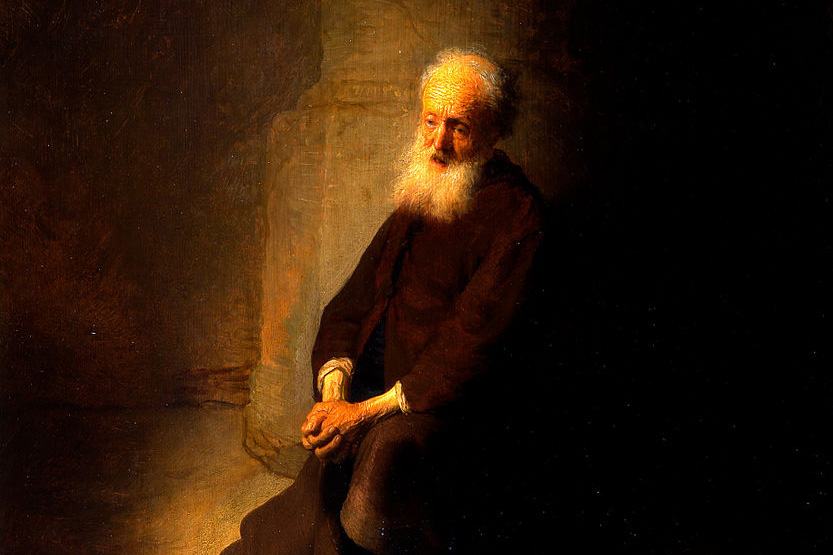
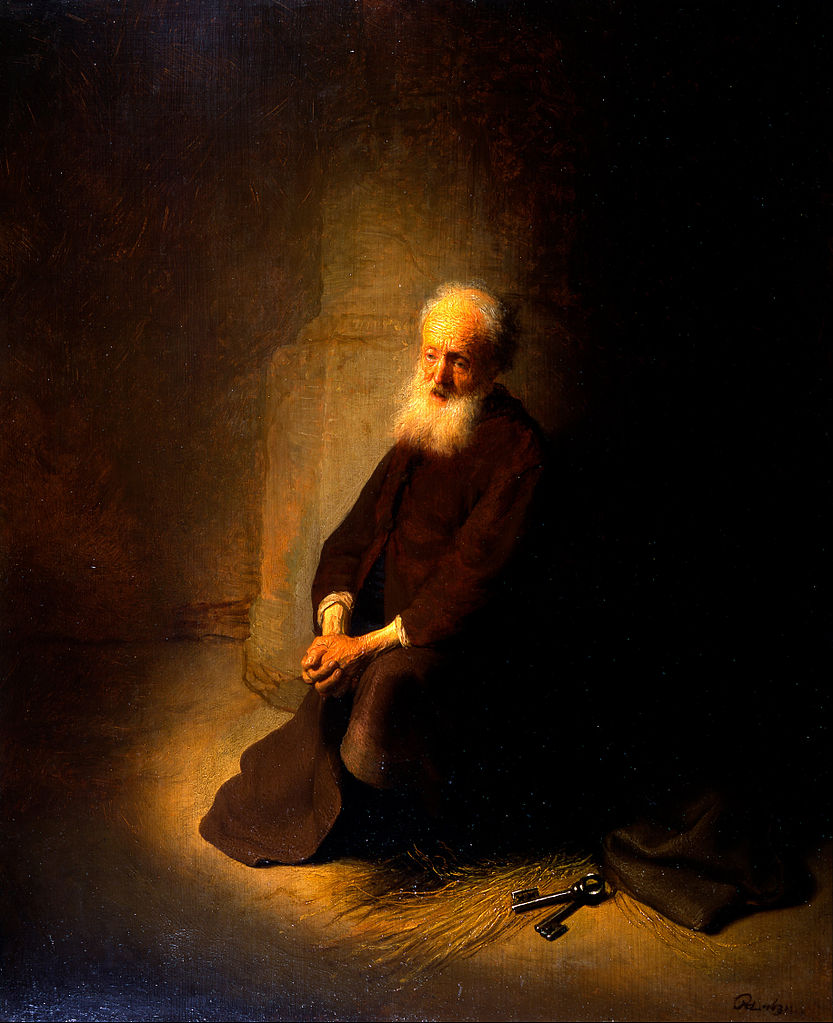
Obscure faith enlightens us somewhat like the night, which though surrounding us with shadows, allows us to see the stars, and by them, the depths of the firmament. … That we may see the stars, the sun must hide, night must begin. Amazingly, in the obscurity of the night we see to a far greater distance than in the day; we see even the distant stars which reveal to us the immense expanse of the heavens. … [And so] faith, although obscure, opens up to us the supernatural world and its infinite depths: the Kingdom of God, His inner life, which we shall see unveiled and clearly in eternity (The Three Ages of the Interior Life, Tan Publications Vol 1, p. 361)

In the darkness we see farther and deeper into space. Sunlight is precious, but it envelops us; it closes us in a much smaller world. We see better what is near; what is farther off and higher up is lost to us. From the perspective of our physical senses, faith is a “dark” knowing or seeing. By it we see farther and higher, longer and deeper.

Fr. Garrigou-Lagrange continues,

Faith is obscure but it illumines our intellect … in a way very superior to the senses and to reason. … What is evident for our senses is sensible, not spiritual; therefore it is not God himself. … Now faith makes us attain here on earth the inner life of God in the penumbra, in obscurity. Consequently a man who preferred visions to infused faith would deceive himself … for he would prefer what is superficial and exterior, and what is accessible to our faculties, to what surpasses them. He would prefer figures to the divine reality (Ibid).

And therefore we must beware of the strong demand of our flesh to see on its own terms. Our earthly eyes are not going to see God on the terms that our flesh demands. He is just too immanent, too transcendent for that. Our eyes see what physically exists but not Existence Himself. If we yield to this demand of our flesh we are going to limit our world immensely. We will certainly see worldly and physical things well, but we will miss the greater portion of reality: the Kingdom of God and God Himself!

Welcome to the modern world; a small world increasingly closed in on itself; a world no longer enchanted and charged with mystery; a world that demands to see only in physical terms, preferring what is superficial and exterior, preferring the creature rather than the Creator, who is blessed forever.

Ponder the great paradox of the “darkness” and “obscurity” of faith. For in the humility of accepting the darkness, we see farther, higher, deeper, and longer. Jesus is the Light of the world. But we see Him in the “darkness” of faith and understand Him most clearly not by the false light of this world, but by faith. Faith is obscure to our senses, but understood by our souls as a necessary condition to loving Him as our only and true Light.

Some Strategies for Overcoming Temptation

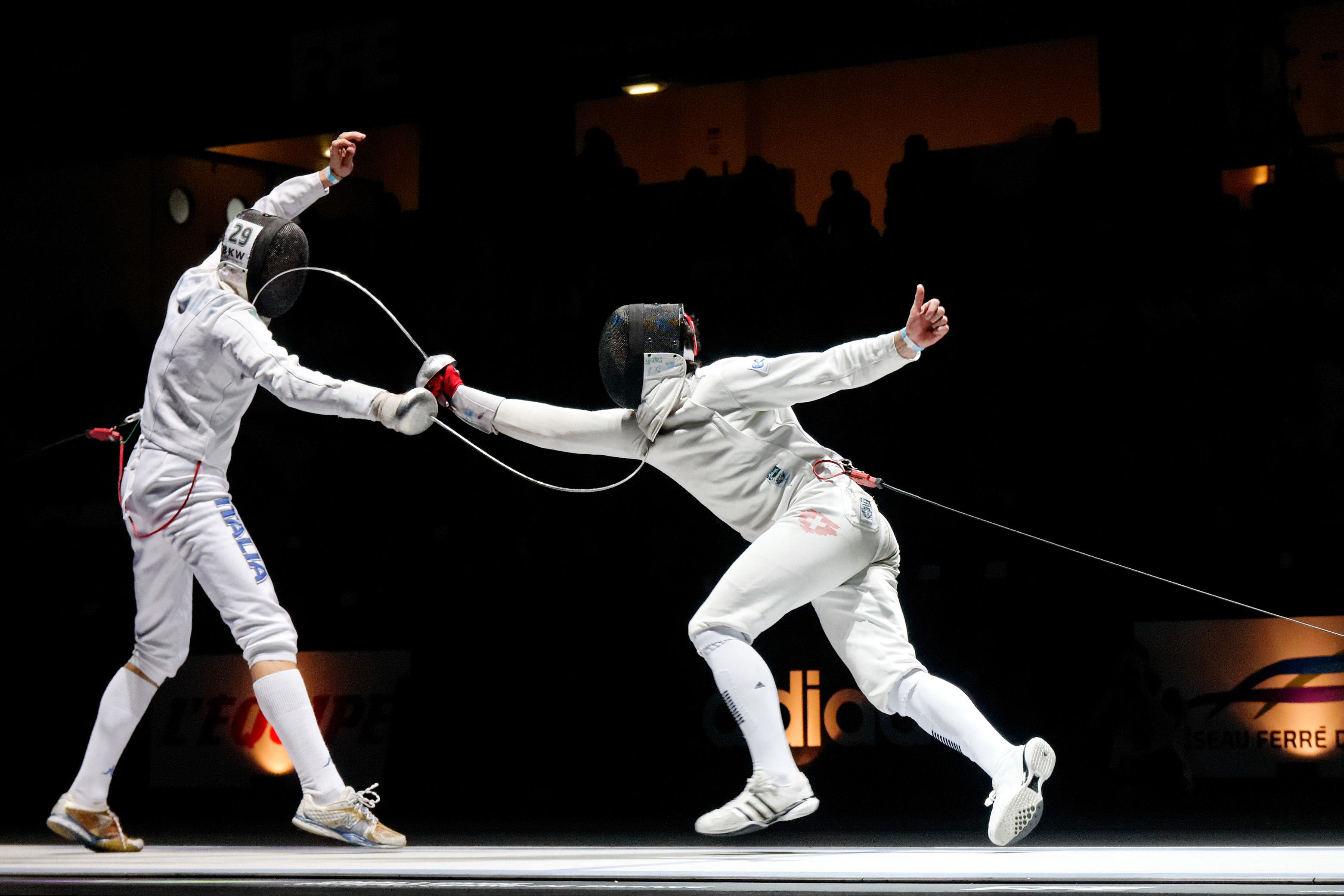
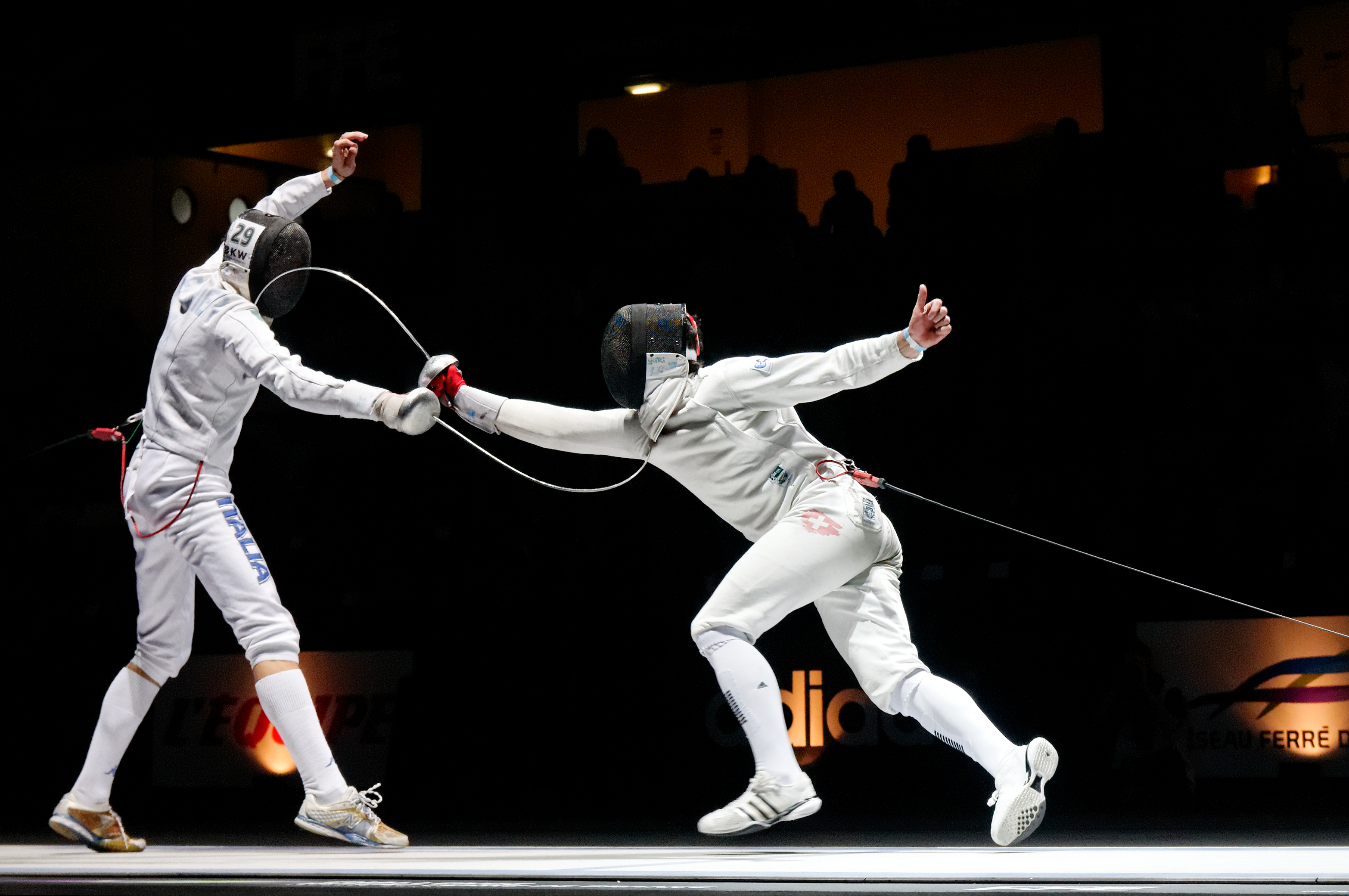
"Final Trophee Monal 2012 n08" by © Marie-Lan Nguyen / Wikimedia Commons. Licensed under  CC BY 2.5 via Wikimedia Commons.
“Final Trophee Monal 2012 n08” by © Marie-Lan Nguyen / Wikimedia Commons. Licensed under
CC BY 2.5 via Wikimedia Commons.

This is part two of an article on temptation. See yesterday’s post for part one.

How can we overcome temptation?

Remote Battles are Essential! When people ask about overcoming temptation they most often have in mind what to do “in the moment” of temptation. But if we focus merely on the moment of temptation we are missing the bulk of the work that needs to be done. For in order to become more successful in withstanding temptation, a strong foundation needs to be established. There is much “remote” work to be done such as growing in virtue, undertaking active purifications and mortifications, deepening our prayer life and relationship with God, learning to avoid common occasions of sin, rooting our thought life less in the world and more in what matters to God, and so forth.

Faithfully and steadily laying this foundation is really most of the battle and it goes a long way toward crowding out what is evil and lacking with what is good and more perfect. If we do this, what tempts us will decrease and the intensity of what temptation remains will be weaker. If we simply seek quick advice about how to ignore or withstand lustful thoughts or how to avoid gossip in the moment we may get a few good suggestions, but without a good foundation the results can be pretty discouraging.

Consider an example. Suppose we come upon a man in an alley who has clearly been assaulted by thugs. He is bloody, beaten, and unconscious—clearly the victim of a crime. However, if all we do is think about how terrible what has happened is, we may be missing a lot of background information that is important in understanding how this man fell victim. Why did he go down this alley in the first place? Why was he in a dangerous place alone? Did he have no means of escape? Did he know how to defend himself? Were his attackers people he knew who turned on him? Was he a good judge of character? While none of these factors excuse what happened to him, they do show that many things may have contributed to his sorry state.

And thus similar questions are significant in our battle against temptation. The “thugs” are demons, or the hucksters of this world, or our own unruly passions. When one of these thugs assault us, it is good to have some strategies to deal with it in the moment, but we also do well to ask ourselves other questions. How did I end up in this situation of temptation? Could it reasonably have been avoided? Do I know how to escape if I see trouble coming? Am I careful enough about where I go, whom I know, and what I allow to influence me? Where is God and how strong is my love for Him and my relationship with Him? How serious have I been about growing in virtue in my life and limiting the influence and power of vice? What strengths am I cultivating in remote moments that can help me in these critical moments of temptation?

Thus, much work is necessary that is remote to the moments of temptation if we are to stand a better chance of overcoming temptation in the heat of the moment. Fight the good fight of the faith (1 Tim 6:12).

Spiritual and moral theologians speak of a number of ongoing practices that help us to overcome temptations. These cannot be fully described and explained here, but here they are, briefly:

1. Growth in self-knowledge and knowledge of God – wherein we come to know our strengths and weaknesses as God reveals them to us. We consider who we really are before God and in the light of His Divine mercy. Learning of our nothingness without God and our status as blind beggars, we seek His grace and enlightenment and make steady progress out of pride and into true humility, gratitude, and dependence on God.

2. Mortifications – wherein we learn to apply the Lord’s counsel that we should deny ourselves, take up our cross, and follow Him. We learn to lose our life in order to find it. Mortifications involve putting to death, by God’s grace, the inordinate (unreasonable) demands of the flesh and sinful attitudes such as vengeance and hatred. One may even eliminate lawful pleasures completely as a way of gaining increased self-mastery and authority over the passions.

3. Focusing on the roots of sin – wherein we look especially to the seven cardinal (or capital) sins of pride, greed, lust, anger, gluttony, envy, and sloth, along with other drives such as fear and ingratitude. We seek to understand what they are and learn their moves. Naming them and seeing how they subtly work is a journey toward gaining greater mastery over them by God’s grace.

4. Predominant fault(s) – wherein we seek to learn our most common tendencies and weaknesses and place special emphasis on learning to master and overcome such tendencies. This is joined to the practice of a “particular examen” in which we focus on and look in depth at these predominant faults as we prepare for confession and undertake our daily examen.

5. Growth in all the virtues – St. Thomas emphasizes two in regard to temptations. Now the human will is hindered in two ways from following the rectitude of reason. First, through being drawn by some object of pleasure to something other than what the rectitude of reason requires; and this obstacle is removed by the virtue of temperance. Secondly, through the will being disinclined to follow that which is in accordance with reason, on account of some difficulty that presents itself. In order to remove this obstacle fortitude of the mind is requisite, whereby to resist the aforesaid difficulty even as a man, by fortitude of body, overcomes and removes bodily obstacles” (II IIae 123.1).

5. Active purifications of

A. The Senses – such as custody of the eyes and ears and our excessive need for comforts and bodily pleasures.

B. The Imagination – wherein we seek to inject increasingly holy thoughts into our mental landscape in order to crowd out foolish, impure, and unholy thoughts.

C. The Memory – wherein the memory of our past sins is increasingly expunged by not dwelling on them and by replacing these memories with better and more holy things. We must feed that which is holy and starve that which is painful or sinful. Good thought becomes our interest; evil thoughts and memories are increasingly robbed of oxygen and wither. Here, too, is the laudable practice of praying for the gift of holy tears, wherein we weep for our sins not to dwell on them but to develop an aversion to and avoidance of thinking back on them with any delight whatsoever.

D. The Intellect – wherein we study frequently the Holy Wisdom of God, Scripture, good theological and spiritual books, the lives the saints, etc. We are less conformed to the folly of the world and more transformed by the renewal of our minds and fresh, spiritual ways of thinking rooted in God’s wisdom. Note that Jesus had recourse to Scripture to refute every temptation in the desert. And thus He teaches that our intellect is to be steeped in God’s wisdom so as to refute the Devil, the flesh, and the world. Scripture says, For wisdom will enter your heart, and knowledge will be pleasant to your soul. Discretion will protect you, and understanding will guard you (Prov 2:10-11).

E. The Will – wherein we increasingly and intentionally practice virtue, reinforcing it and crowding out bad tendencies (vices). We seek to grow in love of God and neighbor and to act less out of self-love. As virtue grows it becomes more natural and we do good things with grater ease. Vices thereby attenuate (weaken).

6. Regular confession and Holy Communion – wherein we receive grace to avoid sin and grow in holiness and desire for God rather than sin. In Holy Communion, especially, we become more and more like the One we receive. These are like both medicine and food, healing us and strengthening us.

7. Prayer – here understood not as mere recitation but rather as ever-deepening union with God, whose love transforms us so that we have a disgust for sin and a love for goodness, beauty, and truth. Scripture says, With flattery the devil will corrupt those who have violated the covenant, but the people who know their God will firmly resist him (Dan 11:32).

 And thus we see that ongoing remote preparation is necessary long before the moment of temptation if we are to avoid some temptations altogether and are to be better equipped to avoid those that do come.

Virtue is its own reward! It is evident that those who have lived lives that were deeply mired in sin are going to face a lot more temptations going forward, even if they have repented. Thus we see the preventative role of virtue and of developing good habits early in life. Scripture says, Train up a child in the way he should go; even when he is old he will not depart from it.  The prudent sees danger and hides himself, but the foolish go on and suffer for it. Thorns and snares are in the way of the crooked; whoever guards his soul will keep far from them (Prov 22:4-6). And thus we see how sin begets sin and ushers in a greater urgency for its ways. Learning virtue and practicing it faithfully is a great means of avoiding a multitude of temptations. Sadly, many parents today attend too little to the moral life of their children. Sometimes a parent will say, “He’ll grow out it” or, “He’ll learn.” But more often it is just the opposite, as children become mired in sin and temptation early on and then follow this path more intensely all their lives.

Lay up good alternatives – It is typical when trying to lose weight that one is advised to remove poor food choices and lay up reserves of good foods that one likes but are better choices. Out with the Oreos and in with the fruit; out with the pasta and in with the vegetables. In other areas it’s out with cable TV and in with good movies or dedicated channels and entertainment alternatives. Stock up on good reading and audio materials that you like and have greater recourse to these. Spend the time learning and growing in the finer things of life that most appeal to you. Often one fine thing leads to other related interests. Do not make the mistake of simply removing things from your life; unhealthy vacuums are created. Instead, “crowd out” the bad stuff with better stuff, starting with what you like and letting the good things lead to other good things you might not like now but will later.

And then what? – None of us escapes fully all temptation. In those moments are there any recommendations to withstand the moment of attack? Try a few of these things:

1. Age quod agis (do what you are doing). In other words, develop the habit of starting and focusing on what you are doing and of not being easily distracted. Being mindful and intentional is a way of disciplining our minds. Learning this discipline assists us when temptations arise (many of which are forms of distraction). To the degree possible, stay focused and clear on what you are doing at any moment. Our mind can be affected and assisted even by the physical discipline of cleaning a kitchen or writing a paper.

2. Remember, one victory helps pave the way for others. We are not going to win every battle especially at first. But win the ones you can and be grateful. An old song says, “Yield not to temptation, for yielding is sin; each victory will help you, some other to win!” So don’t be discouraged; win what you can and when you fall, fall on Jesus and get right back up and try to win the next one. Strength builds, one victory at a time.

3. Consider that sin is a passing pleasure but the bill inevitably comes due later. Resisting temptation requires effort now but brings rewards (and no bill) later. Scripture says, Blessed is the one who perseveres under trial because, having stood the test, that person will receive the crown of life that the Lord has promised to those who love him (James 1:12).

4. Call on Jesus! Scripture says, Because he himself suffered when he was tempted, he is able to help those who are being tempted (Heb 2:18). Note that he is ABLE to help. An old song says that “King Jesus is a-listenin’ all day long, to hear some sinner pray.”  Ask to trust and act on His word, which says, Greater is He who is in you than he who is in the world (1 John 4:4).

5. Stay alert and sober (i.e., possessed of a clear mind that knows what is going on from moment to moment). Stay prayerfully aware of God, too. Most people live life in reaction mode rather than reflection mode. Those who reflect can walk up to a group of gossipers, grasp what is going on, and then stand back from cooperating in it, perhaps even directing the conversation elsewhere. Those in reaction mode just join right in without thinking. Jesus says, Watch and pray so that you will not fall into temptation. The spirit is willing, but the flesh is weak (Matt 26:41).

6. Accept that you are going to have to suffer at times to resist temptation. It is easy and often pleasant to sin. It is hard and sometimes unpleasant to resist its urges. Scripture says, In your struggle against sin, you have not yet resisted to the point of shedding your blood … Endure hardship as discipline; God is treating you as his children. For what children are not disciplined by their father? If you are not disciplined—and everyone undergoes discipline—then you are not legitimate, not true sons and daughters at all. Moreover, we have all had human fathers who disciplined us and we respected them for it. How much more should we submit to the Father of spirits and live! They disciplined us for a little while as they thought best; but God disciplines us for our good, in order that we may share in his holiness. No discipline seems pleasant at the time, but painful. Later on, however, it produces a harvest of righteousness and peace for those who have been trained by it (Heb 12:4,7-11).

7. If something causes you to sin frequently, be willing to part from it even if it is hard. Resolve to do so if necessary. Scripture says, If your hand or your foot causes you to stumble, cut it off and throw it away. It is better for you to enter life maimed or crippled than to have two hands or two feet and be thrown into eternal fire (Matt 18:8). If cable TV is a problem for you, get rid it, etc.

8. Many temptations occur at night when trying to retire. The Church bids us in night prayer to mediate on death. An ancient night prayer song says, “Teach me to live that I may dread, the grave as little as my bed. Teach me to die so that I may, rise glorious on the awful day.” It may seem strange but it works.

9. Love God and ask Him in moments of temptation for the grace to love Him more than the sin, more than yourself, and more than your pleasure.  See the moment of temptation as a time to show that your love for God is greater than for the world. Accept the challenge and realize that each victory will tend to increase your love for God and His truth.

10. In some temptations (such as addictions) it is good to have a sponsor or friend we can call when we are struggling. They help to support us and also to hold us accountable.

Please note that these suggestions may help but they may also come off as trite and sloganish if we are not doing the remote work spoken of above. True victory builds when our foundation is strong. Keep building the foundation and remember that holiness is a long-term gain. The modern world likes microwaves but God’s way is more like a crockpot. Learn to savor the steady growth of holiness and watch as temptations decrease and become less vexing. Temptations will never cease this side of the veil, but they can significantly decrease and lose their power to disturb us so much … by God’s grace, and in God’s time.

This song speaks of the virtues in the Garden of King Jesus, virtues such as chastity, patience, obedience, charity  and humility….

The Sins That Come From Being a Busybody – A Meditation on a Teaching of St. Gregory

122914Faults in others I can see, but praise the Lord there’re none in me!

The term “busybody” usually refers to one who is intent on the matters of others but looks little to his own issues. Busybodies also tend to focus especially on the faults, foibles, and troubles of other folks. Seldom are they chattering away about good news related to other people; more often it is the scurrilous and scandalous that occupy their minds.

Merriam-Webster online defines a busybody as  “a person who is too interested in the private lives of other people.” It is a form of sinful curiosity.

Now personally I have never been a busybody, but I have known many of them … 🙂  But more seriously, this is a human problem. Many of us are far too interested in things that are really none of our business. That alone is problem enough. But the problem is compounded in that the busybody is almost always too little concerned about his own ”issues” (we used to call them sins). When our attention to, fascination with, or scorn about sin is directed outward, we lose the proper introspection that properly examines our own need for repentance. The pointed index finger too easily ignores the three folded fingers pointing back at oneself, and those three fingers symbolize the Father, Son, and Holy Spirit urging us to look to our own vineyard.

Indeed, Scripture says, They made me keeper of the vineyards; but, my own vineyard I have not kept! (Song 1:6) For we who would be prophets too easily ignore the word of God as directed to our own souls.

Further, it is a common trap of the devil that he keeps us focused on what we cannot change so that we do not focus on what we can change. In other words, it is more difficult to change others and less difficult to change ourselves. Thus the devil would have us focus on others, who are hard to change, so that we will not focus on our very self, whom we can more easily change.

Thus, being a busybody is not only obnoxious, it is a trap the devil enjoys laying for us.

Pope St. Gregory the Great has a meditation near the end of his Pastoral Rule wherein he ponders the problem of the busybody. He uses the story of Dinah from the Bible. He does not use the term “busybody,” but the related concept of “self-flattery.” Let’s review some of his observations.

Frequently the crafty enemy … seduces [the mind] by flattery in a false security that leads to destruction. And this is expressed figuratively in the person of Dinah. For it is written,

–

Now Dinah the daughter of Leah, whom she had borne to Jacob, went out to see the women of the land; 2 and when Shechem the son of Hamor the Hivite, the prince of the land, saw her, he seized her and lay with her and humbled her. 3 And his soul was drawn to Dinah the daughter of Jacob; he loved the maiden and spoke tenderly to her (Gen 34:1-3).

–

For [pertaining to us] Dinah “goes down to see the women of that region” whenever a soul neglects to consider itself and concerns itself with the actions of others and wonders beyond its own proper condition and order. And Shechem “takes the soul by force” inasmuch as the Devil corrupts the mind that is occupied by external matters. “And [Shechem’s] soul was conjoined to her” because the devil considers us conjoined to him through iniquity. And … the devil calls before our minds a false sense of hope and security … Thus it is written that Shechem “spoke tenderly to her” when she was sad [humbled]. For to us the devil speaks to us of the greater offenses committed by others … [Pastoral Rule III.29].

In effect, Gregory uses the story of Dinah as an allegory of the trouble we get into when we focus too much on the lives of others and look not enough to our own souls. For Dinah gets into trouble when she tours the land to see the pagan women (the Hivites) and inquires, with a sort of fascination, into what they do. And one of the men of that land seduces her, taking  advantage of the vulnerability caused by her sinful curiosity. But even after being humbled and sinned against, she still lets him speak tenderly to her. She is far too fascinated with the Hivites. And thus her rapist, Shechem, was able to speak tenderly to her and win her heart, a thing no rapist should be able to do.

But so it is with us. We are far too fascinated with the sins and struggles of others. Like busybodies we go out to consort with the people of the sinful world. And being focused on and fascinated by them, rather than looking to our own selves, we open ourselves up to being taken advantage of by both the devil and a sinful world. We are an easy target when we do not look to our own soul but rather are preoccupied with the scurrilous details of the lives of others.

And then the devil seizes us and has consort with our soul. He speaks “tenderly” to us telling us how, compared to others, we are not really so bad.  Here is a false security indeed. We have been sinfully curious as to the sins and struggles of others, and now we are in the devil’s clutches being reassured by him.

We should be angry with him for raping our vulnerable soul in the first place! But instead, we let him sweet-talk and reassure us.

And thus we are prey two times over. First, we indulged our sinful curiosity into the struggles of others, and then having done so, allowed ourselves to be falsely reassured by the devil of our relative innocence.

The bottom line is that busybodies are easy prey for the devil. By looking not to their own lives, but instead prying with sinful fascination into the lives of others, they wander into sin easily. And all the while, since they look not to themselves, they are easily deluded by the thought that at least they are not as bad as so-and so.

Then only problem is, “being better than so-and-so” is not the standard for eternal life. Jesus is the standard. Only grace and mercy can help us meet that standard.

The busybody is busy about all things except the one thing necessary. As St. Paul says, If we would judge ourselves truly, we would not be judged (1 Cor 11:31).

Don’t Just Do Something, Stand There! A Brief Consideration of the Importance of Experience

121014I want to give two thumbs up for good old-fashioned experience, just experiencing life to its top … just having an experience! Too often in today’s hurried age and also in this time of 24×7 news, we rush past experience right to analysis. Too often we insist on knowing immediately what something “means” and what to think about it. This rush to think and analyze often happens before the experience is even over. And, of course, analyzing something before all the facts are in leads to limited, often poor analysis. Two old sayings come to mind:

  1. Don’t Think … Look! – We miss so much of life when we retreat into our brains for immediate analysis. I recently went to an art exhibit called “The Sacred Made Real.” As you walk in, you are handed a thick pamphlet describing each of the works. This is fine, I thought, but before I read a word I wandered through and gazed upon each marvelous work. Some of the works were mysterious to me: “Who was this?” I thought. But the mystery was part of the experience. Only later did I go back and read about each work. I also noticed many people buried in their little pamphlets barely looking at the actual artwork beyond an occasional glance. Most of their time was spent reading. There were others who had headphones on, which allows a better look, but still fills your head with information too soon. Another variant on this saying is “Don’t Think … Listen!” So often when listening to others, we pick up a few words or a sentence and then zap!—our mind lights up as we start thinking about how we’re going to answer them and we miss most of what they are saying to us.
  2. Don’t just do something, stand there. – With all of our activism, we seldom savor life. Few people take a Sabbath rest anymore. Few eat dinner with their families. Few even know how to chill and just relax. Even vacations are often packed so full of activities and destinations that there is little time to actually experience what one is doing. I live near the U.S. Capitol, and observing how some people are so busy taking pictures of it, I wonder if they ever really see or experience the Capitol.

Even in the sacred liturgy we get things wrong today. Consider the following:

  1. It’s a First Holy Communion or perhaps a wedding. As the children come down the aisle, or perhaps the bride, dozens of cameras and cell phones are held aloft. Annoying flashes go off, creating a strobe effect. People scramble to get into better positions for a picture. In recent years, I have had to forbid the use of cameras. For a wedding, the bride and groom are permitted to hire a professional photographer. For First Holy Communion and Confirmation, we permit one professional photographer to take pictures for the entire group. But otherwise, I instruct the assembled people that the point of the Liturgy is to worship God, to pray, and to experience the Lord’s ministry to us. I insist that they put away their cameras and actually experience the Sacrament being celebrated and the mysteries unfolding before them.
  2. A few years ago, I was privileged to be among the chief clergy for a Solemn High Pontifical Mass in the Old Latin Form at the Basilica here in D.C. The liturgy was quite complicated, to be sure. We rehearsed the day before and as the rehearsal drew to a close I said to whole crew of clergy and servers, “OK, tomorrow during the Mass, don’t forget to worship God!” We all laughed because it is possible to get so wrapped up in thinking about what is next, and about what I have to do, that we forget to pray! The next day, I told God that no matter what, I was here to worship Him. I am grateful that He gave me a true spirit of recollection at that Mass. I did mix up a minor detail, but in the end, I experienced God and did not forget to worship Him. Success! Thank you, Lord!
  3. The Mass is underway in a typical Catholic parish. Something remarkable is about to happen: the Lord Jesus is going to speak through the deacon, who ascends the pulpit to proclaim the Gospel. Yes, that’s right, Jesus Himself will announce the Gospel to us. As the deacon introduces the Gospel, all are standing out of respect. And five hundred pairs of eyes are riveted … on the deacon? No! Many eyes are in fact riveted on the missalette. Halfway through the Gospel, the Church is filled with the sound of hundreds of people turning the pages of their missalettes (with one or two dropping them in the process). Sadly, most lose the experience of the proclamation of God’s Word with their heads buried in a missalette. They may as well have read it on their own. I know, some will argue that this helps them understand the reading better. But the Liturgy is meant to be experienced as a communal hearing of the Word proclaimed.
  4. I celebrate a good number of Wedding Masses in the Old Latin Form. Some years ago, a couple prepared a very elaborate booklet so that people could follow along and understand every detail of the Old Latin Mass. Of itself, it was a valuable resource. They asked me if, prior to Mass, I would briefly describe the booklet and how to use it. I went ahead and did so, but concluded my brief tour of the book by saying, “This is a very nice book and will surely make a great memento of today’s wedding. But if you want my advice, put it aside now and just experience a very beautiful Mass with all its mystery. If you have your head in a book you may miss it and forget to pray. Later on you can read it and study what you have experienced.” In other words, “Don’t think … Look!”
  5. In the ancient Church, the catechumens were initiated into the “Mysteries” (the Sacraments of Initiation) with very little prior instruction as to what would happen. They had surely been catechized in the fundamental teachings of the faith, but the actual details of the celebration of the Sacraments were not disclosed. They were Sacred Mysteries and the disciplina arcanis (the discipline of the secret) was observed. Hence, they simply experienced these things and were instructed as to their deeper meaning in the weeks that followed (in a process known as mystagogia). Hence, experience preceded analysis, understanding, and learning. And the very grace of the experience and the Sacraments provided the foundation for that understanding.

Well, I realize that this post will not be without some controversy. Let me be clear about one point: catechesis is important, but so is experience. And if we rush to analyze and decode everything, we miss a lot. I have taught on the liturgy extensively in this blog (http://blog.adw.org/tag/mass-in-slow-motion/) and will continue to do so. There is a time to study and learn, but there is also a time just to be still and experience what God is actually doing in every liturgy—indeed in every moment of our lives.

Two thumbs up and three cheers for experience.

I realize that some further distinctions ought to be made, but I want to leave that for you who comment. Have at it!

God leaves many things unresolved. Here are some reasons why.

101714One of the great mysteries of God’s providence is that He often leaves things unresolved or unattended to for a very long time. Often, despite our fervent prayers, He doesn’t rush to fix everything, and He has His reasons for this.

Perhaps it is that we often grow through struggles. We discover strengths that we did not know we had.

Sometimes, suffering brings wisdom, and we learn more by living our questions for a while, rather than getting quick answers.

Suffering can also spur creativity. Many movies, works of literature, paintings, poems, and so forth are often the fruit of struggle and speak to the drama of our life and the conflicts we often endure.

Sometimes suffering brings growth. There’s an old saying, “Things do, by opposition grow.” Another one says, “Calm seas do not a mariner make.”

Perhaps, too, in rushing to solve things and frequently intervening, God would cancel too much human freedom, which He both respects and sees as necessary for us to be among those who love, those who are sons and daughters rather than slaves.

Finally, and most mysteriously from our perspective, fixing one thing often affects many other things. Very often, in a rush to fix many things in our culture we have caused a great deal of harm as well. Whatever our good intentions, many of our welfare programs have harmed our families and our churches, from which help, through the bonds of charity, traditionally came. Many of our technologies have had harmful effects on the environment. And despite our many labor-saving devices, most of us are busier than ever. Fixing things sometimes leads to more problems, or at least brings unintended consequences.

Yes, there are mysteries to God’s providence, and despite our many and seemingly reasonable requests that things be fixed (and quickly!), God in His wisdom often delays and leaves things unresolved. He has His reasons, but most of the answers as to why are none of our business.

I thought of this as I watched the video below. It is of a plumber who is determined to fix a leak. His frustration grows, and is understandable, but sometimes in fixing a drip too hastily we get a flood.

Be careful before you rush to fix things in your life or in the lives of others. Fixing is often required, but go slowly, carefully, and learn patience. Learn from God, who can fix everything instantly but usually does not.

Temptation as a Form of Martyrdom – A Meditation on a Writing of St. Ambrose

101214Temptation is a universal human experience. And because it’s so directly associated with sin, many too easily equate being tempted with sinning. But temptation is not the same as sin. If it were, how could the Scriptures say to us that Jesus was tempted in every way we are and yet was without sin? (Heb 4:15) Hence, the simple experience of temptation is not sin. It is true, however, that our past indulgence in sin can make us more susceptible to temptation.

However, properly understood, temptation is a form of suffering—even a kind of martyrdom—that the faithful must endure, and through it bear witness to the abiding and surpassing power of God’s grace.

Yes, temptation is a form of suffering that we must endure daily. Too many people, however, feel guilty merely for being tempted. Perhaps they think they are already sinning simply because the thought of sin comes to mind. To be sure, temptation does speak to our desires and hence presents what at least seems to be a pleasurable prospect. It would not be temptation if it did not have this quality. We are not tempted by something odious or by something that has no pleasurable dimension. Nevertheless, feeling tempted is not a sin. And thus in temptation the Christian should not think of himself or herself as somehow displeasing to God. Rather, we should remember that God is our helper, someone to whom we should turn in times of temptation. We should not feel ashamed or afraid of running to God and asking for His deliverance.

In a reading from last week’s Office, St. Ambrose quite eloquently spoke to the martyrdom of temptation. I’d like to present some excerpts from his writing (in bold italics) and make some comments of my own (in red).

As there are many kinds of persecution, so there are many kinds of martyrdom. Every day you are a witness to Christ:

  • You were tempted by the spirit of fornication, but feared the coming judgment of Christ and did not want your purity of mind and body to be defiled: you are a martyr for Christ. Yes, for you reverently feared God and considered the judgment of wrath that comes upon fornicators. You loved God’s rewards more than passing pleasures!
  • You were tempted by the spirit of avarice to seize the property of a child and violate the rights of a defenseless widow, but remembered God’s law and saw your duty to give help, not act unjustly: you are a witness to Christ. Christ wants witnesses like this to stand ready, as Scripture says: Do justice for the orphan and defend the widow. And here again, you considered God’s love for the poor and that remembered that giving alms covers a multitude of sins (Lk 11:41). God dismisses those who did not feed, clothe, or give assistance to the poor into everlasting flames (Matt 25:31ff). And thus, like a martyr, you resisted the pull of greed gave until it cost you.
  • You were tempted by the spirit of pride but saw the poor and the needy and looked with loving compassion on them, and loved humility rather than arrogance: you are a witness to Christ. What is more, your witness was not in word only but also in deed. Yes, you considered that we are all blind beggars before God and that the measure we measure out to others will be measured back to us (Lk 6:38). You considered that the merciful will be shown mercy (Mat 5:7) and that merciless is the judgment on the one who has shown no mercy (James 2:13).

How many hidden martyrs there are, bearing witness to Christ each day and acknowledging Jesus as the Lord! … Be faithful and courageous when you are persecuted within … in those unseen persecutions there are kings and governors, judges with terrible power. You have an example in the temptation endured by the Lord. Indeed, temptations are a kind of persecution, and the proper response to persecution is willing martyrdom. 

In another place we read: Do not let sin be king in your mortal body (Romans 6:12). You see the kings before whom you are made to stand, those who sit in judgment over sinners … There are as many kings as there are sins and vices; it is before these kings that we are led and before these we stand. These kings have their thrones in many hearts. Sinful temptations seek to rule our hearts like despots. But do not fear even the many kings arrayed about you. Stand before them with courage, even unto death. For though they can destroy your body, they cannot destroy your soul or take your spiritual freedom unless you let them. What is the worst they can do? Kill you? But this is pathetic, for then you go home victorious to Christ. Resist these domineering kings (of temptation), even unto death. For in dying faithfully you are born to eternal life! 

But if anyone acknowledges Christ, he immediately makes a prisoner of this kind of king and casts him down from the throne of his own heart. How shall the devil maintain his throne in one who builds a throne for Christ in his heart? Amen. As servants of Christ, we escape slavery to the kings of the world, to the flesh, and to the devil.

From a commentary on Psalm 118 by Saint Ambrose, bishop
(Sermo 20, 47-50; CSEL 62, 467-469)

And thus we see that temptation is a form of suffering, even of martyrdom, if we engage in battle and refused to be mastered. Our martyrdom makes us witnesses to the surpassing value of what God offers as compared to the trinkets and passing pleasures of this world.

Temptation is a form of suffering, but to endure it brings us a share in the crown of martyrs. As St. Paul beautifully said near the end of his life,

For I am already on the point of being sacrificed; the time of my departure has come. I have fought the good fight, I have finished the race, I have kept the faith. Henceforth there is laid up for me the crown of righteousness, which the Lord, the righteous judge, will award to me on that Day, and not only to me but also to all who have loved his appearing (2 Ti 4:6–8).

Do not be ashamed of your temptations; do not be fearful that on account of them you have already sinned or that God is displeased. Rather, see them as a summons to battle and to glorious martyrdom. Let it not be said of you,  In your struggle against sin you have not yet resisted to the point of shedding your blood (Heb 12:4).

In every temptation, hear the battle cry. Take to the field manfully and resist. Win through to the victory and remember the glory of the martyrs, whose company, through temptation, you are able to join.

Humility in Prayer

100814I, perhaps like you, have to see folks I love and care about through some difficult periods in their lives. One neighbor and parishioner just lost her eight-year-old daughter to cancer. A number of parishioners are seeking work and praying daily for it, but no work offers seem to be forthcoming. Still others cry out for relief from any number of different crosses. I, too, have lots of things for which I pray and sometimes I get discouraged or even angry when God seems to say, “No,” or “Wait.”

One thing I have surely learned about true prayer is that I have to be humble—very humble. The Scriptures say, we do not know how to pray as we ought (Romans 8:26). Many other translations of this text say even more emphatically, We do not know what we ought to pray for. Yes, it is true, and yet we are often so sure of what is best for us or best for others. But what we find is that our desired outcome is not necessarily the best outcome. And this insight requires of us great humility. We see so little and understand even less. When we ask for some particular outcome, and it is not wrong to do so, we need to ask humbly. We must recognize that God alone knows the best answer and when to answer. This is humility.

There is an old teaching that basically says that although many think of prayer as trying to get God to do your will, true prayer is trying to understand what God’s will is and then doing it. I heard an African-American preacher put it this way:

You got a lotta people that talk about naming and claiming, and calling and hauling … But there’s just something about saying, “THY will be done!” that we’ve forgot.

It’s not wrong to ask. The Book of James says, You have not because you ask not (James 4:2). But we do need to ask with great humility because, truth be told, we don’t really know what is best. James and John came to Jesus one day seeking high positions in the new “administration” (Kingdom). Jesus said to them, You don’t know what you are asking (Mk 10:38). And the truth is, we don’t.

So ask, but ask humbly. St. Augustine writes beautifully on this matter in his letter to Proba:

Paul himself was not exempt from such ignorance … To prevent him from becoming puffed up over the greatness of the revelations that had been given to him, he was given … a thorn in the flesh, a messenger of Satan to buffet him, he asked the Lord three times to take it away from him … even such a great saint’s prayer had to be refused: “My grace is enough for you: my power is at its best in weakness” (2 Cor 12:7-9).

So when we are suffering afflictions that might be doing us either good or harm, [we ought to remember that] we do not to know how to pray as we ought. [B]ecause they are hard to endure and painful, because they are contrary to our nature (which is weak) we, like all mankind, pray to have our afflictions taken from us.  [But], we owe this much respect to the Lord our God, that if he does not take our afflictions away, we should not consider ourselves ignored and neglected. But [rather, we] should hope to gain some greater good through the patient acceptance of suffering. For His power is at its best in our weakness.

These words are written so that we should not be proud of ourselves … when we ask for something it would be better for us not to get; and also that we should not become utterly dejected if we are not given what we ask for, despairing of God’s mercy towards us. [I]t might be that what we have been asking for could have brought us some still greater affliction, or it could completely ruin us through the corrupting influence of prosperity. In such cases, it is clear that we cannot know how to pray as we ought.

Hence if anything happens contrary to our prayer [request], we ought to bear the disappointment patiently, give thanks to God, and be sure that it was better for God’s will to be done than our own.

The Mediator himself has given us an example of this. When he had prayed, “My Father, if it is possible, let this cup pass me by,” he transformed the human will that was in him because he had assumed human nature and added: “Nevertheless, let it be as you, not I, would have it.” Thus, truly, By the obedience of one man many have been made righteous (Rom 5:19).

(St Augustine Letter to Proba (Ep 130 14.25ff)

This song reminds us that the answer to our prayers is often caught up in the paradox of the Cross:

Whence these Wild Grapes? A Consideration on Rebelliousness in the Human Heart

100514Among the issues that stand out in yesterday’s (Sunday) Gospel about the vineyard, is the wild and strange overreaction by the tenant farmers to the idea that the landowner was owed anything in terms of the fruits of the harvest. Notice that they beat, stone, and even kill the servants sent to collect the owner’s portion. They do the same with a second wave and then even end up killing the landowner’s son!

And this is not a mere story. It was borne out time and time again in Israel’s history in the shameful  rejection, hatred, imprisonment, and killing of the prophets. It was about to culminate in the astonishing killing of God’s own Son! The text of yesterday’s parable said, They seized the son, threw him out of the vineyard, and killed him (Matt 21:40). And as the Book of Hebrews affirms of the ancient Jews, and also of us,  So Jesus also suffered outside the gate in order to sanctify the people through his own blood. Therefore let us go forth to him outside the camp and bear the abuse he endured (Heb 13:12-13).

And down through history the human family has repeated this pattern: killing those sent to preach the gospel to us, holding up God’s own Son for contempt, and even committing murder in the killing of members of His body who are forced to die “outside the camp.” They are ostracized for the mere preaching of the gospel and for calling for the fruits that befit the righteousness of those made in the image and likeness of God.

What is wrong with us? Why this special and outrageous hatred for God and His very reasonable request that we bear fruits that are suited for creatures made in His image and likeness?

Some will say that it is just the human tendency to dislike rules and limits. But honestly, most of us like rules just fine in most other contexts. If anything our modern American scene is dominated by an increasing demand for rules and laws.

Look at all the campaigns against smoking, drunk driving, sexual harassment, unfair hiring and labor practices, abrogation of civil rights. Now there is even demand for rules about the calorie, salt, and sugar content of our food! The parade of demands for new laws has been almost endless. Not all these laws are bad, but they DO illustrate Chesterton’s comment that when we break the big laws we do not get less law; we get lots of small laws. So, cast aside a big law like honesty, or mutual respect, or justice and you get ten thousand little laws.

And we not only tolerate these laws, we demand them, even as we complain that government is too big and intrusive. We still want more laws, more protection—more, more, more.

Look also at the American obsession with sports, football in particular.  As I write this post, many Americans are glued to their TV screens and quite literally fixated on a bag full of air being moved up and down a field. And the game is FULL of rules. There are boundaries, lines of scrimmage, 25-second clocks, etc. The players dare not cross the lines or let the clock run out. There are dozens of fouls that stop the game, disputes that must be decided by appeal to rules. Most of the game is rules. And not only do we like this, but we become downright indignant if the referee or line judge misses a violation by the “other team.”

So I am not so sure that it is merely our tendency to dislike law. It will be admitted that most do grumble about too many laws, but at the end of the day, no one wants to get rid of a law that protects him or his interests.

But there is a special anger that seems to get excited in many people, especially today, whenever the law in question is thought to be religiously based. Suddenly an almost visceral reaction sets up in many. And the same people who demand the outright banning of smoking (but strangely favor legalized marijuana use) are crying out in anger, “Get your rosaries off my ovaries and your Bible out of my bedroom.” Almost anything at all can be discussed in the public schools. Our children are being exposed to some pretty awful and strange stuff, but if you even think about mentioning Jesus, lawsuits are threatened and bitter anger is exhibited by increasing numbers.

Why this strange anger, this overkill, this hostility way out of proportion to the very reasonable and salutary influence of faith and religion in the public square?

Some will argue that things like smoking and civil rights are public matters, but sexuality, abortion, euthanasia, marriage, etc. are private matters. But they are not. The act of sexual intimacy may occur in a private setting (and I hope this continues to be the case) but the results are anything but private. The results can have very public effects: the birth of children, abortion, sexually transmitted diseases, AIDS, higher divorce rates, single motherhood, children without fathers, poverty, pornography, sexual addiction, and so on. All of these are very public matters and problems that few people are willing to discuss as the very real effects of our so-called private acts.

Marriage, too, is a very public act. The LGBTQIA interest groups  affirm that in demanding public recognition for their false “marriages.” The fight over marriage shows just how public and central it is to our culture. If the LGBTQIA interest groups really believed that sex was private and marriage was private then why would they demand public recognition and even affirmation of their behaviors?

Likewise, euthanasia devalues the lives of the suffering, the dying, the handicapped, and others who are increasingly seen as taking up “too many” resources. And instead of respecting their struggle and admiring their strength, we suggest they be eased out the door sooner rather than later.

And to those who want abortion to be private, it must simply and firmly be said that the death of 50 million fellow Americans cannot be considered a private matter. Their blood is crying out from the soil of this land and we will answer for what we have done to them “legally.”

So enough of this talk of “private” matters. We who live in community with one another must understand that even our private behaviors have many public effects.

But we are back to the central mystery of why there is such a special venom against the Lord and His Church. The tenants of the vineyard and their wildly outrageous anger at the landowner are a picture painted by the Lord of our human condition. And in our fallen condition we seem, at least collectively, to have a special hostility and rebellion towards God.

The biblical answer to the reason for the hostility comes down to one fundamental word: flesh. The biblical phrase “the flesh” (ho sarx) is not per se a reference to our physical bodies. It is a reference to our fallen condition of hostility and enmity towards God. The flesh is that part of us that doesn’t want to have a thing to do with God. It is that part of us that is hostile to God, that doesn’t like to be told what to do, that bristles at even reasonable limits on our behavior. It is that oddly obtuse part of us that, when told not to do something, wants to do it all the more. It is that strange and self-destructive streak that desires intensely even things that we know are bad—very bad—for us.

It began in the garden when Satan hissed at Eve, Did God really say, ‘You shall not eat from any of the trees in the garden’? (Gen 3:1) Eve rightly answered that God only forbade eating from the one tree. But Satan pressed his case and insisted that God has no right to set ANY limits on us and that we have the right to be gods and should not let God “keep us down.” Satan thus portrayed God as an opponent of human flourishing, as an enemy of self-actualization. It was a direct appeal to human pride, and Adam and Eve bought into it. And pride has been our biggest problem ever since. It has many ugly siblings as well: rebellion, resentment, fear, and anger directed against God.

Fundamentally this is what St. Paul means when he speaks of the flesh. There is indeed a special hostility directed towards God and the things most identified with Him.

There are several forms of this hostility and aversion to the legitimate demands of God.

1. There are those who cannot (yet) take it upon themselves to directly hate or resist God. Thus they use what their own minds consider proxies (substitutes) such as the Church. It is easier for them to say that the Church is evil, corrupt, out-of-touch, sinful, full of hypocrites, etc., than it is to say that about God. But in so doing, they must set aside the biblical insistence that the Church and Christ are one body and that Christ cannot be had without His body, the Church.

And even if there are legitimate things about the Church that are less than desirable, the real anger isn’t about those things. It is our unyielding insistence on the sacredness of life, of the body, of marriage, and of sexuality (all things Christ and His apostles taught) that really angers them. Things like crusades and inquisitions are not the real issues; discrediting and hating the Church are the real goals. No attempts to explain or contextualize these largely symbolic issues will have any effect because they are not the real point. Hating and vilifying the Church, as a kind of proxy for God, is the real goal, the real need. Christ and His Church are ultimately one.

And all this they do as a substitute for hating God directly. But separating Christ from His body, the Church, is ultimately a lie.

2. There are those who move beyond the Church to the Scriptures and direct their venom there. The book is either outdated or to be discredited since it contains passages about genocide or “supports” slavery. Never mind that the same book shows God leading His people away from savage warfare in stages, or that the slavery of the biblical world was fundamentally different from the slavery of colonial times. Again, that is not really the point. The point is to use unfair and non-contextual attacks to undermine the source itself. The book is bad, hateful, and has to go.

Even within some Christian denominations there has been an attempt to set aside large portions of the clear moral law by the subterfuge that “God is Love” and surely wants people to be happy and fulfilled. Therefore Jesus must not have meant what He (plainly) said in forbidding divorce and remarriage and in warning of Hell, greed, lust, dissention, factions, the refusal to believe, and so forth. In their own mitigated way, they, too, stab at the heart of Jesus and His message. Here, too, is a basic and sinful rejection of God, rooted in the flesh that will not be told what to do.

3. Yet another group adopts the “designer God” phenomenon. Instead of directly attacking God as He has revealed Himself, this group simply redesigns Him to suit their fancy. In this way they don’t have to attack Him (or her or it). Sometimes called the “god-within” movement, this group creates a god of their own understanding, a god who just so happens to agree with everything they think. He (or she or it) affirms them, never raises His (or her or its) voice, would never judge, and is really cool with anything they want to do.

This used to be called idolatry. But that word seems so “harsh” and since the designer god would never be harsh, the word doesn’t “fit.” There are vast numbers today who think they have a perfect right to invent their own “designer” god.

This prideful rejection of the true God is cloaked in the soft clothes of niceness and in phrases like “I’m spiritual, not religious.” But at the end of the day, all this talk is just a way to avoid admitting their sinful rejection of the true God. Maybe they are even lying to themselves. But whatever the intention, it is what it is: the rejection of the True God who has revealed Himself quite clearly in Sacred Tradition and Scripture. He has to go! The designer god has to take His place. Though cloaked in niceness, it is still ugly pride and an angry rejection by the flesh.

4. Finally, there are those who cast aside all euphemisms and all attempts to disguise their outright rejection, even hatred, of God and the things of God. More than mere atheists, these people are really better described as anti-theists. God must go; the Bible and religious “myths” must go; the Church must go. Walls (laws) must be erected to contain the spread of religion, which is thought to be worse than a disease.

To them, religion (not sin) is the cause of almost all human suffering, war, ignorance, hatred, bigotry, etc. They do not see the Church just as a misguided institution, but as a terrible enemy that must be vanquished. The anger of these anti-theists is at times quite exceptional.

Likewise there is similar anger coming from many who are deeply mired in the sexual confusion of these times.

I have surely felt the wrath of many of them through this blog, many who have what seems to be a strange fear of me and of the Church. I often ask, “Why do you care what I or the Church says, thinks, or teaches? If we are so irrelevant, if we are fading away, why are you so afraid of us? If am just some dude who is deluded, and if my God is just some imaginary friend, why such anger from you? Why such apparent fear? What’s that all about?”

Part of the answer, I think, is that deep down they know we’re right. So do the dissenters from any number of our teachings know that deep down that we are right.  This, I believe, lends the “over-the-top” quality to their anger.

But the other deeper answer has to be simply “the flesh,” that deep drive of pride against God. We may try to cloak it and substitute it with other proxies as detailed above, but deep inside all of us is a very rebellious streak that must be mastered through God’s grace, the Sacraments, and the truth of His word. Sadly, we live in a world that increasingly encourages, fuels, and even celebrates this rebellion.

But no amount of celebration can make this rebellion any less ugly than it is. It is ultimately a rejection of the plan of God for our salvation, wholeness, and holiness. To remain in rebellion can bring only ruin. God will do whatever He can to save us. As yesterday’s first reading said, What more was there to do for my vineyard that I had not done? Why, when I looked for the crop of grapes, did it bring forth wild grapes? (Is 5:6)

But if we finally refuse, and we indulge the flesh, there will come a moment when God hands us over to our willful rebellion, whether individually or collectively. And thus the same passage says,

Now, I will let you know what I mean to do with my vineyard: take away its hedge, give it to grazing, break through its wall, let it be trampled! … it shall not be pruned or hoed, but overgrown with thorns and briers; I will command the clouds not to send rain upon it. The vineyard of the LORD of hosts is the house of Israel, and the people of Judah are his cherished plant; he looked for judgment, but see, bloodshed! for justice, but hark, the outcry! (Is 5:5-7)

Pray that the moment when God hands us over does not come. But evidence is mounting that things are now coming to that point in the decadent West. When our collective rejection of God and His kingdom reaches a certain point, God will say, “Your will be done, I will interfere no longer.”

For the sake of His sorrowful passion, have mercy on us and on the whole world.

Here are some pictures from a time before the revolution—not a perfect time, but a time when faith still had a voice. The sung text is Ne irascaris Domine (Palestrina) and translates the psalm, Be not angry, O Lord, and remember our iniquity no more. Behold, we are all your people. Your holy city has become a wilderness. Zion has become a wilderness, Jerusalem has been made desolate.