
On Sloth and the Noonday Devil

"Hammock nap on patio"  by Michael Nutt from New York, US - David asleep in hammock.  Licensed under C  C BY-SA 2.0 via Wikimedia Commons
“Hammock nap on patio” by Michael Nutt from New York, US – David asleep in hammock. Licensed under C C BY-SA 2.0 via Wikimedia Commons

One of the more misunderstood of the deadly sins is sloth. In the wider culture sloth is often equated simply with laziness.

But sloth has a lot more subtleties than simple laziness. In fact, sloth can sometimes manifest as workaholism and other frantic worldly activities and busyness.

This is because sloth is most fundamentally defined as a “sorrow or aversion to the good things that God offers” such as a moral life, and deeper spiritual fruitfulness etc. There are some who find such things unappealing, and instead of joyfully accepting these gifts, they are sorrowful toward them or averse. One way to avoid God, and to avoid engaging in spiritual practices is to busy one’s self with the world, to dive into career and become a kind of a workaholic. Thus one simply says, “I’m far too busy to pray, or to spend time reflecting, or to read Scripture, or go to church etc. Such a person is not lazy but they are slothful.

Other forms of sloth do more consistently manifest in the form of a kind of laziness. Some people permit themselves to be mired in laziness or boredom, and a kind of tiredness such that they cannot rouse themselves to prayer other spiritual activities.

Yet another form of sloth, a form that is subtler, is a kind of discouragement that sets in once one has embarked on the spiritual path or vocation, and been at it a few years. And thus, one may get married, or become a religious or be ordained a priest, and after four or five years, when the newness worn off, a kind of Discouragement and boredom set in. And this boredom tempts one to think they made a mistake or must leave the path simply because the thrill and newness is gone.

The secular world often refers to this sort of sloth as the “five-year itch.” And usually applies this expression to marriage. And it is a very common thing that after four or five years of marriage, the greatest danger for divorce arises. The same is true of the priesthood and religious life. Four or five years into a vocation is a critical time period. The newness and thrill have worn off and now it comes time for the daily living, without the previous emotional intensity.

CS Lewis in the Screwtape Letters has “Uncle Screwtape” explain the slothful discouragement to Wormwood in this way, and instructs his “student demon” thus:

Work hard, then, on the disappointment or anticlimax which is certainly coming….It occurs when lovers have got married and begin the real task of learning to live together. In every department of life it marks the transition from dreaming aspiration to laborious doing…..[Careful my dear Wormwood], If once they get through this initial dryness successfully, they become much less dependent on emotion and therefore much harder to tempt! (Letter 2)

And by this form of discouragement (a subtle form of sloth) one is tempted to give up one’s current course of action and run off to something new and seemingly more thrilling. Grave becomes the temptation at this point to stray from, or end marriages, leave the priesthood or religious life, or some other spiritual course. One is no longer thrilled and excited of the gift that God has given. But now there is sorrow and a kind of aversion to it. This is sloth.

The Desert Fathers of the Church, based on Psalm 91 referred to this type of sloth as the “noonday devil.” (Psalm 91:6 in the Latin Vulgate spoke of a morsu insanientis meridie – the scourge that bites at noon, i.e. the “noonday devil”).

Indeed, most of us experience this noonday devil, at least from time to time, between noon and 3 PM as a kind of sluggishness sleepiness that sets in on us. Many cultures, rather than battle this, have introduced an afternoon siesta.

Whatever the case, shortly after lunch, a sleepiness and boredom sets in. The newness of the day is gone and the day now seems to drag on and cannot end fast enough. The eyes are heavy and one longs to sleep. Yes, the noonday devil is upon us.

And this noonday devil which besets us is also a symbol  of the discouragement that often sets in when one has embarked on a vocation or spiritual path that is no longer new, and now requires the daily work which may no longer thrill. Early afternoon in ones vocational or spiritual walk is a dangerous and tempting time.

One of the Desert Fathers, Evagrius of Pontus (A. D. 345-399) writes as follows:

The demon of acedia (sloth), also called the “noonday demon,” is the most oppressive of all demons. He attacks the monk about the fourth hour and besieges his soul until the eighth hour….He makes the sun appear sluggish and immobile as if the day had fifty hours…. Moreover the demon sends him hatred against the place…. and makes him think he has lost the love…. and stirs the monk to long for different places…and to flee from the race-course. (On Eight Evil Thoughts, Acedia)

A pretty clear description of the kind of temptation besets many, both in their vocations and in their Christian walk.

Beware of sloth, beware of the noonday devil. See it for what it is; name it; know its moves. Understand too, that the noonday devil manifests for only a time. If one will persevere through the midday hours of life and the Christian walk, one will also find that the noonday devil eventually departs, as one settles in to a proper and steady rhythm of the Christian walk or vocation.

However mystifying, disconcerting, and discouraging the noonday devil may seem, most who are able to persevere are glad they did, and that they stayed the course.

Always remember, the devil is a liar. Life cannot be and should not be thrilling at every moment, or lived at a 1000 miles an hour. Such a pace and intensity cannot be maintained. Slow, steady and organic growth is ultimately what is best for the human person.

Stay the course and ignore the noonday devil who taps into the subtleties of the wound in our soul called the deadly sin of sloth. Presuming that one has properly discerned the Christian walk and particular vocation, one should trust in the Lord and stay the course.

Whatever the emotional state steady as you go, Age quod agis – Do what you are doing! Rebuke the noonday devil in the Name of Jesus.


And They Followed Jesus, Amazed and Afraid: A Reflection on the Call to Joyful Reverence

053013The Gospel from Wednesday of this week describes well a spiritual gift to be sought. It is from Mark 10:32 and says,

The disciples were on the way, going up to Jerusalem, and Jesus went ahead of them. They were amazed, and those who followed were afraid.

Fr. Robert Barron Titles one of the Episodes in his Catholicism Series, “Amazed and Afraid” and he does a wonderful job applying it that section. My Purpose here is more modest and must be more brief, but I speak to the same balance that Fr. Barron sets forth.

We need to be both amazed and afraid, and the proper balance. Theologians have in the past described  the balance with Latin phrase fascinosum et temendum.  It is phrase that speaks of reverent bowing and Holy Fear before the Holy One who draws me close  bids me to seek His face.

Fascinosum is where we get the word fascinating. It refers to something that calls to me, draws me, peaks my interest, something that strongly attracts and inspires reverence.

Tremendum is where we get the word tremendous. It refers to something awesome; something overwhelming and too big to comprehend or grasp. Hence we draw back in a kind of reverential fear mixed with a kind of bewilderment. And we feel small before the tremendous.

And these words well describe the proper state of the human person before the mystery of God: drawn by God’s inexorable beauty yet compelled to fall prostrate before His awesome majesty. Scripture speaks of this experience in many places. Here are but a few:

  1. I saw the Lord seated on a high and lofty throne, with the train of his garment filling the temple. Seraphim were stationed above; each of them had six wings: with two they veiled their faces, with two they veiled their feet, and with two they hovered aloft. “Holy, holy, holy is the LORD of hosts!” they cried one to the other. “All the earth is filled with his glory!” At the sound of that cry, the frame of the door shook and the house was filled with smoke. And then I said, “Woe is me, I am doomed! For I am a man of unclean lips, living among a people of unclean lips; yet my eyes have seen the King, the LORD of hosts!” Then one of the Seraphim flew to me, holding an ember which he had taken with tongs from the altar. He touched my mouth with it. “See,” he said, “now that this has touched your lips, your wickedness is removed, your sin purged.” (Isaiah 6:1-5) And so Isaiah is draw and captivated by the beauty and glory he sees (fascinosum) but is then bewildered, fearful and alarmed at his unworthiness (Tremendum).
  2. And Jesus was transfigured before them; his face shone like the sun and his clothes became white as light. And behold, Moses and Elijah appeared to them, conversing with him. Then Peter said to Jesus in reply, “Lord, it is good that we are here. If you wish, I will make three tents here, one for you, one for Moses, and one for Elijah.” While he was still speaking, behold, a bright cloud cast a shadow over them, then from the cloud came a voice that said, “This is my beloved Son, with whom I am well pleased; listen to him.” When the disciples heard this, they fell prostrate and were very much afraid. But Jesus came and touched them, saying, “Rise, and do not be afraid.” (Matt 17:1-6) Yes! It is good to be here (fascinosum) but soon enough, they fall to their faces and are very much afraid (tremendum)
  3. I [John] saw seven gold lampstands and in the midst of the lampstands one like a son of man, wearing an ankle-length robe, with a gold sash around his chest. The hair of his head was as white as white wool or as snow, and his eyes were like a fiery flame. His feet were like polished brass refined in a furnace, and his voice was like the sound of rushing water. In his right hand he held seven stars. A sharp two-edged sword came out of his mouth, and his face shone like the sun at its brightest. When I caught sight of him, I fell down at his feet as though dead. He touched me with his right hand and said, “Do not be afraid. I am the first and the last, the one who lives. (Rev 1:15-17) Such a vision! But he falls down in fear!

Note the pattern of these theophanies: They are drawn by God and behold his beauty (fascinosum), they instinctively fall prostrate, and need to be reassured by God (tremendum). It is an awesome thing to fall into the hands of a living God! (Heb 10:31).

The most interesting passage to me is the third one involving John the Beloved. This is the same John who, at the Last Supper, was perfectly capable of leaning back on the Lord’s shoulder to ask him a question. Yet now, as he beholds the full glory of Christ in the heavenly realm, he falls to his face. The Lord’s glory is fully unveiled here and John, who appreciates the beauty and describes it to us is ultimately compelled to fall down.

We have come through an era that has trivialized God in many ways. Perhaps it was an over correction to a more severe time of the 1950s when any misstep of ours could result in a quick trip to hell if we didn’t get to confession immediately. Mortal sin was understood only objectively by many in those days and by God, even if there were two feet of snow on the ground and you missed Church, your were in sin and had to get to confession asap. Fear was a strong motivator for many in those days.

But we over corrected and by the 1970s the usual notion was that God didn’t seem to care what we did. He was rendered quite “harmless” actually and it seemed that his main purpose was to affirm us.

As for Jesus, gone was the unrelenting and uncompromising prophet of the Scriptures, only to replaced by a kind of harmless hippie version, or, for others, a “Mr Rogers,” or “Buddy Jesus” version who just went about saying nice things. The Jesus who cleansed the Temple, rebuked unbelief, demanded first place in our life, insisted on the cross, warned of coming judgement and hell, and spoke with such authority that even the guards sent to arrest him came back empty-handed saying “no one has ever spoken like that man”, this Jesus was no where to be found by the 1970s

And thus we have needed a return to the balance that fascinosum et tremendum offers. Surely we sense a deep desire for God, we are drawn to him in all his beauty and glory. But we are encountering God here, and we are but creatures. A reverential fear is appropriate for the Father and the Son, and the Holy Spirit. It may well be that God will reassure us, but our instinct to tremendum is a proper and biblical one. The Biblical saints knew both fascinosum and tremendum and they show us what a true encounter with God includes.

This does not mean that our liturgies need be somber, for reverence and joy can occupy the same heart. But in the end, it is God whom we worship and falling to our knees is wholly appropriate. Seeking the necessary purification and striving for the holiness without which no one will see God (Heb 12:14) is appropriate.

Make your journey with Christ as one who is amazed and afraid. Do not trivialize him. He is savior, he is our brother, he loves us, but he is also the Lord, He is God and is deepest reverence and holy fear is due him. Make your journey in  fascinosum et tremendum!

Here’s a video where Cardinal “Glitch” gets the balance a little wrong:

Maybe this is a little closer to where we need to be:

A Reflection on the Passion of Anger and the "Miserable Truce" of the Modern Age

We live in a culture that tends to treat anger as a taboo. One common tactic to unsettle an opponent is to accuse them of being angry. It is amazing how easily humiliated and defensive one can make an opponent by using this tactic. Yes, it is amazing how quickly the one accused of “anger” will be thrown off his game and feel the need to resort to denials or euphemisms such as:

1. I am NOT angry! (which is usually said angrily and is usually a lie).
2. I am not angry, I am just frustrated! (But frustration is a euphemism for anger, yet, as a euphemism it somehow feels less humiliating).
3. I am not angry…You’re the one who is angry! (and thus the terrible charge of anger must be denied and shoved back, instead of owned and appreciated as an energy or passion for what matters).
4. Of course I’m angry, but who would not be angry when talking with an idiot! (And thus the charge is only tacitly or partially accepted since its cause is purely extraneous).

Rare indeed in the American setting is someone who will respond in a way that both admits anger and owns it as something positive and important, perhaps by saying: “I am angry. And I am angry because I really care about this matter. I am not merely a neutral observer. I fully admit I have an agenda, an agenda I passionately believe in, and I experience grief and anger when what I value is dis-valued. Yes, I am angry, and I care about this.”

Of itself anger is just a passion, an energy that is stirred forth when we sense that something is wrong. Sensing what is wrong or threatening, our anger is stirred, energizing us for action, whether mental, physical or both. The body is actually involved as adrenaline is released.

The Bible does condemn vengeful anger but also teaches of anger that is not sinful: Be angry, but sin not (Eph 4:26). The sinless Jesus also exhibits a lot of anger (e.g. Luke 11; Mark 10; Matthew 17:17; Matthew 21:15; Matthew 26:8; Mark 10:14; Mark 14:4 John 2, John 8, inter al) and indignation modelling that anger is sometimes the appropriate response.

Yet somehow we are stymied and easily felled by the charge that we are angry. We tend to live in egotistically soft, thin-skinned times. The pervasive relativism seems to require that if we are going to believe in something we ought not hold it too strongly, because then we might have an “agenda” and actually let slip that we think there is a truth to be upheld and insisted upon. And, according to modern “rules” having an “agenda” i.e. thinking certain things are surely true, is Wrong, with a capital “W.” Perhaps too there is the over-appropriation of tolerance, an necessary component in a pluralistic setting, but not an absolute virtue.

Whatever the causes, anger, an ordinary and necessary human passion, is humiliating to most modern westerners. And to be accused of being angry is something most try quickly to squirm out of.

And yet I will say plainly, we need more of it. I do not speak of a mere fisticuffs rooted in violent outburst or of the simple ugliness and persoanl disrespect evident on blogs and issued from the anonymous safety behind the computer screen. But rather, I speak of an anger rooted in love and a deep commitment to the truth, an anger that emerges because we see the harm caused by lies, deception, error, sin and injustice.

Lovers fight, lovers get angry, and well they should, for when love is in the mix, things matter, truth matters, error and harm matter. Lovers want what is best, not merely expedient or convenient.

Author Dale Ahlquist, says a lot of this better than I can. Writing in his recent book, The Complete Thinker where he synthesizes the thought of G.K. Chesterton Ahlquist says:

Chesterton illustrates the point about “the twin elements of loving and fighting”…..Modern philosophies have tried to do away with this paradox…But fighting and loving actually go together. You cannot love a thing without wanting to fight for it….To love a thing without wishing to fight for it is not love at all…

The connection between two such apparent opposites points to the idea that truth is always an amazing balancing act….If we lean too far in one direction or the other, we lose our balance. Thus, both militarism and pacificism represent a loss of balance.

Militarism is simply bullyism, the strong having their own way. Pacifism is a lack of loyalty, a promise not to defend the innocent, the helpless, the defenseless.

The Church has always had to maintain the precarious balance of truth, whether in war or in anything else….

Sometimes the only way to stop the fighting is to fight. Sometimes the only way to end a war is to win it—but only as an act of defense, not as an act of aggression…..

The sword is an important symbol of Christianity. It is not only in the shape of a cross; it is the scriptural symbol of truth, which cuts both ways—because error comes from opposite sides.

Chesterton also says he likes swords because “they come to a point”, unlike most modern art and philosophy.

Yes, lovers fight, lovers get angry. And the anger of the Greatest Lover of them all, God, is evident in the downward thrust of the cross into the soil of this world and its manifold lies and half truths. The cross is the downward thrust, like a sword, of God’s non placet to the rebellion and error this world holds so arrogantly.

And yet, that downward thrust is also open in love as seen in the outward arms of cross, the outstretched arms of Christ. At the very center of the cross where anger and love unite is the heart of Christ.

Yes, love and anger are closer than we moderns will often admit or fathom. Love says there are certain things worth fighting for and being angry about. But its anger is not egocentric, it is other-centric, focused on God, the truth and the dignity of those who are meant to walk in truth. Ahlquist says, in loving our enemies, we want to convert them so they are not our enemies anymore. Ultimately, we want to get our enemies to join our side.

And thus, some things are worth fighting for and about. Ahlquist continues:

No sane man has ever held, that war is a good thing….But the… occasion may arise when it is better for a man to fight than to surrender….War is not the direst calamity that can befall a people. There is one worse state, at least: the state of slavery.

While a good peace is better than a good war, even a good war is better than a bad peace.

[And thus the] Church on earth is called the Church Militant. War is a metaphor, and it would not work as a metaphor if it were not a reality, a reality that we have to live with.

This life of ours is a very enjoyable fight, but a very miserable truce.”

And that last line is a very telling description of the modern age: a miserable truce. Everyone is walking on eggs, afraid to offend and suppressing the truth on account of this fear. And thus our anger gets suppressed, renamed, and turned inward. Some has said that the definition of depression is “anger turned inward.” Not a bad diagnosis of a time like this when vast percentages of us are on anti-depressants and other psychotropic medicines to manage the “miserable truce” that is the false peace of these times; a peace rooted not in truth, but in the compelled silence of PC, euphemisms and thinly veiled politeness.

Perhaps too that is why such ugliness erupts from time to time, especially in more anonymous settings like blog com-boxes where we, who have forgotten how to have a good argument in person, or how to manage and appreciate our anger in normal ways, act so ugly and engage in sometimes savage and unkind personal attacks.

This sort or anger, often evident in political settings as well, is not about truth or love, it is about scoring, it is about winning with little regard to truth or love. But the Church militant without love is not the Church.

At the end of the day, though, anger has its place in the context of love, and decent fights are necessary for those who love. Without a proper appreciation for these, we end up with the gray fog of a “miserable truce” that is the modern West.

Just for Fun:

Practical Advice File: How Wisdom Protects us from our Despoilers.

At daily Mass we are reading from the Book of Sirach, and there are several verses which bespeak blessing but also warning:
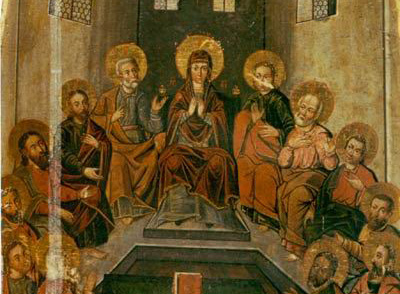
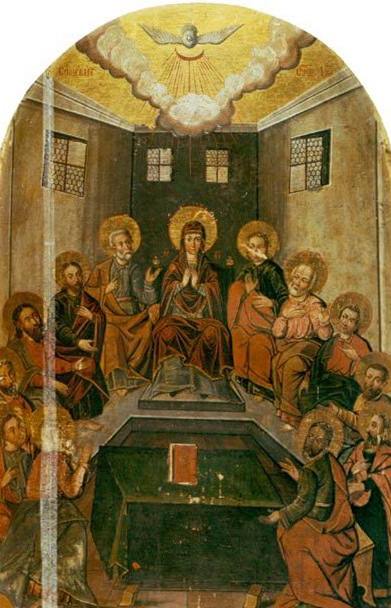
Wisdom breathes life into her children and admonishes the one who seeks her…. She puts him to the test; Fear and dread she brings upon him and tries him with her discipline until she try him by her laws and trust his soul. Then she comes back to bring him happiness and reveal her secrets to them and she will heap upon him treasures of knowledge and an understanding of justice. But if he fails her, she will abandon him and deliver him into the hands of despoilers. (Sirach 4:11, 18-19)

There is in this text great reminder and admonishment for all of us about the decisions that lay before us. Either we will heed God’s ways, and walk in the life of his holy wisdom, or our life is all too easily dissipated and despoiled. And we shall see how this is so in a moment.

But first let us consider that to embrace holy Wisdom is to see all things as pointing to, and related to God himself. It is to see created things not as gods or idols, but as things pointing to God who is the giver of every good and perfect gift.

Holy wisdom counsels moderation, for the gift is only the symbol pointing to the greater reality. The gift alone cannot supply the fuller reality to which it points.

To reject this holy Wisdom leads to dissipation because it mistakes the sign for the reality and thinks that the gift is the giver. Dissipation and dissolution comes because one embarks on a foolish and futile (and very costly) attempt to make the gift satisfy, as if it were God and giver of the gift. But the gift can never supply what it is merely pointing to, namely the Giver, and the Giver is always so much greater than the gift. And only the Giver can really satisfy, not the mere gift, no matter how great the quantity we try to heap up.

Holy wisdom knows and appreciates this. And, at the end of the day Wisdom saves us a lot of money and from all sorts of dissipation. Fleshly foolishness rejects Wisdom and indulges gifts, even wildly so, well beyond what is reasonable, and this is where dissipation enters in. Let us consider some examples.

Greed – By definition, greed is the insatiable desire for more. On account of it, we are never satisfied, no matter the quantities, no matter how much we heap up, it is never enough, never. And the greedy abandon the moderation that comes with holy Wisdom, a moderation that enjoys the gifts, but look at the giver for a deeper and truer fulfillment.

Abandoning reasonable moderation and the call to be grateful for the gifts that one does have, the greedy person suffers dissipation. The desire for more becomes increasingly insatiable, they will often incur huge debts, spending increasingly, even wildly, on the things they cannot really afford and do not really even need or use. As such their wealth is dissipated the often find themselves in debt and soon enough in bankruptcy court.

This is because they have mistaken the gift for the giver, thinking that mere gifts can fill the God-sized hole in their hearts, greed takes hold of them, and makes their desire for more increasingly insatiable.

Abandoning holy wisdom, the text is fulfilled in them that says they are delivered into the hands of despoilers.

Gluttony – Food is a funny thing. We often think if we just get a good amount of food, our hunger will go away. But instead there is a strange pattern regarding food that the more we get, the more we seem to want.

After a series of large and immoderate meals, our appetite does not decrease, it increases. As one gains weight, the desire for food does not diminish, it grows. Too soon, things go off the hook, weight continues to increase and our health is dissipated. With extra weight and obesity come endless health problems: cholesterol, high blood pressure, diabetes, sleep apnea, asthma, and on and on.

Holy wisdom would have us enjoy the food God gives us, but to remember that it is the gift, it is not God. It is on account of gluttony that we too easily fulfill the text of St. Paul that says Their God is their belly (Phil 3:19). And losing sight of the holy wisdom, there is fulfilled in us as our health dissipates, We are delivered into the hands of despoilers.

Lust too can have a wild, “off the hook” quality. Sexuality is very great gift from God but it has his proper place in marriage and must be governed by moderation and reason. Abandoning his holy wisdom many are surely handed over to their despoilers.

On account of wild and uncontrolled lust many lives are dissipated, and destroyed. So many great tragedies come from lust despoiling the lives of vast numbers by things such as: sexually transmitted diseases, Aids, teenage pregnancy, single motherhood, abortion, absent fathers, juvenile delinquency, poverty, and ruined marriages.

Uncontrolled lust Is also powerfully evident in the great tragedy of Internet pornography addiction today. What begins as looking at reasonably normal but sinful pictures, ignites a lust that becomes increasingly dissatisfied with the merely normal and it sinks rather quickly to levels of deeper depravity and debasement. For many, as their lush grows increasingly wild, they begin to look at pictures and acts almost too awful to describe. Many married men carried off by this begin to lose interest in normal relations with their wife, who will not simply conform to or participate in their increasingly debased notions of sexual intimacy. As lust grows increasingly out-of-control some hook up with prostitutes. Others begin to visit illegal sites and eventually the FBI shows at the door. Arrest and jail are in their future. Yet even knowing these dangers and having been warned many cannot stop, so wild has their lust become.

Abandoning holy wisdom in which sex is a gift from God for the particular context of marriage, and for the particular purpose of loving procreation, lust indulged, and Wisdom, having been forsaken, many are delivered over dissipation, disease and countless other costly complications.

Other examples could be given, for example the way alcohol and drugs and other things destroy people’s lives. but allow these examples to suffice to show that these ancient biblical texts are not so abstract after all. They speak to us of a reality that is all too easily experienced if we do not hear the admonition of holy wisdom.

The gifts of God are not gods, they only point to God. God is the real point. Holy Wisdom teaches us and counsels moderation, counsels that we enjoy the gifts of God and then turn to God and gratitude with joy and satisfaction for what he is given, counsels and admonishes that we turn to God in worshipful thanks.

If we will heed this wisdom, happiness will be ours, as will joy, serenity and satisfaction. But if we reject this wisdom and insist on making the gift the god, we will be handed over to our despoilers.

Distinguishing Knowledge from Wisdom and Understanding

052113In this post I am trying to continue our celebration of the lost “Octave” of Pentecost. Today I want to consider three gifts of the Holy Spirit.

As you may recall, there are seven Gifts of the Holy Spirit: Wisdom, Understanding, Knowledge, Counsel, Piety, Fortitude and Fear of the Lord. Most Catholics cannot define them well in any sort of articulate way. This is due to poor catechesis but also to the fact that modern English has tended to use several of these terms interchangeably, almost as synonyms, though they are distinct theologically.

There are also secular usages of these terms that have no correspondence to how we mean them theologically. To indicate intellectual understanding of something, a person in modern English may say, “I know” or they may say “I understand.” To most modern Anglophones this is a distinction without a difference. To speak of someone as being of great intelligence, a contemporary English speaker might say, “He has great understanding” or “He is a wise man” or yet again, “He is possessed of great knowledge.” Here too most would not think of these as dramatically different sentences. There are shades of meaning in calling a man wise versus smart or knowledgeable but most modern speakers are losing what those shades of difference actually are.

For all these reasons (poor catechesis, secular misuse and evolving language) Catholics have a hard time distinguishing between Knowledge, Wisdom and Understanding.

Let’s try to repair some of the damage.

First, some distinctions:

  1. We are discussing here the Gifts of the Holy Spirit. As such they are given to the baptized and strengthened in confirmed. They exist only in the Christian per se. A man may be said to be knowledgeable in the repair of a car or in the stock market, but we are not referring to the Gift of Knowledge given by the Holy Spirit in this case, only to worldly knowledge. A woman may be said to be wise in the ways of the world. But again, we are not referring to the Gift of Wisdom given by the Holy Spirit when we speak in this way. A man may be said to understand Spanish, but we are not speaking of the Gift of Understanding given by the Holy Spirit when we speak in this way. Hence, there are worldly counterparts to these words which do not conform to the theological meaning of these realities.
  2. The Gifts of the Holy Spirit are supernatural and thus they transcend the ordinary powers of the soul or the human person in general. They are infused by God and no soul could ever acquire them on its own. In these senses they are different from the virtues which can be acquired naturally and can be moved or actuated by man himself. In the case of the Gifts, God is the unique mover and cause. Man is only the instrumental cause. Thus the acts which proceed from the gifts are materially human but formally divine just as the melody an artist plays on the harp is materially from the harp but formally from the musician who plays it. That the soul reacts or responds preserves freedom and merit but the soul merely seconds the divine action and can not take the initiative.
  3. Wisdom and knowledge are distinguished according to their objects. Wisdom pertains to God and the things of God. Knowledge pertains to created things and how they relate to our final end.
  4. Understanding too, meant here as the Gift of Understanding has a rather specific focus: It penetrates revealed truth to grasp its fullest meaning. Hence one may understand Spanish, but we are not referring to the Gift of Understanding in speaking this way. To grasp the purpose, meaning and implications of the redemption wrought by Jesus Christ would be a more proper usage of this word in terms of the Gift of Understanding.
  5. I will also add that there is not a little controversy even among theologians and different schools of thought in Catholic tradition as to some of the specifics listed here. Some modern theologians for example do not fully concur with the Thomistic synthesis presented here and argue that certain insights are lost by a 12th Century context. All well and good, and readers are free to add what they might like, even multiply and subtract but PLEASE don’t divide. I find the Thomistic synthesis most careful and helpful, but that does not mean that other insights are of no benefit.

OK, How about some Definitions. Incidentally, these definitions are gleaned from the Summa and also substantially from Fr. Antonio Royo Marin O.P. in his Book, The Great Unknown, The Holy Ghost and His Gifts

1. The Gift of Knowledge is a supernatural habit infused by God through which the human intellect, under the illuminating action of the Holy Spirit, judges rightly concerning created things as ordained to the supernatural end.

Notice that it is a habit. That is, it does not come and go. But like all habits, it can and does grow in depth and breadth. Grace builds on nature, and as one matures and gains experience, the Gift can and does make use of these human qualities. Because the gift is supernatural it is not a matter of human or philosophical knowledge deduced by natural reason. In other words you can’t simply go to school to get this gift. However, it is not unrelated to human development which school can provide. But this is not its origin. There are plenty of learned and humanly smart people who do not manifest the Gift of Knowledge. This can be due to a lack of faith or to resistance caused by weak faith and sin.

By the Gift of Knowledge the human intellect apprehends and judges created things by a certain divine instinct. The individual does not proceed by laborious reasoning but judges rightly concerning all created things by a kind of superior gift that gives an intuitive impulse. I have underlined “created things” because this essentially distinguishes knowledge from wisdom (which pertains to Divine, rather than created things).

Notice that the Gift is especially oriented to created things insofar as they pertain to our ultimate end. Now created things tend either toward our supernatural end or away from it, and the Gift of Knowledge helps us to judge rightly in this respect.

Looked at another way, the Gift of Knowledge helps us to apply the teachings of our faith to the living of daily life, the proper usage of material creation, knowing the proper utility and value of things as well as their dangers and misuses. By it we are able to determine well what conforms to faith and what does not. We are able to make use of creation in a proper way with necessary detachment and proper appreciation for what is truly good.

2. The Gift of Wisdom is a supernatural habit, inseparable from charity, by which we judge rightly concerning God and divine things under the special instinct of the Holy Spirit who makes us taste these things by a certain intuition and sympathy. In other words The truths of God begin to resonate with us and we begin to instinctively love what God loves, will what God wills. What he is and wills makes great sense to us. His teachings clarify and make sense.

We see things increasingly from God’s point of view through this supernatural gift. The thinking of the world increasingly seems as folly and appreciation of God’s Wisdom magnifies. More and more thorough this gift the human person desires to be in union only with God and His ways. By this gift the world is defeated and its folly clearly perceived.

Our love of neighbor is also perfected by it since the Gift of Wisdom helps us to see and thus love others more and more as God sees and loves them.

Since this is a gift, it cannot be learned or acquired. But, as with the Gift of Knowledge, one’s study of Scripture and Tradition can help dispose one for the growth of the Gift which can and does make use of what is humanly supplied. Grace builds on nature and perfects it.

3. The Gift of Understanding is a supernatural habit, infused by God with sanctifying Grace, by which the human intellect, under the illuminating action of the Holy Spirit, is made apt for a penetrating intuition of revealed truths, and even of natural truths so far as they are related to the supernatural end. It enables the believer to penetrate into the depths of revealed truth and deduce later by discursive thinking the conclusions implicit conclusions contained in these truths.

It discloses the hidden meaning of Sacred Scripture. It reveals to us the spiritual realities that are under sensible realities and so that the smallest religious ceremonies carry tremendous significance.

It makes us see causes through their effects simply and intuitively. This gives a profound appreciation for God’s providence.

This song says, “Take My Life and Let it Be Consecrated Lord to Thee.” It goes on to consecrate the whole person to Christ, including the intellect and will. As such it is an invitation for the Seven Gifts to come fully alive.

What is the Christian Understanding of Freedom and how is it different from the World’s fake freedom?

063014One of the terribly destructive philosophies is a false notion of freedom. The sinful world, going all the way back to Satan’s deceit in the garden, thinks of freedom as being able to do whatever I please. In effect those who hold this, flaunt their false notion of freedom saying in effect, “I will do what I want to do, and I will decide if it is right or wrong. No one will tell me what to do.” It is freedom in the abstract, freedom for its own sake, rather than for the sake of being able to do what is right.

That this notion of freedom is false is evident from its fruits. For although many, in modern times, claim to march under the banner of freedom from being told what to do, it becomes clear that many of them end up it a terrible state of increasing slavery and bondage.

For this era when a false notion of freedom is exulted is also an era of increasing addiction to alcohol, drugs, pornography, sex, and a general lack of self control. And with greed and materialism, whatever we have is never enough. There is thus a bondage to things, a kind of incapacity to live without endless numbers of things and creature comforts. Therefore we also see increasing bondage to credit, both personally and nationally. We simply “cannot” stop our runaway spending. There is also an increasing lack of ability to make and keep commitments and many feel “compelled” to divorce, leave the priesthood and religious life.

None of this shouts the freedom that so many boast of. Rather there is evident, bondage, inability, compulsion, addiction, and an out of control quality to modern life.

You will thus know by its fruits that false freedom is not true freedom. It masquerades in the “sheep’s” clothing of liberty, but underneath it is the ravenous wolf of bondage. Many cry “Liberty!” when they really mean “libertine” and “licentious.” They are headed straight for bondage. St. Augustine said,

For of a perverse will, was a lust made; and a lust served, became custom; and custom not resisted, became necessity. (Confessions 8.5)

The Catechism also says,

The more one does what is good, the freer one becomes. There is no true freedom except in the service of what is good and just. The choice to disobey and do evil is an abuse of freedom and leads to “the slavery of sin.” (CCC # 1733).

And thus we arrive at the definition of true freedom which is “the capacity to obey God.”

And what are the fruits of true freedom? An increasing liberation from the power of sin, the increasing capacity to do what is right and just by the power of God. True freedom brings greater self control, the ability to moderate one’s desires and have them submitted to right reason. True freedom brings serenity, for one’s life is in greater balance and harmony.

By true freedom, the innumerable sorrows of false freedom listed above are largely avoided and one’s life is simpler, more focused, and one enjoys the results of a disciplined and reasonable life. Sorrows and suffering are not eliminated but are diminished for many of their sources in excess, addiction and compulsion are removed. True freedom ushers in, by God’s power, the life that Jesus Christ died and rose to give us.

So what do you want, the fake freedom of the world, or the glorious freedom of the children of God? (Rom 8:21)

Chipping away everything that is not of God or You – A Meditation on God as Sculptor

051413Michelangelo was asked the question how he could make a beautiful sculpture like his “Moses” out of a large block of marble. He famously answered that he simply began and chipped away everything that wasn’t Moses.

And this is a paradigm for us, into senses.

Clearly for us, the Lord must chip away everything in us which is not Jesus. Yes, everything that is not of the Lord must go. St. Paul said, “I live, no not I, Christ lives in me! (Gal 2:20). And thus, the Lord chips away at all in us that is not of him that we may become the image of God in Christ.

And yet, there is also very personal sense too, in which not only must we become Christ, but we must also authentically become our very selves. Each of us is called to reflect Christ, but the Lord has made us, as individuals, to reflect something particular about him in a unique way. You and I therefore must become the man or the woman that God made us to be.

Every now and again I might think, as do you, “Would that I were more like St. John Vianney, or St. Francis Xavier, and so forth.” But to this lament, the Lord may likely respond, “I already have a St. John Vianney, I have a Francis Xavier, what I need is you.

And thus, for me, the Lord must chip away me everything that is not Charles Pope. For He made me, and you as well, to be a particular reflection of his glory. Yes, ultimately, we are all called to reflect Christ, but in the particular way that only we can.

Part of our journey is to discover our true self, as God has made us to be, and become that true self. We must allow the Lord to Chip away everything that is is not of God, or of our very selves as he is made us to be.

This is not an invitation to strange idiosyncrasies, or a hyper-individualized version of the truth. No, God does not speak out of both sides of his mouth, and the truth about us will ultimately always be subsumed into the fundamental truth of who Jesus is, who he has created the human person to be in his likeness. And thus, as the Lord sculpts, he is not doing abstract art. Rather, he is working in the context of his revealed truth, but also realizing it in a very particular way in each one of us, with particular some particular reference to the whole truth.

A few final thoughts about carving and chipping away.

First, it is slow and painstaking. Great care and thoughtfulness is required of the artist. And so it is with us who are being sculpted by the Lord. We must learn to be patient and allow him to do his work carefully and creatively. Too often we are impatient. But true art requires that the artist step back and look, work and then reflect. Give the Lord the time and authority he needs.

Secondly, there is a kind of pain in sculpting and it is bewildering. Sculpting and shipping away is difficult, even painful. At the time we may not know or appreciate what the Lord is doing and we all may also worry as to what our final appearance will actually be. But no more than the stone can claim greater wisdom than the sculptor, should we claim a greater wisdom than God who sculpts us.

The Lord admonishes,

Woe to those who quarrel with their Maker, those who are nothing but potsherds among the potsherds on the ground. Does the clay say to the potter, ‘What are you making?’ Does your work say, ‘The potter has no hands’? Woe to the one who says to a father, ‘What have you begotten?’ or to a mother, ‘What have you brought to birth? “This is what the Lord says—the Holy One of Israel, and its Maker: Concerning things to come, do you question me about my children, or give me orders about the work of my hands? It is I who made the earth and created mankind on it. (Isaiah 45:9-12)

Somewhere, and somehow we must allow the Lord to do his work. In the end, everything that is not Jesus must be chipped away, and everything that is not our very self which God has made us to be must be chipped away.

In the end, God must be able to say to you I simply chipped away everything that was not of my Son, and everything that was not of you, as I made you to be from all eternity.

Let him work.

A Little Primer on Charisms as seen in an animated video

"Taisten-Tabernakelbildstock 04"  by Wolfgang Sauber - Own work.  Licensed under  CC BY-SA 3.0 via Wikimedia Commons
“Taisten-Tabernakelbildstock 04” by Wolfgang Sauber – Own work. Licensed under CC BY-SA 3.0 via Wikimedia Commons

The video below illustrates a charism gone wrong. More on the video in a moment, but first, let us consider what a charism is and why it is important to properly understand it.

Charisms are a type of grace which God gives to individuals for ministry, for service.  As such, they are not so much given to the individual for the individual’s sake, but for the sake of others. St. Thomas calls the charisms  gratia gratis data. (grace freely given). These graces given “freely” in the sense that they are not given to the individual on account of some merit, or as some personal reward that God bestows. Rather, God bestows these gifts “freely” on certain individuals, for the sake of the wider community, and for that benefit, rather than because the individual receiving the grace particularly deserves it.

Therefore, some receive the gift to preach, some to teach, some receive great musical or artistic skills. Still others have a kind of genius of some technical expertise, some are magnificent problem solvers, others are great counselors, and so forth. Individuals receive gifts such as these for the sake of the Church, and even the wider community. And again,  it is fundamentally for the sake of others that God bestows these gifts on individuals.

It is certainly true, that if an individual uses their charisms, their gifts, well and generously, they can be the path to holiness. But frankly, not everyone with charisms does this well. And God does not necessarily remove the gift on account of that. This is because, as we have emphasized, he gives it primarily for the sake of others.

Most of us have had the experience of perhaps being greatly blessed by the gifts that someone had, only to discover later that they were real scoundrels! This does not deny the fact that they had the gift. Only they did not apparently benefit them personally. Just because someone sings well does not mean they are a saint. The same is true for preaching, teaching etc.

Those who have charisms, and we all have them, must be careful not to become egotistical, and arrogant about them. They are given by God freely, not because we are particularly deserving, or somehow better than others. If anything, the presence of a charism should be a source of humility for us. And it should make us realize that we have the gift for the sake of others, not for our own glory.

And realizing this, we must accept the implication of generously using our gifts for the sake of the others, for whom they are ultimately intended. In so doing, we respect the fact that the gift does not belong to us, but ultimately to God. And thus we must use the gift as God intended, namely for others, not for our own glory.

The charisms are distinct from sanctifying grace (gratia gratum faciens) which is given to us for own sake. Sanctifying Grace is the grace that God gives us to make us pleasing to him, to make us holy. But as we have already seen, the charisms  and have a rather different intention and purpose.

And now to the video. As a video opens we see a violinist, in the town square. He seems a bit down on his luck, and begins to play, hoping to get a few coins.

Frankly, his talent is only average, but it is a talent, it is a charism. It is not utterly wrong for those with charisms to in some way benefit financially from them. Scripture says elsewhere, the laborer deserves his wage (1 Tim 5:18). And in that passage, St. Paul with speaking of preachers, and preaching is certainly a charism. So our violinist is using his gift, hoping perhaps for a little extra money.

Things get dark very quickly however. A sinister figure, quite clearly the devil, enters the scene and tempts the man to gravely misunderstand his charism.

In effect, the devil, tempts the man’s vanity (vainglory), tempts the violinist to think that his gift is really only for his glory, for his self aggrandizement. He tempts the violinist to think that his charism exists only for himself, and his own glory, rather than for the good and building up of others.

He offers our average violinist a potion that will make him a great virtuoso, and he will have fame and glory all for his own sake rather than for others. Yes, his charism will become all about him, and him alone.

The violinist eagerly takes the potion and drinks it down. In so doing, he has failed to read the warning on the bottle that says of indulging his fantasy and his egocentric dream: “You will have to pay for it later.”

And as he drinks, suddenly his dream is realized. He is on a stage, all by himself, and he is a virtuoso. His brief playing brings a thunderous applause.

It is interesting, he’s an absolute soloist. He is not even part of a larger Symphony Orchestra with a solo part, he is all alone on stage.  His glory is shared with no one. It really is all about him.

Quickly, his sample dream is over, and he is presented again by the devil with a chance for more personal glory. He eagerly grasps the potion, once again ignoring the warning that he will have to pay for it, and eagerly drinks it.

The video ends with the man all alone in the desert with his violin. He can play all he wants, but there is no one to hear him. He’s quite alone, no one will applaud.

And thus the full payment is exacted when we live only for ourselves, and care only for our own glory. And what is the payment? We end up quite alone When we live only for ourselves, we ultimately get what we want, only ourselves. We end up in a lonely, isolated hell. The payment, is to get exactly what we want. And getting what we want, rather than what God wants is hell.

God gives us charisms for the sake of others. If we understand them properly, we will give him the glory, and use them to relate to others, to bless others, to live for and with others also enjoying their charisms. And if we do this, our charisms, given to us not for our sake, can interact with the sanctifying grace that is given to us for our own sake. But if we do not use them this way, they can lead to our downfall.

Quite a little video actually one the powerfully illustrates it in the end, Hell is to get what we want, rather than what God wants. And one path to Hell is to live only for our own glory, and what want we will get. But the only problem is, we will go to a place filled with a lot of other egocentric people. And the “kingdom” we inherit, will be an awfully tiny kingdom, the kingdom of one, the kingdom of our own sorry, selfish self.

The video ends in hell, and this sort of hell is very lonely place.