Many of us have heard expressed the formulaic regret by someone declining to attend an event: “Though I can’t be there, I’ll be there with you in spirit!” Two reactions usually occur to us who receive such a reply:
1 That’s unfortunate.
2 Whatever the phrase “there in spirit” means, they probably won’t be present in spirit either.
We human beings are body and soul. It is our dignity to combine the two orders of creation: matter and spirit. Angels are pure spirit, animals are matter, but the human person gloriously unites both orders in our one person.
For the human person, physical presence is important because we are not disembodied energy and while absences are sometimes necessary, it is usually thought of as less than ideal when we “phone it in” or go virtual.
Many people forget that the word “virtual” originally meant, “sort of like, but not really.” So, we might say, “He’s virtually a genius.” This is a form of hyperbole where we speak of his qualities that are like a genius though he’s not actually one in the full sense of the word. Lately “virtual” has simply come to mean “electronic” or “online” communication. But we ought not lose the original insight that computer (“zoom”) meetings are sort of like meetings but not really. They lack important aspects and subtleties when people share a room together and are physically present. There’s usually more buy-in in actual meetings. Interaction is livelier and people can’t get away with some of the multitasking going on in the background of virtual meetings. There is also something about being away from your usual desk or location with all its distractions and being in a room that is both neutral and designed for meetings.
To be sure, some meetings work well online, especially those that are brief and to the point. Travel time is often saved as well. Zoom and other platforms have been a great help in this time of plague. But recent studies have shown that online classes are terrible for students, especially the younger ones. Others too are wearied by all the online time that has been asked of us. And while I have given many online talks in recent pandemic months, I miss the dynamic of being in the room with people where I draw energy and get subtle feedback by their postures and expressions. Obviously masks also hinder this feedback greatly.
But of all meetings where physical presence is most required, the Sacred Liturgy is most important. One cannot receive sacraments virtually. You simply have to be there. How discouraging it was to hear the Governor of Virginia seek to school religious leaders and their congregants recently on where and how they should experience God:
Worship outside or worship online is still worship…. You don’t have to sit in the church pew for God to hear your prayers,” ….Is it the worship or the building? For me, God is wherever you are. [*]
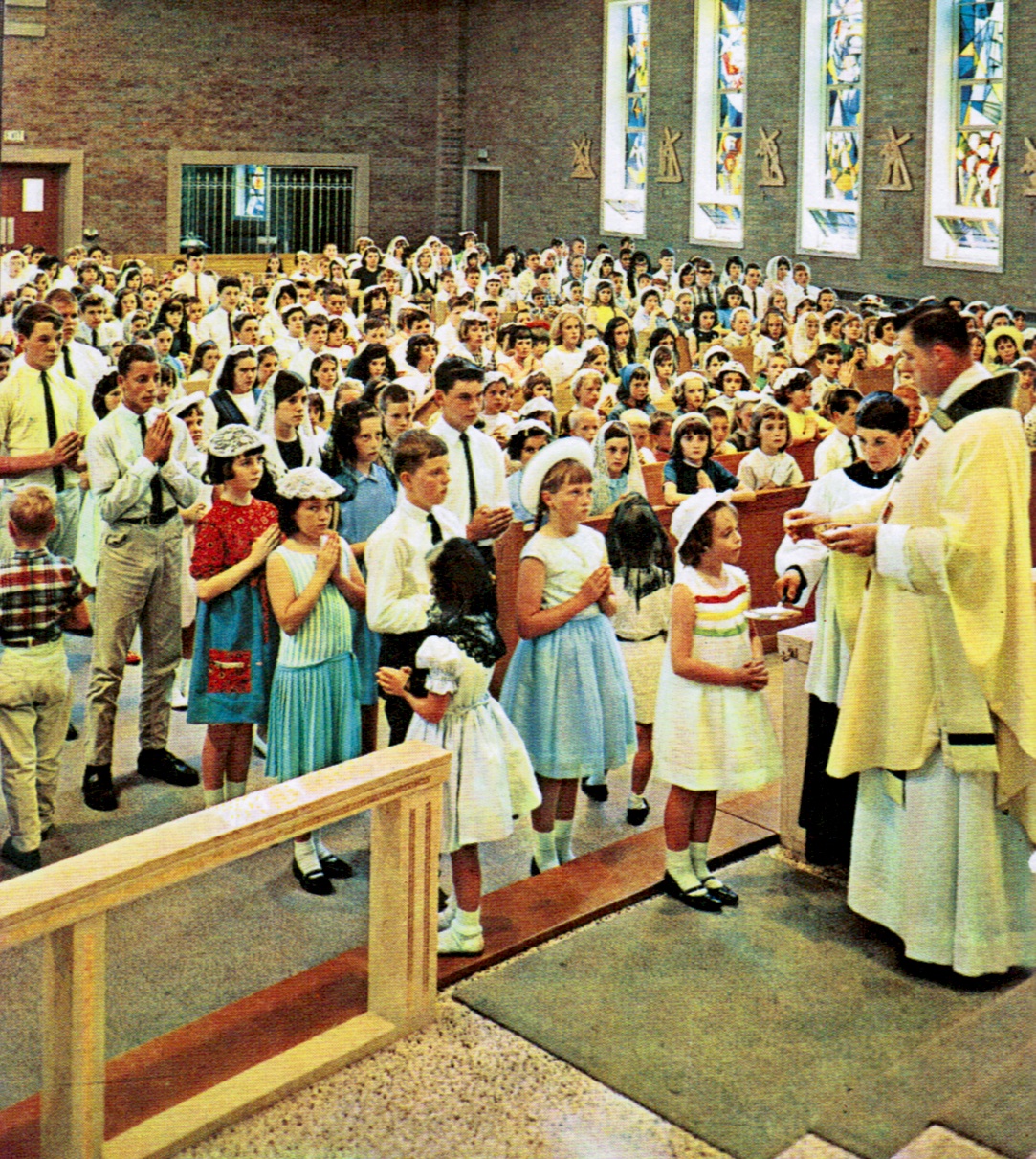
It is more than annoying for this radical pro-choice governor to play theologian and liturgist. He certainly shows little knowledge when it comes to Catholic Sacraments, all of which require physical presence to be conferred. You can’t get baptized online, receive Holy Communion online, or even absolution. Physical presence is required. All the sacraments touch the body in some way, whether through the laying on of hands, pouring of water, anointing with oil, or reception of Communion. The Christian faith is incarnational. Christ did not come among us as a ghost, a meme, or a Zoom host. He does not simply livestream and is not merely an idea. The Catholic Mass and Sacraments touch and interact with the body. Presence is crucial.
Even for most Protestants whose belief in sacraments is minimal and whose services are more apt for livestreaming, they still see fellowship as important. You can’t get real fellowship online, you just have to be there for one another.
Christ has a mystical body and it is essential that the members of his Body gather every Sunday: Christ the head, and his members together. In the Catholic Liturgy we experience the presence of Christ in the faithful gathered, and in the priest through whom Christ ministers. We hear his voice in the Word proclaimed and are fed by his Body and Blood in the Holy Eucharist.
I do not expect the Governor to know all this. But, all the more reason for him to act with care and not speak so publicly of things he knows not. Catholics and other Christians are not frivolous in our need to gather. Our souls are just as important, if not more so, than our bodies. Sacraments and Sacred worship ARE essential in our lives, despite what some other governors and mayors have asserted. We should be expected to engage in prudent precautions like anyone who goes anywhere else. But government officials should not under-estimate our need to assemble for Sacred Worship even if they do not personally understand or share our beliefs. Our beliefs and practices far outdate this pandemic, this Country, and this culture. We will be here when all these things pass, as worldly things do. But the Word of the Lord remains forever.