Here is an excellent video produced about the most recent ordinations for the Archdiocese of NY. The priesthood is truly a gift from God!
Have you felt called to the priesthood? The Archdiocese of Washington will be holding a discernment dinner for Catholic men college age to their forties on Sunday Sept. 20th from 4-8 pm at St. Stephen Martyr Church in Washington, DC. Cardinal McCarrick will offer Mass and the evening also includes dinner, a presentation on the priesthood and time to meet priests, seminarians and other men interested in the priesthood from the area. Contact Msgr. Rob Panke, Director of Priest Vocations at Vocations.adw.org for more information and to register.
“The priesthood is the love of the heart of Jesus Christ” – St. John Vianney
Celebrate the year for priests consider the priesthood
Instead of allowing my Facebook profile to exist peaceably in cyberspace, I decided to express myself in ways I hadn’t before.
One day I posted an article that supported marriage between one man and one woman. A Facebook-friend with whom I went to elementary school commented on my link in four paragraphs calling the viewpoint “ludicrous”.
Another day a Facebook-friend posted a status calling the Duggar family “insane”. I commented on her status by presenting the possibility that the Duggars (and other large families) may actually be loving, courageous, and selfless. This was followed by comments from her friends agreeing with the original statement; “Crazy. Crazy. Crazy.”
I honestly feared these two might un-friend me.
A recent article in the Washington Post addressed these fears about expressing ourselves on Facebook, particularly in the “Religious Views” portion of the profile.
“I couldn’t help thinking how others would judge me,” said one local Catholic young adult.
My own profile reads Evangelical Orthodox Roman Catholic. I am a Catholic of the Roman rite; I accept the Magesterium of the Church; and my heart is evangelical. Even more than these four adjectives, I think about my statuses, comments, and events which are so publicly displayed.
“The new technologies have also opened the way for dialogue between people from different countries, cultures and religions. The new digital arena, the so-called cyberspace, allows them to encounter and to know each other’s traditions and values.”
In order start a dialogue, we first have to have the confidence to express our values openly…even if we do risk being un-friended.
Therefore, since we have such hope, we act very boldly. 2 Cor 3:12
We have discussed the “culture of death” numerous times before on this blog. This description of Western Culture was used by Pope John Paul II. Fundamentally it refers to the fact that in the modern, western world, especially America death is incresingly seen as a “solution” to problems. Has a child come along at an inconvenient time? Perhaps the baby has been diagnosed with defects perhaps there is some other wrenching problem regarding the pregnancy such as the poverty of the mother. The solution? Abort the baby. Has a criminal committed heinous acts? Kill him through capital punishment. Is an elderly or sick person suffering from a reduced quality of life? Perhaps they are bedridden or experiencing the pains of the dying process. Solution? Euthanize them. Does raising children and dealing with a larger family cause hardships: economic and emotional? Do children cause stress? Simple, contracept so that they don’t exist in the first place. So you see, the death or non-existence of human beings is increasingly the “solution” to problems and this is what is meant by the “culture of death.”
This whole mindset has even reached our entertainment industry which portrays the culture of death in an almost cartoonish way. Notice the basic scenario of most every action or adventure movie:
As the movie begins a villainous individual or group commits some heinous act of injustice. But soon enough “our hero” steps on the scene and commits to resolve this terrible threat and correct the injustice. After about 90 minutes of killing people, breaking things, blowing up buildings and engaging in hair-raising car chases that usually end in fiery crashes our hero triumphs overwhelmingly, restores justice and walks off the set with “the girl” on his arm, burning buildings in the background….fade to credits.
And we love this sort of stuff. At one level it is very entertaining. But it IS a cartoon. In real life villains and heroes are not as easily distinguished (though I do NOT mean to say that there is no such thing as right and wrong). Likewise, in real life blowing up buildings, car chases etc. endanger lives and take serious tolls. Real people do not walk away from high speed car crashes like they do in the movies. If they survive at all it takes months to recuperate from the damage inflicted on a real human body. In real life people who get killed, even if they are villains have people who mourn their loss. The true toll of all this violence is far greater in real life.
Ultimately it is the culture of death on display in cartoonish fashion. It is a parody of real attitudes in western culture. But the message is clear enough, cartoonish though it be: the solution to injustice is violence, mayhem and death. I do not deny that sometimes lethal force must be used to protect society from evil but it is always a last recourse and a moment for deep concern and moral reflection.
“Oh come on Father lighten up!….” OK I admit it is usually “good fun” and most don’t take it seriously. But my central point is that we should be careful as to the messages we send and receive even in diversionary entertainment. It says something about us that we are entertained by this sort of stuff. We ought at least to do a reality check as to this. Every now and then we do well to examine our culture and its premises. Is this movie teaching what Christ did? Just a thought.
Here is a funny video that well illustrates the cartoonish nature of adventure/action movies. It’s really quite funny. It’s entitled “Cool Guys Don’t Look at Explosions, They Blow Things Up and Then Walk Away.” Just a word of warning there are two slightly vulgar expressions (nothing horrible) used at the very beginning of the video but it’s part of the caricature intended. Otherwise, enjoy this rather silly video that parodies one aspect of the “Culture of Death.”
I was at a rally today sponsored by the Stand4 MarriageDC.com Coalition. I also witnessed the leaders of this coaltion file at the DC Board of Elections a ballot initative on the issue of same sex “marriage.” The Initiative, if approved would place on the ballot for a vote by all the citizens of the District of Columbia the following delcaration: “Only marriage between a man and woman is valid or recognized in the District of Columbia.”
What is at stake here is the definition of Marriage in the District and who gets to say what that is. Some months ago the DC City Council decided, without holding hearings, to recognize same-sex unions from other jurisdictions. Currently, there are plans by David Catania and others on the Council to enact further legislation to recognize same-sex unions contracted right here in DC.
The definition of Marriage is NOT something that should be left to 13 people decide. This is too important for such limited input. It deserves to be brought before all the voters of this city who have a stake in what is determined. Marriage is not some bureaucratic or merely legal entity, it is a pillar of civilization. The arrogance of the City Council in refusing even to hold public hearings before the last vote is manifestly undemocratic. It seems clear that advocates of same-sex unions have little interest in hearing from the voters on this critical issue.
But you ought to pay careful attention to this issue for its implications are sweeping. At stake is the definition of marriage as well as the democratic process. Will marriage be simply defined by legislators in closed door session, by blunt judicial fiats or willit be decided by the citizens of the District of Columbia after thoughtful discussion and preparation for a vote? These are significant issues and you and I ought to pay attention and participate in the process. Learn more of this at www.Marriagemattersdc.org
I would like to conclude by quoting from a letter of Archbishop Wuerl who reminded the priests of this Archdiocese that we, as a Church have the duty to speak and teach clearly on this matter:
The definition of marriage originates in the created order and comes from the natural law. At the core of the Church’s teaching on family life is God’s plan for the human race set forth so majestically in the Book of Genesis. The original plan — still operative today — calls for the man and woman to come together and form a communion of mutual support. “It is not good for the man to be alone. I will make a suitable partner for him” (Gen 2:18). This partnership is to be a permanent one. This teaching was confirmed explicitly by Jesus himself: “…Therefore, what God has joined together, no human being must separate” (Matt 19:6). As custodian of these truths, the Church is compelled to preach this to the world.
In the video below Fr. Robert Barron ponders the passing of Edward Kennedy. He recalls a time, in an era far different from our own that Ted Kennedy was pro-life and that he gave one of the finer defenses for the rights of the unborn child that has been articulated. Here is that quote and then follows the video.
Sen. Edward Kennedy, [D-Mass.], in a letter to a constituent, August 3, 1971 “While the deep concern of a woman bearing an unwanted child merits consideration and sympathy, it is my personal feeling that the legalization of abortion on demand is not in accordance with the value which our civilization places on human life. Wanted or unwanted, I believe that human life, even at its earliest stages, has certain rights which must be recognized — the right to be born, the right to love, the right to grown old.
“I share the confidence of those who feel that America is working to care for its unwanted as well as wanted children, protecting particularly those who cannot protect themselves. I also share the opinions of those who do not accept abortion as a response to our society’s problems — an inadequate welfare system, unsatisfactory job training programs, and insufficient financial support for all its citizens.
“When history looks back to this era it should recognize this generation as one which cared about human beings enough to halt the practice of war, to provide a decent living for every family and to fulfill its responsibility to its children from the very moment of conception.”
For the record, Al Gore, Jesse Jackson, Bill Clinton and Richard Gephardt were all in the pro-life camp once upon a time in a galaxy far far away. You can read some pro-life quotes from them HERE
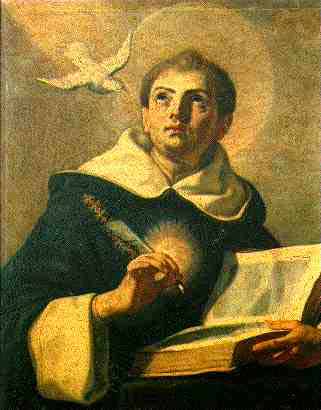
Last week I began auditing a course at Dominican House of Studies here in Washington, DC. During my first class, the professor was speaking on the unity in sacred doctrine of speculative wisdom and practical wisdom as discussed by St. Thomas Aquinas in Question 1 of the First Part of Summa Theologica.
My professor’s first example of a unity of speculative and practical wisdom was of someone we might describe as “crunchy”. Why do we call him “crunchy”? Because he eats granola. Why does he eat granola? Because he doesn’t eat meat. Why doesn’t he eat meat? Because he adheres to a philosophy where killing animals may cause ill effect in this life or the next. So in fact, according to this man’s beliefs, he is acting very honorably because his speculative and practical wisdom are united.
I thought too of my Muslim roommate during my freshman year of college. I found her to be the most honorable person I met that year. During the feast of Ramadan, she would wake up before the sun to pray, eat, brush her teeth, then go back to bed. Why? Because she was fasting from dawn to sunset. Why? Because she was purifying herself. Why? To worship Allah without impurity.
This lesson made me think about how Catholics act and why. Have you ever had someone ask you, why do you cross yourself? Why do you tell your sins to a priest? Why do you pray in front of abortion clinics? Why do you decline offers to “come back to my place”? Why do you pray the rosary?
These are some examples of how speculative and practical wisdom are united in our Catholic faith. By performing certain acts and knowing why we do them, we will be a witness to Christ and his Church. How do your actions reflect your Catholic faith?
Be doers of the word and not hearers only. James 1:22
For reference: Why Do Catholics Do That? by Kevin Orlin Johnson
Providentia – Providebit (God has provided – God will provide)
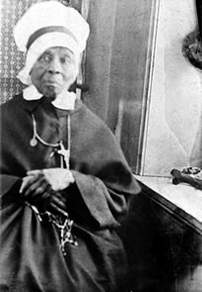
I work at a school that is run by the oldest religious order for women of color in the world – The Oblate Sisters of Providence. Founded in 1829 by Mother Mary Lange, OSP (pictured right), the Oblate Sisters are guided by the spiritual precept that God has provided and that God will provide.
Those of us who work with them in their ministries have learned to embrace Providential spirituality as well. At times, I still do not trust God to provide for my needs and thus, I worry. I worry about my school, its students, its teachers and even some of my parents. I frequently walk the hallways wanting everything to go perfect. And I worry.
Be concerned – not worried
Before I knew the Oblates, I thought that being worried about a school was the job of a principal. A few months ago, one of the sisters saw that I was clearly worried. This sister asked, “What’s wrong?” When I told her the problem she laughed. And in her wisdom, she said, “It is God’s school, not yours. If you are CONCERNED, that is OK. But, if you are WORRIED, you are praying all wrong, if at all.”
Divine Providence
Brothers and sisters, as a new school year begins, I know that there are many parents, teachers and principals who are concerned for the spiritual and academic development of the children God has entrusted to our care. But, whatever challenges await, don’t worry – God will provide.
To find out more about the Oblate Sisters of Providence, visit their vocations page at:
I was busy Saturday….A wedding and later another Mass….So I didn’t get to see wall to wall coverage of the funeral for Senator Edward Kennedy. So… I may have missed something and you will correct me if I’m wrong. But here is my question: Did we pray for the happy reposeof his soul? As I went back and forth preparing this and that I saw parts of the funeral on TV. Surely I heard lots of praise for Mr. Kennedy. But did we pray or merely praise? Particularly alarming were the intercessory prayers of the congregation where the congregation prays for the deceased. They were directed not to Mr. Kennedy’s reposeor to the dead in general but rather to praise of his vision and the prayers for various causes. Not wrong per se but out of place at a funeral Mass at the very time we should be praying for the happy repose of of the deceased. Did we pray?
When I die please promise me that you’ll pray for me. You see, I’ll have a journey to make. I have an appointment to keep. The scriptures all say it but we like to ignore it:
Therefore, we aspire to please him, whether we are at home or away. For we must all appear before the judgment seat of Christ, so that each one may receive recompense, according to what he did in the body, whether good or evil. (2 Cor 5:10-11)
For we shall all stand before the judgment seat of God; for it is written: “As I live, says the Lord, every knee shall bend before me, and every tongue shall give praise to God.” So then each of us shall give an account of himself to God. (Rom 14:10-11)
So when we die we are judged. We ought to pray a lot for those who have died. It is an awesome thing to go to God and to render and account. We who remain behind ought to offer heartfelt prayers for the faithful departed. And so I must indicate so frustration with many Catholic Funerals I have observed, both televised and not. Too often there are bold proclamations of how the deceased is in heaven now, in a better place, etc. Confidence in God’s mercy is good, but to completely ignore the judgment that Scripture promises and make no mention of it is poor pastoral practice and robs the dead of the prayers they are due.
Consider this, what if I were to say at a funeral “John Jones is in Hell and there’s no use praying for him.” Now you would be rightfully angry and tell me that I was “judging him.” And you would be right. I would be making a judgement I had no right to make. But don’t you see, if I say “John Jones is in heaven now” and do not ask you to pray, that I am sitting in the very same judgement seat and making a judgment that is NOT mine to make?
“But Father, but Father….What about confidence in God’s mercy and joy?” These are fine and have their place but they should be balanced with a sober appreciation that the dead can use our prayers. AND I actually HAVE God’s mercy in mind when I say we ought to pray for the dead who go to judgement. Remember, God has made a promise to us that when he was finished with us that we would be perfect as the heavenly father is perfect (Matt 5:48) Now are you there yet? What if you died today? Do you think the Lord will leave his work undone in you? That’s not very merciful. St. Paul wrote to the Philippians, “May God who has begun the good work in you bring it to completion.” (Phil 1:6) God is faithful to the promises he has made and he will not leave anything undone in us. But again let me ask you, if you died today are you perfect yet? You know you’re not. We all fall short of the glory of God (Rom 3:23). All of us are carrying things in us that we cannot bring to heaven. Not just our sins, but also sorrows, regrets, painful memories and hurts. You know you can’t bring this stuff to heaven, it wouldn’t be heaven! So the Lord has to purge these things from us. Maybe that is what Scripture means when it says of the dead that Jesus will wipe every tear from their eyes (Rev 21:4).
Hence, when we die we are judged by God. But the judgement is not just between heaven and hell but as to whether Jesus’ work is complete in us yet. If it is not he will see that it is brought to completion. Here is the Catholic Dogma of Purgatory. It is purgatory where we let go of things for the last time, where we have tears wiped from our eyes and we have false notions corrected and where we shed the final vestiges of the world. Does it take tiem? How long? I don’t know. What is time even like after we leave this world and if there is the passage of time there, how does it square up with our assage of time? I don’t know. Just pray. Our beloved dead can use our prayers.
So, when I die, will you pray for me? Don’t talk too much at my funeral about what a great guy I was, only God is good. Don’t make silly statements about how I’m up there leading the music in heaven. Just pray because I’m probably, off to purgatory and could use your prayers. If I died today (not planning on it) I know I’d have some tears to be wiped from my eyes, some rough edges to my personality that need smoothing, some intellectual misunderstandings to be set right, some attachments to be freed of. I cannot judge myself, but applying Catholic doctrine to my situation it’s looks like I’d be bound for purgatory. So pray.
Finally let me ask you again, in the funeral rites yesterday for Senator Kennedy did you pray? Did WE pray? Oh, I know we said the usual prayers in the ritual. But honestly, things seemed more than a little out of balance to me. Celebrate what is good? Sure. But Edward M Kennedy shares the human condition and we all fall short of what God has in store. I am not his judge, but I can pray. If he is like me, purgation may well be necessary. I don’t know what sins or hurts he brought to the grave with him. But he did go to judgement and we ought to pray. And yes, I’ll mention the unmentionable: he was wrong on abortion and several other Catholic Moral teachings. Where we are wrong, the Lord needs to set us right. Mr. Kennedy was right on other moral issues and the Lord can grant reward for that as well. But just pray. Pray for him and all your beloved dead. Our modern understanding of death needs to come back to a proper focus: hope and confidence in God’s mercy? Yes! But balanced with a sober appreciation of judgment that awaits us all.