St. Valentine’s Day is a day that celebrates romantic love. This sort of love, to be sure, is noble and to be encouraged. The Church has sometimes been accused of being suspicious of romantic love. It is true that certain heretical groups such as the Cathari and the Jansenist’s have frowned on sexual love in marriage. But they were considered heretics for their views. A true Catholic view celebrates romantic love (eros in Greek). As a Catholic Pastor I like others want to encourage romantic love and ultimately marriage. And within marriage to encourage on-going romantic love. I tell my younger parishioners, get married (first!) have lots of babies and raise them Catholic! You may recall the old Rhyme: “First comes love, then comes marriage, then comes baby in the baby carriage.”
A Great Love – Romantic love is good and it brings blessings! But romantic love (eros) has a place a purpose and in God’s plan. Fundamentally eros is meant to draw a man and a woman to each other and ultimately to marriage. And within marriage their romantic love is to be fruitful and multiplying. Yet too many today just play around with and dabble in eros. They vent its power through premarital sex and do not follow it’s intended course which is to draw to people together in deep desire and love. Eros is about drawing and man and woman into deep interpersonal union it is not merely about bringing two bodies together. Too many rush to eros’ physical urge and disclose the deepest mysteries about themselves inappropriately. The great dance of courtship and marriage is thus short-circuited and eros looses both it’s dignity and its goal. Marriage rates have plummeted and so have birthrates.
Pope Benedict has this to say on eros:
That love between man and woman which is neither planned nor willed, but somehow imposes itself upon human beings, was called “eros” by the ancient Greeks….The Greeks—not unlike other cultures—considered eros principally as a kind of intoxication, the overpowering of reason by a “divine madness” which tears man away from his finite existence and enables him, in the very process of being overwhelmed by divine power, to experience supreme happiness…..Christianity of the past is often criticized as having been opposed to the body; and it is quite true that tendencies of this sort have always existed. Yet [in] the contemporary [scene] eros, is reduced to pure “sex”….Here we are actually dealing with a debasement of the human body: … no longer is it a vital expression of our whole being, but it is more or less relegated to the purely biological sphere. [But] true, eros tends to rise “in ecstasy” towards the Divine, to lead us beyond ourselves….Two aspects of this are important. First, eros is somehow rooted in man’s very nature; Adam is a seeker, who “abandons his mother and father” in order to find woman; only together do the two represent complete humanity and become “one flesh”. The second aspect is equally important….eros directs man towards marriage, to a bond which is unique and definitive; thus, and only thus, does it fulfil its deepest purpose….[And in Scripture Marriage] becomes the icon of the relationship between God and his people and vice versa. (Deus Caritas est 3-11 selected)
So romantic love (eros) has a dignity but it also has a purpose. It’s purpose is to draw man and woman toward marriage, family and ultimately toward God. The deep desire that man and woman have for each other is a sign of the ultimate desire of the human heart for deep union with God.
An even greater love – But there is a second love to be celebrated on St. Valentines Day and that is Agape love. Agape love is the love whereby we love God above ourselves, above all things and above all people. There is perhaps no greater example of this sort of love than that of the martyrs. They were willing to forsake everything for Christ. They excepted the supreme price of this love, the gift of their very own life. Every martyr can truly say, “Lord, I love you more than my self, my life, my things and more than any other person in my life. The world hates me for this and will kill me for it, but I willing pay the price that this love demands.”
St. Valentine was a martyr. Christian tradition recognizes two saints from the early Church as “Valentine.” The first is the Roman priest Valentine. He was decapitated in 268 AD for the crime of trying to convert a member of Emperor Claudius the Goth’s household. He also a renowned healer. The second Valentine is Bishop Valentine who was also a renowned healer and was also turned it for converting people to Christianity. He was imprisoned and the attempt was made to force him to sacrifice to pagan gods. When he refused an attempt was made to club him to death. When that failed he was beheaded in 273 AD.
The red of St. Valentine’s Day signals not only the warm blood of romance, but also the red hot blood of martyrs. Eros is surely noble and necessary. It is rightly celebrated. But no great love (agape) exists than to lay down one’s life for one’s friend. Thus today the red blood of martyrs too is celebrated and proclaimed.
There is a passage in the Gospels that breaks conventions and cuts to the core of what has come to be called the “Social Gospel.” Before looking at the passage we need to define “Social Gospel.” The phrase “Social Gospel” emerged in the Protestant denominations but has also come to be used in Catholic circles as well. Basically defined the Social Gospel is an intellectual movement that was most prominent in the late 19th century and early 20th century. The movement applied Christian ethics to societal problems especially injustice, inequality, alcoholism, crime, racial tensions, slums, child labor, labor unions, poor schools, and the danger of war. Basically stated, if faith was to be real it must address these issues and be relevant to those who suffer these maladies.
So far all true. But then comes this very troubling Gospel. A Gospel that breaks the conventional wisdom that the service of the poor is the first priority of the Church. It obnoxiously states that there is something more important than serving the poor. To be sure, serving the poor is essential, but it is a gospel that said something was even more important. How could this be so! Who said such a thing?? And that brings us to the text:
While Jesus was in Bethany in the home of a man known as Simon the Leper, a woman came to him with an alabaster jar of very expensive perfume, which she poured on his head as he was reclining at the table. When the disciples saw this, they were indignant. “Why this waste?” they asked. “This perfume could have been sold at a high price and the money given to the poor.” Aware of this, Jesus said to them, “Why are you bothering this woman? She has done a beautiful thing to me. The poor you will always have with you, but you will not always have me. When she poured this perfume on my body, she did it to prepare me for burial. I tell you the truth, wherever this gospel is preached throughout the world, what she has done will also be told, in memory of her.” Then one of the Twelve—the one called Judas Iscariot—went to the chief priests and asked, “What are you willing to give me if I hand him over to you?” (Matt 26:6-14)
The other Gospels contain this account as well. It is in Mark 14 and Also in John 12. John attributes the objection only to Judas and reckons it on account of his greed whereas Mark and Matthew attribute the objection to all the disciples present. Even more interesting all three Gospels link this to Judas’ decision to hand Jesus over. It obviously floor the disciples and especially Judas to hear Jesus speak this way.
There is simply no other way to assess this Gospel than “earth-shaking.” The reader surely expects Jesus to agree that extravagance toward him should be jettisoned in favor of serving the poor. Had he not said that judgment would be based on what we did for the “least of my brethren” (cf Matt 25:41ff) ?? Why does Jesus not rebuke the extravagance and demand it be sold and given to the poor? It is a shocking Gospel, and earth-shaking declaration: “The poor you shall always have” ??! But there it is, glaring at us like some sort of unexpected visitor.
What is the Lord saying? Many things to be sure, but let me suggest this essential teaching: “Nothing….absolutely nothing…..not even the service of the poor, takes precedence over the worship, honor and obedience due to God.” Nothing. If even the service of the poor takes precedence over this, it becomes an idol. An idol in sheep’s clothing to be sure, but an idol nonetheless.
An old Seminary professor (deceased now) told me many years ago” “Beware the poverty of Judas.” What does this mean? Fundamentally it means that the care of the poor can sometimes be used (by some) in an attempt to water down Christian doctrine and the priority of worship. The social gospel, if we are not careful, can demand that we compromise Christian dogma and the priority of proclaiming the Gospel.
Let me be clear, the Social Gospel is not wrong per se. But, like anything, it can be used by the world and the evil one to draw us into compromise and to the suppression of the truth. The reasons for this suppression are always presented as having a good effect but in the end we are asked to suppress the truth in some way. Thus the social Gospel is hijacked, it is used to compel us to suppress the truth of the Gospel and to not mention Jesus.
Perhaps some examples will help. Let me state at the outset, I am adapting these examples as generic. They are based on real world examples but I am not mentioning names and places because it is not the purpose of this blog to engage in personal attacks of other people’s struggles to uphold the gospel. If you demand specifics I cannot and will not give them. This is about you and me, not merely other people. It is possible for us to condemn others for their faults but not look at ourselves. Hence. I offer these examples in humility realizing that I struggle too.
A large diocese in the USA is offered the possibility to serve drug addicts. Price of admission is that they coordinate a “needle-exchange program” which helps addicts shoot up without contracting AIDS. The Government money is substantial and may permit them to serve the poor who are addicts with treatment programs that may lead to their sobriety. Only cost is that some other addicts may be enabled in their self-destructive behavior and encouraged by the clean needles to shoot up. Church teaching does not permit us to do wrong even if good may possibly come from it. Nevertheless the Diocese takes the money and hands out clean needles to addicts but gets the money to serve others. The poor are being served! Shouldn’t we look the other way? But is serving the poor an absolute good or do we owe God obedience first? ? What do you think? Is Jesus more important than even poor drug addicts? Or is he less important? Remember, you have to choose! You can’t just say “I think both are important.” The Government is demanding you choose. Will it be Jesus and what he teaches or will it be the poor at the price of compromising the Gospel? What will it be?
A Bishop from a moderately large diocese is confronted with the fact that he has not rebuked the local senator for his votes to fund Abortion for the poor using Federal Money. The Bishop responds, “But he is with us on important social legislation and we cannot afford to alienate him.” The senator in question does surely believe in a substantial funding of programs the Church supports. Programs such as: supportive housing for the poor, aid to families with dependent children, drug treatment programs, affordable housing initiatives, etc. The senator in question is a great advocate for these issues that the Church supports. Only Problem? He thinks it’s OK to fund the killing of babies in their mother’s womb. The Bishop reasons that it is not good to alienate this Senator who “is with us on so many issues.” He fails to rebuke the Catholic Senator and urge him to repent. The Church would lose too much you see. The price is too high. We could not serve the poor as well. This Senator might not vote to fund the Bills that fund programs that Catholic Charities depend on. We “need” to compromise here, the poor are depending on us. “Surely Jesus will understand.” And thus Church teaching yields to the need to serve the poor. Surely it is good to serve the poor. But at what price? What do you think? Is Jesus more important than even the poor? Or is he less important? Remember, you have to choose! Yon can’t just say “I think both are important.” The Government is demanding you choose. Will it be Jesus and what he teaches or will it be the poor at the price of compromising the Gospel? What will it be?
In several large cities, Catholic Charities runs adoption programs. Lately, cities and state governments have begun to demand that Catholic Charities treat “Gay” couples on the same basis as heterosexual couples. In order to receive State funds that help Catholic Charities carry on its work of service to the poor who are needy children looking for a stable family Catholic Charities will have to agree to set aside Church and Scriptural doctrine that homosexual unions are not only less than ideal for children, such unions are sinful. If Catholic Charities wants to continue to serve these poor children at all, they must deny the teachings of Christ and His Church. Is this too high a price to pay in order to be able to serve the poor? What do you think? Remember, you have to choose! You can’t just say “I think both are important.” The Government is demanding you choose. Will it be Jesus and what he teaches or will it be the poor at the price of compromising the Gospel? What will it be?
Many Catholic hospitals receive government funds to treat the poor. But lately the government is demanding, in certain jurisdictions, that Catholic hospitals dispense contraceptives, provide abortion referrals, and cooperate in euthanasia. Remember now, the poor are served with these monies. Should the hospital compromise and take the money? Should it is say OK, thus enabling it to go on serving the poor? What is more important, the poor or Jesus and what he teaches? ? What do you think? Is Jesus more important than even the poor who come to hospitals for service? Or is he less important? Remember, you have to choose! You can’t just say “I think both are important.” The Government is demanding you choose. Will it be Jesus and what he teaches or will it be the poor at the price of compromising the Gospel? What will it be?
Catholic Charities is offered the possibility of getting a large amount of money to serve the homeless. But there is a requirement that Jesus never be mentioned. Catholic Charities must remove all crucifixes, Bibles, and any references to Catholic teaching. Now remember, the poor will be served with this money! It’s a lot of money to walk away from! ? What do you think? Is Jesus more important than even the homeless? Or is he less important? Remember, you have to choose! You can’t just say “I think both are important.” The Government is demanding you choose. Will it be Jesus and what he teaches or will it be the poor at the price of compromising the Gospel? What will it be?
In the end, I leave you and me with these questions:
How far do we go in serving the poor?
The service of the poor, and the issues that the poor face are an essential work of the Church, but does it trump worship and doctrine?
Should Church teaching bend to the demands of the Government in order to serve the poor?
What does Jesus mean in the Gospel above when he teaches that anointing him is more important than serving the poor?
What is the Church’s truest priority? Is the truth of the Gospel or is it serving the poor?
What if these two things are in conflict? Which is chosen over the other?
Given the Gospel above, what would Jesus have us choose as first priority?
When large amounts of money are made available for the Church to serve the poor but at the price of us compromising or hiding the truth of Gospel, what do you think the Church should do?
Why?
The Social Gospel is essential. It cannot be merely set aside. But the Social Gospel cannot eclipse the Full Gospel. A part, even if essential, cannot demand full resources and full obedience, not at the expense of the whole or the more important!
Money and resources to serve the poor are essential, but they are still money and it remains stunningly true that we cannot serve both God and money. In the end, even serving the poor can become a kind of idol to which God has to yield. It is the strangest idol of all for it comes in very soft sheep’s clothing, the finest wool! But if God and his reveled truth have to yield to it, it is an idol, the strangest idol of all.
I do not agree with everything in this video, but it well presents the temptations that Catholic Charities faces:
Recently, I nixed a request to promote a Valentine’s Day party whose theme was “losers.” It is a party for those who will not have a date on February 14. I get that it is meant to be tongue-in-cheek, but I still think it’s wrong. It bugs me the way that Catholicism for Dummies bugs me. Catholicism doesn’t need to be dumbed down and Valentine’s Day is not just a couples only event. In fact, as was recently pointed out by Sheldon, of the T.V. show the Big Bang Theory (the daily life of socially awkward, geeky scientists), it is a curious association between St. Valentine, the third century priest -martyr and the Hallmark crazed contemporary celebration. For Sheldon’s take, watch this:
While I don’t want to endorse the “Sheldon-alternative Valentine’s Day plan,” I do want to offer a “Valentine poem” of a different sort. This is a prayer written by Pedro Arrupe, a former Superior General of the Jesuits. I think the prayer captures not only the source of real love but what real love looks and feels like. I may have shared this prayer before in this space, but I think it is good enough for a repeat.
Nothing is more practical than finding God, that is,
than falling in love in a quite absolute, final way.
What you are in love with, what seizes your imagination,
will affect everything. It will decide what will get you out
of bed in the morning, what you will do with your evenings,
how you will spend your weekends, what you read, who you
know, what breaks your heart, and what amazes you with joy
and gratitude.
Fall in love, stay in love and it will decide everything.
To modern ears the word “fear” is almost wholly negative. We usually associate it with threat or perhaps with some negative experience like pending punishment or diminishment. And yet, over and over the Scriptures lift up the value of the “Fear of the Lord” and encourage us in this regard. As you may already know or at least suspect, the word “fear” has different senses or meanings.
Distinctions –St. Thomas in the Summa, drawing on the Fathers of the Church as well as ancient philosophy distinguishes different kinds of fear based on the object of that fear. So, to begin there is worldly fear (wherein we fear some evil or threat from the world), and there is human fear (wherein we fear some evil or threat from others) (II IIae 19,2 & 9). Now neither of these fears concern us here since God is not the object of these fears. Our concern here is the “Fear of the Lord,” wherein God is the object of fear.
Now as to the Fear of the Lord, here too a distinction is to be made between servile fear (fear of punishment) and filial fear (whereby a son fears to offend his father or to be separated from him) (II, IIae 19.10) Now it is not servile fear but filial fear that is the Gift of the Holy Spirit and which Scripture commends. Hence, when Scripture says we should “Fear the Lord” it does not mean that we should run and hide because God is going to punish us, but rather that we should receive the the gift of the Holy Spirit wherein we dread to offend God or be separated from him. This, I hope you can see, is a very precious gift. And although the word “fear” tends to elicit negative reactions, I hope to show you that the Biblical world experienced the Fear of the Lord as a very great and highly prized blessing.
But first we have to be clear to emphasize that the fear towards God comes in two ways but only one of those ways is considered the Gift of the Holy Spirit and rightly called “The Fear of the Lord.” Scripture therefore has to be read with some sophistication. It is important to know which kind of fear is being discussed to understand the text. Consider a few examples from the New Testament:
There is no fear in love. But perfect love drives out fear, because fear has to do with punishment. The one who fears is not made perfect in love. (1 Jn 4:18) – Here is described servile fear (fear of punishment). The text teaches us that Love puts sin to death. And, since we no longer sin, we no longer fear punishment. Servile fear of God is not evil or wrong but it IS imperfect since it has to do with the imperfection of sin. Ultimately we are to be free of servile fear and hence it is seen as a negative thing even though it can have some salutary effects. For example, fear of punishment can be a motive to avoid sin. But it is an imperfect motive since it does not come from our love of God but more from our love our self and our comfort or well-being. Servile fear is not therefore commended by Scripture but neither is it condemned.
For you did not receive a spirit that makes you a slave again to fear, but you received the Spirit of sonship. And by him we cry, “Abba, Father (Rom 8:15). Notice again that servile fear is something to be freed of. This freedom comes by the Holy Spirit who replaces our servile fear with a filial fear, fear born in love of God that experiences him as Abba. So Holy Fear needs to replace servile fear.
Then the church throughout Judea, Galilee and Samaria enjoyed a time of peace. It was strengthened; and encouraged by the Holy Spirit, it grew in numbers, living in the fear of the Lord. (Acts 9:31) Obviouslyhere, Holy Fear is described, not servile fear. The early Christians are being encouraged by the Holy Spirit and this elicits in them a Holy Fear, a fear born in love that dreads offending Abba, the Father they love.
Show proper respect to everyone: Love the brotherhood of believers, fear God, honor the king. (1 Peter 2:17) Note again the connection of fear to love. In the context of our love for the brethren we are told to fear the Lord. But the context here clearly suggests that fear is being used as a synonymn for a higher form of love. In other words, as much as we should love the brethren, even more so we should love God and that love is described as the “Fear of the Lord.”
What is the Fear of the Lord? Alright then. But what does it really mean to “Fear the Lord?” Ah! I am mindful of the words of St. Augustine when he was asked to describe the inner life of the Trinity. He said, “If you don’t ask, I know. If you ask me, I don’t know.” In other words, fully defining the Fear of the Lord is problematic since it is deeply tied to love which is also hard to define in a mere words. If I were to define love to you as “a movement of the appetitive will toward a desirable good or person” you might want to strangle me for being such a geek! “Don’t ruin love by defining it like that!” you might say. Words sometimes get in the way. But with that caution in mind let me advance a few thought on the Fear of the Lord.
The Fear of the Lord is rooted in our relationship to God as his adopted Children. As we have already discussed, the Fear of the Lord is not servile fear (having to do with punishment) it is filial fear (the dread of offending or being separated from God).
The Fear of the Lord is rooted in our love for God. We really love God, with all our heart! He is Abba, Papa, Father. He has given us everything and we deeply love and reverence him. The thought of offending him fills us with dread! We cannot bear the thought that we have offended God in any way, we love him too much.
The Fear of the Lord is rooted in our admiration for God. Through this gift of Holy Fear we hold God in awe. We are filled with wonder as we contemplate his glory and all he has done. This wonder and awe, inspire deep respect in us for God and an aversion to offending him. We respect him too much to ever want to mar our relationship with him.
The Fear of God is rooted in our desire for unity with God. Love seeks union. We instinctively know that sin mars the union of love and can even sever it. We thus come to fear sin that creates distance between us and God. Because we desire union with God, the gift of Holy Fear causes us to fear ever losing the intensity of that union.
The Fear of God is rooted in our appreciation for God’s Holiness. God is Holy and the gift of Holy Fear strikes within us a deep awareness of this holiness as well as a deep understanding that we must be made holy before coming into his full presence. The gift of fear helps us to appreciate that we do not simply walk into God’s presence in the spiritual equivalent of jeans and a T-Shirt. Holy Fear inspires us to be clothed in holy attire, to get ready to meet God. Just as we might bath and wear fine clothes to visit a world leader, we reverence God enough to be robed in righteousness by his grace before we go to meet him. Holy Fear makes us serious about this preparation.
There is more but I must end. I have attached a PDF that reflects on how the Fear of the Lord is portrayed in the Book of Psalms. What is valuable about the Book of Psalms is that it is largely Hebrew poetry. Now in Hebrew poetry the rhyme is in the thought not the sound. Thus, we can learn a lot about what the ancient Jews thought about by studying the rhyme. If you’d like to do further study or see some of the theme above echoed in the psalms you can view it here: Studying the Fear of the Lord in the Psalms
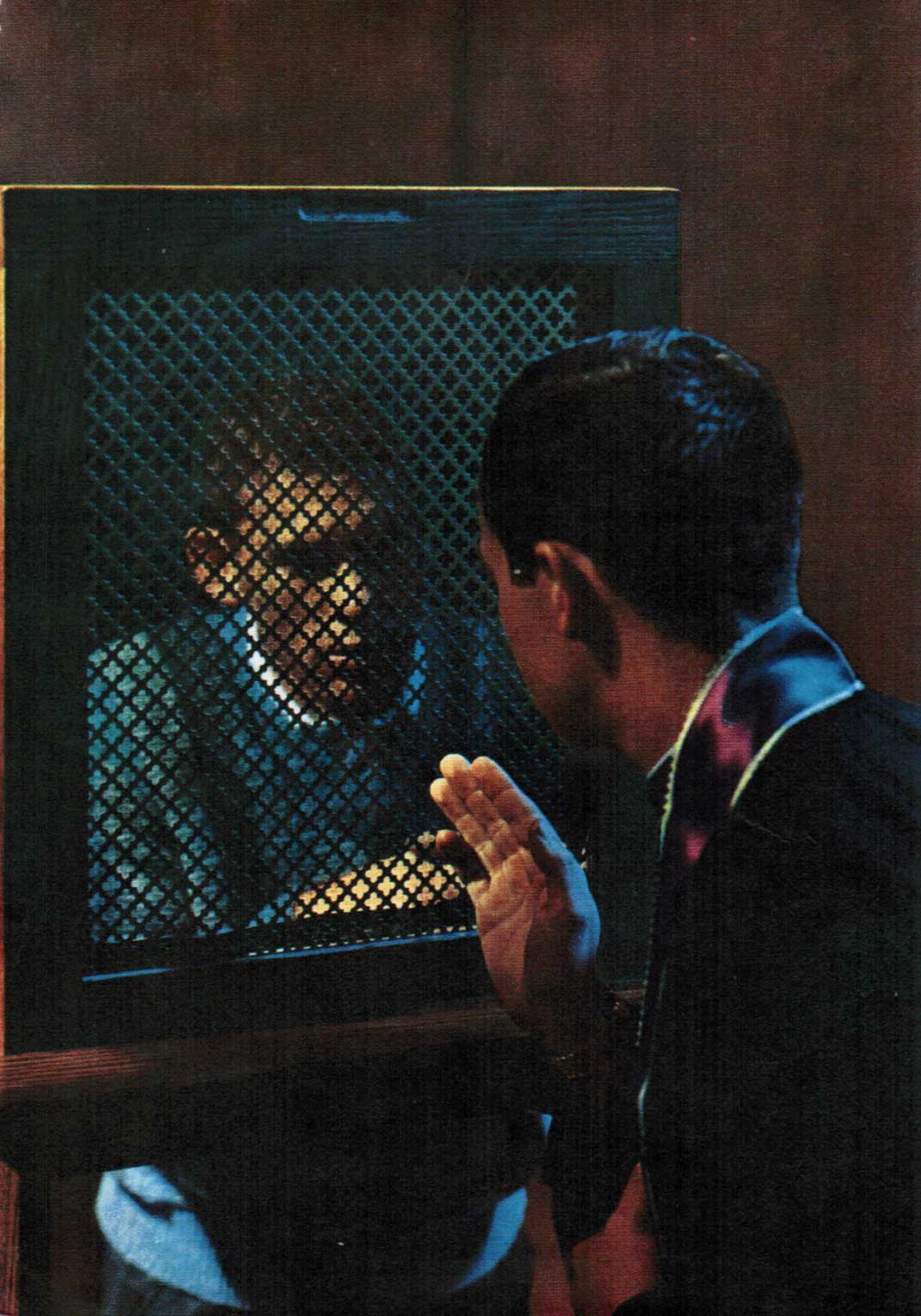
For many people the Sacrament of Confession is experienced in a rather perfunctory way. Upon preparing to go to confession many are content to look at some matters pertaining to external behavior: “I got angry with my children….I had lustful thoughts…. I was distracted in prayer, or I didn’t pray as much as I should…. I gossiped….and so forth. While the confession of these sorts of things is good and proper it also remains true that, for confession to really heal, it is necessary to go deeper. It is necessary to examine the deeper drives and motives of sin; to examine not only what I have done, by to ponder why.
In the Gospel for today’s Mass, Jesus invites us to go a little deeper than a mere examination of outward behavior. He begins with a critique of Jewish purity codes such as the “Kosher” diet and he says:
Hear me, all of you, and understand. Nothing that enters one from outside can defile that person; but the things that come out from within are what defile….Do you not realize that everything that goes into a person from outside cannot defile, since it enters not the heart but the stomach and passes out into the latrine?” (Thus he declared all foods clean.) (Mat 7:16-17)
The Jews of Jesus time were very meticulous in matters of external purity. The notion of ritual purity and external observances was deeply ingrained. This is not bad in itself but it runs the danger of short-circuiting deeper introspection. It is possible to think I am a hero because I stay away from unclean foods and do other things like pay my tithes but then (on account of my hero status) not look at how I treat others with contempt or have an unforgiving attitude etc. The ritual observance is not wrong, but our carnal nature can twist it and make it deadly by turning holiness into perfunctory external observance.
Already Jewish spirituality cautioned against this possibility with the famous utterance by Moses: Circumcise your hearts, therefore, and do not be stiff-necked any longer (Deut 10:16). Jesus therefore taps into this traditional caution and warns that holiness is far more than ritual observance or merely external behavior.
And then Jesus give us the key to a good confession in these words from today’s Gospel:
But what comes out of the man, that is what defiles him. From within the man, from his heart, come evil thoughts, unchastity, theft, murder, adultery, greed, malice, deceit, licentiousness, envy, blasphemy, arrogance, folly. All these evils come from within and they defile. (Mat 7:2-23).
Notice how Jesus focuses on the deeper inner drives that give rise to sin. It is from the heart of man and his evil and errant thoughts that bad behavior issues forth. It is not enough to say, “I got angry.” Rather we ought to ask additionally: “what is it that causes my anger?” What is there in my heart and in my mind that give rise to anger? Is is fear? Well, then, why am I afraid? Am I afraid because I do not trust God? Am I afraid because I am ego-centric and when the whole world does not think as I do or have the priorities I do, do I get afraid? Am I afraid because I am a control freak and have to have everything go just as I planned exactly? If it does not go exactly as I planned do I then get fearful and my fear issues forth in anger? ….Why AM I angry? What causes it?
The same can be said for every other sin I commit. Why is it that I do these things? What are the drives and sinful attitudes that give rise to sinful behavior? The drives and bad thoughts are deep within that then give rise to the bad behavior I need to confess.
Jesus teaches us to go deeper, into the heart and mind, to discover what causes our sinful behavior. And this leads us to the recipe for a good confession, for a confession that moves from From perfunctory penitence to compelling and transformative Confession. What are the basic steps?
Observe your sinful behavior but don’t stop there. See it as a symptom of something deeper.
Once you have observed WHAT you do, ask, “Why?” Let the Holy Spirit show you the deeper drives that give rise to sinful behavior. To this end it is also helpful to avail yourself of teaching on the seven deadly sins: Pride, anger, lust, greed, gluttony, envy, and sloth. There are a few good resources out there I might recommend to your attention. Peter Kreeft wrote a good book on the subject: Back to Virtue. Fr. Robert Barron has also issued a DVD on the subject: The Seven Deadly Sins . In addition to the seven deadly sins there are innumerable attitudes that give rise to sin; things like: fear, indifference, laziness, contempt, impurity, hated, malice, cowardice, jealously, revenge, disobedience, hard-heartedness, stinginess, selfishness, pettiness, spite, neglect, prejudice, arrogance, self-centeredness, pomposity, insincerity, impatience, infidelity, ingratitude, disobedience….and on and on. Focus on these deeper drives and attitudes for it is they that give rise to our bad behavior. Learn to name them. Learn to know their moves and tactics. “AH,” but you say, “There is so much to remember here!” Well I am going to help you by offering you a resource I have compile myself from various sources. It is call the Litany of Penance and Reparation. You can get it by clicking on the title. It is a very through listing (if I do say myself) of the deeper drives and sinful attitude that give rise to sinful behavior. Pray it carefully before your confession and you will find help to honor Jesus’ instruction to go deeper and look into the heart and mind to discover the deepest drives that cause bad behavior.
Having prepared in this way, go to confession and confess not only bad behaviors (which are the symptoms) but also articulate these deeper drives and attitudes. Name them! See them for what they are thus learn their moves.
Repeat this process frequently through the year and thus gain self knowledge and self mastery through the years. Confession will break open for it will no longer be a perfunctory laundry list of merely external behaviors. Confession will become a compelling and transformative sacrament that breaks the bondage of sin by the power of God’s grace.
In case you missed it, Oprah’s show yesterday featured the Dominican Sisters of Mary of Ann Arbor, Michigan. Here is a link where you can see clips from the show:
I have written on the snow previously. You are likely aware that we are in a blizzard here in Washington. The video below was called to my attention by New Advent site and the Deacon’s Bench Blog. It is a fascinating time lapse of storm on last Saturday.
I also include my own photos here Msgr Pope Photos of Storms on Feb 6 and 10 if you’d like to look at them. You can click on slideshow or view them individually. They depict the storms of the past week in various stages. I enhanced a lot of photos I took today and filtered out the blizzard whiteout effects so they don’t make it seem as bad as it was. But at least you can see a few things!
And here’s the wonderful video showing how God really piled on.
There are some pretty fascinating connections between cosmology and the music that has predominated in different ages of the Church. Now I said cosmology, not cosmetology. Cosmetology is the art of beautifying women, the beauty shop owner is a cosmetologist. But cosmology is the understanding of the universe (cosmos) in which we live. How do we see andunderstand the universe in which we live and our relation to it? And what does all this have to do with Church music? Hmm… let’s see.
Chant and the Unity of All Things- In the earliest days of Church music plainsong and chant predominated. A melody was sung unaccompanied and with no harmony. In fact there is early Church legislation that frowned on use of harmony seeing it too strongly connected with paganism. There was also a cosmology among early Christians that stressed the unity of all things. That everything, no matter how varied was ultimately from God and was united in God. The Patristic Fathers (eg Ignatius of Antioch et al.) imagined in heaven the angels and saints and yet despite myriads of them singing they all sang as if with one voice. This patristic teaching found its way into the prefaces of the mass sung or recited just before the Holy, Holy. There it is said that we join our voices with that of the angels who with one voice (una voce dicentes) say: Holy Holy, Holy Lord…. Thus unaccompanied, unharmonized chant reflected a cosmology of the day that all things and all people were ultimately one, united in God and sustained by Him. St Augustine imagined that, in the end, when Jesus finally handed over the kingdom to his father that there would be unus Christus amans seipsum (One Christ loving himself). Gregorian Chant exemplified through unison singing the cosmology of the oneness, the unity of all things (cf Quasten: Music in Pagan and Christian Antiquity).
Polyphony and the Music of the Spheres – But moving forward into the middle ages and toward the Renaissance we begin to discover rich and extended harmonies introduced into Church Music. Here too a cosmology is lurking just beneath the surface. As the ancient Greek Philosophers began to be “rediscovered” the ancient cosmology of the “music of the spheres” began to re-emerge. The ancients pondered the planets and stars as they swept through space. Each planet was thought made a perfect circle around earth. As they made this perfect circle they each rang out a different tone or note. These different notes rang out as a beautiful celestial harmony. Now harmony in church music began to be seen as reflective of the celestial harmony. Such cosmology and celestial harmony reached its apex and perfection in Renaissance polyphony (see video below).
Mathematical Baroque and the Ellipse of the Planetary Paths – Another change in cosmology is reflected another form of music. In the 16th Century Copernicus discovered that the planets orbited the sun, not the earth. Studies of the planets by Kepler and others at the same time revealed that planets do not orbit in perfect circles but in elliptical orbits, in a kind of a mathematical progression. This is really the insight of a musical form perfected at the time called the “fugue” A fugue introduces a musical theme and then develops the theme in a kind of mathematical progression. Much music of the Baroque period exhibits a kind of mathematical. If you’ve ever heard the famous Canon in D by Pachelbel you will note that it begins with a simple theme that builds mathematically as the as the half notes become quarter notes, then eighth notes, then sixteenth and even 32nd notes at the high point. Math as music reflecting the mathematical progression of the planets sweeping out their ellipses! So again, music and cosmology inter-relate.
Modern dissonance and relativity – In modern times, the theory of relativity has come to predominate. Most people interpret relativity to mean that truth varies (it does not) and that beauty and perfection are ultimately indefinable (everything is relative). Of course this is not what the scientific theory of relativity really holds but most people have allowed this interpretation of the theory to affect their cosmology, their interpretation of the universe. Thus in modern music dissonance and chaotic rhythm often predominate. The music reflects a kind of uncertainty with the truth and order of things and in an almost iconoclastic way many modern composers radically reinterpret harmony, melody, and rhythm. Much modern art also bespeaks this “relativistic” cosmology.
So there is a quick tour of how cosmology and music are linked. Our Church is very old and we have lived through many shifts in cosmology. Our music reflects this journey. Below are two videos that illustrate the music of the spheres and the art of the fugue.
This first Video represents the “music of the spheres wherein the ancients saw the planets and stars sweeping though the heavens and each sounding a musical tone that added up to a beautiful celestial harmony. This cosmology is beautifully reflected in the Renaissance polyphony of the Church. This piece is Victoria’s O Magnum Mysterium and is translated: “O great mystery and wondrous sacrament that animals would see the birth of Christ. O blessed Virgin whose womb merited to carry Jesus Christ. Alleluia!” Listen and imagine the planets sweeping through the heavens in celestial harmony!
This video is of a Fugue in D Major by JS Bach (BWV 532.2). Notice how the organist announces the main theme in her right hand. The left hand answers, then the feet. The basic theme is then taken through a series of “mathematical” progressions. The fugue reflected the cosmology of the day which saw the planets as sweeping out an ellipse (not a perfect circle) around the sun in a kind of mathematical perfection and progression: a Bach fugue in the sky! If you’ve never seen a fine organist play get ready for an experience. It is said that the organist is the greatest virtuoso and you’ll see why as our lovely and gracious organist shows forth the incredible skill needed to play the great Bach organ works. Her hands and feet will amaze you as they fly through the notes, never missing one!