If someone were to ask us, “How has God touched your life?” we would each have a different answer, because we all have a unique personal story to tell.
But even though our faith histories are all somewhat different, what God wants us to do with these experiences is one and the same: He wants us to share them for the benefit of others; He wants to touch other lives through our telling of how he has touched ours. To not share our stories would be a disservice to those people God may be trying to reach through us- and perhaps only us.
In sharing our stories, we follow in the footsteps of Jesus himself who, in the words of today’s gospel, “Testifies to what he has seen and heard” from the Father in heaven. We also follow the courageous example of the apostles, who in the first reading explained to those who wanted to put them to death that they were compelled to testify to the acts of God which they had witnessed.
Like them, we have a responsibility to share our stories, out of love for others, and for the glory of God. “My deepest vocation,” wrote Fr. Henri Nouwen, “is to be a witness to the glimpses of God I have been allowed to catch.”
Back just before Holy Week I read an interesting and provocative essay by Jennifer Fulwiler at the National Catholic Register. It is about the need to more clearly instruct Catechumens and those being received into the Church about spiritual attack. Plain and simple, the devil wants to destroy the faith of those who have newly entered the Church. And we need to be sober about this. Being sober does not mean we are in a panic. It merely means we are alert and have a mind that is clear as to the possibility, even the likelihood that the Devil will seek to snatch them from our hands. I want to quote from Ms Fulwiler’s article article and then give some personal experiences and concerns:
It’s a subject nobody wants to talk about. Even among fellow Catholics, you risk being seen as superstitious or ignorant if you acknowledge that there is a dark force whose sole purpose is to keep people away from the light of Christ. And, to be sure, some hesitation about the subject is warranted: We’ve all heard stories of people who became overly fixated on the subject of evil, renouncing personal responsibility with “The devil made me do it!” arguments or seeing demons around every corner. So it’s good not to place too much emphasis on the forces of evil. But this is a subject where we want to be very, very careful not to throw the baby out with the bathwater, and I think that modern Catholic culture has done just that.
In my own journey, an understanding of the reality of demonic activity has been critical to my spiritual life. I’ve been fortunate to have a spiritual director who has helped me learn to recognize when these kind of forces may be at work, and to act accordingly. …it was helpful for me to learn to recognize and reject those thought patterns that are not of Christ.
This advice has been particularly critical in times of doubt. Twenty-five years of atheistic thinking patterns don’t go away overnight, and since my conversion I’ve had plenty of periods where I experienced doubt or spiritual dryness. In these moments, it’s been extremely important to understand how to parse through my thoughts carefully, separating reasonable points from lines of thinking that seem to stem from spiritual attack, bad moods or other distracting forces (I once summarized what I learned about that here). Thanks to this understanding, each period of exploring my doubts has only led me to a deeper knowledge of God and greater faith in the Church.
And so, as a new group of converts (and “reverts”) prepares to come into full communion with the Church this Easter, I hope that our RCIA directors talk to them about this issue. I hope they make Dr. Peter Kreeft’s recent article about the reality of spiritual warfare required reading, and emphasize the benefits of finding a trusted priest or trained spiritual director to help navigate the ups and downs of the ongoing conversion process. Because while the path to sainthood is a beautiful road where we find peace and fulfillment as we grow closer to the Lord, we must never forget that it is also a battle.
I must say, this article caused me to pause and repent. For I, who know better, have not made it a practice to speak to my Neophytes and Newly Received about this. That has to change. And I also need to extend longer care to those who have newly entered the Church.
It is sobering for me to consider how many of the people I have baptized quietly slipped away from the Church in the years that followed. A couple of years ago I was looking at my notes from past Easter Vigils and gradually my mouth came open. For as I looked back over those notes going back fifteen years, I saw the names of many I had prepared for baptism and reception. But more than half were gone now. And of only a very few could I say, “Ah, they have moved and I know that they are in a parish there.”
I was, frankly, stunned. Some of them had been intense, joyful and excited to be baptized and received. I remember the joy of those congregations gathered at the vigil as, one by one the catechumens went down into the water. “Alleluia!” went forth the song, as each of them emerged from the font. And joy too was expressed for those received into full communion. And now half of them gone, quite certainly lapsed.
I cannot find any hard data on line, but, I have talked to RCIA “experts” who do work at a national level and they quietly affirm that, within five years, 50% of those who came through RCIA are no longer practicing the faith in any real way. I cannot show you the hard numbers, but I have personally found this to be true.
I have tried to be better about following up with those who have come through my classes who later go “off the radar.” I call them in, or speak with them on the phone: “You know what I taught you about Mass attendance, I’m worried about you….Jesus wants to feed you!” “Adam where are you….Eve, why do hide your face?” I get their sponsors on the job too. But it’s strange, a kind of lethargy seems to come upon some of them. They make promises to return, but often don’t. Or they come once, but then disappear again. Maybe I’ll see them in the store later on and josh with them, or be very serious, depending on the situation. But something has come over them. Most didn’t have some terrible experience, they just drifted away, they just lost the joy, or things just got routine.
But Jennifer Fulwiler, above, is on to something very important: they are likely under some level of spiritual attack. Demon, thy name is lethargy, thy name is boredom, thy name is sorrow and sloth, distraction and forgetfulness. Jesus warned:
Some people are like seed along the path, where the word is sown. As soon as they hear it, Satan comes and takes away the word that was sown in them. Others, like seed sown on rocky places, hear the word and at once receive it with joy. But since they have no root, they last only a short time. When trouble or persecution comes because of the word, they quickly fall away. Still others, like seed sown among thorns, hear the word; but the worries of this life, the deceitfulness of wealth and the desires for other things come in and choke the word, making it unfruitful. (Mk 4:15-19)
Yes, spiritual attack is real. So is the world and the flesh.
I think, in the early days of RCIA we figured that those who entered in this way had a great advantage over “cradle Catholics,” for they had come to the faith as adults, and made a mature decision to follow Christ. Yes, they would remain firm. But we are waking up from that notion. We need to be more vigorous and sober in our assessment of what new and returning Catholics face. Satan is sure make some moves on them and, as Ms Fulwiler says, Twenty-five years of….thinking patterns don’t go away overnight.
In my own parish, thanks to the generous offer of a skilled parishioner, we’re looking to strongly enhance our mystagogia (post baptismal catechesis) and extend it for as long as two years. We’re also going to give more vigorous formation to sponsors and insist that they see their role as more than ceremonial and one that does not end with the Easter Vigil.
And I am going to begin to be more frank with my newly received and baptized as to the nature of spiritual attack, and the likely moves the devil will try. Further, they must be taught a deeper understanding of the drives of the flesh and influence of the world. Peter Kreeft’s article, hot-linked above in the quote from Ms Fulwiler, is a good place to start. CS Lewis also has some good material in the Screwtape Letters about how Satan seeks to knock out new converts like “low-hanging fruit.” I am grateful if you, dear reader, can add to the list of suitable material to help in this matter. Clearly the goal here is not to frighten them, but to instill sobriety and an ability to discern spirits and resist demons, all by God’s manifold grace.
Yet another thing we must do better is to draw new members deeper in to the life of the Church. While Mass attendance and regular confession are primary goals, it is also most critical that new members feel welcome and be encouraged to get involved in the wider life the parish. This will usually root them more deeply in the faith and ensure a greater fraternity that will help them in their walk: Woe to the solitary man, for if he should fall, he has no one to lift him up (Eccles 4:10).
And we need to teach them to pray. The danger of RCIA is that it can be top heavy on intellectual formation but almost bereft of spiritual formation rooted in prayer and the spiritual and liturgical practices of the Church. Here too, I need to do a better job of finding the right balance.
As always, I am interested in your thoughts and experiences in this matter. Perhaps your own parish is addressing this? Perhaps too, you are a recent addition to our numbers in the Church and would be willing to share the good things, and the short-comings of your formation and mystagogia.
We have to do better. My recent trip down memory lane was real wake-up call. In the early Church, we went from the rather sudden and quick baptisms of Scripture (e.g. Acts 2:39; 8:36) to a three year catechumenate. This was likely due to a bad experience the Church had with those baptized too soon. I am not sure I want to make people wait three years, but I AM more sure I want their mystagogia to extend two years beyond their baptism and reception. We need to walk with our new brothers and sisters a little further down the road than just a few weeks or months out of the font. Lord, have mercy on me for taking so long to know better.
My eldest daughter’s Catholic preschool teacher once sent home a note, explaining that, “God made me. I am special,” was what they were learning that week. I smiled as I read that. But then the thought occurred to me: How many adults need to learn this same lesson? How many people fail to realize that they are special in God’s eyes? How many just don’t know- really- that God loves them?
It’s been said that the poorest people in the world are those that are unloved, because they’re robbed of their human dignity. If that’s the case, then the world is a very poor place.
Today’s gospel, however, reminds us God loves us more than we could ever imagine. We’re told he loves us so much that he wants us to live with him forever, and that his own Son died to make this possible. It’s as if God is saying to us: “I love you so much that I can’t think of spending eternity without you.”
Are we grateful for this love? In prayer I try to be grateful to God for many things: blessings received, prayers answered, and so forth. Maybe you’re the same way. But how often do we simply say, “Thank you God, for loving me.” Probably not often enough. Today, let’s make it a point to rejoice in the wonderful truth that God is love, and that God really, really, loves us.
Concern over the numbers of those who leave the Catholic Church, and those who have simply stopped practicing any faith, has been a consistent discussion on this blog. I recently came across an article by Fr. Thomas Reese SJ. who cites some recent Pew Survey results on why Catholics leave. I will admit that I do not share a lot of Fr. Reese’s views of the Church. Nevertheless, the data he shares is good and, while I do not agree with some of his conclusions, his article is thought provoking.
I will provide excerpts here. You can read his full article here: Hidden Exodus.
Of those who leave the Church, half simply stop practicing any faith. Forty percent go to Protestant denominations and 10 percent to non-Christian religions. Reese focuses his article on those who go to Protestant denominations. His remarks are in bold, italic black, my remarks are in plain text red.
The number of people who have left the Catholic church is huge.To be fair, that is because the Church is huge. There are over 70 million (at least nominal Catholics) and that number is still growing (due mostly to immigration) Even a small percentage of that number is large. Also, to be fair, Protestant, even Evangelical denominations also loose a large number of adherents, close in percentage to the Catholic experience. That said, it still remains that an alarming number of Catholics are leaving the Church.
The U.S. Religious Landscape Survey by the Pew Research Center’s Forum on Religion & Public Life has put hard numbers on the anecdotal evidence: One out of every 10 Americans is an ex-Catholic. If they were a separate denomination, they would be the third-largest denomination in the United States, after Catholics and Baptists. One of three people who were raised Catholic no longer identifies as Catholic.
Any other institution that lost one-third of its members would want to know why. But the U.S. bishops have never devoted any time at their national meetings to discussing the exodus. Nor have they spent a dime trying to find out why it is happening.
Agreed. This has not been enough on the radar at the USCCB. Here in the Archdiocese Washington we have recently become more serious about the problem and doing some pretty significant things to focus anew on keeping Catholics connected and evangelizing. But at the national level there does seem to be an eerie silence as hundred of Catholic parishes are being closed, Catholic schools likewise. Where is the reflection, study and teaching on this matter. What is the plan to re-engage the Catholic faithful and get them to return to Mass. How have we let weekly Mass attendance slip to 27%, according to recent CARA studies.
Pew’s data shows that those leaving the church are not homogenous. They can be divided into two major groups: those who become unaffiliated and those who become Protestant. Almost half of those leaving the church become unaffiliated and almost half become Protestant.
Why do people leave the Catholic church to become Protestant?
The principal reasons given by people who leave the church to become Protestant are
that their “spiritual needs were not being met” in the Catholic church (71 percent)
they “found a religion they like more” (70 percent).
Eighty-one percent of respondents say they joined their new church because they enjoy the religious service and style of worship of their new faith.
In other words, the Catholic church has failed to deliver what people consider fundamental products of religion: spiritual sustenance and a good worship service. And before conservatives blame the new liturgy, only 11 percent of those leaving complained that Catholicism had drifted too far from traditional practices such as the Latin Mass.
Yes, regarding our “worship service” (aka the Mass), I must say that the key point is not that it is or is not traditional or contemporary. The key point seems to be that Catholic liturgy generally seems sleepy. Sermons are short, often uninspired, filled with generalities and abstractions, and generally do seem to teach the Scripture effectively. Liturgies are often hurried, people do not seem all that happy, and generally seem relived when it is all over. Sometimes, in a typical Catholic Parish, it looks like every one just sucked a lemon. Frowns and distractions are common. One might conclude that a funeral was being celebrated more than a risen Lord, that the Church was a widow, rather than a bride.
It is interesting that, having served in African American Parishes most of my priesthood where liturgies are quite spirited, the most common remark that visitors make is, “Is this a Catholic Church?” To be sure we follow the rubrical norms exactly, it is the enthusiasm to which they refer. What does this say of the average parish?
And these remarks are not targeted at traditional liturgy which I also love. I have been to plenty of traditional Masses where people were awake and joyful. I’ve also been to contemporary masses where musicians et al. thought they we being relevant and behold, the congregation is sleepy and bored. And vice versa.
People, at least a lot of those who leave, really are hungry for a liturgy that is more vital and engaging. They are also hungry to be taught the Word of God. At least for those who leave for Protestant denominations, the “Say it in Seven” “Thought for the Day” Catholic approach to preaching does not nourish them or meet their spiritual needs. Perhaps one Mass in a parish could be tailored to those who are seeking a more substantial homily and are not insistent with being out in under an hour.
Dissatisfaction with how the church deals with spiritual needs and worship services dwarfs any disagreements over specific doctrines…..
People are not becoming Protestants because they disagree with specific Catholic teachings; people are leaving because the church does not meet their spiritual needs and they find Protestant worship service better.
[A]lmost two-thirds of former Catholics who join a Protestant church join an evangelical church. Catholics who become evangelicals and Catholics who join mainline churches are two very distinct groups. We need to take a closer look at why each leaves the church.
Fifty-four percent of both groups say that they just gradually drifted away from Catholicism.
Both groups also had almost equal numbers (82 percent evangelicals, 80 percent mainline) saying they joined their new church because they enjoyed the worship service.
But….a higher percentage of those becoming evangelicals said they left because their spiritual needs were not being met (78 percent versus 57 percent)….
They also cited the church’s teaching on the Bible (55 percent versus 16 percent) more frequently as a reason for leaving.
Forty-six percent of these new evangelicals felt the Catholic church did not view the Bible literally enough.
Thus, for those leaving to become evangelicals, spiritual sustenance, worship services and the Bible were key. They are leaving to get spiritual nourishment from worship services and the Bible.
Looking at the responses of those who join mainline churches also provides some surprising results.
For example, few (20 percent) say they left because they stopped believing in Catholic teachings…..
Thirty-one percent cited unhappiness with the church’s teaching on abortion and homosexuality, women, and divorce and remarriage
26 percent mentioned birth control as a reason for leaving.
Although these numbers are higher than for Catholics who become evangelicals, they are still dwarfed by the number (57 percent) who said their spiritual needs were not met in the Catholic church.
Those joining mainline communities also were more likely to cite dissatisfaction of the Catholic clergy (39 percent) than were those who became evangelical (23 percent).
Those who join mainline churches are looking for a less clerically dominated church.
What stands out in the data on Catholics who join mainline churches is that they tend to cite personal or familiar reasons for leaving more frequently than do those who become evangelicals. Forty-four percent of the Catholics who join mainline churches say that they married someone of the faith they joined, a number that trumps all doctrinal issues. Only 22 percent of those who join the evangelicals cite this reason.
Thus, those becoming evangelicals were more generically unhappy than specifically unhappy with church teaching, while those who became mainline Protestant tended to be more specifically unhappy than generically unhappy with church teaching.
Lessons from the data
There are many lessons that we can learn from the Pew data, but I will focus on only three.
First, those who are leaving the church for Protestant churches are more interested in spiritual nourishment than doctrinal issues. Tinkering with the wording of the creed at Mass is not going to help. No one except the Vatican and the bishops cares whether Jesus is “one in being” with the Father or “consubstantial” with the Father. That the hierarchy thinks this is important shows how out of it they are.While the hierarchy worries about literal translations of the Latin text, people are longing for liturgies that touch the heart and emotions. More creativity with the liturgy is needed, and that means more flexibility must be allowed. If you build it, they will come; if you do not, they will find it elsewhere. The changes that will go into effect this Advent will make matters worse, not better.
Well, OK Father, but if the wording of Mass is no big deal with people, as you suggest, then you shouldn’t mind so much that we’re doing this. Frankly I agree, the issue of the translation is rather beside the point in this whole discussion of why people leave and go to Protestant denominations. Why one of only three points that Fr. Reese chooses to focus on is this, seems puzzling, given the premise that “no one cares” how consubstantialem is translated.
I don’t think anyone has said that we should change the translation to gain new members or staunch the flow of leaving members. Rather, the new translation is necessary since the old one is just plain wrong. It is a paraphrase at best, and inaccurate at worse. It makes sense that we should have a translation that is accurate.
But that is a separate issue in this matter of those who leave and not, as Fr. admits, a major factor in why people leave. So why raise it?
As for “creativity” I’d like to know more what Fr. means here. Frankly, a lot of “creativity” has irked the faithful and has, in fact driven some away. If, he means that we should allow permissible creativity to thrive and do perhaps a little niche marketing, perhaps so. I do have people come from all over the area for the experience of African American Liturgy we have. I also have them come from all over the area for the Traditional Latin Mass I celebrate. We get especially good crowds there when we’ve done polyphonic or symphonic masses. Perhaps too I’d like to see more use of Taize music. I’m not a big fan of “folk” music but some like it, and it’s allowed. Then of course masses in various languages etc. At some level of course we risk a balkanization, but for now, I’m OK with allowing diversity to flourish.
Second, thanks to Pope Pius XII, Catholic scripture scholars have had decades to produce the best thinking on scripture in the world. That Catholics are leaving to join evangelical churches because of the church teaching on the Bible is a disgrace. Too few homilists explain the scriptures to their people. Few Catholics read the Bible. The church needs a massive Bible education program. The church needs to acknowledge that understanding the Bible is more important than memorizing the catechism. If we could get Catholics to read the Sunday scripture readings each week before they come to Mass, it would be revolutionary. If you do not read and pray the scriptures, you are not an adult Christian. Catholics who become evangelicals understand this.
Agreed, as I stated above. I would only add, that another big feature of Protestant denominations is the weekly (usually Wednesday) Bible Study. Every Catholic parish should have good, effective bible study available. But please, less of this unguided bible study in the parish hall. If Bible Study is going to be effective, well trained clergy, religious and lay people have to teach it. Perhaps this means that regional Bible studies in which a number of parishes come together. But effective teachers are the key. Just handing out books and having small groups grope through the material is not effective. In my own parish I lead a bible study ever Wednesday Evening and it is usually well attended. People are hungry for the Word of God. It is a lot of work, but THIS is what I was ordained to do.
Finally, the Pew data shows that two-thirds of Catholics who become Protestants do so before they reach the age of 24. The church must make a preferential option for teenagers and young adults or it will continue to bleed. Programs and liturgies that cater to their needs must take precedence over the complaints of fuddy-duddies and rubrical purists. Current religious education programs and teen groups appear to have little effect on keeping these folks Catholic, according to the Pew data, although those who attend a Catholic high school do appear to stay at a higher rate. More research is needed to find out what works and what does not.
But, careful here. Many young people I have met are hungry for liturgy that is more authentically Catholic. Trendy, ephemeral things are less desired among the young than in decades past. I am amazed at how many young adults are interested in Eucharistic adoration, and want vigorous study of the faith and solid moral instruction rooted in Scripture and the Catechism. A surprising number of them attend the Traditional Latin Mass and I get a lot of wedding request in that form.
As for religious education programs and teen clubs being currently ineffective, I surely agree. I just wish I had some clear ideas of how to better teach the faith to young people. It’s tough when so many of their families are lukewarm. Nothing is a better indicator to me that a kid is going to know his faith than that his parents are strongly practicing their faith. The family component is obviously a critical factor. Surely we have to do a better job at the parish level, but the family too must be recalled as the chief influence on whether a kid will know his faith and stay connected through the 20s.
The Catholic church is hemorrhaging members. It needs to acknowledge this and do more to understand why. Only if we acknowledge the exodus and understand it will we be in a position to do something about it.
Agreed, though it needs to be said that many are also coming TO the Catholic Church and we have a lot to learn from them about what we are doing right. There is also the truth that Evangelical Protestantism is not as strong and vigorous as we often think. They too are struggling to keep members and suffer from the tendency to reinvent themselves every 90 days. We’re getting some wonderful converts from the ranks of the Evangelicals and they bring many gifts.
Further, I think it is unmistakable that the Lord is purifying and reforming the Church. And I see a lot of this happening in the best place: among young adults. While it is true that we have on-going concerns about numbers, I also see the Lord laying the groundwork for a Church that may be smaller, but also more intense and more rooted in the faith. We shall see, but I am excited by what I see in many places even as the overall numbers continue to cause concern.
Here is an example of Protestant Preaching. Adrian Rogers (RIP), one of my favorite Baptist preachers, is commenting on the verse that man shall cling to his wife… The preaching is direct, sincere, uncompromisingly biblical and practical. There is nothing of abstract generalities here, rather, it is practical and plainspoken.
All religions in the world have something to say about truth. The Hindu scriptures say: “Truth is elusive. It’s like a butterfly; you’ve got to search for it. Near the end of his life, the Buddha said: “I’m still searching for the truth.” Muhammad said, “I am a prophet of the truth.”
Jesus also had something to say about the truth. He didn’t say he was searching for it, or that it is elusive, or that he is truth’s prophet. He stated, quite simply, that he himself is the truth. “I am the way, and the truth, and the life,” he said in today’s gospel. And he is these things, Jesus explained, because he and the Father are one. Jesus, in other words, is God. And that forces us to make a decision. We either accept that Jesus is who he says he is, or we don’t.
You and I believe that Jesus is the truth; that’s why we’re here. But with this knowledge comes responsibility. Every person on earth seeks the truth, which means that everyone is ultimately searching for Jesus. We who know Jesus as the truth, therefore, must share that truth with others. To keep the truth to ourselves would be a crime; to share it with others is an act of love. The apostles we celebrate today, Saints Philip and James, shared the truth of Jesus, and so must we. What today’s psalm said of God’s creation should also be said of us: “Their message goes out through all the world.”
A reader alerted me to an interesting and insightful analysis by Pope Leo XIII of three trends that both alarmed him and pointed to future problems. He wrote of these three concerns in 1893 in the Encyclical on the Holy Rosary entitled Laetitiae Sanctae (Of Holy Joy). The Pope enunciates these three areas of concern and then offers the mysteries of the Rosary as a necessary remedy. Lets look at how the Pope describes the problems and then consider too what he sees as a solution. His teaching is in bold, italic, black. My remarks are in plain text, red.
There are three influences which appear to Us to have the chief place in effecting this downgrade movement of society. These are–first, the distaste for a simple and laborious life; secondly, repugnance to suffering of any kind; thirdly, the forgetfulness of the future life. (# 4)
Problem 1 – The distaste for a simple and laborious life– We deplore….the growing contempt of those homely duties and virtues which make up the beauty of humble life. To this cause we may trace in the home, the readiness of children to withdraw themselves from the natural obligation of obedience to the parents, and their impatience of any form of treatment which is not of the indulgent and effeminate kind. In the workman, it evinces itself in a tendency to desert his trade, to shrink from toil, to become discontented with his lot, to fix his gaze on things that are above him, and to look forward with unthinking hopefulness to some future equalization of property. We may observe the same temper permeating the masses in the eagerness to exchange the life of the rural districts for the excitements and pleasures of the town….(#5)
One of the truths that sets us free is to simply realize and come to accept that life is hard. It involves trials, arduous work, and setbacks, along with some of the progress we can and do experience. Very few things of true values come to us without a significant cost. Simply put, life is hard. But, coming to accept this is a freeing thing for many of our resentments are minimized or removed by this acceptance. The fact is, many today expect that life should be peachy. And when it is not, there is resentment, anger, even threats of lawsuits. Many today think of happiness as a God-given right. Our Founding Fathers recognized the pursuit of happiness as a goal. But today many expect that happiness to be the norm and to be a sort of right. When it does not exist for them, there has been a failure of the system somehow. Many today expect to live lives where there is little danger, and where things come easily. This has been one of the factors that influenced the growth of government. For as insistence on a comfortable life grows and hard work seems unreasonable, we expect government to ease our burdens and provide increasing levels of comfort and happiness, and we are less willing to work hard for these things. Rather we see happiness and comfort as things to which we are entitled.
But unrealistic expectations are premeditated resentments. And so, with often unrealistic expectations, people quickly grow resentful and even pout. It would seem that our ancestors who lived even as recently as 150 years ago had different notions. They looked for happiness alright, but largely expected to find that in heaven. Many of the old Catholic prayers bespeak a vision that this world was a place of travail, of exile, a valley of tears, where we sighed and longed to be with God. Most Catholics of those earlier times lived lives that were brutal and short. Most were peasants, and lived with far less creature comforts than we. There was no central air, electricity, running water, and medicines were few and far less effective. Entertainment was limited, houses were smaller, even tiny and transportation was far more limited.
We live so well compared to them. And though we are more comfortable, there is little evidence that we are happier. Indeed, we seem more resentful, because we expect more, a lot more. As the Pope notes, young people resent discipline and expect to be spoiled. The majority of parents seem willing to indulge them and shun giving correction since it raises tensions and causes difficulties.
The value of hard work and the satisfaction that comes from it seems lost on many today. Cardinal McCarrick used to counsel us priests that if we did not go to bed tired, something was wrong. We all need some rest and relaxation, sure, but hard work actually brings greater satisfaction to times of rest.
The fact is, high expectations of this world like we have today, breed discontent and resentments. For by it these unrealistic and high expectations, we really insist on living in a fantasy that this world is, or can be paradise. It cannot. A better strategy is to accept that life is difficult and, though it has its joys, it presents arduous difficulties to us that must be met with courage and acceptance. Though this is a hard truth it brings peace when it is accepted.
To the first error Pope Leo commend to our attention the Joyful mysteries and particularly a meditation on the implicit lessons of the home at Nazareth:
Let us take our stand in front of that earthly and divine home of holiness, the House of Nazareth. How much we have to learn from the daily life which was led within its walls! What an all-perfect model of domestic society! Here we behold simplicity and purity of conduct, perfect agreement and unbroken harmony, mutual respect and love….devotedness of service. Here is the patient industry which provides what is required for food and raiment; which does so “in the sweat of the brow,” which is contented with little….These are precious examples of goodness, of modesty, of humility, of hard-working endurance, of kindness to others, of diligence in the small duties of daily life, and of other virtues…., Then will each one begin to feel his work to be no longer lowly and irksome, but grateful and lightsome, and clothed with a certain joyousness by his sense of duty in discharging it conscientiously….home-life…loved and esteemed….(# 6).
Problem 2 – Repugnance to suffering of any kind– A second evil…. is to be found in repugnance to suffering and eagerness to escape whatever is hard or painful to endure. The greater number are thus robbed of that peace and freedom of mind which remains the reward of those who do what is right undismayed by the perils or troubles to be met with in doing so….By this passionate and unbridled desire of living a life of pleasure, the minds of men are weakened, and if they do not entirely succumb, they become demoralized and miserably cower and sink under the hardships of the battle of life. (# 7)
Yes, today more than ever, there is almost a complete intolerance to any sort of suffering. This has been fueled by the fact that we have been successful in eliminating a lot of suffering.
As noted, we have many creature comforts that protect us from the elements, medicines that alleviate physical pain and bodily discomforts, appliances and technology that provide unprecedented convenience and make a lot of manual labor all but unnecessary.
This, as we have also noted, leads to expectations which are ultimately unrealistic. Namely, that all suffering should be eliminated. There is almost an indignity expressed when one suggests that perhaps some things should be endured or that it is unreasonable to expect government, or doctors, or science to eliminate every evil or form of suffering.
Further, we seem to refuse the notion that accidents sometimes happen or that unfortunate circumstances will just occur. Instead we demand more laws that are often intrusive and oppressive, and we undertake huge lawsuits that often discourage the very risk taking that makes new inventions, medicines and medical techniques possible.
We often hold people responsible for things they can do little about. Sometimes economies just have cycles, climates too. Governments, laws and politicians cannot be expected to solve every problem or alleviate every burden. Sometimes accidents just happen.
Not a Padded room – While we can and should undertake to fix unnecessary hazards and seek to ease one another’s burdens, life isn’t a padded room. Suffering, sorrows, accidents, burdens and difficulties are part of life in this valley of tears. Acceptance of this truth leads to a kind of paradoxical serenity. Rejection of it and indulgence in unrealistic notions that all suffering is unreasonable leads to resentments and further unhappiness.
Here too, Pope Leo commend to us the rosary, in particular the sorrowful mysteries:
…If from our earliest years our minds have been trained to dwell upon the sorrowful mysteries of Our Lord’s life…we [may] see written in His example all the lessons that He Himself had taught us for the bearing of our burden of labor– and sorrow, and mark how the sufferings…He embraced with the greatest measure of generosity and good will. We behold Him overwhelmed with sadness, so that drops of blood ooze like sweat from His veins. We see Him bound like a malefactor, subjected to the judgment of the unrighteous, laden with insults, covered with shame, assailed with false accusations, torn with scourges, crowned with thorns, nailed to the cross, accounted unworthy to live….Here, too, we contemplate the grief of the most Holy Mother…”pierced” by the sword of sorrow…. (# 8 )
Then, be it that the “earth is accursed” and brings forth “thistles and thorns,”–be it that the soul is saddened with grief and the body with sickness; even so, there will be no evil which the envy of man or the rage of devils can invent, nor calamity which can fall upon the individual or the community, over which we shall not triumph by the patience of suffering….But by this patience, We do not mean that empty stoicism in the enduring of pain which was the ideal of some of the philosophers of old, but rather….It is the patience which is obtained by the help of His grace; which shirks not a trial because it is painful, but which accepts it and esteems it as a gain, however hard it may be to undergo. [Men and women of faith] re- echo, not with their lips, but with their life, the words of [the Apostle] St. Thomas: “Let us also go, that we may die with him” (John xi., 16). (# 9)
Yes, indeed, the cross is part of this life. But Christ has made it clear that the cross yields ultimately to glory if we carry it willingly and with faith.
Problem 3- Forgetfulness of the future life– The third evil for which a remedy is needed is one which is chiefly characteristic of the times in which we live. Men in former ages, although they loved the world, and loved it far too well, did not usually aggravate their sinful attachment to the things of earth by a contempt of the things of heaven. Even the right-thinking portion of the pagan world recognized that this life was not a home but a dwelling-place, not our destination, but a stage in the journey. But men of our day, albeit they have had the advantages of Christian instruction, pursue the false goods of this world in such wise that the thought of their true Fatherland of enduring happiness is not only set aside, but, to their shame be it said, banished and entirely erased from their memory, notwithstanding the warning of St. Paul, “We have not here a lasting city, but we seek one which is to come” (Heb. xiii., 4). (# 11)
I have become increasingly amazed at how little most modern people think of heaven. Even Church-going believers talk little of heaven, priest preach little on it. Our main preoccupation seems to be making this world a more comfortable and pleasant place. Even in our so-called spiritual life, our prayers bespeak a worldly preoccupation: Lord, fix my finances, fix my heath, get me a better job. Almost as though we were saying, “Make this world pleasant enough and I’ll just stay here.” It is not wrong to pray for better health etc. It is not wrong to work to make this world a better place. But in the end, our home is in heaven and we ought to be solicitous of it and eagerly seek its shores. It should be a frequent meditation, and to be with God forever, the deepest longing of our soul. Instead we fear getting “older” and hide death away in our culture. It ought to be that we can’t wait to see God. Sure, it would be nice to get a few things done that we’ve started, but as heaven and being with God draw closer, we ought to be happy that the years are ticking by faster. Each day is one day, closer to God!
Here too, our prosperity and creature comforts have mislead us into a love of this world that is unhealthy. A friend of the world is an enemy to God (James 4:4). We are distracted and too easily dismiss that this world is passing away. The fact is, we are going to die. Only a proper longing for heaven can correct the absurdity that an obsessional love for this world establishes in our soul.
Meditate on heaven often! Read the scriptures, such as Revelation 1, & 4-5, 20-21. Ask for a deeper longing from God.
Pope Leo commends the Glorious mysteries of the rosary to our attention as a medicine for this absurd attachment to this passing world and our forgetfulness of heaven:
These mysteries are the means by which, in the soul of a Christian, a most clear light is shed upon the good things, hidden to sense, but visible to faith, “which God has prepared for those who love Him.” From them we learn that death is not an annihilation which ends all things, but merely a migration and passage from life to life. By them we are taught that the path to Heaven lies open to all men, and as we behold Christ ascending thither, we recall the sweet words of His promise, “I go to prepare a place for you.” By them we are reminded that a time will come when “God will wipe away every tear from our eyes,” and that “neither mourning, nor crying, nor sorrow, shall be any more,” and that “We shall be always with the Lord,” and “like to the Lord, for we shall see Him as He is,” and “drink of the torrent of His delight,” as “fellow-citizens of the saints,” in the blessed companionship of our glorious Queen and Mother. Dwelling upon such a prospect, our hearts are kindled with desire, and we exclaim, in the words of a great saint, “How vile grows the earth when I look up to heaven!” Then, too, shall we feel the solace of the assurance “that this momentary and light affliction produces for us an eternal weight of glory beyond measure, exceedingly ” (2 Cor. iv., 17).
Here then are three diagnoses, and three remedies. It is interesting to see that the roots of them were already evident in 1893 and how they have come further to press upon us more than 100 years later. It is helpful to have a Doctor of Souls to help us name the demons that afflict us. For having named a demon, we have more power over it and learn its moves:
Demon, your name is “laziness” and “distaste” for hard work. By the joyful mysteries of the Lord’s Life, be gone.
Demon your name “refusal of any suffering” and an “resentment at the cross.” By the sorrowful mysteries of our Lord’s life, be gone.
Demon your name is “forgetfulness of heaven” and “obsession with the passing world.” By the glorious mysteries of Lord’s life and our Lady’s too, be gone.
Catholic bishops across the globe world are often forced to make a courageous stand in defense of truth while facing the world’s opposition. They are doing what bishops have done throughout history, including the bishop we honor today, St. Athanasius.
Athanasius was a fourth century bishop of Alexandria, Egypt, which at the time was a major center of Christian activity and thinking. Because he stridently defended the doctrine that Jesus is truly God, he faced opposition from emperors, magistrates, and many intellectuals of his day. Five times he was forced into exile. As he often seemed to stand alone in his position, his contemporaries said of him, “Athanasius contra mundi”, or “Athanasius against the world.”
We should give thanks to God today for the courageous witness of bishops from the past like Athanasius, and we should give thanks for the courageous witness of bishops in our own age. In addition to our gratitude, we should support our bishops though prayer, acceptance of their teaching, and public advocacy for their positions, so that unlike Athanasius, they don’t stand alone against the world. The world needs our bishops, and our world- and our bishops- need us.
Back before Easter the Washington Post published an article by Anthony Stevens-Arroyo entitled, Is a Balanced Budget a Moral Issue? I would like to consider the article as a kind of followup to a previous discussion we have had here on this blog. Since this issue of the Budget is going to be around for a while, and is likely to be a major issue in the coming 2012 elections, it seems opportune for us to take many opportunities to discuss this issue from a Catholic perspective. A good thing about this Post article is that there are a number of cross-references to, among other things, Catholic sources.
As is usual in these cases I provide excerpts of the article. The original text of the article is in bold, italics, black. My comments are plain text red. The full article is here: Is a Balanced Budget a Moral Issue?
Wrangling in Washington over the national debt has featured speeches and sound-bytes from right and left, from the president on down. The bitter stridency suggests that these are not merely political games about balancing the budget but a serious moral crisis about the national character….
Agreed, how we as individuals and as a nation choose to spend our money says a lot about our priorities, and our national character.
However, there tends to be a simplification of the positions so that those who favor a large government expenditure are “for the poor” and those who seek to limit and privatize it are “against the poor.”
Clearly, since at least the mid 1960s the approach has been to have a large and growing government involvement in the care for the poor. But it was not always this way. Marvin Olasky wrote a fascinating book some years ago on the history of the care for the poor in this nation, and how it has evolved. It is a worthy read if you are interested in an historical assessment of this topic. More on the book here: The Tragedy of American Compassion. Readers will note from the title that he writes from a conservative point of view but, whatever your view, the history he provides is very instructive.
In the end, I think it is important to presume some good faith on both sides of the argument about the amount and role of government care for the poor. What really is the best way to care for the poor? How do we afford increasing expenditures? How do we ameliorate the deleterious effects of the welfare system as currently structured?
I think conservatives have an additional burden in this argument since it is largely they who propose a significant change. If we want to step back government involvement in the care for the poor, what is the plan for the private sector to take up its role? Do we simply pull the plug on government spending in this? That hardly seems right or just. But then, what is the plan to transfer the responsibility for the poor back to the private sector? And how do we as a nation continue to meet our obligations to the poor (clearly spelled out in Scripture, the social doctrine of the Church, natural law, and simple humanitarian concern)? It is one thing to call for a change, one thing to critique an often poor system. But where is the plan, what is the reasonable alternative, from a conservative or libertarian point of view.
In the end this is a question of our National Character. If not the current way (big govt) as Conservatives and Libertarians suggest, then how, and who?
Bishop Stephen Blaire has clarified the USCCB Catholic teaching. The billions cut from affordable housing programs are “not justified,” says the bishop, “in light of the continuing housing crisis.” Cuts to job training programs are “unwarranted at a time of high unemployment and low job creation,” because says the bishop, “This will prolong the economic pain of those seeking adequate training to re-enter the job market.” Cuts to Title I, IDEA, Head Start, and Pell grants are “particularly disturbing and unwise.” The bishop puts it clearly on the line in his letter to the Senate: “Put poor and vulnerable people first as you consider how to spend limited federal resources.”
The premise of the Bishop’s declaration are rooted deeply in Scripture and the Social doctrine of the Church. From these sources, it is clear that we have very real obligations to the poor and these obligations flow not only from charity but from justice.
The Catechism of the Catholic Church spends significant time in addressing the care of the poor and needy in the section on the Seventh Commandment, You shall not steal. Why here? Because God has given all the goods of the earth to all the people of the earth. The Catechism refers to this principle as the Universal Destination of Goods (cf CCC # 2402). Hence, while private ownership is not excluded and must be respected as a general norm, hoarding, greed and refusing those in legitimate needs, when it is in my capacity to help, amounts to a form of theft.
There is an old saying, If I have two coats, one belongs to the poor. Hence the poor, from a biblical and Catholic point of view DO have legitimate claims on those of us who have more than we need. It thus wrong to speak, in an unqualified way, of legitimate taxation to care for the poor as “theft” or merely as “redistribution of wealth.” If we are to be true to Catholic teaching and to scripture, some of my excess belongs to the poor.
There are legitimate debates as to what tax rates are fair and if it should even be government that facilitates the rendering of our debt to the poor.But that we have a debt to them clearly taught by the Church and her Scriptures. The extent of this debt and how best to render it are debatable, but that the debt exists is taught. (cf CCC # 2404 inter al.) There are further legitimate concerns raised when some abuse the system and lay claim to assistance when they could legitimately care for themselves. These are matters that must be addressed on a case by case basis. But the fact is that many among are poor, for a variety of reasons and we have real obligations to them. I have written more on this topic here: The Forgotten Principle of Social Justice
In fairness to both sides, the Republicans argue that their plan will eventually produce the same or even better benefits to the public; and Democrats admit to the need for reducing the debt and restraining the rate of spending that is simply unsustainable. So if the partisan rants could ever be quieted, a substantial and focused debate might produce workable compromises.
Well said. It is wrong to simply assume bad faith in this debate, as though some care for the poor and others do not. That said, it still remains for conservatives and libertarians to demonstrate a viable alternative to render our debt to the poor. I am sympathetic with those who want smaller, less expensive government. Further I fear the intrusive and punitive effects of expansive government and the erosion of our liberties.That said, I do not have a simple alternative to suggest.
It is clear, our current level of spending cannot be maintained. Many argue it is immoral to go on spending money we don’t really have.
So what to cut? It seems clear that, as the Bishop says, we should not start with the poor. I would rather start with transfer payments to things that currently seem rather extravagant such as the funding of the arts, and building and subsidizing of expensive sports centers. There are many forms of what some call “corporate welfare” that need attention. There also seem to be rather heavy agricultural subsides, bizarre things like an ethanol program and even stranger practices like paying farmers not to plant. I am even open to a look at defense spending, especially in areas where there is demonstrable waste and duplication of effort.
Some will argue that all these areas benefit the poor indirectly and also stimulate economic development. Perhaps. I am no economic genius. But I still suspect that the economy is best left to the private sector. If arts centers and sports arenas are to be built, let the marketplace decide if it is really “worth it.” If companies need to fail, perhaps that is best and then more efficient businesses will arise to fill the gap. I realize there are ten thousand facts that complicate all this. But somewhere deep down I think if cuts need to happen we ought to begin by getting the government out of subsidizing our economy in intrusive and complicated ways. Perhaps we can start here before talking about programs that target the poor. But have at me you astute readers! I am no economist. Just a poor priest trying to apply Catholic Social teaching to an imploding budget.
….[There is] a religious worldview that sees charity towards the needy is unavailing and even harmful. The power of religious faith, in other words, has been transferred to the politics of rugged individualism.
We have seen what Catholic Social Doctrine has to say about our obligations to the poor. This is the religious worldview of the Church. I am not sure if it is a religious worldview that seems charity as harmful, or if is political, or if it is a combination of both.
That said, it is not wrong to ask if some of our welfare programs have not in fact had many unintended but negative consequences, and what we can do about that. It is demonstrable that some of the poor are locked into a system that goes back generations in their family. The current system does a less than stellar job of breaking the cycle of poverty. This does not mean it all has to go, but the question remains as to how we can better help the poor to break free.
…The bishops have told us we need to put people before profits. The crisis of the budget issue has stripped Catholics of excuses for dismissing the problem as “politics as usual.” In fact, Jesus told us (Mt. 25) if we don’t make the right decision about social needs, we could go to hell.
Yes, indeed. Too many Catholics have dismissed the notion of mortal sin. But the Lord couldn’t be clearer that the neglect of the poor, when it is in our means to help them, is a damnable sin. We need to be sober our choices, both personal and communal.
In addition to the parable of the sheep and goats cited by our author, Jesus also tells of a poor man named Lazarus who lived outside the gates of a rich man’s house. The rich man died and went to hell. And what was his sin? Simply this, he neglected Lazarus when it was in his means to help him.
Whatever our political persuasion, we must not forget that God is passionate about how we treat the poor. Almost every prophet of the Old Testament manifested God’s rage over the injustice the poor suffered, and the lack of care. There is just simply no way to read, even a small slice of scripture, and come away without the conviction that God is very serious about how we treat the poor, very serious.
“The spending choices of Congress have clear moral and human dimensions; they reflect our values as a people,” said Bishop Stephen Blaire of Stockton, California, chairman of the USCCB Committee on Domestic Justice and Human Development, in a March 4 letter to the U.S. Senate. “Some current proposals call for substantial reductions, particularly in those programs that serve the poorest and most vulnerable people in our nation. In a time of economic crisis, poor and vulnerable people are in greater need of assistance, not less.”
Please comment. And realize, I am not merely here to pontificate (even though my name is Pope 🙂 ). This is a discussion and you are encouraged to make distinctions, issue rebuttals, and qualify. I would ask you though to remember that this is not a political blog, but a Catholic one. And thus, I might encourage you to couch your remarks in Catholic language and strive as best you can to articulate a response based on Catholic Principles. I can anticipate a number of remarks on subsidiarity, a principle well grounded in Catholic Social teaching. But I would be especially interested in how you might actually apply the principle to the current situation. I understand that many will argue that much of our modern welfare system lacks this principle. But how do we get there? What are the steps by which we walk back the current big government solution. Others of you may argue that we already have subsidiarity and that the Federal Government is the lowest possible place to handle this. If so, are there any ways you think we can improve government welfare to remove some of its deleterious effects?
At any rate I encourage whatever comments you would like to make. This is a discussion and its your turn.

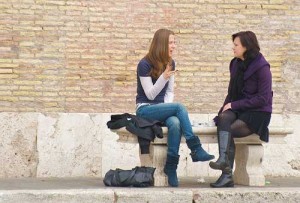 If someone were to ask us, “How has God touched your life?” we would each have a different answer, because we all have a unique personal story to tell.
 Concern over the numbers of those who leave the Catholic Church, and those who have simply stopped practicing any faith, has been a consistent discussion on this blog. I recently came across an article by Fr. Thomas Reese SJ. who cites some recent Pew Survey results on why Catholics leave. I will admit that I do not share a lot of Fr. Reese’s views of the Church. Nevertheless, the data he shares is good and, while I do not agree with some of his conclusions, his article is thought provoking.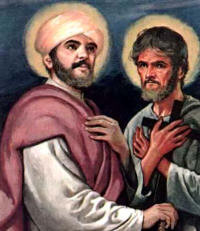
 A reader alerted me to an interesting and insightful analysis by Pope Leo XIII of three trends that both alarmed him and pointed to future problems. He wrote of these three concerns in 1893 in the Encyclical on the Holy Rosary entitled
  Back before Easter the Washington Post published an article by Anthony Stevens-Arroyo entitled, Is a Balanced Budget a Moral Issue? I would like to consider the article as a kind of followup to a previous discussion we have had here on this blog. Since this issue of the Budget is going to be around for a while, and is likely to be a major issue in the coming 2012 elections, it seems opportune for us to take many opportunities to discuss this issue from a Catholic perspective. A good thing about this Post article is that there are a number of cross-references to, among other things, Catholic sources.