Death is No Therapy At All. The Bishops Speak Well Against Physician Assisted Suicide

Pope John Paul, and also Pope Benedict, have referred to Western Culture as a “culture of death.” Fundamentally what this means is that, when confronted with human difficulties, the offered solution is increasingly, the death or non-existence of the person with the problem.

To illustrate this, I was recently talking with teenagers on the sin of abortion. One of the students said that she supported abortion because babies born to young mothers are more likely to have birth defects or diseases, and many of them will live in poverty. Thus it is best if they are aborted. I responded,

“Don’t you think that death is a strange therapy? What if you went to the doctor and he said to you, ‘You are obviously alive now, but someday, in the future you might loose a limb, or get sick, or you might loose your job and have to go on welfare, so I am going to kill you right now, here in my office.’  What do you think of this? Isn’t death a horrible and strange therapy? You would probably respond that you would like to live and take your chances.”

The young student silently reflected on the application I had made of her theoretically “compassionate” reason for abortion. I chose not to press her on it and we moved on with the discussion, but I think all in the room got the main point that death is a strange and horrifying therapy, even if it masquerades as compassion.

Yet our culture increasingly proposes death as the solution for many problems. If the infant in the womb is deformed, diagnosed with an inclination to disease, down syndrome or any poor prenatal diagnosis, the solution for many is to kill the child. Currently 90% of children in the womb who show a likelihood of Down Syndrome are aborted.

At the other end of life too, death,  masquerading as compassion, is also evident. Euthanasia, or physician assisted suicide is more and more being considered a credible kind of compassion. But here too, death is a very strange and horrifying therapy. Really it is no therapy at all.

The Catholic Bishops of the United States just issued a policy statement on the question of physician assisted suicide entitled, To Live Each Day With Dignity. I want to present just a few excerpts here for our consideration.

The bishops begin by exposing the strange results of this false compassion:

The idea that assisting a suicide shows compassion and eliminates suffering is…misguided. It eliminates the person….

Pretty clear.  You will know false compassion by it’s fruit: death, by the fact that it does not really eliminate suffering, it really eliminates the person. Death is not therapy. The bishops go on to say,

True compassion alleviates suffering while maintaining solidarity with those who suffer. It does not put lethal drugs in their hands and abandon them to their suicidal impulses, or to the self-serving motives of others who may want them dead. It helps vulnerable people with their problems instead of treating them as the problem. [Emphasis mine].

The false compassion of the culture of death in which we live also strips certain human beings of dignity (though it claims the opposite), since in effect it declares that their life is not worth living. Here again the Bishops say it very well:

By rescinding legal protection for the lives of one group of people, the government implicitly communicates the message….that they may be better off dead. Thus the bias of too many able-bodied people against the value of life for someone with an illness or disability is embodied in official policy. This biased judgment is fueled by the excessively high premium our culture places on productivity and autonomy, which tends to discount the lives of those who have a disability or are dependent on others. If these persons say they want to die, others may be tempted to regard this not as a call for help but as the reasonable response to what they agree is a meaningless life. Those who choose to live may then be seen as selfish or irrational, as a needless burden on others, and even be encouraged to view themselves that way.

This could not be better said. The claim of the “Right to Die” Movement that it is all about dignity is once again shown to result in precisely the opposite. For, in order to attribute this supposed dignity  to some, it strips many more of the dignity they have. The poor, the disabled, the chronically and terminally ill (we are all terminal), are said, increasingly, to have lives not worth living. It would be better for them (us?) to be dead. Really, says who? Does it really bestow dignity on them for us to speak in this manner. And if some DO suffer anxiety or depression over their state, is killing them really to be considered a legitimate or credible therapy? Is this dignity?

The Bishops go on to beautifully remind us that the dying process may well be one of the most important and fruitful times in our life if we face it with faith. I have surely learned this in working with the dying. I experienced it most powerfully with my father, as he lay dying. Some very important things happened for him (and me) during those months. The dying process is often a gift in a strange package, and it is anything but meaningless. In fact, it is one of the most meaningful times of life. To short-circuit this by suicidal notions, or false compassion, is a terrible misunderstanding of the truth and grace available to the dying and those who care for them. The bishops say,

Respect for life does not demand that we attempt to prolong life by using medical treatments that are ineffective or unduly burdensome. Nor does it mean we should deprive suffering patients of needed pain medications….with the laudable purpose of simply addressing that pain (CCC, no. 2279).

[E]ffective palliative care can enhance the length as well as the quality of a person’s life. It can even alleviate the fears and problems that lead some patients to the desperation of considering suicide. Effective palliative care also allows patients to devote their attention to the unfinished business of their lives, to arrive at a sense of peace with God, with loved ones, and with themselves.

No one should dismiss this time as useless or meaningless. Learning how to face this last stage of our earthly lives is one of the most important and meaningful things each of us will do, and caregivers who help people through this process are also doing enormously important work.

Amen.

Killing by assisted suicide is no therapy at all, it is killing. It is snatching from God’s hands the authority that is rightfully His. It is making arbitrary, and often self-serving, judgements about whose life is worth living, and whose life really “matters.” This is not dignity, it is not legitimate therapy, and it is not compassion to kill the patient.

It IS compassion to love the patient, alleviate pain, assist with comfort, show patience and understanding, listen and console.

The Bishops conclude well:

Jewish and Christian moral traditions have long rejected the idea of assisting in another’s suicide. Catholic teaching views suicide as a grave offense against love of self, one that also breaks the bonds of love and solidarity with family, friends, and God (Catechism of the Catholic Church [CCC], no. 2281). To assist another’s suicide is to take part in “an injustice which can never be excused, even if it is requested” (John Paul II, Evangelium Vitae, no. 66). Most people, regardless of religious affiliation, know that suicide is a terrible tragedy, one that a compassionate society should work to prevent. They realize that allowing doctors to prescribe the means for their patients to kill themselves is a corruption of the healing art. It even violates the Hippocratic Oath that has guided physicians for millennia: “I will not give a lethal drug to anyone if I am asked, nor will I advise such a plan.”

More resources are HERE

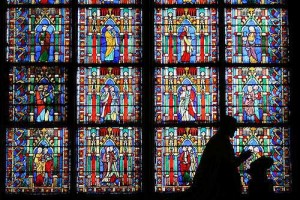
Photo Credit: Screen from the video by Romereports.com

Boasting of our Weaknesses

One standard but dreaded job interview question is: “Tell me your greatest weakness.” When asked this question, one expert recommends admitting only to a minor weakness that we’re in the process of fixing. In other words, don’t really answer the question, because weaknesses are considered a liability in society and the workplace. That’s why we usually deny, defend, excuse, hide, or resent our weaknesses.

The truth is that we all have a bundle of weaknesses: Physical, emotional, and intellectual. Some of us have financial limitations or difficult relationships. In addition, we all struggle with a weakened, fallen human nature which inclines us to sin.

God is well aware of our weaknesses. However, he doesn’t necessarily see them as liabilities. Instead, he wants to use them for our benefit, other’s benefit, and for his glory. St. Paul knew this. That’s why, in today’s first reading, he wrote, “If I must boast, I will boast of the things that show my weakness.” Paul admitted his weaknesses and came to accept them as part of God’s plan for his life. God challenges us to do the same with our own.

If we do this, we’ll discover that our weaknesses can serve very useful purposes: They cause us to depend on God instead of ourselves; they keep us from being proud and arrogant; they build community, as they lead us to realize how much we need each other; and they help us to be more sympathetic, compassionate, and understanding people.

We’re asked “What is your greatest weakness?” in job interviews because potential employers want to find out A) What’s wrong with you? and B) How much of a risk are you? The good news is that God already knows what’s wrong with us, and he’s already given us the job of being his disciple. And if we let him, he can turn a great weakness, into a great strength.

Readings for today’s Mass: http://www.usccb.org/nab/061711.shtml

Photo Credit: bpsusf via Creative Commons

Don’t Do Polygamy – On the Polygamy of the Patriarchs and the Problems it Produces

When God set forth marriage as described in the Book of Genesis, there is poetically but clearly set forth a set form for marriage: one man for one woman in a stable, lasting, fruitful relationship of mutual support. For God said, It is not good for the man to be alone. I will make a suitable helpmate for him (Gen 2:18). Already we see that “helpmate” is singular, not plural. After teaching the man that the animals are not suitable, God puts Adam in a deep sleep and, from his rib, fashions Eve (cf Gen 2:21). Note again that in presenting a suitable helpmate for Adam God created Eve, not Steve. And so we see any notion of homosexual marriage excluded. But neither did God create Eve and Ellen and Sue and Jane and Mary. And here too, implicitly and poetically, but clearly, we see excluded the notion of polygamy.

God’s plan for marriage is one man and one woman. The scripture goes on to insist that marriage be a lasting union for it says that a man shall “cling” (Hebrew = דָּבַק  = dabaq) to his wife (singular, not wives), and the two, (not three, four, or more) of them shall become one flesh. (Gen 2:24). God went on to tell them to be fruitful and multiply (Gen 1:28).

So far, clear enough: one man for one woman in a stable, fruitful relationship of mutual help and support.

But then, what to make of the polygamy (multiple wives) of the patriarchs such as Jacob, Moses, Gideon, David, Solomon, and many others? Does God approve of this? There is no evidence that he thunders from on high at their seemingly adulterous and clearly polygamous behavior. The fact that they have several wives goes un-rebuked, and is said, more in passing in the Scriptures, and narrated with little shock. For example, Nathan the Prophet has many things for which to rebuke David, but having multiple wives is not among them.

What of this polygamy?

We ought to begin by saying that the Scriptures teach in various ways. There is the methodology of straight rebuke, wherein sin is both denounced, and punished. But there is also a more subtle and inductive way that Scripture teaches, more through story, than prescription. And in this way, the Scriptures teach against polygamy. For, we learn by story and example, how polygamy causes nothing but trouble. In fact it leads to factions, jealously, envy and outright murder. The problem is less the wives, than the sons they have borne. As we shall see.

But,to be clear, polygamy was a common thing among the Old Testament Patriarchs. The list is not short:

  1. Lamech (a descendant of Cain) practiced polygamy (Genesis 4:19).
  2. Abraham had more than one wife (Genesis 16:3-4; 25:6, some called “concubines”).
  3. Nahor, who was Abraham’s brother, had both a wife and a concubine (Genesis 11:29; 22:20-24).
  4. Jacob was tricked into polygamy (Genesis 29:20-30), and  later he received two additional wives making a grand total of four wives (Genesis 30:4, 9).
  5. Esau took on a third wife to please his father Isaac (Genesis 28:6-9).
  6. Ashur had two wives (1 Chronicles 4:5).
  7. Obadiah, Joel, Ishiah, and those with them “had many wives” (1 Chronicles 7:3-4).
  8. Shaharaim had at least four wives, two of which he “sent away” (1 Chronicles 8:8-11).
  9. Caleb had two wives (1 Chronicles 2:18) and two concubines (1 Chronicles 2:46, 48).
  10. Gideon had many wives (Judges 8:30).
  11. Elkanah is recorded as having two wives, one of which was the godly woman Hannah (1 Samuel 1:1-2, 8-2:10).
  12. David, had at least 8 wives and 10 concubines (1 Chronicles 1:1-9; 2 Samuel 6:23; 20:3).
  13. Solomon, who breached both Deuteronomy 7:1-4 and 17:14-17, had 700 wives and 300 concubines (1 Kings 11:1-6).
  14. Rehoboam had eighteen wives and sixty concubines (2 Chronicles 11:21), and sought many wives for his sons (1 Chronicles 11:23).
  15. Abijah had fourteen wives (2 Chronicles 13:21).
  16. Ahab had more than one wife (1 Kings 20:7).
  17. Jehoram had wives (2 Chronicles 21:17).
  18. Jehoiada the priest gave king Joash two wives (2 Chronicles 24:1-3),
  19. Jehoiachin had more than one wife (2 Kings 24:15).

Well, you get the point. So we have to be honest, polygamy, at least among wealthy and powerful men, was practiced and the practice of it brings little condemnation from God or his prophets.

But the silence of God does not connote approval, and not everything told in the Bible is told by way of approval. It would seem for example, that God permitted divorce because of the hard heart of the people (cf Matt 19:8). But to reluctantly permit, as God does, is not to command or to be pleased.

And, as we have noted, God teaches in more than one way in the Scriptures. For the fact is, polygamy, whenever prominently dealt with (i.e. mentioned more than merely in passing), always spells “trouble” with a capital “T”.

Consider some of the following internecine conflicts and tragedies.

1. Jacob had four wives whom he clearly loved unequally: Leah (who he felt stuck with and considered unattractive), Rachel (his first love), Bilnah (Rachel’s maid)  and Zilpah (Leah’s maid). Leah bore him 6 sons and a daughter : Reuben, Simeon, Levi, Judah, Issachar, Zebulan, and Dinah. Rachel, his first love, was stubbornly infertile, but finally bore him Joseph, and later, Benjamin. Bilnah bore him Naphtali and Dan, Zipah bore him Gad and Asher.

Now all these sons by different mothers created tension. But the greatest tension surrounded Joseph, who his brothers grew jealous of, and began to hate. His father, Jacob favored him, since he was Rachel’s son. This led to a plot to kill him, but due to profit, and Reuben’s intervention, he ended up being sold into slavery to the Ishmaelites. At the heart of this bitter conflict was a polygamous mess and the unspoken, but clear teaching, among others is, “Don’t do polygamy.”

2.  Gideon, as we have seen, had many wives (Jud 8:30) and by them many sons. Scripture shows forth a story of terrible violence and death that results from many sons, by different mothers all competing for kingship and heritage. Scripture tells the terrible story:

Now Gideon had seventy sons, his direct descendants, for he had many wives. His concubine who lived in Shechem also bore him a son, whom he named Abimelech. At a good old age Gideon, son of Joash, died and was buried in the tomb of his father Joash in Ophrah of the Abiezrites. Abimelech, son of Jerubbaal (i.e. Gideon), went to his mother’s kinsmen in Shechem, and said to them and to the whole clan to which his mother’s family belonged, “Put this question to all the citizens of Shechem: ‘Which is better for you: that seventy men, or all Jerubbaal’s sons, rule over you, or that one man rule over you?’ You must remember that I am your own flesh and bone.” When his mother’s kin repeated these words to them on his behalf, all the citizens of Shechem sympathized with Abimelech, thinking, “He is our kinsman.” They also gave him seventy silver shekels from the temple of Baal of Berith, with which Abimelech hired shiftless men and ruffians as his followers. He then went to his ancestral house in Ophrah, and slew his brothers, the seventy sons of Jerubbaal (Gideon), on one stone. Only the youngest son of Jerubbaal, Jotham, escaped, for he was hidden. (Judges 9:1-5).

At the heart of this murderous and internecine conflict was polygamy. Brothers who competed for kingship, power and inheritance, and brothers who lost little love on each other since they were by different mothers. Abimelech’s loyalty was not to his brothers, but to his mother, and her clan. Thus he slaughtered his brothers to win power.

Among other lessons in this terrible tale is the lesson of chaos and hatred caused by polygamy, as if to say, “Don’t do polygamy.”

3. King David had at least eight wives – Michal, Abigail, Ahinoam, Eglah, Maacah, Abital, Haggith, and Bathsheba, and “10 concubines.”  Trouble erupts in this “blended family” (to say the least), when Absalom (the third son of David), whose mother was Maacah sought to overcome the line of succession and gain it for himself. When his older brother Chileab died, only his half brother Amnon stood in the way. The tensions between these royal sons of different mothers grew very hostile. Amnon raped Absalom’s full sister Tamar, and Absalom later had Amnon murdered for it (cf 2 Sam 13).

Absalom fled and nourished hostility for his Father David, and eventually sought to overthrow his Father’s power by waging a rebellious war against him. He is eventually killed in the ensuing war, and David can barely forgive himself for his own role in the matter (2 Sam 18:33).

But the family intrigue isn’t over. Solomon would eventually become king, but only through the court intrigues of his mother, Bathsheba, David’s last wife. As David lay dying, his oldest son Adonijah, (Son of David’s wife Haggith) the expected heir (1 Kings 2:15), was acclaimed King in a formal ceremony. But Bathsheba conspired with Nathan the Prophet, and deceived David into thinking Adonijah was mounting a rebellion. She also reminded David of a secret promise he had once made her that Solomon, her son, would be king. David thus intervened and sent word that Solomon would be king. Adonijah fled, returning only after assurances of his safety by Solomon. Yet, still he was later killed by Solomon.

Here too, are the complications of a messed up family situation. Sons of different mothers hating each other, wives playing for favorite and securing secret promises, conspiring behind the scenes and so forth. At the heart of many of the problems was polygamy and once again the implicit teaching is, “Don’t do polygamy.”

4. Solomon, it is said, had 1000 wives (700 wives, 300 concubines). Again, nothing but trouble came from this. Scripture says,

King Solomon, however, loved many foreign women….He had seven hundred wives of royal birth and three hundred concubines, and his wives led him astray. As Solomon grew old, his wives turned his heart after other gods, and his heart was not fully devoted to the Lord his God, as the heart of David his father had been. He followed Ashtoreth the goddess of the Sidonians, and Molech the detestable god of the Ammonites. So Solomon did evil in the eyes of the Lord.… (1 Kings 11:1-6)

The tolerance of pagan religious practices encouraged by these wives, along with other policies led to great hostility and division in the Kingdom and led, after Solomon’s death, to the northern Kingdom of Israel seceding from Judah.  There was never a reunion and both kingdoms were eventually destroyed by surrounding nations.

Lurking in the mix of this mess is polygamy and the lesson, once again is “Don’t do polygamy.”

5. Abraham’s dalliance with his wife’s maid Hagar, while not strictly polygamy, more adultery really, also leads to serious trouble. For Hagar bore Ishmael, at the behest of Sarah. But, Sarah grew cold and jealous of Hagar and Hagar fled (Gen 16). She eventually returned and gave birth to Ishmael but later, when Sarah finally bore Isaac, Sarah concluded that Ishmael was a threat and had to go. She had Abraham drive her away (Gen 21).

Ishmael went on to become the Patriarch of what we largely call the Arab nations, Isaac’s line would be the Jewish people, and the rest, as they say, is history.

Polygamy, once again, lurking behind a whole host of problems. Don’t do polygamy.

So, the Bible does teach on polygamy and, through stories, teaches us of its problematic nature. We ought not be overly simplistic with these stories as if to say that polygamy was the only problem, or that these things never happen outside polygamous settings. But polygamy clearly plays a strong role in these terrible stories.

It would seem that God tolerates polygamy in the Old Testament, like divorce, but nowhere does He approve it.

In Matthew 19, Jesus signals a return to God’s original plan and hence excludes divorce. For he says, Moses permitted you to divorce your wives because your hearts were hard. But it was not this way from the beginning. I tell you that anyone who divorces his wife, unless the marriage is unlawful, and marries another woman commits adultery.” (Matt 19:8-9) He also says, Have you not read, that at the beginning the Creator ‘made them male and female,’ and said, ‘For this reason a man will leave his father and mother and be united to his wife, and the two will become one flesh’? So they are no longer two, but one. Therefore what God has joined together, let man not separate (Matt 19:4-6).

Back to Plan A – So, what ever one may argue with regard to the Old Testament’s approach to marriage, Jesus makes it clear that we are going back to plan A: One man for one woman in a stable fruitful relationship of mutual support.

Pay attention though, polygamy is coming next. Already, in the wake of so called “Gay Marriage,” the polygamists are stepping up and insisting the Bible approves their way. Just Google “Polygamy” and you’ll see a lot of sites devoted to this thinking, and to the promotion of polygamy. It’s coming next, indeed, it is already here, in a big way on the Internet.

Photo Credit: Purpleslog via Creative Commons

Here’s a light-hearted description of Jacob’s polygamous family:

Here’s where things start go sour:

No Need to Shout

Frustrated parents sometimes complain that shouting is the only way to get their kids attention. Sometimes people approach prayer this way too. They think God will hear them only if they pray long enough and hard enough. They’re like the people Jesus referred to in today’s gospel, who hope that they’ll be heard because of their many words.

Prayer isn’t about getting God’s attention, however. We already have God’s attention! In fact, it’s God who inspires our prayer in the first place. Prayer also isn’t about telling God things he doesn’t know. Jesus said that God knows what we need even before we ask him.

But we might ask: If God knows our needs, and is attentive to us all the time, why do we need to pray? Or to put it another way: If our Father in heaven wants to give us our daily bread, why does Jesus teach us to ask him for it?

The reason is that God isn’t going to impose something on us we don’t want, even if it’s something he knows we really need. In his love for us, God wants us to want what we wants to give us; he wants us to ask for what we need to receive, not because he needs to hear it, but because we need to know that it is God alone who can supply our needs. In other words, prayer never informs God; but prayer can, and does, form us.

Readings for today’s Mass: http://www.usccb.org/nab/061611.shtml

Photo Credit: JMRosenfeld via Creative Commons

The Sun that Bids Us Rest is Waking, Our Brethren ‘neath the Western Sky: A Meditation on the Movement and Mystery of Time


It is late on the east coast of the United States, the 23rd hour (11 pm) of the day we have called June 15. But where my Uncle, Fr. George Pope lives, (he is a priest in Bangladesh), not only is it June 16th, but it has been so for some time. It is 9 in the morning there and they are likely arriving at work just now; on a day that has yet to begin for me. Further to the east, in Sydney Australia, it is 1pm  in the afternoon of June 16th and they are returning from lunch; before I have even gone to bed. In Wellington, New Zealand, their work day is almost over, it is 3pm and many are looking to wrap things up in couple of hours and head home from a day that doesn’t even exist for me yet.

Time, what could be simpler than for me to look at the clock and say, It is 11pm June 15. And yet what could be more mysterious than a simple thing like 11pm, June 15; for time interacts with space and folds back on itself. It is simply a human reckoning of a mysterious passage.

And yet the mystery is also beautiful. At any given time some of us sleep, and some of us are at noonday. There is a wonderful verse in an old English hymn that says:

The sun that bids us rest is waking
Our brethren ‘neath the western sky,
And hour by hour fresh lips are making
Thy wondrous doings heard on high.

Other verses beautifully say:

We thank Thee that thy Church unsleeping,
While earth rolls onward into light,
Through all the world her watch is keeping,
And rests not now by day or night
.

As o’er each continent and island,
The dawn leads on another day,
The voice of prayer is never silent,
nor dies the strain of praise away
.

Magnificent lines, a beautiful and poetic description of the Church, always praising, always sighing, always at worship. While some sleep, the praises continue. One of the psalms says, Let the name of the Lord be praised, both now and forevermore. From the rising of the sun to the going down of the same, the name of the Lord is to be praised. The Lord is exalted over all the nations. (Psalm 113:2-4). And yet the praises never end for the sun is always rising, even as it is setting somewhere on this earth.

And Malachi, prophesying the glory of the Mass celebrated worldwide says, My name will be great among the nations, from the rising to the setting of the sun. In every place incense and pure offerings will be brought to my name, because my name will be great among the nations,” says the LORD Almighty. (Mal 1:11). At any one time, Mass is surely being offered somewhere on the orb of this earth. The Liturgy of the Hours too, always uttering forth from the lips of the faithful, somewhere on this spinning orb of the earth. Yes, in the mystery of time this planet of ours is a perpetual place of praise. And our praises join the perpetual praises of heaven for as the Liturgy proclaims (in the words of the new translation): And so, Angels and Archangels, with Thrones and Dominions, and with all the host and Powers of heaven, as we sing the hymn of your glory, without end we acclaim: Holy, Holy Holy Lord God of hosts…..

Yes, the mystery of time and our praises caught up in the ever moving sweep of time. What St Paul says to us as individuals is also fulfilled by the worldwide Church. And the advice is so simple and yet profound. He says, Pray always (1 Thess 5:17)

Photo Credit: Snapshot from Daylightmap.com

Here is the full hymn (The Day Thou Gavest, Lord, is Ended) that was quoted above. The full text is here: The Day Thou Gavest.

Seeing What We Have

If we were put on trial for being Christian, would there be enough evidence to convict us? Would there be witnesses who could attest to our faith? In circumstances like that, we would certainly want our family, friends, neighbors and coworkers to be well aware of our Christianity! The fact is, Jesus does want other people to see our faith in action, because it can change their lives.

A former drug addict shared with me that his cure began when he joined a vibrant young adult prayer group. When I asked him why, he said, “I could see that they had something that I needed!”

It’s Jesus’ hope that others will look at us and want what it is we have. He wants people to see our good works. It’s one of the ways he builds up his church. And it’s one of the ways we evangelize.

Evangelism, however, is about drawing attention to Jesus, and not drawing attention to ourselves. That’s why, in today’s gospel, Jesus warned against praying, fasting, and giving in order to impress other people. To do that is self-glorification, and it’s a real temptation in our culture. But as Christians, who we’re called to glorify is not ourselves, but our Lord.

Readings for today’s Mass: http://www.usccb.org/nab/061511.shtml

Photo Credit: minkeymonkeymoo via Creative Commons

The Future of Catholic Schools Depends on Bold and Creative Intiatives. Here are Two.

It is no secret that Catholic Schools are in a very serious economic struggle for survival. Many are closing. In the early 1960s there were 5.2 million children in over 13,000 Catholic Schools nationwide. In 1960, in New York City alone, there were 360,000 Students in Catholic Schools. Last year, nationwide, there were just over 2 million students, and over 6,000 schools have closed since 1970. The number continues to drop steeply. [1] Only bold and creative initiatives can save what we currently have, and instill a hope that our schools might even grow again.

The videos at the bottom of this post show two Catholic schools that are adjusting to the realities of current times in order to survive and grow. The first video is of the Don Bosco Cristo Rey Catholic High School, here in the Archdiocese of Washington. The School is an example of a bold and relatively new approach to making Catholic Education affordable and accessible to lower income families. The second video features St. Jerome Academy in Hyattsville, MD. They are featuring a classics based program in an economically challenged neighborhood, not far from the University of Maryland.

It is clear that such bold and fresh attempts are going to be increasingly necessary if Catholic Education is going to be available to more than just the upper economic classes.

There have been a number of trends which have negatively affected Catholic Schools in recent decades, ans these trends have both driven up costs and limited the number of those who can afford Catholic Schools:

  1. The decline in religious vocations of orders that traditionally staffed our schools. While it is true we could never (in justice) pay these orders the pennies to teach we once did, it remains true that the large numbers of religious that filled convents and priories created economies of scale that once permitted these orders to provide qualities teachers, in large numbers, at remarkably low costs. For, these religious were not raising families or owning homes. Their personal expenses were limited by a communal and simple life. Today, not only are there fewer numbers, but those who remain able to teach are having to support large numbers of retired religious, and it is simply not possible for them to receive the small salaries of the past.
  2. Hence the cost savings of the past, provided by ample and generous service by Religious Orders is largely gone. Lay people have taken their place, who, for obvious reasons need larger salaries and benefits in order to be able to afford to work in our schools. Those Religious who remain, also require substantial salaries for the reasons explained.
  3. Education itself costs more. In the past basic implements such as books, desks and chalkboards sufficed. Today innumerable other things and personnel are needed: computers, up to date software, Prometheus boards, physical education equipment, school counselors, nurses, special education experts, testing materials and compliance related expenses to meet accreditation standards, foreign language curricula to stay competitive, science labs, music programs, and so forth. The days of the three “Rs” are gone, and have been replaced by the days of the multivariate alphabet soup of modern education. Get out your check books.
  4. Buildings are aging. From the early 1900s through the early 1960s the Catholic Church built and built: schools, churches, convents, hospitals, orphanages, rectories, seminaries and on and on. These buildings have aged. The youngest of the buildings, from the building boom age, are 50 years old, most older. In the just the last two years I have spent almost $200,000 on my 1925 school building, in repairs and necessary renovations. That’s more than it cost to build it back in 1925. My parish is but one example. Other parishes have worse stories to tell. The cost of asbestos abatement 15 years ago utterly devastated many Catholic Parishes. Buildings, what a blessing, what a burden. Get out your check books!
  5. Birthrates have dropped in Catholic families. The number of Catholics coming to Mass has declined to 27%. And, though the number of people who say the are Catholic has increased from the 1950s, the actual number in our pews and schools has sharply decreased.  The resulting fact is that there are just less children knocking on the door.
  6. As costs go up, attendance decreases. Overhead is shared by fewer people. Economies of scale are lost. Schools begin to loose critical mass and the finances become downright impossible. Usually, after years of hemorrhaging money, they close. But before they close, get out your check books.
  7. Simply the fact that the Catholic Faith was taught in our schools was once enough reason for most parents to send their kids. But this is no longer the case. Surveys have shown for several decades that the teaching of the Catholic faith has dropped to 3 0r 4 on the list of why Catholics send their kids to our schools. Quality education and safe environment rank ahead. Frankly, handing on the faith is less important to many parents today than it once was. Further, many question whether we effectively teach the faith in our schools.

And so it is, we have become stuck in a cycle of increasing cost and tuition, declining attendance and an increasingly skewed state, wherein only the wealthy and upper middle class can afford Catholic Catholic education.

But, of course, running private schools isn’t really our fundamental mission.

Catholic schools in this country were originally founded to assure that the Catholic faith was handed on to Catholic children, and that they be protected from the largely Protestant influenced public schools. I DID attend public school and, as late as the late 1960s, we still read from the King James Bible and prayed the Protestant Lord’s Prayer every morning along with the pledge, all this done by the Principal over the school intercom. There were still, even at that late date, things in our history books that were blatantly anti-Catholic: (e.g. that the Puritans can to seek religious freedom from, among other scandalous things “popery”). Hence, the Catholic Schools were founded to propagate the Catholic faith among our children. Many argue today that our schools no longer do this effectively, but that is another blog post in itself. Be that said, Catholic Schools cannot work miracles in handing on the faith if families are not reinforcing the faith at home.

Another mission of the Catholic Schools has been social justice. Many students who could not get quality education from the state schools, found refuge and quality in Catholic Schools. In the evil days of “separate but equal,” the Catholic Schools were among the first to integrate. Even prior to that, many Catholic Schools were open in African American parishes that provided quality education for the children of those parishes. In more recent years, as the State-run schools, especially in inner cities, have become corrupt and seemingly irredeemable,  Catholic Schools provided a necessary shelter from the public schools and from the nightmare that they have largely become. This is part of the social justice aspect that Catholic Schools have often provided.

But, for the reasons stated, much of this is threatened as costs go out of sight. More than ever Catholic Schools are needed. For now, it is not the Protestant influence that is the problem, it is the pagan influence that has taken hold of many state (public) schools. Likewise, as public schools continue to get worse in many cities and poorer areas, Catholic alternatives are needed as never before. But in all areas, Catholic schools are closing in large numbers and quickly.

New visions are needed if Catholic Education is to have a future as anything but elite private schools for the rich.

The Don Bosco Cristo Rey Catholic High School proposes once such model. In it the students are sponsored by local businesses. The students engage in a kind of work-study program where they attend school on a scholarship from the business, and then work part time for that business in return. Thus, not only do they get a quality Catholic Education, but they also gain valuable work experience, and start their resume early. The school serves low income families. This year the 100% of the seniors have been accepted by colleges.

Clearly this model depends on a lot of connections to the local business community to work and may not be easily replicated on a large scale. But it IS one model. If we are going to keep Catholic education available, both as a matter of the faith and of social justice, we are going to have to work hard and be very creative to keep it affordable. The Don Bosco Cristo Rey School is a great example of that ingenuity and creativity necessary.

Other models will need to be tried as well, models that include niche marketing. Until recently Catholic Schools were largely all cut from the same cloth. In other words, they are almost all the same. But there may also be need to provide a variety of packages to the community to be sure our schools stand out. Perhaps some schools can become single-sex campuses. Others can focus on math, science, languages or the arts. Still others can do a “back to basics, no-frills” curriculum. Others, such as St. Jerome Academy, the second video in this post,  can offer a basis in classical education. In so doing these schools can broaden their appeal beyond the physical boundaries of the parish, and reach into the wider community. Some schools can also consider trying to connect with the home school movement so popular among many Catholic families today.

But it is clear that Catholic Schools are going to have to adapt to a very different economic reality if they hope to survive. They are also going to have to choose careful niches in order to attract students. Simply the fact of handing on the faith to children was once enough reason to fill Catholic Schools. Today, (sadly), that is not enough. More is needed to attract students. And creative economic solutions are necessary to keep the doors open to lower income families.

What are your thoughts? Why are Catholic Schools closing? What can be done to save them? What bold and creative initiatives have you seen?

Loving an "Ex" Enemy

A dear friend of mine wrestles the pain inflicted on her for years by her ex-husband, who might fairly be described as selfish, vindictive, callous, and immature. Because of her deep faith, however, my friend has received the strength to cope and persevere.

Her faith has, at times, made her feel smugly superior to her “ex.” She thought it made her look better than him in the eyes of others. She’s also harbored deep resentments against him, and would secretly rejoice whenever misfortune came his way.

Over time, my friend realized that her attitudes were incompatible with her faith. So she started to fast and pray for her ex-husband, asking that he himself might come to know the Lord and enjoy happiness and peace, even if she weren’t part of the picture.

My friend’s journey was inspired by Jesus’ words in today’s gospel. In his Sermon on the Mount, Jesus asks each one of us to love unconditionally, just as our heavenly Father loves indiscriminately- including those who’ve hurt us, by hoping for their good, and praying for their salvation.

Readings for today’s Mass: http://www.usccb.org/nab/061411.shtml

Photo Credit: Coolm36 via Creative Commons