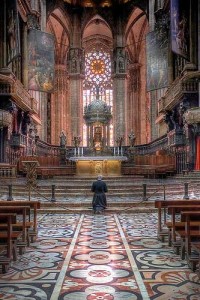
When our prayers appear to go unanswered, and God seems distant, indifferent, or deaf, we can wonder if there’s any use in praying at all. At times like this, the experience of the woman in today’s gospel can be very helpful to us.
As we heard, she pleaded with Jesus on behalf of her sick daughter. At first, Jesus gave her no response at all. Next, Jesus’ friends asked him to send her away. And then, after she had literally fallen on her knees and begged for help, Jesus quoted a popular saying which likened her people to dogs.
Jesus was intentionally testing her faith, and she passed the test. Others might have given up, and walked away in bitterness and disappointment. But not this woman! She continued to persist, her prayer was answered, and her daughter was healed.
Her witness demonstrates the importance of persistence in prayer. Persistence is essential, for several reasons. For starters, persistence teaches us patience and honors the fact that God acts in freedom, and isn’t a spigot of grace that we can turn on and off as we wish. In addition, persistence shows to God that some need is close to our hearts, and not just a casual request. Persistence can also make clear to us that God’s agenda, and God’s timetable, are sometimes very different than ours. Sometimes God says “Yes!” Sometimes God says “No.” And sometimes God says “Not yet.”
In short, nothing should discourage us from persisting in prayer. As St. Teresa of Avila said, “God never gets tired of giving; so let us never get tired of asking.”
Looks like were all going to be “treated” to a new series on the Discovery Channel wherein British Physicist Stephen Hawking will ponder theological and philosophical questions. A rather strange thing for a scientist to do actually.
I have no doubt that Stephen Hawking is a fine, even a brilliant scientist and theoretical physicist. But science has a limit, a limit rightly imposed on itself, which explores the physical world using empirical and evidential models that do not go beyond the physically observable world. Scientists, even theoretical physicists, do well who recognize their sphere, their field. And most scientists are quite willing and happy to acknowledge the self defined world of the physical sciences.
Stephen Hawking however, while clutching the mantle of his scientific robes, has recently strayed beyond what science can say. In my opinion he he causes harm to science and also proves himself a poor philosopher to boot. He is free to philosophize of course like any human being, but he ought not cloak it as science and we ought not give any special weight to his philosophical and theological statements, fields in which he clearly has no proper training. When it comes to these fields he is just “some dude” sipping a beer and opining on the deep questions.
But, sadly we DO have to pay attention to him because so many in our world bow their heads with religious reverence as he speaks, and give a weight to his words on these matters that the words do not deserve.
Mr Hawking was recently interviewed in USA Today about his new series. I would like to excerpt the article here and make some comments of my own. As usual the article is in bold, black, italics, my comments are in plain text red. The full article can be read here: USA Today: Science Snapshot
“I recently published a book that asked if God created the universe. It caused something of a stir,” Hawking, 69, begins on the episode. (The “stir”, in fact, was religious leaders denouncing his book’s conclusion that God was unnecessary to the universe.)
Well, of course we shouldn’t expect USA Today to be sympathetic to “religious leaders,” but “denounce” is an unnecessarily provocative description. Why is our position not described as a “principled opposition” rooted in concerns that Mr. Hawking may be making conclusions that science really cannot make, and that he strays from science into philosophy? Or why was our position not described as an “unconvinced?” For, frankly Mr Hawking’s argument is not airtight or invincible. There are many, who find his premises faulty and his conclusions questionable.
But USA Today would rather just depict us as “denouncers” who shout angry things and throw rocks from the sidelines.
As for me, I love science and am very excited about the amazing discoveries of the past 200 years. But I do not expect science, which studies the physical world using empirical observation, to be able to conclude one way or another about God who is pure spirit. To some extent I think science can draw conclusions that there is a design to the universe, but I do not expect it to make definitive claims, one way or the other, as to the who exactly this designer is.
Is this to “denounce,” or is it, as I propose, to take a principled stand that the physical sciences are a careful discipline which study the material world? And that they ought not be invoked to take philosophical and theological stands on the existence of God or angels, or the soul, or anything non-material.
On the show, he takes viewers on a walk through humanity’s history of appraising our place in the universe, from Vikings facing down eclipses to the laws of modern cosmology, which explain the origin and structure of universe. “I believe the discovery of these laws is mankind’s greatest achievement,” he says.
So it would seem that Mr Hawking, in his series, sees ancient and modern belief in God as just some sort of way to “find my place in the universe,” as a mere anthropological projection of cosmology? Somehow we are seen as similar to the superstitious of Vikings and other ancients who feared eclipses and other things things they did not understand.
I suspect I am also to suppose that just like we would laugh at, or pity someone getting spooked by an eclipse, we should also laugh at, or pity those who believe in God? It would seem that I am also supposed to presume that modern cosmology has it all figured out, unlike the pitiable ancients?
Mr Hawking has said elsewhere that he thinks belief in God is just a coping mechanism for believers. Well of course that is one way to believe in God. But it is not why I believe in God. Nor is it why most people I know believe in God.
I believe in God because I have experienced his power and presence in my life. I believe in God because I see evidence for his existence in the things he has made, things that manifest both a first cause and evidence an intelligent and purposeful design. I believe in God because he is changing my life, and in the laboratory of my own life, I have tested his wisdom and Word and found them to be true.
I am not consciously obsessed with dying, nor do I need to be comforted and reassured in the face of it. Frankly my faith challenges, more than comforts me. My faith holds up a cross before me, not a pillow. There is surely some consolation in there being a “meaning to my life,” but Mr. Hawking, indeed every human being, seeks meaning.
Believers should not be demeaned and our faith simplified by equating us with spooked Vikings staring at an eclipse. The Roman Catholic Faith is a smart and thoughtful faith extending back 2000 years to Christ, and 5000 years further into Jewish antiquity. We are not the yahoos some like to think we are. We have a strong, lasting and profound theological and philosophical tradition. And these have served as an important foundation for the development of the natural sciences.
In a short, exclusive interview with USA TODAY, Hawking e-mailed his answers to why he is taking on religion to start off the show, and discussed his life and legacy. Here are his answers to some of the questions:
Q: First, we wonder if you could comment on why you are tackling the existence of God question?A: I think Science can explain the Universe without the need for God.
And I would answer that physical science cannot conclude one way or another on the existence of a purely spiritual Being. Science need have no opinion on whether God is “needed,” for it limits its scope to studying effects, and secondary causality. The primary cause of all things is a philosophical and theological pondering, for it exists before singularity, and thus lies beyond what science can currently measure. In other words, science is not equipped to answer the ultimate question of “why” things exist. It studies things that do exist, and can probe their secondary causes. But primary causality, the ultimate why of the existence of all things lies outside the system.
What Mr Hawking is doing here is not science at all, it is philosophy, and poor philosophy at that. For philosophy carefully distinguishes cause and effect. It also distinguishes primary causality from secondary causality. Even more, it distinguishes material, formal, efficient, and final causality. Mr Hawking would seem to gloss over all this, and thus portrays his amateur status as a philosopher. If you’re going to enter the world of philosophy you might at least brush up on terminology so as to have a reasonably thoughtful discussion with your interlocutors.
Q. What problems you are working on now, and what do you see as the big questions in theoretical physics?A: I’m working on the question, why is there something rather than nothing, why are the laws of physics what they are.
Well, stick the laws of physics please, because science is not well equipped to answer the ultimate question of why. Ultimate meaning and “why all this” it just not a physically measurable thing. It is not a question physical science can really answer. How do you physically measure meaning? What are the scales you weigh it in? Does meaning have physical weight? That said, at least he is describing his work as theoretical physics. But remember, physics is going to have “physical” limits and must limit itself to the physical, material world.
Q: What do you see as your legacy in science or for the people who have become enthusiastic about physics as a result of your work and writing?A: I think my most important discovery is the fundamental relation between gravity and thermodynamics (the study of how heat moves through matter) which gives a black hole a temperature and causes it to evaporate slowly.
Cool!
Essentially on “Is There A Creator?,” Hawking notes that on the sub-atomic scale, particles are seen in experiments to appear from nowhere. And since the Big Bang started out smaller than an atom, similarly the universe likely “popped into existence without violating the known laws of Nature,” he says. Nothing created the universe, so in his view there was no need for a creator. That is his explanation for “why there is something rather than nothing.”
Well, the philosophical and logical errors here are more numerous than there is time to explore.
Even scientifically I wonder how we define “nowhere.” It may be a true fact that we do not know where the particles come from or how they appear, but we cannot logically leap to the absolute conclusion that they come form “nowhere.”
To say that they come from nowhere is an a priori assumption. It is unproved that the particles come from nowhere. And how would we prove that something came from nowhere? It may be that we simply don’t understand where they came from or how.
And, even if we could reasonably prove that something came from nowhere, does that ipso facto mean that it did not exist before it came from nowhere?
I suppose, as a theologian I could proffer that it existed spiritually before it materialized? But of course physical science cannot measure the spiritual and cannot accept my theory or measure it. So it would seem to science that the particle came from nowhere. But that does not mean that it did come from nowhere, only that science cannot explain where it came from or how; at least not now.
For example, a blind man might theorize that raindrops on his head come from nowhere, because he cannot see their cause. But that does not prove they come from nowhere, only that he does not know where they come from or how.
“The series is all about satisfying our curiosity about the world,” Hendricks says. Rather than tackling science like classroom topics, the shows will ask questions and see what research has to say about them, he says, an inversion of the standard science show formula. “That is why we are starting with Stephen Hawking,” Hendricks adds. “We want to be asking the deepest questions we can, such as ‘Did God Create the Universe?”
A question which science can’t answer.
Frankly, save your time from watching this Hawking show. If you do watch it, please remember that Mr Hawking is free to wonder and theorize. But that is all it is, a theory. And remember too that he is wandering as he wonders. He is wandering beyond the proper limits of his discipline. While he may be a fine physicist, but that does make him a good philosopher, any more than it makes him a good car mechanic. I would not want him to work on my car any more than I want to give weight to his amateurish philosophical ponderings. He is free to make them, but they are poorly set forth, based on poor philosophical foundations and logical flaws. Do not be fooled by his lab coat.
“Don’t look down!” is good advice we can give to those people who have a fear of heights. And in a sense, this is also the advice that Jesus gave to Peter in today’s gospel.
As we heard, Peter and his friends found themselves in the midst of a storm. The wind was howling, the waves were pounding, and their little boat was being dangerously tossed about.
And then, from seemingly out of nowhere, Jesus appeared. He didn’t immediately calm the storm, as he sometimes does. Instead, he came to his friends in the midst of the storm, in order to test them, and to help them learn about faith.
While he walked on the water, Jesus invited Peter to come to him, and what happened next is very instructive for us. As long as Peter kept his eyes focused on Jesus, the wind and the waves didn’t consume him. Instead, he was able to rise above them! It was only when he took his eyes off Jesus that he began to sink, and was filled with fear.
When you and I find ourselves being tossed about by the storms of life, we can take a cue from Peter. As long as we keep our eyes on Jesus, as long as we try our best to stay close to him in faith and trust, we can be assured that we won’t drown, that we won’t sink into despair, and that we won’t be paralyzed by fear. Because we will hear Jesus say to us, as he said to Peter: “Take courage, it is I; do not be afraid.”
In a recent post on the ministry of priests, there were a few comments that reflected both frustration and pain over the fact that a loved one had been in the hospital and, though the priest was called, he either never came or did not come at once. To be sure, it is lamentable that any priest would receive a request for a visit and do nothing in response to it. The Church as a whole, and pastors in particular, have obligations to the faithful who are seriously ill, especially if they are in danger of death. That said, there are very real difficulties that priests face in responding immediately and personally to all requests. In this post I would like to ponder some of the pertinent issues involved in sick calls, especially to the hospitalized.
Perhaps it is best to begin with a mini-catechesis on the Sacrament of Anointing of the Sick.
By the sacred anointing of the sick and the prayer of the priests, the whole Church commends those who are ill to the suffering and glorified Lord, that he may raise them up and save them. And indeed she exhorts them to contribute to the good of the People of God by freely uniting themselves to the Passion and death of Christ. (Catechism # 1499).
Scripture teaches that the sick are to be anointed by priests – Jesus sent the apostles forth two by two to proclaim the kingdom. The following description is given of their actions: So they went out and preached that men should repent. And they cast out many demons, and anointed with oil many that were sick and healed them. (Mk 6:12-13). We also read, Is any among you sick? Let him call for the presbyters [i.e. “priests”] of the church, and let them pray over him, anointing him with oil in the name of the Lord; and the prayer of faith will save the sick person, and the Lord will raise him up; and if he has committed sins, he will be forgiven. (James 5:14-15).
The Sacrament of the Sick is given to baptized Catholics who are seriously ill. Thus, a person with an ordinary virus, flu or injury is not usually anointed unless such illness or injury has a serious nature due to other pre-existing situations. Since most surgeries are presumed to involve serious maladies and involve significant risk, those scheduled for surgery (especially when general anesthesia is used) ought to be anointed before the surgery. A person is usually anointed only once in the course of an illness or injury. However those suffering from illnesses of a long duration or due to advancing age may be anointed periodically and especially if their condition takes a turn for the worse.
Children under the age of seven are not anointed. This is because the sacrament is related to the Sacrament of Confession and is designed to be a remedy against temptations and the effects of sin. Children under the age of seven are usually not presumed to have sufficient use of reason to be considered responsible for sins committed and hence have no need of this sacrament.
Those who receive this sacrament ought also to have recourse to confession if it can reasonably be offered and celebrated. While confession is not strictly required, anointing and confession both related to the problem of sin. Anointing is not just celebrated with the idea of physical cure in mind, but of spiritual strengthening and the avoidance of temptation that often comes with illness. Hence, confession and anointing are integrally related.
In the past, many often waited to the point of death before requesting this sacrament of the priests of the Church. Pastoral care today however emphasizes that this sacrament should be offered long before the final stages of dying set in. When physical illness of a serious or chronic nature sets in the sacrament should be administered sooner rather than later. Likewise, it is a good idea to celebrate the sacrament before surgery takes place. The Sacrament of Anointing of the Sick is meant foremost to help us experience healing and assist us to live gracefully with our illnesses, and not merely as a Sacrament that prepares us to die.
The purpose of the sacrament – One gift to be hoped for in this sacrament is the complete recovery of health. This is sometimes experienced. Miraculous cures are surely a sign of the power of the risen Lord and they were promised as a sign of the reign of God (cf. Mk 16:18). And yet this is not all that is meant by the “healing” that is given and experienced in this sacrament. The word “healing” however involves more than just the notion of cure. In his own day Jesus did not heal everyone. Christ also taught of the inevitability of suffering and the need to remain faithful: If any man would come after me, let him deny himself and take up his cross daily and follow me (Lk. 9:23). St. Paul too experienced the call to faithful endurance as he prayed for a cure of his own illness: Three times I besought the Lord about this, that it should leave me; but he said to me, “My grace is sufficient for you, for my power is made perfect in weakness.” (2 Cor. 12:9-10). Hence the healing that this sacrament offers is more often the grace to endure suffering with holiness, and faith. Hence, a grace of this sacrament is one of strengthening, peace and courage to overcome the difficulties that go with the condition of serious illness or the frailty of old age. This grace is a gift of the Holy Spirit, who renews trust and faith in God and strengthens against the temptations of the evil one, the temptation to discouragement and anguish in the face of death. (Catechism # 1590)
Especially to be noted in the mini-catechesis above is that the anointing of the sick is not primarily a sacrament for emergencies and should not be delayed until death is imminent, unless this cannot be avoided. There are certain circumstances that require an emergency administration of the sacrament, such as in the aftermath of a serious accident or when one is suddenly stricken. However, as a general practice, anointing of the sick ought to be a more routine aspect of the lives of the chronically ill and the aged, or of those who have entered the various stages of serious illnesses. If death seems to be certainly approaching, one ought to be anointed well before the final stages, and surely before unconsciousness ensues. In no case should a family wait “for the last moment” to summon the priest. This is a Sacrament for the living, not merely for those on the very threshold of death. Those who are scheduled for surgery ought to be anointed before entering the hospital, preferably at the parish, if this can be arranged.
The goal is for every Catholic to be “up-to-date” on their Sacraments long before death or the danger of death ensues, or even the advent of sudden and unexpected death. Of every Catholic who faces death, whether sudden, or at the end of a long illness, we ought to be able to say they have very recently received Holy Communion, and that confession has been celebrated with a reasonable period prior to death. Further those who have not died suddenly and unexpectedly, ought to have been anointed at some time significantly prior to death. In such cases there is no emergency need to summon the priest, for the ordinary pastoral care has already been provided. Emergency anointing ought be reserved for those who are suddenly and unexpectedly stricken, or for those who are in accidents.
And that leads us to the concerns that some have expressed that a priest was sought, and no priest came, or did not come soon.
There are a number of factors that affect the availability of the parish priest. And while these factors do not excuse a complete lack of pastoral care, they ought to be considered as we look to a solution to the problem. These factors include:
There are far fewer priests than years ago. Until about 25 years ago, most parishes had more than one priest. Many larger parishes which had as many as four or five priests, back in the 1960s, have only one priest now, and that priest has many, many duties.
Fewer hospitals have assigned and full time chaplains. Here in DC only the largest hospital centers have regular and full-time chaplains. The smaller hospitals and nursing homes depend on local parishes for pastoral care.
Most Catholics no longer go to neighborhood hospitals near the parish. Rather they are assigned to hospitals that specialize in their issues. For example, in my own parish, I may have parishioners in as many as 6 or 7 different hospitals spread all throughout the area (Providence, Georgetown, Johns Hopkins, Southern Maryland, PG Hospital, Adventist Hospital, Holy Cross, Washington Hospital Center, Children’s Hospital, Veterans, and so forth). Some of my parishioners are taken as far away as Baltimore. Regular visits to hospitalized members may not be possible when they are in such varied locations. Pastors often need to depend on clergy more local to the hospital in question. This leads to concerns that “my pastor never came and saw me.” But some parishioners simply do not realize how unrealistic this is for pastors, often without assisting clergy, with dozens of parishioners in as many as half a dozen different and often distant hospitals.
Pastors and priests also have serious duties at the parish which cannot always be dropped at a moment’s notice. A pastor may get an urgent call to come at once, yet he is just getting ready to celebrate a wedding. He cannot simply say to the couple they will have to have their wedding another day. Calls may come in as well in the middle of a Sunday Mass, or other significant function where a priest cannot reasonably dash off. A priest may also be teaching a class or bible study involving thirty or more people and it may not be reasonable for him to rush out in the middle of a class. He may be completely away from the parish teaching or filling in for another priest. It is simply not possible for a parish priest to be 100% available at every moment for a possible sick call, even an emergency. Sometimes the best he can do is to ask a parish staff member or the hospital to find another priest. It is not always right to allow the urgent to wholly eclipse the important.
Towards a solution. The care of the sick is important and reasonable urgencies need to be addressed by the Church. What are some of the things that can be done to realistically address the needs of Catholics given the factors seen above?
Large hospital centers should have full time chaplains if this is possible. This is especially true if the hospital has a shock and trauma unit that routinely receives accident victims and those suddenly stricken. The chaplain would also need to a coordinate with local parishes to cover any gaps caused by his day off or vacation. Here in Washington, we are often able to depend on priests from religious orders. Other dioceses are less blessed with options.
If a full time chaplain really cannot be found, the parishes near the larger hospitals need to develop a carefully coordinated plan to cover the hospitals and field emergencies. The plan should make sure that gaps are properly covered and emergency calls can be quickly handled. Further, parishioners and hospital staffs should be well aware of how to contact the priest on duty.
Smaller hospitals and nursing homes still need coverage from the local parishes. The diocese should have a carefully crafted plan on who covers them and when. Emergency clergy numbers for each hospital and nursing home should be easily available to all the priests and staff of the parishes in each diocese; for it often happens that a brother priest near the hospital will need to be contacted by a priest or staff member from across town who cannot reasonably make a visit.
Some teaching on the nature of a true sacramental emergency needs to be made to both the faithful and to hospital staffs. When death is clearly imminent we usually have an emergency. However, just because some one has gone to an emergency room does not mean that death is imminent, and that a priest is needed at once. Sometimes it is fine to wait for the next day when a priest routinely visits. Even when death is imminent, it is sometimes the case that a priest gave sacraments just the day before. It is not necessary for the priest to return and be there at the moment of death, when a person has been receiving ordinary pastoral care given to those who are seriously ill. It is sufficient in such cases that the person has recently received the sacraments and there is no reason to summon the priest to come at once or in the middle of the night. True sacramental emergencies usually occur for those who are suddenly and unexpectedly stricken or who are in an accident and are, for these reasons, in immediate danger of death.
Parish priests should well instruct their staff how to field emergency calls, assess their importance, and know options to pursue if the parish priest cannot be reasonably reached. Families should not simply be told, a priest cannot be found, they must be helped to find a priest in an authentically urgent situation.
To the degree possible, hospital staffs should also be able to know how to contact a priest quickly. Their phone lists should be up to date and include several options.
The faithful may have to accept that a priest will not always be found in time. In such cases they ought to remember that God does not reject any who call on him. And, though anointing is surely helpful, it is not absolutely necessary for salvation. Even confession in dying moments should not be thought of as magic. If a person seeks a priest and a priest cannot be reasonably found in time, it suffices for the person to make an act of contrition – no one who calls on the Lord will he ever reject. If a person is unconscious, a priest saying absolution over them, will only have effect if they had some contrition and openness to receive the sacraments prior to the unconscious state. Even when a priest rushes he does not always get there in time. In such cases, we have to trust in God.
Again, an important goal for every Catholic is to be up to date on their sacraments and in a state of grace. Sacraments are to be part of ordinary pastoral care and an ordinary part of the life of a Catholic. They are not to be merely postponed to the moment of death.
It is surely an added grief when a priest cannot be found in cases of true emergency or when proper pastoral care is not reasonably extended to the chronically ill. And while it may be an explanation that parish priests are sometimes overwhelmed, it is not an excuse. Parishes and dioceses need to work together with the faithful to see that the sick and the dying are properly cared for, that emergencies are covered, and that the faithful are properly instructed on the nature of the sacraments and how to secure the ministry of a priest when such needs arise.
As always, I am interested in your experiences in this regard. It is most helpful if you can suggest how the Church might better help in such matters.
A long time ago, a popular magazine published a short test for people who were worried that they might be depressed. One of the questions was “Do you whistle?” And if yes, “Have you stopped whistling?” It seems that in general, people who whistle are happy people. Though at first , I thought this was a silly question, I have noticed in my own life, while not a big whistler, when I am stressed out, I do stop whistling and humming.
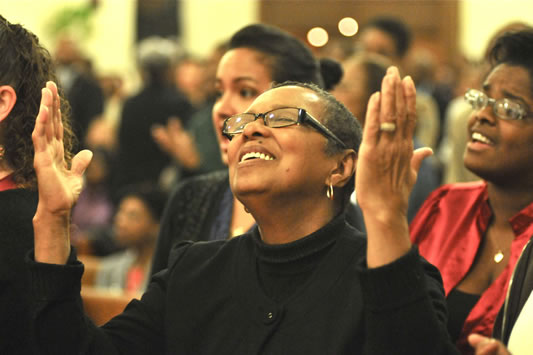
“Sing with Joy to God our Help” is today’s Psalm refrain and it got me thinking about Saint Augustine’s thought that singing is “praying twice.” I have always thought that the Negro Spirituals prove this point so well. Spirituals teach us that indeed song can most fully express the deepest sorrow of our soul and were the prayer of a people who believed that always in God there is hope—nothing that life throws at us will be greater than God’s love. Recently, a friend‘s comment about another song from the American Christian tradition brought this to life once more.
I gathered with some of the folks with whom I lived when I was a doctoral student in Rome. One friend, Lynda is just a year past her final treatment for breast cancer. I had not seen Lynda for more than three years and so you can imagine how great it was to see her with a full head of hair, looking so healthy and feeling so good. We were gathered for a colloquium and retreat and the person coordinating music asked if we had any song requests for liturgy. I suggested How Can I Keep From Singing. Lynda leaned over and said “That is one of the songs I downloaded on my Ipod during treatment. As you might guess we shared a few tears as we sang “No fear can shake my inmost calm while to that rock I’m clinging…”
For a song I have always loved, it now has even more meaning knowing that it was part of Lynda’s prayer as she entrusted herself and her family to God’s care. Do you have a song that you sing with joy to God our Help?
Note: While this group of young people in the video may not be professional, they sound like the way a congregation would sing this at Mass!
“Follow your heart” and “pursue your dreams” are advice often given to young people today. In eighteenth century Italy, however, young Alphonsus Liguori faced an entirely different set of expectations. Because he was “upper class” by birth, he was expected to pursue a professional career and get married to someone of his social standing. Therefore, when Alphonsus decided to enter the priesthood, his father was outraged, and refused to speak with him for two years. Alphonsus was resolute, however, and after ordination he continued his break from aristocratic expectations by serving in desolate city slums and remote mountain regions. Later, when he was named bishop in a mostly well-to-do diocese, he thought that it must be a punishment for his sins.
The experiences of St. Alphonsus Liguori remind us that when we open our hearts and allow God to touch our lives, our future will be anything but conventional, safe, or predictable. Indeed, we’ll find ourselves challenging our culture, and being challenged by it; we’ll break molds, and break out of pigeonholes; we’ll defy the expectations of others, but with grace we’ll exceed them. God’s plans are indeed full of surprises, presenting us with both joys and crosses that we could never foresee.
Today, as we continue our uncharted journeys, we’d do well to echo these words of St. Alphonsus himself: “I offer myself entirely to you (God), that you might do with me and all that belongs to me as you please.”
The cities of the Northeast and upper Midwest were once teeming with Catholics. The city centers featured many and thriving Catholic parishes of various ethnic derivations. Catholics were uptown, down town and all around town. Some of the blocks in the older Chicago neighborhoods would even feature several parishes: there was the Polish Parish, the Irish, the German, and Italian, each of them little cities within themselves. Consider a description of old Chicago and other Catholic cities of the Northeast, by John McGreevy in his Book, Parish Boundaries which I summarize:
Virtually all the Catholic immigrant groups were within two generations of immigration, and all placed enormous financial, social, and cultural weight on the parish church as an organizer of local life. A Detroit study found 70% of Catholics claiming to attend services once a week, as opposed to 33% of the city’s white Protestants, and 12% of the city’s Jews….
The Catholic churches whether they were Polish, Italian, Portuguese, or Irish, simply dominated the life and activities of the community. The Catholic world, supervised by priests was disciplined and local. Many parishes sponsored enormous neighborhood carnivals each year (with local politicians making appearances and local businesses donating supplies).
Most parishes also contained a large number of formal organizations – including youth groups, mother’s clubs, parish choirs, and fraternal organizations – each with a priest moderator, the requisite fundraisers and group masses. Parish sports teams for even the youngest boys shaped parish identity, with fierce rivalries developing in Catholic sports leagues.
The dense social networks centered themselves around an institutional structure of enormous magnitude. Virtually every parish in the northern cities included a church (often of remarkable scale), a parochial school, a convent, a rectory and often ancillary gymnasiums or auditoriums. Even hostile observers professed admiration for the marvelous organization and discipline of the Roman Catholic Church. [e.g. Holy Family Church in Chicago with its massive school next door, more buildings are behind].
Brooklyn alone contained on hundred and twenty-nine parishes and over one hundred Catholic elementary schools. In New York city more generally forty-five orders of religious men lived. Nuns managed twenty-five hospitals…schools enrolled 214,000 students. This list of summer camps, colleges and universities , retreat centers, retirement homes, seminaries and orphanages was daunting.
For all Euro-American Catholic groups, neighborhood, parish, and religion were constantly intertwined…Small statues of Mary or local saints appeared in neighborhood yards, while crosses and religious artifacts decorated individual rooms. Catholic parishes routinely sponsored parades and processions through the streets of the parish.
Catholic leaders leaders deliberately created a Catholic counterpart for virtually every secular organization. The assumption was that the parish must make every effort to become the real center of attraction in the lives of the parishioners, it must become the hub around which a large number of their interests revolve. [McGreevy, pp. 13-28]
Decline – We are well aware and have discussed on this blog frequently that many of these once thriving centers of Catholicism are in decline. Parishes and schools are closing in large numbers. The dramatic decline in Mass attendance from numbers near or above 70% down to our current 27% is part of the explanation. But another part of the explanation in the migration of Catholics out of the cities and out of the Northeast.
The first of the great migrations took place after the Second World War when Catholic moved in large numbers to the newly created and growing suburbs. They moved from uptown and downtown to “out of town.” The once great churches of the city center grew gradually more empty and less vital.
The initial experience in the suburbs was similar: large parishes, large schools, large buildings, all packed to the gills, and many activities. But suburban life was less tightly knit and ethnic ties were also being lost in those days in the great melting pot of the American experience. In a very subtle, but steady way, the cohesiveness of Catholics and parish life was becoming less a dominant force. Slowly Catholics ventured out of the Catholic “Ghetto” and sought wider connections and approval outside the Catholic world. The election of John F. Kennedy both symbolized and furthered this trend.
Then in successive waves, the sexual revolution, and the over all cultural revolution of the late 1960s caught Catholics and the Church unprepared. As secularism has grown and eroded the influence faith once had, even many of the flourishing suburban parishes of the post-war era are now much smaller and far less vital.
The second of the great migrations is occurring right now as Catholics, in large numbers, have left the “uptowns,” “downtowns” and “just out of towns” of the northeast and are headed “low down” to the south, and the Southeast. A quote from a recent CARA blog illustrates this point:
[Consider that], in 2001, the Archdiocese of Atlanta had more than 320,000 Catholics, 131 active diocesan priests, and 77 parishes (note in 1991, the Archdiocese had 176,000 Catholics and 65 parishes). Moving a decade ahead, the diocese now has 900,000 Catholics, 141 active diocesan priests, and 87 parishes. Thus, the number of Catholics increased by 181% in the last decade but the number priests only increased by 8% and the number of parishes by 13%. This means the number of Catholics per parish in the Archdiocese has grown from 4,156 in 2001 to 10,345 in 2011. Ten new parishes have been added to accommodate 580,000 additional Catholics. [1]
Now that is remarkable growth. And many cities of the South and Southwest are having similar experiences. As can be seen, the growth is so remarkable and so quick that it is difficult to keep up. Due to a shortage of priests and other resources, the usual approach of southern and southwestern dioceses is to build large churches that can seat well over 1000 and establish what is, in effect a mega church.
I have celebrated masses in the deep south, in some of these parishes, and the experience is quite amazing. One parish near Jacksonville, Fla, where I celebrated one Sunday, seated over 2200. It was a tasteful, in fact a very beautiful Church, but it was big, with a fan shaped main floor and a spacious balcony ringing three sides. The place was packed that morning, with three other masses scheduled and a vigil the night before, all filled or at least well attended. Forty-eight extraordinary ministers of Holy Communion came forward to assist with the distribution. The parking lot outside featured shuttle buses to get the farthest parkers back and forth. The pastor explained that this was the trend in the south. With few priests, parishes have to built big to get as many Catholics in at one time as possible and keep the number of masses manageable for the priests.
At one level it all seems very exciting to hear of booming Catholic Parishes that need parking shuttle buses. It reminds one of the massive and flourishing parishes that once filled the northeastern cities. But there are some concerns that go with these mega-parishes. It is articulated at the CARA blog:
[A] study, conducted by CARA, … finds that larger U.S. parishes tend to have lower rates of attendance, lower levels of sacramental activity per household, and less giving per registered household than what is reported in smaller parishes. [So], there appears to be a size limit at which the parish community begins to become less active and less giving. [2]
In other words, such parishes risk loosing personal contact with souls. And without personal contact and a sense of being an integral member of a community, it is easier for people to drift and fall away. Large numbers can hide steady erosion for a while but it would seem that the impersonal nature of large parishes allows the faithful to become disengaged. They can also hide behind the notion that “someone in this big parish will handle the trouble that the pastor is enunciating.” As impressive as large parishes are, it is clear from our experiences after the war, and now, that they can also become unraveled very quickly if no one feels essential.
The CARA blog concludes:
As we have shown in a previous post, there are not a lot of dioceses building new parishes in areas where the Catholic population moved and is growing strongly…..But a parish building boom will likely be needed in the U.S. Sun Belt in the 21st century….It may be time to ask, with great care as well, when and how do we open new parishes where they are needed? After moving, will Catholics always have a new Catholic home to “come home” to? [3]
I do not know what the perfect size for a parish is. And even if I say a number, vocations to the priesthood are simply going to be a factor. As for me, I have 900 registered families and about 550 on a Sunday morning. For me, this is a perfect number. It is large enough for us to be financially viable, indeed we do very well, money wise. It is also large enough that I can have a fairly diverse cadre of volunteers to accomplish needed tasks. Yet is small enough for one priest to handle and even can get to know many people well. It is small enough too that people know each other well and people are missed when the drift away. But this model cannot be sustained diocesan-wide. We just don’t have enough priests to staff enough parishes at this scale.
But, it would seem, that large parishes still need a small town feel and experience, according to the CARA study. It makes sense, otherwise, people get lost. So, small targeted groups that gather in large parishes are needed to provide the personal encounters so necessary in our Christian walk. Perhaps it is targeted Bible studies, fraternal organizations, mother’s groups, etc.
The great mega parishes of the 20th Century urban north had their day but collapsed quickly, for it would seem that their communal ties declined after the War, or were not as deep as they were thought to be. People left too quickly for us to conclude that urban and ethnic communities had ties that really bound them together after WWII. It would seem we were a 1000 miles wide, but only two inches thick. The large suburban parishes of the postwar suburban north and east have also struggled to keep Catholics tied in. Big looks great but it isn’t necessarily better. While it is true we cannot simply build lots of small parishes, we have to be creative and build communities within parishes wherein there is accountability and love, something personal and engaging, something which makes people experience that they are essential to the Lord and to the Church. Doin’ the uptown, low down, may not be the dance we want to recreate as the Church spreads (low down) to the south.
I am interested in your thoughts, especially if you are member of a large Catholic Parish.
Photo Credits:
Holy Family Church (Upper Right) from the Archdiocese of Chicago Archive,
Lower Left, Our Lady Queen of the Universe, Orlando, from the Website.
–
Here are some fond remembrances of going to Catholic School in Chicago:
A few years back, I taught a course at my parish on the sacrament of the Holy Eucharist. During one session, I spoke about the Real Presence of Jesus in the Eucharist- how bread and wine are changed into the very Body and Blood of Christ. At one point, one of the participants raised her hand, and explained that she felt strongly moved to speak. She told how once she had been attending a daily Mass at St. Matthew’s Cathedral in downtown Washington. The priest who was preaching had just returned from Jerusalem. While he was there, he walked the famous Via Dolorosa- the Way of the Cross- the route tradition says Jesus walked on Good Friday. While she listened to this, the woman thought: “How wonderful to have been so close to Jesus!” Then at that moment, a voice in her heart said, “But not as close as I am to you now.” She knew that voice to be the voice of the Lord, and she has treasured ever since then that reminder that we are never as close to the Lord as when we receive him at Mass, in the Eucharist.
This is something we need to keep in mind as we consider today’s gospel. Jesus’ miracle of loaves and fishes is meant to teach us about the Eucharist. Because just as Jesus took bread, blessed it, broke it, and gave it to the crowds, so too at Mass a priest does exactly the same thing: He takes bread, blesses it, breaks it, and gives it to the congregation.
This bread that is broken, however, is no ordinary bread. As the woman in my class reminded us, that bread is the Body of Christ. Jesus is present in that consecrated bread, not in an empty, symbolic way, but in a real, personal way. That’s why we genuflect whenever we pass before a tabernacle- because Jesus himself is there.
When this bread is broken at Mass, it’s a special sign to us that Jesus is able to multiply his presence in the Eucharist just as he multiplied the bread in today’s gospel miracle. In other words, Jesus is present in the same way in the hundreds of millions of consecrated hosts, or wafers of bread, that will be consumed by faithful Catholics at Masses all around the world today.
That’s a pretty amazing thing, if you think about it. However, Jesus is able to multiply his presence in another way too. He does so through you and me. Just like the Eucharistic bread, we too are called the body of Christ. St. Paul says that we are one bread, one body. As individuals, however, we are sent forth at the end of Mass to make Jesus present in our homes and in our communities. In other words, we too are bread that is broken so that Jesus can be present in many places, all at the same time.
I know of a church in a rough part of the Bronx that is under the pastoral care of a group of Franciscan priests and brothers. They’ve made a point of getting to know the people in the neighborhood. When they meet them on the sidewalk in front of the church, they’ll often say, “Jesus is inside. Why don’t you stop in and pray?” And many people do! However, shouldn’t we be able to say that about our own homes too? Shouldn’t people be able to find Jesus under our roof because we are such good witnesses to Jesus? We must always remember that just as Jesus broke the bread to nourish everyone in the crowd, we are bread broken so that the world might be nourished through our witness to Christ.
In another, way however, many of us are already broken. Not broken bread, but broken people. We all have wounds and hurts that we carry with us, and we come to Jesus in the Eucharist, seeking to be made whole again. We come so that the hardships of life won’t crush us, but will instead bring us a little bit closer to Christ- he who was broken on the cross so that we might be healed. We seek broken bread to heal our very brokenness.
Just consider today’s gospel. Great crowds of people had followed Jesus into the wilderness- looking for hope, looking for meaning, looking for healing, looking for love, looking for God. Jesus knew their needs. He had pity on them; he cured their illnesses, and fed them until they were all satisfied.
And isn’t that what Jesus does for us in the Eucharist? Isn’t that what Jesus can do for us, right now? We come to him in our brokenness, and he in turn gives himself to us. He gives us his “eu charis,” which means “good gift” and he nourishes us, forgives us, strengthens us, heals us, and fills us with his own, abundant life. He heals our loneliness through his Real Presence. And he unites us to his sacrifice on the cross, so that we might be made whole, through his having been broken.
If you’re suffering right now- and that’s probably most of us in some way- I encourage you to attend Mass as often as you can. As I priest, I have the privilege of celebrating daily Mass, and through my ministry I’ve come to know the stories of many of those who worship with me. There’s the terminally ill patient; the lonely widower; the young man whose brother is in Iraq; the employee mistreated by her boss; the father with the sick child; the victim struggling to forgive; the addict looking for freedom; the husband with the strained marriage; the mother of the rebellious teen. We stand around the altar in our brokenness, asking Jesus to put the broken pieces back together.
And he does, because he loves us. That’s why he have us the Eucharist: To feed us as broken bread; to be present to us as broken bread; to send us forth to others as broken bread; and then, through that bread, to make us whole, once again.

 When our prayers appear to go unanswered, and God seems distant, indifferent, or deaf, we can wonder if there’s any use in praying at all. At times like this, the experience of the woman in today’s gospel can be very helpful to us.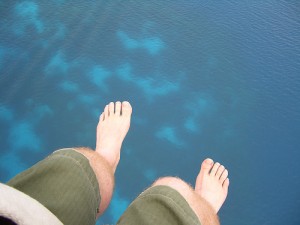
 I have celebrated masses in the deep south, in some of these parishes, and the experience is quite amazing. One parish near Jacksonville, Fla, where I celebrated one Sunday, seated over 2200. It was a tasteful, in fact a very beautiful Church, but it was big, with a fan shaped main floor and a spacious balcony ringing three sides. The place was packed that morning, with three other masses scheduled and a vigil the night before, all filled or at least well attended. Forty-eight extraordinary ministers of Holy Communion came forward to assist with the distribution. The parking lot outside featured shuttle buses to get the farthest parkers back and forth. The pastor explained that this was the trend in the south. With few priests, parishes have to built big to get as many Catholics in at one time as possible and keep the number of masses manageable for the priests.