So here we go again, another Friday, another analysis of a commercial. Permit me an eisegesis (a “reading into”) of an Ad, wherein I see a Christian teaching. It is another State Farm Commercial where great destruction gives way to a “nice landing” and a “better state.” Let’s look at the ad in stages and see it’s (likely unintentional) Biblical themes.
As the commercial opens we seen chaos, panic, and destruction all about. We are told by the ad, that our location is in the “State of Chaos.” A terrible and monstrous machine-like enemy is on the attack. And here is a paradigm for the world, with Satan afflicting it. For Scripture says,
Your adversary, the devil, prowls around like a roaring lion, seeking someone to devour. (1 Peter 5:8)
The LORD said to Satan, “Where have you come from?” Satan answered the LORD, “From roaming through the earth and going back and forth in it.” (Job 1:7)
After that, in my vision at night I looked, and there before me was a fourth beast–terrifying and frightening and very powerful. It had large iron teeth; it crushed and devoured its victims and trampled underfoot whatever was left. (Daniel 7:7)
Leviathan the gliding serpent, Leviathan the coiling serpent…. (Isaiah 27:1)
The great dragon was hurled down—that ancient serpent called the devil, or Satan, who leads the whole world astray. He was hurled to the earth….When the dragon saw that he had been hurled to the earth, he pursued the woman who had given birth to the male child…..the dragon was enraged at the woman and went off to make war against the rest of her offspring—those who obey God’s commandments and hold to the testimony of Jesus. (Rev 12:varia)
And the dragon stood on the shore of the sea. (Rev 13:1)
And of the terrible fear incited by this monstrous devil Scripture speaks of how it holds us in bondage and that Christ must free us from such fear:
Since the children have flesh and blood, Jesus too shared in their humanity so that by his death he might destroy him who holds the power of death—that is, the devil— and free those who all their lives were held in slavery by their fear of death. (Heb) 2:14-15
For you did not receive a spirit that makes you a slave again to fear, but you received the Spirit of sonship. (Rom 8:15)
But without Christ there is only fear and panic all about, and the power of Christ has not yet entered the scene in this Ad.
Two men walk up observing and describing what they see. They cannot really help anyone, they can simply observe and lament. Let’s call them Moses and Elijah. This is another way of saying they are the Law and the Prophets, the Old Testament. And, in fact, the Old Testament could describe the problems we face and lament the human condition, but the Law and the prophets could not really save us, or overcome Satan’s terrible destruction. Scripture says,
For what the law was powerless to do in that it was weakened by the sinful nature, God did by sending his own Son in the likeness of sinful man to be a sin offering (Rom 8:3).
The former regulation is set aside because it was weak and useless (for the law made nothing perfect). (Heb 7:18)
Therefore no one will be declared righteous in his sight by observing the law; rather, through the law we become conscious of sin (Rom 3:20).
Hence, our Moses and Elijah figure in the ad, our living “voices” of the Old Testament can describe the problem and lament the destruction, but not really be able to do anything to stop it. They can merely observe as the destruction focuses on a property of a man named Dwayne. One of the figures laments “Man, that thing does not like Dwayne!” Yes, indeed, it is Satan who is our accuser, our tempter, our ancient enemy, who demands to sift us like wheat, who pursues us and seeks to devour us and all we have.
As the Satan figure destroys a house in the ad, we recall how Satan is a home wrecker and a devourer of families. As he destroys a car we are mindful of how he attempts to hinder our journey to God.
But in the midst of all this destruction, and just when it seems Dwayne himself is toast, the screen goes red (proclaiming the Blood of Christ). And there is a voice of an unseen announcer. Lets call him the Lord….The Word made flesh, Jesus, who announces good news to the poor! And our announcer says on the very RED screen, “State Farm’s got you covered!“
Yes, but of course the “state farm” for us is ultimately the Kingdom of God, and it is the blood of Jesus which covers us like the blood of the lamb on the doorposts once rebuked the destroying angel and staved off death in the Exodus. We are saved by the Blood of the Lamb, Jesus Christ. Of this blood Scripture says, In fact, the law requires that nearly everything be cleansed with blood, and without the shedding of blood there is no forgiveness (Heb 9:22). Yes, we’re covered alright: The Kingdom of God has got you covered. As the blood of Jesus covers us, we are washed clean, and saved from destruction.
Suddenly we’re back to the scene, and the Satanic destroyer looses his grip on Dwayne. Saved by the Blood! Dwayne falls away from Satan, and makes a perfect three point landing. Our Moses and Elijah figure nod with approval and say, “Nice landing.”
Finally, our off screen Announcer, the Lord, says, “Get to a better state.”
Indeed, for Scripture records our announcer, Jesus, saying,
I have called you out of the world. (Jn 15:19).
Jesus said, “Follow me” (Jn 1:43)
Come to me, all you who are weary and burdened, and I will give you rest (Matt 11:28)
But you are a chosen people, a royal priesthood, a holy nation, a people belonging to God, that you may declare the praises of him who called you out of darkness into his wonderful light (1 Peter 2:9)
Yes, indeed, Get to a better state.The world as we know it is passing away (1 Cor 7:31). And whatever destruction this world, the State of Chaos, dishes out, Just remember that Jesus has you covered and invites you to “Get to a better State” For we know that if the earthly tent we live in is destroyed, we have a building from God, an eternal house in heaven, not built by human hands. (2 Cor 5:1).
Get to a better state, follow Jesus who’s got you covered.
Photo above is a screen shot from the State Farm AD.
I was alerted to a fascinating and alarming article on demographic trends that shows forth several significant trends: a globally aging population (not just in the West), the wide scale decline of the nuclear family, and the continued growth of mega cities. One of the most surprising assertions in the article is that many of the trends we have attributed to the increasingly decadent West, are becoming far more worldwide even to include the Muslim and African worlds. Of course we must remember that demographics often look at current trends and project them out into the future. As the article itself points out, trends do not always continue unabated. Nevertheless we do well to observe current trends since they can actually help us to address them and alter their otherwise inevitable consequences.
Lets take a look at the article written by Phillip Longman. I am presenting excerpts, but the full article is available here: The World Will Be More Crowded, With Old People In what follows, the excerpts from the article are in bold, black, italics and my own comments are in plain red text.
What demography tells us is this: The human population will continue to grow, though in a very different way from in the past. The United Nations’ most recent “mid-range” projection calls for an increase to 8 billion people by 2025 and to 10.1 billion by century’s end.
I am aware that some other demographers disagree with this, seeing an implosion of sorts on the way. They argue that the U.N. has polemical reasons for forecasting such a large increase in population, since it will give greater urgency to its population control projects encouraging abortion, contraception and sterilization. For the purposes of my comments on this article I don’t want to get into that accusation here, though I largely suspect there may be some truth to it, at least at the margins.
[But] the U.N. projects that over the next 40 years, more than half (58 percent), of the world’s population growth will come from increases in the number of people over 60, while only 6 percent will come from people under 30. Indeed, the U.N. projects that by 2025, the population of children under 5, already in steep decline in most developed countries, will be falling globally — and that’s even after assuming a substantial rebound in birth rates in the developing world. A gray tsunami will be sweeping the planet.
Here note the word “globally.” Low birth rates have been the characteristic of the Western, developed world. But now it would seem that these trends are spreading even in to parts of the Muslim world, as we shall see.
Which countries will be aging most rapidly in 2025? They won’t be in Europe, where birth rates fell comparatively gradually and now show some signs of ticking up.(Mirable dictu!) Instead, they’ll be places like Iran and Mexico, which experienced youth bulges that were followed quickly by a collapse in birth rates. In just 35 years, both Iran and Mexico will have a larger percentage of their populations over 60 than France does today. Other places with birth rates now below replacement levels include not just old Europe but also developing countries such as Brazil, Chile, China, Lebanon, Tunisia, South Korea, and Vietnam.
Again, this will be true if current trends continue. For now, they seem to have every indication that they will. As for Europe, I have read some encouraging articles that certain countries, especially France, have begun to turn things around, with a birth rate edging above replacement level for the first time in decades.
Because of the phenomenon of hyper-aging in the developing world, another great variable is already changing as well: migration. In Mexico, for example, the population of children age 4 and under was 434,000 less in 2010 than it was in 1996. The result? The demographic momentum that fueled huge flows of Mexican migration to the United States has waned, and will wane much more in the future. Already, the net flow of illegal Mexican immigration northward has slowed to a trickle. With fewer children to support and not yet burdened by a huge surge of elders, the Mexican economy is doing much better than in the past, giving people less reason to leave. By 2025, young people on both sides of the border may struggle to understand why their parents’ generation built this huge fence.
Yes, here would seem to be a rather under-reported story. To the degree I have heard in the media that illegal immigration has slowed, I have heard it attributed only the failing US economy, not to a drop in birth rates in Mexico. I will say that I doubt that the Mexican economy has improved due to a lower birthrate. I am willing to admit that it may be temporarily true. But I am with Ronald Regan who said that growing population is ultimately a good engine to grow the economy. For that reason he was more sanguine about the illegal immigrants of his day, and was willing to grant them amnesty.
Despite these trends, most people conclude from their day-to-day lives that overpopulation is a serious problem. One reason is that more than half the world’s population is crowded into urban areas. The high cost of raising children in mega-cities is a prime reason that global birth rates continue to fall, yet urbanization also makes the larger trend toward depopulation difficult for most to grasp. If the downward trend in birth rates doesn’t moderate and stabilize as the U.N. assumes it will, the world as a whole could be losing population as soon as midcentury. And yet few people will likely see that turning point coming, so long as humans continue to pack into urban areas and increase their consumption of just about everything.
This is the demographic equivalent of “all politics is local.” It is hard to see a decline, or even a leveling off of population when you’re sitting in the worst traffic ever in your growing city. National and worldly trends of lower birth rates mean little to someone in an Eastern Megalopolis. But go to more rural places in the upper Midwest and the picture is different. I remember that back in the 1980s many rural towns in the upper Midwest were offering free land to people from other parts of the world to come and settle there. Generally, the flocking of people to the mega cities on the coasts has been a hundred year trend here in the US and it surely creates a picture of heavy overpopulation, even if the numbers are more modest with the physical footprint of humans on the planet is really no more than the state of Texas with people living four to home on an eighth of an acre.
Another related megatrend is the rapid change in the size, structure, and nature of the family. In many countries, such as Germany, Japan, Russia, and South Korea, the one-child family is now becoming the norm. This trend creates a society in which not only do most people have no siblings, but also no aunts, uncles, cousins, nieces, or nephews. Many will lack children of their own as well. Today about one in five people in advanced Western countries, including the United States, remains childless. Huge portions of the world’s population will thus have no biological relatives except their parents.
This is quite sad and shocking. It is not hard to see the awful impact that the demise of the nuclear and extended family has had on the formation of children here in America. And to see this trend spreading from the West to other cultures and countries is a harbinger of a lot of pain, children more poorly formed and prone to many social ills. Neither nature nor God intends single parent families as a norm for a culture. And with the demise of the extended family, there isn’t even anyone on the bench to step in for a lost parent. In the end it is children who suffer. And, as they become adults, they bring their brokenness to affect others in a descending chain.
And even where children continue to be born, they are being raised under radically different circumstances, as country after country has seen divorce and out-of-wedlock births surge and the percentage of children living with both of their married parents drop sharply. So not only is the quantity of children in the world poised to shrink rapidly, but on current trends, a near majority of them will be raised in ways that are today strongly associated with negative life outcomes. Exactly
Are there signs of any of these trends reversing before 2025? Only a few. The percentage of the world’s population raised in religious households is bound to rise, if only because adherents to fundamentalism, whether Christians, Jews, or Muslims, tend to have substantially more children than their secular counterparts. And there are certainly many ways — from increased automation and delayed retirement to health-care reform to the provision of baby bonuses — for societies to at least partially adjust to the tidal shift in global demographics.
Yes, we can hope, but none of these seem to be mega trends. As the number of religiously active continues to drop as a percentage, their larger families may have a marginal impact, but probably not a mega-impact.
OK, remember there is a lot of speculation when it comes to trends and how steady they will be into the future. To a certain extent, just the fact that we are talking about them, influences these very trends. But this article cuts across certain presumptions that I myself have presented on these very blog pages. Namely, that the Islamic world, and also the (so-called) “Third World” is on the ascendency (demographically) and the West is committing suicide. This article, and to some extent the data, suggest that such presumptions may need adjusting.
As always, I am interested in your comments.
Painting: The Crowded City by Kerry Belgrave
Here is a scene from Star Trek which presents the standard “nightmare scenario” of overpopulation which was a steady diet for school kids like me in the 1960s. We were warned of grave overcrowding if “proper measures” were not insisted on. In this clip, as a planet so overcrowded that there is no place even to sit, appears in the background, Kirk lectures the leaders on using birth control measures. It is a perfect snapshot of the late 1960s.
I was alerted to a fascinating article by Ali Binazir who sets forth mathematically the odds of you or I existing, just as we are genetically. It turns out that, when taking into consideration the astonishing number of possibilities of parents meeting, grandparents before them and on and on going back the generations, and adding also the vast numbers of sperm and ova in possible combination over a the lifetime of the marital acts, of all those generations, it would seem that the odds of me existing just as I do, are 1 in 102,685,000. That’s a number so huge it hurts to think about it.
To say that we are contingent beings, is a vast understatement. To say that some one or something is contingent is to say that the existence of same is not inevitable, but can only come about based on any number of previous things being true in a chain of being or causality. Hence I would not exist if my parents had not existed and met. Further, they would not exist if the parents had not existed and met, the chain going back many generations. Thus, my existence depends on a vast number of “meetings” going just right, or I am not here.
Consider some of the contingencies and requirements for your existence as set forth by Mr Binazir. Some of the numbers are based on hunches, but generally those numbers are on the conservative side. I am only publishing a small amount of his musings here. You can read his full article here: What are the Chances of You Being Born? and see how he comes up with these numbers.
So here are listed some of the probabilities of required events for you to be born:
Probability of boy meeting girl: 1 in 20,000.
Now let’s say the chances of them actually talking to one another is one in 10.
And the chances of that turning into another meeting is about one in 10 also.
And the chances of that turning into a long-term relationship is also one in 10.
And the chances of that lasting long enough to result in offspring is one in 2.
So the probability of your parents’ chance meeting resulting in marriage and kids is about 1 in 2000
So the combined probability is already around 1 in 40 million
Now things start getting interesting. Why? Because we’re about to deal with eggs and sperm, which come in large numbers. Each sperm and each egg is genetically unique because of the process of meiosis; you are the result of the fusion of one particular egg with one particular sperm. A fertile woman has 100,000 viable eggs on average. A man will produce about 12 trillion sperm over the course of his reproductive lifetime.
Let’s say a third of those (4 trillion) are relevant to our calculation, since the sperm created after your mom hits menopause don’t count. So the probability of that one sperm with half your name on it hitting that one egg with the other half of your name on it is 1/(100,000)(4 trillion)= 1/(105)(4×1012)= 1 in 4 x 10¹⁷, or one in 400 quadrillion.
But because the existence of you here now on planet earth presupposes another supremely unlikely and utterly undeniable chain of events. Namely, that every one of your ancestors lived to reproductive age we must also go further presuming 150,000 generations going back to man’s origin.
Well then, that would be one in 2150,000 , which is about 1 in 1045,000– a number so staggeringly large that my head hurts just writing it down.
But let’s think about this some more. Remember the sperm-meeting-egg argument for the creation of you, since each gamete is unique?
Well, the right sperm also had to meet the right egg to create your grandparents. Otherwise they’d be different people, and so would their children, who would then have had children who were similar to you but not quite you.
This is also true of your grandparents’ parents, and their grandparents, and so on till the beginning of human time. If even once the wrong sperm met the wrong egg, you would not be sitting here noodling online reading fascinating articles like this one. It would be your cousin Jethro, and you never really liked him anyway.
That means in every step of your lineage, the probability of the right sperm meeting the right egg such that the exact right ancestor would be created that would end up creating you is one in 1200 trillion, which we’ll round down to 1000 trillion, or one quadrillion.
So now we must account for that for 150,000 generations by raising 400 quadrillion to the 150,000th power: That’s a ten followed by 2,640,000 zeroes, which would fill 11 volumes of a 250 page book with zeroes.
For the sake of completeness: (102,640,000)(1045,000)(2000)(20,000) = 4x 102,685,007 ≈ 102,685,000
Probability of your existing at all: 1 in 102,685,000
Now, there are some assumptions you may quibble with. I would certainly add in (sadly) some probabilities related to being aborted, or miscarried. But even a simpler analysis yields astonishing numbers. One of my brothers made his own calculation regarding one of Binazir’s numbers:
My numbers are more simplistic. But assuming 100,000 eggs/woman & 12T sperm/man, that creates 1.2 x 10^18 combinations for every man/woman pairing (i.e., signficantly more combos than 400T or 4 x 10^14 mentioned in the article). If you assume 3B women on earth & 3B man, that means 3 x 10^14 eggs and 3.6 x 10^22 sperm currently on the planet, for a total combination of 1.1 x 10^37 pairings. If you assume current population is 1% of the history of humanity, total combos go to 1.1 x 10^39.
Not only are you and I contingent, we are very improbable! Yet here we are! Mirabile visu! (wondrous to behold).
Theologically of course we are no accident or happenstance. God has always known us, intended us, loved us and planned for us. Scripture says,
Before I formed you in the womb I knew you (Jer 1:5).
Come, you who are blessed by my Father; take your inheritance, in the kingdom prepared for you since the creation of the world (Matt 25:34)
For you created my inmost being; you knit me together in my mother’s womb.I praise you because I am fearfully and wonderfully made; your works are wonderful, I know that full well.My frame was not hidden from you when I was made in the secret place. Your eyes saw my unformed body. All the days ordained for me were written in your book before one of them came to be. (Psalm 139:13-16)
Yes, you’re here alright, and math can barely account for your existence, so tiny are the odds. But God has overseen every detail and knew you long before you were born. In fact he has been preparing a place for us in the kingdom, from before the creation of the world. Not only has he always known us, but he has known everything we would do, for every one of our days have been written in his book before one of them ever came to be.
The great mystery of our existence stretches back in time into the very heart and mind of God who has always known and loved us, has prepared for us and made a way for us. You are wonderfully and fearfully made and God has done a marvelous thing. You’re not just one in a million, you’re one in a 102,685,000
In the Gospel from yesterday’s Mass (Monday of the 26th Week) there was a good example of how completely upside down and inside out our thinking is from God’s. The Gospel opens with the disciples engaged in a dispute about which of them is the greatest. Of course the description shows how cartoonishly foolish we can be as human beings. Too often we resent others being recognized or praised; too often we inordinately seek recognition, power, prestige and popularity. But the Lord takes all of our most basic instincts on greatness and turns them on their head. If we have eyes to see and ears to hear, what the Lord says is actually quite stunning.
Before looking at the text, think of what we consider to be the ingredients of greatness: power, strength, leadership ability, unique or special skills, wealth, beauty, good genes, popularity, charisma, poise, rhetorical skill. Add your own qualities, but greatness from a worldly perspective is to be able to control, through unique gifts and power.
Now consider Jesus’ words:
Jesus realized the intention of their hearts and took a child
and placed it by his side and said to them,
“Whoever receives this child in my name receives me,
and whoever receives me receives the one who sent me.
For the one who is least among all of you
is the one who is the greatest.” (Lk 9:47-49)
Be careful not to be too sentimental here. It may be that we could interpret the Lord to mean that little children are the greatest because they are deserving of our care, and after all aren’t they innocent and cute, too. But the Lord is being far more radical here than sentimentality alone may appreciate. For a little child is almost none of the things on our list of qualities that make one great. A child may possess many qualities in seminal form, but as a little child, the child is not powerful, rich, famous, physically strong, having poise and rhetorical skill, and gifts for leadership. All of our criteria are lacking, yet the Lord says, this child is the greatest.
And just to make sure we don’t miss the wider point, which is not about children per se, the Lord adds, “The least among you is the greatest.” In other words, the Lord sets aside all of the traits we use to assign greatness. Indeed, our standards are laughable to God, and our running about to attain greatness amounts to climbing a ladder of success that is leaning against the wrong wall.
Elsewhere the Lord adds another standard of greatness:
“You know that those who are regarded as rulers of the Gentiles lord it over them, and their high officials exercise authority over them. Not so with you. Instead, whoever wants to become great among you must be your servant, and whoever wants to be first must be slave of all. For even the Son of Man did not come to be served, but to serve, and to give his life as a ransom for many.” (Mark 10:42-45)
Imagine the following scenario. We are in a large gathering at a local park, and there are folks of all social strata and condition present. Perhaps drinks and hors d’oeuvres are being served by waiters and waitresses. In one particular area are gathered Hollywood stars, big wig political leaders, and other cultural glitterati. As most of us scan the crowd our eye is drawn immediately to the famous and we lift up our cell phone cameras and try to get pictures.
But if God were to walk into this crowd, where would his eye be drawn? Where would God “run with his cell phone” and start snapping pictures? Most likely his eye would be drawn to those serving the hors d’oeuvres. Perhaps too his eye would be drawn to the edge of the park where some of the poor are gathered and wondering what all the excitement is about. Some of them are begging. Yet again, there are some in the crowd who have come from the local group home. They are mentally handicapped, many of them wheelchair bound, others not able to talk but making wild gestures and groans. God’s eye is drawn there too. “But God, but God! Look at all those famous people over there! (we say), pointing to the glitterati. And God, looking puzzled, says, “Where? Who are they??”
Perhaps an unlikely scenario to you? But does not scripture say that the Lord is close to the broken-hearted, that he looks with special regard on the needy, the lowly, the poor and afflicted? Does he not hear the cry of the poor?(cf Ps. 34)
Who really catch God’s eye and have his ear? You may have your own idea. But remember, the Lord says, “the least among you is the greatest.” He also says that many who are last shall be first in the Kingdom (Matt 20:16). Indeed, those who serve are greater than those who are served. We have it all backwards in this world.
Personal story: Many years ago (1991), my sister Mary Anne died at age 30. She was mentally ill all her life: 17 different mental hospitals and at least that many group homes. Her affliction was serious. She was a textbook schizophrenic. She heard voices, and her mental condition quite tormented her. She died in fire likely set by her, for that too was a common trait of her mental illness, along with numerous other attempts on her own life. But in her lucid periods she was quite delightful and loved God and us.
As I consider her life, I have often thought of those words of the Lord, “The last shall be first.” For in this life, my sister was surely among the last. But the sheer joy and great reversal is that in the Kingdom of Heaven she is among the first. I sure that if I am blessed to see heaven, I will have to journey right up near the Throne in heaven to find her mansion, mine being more than a few blocks away from the “Gold Coast” of heaven. I only wish it had not taken her death for me to appreciate her dignity, for too easily I missed it while she lived here. Indeed, she was covered with glory on account of being the “least” and among the “last.” But in God’s eyes she was always among the greatest and the first. I am so sorry that I did not see this while she still lived here.
Yes, this Gospel is radical and puts to the lie almost every standard we have of greatness. I wonder, if we took this gospel to heart, if we would not run out and find the faithful poor, the needy, the handicapped, the chronically sick, and beg their prayers. If a gospel like this could drop 15 inches from our brain to our hearts, we would esteem those who serve us, we would look up to so many of the faithful poor, the needy, the handicapped, and see already their status as first and greatest in God’s kingdom. Rather than pity a Down Syndrome person, we would esteem him or her as a king or queen in waiting, set to rule high up near the throne in heaven.
My thoughts are not your thoughts, neither are your ways my ways, says the Lord. As high as the heavens are above the earth, so high are my thoughts above your thoughts, my ways above your ways (Is 55:8-9). Indeed, our worldly thinking is 180 degrees out of phase, it is upside down and inside out. Pray for a new mind and heart.
Toward the end of his life, Albert Einstein removed from his wall the portraits of two famous scientists, Isaac Newton and James Maxwell. In their place, he hungpictures of Mahatma Gandhi and the medical missionary, Albert Schweitzer. When asked why he did this, Einstein explained that it was time to replace the image of success with the image of service.
This is precisely what Jesus tried to do for his disciples in today’s gospel. The disciples were preoccupied with success. That’s why they argued about who was the greatest. But Jesus challenged their attitude by placing a child in the midst. To serve a child, you see, could in no way bring them any worldly success. But it would make them great in the kingdom of God.
Like the disciples, our culture today often seems more concerned with success than it does with service. We see this attitude whenever children are perceived as obstacles to lifestyles and careers; it’s seen in crumbling relationships where people are focused only on their own needs; it’s seen whenever the workplace becomes a “dog eat dog” rat race; it’s seen whenever people do things simply to enhance their resume or college application; and it’s seen in the church whenever worship and prayer take a backseat to meetings, quotas, and agendas.
This may be the world’s way, but it is not our way. Jesus calls each one of us today to lives of service, and not the pursuit of success. As his disciples, we’re to be concerned not with self-promotion, but self-donation- with giving of ourselves for the benefit of others. Just as Jesus did for us on the cross; just as he does for us in this Eucharist.
I was alerted to an article on the cost of raising children by one of my brothers who, with his wife, has six children. The USDA estimates that the cost of raising children from birth to age 18 for a middle-income, two-parent family now averages $226,920. That’s up by 40% from just ten years ago. Now, right away, you ought to question a reports that inflates the cost of some activity by 40% in just ten years. It strikes me that how they collect the data has changed, not just the costs. My brother, father of six, says, I’m supposed to believe that my six children are likely to dent my pocketbook by over 1.3 million dollars ($262,000/kid), not including college and wedding expenses? Something about “lies, damned lies, and statistics” comes to mind here. Me thinks that the USDA needs to get back to inspecting meat!
Let’s look at the report, and then ask some technical and philosophical questions. I am here quoting from a CNN Money report on the study. These are excerpts, the full report can be read here: HERE. As usual, the original text is in bold, italic, black, and my comments are plain text red.
Forget designer strollers and organic baby formula, just providing a child with the basics has become more than most parents can afford. The cost of raising a child from birth to age 18 for a middle-income, two-parent family averaged $226,920 last year (not including college), according to the U.S. Department of Agriculture. That’s up nearly 40% — or more than $60,000 — from 10 years ago. Just one year of spending on a child can cost up to $13,830 in 2010, compared to $9,860 a decade ago.
Again, beware of a 40% figure here. The average annual inflation rate for the past 10 years is 2.37% [1]. Hence it would seem other things than just inflation are factored into the number. What are they? Do parents do more voluntary spending on their children? Are they less able to say “no” ? It is not clear. So even if we accept the number, (which I am not certain I do), we need to know what factors went into the assessment. This is because the 40% increase is almost double the inflation rate for the ten year period. And remember this, even the inflation rate of 2.37% can mislead if we do not remember that wages have also inflated in the period. Some will argue, and I agree, that wages have not kept pace recently with inflation, due to higher unemployment. But remember 2.37% inflation over ten years is not an absolute cost number, since wages have increased some, as well.
“Everything is more expensive and each family makes its own set of trade-offs,” said Ellen Galinsky, president of the Families and Work Institute in New York. “Many parents are working longer hours, or another job, and they are giving up time at home….
OK, but to be fair, wages are up in the past ten years. Let’s admit they have lagged behind inflation a bit. So the deeper question remains, Why is the cost of raising a child up 40% in ten years? If, and I do not cede this point, the number is real, why? It is more than inflation. There are behavioral issues at work here too. Not every parent feels compelled to buy tennis shoes that light up for their children, others do. This is behavior, not just unavoidable costs. Some parents use “hand-me-downs” in their families, others do not. This is behavior. Some use a lot of childcare (costly), others do not. This is behavior. We do not need to be locked into this $226K number. Chosen behaviors can have a lot of influence.
From buying groceries to paying for gas, every major expense associated with raising a child has climbed significantly over the past decade, said Mark Lino, a senior economist at the USDA.
But again, the ten year inflation rate is NOT 40%. So the question is, if these cost have acutally risen, why? Are all the costs unavoidable?
Food prices, in particular, have weighed on parents’ budgets as rising demand for commodities like corn and wheat, along with other factors such as rising oil prices, drought and floods, have made even a box of cereal a pricey proposition.
Almost two years ago, I blogged on whether the cost of basic essentials is really higher today, than in the 1950s, a period widely perceived to be a prosperous time for US families. In that post, (read it HERE), we explored a significant amount of data that indicated that the cost of almost everything was higher in the 1950s (in inflation adjusted dollars) than today. The essential problem today is that we need and want more of everything. Life was simpler back in the 1950s, but today we “require” many more add-ons. Thus, while we can look at food prices in the past few years, the big picture indicates that, many years ago, things like food and gas and clothing, took a higher chunk of our income than today.
Even more recently, in the economic downturn, the Consumer Price Index (CPI) has only slightly elevated to about 3.7%. Food prices edged upward, especially in 2007, as a percentage, but other prices came down. And then things became more stable as the economy slouched in later 2007.[2] Hence, while prices are higher, the overall CPI has not dramatically jumped, as the the CNN Money report seems to want to indicate. Wages of course, in this era of higher unemployment are less upward and will tend to lag behind the CPI. But remember if we look at ten years (as the CNN report and the USDA report claim to do), rather than focus only on the past few years, the overall numbers are still, steady as you go.
Many employers scaled back or even did away with medical coverage in recent years, leaving many families to cover that bill, said Lino. At the same time, costs for doctors visits, medications and other health services also climbed. As a result, health care costs for families with children rose 58% over the decade, he said.
Here too, there are a lot of behavioral issues involved. In recent years we run to the doctor more quickly. All but free medical care has made us prone to presume a doctor needs to see us for the merest reason, and that prescription medicines should be available to us free of cost. When I was a child, the emergency room was for real emergencies, a place rarely seen, and the doctor was consulted only after the usual drug store products proved ineffectual. There was the usual “yearly check-up” to get a few shots, and do preventative medicine. But today, the expectations are much higher.
Demand for services inflates costs, and we do well to ask questions not only of employers, insurance companies, and doctors, but also of ourselves. Medical costs don’t have to be up 58% in every household.
I realize that some, reading this will say, “How dare you, and a priest at that, suggest that complete medical coverage is not an absolute and inalienable right of every human being?!” But in the end we do take care of uninsured people in this country. Most emergency rooms, if accredited, are required to provide care even if a medical insurance provider is not identified. We ought to provide urgent medical care for to the poor. But the focus here is families, and it remains a valid question as to whether all recourse to the doctor and hospital is immediately required just because I happen to think so. A little personal triage is helpful in families to keep costs down and medical costs don’t have to be 58% higher for all families in all circumstances.
All of this comes at a time when incomes are shrinking and unemployment is near an all-time high. Over the past decade, median household income has fallen 7%, according to a recent report from the Census Bureau.Granted, this is true in the last four years. But remember the USDA numbers cover ten years. There are cycles, this one has been severe, but children are part of a twenty year cycle and the numbers there are still steady.
The child care crunch – The early years are among the toughest for parents who must find a way to afford all of those costs, plus child care. “It takes half of my paycheck to pay for my child care — you start to feel like, Is this even worth it?” said Anna Aasen, a mother of two from Roseburg, Ore. Although housing generally represents a family’s largest expense, putting more than one child in day care tips the scales.
Here too we have a lot of behaviors in the mix that are not always required. Most families today decide that, to afford their lifestyle, to live in the kind of home and place they want to live, they need double incomes. But who says you need a 3000 square foot home, three flat screen TVs, in the perfect neighborhood? These are largely voluntary lifestyle choices.
Most of us who are older lived in homes far smaller (1200-1500 square feet), had one TV, one car, hand-me down clothes, and children often shared bedrooms. We survived this extreme deprivation. I was kidding a parish family but spoke truly when I said to them that their “great room” was larger than the entire house I grew up in, and it was.
What if a family decided to resign from the current circus, and live more simply and needed only one income? Child care IS crazy when we think of it. Ms Aasen, in the report above, asks a very valid question, “Is this even worth it?” Exactly. Why ask some one else to raise your kids? Why not live in a simple house or even an apartment and raise your own kids? It is true there may be not yard for them to run in, and the neighborhood may be less than ideal, but its the inside of the home, more than the outside that ought to influence the children.
Better a little, with love, than lots with stress and anxiety (cf Prov 16:8). Again, behavior may have more influence on the cost of raising kids than simple “inflation.“
For many parents, choosing to work and pay for child care is often a difficult trade off when they might otherwise stay home. “The sad truth is, when you weigh the cost of child care and the cost of my wife driving back and forth to work it comes out to an extra $2 to $3 an hour,” Ben Hammond, 31, said of his wife’s decision to return to the workforce after their second son was born. “But we can’t really live without that.“
I’d like to know why. I will not personally judge a situation where I don’t know all the details, but I wonder if this family really needs everything they choose to pay for. What are some of the voluntary things that could be foregone? Even Air Conditioning in every room, and two cars aren’t always essential. Smaller houses, fewer commodities (extended cable, etc) can make a difference. Prioritized spending can put to the lie many things on the list that we say we cannot live without.
OK, well you get the point. USDA and CNN Money report that child care costs have risen 40%. But it seems, I would suggest, there is more behind this data than mere inflation and victimized families caught up in an unjust economy. There are many personal lifestyle decisions that all of us Americans engage in. The list of things we cannot live without grows ever longer. And it is worth asking, “Is it really true that I cannot live without all these things?”
I am not immune from such questions. In recent years, due to the terrible economy, the Lord has called me to be more generous to the poor. This means that I too have had to ask what creature comforts and latest gadgets I can do without. The fact is, we Americans want a very comfortable and very pricey life. Fifty years ago most Americans easily lived without most of the things we deem essential today. I admit most of us are expected to have cell phones and some Internet connectivity. I do not suggest that we can simply get in a time machine and live exactly like we did in 1960. But, in the end, there are choices we can make to simplify and lower our expectation that life should always be a peach.
A final philosophical question. Why does our culture always seem to talk about and emphasize the cost of raising children, and not discuss the benefits? Children are a wonderful gift from God, (or a least we used to think so). Today they are more often described as a burden, as a cost center. We did not used to think of children in this way. In the not so distant past (60-70 years ago and prior) large families were desirable, children were valued, pregnancy and birth were called the “blessed event.” Scripture says, May your wife be like a fruitful vine within your house, Your children like olive plants around your table (Ps 128:3). Today, the birthrate has plummeted and children are more often seen as something to contracept, (God forbid) abort, and generally to be tolerated in only small numbers.
Some will say, “But Father, it costs so much today.” That is debatable, but I still think that the real reason is that what we value most has changed; our priorities and preferences have shifted. They have shifted away from life and family, to things and creature comforts. There are many complexities that may also factor in, but in the end, an awful lot comes down to what we really value and want. It is not so much the economy that has changed, it is we who have changed.
As always, I write, not to have the last word, but to begin a discussion. Please add to this, indicate necessary distinctions, and feel free to differ or say “yes, but.”
This video shows just a few ways to cut costs, of course many other things could be added: hand-me-downs, smaller houses, fewer amenities, smarter shopping using coupons, less shopping, don’t need every upgrade, etc. So much of what we call essential is not absolutely so, or is at least not necessary all the time.
As I watched a young boy play a popular video game, I was surprised at how many times his character could be killed and come back to life. He’d fall into a fiery pit,get chomped by alligators, and be crushed by a boulder, but it didn’t seem to matter. It fact, the boy thought it funny to make these things happen to his character! He explained that although his character might lose points, it couldn’t really be killed, no matter what he did. Another adult with me said, half in jest but half seriously too: “What is this teaching our kids?” She was worried that perhaps they’re being taught that actions don’t have consequences.
That actions do have consequences is a primary point of today’s first reading, from Ezekiel. Simply put: Sin is punished and virtue is rewarded, and it’s up to us to choose between them. Evidently people back then needed to be reminded of this. But perhaps we need reminding too. These days we place a great deal of emphasis on God’s mercy. As well we should, because God is merciful! But there’s a danger that emphasizing God’s mercy can lead us to take it for granted, something the Church has traditionally referred to as the sin of “presumption.” When we presume upon God’s mercy, we figure we can do whatever we want, and it just won’t make a difference what we do. Kind of like the character in the video game. We think: God is so forgiving, that at the end of the day it doesn’t really matter what we do.
But what we do does matter to God. Consider today’s gospel story. Jesus told a parable of two sons. One said initially that he would do his father’s will, but then didn’t do it, while the other son said at first that he wouldn’t obey, but then changed his mind and did. When he explained this parable’s meaning, Jesus raised a few eyebrows, because he said that “tax collectors and prostitutes”- the obvious public sinners of the day- were entering the kingdom of God before the chief priests and elders, who considered themselves to be decent religious people. The former heard God’s call to change their ways, while the others did not, as they thought there was nothing to change. They were presumptuous.
Most of us, I imagine, probably consider ourselves to be decent religious people. That’s why we need to listen to Jesus words today, because they’re directed at us. It’s easy for us to look down upon the “tax collectors and prostitutes” of our day and think: “Boy are their lives a mess!” We compare ourselves to them and conclude that, all things considered, our lives are pretty much in order. And maybe they are. But we need to be careful, because it’s easy when we think this way to fall into presumption and conclude that since we’re fundamentally good people, it doesn’t really matter what we do, because God is so good and forgiving. Like the chief priests and elders in today’s gospel, we become deaf to God’s call to continued conversion.
In all fairness, it’s sometimes easier for the “tax collectors and prostitutes” of the world to hear that call. It can become very obvious to those stuck in serious sin that something’s not right with their lives- especially if they hit rock bottom and realize there’s nowhere else to turn but to God!
With us, we may not feel such a need for conversion. In fact, we may actually feel rather good about ourselves. One of the myths of modern pop psychology is that feeling good about one’s self is a sign of health. But that’s not always the case. It seems that that’s how the religious people in today’s gospel were feeling. That’s why they were so shocked and angry when Jesus suggested that they weren’t as close to God’s kingdom as they thought they were.
The truth is, as taught by the saints down through the ages, that that the closer we get to God, the more aware we become of our own sinfulness, and our distance from God. This means that if we aren’t aware of our sinfulness, we might not be as holy as we think we are. In today’s responsorial psalm, the author recalled his sins and cried: “Remember your mercies, O Lord.” Today, maybe God is saying to us: “Remember my mercies, O my people.”
Now, this isn’t meant to make us hate ourselves or become discouraged. Instead, God is calling us to action, repentance, and continued conversion. God doesn’t want us to be lulled into complacency and presume upon his mercy. Instead, he wants us to accept our need for change.
To do this, there are three things we might do. First, we can consult a good examination of conscience and use it regularly. This will help us become more aware of areas of sinfulness in our lives that we may have been overlooking, or never were aware of in the first place. Second, we can ask others to help us. As the sixth century spiritual writer St. John Climacus once observed, “God has arranged so that no one can see his own faults as clearly as his neighbor does.” Third, we can ask God to help us, because God knows us better than we know ourselves. We can pray to God: “Show me where I need to grow. Reveal to me what I need to change. Help me to see myself as you see me!”
And what does God see? Yes, he sees sin and brokenness. He sees someone who needed redeeming, and who needs guidance and grace. But more than this, he sees someone he loves. Someone for whom he has plans. Someone he created to become a saint. Someone with whom we wants to spend all eternity. God is indeed merciful! And he wants us to receive his mercy. Just not take it for granted.
In understanding this Gospel, we cannot overlook the audience Jesus was addressing. The text begins: Jesus said to the chief priests and elders of the people. In effect, Jesus was addressing the religious leaders of his day and the religiously observant. And he calls at least three things to their attention, three common sins of the pious, if you will: Lost Connections, Leaping to Conclusions and Lip Service.
Let’s look at each of these in turn, remembering that though they are not exclusive to the religiously observant, they are considered in the context of the religiously observant. Let’s also learn how they are particularly problematic when it comes to our mandate to hand on the faith through evangelizing our family and others.
I. Lost Connections – The text says, A man had two sons. Now the text will go on to describe these two sons as very different and also very similar. The man of course is God and we are all his children. And though very different, we all have the same Father and we all have sin. A man had two sons, which is another way of saying the sons had one Father. Yes we all have a connection we cannot deny, whatever our differences. We will look more at the differences between the two sons as we go on, but for now, consider merely this fact, A man (God) had two sons.
Why emphasize this? Because it is too easy for us to seek to severe the link we have with one another, to effect a kind of divorce from people we fear or do not like. For example, on the way to Mass, we may drive past tough parts of town and see drug dealers, scary gangs of young men near liquor stores, prostitutes and other outwardly troubled and rebellious people. And it is too easy to be cynical and say, “Some people’s children!” or “Look at that, how awful.” Or we may simply ignore them. Yet in all this we fail to recall: here are my brothers, here are my sisters. So easily we can dismiss them, write them off, strive to effect some sort of divorce. But God may has a question for us, “Where is your brother?” (Gen 4:9)
Yes, there are many whom we try to disown, if we are not careful. Perhaps they are of a different political party, a different economic class, a different race, or just someone we don’t like. We divide, but God unites. A man had two sons, yes they are different, but he is Father to them both, he loves them both. He speak to them both, and calls them his sons.
In terms of evangelization, it will be noted that Jesus has sent us to all the nations. No longer are Israel and the Gentiles to be separated, the one considered chosen people, the other not. And hence the Church is catholic, is universal, seeking unite all. For a man had two sons, but the two sons have one Father. In seeking to evangelize, has it ever occurred to you that the least likely member of your family could be the one God most wants you to reach? Be careful of lost connections, for on account of it souls can be lost.
II. Leaping to Conclusions – A second “sin of the pious” is to leap to the conclusion that someone is irredeemably lost, to write off someone. Many of the Scribes and Pharisees, the religiously observant of their day, had done just this with a large segment of the population. Rather than to go out and work among them to preach the Word and teach observance of the Law, many of them simply called the crowds “sinners” and dismissed them as lost. In fact they were shocked that “welcomed sinners and ate with them” (e.g. Lk 15:2). Jesus says, to them, in effect: “Not so fast. Don’t leap to conclusions and write anyone off. Sick people need a doctor and I have come to be their divine physician and to heal many of them.”
Thus Jesus, in today’s parable, speaks of a sinner who repents: [The Father] came to the first and said, ‘Son, go out and work in the vineyard today.’ He said in reply, ‘I will not, ‘ but afterwards changed his mind and went.
The point is that we just don’t know, and we should be very careful not merely to write people off, even those who seem locked in very serious and sinful patterns, or seem even to be hostile to God. The example of St. Paul should certainly give us hope, as also that of St. Augustine. In fact St. Augustine wrote well on the fact that we just don’t know how things will turn out, and that we should pray for everyone, and write no one off:
For what man can judge rightly concerning another? Our whole daily life is filled with rash judgments. He of who we had despaired is converted suddenly and becomes very good. He from who we had expected a great deal fails and becomes very bad. Neither our fear nor our hope is certain. What any man is today , that man scarcely know. Still in some way he does know. What he will be tomorrow however, he does not know. (Sermo 46, 25)
Scripture also says, The oppressed often rise to a throne, and some that none would consider, wear a crown. The exalted often fall into utter disgrace; ….Call no man happy before his death, for by how he ends, a man is known. (Sirach 11:28-29)
I know a man (who is now deceased) but he told me his story, of how he was raised in the Church, got all his Sacraments, went to Church regularly, and was a God-fearing man. But in his early 40s he descended into alcoholism, began to be unfaithful to his wife, stopped going to Church and was dismissive of God. Were you or I to have seen him at that time, we might have easily concluded it looked bad. But somewhere in his early 60s, he knows not how, (except that someone was praying for him), he pulled out of his rebellion and re-entered the vineyard. He sought help for his drinking and reconciled with his wife and children. Daily mass, weekly confession, daily rosary, and Stations of the Cross, yes, when he returned, he really returned. But he said to me he had done a lot of sinning, and now it was time to do a lot of praying, making up for lost time, as he put it. He died a penitent in the bosom of the Church.
You just never know. Don’t write anyone off. Nothing stabs evangelization in the heart more that the presumption by many of us that someone is an unlikely candidate for conversion. Keep praying and keep working. Jesus tells us of a son who told his father to buzz off, but later repented and went into the vineyard. Pray, hope and work, you just never know. Don’t give up.
And don’t think any one is completed yet and a permanent member of the vineyard. Indeed, pray, hope and work even for your own salvation, and that of others, who seem well within in the vineyard. For here too, You and I know many stories of former parishioners, even leaders who later drifted. St Paul spoke of how even regarding his own salvation he had a kind of sober vigilance: But I discipline my body and keep it under control, lest after preaching to others I myself should be disqualified (1 Cor 9:27)
III. Lip Service – The text says, The man came to the other son and gave the same order. He said in reply, ‘Yes, sir, ‘ but did not go.
So, consider the second son. He is personally respectful to his Father. When told to go into the vineyard he respectfully tells his Father he will do so. He would not dream of cursing his Father, or addressing him in any strident way. In terms of all God’s children, you might say he was religiously observant, outwardly respectful, a decent sort of person.
But in the end he does not get around to going to the vineyard. Whatever his reasons, his obedience to his Father was only cursory. He is emblematic of a great danger of the religiously observant, the danger of giving God lip service. Yes, we will praise the Lord, sing a hymn, shout Hallelujah and say Amen, all on Sunday. But on Monday will we obey and go to the vineyard of obedience, of forgiving those who have wronged us, of being generous to the poor, of being chaste, of being compassionate, of loving our spouse and children, of speaking the truth in love, of evangelizing and being God’s prophets? Will we go to the vineyard? Or is it all just lip service we pay to God.
And the greatest sadness of all is that it is our very religious observance (a good and commanded thing to be sure) that often blinds us to our wider disobedience. For it is too easy and too common that religiously observant person will reduce the faith merely to rituals and, once the rituals are observed, check off the “God-box.” In effect saying or thinking, “OK, I’ve gone to Mass, paid my tithes, said a few Amens and praised the Lord by singing. Now I’m done,” the God-box is checked. Yes with our lips we have praised God on Sunday. But do we go to the vineyard on Monday?
And lip service Christians are a terrible witness and a real blow to evangelization, because people can spot them a mile away. How on earth can we ever hope to win souls for Christ if they just see us going through the motions, and checking off the God-box, but living lives that are unreformed, and un-transformed? Our greatest witness has got to be a life that is being changed by Jesus Christ, a life that manifests biblical principles of love, justice, and charity; a biblical understanding of sexuality, biblical priorities of forgiveness, mercy and generosity, a renewed mind and heart.
Now none of us do this perfectly, but pray God his transformative power is at work in us and that people can notice it in us. Nothing is more destructive to evangelization, than lip service Christians, who give the outward appearance of obedience and religiosity, but everyone knows they are really phoney. And nothing is more helpful to evangelizing our children, family members and friends than Christians who show lives that are being transformed and made joyful, serene and holier.
And all this leads to the title of this message, “God can use anything, but he shouldn’t have to.” In other words, it is true, none of us are perfect disciples and, despite this, God can work through us anyway. But, frankly God shouldn’t have to do this.
So in today’s Gospel Jesus points out three powerful obstacles to his grace flowing through us to others: lost connections, leaping to conclusions, and lip service. All of these things lessen our effectiveness as disciples, prophets and evangelizers sent out to make disciples of all the nations. Yes, God can use anything, but he shouldn’t have to.
Drawing above: Two sons, by Davis
This song is an old African American Spiritual and it says, Oh fix me! Fix me Jesus, fix me. Yes, God can use anything, but he shouldn’t have to, and so, as the song says, Fix me Jesus, fix me.


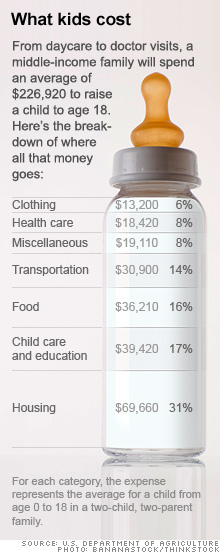 I was alerted to an article on the cost of raising children by one of my brothers who, with his wife, has six children. The USDA estimates that the cost of raising children from birth to age 18 for a middle-income, two-parent family now averages $226,920. That’s up by 40% from just ten years ago. Now, right away, you ought to question a reports that inflates the cost of some activity by 40% in just ten years. It strikes me that how they collect the data has changed, not just the costs. My brother, father of six, says, I’m supposed to believe that my six children are likely to dent my pocketbook by over 1.3 million dollars ($262,000/kid), not including college and wedding expenses? Something about “lies, damned lies, and statistics” comes to mind here. Me thinks that the USDA needs to get back to inspecting meat!