There are no Quick Fixes in the Spiritual Life, as seen in a commercial

111513One of the cultural challenges we face in both living and proclaiming the faith is that the true faith doesn’t often fit our frantic pace and instant expectations. Consider that may today, including we who believe, demand the “Quick Fix.” What ever the situation, be it sickness, a needed repair of something we own, the delivery of something we have purchased, a resolution of family troubles, or even deeper issues such as inner peace, we want a quick fix.

But many things do not admit of a quick fix, especially the deeper things of the human soul. And the faith we proclaim does not propose something so simple. In this sense, the faith is less “marketable” to our quick fix culture. We do not (cannot) say “Simply Come to Mass for six, sequential Sundays and your problems will be over.” Rather, we say, “Give your life to Christ.”

The solution of God and of the true faith insists on an often slow but steady movement toward God wherein he draws us in stages, ever deeper to Him, to holiness, to perfection. Little by little, our fears fade, sins diminish, we become more loving, patient, compassionate, chaste, serene and so forth. The process usually takes decades, no quick fix here.

And many medicines need to be consistently applied: daily prayer, daily Scripture and spiritual reading, weekly Mass and Communion, frequent confession, and communal life in the Church to include helpful friendships, faith-filled relationships and works of Charity.

There is an old saying that “Grace builds on nature.” That is to say, that God’s grace respects the way we are made by him. And just as it pertains to our physical nature to change slowly, almost imperceptibly, (but surely), so our spiritual nature usually follows the same pattern. And, while there may be growth spurts, it is more often the subtle and sure growth that makes the deepest difference.

I can surely say this has been my experience. I have been serious about my spiritual life for the last 30 of my 52 years: daily Mass, daily Scripture, daily holy hour, weekly confession, fellowship with my people, holy friendships and spiritual direction. And wow, what a change! But it has taken 30 years to get here, and most of my growth was imperceptible, day to day. I’m not what I want to be, but I’m not what I used to be, a wonderful change has come over me.

Not the quick fix, not the fast rush, just a inching along like a poor inch worm (as an old Spiritual says). But praise God I am where I am today.

Lifelong plans may not “sell” but they are the way God insists on working.

On Fridays I have often tried to keep the post a little shorter and have tried to use a commercial to make my point. So how about this one:

  1. In the commercial, below the is a man, Jerry, who is in a “State of Regret.” In a certain sense (as we shall see), Jerry represents all who stray from the Church and God’s life long plan of faith, looking for a fast rush, and quick fix elsewhere, apart from the faith and the Church.
  2. Sure enough, Jerry’s regret is that he has dropped his “State Farm” Insurance and went with the “other company,” let’s call that company “Quick Fix Auto Insurance.” I allowing State Farm to represent the Church, I intend no endorsement, but do recall that “farming” is no quick-fix business. It involves a lot of patient waiting and persistent working. Such is the work of the Lord and his Church, no quick fix, but more like farming.
  3. Jerry complains to his former agent “Jessica” (but lets call her “Mother Church”). His complaint is: It only took me 15 minutes to sign with that other company but it’s taking a lot longer to hear back. OK, so now he’s learned that there really is NO SUCH THING as a “quick fix” when it comes to many things. And so must we learn this same truth. The world, the flesh and the devil, often make such promises and sow seeds of impatience in us when God does not act instantly, when the Church bids us to be patient and persistent. But Now Jerry’s impatience has brought him further troubles, as we shall see.
  4. Jerry explains he’s had a “fender bender” The truth is Jerry has bent far more than a fender. He is in real trouble. We too often like to minimize our state when we have made bad decisions.
  5. Jessica (Mother Church) is sympathetic but wonders what she can do, for Jerry has ended his relationship with her. Without a relationship, how can she help him? Here too, Mother Church often wants to help us, but must have a relationship with us to help. God too, seeks communion with us, in order to help us. But communion, a relationship, with the Lord and his Bride the Church are necessary for help to be extended.
  6. Indeed Jessica (Mother Church) knows Jerry well, and seems, like a mother, to know implicitly and exactly what he has done. She knows he’s in real trouble and has “put his car up a pole” (again). There’s just something about Mother Church, she knows her children and what we do, she knows, and understands.
  7. Hearing Jessica’s (Mother Church’s) knowing but compassionate words Jerry breaks down and says “I miss you Jessica!” The ad then says, “Let it out Jerry! Then come back to State Farm.” Yes, indeed. And so too for us. Soulful and tearful repentance and a restoration of our relationship with the Lord and his Church, are the way out.
  8. Quick Fix Insurance Company can’t cut the deal. Come back to the Lord and his Church. The solution may not be “quick” but it will be sure if we stay the course.

The Beautiful Story of how Kirsten Powers Found Jesus. What’s Your Story?

111513-PopeLast Week I wrote my testimony of meeting Jesus on a fateful day in November of 1995 (HERE). I have also written of the need that Christians have to better witness in a personal way to the faith, and to the relationship they have with the Lord.

The other day I read a beautiful conversion story, a witness story of a woman I have long admired, Kirsten Powers. She is a Fox News Commentator. And while I do not always agree with her political perspectives, she is a solid journalist, she gives fair consideration to all issues, and is, to my mind, a very classy lady.

She wrote recently in Christianity Today of how she met Jesus. I would like to share some excerpts of the story with you here so that, once again, you and all of us who are Catholics can see modeled how to tell our own particular story o faith, and what witness looks and sounds like.

Her full article is here: Kirsten Powers and how She Met Jesus What follows here are just a few excerpts with some comments by me in red text:

Just seven years ago, if someone had told me that I’d be writing for Christianity Today magazine about how I came to believe in God, I would have laughed out loud. If there was one thing in which I was completely secure, it was that I would never adhere to any religion—especially to evangelical Christianity, which I held in particular contempt.

And thus we learn to stay in the conversation with people. There was a time in my life that I too was hostile to the Church and hostile to Jesus. No one, no matter how settled they think they are in opposition to God or the Church is a lost cause. Speak the truth, with charity and clarity. You just never know when or how, but some, indeed, more than some, eventually find the Lord. Thank you Jesus!

I grew up in the Episcopal Church in Alaska, but my belief was superficial and flimsy….

Yes, some of us are in reaction to a poor experience with faith growing up. Perhaps it was perfunctory observance, perhaps we even experienced painful realities in the Church. But often such struggles send us afar. But in the end, the Lord does not cease to call, and He can even work the miracle of helping us to overcome tepid, bad or painful experiences.

Ms. Powers goes on to talk of how she began to date an Evangelical Christian who invited her to his Church and asked her to keep an open mind. She began attending Upper East Side Redeemer Presbyterian Church, an Evangelical Presbyterian Church. The Pastor Tim Keller impressed her with his thoughtful preaching. She says,

Tim Keller’s sermon was intellectually rigorous, weaving in art and history and philosophy. I decided to come back to hear him again. Soon, hearing Keller speak on Sunday became the highlight of my week. Each week, Keller made the case for Christianity. He also made the case against atheism and agnosticism. He expertly exposed the intellectual weaknesses of a purely secular worldview. I came to realize that even if Christianity wasn’t the real thing, neither was atheism.

So faith comes by hearing. The preaching task is critical. Pray that the Lord will send laborers, effective preachers and teachers to clarify doubts and sow the seeds of truth. Scripture says, How then will they call on him in whom they have not believed? And how are they to believe in him of whom they have never heard? And how are they to hear without someone preaching?…As it is written, “How beautiful are the feet of those who preach the good news!”…So faith comes from hearing, and hearing through the word of Christ.(Rom 10:14-15, 17). Yes, pray for good and effective preaching and teaching!

She adds,

I concluded that the weight of evidence was on the side of Christianity. But I didn’t feel any connection to God.

But someone must have praying for Kirsten. For soon enough, she met Jesus:

Then one night in 2006, on a trip to Taiwan, I woke up in what felt like a strange cross between a dream and reality. Jesus came to me and said, “Here I am.” It felt so real. I didn’t know what to make of it.

Hallelujah! Someone was praying. Thank you Jesus.

I tried to write off the experience as misfiring synapses, but I couldn’t shake it. When I returned to New York a few days later, I was lost. I suddenly felt God everywhere and it was terrifying. More important, it was unwelcome. It felt like an invasion. I started to fear I was going crazy….I was desperate. My whole world was imploding. How was I going to tell my family or friends about what had happened? Nobody would understand. I didn’t understand.

It is interesting. Not everyone has an experience with the Lord and comes away serene. In fact most Theophanies in the Bible leave the recipient disconcerted, sometimes flat on their face to the ground! Yes, even Mother Mary was “troubled” at the visit of Gabriel (Lk 1:29), and even John the Evangelist who had been so close to the Lord in his earthly ministry, fell on his face to the ground when he saw Jesus in glory (Rev 1:17). There is authenticity in Ms. Power’s description of distress. It makes sense given her background of skepticism,  but also makes sense given the Glory of the Lord.

She sought explanation by attending a Bible study, but in the end, the Lord connected the dots for her:

Everything had changed. I’ll never forget standing outside that apartment on the Upper East Side and saying to myself, “It’s true. It’s completely true.” The world looked entirely different, like a veil had been lifted off it. I had not an iota of doubt. I was filled with indescribable joy.

But surely the World, the Flesh and Devil would not take this sitting down! She writes:

The horror of the prospect of being a devout Christian crept back in almost immediately. I spent the next few months doing my best to wrestle away from God. It was pointless. Everywhere I turned, there he was. Slowly there was less fear and more joy. The Hound of Heaven had pursued me and caught me—whether I liked it or not.

Yes, The Lord has won. And I pray that Kirsten Powers will grow strong in faith and deep in conviction that Jesus is Lord and the lover of her soul.

“But Father, but Father….!” I hear some of you saying, “She did not become Catholic! How can we praise this!?” Well, all I know is that we are all on a journey. And the Lord has surely led some of the best Catholics through the Evangelical denominations ultimately to the Catholic Church.

And I will add that their time there (in the Evangelical denominations) was not a detour or wasted. In fact some of the greatest converts to the Catholic Church bring many gifts from their time as Evangelicals: Love for Jesus, the understanding of a personal and intimate walk with the Lord, a love for Scripture, and a zeal for souls.

At a personal level I would love for Ms. Powers to one day find herself in full union with the Catholic Church. For now I am joyful she found Jesus and I trust Jesus to lead her. Rejoice with me, rejoice with her, Jesus is joy, he is Lord and Shepherd. He shepherds us rightly.

But Father, But Father, as a democrat, what does she think of abortion? As far as I know, she is against it. Consider what she has written HERE and HERE or HERE And and if you wish she were clearer here or there about this or that, stay in the conversation. Amor omnia vincet.

I rejoice that Kirsten Powers has met Jesus. I rejoice I have met him. How about you? What is your story? See her testimony as model and write your own. Your children and grandchildren, your friends and others are desperate to hear it!

Testimony is essential. There is no true evangelization without it.

A Reflection on the Modern Error of Preaching Mercy without Repentance

111413There are of course many ways of describing the pastoral, liturgical and theological struggles of our day. But one very simple way of describing current problems that touches on all these areas is simply this:  that a presumptive attitude of mercy without repentance is both taught and widely held by far too many modern Catholics, and other Christians.

There is much talk of how God loves us, is rich in mercy, is kind and forgiving. And all of these things are true. But another essential truth is that these gifts, these essential attributes of God, are accessed by repentance. It is repentance that opens the door to mercy, forgiveness, and kindness.

Perhaps an analogy will help. Consider a man who is in very poor health. Perhaps he has  a host of problems that surround obesity such as hypertension, cholesterol, diabetes etc. Now modern medicine has a lot to offer people who are struggling with poor health. The healing help includes everything from medicine to surgery, to information on nutrition etc. But in order for this man to access that healing help, a number of things are first necessary:

  1. He may need others to testify to him some concern for his health, for many exhibit various levels of denial as to their condition especially when it involves things like overeating, smoking, or drinking.
  2. He then needs to accept that his condition is serious enough that needs both help and change.
  3. He needs to decide to seek the help of the medical profession and follow through on that decision by scheduling and keeping an appointment with a doctor.

Now, when he does this, AND ONLY when he does this, will the healing help of the medical profession unfold for him. It is not enough for him to say, “Well isn’t it great that there are doctors, medical professionals, information, and medicine that can help me! It’s just wonderful that there are so many caring and professional people out there who can help and save me!” No,  that is not enough. He has to make a change and actually reach out and develop a relationship with the medical community. He has to actually take the medicine. It is not enough to praise the medicine, he has to take it. It is not enough to feel reassured that there are people out there, he actually has to go to them, interact with them, and set a new course.

And this is an analogy for the spiritual life and repentance. God’s offer of mercy and healing love stand, and are offered to everyone. But these magnificent gifts must be accessed through repentance. That is to say, we must come to understand the seriousness of our condition, turn to God, call upon his mercy, and begin to receive the glorious medicine he offers: the medicine of his Word, of the Sacraments, of prayer, and walking in fellowship with the Church, which he established as his ongoing presence and voice in the world (cf Acts 2:42).

The Greek word that is usually translated as repentance or repent is metanoia and it means more than simply to clean up our act. Most literally it means to come to a new mind, or a new way of thinking. This is why God’s word, the teachings of the Church, and preaching are so essential for all of us. Whereas perverse councils separate us from God, (Wisdom 1:3), God’s truth proclaimed in the Scriptures and the teachings of the Church summon us back to him, summon us to a new mind, a new way of thinking. It convicts us of error and sin, but also announces the Savior who is the saving Truth who sets us free.

But of course it is not enough for us simply to hear of this new way of thinking, we must actually come to it, decide for it. Repentance is to actually embrace this new mind, and this unlocks all the blessings the healings, the mercy, and the salvation that is promised. We must allow the grace of God, interacting with our freedom to effect an actual change, a decision in our life that changes the way we think, the way we act, and puts us into a saving relationship with the Divine Physician Jesus.

Like the patient above, we must be brought to understand the seriousness of our condition, come to know that there is saving help available, and then by positive decision, rooted in grace, actually reach out to lay hold of that help.

Repentance is the door, is the key that unlocks mercy.

Yet too often today mercy is preached without reference to repentance. Too many who preach and too many who hear have come to see mercy as granted without any human engagement. One simply has it automatically, no matter what.

Yet that is not what Scripture teaches. Most notably, Simon Peter on Day One of Pentecot and the going for of the gospel preached a sermon laying out who Jesus is, and how we, in our sin and rebellion killed the very author of life. The text from Acts says,

When the people heard this, they were cut to the heart and said to Peter and the other apostles, “Brothers, what shall we do?” Peter replied, “Repent and be baptized, every one of you, in the name of Jesus Christ for the forgiveness of your sins. And you will receive the gift of the Holy Spirit. (Acts 2:37-38)

Thus, when asked what they are to do, Peter does not say, “Don’t worry, all is well, God is mercy. He says, “Repent and baptized.” In other words, come to a new mind, come to your senses, reject your sins, be washed clean and come to Jesus. And this will unlock the supreme blessing of the Holy Spirit of God, who is the mercy of God, the love of God the very life and grace of God!

And how is this accessed? Repentance.

Isaiah had said, The Redeemer will come to Zion, to those in Jacob who repent of their sins,” declares the LORD (Is 59:20).

And to the Disciples in Emmaus Jesus said, This is what is written: The Messiah will suffer and rise from the dead on the third day, and repentance for the forgiveness of sins will be preached in his name to all nations, beginning at Jerusalem. You are witnesses of these things. (Luke 24:46-48)

And thus preachers and teachers in the Church, who are Christ’s witnesses, must proclaim repentance that unlocks the forgiveness and mercy of God.

St. Paul warns, In the past God overlooked such ignorance, but now he commands all people everywhere to repent (Acts 17:30).

Thus those who preach and teach mercy without repentance are deceivers and likely themselves deceived. And those who think of mercy without reference to repentance are deceived.

Faith and repentance are the supernaturally transformed and assisted human element that is necessary to unlock mercy and the graces of God. To ignore or deny this amounts to a denial of human freedom and does not help God’s people. Rather it hinders them, for mercy is accessed through repentance, and without it, the door cannot open. Repentance must be preached to all the nations because repentance, by God’s grace opens the door.

Thoughts on the Traditional Latin Requiem Mass – Not Really as Dark or Dreadful As Many Say

111213Perhaps as a concluding post on funeral masses, this is my third post on the subject this week (omni trinum perfectum – all things are perfect in three), I would like to re-post an article I wrote over a year ago.

Many of the comments these past days mentioned the Traditional Latin Requiem Mass, which I have been privileged to celebrate many times in my 25 years. It is a beautiful and gentle liturgy, so consoling and yet also sober and mindful that someone has died and that we ought to pray.

And while I do not say that everyone must like this form, I also think the Requiem Mass has been unfairly panned, especially by some (not all) older clergy. What follows is my answer to those critiques in hopes of establishing greater understanding and mutual respect:

_______________

When I was in seminary back in the mid 1980s I was informed by some of my Seminary teachers, that the old funeral masses were a very dark affair. Black vestments and somber prayers all focused on judgment were supposedly an “extreme” that had to give way. Never mind that the new Mass permitted black or purple vestments, the point was that we were not to use black vestments and were to wholly avoid any “negative” themes like judgment, purgatory or (the absolutely forbidden) hell.

Discussions about funeral masses were common in my seminary years since the revised rite of funerals was coming out at that time and, just like the new translation we have recently inaugurated, there were many vigorous discussion about the funeral rite of 1970 and how the one coming out in 1987 (in think) was either an improvement or a “step backward.”

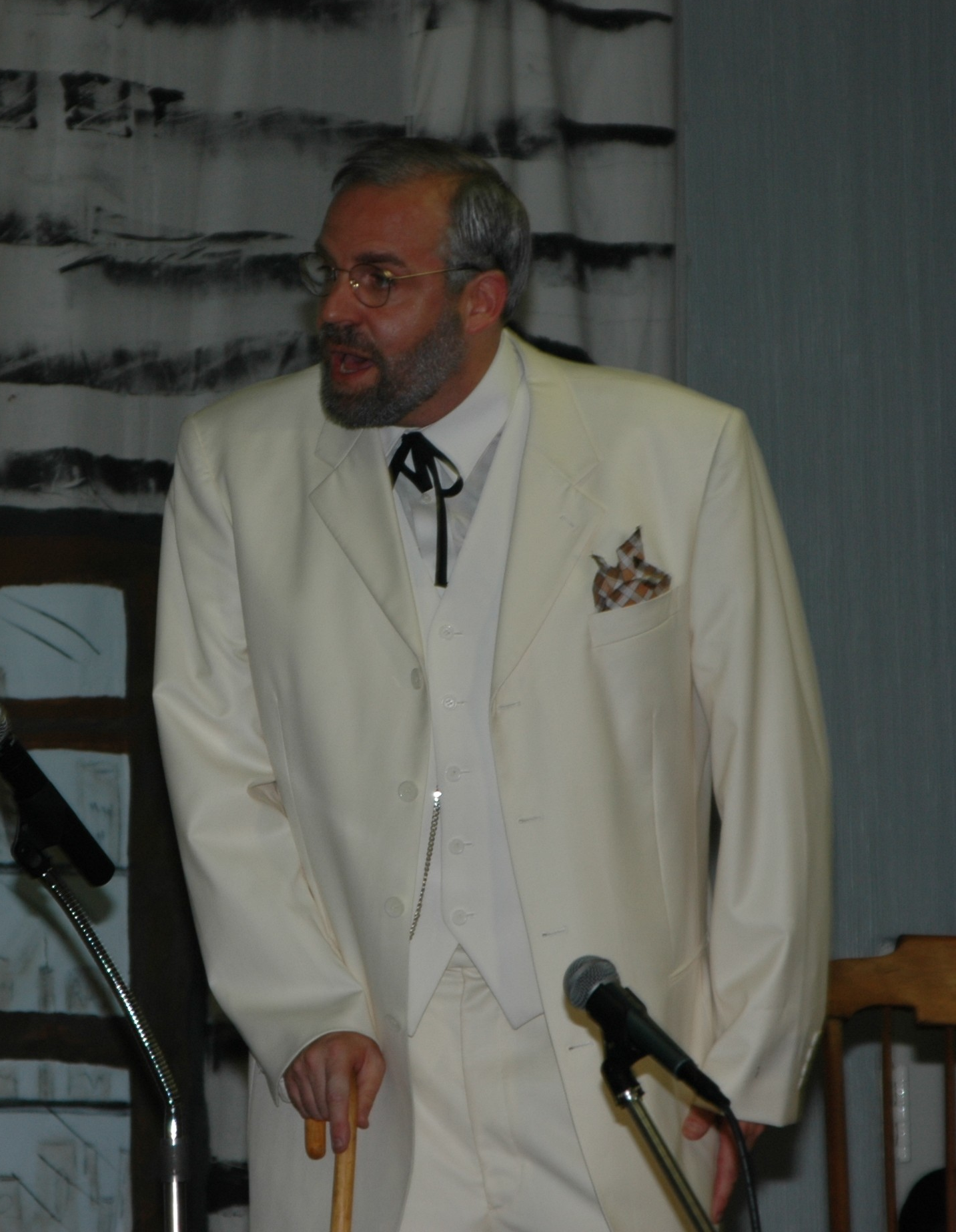
By the time I was ordained in the late 1980s it was once again permitted to offer the traditional Latin Mass, and though some argued that this didn’t include funerals, we routinely celebrated them here in DC as early as 1987. I have been privileged to celebrate at couple of these traditional Latin funeral masses per year, by request all 24+ years of my priestly life. (The photo at upper right is me celebrating one last November in one of our Maryland Parishes).

And I must say, find these funerals (called Requiem Masses) anything but dark. Let me explain.

To begin, though, early in my priesthood I had little of no memory of the older funeral rites. I was, in those days before the current motu proprio, one of the few priests permitted by the diocese to celebrate the TLM. Thus, as I began my study of the old Requiem Mass when requested to do one in 1989 and  I expected, based on my training to find and read dreary and depressing prayers.

I noted first that the “dreaded and dark affair,” described so by some, was called a “Requiem Mass.” Hmm…. in other words, a “Mass of Rest.” That doesn’t shout of foreboding things, seems rather peaceful actually, and far more comforting that the more usual modern word, “funeral.” Indeed the opening words of the dreaded Requiem Mass read (translated) Rest Eternal grant unto them O Lord and may perpetual light shine on them. Hmm… I thought, we’re not off to such a terrible start.

Greeting the Body at the door of the Church, though less baptismal in focus, contains these beautiful wishes:

Come to his assistance, ye Saints of God, come forth to meet him, ye Angels of the Lord….receiving his soul, offer it in the sight of the Most High…..May Christ receive thee who has called thee….and may the Angels lead thee into Abraham’s bosom.

The opening prayer too, appeals to God’s mercy, though (heaven forfend), it does mention Hell:

O God, whose property is ever to have mercy and to spare, we humbly entreat Thee on behalf of the soul of Thy servant whom Thou hast bidden to pass out of this world: that Thou wouldst not deliver him into the hands of the enemy nor forget him for ever, but command him to be taken up by the holy Angels, and to be borne to our home in paradise, that as he had put his faith and hope in Thee he may not undergo the pains of hell but may possess everlasting joys.

As we have well discussed here, to many modern ears the very mention of Hell is “dark,” but the whole prayer is premised on God to whom it is proper to show mercy and to spare. Hence it is a prayer uttered in confident expectation that through grace and mercy we stand a chance. And, as for that little mention of “Hell,”….isn’t that….like….in the Bible or something? (Well again we have well discussed here that Hell is both biblical and reasonable).

So, in my study I still had not found where we had gone to dark, negative places, as I had been taught to expect.

The readings also surprised me. The Epistle is from First Thessalonians 4: Brethren, we would not have you ignorant concerning those who sleep, lest you be like the others who have no hope. Then comes the great teaching on the day of resurrection and the conclusion: Therefore console One another with these words. The Gospel too is of Jesus’ dialogue with Martha in John 11: Your brother will rise…I AM the resurrection and the life, whoever believes in me, even if he dies, will live. Beautiful and consoling, really.

There is of course the Dies Irae in between these two readings. I recall an older priest many years ago when the subject came up proclaiming exultantly: “Thank God we got rid of that dreadful thing.” It does truly begin on an ominous note: Day of wrath and doom impending, heaven an earth in ashes ending….Oh what fear man’s bosom rendenth, when from heaven the judge decendeth, on whose sentence all dependeth. True, these are dark lines, but they are biblical lines, almost direct quotes. Yet the same Dies Irae contains some of the most hopeful and tender lines in all Christian writing:

Faint and weary thou hast sought me:
On the cross of suffering bought me:
Shall such grace be vainly bought me?

Through the sinful Mary shriven,
Through the dying thief forgiven,
Thou to me a hope has given.

Loving Jesus Lord most blest,
Grant to them eternal rest.
Amen.

The darker lines thus highlight the lightsome ones. So even the Dies Irae is not all that bad. It is a well balanced description of our sinful condition, and of God’s mercy accessed through repentance. I have written more of the Dies Irae here: Sing the Dies Irae at my Funeral

I obviously cannot reproduce the whole Requiem Mass here but consider just a few other highlights of the hopeful and gentle themes that are struck in the prayers

  1. From the Preface: …through Christ our Lord, in whom the hope of blessed resurrection has shone on us, so that those who are saddened by the certainty of dying may be consoled by the promise of a future deathless life. For to thy faithful people, Oh Lord, life is changed, not taken away, and when the home of this earthly sojourn is dissolved, an eternal dwelling place is being prepared in the heavens.
  2. From the Communion verse: May light eternal shine on them O Lord, with your saints forever. For you are kind. (Quia pius es)
  3. Finally, if there is any “darkness” at all in the old Requiem Mass, it is more likely due to the fact that we have departed a great degree in modern times from the notion that, after we die, we are certainly judged. And this judgement is a moment of honesty before God. Surely all of us will need much in the way of grace and mercy. The prayers of the older Requiem give honest acknowledgment of that, but draw heavily on Biblical themes. In the end, these prayerful reflections are always couched on the fact that God is rich in mercy. One of the final prayers, at the commendation of the soul shows this balance. Standing before the casket the priest says:
  4. Enter not into judgment with Thy servant, O Lord; for, save Thou grant him forgiveness of all his sins, no man shall be justified in Thy sight. Wherefore suffer not, we beseech Thee, the sentence Thou pronounce in judgment upon one whom the faithful prayer of Christian people commends to Thee, to be a doom which shall crush him utterly. Rather sustain him by Thy gracious favor, that he may escape Thine avenging justice who, in his lifetime, was signed with the seal of the holy Trinity. Who livest and reignest world without end. Amen.

Disclaimers – Most of you know that I love the Traditional Latin Mass, especially in its sung forms. However, I also like the Ordinary Form of the Mass and it is the way I celebrate 99% of my masses.

The New Funeral Mass is not intrinsically flawed. If there are imbalances in modern funerals it is not wholly the fault of the liturgy. Rather, the imbalance of our culture and the clergy’s emphases seem more at work. (As we discussed these past two days).

For the record, black vestments can still be worn in the newer rites, as well as purple. There is nothing to prevent the clergy from preaching clearly on judgement and purgation, as well Heaven. I surely do (as we discussed yesterday), and also issue a pretty sober “come to Jesus” talk in the sermon, since so many who are at funerals are not practicing their faith.

Thus, balance can be had in the newer rites. This post is simply meant to express that a pronouncement of the Requiem Mass as dark and somber, which I was regularly subjected to in my training, is simplistic.

The reality I have come to experience in over 24 years of celebrating Requiem Masses is that they are both gentle and hopeful, sober about judgement but well steeped in mercy and confidence in God’s loving kindness.


Here’s the “In paradisum” from the Faure Requiem:

A Funeral Sermon designed to teach on the Last Things, and inspire prayer

On yesterday’s blog post, I discussed some of the more common problems that arise with funerals these days. That blog post provides the kind of background to the homily I present here. In this homily, I try to teach on what I think are important and central themes that need emphasis in Christian funerals today.

The homily is broken into three parts:

  1. The Praise of the divine goodness of our God. For at every liturgy, funerals included, the first and primary work is the praise and worship of Almighty God, who has been good to us, and through faith has saved us. Here too, it is appropriate for us to render praise and thanks for the gifts that the deceased had from God, and to properly acknowledge with respect, some aspects of their life
  2. Prayers for the deceased. For too often, on account of Universalism, a notion that all are saved in quite instantly, such that that prayers for the deceased, and for all the dead, are often neglected, and the dead are inappropriately promoted to Heaven instantly.
  3. Preparation for death – for many today are not properly preparing for death and do not live as though they must one day render an account to God and are destined to be judged under the law of freedom.

No homily I have ever preached is perfect. And thus, neither is this one. It is merely my own poor attempt to teach more fully on many truths regarding death, judgment, heaven and hell,  that are too often neglected in funeral masses today. Having been asked to record and present a funeral sermon of mine in writing, I herewith try to fulfill the request.

The sermon presented here is a sermon I preached for James Cade and I both recorded it and have it in writing here, verbatim from the preached homily. I share it with you by permission of the family.

I am not known for short sermons, and this sermon is no exception. Nevertheless, if you have the patience to listen, or read here it is. The written version, because it is an exact verbatim of the preached sermon, is quite lengthy.

The audio recording of the sermon which runs approximately 20 minutes is available below in the video box.

Introduction – So, Joan, Robert, and Joseph, and all of us who are here, for our brother James (Cade): I first of all share with you condolences at his passing. I know he had a battle with cancer. I know how he fought to live,  he certainly wanted to see his son’s (Joseph’s)  wedding,  and thanks be to God, that took place.  And I know all that Robert was saying to me about he great love for all of you, unto the very end…. and the kiss goodbye. A beautiful sign of his love for you (Joan) and his family.

I. Praise of Divine Goodness  – We come to gather in this church today, and the first thing I hope you came to do is that you came to praise the Lord, and that you’ve come to worship God. I think sometimes when we come to a funeral, our first instinct is to think, well I’ve come to pay my respect (to James), I’ve come to honor and support the family.  And that’s all good, beautiful. But our first instinct in walking into God’s House, is always to give worship, (ascribe) glory,  praise, and thanksgiving to God, who is the giver of every good and perfect gift.

And there’s a lot to be grateful for, yes, even at a funeral. All of you have in your mind  some things that James Cade was to you, gifts that gave to you, words of encouragement, support, the gift of life…Whatever it might be, you all have memories, and you’re grateful! But remember, as Scripture says, Every good and perfect gift, comes from above, comes from the Father of Lights, in whom there is no variableness, neither shadow of turning.  (James 1:17)

I certainly know, and here we are on Veterans Day, that this country owes a debt of gratitude to our brother, who served for over twenty years in the Armed forces, in the United States Air Force. You know…We often need to remember that those who serve in the military….are peacemakers. Scripture says, Blessed are the peacemakers, for they shall be called the sons of God (Matt 5:9). Because, you see, they put their life on the line to make those who would disturb the peace or those who would rob us of justice, think twice. And as such, they preserve the peace in this way. Scripture also says, Greater love hath no one than he would lay down his life for his friends. (Jn 15:13) And all those who serve in the military, including our brother James, put their life on the line so that you and I can live in greater security, freedom and peace. And we all know that our military doesn’t just protect this country, they go all over the world (and I know, not without some controversy), but they go there, they obey their orders and take care of the people in each region.

And so all of us bring blessings and memories of James, all that he was to us, all he was to this country, to his community, to his life of service, overseas, as well as here, his love for God, his love for family, over forty years of faithful marriage. Oh, what a witness that is today…such an important witness!

So, I say all this to you, that I know we all bring with us many great memories, many thoughts of gratitude for our brother, and all that he was, and is for us,.

But I also hope you will remember that, whatever James had to offer, he got it from God.  So we are here today to say, “Thank you Lord. We worship you, we praise you, and we thank you. You are the giver of every good and perfect gift. It all comes from you! So everything our brother James was, it came from you. Thank you Father, we love you, we worship you, we praise you through your Son Jesus.

We thank you Jesus for dying for our brother. For the greatest truth I have to say to you all today about our brother James is no good work of his, but simply this, that Jesus Christ loves our brother, died for our him, went to heaven to prepare a place for him. As he said (I the gospel today) to Martha, regarding her brother, now he says to us, Your brother will rise…I am the Resurrection and the Life, and whoever believes in me (and our brother James believed in him) will rise!

And so, we’ve come today to praise the Lord.

And I want to say this, Even our brother’s sufferings at the end of his life, are something worth praising and thanking God for; and (also) whatever sufferings you’re enduring. You know, scripture says, in the Second Letter to the Corinthians in the fourth Chapter, St Paul says this: Therefore, we not discouraged. Although our outer self (our body) is wasting away, our inner self is being renewed, day-by-day. For this momentary affliction is producing fro us a weight of glory beyond all compare. (2 Cor 4:16-17) So that even at the end of his life as James suffered with cancer and the effects of surgery, I tell you brothers and sisters, even then,  it was a gift in a strange package!

Scripture says, in Romans 8:28, All things work together for good, to them that love and trust the Lord and are called according to his purposes. Notice it says, ALL things, not just the good things…but even the difficult and the painful things work for our glory, if we give them to God, as our brother did. I say this to you again, whatever sufferings he endured, they produced glory. Again, St. Paul says, This momentary afflicting is producing a weight of glory beyond compare.

And so, if you brought any suffering into this Church, be it the sorrow of this day or whatever other sufferings are going on in your life right now…you know, the devil wants you to be discouraged. You just tell the devil, “I’m encouraged! And I’m gonna praise the Lord anyhow! Because whatever I am going through, it is producing a glory for me beyond any comparison to the suffering I must endure. I am not discouraged, I’m encouraged. Because whatever I’m going through, its producing!”

So today, first I say, I hope and pray that you came to praise the Lord. Every good and perfect gift comes from Him! And we’ve come to praise him.

II. Prayers for the Deceased –  I also hope, today, You came to pray for our bother, James. I think, a lot of times in Christian funerals we miss a step, at least in these modern days. Very often when we hear that some one has passed, we hear statements that they are now in heaven, or they’re in a better place…or other euphemisms. But, we need to be careful, and not miss a step.

The Bible does not teach that you die and go straight to heaven.  Rather, it says there’s a little pit stop on the way. The book of Hebrews says, It is appointed to us to die once, and thereafter the judgment. (Hebrews 9:27) Likewise, St. Paul says, We must all appear before the judgment seat of Christ and render an account for what we have done, whether good, or evil, and receive recompense or punishment for what we have done.” (2 Cor 5:10)

And so it is, then, all of us need to remember that when anyone dies, their first destination is the great judgment seat of Christ.  And brothers and sisters, that is worth praying about! I’m just going to say to you, I’m not planning to die today, but if I do, would you please pray for me! Because I go to judgment.  I go to render an account.  And I am a believer, I love Jesus Christ, and I know he loves me, I know he died for me. But I need to go and have an honest conversation with the Lord. And I would ask you to pray for me. I know then that our brother James both wants and needs our prayers. As he himself has gone to that judgment seat.

But what is then the judgment in question for a believer? Does not the Lord say, as we just heard in the gospel, “If you believe I will raise you up on the last day” ? So what is the judgment in question?

I would say this, It is based on a promise the Lord made to our brother and to all of us, at our baptism.  It is at the end of the 5th Chapter of Matthew’s gospel: And the Lord says this, You must be perfect as the Heavenly father is perfect. (Matt 5:48) Hmm…Anyone there yet?! Alright church, me neither!

Now I want to say, though it may sound like a threat, its not a threat. It’s a promise! The Lord says, “When I have fully accomplished my work in you, when my grace has had its full effect, you will be perfect. And not just humanly perfect. But with a Godly perfection!

The Lord St. Catherine of Siena, “Catherine, I you were ever to see a soul up here with me in glory and perfected, you’d fall down and worship, because you’d think you were looking at me.” Do you see? That’s our dignity. One day we shall share a perfection that is the perfection of God himself.

Now then, here is the judgment in question: If I were to die today I would go to the Lord and I would simply know that (perfection) isn’t done yet, there’s still a few things to accomplish. And so I would go, and I’m sure the Lord would show me some things that still needed to be completed. And so I think the judgment in question for our brother James is, “James, is my work in you accomplished?” St. Paul wrote to the Philippians and he said, May God who has begun a good work in you bring it to completion.  (Phil 1:6)

So, I think the judgment in question at that great Judgment seat is, Is the Lord’s work in you complete? What remains undone? Now, says the Lord, I will bring it to completion. And how exactly the Lord does that, I can’t say. Does it happen quickly…does it take time? I don’t even know if there is time like we have it now after we die.

All I know is that we are commissioned by the Church, and by Sacred Scripture to pray for those who have died, to lift them up in prayer. We ought to pray for the dead, they go to the judgment seat. And there they have that conversation with Christ, and whatever is incomplete, must be completed, for Jesus who loves us will leave nothing incomplete. He will accomplish the promises he gave to our brother, and make him perfect. And we for our part, give him to Jesus and say “Jesus, we love our brother James, we love him. We entrust him now to your care.

And I think this too, that it isn’t just about our sins. You know, honestly, is there anyone here carrying stuff with us we know we can’t take to heaven? I’m not just talking about our sins, I’m talking about our heartaches, our hurts, some of those regrets we might carry with us. We can’t take those things to heaven, it wouldn’t be heaven! And so there is a beautiful line in the Book of Revelation that says of Jesus, regarding the death, that He will wipe every tear from their eyes. (cf Rev 21:4) And this is part of what we call in the Catholic tradition the process of purgation. The Lord wipes the tears form our eyes: any sorrows, any regrets, any rough edges of our personality, those effects of sin that still cling to us. The Lord takes good care of it all…he wipes the tears and purifies us with holy fire.

Now whatever James brought to the judgment seat, if he had any tears still in his eyes, that’s between him and Jesus. But we pray, and we say thank you Jesus, Thank you Lord. We give you back our brother, whom you gave to us. We give him back with love and prayers, we call upon your mercy and judgment and ask you to bring to completion anything that was incomplete. And we do this, knowing by faith that the Lord is rich in mercy. And so we have good hope and good confidence, as we make that prayer.

III. Preparation for Death –  I want to say one final thing today. I asked you to make sure that you came to this Church to praise the Lord and pray for our brother. I am also going to ask you to pray for yourself. And to ask you, are you prepared?

Now please know that I do this at every funeral. I call it the “Come to Jesus” talk. Because I often meet people at funerals that I never meet anywhere else. Now I don’t know everyone’s walk and where they are in their walk.

But I just want to say this to you, it’s a very powerful truth, and our brother is teaching us even now, and the Lord is teaching us. And I’m not going to dress it up in any way. I ‘m just going to say it plain:

You are going to die….(yes) you are going to die. And you don’t get to say when. (Ah but you might say), I’m planning to live a good number of years preacher….I’ve got it all figured out. Listen! I can’t promise you the next beat of your heart! I did check with Father J. before Mass, he did say the roof is in good condition and it probably won’t crash in during the funeral. But, I can’t promise you anything. I can’t promise you that you’ll see this day out. Someone says, “I’ll take care of that tomorrow.” But, tomorrow is not promised.

And I’m just going to say that I hope and pray that every one of you here have given your life to Jesus. …that you’re repenting of your sins…that you’re serious about your preparation for your own death, and your appointment at the judgment seat of Christ.

And if you don’t need to hear what I am saying, I know you know fifty people who do. There are just too many people today who are not serious about their spiritual walk. They’re running around like life was some big game, they’re not thinking about their destiny to appear before the judgment seat. They are not praying, they are not reading Scripture, they are not growing in their faith, they are not getting to church on Sunday, any many of them are stubbornly locked in very serious and unrepented mortal sin. And they are not going to be ready! I pray that is not true of any one here, but if it is, I simply say, “Turn to Jesus…repent, give him your life.”

Pray every day. Some folks tell me its hard to pray….I don’t know how to pray! You know what you’re doing? You’re already praying!  Don’t tell me, tell God. If that’s where you’ve got to begin with your prayer, tell him: “I don’t like to pray, I struggle to pray, prayer is boring” What ever you need to tell him. Prayer is not reading words somebody else wrote that you don’t mean. Prayer is talking to the Lord and telling him what’s going on in your life. Prayer is paying attention to God.

 I hope you read Scripture every day and study the teachings of the Church. Brothers and sisters, there is too much stinking thinking out there for us to think that our minds will be anything but polluted if we don’t cleanse them every day with God’s word and the teachings of the Faith. Some folks say its hard to understand Scripture, “I can’t figure all that our preacher.” But there are so many helps available, “My Daily Bread,”  “Magnificat” magazine. Some folks even get the Word sent to their cell phone each day with a commentary. You say, “I can’t figure all that out.” Well, then get a fifth grader to help you (set it up), but get with God’s word every day! We find time for everything else.

And I say to you, get to Church every Sunday. I hope you all have a church home, I hope every one of you is in God’s house on Sunday. God is worthy of our praise. For us not to praise him is an egregious lack of gratitude on our part. But also, we all need to come to God’s house so that we can be instructed, and then fed with the Body and the Blood of the Lord. Jesus says, If you don’t eat my flesh and drink my blood, you have no life in you (Jn 6:53).  Some folks say, “Oh, I see the Mass on TV.” But you can’t get Holy Communion on TV. And you can’t get real fellowship. Find a parish, if you don’t have a church home, and get there, get to Mass. Receive Communion every Sunday. Be firm and clear about it. God puts it in the Ten Commandments saying, “Keep holy the Sabbath.” He knows we need it!

And I say to you, If you are aware of any serious or unrepented mortal sin in your life, I beg you,  repent and call on the Lord’s mercy. Some folks tell me, “I’m in such a mess I don’t know how to get out of it.” OK, but go to the Lord and talk to him about it and say, “Help me Lord!” But please, do not go on calling “good,” or “no big deal” what God calls sin! The Lord says, No one who calls on me will I ever reject. (Jn 6:37)

But too many people today say, “I will not be told what to do. I will not be told what is right and wrong.” The one thing God can’t really save us from is that kind of pride…because we don’t want to be forgiven. And so again I say to you, (and I hope no one here needs to hear what I said, but then tell some who does), but I say to you, be urgent about it.

You know, no one loves you more than Jesus Christ, and yet no one warned about judgment and Hell more than Jesus Christ. People are dismissive about judgment and hell today, “Oh Jesus would never do that.” But Jesus told us over and over again, that there is a judgment in question and its not so much about what he decides, it is about what we decide. He says this, Here is the judgment in question, that the Light has come into the world, but many prefer the darkness, because their deeds are sinful. (Jn 3:18). So there is a judgment coming, and the Lord warns in parable after parable, And I simply ask you to be ready.

I know many of you to be solid and strong in your faith. Thanks be to God for that, that’s his Grace. But if anyone here needs to hear it, please listen! As an ambassador for Christ I cry out, “Be reconciled with God!”

Summation – So today, we’ve come (and I’m not known for short sermons, sorry), but we’ve come today, first of all to praise the Lord. Thank you Lord, for our brother, James Cade, thank you for all he did, thank you for all he was and still is. Thank you Lord. We praise you. You’re the giver of every good and perfect gift.

And we also prayer for our brother and say, “receive him now, Lord, receive him into your mercy. And if there are any struggles or sins he brought with him to the judgment seat, Lord purify him, cleanse him of that, wipe every tear from his eyes. We give him to you Jesus and we know you’ll be good to him since he had faith in you.

And for ourselves, we say, time to get ready, I’m going to die and I don’t get to say when. Do I need to repent, do I need to pray, do I need to prepare more, do I need to be more serious? Please Lord, help me to get ready.

The greatest way to honor our brother is to imitate his example and get ready to meet Jesus. The very last food that our brother received  was the Eucharist. We call this in the Catholic tradition, viaticum, meaning, I (the Lord) am with you on your way (via tecum). Our brother did not leave this world on his own. He went with his guardian angel, but Jesus led him with that viaticum, led with across the valley of the shadow of death with His rod and staff to give him courage. He (James) went with the prayers of Mary and all the saints, and the angels to lead him toward paradise. The Lord has had that honest conversation with him we call judgment.

And we simply say, Lord thank you, thank you for your love for our brother. Take good care of him now Lord. We pray for him, and we ourselves keep watch over our own souls. Amen.

Funeral Foibles. How many Catholic funerals lack balance and do not teach clearly on the Last Things

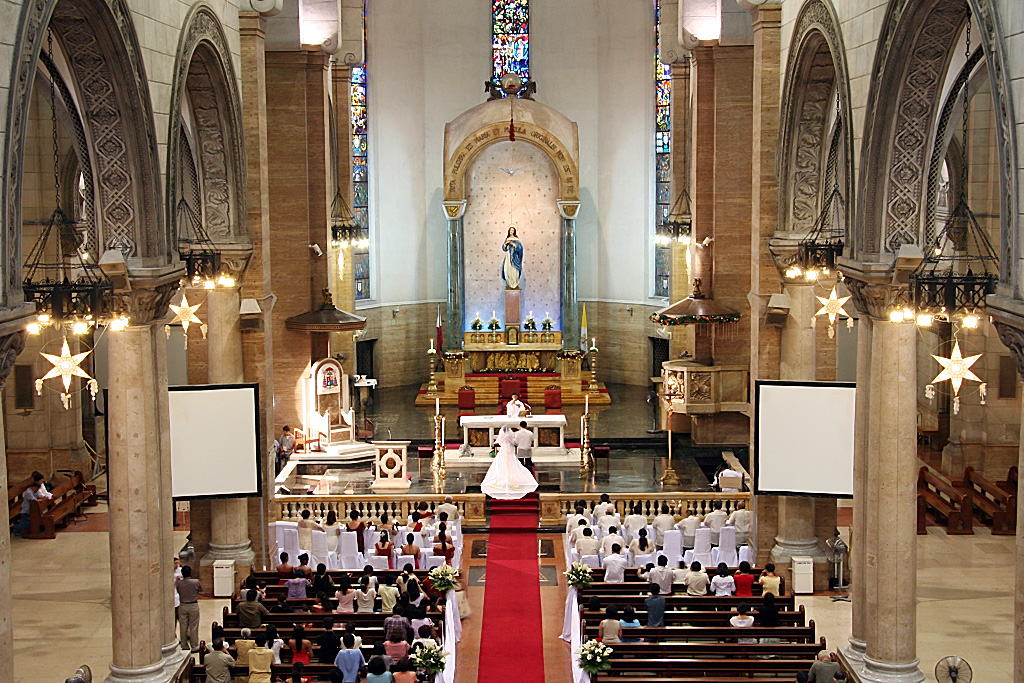
By Wolfgang Kopp  Licensed under  CC BY-SA 3.0 via Wikimedia Commons
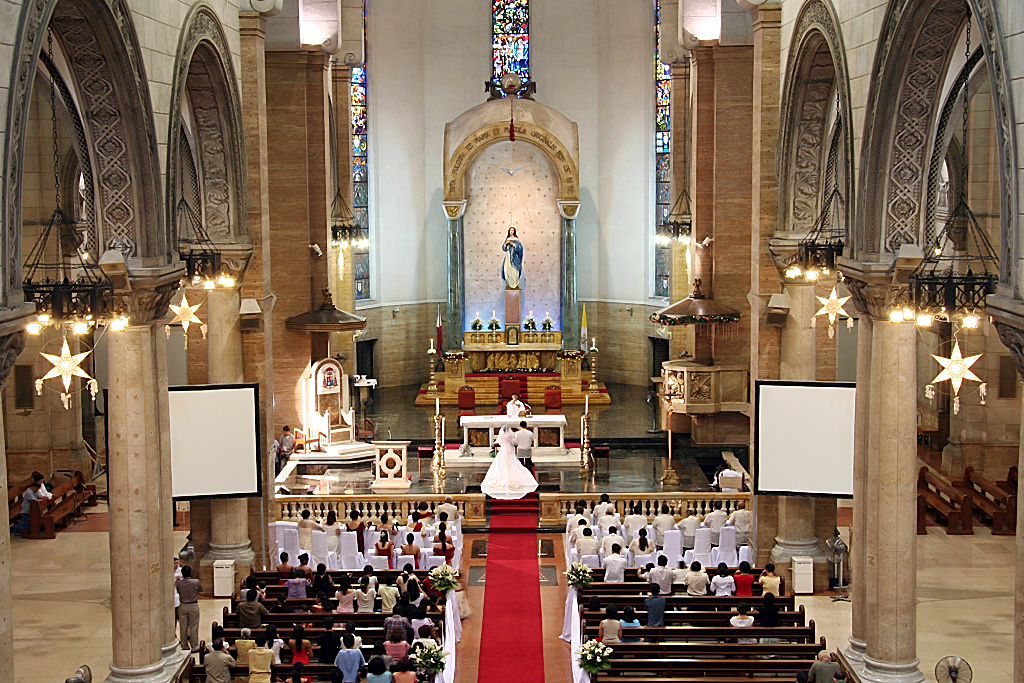
By Wolfgang Kopp Licensed under CC BY-SA 3.0 via Wikimedia Commons

I was recently asked by the Archdiocese of Washington to lead a workshop for catechists that focused on the catechetical teachings implicit in the funeral rites of the Church. At first, I was somewhat surprised at the request. It didn’t strike me as the first sort of topic that one might speak about when speaking to catechists.

But quickly, I warmed to the topic. I have long held that the way in which we conduct ourselves at funerals, in the manner of preaching and other visible attitudes, not only teaches poorly, but is often a countersign of biblical and Church teaching on death, judgment, heaven, and hell.

The rites themselves are not flawed (though the huge number of readings can bewilder and are not of equal value or helpfulness). Rather, a whole host of problems both sociological, and related to liturgical execution, create an environment that not only obscure Catholic teaching on death, but often outright contradicts it.

In this particular blog post, I would like to lay out what I think are some of the problematic issues that surround typical funerals today. And in tomorrow’s post I would like to lay out an outline of a typical funeral sermon I preach in which I seek to remedy some of the misunderstandings that are common today.

So for today here are some problematic issues and attitudes that tend to surround funerals. I do not say that every family or parish exhibits all these problems, only that these are common in various combinations and degrees.

1. There is a basic confusion about the purpose of a funeral. Many people arrive at the parish to plan a funeral and their basic presumption is that the funeral is all about “Uncle Joe,” who he was, what he liked, etc. This then generates a whole series of, often inappropriate, requests. For example,

  1. Uncle Joe’s favorite song was “I did it my way.” Therefore we want a soloist to sing this song.
  2. Uncle Joe’s three favorite nieces want to say “a few words” about what a great uncle he was. Therefore we want them to be able to speak after communion.”
  3. Of course we all know what a great football fan Joe was, that he never missed a game, so we are going to have flowers in the team colors, want a football on a table near the altar,  and ask that a letter from the team’s front office be read in tribute after communion, and after the nieces.
  4. Also, Father, in your sermon please remember to mention Joe’s great concern for this cause, and that cause.
  5. And don’t forget to mention that he was a founding member here at St Esmerelda and the president of the Men’s club.

Well, you get the point. But of course none of this is the real purpose of a funeral at all. Like any celebration of the Sacred Liturgy, the essential purpose of the funeral is the worship of God, the proclamation of the Gospel, and the celebration of the paschal mystery. Secondarily, the Mass is offered for the repose of the soul the deceased and should invite prayer for the judgment they face, and for their ultimate and happy repose after any necessary purification.

The sacred liturgy exists to glorify God, not man, to praise the Lord, not Uncle Joe. No matter how great a guy Uncle Joe was, he doesn’t stand a chance if not for Jesus, and lots of grace and mercy. Joe needs prayer more than praise, and whatever gifts he did have, were from God. God should be thanked and praised for them.

Thus, too many funerals focus on man, not God. Too many funerals focus on human achievements rather than the need for grace and mercy, and gratitude for for all that has been received.

As a practical matter, in my parish we do not allow family members to speak during the funeral Mass at all. If there is someone who wants to say a few words, this is done prior to the beginning of the Funeral Mass. But once Mass begins, it is the Mass, and only the Mass.

2. Most families and funerals miss a step. Upon the death of a loved one there are often instant declarations that “they are in heaven.” Perhaps there are other euphemisms such as “He is in a better place…” or “She’s gone home.”

Of course such judgments are grossly presumptive and in making such declarations, people sit in the judgment seat that belongs only to Jesus. If I were to say, “Uncle Joe is in Hell” people would be rightly angry and say I was being “judgmental.” But of course those who say “Joe is in heaven” sit in the very same judgement seat and are also being “judgmental.”

Further the scriptures don’t teach that people, even believers, die and go straight to heaven. No, there is little pit stop first, an appointment to keep. The scriptures say,

  1. It is appointed for man to die once, and after that comes judgment (Hebrews 9:27)
  2. For we must all appear before the judgment seat of Christ, so that each one may receive what is due for what he has done in the body, whether good or evil. (2 Cor 5:10)
  3. Always speak and act as those who are going to be judged under the law of liberty. (James 2:13)

Thus instant promotions of the deceased to the upper realms of heaven are inappropriate. Rather, we give them to the Lord with our prayers, asking for a merciful and kindly judgment, and that any necessary purification be accomplished soon.  The prayers for, and comments about the deceased can include gratitude for their life and the gifts they brought, but ought never to fail to mention that they go to judgment and should not gloss over the need to pray for them, more than praise them.

3. Purgatory and the concept of purification after death are almost never mentioned, but they should be. But of course purgatory is the likely destination of most of the dead for at least some purification after death.

The whole point of praying for the dead at all is purgatory! If the dead are in heaven they don’t need our prayers. Sadly, if they are in Hell, they can’t use them. It is those in purgatory that both need and can use our prayers.

Jesus says, You must be perfect as the Heavenly Father is perfect. (Mat 5:41). This is a promise, not a threat. And St. Paul says, May God who has begun a good work in you bring it to completion. (Phil 1:16)

Most of us know, if we were to die today, that we are not perfect, and that God’s work in us is not complete. Purgatory just makes sense, and clergy ought not be so reticent to preach it clearly at a funeral. We are not just here to pray for the family, we are here to pray for the deceased because they have gone to judgment. And even if the judgment isn’t for Hell (thanks be to God), there is likely some finishing work needed, some purgation, and our prayers make a difference. More on this tomorrow.

4. The Immediate family is not the only object of concern and ministry at a funeral. While every priest and deacon who preaches is aware that a funeral is a sensitive moment for the family, he cannot simply and only minister to them. Present at most funerals, (in great abundance, frankly), are many who are unchurched, and who need to be called to Jesus. Sometimes these are also in the immediately family.

The clergy should not simply let this moment pass. Honestly the only time many clergy see a lot of these people is at funerals. Waiting for “another time” to call them to repentance and to follow Jesus is not an option. They are here now, and they must be called now.

Therefore a good funeral seeks to minister not only to the immediate family, but to all in attendance who are in varying states of spiritual health or disease.

Pastoral experience tells me that upwards of 80% of funeral attendees and in a very grave spiritual condition. Most of them are not serious about their spiritual life, they are not praying, they are not reading Scripture, they are not attending Mass or going to any service on Sundays, and many are in very serious and unrepented mortal sin. This is just a fact.

And to have that many at a funeral and say nothing to them at all about their need to repent and call on Jesus, is malpractice. Priests, whether they like it or not, are watchmen for the house of Israel. They must go on ahead of the Judge to follow and summon people to repentance and saving faith.

This can be and should be done at funerals. It is possible to do so with loving conviction and a passionate cry.

I have done this for many years at funerals and have almost never received complaints. To the contrary, I have received many expressions of gratitude from people who are desperate for their wayward relatives to hear such a message. I have also joyfully received back a number of people to the practice of the faith on account of it.

Thus funerals must minster to everyone. They are moments that are pregnant with meaning and possibilities. They are evangelical moments.

It is generally agreed that things are out of balance most Catholic funerals. Our silence about important matters, such as judgment, purgatory and a proper preparation for death makes a good deal of what we do unintelligible. Why are we offering Mass? Why do many of our prayers ask mercy and beseech the Lord to received our deceased into heaven? If its all certain and even a done deal (since Joe is already “in a better place”) why do any of this at all?

The priest should surely speak with confidence to the love and mercy of God and assure the family in this regard, especially if the deceased had faith. The Lord Jesus loves sinners and died for us. Surely he will have mercy, if it is sought.

But God’s mercy cannot be preached without any reference to human freedom and choice. Neither can judgment be understood  without any reference to the promise of perfection and the need for it before we can enter heaven. Scripture says regarding heaven, Nothing impure will ever enter it (Rev 21:27) and describes the denizens of heaven as the spirits of the righteous made perfect (Heb 12:23). And we are admonished, Strive for peace with everyone, and for the holiness without which no one will see the Lord (Heb 12:14).

All of these notions must balance and frame our discussion of mercy and the confident hope that we can give our loved ones back to God.

But too many Catholic funerals lack this this balance. And this lack is on the part of both the families who often speak of salvation without reference to judgement, grace or mercy, and the clergy who often fail to preach in a way that sets forth a clear teaching on death, judgment, Heaven, (purgatory) and Hell.

Tomorrow I would like to publish a sermon typical of what I preach at sermons, that does, if I do say so myself, try to articulate theme themes. More then.


I’m Gonna Ride the Chariot in the Morning Lord! – A Sermon for the 32nd Sunday of the Year

110913In the readings today, the Church presents for us a strong reminder and teaching on the resurrection. Jesus himself leads the charge against those who would deny the resurrection from the dead and the seven Brothers of the first reading along with their mother bring up the rear. Let’s take a look at what we are taught in three stages.

I. Ridicule of the Resurrection – The Gospel opens with the observation that Some Sadducees, who deny there is a resurrection, came forward and put [a] question to Jesus. These Sadducees propose to Jesus a ridiculous example about a woman who was married seven times to successively dying brothers and had no children by any of them. They suggest that the resurrection will cause there to be a real confusion in determining whose husband she really is! Now we’re all supposed to laugh, according to these Sadducees, and conclude that the idea of resurrection is ludicrous.

Jesus will dismiss their absurdity handily as we shall see in a moment. But let’s take a moment and consider why the Sadducees disbelieved the resurrection.

Fundamentally, they rejected the resurrection due to the fact that they accepted only the first five books of the Bible: Genesis, Exodus, Leviticus, Numbers and Deuteronomy. Now this is somewhat debated among scholars but for our purposes we can surely say that if something was not explicitly in the Law of Moses, they were unlikely to accept it. All the other Old Testament books such as the prophets, the historical books, the psalms, and the wisdom tradition were set aside by them as authoritative sources.

They further claimed that, in these first five books, the resurrection of the dead was not taught. Most other Jews of Jesus’ time did accept the complete Old Testament, and teachings such as the resurrection of the dead which are set forth there, but the Sadducees simply did not. They were a small party within Judaism (Josephus said they were able to persuade none but the rich). Nevertheless they were influential due especially to their wealth and to the fact that they predominated among the Temple leadership. You can read more of them here: Sadducees

Hence the Sadducees arrive to poke fun at Jesus and all others who held that the dead would rise.

They are no match for Jesus who easily dispatches their arguments. And Jesus uses the Book of Exodus, a book they accept, to do it. In effect Jesus argument proceeds as such:

  1. You accept Moses, do you not?
  2. (To which they would surely reply yes)
  3. But Moses teaches that the dead will rise.
  4. (Jesus must have gotten puzzled looks but he presses on).
  5. You accept that God is a God of the living and not the dead?
  6. (To which they would surely reply yes).
  7. Then why does God in Exodus identify himself as the God of Abraham, Isaac and Jacob, all of whom have been dead some 400 years? How can he call himself their God if they are dead?
  8. Obviously they are alive, for he could not call himself their God, for he is not a God of the dead but of the living.
  9. So they are alive to God. They are not dead.

Hence Jesus dispatches their view. For us, the point is to see how forcefully and clearly Jesus upholds the fact that the dead are alive in the Lord. He powerfully asserts an essential doctrine of the Church and we should rejoice at how firmly Jesus rebukes their disbelief in the resurrection of the dead.

Rejoice! For your loved ones are alive before God . To this world they may seem dead, but Jesus tells us firmly and clearly today, they live. Likewise we too, who will face physical death will also live on. Let the world ridicule this, but hear what Jesus says and how he easily dispatches them. Though ridiculed, the resurrection is real.

II. Resplendence of the Resurrection Jesus also sets aside the silly scenario that the Sadducees advance by teaching in effect that earthly realities cannot simply be projected in to heaven. Marriage scenarios, perceived in earthly ways, cannot be used to understand heavenly realities. The Saints in heaven live beyond earthly categories.

Heaven is more than the absence of bad things and more than the accumulation of good things. Heaven is far beyond anything this world can offer. Scripture says, No eye has seen, no ear has heard, and no human mind has conceived — the things God has prepared for those who love him (1 Cor 2:9). And Again, The sufferings of this world cannot compare to the glory that will be revealed in us (Rom 8:18).

Do you see the majesty of this teaching? We have a glory waiting for us beyond imagining. Consider your greatest pleasure, your happiest experience, your most fulfilled moment. Now multiply them by ten trillion. You are not even close understanding the glory that waits.

And this glory will personally transform us. The Lord once told Catherine of Siena that if she ever saw the glory of a Saint in heaven she would fall down and worship because she would think she was looking at God. This is our dignity, to be transformed into the very likeness of God and reflect his glory. Here is an elaboration of Catherine’s vision of the soul of a saint in heaven:

It was so beautiful that she could not look on it; the brightness of that soul dazzled her. Blessed Raymond, her confessor, asked her to describe to him, as far as she was able, the beauty of the soul she had seen. St. Catherine thought of the sweet light of that morning, and of the beautiful colors of the rainbow, but that soul was far more beautiful. She remembered the dazzling beams of the noonday sun, but the light which beamed from that soul was far brighter. She thought of the pure whiteness of the lily and of the fresh snow, but that is only an earthly whiteness. The soul she had seen was bright with the whiteness of Heaven, such as there is not to be found on earth. ” My father,” she answered. “I cannot find anything in this world that can give you the smallest idea of what I have seen. Oh, if you could but see the beauty of a soul in the state of grace, you would sacrifice your life a thousand times for its salvation. I asked the angel who was with me what had made that soul so beautiful, and he answered me, “It is the image and likeness of God in that soul, and the Divine Grace which made it so beautiful.” [1].

Yes, heaven is glorious and we shall be changed. Scripture says we shall be like the Lord for we shall see him as he is(1 John 3:2).It also says, He will change our lowly body to conform with his glorified Body by the power that enables him also to bring all things into subjection to himself. (Phil 3:19) I have written more on our resurrected bodies here: What will our resurrected bodies be like?

Further, too many people have egocentric notions of heaven where “I” will have a mansion, I will see My relatives, I will play all the golf I want. But the heart of heaven is to be with God for whom our heart longs. In God we will experience fulfillment and peace beyond any earthly thing. There is more to heaven than golf, reunions and mansions, certainly more than clouds and harps. The “more” can never be told for it is beyond words. St Paul speaks of a man (himself) who was caught up into heaven and affirms it cannot be described, it is ineffable, it is unspeakable:

I know a man in Christ who fourteen years ago was caught up to the third heaven…. And I know that this man—whether in the body or apart from the body I do not know, but God knows— was caught up to paradise and heard inexpressible things, things that no one is permitted to tell. (2 cor 12:2-3).

Do you long for heaven? Do you meditate on it? Is there a part of you that can’t wait to get there? There’s an Old Spiritual that says, “I’m gonna ride the Chariot in the mornin’ Lord. I’m getting ready for the judgment say, Mah Lord, Mah Lord! And this leads us to the final point.

III. Response to the Resurrection What difference does the resurrection make other than to give us joy if we meditate upon it? To see that answer, look to the first reading today, where the seven brothers are willing to accept torture and death. If there is a great reward waiting for those who remain faithful and we see that reward as the greatest thing we have , then we will endure anything to get there. Notice how the vision of heaven spurs them on to reject demands of their persecutors that they deny their faith:

We are ready to die rather than transgress the laws of our ancestors…. You are depriving us of this present life, but the King of the world will raise us up to live again forever. It is for his laws that we are dying….. the king and his attendants marveled at the young man’s courage, because he regarded his sufferings as nothing (2 Maccabees, 7:2,9, 12)

Only their vision of the rewards waiting for them could motivate them to endure the awful sufferings described in the 7th Chapter of 2nd Maccabees

And what of us? Do we meditate on heaven and value it’s reward enough to be willing to endure suffering to get there? We need a strong vision of heaven to be able to endure and stand fast. Too many today have lost a deep appreciation for heaven. Too many pray to God merely for worldly comforts and rewards. But these will pass. We ought to ask God for a deep desire and drive for heaven and the things waiting for us there.

What athlete will discipline his body, as severely as they do, without the deep motivation of reward and the satisfaction of meeting goals? What college student attends thousands of hours of school, reads lengthy books and writes lengthy papers if it is not for the pot of gold and career at the end of the trail? Then, who of us will endure the trials of faith if we are not deeply imbued with the vision of glory and deeply desirous of its fulfillment no matter the cost? Without this our moral and spiritual life become tepid and our willingness to endure trials falls away. An old hymn says:

When peace, like a river, attendeth my way,
When sorrows like sea billows roll;
Whatever my lot, Thou has taught me to say,
It is well, it is well, with my soul.

And Lord, haste the day when my faith shall be sight,
The clouds be rolled back as a scroll;
The trump shall resound, and the Lord shall descend,
Even so, it is well with my soul.

Meditate on heaven often. Although we can never fully grasp its glory here, we ought not let that stop us from imagining what we can. Read Revelation Chapters 4,5, 8, 21 & 22. But above all, ask God for an ever deepening desire for Him and the good things waiting for you in heaven. Look to heaven, long for heaven, desire God and deeply root your life in him. Heaven will not disappoint!

This African American Spiritual says, I’m gonna ride the chariot in the morning Lord! I’m gettin ready for the judgment day, My Lord, My Lord! Are you ready my brother? (Oh yes!) Are you ready for the journey? (Oh Yes!), do you want to see Jesus (Yes, Yes!) I’m waiting for the Chariot ’cause I ready to go. I never can forget that day, (Ride in the chariot to see my Lord), My feet were snatched from the miry clay! (Ride in the chariot to see my Lord!)

On the Purgative, Illuminative and Unitive Stages of Spiritual Life, as seen in a Cartoon

110813In the spiritual journey, there are generally denoted three basic stages through which the soul must pass that draws us to deeper union with God: the Purgative, the Illuminative and the Unitive.

And those who seek union with God must realize that such union, while always the gift of God, requires process, often painful, that must pave the way the way for that union. For, if a box is filled with sand, it cannot be filled with gold dust. The sand must be emptied, the vessel cleaned, and then there is the room for the Gold of God’s presence.

The touching Aniboom cartoon below illustrates these stages. Briefly stated the stages described are these.

1. The Purgative Stage – In this stage the soul our desires and affections must be purged of attractions to sin. The disorder caused by sin must be set right by the Lord, for a disordered soul cannot perceive or appreciate well the glory and beauty of God. The distractions of the world must be diminished and wrongful passions, attachments, and evil inclinations must be subjugated so that we can more easily overcome temptations, and preserve and exercise charity. There is a focus, in this stage of uprooting the remnants and habits of former sins, perhaps through mortifications, the practice of austerity and simplicity, and the submitting of our will to be in conformity to the will of God. We seek to diminish and purge the attraction of wrongful or excessive pleasures. We also seek to diminish our natural shrinking from pain and to develop a repugnance to whatever is contrary to the will of God. The main virtue of this state to be cultivated is humility, which help us be aware of our own weakness and or our dependance on the grace of God.

In the video a young son seeks to be close to his father and enjoy his presence. The father is delighted at his enthusiastic love but must gently show the son that other necessary duties have not been attended to yet. The room of his life is not in good order, and must be rendered as such before he can come and sit close to his father. He shows his son what must be done. And the son to his credit runs to put things in order. The purgative way is not underway.

2. The Illuminative way – Those in this stage have made progress and have their passions better under control, so that they easily keep themselves from mortal sin, but still do not easily avoid venial sins since they still take pleasure in earthly things and are distracted by various imaginations and desires, not all of which are necessary unlawful but may get in the way of deeper union with God. The mind becomes more and more enlightened (illumined) to spiritual things and the practice of virtue. Love is stronger and the soul seeks progress in the spiritual life and in all the virtues. But purgation is still somewhat incomplete, and the purification of the senses is not yet finished. There are also aridities, difficulties, and trials, sometimes more severe than in the past and the need to endure suffering from temptations.

In the video, the young boy makes progress, but he still has not fully understood or implemented what must take place before the deepest union is possible. Twice his father must correct him and help him to see, to be illumined as to what is needed. But in stages the young boy is understanding and conforming.

3. The Unitive Way – This the way of those who have their minds detached from temporal things such that they enjoy great peace, and are not agitated by various desires nor moved to any great extent by sinful passion. Having been largely purged of these things, they have their minds fixed chiefly on God. It is called “unitive” since at this stage, there is a union with God by love and the actual experience and exercise of that love.

And thus, in the video, the young boy having been led through stages by his father is now able to enjoy close union with him. His life is now in good order. There is a beautiful detail at the end of how his original desire to play a video game with his father is now deepened and he is content merely rest in union with his Father, for his own sake and not for some pleasure outside his Father’s embrace.

The video is not perfect. It shows a father who points to what must be done but does not otherwise assist his son. Obviously in terms of grace, we cannot make any progress through these stages with out God’s absolute assistance. Nevertheless it is a lovely video that rather nicely illustrates the stages of our growth toward intimacy with God.

Enjoy: