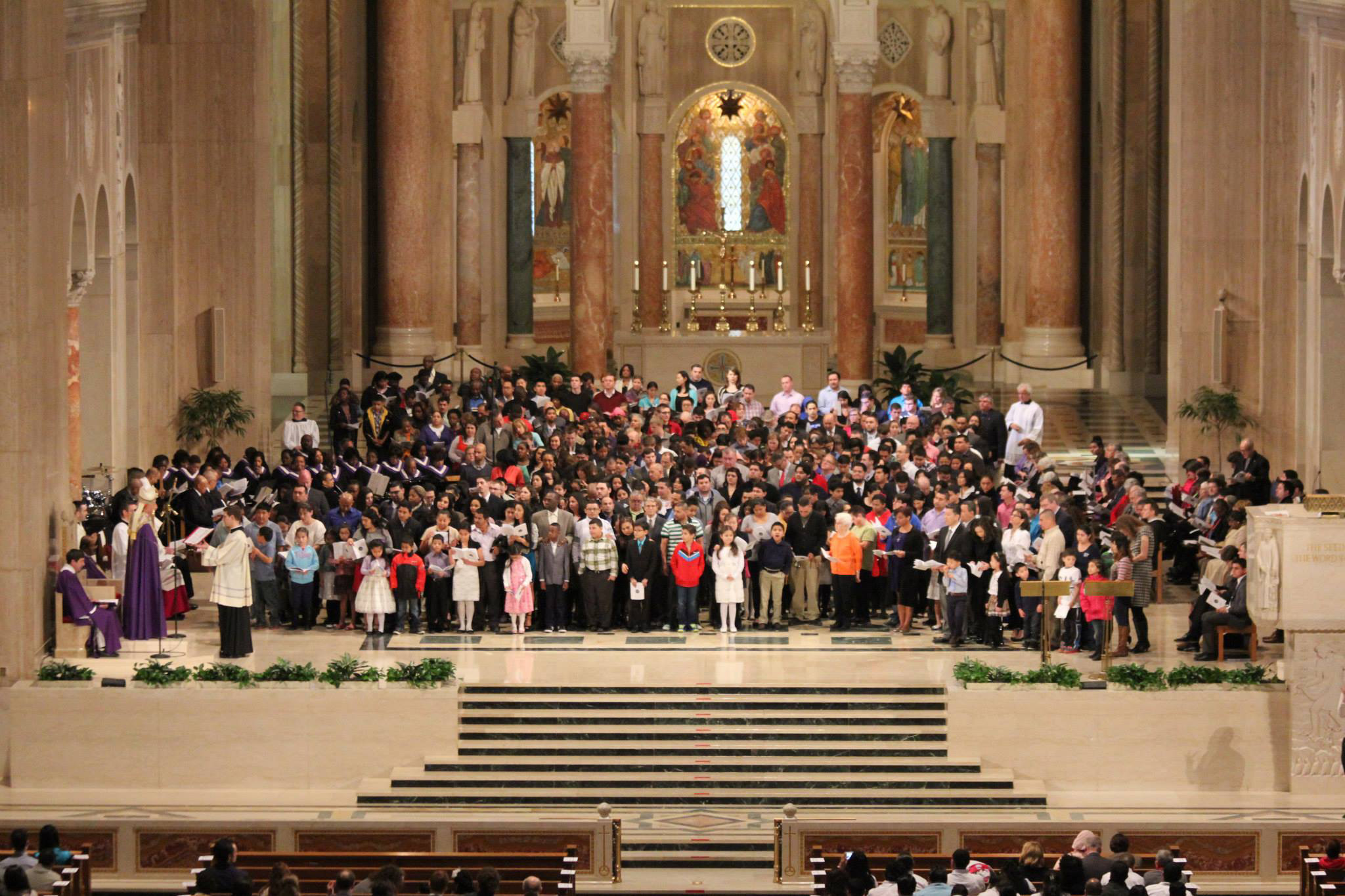
In today’s Gospel we see that the Risen Lord appeared to the apostles, who were gathered together in one place. The fact that they were gathered in one place is not without significance, for it is there that the Lord appears to them. One of them, as we shall see, was not in the gathering and thus missed the blessing of seeing and experiencing the risen Lord. It might be said that Thomas, the absent disciple, “blocked” his blessing.
Some people want Jesus without the Church. No can do. Jesus is found in his Church among those who have gathered. There is surely a joy in a personal relationship with Jesus, but the Lord also announced a special presence whenever two or three are gathered in his name (cf Mat 18:20). It is essential for us to discover how attending Mass and walking in fellowship with the Church are both essential for us if we want to experience the blessing and healing of the Lord. This Gospel has a lot to say to us about the need to gather together to find the Lord’s blessing in the community of the Church, in his Word, and in the Sacraments. Let’s look at the gospel in five stages.
I. The Fearful Fellowship – Notice how the text describes the apostles gathering: On the evening of that first day of the week, when the doors were locked where the disciples were, for fear of the Jews… These men are frightened, but they are in the right place. It is Sunday, the first day of the week, and they have gathered together. The text says nothing about what they are doing other than that they have gathered. But in a sense this is all we need to know, for this will set the stage for blessing and for the presence of the Lord.
And these are men who need a blessing. The locked doors signify their fear of the Jewish authorities. One may also presume that they are discouraged, lacking in hope, even angry. For they have experienced the earthquake that Jesus’ crucifixion was for them. It is true that some of the women in their midst claimed to have seen Jesus alive. But now it is night and there have been no other sightings of which they have heard.
But, thanks be to God, they have gathered. It is not uncommon for those who have “stuff” going on in their lives to retreat, withdraw, even hide. Of course this is probably the worst thing one can do. And it would seem that Thomas may have taken this approach, though his absence is not explained. Their gathering, as we shall see, is an essential part of the solution to all that afflicts them. This gathering is the place where their new hope, new hearts, and new minds will dawn.
And for us too, afflicted in many ways, troubled at times yet joyful at others, there is the critical importance of gathering each Sunday, each first day of the week. Here too for us in every Mass, is the place where the Lord prepares blessings for us. I am powerfully aware of how every Mass I celebrate, especially Sunday Mass, is a source of powerful blessings for me. Not only does God instruct me with his Word and feed me with his Body and Blood, but he also helps form me through the presence and praise of others: the people I have been privileged to serve. I don’t know where I’d be if it were not for the strong and steady support of the People of God: their prayers, their praise, their witness, and their encouragement.
The Book of Hebrews states well the purpose and blessings of our liturgical gatherings:
Let us hold fast the confession of our hope without wavering, for He who promised is faithful; and let us consider how to stir up one another to love and good deeds, not neglecting to meet together, as is the habit of some, but encouraging one another; and all the more as you see the Day drawing near. Heb 10:22-25
So here are the Apostles meeting together, encouraging one another. And as we shall see, they are about to be blessed. But the blessing occurs only in the context of the gathering. One of the apostles, Thomas, is missing, and thus will miss the blessing. This blessing is only for those who are there. And so it is for us, who also have blessings waiting, but only if we are present, gathered for holy Mass. Don’t block your blessings!
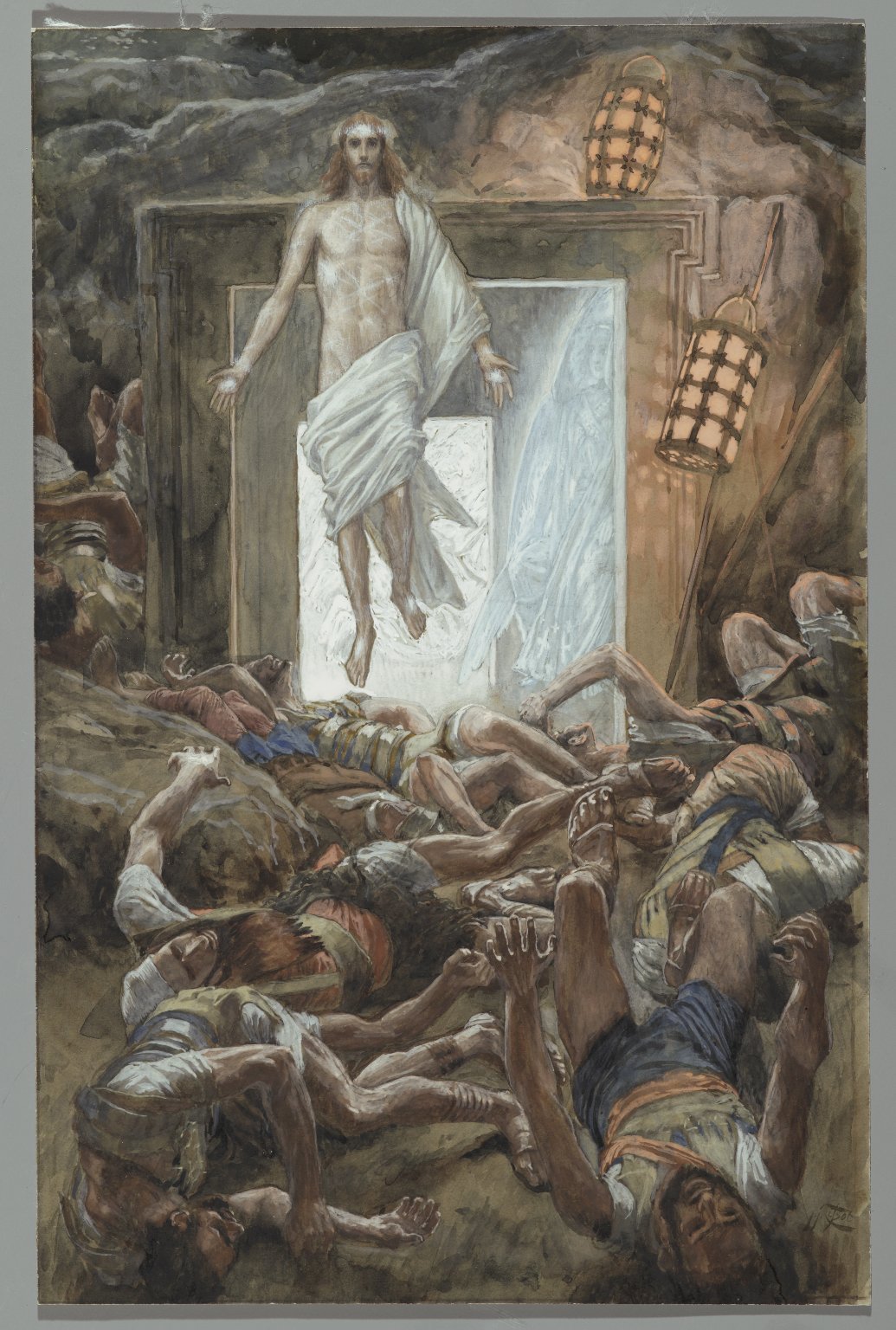
II. The Fabulous Fact – And sure enough here comes the blessing, For where two or three are gathered in my name, there am I among them (Matt 18:20). The text from today’s Gospel says, Jesus came and stood in their midst and said to them, “Peace be with you.” When he had said this, he showed them his hands and his side. The disciples rejoiced when they saw the Lord. Jesus said to them again, “Peace be with you.”
Suddenly there is a completely new reality, a new hope, a new vision. Note too that there is also a new serenity, a peace, a shalom. For not only do they see and come to experience a wholly new reality, but they also receive an inner peace. Observe again, this is only for those who are present.
And here is a basic purpose of walking in Fellowship with the Church and of the gathering we call the sacred liturgy. For it is here that we are invited to encounter the Living Lord, who ministers to us and offers us peace. Through his word, we are increasingly enabled to see things in a wholly new way, a way that gives us hope, clarity, and confidence. Our lives are reordered. Inwardly too, a greater peace is meant to come upon us as the truth of this newer vision begins to transform us, giving us a new mind and heart. And, looking to the altar, we draw confidence that the Lord has prepared a table for me in the sight of my enemies and my cup is overflowing (Ps 23). The Eucharist is thus the sign of our victory and election and, as we receive the Body and the Blood of the Lord, we are gradually transformed into the very likeness of Christ.
Elaboration: Is this your experience of the gathering we call the Mass? Is it a transformative reality, or just a tedious ritual?
As for me, I can say that I am being changed, transformed into a new man, into Christ, by this weekly, indeed, daily gathering we call the Mass. I have seen both my mind and heart changed and renewed. I see things more clearly, and have greater hope, joy, and serenity. I cannot imagine what my life would be like, were it not for this gathering of the Holy Sacrifice of the Mass where Jesus is present to me and says, “Shalom, peace be with you.” Over the years, I am a changed man.
Yes, the Mass works; it transforms, giving a new mind and heart. Don’t block your blessings; be there every Sunday.
III. Forgiving Fidelity – Next comes something quite extraordinary that also underscores the necessity of gathering and simply cannot take place in a solitary notion of faith. The text says, “As the Father has sent me, so I send you.” And when he had said this, he breathed on them and said to them, “Receive the Holy Spirit. Whose sins you forgive are forgiven them, and whose sins you retain are retained.”
In this remarkable moment, the Lord gives the apostles the power to forgive sin. Note that he is not simply giving them the ability to announce that we are forgiven. He is giving them a juridical power to forgive, or in certain cases to withhold or delay forgiveness. This is extraordinary. Not only has he given this authority to men (cf Matt 9:8), but he has given it to particular men, all but one of whom abandoned him at his crucifixion. These are men well aware of their shortcomings! Perhaps it is only because of this awareness that the Lord can truly trust them with such power.
Here is the heart of Divine Mercy Sunday: the Lord’s mercy for us, and that mercy available to us through his presence on earth, through his mystical Body, the Church.
Elaboration: There are those who deny that Confession is a Biblical sacrament. But here it is, right here in this biblical text. There are other texts in Scripture that also show confession to be quite biblical. For example,
- Also many of those who were now believers came, confessing and divulging their practices. (Acts 19:18).
- Is any one of you sick? He should call the presbyters of the church to pray over him and anoint him with oil in the name of the Lord. And the prayer offered in faith will make the sick person well; the Lord will raise him up. If he has sinned, he will be forgiven. Therefore confess your sins to one another and pray for each other so that you may be healed. The prayer of a righteous man is powerful and effective. (James 5:14-16).
Many consider it sufficient merely to talk to God privately about their sins. But the Scriptures once again instruct us away from such a solitary notion and bid us to approach the Church. The Lord gives the apostles the authority to adjudicate and then absolve or retain sin, but this presupposes that someone has first approached them personally. Paul, too, was approached by the believers in Ephesus, who made open declaration of their sins. The Book of James places the forgiveness of sins in the context of the calling of the presbyters, the priests of the Church, and sees this as the fulfillment of the text, “declare your sins to one another…the prayer of the righteous man has great power.”
Thus again, there is a communal context for blessing, not merely a private one. More on the biblical roots of confession can be found here: Confession is Biblical
IV. Faltering Fellowship – We have already noted that Thomas blocked his blessing by not being present. The text says, Thomas, called Didymus, one of the Twelve, was not with them when Jesus came. So the other disciples said to him, “We have seen the Lord.” But he said to them, “Unless I see the mark of the nails in his hands and put my finger into the nail marks and put my hand into his side, I will not believe.”
Thomas exhibits faltering fellowship in two ways.
First, he is not with the other apostles on resurrection evening. Thus he misses the blessing of seeing and experiencing the resurrection and the Lord.
Second, Thomas refuses to believe the testimony of the Church that the Lord has risen.
One of the most problematic aspects of many people’s faith is that they do not understand that the Church is an object of faith. In the Creed every Sunday, we profess to believe in God the Father, and to believe in Jesus Christ, his only Son, our Lord, and to believe in the Holy Spirit, the Lord and giver of life. But we are not done yet. We go on to say that we believe in one, holy, catholic, and apostolic Church. We know and believe what we do about Jesus Christ on the basis of what the Church hands down from the apostles. Some say, “No, I believe in what the Bible says.” But the Bible is a Book of the Church. God has given it to us through the Church who, by God’s grace, collected and compiled its contents, and vouches for the veracity of the Scriptures. Without the Church there would be no Bible.
So in rejecting the testimony of the Church, Thomas is breaking fellowship and refusing to believe in what the Church, established by Christ to speak in his name (e.g. Lk 24:48; Lk 10:16; Matt 18:17; Jn 14:26; 1 Tim 3:15; inter al.), has testified. And so we falter in our fellowship with the Church if we refuse to believe the testimony of the Church in matters of faith and morals. Here too is a privatization of faith, a rejection of fellowship, and a refusal to gather with the Church and accept what she proclaims through her Scriptures, Tradition, and the Catechism.
But note that as long as Thomas is not present, he has blocked his blessings. He must return to gather with the others in order to overcome his struggle with the faith.
V. Firmer Faith – Thomas returns to fellowship with the other Apostles. We do not know the reason for his absence, and his return is also unexplained. Some may want to chalk up his absence to some insignificant factor such as being busy, or in ill health, or some other largely neutral factor. But John seldom provides us details for neutral reasons. Further, Thomas DOES refuse to believe the testimony of the other apostles, which is not a neutral fact.
But, praise God, he is back with the others now and in the proper place for a blessing. Whatever his struggle with the faith, he has chosen to work it out in the context of fellowship with the Church. He has gathered with the others. And now comes the blessing.
You know the story, but the point here is that whatever our doubts and difficulties with the faith, we need to keep gathering with the Church. In some ways, faith is like a stained glass window that is best appreciated when one goes inside the Church. From the outside, there may be very little about it that seems beautiful. It may even look dirty and leaden. But once one is inside and adjusted to the light, one can see that the window radiates beauty.
It is often this way with the faith. I have found that I could only fully appreciate some of the more difficult teachings of the Church after years of fellowship and instruction by the Church, through her liturgy as well as in other ways. As my fellowship and communion have grown more intense, so my faith has become clearer and more firm.
Now that Thomas is inside the room, he sees the Lord. Outside he did not see and doubted. The eyes of our faith see far more than our fleshly eyes. But in order to see and experience our blessings, we must gather; we must be in the Church.
Finally, it is a provocative but essential truth that Christ is found in the Church. Some want Christ without the Church. No can do. He is found in the gathering of the Church, the ekklesia, the assembly of those called out. Whatever aspects of His presence are found outside are mere glimpses, shadows emanating from the Church. Jesus must be sought where he is to be found: among sinners in his Church. The Church is his Body and his Bride. Here he is found. That his presence may be “felt” while alone on some mountaintop can never be compared to hearing the words of the priest, “Behold the Lamb of God.”
Thomas found Jesus, but only when he gathered with the others. It is Christ’s will to gather us and unite us (Jn 17:21). Congregavit nos in unum Christi amor (the love of Christ has gathered us in one).
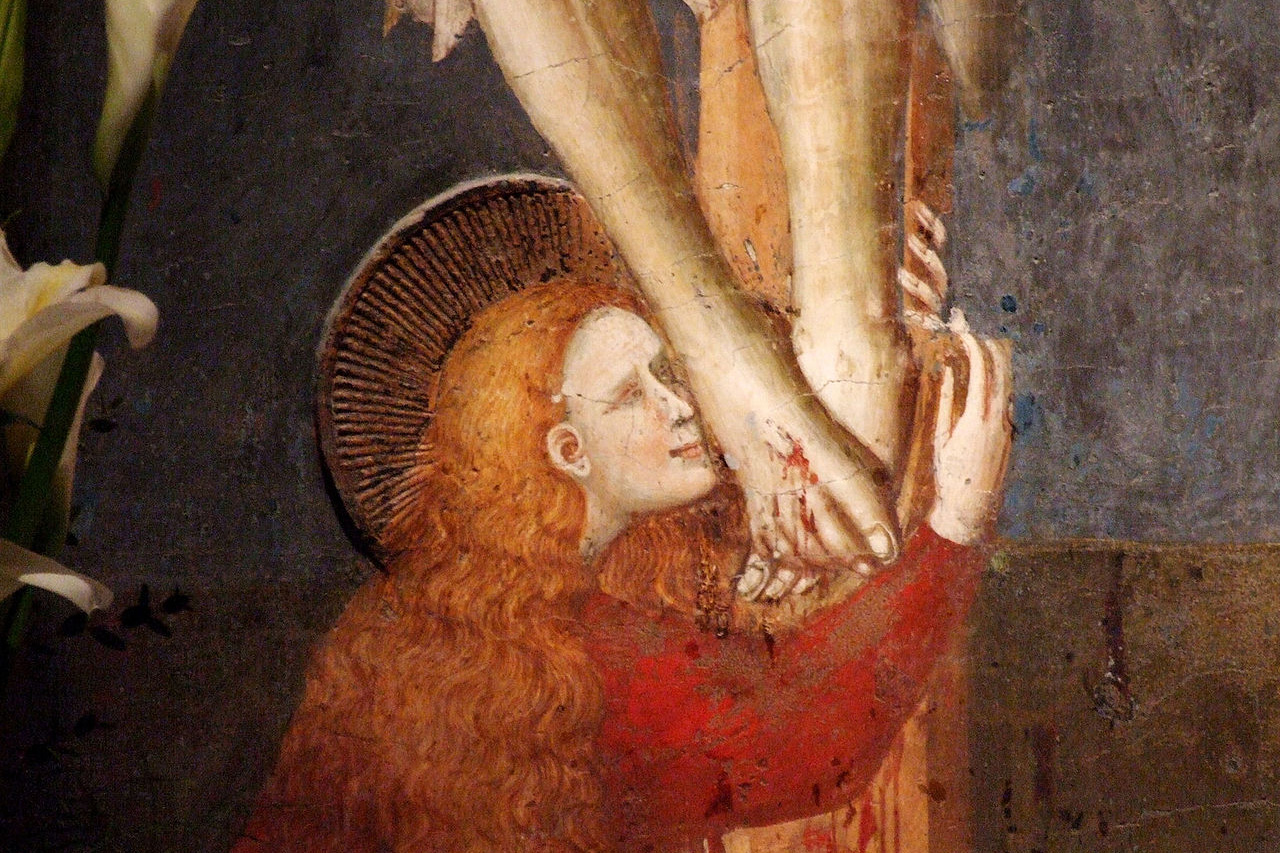
The Image at the top of the blog is from Florence.
The following song says that we “need each other to survive.” Don’t block your blessings, get to Church on Sunday!
In this video, Cardinal Dolan speaks of those who want Christ without the Church: