What does Jesus Mean by the Fire of Hell?

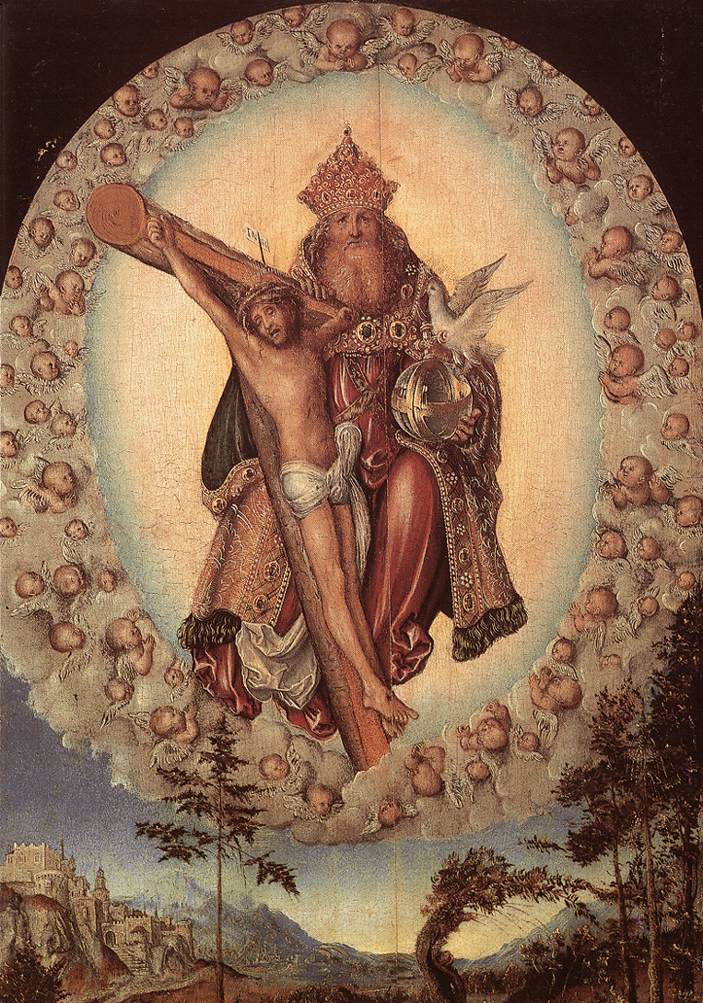
052014In the Church’s Liturgy of the Hours (in the Office of Readings) we are getting close to the great culmination of the Book of Revelation, when the victorious Christ is united with his bride forevermore. Just prior to this great victory is the casting down of Satan into fiery hell and the sealing over of the great abyss.

Central to the imagery of Hell is fire, along with some other unpleasant things such as worms that never die, etc. We do well to ponder these images, but also to be careful about them. For while many take them literally, they are probably meant to be understood more richly. To be sure, most of the Fathers and tradition understand the fire of Hell to be an actual, physical fire, but it remains a question as to what effect physical fire would have on fallen angels who have no physical bodies. And while fallen human souls will eventually have their bodies, it seems hard to imagine how physical fire can affect their souls prior to the resurrection of the bodies of the dead.  Hence fire and other physical descriptions most likely speak also to deeper spiritual realities.

Let’s take a look at an excerpt from the Book of Revelation, and also consider some other descriptions of our Lord regarding Hell. Perhaps we can ponder what the images are trying to teach us of the nature and reality of Hell for those who choose to live there by rejecting the Kingdom of God and its values.

Next I saw a large white throne and the One who sat on it. The earth and the sky fled from his presence until they could no longer be seen. I saw the dead, the great and the lowly, standing before the throne. Lastly, among the scrolls, the book of the living was opened. The dead were judged according to their conduct as recorded on the scrolls. The sea gave up its dead; then death and the nether world gave up their dead. Each person was judged according to his conduct. Then death and the nether world were hurled into the pool of fire, which is the second death; anyone whose name was not found inscribed in the book of the living was hurled into this pool of fire (Rev 20:11-15).

A pool of fire is a dramatic metaphor. It is so dramatic in fact that it causes many moderns to reject the teaching of Jesus on Hell outright. Even many who are otherwise believers in Jesus reject His consistent teaching on Judgment and Hell by either conveniently forgetting it, or by espousing some artful theories that deny He said it or that suggest that He was just trying to scare people who lived in “less mature” times. Some who do not believe in God say this teaching is one of the reasons they do not believe. I have addressed many of these objections elsewhere. But for our purposes here, let’s keep the focus on what the metaphor is likely trying to teach us.

First, to be clear, the metaphors of fire and worms are very consistent features of Jesus’ descriptions of Hell. For example,

  1. If your foot causes you to stumble, cut it off; it is better for you to enter life lame, than, having your two feet, to be cast into hell, where their worm does not die, and the fire is not quenched (Mark 9:45-46).
  2. Again, anyone who says to a brother or sister, ‘Raca,’ is answerable to the court. And anyone who says, ‘You fool!’ will be in danger of the fire of hell. (Matt 5:22).
  3. So [the rich man] called to him, ‘Father Abraham, have pity on me and send Lazarus to dip the tip of his finger in water and cool my tongue, because I am in agony in this fire‘ (Luke 16:24).
  4. Then the Son of Man will also say to those on His left, ‘Depart from Me, accursed ones, into the eternal fire which has been prepared for the devil and his angels; for I was hungry, and you gave Me nothing to eat … (Matt 25:41).

Allow these to suffice. Jesus in His description draws rather heavily from Isaiah wherein God says of those who are unrepentant, “And they [the faithful] will go out and look on the dead bodies of those who rebelled against me; the worms that eat them will not die, the fire that burns them will not be quenched, and they will be loathsome to all mankind” (Isaiah 66:24).

But though tradition does largely see the fire as indeed a physical fire, we must still ponder the deeper reality of this fire. For fallen angels without bodies (and for whom the fire was prepared) do experience its pain. But how? And for fallen human souls (at least before the resurrection of the body), how is the fire experienced and to what does it point?

Perhaps a remark by Origen can assist:

Wonder not when you hear that there is a fire which though unseen has power to torture, when you see that there is an internal fever which comes upon men, and pains them grievously Origen (quoted in the Catena Aurea at Mat 25:41).

And thus we gain some insight into the “inner” fire that rages in the fallen angels and in the souls of the damned. For even now, we often speak metaphorically of how our own passions can burn like fire. We speak of burning with lust, or of seething with anger, or being furious (fury being related to the word for fire). We speak of the heat of passion, of boiling over with anger, or of seething with envy. Even good emotions like love can burn like fire if they are not satisfied. How our thirsts and passions can rage like fire in us if they are not slaked and satisfied by the only One who can truly satisfy us!

And as for worms—worms that die not according to Jesus—we often speak of being devoured by our passions or consumed by them. There is less consensus on the worms being physical, but surely here too, physical or not, they speak to a deeper spiritual reality as well.

And thus the fire of Hell, though physical, speaks also to deeper spiritual struggles. We were made for God, and God alone can satisfy us. To choose anything less than God is to remain gravely unfulfilled and to be burning with a longing that has refused to seek its proper goal. Thus one burns (whether fallen angel or fallen soul) with desire but has rejected the “one thing necessary” to satisfy that desire. The fire seethes and the fury grows.

Bishop Sheen once told a parable showing how frustrating Hell must be since the “one thing necessary” is lacking:

There is not a golfer in America who has not heard the story, which is theologically sound, about the golfer who went to hell and asked to play golf. The Devil showed him a 36-hole course with a beautiful clubhouse, long fairways, perfectly placed hazards, rolling hills, and velvety greens. Next the Devil gave him a set of clubs so well balanced that the golfer felt he had been swinging them all his life. Out to the first tee they stepped, ready for a game. The golfer said: “What a course! Give me the ball.” The Devil answered: “Sorry….we have no golf balls. That’s the hell of it!” (Three to Get Married, Kindle Edition, Loc. 851-57).

Yes, that’s the hell of it: to lack the one thing necessary.  And oh the fiery fury and the seething indignation it must bring to have definitively rejected the only One who could ever satisfy the fire of our desire!

Finally St. Thomas, or the Thomistic tradition, adds the insight of the fire as “burning” in the sense that it limits the fallen angels and fallen souls:

But the corporeal fire is enabled as the instrument of the vengeance of Divine justice thus to detain a spirit; and thus it has a penal effect on it, by hindering it from fulfilling its own will, that is by hindering it from acting where it will and as it will….that as the instrument of Divine justice [fire] is enabled to detain [a spirit] enchained as it were, and in this respect this fire is really hurtful to the spirit, and thus the soul seeing the fire as something hurtful to it is tormented by the fire (S.T. Supplement, Q 70, art 3, respondeo).

In other words, there is a seething indignation that must come from a fallen spirit who is hindered and can no longer live the lie of following its own will in order to find satisfaction. Such apparent satisfaction is a lie, for it is rooted in the willful rejection of God and the values of God’s Kingdom. The fire is a limiting fire that attests to the fact that nothing outside God will satisfy, and that roaming about seeking satisfaction in anything other than God must now end. The fire burns and is unquenchable, for only God can quench it. But the fallen souls and fallen angels have forever refused Him.

And thus the fire of passion forever burns, unsatisfied, and like worms their desires devour and consume them. In a word, Hell is to be forever “unfulfilled,” as one burns with desire but has rejected the only One who can satisfy that desire.

This song says “God and God Alone … He will be our one desire, our hearts will never tire of God and God alone.”

Even Jesus Sometimes said “No”

051914One of the struggles that many Christians experience is that the needs around us are so great, yet we are limited, both in personal strength and resources. Lurking in the back of our minds is the notion that whatever the problem, Jesus would always help and therefore we should too. But is it always wrong to say “No” when there is need?

It is true that Jesus was quite generous with his time, attention, and resources. We too are counseled to be rich in mercy and kindness, expansive in our charity, and willing to forsake everything to follow Christ. But for limited human beings, often with many obligations, are there no limits? Of course there have to be. But, “What would Jesus Do?” Did he ever say, “No”?

Many think that Jesus always said, “Yes,” especially to the poor and needy. But in fact there were times when Jesus said, “No.” I’d like to look at three of them. I choose these three because to some extent they deal with the needy. Other examples of Jesus saying “No” pertain more to specialized or inappropriate requests (e.g., James and John asking for seats of honor, or Peter wanting to use a sword to defend Jesus). But let’s take a look at three occurrences of Jesus saying “No,” and see what we can learn.

I. “No” to the Sick? The scene is Capernaum. Jesus and His apostles have made quite an impression. Jesus has cured a demon-possessed man in the synagogue and word has spread. Jesus is lodging at the house of Simon Peter and has just cured Peter’s mother-in-law of a great fever. The Gospel of Mark picks up the story:

When it was evening, after sunset, they brought to him all who were ill or possessed by demons. The whole town was gathered at the door. He cured many who were sick with various diseases, and he drove out many demons, not permitting them to speak because they knew him (Mark 1:34-35).

So clearly the Lord is helping a lot of people, as was His custom. The crowd seems to have grown quite large and He goes on curing until sundown. But then comes a twist:

Rising very early before dawn, he left and went off to a deserted place, where he prayed. Simon and those who were with him pursued him and on finding him said, “Everyone is looking for you!” He told them, “Let us go on to the nearby villages that I may preach there also. For this purpose have I come.” (Mark 1:35-38)

Here we have what seems an unusual occurrence: Jesus is informed by Peter and the others that “Everyone is looking for you!” The exasperated statement implies that a line has once again formed in Capernaum of those seeking healing from various ailments. Many of the sick are waiting for Jesus’ ministrations. But Jesus says, “No” to the request to return. He also indicates an intention to go to other villages so that He might preach, for THAT is what He has come to do.

Why does Jesus say, “No”? For two reasons it would seem.

First, in terms of his humanity, He is limited. He has not come to save only Capernaum and thus must devote attention to other places as well. In effect, He must allocate His (humanly speaking) “limited” resources justly and effectively. This is also the case with us. We must help the poor, but we must also feed our children, and meet other just obligations. Saying “No” is not necessarily unchristlike, but is rather a humble admission of our limitations.

A second reason Jesus likely says, “No” is that He will not allow himself to be defined merely as a medical miracle worker. He has come to preach and ultimately to take up his cross. Part of what he preaches is the role of the cross in life. It is not always appropriate to alleviate every burden. To be labeled as “Mr. Fix-it” is to be diminished. For the Lord did not come merely to heal the body, but also and even more so, to heal the soul. Jesus’ “No” is therefore also a teaching moment.

We too who would imitate Christ should not think that alleviating burdens is our only mission. Sometimes it is more loving to let others carry the crosses God intends for them. We are not necessarily being callous or unchristlike in this as long as our intent is to allow people to experience necessary growth or to understand the consequences of their choices.

We must be careful not to excuse ourselves too easily from our duty to help others, but neither should we become enablers, or people who cause others to become too dependent. In most cases, we should not do for others what they can do for themselves.

The good should not eclipse the best. The Lord could not allow himself to be drawn into a situation where what was good about him (healing) eclipsed what was best (salvation and the preaching of the Kingdom). Hence he sometimes said, “No.”

II. “No” on a matter of Social Justice? On another occasion, in the context of Jesus’ Sermon on the Plain, a man called out from the crowd,

Teacher, tell my brother to share the inheritance with me.” [But] Jesus replied, “Man, who appointed me a judge or an arbiter between you?” Then he said to them, “Watch out! Be on your guard against all kinds of greed; a man’s life does not consist in the abundance of his possessions (Luke 12:13-15).

Here too we have a bit of an unexpected twist. We might expect Jesus to side with this man. After all, isn’t sharing the family inheritance with potentially needy siblings a just and charitable thing to encourage and do? But Jesus says, “No,” and then warns the man of greed.

Here too, the “No” of Jesus seems to point to two issues. First, Jesus is not going to be roped into being a legal arbiter of worldly matters. He has come to preach the Kingdom and save us and will not be defined down into probating wills and settling inheritance law.  Another issue is that Jesus, who is able to see into the man’s heart, says “No” to rebuke the man’s greed.

And thus we are taught two things by Jesus’ “No.”

First, we are taught that we are not always obliged to solve everyone’s problems. Sometimes people try (inappropriately) to draw us into what does not concern us. They may ask us to take sides in a family dispute or on some community issue on which it is not right for us to take sides. On other occasions, we may be asked to resolve matters involving two adults who should be expected to work out their own differences. Supervisors, pastors, and other leaders often experience such inappropriate attempts to draw them into disputes or to take sides. There are surely times when leaders have to help arbitrate disagreements, especially if they pertain to specific matters over which they have authority. But there are also many occasions when requested help in such matters deserves a “No.”

Second, we are taught that we are not always required to give people what they want. Although we are not gifted with Jesus’ ability to see into people’s heart and understand their motives fully, it remains true that we CAN sometimes see that “No” is the best answer in the given circumstances. Perhaps we can see that what a person asks for is inappropriate or will cause harm to others. Perhaps it will offend against the common good or will show favoritism. Perhaps the request involves an unwise use of resources or is contrary to agreed-upon goals and priorities. There may be any number of reasons we can and should say “No,” and doing so is not necessarily unchristlike. This may be so even if the one requesting insists that it is all about what is just and fair. It may cause disappointment or even anger in others, but that does not mean that we are necessarily doing anything wrong. Jesus did sometimes say, “No.”

III. No to the Hungry? The final example brings us to the shores of the Sea of Galilee. Jesus has just finished multiplying the loaves and fishes and feeding between 5,000 and 20,000 people. News of this has spread and the word of free food is starting to draw a crowd. Further, some of the crowd is not dispersing. So Jesus draws apart to pray and sends the apostles to the other side of the lake where He promises to join them later. After Jesus walks on the water (!) to meet the apostles in the boat, they all arrive on the other shore. News that Jesus had headed in that direction had reached some in the crowd who then ran around the lake to meet him. As Jesus disembarks, they greet him with false surprise: “Rabbi! When did you get here?” Jesus was not born yesterday and knows that they are merely looking for more free food. He says to them, I tell you the truth, you are looking for me, not because you saw miraculous signs but because you ate the loaves and had your fill. Do not work for food that spoils, but for food that endures to eternal life, which the Son of Man will give you (John 6:26-27).

In effect, Jesus refuses to produce again the food of this world and instead summons them to faith. In the remainder of John 6, He goes on to teach extensively on the Holy Eucharist and insists that this food is more necessary for them. They are unimpressed and reject His teaching as a “hard saying” (Jn 6:60). But in effect, here too we have a “No” from Jesus.

Feeding the hungry is usually something commended, even commanded. But in the end, Jesus will not allow them to seek only that which is good (bread) while refusing what is best (the Bread of Life).

As a priest, I have frequently had this problem with some of the poor who come to me. When someone first comes asking for financial assistance, I give it wholeheartedly and inquire as to the story behind the need. The person almost always admits that he or she has no real church home. I then proceed to say that coming to Church and receiving Holy Communion are absolutely essential for salvation. If the people seeking help are not Catholics, I ask them to at least come and see if they are ready to accept the faith. But most of them do not follow up on this invitation and yet still come back looking for money and resources. I then begin to place a condition upon continued assistance: the people must either start coming, or I must be sure they are attending somewhere. I will not continue to give worldly food to those who refuse heavenly food.

Some have argued that this is not what Jesus would do. But in fact this is exactly what He did. He said “No” to those who wanted only their bellies filled but not their hearts. Of course in an utter emergency or if little children are involved, this approach may have to be adapted. Further, there ARE other places to get food and essentials in this country besides this one Catholic parish. Perhaps I can refer an individual somewhere else. But in the end, I have to summon people not merely to the good, but to the best. This is not unchristlike.

The essential point, then, is that it is not always wrong to say “No.” Jesus did so even in some classic situations of social justice and charity. We should never glibly say “No,” or be unnecessarily hurtful. But there are just times when “No” is the best and most Christlike answer.

Your additions, distinctions, and rebuttals are encouraged and appreciated.

This song says, “Some of God’s greatest gifts are unanswered prayers.” Actually they are answered, I suppose, and the answer is “No.”

The Apostles Speak for Jesus. A Refutation of those who Dismiss the Teaching of the Epistles because”Jesus did not say it, only Paul did.”

051814It is common for those of us who try to defend the biblical teaching on many matters to hear the retort: “But Jesus never mentioned homosexuality,” or “Jesus never said anything about going to church on Sunday,” etc. Of course my next instinct is to quote any number of passages in the New Testament wherein the practices in question are rather clearly condemned or commanded. But this does not seem to impress the dissenters, who wave their hands and say that Paul (or Peter, or James, or John) was not Jesus, and if it did not come from the very mouth of Jesus it is not valid.

Thus the dissenters subdivide the Word of God and conclude, in effect, that revelation ended with the Ascension of Jesus rather than with the death of the last Apostle, as the Tradition has always held. Also, they essentially deny that the same Holy Spirit who inspired Matthew, Mark, Luke, and John, also inspired Paul, Peter, James, John, and Jude. St. Paul especially is excoriated by many moderns as homophobic, misogynistic, intolerant, etc. Yes, St. Paul and the other epistle writers have become for them a kind of “deuterocanonical” source at best, and a discredited source at worse.

And thus they partition the Scriptures.

The next stage of their erosion of biblical authority is already well underway, and consists of questioning even the very words of Jesus based on certain preconceived notions of what Jesus “should” be like. Thus when Jesus says pleasant things about being the Shepherd who lays down his life for his sheep, or when He speaks of mercy, or when He welcomes the poor and the outcasts, etc.—this is the real Jesus. But when He warns of judgment and Hell, speaks firmly against divorce and remarriage, and insists that we will answer to Him for every idle word and secret deed, many scoff and say that this is not the “real Jesus,” or this is not the “Jesus I know.” And to every moral demand, even from the mouth of Jesus, comes the retort: “But Jesus is love,” or “That is not the Jesus I have come to know.”

Hence what we are really dealing with is a “designer Jesus”—a Jesus who meets preconceived notions of what the minimalists say love should be. The real Jesus linked love to the keeping of the commandments (e.g., Jn 14:15). But increasingly, many modern notions are simply dismissive of any demands and seem to prefer a love that is abstract. The only thing many seem to want forbidden are “mean” people, who think the commandments and traditional biblical morality are to be observed as the result of true love and grace.

But let’s return to the first erosion of biblical authority wherein many today are dismissive of the moral teachings found in the Epistles (letters) of Saints Paul, Peter, James, John, and Jude. Again they seem to assert that if it didn’t come straight from the lips of Jesus, it isn’t valid to quote even another New Testament source (let alone an Old Testament one). This bifurcating (dividing into two parts) of Scripture is to be dismissed on several levels.

First, it violates any Catholic Sense of Scripture, which sees the Holy Spirit as the true author and inspiration of every biblical text. Here are some teachings from the Catechism of the Catholic Church:

  1. Through all the words of Sacred Scripture, God speaks only one single Word, his one Utterance in whom he expresses himself completely: You recall that one and the same Word of God extends throughout Scripture, that it is one and the same Utterance that resounds in the mouths of all the sacred writers, since he who was in the beginning God with God has no need of separate syllables; for he is not subject to time (# 102).
  2. God is the author of Sacred Scripture. “The divinely revealed realities, which are contained and presented in the text of Sacred Scripture, have been written down under the inspiration of the Holy Spirit. For Holy Mother Church, relying on the faith of the apostolic age, accepts as sacred and canonical the books of the Old and the New Testaments, whole and entire, with all their parts, on the grounds that, written under the inspiration of the Holy Spirit, they have God as their author, and have been handed on as such to the Church herself” (# 105).
  3. God inspired the human authors of the sacred books. “To compose the sacred books, God chose certain men who, all the while he employed them in this task, made full use of their own faculties and powers so that, though he acted in them and by them, it was as true authors that they consigned to writing whatever he wanted written, and no more” (# 106).
  4. The inspired books teach the truth. Since therefore all that the inspired authors or sacred writers affirm should be regarded as affirmed by the Holy Spirit, we must acknowledge that the books of Scripture firmly, faithfully, and without error teach that truth which God, for the sake of our salvation, wished to see confided to the Sacred Scriptures (# 107).

Therefore we should not quibble as to whether a particular teaching or moral precept is found in Paul, or James, or is said by Jesus. The Holy Spirit of Jesus and the Father speak through Jesus and His appointed apostles and evangelists. Holy Scripture is ultimately one voice, one Word, one message; inspired by one author, the Holy Spirit (albeit working through various men); conveying one message.

Second, it ought to be remembered that Jesus preached in a particular time to a people with particular issues. We should not be surprised that Jesus said nothing about either abortion or homosexuality, and only a little about fornication. The Jewish people of Jesus’ time did not widely, if ever, abort their babies; they desperately wanted children. Homosexual acts were not “celebrated.” Rather they were regarded for the disorder (the biblical word is abomination) that they are. This was not disputed among the Jews, to whom Jesus preached. Fornication was more rare, but certainly it was agreed among all that it was a serious wrong. These were just not issues that Jesus needed to address in that culture at that time.

However, as the Gospel began to spread to the Greco-Roman world, fornication, adultery, and homosexual acts were more common and less understood by the pagans for the moral evil they are. So were things like idolatry and superstition. Hence it makes sense that St. Paul and the other Epistle writers would address these more specifically than did Jesus. As we shall see, they were doing exactly what Jesus had commissioned them to do: applying what He had taught them and speaking in His name.

Third, on many occasions Jesus made it clear that he was commissioning and equipping the Apostles to speak and teach IN HIS NAME. On many occasions the Scriptures speak to this reality. Thus, when the Apostles wrote their Epistles, we are hearing Jesus, who empowered them to speak and write in His name. Let’s look at some of these texts. I supply a little commentary in plain red text.

  1. Very truly I tell you, whoever accepts anyone I send accepts me; and whoever accepts me accepts the one who sent me (John 13:30). Jesus spoke this to his Apostles at the Last Supper. Hence those who read and accept Saints Paul, Peter, James, John, and Jude are in fact reading, hearing, and accepting Jesus.
  2. Whoever listens to you listens to me; whoever rejects you rejects me; but whoever rejects me rejects him who sent me (Luke 10:16). Here too is an even more serious admonition. Those who reject Saints Paul, Peter, James, John, and Jude also reject Jesus. Calling St. Paul a misogynist, homophobe, etc. is to reject Jesus and to call Him these things. For they are His appointed spokesmen. And though St. Paul entered the college of apostles “as one untimely born” (1 Cor 15:8), he is no less an apostle and is one appointed by Jesus to be “my chosen instrument to proclaim my name to the Gentiles and their kings and to the people of Israel” (Acts 9:15). Hence it is clear that those who dismiss St. Paul and the other Epistle writers dismiss Jesus.
  3. He who receives you receives Me, and he who receives Me receives Him who sent Me. “He who receives a prophet in the name of a prophet shall receive a prophet’s reward” (Matt 10:40-41). In other words, the Apostles are the Lord’s prophets and we do well to heed them just as we would Jesus.
  4. Jesus said, “Anyone who loves me will obey my teaching. My Father will love them, and we will come to them and make our home with them. Anyone who does not love me will not obey my teaching. These words you hear are not my own; they belong to the Father who sent me. “All this I have spoken while still with you. But the Advocate, the Holy Spirit, whom the Father will send in my name, will teach you all things and will remind you of everything I have said to you” (John 14:23-26). Here too Jesus is at the Last Supper speaking to His apostles. He says clearly that anyone who loves Him will obey His teaching. Thus love and obedience to the law are linked. To disobey is to show a lack of love. Jesus then tells his Apostles (and us) that He will send the Holy Spirit to His Apostles in order to remind them of all He said and taught so that they might convey it to us authoritatively. This is another guarantee that to read the Gospels and the Epistles of the Apostles is to hear Jesus. To accept these sources is to accept Jesus; to deny and refute them is to deny and refute Jesus and his Holy Spirit, who inspired the Apostles to teach and preach authentically in his name.
  5. When the Advocate comes, whom I will send to you from the Father—the Spirit of truth who goes out from the Father—he will testify about me. And you also must testify, for you have been with me from the beginning. (John 15:26-27). This is another affirmation that the testimony of the Apostles is protected by Jesus and the Holy Spirit from error, and that their teaching authentically hands on what Jesus taught for our salvation.
  6. I have much more to say to you, more than you can now bear. But when he, the Spirit of truth, comes, he will guide you into all the truth. He will not speak on his own; he will speak only what he hears, and he will tell you what is yet to come. He will glorify me because it is from me that he will receive what he will make known to you. All that belongs to the Father is mine. That is why I said the Spirit will receive from me what he will make known to you (Jn 16:12-15). Thus not only will the Holy Spirit recall to them all that Jesus taught for our salvation, but He will also assist them in applying His teaching to what is “yet to come.”  Hence the Apostles not only taught authoritatively by accurately quoting Jesus, but they also taught authoritatively by applying the wisdom of the God in which they were charismatically steeped.
  7. But you will receive power when the Holy Spirit has come upon you; and you shall be My witnesses both in Jerusalem, and in all Judea and Samaria, and even to the remotest part of the earth (Acts 1:8). Authority and power were granted them by Jesus to be His witnesses, to be those who testified to all he said and taught, and to apply His teaching to every place and situation they encountered.
  8. Go therefore and make disciples of all the nations, baptizing them in the name of the Father and the Son and the Holy Spirit, teaching them to observe all that I commanded you; and lo, I am with you always, even to the end of the age (Matt 28:19-20). They are commissioned to teach all that He commanded. Jesus left nothing in writing. He assigned them the task of revealing what He had taught to them and preaching it in such a way that would draw others to obey what Jesus had commanded. They began this work by preaching and then continued it by writing the Epistles and later the Gospels. In all of this, Jesus is with them unto the end of the age. To hear and read them is hear and read Jesus.
  9. He told them, “This is what is written: The Messiah will suffer and rise from the dead on the third day, and repentance for the forgiveness of sins will be preached in his name to all nations, beginning at Jerusalem. You are witnesses of these things. I am going to send you what my Father has promised; but stay in the city until you have been clothed with power from on high” (Luke 24:46-49). Thus the Apostles are sent as witnesses and told to preach repentance. Here too, Jesus promises once again the guarantee of the Holy Spirit, who would grant them power and authority to preach “in His name.” To hear them is to hear Jesus.

Therefore those who would like to discount the writings in Paul or the other Epistles as not being “said by Jesus,” are not heeding the clear words of Jesus Himself, who authorized these men to speak in His name and promised them the gift of Holy Spirit to be able to recall all He had said without error in their proclamation. To hear them IS to hear Jesus. There is no other reasonable conclusion. Those who would put the words of St. Paul on a lower tier than those of Jesus ignore the very words of Jesus Himself, who said of his apostles that in hearing them, we hear Him, and in rejecting them, we reject Him.

St. Paul affirms the authority of his words and those of the other Apostles as coming from the Lord:

  1. And we also thank God continually because, when you received the word of God, which you heard from us, you accepted it not as a human word, but as it actually is, the word of God, which is indeed at work in you who believe (1 Thess 2:13).
  2. God was in Christ reconciling the world to Himself, not counting their trespasses against them, and He has committed to us the word of reconciliation. Therefore, we are ambassadors for Christ, as though God were making an appeal through us; we beg you on behalf of Christ, be reconciled to God (2 Cor 5:19-20).
  3. Therefore, anyone who rejects this instruction of ours does not reject a human being but God, the very God who gives you his Holy Spirit (1 Thess 4:8).
  4. As God’s co-workers we urge you not to receive God’s grace in vain (2 Cor 6:1).

 St. Peter also says something similar:

God raised Him up on the third day and granted that He become visible, not to all the people, but to witnesses who were chosen beforehand by God, that is, to us who ate and drank with Him after He arose from the dead. “And He ordered us to preach to the people, and solemnly to testify that this is the One who has been appointed by God as Judge of the living and the dead (Acts 10:40-42).

So there they are—the Apostles, anointed, appointed, and assigned to preach and speak for Jesus. To hear them is to hear Jesus.

Enough of this attempt to divide up Scripture and water down its comprehensive authority by asserting that some authors are more authoritative than others. It is true that some early legislation (e.g., kosher laws) were abrogated by later legislation in Scripture. But this is done by the same authority (God) who once required it and later, its purpose being fulfilled, abrogated it. But WE are not free to set aside what Jesus clearly taught by dismissing it on the basis that it was said by an Apostle. They speak for Jesus by His own declaration and we have no business refusing to listen to them or calling them names (e.g., homophobe, or misogynist). For in refusing to listen to them we refuse to listen to Jesus. In disrespecting them we disrespect the Lord Jesus.

From Tombstone to Living Stone – A Homily for the 5th Sunday of Easter

051714By his resurrection, Jesus has brought us from death to life. He has snatched us from this present evil age (Gal 1:4), and from the death-directed desires of our body (Rom 6:12), and made us into a new and living creation (2 Cor 5:17). As such, we have exchanged the tombstones that once indicated we were dead in our sins, and have become living stones in the spiritual edifice that is the Body of Christ, and also the Church.

In the Epistle for today’s Mass (1 Peter 2:4-9), we are summoned to this new life and told what some of its characteristics are. Let’s take a look at how we go from being tombstones to living stones by considering this epistle in three sections.

1. The Call of Salvation – The text says, Come to him, a living stone, rejected by human beings but chosen and precious in the sight of God, and, like living stones, let yourselves be built into a spiritual house .

Notice first the invitation that is made – Come to Him! Let yourself be built! The entire Christian life is based on our response to an invitation to accept Jesus Christ and to let him transform our life. We are to say, “yes” not only to Jesus, but also to what he can do for us. He will take our broken, crumbling lives and rebuild them. And in what sense will he do this?

We’ll look next at the images that are offered:

Living Stones – A stone is an odd image for life. Generally we can think of nothing less living than a stone. So the text says, “living stones.” What does it mean to be a living stone? First, it means to be alive, to be full of life! Second, it means that some of the better qualities of stone are to be ours. A stone is firm, weighty, not easily moved, and able to withstand a heavy load. And thus we too are to be strong and firm in our faith, not easily moved about by the currents of the world or tossed to and fro by the waves and carried about by every wind of doctrine, by human cunning, by craftiness in deceitful schemes (Eph 4:14). Stable and firm, we are also able to carry the weight and difficulties that this world imposes. And we are able to support and carry others in their time of need, sharing their burdens. Yes, living stones—strong, firm, not easily moved, and alive—quite alive!

A Spiritual House The image implies that we as living stones make up, in a spiritual sense, the walls of the Church. Together we are fitted like stones into a wall that is strong and sure. So too we are not saved merely unto ourselves, but we are saved also for the sake of others. Together, and by God’s grace, we depend on one another, each carrying his share of the burden. All the stones in a wall do their parts. Remove one stone and the whole wall is weakened and threatened. Only together, with all doing their parts, is the wall solid and sure.

2. The Choice for Salvation – The text says, whoever believes in it shall not be put to shame. Therefore, its value is for you who have faith, but for those without faith: The stone that the builders rejected has become the cornerstone, and a stone that will make people stumble, and a rock that will make them fall. They stumble by disobeying the word, as is their destiny.

Simply put, we have a choice to make, and that choice will determine if Jesus is the cornerstone who supports us, or a stumbling block over whom we trip and fall. It is an interesting phenomenon that when a person is being rescued at sea, some victims reach out and grab the life ring that is tossed to them, while others resist and fight attempts to save them, seeing it as something that will cause them further danger.

What is meant here by cornerstone? We usually think today of a ceremonial stone with an inscription and possibly some historical things inside. But “cornerstone” here refers more to the stone at the bottom of an arch or the row of bricks that supports the whole arch. It had to be a very carefully crafted stone since all the other stones depended on its integrity and perfect shape to support them. And this is Jesus Christ for us. We are all leaning on Jesus and he is the perfect stone who carries our weight.

But for those who reject Christ, he is a stone over whom they trip and fall—a stumbling block. Surely Jesus wants to save us all, but some reject him and thus for them He becomes a stumbling block. What this means is that we cannot remain neutral about Jesus; we have to decide one way or the other about him: yes = salvation, no = condemnation. Thus He will either be a cornerstone or a stumbling block; there is no third way. To those who knowingly reject Him, He is a stumbling block. And this image also explains some of the venomous attacks on Christ and Christianity from the world. For when one trips over something and falls, one tends to curse what caused the fall.

So the choice is ours. And may it be Christ, and may He be our cornerstone—the only One on whom we lean and rely. Only this will bring us from being tombstones to living stones.

3. The Characteristics of Salvation – The text says, You are “a chosen race, a royal priesthood, a holy nation, a people of his own, so that you may announce the praises” of him who called you out of darkness into his wonderful light.

Note four characteristics of those who are no longer tombstones, but are living stones:

Our Pedigree The text calls us a “chosen race.” We reflected earlier on making Christ our choice. But here the text reminds us that before we chose Him, He chose us. If we got an invitation to dinner at the White House, many of us would feel that we had “made it” and would proudly tell our friends of the great dignity we had received. Yet too easily we take little notice that we are chosen by God and invited to the great Wedding Feast of the Lamb. The fact is, we are chosen; we have a pedigree. We are of the household of God. And this is a very great dignity, greater than any worldly dignity, and it is able to overcome any indignity that the world heaps upon us. We are a chosen race.

Our Priesthood All of us who are baptized into Christ Jesus are made priest, prophet, and king. And this “royal” priesthood, while differing from the ministerial priesthood of the men who minister the Sacraments, has this similarity: every priest is enabled to offer a sacrifice pleasing to God. In the Old Testament, priests offered up something distinct from them, usually an animal, such as a lamb. But in the priesthood of Jesus Christ, the priest and the victim are one and the same—Jesus offered himself. Hence all the baptized are equipped by God to offer the pleasing sacrifice of their very selves to God. Here is a very great dignity given us by Jesus: to have a perfect right to stand in His Father’s presence, praise Him, and offer a fitting sacrifice. The ministerial priests of the Church bring us the Sacraments, and only they can do this. But all baptized believers share in the royal priesthood wherein they freely offer themselves to God.

Our Place The text calls us a holy nation. To be “holy” means to be “set apart.” Hence we are called out from the many to be a people that is set apart for God. And while all are invited to Christ, only those who accept the invitation receive the grace to be called a holy nation. As such, we should understand that our role is not to “fit in” with this sin-soaked world, but rather to stand apart from it, to be recognizably distinct from it. Our behavior, our priorities, our love, our joy, and our charity should be obvious to all. To be a holy nation is a great honor, but also a great responsibility. May the curse of Scripture never be said about us: As it is written: “God’s name is blasphemed among the Gentiles because of you (Rom 2:24).

Our Proclamation – The text says that the Lord has acted in our life so that you may announce the praises of him, who called you out of darkness into his own, wonderful light. Yes the Lord has been good to us and is changing our lives! If you are faithful, then you know what he has done for you and you have a testimony to give! Scripture says elsewhere that we were made for the praise of his glory (Eph 1:6). Do people hear you praise the Lord? Have you glorified his name among the Gentiles (Rom 15:9)? Do people know of your gratitude and have they heard of your witness to the Lord? Can you articulate how God has called you out of darkness into His marvelous light? You ought to be a witness for the Lord! This is a central and necessary characteristic of those who are no longer tombstones, but living stones.

Photo Credit: Tombstone Generator

Doritos Don’t, But Communion Can: a Little Eucharistic Theology in a Doritos Commercial

051614Too many people think of Holy Communion as a ritual, rather than a transformative, life-giving reality. Jesus spoke clearly of how Holy Communion—the partaking of his Body, Blood, Soul, and Divinity—would give us new life and raise us up:

  1. For the bread of God is he who comes down from heaven and gives life to the world (Jn 6:33).
  2. I am the bread of life. Your forefathers ate the manna in the desert, yet they died. But here is the bread that comes down from heaven, which a man may eat and not die. I am the living bread that came down from heaven. If anyone eats of this bread, he will live forever. This bread is my flesh, which I will give for the life of the world (Jn 6:48-51).
  3. Whoever eats my flesh and drinks my blood has eternal life, and I will raise him up at the last day (Jn 6:54).
  4. The one who feeds on me will live because of me (Jn 6:57).
  5. He who feeds on this bread will live forever (Jn 6:58).
  6. [In the ancient Temple] a tabernacle was set up. In its first room were the lampstand, the table, and the consecrated bread; this was called the Holy Place. … When everything had been arranged like this, the priests entered regularly into the outer room to carry on their ministry. But only the high priest entered the inner room, and that only once a year, and never without blood. … This is an illustration for the present time. … When Christ came as high priest of the good things that are already here, he went through the greater and more perfect tabernacle that is not man-made. … He did not enter by means of the blood of goats and calves; but he entered the Most Holy Place once for all by his own blood, having obtained eternal redemption … to bring salvation to those who are waiting for him (Heb 9: varia).

So Holy Communion with Jesus takes us, who were dead in our sins, and raises us to a new and eternal life. The Word Eternal does not refer merely to the length of life, but also to its fullness. So we are given not just a long life, but a full one.

And to those who refrain from Holy Communion, the Lord has this to say:

Unless you eat the flesh of the Son of Man and drink his Blood, you have no life in you (Jn 6:53).

Those who have stepped away from the Communion with the Lord in the Sacrament of the Eucharist are starving themselves and risk utter spiritual death: “no life you.”

And now we go to a surprising place: a Doritos commercial (see video below).

  1. In this commercial, a man going on a journey exhorts his friend to remember to feed the fish and water the plant.
  2. I wonder if we cannot see ourselves receiving a similar command from Jesus. Jesus often speaks in parables of a King or a landowner (Himself, really) going on a journey and leaving instructions.
  3. And Jesus’ instructions similarly involve food and drink. For as he went on a journey he said, “Eat my Flesh and drink my Blood. … Do this in remembrance of me.”
  4. But in the ad, the friend on the couch pays little attention. And as you can guess, he doesn’t do what he’s been asked.
  5. Interestingly, however, he does eat the Doritos!
  6. Perhaps then, he is emblematic of some modern Catholics who, though they get to Church themselves, have not evangelized others (even their own relatives) and do not make sure that they eat and drink by receiving Holy Communion.
  7. Sure enough, as we have noted,  the couch-bound friend (pew sitting Catholic?) does not give food to the fish or drink to the plant and they both die. This is what is happening spiritually to our family and friends who do not come to Mass and worthily receive Holy Communion. And to the extent that we have neglected to evangelize them, we, like the couch-sitting friend in the ad, share in the blame for their deaths.
  8. Suddenly the couch-bound friend realizes it is Thursday and that his friend will return soon. He sees the death he has helped cause by failing to feed and water, and urgently tries to remedy the situation. Perhaps (we hope) this is a symbol of us in the Church who have allowed 70% of our brethren to drift away from the food and drink they need (Jesus). Waking up from a long nap, we hear the call to the New Evangelization as we see our once-filled parishes and schools empty and closing.
  9. Now things get silly, but action is taken. The couch-bound friend suddenly leaves his couch (pew) and goes to work. He feeds Doritos to the dead fish and suddenly the fish comes back to life! I know it’s a stretch, but allow this to be a symbol of getting a friend or family member back to the Sacraments. If we do, that which was dead is now alive. Next in the ad, the plant comes alive; then most auspiciously, even Grandpa, whose ashes were knocked off the mantle, also comes back to life! (Remember, though, do not put the ashes of loved ones on the mantle. The Church requires that they be buried or placed in a columbarium at a cemetery.)
  10. OK I know it’s crazy, but the Doritos can symbolize (by a stretch) the Eucharist. And as for actually giving life, Doritos don’t, but Communion can! When Holy Communion is received worthily and fruitfully, what was dead can and does come back to life. And what is already alive is further enlivened.

So the moral is, stay faithful to Holy Communion or die. And even if you’re receiving, I’m sure you know people who aren’t. They need to get back to Holy Communion or they will perish (cf Jn 6:53).

Now don’t let some guy in a Doritos commercial be smarter than you. Get to work—evangelize. There are people out there (including your own children, family members, and friends) who are dying spiritually for lack of Holy Communion. Get to work—Jesus may be coming soon!

Here I am! I stand at the door and knock. If anyone hears my voice and opens the door, I will come in and eat with him, and he with me. To him who overcomes, I will give the right to sit with me on my throne, just as I overcame and sat down with my Father on his throne. He who has an ear, let him hear what the Spirit says to the churches (Rev 3:20-22).

Whoever eats my flesh and drinks my blood has eternal life, and I will raise him up at the last day (Jn 6:54).

Here’s the commercial:

Some Good Common Sense on Marriage, Sexuality, and the Family

051514The need to pray for the upcoming Synod on Marriage and Family could not be greater. Sadly, so much oxygen has been spent on discussions about divorce, remarriage, and Holy Communion that little attention has been directed to defining functional marriage and upholding it for the Christian faithful. Granted we must deal with the wounded, but if all our time and energy is spent on pathology and none on good spiritual health, we lose our way and forget what a good and healthy family is.

Some good and thoughtful articles have recently been published on Crisis Magazine Online. And while to some extent they still address the pathology of modern marriage and family issues, they do a pretty good job of pointing the way back to a proper vision of Holy Matrimony. Here are a few excerpts from an article by Jared Staudt along with my commentary.  Excerpts from the article are in  bold italic and my comments are in plain red text. The full article is available here: A call to Heroism .

Unfortunately, I think we see marriage far too often in terms of personal self-fulfillment. Isn’t this even part of the logic of gay marriage? People need to be a marital relationship or a sexual relationship to be fulfilled.

This is well said and we have made similar comments on this blog before. Too many people today see marriage primarily in terms of what is best for the adults involved rather than the children or the common good. Too many think marriage is about two adults being happy. And as for children, they are basically a way of “accessorizing” your marriage. They are an “add-on” if this serves the pleasure and happiness of the adults in the marriage. Otherwise, they contracept,  or more horrifyingly, abort. Of course if marriage is just about two adults being happy, then enter the “gay” community who are more than willing to ask the question, “Then what about us?” 

And then of course if sex is “necessary” for fulfillment and we accept that premise at the cultural level, then “how dare” the Church limit what anyone “needs” to be happy and fulfilled? Everyone has a “right” to be happy, and thus the Church and those who seek to limit sexual expression in any way are guilty of infringing on the right of others to be happy and fulfilled.

Now never mind that many who have all the sex they want are still unhappy and unfulfilled; never mind that the whole premise of the argument is a lie, or at best a severe half-truth—never mind all that. Our culture has bought the lie and bitterly lashes out at any who seek to call it to responsibility and to frame sexual fulfillment within marriage and make it about having children. Never mind all that. No matter how high the body count goes through abortion and children raised in incomplete (even bizarre) settings, no matter how high the STD rate goes, the world will never consider its approach unwise or in any way problematic. No, it is we, the people who seek to “limit sexual expression” and thus to limit “happiness” who are wrong and even “immoral” based on the premise that marriage and sexual expression are essential for happiness and fulfillment.

If we simply accept an adulterous relationship as normative (in divorce and remarriage), aren’t we caving in to a position that would quickly recognize these other unions [i.e. homosexual, cohabiting, polygamous etc.] as valid? Other couples in a non-marital committed relationship will also seek the standing that [Cardinal] Kasper wants to provide, instead of accepting the Church’s teaching on abstinence. The problem is a misunderstanding of self-fulfillment. It does not come from following our passions, but by ordering them in virtue.” Exactly. For all the indulgence of passion in these modern times, our happiness is not greater—it is lessened. We do no one any favors by caving in to modern illusions. The Church needs to be “the adult in the room” and continue to point to the source of true fulfillment—the truth.

The article then goes on to describe a couple of areas that Cardinal Kasper gets right. 

Kasper recognizes this in the published form of his controversial lecture to the Consistory of Cardinals, The Gospel of the Family: “The love between man and woman does not simply revolve around itself; it transcends and objectifies itself in children, who proceed from their love” (ch. 1) [Amen! Marriage is about children, not just the happiness of adults]. And further: “Their love is not a form of sentimentality revolving around itself.” I Couldn’t have said it better. True love and happiness are outward in their focus, not inward, selfish, and egotistical. One could only wish that the good Cardinal would stay on these points.

Here he seems to recognize what is at stake—marriage as a sacrifice to move beyond oneself. Kasper also rightly recognizes that “We are in this crisis. The gospel of marriage and the family is no longer intelligible to many. [All the more reason we must keep teaching untiringly on this matter!] For many it does not appear to be a livable option in their situation (ch. 3). [All the more reason for us and the Synod to hold up examples of couples who DO find and live this ideal. And there are many!] Returning to Kasper’s interview, he proposes a solution:  “Therefore you have to emphasize and to strengthen prematrimonial catechesis.” We fundamentally need to reeducate Catholics and society on the nature of marriage!

Well OK, but that is not going to be enough. We have been trying that for years to little effect. We have to do that, yes, but even more. We have to teach not only couples preparing for marriage, but all couples, all Catholics, and the whole culture. It is a massive undertaking, but so was going unto all the nations and baptizing them as Jesus commanded. We have to widen the focus to everyone. The family (not the individual) is the basic unit of society. Every family must be reached with the undiluted truth and glorious vision of God’s plans for marriage and family. It may seem overwhelming, but with the Lord we can and will do it.

If we are going to follow Kasper on these points he gets right, we need to recognize that we cannot simply give in to our secular culture’s acceptance of non-marital relationships. If we accept the average or ordinary situation of people today we will be giving into secularism and at best mediocrity. [Exactly!] Rather, we need to challenge people all the more to take a stand, to live differently, to follow Christ boldly in the modern world. This will entail accepting suffering and sacrifices. Following Christ radically and even heroically is the only way to respond to the universal call to holiness![Amen]

Keep praying that the Synod on the family will not miss an opportunity to speak the truth in love to a world so increasingly lost and confused on marriage, sexuality, and the family. Pray that we will be a light in darkness and will not make foolish compromises that diminish that light.

Here’s a marriage motet that Palestrina wrote for his own Wedding. The text is from the Song of Songs and says, “Surge, amica mea, columba mea, formosa mea, et veni” (Arise my beloved, my dove, my beautiful one and come):

Viva Christo Rey! Titles and Teachings on Jesus from the Opening Vision of the Book of Revelation

051414In the Office of Readings we have been drawing from the Book of Revelation which, more than just a tour-guide of the last days, is a book of glory describing the Risen Lord Jesus Christ as King and Lord of all History. In the opening lines of the Book is a magnificent description of Jesus from which we can glean a number of titles and teachings about Jesus. Such a magnificent prologue cannot fail to inspire us. Let’s look first at the passage and then at 11 titles and teachings about Jesus contained in this opening vision of the book. Viva Christo Rey! 

Behold, he is coming with the clouds, and every eye will see him, every one who pierced him; and all tribes of the earth will wail on account of him. Even so. Amen. “I am the Alpha and the Omega,” says the Lord God, who is and who was and who is to come, the Almighty. I John, your brother, who share with you in Jesus the tribulation and the kingdom and the patient endurance, was on the island called Patmos on account of the word of God and the testimony of Jesus. I was in the Spirit on the Lord’s day, and I heard behind me a loud voice like a trumpet saying, “Write what you see in a book and send it to the seven churches, to Ephesus and to Smyrna and to Pergamum and to Thyatira and to Sardis and to Philadelphia and to Laodicea.” Then I turned to see the voice that was speaking to me, and on turning I saw seven golden lampstands, and in the midst of the lampstands one like a son of man, clothed with a long robe and with a golden girdle round his breast; his head and his hair were white as white wool, white as snow; his eyes were like a flame of fire, his feet were like burnished bronze, refined as in a furnace, and his voice was like the sound of many waters; in his right hand he held seven stars, from his mouth issued a sharp two-edged sword, and his face was like the sun shining in full strength. When I saw him, I fell at his feet as though dead. But he laid his right hand upon me, saying, “Fear not, I am the first and the last, and the living one; I died, and behold I am alive for evermore, and I have the keys of Death and Hades (Rev 1:7-18).

Here is a portrait of the risen Christ in all His glory. The vision is of a high Christology. The Christ that is encountered here is the Lord of glory who has attained His glorious kingdom and who is the Lord of history and King of the Universe. Let us look at the manifold description of Jesus the Christ.

I. The Recapitulating Christ  – “I am the Alpha and the Omega,” says the Lord God, who is and who was and who is to come, the Almighty.

To recapitulate means to subsume many things under one heading. Thus the Bible says of him,  Having made known unto us the mystery of his will, according to his good pleasure which he hath purposed in himself: That in the dispensation of the fulness of times he might gather together in one all things in Christ, both which are in heaven, and which are on earth (Eph 1:9-10).

Alpha and omega really means more than beginning and end. If Christ were to speak this today he would say, “I am A and Z.” In other words, “I am the alphabet of God.” What is an alphabet? It is an ingenious manner of storing accumulated wisdom and knowledge. Jesus is the accumulated wisdom of God. He is the Word of God. He is the refulgence of all wisdom and knowledge. He knows all things.

II. The Resurrected Christ – Then I turned to see the voice that was speaking to me, and on turning I saw seven golden lampstands, and in the midst of the lampstands one like a son of man

It had been some years since John had seen Jesus. Now he turns and sees Him. But what is He like? One like a Son of Man. Jesus is forevermore God and man, yet man with a glorified and transformed humanity. Jesus did not merely wear his manhood for a while and then discard it. Jesus will keep His humanity for all eternity. There is a man, one of us, in the glory. Truly His humanity is glorified, but it is humanity as well as divinity. He was resurrected in a body; He ascended in a body; He is coming back in a body, literally and visibly. Here is the resurrected Christ, the Son of Man.

III. The Reigning Christ – clothed with a long robe and with a golden sash round his breast

Here are regal robes, the dress and splendor of a king, the dress and splendor of a magistrate or a judge. The portrait here is not of Jesus Christ as savior per se, it is of Jesus Christ as judge, as King, and as Lord and Ruler. We must all face Jesus one day as Judge and sovereign Lord. The scriptures are clear:

  1. Romans 14:11-12 For we shall all stand before the judgment seat of God; for it is written, “As I live, says the Lord, every knee shall bow to me, and every tongue shall give praise to God.” So each of us shall give account of himself to God.
  2. 2 Cor 5:9-10 So whether we are at home or away, we make it our aim to please him. For we must all appear before the judgment seat of Christ, so that each one may receive good or evil, according to what he has done in the body.

IV. The Righteous Christ – his head and his hair were white as white wool

This text speaks of His righteousness, wisdom, and purity. Jesus is purer and cleaner than new-fallen snow or bleached wool. He is wiser than any human knowing. His wisdom is righteous, whereas so much of our knowledge is used for sinful ends and foolish, passing endeavors. Yes, before his wisdom all our knowledge is as foolishness. Oh the holiness, wisdom and the blessedness of Jesus Christ! The judgments of the LORD are true and righteous altogether (Psalm 19:9).

V. The Revealing Christ – his eyes were like a flame of fire

The text means that He has a penetrating vision, like fire that penetrates and burns. Today we might say “He has eyes like an x-ray.” He sees right through you. He knows about everything you’ve ever done—every thought, every word, every deed. You can fool others but His eyes are like a flame of fire. He knows; you will not fool Him. Scripture says,  Neither is there any creature that is not manifest in his sight: but all things are naked and opened unto the eyes of him with whom we render an account (Heb 4:13). You can fool an earthly judge but you will not fool this Judge. He sees through and through. He cannot be deceived. His eyes are like the flame of fire. He is the revealing Christ.

VI. The Relentless Christ – his feet were like burnished bronze, refined as in a furnace

This means His coming and His judgment will be unstoppable. Brass is a weighty and a hard metal; it does not give way. Here then is unrelenting and sovereign judgment. Here are strong feet that tread in justice. “He is trampling out the vintage where the grapes of wrath are stored.” Yes, Jesus is going to judge and His judgments, like fire-hardened brass, will not give way; they will not be malleable. For the Father judgeth no man, but hath committed all judgment unto the Son: That all men should honour the Son (John 5:22-23). Many people have not understood that Jesus is not only the savior; He is also the judge. He must be respected for this.

VII. The Resounding  Christ – and his voice was like the sound of many waters 

A likely background to this text is Psalm 29: 1-4 Ascribe to the LORD, glory and strength. … The voice of the LORD is upon the waters: the God of glory thunders: the LORD is upon many waters. The voice of the LORD is powerful; the voice of the LORD is full of majesty.

Yes, here is the resounding power of Christ. See how what is ascribed to God in the Old Testament is here ascribed to Christ. He is our majestic Lord and God.  The LORD shall roar from on high, and utter his voice from his holy habitation; he shall mightily roar upon his habitation; he shall give a shout, as they that tread the grapes, against all the inhabitants of the earth. A noise shall come even to the ends of the earth; for the LORD hath a controversy with the nations, he will plead with all flesh; he will give them that are wicked to the sword, saith the LORD (Jeremiah 25:30-31). And again here,  For the hour is coming, in the which all that are in the graves shall hear his voice, And shall come forth; they that have done good, unto the resurrection of life; and they that have done evil, unto the resurrection of damnation (John 5:28-29).

It won’t do any good to talk back. Can you imagine standing at the foot of Niagara Falls and arguing with it? When He comes again He shall speak and what power there shall be! He is the regal Christ. This verse speaks of his majesty.

VIII. The Regulating Christ – in his right hand he held seven stars

Jesus doesn’t just have the whole world in his hand. He’s got the whole universe in his hand. He is the one who regulates it all. He regulates, runs, and rules all of creation.

Scripture says of Jesus,

  1. Col 1:15-17 Who is the image of the invisible God, the firstborn of every creature: For by him were all things created, that are in heaven, and that are in earth, visible and invisible, whether they be thrones, or dominions, or principalities, or powers: all things were created by him, and for him: And he is before all things, and by him all things consist.
  2. Eph 1:9-10 Having made known unto us the mystery of his will, according to his good pleasure which he hath purposed in himself: That in the dispensation of the fulness of times he might gather together in one all things in Christ, both which are in heaven, and which are on earth; even in him.

The book of Revelation also defines the stars as the seven Churches. Rev 1:20 states, The seven stars are the angels of the seven churches. Thus we see here the governance that Christ has over the Church. He regulates and rules the Church as Scripture says of him, And he is before all things, and by him all things consist. And he is the head of the body, the church: who is the beginning, the firstborn from the dead; that in all things he might have the preeminence (Col 1:17-18). Thus even in this context we can see how His regulation of the Church flows from His regulation of all things.

So Jesus Christ is our regulator and ruler. All things are under his control. Fear nothing. There is no panic in heaven—only plans.

IX. The Revenging Christ – from his mouth issued a sharp two-edged sword

Here is a word-picture that brings to mind Hebrews 4:12 For the word of God is quick, and powerful, and sharper than any two-edged sword, piercing even to the dividing asunder of soul and spirit, and of the joints and marrow, and is a discerner of the thoughts and intents of the heart.

The sword that is in His mouth is His Word. And what is He going to do with this sword? He is going to divide the nations with it; He is going to declare what is true and what is false in us and in the whole world. Everything will be judged and avenged by His Word. Either it is conformity with His Word, or it is not. The truth will be avenged because it will be seen by all for what it is—the Truth. And what is false will be separated out and seen as false. In this sense the truth will be avenged.

Note again, Jesus is not just savior, He is judge. And if you won’t let Him save you, then He must acknowledge that and condemn you to the consequences of your free choice against Him, against His Word, and against the truth and values of His Kingdom. He will not force you to live in his Kingdom with its values. But neither will He compromise the truth of His Word. There is no third way given. Either we accept the invitation of salvation that Jesus gives, or we will experience the ramifications of the choice of our self-exclusion.

Yes the Word of God is a sword or surgeon’s scalpel  that will cut and divide the good flesh of the body from the bad and cancerous flesh. Scripture says elsewhere,

  1. Rev 2:16 Repent; or else I will come unto thee quickly, and will fight against them [the Nicolaitians] with the sword of my mouth.
  2. Rev 19:11-15 And I saw heaven opened, and behold a white horse; and he that sat upon him was called Faithful and True, and in righteousness he doth judge and make war. His eyes were as a flame of fire, and on his head were many crowns; and he had a name written, that no man knew, but he himself. And he was clothed with a vesture dipped in blood: and his name is called The Word of God. And the armies which were in heaven followed him upon white horses, clothed in fine linen, white and clean. And out of his mouth goeth a sharp sword, that with it he should smite the nations: and he shall rule them with a rod of iron: and he treadeth the winepress of the fierceness and wrath of Almighty God.
  3. 2 Thess 1:7-10 And to you who are troubled, rest with us, when the Lord Jesus shall be revealed from heaven with his mighty angels, In flaming fire taking vengeance on them that know not God, and that obey not the gospel of our Lord Jesus Christ: Who shall be punished with everlasting destruction from the presence of the Lord, and from the glory of his power; When he shall come to be glorified in his saints, and to be admired in all them that believe (because our testimony among you was believed) in that day.

So for those who love God, there shall be vindication and triumph. But for those who hate the truth and hide from the light, there shall be blinding glory—that they experience as wrath and destruction. 

X. The Resplendent Christ – and his face was like the sun shining in full strength 

Oh the brightness of his face! Oh the brilliance of his glory! For the saints, His shining glory is a beauty to behold. They glory in the light and reflect that wondrous light! 

  1. Psalm 50:1-2 The Mighty One, God the LORD, speaks and summons the earth from the rising of the sun to its setting. Out of Zion, the perfection of beauty, God shines forth.
  2. Psalm 18:28 You O Lord light my lamp; the LORD my God lightens my darkness.
  3. Psalm 37:6 He will bring forth your vindication as the light, and your right as the noonday.
  4. Psalm 43:3-4 Oh send out thy light and thy truth; let them lead me, let them bring me to thy holy hill and to thy dwelling
  5. Psalm 97:11 Light dawns for the righteous, and joy for the upright in heart.
  6. Psalm 104:1-2 Thou art clothed with honor and majesty, who covers himself  with light as with a garment.
  7. Prov 4:18 But the path of the righteous is like the light of dawn, which shines brighter and brighter until full day

But for the wicked, the light is blinding and it exposes their wickedness.

  1. Psalm 90:8 Thou hast set our iniquities before thee, our secret sins in the light of thy countenance.
  2. John 3:19-20 And this is the judgment, that the light has come into the world, and men loved darkness rather than light, because their deeds were evil. For every one who does evil hates the light, and does not come to the light, lest his deeds should be exposed.
  3. Acts 22:6 And it came to pass, that, as I made my journey, and was come nigh unto Damascus about noon, suddenly there shone from heaven a great light round about me. And I fell unto the ground, and heard a voice saying unto me, Saul, Saul, why persecutest thou me

Who can describe the glory of the coming savior? The light of Jesus is the very light of heaven:  And the city has no need of sun or moon to shine upon it, for the glory of God is its light, and its lamp is the Lamb (Rev 21:23).

XI. The Reassuring Christ When I saw him, I fell at his feet as though dead. But he laid his right hand upon me, saying, “Fear not, I am the first and the last, and the living one; I died, and behold I am alive for evermore, and I have the keys of Death and Hades.

Our world today needs a new vision of the holiness of God. Look at John: he knew Christ and lay his head upon His chest at the Last Supper. But now, despite all their history, when he beholds the glorified Christ he falls on his face as though dead. For as the Scripture says,  But, God said, “you cannot see my face; for man shall not see me and live.” (Exodus 33:20) Too frequently today God has been trivialized. Look at John’s experience. Jesus will reassure him, but the glory is awesome, He is Holy, Holy, Holy. Here is the glorified Christ, awesome in power and majesty.

Yet Jesus says, “Fear not!” He is the reassuring Christ. But notice what it is that He tells John not to fear: death and the power of evil one. Thus the awesome power and majesty of Jesus becomes the basis for “fearing not.” His resurrection is the source of His glory and also the reason we should not fear. Thus Jesus does not hide His glory in order to reassure John; He lets His glory shine forth to reassure him! Jesus has the power to save. Hallelujah!

 Viva Christo Rey! 

The Story of Hosea and What It Says About God and Holy Matrimony

051314The story of the Prophet Hosea and his troubled marriage is a powerful testimony to us of our own tendency to be unfaithful to God, but also of God’s passionate love for us. We do well to recall the story especially given the “great debate” among some in the Church today over the question of divorce and remarriage. And while there are many painful stories of what some have had to endure in difficult marriages, it may be of some benefit to those who are in the struggle to remember that God is in a very painful marriage with His people—yes, very painful! God knows the pain of a difficult marriage and a difficult spouse. The story of Hosea depicts some of God’s grief and what he chooses to do about that grief.

The precise details of Hosea’s troubled marriage are sketchy and we are left to fill in some of the details with our imagination. But here are the basic facts along with some of the “fill in” required:

  1. Hosea receives an unusual instruction from God: Go, take a harlot wife and harlot’s children, for the land gives itself to harlotry, turning away from the LORD. So he went and took Gomer, the daughter of Diblaim (Hosea 1:2).
  2. Together they have three children, each with a symbolic name: Jezreel (for God is about to humble Israel in the Jezreel valley), Lo-Ruhama (not pitied), and Lo-Ammi (not my people). It is also possible that these children were not of Hosea but rather of Gomer’s various lovers, for although they are born during the marriage, God later refers to them as children of harlotry.
  3. At some point, though the text does not specify when or under what circumstances, Hosea’s wife Gomer leaves him for another lover and enters into an adulterous relationship. We can only imagine Hosea’s pain and anger at this rejection. The text remains silent as to Hosea’s reaction, but as we shall see, God’s reaction is well-attested.
  4. Take her back. After some unspecified period of time, God instructs Hosea, Give your love to a woman beloved of a paramour, an adulteress; Even as the LORD loves the people of Israel, though they turn to other gods and are fond of raisin cakes (Hosea 3:1). Now while the quoted text does not clearly specify that this is the same woman he is to love, the overall context of chapters 1-3 of Hosea demand that this is the same unfaithful wife, Gomer. God tells Hosea to redeem, to buy back Gomer and re-establish his marital bonds with her.
  5. Hosea has to pay a rather hefty price indeed to purchase her back from her paramour: So I bought her for fifteen pieces of silver and a homer and a lethech of barley (Hosea 3:2). The willingness of her paramour to “sell her back” indicates quite poetically that the apparent love of the world and of all false lovers is not real love at all. It is for sale to the highest bidder.
  6. Prior to restoring her to any intimacy, a period of purification and testing will be necessary: Then I said to her: “Many days you shall wait for me; you shall not play the harlot Or belong to any man; I in turn will wait for you” (Hosea 3:3).

This story is both difficult and beautiful. Its purpose, as you likely know, is not merely to tell us of the troubled and painful marriage of Hosea. Its truer purpose is to show forth the troubled marriage of the Lord, who has a bride—a people—who are unfaithful to him. We, both collectively and individually, have entered into a (marital) covenant with God. Our vows were pronounced at our baptism and we renewed them on many other occasions.

But all too often we casually “sleep with” other gods and worldly paramours. Perhaps it is money, popularity, possessions, or power. Perhaps we have forsaken God for our careers, politics, philosophies, or arts and sciences. Some have outright left God; others keep two or more beds, still speaking of their love for God but involved with many other dalliances as well. Yes, this is a troubled marriage, not on God’s part, but surely on ours.

And through it all, what does God decide to do? In the end, as Hosea’s story illustrates, God chooses to redeem, to buy back, his bride—and at quite a cost: For you know that it was not with perishable things such as silver or gold that you were redeemed from the empty way of life handed down to you from your forefathers, but with the precious blood of Christ, a lamb without blemish or defect (1 Peter 3:19-20). Yes, God paid dearly to draw us back to Him. Even still we stray and often show little appreciation of His love. An old Gospel song says, “Oh Lord I’ve sinned but you’re still calling my name.”

A deeper look at Hosea also reveals a look into the grieving heart of God. Reading these Old Testament passages requires a bit of sophistication. The text we are about to look at describes God as grieving, angry, and weighing out his options, but also as loving and almost romantic. At one level, we must remember that these attributes are applied to God in an analogical and metaphorical sense. God is said to be like this. But God is not angry the way we are angry. He is not grieving the way we do; he is not romantic the way we are. Yet though we see these texts in terms of analogy and metaphor, we cannot wholly set them aside as having no meaning. In some sense, God is grieving, angry, loving and even “romantic” in response to our wanderings. Exactly how he experiences these is mysterious to us but He does choose to use these metaphors to describe himself to us.

With this balanced caution, let’s take a look at excerpts from the second Chapter of Hosea wherein God decodes the story of Hosea and applies it to us. He describes his grieving heart to us and also his plan of action to win his lover and Bride back. All of these texts are from the Second Chapter of Hosea.

  1. Thoughts of Divorce!Protest against your mother, protest! for she is not my wife, and I am not her husband. The text here suggests that God is weighing His options. But perhaps the better explanation is that this line is for us readers, so that we will consider that God could rightfully divorce us. But as we will see, He will not. For though we break the covenant, He will not. Though we are unfaithful, God will not be unfaithful. If we are unfaithful he remains faithful, for he cannot deny himself (2 Tim 2:13).
  2. The bitter charge against her Let her remove her harlotry from before her, her adultery from between her breasts… “I will go after my lovers,” she said, “who give me my bread and my water, my wool and my flax, my oil and my drink.” Since she has not known that it was I who gave her the grain, the wine, and the oil, And her abundance of silver, and of gold, which they used for Baal. God’s charge here is not merely that we are unfaithful but also that we are ungrateful. God is the giver of every good thing. But so often we do not thank Him. We run after the world and after the powerful, thinking it is they who provide our wealth. They do not—it is God who does so. But instead we love the world and forget about God. We “sleep with” the world. We give credit to medicine, science, and human ingenuity, but do not acknowledge or thank God. Our ingratitude contributes to our harlotry for we are enamored of secondary causes and not of God who is the cause of all. So we get into bed with the world and its agenda, and adulterously unite ourselves with it. God is distressed by our ingratitude and adultery and is presented here as a wounded and jealous lover. Is God this? Remember these things are said by way of analogy and metaphor. God is neither hurt nor angered in the way that we are. And yet we cannot wholly dismiss these words as having no meaning. God has inspired this text and wants us to understand that though He is not passionate as we are, neither is He indifferent to our infidelity.
  3. Grief-stricken but issuing purifying punishmentI will strip her naked, leaving her as on the day of her birth; I will make her like the desert, reduce her to an arid land, and slay her with thirst. I will have no pity on her children, for they are the children of harlotry. Yes, their mother has played the harlot; she that conceived them has acted shamefully. …I will lay bare her shame before the eyes of her lovers. …I will bring an end to all her joy, her feasts, her new moons, her sabbaths, and all her solemnities. …I will punish her for the days of the Baals, for whom she burnt incense. …If she runs after her lovers, she shall not overtake them; if she looks for them she shall not find them. This text could be seen as describing God in a jealous rage. But as we shall see, God has a result in mind. He does not punish as some uncontrolled despot exacting revenge. He punishes as medicine. He punishes as one who loves and seeks to restore. We are not sinners in the hands of an angry God; we are sinners in the hands of a loving God who seeks reunion.
  4. The hoped-for result: Then she shall say, “I will go back to my first husband, for it was better with me then than now.” God’s intent was to bring his bride back to sanity. To bring her to a place where she is ready to seek union once again. For without this union she will perish, but with it she will be united with the only one who ever did love her and who can save her.
  5. Passionate loverSo I will allure her; I will lead her into the desert and speak to her heart. From there I will give her the vineyards she had, and the valley of Achor as a door of hope. She shall respond there as in the days of her youth, when she came up from the land of Egypt. On that day, says the LORD, She shall call me “My husband,” and never again “My baal.” Then will I remove from her mouth the names of the Baals, so that they shall no longer be invoked. See how God wants to get alone with His bride and woo her once again! God will speak lovingly to her heart and declare again His love for her in a kind of Marriage Encounter weekend. She, now repentant and devoted, will renew her love as well. There is also an image of purgatory or purgation here. It is likely that when we die we will still have some attachments to “former lovers” in this world—lovers known as creature comforts, power, pride, misplaced priorities, and the like. So as we die, God lures us into the desert of purgatory, speaks to our heart, and cleanses us of our final attachments. After this He restores to us the vineyards of paradise that once were ours.
  6. Renewed CovenantI will make a covenant for them on that day. …I will espouse you to me forever: I will espouse you in right and in justice, in love and in mercy; I will espouse you in fidelity, and you shall know the LORD. …and I will have pity on Lo-ruhama. I will say to Lo-ammi, “You are my people,” and he shall say, “My God!” God renews the marriage bond with us, both corporately in the Church and individually!

Here then is the astonishing, undying, and pursuant love of God for His bride the Church and for each of us individually. After all our whoring and infidelity, we do not deserve it. But God is a passionate lover. As He commanded Hosea to buy back his adulterous wife, so too did God buy us back at a high price. Now to be sure, He did not pay Satan. Rather, the payment He rendered was an indication of the high sacrifice He had to make to win back our hearts. We had wandered far and He had to journey far and then carry us back.

I am not here to render a personal judgment on those who have struggled to save a marriage but were unable to do so. Rather, my purpose is to reach those who are currently struggling, striving to persevere, so that you realize that God knows your pain—he too experiences it from us, time and time again. Yet each day He renews His covenant with us and offers us mercy. If it helps to realize that God knows your pain, understand that He does. Nobody knows the trouble I’ve seen, nobody knows my sorrow…nobody knows, nobody but Jesus.