Don’t Just Do Something, Stand There! A Brief Consideration of the Importance of Experience

121014I want to give two thumbs up for good old-fashioned experience, just experiencing life to its top … just having an experience! Too often in today’s hurried age and also in this time of 24×7 news, we rush past experience right to analysis. Too often we insist on knowing immediately what something “means” and what to think about it. This rush to think and analyze often happens before the experience is even over. And, of course, analyzing something before all the facts are in leads to limited, often poor analysis. Two old sayings come to mind:

  1. Don’t Think … Look! – We miss so much of life when we retreat into our brains for immediate analysis. I recently went to an art exhibit called “The Sacred Made Real.” As you walk in, you are handed a thick pamphlet describing each of the works. This is fine, I thought, but before I read a word I wandered through and gazed upon each marvelous work. Some of the works were mysterious to me: “Who was this?” I thought. But the mystery was part of the experience. Only later did I go back and read about each work. I also noticed many people buried in their little pamphlets barely looking at the actual artwork beyond an occasional glance. Most of their time was spent reading. There were others who had headphones on, which allows a better look, but still fills your head with information too soon. Another variant on this saying is “Don’t Think … Listen!” So often when listening to others, we pick up a few words or a sentence and then zap!—our mind lights up as we start thinking about how we’re going to answer them and we miss most of what they are saying to us.
  2. Don’t just do something, stand there. – With all of our activism, we seldom savor life. Few people take a Sabbath rest anymore. Few eat dinner with their families. Few even know how to chill and just relax. Even vacations are often packed so full of activities and destinations that there is little time to actually experience what one is doing. I live near the U.S. Capitol, and observing how some people are so busy taking pictures of it, I wonder if they ever really see or experience the Capitol.

Even in the sacred liturgy we get things wrong today. Consider the following:

  1. It’s a First Holy Communion or perhaps a wedding. As the children come down the aisle, or perhaps the bride, dozens of cameras and cell phones are held aloft. Annoying flashes go off, creating a strobe effect. People scramble to get into better positions for a picture. In recent years, I have had to forbid the use of cameras. For a wedding, the bride and groom are permitted to hire a professional photographer. For First Holy Communion and Confirmation, we permit one professional photographer to take pictures for the entire group. But otherwise, I instruct the assembled people that the point of the Liturgy is to worship God, to pray, and to experience the Lord’s ministry to us. I insist that they put away their cameras and actually experience the Sacrament being celebrated and the mysteries unfolding before them.
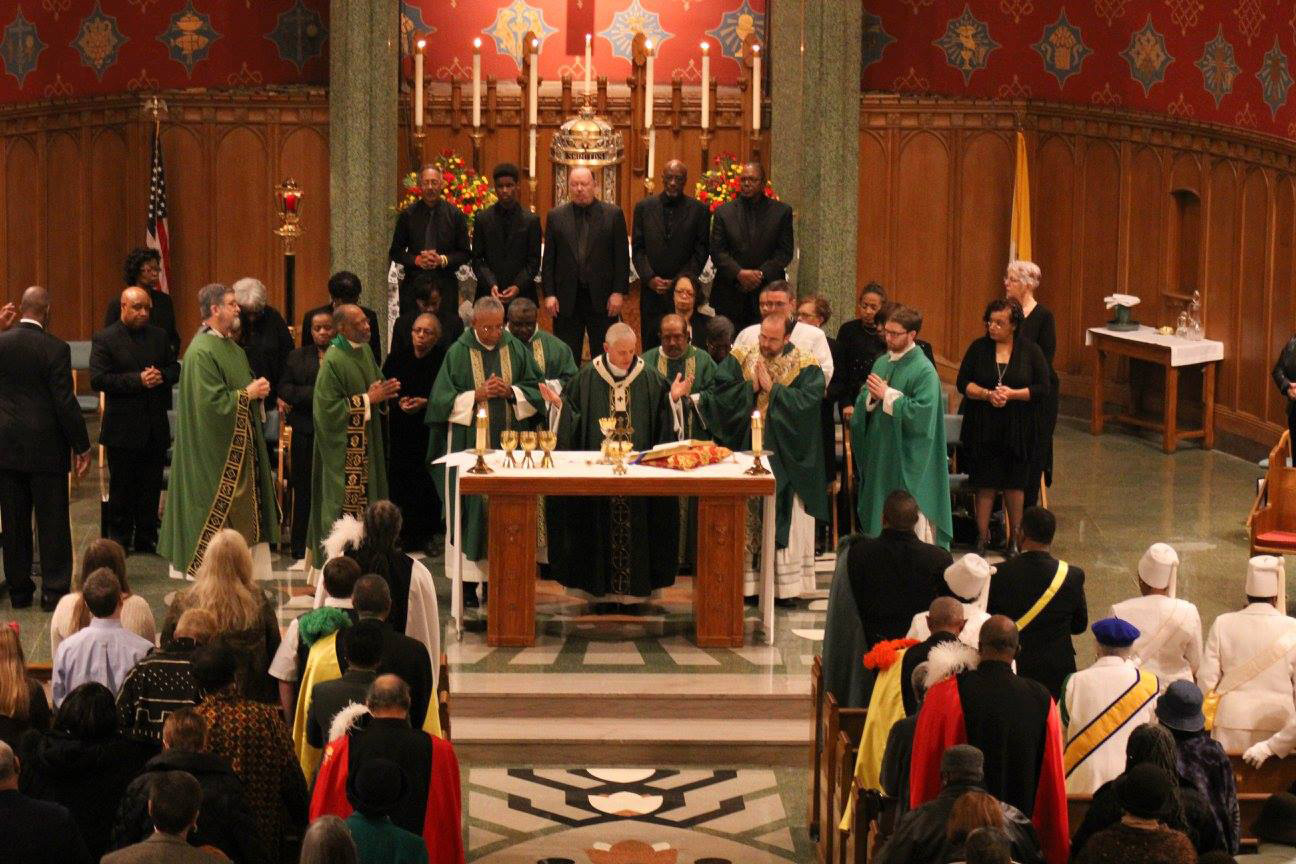
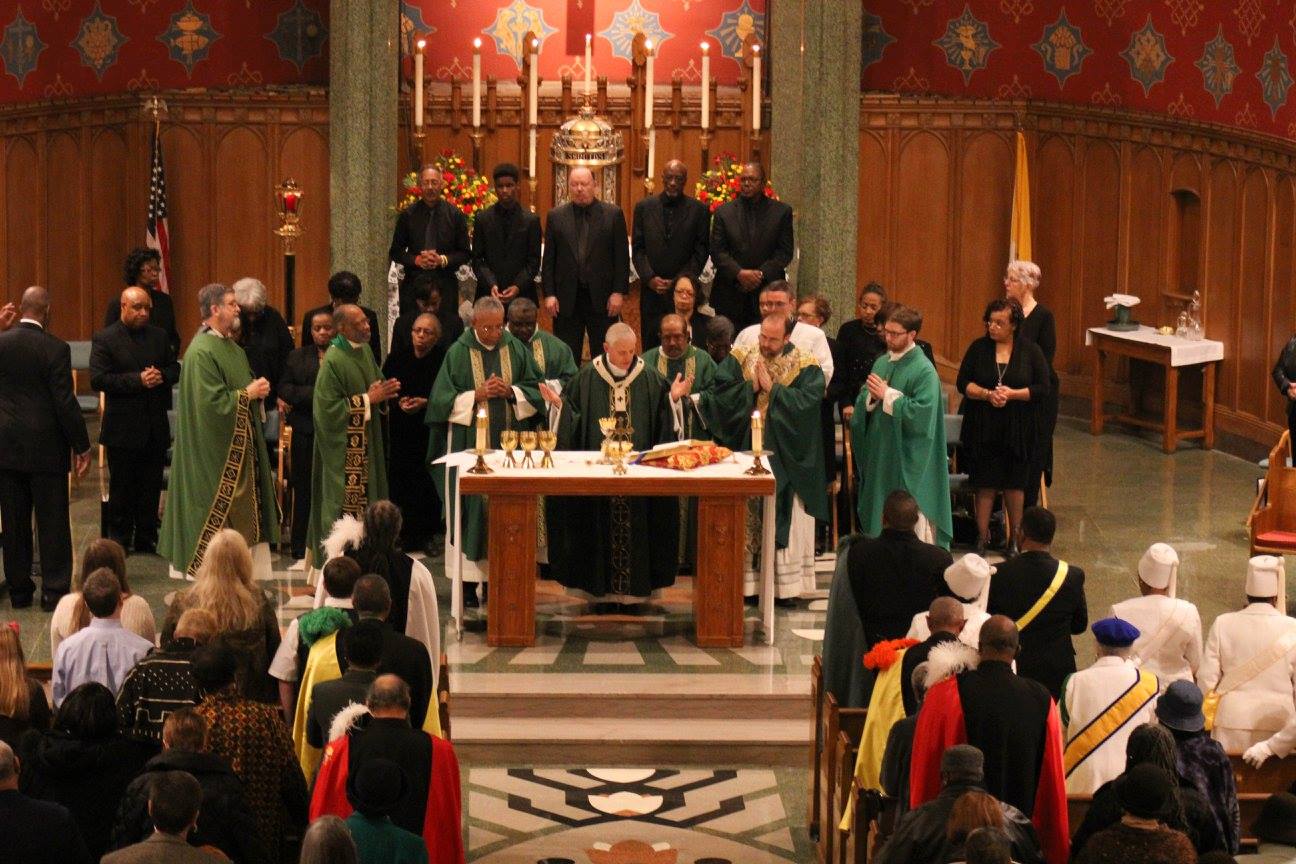
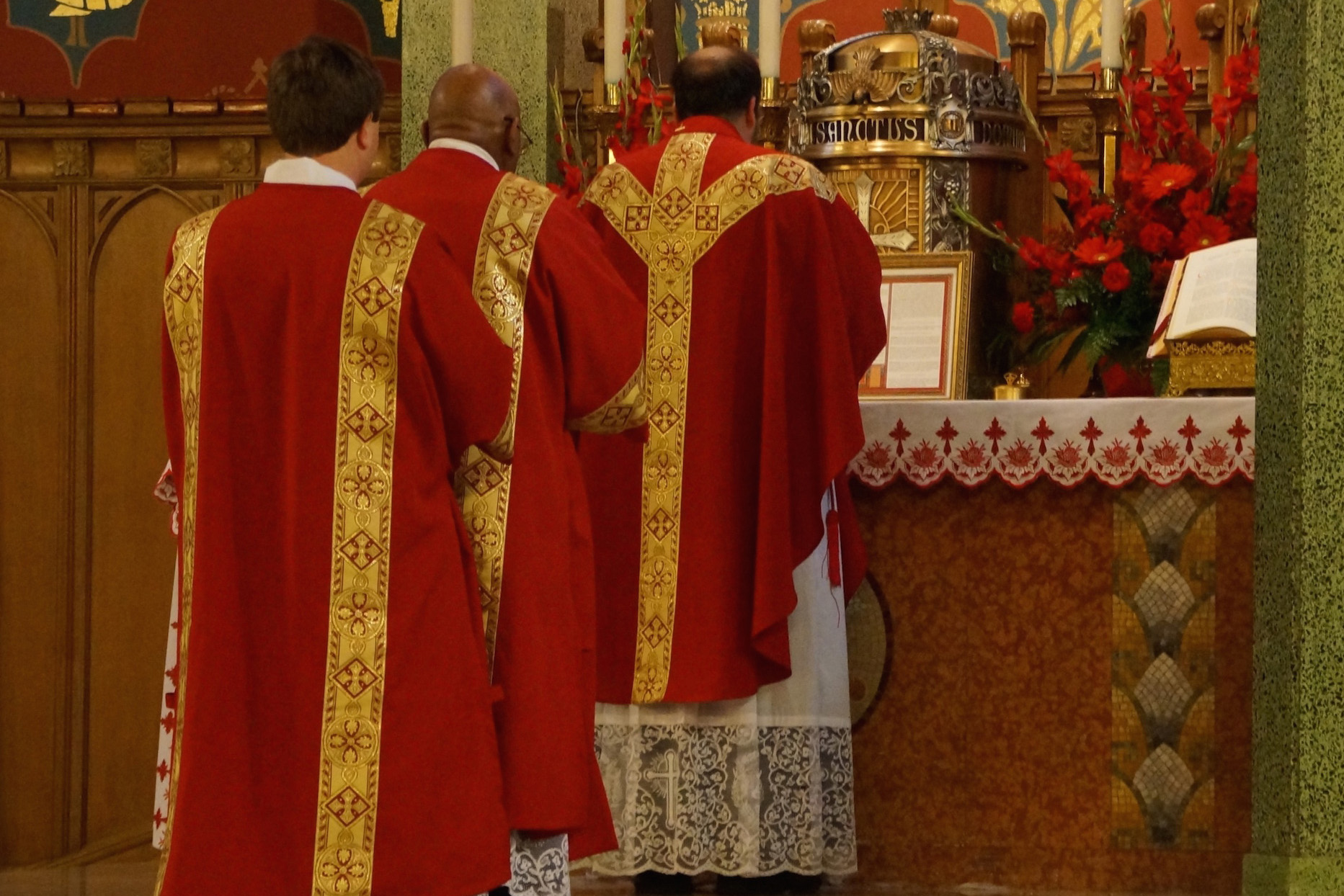
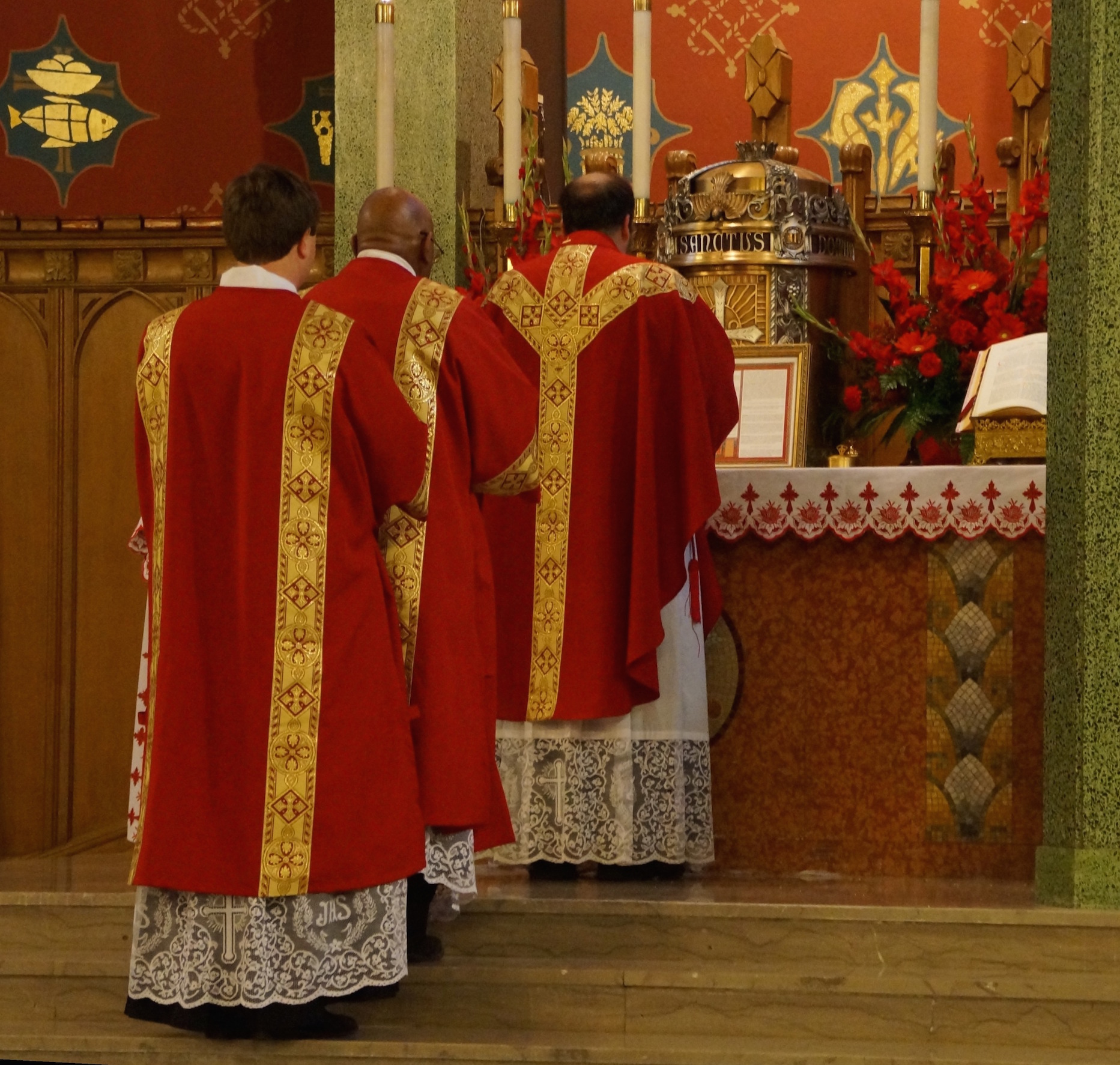
  2. A few years ago, I was privileged to be among the chief clergy for a Solemn High Pontifical Mass in the Old Latin Form at the Basilica here in D.C. The liturgy was quite complicated, to be sure. We rehearsed the day before and as the rehearsal drew to a close I said to whole crew of clergy and servers, “OK, tomorrow during the Mass, don’t forget to worship God!” We all laughed because it is possible to get so wrapped up in thinking about what is next, and about what I have to do, that we forget to pray! The next day, I told God that no matter what, I was here to worship Him. I am grateful that He gave me a true spirit of recollection at that Mass. I did mix up a minor detail, but in the end, I experienced God and did not forget to worship Him. Success! Thank you, Lord!
  3. The Mass is underway in a typical Catholic parish. Something remarkable is about to happen: the Lord Jesus is going to speak through the deacon, who ascends the pulpit to proclaim the Gospel. Yes, that’s right, Jesus Himself will announce the Gospel to us. As the deacon introduces the Gospel, all are standing out of respect. And five hundred pairs of eyes are riveted … on the deacon? No! Many eyes are in fact riveted on the missalette. Halfway through the Gospel, the Church is filled with the sound of hundreds of people turning the pages of their missalettes (with one or two dropping them in the process). Sadly, most lose the experience of the proclamation of God’s Word with their heads buried in a missalette. They may as well have read it on their own. I know, some will argue that this helps them understand the reading better. But the Liturgy is meant to be experienced as a communal hearing of the Word proclaimed.
  4. I celebrate a good number of Wedding Masses in the Old Latin Form. Some years ago, a couple prepared a very elaborate booklet so that people could follow along and understand every detail of the Old Latin Mass. Of itself, it was a valuable resource. They asked me if, prior to Mass, I would briefly describe the booklet and how to use it. I went ahead and did so, but concluded my brief tour of the book by saying, “This is a very nice book and will surely make a great memento of today’s wedding. But if you want my advice, put it aside now and just experience a very beautiful Mass with all its mystery. If you have your head in a book you may miss it and forget to pray. Later on you can read it and study what you have experienced.” In other words, “Don’t think … Look!”
  5. In the ancient Church, the catechumens were initiated into the “Mysteries” (the Sacraments of Initiation) with very little prior instruction as to what would happen. They had surely been catechized in the fundamental teachings of the faith, but the actual details of the celebration of the Sacraments were not disclosed. They were Sacred Mysteries and the disciplina arcanis (the discipline of the secret) was observed. Hence, they simply experienced these things and were instructed as to their deeper meaning in the weeks that followed (in a process known as mystagogia). Hence, experience preceded analysis, understanding, and learning. And the very grace of the experience and the Sacraments provided the foundation for that understanding.

Well, I realize that this post will not be without some controversy. Let me be clear about one point: catechesis is important, but so is experience. And if we rush to analyze and decode everything, we miss a lot. I have taught on the liturgy extensively in this blog (http://blog.adw.org/tag/mass-in-slow-motion/) and will continue to do so. There is a time to study and learn, but there is also a time just to be still and experience what God is actually doing in every liturgy—indeed in every moment of our lives.

Two thumbs up and three cheers for experience.

I realize that some further distinctions ought to be made, but I want to leave that for you who comment. Have at it!

Come Lord Jesus! A Meditation on the Stunning Glory of Being Gathered to Christ on the Last Day

120914In Advent, as we continue to meditate on the Parousia (the magnificent Second Coming of the Lord), we do well to allow our imaginations to be engaged in contemplating the glory that awaits those who are faithful, to meditate on the joy and ecstasy of the culmination of all things!

Though we have soberly meditated on the need to be ready and on the great danger that many who are not serious may be lost, for those who ARE ready, what glories await! The great and terrible day of the Lord will indeed be great for those who have allowed the Lord to prepare them.

I was stirred this past month in reading a magnificent book by Cardinal Jean Danielou on Angelology (usually pronounced an-GELL-o-gee), the study of angels. The book is entitled The Angels and their Mission: According to the Fathers of the Church. It is must reading and very accessible—only 114 pages—but packed full of stirring and edifying accounts of the wonderful works of the angels, according to Scripture and the Fathers of the Church.

The final chapters on the eschaton (the last things) and the Parousia (the Second Coming) are particularly magnificent. I would like to distill them here, adding some material and reworking it just a bit. However, the research is that of Jean Cardinal Danielou. I hope you will be stirred with as much joy and zeal as I was in reading and preparing this material. And thus we proceed:

Perhaps as a beginning point, we may wonder what happens to the ministry of our Guardian Angel when we die. Even if our souls are in heaven, our bodies are still awaiting the resurrection. Ancient Christian tradition maintains that during this time the angels keep watch over the tombs of the saints. In the Jewish apocalyptic book The Assumption of Moses, it is said that Joshua saw Moses’ soul rising to Heaven with the angels (40:1–7). However, the Epistle of Jude also says that the Archangel Michael fiercely disputed with the devil about the body of Moses (cf Jude 1:9). Stories such as these, combined with the ancient Christian practice of frequently depicting angels in cemetery art and funeral monuments, indicate a role for the angels in guarding the bodily remains of the elect, even those sadly scattered about or buried in the depths of the sea.

Scripture is replete with descriptions of the role of angels in the great Second Coming of the Lord. In the Gospel of Matthew there is a text that may refer to 70 AD, but surely also describes the end of time:

Then will appear the sign of the Son of man in heaven, and then all the tribes of the earth will mourn, and they will see the Son of man coming on the clouds of heaven with power and great glory; and he will send out his angels with a loud trumpet call, and they will gather his elect from the four winds, from one end of heaven to the other (Matt 24:30-31).

The first epistle to the Thessalonians also says,

For the Lord himself will descend from heaven with a cry of command, with the archangel’s call, and with the sound of the trumpet of God. And the dead in Christ will rise … (1 Thess 4:16).

St Cyril goes on to describe the extraordinary magnificence that the presence of the immense multitude of angels gives to the final judgment. He considers how the great depth and breadth of the spiritual world has been invisible until now, except to the eyes of faith. But suddenly it is made manifest! He asks us to try to imagine the immense multitude of angels by considering the vast numbers of human beings who ever existed, from the time of Adam to the present day, now standing before the Lord Jesus. And then he asks us to imagine that the angels are vastly more numerous than we are. For they are the 99 sheep whereas humanity is but the one sheep! Such vast numbers can only be spoken of as myriads and myriads! Or as Daniel poetically says,

Thrones were set up and the Ancient of Days took his throne. His clothing was white as snow, the hair on his head like pure wool; His throne was flames of fire,  with wheels of burning fire. A river of fire surged forth,  flowing from where he sat;  Thousands upon thousands were ministering to him,  and myriads upon myriads stood before him (Dan 7:9-10).

Such a vision and such multitudes can hardly be imagined.

Of course the first step in assembling this Great Judgement is to wake the dead. And the angels are surely part of this: 

The Second Sibylline Book, a Christian work, describes the archangels shattering the gates of death, raising up even the bodies of those who had been drowned in the sea or whom savage beasts had devoured (Sib, 2:214–235).

St. Ephrem speaks of the angels as waking the dead, and says,

Then the Lord will appear in the heavens like lightning with an unspeakable glory. The Angels and the Archangels will go on before his glory like flames of fire, like a mighty torrent. The Cherubim will turn their faces and the Seraphim will fly ahead crying out in fear: “Arise, you who sleep. Behold the bridegroom is coming!” Then the tombs will be opened and in the flash of an eye all the people will rise and behold the beauty of the Bridegroom.

St. Paul says that our bodies will rise, truly our bodies, but gloriously transformed:

He will change our lowly body to conform with his glorified body by the power that enables him also to bring all things into subjection to himself (Phil 3:21).

So will it be with the resurrection of the dead. The body that is sown is perishable, it is raised imperishable; it is sown in dishonor, it is raised in glory; it is sown in weakness, it is raised in power (1 Cor 15:42).

Then of course Comes the Judgment by Christ and the here too the angels execute that Judgement:

Matthew 13 describes the angels as separating the wicked from the just:

The Son of man will send his angels, and they will gather out of his kingdom all causes of sin and all evildoers, and throw them into the furnace of fire; there men will weep and gnash their teeth. Then the righteous will shine like the sun in the kingdom of their Father (Mat 14:41-43).

And Matthew 25 describes the angels as with Christ when He takes His judgment seat:

When the Son of man comes in his glory, and all the angels with him, then he will sit on his glorious throne. Before him will be gathered all the nations, and he will separate them one from another as a shepherd separates the sheep from the goats (Matt 25:31-32)

St Cyril of Jerusalem speaks of the angels leading the sinners away, body and soul, “in the full sight of the armies of heaven and they will be unable to escape.” But the angels are also uniting the just.

So, on the one hand, Matthew 13 describes the angels leading evildoers away:

The Son of Man will send his angels, and they will collect out of his kingdom all who caused others to sin and all evildoers. They will throw them into the fiery furnace (Mat 13:41-42).

On the other hand, St Ephrem also goes on to describe the angels leading the elect to paradise:

Then the angels will come together from all sides and take up the holy and faithful people into the glory of the clouds above, to their meeting place with Christ.

Origen also speaks of the angels escorting the blessed to paradise:

When … we have begun to enter the holy place and pass on to the promised land, those who are really holy and whose place is the Holy of Holies will make their way, supported by the angels and unto the tabernacle of God … They will be carried on [the angels’] shoulders and raised up by their hands.

St Paul seems to speak to the same glory when he writes to the Thessalonians,

The dead in Christ will rise first. Then we who are alive, who are left, will be caught up together with them in the clouds to meet the Lord in the air. Thus we shall always be with the Lord. (1 Thessalonians 4:17).

The Fathers of the Church then consider and imagine the joy (and relief) of the angels whose long work is now done. Of this final culmination, Scripture says,

The last enemy to be destroyed is death. “For God has put all things in subjection under [Jesus’] feet.” But when it says, “All things are put in subjection under him,” it is plain that he [the Father] is excepted who put all things under him. When all things are subjected to him, then the Son himself will also be subjected to him who put all things under him, that God may be everything to every one (1 Cor 15:26-28).

And thus, having gone forth to execute judgment, Jesus now returns to His Father’s right, in the Holy Of Holies. He ascends there, now with all the members of His body (body and soul) joined to Him. He ascends to the throne as Unus Christus, amans seipsum (one Christ, loving Himself). And though co-equal to His Father in glory and majesty, He is delighted to hand over the Kingdom of His Body, the Church, to His Father, who is, as Father, the Principium Deitatis.

And at this ascension, the Fathers ponder that the angels will make the same declaration, the heavens echoing with their cry:

 Lift up your heads, O gates! and be lifted up, O ancient doors! that the King of glory may come in. Who is the King of glory?  The Lord, strong and mighty, the Lord, mighty in battle! Lift up your heads, O gates! and be lifted up, O ancient doors!  that the King of glory may come in. Who is this King of glory?  The Lord of hosts, he is the King of glory! (Psalm 24: 7-10)

And there shall then come to pass the transformation of all creation and the fulfillment of its longing for its share in the glorious freedom of the Children of God, as prophesied through St. Paul:

For the creation waits with eager longing for the revealing of the sons of God; for the creation was subjected to futility, not of its own will but by the will of him who subjected it [because of our sins]. But the creation itself will be set free from its bondage to decay and obtain the glorious freedom of the children of God. We know that the whole creation has been groaning in travail together until now; and not only the creation, but we ourselves, who have the first fruits of the Spirit, groan inwardly as we wait for adoption as sons, the redemption of our bodies … (Rom 8:19-25).

And now it comes! Heaven and earth are united and creation receives its original glory and more besides, for the heavenly realities are now joined to the earth, beautifully restored and raised. Again, as Scripture says,

Then I saw a new heaven and a new earth; for the first heaven and the first earth had passed away, and the sea was no more. And I saw the holy city, new Jerusalem, coming down out of heaven from God, prepared as a bride adorned for her husband; and I heard a loud voice from the throne saying, “Behold, the dwelling of God is with men. He will dwell with them, and they shall be his people, and God himself will be with them; he will wipe away every tear from their eyes, and death shall be no more, neither shall there be mourning nor crying nor pain any more, for the former things have passed away.” And he who sat upon the throne said, “Behold, I make all things new” (Rev 21:1-5).

Cardinal Danielou beautifully concludes,

On that day, the joy of the friends of the Bridegroom, [the angels] will be complete. They have led to paradise the souls of the just who are entrusted to them. They have kept watch over their mortal remains. But [for now] they still await the day in which the Bridegroom will come to look for his Bride, when her beauty is finally perfect, in order to lead her into the House of his Father for the eternal wedding feast (p. 114).

Of this magnificent beauty, St. Methodius says to us,

Oh dearly beloved, [the angels]  burn to see the day of your marriage, all the angels Christ has called from heaven. They will come, O Lord, O Word, and they will carry with them mighty gifts, in their spotless robes.

Thus we shall always be with the Lord (1 Thess 4:17).

The Spirit and the Bride say, “Come.” … He who testifies to these things says, “Surely I am coming soon.” Amen. Come, Lord Jesus! The grace of the Lord Jesus be with all the saints. Amen.  (Rev 22:17; 20-21).

The "Great Gettin’ Up Morning" as Described in an Unlikely Advent Hymn

120814Here in the heart of Advent, we are considering how prepared we are for the Lord to come again. Either He will come to us or we will go to Him, but either way we must prepare. In today’s post I’d like to consider some teachings about the Day of Judgment, from an Advent hymn that most do not know is an Advent hymn. Tomorrow I would like to consider the great Parousia, wherein the saved enter into glory with the Lord.

Regarding the “Great and Terrible Day of the Lord, Judgment Day,” I am of the mind that one of the great treasures and masterpieces of the Church’s Gregorian Chant is the current sequence hymn for Latin Requiem Masses, the Dies Irae. This gorgeous chant was one of the more beautiful and soaring melodies of Gregorian Chant, and many composers such as Mozart and Verdi set the text to stirring musical compositions.

But the hymn was not in fact composed for funerals. Actually, it was composed, by Thomas of Celano in the 13th century, as an Advent hymn. Yes, that’s right, an Advent hymn. Don’t forget that Advent isn’t just about getting ready for Christmas; it is also about getting ready for the Second Coming of the Lord. And that is what this hymn is really about. At this time of year, as the the leaves fall and summer turns to winter, we are reminded of the passing of all things. The Gospels we read are those that remind us of death and the judgment to come.

Journey with me into the beauty and solemn majesty of this hymn. I will offer an inspiring English translation by W. J. Irons, one that preserves the meter and renders the Latin well enough. (You can see the Latin Text along with English here: Dies Irae.) I will also offer the scriptural verses that serve as background to the text.

The syllables of this magnificent hymn hammer away in trochaic dimeter: Dies irae dies illa solvet saeclum in favilla, teste David cum Sybila!  Perhaps at times it is a bit heavy, but at the same time, no hymn more beautifully sets forth a basis for God’s mercy. The dark clouds of judgment part and give way to the bright beauty of the final line: Pie Jesu Domine, dona eis requiem (Sweet Jesus Lord, give them [the dead] rest).

The hymn opens on the Day of Judgment warning that the day will reveal God’s wrath upon all injustice and unrepented sin. God’s wrath is His passion to set things right. And now it is time to put an end to wickedness and lies:

    • Day of wrath and doom impending,
    • Heaven and earth in ashes ending:
    • David’s words with Sibyl’s blending.

Yes, all are struck with a holy fear! No one and no thing can treat this moment lightly: all are summoned to holy fear. The bodies of the dead come forth from their tombs at the sound of the trumpet and all of creation will answer to Jesus, the Judge and Lord of all. Consider two scriptural roots to this first verse:

  1. (Zeph 1:15-18) A day of wrath is that day, a day of distress and anguish, a day of ruin and devastation, a day of darkness and gloom, a day of clouds and thick darkness, a day of trumpet blast and battle cry against the fortified cities and against the lofty battlements. I will bring distress on men, so that they shall walk like the blind, because they have sinned against the Lord; their blood shall be poured out like dust, and their flesh like dung. Neither their silver nor their gold shall be able to deliver them on the day of the wrath of the Lord. In the fire of his jealous wrath, all the earth shall be consumed; for a full, yea, sudden end he will make of all the inhabitants of the earth.
  2. (2 Peter 3:10-13) But the day of the Lord will come like a thief, and then the heavens will pass away with a loud noise, and the elements will be dissolved with fire, and the earth and the works that are upon it will be burned up … the heavens will be kindled and dissolved, and the elements will melt with fire!

The “Sibyl” referred to here is most likely the Erythraean Sibyl, who wrote an acrostic on the name of the Christ in the Sibylline Oracles. These will figure prominently in tomorrow’s meditation on the Parousia.

And now the stunning, opening stunning scene of creation. All have been set aghast; our rapt attention turns to Jesus, who has come to judge the living and the dead and the whole world by fire:

    • Oh what fear man’s bosom rendeth
    • When from heaven the judge descendeth
    • On whose sentence all dependeth!
    • Wondrous sound the trumpet flingeth,
    • Through earth’s sepulchers it ringeth,
    • All before the throne it bringeth.
    • Death is struck and nature quaking,
    • All creation is awaking,
    • To its judge an answer making.
    • Lo the book exactly worded,
    • Wherein all hath been recorded,
    • Thence shall judgment be awarded.
    • When the Judge his seat attaineth,
    • And each hidden deed arraigneth:
    • Nothing unavenged remaineth.

Here, too, many Biblical texts are brought to mind and masterfully united. Here are just a few of them:

  1. (Matt 25:31-33) When the Son of man comes in his glory, and all the angels with him, then he will sit on his glorious throne. Before him will be gathered all the nations, and he will separate them one from another as a shepherd separates the sheep from the goats, and he will place the sheep at his right hand, but the goats at the left …
  2. (Matt 24:30-32)  And then shall appear the sign of the Son of man in heaven. And then shall all tribes of the earth mourn: and they shall see the Son of man coming in the clouds of heaven with much power and majesty.  And he shall send his angels with a trumpet and a great voice: and they shall gather together his elect from the four winds, from the farthest parts of the heavens to the utmost bounds of them.
  3. (Rev 20:12) And I saw the dead, great and small, standing before the throne, and books were opened. Another book was opened, which is the book of life. The dead were judged according to what they had done as recorded in the books.
  4. (Rom 2:4-6) Do you not know that God’s kindness is meant to lead you to repentance? But by your hard and impenitent heart you are storing up wrath for yourself on the day of wrath when God’s righteous judgment will be revealed. For he will render to every man according to his works:
  5. Luke 12:3 What you have said in the dark will be heard in the daylight, and what you have whispered in the ear in the inner rooms will be proclaimed from the roofs.
  6. 2 Peter 3:14 and the earth and everything done on it will be found out.

So, Judgment shall be according to our deeds; whatever is in the Book! Ah, but also in God’s Word is the hope for mercy. And so our hymn turns to pondering the need for mercy, and appeals to God for that mercy, basing it on the very will of God to save us. Was He not to be called Jesus because He would save us from our sins? (Mt 1:21) Did not God so love the world that He sent His own Son? And did He not come to save rather than condemn? (Jn 3:16-17) Did He not endure great sorrows and the cross itself to save us? Ah, Lord, do not now forsake me as I ponder my last end. Keep me faithful unto death!

    • What shall I frail man be pleading?
    • Who for me be interceding?
    • When the just are mercy needing?
    • King of majesty tremendous,
    • Who does free salvation send us,
    • Font of pity then befriend us.
    • Think kind Jesus, my salvation,
    • Caused thy wondrous incarnation:
    • Leave me not to reprobation.
    • Faint and weary thou hast sought me:
    • On the cross of suffering bought me:
    • Shall such grace be vainly brought me?
    • Righteous judge for sin’s pollution,
    • Grant thy gift of absolution,
    • Before the day of retribution.
    • Guilty now I pour my moaning:
    • All my shame and anguish owning:
    • Spare, O God my suppliant groaning.
    • Through the sinful Mary shriven,
    • Through the dying thief forgiven,
    • Thou to me a hope has given.

Yes, there is a basis for hope! God is rich in mercy. Pondering the Day of Judgment is salutary, since for now we can call on that mercy. For of that day, though there will be wailing and grinding of teeth at a just condemnation, such tears will be of no avail then (Mt 13:42). Please Lord, let me not be with the goats at the left, but with the sheep on the right (Mt 25:33). And in the end, it is only grace and mercy that can see us through that day. Only you, Jesus, can save me from the wrath to come (1 Thess 1:10):

    • Worthless are my tears and sighing:
    • Yet good Lord in grace complying,
    • Rescue me from fire undying.
    • With thy sheep a place provide me,
    • From the goats afar divide me,
    • To thy right hand do thou guide me.
    • When the wicked are confounded,
    • Doomed to flames of woe unbounded:
    • Call me with thy saints surrounded.
    • Lo I kneel with heart-submission,
    • See like ashes my contrition:
    • Help me in my last condition.

And now comes the great summation: that day is surely coming! Grant me O Lord your grace to be ready; prepare me:

    • Lo, that day of tears and mourning,
    • from the dust of earth returning.
    • Man for judgment must prepare him,
    • Spare O God, in mercy spare him.
    • Sweet Jesus Lord most blest,
    • Grant the dead eternal rest.

It is a masterpiece of beauty and truth, if you ask me. Some years ago, I memorized most of it. I sing it from time to time over in Church late at night, the hauntingly beautiful chant ringing through her echoing arches. When I die, please sing it at my funeral! For I go to the Lord, the judge of all, and only grace and mercy will see me through. Perhaps the plaintive calls of the choir below at my funeral will resonate to the very heavens as I am judged. Amen.

Matrimony or Bust – Another Glimpse at the Why and How of Traditional Marriage’s Demise

120714All the way back in 1973, George Gilder published a book entitled Men and Marriage. He expanded and republished it in 1986. In his book, Gilder argued that our culture was marginalizing men, to its great peril. He articulated the critical role that marriage has in helping men focus their sexual energies in a creative and beneficial way. Women have their nurturing role rather clearly defined in the very design of their bodies. But men’s role in the raising of children and in society in general is less evident. The traditional family gave men a rather clearly defined role that had dignity and supplied them with the feeling that they were needed, indeed essential.

But, as Gilder showed even then, much of that has been stripped away. Feminism and the sexual revolution are sources of the erosion, along with other deleterious social effects. And the erosion of esteem for the roles of husband, father, provider, and leader is hurting not only men, but children, women, and our culture as a whole. For when the sexual energies of men are not channeled toward creative ends, they tend toward destructive ones.

Gilder’s description of the problem is in full blossom today, and more and more social commentators now describe men as increasingly a combination of angry, disengaged, dysfunctional, cynical, fearful, and legally and socially constrained. The wider culture, heavily influenced by feminism, often depicts men as sexual predators, drinkers, imbeciles, buffoons, and as stupid and immature. And after consuming a steady diet of these portraits, some men do indeed display some of these traits.

Over the years, we have discussed many aspects of the problem on this blog. Most significantly, we have focused on the apparent lack of connection that young people today have with the ideas of courtship, dating, and marriage. Marriage is delayed any many are never getting there at all.  The com-box lights up whenever I write on these matters. Many commenters are bewildered, like me, but others are young people who are quite angry and cynical about one another. Our culture has really poisoned the atmosphere between the sexes. Promiscuity makes even simple flirtation fraught with a sense of danger, and merely unwanted attention becomes the stuff of sexual harassment. The men who write in are the bitterest of all. One man wrote, “Sure women are beautiful but that is where the appeal stops. The relationship is nothing but trouble and power struggle, and I risk losing everything, everything!”

Welcome to the world of post-radical-feminism and the post-sexual-revolution. It is a toxic world for romance, let alone the deeper values of marital and family love. It is toxic for men and for women, but most tragically it is toxic for children, who are often raised in a culture of deepening confusion and conflict in its most necessary component: the traditional family.

There is an article on Brietbart that articulates the problem for men and their anger. It is a lengthy article, and I should warn you that if you click on the link to the article in the previous sentence you will read some rather “raw” language. But frankly, it IS raw out there today for increasing numbers of young people, who have inherited the whirlwind of the sexual revolution and radical feminism. It is a lonely world, a world in which hostility and widespread promiscuity have destroyed innocence and  poisoned relationships between young men and women that used to be natural and oriented toward marriage and family.

Here are some excerpts of the article, which I present here as a kind of log of the cultural decline we are experiencing. The quotes from the article are in bold italics, while my comments are in plain red text.

Social commentators, journalists, academics, scientists and young men themselves have all spotted the trend: among men of about 15 to 30 years old, ever-increasing numbers are checking out of society altogether, giving up on women, sex and relationships and retreating into pornography, sexual fetishes, chemical addictions, video games and, in some cases, boorish [male] culture, all of which insulate them from a hostile, debilitating social environment created, some argue, by the modern feminist movement.

Of course in retreating from an ugly world, they dwell in an even uglier one. But to them it seems to feel less threatening, more predictable, and less complicated. Gilder discusses the observation that if men cannot be encouraged to commit to the creative and constructive relationship of the family, they will (as sociological studies show) tend toward destructive and damaging relationships that range from violent ones (gangs) to less harmful but disengaged ones like gaming, or drinking.

You can hardly blame them. Cruelly derided as man-children and crybabies for objecting to absurdly unfair conditions in college, bars, clubs and beyond, men are damned if they do and damned if they don’t: ridiculed as basement-dwellers for avoiding aggressive, demanding women with unrealistic expectations, or called rapists and misogynists merely for expressing sexual interest.  

The new rules men are expected to live by are never clearly explained, … leaving [males] clueless and neurotic about interacting with [women]. “That might sound like a good thing because it encourages men to take the unromantic but practical approach of asking women how they should behave, but it causes a lot of them to just opt out of the game and retreat to the sanctuary of their groups … where being rude to women gets you approval, and you can pretty much entirely avoid one-on-one socialising with the opposite sex.”

Here, too, this “retreat” cannot receive approval, but some understanding of the disgust and fear that underlies it may be important. Generally, men used to seek the company of women and seek a wife. Now they do not. What has changed? While some aspects of the women’s movement were necessary (better access to jobs, fairer compensation, etc.) there now seems to have been an overcorrection, such that women now outrank men in terms of many indicators of social success such as graduation levels, income, and legal access to benefits and rights. Many men find the legal and legislative world hostile to them and discover that it is politically incorrect to say that the “corrections” are now harming men.

Women have been sending men mixed messages for the last few decades, leaving boys utterly confused about what they are supposed to represent to women, which perhaps explains the strong language some of them use when describing their situation. As the role of breadwinner has been taken away from them by women who earn more and do better in school, men are left to intuit what to do, trying to find a virtuous mean between what women say they want and what they actually pursue, which can be very different things.

Men say the gap between what women say and what they do has never been wider. Men are constantly told they should be delicate, sensitive fellow travelers on the feminist path. But the same women who say they want a nice, unthreatening boyfriend go home and swoon over simple-minded, giant-chested, testosterone-saturated hunks in Game of Thrones. Men know this, and, for some, this giant inconsistency makes the whole game look too much like hard work. Why bother trying to work out what a woman wants, when you can play sports, [self-gratify through masturbation] or just play video games from the comfort of your bedroom?

Yes, men speak to me all the time about such mixed messages, both here at the blog and in ministerial settings. Women make it very difficult to understand what they want. Part of the problem is that women are not monolithic. Different women want different things. But even with an individual woman, many men struggle to understand. Women have always had, in every culture and time, a “lot of moving parts.” But the frenetic and ephemeral quality of modern culture puts the inconsistencies on steroids and leaves a lot of men bewildered and angry.

Again, the retreat of men into lesser or native activities cannot be approved. But in merely reporting it here I do not do so. It is important to examine the trend and to try to understand it, since even many churchgoing Catholic males are manifesting these attitudes and behaviors.

The article goes on to discuss what drives women to exhibit the behaviors that men are fleeing. Here, too, you do not need to accept all that is said here or read it in terms of assigning blame. But women have widely changed their behavior, and once again it is good to ask why.

Women today are schooled in victimhood, taught to be aggressively vulnerable and convinced that the slightest of perceived infractions, approaches or clumsy misunderstandings represents “assault,” “abuse” or “harassment.” That may work in the safe confines of campus, where men can have their academic careers destroyed on the mere say-so of a female student … academics such as Camille Paglia have been warning for years that “rape drives” on campus put women at greater risk, if anything … damage [is] being done to them by the onset of absurd, unworkable, prudish and downright misandrist laws such as California’s “Yes Means Yes” legislation—and by third-wave feminism … which is currently enjoying a hysterical last gasp before women themselves reject it.

Another root of the problem is the school system, both public and private. We have discussed on this blog many times before that normal boyhood has been demonized and treated as something to be medicated away.

In schools today across Britain and America, boys are relentlessly pathologised, as academics were warning as long ago as 2001. Boyishness and boisterousness have come to be seen as “problematic,” with girls’ behavior a gold standard against which these defective boys are measured. When they are found wanting, the solution is often drugs. One in seven American boys will be diagnosed with Attention Deficit Hyperactivity Disorder (ADHD) at some point in their school career. Millions will be prescribed a powerful mood stabilizer  such as Ritalin, for the crime of being born male. The side effects of these drugs can be hideous and include sudden death.

Meanwhile, boys are falling behind girls academically, perhaps because relentless and well-funded focus has been placed on girls’ achievement in the past few decades and little to none on the boys who are now achieving lower grades, fewer honors, fewer degrees and less marketable information economy skills. Boys’ literacy, in particular, is in crisis throughout the West. We’ve been obsessing so much over girls, we haven’t noticed that boys have slipped into serious academic trouble.

OK, so even if there was a need to correct and focus a bit more on girls, it looks as if we’ve overcorrected. This may not be politically correct, but it certainly looks as though the statistics indicate this.

Jack Donovan, a writer based in Portland who has written several books on men and masculinity, each of which has become a cult hit, says the phenomenon is already endemic among the adult population. “I see a lot of young men who would otherwise be dating and marrying giving up on women,” he explains, “Or giving up on the idea of having a wife and family. This includes both the kind of men who would traditionally be a little awkward with women, and the kind of men who aren’t awkward with women at all. “They’ve done a cost-benefit analysis and realized it is a bad deal. They know that if they invest in a marriage and children, a woman can take all of that away from them on a whim.  He goes on: “Almost all young men have attended mandatory sexual harassment and anti-rape seminars, and they know that they can be fired, expelled, or arrested based more or less on the word of any woman. They know they are basically guilty until proven innocent in most situations.”

This is pretty clear and it is well aligned with what I am hearing, increasingly, from men.

Well, this is a tough topic to be sure. Not exactly the best topic for the Feast of the Immaculate Conception! However, it does illustrate well what happens when a culture loses its relative innocence, and sex becomes a toxic, cynical, fearful pursuit, one that is no longer tied to marriage and family. (Mondays are also my usual day for doing “culture check” articles.)

It will be admitted that not all young people are lost in this cycle, but increasing numbers are. A good start toward addressing the problem is raising awareness of and naming the demons. There was a time, not so long ago, when we got the courtship and marriage thing right … or at least largely right. People mostly got married and stay married. Our families weren’t perfect, but they functioned. Our culture wasn’t perfect—far from it—but its basic units and foundations were operative.

Have mercy on us Lord, and on the whole world.

The Fire Next Time – A Homily for the Second Sunday of Advent

120814An old spiritual says, God gave Noah the rainbow sign, No more water, but the fire next time. The second reading in today’s Mass speaks to us of the “fire next time” and again reminds us of the need to be ready for the coming of the Lord. In this homily, I will focus on that second reading, wherein St. Peter reminds us of the passing that will come for us all, sooner or later. And since Advent is a time to prepare through prayer and repentance, we do well to heed this sacred teaching and warning, echoed by St. John the Baptist as well, of whom the Gospel today says, A voice of one crying out in the desert: “Prepare the way of the Lord, make straight his paths.” John the Baptist appeared in the desert proclaiming a baptism of repentance for the forgiveness of sins (Mk 1:2-3).

Note four aspects of the second reading:

I. The PATIENCE that is PURPOSEFUL – The text says, Do not ignore this one fact, beloved, that with the Lord one day is like a thousand years and a thousand years like one day. The Lord does not delay his promise, as some regard “delay,” but he is patient with you, not wishing that any should perish but that all should come to repentance.

Though the Lord seems long-delayed in coming (2000+ years!), the text tells us that this delay is so that as many of us as possible can be saved.

But notice that the text says that God wants us to come to repentance. So God’s patience should not be seen as an excuse for presumption, but, rather, a time for repentance. This is no time to say, “Later.” This is a time to be serious about repenting and about preparing to meet the Lord.

Note, too, that the Greek word here translated as repentance is μετάνοιαν (metanoian), referring not just to better behavior, but also to a new mind. For our transformation is not merely external, but also internal. When what we think changes, so does our behavior. When our thinking is conformed to God’s revealed truth, our priorities, feelings, desires, and decisions all begin to change as well. Conversion and repentance are the result of being a changed and transformed human being with a new mind.

II. The PASSING that is PERILOUS – The text says, But the day of the Lord will come like a thief, and then the heavens will pass away with a mighty roar and the elements will be dissolved by fire, and the earth and everything done on it will be found out.

In effect, the text says that God’s gonna set this world on fire one of these days. And when he comes it will be

Sudden – For the text says that the Day of the Lord will come like a thief.

This image is quite a consistent with the image Jesus used for the Day of Judgment as well. But the image should not be true for those of us who wait and watch. St. Paul says, But you, brothers, are not in darkness so that this day should surprise you like a thief … So then, let us not be like others, who are asleep, but let us be alert and self-controlled (1 Thess 5:4,6).

Further, the image of God as a thief is also not appropriate for us if we realize that all we have and all we are belongs to God. For those who are worldly and who claim authority over themselves and their things, God is a thief who comes suddenly and in a hidden way. He overtakes their perceived ownership and possession and puts an end to it. To them He seems a thief as He “steals” what they consider theirs. They are badly misled.

But for us who watch and are prepared (pray God), the Lord comes not to take but to give. He comes to bestow and reward as we inherit His Kingdom.

Shocking – For the text speaks of the roaring heavens and of fire that overwhelms, and by it, all will be dissolved with fire.

Now here, too, the image, though shocking, should not alarm us if we are already on fire. At Pentecost, as well as at our individual baptism and confirmation, the Lord lit a fire within us in order to set us on fire, in order to  bring us up to the temperature of glory. Thus, for those in the Lord, the “weather” on that day will seem just fine.

The prophet Malachi speaks of the twofold experience of the Day of the Lord in this way: “Surely the day is coming; it will burn like a furnace. All the arrogant and every evildoer will be stubble, and that day that is coming will set them on fire,” says the Lord Almighty. “Not a root or a branch will be left to them. But for you who revere my name, the sun of righteousness will rise with healing in its wings. Notice therefore, that for some the Day is burning with wrathful heat, but for the Just, it is a sunny day wherein the Sun (Son) of righteousness will bring warmth and healing (Mal 4:1-3).

An old spiritual refers to this verse sayingGod gave Noah the rainbow sign, no water but the fire next time. Thus God wants to get us ready by setting us on fire with His love and grace. If God is a Holy Fire then we must become fire ourselves in order to endure the day of His coming.

Showing – For the text says that all things will be revealed.

So it would seem that this fire burns away the masks many people wear, leaving them to be seen for what they really are. The Lord says, But I tell you that men will have to give account on the day of judgment for every careless word they have spoken (Matt 12:36). And again He says, There is nothing concealed that will not be disclosed, or hidden that will not be made known. What you have said in the dark will be heard in the daylight, and what you have whispered in the ear in the inner rooms will be proclaimed from the roofs (Lk 12:2-3).

Now even the just may wince at this, for all of us have a past and most would prefer that the past stay in the past. But I have sometimes seen, when I have visited 12-Step meetings, how many will recount vividly what they did when they were drinking. And they seem to do so with little shame and much laughter, for they share it with those who understand, those who have also been set free from the source of the problem. Perhaps, for the just, on that disclosing Day it will be like that.

But for those who are among the unrepentant, imagine the embarrassment and fear as their secrets, sins, and injustices are disclosed to those who are also unforgiving and unmerciful. A bad scene, really.

III. The PRESCRIPTION that is PROCLAIMED – The text says, Since everything is to be dissolved in this way, what sort of persons ought you to be, conducting yourselves in holiness and devotion, waiting for and hastening the coming of the day of God, because of which the heavens will be dissolved in flames and the elements melted by fire … Therefore, beloved, since you await these things, be eager to be found without spot or blemish before him, at peace.

The text asks rhetorically, “What sort of persons ought you to be?” In a word, the answer is “fiery.” God has lit a fire within us to purify and refine us. Hence, on that day when the Lord will judge by fire, we will pass through. And though some final purifications (purgation) may take place, the fact that the fire has been kindled in us and has already been fanned into a flame, will mean purification, not destruction.

St Paul describes the just as going through the purgatorial fire that leads to purification rather than destruction in HellIf any man builds on this foundation using gold, silver, costly stones, wood, hay or straw, his work will be shown for what it is, because the Day will bring it to light. It will be revealed with fire, and the fire will test the quality of each man’s work. If what he has built survives, he will receive his reward. If it is burned up, he will suffer loss; he himself will be saved, but only as one escaping through the flames (1 Cor 3:12-15).

So the prescription for us is to let God set us afire now so as to purify us, making us more holy and devout. The fire now of His Holy Spirit is the only thing that can truly prepare us  and permit us to endure the day of His coming and be spared the “wrath to come” (cf 1 Thess 1:10; Matt 3:7; Romans 5:9; 1 Thess 5:9) when God will judge the world and everything in it by fire.

IV. The PERFECTION that is PROMISED – The text says, But according to his promise we await new heavens and a new earth in which righteousness dwells.

This text presents the possibility that the created world will not so much be destroyed as purified by this fiery judgment of God. While the text may also signify a total destruction of all that now is and a replacement of it by new heavens and earth, it is also argued that the created world will instead be renewed rather than destroyed and replaced. This view would correspond with other texts (e.g., Isaiah 11 and Romans 8). For the creation was subjected to frustration, not by its own choice, but by the will of the one who subjected it, in hope that the creation itself will be liberated from its bondage to decay and brought into the glorious freedom of the children of God (Rom 8:20-21).

Whatever the answer to the debate, the bottom line is that the new (or renewed) world will be a heaven wedded to earth in which the full righteousness of God will be manifest. Further, we will be without spot or blemish and will be at peace. Yes, God’s gonna set this world on fire one of these days, hallelujah! And God’s fire purifies that which is holy, and burns away all that is lacking or unholy. God will restore all things in Christ!

The Dies Irae was originally written for the Second Sunday of Advent:

All is Calm, All is Bright…Really? Maybe This Video Will Help

120514The video below was produced by the Archdiocese of Washington for our “Find the Perfect Gift” Christmas outreach. It is an attempt to refocus Catholics and non-Catholics on the truest and most perfect gift of Christmas, Jesus Christ. It also invites each of us to give the perfect gift, the gift of our very self to God and to one another.

The video illustrates well a problem that we can all have at Christmas: hectic, hurried lives, made even busier by “holiday” requirements and traditions. These traditions, beautiful though they are, sometimes backfire and become a kind of countersign to some of the songs we sing, which speak of all being calm and bright, heavenly peace, peace on earth, and so forth.

The video also shows a problem that has become worse in recent years with the “stovepiping” effect of technology, which allows us to live in our own self-designed but very separate worlds. Many of us walk about with ear buds in and barely notice the others around us. Others of us tune in to a very self-selected world of cable TV and/or Netflix. It is possible, as this video demonstrates, for people to live in the same house and yet inhabit different worlds.

Somewhere in the busy-but-isolated world of the household depicted here, is a member of the family who gets it right, and both finds and sings of peace. We all struggle to get it right and to find our proper center. Allow this video to give you a little vision of what the perfect gift is and what the perfect Christmas is. Gifts, parties, and yuletide joy are nice and have their places, but don’t miss the perfect gift!

For more information, you can click through at the link above, or visit this URL: www.findtheperfectgift.org.

Advent and the Drama of Light and Darkness

120414Here are the summary notes from a talk I gave tonight at the Parish of St. Columba, here in D.C.

Many people think of Advent merely in terms of pre-Christmas time: office parties, shopping, decorating etc. But in the Church, Advent is more a penitential period, a time of preparation for both the Christmas Feast and the Second Coming of the Lord. The purple vestments signal penance. The faithful are encouraged to go to Confession, and the liturgical texts and readings emphasize readying for the coming of the Lord.

The theme of preparation (and much of the season itself) is couched in the dramatic struggle between light and darkness. This makes sense (at least in the northern hemisphere, where the darkness deepens and the days grow shorter). In these darkest days, we light candles and sing hymns that speak of the light that will come: Jesus the true Light of the World. Let’s take a look at Advent in three ways.

I. The Symbols of Darkness and Light – Outside, there is a great drama of light and darkness unfolding before us. The light is giving way to darkness. Here in the northern hemisphere, the days are getting very short, and they’re going to get even shorter. In Washington, D.C. (where I live), it is dark by 5:00 PM. On cloudy days, it is nearly dark by 4:00 PM. My brothers both live farther north: one in St. Paul and the other in Seattle. It gets dark even earlier there. There’s even a famous saying (probably by Yogi Berra), “It’s getting late very early out there.”

For us who live in modern times, the drama is less obvious. It is little more than an annoyance, as we must switch on the lights earlier. But think of those who lived not long before us in an age before electrical lights. Perhaps it was possible to huddle near a candle, oil lamp, or fire, but in the end, the darkness put a real stop to most things. Neither work, nor reading, nor most forms of recreation could take place. Darkness was a significant factor.

Some years ago, during a widespread power outage, I was struck at just how incredibly dark it was outside at night without the streetlights and the lights emanating from homes. Frankly, it was hard to venture out. I lost my bearings quickly and stumbled over some simple things like a curb and a fencepost. We moderns just aren’t used to this. Once, I toured Luray Caverns in the nearby Shenandoah Mountains. At the bottom of the caverns, hundreds of feet down, they gathered us near the center of a large cave and shut off the lights. The darkness was overwhelming. It was an almost physical feeling. I felt a wave of slight panic sweep over me and was so relieved when the lights came back on. I wondered, “Is this what it’s like to be blind?” Yes, light is very precious.

And so, here in a “deep and dark December,” the light continues to recede. The spiritual impact of this drama of light is brought into the Church. Our hymns turn to images of light. The darker it gets, the more candles we light on the Advent wreath. In the darkest days of December, our Advent wreath is at its brightest. As Scripture says, The light shines in the darkness, and the darkness has not overcome it … The true light that gives light to everyone was coming into the world (John 1:5, 9). An old prayer says, Within our darkest night you kindle a fire that never dies away.

As the drama of light and darkness outside continues, we arrive at December 21st and 22nd—the shortest, darkest days of the year. By December 23rd, the ancients could detect a slight return of the light. Now the morning star heralds something new, something brighter.

People, look East. The time is near
Of the crowning of the year …
People, look east and sing today:
Love, the guest, is on the way.

And then, on December 24th, in the middle of one of the longest nights of the year, the liturgy of Christmas begins: Christ is born and on December 25th a new light shines. From then on, the days get longer.

Yes, a great drama of light is unfolding before us. It is Advent. It is a time to recognize our need for the light and just how precious Jesus, the Light of the World, is. Ponder, in these darkest days, the beauty of the light. There are so many Advent hymns that set forth the dramatic images of light, darkness, and expectancy. They are too numerous to list here. However, click here if you wish to see some samples: Advent hymns that speak to the Light.

Of course, this external drama of light and darkness in nature is but a symbol of the great struggle between light and darkness in our world, our culture, our own hearts, and the hearts of all whom we love. It is the greatest drama of each of our lives. Will we choose to walk in the light or will we prefer the darkness? Our choice will determine our destiny. Judgment day is coming and we must be prepared by embracing the light of God’s truth and Jesus Himself, who is the Light of the World.

Thus, in Advent, we are summoned to understand how bad the darkness of sin really is, and we are warned to prepare for the coming judgment. Almost all the readings of the first two weeks of Advent speak to this theme of warning and readiness. The Dies Irae, which most associate with the Latin Requiem Mass, was actually written as a hymn for the Second Sunday of Advent.

Now, of course, some may protest such “negative” themes for Advent. But remember, if we aren’t aware of the bad news, then the good news is no news. Hence, this Advent reflection on the seriousness of the dark reality of sin is to prepare us for even greater joy at the birth of a Savior, who is the Light of the World and can lead us out of the dark tomb of sin into the wonderful light of grace.

Hence, the symbols of light and darkness point to a real drama and remind us to be sober and serious about the trouble we’re in, why we really need a savior, and how good it is to greet the Light of the World … IF we are prepared.

II. Our Stance to the Light and Darkness – Ultimately we are either facing the light and welcoming Him, or facing and in the darkness. These are the only two stances possible. There is no third way. Are you walking in the light or are you standing in the darkness?

This is Our Moral Stance. Scripture warns in many places about the two ways of light and darkness, and admonishes us to stand and walk in the light. Here are just a few:

  1. (Ro 13:11–14) Besides this you know what hour it is, how it is full time now for you to wake from sleep. For salvation is nearer to us now than when we first believed; the night is far gone, the day is at hand. Let us then cast off the works of darkness and put on the armor of light; let us conduct ourselves becomingly as in the day, not in reveling and drunkenness, not in debauchery and licentiousness, not in quarreling and jealousy. But put on the Lord Jesus Christ, and make no provision for the flesh, to gratify its desires.
  2. (1 Th 5:1–11) But as to the times and the seasons, brethren, you have no need to have anything written to you. For you yourselves know well that the day of the Lord will come like a thief in the night. When people say, “There is peace and security,” then sudden destruction will come upon them as travail comes upon a woman with child, and there will be no escape. But you are not in darkness, brethren, for that day to surprise you like a thief. For you are all sons of light and sons of the day; we are not of the night or of darkness. So then let us not sleep, as others do, but let us keep awake and be sober. For those who sleep, sleep at night, and those who get drunk are drunk at night. But, since we belong to the day, let us be sober, and put on the breastplate of faith and love, and for a helmet the hope of salvation. For God has not destined us for wrath, but to obtain salvation through our Lord Jesus Christ, 10 who died for us so that whether we wake or sleep we might live with him. Therefore encourage one another and build one another up, just as you are doing.
  3. (Mt 6:22-24) The eye is the lamp of the body. So, if your eye is sound, your whole body will be full of light; but if your eye is not sound, your whole body will be full of darkness.  If then the light in you is darkness, how great is the darkness!
  4. (2 Pe 1:19) And we have the prophetic word made more sure. You will do well to pay attention to this as to a lamp shining in a dark place, until the day dawns and the morning star rises in your hearts.

Thus, we are warned what time it is, that judgment draws ever closer, and that we must walk and stand with the light and not be like those in darkness. The Advent season acknowledges the reality of deepening darkness, and that we must all the more run to the coming  light, Jesus. We must walk in the light of His truth as set forth in His word, in the teachings of the Church, and in creation. We must seek the enlightenment of the Sacraments and live in honesty, integrity, and mutual fellowship with the Lord’s Body, the Church. This is to be our moral stance: toward the light and away from the darkness.

This is Our Liturgical Stance – Since we are discussing the season of Advent, we might also do well to mention something of our liturgical stance as well. Over the past few decades, our liturgical stance has become muddled and somewhat incoherent. What used to be a clear stance of a community facing East, has become an increasingly closed circle, a sort of image of a community closed in on itself, singing of itself, and referring incessantly to itself in song and (self-)congratulatory applause. Until about 1965, the almost universal liturgical stance was of a community all facing one direction (liturgical East, symbolized by the Crucifix more than by the compass), and being led there by a celebrant who could see where he was going. The celebrant, as alter Christus, represented Christ leading his people to the Father in adoration and thanksgiving. The priest, as a man, stood at the head of the community looking for Christ to come again. Scripture quite frequently attests that God will come “from the East.” (Again, it is less a matter of the compass and more a matter of the community all looking toward the liturgical East, the Cross.) Looking to the East for God to come is no arbitrary notion of a primitive religion. It is well attested in Scripture and makes sense based on the fact that the East is where the light comes from. Physical light is a symbol of the True Light, who is our Lord and God, Jesus Christ. Here are just a few Scripture references:

  1. (Mt 24:27–28) For as the lightning comes from the east and shines as far as the west, so will be the coming of the Son of man.
  2. (Bar 4:36) Look toward the east, O Jerusalem, and see the joy that is coming to you from God!
  3. (Eze 43:1–5) Afterward he brought me to the gate, the gate facing east. And behold, the glory of the God of Israel came from the east; and the sound of his coming was like the sound of many waters; and the earth shone with his glory. And the vision I saw was like the vision which I had seen when he came to destroy the city, and like the vision which I had seen by the river Chebar; and I fell upon my face. As the glory of the LORD entered the temple by the gate facing east, the Spirit lifted me up, and brought me into the inner court; and behold, the glory of the LORD filled the temple.
  4. (Psalm 68:32-34) Sing to God, ye kingdoms of the earth: sing ye to the Lord: Sing to God, who mounts above the heaven of heavens, to the east. Behold he will give to his voice the voice of power: give ye glory to God for Israel, his magnificence, and his power is in the clouds!

This is not intended to be a full-length treatment of the “Ad orientem” question regarding the stance of the priest and the people. Here I only wish to note that our liturgical stance has become muddled. If it is true that our stance should be toward the Light, then why are we facing all sorts of different and “opposing” directions in the liturgy? Why do we not all face East together for the great Eucharistic Prayer, as we did for over 19 centuries? While it is fitting that the Liturgy of the Word be celebrated toward the people, it seems that the Eucharistic Prayer is more suitably proclaimed with the whole community (priests included) facing to the East—toward God—for it is to God that the prayer is directed and it is to God that the people are led in admiration, thanksgiving, and pilgrimage.  The Advent hymn says it well: “People look East, the time is near!”

III. The Summons to the Light – Having laid out the great drama of light and darkness and heard that we should take a stand for and toward the light, we note that Advent also proclaims, through a series of biblical texts and prayers, a warning to those who either reject the light outright or just fail to prepare for it. Here are just a few biblical texts:

  1. (Ho 6:5) Therefore I have hewn them by the prophets, I have slain them by the words of my mouth, and my judgment goes forth as the light.
  2. (Mt 25:6–11) Behold, the bridegroom! Come out to meet him.’ Then all those maidens rose and trimmed their lamps. And the foolish maidens said to the wise, ‘Give us some of your oil, for our lamps are going out.’ But the wise replied, ‘Perhaps there will not be enough for us and for you; go rather to the dealers and buy for yourselves.’ And while they went to buy, the bridegroom came, and those who were ready went in with him to the marriage feast; and the door was shut. Afterward the other maidens came also, saying, ‘Lord, lord, open to us.’ But he replied, ‘Truly, I say to you, I do not know you.’ Watch therefore, for you know neither the day nor the hour.
  3. (Mal 4:1–2) For behold, the day comes, burning like an oven, when all the arrogant and all evildoers will be stubble; the day that comes shall burn them up, says the LORD of hosts, so that it will leave them neither root nor branch. 2 But for you who fear my name the sun of righteousness shall rise, with healing in its wings.
  4. (Jn 3:16–21) For God so loved the world that he gave his only Son, that whoever believes in him should not perish but have eternal life.  For God sent the Son into the world, not to condemn the world, but that the world might be saved through him. He who believes in him is not condemned; he who does not believe is condemned already, because he has not believed in the name of the only Son of God. 19 And this is the judgment, that the light has come into the world, and men loved darkness rather than light, because their deeds were evil.  For every one who does evil hates the light, and does not come to the light, lest his deeds should be exposed. But he who does what is true comes to the light, that it may be clearly seen that his deeds have been wrought in God.

There is not sufficient time in this post to comment on each of these texts above except to say that they summon us to the light in a spirit of readiness, having first prepared ourselves by becoming accustomed to the light and the fire of God’s love. If we are not ready, the light will seem blinding and the fiery love unbearable, and we will recoil in wrath, rather then rejoice in wonder.

Pay attention to these Advent themes. It’s getting late very early these days. Consider this a warning from the natural world (the Book of Creation), which the Church picks up in her liturgy. Prepare the way of the Lord! Repent! The Kingdom of God is at hand. Walk in the light! If we do, light, all glorious and unending, will be ours:

There shall no more be anything accursed, but the throne of God and of the Lamb shall be in it, and his servants shall worship him; 4 they shall see his face, and his name shall be on their foreheads.  And night shall be no more; they need no light of lamp or sun, for the Lord God will be their light, and they shall reign for ever and ever (Re 22:3–5).

This is our future, IF we are faithful and allow the Lord to enlighten us now so that we can love the future light of ten thousand megawatts. Walk in the Light!

A blessed Advent to all.

Celebrating the Spirituals: Sober but Serene on Themes of Judgment

120314
“Soweto Gospel Choir” by www.sowetogospelchoir.com/History.html Licensed under CC BY-SA 1.0 via Wikipedia

I’ve often been impressed at the ability of the old African-American spirituals to treat serious subjects in a clear, memorable, and almost joyful way. This is true even of very weighty matters like sin and judgment.  And while we are here in the opening weeks of Advent, quite focused on the Second Coming of Jesus to judge the world by fire, we do well to look at some of the creative lines from different spirituals that articulate this theme.

It can be very helpful to the preacher, teacher, and parent to help recover an ethos of coming judgment, but in a way that is almost playfully bright while at the same time deeply soulful.

In a certain sense, the Spirituals are unimpeachable even by hypersensitive post-moderns who seek to shame the preacher for announcing the sterner biblical themes. Most of the spirituals were written by slaves, who creatively worked biblical themes into these songs, songs that helped accompany their work as well as their worship.

As such, they were written in the cauldron of great suffering. If any people might be excused from thinking that the Lord would exempt them from judgment day, it is surely the enslaved in the deep South. If any people might be excused from crying out for vengeance, it is those enslaved in the South. And yet the spirituals are almost wholly devoid of condemning language; enslaved blacks sang in ways that looked also to their own sins and need to be prepared. If they were prepared, God, who knew their trouble, would help them to steal away to Jesus. They did not see themselves as exempt from the need to be ready.

If they, who worked hard in the cotton fields and endured the horrors of slavery, thought these texts applied to them, how much more do they apply to us, who recline on our couches and speak of our freedom to do as we please?

So let’s sample some of these lines from numerous spirituals that speak to judgment and the last things:

1. I would not be a sinner, I’ll tell you the reason why. I’m afraid my Lord might call my name and I wouldn’t be ready to die.

2. Some go to Church for to sing and shout, before six months they’s all turned out! 

3. Everybody talkin’ ’bout heaven aint a goin’ there, Oh my Lord!

4. Where shall I be when the first Trumpet sounds, Oh where shall I be when it sounds so loud, when it sounds so loud as to wake up the dead, Oh where shall be when it sounds. How will it be with my poor soul, Oh Where Shall I be?

5. Better watch my brother how you walk on the cross! Your foot might slip and your soul get lost!

6. God gave Noah the rainbow sign, no more water but the fire next time!

7. Old Satan wears a hypocrite’s shoe, If you don’t watch he’ll slip it on you! 

8. Noah, Noah let me come in!
The Doors are fastened and the windows pinned!  fast’ned an’ de winders pinned
Noah said, “Ya lost your track
Can’t plow straight! you keep a-lookin’ back!

9. Knock at the window knock at the door
Callin’ brother Noah
Can’t you take more?!
No said Noah cause you’re full of sin!
God has the key you can’t get in!

10. Well I went to the rock to hide my face
The rock cried out, no hiding place
There’s no hiding place down here
Oh the Rock cried I’m burnin too!
I wanna go to heaven just as much as you!

11. Oh sinner man better repent!
Oh you’d better repent
for God’s gonna call you to judgment
There’s No hiding place down there!

12. No signal for another train
To follow in this line
Oh sinner you’re forever lost
When once you’re left behind.
She’s nearing now the station
Oh, sinner don’t be vain
But come and get your ticket
Be ready for that train!

13. Sinner please don’t let this harvest Pass
And die and lose your soul at last.

14. My Lord, what a morning, When the stars begin to fall
You’ll hear the trumpet sound, To wake the nations underground
Looking to my God’s right hand,
When the stars begin to fall
You’ll hear the sinner moan, When the stars begin to fall
You’ll hear the Christian shout,
Oh, When the stars begin to fall!

Most of these songs are deeply scriptural and make serious appeals to the human soul, but they do so in a way that is creative. They get you tapping your foot and invite you to a joyful consideration of the need to repent before it’s too late. Others are more soulful, even mournful, in their pentatonic scale.

Given all the reticence to discuss the four last things (death, judgment, Heaven, and Hell), songs like these may help to reopen the door to necessary conversations between preacher and congregation, parents and children. They are a valuable resource.

I have attached to this post a brief treatment of the some of the scriptural roots of these spirituals. You can read that hereEschatological Spirituals

I’d like to conclude with a creative spiritual about the Last Judgment that is featured in the video below. Note that it is rich in biblical references. It is joyful—a real toe-tapper—and makes a serious point along with a wish: “In That Great Gettin’ Up Mornin Fare You Well!” First, the text (with phonetic spelling), and then the video:

I’m Gonna tell ya ’bout da comin’ of da judgment
Der’s a better day a comin’,
Fare thee well, fare thee well!

Chorus:
In dat great gettin’ up mornin’,
Fare thee well, fare thee well
In dat great gettin’ up mornin’,
Fare thee well, fare thee well

Oh preacher fold yo’ bible,
For dat last souls converted,
Fare thee well, fare thee well

Blow yo’ trumpet Gabriel,
Lord, how loud shall I blow it?
Blow it right and calm and easy,

Do not alarm all my people,
Tell dem all come to da judgment,
Fare thee well, fare thee well!

Do you see dem coffins burstin,
do you see dem folks is risin’
Do you see dat fork of lightenin’,
Do you hear dat rumblin’ thunder ?!?
Fare thee well, fare thee well!

Do you see dem stars a fallin’,
Do you see da world on fire?!?
Fare thee well, fare thee well

Do you see dem Saints is risin’,
Fare thee well, fare thee well
See ’em marchin’ home for heaven,
Fare thee well, fare thee well

Oh! Fare thee well po’r sinners, fare thee well, fare thee well
Fare thee well po’r sinners, fare thee well, fare thee well!

There are many good version of this out on YouTube. I picked this particular one because the lyrics are easier to make out than in some other renditions. Enjoy!

Here are a few more spirituals. Listen especially to the verses.