
 Sometimes when you’re having a bad day, troubles multiply. I’m not sure why. Perhaps one distraction leads to another, one trip leads to successive stumbles until we fall headlong. Trouble sometimes comes in threes or in longer sequences. The poor soul in the video below is having such a day. Some of the following psalms came to mind as I watched this painfully humorous video:
The troubles of my heart are enlarged;
bring me out of my distresses O Lord.
Consider my affliction and my trouble,
and forgive all my sins.
Consider how many are my foes,
and with what violent hatred they hate me.
Oh, guard my soul, and deliver me!
Let me not be put to shame, for I take refuge in you.
May integrity and uprightness preserve me,
for I wait for you.
Redeem Israel, O God,
out of all his troubles.
Psalm 25:17-22
Do not withhold your mercy from me, Lord;
may your love and faithfulness always protect me.
For troubles without number surround me;
my sins have overtaken me, and I cannot see.
They are more than the hairs of my head,
and my heart fails within me.
Be pleased to save me, Lord;
come quickly, Lord, to help me.
Psalm 40:11-13
Though you have made me see troubles,
many and bitter,
you will restore my life again;
from the depths of the earth
you will again bring me up.
You will increase my honor
and comfort me once more.
Psalm 71:20-21
On the other hand, I wonder if he could have avoided all of these troubles if he had been in Church on this Sunday morning instead of at home cooking breakfast? 😉
My father died eight years ago, and except for essential papers related to his estate, I simply boxed up most of his papers and stored them in the attic of my rectory for future attention. At long last I am sorting through those boxes. Among his effects were also many papers of my mother’s, who died about two years before he passed away. I discovered many things that moved me. As I read through the various papers, I was reminded that many of us never really know the pain and grief that others bear. In particular, I was struck by the poignant file that was simply labeled, “Mary Anne.” (A photo of my father and sister is at right.) My sister Mary Anne was tragically afflicted with mental illness from her earliest days. My parents knew there was trouble early on when she did not speak a word until she was well past two, and even then only at home. She had a pathological shyness that led her to shut down in the presence of others outside the home. The counselor at her elementary school spoke of Mary Anne as “disturbed” and insisted on psychiatric care for her by the time she was six. Discretion and brevity limit what I intend to share here, but Mary Anne was deeply troubled. By age 13, she had to be hospitalized and spent the remainder of her life in 15 different mental hospitals and 6 different group homes. She was often able to visit with us and even stay over on weekend passes. She had stretches during which she was stable, but soon “the voices” would return, as would the dreams that afflicted her. Her psychotic episodes often led to running away, outbursts of violence, and attempts at suicide. Through all of this, my parents fought very hard for her, and to be sure she got the care she needed. This often led them to various courts and generated much correspondence with insurance companies, state mental health officials, and private hospitals where she was confined. Indeed, during her lifetime my parents made many sacrifices for Mary Anne, both financial and personal, to ensure her care. At one point in the early 1970s, aware that Mary Anne felt isolated in the house with three brothers and desperately wanted a sister, my parents even went so far as to seek to adopt a baby girl. They filed paperwork and came very close, but the plan ultimately fell through. The baby sister we never had … Maryanne died in a fire in the winter of 1991 at the age of 30. She likely had a hand in that fire; she had set fires before when the “voices” told her to. I could see the pain on her face as her body lay in the casket and I wept when I saw her. The funeral director explained that there was little he could do since her skin had been singed in the fire. She had clearly been crying when she died—a grief observed. My father wrote this on the frontispiece of her file: Mary Anne Pope was our first child. And as I read my own parents’ touching recollections of Mary Anne, I could not help but moved, too, by their own pain. Such a heavy grief punctuates each page. I give them great credit for the fact that they insulated the rest of us, their three sons, from the most of the dreadful details of poor Mary Anne’s struggle. They kept their pain largely to themselves and stayed available to us. It is true that there were episodes we had to know about, but as a young boy and teenager I saw in my parents only strength and stability when it came to this matter. I saw my father’s grief and pain for the first time as he wept, standing there at the funeral home looking at my sister—a grief observed. After my sister’s death, my mother’s grief grew steadily worse, causing her struggle with alcohol to worsen as well; she became increasingly incapacitated. Her life ended tragically and suddenly on a cold February day. My father had looked away for only a brief moment, going into the kitchen to make a sandwich, and mom wandered out into a snowstorm. Incapacitated by alcohol and disoriented, she died of hypothermia. We found her body only after three days of searching, when the snow melted a bit. She had died almost a mile away, near the edge of the woods—a grief observed. My father never quite forgave himself for letting her slip away. The open front door, a first sign of trouble; the searching on a dark, frigid, and stormy night; the steady awareness, “She’s gone.” Those memories haunted him. In the months that followed, he often wondered how he could go on when half of him was gone. He, too, was gone within two years. His congestive heart failure worsened and he died in 2007, literally and figuratively of a broken heart—a grief observed. All these thoughts sweep over me as I look through this file labeled simply, “Mary Anne.” I pray, dear reader, that I have not lingered too long for you on these personal matters. But the truth is, all of us carry grief, and perhaps this story will help you with your own, which I pray is not too heavy. There is an old spiritual that says, “Nobody knows the trouble I’ve seen. Nobody knows but Jesus.” And it is a mighty good thing that he does know. Sometimes the grief is too heavy even to share, even to put into words. But Jesus knows all about our troubles. There is a beautiful line in the Book of Revelation that refers to those who have died in the Lord: He will wipe every tear from their eyes. There will be no more death or mourning or crying or pain, for the old order of things has passed away. He who was seated on the throne said, “I am making everything new!” (Rev 21:4-5) For my brave parents and courageous sister, who all died in the Lord but who died with grief, I pray that this text has already been fulfilled, and that they now enjoy that everything is new—a grief observed no longer. Requiescant in pace This second video I made on what would have been my parents 50th anniversary. I picked the song “Cold enough to snow,” since it spoke to my Father’s grief in losing mom on that snowy night. In polling friends as to what they think is the deepest root of all sin, I got three main answers. One was a shrug indicating no answer at all (i.e., “I dunno”). Another was to refer to Scripture: For the love of money is a root of all kinds of evils (1 Tim 6:10). I’ll discuss below why this is an inadequate answer. The third main response was that original sin (and the concupiscence that followed) is the source of all of our other sins. The only problem with that answer is that it doesn’t explain Adam and Eve’s (original) sin, nor does it explain the fall of the angels, who seem to have fallen in great numbers without original sin or concupiscence and are now demons. Therefore an even deeper root must be sought. Referencing St. Thomas Aquinas and Fr. Garrigou-Lagrange, permit me to answer that the deepest root of all sin is inordinate self-love. From this root springs all sin, including the original sin of Adam and that of the angels. It is true that our fallen condition has intensified the problem of inordinate self-love, but the possible temptation to it was there before. For to what else did Satan appeal when he said to Eve, and you will be like God (Gen 3:5)? And indeed, by what were Lucifer and all the other fallen angels tempted when they mysteriously rebelled and, in effect, declared their non serviam (I will not serve)? Adam and Eve as well as all the angels (though sinless and not fallen) chose to love themselves more than God. They would not love or trust God more than they loved themselves. For the angels it was a “one and you’re done” decision. For us, the drama continues, but will end with our definitive and lasting decision either to love God or to love our own self more. The inordinate love of self is the most fundamental root of all sin. We all know its power and its pernicious quality. Even the most wonderful things we do are tainted when we do them more for personal praise and glory than for love of God and neighbor. Let me summarize a few insights from Fr. Garrigou-Lagrange. He begins from Scripture. From inordinate self-love, the root of every sin, spring the three concupiscences which St. John speaks of when he says: “For all that is in the world is the concupiscence of the flesh and the concupiscence of the eyes, and the pride of life, which is not of the Father, but of the world” (1 John 2:16). The concupiscence of the flesh is the inordinate desire of what is, or seems to be, useful to the preservation of the individual and of the species, [Gluttony and Lust] … Voluptuousness can thus become an idol … The concupiscence of the eyes is the inordinate desire of all that can please the sight: of luxury, wealth, money … From this is born avarice [greed]. The avaricious man ends by making his treasure his god, adoring it and sacrificing everything to it: his time, his strength, his family, and sometimes, his eternity … The pride of life is the inordinate love of our own excellence … [from this is born pride, anger, envy, and sloth]. [He who has pride of life] ends by becoming his own god, as Lucifer did. Inordinate self-love leads us to death, according to the Savior’s words: “He that loveth his life (in an egotistical manner) shall lose it; and he that hateth (or sacrifices) his life in this world, keepeth it unto life eternal” (Jn 12:25). … Only a greater love, the love of God, can conquer self-love. (Lagrange, The Three Ages of the Interior Life (Tan Publications) Vol 1: 300-301, 368-370) St. Thomas says, “All sinful acts spring from inordinate self-love, which hinders us from loving God above all else and tempts us to turn away from him” (Summa Theologica I, IIae, q. 77 a. 4; et 84, a. 4). [E]very sinful act proceeds from inordinate desire for some temporal good. Now the fact that anyone desires a temporal good inordinately, is due to the fact that he loves himself inordinately; for to wish anyone some good is to love him. Therefore it is evident that inordinate love of self is the cause of every sin (Summa Theologica 77.4 respondeo). To the objection that Scripture says, “For the love of money [literally covetousness] is a root of all kinds of evils” (1 Tim 6:10), St. Thomas responds, The desire of money is said to be the root of sins, not as though riches were sought for their own sake, as being the last end; but because they are much sought after as useful for any temporal end. And since a universal good is more desirable than a particular good, they move the appetite more than any individual goods, which along with many others can be procured by means of money (Summa Theologica I, IIae, 84, 1 ad 2). In other words, “money” is desired as a means not an end, not for its own sake but as a means to indulge inordinate self-love. So, inordinate self-love is a deeper root than the love of money. Money is desired to facilitate and actualize the deeper problem. St. Thomas goes on to show how the Capital Vices (sins) flow from inordinate self-love. What follows are my own reflections, based loosely on his. This, then, is the deepest root of all of our sin. We cannot simply blame the world or the devil, though they are not to be excluded either. But inordinate self-love is what gives the world and the devil easy access to us. This is the “button” they push for easy results. This source of sin is a lot closer and far more subtle than we imagine. Only a greater love—the love of God—can conquer self-love. And thus the greatest commandment is this: You shall love the Lord your God with all your heart and with all your soul and with all your mind. This is the first and greatest commandment. And the second is like it: “Love your neighbor as yourself.” All the Law and the Prophets hang on these two commandments (Matt 22:37-40). Indeed, and so does our healing hang on these two commandments. Ask for a greater love of God, a proper love of self, and the gift to love your neighbor with that same proper love. The fourth Spiritual Work of Mercy is to “comfort the sorrowful.” Sometimes it is listed as to “comfort the afflicted.” This description broadens the work just a bit and also fits more with the original notion of the word “comfort,” as we shall consider in a moment. But of all the spiritual works of mercy, comforting the sorrowful requires the greatest patience, sensitivity, and also silence. This is because sorrow (or grief) often has a life and logic of its own; often it must be allowed to run its course. Sometimes there is not a lot a person can say or do when grief is present. Grief is something we can rarely get around; we must simply go through it. Thus, comforting or consoling the sorrowful and grieving people in our life often involves a kind of silent and understanding accompaniment more so than words or actions. To listen and give understanding attention often provides the greatest value. St. Augustine once observed that sighs and tears in prayer often accomplish more than words. And so it is that when people are sorrowful, their grief and tears are their prayer and we do well to honor that, rather than to say, “Don’t be sad” or “Cheer up.” A largely silent and respectful silence can be a way of honoring grief and signaling a true camaraderie. St. Paul says, “Weep with those who weep” (Rom 12:15). Strange though it may seem, a dog often presents a good model, teaching us that when someone is having a bad day, the best thing to do is to just sit close by and nuzzle them gently. If one notices a person getting “stuck” in his grief, not making the progress of moving through it in stages, more will be needed—but not right away. People need time and room to grieve. Some take longer than others, and there is no single “right” way to grieve. To comfort and console requires a sensitivity on our part that seeks to discover what the person needs, on his terms, not ours. If there are signs of true depression, or a serious lack of progress, this may be an indication that we should become more active in our comforting and consoling, perhaps getting the person out for activities or even recommending professional help. In terms of caring for the sorrowful, we rightly think of giving comfort in the modern, English sense of the term. However, the word “comfort” in terms of its older, root meaning, involves something more vigorous than merely giving comfort. The Latin roots are cum (with) + fortis (strong, or strength). Thus to comfort someone, in its older etymological roots, means to strengthen him. In this sense, the word comfort is better paired with the other traditional rendering of this spiritual work of mercy: “comfort the afflicted.” Here, too, “afflicted” in its Latin roots means to be struck down, weakened, or injured. And thus the spiritual work, “comfort the afflicted,” becomes more vigorous. Here is a person who has been struck down, weakened, or ridiculed; to comfort him means in the more literal sense to restore him to strength, to enable him to persevere, to summon him to the courage that strongly resists those who would seek to render him weak or ineffective. This, then, is the vigorous understanding of the fourth Spiritual Work of Mercy, “comfort the sorrowful” or “comfort the afflicted.” But in either sense, the tender comforting of those who are sorrowful and grief-stricken, or the more vigorous sense of strengthening the afflicted, this is a work of mercy that is restorative of a brother or sister to the normal Christian state of being joyful, confident, and strong. This song says, Since we are summoned to a silent place; I have written off and on about some of the problems that are setting up around cremation. Of course there has been very little explicit teaching or information available to Catholics to help them to frame their thinking. To assist modestly in that refelction I wrote the following flyer for my own parish. What follows is the text of that flyer. In case you are interested, I provide it in PDF format here: Considering Cremation? Some years ago, the Church gave wider permission for cremation and also lifted traditional restrictions on having cremated remains present in the church for funeral Masses. A pastoral provision – Extending this permission is pastorally understandable, though traditional burial (interment) of the body is still preferred. Very few if any people these days choose cremation for the reasons it had traditionally been forbidden, namely as a denial of the resurrection of the body. Generally, the reasons cremation is chosen today are economic ones, due to the increasingly high cost of traditional burial. However, the cost savings are not as significant as they once were. Certain recent trends that are problematic – Although the Church recognizes cremation as a fitting and understandable option for Christian Burial, certain recent trends related to cremation are inappropriate and should not be considered fitting. Among these trends is the failure to secure proper interment for the cremated remains by placing them on mantles or in closets, scattering them, dividing them among relatives, or even making jewelry and other keepsakes using them. Therefore, please consider some of the basic norms from the Church regarding cremation: The Church earnestly recommends that the pious custom of burying the bodies of the dead be observed; it does not, however, forbid cremation unless it has been chosen for reasons which are contrary to Christian teaching (Code of Canon Law No. 1176, 3). Although cremation is now permitted by the Church, it does not enjoy the same value as burial of the body. The Church clearly prefers and urges that the body of the deceased be present for the funeral rites, since the presence of the human body better expresses the values which the Church affirms in those rites (Order of Christian Funerals no. 413). The cremated remains of a body should be treated with the same respect given to the human body from which they come. This includes the use of a worthy vessel to contain the ashes, the manner in which they are carried, and the care and attention to appropriate placement and transport, and the final disposition. The cremated remains should be buried in a grave or entombed in a mausoleum or columbarium (Ibid). The practice of scattering cremated remains on the sea, from the air, or on the ground, or keeping cremated remains in the home of a relative or friend of the deceased are not the reverent disposition that the Church requires (cf Order of Christian Funerals # 417). Perhaps the quickest way to summarize these norms is to say that we should treat the cremated remains of a loved one in the same way we would treat his or her body. For, in fact, this is what remains of the body. And just as we would not think to scatter body parts about, or to have one relative take an arm home and another a leg, neither should we do this with the cremated remains. And surely we would not consider melting part of the body down into jewelry or retaining part of it (other than perhaps a lock of hair) as a keepsake. Neither would we fail to bury the body at all. Basic requirements for reverent interment – The key point is to treat the cremated remains just as we would treat the full body. Reverent handling and proper disposition are essential. Proper interment of the remains should be sought, meaning either in cemetery grounds or a mausoleum. Most cemeteries these days have special mausoleums (sometimes called columbariums) with small covered and secured niches where the cremated remains can rest. Proper interment should not be delayed. Ideally it should take place the day of the funeral, and if not that day then very shortly thereafter. Cremated remains should not be scattered or strewn on open ground, in gardens, in forests, or any other place. Neither should they be scattered into the air from a plane or into the sea. The cremated remains should remain intact, in a properly-sealed container, and interred as a single unit. What about financial hardship? For some families, the choice of cremation is based on financial hardship. This choice often also means that there is no plan or ability for committal or burial of the cremated remains. As a means of providing pastoral support and an acceptable respectful solution to the problem of uninterred cremated remains, Catholic cemeteries offer to inter these remains properly at little or no cost. Some of these offer a common vault in a mausoleum for the interment of cremated remains. The names of the deceased interred there are kept on file, though not usually inscribed on the vault. Other cemeteries maintain an area for the burial of both cremated remains and the bodies of those who cannot afford a gravesite with a personal marker. So the lack of money should not hinder the proper interment of cremated remains. Conclusion – Cremation, though less ideal than the burial of the body, is permitted by the Church as a pastoral provision and is a needed solution today for increasing numbers of people. However, we ought to be aware of the need to handle cremated remains with the same reverence we have for the full human body. The cremated remains of a human person are not “ashes.” They are human remains and should be regarded as such. One of the last gifts we can give our loved ones is the proper and reverent interment of what remains of the body. This, along with our prayers for their souls, remains a duty and a work of mercy. It should be handled with devotion and all proper reverence. It is surely no exaggeration to say that throughout the world the quality of these intercessions has tended to be deplorable, ranging from trite and saccharine sentiments to political propaganda, from progressivist daydreams to downright heretical propositions to which no one could assent without offending God. Even when the content is doctrinally unobjectionable, all too often the literary style is dull, flaccid, rambling, or vague. … [There is] problematic content, poor writing, and [a] monotonous manner of delivery. Additional problems set up when there are different language groups present and it is felt necessary to have the petitions read in several different languages. The impression is given that the intentions are directed more to the congregation than to God, who knows all languages and thoughts. I have been at the Basilica here in D.C. when as many as nine different languages were used in the Prayer of the Faithful. The vast majority of those present speak English and/or Spanish. I seriously doubt that there are more than five people in attendance who speak German, Mandarin, etc. It gets very tedious, very quickly, and the time is elongated as a line of people go back and forth to the microphone. It is so different in the Eastern Liturgies where the Great Litany is so beautifully woven into the liturgical experience and beautifully sung as well. I have memorized the Great Litany from the Liturgy of St. John Chrysostom. (See video below.) In his article, Peter Kwasniewski offers a variety of intercessions and I have downloaded them for use. You may wish to do the same by finding the links in his article to the PDF Documents. I would also like to add that St. Peter Canisius composed intercessions for use in his time; Saints are certainly reputable sources of such things! Here is an article by Mark Woodruff (with a tip of the hat to Rev. James Bradley) that details those prayers. The point is that MUCH can be done to improve the quality of the Prayer of the Faithful, which has remained an amateur outing at best and an ideological hornet’s nest at worst. Perhaps a little benefit can be obtained from reviewing the norms and the history of this portion of the Mass. The General Instruction in the Roman Missal (GIRM) has this to say about the Prayer of the Faithful: In the Prayer of the Faithful, the people respond in a certain way to the word of God which they have welcomed in faith and, exercising the office of their baptismal priesthood, offer prayers to God for the salvation of all. It is fitting that such a prayer be included, as a rule, in Masses celebrated with a congregation, so that petitions will be offered for the holy Church, for civil authorities, for those weighed down by various needs, for all men and women, and for the salvation of the whole world. As a rule, the series of intentions is to be 1. For the needs of the Church; Nevertheless, in a particular celebration, such as Confirmation, Marriage, or a Funeral, the series of intentions may reflect more closely the particular occasion. It is for the priest celebrant to direct this prayer from the chair. He himself begins it with a brief introduction, by which he invites the faithful to pray, and likewise he concludes it with a prayer. The intentions announced should be sober, be composed freely but prudently, and be succinct, and they should express the prayer of the entire community (GIRM 69-71). History – These intentions were very common in the early Church, at about the same point in the Mass that we have them today. They followed the Homily (note that in earlier days, as a rule, the Creed was not said). All the Fathers of the Church make mention of them. In the beginning, this prayer was recited antiphonally by the priest and the assembly. Over time the deacon took a more prominent role; he announced all the intentions and then the faithful responded, Kyrie eleison (Lord have mercy) or some other acclamation. You can read the Kyrie Litany of Pope Gelasius HERE. These intercessions endured well past the close of the patristic period (until about the 9th century). Their disappearance seems to coincide with their evolution into a Kyrie Litany and their transfer to the beginning of the Mass. Here, they eventually came to be regarded as an unnecessary appendage and were phased out. In the West they were retained only on Good Friday, though they endured in certain areas longer. In the East they were never dropped. Today they have been restored to their original place in the Mass. Further pastoral reflections – These are called “general intercessions” since they extend beyond the needs and concerns of the local assembly. Please note, that they are NOT called the particular intercessions. What sometimes happens in more extemporaneous settings is that certain very particular needs get expressed and the list can become endless. Thus it is not appropriate here to pray, “For my Uncle Joe’s friend, who is recovering from hip surgery and having a hard time due to her diabetes.” It is more appropriate to pray, “For all who are sick or struggling in at this time.” The point is to keep it general; this is not the time for a full medical update on everyone’s cousin or sister. Calling it the “Prayer of the Faithful” has some historical merit, since catechumens and others were dismissed before the proclaiming of the intentions. Today, however, it is also common to call them “general intercessions” since the whole Mass is really the prayer of the faithful. Through his opening prayer, the priest may link the intercessions to the reading, and through his closing prayer may summarize them. This can help to place them in a clear context. Singing the intercessions is a beautiful option and is surely of ancient practice (Cf Music in Catholic Worship # 74). In the end, I think these intentions deserve better than we have given them. I realize that enthusiasts of the Traditional Latin Mass (of which I am one) may say, “Just lose them entirely.” But that is not realistic; they are here to stay, at least in our lifetime. Maybe we can do better and make use of multiple sources: ancient, Eastern, and new, though elegant. I am interested in your thoughts and also any references to good additional sources. This marvelous feast is not merely about something that took place two thousand years ago. For though Christ our head has ascended, we the members of his body are ascending with him. Since he was ascended, we too have ascended. In my own life as a Christian, I am brought higher every year by the Lord, who is drawing me up with Him. This is not some mere slogan, but something I am actually experiencing. An old song says, I was sinking deep in sin, far from the peaceful shore. Very deeply stained with sin, sinking to rise no more. But the master of the sea, heard my despairing cry. And from the waters lifted me. Now safe am I. Love Lifted me, When nothing else could help. Love lifted me! Yes, the feast of the Lord’s Ascension is our feast too, if we are faithful. Let’s look at it from three perspectives. I. The Fact of the Ascension. – The readings today describe a wondrous event that the Apostles witnessed. The Lord, by his own power, is taken to heaven. In so doing He opens a path for us, too. The gates of paradise swing open again: Lift up your heads, O gates! and be lifted up, O ancient doors! that the King of glory may come in! (Psalm 24:7). In Christ, man returns to God. Consider three things about the Ascension: A. The Reality – Imagine the glory of this moment. Scripture says, As they were looking on, he was lifted up and cloud took him from their sight … they were looking intently in the sky as he was going (Acts 1:9). So impressive was the sight that the angels had to beckon them to get along to Jerusalem as the Lord had said, “Men of Galilee,” they said, “why do you stand here looking into the sky? This same Jesus, who has been taken from you into heaven, will come back in the same way you have seen him go into heaven” (Acts 1:11). Yes, it was glorious. Jesus had once said as a summons to faith, What if you were to see the Son of Man ascending to where he was before? (John 6:62). He had also encouraged them saying, Truly, truly, I say to you, you will see heaven opened, and the angels of God ascending and descending upon the Son of man (John 1:51). So here is a glorious reality and a fulfillment of what Jesus had said. B. The Rescue – In the Ascension, it does not seem that the Lord entered Heaven alone. As we have remarked, in His mystical body we also ascend with Him. But consider too this remarkable text that affirms that: Therefore it is said, When he ascended on high he led a host of captives, and he gave gifts to men. In saying, “He ascended,” what does it mean but that he had also descended into the lower parts of the earth? He who descended is he who also ascended far above all the heavens, that he might fill all things (Eph 4:8ff). Yes, the Lord had earlier, just after his death, descended to Sheol and awakened the dead and preached the gospel to them (cf 1 Peter 4:6). And now for those He had justified came the moment to ascend, with Jesus as a “host,” as an army of former captives now set free. Behold the great procession that enters behind Christ through the now opened gates of Heaven: Adam and Eve, Noah, Abraham, Sarah, Isaac, Jacob, Rachel, Judith, Deborah, David, Samuel, Isaiah, Jeremiah, Ezekiel, Malachi, John the Baptist, … and one day, you! Yes this is a great rescue. Adam and his descendants have not simply been restored to some paradisiacal garden; they have entered Heaven. C. The Rejoicing – Consider how this once captive train sings exultantly as they follow Christ upward to Heaven. The liturgy today puts before us a likely song they sang: God mounts his throne to shouts of Joy! The Lord amid trumpet blasts. All you peoples clap your hands, shout to God with cries of gladness, for the Lord the most high, the awesome is the great king over all the earth. God reigns over the nations, God sits upon his holy throne (Psalm 47:6-7). I also have it on the best of authority that they were singing an old gospel song: I’m so glad Jesus lifted me! Yes I also have it on the best of authority that they were even singing an old Motown song: Your love is lifting me higher than I’ve ever been lifted before! Yes, here are some glorious facets of the Ascension. II. The Fellowship of the Ascension – We have already remarked that, when Christ ascends, we ascend. Why and how? Scripture says, Now you are the body of Christ and individually members of it (1 Cor 12:27). It also says, All of us who were baptized into Christ Jesus were baptized into his death. By baptism we were buried together with him so that just as Christ was raised from the dead by the glory of God the Father, we too might live a new and glorious life. For if we have been united with him by likeness to his death we shall be united with him by likeness to his resurrection (Rom 6:3ff). So when Christ died, we died. When Christ rose, we rose. When He ascends, we ascend. But, you may say, He is in glory while I am still here. How is it that I am ascended or ascending? Consider a humorous example using our physical bodies. When I get on an elevator and punch the button for the top floor, the top of my head gets there before the soles of my feet. But the whole body will get there unless some strange loss of integrity or tragic dismemberment takes place. In an analogous way, so it is with Jesus’ mystical body. In Christ, our Head, we are already in glory. Some members of His Body have already gotten there. We who come later will get there too, provided we remain members of His Body. Yes we are already ascended in Christ, our Head. We are already enthroned in glory with Him, if we hold fast and stay a member of his Body. This is the fellowship of the Ascension. III. The Fruitfulness of the Ascension – Jesus does not return to Heaven to abandon us. He is more present to us than we are to ourselves. He is with us always to the end of the age (cf Matt 28:20). But in ascending, without abandoning us, He goes to procure some very important things. Consider four of them: A. Holy Ghost power – Jesus teaches very clearly that He is ascending in order to send us the Holy Spirit. Nevertheless I tell you the truth: it is to your advantage that I go away, for if I do not go away, the Counselor will not come to you; but if I go, I will send him to you (Jn 16:7ff). He also says, These things I have spoken to you, while I am still with you. But the Counselor, the Holy Spirit, whom the Father will send in my name, he will teach you all things, and bring to your remembrance all that I have said to you (Jn 14:25ff). And yet again, I still have many things to say to you, but you cannot bear them now. When the Spirit of truth comes, he will guide you into all the truth, for he will not speak on his own authority, but whatever he hears he will speak, and he will declare to you the things that are to come (Jn 16:13-14). So the Lord goes in order that He might, with the Father, send the Holy Spirit to live within us as in a temple. In this way, and through the Eucharist, He will dwell with us even more intimately than when He walked this earth. B. Harvest – Jesus says, And I, if I be lifted up from the earth, will draw all men unto me (John 12:32). While the immediate context of this verse is the crucifixion, the wonder of John’s gospel is that he often intends double meanings. Clearly Christ’s glorification is His crucifixion, but it also includes His resurrection and ascension. So, from His place in glory, Christ is drawing all people to Himself. He is also bestowing grace on us from His Father’s right hand to be His co-workers in the harvest: But you shall receive power when the Holy Spirit has come upon you; and you shall be my witnesses in Jerusalem and in all Judea and Samaria and to the end of the earth (Acts 1:8). Yes, from His place in glory, Christ is bringing in a great harvest, as he said in Scripture: “Do you not say, ‘Four months more and then the harvest’? I tell you, open your eyes and look at the fields! They are ripe for harvest. Even now the reaper draws his wages, even now he harvests the crop for eternal life, so that the sower and the reaper may be glad together. Thus the saying ‘One sows and another reaps’ is true. I sent you to reap what you have not worked for. Others have done the hard work, and you have reaped the benefits of their labor” (Jn 4:35-38). Harvest! And it is the Lord’s work from Heaven in which we participate. C. Help – At the Father’s right hand Jesus intercedes for us. Scripture says, Consequently he is able, for all time, to save those who draw near to God through him, since he lives always to make intercession for them (Heb 7:25). The Lord links his ascension to an unleashing of special power: Amen, amen, I say to you, he who believes in me will also do the works that I do; and greater works than these will he do, because I go to the Father. Whatever you ask in my name, I will do it, that the Father may be glorified in the Son (Jn 14:12). It is true, we must not understand asking in the name of Jesus as a mere incantation, for to ask in His name means to ask in accord with His will. And yet we must come to experience the power of Jesus to draw us up to great and wondrous things in His sight. Despite the mystery of iniquity all about us, we trust that Christ is conquering, even in the puzzling and apparent victories of this world’s rebellion. We read, In putting everything under him, God left nothing that is not subject to him. Though, at present we do not see everything subject to him, yet we see Jesus, who was made a little lower than the angels, now crowned with glory and honor … so that by his death he might destroy him who holds the power of death—that is, the devil— and free those who all their lives were held in slavery by their fear of death (Heb 2:8-9; 14-15). Thus, from Heaven we have the help of the Lord’s grace which, if we will accept it, is an ever-present help unto our salvation. D. Habitation – Simply put, Jesus indicates that in going to Heaven He is preparing a place for us: In my Father’s house are many mansions: if it were not so, I would have told you. I go to prepare a place for you. And if I go and prepare a place for you, I will come again, and receive you unto myself; that where I am, there ye may be also (Jn 14:2ff). Yes, indeed. He has the blueprints out, and the hard hat on. He is overseeing the construction of a mansion for each of us that we may dwell with Him, the Father, and the Spirit forever. Here then are the ways that Christ, by His love, is lifting us higher than we’ve ever been lifted before. Yes, love lifted me when nothing else could help; love lifted me. Here’s a modernized version: I have remarked before on this blog that what we call “balance” is really more a range than a fixed point. That is to say, balance is achieved not so much by staying still on a fixed point as by moving within a range around that point. The videos below feature unicyclists and tightrope walkers. The tightrope walker only survives by being able to move within a very narrow range. The same is true and even more visible with the unicyclists—the moment they stop moving, they will fall. And in this is a picture of virtue. What is virtue? Virtue is the habit of doing good. St. Thomas Aquinas, basing his view on those of Aristotle, spoke of virtue as the mean between excess and defect. An old Latin saying comes to mind: in medio stat virtus (virtue stands in the middle). The virtuous act is one that is neither excessive nor deficient. So, for example courage is neither foolhardy nor cowardly, and temperance is neither total abstinence nor gluttony. Humility is neither arrogance nor subservience. Perseverance is neither obstinacy nor capitulation (Art and Laraine Bennett, The Emotions God Gave You: A Guide for Catholics, p. 83). Thus, the balance of the virtues is not something that freezes us, but rather is better described as a range of motion around the golden mean. It is true that in highly specific moral acts or settings, there is often only one valid choice, e.g., in cases of abortion, fornication, and murder. But virtue here is understood more broadly as a general and habitual way of acting in accord with right reason. Understanding virtue as the mean or midpoint between excess and defect is important for two reasons. First, it helps us to avoid being overly scrupulous. In life there is often a range of possibilities available to us and we need some flexibility to be able to handle the unique circumstances of each moment. We must act within a range of responses that respect what faith and reason require. Scrupulosity often causes people to focus on a single aspect. Without balance, the flexibility necessary to move in a morally graceful way is limited. Second, because life is made up of many complex things that come together in varying combinations, it is not reasonable, possible, or wise for the Church or Scripture to speak to every possible moral topic and scenario. What the Church and Scripture do most frequently is to give us principles to apply along with virtue. There are many critics of the Church and of religion in general who are dismissive of rules and “micromanaging” by Church authorities. Of course there are some rules (there are rules in every walk of life). But more important, there are principles to be applied. It is quite impossible for the Church to micromanage every situation or have a rule for every possible situation. The dignity of Catholics is respected by the Church. She teaches us, but then expects us to use our intellect and reason to apply her principles virtuously, that is, with neither excess nor defect. Just brief reflection on virtue. As you view these videos, notice how balance is less a fixed point and more a range of motion. Further, if the artist is not able to move within a range and adjust to circumstances moment by moment, disaster is sure to follow. Virtue is moving and acting within the golden mean, within the range of neither excess nor defect. Virtue is a form of balance. In this second video it is clear that the tightrope walker’s range of motion is much narrower, but still he must be able to move within that range to adjust to circumstances. I also want to say that I am not even sure that tightrope walking is a moral activity. In showing this video I do not affirm taking needless risks (though I know they train well). The reason I use this video is just to illustrate the point. The morality of tightrope walking is uncertain to me, but I’m inclined to lean against it. 😉Nobody Knows the Trouble I’ve Seen, Nobody Knows but Jesus: A Meditation on a Grief Observed
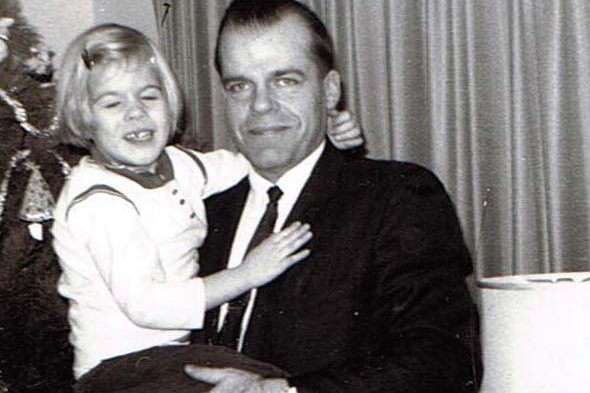
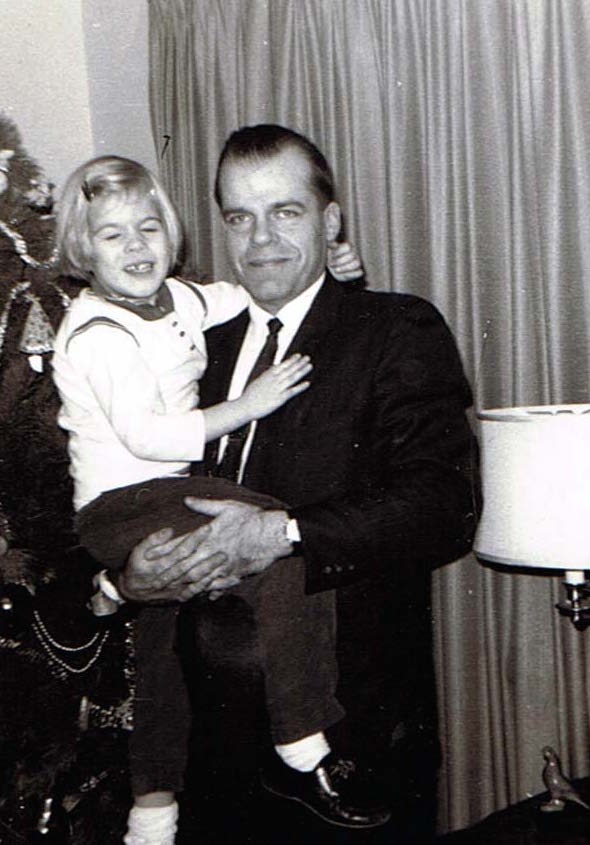 As a follow-up to the recent post on comforting the sorrowful, I was led to consider the grief of my parents and the difficulties they faced in raising a daughter with serious mental illness.
She led a tortured existence during a short life
and fought hard against great odds.
We remember her for her courage.
What Is the Deepest Root of Sin? It’s Not in Your Wallet and It’s Much Closer Than You Might Think

Comfort the Sorrowful – A Consideration of the Fourth Spiritual Work of Mercy

Struggling to find the words to fill the space.
Christ be beside us as we grieve;
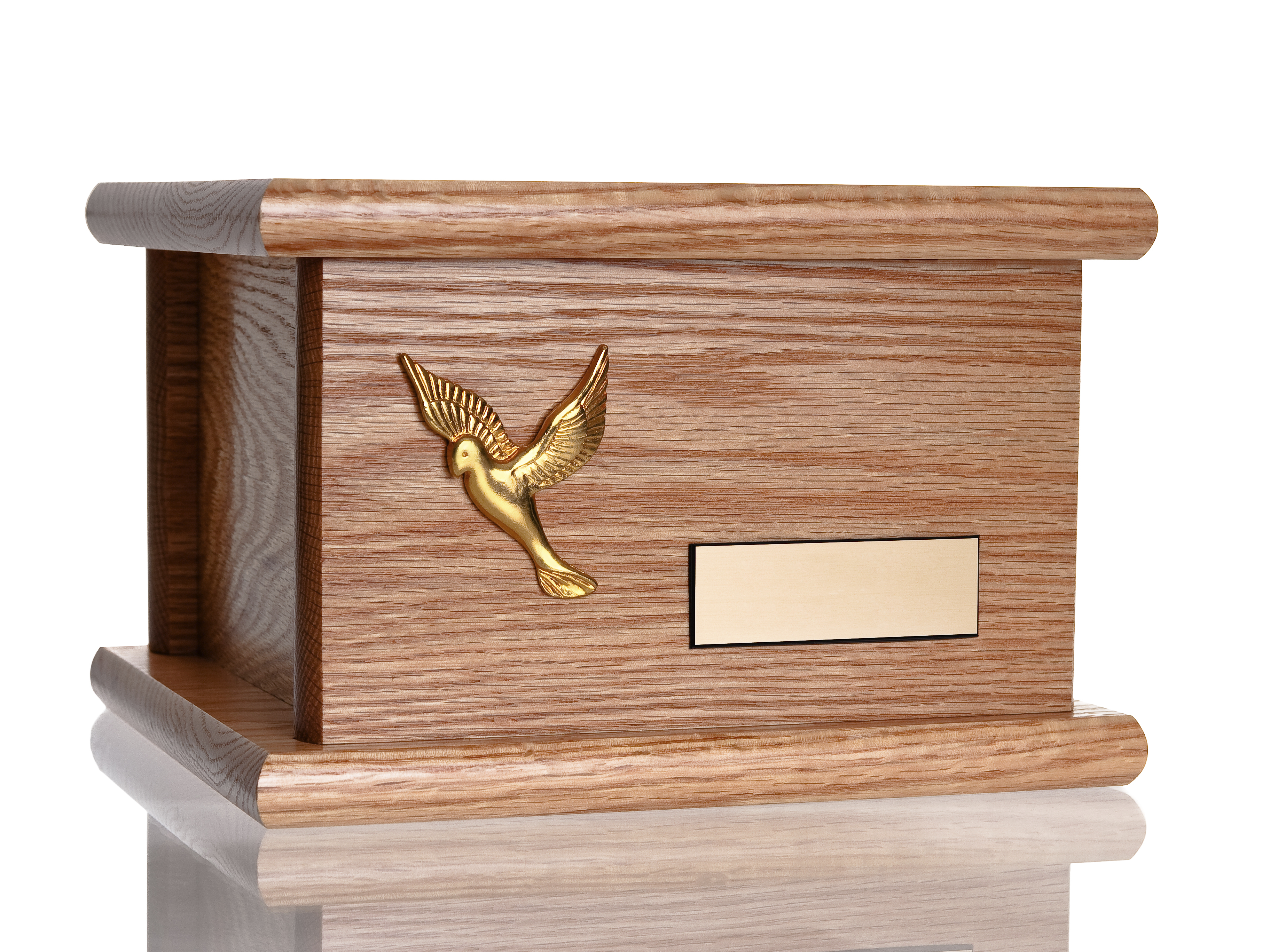
Daring to doubt or to believe.Considering Cremation? A Reflection on the Reverent Interment of Cremated Human Remains
A Reflection on the”Prayer of the Faithful”at Mass and Why The Intentions Are So Often Disappointing
 One of the parts of the Ordinary Form of the Mass that was “restored” from antiquity is the “Prayer of the Faithful.” However, there is (in this author’s mind) a certain disappointing quality to the intentions as they are used today. They are either overly particular and ideological or, at the other end of the spectrum, perfunctory and flat. Peter Kwasniewski, writing at New Liturgical Movement, summarizes the problem very well:
2. For public authorities and the salvation of the whole world;
3. For those burdened by any kind of difficulty;
4. For the local community.Love Lifted Me – A Homily for Ascension
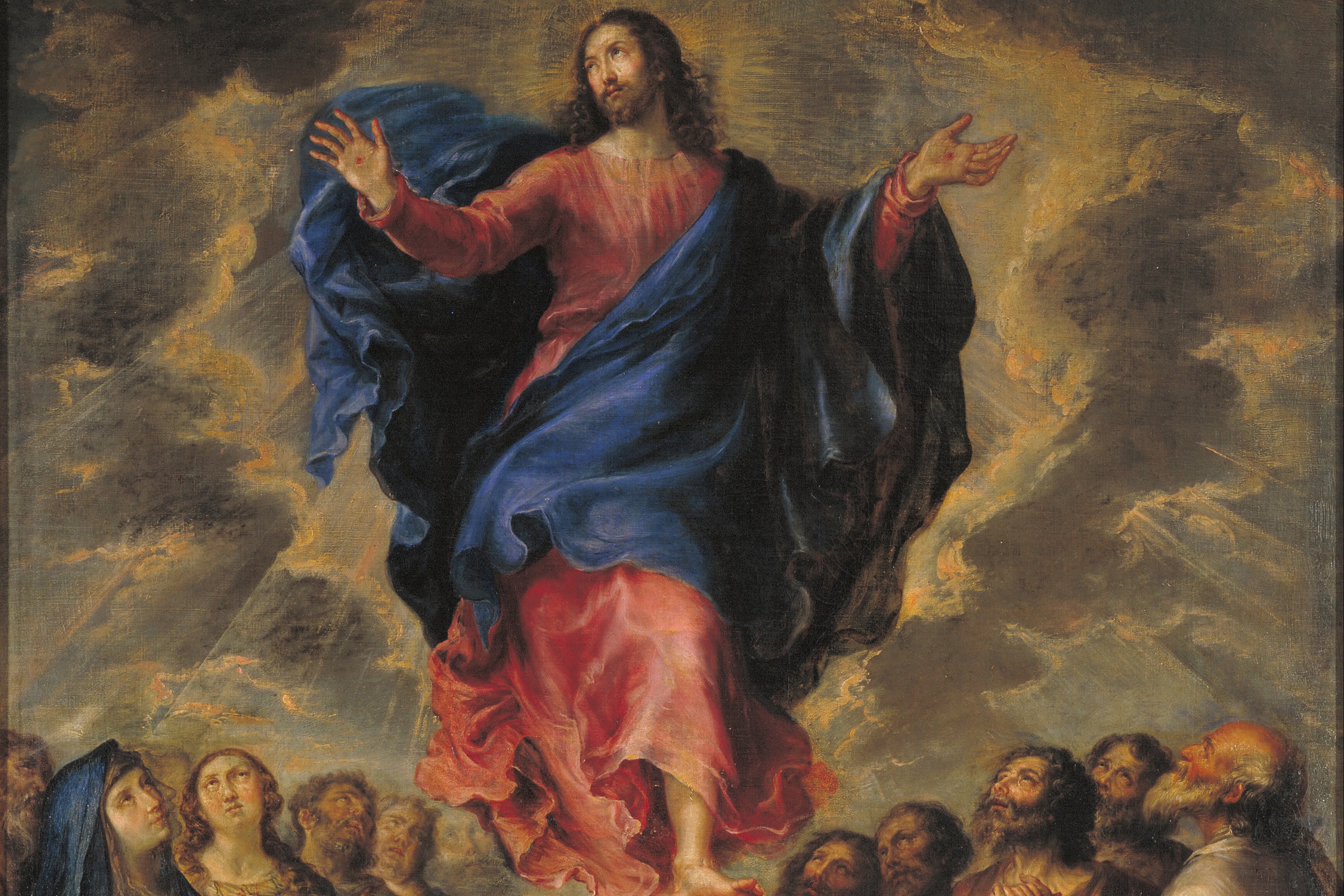
 In more dioceses than not, the Feast of the Ascension is celebrated this weekend. The liturgist in me regrets the move, but here we are any way. So let’s ascend with the Lord, three days late!
On the Balance of Virtue, As Seen in Two Videos


Licensed under CC BY-SA 2.0 via Wikimedia Commons