A Battle You Can’t Afford to Win – The Story of Jacob’s Conversion

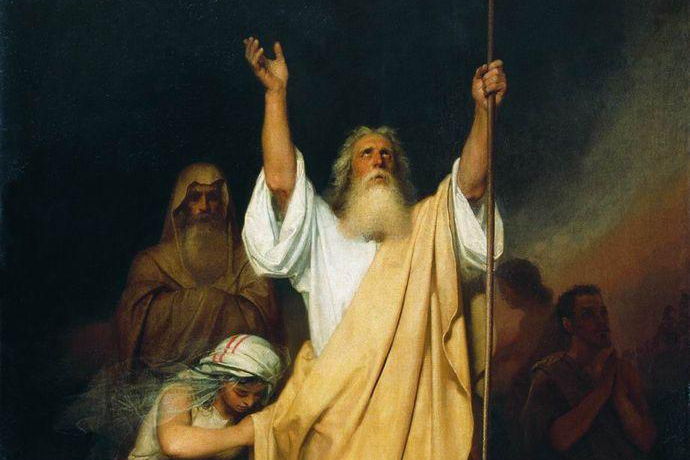
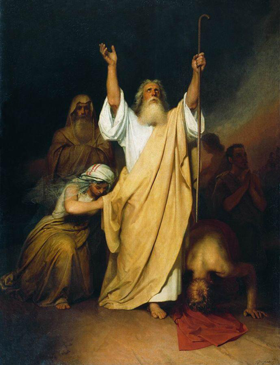
4x5 originalOne of God’s stranger affections in the Old Testament is the special love He had for Jacob. We are currently reading this story in daily Mass.

The name Jacob, according to some, means “grabber” or “usurper.” Even in the womb, he strove and wrestled with his twin brother Esau. And although Esau was born first, Jacob came forth grabbing his brother’s heel. Thus he was named Jacob (“grabber”).

And although he was a “mama’s boy,” he was also a schemer, a trickster, and an outright liar. Jacob’s mother, Rebekah, favored him and schemed with him to steal the birthright from his brother Esau, by lying to his blind father Isaac and obtaining the blessing under false pretense.

Esau sought to kill him for this, and so Jacob fled north to live with Laban, an uncle who was even a greater trickster and schemer than he. For fourteen years he labored for Laban, hoping to win his beloved Rachel, Laban’s daughter. In wonderful payback, Laban tricked Jacob into marrying Rachel’s “less attractive” sister, Leah, by hiding her appearance at the wedding. Jacob had thought he was marrying Rachel, but when the veil was pulled back … surprise! Only seven years later would Jacob finally secure Rachel from Laban.

Frankly, Jacob deserved it all. He was a schemer who was himself out-schemed by someone more devious than he.

Yet God still seemed to have a heart for Jacob. At the end of the day, God loves sinners like you and me as well. And in the story of Jacob, a hard case to say the least, God demonstrates that His love is not based on human merit. God knows and loves us long before we are born (cf Jer 1:5) and His love is not the result of our merit, but the cause of it.

There came a critical moment in Jacob’s life when God’s love reached down and worked a transformation.

It was a dark and sleepless night in the desert. And for reasons too lengthy to describe here, Jacob reached a point in his life when he realized that he had to try to reconcile with his brother Esau. He realized that this would be risky and that Esau might try to kill him (he did not; they were later to be reconciled beautifully).

Perhaps this was the reason for Jacob’s troubled sleep. Perhaps, too, his desire to reconcile with his brother pleased God. But whatever the reason, God reached down to touch Jacob.

We pick up the story at Genesis 32:21

I. DISTRESSED man – The text says, So the [peace] offering [to Esau] passed on before him; and he himself lodged that night in the camp. The same night he arose and took his two wives, his two maids, and his eleven children, and crossed the ford of the Jabbok. He took them and sent them across the stream, and likewise everything that he had. And Jacob was left alone; and a man wrestled with him until the breaking of the day. (Gen 32:21-24)

Jacob is distressed. He has, somewhat willingly, and yet also for reasons of his own, sued for peace with his brother Esau so as to be able to return to his homeland. How his brother will react is unknown to him. And thus Jacob is distressed and sleepless.

And so it is for many of us, that our sins have a way of catching up with us. If we indulge them, sooner or later we are no longer able to sleep the sleep of the just, and all the promises of sin now become like overdue bills to be paid.

Now that Jacob has come to this distressed and critical place in his life, God goes to work on him to purify and test him. On a dark and lonely night in the desert, Jacob finds himself alone and afraid, and God will meet him. Note three things about how God works:

1. God brings Jacob to a place of isolation – This is difficult for God to do! Oh how we love distraction, noise, and company. We surround ourselves with so many diversions, usually in an attempt to avoid considering who we are, what we are doing, where we are going, and who is God. So God brings Jacob to a kind of isolation on this dark and sleepless night in the desert. The text says, And Jacob was left alone; It’s time to think, it’s time to pray and look to deeper issues.

2. God brings Jacob to a place of confrontation – verse 24 says, and a man wrestled with him until the breaking of the day.

Who is this “man?” The Book of Hosea answers the question and also supplies other details of the event. He strove with the angel and prevailed, he wept and sought his favor. He met God at Bethel, and there God spoke with him– the LORD the God of hosts, the LORD is his name (Hos 12:4-5).

Yes, it is the Lord who wrestles with, who strives with Jacob. God “mixes it up” with Jacob and shakes him up. And here is an image for the spiritual life. Too many today think that God only exists to affirm and console us. He can and does do this, but God has a way of afflicting the comfortable as well as comforting the afflicted. Yes, God needs to wrestle us to the ground at times, to throw us off balance in order to get us to think, try new things, and discover strengths we did not know we had.

3. God brings Jacob to a place of desperation – The text says, When the man saw that he did not prevail against Jacob, he touched the hollow of his thigh; and Jacob’s thigh was put out of joint as he wrestled with him (Gen 32:25).

It is interesting to consider that God “cannot prevail” over Jacob. Though omnipotent, God will not simply overrule our will. And thus in striving with Jacob, God can only bring him so far. But God will leave him with a lingering memory of this night, and with the lesson that Jacob must learn to lean and to trust.

Jacob is a hard case, so God disables him. By knocking out Jacob’s sciatic muscle, God leaves him in a state in which he must lean on a cane and limp for the rest of his life. Jacob must learn to lean, and he will never forget this lesson, since he must physically lean from now on.

Thus Jacob, a distressed man on a dark desert night, wrestles with God beneath the stars and learns that the answer to his distress is to strive with God, to walk with God, to wrestle with the issues in his life, with God. Up until this point, Jacob has not trusted and walked with God. Jacob has schemed, manipulated, and maneuvered his way through life. Now he has learned to lean, to trust, and to realize that he is dependent on God.

II. DEPENDENT man – The text next records, Then the man said, “Let me go, for the day is breaking.” But Jacob said, “I will not let you go, unless you bless me.”

If the “the man” is God, as the text of Hosea teaches, then it seems odd that God would have to ask someone to “let him go,” and for Jacob, a mere man, to say to God, “I will not let you go.” As if a mere man could prevent God from doing anything!

But the request of “the man” may also be understood as a rhetorical device, pulling from Jacob the required request. So the man says, “Let me go!” But God wants Jacob, and us, to come to the point when we say, “I will not let you go!”

In saying, “I will not let you go,” Jacob is finally saying, “Don’t go, I need your blessing! Lord, you’re my only hope. I need you; without you I am sunk!”

God needs to get all of us to this place!

This critical moment has brought Jacob the insight that he must have God’s blessing, that he wholly depends on God. And this leads us to the next stage.

III. DIFFERENT Man – The text records, And the man said to him, “What is your name?” And he said, “Jacob.” Then he said, “Your name shall no more be called Jacob, but Israel, for you have striven with God and with men, and have prevailed” (Gen 32:27-28).

Here is the critical moment: Jacob finally owns his name. Previously, when his blind father, Isaac, had asked him his name, Jacob had lied, saying, “I am Esau.”

But after this encounter with God, Jacob finally speaks the truth, replying, “My name is Jacob.” And in saying this there is a kind of confession: “My name is Jacob. My name is deceiver, grabber, usurper, con artist, and shyster!”

Thus Jacob makes a confession, acknowledging that all his name “literally” implies of him has been true.

Having received this confession, God wipes the slate clean and gives Jacob a new name, Israel, a name that means, “He who wrestles or strives with God.”

In being renamed, Jacob becomes a new man. He is different now; he is dependent. He will walk a new path and walk in a new way, with a humble limp, leaning on the Lord, and striving with Him rather against Him.

And thus Jacob (Israel) wins by losing! God had to break him in order to bless him, and cripple him in order to crown him. Jacob would never be the same again; he would limp for life, always remembering how God blessed him in his brokenness. Scripture says, A broken and a contrite heart, O God, thou wilt not despise (Ps 51:17).

Postscript – There is a kind of picture of the “new man” Jacob has become in the Book of Hebrews. By faith Jacob, when dying, blessed both the sons of Joseph and bowed in worship, leaning on the top of his staff (Heb 11:21). Yes, Jacob learned to lean. He limped for the rest of his life. He needed a staff to support him. He learned to lean.

Have you learned to lean?

There is a battle you can’t afford to win: the battle with God. Yes, that is a battle you cannot afford to win! Learn to lean and to delight in depending on God. This is the story of Jacob’s conversion. How about yours?

The Most Essential Question of Every Liturgy – A Meditation on a Teaching From Joseph Ratzinger

blog070515There is a legend of how the liturgy and the Faith took hold in Rus (Russia). Prince Vladimir of Kiev was seeking a right worship for his people and sent representatives to look into various faiths and also liturgies. When emissaries went south to observe the Greek Christian Liturgy, they returned saying that they were not sure if they had been in Heaven or on Earth, so beautiful was what they had seen in the Hagia Sophia in Constantinople. They were sure that God dwelt there among men.

It is only a legend, however; the roots of Christian faith among the Russians is a lot more complicated. But the legend does capture the fact that the Byzantine Liturgy of the Eastern Church was a significant factor in advancing Christianity among the people who populate what is today Russia, the Ukraine, Georgia, and other nearby lands.

Joseph Ratzinger (Benedict XVI), while noting the legendary quality of the story, speaks to this legend to underscore that the Sacred Liturgy can and does have a missionary quality that can inspire and draw others to the one true God.

Exactly how the liturgy does this, however, is a matter of debate. Some would argue that it is essentially the beauty of the Liturgy and its capacity to draw us away from the mundane that leads people to God. Others emphasize a more didactic quality, wherein the elements of the liturgy must be intelligible and quickly grasped by the faithful and made applicable to daily life.

Of course we want to avoid a false dichotomy, in which one vision must be chosen to the exclusion of the other. Both notions have important insights. Yet in our time it is clear that, at least in the Roman liturgy, the emphasis has fallen on making the liturgy more intelligible and relevant to modern life, than ethereal and meant to draw us up and out of the ordinary through sublime beauty.

Cardinal Ratzinger, writing in 2005, said of this trend,

The way of thinking about “missionary liturgy” that became widespread in the fifties is, at the least, ambiguous and problematical. In many circles, among people concerned with liturgy, it led, in a quite inappropriate fashion, to turning a didactic element in the liturgy, and its comprehensibility even for outsiders, into the primary standard for shaping liturgical celebrations. Likewise, the saying that the choice of liturgical forms must be made with respect to “pastoral” points of view betrays the same anthropocentric error. The liturgy is then being constructed entirely for men. … Thus suggestions for styling liturgy became profane models, drawn for instance from the way meetings are held … or socialization rituals. God does not actually play a role there; it  is all concerned with winning people over, or keeping them happy and satisfying their demands. … No faith [is] aroused in that way [p. 332].

His language is quite strong here. Yet anthropocentricism (the belief that man rather than God is at the center of existence) remains a consistent, troubling trend in liturgy today. It is a hard mentality to break in a culture so centered on consumerism and “pleasing the customer.” This may work well in markets, but in faith and to some degree in education, it is a harmful trend. God, the liturgy, and truth itself do not exist to please us, but rather to summon us to challenging heights, beyond our mere pleasures and passions.

I have written before on this blog about anthropocentrism (HERE). And while we obviously cannot wholly abandon a notion of the liturgy being intelligible, we are ultimately being drawn into mysteries above and beyond us and thus the liturgy should have mysterious and sublime aspects.

In the same essay Cardinal Ratzinger wrote,

What persuaded the emissaries of the Russian Prince of the truth of the faith celebrated in the … liturgy was not … arguments that seemed clearer than those of other religions. What moved them was in fact the mystery as such, which demonstrated the power of the truth actually, transcending the arguments of reason … The Byzantine liturgy was not, and is not, concerned to indoctrinate other people or show them how pleasing and entertaining it might be. What was impressive about it was particularly its sheer lack of practical purpose, the fact that it was being done for God and not for spectators. … It was simply striving to be pleasing to God as the sacrifice of Abel had been pleasing to God … turning the gaze toward God was what allowed God’s light to stream down [and] … be detected even by outsiders [p. 331-332].

And there is the money quote: it was being done for God and not for spectators. … It was simply striving to be pleasing to God.

How different this is from today, when the liturgy seems so focused on us. Everything must be understood (using the vernacular both literally and figuratively). Music must not be too taxing and must be something the people can sing along with. Rituals must not be too elaborate. And, ironically, in the one place where intelligibility is most important (the sermon), it is often said that it should be brief and more an exhortatory than an instructive moment.

None of these things are intrinsically bad, but they are out of balance. There is little notion that the liturgy is directed first and foremost to God, that it is worship of God, that the rituals are for Him and are a sacrifice of praise, not merely a ceremony that pleases us.

It is not unfair to say that in the older form of the Roman Rite (especially low Mass) the people were so uninvolved as to be almost unnecessary, an afterthought. Everything was done by the priest and the servers. But perhaps we have overcorrected. Turning toward the people, introducing more vernacular, and simplifying the rites were seen as a way to involve and reintegrate the whole people of God, the whole Body of Christ into the sacred action of Christ as head and High Priest giving perfect worship to the Father.

But now may be a time for us to consider bringing back the balance we have lost, reintroducing sacred language, teaching more that God and the worship of Him are the essential focus of our liturgy. A gentle reintroduction of orienting especially the Eucharistic Prayer toward God, through a unified posture and direction of all toward the Cross, may be helpful (under the guidance of the bishop). The Liturgy of the Word can and should remain directed toward the people, for they are the goal of this proclamation.

Many will debate exactly what is to be done and how quickly, but it seems clear that balance needs to be restored in most parish settings. The ultimate goal, as Cardinal Ratzinger wrote, is that our Liturgy be done for God more than for spectators, that we simply strive to be pleasing to God. The inclusion of God’s people is important, but not in a way that forgets our collective purpose of worshiping of God, who is worthy of our sacrifice of praise. It should not be reduced merely to what pleases us.

Pope Benedict observed elsewhere that for those who prefer traditional Liturgy there is also a risk in reducing the liturgy to mere aestheticism, in which what is considered beautiful and more ancient is preferred, and is the focus for that reason. The manifestation may be more lofty and less worldly, but the error is the same: liturgy is what pleases me and its purpose is to cater to my tastes. Things in the traditional arena can get very particular, such that Roman vs. Gothic vestments, tabernacle veils vs. none, or a missed genuflection by the celebrant can become contentious and lead to uncharitable remarks after Mass.

There is not time in this post to lay out the essentials of liturgy as Scripture sets them forth. I have done that elsewhere in the past. But God gave at least the essentials on Sinai to Moses, to His disciples at the Last Supper, and to John in Revelation 4, 5 and 8. From these essentials we build and set our focus on what pleases God.

The deepest questions of any liturgy should be, “Was God worshipped?” and “Was God the true focus of our hearts?”

A Bad Day in the Pulpit for Jesus? A Homily for the 14th Sunday of the Year

blog 070415The gospel today portrays the Lord Jesus as preacher and prophet. But as we shall see, even the greatest preacher in the world, Jesus, can find His powerful and precious words falling lifeless on the rock hard surface of many a soul. Yes, even His words can meet with resistance and hostility, indifference and ridicule. Indeed, the gospel today shows forth the ruinous result of rejection.

My homily notes begin with the red text below. However, I’d first like to provide some background reflections that may be helpful.

We sometimes think that if Catholic priests were better preachers, all would be well. But that is only half the battle, for the Catholic faithful must also have ears to hear and hearts that are open and eager to receive the truth. A well known preacher and fine Protestant teacher, William Barclay, has this to say:

There can be no preaching in the wrong atmosphere. Our churches would be different places if congregations would only remember that they preach far more than half the sermon. In an atmosphere of expectancy, the poorest effort can catch fire. In an atmosphere of critical coldness or bland indifference the most spirit-packed utterance can fall lifeless to the earth (Commentary on Mark, P. 140).

Yes, of this I am a witness. I have preached before congregations that were expectant and supportive, and watched my feeble words catch fire. I have also preached in settings where “I couldn’t hear nobody pray!” And oh, the difference!

I have been blessed to serve most of my priesthood in African-American parishes and there is a deep appreciation that the preaching moment is a shared one, with shared responsibilities. The congregation does not consider itself a passive recipient of the Word, but rather an active sharer in the proclamation.

There is an air of expectancy in the Church as the faithful gather and listen and begin to sing and pray. This air of expectancy is sometimes called “the hum.” During the reading of the Word and the sermon there are nods, hands may go up, a foot may stomp, and an acclamation or two pock the air: Amen! … Yes, Lord! … Go on now! … Take your time! … Make it plain, preacher! … You don’t need to tell me! Ha!, My, my my!

And as a preacher, I too can call for help: Are you praying with me Church? … Somebody ought to say, Amen! …. Come on, Church! … Can I get a witness? … Kinda quiet in here today … Amen?! Yes, together we craft the message, as inspired by the Holy Spirit. And while it belongs to the priest to craft the content, it belongs to the congregation to affirm the truth and acknowledge the Spirit through prayerful attention and support.

How precious and necessary is the preaching task. But as today’s gospel affirms, the preaching task is more than just the preacher. Before looking at the text itself, here are a few more insights about both preacher and congregation from Pope (Saint) Gregory the Great.

First, on the obligation of the preacher and the solemnity of his task:

Pastors who lack foresight, hesitate to say openly what is right because they fear losing the favor of men. As the voice of truth tells us, such leaders are not zealous pastors who protect their flocks, rather they are like mercenaries who flee by taking refuge in silence when the wolf appears.

The Lord reproaches them through the prophet: They are dumb dogs that cannot bark. On another occasion he complains: You did not advance against the foe or set up a wall in front of the house of Israel, so that you might stand fast in battle on the day of the Lord. To advance against the foe involves a bold resistance to the powers of this world in defense of the flock. To stand fast in battle on the day of the Lord means to oppose the wicked enemy out of love for what is right.

When a pastor has been afraid to assert what is right, has he not turned his back and fled by remaining silent? Whereas if he intervenes on behalf of the flock, he sets up a wall against the enemy in front of the house of Israel. … [But] they [who] are afraid to reproach men for their faults … thereby lull the evildoer with an empty promise of safety. Because [such preachers] fear reproach, they keep silent and fail to point out the sinner’s wrongdoing.

The word of reproach is a key that unlocks a door, because reproach reveals a fault of which the evildoer is himself often unaware. That is why Paul says of the bishop: He must be able to encourage men in sound doctrine and refute those who oppose it. For the same reason God tells us through Malachi: The lips of the priest are to preserve knowledge, and men shall look to him for the law, for he is the messenger of the Lord of hosts. Finally, that is also the reason why the Lord warns us through Isaiah: Cry out and be not still; raise your voice in a trumpet call.

Anyone ordained a priest undertakes the task of preaching, so that with a loud cry he may go on ahead of the terrible judge who follows. If, then, a priest does not know how to preach, what kind of cry can such a dumb herald utter? It was to bring this home that the Holy Spirit descended in the form of tongues on the first pastors, for he causes those whom he has filled, to speak out spontaneously [Gregory the Great, Pastoral Guide].

Second, on the reason for poor preaching:

Beloved brothers, consider what has been said: Pray the Lord of the harvest to send labourers into his harvest. Pray for us so that we may have the strength to work on your behalf, that our tongue may not grow weary of exhortation, and that after we have accepted the office of preaching, our silence may not condemn us before the just judge.

For frequently the preacher’s tongue is bound fast on account of his own wickedness; while on the other hand it sometimes happens that because of the people’s sins, the word of preaching is withdrawn from those who preside over the assembly.

With reference to the wickedness of the preacher, the psalmist says: But God asks the sinner: Why do you recite my commandments? And with reference to the latter, the Lord tells Ezekiel: I will make your tongue cleave to the roof of your mouth, so that you shall be dumb and unable to reprove them, for they are a rebellious house. He clearly means this: the word of preaching will be taken away from you because as long as this people irritates me by their deeds, they are unworthy to hear the exhortation of truth.

It is not easy to know for whose sinfulness the preacher’s word is withheld, but it is indisputable that the shepherd’s silence while often injurious to himself will always harm his flock [Ibid].

Note well, then, the shared responsibility of the preacher and the people. And let these texts serve as a worthy background to what is now to come in today’s gospel, which we can see in three stages.

I. Real Rejoicing – The text says, Jesus departed from there and came to his native place, accompanied by his disciples. When the sabbath came he began to teach in the synagogue, and many who heard him were astonished. They said, “Where did this man get all this? What kind of wisdom has been given him? What mighty deeds are wrought by his hands!”

Thus, the initial reaction of Jesus’ hometown crowd is positive. They are filled with amazement and joy. And the text sets forth two sources of their joy:

1. His wise words – Many who heard him were astonished. They said, “Where did this man get all this? What kind of wisdom has been given him?” Yes, what a blessing it must have been to hear Jesus preach. And boy, could Jesus preach! Scripture says of His preaching,

And when Jesus finished these sayings, the crowds were astonished at his teaching, for he taught them as one who had authority, and not as their scribes (Mat 7:28).
Sent to arrest him the temple guard returned empty handed saying: No one ever spoke like that man (Jn 7:46).
And all spoke well of him, and wondered at the gracious words which proceeded out of his mouth (Luke 4:22).
And the common people heard him gladly (Mark 12:37).

2. His wonderful works – They also say, “What mighty deeds are wrought by his hands!” Yes, Jesus had worked many miracles up to this point. He had

cast out demons,
turned water to wine,
raised up paralytics,
cured the man with a withered hand,
cast out blindness,
healed deafness,
multiplied loaves and fishes,
calmed storms, and
raised up Jairus’ daughter from the dead.

And so we see that the initial reaction to Jesus preaching is good. Their remarks and rejoicing are a sign that the Spirit is working and prompting them to belief.

Yet as we shall see, things are about to turn sour. For it remains a sad but prevailing truth that the word of God can fall on the rocky soil of some hearts, where it springs up but soon withers because the soil is so shallow. Or the Word of the Lord can be sown on the paths of some hearts where the birds of the sky come and carry it off. Or the Word of the Lord can fall on divided hearts, where the thorns of worldliness and the anxieties of the world choke it off. And yes, sometimes it falls on good soil, where it yields thirty, sixty, or a hundred fold (cf Matt 13:1-9). Sadly, things are heading south.

II. Rude Rejection – The text says, [But some began to say] Is he not the carpenter, the son of Mary, and the brother of James and Joses and Judas and Simon? And are not his sisters here with us?” And they took offense at him.

Notice how sudden their change is. There is an old spiritual that says, “Some go to church for to sing and shout, before six months they’s all turned out!”

They harden their hearts. Yes, the tide mysteriously and suddenly turns against Jesus. Sin has set in and hearts have hardened; the joy has been jettisoned. Though the Holy Spirit prompts them to faith and to call Jesus, “Lord,” they harden their hearts. It is a grim and tragic sin.

They also exhibit a kind of prejudice or unjust discrimination, dismissing Jesus as a mere carpenter and a hometown boy. It is an odd kind of thing that the poor and oppressed sometimes take up the voice of the oppressor. And thus these simple people from a small town of only 300 take up the voice of the Jerusalemites, who regarded Galileans as “poor backwoods clowns” and as unlettered people. Yes, Jesus’ own townsfolk take up the voice of the oppressor and say to Him, in effect, “Stay in your place. You have no business being smart, talented, wise, or great. You’re just one of us and should amount to nothing.” It is the same sort of tragic rebuke that sometimes takes place among minority students who excel in school. Some of their fellow minority students accuse them of “going white.” Tragic and sick. And likewise for Jesus; they ignore His words and His works, focusing instead on appearances and background.

They also exhibit the sin of envy. Envy is sadness or anger at the goodness or excellence of another person because we take it as diminishing our own. The text says here, And they took offense at him. St. Augustine called envy THE diabolical sin. This is because it seeks not to posses the good of another (as jealousy does), but rather to destroy what is good in others so that the destroyer can look better.

The result of these sins was that Nazareth was NOT a place where excellence was known, even among its own! Indeed, John 1:46 records Nathanael saying of Nazareth, “Nazareth! Can anything good come from there?” It would seem that even the townsfolk of that place would agree. (But Philip, who surrendered his prejudice, said to Nathanael, “Come and see.”)

But an even more awful result of these sins ensues.

III. Ruinous Result – The text says, Jesus said to them, “A prophet is not without honor except in his native place and among his own kin and in his own house.” SO HE WAS NOT ABLE to perform any mighty deed there, apart from curing a few sick people by laying hands on them. He was amazed at their lack of faith.

So as we see, because they judge Him to be nothing, they get nothing. They have blocked their blessings.

Jesus says, He who receives a prophet because he is a prophet shall receive a prophet’s reward, and he who receives a righteous man because he is a righteous man shall receive a righteous man’s reward (Mat 10:41). But they will get nothing. When we banish or discredit God, we should not expect to see many of His works. These things come only from faith.

Miracles are the result of faith, not the cause of it. Thus the text says, So [Jesus] was NOT ABLE to perform any mighty deed there … He was amazed at their lack of faith.

There are some things that even God can’t do, not because He has no power but because He respects our choices. Pay attention. The Lord is offering us salvation and the Kingdom of Heaven. And either we reach out to take it or we don’t. But the choice is ours. If we take it, He’ll go to work. But if we refuse, He respects our freedom and will “not be able” to perform any mighty deeds.

And what a ruinous result for Nazareth and all who reject the prophetic utterances of our Lord and His saving help. Scripture says,

I am the LORD your God, who brought you up out of the land of Egypt. Open your mouth wide, and I will fill it. “But my people did not listen to my voice; Israel would have none of me.  So I gave them over to their stubborn hearts, to follow their own counsels. O that my people would listen to me, that Israel would walk in my ways! I would soon subdue their enemies, and turn my hand against their foes. Those who hate the LORD would cringe toward him, and their fate would last for ever. I would feed you with the finest of the wheat, and with honey from the rock I would satisfy you” (Psalm 81:10-16).

Either we accept God’s word and yield to its healing and saving power or we can expect little or nothing but ultimate ruin. It is as if we were in a raging stream heading toward the falls and almost certain death. But then a hand is stretched out to save us, the hand of Jesus. Mysteriously, we reject that hand and ridicule its power. And the ruinous result of our hideous and foolish rejection is our death. The text says, He was amazed at their lack of faith.

Pay attention! God is preaching the Word to you every Sunday, every day in fact. Will you heed and be healed? Will you receive and be rescued? Or will you reject and be ruined? Will the Lord be able to do mighty deeds for you? Or will He be amazed at your lack of faith? The choice is yours; it is all yours.

And what of our nation, once steeped in the Word of God? The Founding Fathers once wove Scripture freely into their discourse. But in recent decades a hostile secularism has insisted on marginalizing all references to God and scoffing at biblical morality. They talk “tolerance” yet file lawsuits against those who would transgress and speak of God, display a nativity, or call something a sin. There is no room here to recite statistics that show our blessings ebbing away, but it is clear that as our families disintegrate, a nation that once led the world in almost every respect is now well back in the pack and fading fast. To forsake the preaching of Christ though His Scripture and Church is to forfeit blessings. He can work no miracles here because of our lack of faith.

Even Jesus can have a bad day in the pulpit. But it is not really His bad day; it is ours. If we sinfully reject the Word of God, it is we who will forfeit blessings and miracles because of our lack of faith.

In Times of Trouble, Look to the Lord!

jesus-walks-on-waterThere was a moment in Peter’s life when he faced the choice of whether to focus on the storm or on the Lord. It is in the memorable gospel story in which Peter was walking on the water toward Jesus. As the Gospel recounts,

But when he saw the wind, he was afraid, and beginning to sink (Mt 14:30).

It is so difficult for us. We seem wired for the negative, wired to be anxious, doubtful, and on the alert for any danger. It takes great faith to keep our sights focused on the Lord, who alone can and will save us if we trust in Him. But too easily the world, the flesh, and the devil seek to steal our serenity and snatch from us our ability to see God. And losing that ability, whether through neglect or weakness, we are overwhelmed by the fears of the world. So often our loss of the sight of God has us frantically running about wondering what to do. Scripture says,

For thus said the Lord GOD, the Holy One of Israel: By waiting and by calm you shall be saved, in quiet and in trust shall be your strength. But this you did not will. “No,” you said, “Upon horses we will flee.” Very well, you shall flee! “Upon swift steeds we will ride.” Very well, but not as swift as your pursuers! (Is 30:15–17)

Scripture further warns,

  • For you have forgotten the God of your salvation, and have not remembered the Rock of your refuge (Is 17:10).
  • You were unmindful of the Rock that begot you, and you forgot the God who gave you birth (Dt 32:18–19).
  • But they soon forgot his works; they did not wait for his counsel (Ps 106:13).

Indeed, do not forget the works of the Lord!

I thought of these things as I watched this cartoon. It features an astronaut of sorts. He is in a threatening place, alone in orbit high above the earth. But with him he has a picture of his beloved, likely his wife, and this consoles him. As his fears grow, he struggles to keep his eyes on her. He loses his connection with her as the warning bells sound and he rushes about in a panic. Finally, his fears wholly snatch his beloved from his sight and fear overwhelms him.

And this is a picture of us, too, who so easily allow our fears to sever our connection with our Father in Heaven. How quickly our fears, elicited by the world, the flesh, and the devil, snatch away our connection with God. And then our fears loom large, overwhelming us.

Do not forget the works of the Lord!

Walking as an Image of Faith

Couple walking in a parkMost people, if asked, would say that they like everything in their life to be in perfect equilibrium, perfect balance. Losing balance physically is the prelude to a fall. Balance tends to be valued, not only in the physical sense, but also in the emotional, spiritual, and mental sense. To become mentally or emotionally “unbalanced” is a euphemism for mental illness or distress.

Believing is leaning – Perfect equilibrium or balance is seldom to be found in the human person, but perhaps that is good, especially in the spiritual life. The spiritual life is really about leaning.

Equilibrium is overrated – Equilibrium may have its place in our physical bodies, but even there we must sometimes intentionally throw off our balance in order to make progress or for some other purpose. Let’s examine the act of walking. When I am standing still I am at equilibrium; I am balanced. But I am also getting nowhere. If I want to get somewhere, I have to walk. Now walking involves leaning and imbalance. When I walk, I lean and begin falling forward. I then catch myself with my foot before I fall. And the process continues: lean, fall, catch; lean, fall, catch. Only in this way can I walk and get somewhere. So equilibrium has its place, but sometimes it gets in the way of progress.

Consider walking, then, as an image for spiritual growth. We progress in the spiritual life not merely by “standing still” with the familiar and the easily understood, but also by “leaning forward” into the unknown and mysterious. As we do so, we are confident that God is true and reliable, and will uphold us if we lean forward on Him and on what He teaches.

This last point is important, because God’s teaching gives us a kind of range within which to lean; it does not invite us to reckless abandonment of His truth and teaching. If we do this, we lean too far and fall—fall into sin. But within the range He gives us, God leads us forward in the walk of faith.

All of us prefer the balance of the familiar and the easily understood. When we are balanced, we feel that we are in control. But true spiritual growth is a journey. A journey requires walking, and walking requires some “imbalance” and trust. In simple physical walking we “catch” ourselves; walking is a self-controlled fall. But in spiritual walking, it is God who catches us and who is in control. Do you want to get to Heaven? Do you want to journey home? Then you have to walk. Lean, trust, and keep saying “Amen!”

Dance! In this video, I wonder if you might consider a very elaborate form of walking that we call “dancing.” Now traditional dancing requires an enormous amount of leaning and, especially for the woman, a lot of trust as she allows the man to lead her. She must lean into his moves and follow his direction. In this video, the great Fred Astaire and Ginger Rogers dance marvelously. But as you watch this, think of the Lord Jesus leading His bride the Church in a great dance of faith. Consider the trust that is necessary for the Church and for us as individuals as God leads us in the great walk, the great dance that is faith. Only by leaning, trusting, and following will our dance ever be “graceful.”  In the final dance move, Fred and Ginger leap over the rail of the dance floor and swirl through the doors. So, too, will we. If we as members of the Bride of Christ will but trust Him, follow His lead, and lean in the great walk, the great dance of faith, we, too, will leap off the dance floor one day and go through the gates of Heaven.

Enjoy this video. It shows Fred and Ginger at their finest. And as you watch, keep in mind the spiritual image.

A Study of Sloth in the Life of Lot

070115blog In daily Mass this week (the 13th week of the year) we have been reading through Genesis. Tuesday’s reading highlights a significant spiritual problem: sloth, one of the seven deadly sins. Sloth is a sorrow, sadness, or aversion to the good things God offers. Rather than being joyful and zealous to obtain these gifts, the slothful person sees them as too much trouble to obtain and is averse to the changes such gifts might introduce into his life. This is clearly the case with Lot, who resists the attempts of God to rescue him and his family from the sinful city of Sodom, which is about to be destroyed. Let’s examine his struggle in several steps.

I. Roots – Lot’s personal troubles were many, but for our purposes his problems began when he “pitched his tent toward Sodom” (Gen 13:12). Abraham and Lot had grown very rich (almost never a good thing in the spiritual life) and realized that their flocks were so large that one part of the land could not sustain them both. Thus they agreed to live in different sectors. Abraham left the choice of areas to Lot, who (selfishly?) chose the better part for himself. The area where Sodom was is now a deep desert, but at that time the whole plain of the Jordan toward Zoar was well watered, like the garden of the Lord, like the land of Egypt (Gen 13:10). And thus it was that Lot took his family and pitched his tent toward Sodom.

II. Risks – But Sodom was a wicked city, filled with false worship, greed, insensitivity to the poor, and the approval and practice of homosexuality. I will not be writing on that in detail in this post, as I have already done so in previous ones.

But here is the risk that Lot takes: he turns his face toward Sodom and willingly exposes his family to the grave moral threats there. And it does indeed affect them. Ultimately, his wife cannot bear to leave, looks back, and is lost. His daughters escape, but later engage in the grave sin of incest. Lot, too, will find it hard to flee Sodom, finding God’s offer to save him to be too much trouble. He’d rather stay, whatever the risk.

If you’re going to swim in muddy water, you’re going to get muddy. And that mud gets in your ears and in your soul. This is what Lot risks and what results when he pitches his tent toward Sodom.

Many of us, too, think little about the risks that television, the internet, music, and culture pose to us and our children. Too easily we risk our eternal salvation and that of our children by pitching our tent toward Sodom through easy commerce with a world that is poisonous to our faith. Even if some things are troublesome, many of us make little effort draw back and limit, even in little ways, the influences that are contrary to our faith.

III. Resource – Lot has only one resource in his favor: Abraham is praying for his ne’er-do-well nephew. He asks God’s destroying angel to spare Lot and his family (Gen 19). God agrees to this and acts to save Lot in spite of himself. Really, it’s the only thing that saves Lot.

It is true that Lot was just, in the sense that he did not approve of the sin around him. But neither did he act to really protect himself or his family from it. Something about Sodom appealed to him. Perhaps he thought he could make money there (or perhaps the trains ran on time). Whatever the benefits, Lot weighed them more heavily than the risks.

And so, too, for many today, who leave the TV on no matter the risk because it entertains or has some other perceived benefit that outweighs the obvious risks. Or those for whom it’s just too much trouble to monitor the websites their children visit or the music they listen to.

It really is only Abraham’s prayers that save Lot, who would live with sinners, from dying along with them. Thus, don’t forget the power of prayer for some of the “ne’er-do-wells” you may know. God may act to save them before the Day of Judgment simply because you prayed for them.

IV. Root Sin – But here comes the heart of the story: sloth. The angel warns, “Flee!” But Lot hesitates. Fleeing is hard work; it means leaving things behind that you like. Perhaps Lot thinks, “Maybe the warnings of destruction are overblown; maybe it won’t really be so bad.” Here is what the story says:

As dawn was breaking, the angels urged Lot on, saying, “On your way! Take with you your wife and your two daughters who are here, or you will be swept away in the punishment of Sodom.” When he hesitated, the men, by the LORD’s mercy, seized his hand and the hands of his wife and his two daughters and led them to safety outside the city. As soon as they had been brought outside, he was told: “Flee for your life! Don’t look back or stop anywhere on the Plain. Get off to the hills at once, or you will be swept away!” “Oh, no, my lord!” Lot replied, “You have already thought enough of your servant to do me the great kindness of intervening to save my life. But I cannot flee to the hills to keep the disaster from overtaking me, and so I shall die.  Look, this town ahead is near enough to escape to. It’s only a small place. Let me flee there–it’s a small place, is it not?– that my life may be saved.” “Well, then,” he replied, “I will also grant you the favor you now ask. I will not overthrow the town you speak of.  Hurry, escape there! I cannot do anything until you arrive there.” That is why the town is called Zoar (Gen 19:15-21).

Wow, this is sloth with a capital “S”! So lazy and settled in with sin has Lot become, that he’d rather accept death than expend the effort to flee. Not only that, he can’t even manage to rouse himself in order to save his family. It’s all just too much trouble. Sloth is sorrow, sadness, or aversion.

Thanks to Abraham’s prayers, the angels literally drag Lot and his family out of the city and repeat the warning: “Flee!” God who made you without you, will not save you without you. So Lot must cooperate. But still, Lot sees it as all just too much trouble. In effect, he says, “Man, those hills look far away. And they’re not nearly as nice as this valley. It’s going to take a lot of effort to get there. Do I really have to go that far?”

And here is another aspect of sloth: compromising with evil despite knowing the danger. Even if it occurs to many that some things in their lives need to change, they try to minimize those changes. The Lord tells us that we cannot serve two masters, that we cannot serve both the world and Him. In other words, we must decisively choose God over the demands of this world whenever there is a conflict. But many, realizing that this may introduce uncomfortable situations or have financial impacts, begin to negotiate with their conscience, saying, “I’m basically serving God … well, at least mostly. Maybe it’s enough if I do a few holy things and serve God for the most part. And then I can still serve the world and enjoy its fruits, too. Maybe I’ll serve God 80% and the world 20%. Hmm … well, maybe that’s a little too ambitious. After all I have a career and I don’t want to risk that promotion. How about if I serve God 60% and the world 40%? Is that enough?”

Thank God for His mercy! (And thank Abraham for his prayers.) We are a real mess. As the text shows, God will take the little he can get from Lot, at least for now, in order to save him. But God shouldn’t have to take this from us. Only grace and mercy can spare us from ourselves.

V. Results – But note this: grace and mercy need to have their effect. We cannot go on in sloth forever. We have to allow God to heal this deep drive of sin in us or we will be destroyed. Lot is saved for now, but great tragedy is still in store for him. His wife will turn back in longing for Sodom and be lost. His daughters cannot get Sodom out of them and will later turn to incest (Gen 19:30ff). And from this incest will be born the ancestors of the enemies who will later afflict Israel: the Moabites and the Ammonites.

And what of us today? What role have we played in pitching our tents toward Sodom? What happens to us and to our children and grandchildren when all we do is express shock at the condition of the world but expend little real effort to protect ourselves from it or actively change it? What happens to us when we learn to live off the fruits of our Sodom, and make easy compromises with the world in terms of greed, insensitivity to the poor, and sexual confusion? What happens when God’s plan to rescue us through the gifts of chaste living, generosity, and more simple living, is rejected as too much trouble or as requiring us to give up too many things that we like? Many think to themselves, “I know my favorite television show has bad scenes, but I like the story line and I want to find out what happens at the end of the season. I know I should be clearer and firmer with my children, but that leads to conflict and I hate conflict, and besides they’ll complain if they can’t have a smart phone. And it’s so much trouble trying to monitor their Internet activity.  And … and … and …”

What happens when we do this, when we slothfully reject God’s offer of a better, less-compromised way? Well, we don’t have look far; we know what happens. We and the people we love get lost, wounded, corrupted, confused, and even die, both physically and spiritually.

The virtues opposed to sloth are zeal and joy. Zeal for God’s truth and the beauty of holiness, and a joyful pursuit of the life God offers us are gifts to be sought. Sloth is very pernicious and has cumulative effects. We haven’t done well, collectively speaking. It’s time to turn more zealously to God, to appreciate the truth of what He has always taught.  It’s time to gratefully, joyfully study His ways, and live them and share them with others.

Here, then, is a study of sloth in the life of Lot, a lesson more necessary and urgent today than ever before.

Interesting too for our times, the one day we should rest, we don’t. Here’s an old song from the Moody Blues that recalls Sunday rest:

Awesome or Awful? A Reflection on the Mosaic of Christ in Majesty at the Basilica in Washington

looking upI’ve been spending quite a bit of time at the Basilica of the Immaculate Conception here in Washington recently, due to ordinations and other special occasions. As I walk up the main aisle I never fail to be moved by the scene above the apse of Christ in majesty. (See one of my photos to the right.)

I have discovered that very few people are neutral on this image of Christ seated in Judgment. People either love it or hate it. I recall a discussion here on the blog over four years ago that elicited lots of different opinions.

Those who hate it say that He looks angry, and many also don’t care for the Roman toga, and bare shoulder and right chest. To others, who prefer more “inclusive” depictions of Christ, His blond hair, blue eyes, and exceptionally white skin make him seem too European.

Those who love the image say they like the fact that Christ is presented as strong and formidable. For them, this image is a relief from many other modern portraits of Christ, which present Him as a thin, willow-wisp of a man with an often weak look upon His face. But the Christ in majesty of the Basilica is someone who is to be taken seriously and to whom we must render an account.

My own thoughts have shifted over the years. As a younger man, I disliked this work. But over the years and after thoroughly studying the Scriptures, I have come to greatly admire this image of Christ. I often go to the Basilica, and when I do I always stand in the nave and look to Him for strength. I am often filled with joy and holy reverence as I gaze upon His towering strength and sublime majesty. He is a strong and manly Christ who speaks to me. He does not look angry to me. Rather, He seems to be saying, “Have confidence. I have overcome the world.” The inscription above the image also inspires me:

Christ reigns, Christ Rules. Eternal Victor, Eternal King
His kingdom is an everlasting Kingdom that shall not be taken away

You surely have your own thoughts about this image and I encourage you to share them in the comments section. But first, I would like to examine some of the details of this image. Some of them may be obvious, but others you may not have noticed.

1. Flames of fire in the halo – The New Testament Scriptures indicate that Christ will judge the world by fire (cf 1 Cor 3:13; Heb 10:27; 2 Peter 3:7-12). Christ is clearly seated in judgment and he will judge the world by fire and also purify those who are to be saved through fire (cf 1 Cor 3:13-15; Malachi 3:3). Further, Both Daniel and the Book of Revelation speak of fire and flashes of lightning around the Throne of God. So it is that these flames indicate the Holiness of Christ and the fact that he will both judge and purify through fire. This fire need not be understood as a physical fire but at least as a spiritual fire.

2. His angry (?) look – Many who observe the image say that Christ looks angry. On one level this seem likely, since on the Day of Judgment there is not going to be any fooling around. The Scriptures speak of this day as a Day of Wrath (Mat 3:7; John 3:36; Rom 1:18; Rom 2:8; Rom 5:9; Col 3:6; 1 Thess 1:10; Rev 6:16; Rev 11:18, inter al), at least it will be so for those who have rejected God’s offer and have not been saved from the wrath.

closeup for blogBut let’s look a little closer at Christ’s face (at left). Look closely at his eyes. Notice that the one on the right (His left eye) is more rounded and serene than the one on the left (His right eye), which is narrower and more piercing. Notice also that the eyebrow on the right is more arched and peaceful, while the one on the left is angled downward in a severe look. Take your hand and cover the side on the left and see that He appears more serene. Then cover the side on the right and notice that He appears more severe. This is very common in Eastern iconography, which likes to present both the justice and mercy of God on the face of Christ. It is subtle, but it is meant to be. Otherwise, we’d have a weird looking face! On the Day of Judgement there will be mercy for those who have shown mercy and severe justice for those who have been severe (Mat 5:7; Mat 7:2; James 2:13), for justice and mercy are alike with Him (cf Sirach 5:7). Looking into His eyes, I am reminded of the stunning text from Hebrews that says of Christ, No creature is concealed from him, but everything is naked and exposed to the eyes of him to whom we must render an account (Heb 4:13).

3. What of his other facial features? – The artist seems to have captured the fact that the Book of Revelation described the glorified Christ as having hair like wool. But notice what it says of the color: His head and hair were white like wool, as white as snow (Rev 1:14). Perhaps the artist thought that snow-white hair would be too shocking, but we definitely have blond hair here.

The eyes look to be blue, or possibly green. Here, too, the artist has not conformed as well to the description in the Book of Revelation, which says, his eyes were like blazing fire (Rev 1:14). This would be hard to depict artistically; it might look as if Jesus had red eye!

Add the blond hair and blues eyes to His white complexion and we clearly have a European Christ. There is only a vague account of the complexion of Christ in Scripture: His face was like the sun shining in all its brilliance … His feet were like bronze glowing in a furnace (Rev 1:15-16). These texts speak more of brightness than color. I know that this notion of inclusivity drives some people crazy, who prefer a color blind society, and it would be a joy to get there. But we cannot simply ignore these as reasons why some do not like this image of Christ. The Bible’s silence on the skin color of Christ demonstrates that our issues today with skin color were not pertinent to Scriptural times.

4. What of his red garment? – In Revelation 19, Christ appears riding a strong white horse and John speaks of the robe He wore: He is dressed in a robe dipped in blood, and his name is the Word of God (Rev 19:13).

5. What of his right arm being bared? Here, too, I am mindful of a passage from Isaiah that says, The LORD will lay bare his holy arm in the sight of all the nations, and all the ends of the earth will see the saving power of our God (Is 52:10). It is a symbol of His strength and His power to save and put down His enemies.

6. What of the fact that He is seated? As we have noted, this is a depiction of the Last Judgment. And of that judgment, Scripture says, When the Son of Man comes in his glory, and all the angels with him, he will sit on his throne in heavenly glory. All the nations will be gathered before him, and he will separate the people one from another as a shepherd separates the sheep from the goats. He will put the sheep on his right and the goats on his left (Matt 25:41-43). I am mindful of the old Latin hymn Dies Irae, which poetically says, “When the Judge his seat attaineth, and each hidden deed arraigneth, nothing unavenged remaineth.”

7. What of the angels at his feet? In the Book of Ezekiel (1:4-21 and 10:1-22), there is a vision of the four living creatures or Cherubim around a throne, each having four faces, four wings, four sides, the stature and hands of a man, and the soles of a calf. Further, we have already seen that when the Lord returns He will be accompanied by His angels. Finally, Psalm 99 says, The LORD reigns, let the nations tremble; he sits enthroned between the cherubim, let the earth shake. Great is the LORD in Zion; he is exalted over all the nations (Ps 99:1-2). Somebody say, “Amen!”

I expect some of you will have things to add, possibly corrections or different interpretations. Remember it’s art, not science. One interpretation doesn’t necessarily preclude another. Especially valued are additions to the list that would include insights from Scripture, Tradition, and/or techniques of iconography. When we’re done, I’ll update the post to include things you might be able to add or clarify.

By the way, I am grateful to Jem Sullivan, who a few years back authored a book called The Beauty of Faith. Using Christian Art to Spread the Good News. In it, she encourages what I have tried to do here. Namely, that we should carefully study and pray Christian Art as a kind of lectio divina before the painted or sculpted word.

Here is a video of some unique pictures I took at the Basilica five years ago. They are taken from the Clerestory, a place few visitors go.

In Times Like These – A Scriptural Guide for Troubled and Confused Times

BibleThere’s an old hymn that says, “In times like these, you need a Savior, in times like these, you need an anchor. Be very sure, be very sure, Your anchor holds and grips the Solid Rock.”

And indeed, there are very few faithful Catholics who are not astonished and dismayed at the rapidity of decline into confusion (sexual and otherwise) of a culture we once described as Judeo-Christian. Whatever our sectarian differences of the past (and honestly they were significant and embarrassingly many), there was at least a basic agreement on the fundamentals of biblical morality and the authority of the Word of God. Most of this is gone—and it has gone quickly.

The Supreme Court’s decision on Friday was unfortunate but not surprising. Yet still the rapidity of what even five years ago would have appeared unlikely, bewilders and feels like whiplash.  Make no mistake, in my words to follow I am not singling out people with a same-sex attraction. No, the situation is much broader than that. Those of us left holding to tradition and to some sense that maybe God and 5,000 years of recorded history should be respected in any number of areas, have suddenly become “outdated,” “hopelessly out-of-touch,” and even worse, “hateful, bigoted, homophobic, and just plain mean!” And all this because we have not snapped-to with the “new morality.”

Yes, in times like these …

The early Church certainly experienced a similar struggle. As the Gospel left the relatively sane but religiously hostile world of Judaism, it encountered the pagan world, not religiously hostile but morally confused by corrupting sexual practices and entertainment marked by violence and destruction to the human person. Sound familiar?

There is one difference, noted by C.S. Lewis in his Latin Letters (1948-53). The difference is that ancient Greece and Europe were a virgin awaiting her husband. The modern West is an angry divorcée. And this makes our task even more difficult as we seek to re-propose the Gospel to a cynical world that responds, “Been there, done that, and filed the annulment papers.”

Nevertheless, we have much to learn from the early Church, which experienced similar decadence and confusion.  Perhaps a survey of some texts that both describe the situation and offer advice may be helpful. With that in mind, permit these quotes, which both describe an all-too-familiar scene and also offer advice about what to do in the midst of confusion and storm.

A warning and disclaimer: these texts from God’s Word do not mince words. They are a tough assessment of a world at odds with God. We live in dainty times and don’t like strong and clear descriptions. We prefer euphemisms and pleasantries. But the world of the New Testament, to include Jesus Himself, spoke boldly, plainly, and without “political correctness.” Do not expect these passages to speak with the softness of modern times. They are a tough assessment of what is really going on.

That said, these texts do not mean that everyone who opposes Church teaching has all of these qualities. Texts like these speak to the collective qualities of the fallen world governed by a fallen angel. Further, since we all have fallen natures, we ought not assume a mere “us vs. them” scenario. For we who strive to come out of the world and not be of it, do this imperfectly and in stages.

Therefore take texts like these as a sober description of a fallen world governed by a fallen angel, addressed to believers with fallen natures, who need to be vividly reminded of this, summoned to courage, and to a love that speaks the truth in love.

Let’s begin first with texts that describe the situation:

  1. Grace to you and peace from God our Father and the Lord Jesus Christ, who gave himself for our sins to deliver us from the present evil age, according to the will of our God and Father (Gal 1:3-5). The age then (and now) is described simply as an “evil age,” for this world is at odds with God and what He teaches. This has been more or less obvious over the centuries, but Jesus Himself warns that the most consistent experience of His followers will be persecution and hatred from “the world” (cf John 15).
  2. And you were once dead in the trespasses and sins in which you walked, following the course of this world, following the prince of the power of the air, the spirit that is now at work in the sons of disobedience—among whom we all once lived in the passions of our flesh, carrying out the desires of the body and the mind, and were by nature children of wrath, like the rest of mankind (Eph 2:1-3). Thus the unrepentant are described as following the prince of this world (Satan), being in disobedience, living in the passions of the flesh, and destined for wrath. These are tragic truths for many unless they repent, and for us if we turn away from the faith.
  3. And even if our gospel is veiled, it is veiled to those who are perishing, in whose case the god of this world has blinded the minds of the unbelieving so that they might not see the light of the gospel of the glory of Christ, who is the image of God. For we do not preach ourselves but Christ Jesus as Lord, and ourselves as your bond-servants for Jesus’ sake (2 Cor 4:3-5). Here, too, the confused of this age are described as being blinded and deceived by the “god” of this age and time. This is a prophetic description of the world in which we live. Do not excessively admire the wisdom or thoughts of this age. Science has accomplished much, but knowledge is not on par with wisdom, and wisdom is what this world lacks. Knowledge without wisdom is like a car without a key, or a life without a known purpose.
  4. For the time that is past suffices for doing what the Gentiles want to do, living in sensuality, passions, drunkenness, orgies, drinking parties, and lawless idolatry. With respect to this they are surprised when you do not join them in the same flood of debauchery, and they malign you; but they will give account to him who is ready to judge the living and the dead (1 Peter 4:3-5). Sound familiar? Adultery, premarital sex, cohabitation, promiscuity, homosexual acts, and the acceptance and even celebration of all these disordered actions. Add to this our modern struggles with addiction and all forms of excess. And let anyone, like the Church, say that there should be limits and then just listen to the outraged cry: “Intolerant, bigoted, homophobic, uptight, hateful!” Yes, many are astonished that we do not simply join in their celebration of all sorts of illicit sexual union, debauchery, and greed. But see what the text says: we do not owe them assent; it is the unrepentant disobedient who will have to render an account to Him who will be their Judge.
  5. But you must remember, beloved, the predictions of the apostles of our Lord Jesus Christ. They said to you, “In the last time there will be scoffers, following their own ungodly passions.”  It is these who cause divisions, worldly people, devoid of the Spirit. But you, beloved, building yourselves up in your most holy faith and praying in the Holy Spirit, keep yourselves in the love of God, waiting for the mercy of our Lord Jesus Christ that leads to eternal life. And have mercy on those who doubt;  save others by snatching them out of the fire; to others show mercy with fear, hating even the garment stained by the flesh (Jude 1:17-23). In other words, do not be dismayed. These are unpleasant times, but not unexpected. For our part, we must not be fascinated, enamored, or discouraged. Simply and clearly draw back from this confusion and see it for what it is: ungodly, confused, worldly, and devoid of the Spirit. Have nothing to do with it.
  6. But the Spirit explicitly says that in later times some will fall away from the faith, paying attention to deceitful spirits and doctrines of demons, by means of the hypocrisy of liars seared in their own conscience as with a branding iron, … (1 Tim 4:1-2Notice again: lies, deceits, fallen, demonic notions, and seared consciences.
  7. But understand this, that in the last days there will come times of great trouble. For people will be lovers of self, lovers of money, proud, arrogant, abusive, disobedient to their parents, ungrateful, unholy, heartless, unappeasable, slanderous, without self-control, brutal, not loving good, treacherous, reckless, swollen with conceit, lovers of pleasure rather than lovers of God, having the appearance of godliness, but denying its power … so these men also oppose the truth, men corrupted in mind and disqualified regarding the faith … But as for you, continue in what you have learned and have firmly believed, knowing from whom you learned it and how from childhood you have been acquainted with the sacred writings, which are able to make you wise for salvation through faith in Christ Jesus (2 Tim 3:1-8; 14-15). Yikes! All too familiar. And let’s be clear that there are more problems today than just sex. Greed, consumerism, excess, the arrogance of our science, the thought that we know better than the ancients,  the demand for comfort, and the insistence on flattering our arrogant egos are all common problems in the world. We who would believe and seek to come out of this world must examine our lives and repent of drives and actions like these.
  8. The Lord knows how to rescue the godly from trials,  and to keep the unrighteous under punishment until the day of judgment, and especially those who indulge in the lust and defiling passion and despise authority. Bold and willful, they do not tremble as they blaspheme … blaspheming about matters of which they are ignorant … reveling in their deceptions … They have eyes full of adultery, insatiable for sin. They entice unsteady souls. They have hearts trained in greed. Accursed children!  Forsaking the right way, they have gone astray … For them the gloom of utter darkness has been reserved. For, speaking loud boasts of folly, they entice by sensual passions of the flesh those who are barely escaping from those who live in error. They promise them freedom, but they themselves are slaves of corruption. For whatever overcomes a person, to that he is enslaved (2 Peter various verses). Yes, the hatred of the truth, the blaspheming, and the contempt for sacred doctrine are nothing new. But they are now more arrogantly on display than ever before, and the capacity to deceive multitudes is as never before.

Here then were many descriptions of what is only too familiar today. Sadly, though, it has returned on our watch and we need to take responsibility for the situation. We, as the Lord’s witnesses, are supposed to be prophets to this world. If things have declined—and they have—it happened on our watch! As a Church, we have not been as clear as we should be; we have made compromises and been intimidated into silence. Parents, too, have been laregely passive. And we have collectively and too easily tolerated contraception, promiscuity, cohabitation, divorce, single motherhood (absent fatherhood), and all sorts of confusion about life, marriage, and family.

What then are we to do? Here, too, Scripture speaks to witnessing to a dubious, resistant, and rebellious age. Consider some of these quotes:

  1. For it is written, “I WILL DESTROY THE WISDOM OF THE WISE, AND THE CLEVERNESS OF THE CLEVER I WILL SET ASIDE.” Where is the wise man? Where is the scribe? Where is the debater of this age? Has not God made foolish the wisdom of the world? For since in the wisdom of God the world through its wisdom did not come to know God, God was well-pleased through the foolishness of the message preached to save those who believe (1 Cor 1:19-21). Preach with confidence, and when ridiculed, remember that the Wisdom of God is unfathomable to the world, but the thoughts of this age are foolishness to God. Do not be impressed or fearful at the foolishness that parades as enlightenment and tolerance. It will neither last nor emerge victorious. God and His wisdom will out!
  2. Yet we do speak wisdom among those who are mature; a wisdom, however, not of this age nor of the rulers of this age, who are passing away; but we speak God’s wisdom in a mystery, the hidden wisdom which God predestined before the ages to our glory (1 Cor 2:6-7). Notice that the rulers of this world are passing away but the word of the Lord remains forever. Do not lose heart!
  3. Look carefully then how you walk, not as unwise but as wise, making the best use of the time, because the days are evil. Therefore do not be foolish, but understand what the will of the Lord is (Eph 5:15-17). Stay in conformity with God’s will no matter how much the world scoffs.
  4. Walk in wisdom toward outsiders, making the best use of the time. Let your speech always be gracious, seasoned with salt, so that you may know how you ought to answer each person (Col 4:5-6). Be gracious but clear. Give answers to doubters, with kindness but also with clarity! Do not hide; do not fail to answer.
  5. Sanctify Christ as Lord in your hearts, always being ready to make a defense to everyone who asks you to give an account for the hope that is in you, yet with gentleness and reverence; and keep a good conscience so that in the thing in which you are slandered, those who revile your good behavior in Christ will be put to shame (1 Peter 3:15-16). Never, never, never defile the faith by bad conduct or inconsistency. And permit the joy of the Gospel to permeate your life such that people will notice and ask you for the reason. Not everyone in this world is so jaded that he will not respond to joy and the message of the truth.
  6. Preach the word; be ready in season and out of season; reprove, rebuke, exhort, with great patience and instruction. For the time will come when they will not endure sound doctrine; but wanting to have their ears tickled, they will accumulate for themselves teachers in accordance to their own desires, and will turn away their ears from the truth and will turn aside (2 Tim 4:2-4). Never give up. Preach and teach even if people scoff, walk out, write the bishop, or threaten. Preach, preach, preach, even if your own children scoff or manifest confusion and error. Many today will resist and quote “authorities” to seek to refute you. Just keep preaching. Stay anchored in the Scriptures and the Catechism. Read the Fathers and do not succumb to trendy revisions of the Word of God.

Well, let this be advice for difficult days. In times like these we need a Savior. And, thankfully, the Lord Jesus is still here. He himself was scoffed at, ridiculed, called a threat, and finally crucified outside the city gates. Let us be willing to go out and die with Him if necessary, out of love for this confused culture and the many who have been deceived.