We are often told to trust in God. And most of us have counseled others who are anxious or downcast to trust in God. But what does it mean?
In too many cases what people mean when they counsel trust is this: “Don’t worry, God will eventually give you what you’re looking for. Just keep praying and trust that He’ll come through for you.” What is meant by “coming through for you” is some answer on your terms; it’s as if to say, “God will eventually come around to your way of thinking. Hang in there and wait for God to answer (your way). He’ll take care of things (in a way that pleases you).”
But this is not trust.
To trust is to move to a stable conviction that whatever God decides to do is all right with me. Trusting God means being at peace with what He does, what He decides. To trust God is to accept that God often acts in paradoxical ways, in ways that are different from, or even contrary to, our notions of what is best. God often permits evils for some greater good, even if this greater good is hidden from us at this moment.
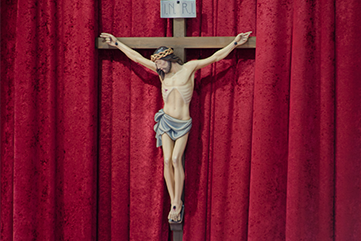
At the foot of the Cross we realize that a total disaster can produce immense good. We call that terrible day “Good Friday” for a reason. The apparent “total loss” of that day ushered in the New Covenant and made more than enough grace and mercy available to save the entire human race—if we but ask.
Many of us have experienced difficulties that were quite devastating to us at the time. In some cases we can look back now and understand why God permitted them. We can see how we grew from the experience, or how new opportunities were opened to us that, while they were not our first choice, were in fact the best choice.
Some other difficulties we went through still make little sense to us. But if we have learned to trust God, we can be at peace with His apparent “No” to our preferred outcome. Trust says, “It is well with my soul.”
An old hymn with that title says,
When peace, like a river, attendeth my way,
when sorrows like sea billows roll;
whatever my lot, thou hast taught me to say,
It is well, it is well with my soul.
And that is trust: the ability to say, “Whatever my lot, it is well with my soul.” It is not wrong to present our wants and wishes to God. But trust is being at peace with God’s answer and not resentful of it. Instead, trust says, “It is well.”
We are forever asking God to bless what we are doing. But when do we ever seek what God is blessing and then go do that?
Trusting God doesn’t mean that He’ll eventually give me what I want. Trusting God means I’ll be at peace with whatever He wants; knowing that He wants it is enough for me; there is peace and it is well with my soul.
The following is the full version of an article I wrote for the Blog of the USCCB earlier this month. (Due to space limitations, I had to shorten the article for the USCCB Blog.)
Many years ago I heard an analogy for what has happened in this country and how the sins and unhealthy patterns of the elite, powerful, and wealthy trickled down to the poor, but with far more disastrous effects.
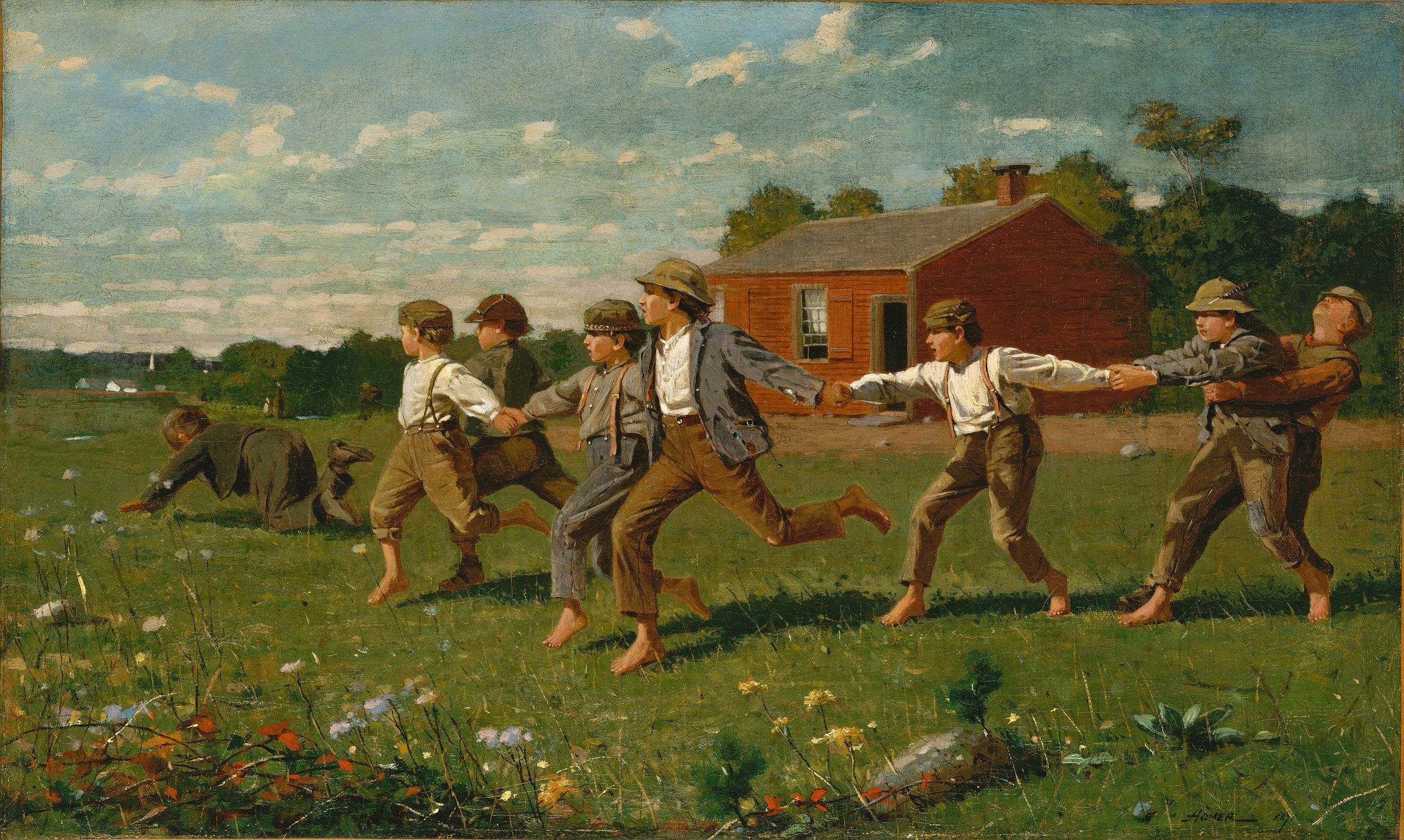
The analogy was to the game of “Crack the Whip,” which some of us may remember from our days on the school playground. The “game” involved 15 or 20 children making a straight line. Each child then reached back with one arm and took the hand of the one behind him to create a long chain. The child at the front of the line then took off running and everyone else behind followed, still holding hands. Suddenly, the lead child would take a sharp turn. The children immediately behind him could successfully negotiate the turn, but the further back one was, the harder it was to hold on. The children toward the end of the line didn’t stand a chance. They were flung off by the centripetal force and usually ended up on the ground.
This is an analogy for the social and economic ills of the last sixty or more years. There are some, those at the “front of the line,” who are well-positioned to take their thrill rides, engage in social experimentation, and indulge greed and excess with minimal damage. Among them are some of the Hollywood elite, pop music stars, political leaders, wealthy financiers, Madison Avenue marketers, Wall Street investors, and many other cultural, social, business, and government leaders. But at the “back of the line,” the damage is awful.
Let’s consider two basic areas of life where “Crack the Whip” is much in evidence:social/moral ills, and economic ills.
Social/moral ills – At the very front of the line are those who have sharply turned towards excesses of every sort: drugs, alcohol, sex, revolving-door marriages, glamorizing all sorts of dangerous and deleterious behaviors. These often come with terrible personal consequences.
At the front of the line they can afford (financially and socially, not morally) the consequences of what they do. They can pay for the stays in rehabilitation centers, the treatments for STDs, and the therapy for their children (who are traumatized by divorce and other issues their indulgences cause).
But at the back of the line the drug use, sexual promiscuity, and divorce culture has had far more devastating effects. Lacking access to treatment programs, the addicted poor go to jail. Diseases like AIDs and other STDs are less treated and spread more easily. Poor families are devastated by sexual promiscuity and divorce. Children are raised without fathers. The socials ills multiply quickly.
It’s a sad game of “Crack the Whip.” At the front of the line, all the misbehavior looks “fun,” even “glamorous.” But at the back of the line, folks go flying off in all directions, staggering and reeling.
I do not write to absolve the poor from all responsibility and merely blame the rich and powerful. Being mesmerized by the glamor of evil is a human problem; it affects all of us. But in the end we ought to consider how our cooperation (whether by active promotion or by sinful silence) in the glamorization of sin and excess affects others—especially those at the “end of the line.”
Economic ills – Those at the front of the line can also afford the lifestyles that greed demands. They can generally afford to pay the higher prices of an overheated economy and a lifestyle that expects more and more.
The poor are fined for not having insurance. Many cannot afford to drive. They often face tremendous economic hurdles in trying to open small business or even keep their homes. College educations and even advanced degrees are (unreasonably) required for many jobs, but the cost is exorbitant. Obtaining a college education leaves many young people in debt for decades. And the poor are largely locked out of many options.
A few years back it became trendy to leave the stock market and enter the real estate market, buying and “flipping” properties. The market overheated, the cost of housing skyrocketed, and even the upper-middle class found it hard to afford basic housing. The “bubble” burst by 2007 and left the economy reeling. Investors took a few hits and got government bailouts, but mainly they just went back to investing in the stock market. They left in their wake devastated homeowners facing “underwater” properties and foreclosures.
“Gentrification” also accelerated, bringing with it all the difficulties of social dislocation. The poor are economically and literally being moved to the margins as the disturbances to the housing market are still working themselves out. Here in Washington D.C. the poor are moved to the margins of what many call “Ward 9.” There are actually only 8 Wards in D.C.—being in “Ward 9” is a euphemism for being moved to the margins, outside the city that is increasingly losing its economic diversity. What used to be poor, working-class neighborhoods are now filled with houses sporting prices approaching one million dollars.
It’s a classic case of “Crack the Whip.” Those at the front of the line can adjust to sudden shifts in the economy and “play the market,” but at the back of the line the less privileged are sent flying, staggering as they fall and go off to the “Ward 9s” of our cities.
I am a priest, not an economist, and I realize that economic realities are very complex. I am not calling for all sorts of government intervention, but I do know what I see as a priest working among all social classes. I cannot and should not devise policy solutions; I leave that to the experts among the laity. But what I can and should do is to remind the folks at the front of the line to remember those at the back. “Crack the Whip” is fun and exciting when you’re at the beginning of the line, but devastating if you’re at the end.
We need to rediscover concern for the common good. We should look at our own behavior regardless of where we are in the line. I am my brother’s keeper; his welfare ought to be important to me. It’s not just about money; it’s about taking care to build a culture that thinks more about those at the back of the line and those yet to be born. What of them? How does my life and lifestyle affect them?
We live in times when many people make light of the fact that others do not believe in God. Many have relegated faith to a purely personal and largely irrelevant aspect of one’s life. This attitude even exists among many Catholics who, though believers themselves, don’t seem to be overly concerned that many others do not believe. The assessment of others seems to be a rather vague evaluation of whether they are “nice” or not. Once most people, Catholics included, decide that a person is “nice,” little else seems to matter.
But, frankly, all of us should be concerned at the rise of unbelief in our culture, whether it is atheism, agnosticism, indifference, or the rampant secularism that relegates God to a marginal place. We should be concerned because unbelief on a wide scale (as we are seeing today) is not only unhealthy for a culture, it is dangerous to it.
This danger is fairly obvious when one considers that, in the end, unbelievers think they answer to no one. When one no longer acknowledges that God exists and that He sees everything, when one doesn’t understand that he will ultimately have to answer to God for what he has done or failed to do, important aspects of the moral life can easily be ignored.
Realizing that we will one day answer to God is an important reminder that we are not a law unto ourselves. Knowing that we will not ultimately escape if we treat others with contempt, engage in serious injustice, live unchastely, or indulge greed is an important curb on sin, or at least a call to repentance.
This observation does not mean that every atheist lives a reprobate life. There are atheists who live exemplary lives, who exhibit natural virtues, whether they do so because it is to their benefit or simply because they have some ethical sense which comports with the right reason.
But, other things being equal, having large numbers of unbelievers who do not think they are ultimately accountable for what they do or fail to do is never healthy to good order, morals, or virtue.
Further, when belief is lost by many, so too is a common moral reference point. The Judeo-Christian moral view formed the basis for modern law, justice, constitutional rights, and ethics. While sectarian differences obviously existed in the country for 200 years before this rise of unbelief, there was a basic, biblical worldview that agreed on the essential moral issues. But with the rise of unbelief, this moral consensus has broken down. In its place there has arisen a tyranny of relativism, in which numbers matter more than reason; the one who wins is the one with the loudest megaphone, the most power, and the greatest influence.
This, too, is dangerous to a culture. Without a shared cultus, there can be no real culture. The word cultus refers to a reference point (God and His revelation) that is above and outside a culture, that is bigger and more lasting. Without that shared cultus, that devotion to someone higher, there can be no culture.
When we cannot even agree on what makes a marriage or even on something as obvious as whether one is male or female, the tyranny starts to resemble anarchy and nihilism. No culture can withstand such a basic undermining. Problems of this sort are civilization killers.
Thus, belief is important; it is critical. And we cannot go on relegating such a matter to the space of the purely personal and largely irrelevant. Being “nice” is not enough. We must be accountable to God and see Him as authoritative in our life. If we are to survive we must do this, both individually and collectively.
The First Commandment says, I am the Lord your God, you shall have no other gods before me (Exodus 20:2). This is not some egocentric God demanding worship and that He have no rivals. This is our loving Father, who knows what unbelief does to us. When we reject Him and/or turn to other gods we are harmed immeasurably. We lose our way and inherit a lawless and confused world in which the tyranny of relativism holds sway and no one thinks or acts as if he is accountable and will one day answer for what he has and has not done.
Do not make light of the rampant unbelief in our world today. It is far more serious than most imagine. God commands the most serious things for our well-being. The First Commandment is that we believe and that we call others to do the same. It’s Commandment number one for a reason!
One of the great virtues related to charity is zeal. Zeal is the ardor of charity; it is love burning brightly. It is a fiery love for God, for His gracious truth, and for the salvation of souls.
Because of human fear, sloth, and self-seeking, zeal is rare. It is especially difficult to find in our present age, when relativism and “tolerance” are so prevalent. Both relativism and excessive tolerance are really little more than sloth masquerading as something more benign. People consider truth to be relative and exalt tolerance more out of laziness than anything else. Seeking the truth and obeying it is just too much trouble for most moderns.
And thus zeal is quite hard to find today. Rare indeed are those fiery souls whose love for God and neighbor compels them to speak, teach, and suffer for souls and for the glory of God. Zeal once sent missionaries around the world, hungry for the salvation of souls, dedicating their whole lives to Christ and the glory of His vision.
Sadly, with notable exception, many once effective missionary orders slumber in a soporific universalism which presumes that most, if not all, will be saved without repentance and faith.
And more locally, a great somnolence is upon too many Church leaders, priestly and parental. Despite the horrific condition of our culture and of many, many souls, a kind of sleepiness consumes most Catholics. There are silent pulpits with sleepy priests. There are silent dinner tables with parents who should speak out but are distracted by less important things, rather than being awake and vigilant for the salvation of their children’s souls and the protection of their moral lives.
Meanwhile the secular and also the satanic are passionate and dedicated.For the sons of this world are more shrewd in dealing with their own generation than the sons of light (Lk 16:8). Oh, for the zealous—ablaze with love for God, love for souls, and joy in the truth; who spend themselves sacrificially and earnestly work for the Kingdom! They are among us, but they are too few.
Therefore, we should seek this gift of zeal. But we must be careful—for zeal, like anger, is difficult to master. Zeal admits of defect (as we have noted above) but also of excess. Zeal is not some wild sort of running about; it is not indiscriminate argumentation or a mere lashing out at evil. As with any gift of God, it must be rooted in and balanced by other virtues, natural and theological, such as charity, prudence, counsel, and meekness.
In this brief reflection I am drawing from Fr. Reginald Garrigou-Lagrange, who himself draws from St. Thomas Aquinas. Because I am drawing from a more lengthy work and reordering some of its content, I am not presenting exact quotes but rather selecting and paraphrasing his material in substantial ways and interweaving my own commentary. Fr. Lagrange’s thoughts are recorded in The Three Ages of the Interior Life, Vol II, Tan Publications pp. 213-223.
Zeal is the ardor of charity, the burning fire of love, but one that is enlightened, patient, meek, and disinterested. We shall see that each of these words is important.
Consider first some motives or causes of zeal:
The first reason or motive of zeal is that God deserves to be loved above all things. Knowing this and experiencing His love and providence for us should light a fire of love in us for Him. He is worthy of our love and gratitude. Zeal’s first object is an increasingly bright and burning love for God.
The second motive for our zeal is the inestimable value of the immortal souls redeemed by Jesus Christ. We love them and their well-being is important to us. We zealously seek to reach them knowing that each of them is worth more than the entire physical universe. St. Paul wrote, “I most gladly will spend and be spent myself for your souls; although loving you more, I be loved less” (2 Corinthians 12:15). Wow, that means he will love and spend himself for them even if they do not return his love, even if they turn on him! This is a motivated zeal for souls!
Yet another motive of our zeal is the contrary zeal with which the enemies of Christ and His Body the Church dedicate themselves—working disorder, corruption, and death. Their work is indescribably perverse and influential; many are lost through them. We work against them even as we pray that they will turn back from the road to damnation along which they are dragging so many others with them.
While zeal should be ardent, it must also be free from all excessive human self-seeking. Thus, it should be enlightened, patient, meek, and disinterested.
Enlightened– Zeal should, first of all, be illumined by the light of faith. If zeal is only animated by our natural spirit it easily drifts from the task of converting souls to God and begins to imagine a worldly utopia. Utopianism is often envisioned by restless, angry, blundering, ambitious people and features what is impulsive, unreasonable, trendy, and ephemeral.
Thus Christian zeal must be illumined not only by the light of faith, but also a faith rooted in obedience to Christian prudence and the gift of wisdom and counsel. The goal is the glory of God, the triumph of His truth, and the salvation of souls. Zeal not enlightened by faith tends more to the tower of Babel than to the glory of God.
Patient and Meek – Zeal should also be patient and meek. We must learn to avoid the tendency to become uselessly irritated by evil, venting in unproductive indignation and indiscriminate sermonizing. Patience and meekness teach us to tolerate certain evils in order to avoid greater ones, and to not allow ourselves to become bitter in the great struggle that faces us.
Most of us know people who have been in the battle just a little too long; people who, though understandably aggrieved by the condition of our culture, have tended toward bitterness and harsh condemnation of others who do not have their exact priorities or just the right combination of views on issues.
If zeal becomes detached from charity it too easily becomes mere indignation. God mysteriously tolerates certain evils, often for lengthy periods. He does this for some greater good. And though He bids us to fight error, evil, and injustice, He does not always promise immediate victory. The cross must be endured, even the grave experienced. But in three days we rise with Him. Patience and meekness engage the battle, endure the Cross, and look to the vindication that will one day come.
Disinterested – True Christian zeal should also be disinterested. The glory of God is our goal, not the winning of an argument or a political victory. True zeal works for the Kingdom. It does not care who gets credit for the victory. We should not claim as our own what really belongs to God. The battle is the Lord’s and to Him is the victory and the spoils. Neither should we appropriate to ourselves what belongs to others. Never should we claim credit for what God or others have done; we should rejoice that God worked it through and through. Zeal for the Kingdom is our work. It is not about our glory; it is about God’s glory, His truth, and the salvation of souls.
So in the end, zeal is the ardor of charity: enlightened, patient, meek, and disinterested. While it is clear today that zeal is too often lacking, we should not presume that the solution is a kind of reckless zeal that indiscriminately and foolishly lashes out at everything and manifests more of a kind of bitterness or human anger.
Zeal is for God’s glory and the salvation of souls. Like anger, it is difficult to master. It is needed as never before, but it must be true zeal, not some human imitation of it.
Lord, give us true zeal! Give us the zeal such as your servant and prophet Jeremiah spoke of when he said, If I say, I will not mention the Lord, or speak any more in his name, there is in my heart as it were a burning fire shut up in my bones, and I am weary with holding it in, and I cannot. (Jer 20:9-10). Give us the zeal of St. Paul, who said, I will most gladly spend and be spent for your souls (2 Cor 12:15). Yes, Lord, give us fiery zeal; give us the ardor of charity for you, your people, and your truth. Let zeal for your house consume us, that we may be a fiery warmth and a purifying fire to all around us. In your grace we pray. Amen.
This song says, “Fire, fire, fire, fire fall on me. On the day of Pentecost, the fire fall on me.”
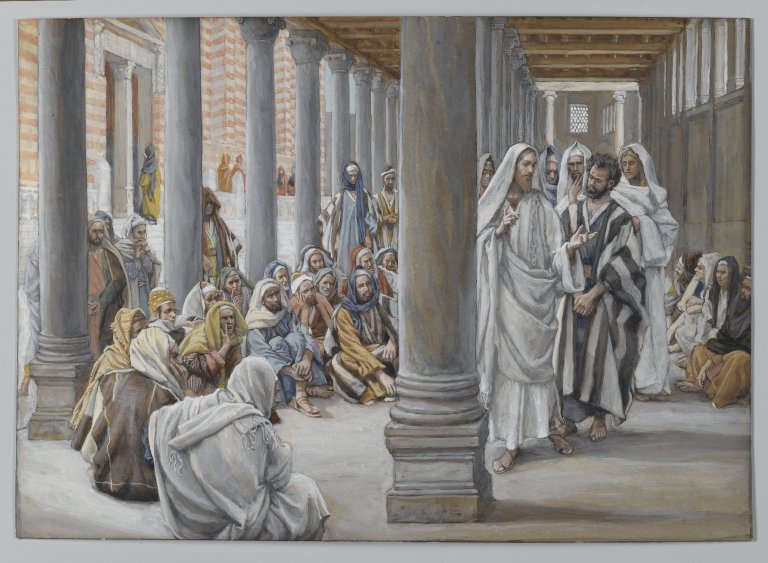
In today’s gospel we see three principles for prophets. And in speaking of prophets, it is referring to you, too. For by our baptism, we are all summoned to be prophets for the Lord.
I.PROPER PRIORITIES – The text begins, John said to Jesus, “Teacher, we saw someone driving out demons in your name, and we tried to prevent him because he does not follow us.” (Mark 9:38)
The Apostle John’s consternation bespeaks confused priorities. Task number one is to advance the Kingdom of God and take back territory from the evil one. If someone is able to drive out demons in Jesus’ name, we ought to praise the Lord! The enemy of my enemy is my friend.
But the Apostles here seem more concerned about pedigree and control. Possibly, too, they are beset by notions of personal advancement, power, prestige, and pride.
Souls being set free seems a secondary concern to them.
Wrong priority! Priority number one: more about Jesus and His Kingdom, less about me and my glory. Don’t stop others from driving out demons. Help them, or at least get out of the way!
Thus the Lord says,Do not prevent him. There is no one who performs a mighty deed in my name who can at the same time speak ill of me. For whoever is not against us is for us. (Mark 9: 39-40)
This does not mean that we cast aside any notions of proper doctrine or that we close our eyes to those who seek to exploit religion for personal gain or to prey on God’s people. These are in fact incursions of the very evil we seek to drive out. But as general rule, we ought to affirm what is helping people to get free from Satan and be joined to the Lord.
II. PROPHETS need PARTNERSHIP– The Lord admonishes the apostles, Whoever is not against us is for us. Anyone who gives you a cup of water to drink … will surely not lose his reward. (Mark 9: 41)
This of course implies that the apostles will in fact be in need of help, encouragement, and basic necessities as they undertake to proclaim the Gospel.
The attitude of wanting to do everything myself is not only prideful, it is foolish and impossible. We must accept that one of the provisions necessary for those who would be prophets is the help and support of others.
Neither can the Church blithely reject the help of medical science, psychotherapy, the business sector, or the government. Other things being equal, there can and should be a proper partnership with these areas of human knowledge and expertise. While distinctions must be made and errors rejected, there is a partnership that cannot be ignored. When the ship is sinking (and it is, ever since the Fall of Man) it’s “all hands on deck.”
Insofar as ecumenism goes, the Church must also respect the fact that elements of the truth are found among our Protestant brethren. Frankly, some of the best Catholics I know started in Protestant denominations, where they learned a great love for Jesus and the Scriptures. And they have brought their gifts to us.
Protestantism lacks the fullness of the truth, but there are things to be affirmed. We should also humbly admit that they do some things well, and in some cases even better than we do. We pray for full reunion, but in the meantime we ought to affirm what is good and accept that Christ and elements of His message can be found there. Future Catholics may be growing there even now.
III. PERCEIVE the PRIMARY PROBLEM – Through the use of several analogies, the Lord illustrates just how serious sin is and how essential is our need to draw people to salvation. He speaks provocatively here; do not miss how serious the Lord describes sin to be:
Whoever causes one of these little ones who believe in me to sin, it would be better for him if a great millstone were put around his neck and he were thrown into the sea. If your hand causes you to sin, cut it off. It is better for you to enter into life maimed than with two hands to go into Gehenna, into the unquenchable fire. And if your foot causes you to sin, cut if off. It is better for you to enter into life crippled than with two feet to be thrown into Gehenna. And if your eye causes you to sin, pluck it out. Better for you to enter into the kingdom of God with one eye than with two eyes to be thrown into Gehenna, where their worm does not die, and the fire is not quenched. (Mark 9: 42)
Wow, sin is more serious than most of us think! It’s certainly more important than who’s in charge or who’s getting the glory.
Yes, our sin is our most serious problem. Jesus says that it is more serious to sin than to lose a hand, foot, or eye! To sin is worse than to be physically maimed. But we don’t think like this. And to give scandal to others is so awful that Jesus says being cast into the sea with a millstone around one’s neck would be a better option!
We have to understand that sin is the primary problem, and that liberating souls from sin and the evil one is our primary work. Church socials and growing membership rolls are fine, but preaching repentance unto salvation is our work for the good of souls. Drawing people to Christ, through Word and Sacrament, is our chief goal.
It is an essential role of the prophet to help people recognize the absolute need for salvation, and then to draw them to the one who alone can save them. Otherwise, a fiery Hell awaits them.
The ancient prophets held up the sins of the people before them, calling them to return to the Lord wholeheartedly. How about us? This gospel does not mince any words: we must do our essential work and worry less about position, prestige, and the like.
Are our priorities those of the Lord?
Here’s an old hymn that gives advice:
Don’t exalt the preacher, don’t exalt the pew, Preach the Gospel simple, full, and free; Prove Him and you will find his promise is true, “I’ll draw all men unto Me.” Lift Him up, lift Him up; Still He speaks from eternity: “And I, if I be lifted up from the earth, Will draw all men unto Me.”
For most people, the word “virtual” has become a synonym for the Internet or the computer world, as in “occurring or existing primarily online.” But the word virtual has an original meaning that is actually quite descriptive of a modern problem.
Prior to its application to the computer world, the word virtual meant being something in effect, though not actually, or expressly being such. In other words, something virtual has aspects of the real thing, but is not the real thing. So, in the sentence, “He is a virtual goldmine of knowledge on the subject,” one would be silly to look for a physical goldmine or to think that he is either gold, or a mine, or both. There is no actual, no physical goldmine. His knowledge has aspects of a goldmine (value, worth, depth) but he is not an actual goldmine.
The adverb “virtually” means, for the most part, almost. In other words, it is close to the thing, but is not the thing or quality described. So in the sentence, “He was so exhausted, he was virtually dead,” he is not, of course, actually dead, but, rather, shares some of the qualities of the dead (unmoving, unconscious, lying down, etc.).
So virtual may mean “almost,” “like,” or “similar,” but NOT “is.” The virtual is not the full reality. It is lacking in existence and other important qualities of the actual reality.
And this is a very important truth to recall in today’s “virtual” world of the Internet. Many people are substituting too much of the virtual for the actual. They spend more time interacting with Facebook friends than physically interacting with actual friends and family members. Many people digest large quantities of virtual Internet life and only small amounts of real life. In an actual meeting with real people present, many have their heads in their phones and are only vaguely present in the real meeting (see photo above right).
I have noticed some tourists here in DC so buried in their phones (perhaps reading about a particular monument), that they spend little time looking at the monument itself. Some fiddle so much to get the perfect picture that they miss the actual moment. A picture is not real, it is virtual. It shares aspects of the real thing but is not that thing. We spend a LOT of time with our eyes focused on a virtual world while often neglecting the real world among us.
A strange migration has happened for many today wherein we interact more “virtually” than really. As a result, old-fashioned things like dating, marriage, meeting new people, and just getting together with friends have declined.
Another problem with the virtual world is that it is, most often, self-defined. We select our favorite sites and bookmark them. We set up Facebook filters, RSS feeds, Twitter feeds, iPod playlists, and the like. In effect, we create our own little virtual world. Meanwhile the real world, with all its diversity and less desirable things, is increasingly neglected. Our world becomes smaller and our personal formation more stilted.
Even more so, our ability to listen and be a “captive audience” has declined. We increasingly demand that everything should appeal to us quickly. Otherwise we should be able to click on a new bookmark, change the channel, or skip to the next song in the shuffle. But the real world is not quite so accommodating. Patiently listening and working with what “is” seems more odious as we start to prefer the virtual to the real.
Well, let the video above make the point. Enjoy a humorous look at how virtual notions do not work in the real world.
In all the coverage of Pope Francis’ visit to Washington, many are doing an admirable job of analyzing what is being said and done. The nature of this blog is less the coverage of “happening now” news and more a steady pondering of the message of the Gospel and how it relates to our cultural setting.
Permit, therefore, a brief observation of the papal visit from the standpoint of the crowds that flock to see him. Please do not take this as a strong critique, but rather as a humorous commentary on how quirky we can be.
Thus, one of the questions that occurs to me is whether the crowds that assemble to see the Pope really DO see the Pope, or whether they are so busy getting “the picture” that they almost miss the moment. The scramble seems to be less to see him than to get that picture.
I guess I notice this because I live just up the street from the U.S. Capitol and I have noticed for years the tourists going by on the buses. Many of them are so busy taking a picture of the Capitol (a picture they could easily find in a book or on the Internet) that I wonder if they ever see the Capitol with their own eyes.
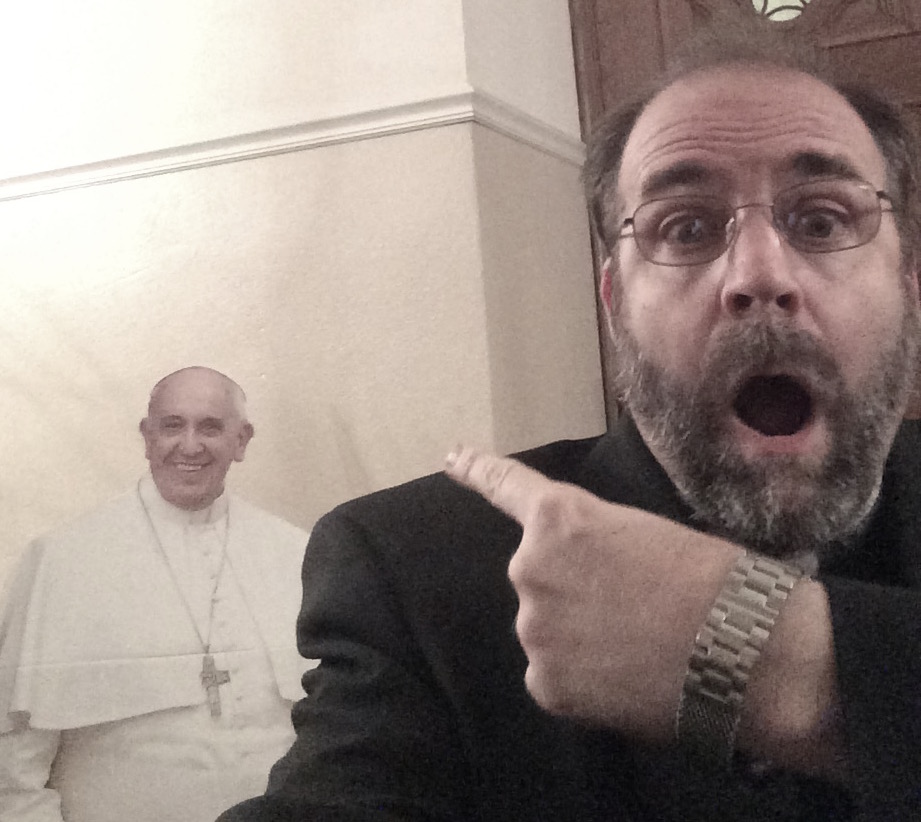
The strangest and latest twist on this idea that getting the picture is more important than actually seeing, is the notion of the “selfie.” I saw more than a few folks along the route with their backs to the Pope holding up the camera. The “selfie” shows them in the foreground with the Pope passing by in the background. Talk about not seeing the Pope! Quite literally, their backs are turned to him. It seems more important to capture the fact that “I was there” than to actually experience seeing the Pope, or any dignitary or historic site for that matter.
Before digital photography, one had to be judicious in taking pictures. A roll of film had perhaps 24 pictures, and developing and printing the pictures was expensive. Today, the whole process is practically free. Now, hundreds of pictures may be taken whereas only two or three were possible before. This limitation of the past preserved the actual experience and relegated the pictures of it to a lesser role. Today the pictures are increasingly eclipsing the event itself.
Again, please do not take this observation in a weightier manner than it is intended. I am not writing to strongly condemn all of this. I just want to point out, humorously I hope, how quirky we can be, especially in enthusiastic moments. I have written on more significant concerns about the liturgy here: Photos and the Liturgy.
Perhaps a bit of advice is in order to us who frantically seek to get the picture while we risk missing the actual experience: “Don’t just do something, stand there!”
SORRY TO THE COMMENTS SERVER IS DOWN! WE’RE WORKING ON IT! – But The Pope was in town and it was all hands on deck.
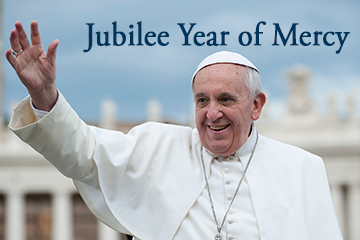
As we prepare for the “Year of Mercy” we need to continue to understand that mercy is very good news. However, there is an old saying, “If you don’t know the bad news, the good news is no news.”
Sadly, many people today understand mercy in a very detached way, a way that is apart from repentance and a deep knowledge of our sinfulness. Too many people think that mercy means that God merely overlooks our sins, or doesn’t really care about our sins. Hence, the thinking goes,
“Since God is merciful, He doesn’t really care that I live with my girlfriend or fornicate. He doesn’t really care that I skip Mass or refuse to forgive someone who has hurt me. No, God is merciful so He doesn’t care about all that stuff.”
But of course this notion isn’t mercy at all. Rather, it cancels it and there is nothing to celebrate. For if God doesn’t care about sin, or even regard sin as sin at all, then mercy is not needed. And in this way if we do not grasp the bad news (that sin is real and a serious problem for us) then the good news (mercy) is no news.
In this year of mercy, we ought first to contemplate (by which I mean to grasp, deeply and innately) our sins, in order to rejoice profoundly in God’s mercy and abide in it. In doing this we are raised to higher and better things by confident joy and gratitude in God
Consider the following wisdom from St. Bernard of Clairvaux, as he speaks to this “cycle” of contemplating our sins and God’s mercy:
The first stage of contemplation, my dear brothers, is constantly to consider what God wants, what is pleasing to him, and what is acceptable in his eyes. We all offend in many things; our strength cannot match the rectitude of God’s will, being neither one with it nor wholly in accord with it. [L]et us then humble ourselves …
Once the eye of the soul has been purified by such considerations, we no longer abide within our own spirit in a sense of sorrow, but we abide rather in the Spirit of God, with great delight!
… The whole of the spiritual life consists of these two elements: When we think of ourselves, we are perturbed and filled with a salutary sadness. And when we think of the Lord, we are revived to find consolation in the joy of the Holy Spirit.
From the first we derive fear and humility, from the second hope and love (Sermo 5,4-5, St Bernard Abbot).
Note that St. Bernard uses the phrase “salutary sadness.” Thus contemplating our sins is not envisioned as a self-loathing, or as a merely accusatory action. Rather, it is to lay hold of our need for mercy and for God. St. Paul in Second Corinthians distinguishes between godly and worldly sorrow: For godly sorrow produces a repentance without regret, leading to salvation, but worldly sorrow produces death (2 Cor 7:10).
Hence we go to the foot of Cross and there behold what our sins have done to us, to others, and to Christ, and we weep there for our sins. But our sorrow is turned to joy as we also there encounter the true glory of mercy available to us.
Note: it is our repentance that unlocks mercy. It is our sorrow that brings consolation and joy. It is knowing the bad news that makes the good news, astonishing news.
Scripture admonishes, “Do not forget the works of the Lord!” (Ps 78:7) And thus we are summoned to remember.
What does it mean for me to remember? It means to have so present in my mind and heart what God has done for me that I am grateful and different.
And this work of God’s mercy that we should never forget, takes place at the foot of the Cross, where I am summoned to bring the burden of my sins, weeping for them and humbly admitting them. Yes, I need this death of Jesus’. That’s how bad off I am! But then rushes in gratitude and joy. And this experience of God changes and elevates me. Grateful people are different. They are more confident, generous, forgiving, and joyfully complaint in whatever God asks of them.
The year of mercy is not a declaration that God doesn’t really care about sin. It is a declaration that He cares about us and knows what sin does to us and to others. He seeks our repentance and sorrow in order to unlock His mercy, which elevates and changes us.
To summarize St. Bernard, the whole spiritual life consists looking to our self honestly so that we acquire salutary sorrow and run to the Lord, who transforms us by His grace and mercy. Repentance unlocks mercy and brings healing.
This song says,
If might I hide my blushing face
While Calvary’s cross appears
Dissolve my heart in thankfulness
And melt my eyes to tears.
At the cross at the cross
Where I first saw the light
And the burdens of my heart rolled away.
It was there by faith I received my sight
Now I’m happy all the day.
Here’s a very different version from the “We Sing” concert:

 We are often told to trust in God. And most of us have counseled others who are anxious or downcast to trust in God. But what does it mean?