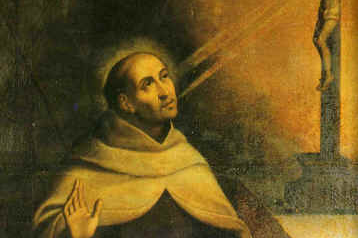
 Today’s gospel reading invites us to wrestle with fundamental, essential, and focal questions, “What does heaven cost?” and “Am I willing to pay it?”
I. Problematic Pondering – A man asks Jesus, “Good teacher, what must I do to inherit eternal life?”
Though his question is a good one, it is problematic because he couches it in terms of his own personal power and achievement. He wonders what he himself must do to attain eternal life.
The problem is, none of us has the holiness, the spiritual wealth, or the power to attain Heaven based merely on what we do. The kind of righteousness we need can come only from God. The misguided question of the rich man betrays two common misunderstandings that people bring to the question of salvation and the need for redemption.
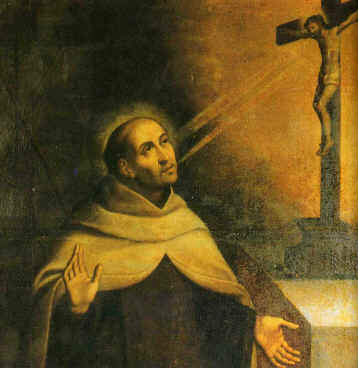
The first misunderstanding is rooted in a minimizing of how serious our condition is. We tend to think that we’re basically in good shape; perhaps we have a few flaws, but basically we mean well and are decent people. We suspect that a few sacraments, occasional prayers, and some spiritual push-ups will be sufficient. But any look to the Crucifix will belie our tendency to minimize. If it took the horrible death of the Son of God to rescue me, then my condition must be worse than I, with my darkened intellect, think.
Jesus once told the parable of a man who owed a huge debt—10,000 talents (cf Mt 18:24). The amount is so large as to be almost unimaginable. This man represents us. No man with such a debt is going to be able to work a little overtime or get a part-time job to pay it off. 10,000 talents is beyond the national debt. Do you get the point? We’re in trouble; we have absolutely no ability to rescue ourselves.
A second misunderstanding is that we tend to intellectualize and minimize what the law of God actually requires. Asking, “What must I do?” rather than “What must I become?” bespeaks a law-based approach that wants a manageable list of things to do in order to be saved, rather than an open-ended relationship with God. “Okay, so I’m not supposed to kill anyone. No problem, I don’t like the sight of blood anyway. I’ve got this commandment down!” But this thinking minimizes the commandment and what it is wholeheartedly asking of us. This point will be developed more fully below.
These two misunderstandings seem to undergird the problematic nature of the rich man’s question. In order to engage the man further, Jesus in effect plays along with the premise. And this leads us to the second point.
II. Playful Prescription – Jesus decides to engage the man’s premise, saying to him, You know the commandments: You shall not kill; you shall not commit adultery; you shall not steal; you shall not bear false witness; you shall not defraud; honor your father and your mother.
Jesus is being playful here in the sense that He continues with the flawed premise of the man: that he can attain to Heaven by something he does.
It is interesting to ponder why Jesus quotes only the Second Table of the Law, the part pertaining to our love of neighbor, omitting reference to the First Table of the Law, the commandments pertaining to the love of God. Perhaps it is because the Lord recognizes that the man does love God, for he is seeking the Kingdom of Heaven and how to enter into it. Thus, the Lord focuses on the Second Table of the Law, which is in evidence in this man’s life, at least in this interaction with the Lord. Further, as Scripture says elsewhere, “How can you say you love God whom you do not see, if you do not love your neighbor whom you do see?” (1 John 4:20). Hence, the Second Table of the Law, fleshes out the First Table of the Law.
Now, mind you, the Lord is not affirming here that the keeping of the commandments can save us or justify us. Even if we consider ourselves blameless, Scripture says, the just man sins seven times a day (Prov 24:16). We can affirm with Isaiah that, I am a man of unclean lips, and I live among a people of unclean lips (Is 6:5). And we must say with Paul, I do not nullify the grace of God, for if righteousness comes through the Law, then Christ died for no purpose (Gal 2:21).
While it is true that the law gives us a necessary and clear frame of reference for what pleases God, its summons “Be holy, for I the Lord your God am holy” (Lev 19:22) is not attainable through mere human effort unaided by grace. Jesus makes it clear that when God says “Be holy” He does not have in mind any mere human holiness, for Jesus says, “Be perfect, as your Heavenly Father is perfect” (Matthew 5:48).
Thus Jesus is drawing out the problematic premise of the man. But as we next see, the rich man doesn’t take the hint.
III. Perceived Perfection – Strangely—and humorously to our mind—the man boldly says, Teacher, all of these I have observed from my youth.
Notice that his perfection is perceived; simply noting it in himself does not mean he actually has it in himself. Having heard Jesus quote the Second Table of the Law, he announces that he has observed all of these from his youth!
To be fair, his self-analysis was not uncommon for a Jewish man of his time. The Jewish people had a great reverence for the Law, a beautiful thing in itself. But they tended to understand it a fairly legalistic and perfunctory sense.
For example, in a conversation with Jesus, a scribe of the law asks Him, “And who is my neighbor:” (LK 10:29) It’s as if he is saying, “If I have to love my neighbor, and I acknowledge my duty to do so, how can I define ‘neighbor’ so that this is manageable?” In other words, I recognize that I have limits. If justice comes to the law, then the law must have limits, defined in such a way that the keeping of the law remains within my power.
Jesus sets aside such thinking in the Sermon on the Mount, (Matt 5-7), in which He calls for the law to be observed not in a minimalistic sense, but in a way that fills it to the full. Jesus says that it is not enough not to kill; we must also reject anything that ultimately leads to killing or wishing people were dead. The commandment not to kill requires not only that we not take life, but also that we banish from our heart and mind, by God’s grace, hateful anger, retribution, and revenge. The commandment not to commit adultery requires not merely that we avoid breaking our marital vows, but also that, by God’s grace, we banish from our heart and mind any lustful, impure, and unrighteous sexual thoughts.
Hence, the commandments and precepts of the law cannot, and should not, be understood in a minimalistic way. Jesus sets aside the usual manner of the people of His day to reduce the law to something manageable and then declare that they have kept it. God seeks more than perfunctory observance. His grace desires to accomplish within us wholehearted observance. We need grace in order to be saved, in order to qualify for anything that God calls holy.
So Jesus sets aside the rich man’s claims of righteousness and is now is ready to address the question, “What does Heaven cost?”
IV. Pricey Prescription – Yes, what does Heaven cost? The answer is, everything! Jesus, looking at the man with love, says to him, You are lacking in one thing. Go, sell what you have, and give to the poor and you will have treasure in heaven; then come, follow me.
Ultimately, what Heaven costs is to leave this world and everything in it, to go and possess God and Heaven. To have Heaven, we must set aside this world; not only its life, but its pomp, its ephemeral glories, and its passing pleasures. You want heaven? Then you gotta leave here!
And though we know this, we often live in a way that seeks to postpone the inevitable and to ignore the joke that this world is ultimately playing on us. The world says, “You can have it all!” Yes, and then you die and lose everything. But we like to postpone facing that. We like to pretend that perhaps it ain’t necessarily so. We’re like the gambler who goes to the casino thinking he will be the exception to the general rule. But in the end, the house always wins. You can’t cheat life; whatever we have when we die, whatever we claim to have won, we lose.
In the end, there is only one way to attain the things of lasting value. Only what you do for Christ will last. The Lord says “Store up for yourselves treasure in heaven, that neither rust nor moths can corrode, nor thieves break in and steal” (Lk 12:33).
The Lord says that being generous to the needy and poor is a way of storing up treasure in Heaven. Sadly, most of us aren’t buying that, thinking that clinging to our “treasure” here is a way of keeping it. It isn’t. Whatever we have here is slipping through our fingers like so much sand. The only way to keep it unto life eternal is to give it away to the needy, to the poor, and to allow it to advance the kingdom of Heaven and its values.
Otherwise, wealth is not only not helpful it is actually harmful. There are many texts in the Scriptures that speak of the danger and the harm of wealth, how it compromises our souls and endangers our salvation:
1. Mk 10:23-25 “Jesus looked around and said to his disciples, “How hard it is for the rich to enter the kingdom of God!” The disciples were amazed at his words. But Jesus said again, “Children, how hard it is to enter the kingdom of God! It is easier for a camel to go through the eye of a needle than for a rich man to enter the kingdom of God.”
2. 1 Tim 6:7 “for we brought nothing into the world, and we cannot take anything out of the world; 8 but if we have food and clothing, with these we shall be content. But those who desire to be rich fall into temptation, into a snare, into many senseless and hurtful desires that plunge men into ruin and destruction. For the love of money is the root of all evils; it is through this craving that some have wandered away from the faith and pierced their hearts with many pangs.
3. Luke 16:13 “No servant can serve two masters. Either he will hate the one and love the other, or he will be devoted to the one and despise the other. You cannot serve both God and money.”
4. Luke 6:24-25 “But woe to you who are rich, for you have already received your comfort. Woe to you who are well fed now, for you will go hungry. Woe to you who laugh now, for you will mourn and weep.”
5. Mat 19:30 “But many that are first will be last, and the last first.”
6. James 2:5 “Listen, my beloved brethren. Has not God chosen those who are poor in the world to be rich in faith and heirs of the kingdom which he has promised to those who love him?”
Thus, while the Lord’s claim that Heaven costs everything bewilders us, we cannot fail to see that it is true and that the world’s claims on us are rooted in a lie, in false declarations that somehow we can be secure in the passing glories the world. Yes, and then you die—end of glory. But because we like the lie, we entertain it. But in the end, we give everything back, because it was never ours to begin with, it only seemed that way.
How foolish we are, how blind! And speaking of blindness, note that the Lord looked at the man with love, yet the man went away sad. That look of love from the Lord never reached his soul. If it had, the result would surely have been different.
And this leads us to the final point.
V. Powerful Possibility – So shocking is this teaching that even the apostles, who had in fact left everything to follow the Lord, are shocked by it. They see, and are in touch with, how deep this wound is in the human heart, how deep our delusion that the world and its goods can satisfy us. They see and know how strong and numerous are the hooks that this world has in us. Thus, they cry out, “Then who can be saved?” And Jesus responds, “For man it is impossible, but not for God. All things are possible for God.”
Thus, in the end, salvation must be God’s work. He alone can take these tortured hearts of ours, so rooted in passing things, and make them willing to forsake all things for the kingdom of Heaven. Only God can take our disordered love and direct it to its proper end: the love rooted in God and the things awaiting us in Heaven. Only God can remove our obsession with the Titanic and place us squarely in the Noah’s Ark that is the Church, the Barque of Peter.
Yes, God can give us a new heart, a properly ordered heart, a heart that desires first and foremost God’s love, a heart that can say, “You, O Lord, are enough,” a heart that can say, “I gratefully receive, Lord, what you give me, and I covet nothing more. Thank you, Lord. It is enough. You are enough.”
Don’t miss the look of love that Jesus gave the young man, the look that He gives you. In the end only a greater love, God’s love received, can replace the disordered love we have for this world.
St. Augustine says, Such, O my soul, are the miseries that attend on riches. They are gained with toil and kept with fear. They are enjoyed with danger, and lost with grief. It is hard to be saved if we have them; and impossible if we love them; and scarcely can we have them, but that we shall love them inordinately. Teach us, O Lord, this difficult lesson: to manage conscientiously the goods we possess and not covetously desire more than you give to us (Letter 203).
I prayed, and prudence was given me;
I pleaded, and the spirit of wisdom came to me.
I preferred her to scepter and throne,
and deemed riches nothing in comparison with her,
nor did I liken any priceless gem to her;
because all gold, in view of her, is a little sand,
and before her, silver is to be accounted mire.
Beyond health and comeliness I loved her,
and I chose to have her rather than the light,
because the splendor of her never yields to sleep.
Yet all good things together came to me in her company,
and countless riches at her hands (Wisdom 7:7-1).

 The video at the bottom of this post is a heartwarming one with a surprise ending. I see in it an illustration of something St. Paul wrote of the essentially sacrificial nature of evangelization: