It is one of the stranger dialogs that occurs in the Gospel, and it is hard not to rejoice in Jesus’ aplomb. We read it last week in daily Mass.
In it, some Pharisees, likely disingenuous, approach Jesus, warning Him to leave immediately: Go away, leave this area because Herod wants to kill you. Probably more for their ears than Herod’s, Jesus responds,
“Go and tell that fox, ‘Behold, I cast out demons and I perform healings today and tomorrow, and on the third day I accomplish my purpose.’” (Lk 13:32).
Surely Jesus has more in mind here than the next three days on the calendar. He is obviously speaking of the Paschal mystery: His passion, death, and resurrection. To any who would threaten His life He is saying that in so doing they only serve to undermine their own power and cause Him to fulfill His own purpose.
Nailed to a cross, He will be casting out demons and bringing healing. The next day He will descend to Sheol to awaken the dead, summon them to righteousness, and bring healing in life. And on the third day He will arise, fully accomplishing His purpose and casting off death like a mere garment.
There is no way that Herod, the Pharisees, or Satan himself can win, for in winning they lose.
So also for those who would align themselves with the darkness rather than the Light. For no matter how deep the darkness, the dawn inevitably comes and scatters it; the darkness cannot win. Scripture says, The light shines in the darkness, and the darkness has not overcome it (Jn 1:5).
In this strange and provocative saying of Jesus’ from the Gospel of Luke is an important perspective for all of us: no matter how powerful it may seem, evil cannot stand; it will ultimately self-destruct and be overcome by the Light. No matter how awful Good Friday seemed to those first disciples, Jesus was casting out demons and bring healing in that very act of suffering. And His apparent disappearance into death and down into the place of the dead was only for the purposes of bringing life into the place of the dead and bringing healing to the deep wounds caused by sin.
While Resurrection Sunday manifested Jesus’ obvious triumph, even Good Friday and Holy Saturday were already displaying His great victory.
In this saying of Jesus’ and in the facts of the Paschal Mystery two things are taught to us about evil: we should never glamorize it and we should not utterly fear it.
As for glamorizing evil, we love our movies and other things in culture that often glorify evil, whether it’s “The Untouchables,” “The Godfather,” “Goodfellas,” or other fare that in a general way celebrate wrongdoing and equate it with power and glory.
This is illusion. Evil may have its day, but the Word of the Lord remains forever. Psalm 37 says,
I have seen the wicked triumphant, towering like a cedar of Lebanon. I passed by again; he was gone. I searched; he was nowhere to be found (Psalm 37:35-36).
We should neither glamorize evil nor inordinately fear its passing power. Yes, we should confront it soberly and resist its demands, but we should not fear it.
No, evil cannot stand. To glorify evil or to fear it inordinately is to miss the lesson of both Scripture and history. At the end of the day, evil does not last.
What does last is God’s holy Word and His Church. Despite repeated attempts to persecute, diminish, and destroy the Church, she has outlived every one of her opponents. And her history extends back even more than 2000 years into the heritage of God’s people, the Jews. For His word to Abraham persists, and God rescued them from slavery in Egypt and gave His Word on Mount Sinai. Despite every attempt to ridicule, reduce, and redefine God’s Word, His promise to Abraham, His Word from Sinai, and His Word from the Sermon on the Mount all persist and ring through to this day.
This is what lasts: God’s Word and the Church He founded. This is verifiable through the study of history. Empires have come and gone, wicked philosophies have come into favor and disappeared, scoffers and persecutors have arrived and departed, all throughout the age of the Church. Here we are still; they are gone. And those who claim power today and who laugh at us and say our day is done—when they are gone we will still be here.
I have seen the wicked triumphant, towering like a cedar of Lebanon. I passed by again; he was gone. I searched; he was nowhere to be found (Psalm 37:35-36).
Evil, error, and perversion do not last. But God does, and so does His Word and the Church to which He has entrusted it.
And thus Jesus, when threatened by the Pharisees and indirectly by Herod, simply says,
“Go and tell that fox, ‘Behold, I cast out demons and I perform healings today and tomorrow, and on the third day I accomplish my purpose.’” (Lk 13:32).
In effect, Jesus says, “Neither you nor Herod can thwart my plans. In killing me you merely assist me in accomplishing my plan; I will break the back of your power. When you persecute my disciples or shed the blood of my Church members you are sowing seeds for the Church by the very blood of the martyrs you spill. Whatever victory you claim is hollow, for it is really my victory.”
Yes, “Go and tell that fox, ‘… I accomplish my purpose.’” By these words the Lord decodes history for us. It doesn’t matter how we might wish to obsess over this seeming loss or that apparent defeat. It doesn’t matter how the world and the devil might wish to gloat over an apparent victory. In the end, the Lord holds all the cards. The house, His house, always wins.
It is true; read history. Do not admire evil or fear its apparent ascendance. Jesus has won and His victory is shown time and time again. Don’t let the Devil fake you out; don’t be deceived. Evil cannot stand. The devil is a liar.
Indeed, in the name and power of Jesus, Go and tell that fox [the devil], ‘Behold, I cast out demons and I perform healings today and tomorrow, and on the third day I accomplish my purpose’ (Lk 13:32).
Today’s post shows some contrasts and fulfillments between the first book of the Bible, Genesis, and the last book, Revelation. There is a kind of “bookend” quality to those books wherein things are announced or initiated in Genesis and then fulfilled or finished in Revelation.
Consider the following two lists. I pray that you will appreciate the parallels and paradoxes presented in them, especially during the months of November and December, when we consider the four last things and the culmination of history in Christ Jesus.
The Devil’s doom is announced in Genesis (3:15). It is carried out in Revelation (12 and 20).
Satan is not evident in the first two chapters of Genesis. Neither is Satan present or even mentioned in the last two chapters of Revelation.
Genesis is the seedbed of all theology and cosmology. Revelation is the culmination of all theology and cosmology. (N.B. Cosmology is the study of the origin and development of the universe.)
The First Adam is established on earth in Genesis (2:4ff). The Second Adam is established in glory in Revelation (19).
The night, the darkness, and the sea are created in Genesis (1:1ff). In Revelation there is no more night, no more sea (21:1 and 21:23).
A bride is presented to Adam in Genesis (2:18-24). A bride (the Church) is presented to Christ in Revelation (19:6-8; 21:9-11).
There is the tree of life in the garden of paradise (Genesis 2:8) and the tree of life in God’s new creation (Revelation 22:2).
Sin begins in Genesis and brings death and curse (3:7) In Revelation sin has been put down and death is no more. There is no sighing, dying, crying, moaning, groaning, or pain. The former things are passed away (Revelation 21:4-5).
Satan appears for the first time in Genesis (3:1ff). Satan appears for the last time in Revelation (20:7-10).
Satan utters the first lie (you shall not die) in Genesis (3:4). In Revelation Heaven is a city into which no liar can enter (21:8).
Man is driven from God’s face in Genesis (3:23-24). Man beholds God’s face in glory in Revelation (21:23ff and 22:4).
Genesis begins with a wedding. Revelation ends with a wedding.
Particularly as we prepare for the Feast of Christ the King this coming Sunday, notice the following contrasts between the Lord’s First Coming and His Second Coming:
In His First Coming there is a crucifixion. In His Second Coming there is a coronation.
In His First Coming He hangs from the cross as a judged criminal. In His Second Coming He is enthroned for judgment.
In His First Coming He endures the shame of the cross. In His Second Coming He shines forth in splendor.
In His First Coming He comes to redeem. In His Second Coming He reigns in glory.
In His First Coming He is the suffering servant. In His Second Coming He is the splendid sovereign.
In His First Coming He is the justifier. In His Second Coming He is judge.
In His First Coming He is our redeemer. In His Second Coming He is our ruler.
The Bible has many books and forms a kind of library. But at the center, unifying all the books, is Jesus Christ, Lord of History. He is the Alpha and the Omega. All times and seasons belong to Him.
The video below shows the singing of the hymn “Crown Him with Many Crowns” at Westminster Abbey a few years ago. The second verse of the hymn is,
Crown Him the Lord of love, behold His hands and side,
Rich wounds, yet visible above, in beauty glorified.
No angel in the sky can fully bear that sight,
But downward bends his burning eye at mysteries so bright.
And the last verse is,
Crown Him the Lord of years, the Potentate of time,
Creator of the rolling spheres, ineffably sublime.
All hail, Redeemer, hail! For Thou has died for me;
Thy praise and glory shall not fail throughout eternity.
I was out on the preaching circuit this past week and spoke at five parishes (including my own) on the biblical vision of Holy Matrimony (marriage) as set forth by God and the Church. The talks were sponsored by the pro-life group Defend Life.
While I cannot succinctly reproduce the talk in today’s blog, I spoke from notes that are available here and here. A video of one of the talks will be posted soon.
I heard a consistent concern voiced by those in attendance that pulpits have been too silent on this critical matter of marriage, and by extension, sexuality and the family. Since I don’t get around to many other parishes on Sundays, and I don’t have statistics or polls to consult, I can only assume that this complaint is widespread. That said, nothing prevents a Catholic layperson from breaking out the Catechism and teaching his or her children and grandchildren. There seems to be a lot of waiting around for the Church to “do something” regarding ignorance of the faith. Pulpits must get better, but so must adult religious education. Parents, too, must actively seek out sources for instruction so that they can learn and hand on the faith. I recommend two places, among many, to start: The Institute of Catholic Culture and Catholic Answers.
Another common question that came from distressed parents at the talks was how they could counteract the bewitching effect of modern culture on their children (30 and under) when it comes to the redefinition of marriage. Many of their young-adult children see “no problem” with same-sex unions (a.k.a. gay “marriage”) and parents wondered how to counter this position.
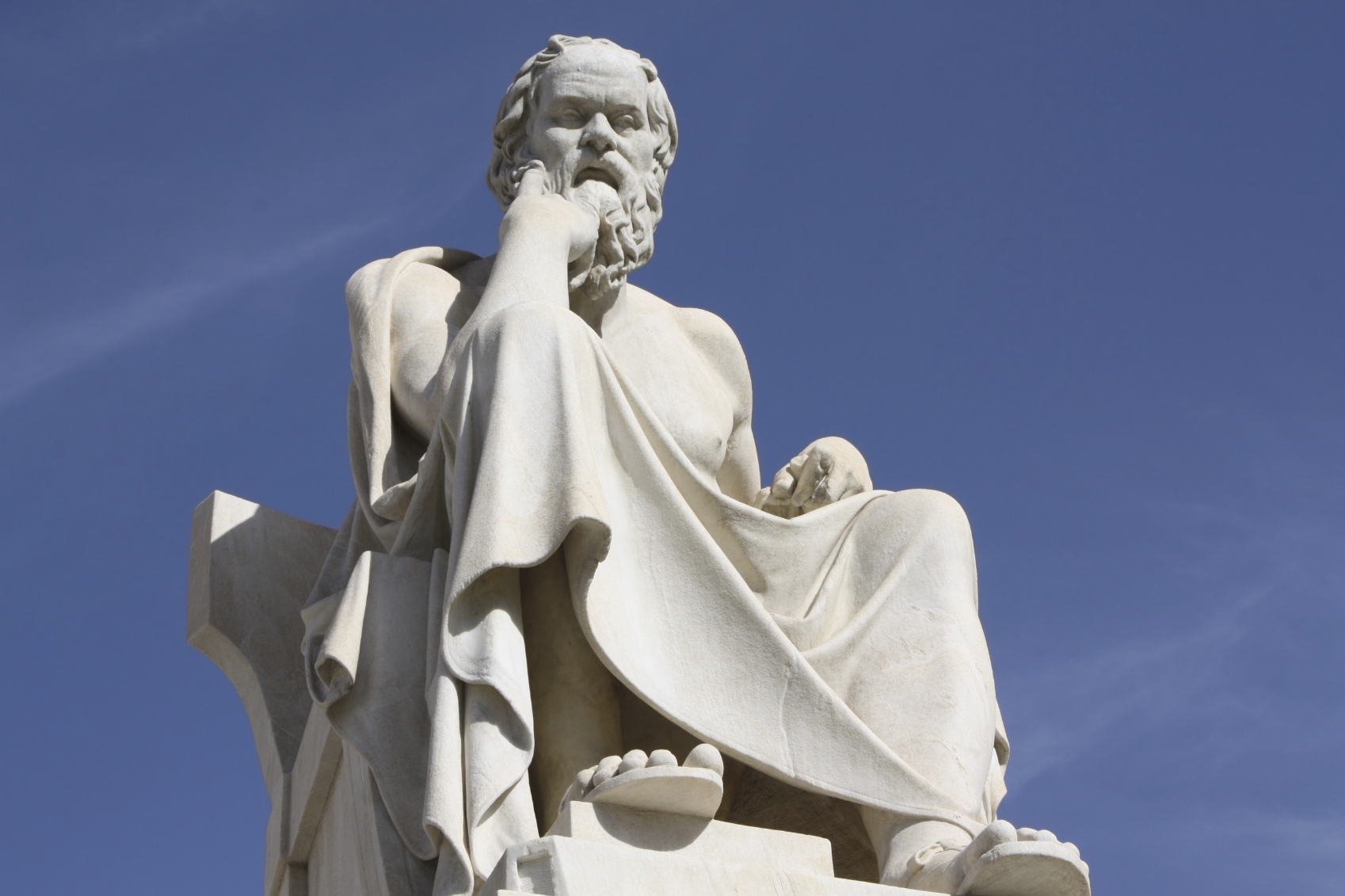
My recommendation would be to use the “Socratic method.” This method, rooted in the teaching style of Socrates, uses questions to stimulate critical thinking and to draw a person to find answers by examining his own premises. Rather than simply refuting the position of their young-adult child, it is often more helpful for parents to ask questions that permit him or her to see for himself/herself the faultiness and/or emptiness of the logic underlying this modern thinking. Today it seems that logic, critical thinking, and proper premises are often lacking.
The additional value of the Socratic method is that it requires the “accuser” (the one who wishes to set aside biblical and Catholic teaching) to account for his view rather than the faithful Catholic to mount a complete defense. The method also involves listening respectfully as the accuser speaks.
Consider a scenario in which an adult son or daughter makes some remark that indicates opposition to the Church teaching on traditional marriage. You might ask,
Do you oppose the fact that the Church upholds only traditional Marriage and rejects same-sex “marriage”?
Assuming the response is yes (or some form thereof), follow up with this question:
How do you define marriage?
Now just wait as long as necessary. Give no assistance, just wait patiently. Let the question hang there. It is quite likely that he or she will struggle to answer the question because those who have redefined marriage have not really redefined it at all; they have simply made it increasingly devoid of content. Saying what marriage isn’t is not the same as saying what it is.
The response might be something like this: “It’s when two people love each other and want to be together.” You might then pose some of the following questions:
Could you be more specific? For example, why do you say two people? Could it be more than two? Why or why not?
Or,
When you say, “two people” do you mean any two people? For example, what if the two people are related, such as being brother and sister, or two brothers, or a father and his? Must the two people who love each other have to be unrelated? If so, why?
Or,
You say that they love each other. Must this be the case? Are there other reasons they could marry other than love?
These are not intended to be merely “gotcha” questions. The purpose is to force the dissenter to stake out a cogent position by carefully thinking through his premises and where they lead. If the dissenter responds to the above questions with some limits, it forces him to consider why those limits make sense while others (such as one man and one woman) do not.
The Church knows what marriage is and so does God, who taught us clearly (in Genesis 2 and other places) that marriage is one man for one woman in a life-long, committed, and faithful relationship, open to the procreation and rearing of children.
This traditional definition is clear, sets limits, and has been the way marriage has been understood for thousands of years. Those who wish to remove these limits must account for what restrictions are left and why they think those should be kept rather than also set aside.
Just ask these questions. Wait for answers. Wait as long as necessary and don’t help. Let them think through it and become more responsible for what they think and the implications that emerge from it.
In this video from Catholic Answers, Trent Horn makes significant use of the Socratic method. In this case the topic happens to be atheism, but it gives a good idea illustration of how the method might work. Atheism is a complex topic. Defining marriage is far less complex since the field of the discussion is more focused.
As winter approaches and we approach the end of the liturgical year, we ponder the passing quality of this world and the fading of its glories. Jesus’ words in the gospel today must surely have shocked, even horrified, his Apostles. Let’s look at His stunning words and seek to apply them in our own life.
The Place of this Gospel – As we complete the liturgical year, we find Jesus standing just outside of Jerusalem. In the last two months we have followed Him on His final journey: leaving Galilee, heading south along the Jordan River, passing through Jericho, and now making the nearly 2000 foot ascent to Jerusalem.
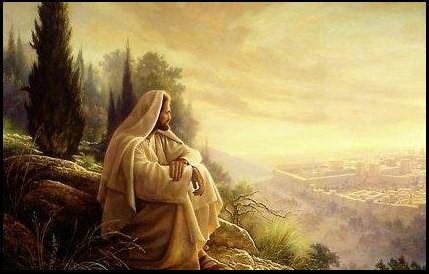
In today’s gospel, Jesus is at the top of the Mount of Olives with His Apostles. From this vantage point, they look across the Kidron Valley to the magnificent Temple and all of Jerusalem spread out before them. The Apostles marvel at the glorious beauty of the Temple. Its large, perfectly carved, white ashlar stones, gilded in gold, gleam like the sun. Indeed, it was one of the wonders of the ancient world, so beautiful and majestic.
But Jesus challenges their admiration. He shocks them with the admonition that all the glory they see is soon to be destroyed, that not one stone will be left on another, that it will all be thrown down (Mk 13:2). Shocked, the Apostles ask Him when this will happen and what signs will precede this awful event.
In what has become known as “Mount Olivet discourse,” the Lord warns, in great detail, of the coming destruction of the Temple and indeed of all Jerusalem. The Gospels of Matthew, Mark, and Luke all contain similar descriptions of what Jesus said on the Mount of Olives, overlooking Jerusalem in her glorious heyday.
Jesus warns of wars and rumors of wars. He speaks of a time in the near future when nation will rise against nation and a terrible conflict will ensue. In effect, He warns His disciples and their followers to have nothing to do with the coming wars. He tells them that when they see Jerusalem being surrounded by an army they should know that her destruction is at hand. If someone is on his rooftop he should not to go back into the house to gather his possessions; he should get out while the getting is good. If someone is out in the field he must not reenter the city of Jerusalem, but must flee to the hills. Jerusalem is doomed for its lack of faith and zealots are picking up the war with the Romans that they are destined to lose (Luke 21, Matt 24, Mark 13).
All of this leads us to today’s gospel (from the Mount Olivet discourse), which picks up in the middle. Jesus warns of days of tribulation, when the sun will be darkened, the moon not give its light, and the stars will fall from the sky!
In reading a text like this, we must not fall prey to an overly literal interpretation. Jesus is using prophetic language, a way of speaking that is meaningful, but not to be understood scientifically or literally. Stars cannot actually fall from the sky.
If I were to say, “The world has been turned upside down,” you wouldn’t expect that if you looked back toward Earth from outer space you would actually see Australia at the top and North America at the bottom of your view. If I were to say, “It’s raining cats and dogs,” you wouldn’t expect to look out your window and see animals coming down from the sky and landing on the front lawn. Although I’m speaking figuratively, you understand what I mean.
And so it is with Jesus’ use of prophetic imagery. Speaking of the heavenly luminaries as being darkened or cast down is a prophetic way of saying that all the fixed points, all the ways in which we tell time, know the seasons, navigate, and find perspective will be lost to us! The world as the Jewish people know it, centered on the Temple and rooted in their liturgical calendar, is about to be swept away. To the ancient Jewish people, the Temple was like their “Big Ben.” It was both the clock of the liturgical cycle and the great visual center of all of Israel.
The Lord is teaching them that what they see as the central hub of all they do is about to be taken away. The Temple, with all of its rituals, its liturgical cycle, and its endless slaughter of animals in sacrifice for sin, is about to be replaced. These ancient rituals merely pointed to Jesus and all that He would do. Jesus is now the Temple; He is also the Lamb Sacrifice. All that the Temple pointed to is fulfilled in Jesus. Thus the Temple is at an end. Jesus is ushering in a New Covenant.
In the Mount Olivet discourse, Jesus prophesies the end of the Temple, which will take place in a biblical 40 years. Sure enough, 40 years later (in A.D. 70), the Roman Army, after having surrounded Jerusalem for a period of 3 1/2 months, breached the walls, poured into the city, and destroyed the Temple and all of Jerusalem. In this epic battle, according to Josephus, 1.2 million Jewish people lost their lives. As Jesus prophesied, not one stone was left on another. According to Josephus, so complete was the destruction of Jerusalem, that when the Romans had finished their work it was not clear that the city had ever existed.
So this is the place of this gospel, a place of epic significance in the ancient world. An era of 1000 years was coming to an end. The world as the Jewish people knew it was ending. The Temple has never been rebuilt; it has been replaced by a Judaism without sacrifice, a rabbinic, a synagogue system. In 2000 years, despite several attempts, the Jewish Temple has never been rebuilt. Everything Jesus predicted came to pass. This is the historical place and context of this gospel.
But what does all of this mean for us, some 2000 years later? Let’s consider three basic themes.
I. The Perspective of Passing – Toward the end of this gospel, the Lord says, Heaven and earth will pass away, but my words will not pass away. Note the definitiveness of this statement: this world will pass away. That is to say, all of the things that impress us at the current moment: the “biggie-wow” stuff of this world, the impressiveness of the powerful, the influence of the popular, the glory of all the glitterati; all of this will pass away.
Indeed, even now it is passing away; its destruction is at hand. Scripture says,
The world in its present form is passing away (1 Cor 7:31).
We have here, no lasting city (Heb 13:14).
Put not your trust in princes, in mortal men in whom there is no hope. Take their breath, they return to clay, and their plans that day come to nothing (Psalm 146:3-4).
Yes, all of the glory, even what seems beautiful and fair, is passing away. Don’t be so impressed with this world’s offerings. All of it—no matter how powerful, influential, or sturdy it may seem—is slated for destruction. It is already passing away.
Some years ago I was in a museum and in one of the exhibits saw a photograph of a family from about the 1880s. At the bottom of the photo was this inscription: “My family, as it appeared for a brief time last summer.” A poignant caption. I thought of the people in that photo and concluded that every one of them was now dead. I also knew that the house in front of which the photo was taken had long since been destroyed, replaced by an expanding city district of buildings. All is passing; nothing remains here for long.
Painful though this perspective may be, it is important and healing. It brings with it a kind of strange serenity. Like every truth, the truth that all things are passing sets us free. Internalizing the truth that, As for man, his days, or the flower of the field are like the grass. The wind blows, and he is gone, and his place never sees him anymore (Psalm 130:15-16), painful though it may be, brings a kind of strange serenity. In this truth we are reminded not to set down too many roots here so that we are not resentful when this world passes away.
II. The Permanence Proclaimed – The Lord tells us that His words will not pass away. So although the world will pass away, the truth and the Word of God will remain forever.
Too many people root their lives in passing, ephemeral things. The challenge for us is to root our lives in the Word of God, which remains forever. Worldly glories, power, access, and wealth—all these things fade and disappear. But God’s wisdom and His plan remain forever.
Consider, for a moment, the Church. The Lord has said that the forces of Hell would strive to prevail, overpower, and destroy the Church. But the Lord promised that such attempts would never be successful (Matt 16:18). The Church is indefectible, by God’s Word, by His promise. No weapons, no war waged against the Church, will prevail.
In all of this the Lord has been proven true. The Church has the Roman Empire, the Carolingian Empire, the British Empire, the Soviet Socialist Republic, and many others rise to power only to fade and disappear.
How many heresies, how many philosophies have come and gone in the age of the Church? How many have laughed at the Church, announcing that she was passé, that her day was over, and that they would bury her? The Church has buried every one of her undertakers, outlived every one of her critics. Despite every prediction of her demise, she has persevered until this very day. By God’s grace, she has a permanence that outlasts every one of her enemies. She has read the funeral rites over every single prophet of her doom. And she will continue to do so.
In recounting all of this we do not simply gloat that an institution known as the Church has survived. Rather, we announce that the Church is the Bride of Christ and also His Body. The Church cannot be destroyed not because of human ingenuity, but on account of the power and grace of God. She will endure even though at times she will suffer, be ridiculed, or be marginalized. She will outlive every enemy. She will emerge from every persecution. She will never be removed. For the Church is the Body of Christ, the living Word of God. Though the world will pass away, the Word of the Lord will remain forever!
III. The Priority Prescribed – If this world as we know it is passing away and the Lord, His Kingdom, His Church, and His Word will remain forever, what then should be our priority? The Lord says, in effect, that we know very well what our priority should be but we willfully ignore it.
Learn a lesson from the fig tree. When its branch becomes tender and sprouts leaves, you know that summer is near. In the same way, when you see these things happening, know that he is near, at the gates.
Yes, we know very well that the Day of Judgment is coming. Too easily, though, we dream on and do not follow the prescribed priority. Wealth, fame, and glory are all uncertain and clearly passing. But death, judgment, Heaven, and Hell are certain and remain forever. We too easy fiddle on with things that are uncertain and passing while neglecting what is certain and eternal. Such foolishness!
It would be foolish to book passage on a sinking ship. Similarly, it is foolish to make this world and its demands our fundamental priority. It is wise to set our sights on, and lay hold of, the Kingdom that lasts forever.
It is sad that so many spend people their time “rearranging the deck chairs on the Titanic” of this world. It is tragic how much time, effort, and passion we spend on things that are pass through our fingers like sand. So much of our effort is expended on furthering our career, amassing wealth, and enlarging our homes. And so little is spent on improving our spiritual life.
Parents spend more time worrying about what college their children will attend than where they will spend eternity. If their child is failing math, they will go to great lengths to hire tutors to improve his test scores. But never mind that the child barely knows the four Gospels, the difference between the Old Testament and the New Testament, or even who Adam and Eve were. Never mind all that; we need to make sure they understand polynomials! It is fine that parents care about math scores and college venues, but how sad it is that eternal things often go unattended.
The greatest duty of parents is to prepare their children for eternity. But far more time and effort is often spent preparing them for passing things like a career. While education and career are important, eternal life is far more so. A son or daughter may graduate from Harvard Law School and become a famous attorney yet still go to Hell!
What are our priorities? Frankly, most of our priorities are not things that matter to God. Even if we attain the passing things we strive for, they will all ultimately slip through our fingers. We obsess over passing things like our physical health while neglecting enduring things like our spiritual health. We should care for our bodies, but even more should we care for our souls. If we would expend as much effort looking for a place and time to pray as we do looking for a restaurant and making a reservation to eat, we would be spiritual heavyweights rather than physically overweight.
In today’s gospel the Lord stands before the Temple: an impressive building, a symbol of power and of worldly glories. But impressed though the Apostles are, the Lord is not impressed with passing things. He counsels us to get our priorities straight and to focus on things that last: His Word, which never passes away, and our ultimate destiny, where we will spend eternity.
We find time for everything else, why not prayer, Scripture, fellowship in the Church, and the sacraments?
What are your priorities? Be honest, now, be honest.
This world is passing away. Far more essential for us than power, prestige, money, possessions, worldly philosophies, and the latest trends, is the Word of the Lord, which never passes away.
The world will laugh and say that God’s word is out-of-date, old-fashioned, or even hateful, bigoted, and intolerant. But in the end, time will prove where wisdom is. Long after the current critics of the Church, those who scorn the teachings of the Lord in the Scriptures and the Church, have passed on, the Church will still be here preaching Christ and Him crucified.
None of this is meant to sound triumphalist. It is simply rooted in a Word of truth that the Lord spoke long ago on a hillside overlooking glorious buildings soon to be reduced to rubble and an age soon to pass away. He said simply this: Heaven and earth will pass away but my words will not pass away.
In the end, Jesus wins. I know because I checked the end of the story. You can look it up (Rev 20-23). Get on the winning team. Stop trying to amass a treasure here that you can’t keep anyway.
It has been said that the shortest distance between two people is laughter. There is something strangely intimate about laughter. Indeed, it is an intimacy that can often break through many divisions. Upon hearing a joke, even enemies can laugh and share a moment of intimate and mutual joy, or at least mirth.
Watch this video and consider how complete strangers share a kind of intimacy through laughter, and how laughter is contagious. “I dare you to watch this and not feel a certain intimacy with the people in the video!”
Worry is a universal human problem. Jesus speaks to it in Matthew 6 and His advice amounts to more than just “Don’t worry.” He actually sets forth how we can avoid it. Let’s see how by looking at three problems He describes that bring about worry.
No one can serve two masters. Either you will hate the one and love the other, or you will be devoted to the one and despise the other. You cannot serve both God and money. Therefore I tell you, do not worry about your life, what you will eat or drink; or about your body, what you will wear. Is not life more than food, and the body more than clothes? Look at the birds of the air; they do not sow or reap or store away in barns, and yet your heavenly Father feeds them. Are you not much more valuable than they? Can any one of you by worrying add a single hour to your life … But seek first his kingdom and his righteousness, and all these things will be given to you as well. Therefore do not worry about tomorrow, for tomorrow will worry about itself. Each day has enough trouble of its own (Matthew 6:24-27, 34).
I. The Problem of Possessions– The text says, No one can serve two masters. He will either hate one and love the other, or be devoted to one and despise the other. You cannot serve God and mammon. Mammon is variously understood as riches, greed, or possession. In an extended sense, it can refer to the agenda of the world, which is focused on material things and ties our dignity only to those things.
Whose slave are you? The Lord is clear that if we wish to serve Him we cannot also serve mammon. The Greek word translated here as “serve” is δουλεύειν (douleuein), which more specifically means “to serve as a slave.” By overlooking the slavery aspect, we miss the strength of the text. In our culture it is typical that one serves in a job or some similar capacity during “working hours,” but goes home afterward and is free of obligations. Perhaps because of this, we tend to think that we can serve both God and mammon. But the Greek text here refers not to a mere servant but to a slave. And a slave is wholly subject to the will of another. Thus Greek is more intense than the English translation.
What the Lord is saying is, “You’re either going to be a slave of the Lord or a slave of the world.” The truth is that most people are slaves of the world, of mammon, of riches, of greed, and of their associated agendas. These worldly things tend to consume us so completely that when we hear of a demand from God, we feel overwhelmed or even angry that something more is being required of us. Our anger at God is a sign that we are a slave to mammon.
Most of us are too proud to admit that we are slaves of the world, but the fact is that to a large extent we are. The world and its demands press in on us and take up nearly all our oxygen. It is this terrible slavery that is a huge source of our anxiety and from which the Lord offers to free us. The Lord describes the anxieties that flow from slavery to mammon, to the world, to its riches and agenda:
I tell you, do not worry about your life, what you will eat or drink, or about your body, what you will wear … Why are you anxious about clothes? Do not worry and say, ‘What are we to eat?’ or ‘What are we to drink?’ or ‘What are we to wear?’
Still anxious! For us who live in the Western world, the anxieties about merely having such things may have receded a bit. We are well-supplied and may not worry whether we will have clothes, food, etc. But even having them in abundance, still we worry about them obsessively. For example, we worry about whether we have the right clothes, or whether they are in style, or whether they look good on us. Many people are quite obsessed about what they eat: they worry about eating too much salt, or sugar, or fat. We have never lived so long or been so healthy, and yet we have never been more anxious about our health. It’s amazing when you think of it: we have plenty of food and still we worry about it; worry, worry, worry! Anxiety about these things is a sign that we are slaves to them. Scripture says, but as for the rich, their abundance permits them no sleep (Eccles 5:12).
The Lord offers to live his life in us so that we will not be slaves to mammon, but to Him. You may not like the image of slavery, but I have news for you: we are so small and powerless that we’re going to be the slaves of someone, so it might as well be the Lord. Being wholly devoted to the Lord and what pleases Him breaks our obsession with the world, money, possessions, popularity, fashion, and the like.
As the Lord’s life and His will begin to replace our own, our obsession with the world’s demands diminishes and its power is broken. As we grow into a deeper relationship with the Lord, our concerns with worldly agendas fade and our anxiety diminishes.
Now you and I aren’t going to be able to completely stop worrying of our own accord. But the Lord, living His life in us, isn’t worried at all. And as His power and influence over us grows, our worries lessen and our anxiety dissipates.
This is the gift that the Lord is offering us if we but let him take greater possession of our heart. How do we do this? Through the medicine of prayer, sacraments, and daily doses of Scripture and spiritual reading. Gradually, the Lord will transform our heart, mind, and will to be like His.
II. The Problem of Paternity– The Lord Jesus wants to draw us into deeper relationship with His Father. It remains a common spiritual problem, even for those who develop something of a relationship with Jesus, to feel that the Eternal Father is distant or remote. To many, the Father is a stranger. They have surely heard of Him and read of Him in the Scriptures, but still He is stranger. Some even have a sort of fear of Him. Perhaps their fear stems from some Old Testament texts, or from their relationship with a stern earthly father. Whatever the problem, the Lord Jesus wants to lead to us His Father. Note that the phrase “your heavenly Father” occurs twice in this passage and four times in Matthew Chapter 6 overall. There are two other references to the Father as “God” in today’s gospel. It is also in Chapter 6 of Matthew that Jesus teaches us the Our Father.
All of these references to the Father, particularly in such close proximity to the invitation not to worry, cannot be overlooked. An antidote to anxiety is having a closer relationship with the Heavenly Father. Our Heavenly Father knows what we need. He cares for birds, flowers, and countless other things and is willing and able to care for us. To embrace and experience His love for us is to experience a lessening in anxiety.
Perhaps an illustration will help. When I was six years old, I was sometimes afraid that someone would break into our home or that something bad would happen during the night. But when my Father was home, I didn’t have these fears. In 1968 he left for Vietnam and was gone for a year. During that time I had an extended bout of ongoing fear at night; Daddy was gone and I felt unsafe. In 1969 he returned and my fears went away. I didn’t cause them to go away. It was not an act of the will on my part. It was simply this: Daddy was home.
You and I may not simply be able to dismiss our fears and anxieties by a simple act of the will. But to the extent that our “Daddy-God” is near and we feel His presence, our fears just go away.
Here is a critical gift that Jesus wants to give us: a deep, personal experience of, and love for, His Father. It is our perceived distance from the Father that causes our anxiety. But when we experience that our Heavenly Father “knows what we need,” we experience our fears melting away.
Seek this gift from Jesus: that his Father will be known and loved by you, that His presence will be close at hand; then watch your fears melt away. The Lord Jesus can do this for us. Take some time and read the Parable of the Prodigal Son (Luke 15) slowly. Recognize that the parable is really more about the father than the sons. Jesus is saying, “This is what my Father is like.
III. The Problem of Priorities – The text says, But seek first the kingdom of God and his righteousness, and all these things will be given you besides. One of our greatest struggles is to have proper priorities, to do, in the end, just one thing. This third matter (priorities) is not unlike the first (possessions) but it is more about choices and directions than things and allegiances.
We have a lot of trouble deciding what is most important and how to make good decisions. This causes us a lot of grief and anxiety. We want too many things. We want to please too many people. We are too easily distracted from our goal. In many ways we have not even fully clarified our goal.
What is it that you want? What is the one thing that really guides every other thing you do? Now be honest! You may say, “God.” You may say, “the world,” or “my career.” But a lot of people don’t really have a clear answer as to what the one thing they want is. The fact is they want a lot of things, and have never really sat down and reflectively determined the one, over-arching goal of their life. And so they run about chasing butterflies and experiencing lots of anxiety.
Imagine a man who is headed for New York City from Philadelphia. Along the way he sees many signs but is able to determine quickly which ones pertain to his journey and which can be ignored. When he sees a sign for “95 South to Baltimore,” he knows he can ignore it and experiences no anxiety about it at all.
But now consider a second man, who is not sure where he is headed. It may be to New York City, but he may go somewhere else; he just isn’t all that certain. He hasn’t thought about much and just sort of lets things happen. When he sees that same sign for “95 South to Baltimore,” he wonders whether or not he should follow it. The sign makes him anxious. It’s a fork in the road and he’s not sure what to do. Should he take it or not? And when he does make a choice, he wonders if he did the right thing. Having made the choice only heightens his anxiety. He keeps looking back, second-guessing himself, and wondering about his choice. He’s anxious because he didn’t first determine his real destination.
Many people today live this way. They have no real priority, no definitive choice. And even if they have some vague direction (e.g., “I want to be happy”) they have little idea what it really takes to get there. And, frankly, they don’t really want to know the specifics. Commitments and decisions are eschewed. But, strangely, in trying to avoid a decision or commitment, they become more anxious, not less. Every fork in the road of life is bewildering to them and brings about the question, “What should I do?”
The Lord wants to save us from all this anxiety and thus offers us the grace to clarify what we want and where we are going. As He begins to live his life more fully in us, our mind gets clearer and our heart desires with greater clarity. When Jesus’ own life begins to replace our own, we want what He wants. And He wants the Kingdom and its values. He loves His Father, and everyone and everything His Father loves.
And so do we. By grace and by degrees, the Lord begins to change us, to clarify things for us. Increasingly, our life becomes about only one thing: That I want to die and leave this world loving God and his kingdom … That I want to be with him forever.
Received, not achieved – In all three of these areas please remember that the Lord is not saying to us that by our own power we must serve only God, experience Him as Father (Abba), and seek first the Kingdom of God. If it depended only on us, it wouldn’t last twenty minutes!
No, what the Lord is doing here is painting a picture of the transformed human person, and of what we will increasingly experience if we let Him live His life in us and transform us by stages. This work begins and continues in us when we get down on our knees and beg the Lord to do it. It begins and continues when we are serious about having a steady diet of prayer, Scripture, Church teaching, sacraments, Holy Mass, and holy fellowship.
Now if you want to just stay anxious and fretful, fine. But if you seek serenity, then ask the Lord into your life; re-invite him every day. Remain faithful to spiritual practices. If you do, I promise (for I am a witness) that you will see your anxieties lessen, your fears abate, your serenity grow, and your confidence strengthen. The choice is yours.
After such solid advice from the Lord, I hope you’ll pardon this lighthearted video. Consider it a tongue-in-cheek bit of advice.
We live in an age of such overstimulation that it would be unimaginable to people even a mere hundred years ago. In fact, it is probably more accurate to say we are not simply overstimulated, we are hyperstimulated. The number and kind of diversions available to us and imposed upon us are almost too numerous to mention. Silence and quietude are as unknown to us as is real darkness. We are enveloped in such sea of light that we are no longer able to behold the stars at night.
And the artificial lights of our time do not simply illumine, they move and flicker as well. Television and computer screens flicker at an incredibly high rate. It is a rule of thumb with television producers that the angle of the picture should change at least every eight seconds, and preferably more frequently. Many, if not most, of our movies present action at a dizzying pace. Chase scenes, violent outbursts, and explosions are regular fare. 24-hour news channels, not content to have simply the picture of the story being presented, also have stock tickers and headlines running across the bottom of the screen. Children love to play video games that feature graphics moving at a frantic pace, and often involving violent and jerky motions. Thus, even our recreation is often mentally draining, involving hyperstimulation of both the eyes and the ears.
Background noise permeates even our “quiet” moments. Sometimes here in the big city, in the wake of a heavy snowstorm, an eerie silence descends; the usual din of traffic is peculiarly absent. On the afternoon of September 11, 2001, after the terrorist attacks on this country, I went outside and noticed a very strange silence. The constant sound of airplanes above was gone; all air-traffic had been grounded. I never realized just how much noise they produce until then.
Many people have never really known true silence. Some complain that they are incapable of sleeping without something playing in the background such as the radio, the television, or some other noise-producing device. Throughout our day, cell phones ring and blink away; emails, text messages, tweets, and all sorts of other fun, interruptive stimuli bombard us.
Our overall pace is frantic. With modern communication and transportation, unreasonable expectations of our availability quickly crush in on us. We are often expected to participate in conference calls in the morning and then by afternoon be forty miles away at some other meeting or activity. With modern communication cutting across time zones, it is not uncommon for people to be up in the middle of the night attending to business matters on the other side of the world.
In these and many other ways, our lives are harried, distracted, and not just overstimulated, but hyperstimulated. It is a kind of death by a thousand cuts.
All of this leads to many unhealthy and unholy behavioral issues. I’d like to distinguish three main areas: distractions, doldrums, and debasement.
I. Distractions– One of the clearest signs that we are hyperstimulated is our short attention spans. After a steady diet of video games and other fast-paced diversions, many, if not most, children find it very difficult to sit in a classroom and endure a more normal human pace. They fidget, their minds wander, and they seek in many ways to create the stimulation that seems normal to them.
Having been trained by television and the Internet to simply change the channel or click on something else when their interest diminishes, kids just tune out when they feel bored by what the teacher is saying—something that happens very quickly for many of them.
Attention Deficit Hyperactivity Disorder (ADHD), not just among children but also adults, is the new normal. Sadly, many children are medicated for what is often merely a short attention span caused by hyperstimulation. But since the idea of unplugging and drawing back from excessive stimulation seems unrealistic or even unreasonable, many children are simply put on medication. While there may in fact be authentic cases of ADHD, it doesn’t take too much analysis to see that many, if not most, cases are more environmental than organic in cause.
II. Doldrums – Another result of hyperstimulation is boredom. When one is hyperstimulated, ordinary human activities and a normal human pace seem dull and uninteresting. Simple things like engaging in conversation, taking a walk, going to an art gallery, listening to a talk, enjoying a good meal, or reading a book become almost unendurable.
This leads to a great poverty of soul, since many of the finer things of life must be savored rather than devoured. They require dedication and patience and cannot simply be reduced to quick sound bites.
To overcome boredom, many engage in quick and crass diversions which, even if not evil in themselves, are often shallow, unenriching, and do not feed our higher nature. Such activities also tend to reinforce the hyperstimulation that fuels them.
Boredom, or even the fear of boredom, has deprived many people of the things that were once considered the best things in life: family, fellowship, art, literature, and deeper personal relationships, not to mention prayer and communion with God. To the hyperstimulated only one word comes to mind when these things are mentioned: BORING!
III. Debasement – Another major and modern issue is that our entertainment and pursuits of pleasure become increasingly extreme and often debased. Hyperstimulation begets a kind of addiction to extremes. Ordinary dramas and adventure movies from fifty years ago seem awfully slow-paced to people today. With new cinematic techniques and special effects, the demand for shocking realism becomes ever more extreme. Violence becomes more raw, and themes must be ever stranger in order to keep our attention.
The pornography explosion of the last seventy years is another sad illustration of this. Those who are caught up in the tragic descent into Internet pornography often need to look at strange and even horribly debased images of human sexuality in order to get the stimulation they seek. Never satisfied, they look voraciously for images that are ever more lewd and unnatural. Their hyperstimulated lust increasingly knows no limits.
On a wider cultural level, other strange behaviors become daily fair. Activities once considered crude and shameful are now paraded about and celebrated by those who crave ever-baser levels of stimulation. Any normal person from a mere fifty years ago would scarcely believe how ugly, crude, lewd, and debased our culture has become.
G.K. Chesterton well described the modern trend in his book The Everlasting Man:
The effect of this staleness (boredom) is the same everywhere; it is seen in all the drug taking and drinking and every form of the tendency to increase the dose. Men seek stranger sins or more startling obscenities as stimulants to their jaded sense … They try to stab their nerves to life … They are walking in their sleep and trying to wake themselves up with nightmares (The Everlasting Man, p. 291).
Yes, welcome to the increasingly horrifying world of the extreme, unusual, immodest, and just plain strange. Welcome to so-called “body art” (tattooing), body piercing, tongue-splitting, and any number of other self-destructive body alterations, along with crude and destructive behaviors. The carnival sideshow seems to have gone mainstream.
So much of it just comes back to being hyperstimulated and thereby wanting to flee to the strange and unusual as a way to stay entertained and, frankly, awake. What is merely interesting is no longer enough; it must be shocking, edgy, extreme, and usually just plain awful in order to attract attention.
It may be difficult to do, but it’s good to try to slow down a bit to the pace of normal human life, the way God intended it. We can start by turning off the television and the radio more often. Perhaps we can spend a little less time on the Internet (except for this blog, of course). Maybe we can rediscover some old pleasures like walking, talking, and dining (an image for the kingdom of God from the road to Emmaus). Perhaps we might actually consider sitting down with people and having a real conversation, maybe gathering the family together for meals. Perhaps it involves learning to say no a little more. Maybe it involves recognizing that there are diminishing returns that come from overscheduling our children in extracurricular activities, and that it is good to let them just be home sometimes to rest and spend time with the family.
Whatever it is, you and the Lord decide. But hyperstimulation is an increasing evil of which we should be aware. We do well to discover it, name it, learn its moves, and then combat its increasing power in our lives.
Every now and then we all run across a description or definition of something that captures its truth, yet at the same time respects its mystery. For indeed mere words can ever really be, or take the place of, the thing or person they describe. The reality is always richer than the descriptions we attempt with the grunts and scrawls we call “words.”
Such were my thoughts when I was rummaging through some old philosophy notes and came across two classic definitions that are moving in their simplicity, yet mysteriously accurate. Here they are:
Beauty is the splendor of order. Yes, order is magnificent. Sometimes we speak of symmetry (Greek for “same measure”). Sometimes we speak of proportion (from a Latin word meaning that something is properly divided or shared). Musically, we speak of harmony (from the Greek harmonia, meaning agreement of sound) or of “concerts” (from the Latin concertare, meaning “to bring into agreement”). Yes, order is a beautiful thing that points beyond itself to purpose and design. Things in creation are not just here on earth haphazardly. They are not chaotically strewn about. Rather, things are intricately interrelated in multiple ways and at every level: atomically, molecularly, organically, ecologically, and cosmically. Such order, such beauty! Beauty is truly the splendor of order.
Peace is the rest of order. This definition is even more mysterious. We all know that order brings peace, but why? When our lives are in order we sleep well. When chaos wounds order we are in distress and seek to restore order. The perception of order bestows a kind of satisfaction and fulfillment. For a moment we can stop and say, “It is well; things are as they should be.” This sense of well-being ushers in peace and serenity. Yes, peace is the rest of order.
These are just two brief thoughts to savor.
To those who understand the “order” of a Bach fugue, there is nothing more splendid. In this video the organist announces the theme with her right hand. Her left hand eventually echoes the theme, then her feet. And all the while the theme is also divided mathematically. Yes, math set to music. Enjoy the splendor of order (beauty) in this fugue.

 It is one of the stranger dialogs that occurs in the Gospel, and it is hard not to rejoice in Jesus’ aplomb. We read it last week in daily Mass.