True gratitude is a grace, or gift, from God. It proceeds from a humble and transformed heart. In such a case we do not render thanks merely because it is polite or expected, or because God commands it, but because it naturally flows from a profound experience of gratitude. The “command” of Scripture to give thanks is not a moralism, but a truth and a description of what flows from a transformed heart.
Thus, an anointing to seek from God is the powerful transformation of our intellect and our heart so that we become deeply aware of the remarkable gift that is everything we have. As this awareness deepens so does our gratitude and joy at the “magnificent munificence” of our God. Everything—literally everything—is a gift from God.
Permit me a few thoughts on the basis for a deepening awareness of gratitude. Ultimately, gratitude is a grace, but having a deeper awareness of its intellectual basis can help to open us more fully to this gift.
We are contingent beings who depend on God for our very existence. He holds together every fiber of our being: every cell and every part of every cell, every molecule and every part of every molecule, every atom and every part of every atom. God facilitates every function of our body: every beat of our heart, the functioning of every organ, and the movement of our body. God sustains every intricate detail of the world in which we live: the perfectly designed orbit of our planet so that we neither boil nor freeze; the magnetic shield that protects Earth from harmful aspects of solar radiation; and every intricate process of our planet, solar system, galaxy, and universe. All of this, including us, is sustained by God and provided for by Him. The depth, height, length, and width of what God does is simply astonishing. And He does it all free of charge. As we ponder such goodness and providence we are helped to be more grateful. All is gift.
Every good thing you or I do is a gift from God. St. Paul says, What have you that you have not received? And if you have received, why do you glory as though you had achieved? (1 Cor 4:7). Elsewhere he writes, For it is by grace you have been saved, through faith—and this not from yourselves, it is the gift of God—not by works, so that no one can boast. For we are God’s workmanship, created in Christ Jesus to do good works, which God prepared in advance for us to do (Eph 2:8-10). Hence even our good works are not our gift to God; they are His gift to us. On Judgment Day we cannot say to God, “Look what I’ve done, you owe me Heaven.” All we can say is “Thank you! All is gift!”
Gifts sometimes come in strange packages. There are some gifts of God that don’t seem like gifts at all. There are sudden losses, tragedies, and natural disasters. In such moments it is easy to feel forsaken by God, and gratitude is probably the last thing on our mind. But here, too, Scripture bids us to look more closely: And we know that all things work together for the good of those who love God and who have been called according to his purpose (Romans 8:28). We don’t always know how, but even in difficult moments God is making a way unto something good. He is paving a path unto glory, perhaps through the cross, but unto glory. Jesus has said to us, But I will see you again and you will rejoice, and no one will take away your joy. On that day you will have no more questions to ask me (Jn 16:22-23). Yes, even in our difficulties we are more than conquerors (Rm 8:37) because the Lord can write straight with crooked lines and make a way out of no way. All is gift!
Yes, all is gift. Absolutely everything is a gift. If we are in Christ, then even our failures are a gift, for we can learn from them and they can teach us humility. For what shall we give thanks? For everything! All is gift!
There is an old saying,Justice is when you get what you deserve. Mercy is when you don’t get what you deserve. Grace is when you get what you don’t deserve. Like you, I get asked a dozen times a day, “How are you?” I have trained myself to answer, “More blessed than I deserve.” Yes, all is gift.
Finally, the word “thanks” in English is unfortunately abstract. In Latin and the romance languages, the word for “thanks” is far more closely tied to the notions of grace and gifts. In Latin one says, “Thank you” by saying, “Gratias ago tibi,” or simply, “Gratias.” Although gratias is translated as “thanks,” it is really the same word that is translated as “grace” or “gift” (gratia). Hence when one receives a gift one exclaims, “Grace!” or “Gift!” It is the similar with the Spanish Gracias and Italian Grazie. Thank you in French is Merci, which comes from the Latin merces, meaning something that has been paid for or given freely. All these languages display the giftedness underlying everything for which we are grateful. The English word “thanks” does not quite make the connection. About the closest we get are the related words gratitude and grateful. All of these words (gratias, gracias, grazie, merci, and gratitude) teach us that everything is a gift!
Ultimately, gratitude is a gift to be received from God. We ought to ask for it humbly. We can dispose ourselves to it by reflecting on things such as those discussed above, but ultimately gratitude comes from a humble, contrite, and transformed heart. Saying “thank you” is not a moralism. True gratitude is a grace, a gift that comes from a heart deeply moved, astonished, and aware of the fact that all is gift.
Words can change meaning over time—sometimes dramatically. For example, “manufactured” originally meant “handmade” (manu (hand) + facere (make)). The word “decimate” used to mean “to reduce by a tenth” (decem = ten); now people usually use it mean “to wipe out completely.” The list of examples could go on and on. Yes, words do change meaning over time.
One word that has changed meaning dramatically over time is “nice.” Today it is an overused word that usually means pleasant, kind, or easygoing. In our culture there is often a standing admonition that we should be nice, as in “Stop fighting and be nice now!”
But the adjective “nice” once meant anything but nice in the modern sense. Rather, it was a derogatory word used to describe a person as something of a fool.
The word “nice” comes from the Latinnescius, meaning “ignorant, unaware” (ne (not) + scire (know)). The Old French word “nice” (12th century) also came from this Latin root and meant “careless, clumsy, weak, simple, foolish, or stupid.”
In the 13th century, “nice” meant “foolish, stupid, or senseless.” In the 14th century, the word started to morph into meaning “fussy, fastidious.” In the 15th century it meant “dainty, delicate.” In the 1500s it was used to mean “precise, careful.” By the 18th century it shifted to meaning “agreeable, delightful.” And by the 19th century it had acquired its current connotation of “kind and thoughtful.”
The word “nice” has certainly had a tortured history!
Given its older meaning of “ignorant, stupid, or foolish,” it is not surprising that the word “nice” is used only twice in the Douay-Rheims Bible, and in both cases pejoratively.
Today the word can have a meaning that is properly praiseworthy and is basically a synonym for “good.” For example, one might comment, “That was a nice distinction you made.” Or, observing a sporting event, one might say, “That was a nice move!”
However, I am also convinced that the word “nice” is beginning to return to its less noble meanings. This takes place when it is used in a reductionist manner that seeks to simplify the entire moral life to being “nice.” Here, nice is used in the sense of being pleasant and agreeable. To the modern world, in which “pseudo-tolerance” is one of the only “virtues” left, being nice is about the only commandment left. It seems that much will be forgiven a person just so long as he is “nice.” And little will be accepted from a person who is not thought of as “nice.”
I suppose niceness has its place, but being nice is too akin to being harmless, to being someone who introduces no tension and is most often agreeable. As such, a nice person is not so far away from being a pushover, one who is easily manipulated, silenced, and pressured into tacit approval. And thus “nice” begins to move backward into its older meanings: dainty, agreeable, weak, simple, and even further back into weak, simple, unaware, and ignorant.
The pressure to “be nice” easily translates into pressure to put a dumb grin on your face and pretend that things are great even when they’re not. And to the degree that we succumb to this pressure, we allow those who seek to shame us if we aren’t nice get to watch with glee as we walk around with s dumb grin. And they get to think of us, “What an ignorant fool. What a useful idiot.” And thus “nice” takes up its original meaning.
We follow a Lord who was anything but a harmless hippie, or a kind pushover. He introduced tension, was a sign of contradiction, and was opposed by many because he didn’t always say and do pleasant things. Not everything he said was “nice.” He often used strong words: hypocrites, brood of vipers, whitewashed tombs, murderers of the prophets, and evildoers. He warned of judgment and Hell. He spoke in parables about burning cities, doom, destruction, wailing and grinding of teeth, and of seeing enemies slain. These are not kind words, but they are loving words, because they seek to shock us unto conversion. They speak to us of our true state if we remain rebels. Jesus certainly didn’t end up nailed to cross by being nice in any sense of the word.
In the end, “nice” is a weird word. Its meaning has shifted so many times as to be practically without a stable meaning. Today it has further degraded and increasingly returned to its original meaning. Those who insist on the importance of being “nice” usually mean it for you, but not for themselves. They want to have you walk around with a silly grin on your face, being foolishly pleasant, while they laugh behind your back.
To be sure, being “nice” in its best modern sense has its place. We surely should not go around acting like a grouch all day. But just as being nice has its place, so does being insistent, bold, and uncompromising.
I have started reading through a recently published book called Subtracting Christianity: Essays on American Culture and Society. It is an anthology of the writings of Joseph Sobran (1946-2010), long-time editor at National Review and a keen observer of culture and its intersection with faith. I recommend it highly, for its penetrating observations and its sober portrait of what happens when we remove Christianity from our culture, the same Christianity that was fundamental in our making.
I’d like to present just a short passage from the first article in the book, and then add some feeble comments of my own. I’m sure that as I read through the articles I will post more reflections, but for today, I offer just this brief meditation.
Sobran writes beautifully of the strange resistance that the world has for Christ:
Great as Shakespeare is, I never lose sleep over anything he said … By the same token nobody ever feels guilty about anything Plato or Aristotle said … We aren’t tempted to resist them as we are tempted to resist Christ (Subtracting Christianity pp. 1-2).
I have often pondered the world’s special hatred for and resistance to Christ and His Body, the Church; it is unparalleled. Few of the Protestant denominations experience this hatred. The Buddhists don’t seem to be subject to it, nor do the Muslims even despite all the recent terrorism.
There is almost a knee-jerk, visceral reaction to Jesus Christ and His Catholic Church that is so over the top, so irrational, that one has to marvel at it. The world doth protest too much. Why?
Is it fear? Perhaps. But the Church is not powerful enough to “force our views” on everyone, as some who hate us say we do.
There is no rational explanation for the intense fear and hatred of the world for Christ and Catholicism except to echo the words of Christ Himself:
If the world hates you, know that it has hated me before it hated you. If you were of the world, the world would love you as its own; but because you are not of the world, but I chose you out of the world, therefore the world hates you. Remember the word that I said to you: ‘A servant is not greater than his master.’ If they persecuted me, they will also persecute you. If they kept my word, they will also keep yours. But all these things they will do to you on account of my name, because they do not know him who sent me. If I had not come and spoken to them, they would not have been guilty of sin, but now they have no excuse for their sin. Whoever hates me hates my Father also. If I had not done among them the works that no one else did, they would not be guilty of sin, but now they have seen and hated both me and my Father. But the word that is written in their Law must be fulfilled: ‘They hated me without cause’ (Jn 15:18-25).
Yes, they hated Him without cause—at least any rational cause. For indeed, there must be a cause. But it is so irrational and hateful that I surmise it must be that Satan himself is interacting with our flesh. Satan hates Christ in a way that he doesn’t hate Mohammed, or Luther, or Deepak Chopra. Christ is a true threat, so Satan rages. And the world and flesh draw from this rage and fear.
Think I’m exaggerating? Try to get excerpts from the Quran studied in public school and the reaction is almost non-existent. But try to get a gospel studied and the lawsuits and public outrage are nearly instantaneous. Why do the “Christmas wars” target not only nativity sets and Santa (who, by the way, is a secular remake of St. Nicholas), but now even the colors red and green? Talk about excessive and over-the-top; the rage and fear is out of control!
Sobran says it well: Christ makes people lose sleep in ways that others do not. His words and teachings touch a core that others never do. That the world bristles is a compliment. Jesus Christ has to be taken seriously. You may be mad, or sad, or glad, but no one goes away from Jesus Christ unchanged or merely “informed.” His words have an authority that demand a response. And the world seems to know this and thus bristles at Jesus. Some love Him, some hate Him, but few are neutral to Him.
Ask yourself, “Why is this so?” Could it be that Christ really is who He says He is: Lord and God? Could it be that it is His voice echoing in your conscience? Call this the argument from irrational hatred and fear. Rank it up there with the argument from motion or the argument from design. This strange, irrational, and excessive fear; this anger toward and even hatred of Christ attests to the truth of His claims to be the One whom we will either love or hate. We cannot serve two masters (cf Mat 6:24).
Shakespeare doesn’t make you lose sleep, neither does Plato or Aristotle. Why is that?
To every secularist and atheist, I direct these questions: Why do you protest Christ and His Church so much? Why do you exaggerate our power? If we really are irrelevant, if our “day is over” and we are laughably outdated, then why the fear, anger, and protest? Do our “myths” scare you? But if they are mere myths, then why the fear and protest? Why don’t you direct the same wrath at Buddha? Is it that still, small voice in your conscience?
What is it? Why your sleepless wrath?
Sobran observes the odd spectacle of greater intensity for Christ from his opponents than his friends in these words:
Sometimes I think the anti-Christian forces take Christ more seriously than most nominal Christians do…[Indeed] Such a strong and unique personality [as Christ had] could only meet strong and unique resistance. That is why Christians shouldn’t resent the resistance of those who refuse to celebrate his birth [and protest us doing so]. In their way, these people are his witnesses too. (Ibid pp 7-8)
The Feast of Christ the King (celebrated yesterday) signals the end of the liturgical year. This coming Sunday marks the beginning of Advent and a new liturgical year. Perhaps then we do well to prepare by taking a look ahead just past Thanksgiving.
Many people think of Advent merely as being “pre-Christmas” time: office parties, shopping, decorating, and baking. But in the Church, Advent is more a penitential period, a time of preparation for both the Christmas Feast and the Second Coming of the Lord. The purple vestments signal penance. The faithful are encouraged to go to Confession, and the liturgical texts and readings emphasize readying for the coming of the Lord.
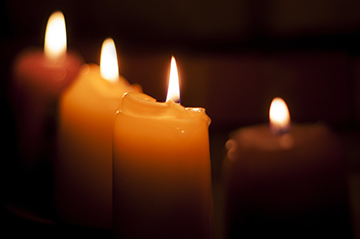
The theme of preparation (and much of the season itself) is couched in the dramatic struggle between light and darkness. This makes sense (at least in the northern hemisphere, where the darkness deepens and the days grow shorter). In these darkest days of the year, we light candles and sing hymns that speak of the light that will come: Jesus the true Light of the World. Let’s take a look at Advent in three ways.
I. The Symbols of Darkness and Light – Outside, there is a great drama of light and darkness unfolding before us.The light is giving way to darkness. Here in the northern hemisphere, the days are getting very short, and they’re going to get even shorter. Here in Washington, D.C. it is dark by 5:00 PM. On cloudy days, it is nearly dark by 4:00 PM. My brothers both live farther north: one in St. Paul and the other in Seattle. It gets dark even earlier there. There’s even a famous quote in this vein (probably by Yogi Berra), “It’s getting late very early out there.”
For us who live in modern times, the drama is less obvious. It is little more than an annoyance, as we must switch on the lights earlier. But think of those who lived not long before us in an age before electric lighting. Perhaps it was possible to huddle near a candle, oil lamp, or fire, but the darkness put a real stop to most things. Neither work, nor reading, nor most forms of recreation could take place. Darkness was a significant impediment.
Some years ago, during a widespread power outage, I was struck at just how incredibly dark it was outside at night without the streetlights and the lights emanating from homes. Frankly, it was hard to venture out. I lost my bearings quickly and stumbled over some simple things like a curb and a fencepost. We moderns just aren’t used to this. Once, I toured Luray Caverns in the nearby Shenandoah Mountains. At the bottom of the caverns, hundreds of feet down, the tour guide gathered us near the center of a large cave and shut off the lights. The darkness was overwhelming. It was an almost physical feeling. I felt a slight wave of panic sweep over me and was relieved when the lights came back on. I wondered, “Is this what it’s like to be blind?” Yes, light is very precious.
And so here in a “deep and dark December,” the light continues to recede. The spiritual impact of this drama of light is brought into the Church. Our hymns turn to images of light. The darker it gets, the more candles we light on the Advent wreath. In the darkest days of December, our Advent wreath is at its brightest. As Scripture says, The light shines in the darkness, and the darkness has not overcome it … The true light that gives light to everyone was coming into the world (John 1:5, 9). An old prayer says, Within our darkest night you kindle a fire that never dies away.
As the drama of light and darkness outside continues, we arrive at December 21st and 22nd—the shortest, darkest days of the year. By December 23rd, the ancients could detect a slight return of the light; the morning star began to herald something new, something brighter.
People, look East. The time is near Of the crowning of the year … People, look east and sing today: Love, the guest, is on the way.
And then, on December 24th, in the middle of one of the longest nights of the year, the liturgy of Christmas begins: Christ is born and on December 25th a new light shines. From then on, the days get longer.
Yes, a great drama of light is unfolding before us; it is Advent. It is a time to recognize our need for the light and just how precious is Jesus, the Light of the World. In these darkest days, ponder the beauty of the light. There are so many Advent hymns that set forth the dramatic images of light, darkness, and expectancy. They are too numerous to list here, but here are some samples: Advent hymns that speak to the Light.
Of course, this external drama of light and darkness in nature is but a symbol of the great struggle between light and darkness in our world, our culture, our own hearts, and the hearts of all whom we love. It is the greatest drama of each of our lives. Will we choose to walk in the light or will we prefer the darkness? Our choice will determine our destiny. Judgment day is coming and we must be prepared by embracing the light of God’s truth and Jesus Himself, who is the Light of the World.
Thus, in Advent, we are summoned to understand how bad the darkness of sin really is, and we are warned to prepare for the coming judgment. Almost all the readings of the first two weeks of Advent speak to this theme of warning and readiness. The Dies Irae, which most associate with the Latin Requiem Mass, was actually written as a hymn for the Second Sunday of Advent.
Now, of course, some may protest such “negative” themes for Advent. But remember, if we aren’t aware of the bad news, then the good news is no news. Hence, this Advent reflection on the seriousness of the dark reality of sin is to prepare us for even greater joy at the birth of a Savior, who is the Light of the World and can lead us out of the dark tomb of sin into the wonderful light of grace.
Hence, the symbols of light and darkness point to a real drama and remind us to be sober and serious about the trouble we’re in, why we really need a savior, and how good it is to greet the Light of the World … IF we are prepared.
II. Our Stance to the Light and Darkness – Ultimately we are either facing the light and welcoming Him, or facing and in the darkness. These are the only two stances possible. There is no third way. Are you walking in the light or are you standing in the darkness?
This is Our Moral Stance. Scripture warns in many places about the two ways of light and darkness, and admonishes us to stand and walk in the light. Here are just a few:
Besides this you know what hour it is, how it is full time now for you to wake from sleep. For salvation is nearer to us now than when we first believed; the night is far gone, the day is at hand. Let us then cast off the works of darkness and put on the armor of light; let us conduct ourselves becomingly as in the day, not in reveling and drunkenness, not in debauchery and licentiousness, not in quarreling and jealousy. But put on the Lord Jesus Christ, and make no provision for the flesh, to gratify its desires (Ro 13:11–14).
But as to the times and the seasons, brethren, you have no need to have anything written to you. For you yourselves know well that the day of the Lord will come like a thief in the night. When people say, “There is peace and security,” then sudden destruction will come upon them as travail comes upon a woman with child, and there will be no escape. But you are not in darkness, brethren, for that day to surprise you like a thief. For you are all sons of light and sons of the day; we are not of the night or of darkness. So then let us not sleep, as others do, but let us keep awake and be sober. For those who sleep, sleep at night, and those who get drunk are drunk at night. But, since we belong to the day, let us be sober, and put on the breastplate of faith and love, and for a helmet the hope of salvation. For God has not destined us for wrath, but to obtain salvation through our Lord Jesus Christ, 10 who died for us so that whether we wake or sleep we might live with him. Therefore encourage one another and build one another up, just as you are doing (1 Th 5:1–11).
The eye is the lamp of the body. So, if your eye is sound, your whole body will be full of light; but if your eye is not sound, your whole body will be full of darkness. If then the light in you is darkness, how great is the darkness! (Mt 6:22-24)
And we have the prophetic word made more sure. You will do well to pay attention to this as to a lamp shining in a dark place, until the day dawns and the morning star rises in your hearts (2 Pe 1:19).
Thus, we are warned what time it is, that judgment draws ever closer, and that we must walk and stand in the light and not be like those in darkness. The Advent season acknowledges the reality of deepening darkness, and reminds us that we must all the more run to the coming light, Jesus. We must walk in the light of His truth as set forth in His Word, in the teachings of the Church, and in creation. We must seek the enlightenment of the Sacraments and live in honesty, integrity, and mutual fellowship with the Lord’s Body, the Church. This is to be our moral stance: toward the light and away from the darkness.
This is Our Liturgical Stance. – Since we are discussing the season of Advent, we might also do well to mention something of our liturgical stance as well. Over the past few decades, our liturgical stance has become muddled and, I would argue, somewhat incoherent. What used to be the clear stance of a community facing East has become an increasingly closed circle, a community closed in on itself, too often singing of itself and referring to itself in song and self-congratulatory applause. We have discussed these problems often here on this blog. Until about 1965, the almost-universal liturgical stance was of a community all facing one direction (liturgical East, symbolized by the crucifix more than by the compass), and being led there by a celebrant who could see where he was going. The celebrant, as alter Christus, represented Christ leading His people to the Father in adoration and thanksgiving. The priest, as a man, stood at the head of the community looking for Christ to come again. Scripture quite frequently attests that God will come “from the East.” (Again “East” is less a matter of the compass than of the entire community looking toward the liturgical East, the Cross.)
Looking to the East for God to come is not the arbitrary notion of a primitive religion. It is well-documented in Scripture and makes sense based on the fact that the East is where the light comes from. Physical light is a symbol of the True Light, who is our Lord and God, Jesus Christ. Here are just a few references from Scripture:
For as the lightning comes from the east and shines as far as the west, so will be the coming of the Son of man (Mt 24:27–28).
Look toward the east, O Jerusalem, and see the joy that is coming to you from God! (Bar 4:36)
Afterward he brought me to the gate, the gate facing east. And behold, the glory of the God of Israel came from the east; and the sound of his coming was like the sound of many waters; and the earth shone with his glory. And the vision I saw was like the vision which I had seen when he came to destroy the city, and like the vision which I had seen by the river Chebar; and I fell upon my face. As the glory of the LORD entered the temple by the gate facing east, the Spirit lifted me up, and brought me into the inner court; and behold, the glory of the LORD filled the temple (Eze 43:1–5).
Sing to God, ye kingdoms of the earth: sing ye to the Lord: Sing to God, who mounts above the heaven of heavens, to the east. Behold he will give to his voice the voice of power: give ye glory to God for Israel, his magnificence, and his power is in the clouds! (Psalm 68:32-34)
This is not intended to be a full-length treatment of the “Ad orientem” question regarding the stance of the priest and the people. Reasonable people differ on this matter in terms of what to do today. I only wish to note that in many ways our liturgical stance has become muddled. If it is true that our stance should be toward the Light, then why are we facing all sorts of different and “opposing” directions in the liturgy? Why do we not all face East together for the great Eucharistic Prayer, as we did for over 19 centuries?
While it is fitting that the Liturgy of the Word be celebrated toward the people, it seems that the Eucharistic Prayer is more suitably proclaimed with the whole community (priests included) facing to the East—toward God. For it is to God that the prayer is directed and it is to God that the people are led in admiration, thanksgiving, and pilgrimage.
The Advent hymn says it well: “People look East, the time is near!”
III. The Summons to the Light – Having laid out the great drama of light and darkness and heard that we should take a stand for and toward the light, we note that Advent also proclaims, through a series of biblical texts and prayers, a warning to those who either reject the light outright or just fail to prepare for it. Here are just a few biblical texts:
Therefore I have hewn them by the prophets, I have slain them by the words of my mouth, and my judgment goes forth as the light (Ho 6:5).
Behold, the bridegroom! Come out to meet him.’ Then all those maidens rose and trimmed their lamps. And the foolish maidens said to the wise, ‘Give us some of your oil, for our lamps are going out.’ But the wise replied, ‘Perhaps there will not be enough for us and for you; go rather to the dealers and buy for yourselves.’ And while they went to buy, the bridegroom came, and those who were ready went in with him to the marriage feast; and the door was shut. Afterward the other maidens came also, saying, ‘Lord, lord, open to us.’ But he replied, ‘Truly, I say to you, I do not know you.’ Watch therefore, for you know neither the day nor the hour (Mt 25:6–11).
For behold, the day comes, burning like an oven, when all the arrogant and all evildoers will be stubble; the day that comes shall burn them up, says the LORD of hosts, so that it will leave them neither root nor branch. 2 But for you who fear my name the sun of righteousness shall rise, with healing in its wings (Mal 4:1–2).
For God so loved the world that he gave his only Son, that whoever believes in him should not perish but have eternal life. For God sent the Son into the world, not to condemn the world, but that the world might be saved through him. He who believes in him is not condemned; he who does not believe is condemned already, because he has not believed in the name of the only Son of God. 19 And this is the judgment, that the light has come into the world, and men loved darkness rather than light, because their deeds were evil. For every one who does evil hates the light, and does not come to the light, lest his deeds should be exposed. But he who does what is true comes to the light, that it may be clearly seen that his deeds have been wrought in God (Jn 3:16–21).
There is not sufficient time in this post to comment on each of the texts above except to say that they summon us to the light in a spirit of readiness, having first prepared ourselves by becoming accustomed to the light and the fire of God’s love. If we are not ready, the light will seem blinding and the fiery love unbearable, and we will recoil in wrath, rather than rejoice in wonder.
Pay attention to these Advent themes. It’s getting late very early these days. Consider this a warning from the natural world (the Book of Creation), which the Church picks up in her liturgy. Prepare the way of the Lord! Repent! The Kingdom of God is at hand. Walk in the light! If we do, then light, all glorious and unending, will be ours.
There shall no more be anything accursed, but the throne of God and of the Lamb shall be in it, and his servants shall worship him; 4 they shall see his face, and his name shall be on their foreheads. And night shall be no more; they need no light of lamp or sun, for the Lord God will be their light, and they shall reign for ever and ever (Re 22:3–5).
This is our future, ifwe are faithful and allow the Lord to enlighten us now so that we can love the future light of ten thousand megawatts. Walk in the Light!
On the feast of Christ the King, we are called to acknowledge that Jesus is in fact our King. It is one thing to say that He is our King because the song in Church says that, or the preacher says that, or the Bible says that (yes, faith does come by hearing). But it is quite another for us to personally say that Jesus is our King. There comes a time when we must personally affirm what the Church has always announced: “Jesus is Lord, and He is King. He is my king. He has authority in my life.” This must become more than just lip service. It must become a daily, increasing reality in our life.
Kings take care of us, but they also have the authority to command us. Can Christ command you or me? Or are we more like the typical modern person who doesn’t like to be told what to do? Or perhaps we suffer from the more mild form of this attitude in which we reduce Jesus to being a “harmless hippie” who just says pleasant things about peace and flowers but would never rebuke us or command us to repent.
And so, again, here is the question: “Is Jesus Christ your King?”
That brings us to today’s Gospel. Now the Gospels are not theater; we aren’t in the audience watching a story unfold that took place 2000 years ago. No, we are in the story. We are not just supposed to sit back and observe what Peter, or Pontius Pilate, or James, or Mary Magdalene does. They are we and we are they.
This means that when Jesus asks one of them a question, we cannot merely wait to see how he or she will answer. No, we have to answer the question.
In today’s Gospel the spotlight moves to Pontius Pilate. The Lord asks the critical question of him (i.e., of us). We cannot simply wait to see how Pilate answers. We have to answer. Let’s consider this Gospel in three stages.
I. INDECISION – In a remarkable display of literary artistry, John and the Holy Spirit vividly depict the vacillation of Pontius Pilate. For in this Gospel passage of the trial of Jesus, Pilate goes in and out of the praetorium (the governor’s palace) more than a bellhop through the revolving door of a hotel! Indeed he goes in and out seven times. Here is the text, with the portions describing his motions highlighted in bold:
29So Pilate went out to them and said, “What accusation do you bring against this man?” …..33Pilate [re]entered the praetorium and called Jesus…..” 39After he had said this, he went out to the Jews again, and told them, “I find no crime in him…..1Then Pilate took Jesus [back into the praetorium] and scourged him…… 4Pilate went out again, and said to them, “See, I am bringing him out to you, that you may know that I find no crime in him….8When Pilate heard these words, he was the more afraid; 9he re-entered the praetorium and [spoke] to Jesus….12Upon this Pilate [went back out] and sought to release him, but the Jews cried out, “If you release this man, you are not Caesar’s friend…When Pilate heard these words, he brought Jesus out and he sat down on the judgment seat (John 18-19 selected verses).
Did you count them? Seven times, Pilate goes into or out of the praetorium! Such a picture of indecision and vacillation! He’s trying to please the crowds. He’s trying to please his wife (who had warned him to have nothing to do with that innocent man (Mat 27:19)). He’s trying to help Jesus. But he can’t decide, so in and out he goes!
Pilate is just like us. We say that we love God, but we also love the world. We want to please others and we want to please God, but we cannot do both. We have to decide. But instead we vacillate; we are Pilate. We are often locked in indecision, trying to please the world and God.
Is Pilate really so different from many of us? Faced with a crucial decision, he weighs the consequences that choosing Jesus will have on his career, his family, his loyalty to country and Caesar, and his access to power. And while we may rightfully criticize Pilate for his choice, is it not easy for us to make compromises with the world for the sake of similar things? How often does Jesus our King take a back seat to career, politics, convenience, and so forth? So easily do we stay rooted in vacillation, compromise, and indecision.
II. INQUIRY– And now, in the midst of all this indecision, comes the question.
Pilate begins with his own question: “Are you the King of the Jews?” (John 18:33) But Jesus, who is on trial, turns the tables on Pilate. Jesus effectively puts Pilate on trial by asking him the crucial question:
“Are you saying this on your own or have others been telling you about me?” (John 18:34)
It’s a remarkable question! And guess what … You have to answer it. I have to answer it. Do not wait for Pilate; he already gave his answer and faced judgment long ago. How do we answer it?
Notice what the Lord is getting at with his question. He is asking you if you call him a King merely because you’ve heard others say it or because you personally know him to be a King. Is he really your King, or this just a slogan you’ve heard in church before? Do you believe that He is King or do you merely parrot what you’ve heard others say?
There is an old gospel song that says, “Yes, I know Jesus for myself.” But is that really the case with us? Too many of us are satisfied with a kind of inferential faith. Inferential faith is based merely on what others have said: I think or suppose (that is, I infer) that Jesus is Lord because my mother said so, or my pastor said so. This is a good beginning, for after all, faith comes by hearing (Rom 10:17).
But there comes a moment when you have to say so. It is not enough that your pastor says so or your mother says so. And thus Jesus is asking you and me right now, Are you saying [I am King] on your own or merely because others have said so?
Answer him! It’s a crucial question, isn’t it? The faith of the Church is essential, normative, and determinative. But at some point you have to step up and say that you personally affirm that the faith of the Church is true and is yours, and then declare, “Jesus is Lord and King.”
What does it mean that Jesus is King? A king has authority, doesn’t he? Does Jesus have authority in my life? Do I have the obedience of faith (Rom 1:5) and base my life upon His will?
A king also takes care of his people and protects them. Do I allow the Lord to feed me with the Holy Eucharist? Do I allow Him to protect me from the poison of sin by the Sacrament of Confession and the medicine of His Holy Word? Am I willing to live within the protection of the walled city of His Church?
Is the Lord really my King? How do I answer? Is it just a slogan or is His Kingship real? Let the Lord ask one more time,
Are you saying [I am King] on your own or have others been telling you about me?
III. IMPLICATION – You have to answer. To refuse to answer is to answer.
A fascinating and wondrous literary device is employed by John and the Holy Spirit in this Gospel passage. We have already seen how Jesus, who was Himself on trial, has turned the tables and effectively put Pilate on trial. Pilate, who has the duty to question Jesus, is now being questioned by Him. It is Pilate who must now make a decision, not so much about Jesus, but about himself. He has been asked a question that he cannot ultimately avoid, and now it is time to answer. Here is where the ingenious literary device comes into play. Look carefully at this passage from John’s Gospel and see if you notice anything strange about it.
Upon this [the shouting of Crucify him!] Pilate sought to release him, but the Jews cried out, “If you release this man, you are not Caesar’s friend; every one who makes himself a king sets himself against Caesar.” When Pilate heard these words, he brought Jesus out, and he sat down on the judgment seat at a place called The Pavement, and in Hebrew, Gabbatha (John 19:12-13).
So what is strange here? Well, notice that when Pilate has Jesus brought out, it says that “he” sat down on the judgment seat. Who exactly is sitting on the judgment seat? You might say, “Pilate, of course!” And historically, that might be true. But the text is ambiguous as to exactly who “he” is. Most Scripture scholars argue that the line is supposed to be ambiguous.
From the standpoint of historical facts it was likely Pilate who took that seat. But from the standpoint of divine justice it is Jesus who takes it.
Jesus has turned the tables on Pilate. Pilate is now on trial and the verdict is about to be revealed. Pilate seals his own fate when he hands Jesus over to be crucified; his vacillation is over. Pilate has made his choice; he has answered the question.
In this context it is Jesus who sits silently upon the judgment seat. The verdict is in. In deciding to hand Jesus over, in deciding to favor himself and the crowds over Jesus, Pilate has brought judgment on himself.
Too many of us have cartoonish notions about our final judgment: a benign Jesus giving us a great big hug, or an angry one gleefully passing judgment on His “enemies.” Perhaps there is also some notion of a review of our deeds, both good and bad, and then the pronouncing of some sort of verdict while we cringe and wait. But Jesus is not a King who imposes His Kingdom. He invites us to enter into His Kingdom. Ultimately, judgment is about our choice, not His.
Judgment is finally this: The Lord, who suffered for us, quietly and respectfully sits on the judgment seat and accepts our final choice, a choice that is the cumulative sum of all the choices we made in life, a choice that is now and forever fixed. Isn’t that what really happens?
The Lord has asked the question of Pilate, as he does of us. The choice is for Pilate to make and the judgement is one he brings on himself. His choice is either to accept the Lord’s kingship or to reject it and watch Jesus led away while he (Pilate himself) stands alone, the judgment having been rendered by virtue of his own choice.
Yes, there are implications to whether we accept the Lord as our King or not. Today, the Lord asks us all if we will let Him be our King. And to those of us who say yes, the Lord has this further question: “Are you saying this on your own or have others been telling you about me?” Is He really our King? Think hard about it. There are implications.
The question that we must answer has now been answered by Pilate. What is your answer? What is mine?
The clip below is of a commercial that must have taken weeks to film. And regardless of the intent of the commercial (selling insurance), there is something of an admonition, in both the video and the music, that life and the things of life slip away.
While the music sets forth the theme, “Don’t stop thinking about tomorrow. Don’t stop, it’ll soon be here,” the objects in the house start to get up and leave the house and its owners. The owners themselves begin to be swept away as well. By the end, all that was within, and all who were within, are swept outside.
This is a paradigm for life. No thing and no person in this world will survive the passage of time. All will be swept away; all will pass. Even lofty mountains were once on the sea floor, and to that floor they will eventually erode and return. Jesus said in last week’s Gospel: Heaven and Earth will pass away, but my words will never pass away (Mat 24:35).
Scripture also says,
For here we do not have an enduring city, but we are looking for the city that is to come (Heb 13:14). The end of all things is near. Therefore be alert and of sober mind so that you may pray (1 Peter 4:7). But according to His promise we are looking for new heavens and a new earth, in which righteousness dwells (2 Peter 3:13).
This commercial is not morbid. Rather, it is almost joyful. For indeed, though earthly glories fade, Scripture says (in many different passages) that trouble doesn’t last always (cf Psalm 30:6).
The commercial ends with a photograph being taken. Ultimately, each moment in life is but a snapshot in time. Time itself and all things are moving downstream and slipping away. God alone remains forever. Our only hope is to be anchored to Him. He is our rock, our firm foundation. His Kingdom is our lasting city. All else fails and slips away.
One of the more common heartaches people express to me is that their adult children no longer attend Mass or have any relationship with the Church. Many of these parents sent their children to Catholic School and brought them to Mass every week. Yet despite these efforts, many of these young adults were drawn away from the Church by the lure of the secular world, often during their college years or shortly thereafter.
It was typically not some dramatic event or one particular teaching that caused them to leave the Church; they just drifted away. Perhaps it was that going to college or graduating meant that they moved out of familiar patterns. Perhaps it was a new schedule or the need to work on Sundays. But regardless of the reason, they started skipping Mass. One week missed led to several weeks, then months, and then years. And so they drifted, with the currents of the world, away from the Church and the Sacraments.
During the years away, they may have found “reasons” that they don’t like the Church or feel connected to her. Perhaps they disagree with a certain teaching or practice. But the initial problem was more likely just a drifting of sorts, which then became alienation fueled by a world hostile to our teachings.
So what are parents to do? Nagging can be counterproductive. Admonitions that the Church considers missing Mass a mortal sin (and we do) seem too self-referential to many college graduates, who were raised in a culture that insists on the right of every individual to craft a “god” on his own terms (we used to call that idolatry). For most moderns, the right to craft a “god of my own understanding” or to discover the “god within” is indisputable.
Even to many who still have some semblance of faith, sectarian religion and dogmas are anathema, considered too rigid. It is axiomatic for many who call themselves “spiritual” to think that they have a perfect right to craft their own god and their own truth in their own way.
But this is the only world that most young adults have ever known. They never experienced the era of denominations and of high Church attendance that some of us older folks did. Quoting Scripture and the Catechism to them has little impact. Speaking of rules or commandments is often dismissed as scolding and being unkind.
So again, what are parents to do? I wrote earlier this week about using the Socratic Method, and surely that is a good model. It relies on posing questions that seek to engage the person to explore some of his own premises. For example a parent might ask, “Why don’t you go to Church?” Suppose the response is, “I just don’t get anything out of it” One might then ask, “What do you want to get out of it? What are you looking for?” Or one could follow up by asking, “What do you think the purpose of Mass or going to Church is? How do you see it?” And one continues along these lines, keeping sermonizing to a minimum. One listens, but seeks to engage the adult child in exploring his own views to determine if they are valid.
Thanks be to God, a new and thorough treatment of how to get your children back to the Church has just been published by Brandon Vogt: Return: How to Draw Your Child Back to Church. It examines all the usual scenarios, from drifters to dissenters, from the disaffected to the merely disconnected. There are print, online, and video components to assist in developing a “game plan” that may need to extend over a long period of time.
At the heart of the parents’ “game plan” must surely be their own witness of what going to Mass, receiving the Sacraments, praying, and Christian fellowship have done for them. So in his book, Brandon helps parents to clarify and craft their own witness. He also helps prepare them to respond to some of the more common reasons people provide for having left the Church and the practice of the faith. He discusses the twenty biggest objections to Catholicism. In effect, he advises the parents to stop pushing and start drawing their adult children back to Mass.
I hope you will find the book (and other resources) as encouraging and helpful as I did. Most of us who are trying to draw others back to the Church need a long-term game plan. We need to be prepared for a long, patient, and respectful conversation that speaks the truth in love and witnesses to the beauty of the Catholic faith. I think the resources that Brandon has assembled are a great gift to the Church.
Pride is a sin that is so pervasive, and that runs so deep within us, we often don’t even sense it is there. Not only is it is a sinful drive in itself, it also plays a role in every other sin we commit. It is the sin we most share with Satan and all the fallen angels. Satan refused to serve God or to submit to His plan, and these are strong tendencies in every human person as well. Satan planned his strategy well as he tempted Eve: you will be like God. Both Eve and Adam falsely reasoned that in order to be free they should not be told what to do; they should do as they pleased and should decide for themselves what was right and wrong. They pridefully claimed the right to determine good and evil for themselves rather than trusting God. This prideful pronouncement has gone forth from human hearts ever since: “I will not be told what to do.”
Let’s take a brief look at the primordial sin of pride.
I. The Definition of Pride – Pride is an inordinate esteem for our own excellence. It is a habit or vice which disposes us to think more of ourselves than we are. There is a proper esteem we should have for ourselves, rooted in an appreciation for the gifts we have received from God.
Humility, the virtue that is opposed to pride, is not a hangdog disdain for ourselves. Humility is a reverence for the truth about who and whose we are. We do have gifts, but they are gifts, which God has given us. And these gifts are usually given to us through others. We should be humbly grateful for the gifts and talents that God has given us. In contrast, pride sets aside proper and grateful esteem in favor of excessive esteem that is often self-referential and unappreciative of what God and others have enabled us to become.
On the one hand, pride is one particular vice, sinful in itself. On the other hand, it is a more general vice that is involved directly or indirectly in most other sins. Pride plays an especially large role in sins of malice. Sins of malice are those in which one directly and defiantly refuses to obey God, or refuses to be told what to do, or willfully insists that one knows better than God, the Church, or those entrusted with one’s instruction and guidance. Pride plays a more indirect role in sins of weakness. Sins of weakness are those in which one acts sinfully not so much out of defiance as out of a weak inability to do what one admits is right. Pride may be more indirectly present through careless neglect of growing in virtue or seeking God’s help.
Pride is directed not only at God but also at our neighbor. There are times when we refuse to submit to the instruction or authority of others who rightfully have that position. There are other times when we pridefully refuse to admit that others have gifts and abilities that we do not possess, and that we may in fact need in order to be completed. Further, we sometimes refuse to admit that others are just better at certain things than we are. As such pride, is both impoverishing and isolating.
II. The Distinctions Regarding Pride– The word “pride” in modern English and also in pagan philosophy can have a positive meaning. The pagan philosophers often thought of pride as a good thing. Before it becomes sinful, pride inspires us to strive not merely for the ordinary, but for loftier things. In this sense, pride pushes us to be more than we currently are; it inspires in us a kind of drive and effort.
This positive use of the word “pride” is less common in Christian moral theology, which more commonly speaks of pride only as a vice and ascribes striving for the difficult but possible things under the virtues of fortitude and hope.
Note that pride is not the same as vanity. Vanity actually shows some humility since, by manifesting it, one shows the need for the admiration of another. For the same reason, pride is also not the same as pleasure at being praised.
St. Gregory lists four species of pride:
Thinking that one’s good is from oneself
Thinking that one’s good is from God but that is in consequence of one’s own merits
Boasting of excellence that one does not possess
Despising others and wishing to appear the sole possessor of what one has (this is related to the sin of envy)
III. The Dangers of Pride – The central effect of pride is to move God to the periphery of our moral, spiritual, and temporal existence. God is either shunned directly or becomes increasingly irrelevant to us. Man necessarily moves to the center and, even more egotistically, I move to the center. If God exists at all to the prideful person, it is only to gratify his pleasures and confirm his preconceived notions.
The prideful person, having moved God to the periphery, focuses more on his own power and exaggerated notions of control. Money, prestige, power, access, and possessions become his focus. It is himself on whom he relies, not God.
This of course is the height of foolishness since no human being can save himself. The relegation of God to the margins of our life is the chief danger of pride, because He alone can save us. It is said that pride looks down, but no one can see God except by looking up. Pride turns us inward and downward!
Because pride involves entertaining the illusion of self-sufficiency and omits or minimizes God, it can be a serious or mortal sin. However, it is frequently not mortal, since that would require a conscious and fully willed discounting of God. Most individual acts of pride are venial by reason of this deficiency of awareness or full consent of the will.
Even though culpability may be less than mortal,the harm caused by marginalizing God cannot be overstated. The damage grows both individually and collectively until the most foolish things become daily fare. Further, a culture dominated by people who “forget” that God sees all and that they will have to render an account to Him will suffer increasingly from tyrannical, vicious, and destructive behaviors. Such a culture is dominated in growing measure by those who exercise little or no restraint on their behavior and who act imperiously—even despotically.
Pride can get very dark, very quickly because it involves a direct turning away from God. In this sense pride is the first and worst of all sins.
So serious is pride that, as a remedy, God allows us to fall into other sins, especially those of the flesh. Thus, though God does not cause acts of fornication, drunkenness, or gluttony in us, He often permits their stubborn presence in order to save us from pride, which is a more serious sin. Sins of the flesh, especially those related to sexuality, often bring great shame, which is related to humility. And though it is strong medicine, God permits it in order to save us from the sin of pride, which is even more deadly.
IV. The Disease of Pride – Pride is the source of many other sins. Not only is it their source, it is in those sins. Pride conquers at the root, since it conquers the heart of man and disposes him to the other capital sins. St. Gregory does not even account pride as a capital sin, for it is the mother of them all!
A widespread modern form of pride, even among believers, is the reduction of God from the Holy One, to a “harmless hippie,” or a doting Father. Further, the awareness of final judgement and that we will one day have to render an account to God is not a significant factor in the thinking of most moderns. As such, God is trivialized and man is exalted. To many, God exists to please and actualize them on their own terms, and His role is to affirm and console (but never challenge) them. In a certain sense, the ugliest and most self-serving form of pride is refashioning God in our own image. Making your own god and worshipping it used to be called “idolatry.”
Today, many pridefully assert the right to fashion their own god: the god within, the god of their own understanding. This is pride writ large and ugly. It is idolatry, somewhat veiled, but idolatry just the same, and a violation of the First Commandment. Such pride cries out for correction and punishment. Yes, pride is ugly—a deadly disease.

 True gratitude is a grace, or gift, from God. It proceeds from a humble and transformed heart. In such a case we do not render thanks merely because it is polite or expected, or because God commands it, but because it naturally flows from a profound experience of gratitude. The “command” of Scripture to give thanks is not a moralism, but a truth and a description of what flows from a transformed heart.