I will write more on this later in the Week. But For now, please consider: 
Clearing Up a Confusion on the Temple Tax
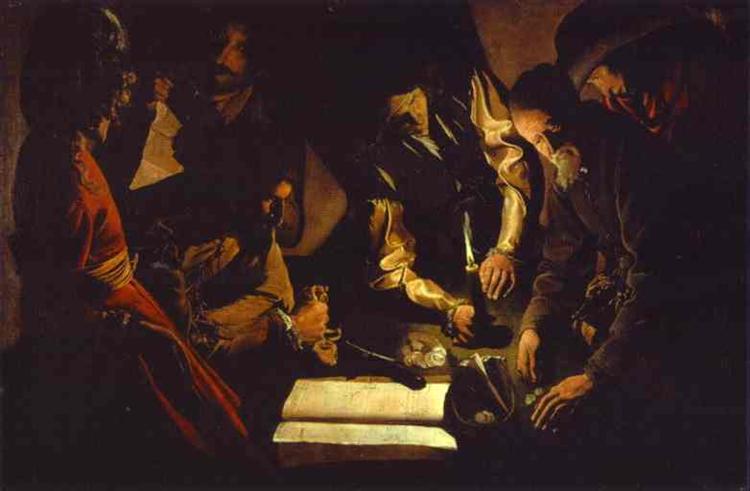
The Gospel for today’s Mass (Monday of the 19th Week) is likely confusing to anyone who hears it proclaimed in the U.S., because the New American Bible Revised Edition (NABRE) (which is used for our lectionary) makes a strange, and I would argue inaccurate, translation of the Greek. Here is the passage in question (the crucial section is presented in bold italics):
When they came to Capernaum, the collectors of the temple tax approached Peter and said, “Doesn’t your teacher pay the temple tax?” “Yes,” he said. When he came into the house, before he had time to speak, Jesus asked him, “What is your opinion, Simon? From whom do the kings of the earth take tolls or census tax? From their subjects or from foreigners?” 26 When he said, “From foreigners,” Jesus said to him, “Then the subjects are exempt. 27 But that we may not offend them, go to the sea, drop in a hook, and take the first fish that comes up. Open its mouth and you will find a coin worth twice the temple tax. Give that to them for me and for you” (Matthew 17:24-27).
The NABRE translation makes little or no sense; kings do in fact collect taxes from their “subjects.” Their subjects are not exempt from taxes, tolls, or censuses.
In contrast, the Greek text is clear and does make sense. It speaks not of subjects and foreigners, but of sons and strangers. The Greek text is straightforward:
- ἀπὸ τῶν υἱῶν αὐτῶν ἢ ἀπὸ τῶν ἀλλοτρίων
- apo ton huion auton e apo ton allotrion
- from the sons of them or from the strangers?
The Greek word huion means sons or descendants by birth (or possibly by adoption); it refers to people sharing the same nature as their father. The Greek text is referring to people who are of the family or household of a king.
These sons (or members of the king’s family) are distinguished from allotrion, which are those who belong to another person, to the family of another. By extension, they are foreigners or strangers.
So, I find the NABRE’s translation of huion as “subjects” to be strange. I consulted 25 other English translations of this passage and not one of them renders the word as “subjects.” They all render it as either “sons” or “children.”
Whatever textual critics may wish to advance by way of textual variants, “sons” is needed in English to render the text intelligible.
With the translation of “sons,” the meaning of the passage becomes clear. Jesus is pointing out to Peter that kings do not tax their own children. Therefore, Jesus is exempt from the temple tax because God is His Father; Jesus, as Son, is exempt from the temple tax. However, to giving scandal or stirring up a big debate, He instructs Peter to pay the tax (and tells him how to obtain the money to pay it.)
The tax in question is the didrachma, a two-drachma silver coin; it was the annual tax levied to pay for the upkeep of the temple. The tax represented about half a day’s wages for a laborer and affected all male Jews aged twenty and over, both at home and abroad. However, certain Jewish officials, especially the higher ranking priests, were exempt due to their position.
It is a charming Gospel: Peter is told to pull out the first fish he sees, and in its mouth he will find the money necessary to pay the tax. What a wonderful story! It is a quiet miracle to affirm Peter’s faith in Jesus’ divinity and Sonship, without confronting others who were not ready to hear or believe this. The Father does exempt Jesus from the tax and supplies the money to pay it; the tax officials are spared a conflict because they are not yet ready to render an act of faith in Jesus’ divinity.
God is merciful and prepares us for belief. Having granted the gift of faith, He sends confirmations to strengthen our faith little by little. He draws us in gently and clearly.
On Forsaking Fear by Remaining Ready – A Homily for the 19th Sunday of the Year
In the Gospel for this weekend (Luke 12:32-40) the Lord Jesus presents a “recipe for readiness.” He gives it to us so that we can lay hold of His offer that we not be afraid. He is not simply saying, “Be not afraid.” He is explaining how we can battle fear by being ready.
Frequently, Christians today are uncertain about what is necessary in order to be ready to meet God. Many also make light of the Day of Judgment, considering it all but certain that most of humanity will be saved.
Jesus does not adopt this position. In fact, He teaches the opposite. He consistently warns of the need to be ready for our judgment. Jesus does not counsel a foolish fearlessness rooted in the deception that all or even most will be saved. Rather, He counsels a fearlessness based on solid preparation for the Day of Judgment. Jesus tells us to do at least five things in order to be ready and therefore not afraid.
If we do not make these sorts of preparations, Jesus warns that He will come when we least expect and take away all that we (wrongly) call our own. Jesus says elsewhere, But watch yourselves lest your hearts be weighed down with dissipation and drunkenness and cares of this life, and that day come upon you suddenly like a trap (Lk 21:34). The apostolic tradition says this of the unprepared: disaster will fall on them as suddenly as a pregnant woman’s labor pains begin. And there will be no escape (1 Thess 5:3).
Thus, while Jesus begins by saying that we ought not to fear (for the Father wants to grant us His Kingdom), He also warns that being free of fear is contingent upon embracing and following a plan that He (Jesus) sets forth for our life.
Let’s look at this plan and see how we can forsake fear by becoming and remaining ready. Jesus gives us five specific things to do that will help to ready us for the time when the Lord calls us. It is not an exhaustive list, for no single passage of Scripture is the whole of Scripture, but these are some very practical and specific things to reflect on and do.
I. Reassess your wealth. Jesus says, Do not be afraid any longer, little flock, for your Father is pleased to give you the kingdom. Sell your belongings and give alms. Provide money bags for yourselves that do not wear out, an inexhaustible treasure in heaven that no thief can reach nor moth destroy. For where your treasure is, there also will your heart be. In this passage, the Lord is giving us a triple teaching on wealth. He says that we ought to do these three things:
- Forgo Fear. In the end, it is fear that makes us greedy and worldly. We grab up the things of this world because we are terrified of not having enough for tomorrow. But what if we could receive the gift to trust God more and to know and experience that He will give us our daily bread? He has given us the Kingdom, why not everything else? He may not give us everything we want, but we can learn to trust that He will give us what we really need. Seek ye first the Kingdom of God and His righteousness and all these other things will be given unto to you (Matt 6:21). If we can just allow God to diminish our fear, we will be surprised at how easy it is for us to be generous with what we have and not hoard it.
- Forward your Fortune. When we are generous to the needy and poor, we store up treasure for ourselves in Heaven. Treasure is not stored in Heaven by way of a rocket ship or hot-air balloon. It is stored there by generously distributing our wealth to others in wise and creative ways. I discussed this more fully in my homily last week (Instructions on Income). While it may not be appropriate for us to sell everything and go sleep on a park bench, the Lord is surely telling us to be less attached to and passionate about money and possessions, for they root us in this world. And where our treasure is, there also will our heart be.
- Fix your focus. Our focus is wrong and worldly because most of us have our treasure here in this world. But once we become less fearful and more generous, our obsession with worldly treasure subsides and our joy in heavenly treasure grows. This fixes our broken focus and puts our heart where our treasure really is and ought to be: in Heaven with God. So simplify; be less rooted in this world; come to experience that your greatest treasure is God and the things waiting for you in Heaven.
Reassess your wealth. What is it and where is it? That will tell you a lot about your heart, too.
II. Ready yourself to work. The Lord says “Gird your loins,” which is the ancient equivalent of “roll up your sleeves.” The Lord has work for us to do and wants us to get to it.
Surely the Lord has more than a worldly career in mind. He has in mind things like growing in holiness, pursuing justice, and raising children in godly fear. The Lord wants us to work in His Kingdom. We must commit to prayer, Sunday worship, the reception of the sacraments, obedience, and holiness.
The Lord has particular work for each of us based on our gifts. Some are good teachers; others work well with senior citizens; still others are good entrepreneurs and can provide employment for others at a just wage. Some are skilled at medicine and the care of the sick; others are called to priesthood and the religious life. Some are called to suffer and to offer that suffering for the salvation of souls. Some serve in strength, others do so in weakness; but all are called to serve, to work.
So work with what the Lord gave you to advance His Kingdom. Part of being ready means doing your work.
III. Read the Word. The Lord says, light your lamps.
On one level, the phrase “light your lamps” is simply a symbol for readiness (e.g., the Wise and Foolish Virgins in Matt. 25:1-13).
But in another sense, a lamp is also a symbol for Scripture. For example, You Word, O Lord, is a lamp unto my feet and a light unto my path (Ps 119:105). Or again, We possess the prophetic message that is altogether reliable. You will do well to be attentive to it, as to a lamp shining in a dark place, until day dawns and the morning star rises in your hearts (2 Peter 1:19).
So here we can also understand that the Lord is teaching us that an essential part of being ready is being rooted and immersed in the Scriptures and the Teachings of the Church. That makes sense, of course. There is just too much stinking thinking in this increasingly secular world, a world that is hostile to the faith. How can we think that our mind is going to be anything but sullied if we are not reading Scripture every day? How will our minds be sober and clear if we are inebriated by the world?
Clearly, being ready means reading Scripture each day and basing our life on it.
IV. Remain watchful. The Lord says, And be like servants who await their master’s return from a wedding, ready to open immediately when he comes and knocks. … Be sure of this: if the master of the house had known the hour when the thief was coming, he would not have let his house be broken into. You also must be prepared, for at an hour you do not expect, the Son of Man will come.
There are different ways to watch and wait. There is the passive watching and waiting that we may do when waiting for a bus: we just sit there and look down the street. But there is another kind of waiting that is more active. Consider the watchfulness of a waiter: He is actively waiting and watching. He observes what is needed now and notes what will be needed soon, moving to supply what is or will be necessary.
There is also an eager sort of waiting intended here much like that of a child on Christmas Eve. The child does not wait in dread for the coming of “Santa Claus” but in eager expectation.
And so it is that watchful and eager waiting are what the Lord has in mind here. It is like that active waiting we do when we have invited a guest to our home. We know that his arrival is imminent and so we joyfully prepare and place all in order.
To set our house in order is to sweep clean our soul of sin and all unrighteousness (by God’s grace) and to remove all the clutter of worldliness from our life. Regular confession, daily repentance, simplifying our lives, and freeing ourselves from worldly attachments declutters the house of our soul.
Have you prepared the home of your soul for the Lord’s arrival? If not, the Lord says that you may experience Him as you would a thief. Now the Lord is not really a thief, for everything belongs to Him. But if we have not renounced our worldliness and greed, if we have not rid ourselves of attachments to this world, then the Lord will come and take back what is His. He will seem like a thief because we (wrongly) think it is ours.
It’s never a good idea to call God, the Lord and owner of all, a thief. Bad move!
V. Reflect on your reward. The Lord says, Blessed are those servants whom the master finds vigilant on his arrival. Amen, I say to you, he will gird himself, have them recline at table, and proceed to wait on them. And should he come in the second or third watch and find them prepared in this way, blessed are those servants.
The Lord is clear that He has a reward for those who are found ready!
It is prefigured in the banquet of the Eucharist, in which the Lord prepares a meal and feeds us. The Lord says, Behold, I stand at the door and knock. If anyone hears my voice and opens the door, I will come in to him and eat with him, and he with me (Rev 3:20). And again, And I confer a kingdom on you, just as my Father has conferred one on me, that you may eat and drink at my table in my kingdom (Luke 22:30). Food is so quickly bought and scarfed down today, but in the ancient world one of the most pleasant things to anticipate was a long, hearty meal enjoyed in the company of good friends and family.
The Lord offers us the magnificent blessing of Heaven, where we will be with Him and those whom we love forever in unspeakable joy and peace.
Do you meditate often on Heaven and long for its rewards? One of the stranger aspects of the modern world is that, even among believers, there is so little talk of Heaven. And while it is not a place any of us have ever been (so it’s hard to fully understand what it will be like), we should reflect often on the joy that awaits us there.
Part of being ready to go home to the Lord is to long for that day to come. When we want to do something, we prepare for it eagerly; we are motivated and we make sacrifices. We will more naturally do whatever is necessary.
So here are five elements constituting a recipe for readiness. Better set your house in order ’cause He may be coming soon!
What Did You Say?
Voice recognition software has a long way to go. Every now and then I foolishly assume that dictating some text into my phone will save me some time, but invariably it takes me so long to correct the result that I might as well have typed it to begin with!
I wonder if God doesn’t sometimes “feel” that way about us as we consistently misinterpret His word. We seem to hear what we want to hear; we ignore certain words such as “not” in “thou shalt not.”
Kids often have trouble accurately repeating the words that they hear. I have heard many “adaptations” of the Act of Contrition from them over the years. Here’s an example, containing some of the common mistakes I’ve heard from “out of the mouths of babes”:
O my God, I am partly sorry for having defended thee, and I contest all my sins not only because of the plains of hell, but most of all because they defend thee, my God, who aren’t worthy of all my love. I firmly revolve with the help of disgrace to contest my sins, amend my life and live as I would.
I remember as a child wondering why we called the Holy Spirit a parakeet (instead of the paraclete), and thinking that the Our Father said, “give us this stay our daily bread.” Kids are like that. They hear, but not always accurately; sometimes it takes years to correct the errors. I still hear some adults say that on Good Friday the clergy are prostate on the floor, instead of prostrate.
Enjoy this video, which pokes fun at voice recognition software. Recognize that we also commit some laughable errors in speech and hearing. Thank goodness God knows what we’re saying!
The Look of Christ
I have a large icon of Christ in my room (see photo at right). What icons from the Eastern tradition do best is to capture “the look.” No matter where I move in the room, Christ is looking right at me. His look is intense, though not severe. In the Eastern spirituality, icons are windows into Heaven. Hence, this icon is no mere portrait that reminds one of Christ, it is an image that mediates His presence. When I look upon Him, I experience that He knows me. It is a knowing and comprehensive look.
Particularly in Mark’s Gospel, there is great emphasis on the eyes and the look of Jesus. A frequent expression in that Gospel is “And looking at them He said ….” Such a phrase (or a similar one) occurs more than 25 times in Mark’s Gospel.
Looking on Christ and allowing Him to look on you is a powerful moment of conversion. Jesus Himself said, For my Father’s will is that everyone who looks to the Son and believes in him shall have eternal life, and I will raise him up at the last day” (Jn 6:40).
And the First Letter of John says, What we shall later be has not yet been revealed. We do know that when it is revealed we shall be like him, for we shall see him as he is (1 Jn 3:2).
There is just something within us that seeks the face of God and desires that look of love that alone can heal and perfect us. I often think of this verse from Scripture when I am at Eucharistic Adoration: Look! There he stands behind our wall, gazing through the windows, peering through the lattice. (Song 2:9). Yes, I long to see the Lord. Scripture also speaks of His longing to “see” us.
Here are some passages from Scripture that remind us to seek the face of the Lord and to look to Him:
- Seek the LORD and his strength; seek his presence continually! (1 Chron 16:11)
- If my people, who are called by my name, will humble themselves and pray and seek my face and turn from their wicked ways, then will I hear from heaven and will forgive their sin and will heal their land (2 Chron 7:14).
- You have said, “Seek my face.” My heart says to you, “Your face, LORD, do I seek” (Ps 27:8).
- Look to the LORD and his strength; seek his face always (Ps 105:4).
- I [the Lord] will return again to my place, until they acknowledge their guilt and seek my face, and in their distress earnestly seek me (Hosea 5:15).
- Everyone who looks to the Son and believes in him shall have eternal life, and I will raise him up at the last day (John 6:40).
- He who loves me will be loved by my Father, and I too will love him and show myself to him (John 14:21).
- Blessed are the pure in heart, for they will see God (Matt 5:8).
- Now we see but a poor reflection as in a mirror; then we shall see face to face (1 Cor 13:12).
- For God, who said, “Let light shine out of darkness,” made his light shine in our hearts to give us the light of the knowledge of the glory of God in the face of Christ (2 Cor 4:6).
An old song says, “We shall behold Him, Face to face in all of His glory …. The angel will sound, the shout of His coming, And the sleeping shall rise, from their slumbering place. And those remaining shall be changed in a moment. And we shall behold Him, then face to face.”
Allow Christ to look on you.
This video is a wonderful collection of many of the looks of Jesus and the reaction of the people following those looks. Pay special attention. The video also features a lot of “looks” that come from us. Notice how people look upon Jesus and how they react as they do so. Look for the “looks” in this video. The final looks are especially moving.
What is Life?
What is life? It seems the simplest and most basic reality, but it is hard to define in a way that is satisfying. One philosopher I know defined it as “ordered energy.” But does that really advance the understanding of the mystery we call life?
Consider an example: I have in one hand a small rock, and in my other, an acorn. They are similar in both shape and color. Now I place each of them in the ground and water them. The small rock just sits there; even a thousand years of water and sunshine would do nothing to change it. But in the case of the acorn, the water is able to reach a mysterious spark of life within it and fuel its mysterious power. The life takes the water in and springs forth. Soon enough, it thrusts through the soil and over time becomes a mighty oak.
What is this secret, mysterious force we call life? Yes, it is ordered energy, but it is so much more than that.
When we say that someone dies, what has really changed?
I remember when my father died. After watching him struggle through weeks of labored breathing and agitation, it was eerie to see him lying so still; he was peaceful for the first time in weeks. His body was still warm, but he was gone. He was a giant in my life. The man through whom God gave me life lay still and silent. His life, his soul, his life-giving principle, his “ordered energy” was gone. No amount of words could fully describe the reality before me. On the surface, nothing appeared so very different. Surely he would stir in a moment and speak to me! He did not. The something mysterious we call life was gone. We can say that he died or that his life ended, but mere words do not explain, they only describe; they are empty sounds before so great a mystery.
I have also seen many of my pets die. One moment there is life and movement, the next a great stillness as the something we call life has departed. What is that mysterious force?
I don’t know.
On my street there are two elm trees. One is luxuriant and full of leaves. The other is dead; it bears no green leaves and its branches are brittle. Something is gone from it, but is that something called life?
I don’t know.
We speak often of that great mystery called life, but a word is not reality; it is just a word. The word “life” cannot really tell us what life is. Saying that something is alive is more to tell us that it is not dead, nor is it inanimate.
Many decades before his death, my father talked to me about the mystery of life. He told me that when he was about ten years old, a powerful thought occurred to him: “I exist.” So stunned was he that he said he stayed very quiet for the next three days, just being silent in the face of a mystery too great for him to fathom. I have had similar moments of reverential silence, when I ponder consciousness and self-awareness, or when I think about the fact that I am thinking.
It is altogether too much. Simple or even complex definitions cannot ultimately provide satisfaction.
The secularism of our time seeks to suppress such matters because they are about meaning, not just about physical things that can be touched and measured. The mysterious reality we call life does not weigh anything. It cannot be seen as it arrives or departs. Its effects can be seen, but “it” cannot be seen. We cannot say of life, “Look, there it is!” or “There it goes!” It is certainly real and it affects physical things profoundly. But of itself, it seems more metaphysical than physical and defies simple categorization.
The secularism of our time would hurry us past questions such as “What is life?” Neither would it have us dwell on other questions of meaning that the physical sciences cannot speak to, such as:
- What is my life all about?
- What is the ultimate destiny of all things?
- Why is there something rather than nothing?
“No, no,” say secularism, atheism, and scientism. “Hurry along now; there is nothing to see here.”
But pardon me if I am not content with being hurried along and if I insist that suppressing such questions does great damage to individuals and cultures as a whole. Without appreciation for imponderable mysteries, there is little reverence. Indeed, too few ask the question “What is life?” And even fewer accept the imponderable quality of such a question.
What is life? It is a mystery too deep for words. Silent reverence, please, before so great a mystery.
These are some of the lyrics of a song written by Steve Green, a contemporary Christian singer:
God and God alone, created all these things we call our own;
from the mighty to the small, the glory in them all;
Is God’s and God’s alone.
God and God alone reveals the truth of all we call unknown;
And the best and worst of man can’t change the Master’s plan;
It’s God’s and God’s alone.
Crack the Whip and the Common Good – Our Lives Are More Connected Than We Think
We like to think that our personal decisions have little or no impact on others, but our lives are far more intertwined than we imagine. This is especially the case today, when social media can allow sinful and foolish ideas to catch fire and “go viral” in a flash. And although this happens with edifying information and helpful ideas as well, the bad stuff seems to spread more quickly. Why? Well, this is a fallen world, with a fallen angel for its prince, and we have fallen natures.
Therefore, do not so easily dismiss the influence that bad ideas and poor decisions can have on others. Also consider that what may not harm those who are blessed to have other good influences and/or economic options may damage those who are not so fortunate. This warning should especially apply to cultural leaders, who have substantial influence on the lives of others. Those in the public eye have a special obligation to consider how the way they live their lives and the ideas they propose may affect others.
To illustrate, consider the game “Crack the Whip,” which some of us may remember from our days on the school playground. The “game” involved 10 to 20 children forming a straight line. Each child reached back with one arm and took the hand of the one behind him to create a long chain. The child at the front of the line then took off running and everyone else behind followed, still holding hands. Suddenly, the lead child would take a sharp turn. The children immediately behind him were able to successfully negotiate the turn, but the further back one was, the harder it was to hold on. The children toward the end of the line didn’t stand a chance. They were flung off by the centrifugal force and usually ended up on the ground.
This is an analogy for our times. There are some, those at the “front of the line,” who are well-positioned to take their thrill rides, engage in social experimentation, and indulge greed and excess with minimal damage. Among them are some of the Hollywood elite, pop music stars, political leaders, wealthy financiers, Madison Avenue marketers, Wall Street investors, and many other cultural, social, business, and government leaders. But at the “back of the line,” the damage is awful.
Let’s consider two basic areas of life in which “Crack the Whip” is much in evidence: social/moral ills and economic ills.
Social/moral ills – At the very front of the line are those who have sharply turned towards excesses of every sort: drugs, alcohol, sex, revolving-door marriages, glamorization of all sorts of dangerous and deleterious behaviors. These often come with terrible personal consequences.
At the front of the line they can afford (financially and socially, though not morally) the consequences of what they do. They can pay for the stays in rehabilitation centers, the treatments for STDs, and the therapy for their children (who are traumatized by divorce and other issues caused by their parents’ indulgences).
But at the back of the line the drug use, sexual promiscuity and confusion, and the divorce culture have had far more devastating effects. Lacking access to treatment programs, the addicted poor go to jail. Diseases like AIDS and other STDs are less treated and spread more easily. Poor families are more rapidly devastated by sexual promiscuity and divorce. Children are raised without fathers. The socials ills multiply quickly. And surely we cannot neglect the poorest of the poor, the most vulnerable of all, the child in the womb. They have paid supremely, with their very lives, for the moral excesses of a culture like ours. The death toll is unimaginable and it almost never gets mentioned.
It’s a sad game of “Crack the Whip.” At the front of the line, all the misbehavior looks “fun,” even “glamorous.” But at the back of the line, folks go flying off in all directions, staggering and reeling.
I do not write to absolve the poor from all responsibility and merely blame the rich and powerful. Being mesmerized by the glamor of evil is a human problem; it affects all of us. But in the end we ought to consider how our cooperation (whether by active promotion or by sinful silence) in the glamorization of sin and excess affects others—especially those at the “end of the line.”
Economic ills – Those at the front of the line can also afford the lifestyles that greed demands. They can generally afford to pay the higher prices of an overheated economy and a lifestyle that expects more and more.
The poor are fined for not having insurance. Many cannot afford to drive. They often face tremendous economic hurdles in trying to open small businesses or even keep their homes. College educations and even advanced degrees are (unreasonably) required for many jobs, but the cost is exorbitant. Obtaining a college education leaves many young people in debt for decades. And the poor are largely locked out of many options.
A few years back it became trendy to leave the stock market and enter the real estate market, buying and “flipping” properties. The market overheated, the cost of housing skyrocketed, and even the upper-middle class found it hard to afford basic housing. The “bubble” burst in 2008 and left the economy reeling. Investors took a few hits and got government bailouts, but mainly they just went back to investing in the stock market. They left in their wake devastated homeowners facing “underwater” properties and foreclosures.
“Gentrification” also accelerated, bringing with it all the difficulties of social dislocation. The poor are economically and literally being moved to the margins as the disturbances to the housing market are still working themselves out. Here in Washington, D.C. the poor are moved to the margins of what many call “Ward 9.” There are actually only 8 Wards in D.C.—being in “Ward 9” is a euphemism for being moved to the margins, outside the city that is increasingly losing its economic diversity. What used to be poor, working-class neighborhoods are now filled with houses sporting prices approaching one million dollars.
It’s a classic case of “Crack the Whip.” Those at the front of the line can adjust to sudden shifts in the economy and “play the market,” but at the back of the line the less privileged are sent flying, staggering as they fall and go off to the “Ward 9s” of our cities.
I am a priest, not an economist, and I realize that economic realities are very complex. I am not calling for all sorts of government intervention, but I do know what I see as a priest working among all social classes. I cannot and should not devise policy solutions; I leave that to the experts among the laity. But what I can and should do is to remind the folks at the front of the line to remember those at the back. “Crack the Whip” is fun and exciting when you’re at the front of the line, but devastating if you’re at the back.
We need to rediscover concern for the common good. We should look at our own behavior regardless of where we are in the line. I am my brother’s keeper; his welfare ought to be important to me. It’s not just about money; it’s about taking care to build a culture that thinks more about those at the back of the line and those yet to be born. What of them? How does my life and lifestyle affect them?
A Tour Guide in the Land of Ruin
At Mass we are reading from the later chapters of Jeremiah the Prophet, who wrote in the time of the Babylonian exile. As such he serves as a kind of tour guide for us through a land of ruin, one that seems all too familiar to us today.
The Northern Kingdom of Israel had been destroyed by the Assyrians in 721 B.C. The Southern Kingdom of Judah, ignoring numerous warnings and calls to repentance, later experienced the same fate; the Babylonians laid siege and destroyed Jerusalem in 587 B.C. Just prior to this destruction, Jeremiah saw the glory of God lift from the Temple and move away to the east. The city and even the Temple now lay in ruins. The Ark of the Covenant was lost and the survivors were deported to Babylon.
Yes, it was a terrible destruction, but one that could have been avoided if the Lord’s people had only heeded the warnings of the prophets and returned wholeheartedly to the Lord and His commandments. With the Lord and within the safe walls of his commandments there is strength and protection. Outside the walls and His presence, Judah was a sitting duck, easy prey, low-hanging fruit.
Let’s consider the passage from Jeremiah (30:1-2.12-15.18-22) that we read at Mass today (Tuesday of the 18th Week) and see what the Lord says through Jeremiah. Let’s also ponder how this historical event speaks to our times as well.
I Ruin – Thus says the LORD, the God of Israel: Incurable is your wound, grievous your bruise.
Yes, things have gone beyond simple medicines or bandages. These wounds are deep, foul, and festering. Sin does this to us spiritually as its evils go deeper and deeper. A simple skin cancer, untreated, can find its way into inner organs and even reach our bones. So, too, does sin, untreated by repentance, grow more serious. It renders us vulnerable to deeper and more serious sins that bring spiritual ruin, darkness, and a stubbornly unrepentant demeanor in which the cancer of pride is in its final stages. Judah has reached this stage and the only medicine that is left is for them to experience the full effects of their rejection of God.
And what of the once-Christian West? What of America? Can we possibly think that our cultural revolution, rooted in sinful rebellion against authority, sacred Tradition, the moral vision of the Scriptures, and the meaning of human sexuality and marriage can yield anything but corruption? Can our greed, our insatiable desire for more no matter the human (or monetary) cost, forever mortgage our future? Have not our wounds multiplied and gone deeper? The blood of our aborted children cries out to Heaven. Our broken families multiply due to promiscuity and rampant divorce; broken families yield a bumper crop of broken children as the cycle deepens. Are these wounds curable? Do we even show any willingness to take the necessary medicines of self-control, fidelity, and obedience to God’s vision? It seems not. Midnight fast approaches. As Jeremiah was once warned the people of his time, so must we in the Church today send up the warning cry that our wounds are getting worse, the intellectual and moral darkness is growing ever deeper, and our time to repent is getting shorter. Soon enough, as with Ancient Israel and Judah, the full bill for our sin will come due.
Scripture says,
Do not be deceived: God is not mocked, for whatever one sows, that will he also reap. For the one who sows to his own flesh will from the flesh reap corruption, but the one who sows to the Spirit will from the Spirit reap eternal life. And let us not grow weary of doing good, for in due season we will reap, if we do not give up. So then, as we have opportunity, let us do good to everyone, and especially to those who are of the household of faith (Gal 6:7-10).
II Rejection – There is none to plead your cause, no remedy for your running sore, no healing for you. All your lovers have forgotten you, they do not seek you.
Among the things that the ancient Jews did was to run after other lovers and other remedies. They were entangled in foreign military alliances and were too enamored of pagan culture and religion. God spoke of their running after pagan gods as infidelity and adultery, for they were espoused to Him.
And as for us, in the formerly Christian West, while not espoused to God as a nation (but surely as members of the Bride of Christ), we too have often sought solutions far from God, even solutions opposed to Him. We have cast aside God’s plan for our happiness and bought into the notion that worldly indulgence and sin will bring us happiness and health. In so doing we call God a liar and forsake our covenant with Him. We run after other lovers, trusting the world, the flesh, and the devil instead of our God who made us and saved us. Secular mindsets and even outright atheism have made deep inroads into our culture. Church attendance has plummeted while attention to the “bread and circuses” of the modern world has reached new highs. We trust our affluence, power, medicine, and science (all themselves great gifts of God), but we do not trust the true Shepherd and Lord of our souls, the only one who can really save us.
And where are these philosophers that pose as healers and lovers, who have ushered in this ruin, now? They are doubling down on their false prescriptions and going ever deeper into darkness, repeating the lies of these worldly philosophies, glorying in the flesh, and marginalizing the vision of God. Moderns cry out “Love!” and speak of compassion. But it is a false love and a false compassion.
The text asks, “Where are these lovers now?” Where is the happiness and fulfillment they promised with their false notions of freedom? Yes, where are they?
III. Reason – I struck you as an enemy would strike, punished you cruelly; Why cry out over your wound? your pain is without relief. Because of your great guilt, your numerous sins, I have done this to you.
The effects and consequences of sin cannot forever be postponed. Even if God mercifully protects us from some of the consequences, he will not do so forever. God’s patience is directed toward our salvation. He gives us time to repent. But at some point (known only to Him) our presumptiveness eclipses His patience. The boil must be lanced; gangrenous tissue must be cut away. Only strong, even desperate, measures will work; they may seem to us to be cruel. But to do nothing would be to lose all, and that is a far worse cruelty. Our sins and unrepentance “force” these difficult measures, so that at least a few might be saved.
When does a person, a culture, or a nation reach such a point? God only knows. But why test the situation and draw this necessary measure? The Lord says,
“… O Israel, if you would but listen to Me! ‘You shall not have in your midst a foreign god; you shall not bow to an alien god. I am the LORD your God Who brought you up out of the land of Egypt’—open wide your mouth, and I will fill it.” But My people did not listen to My voice, Israel did not yield to Me; so I set him free with their stubborn heart, that they could follow their own counsels. O that My people would listen to Me, that Israel would follow My ways! At once I would subdue their enemies, against their foes bring back My hand. Those who hate the LORD shall cringe before Him; their doom will last forever. But He would [rather] feed him the finest wheat: and sate you with honey from the rock. (Ps 81:9-17).
IV. Restoration – Thus says the LORD: See! I will restore the tents of Jacob, his dwellings I will pity; City shall be rebuilt upon hill, and palace restored as it was. From them will resound songs of praise, the laughter of happy men. I will make them not few, but many; they will not be tiny, for I will glorify them. His sons shall be as of old, his assembly before me shall stand firm; I will punish all his oppressors.
God permits these terrible ills to befall His people so that He might save at least some, a faithful remnant.
The people of Israel spent eighty years in Babylon, and then as if miraculously, God brought them back. The Babylonians were defeated by the Persians; Cyrus, King of Persia, permitted them to return to their land and even offered to help rebuild Jerusalem! Now that there is a purified remnant, God will begin again with His people. Future purifications will also be necessary.
And what of us? In times of old, there was a faithful remnant that did not fully succumb to the darkness of the days. There were others who did repent; it is for their sake that God acts to bring an end to widespread evil lest all of His people be consumed. Though none of us has lived perfectly, through repentance we should seek to be the faithful remnant whom God acts to save. We are likely going to see even darker days before the evil of our times plays out and is purged. The battle is the Lord’s. For our part, we should seek to stay faithful, repent when we fall, and look to the day when God will restore this world or come again in glory.
The Church has survived many ups and downs in this world. Empires have risen and fallen, nations and cultures have come and gone, but we are still here proclaiming the Gospel, in season and out of season, until the Lord shall come.
What is your mission and mine? Be the remnant! Yes, Lord, do what you need to do, but please, help some of us to stay faithful!
V. Reunion – His leader shall be one of his own, and his rulers shall come from his kin. When I summon him, he shall approach me; how else should one take the deadly risk of approaching me? says the LORD. You shall be my people, and I will be your God.
Here is the endgame. Whatever the ups and downs of this world, the Lord’s ultimate work for each of us is to restore ourselves to union with Him. Jesus came to give us access to the Father through the shedding of His precious blood. Jeremiah’s word to us is to stay faithful unto death, when we will be summoned to the Father, and by the grace of our Lord Jesus approach Him with the confidence of holiness granted to us by that grace. The Book of Hebrews describes this and gives us both hope and an exhortation.
Therefore, brothers, since we have confidence to enter the holy places by the blood of Jesus, by the new and living way that he opened for us through the veil, that is, through his flesh, and since we have a great priest over the house of God, let us draw near with a true heart in full assurance of faith, with our hearts sprinkled clean from an evil conscience and our bodies washed with pure water. Let us hold fast the confession of our hope without wavering, for he who promised is faithful. And let us consider how to stir up one another to love and good works, not neglecting to meet together, as is the habit of some, but encouraging one another, and all the more as you see the Day drawing near (Heb 10:19-25).
Thus a quick tour through a ruined land, but with our eyes set on a glorious reunion.
Meanwhile, be the remnant and stay faithful, by His grace. Let God do His work. Maranatha!