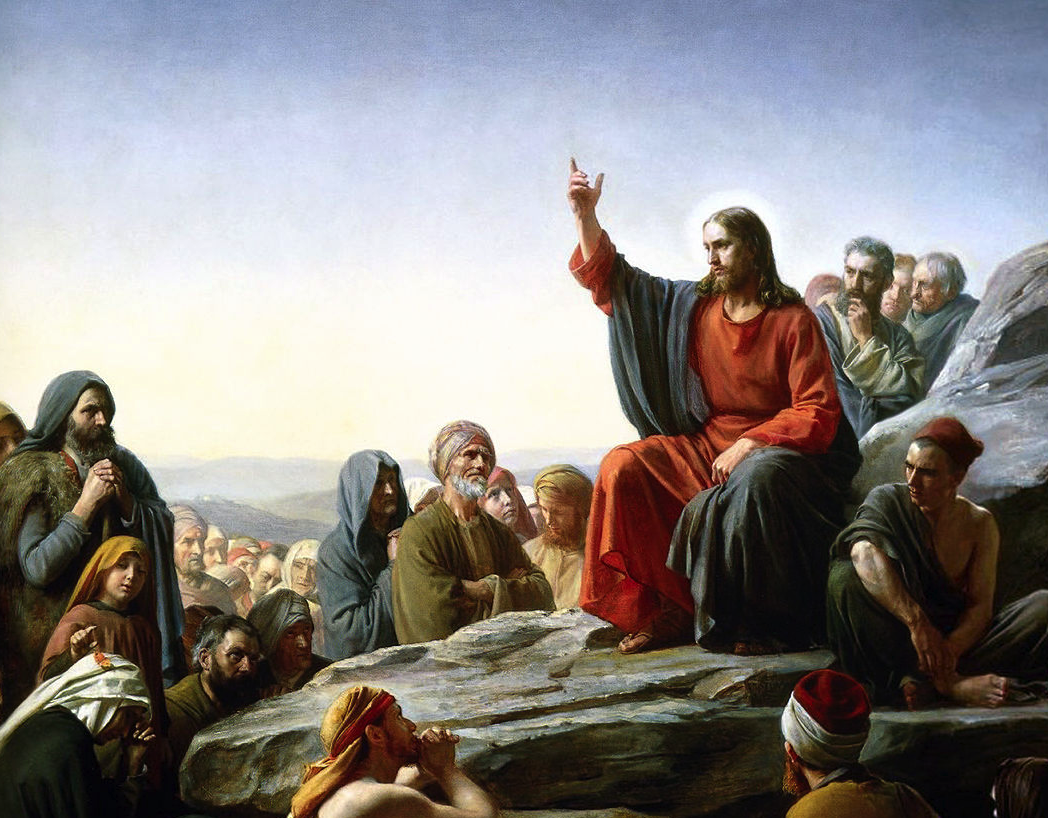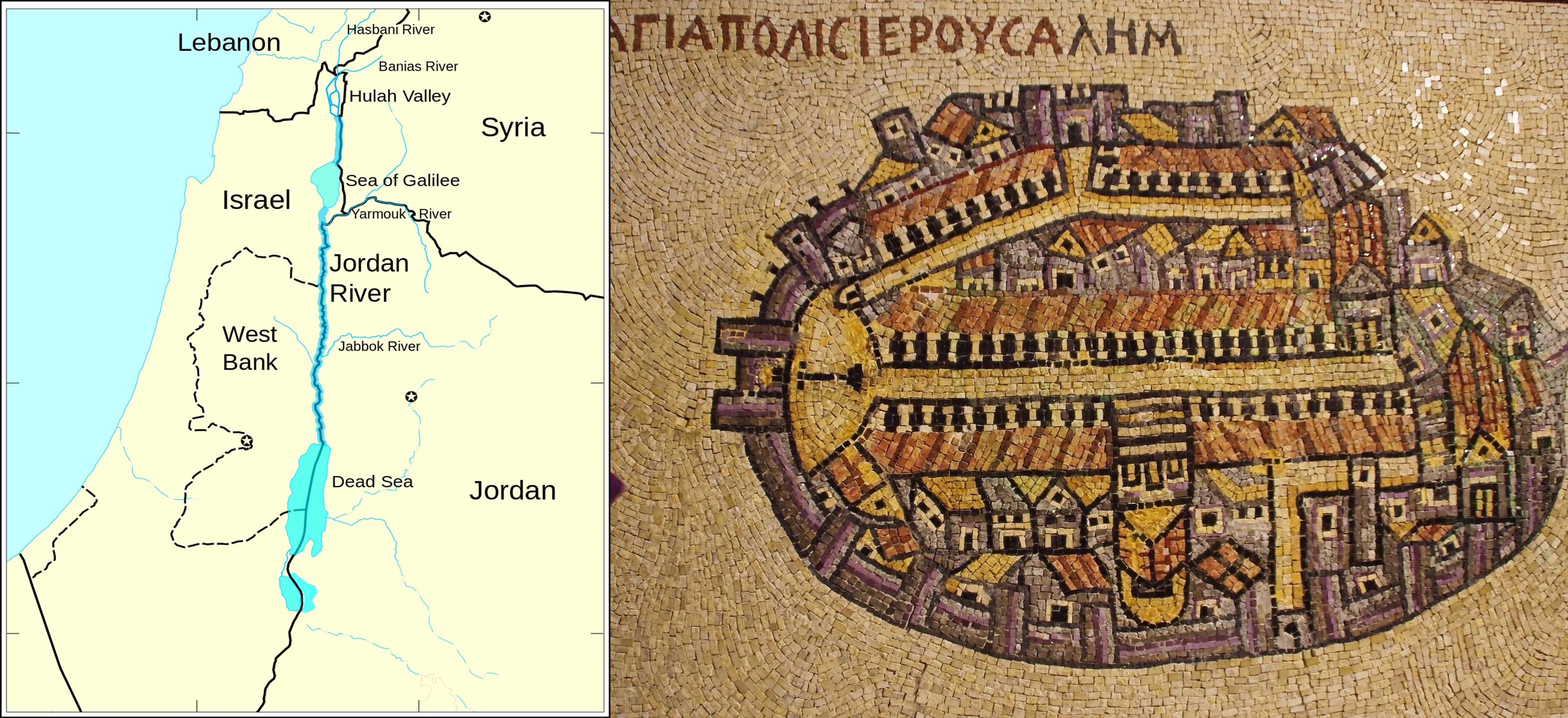
O Holy night! Yes, a silent night! And it came upon a midnight clear! Christmas, it would seem, is a festival of the middle of the night. Jesus is born when it is dark, dark midnight. We are sure of it. And why shouldn’t we be?
Even though we are not told the exact hour of His birth, we are sure it must have been at night. Scripture does say that the Shepherds who heard the glad tidings were keeping watch over their flock “by night” (cf Luke 2:9). Further, the Magi sought Him by the light of a star, and stars are seen at night, deep midnight. None of this is evidence that Jesus was born at 12:00 midnight but it sets our clocks for night, deep midnight.
Add to this the fact that Christmas is celebrated at the winter solstice, the very darkest time of the year in the northern hemisphere. More specifically, Christmas comes when light is just beginning its subtle return. The darkest and shortest days of the year occur around December 21st and 22nd. But by December 23rd and 24th we notice a definite but subtle trend: the days are getting longer; the light is returning! It’s time to celebrate the return of the light. It’s going to be all right!
How fitting it is to celebrate the birth of Jesus, the true Light of the World, in deep and dark December. Jesus our light kindles a fire that never dies away. Indeed, in the dark hours of December, we notice a trend: the light is returning; the darkness is abating; the days are beginning to grow longer. It is subtle right now, but it will grow. And with the return of light, we celebrate our True Light: Jesus.
But light is best appreciated in contrast. We appreciate most the glory of light when the darkness assails us. There’s just something about Christmas Eve. As the time approaches through December and the darkness grows, we light lights. Yes, all through December we light Advent candles, more candles as it grows darker. Even the secular among us string up lights, in malls, on their houses, in their workplace. It’s as if to say, the darkness cannot win; the light conquers!
Lights show their true glory when contrasted with darkness. Who sees the stars in the middle of the day? Who appreciates the full beauty of light until he has experienced darkness? Yes, Christmas is a feast of the light. We confront the darkness of December and declare to it, “Your deepest days are over. The light is returning.” And we of faith say to a world in ever deeper darkness, “Your darkness cannot prevail. It will be overcome and replaced.” For although darkness has its season, it is always conquered by the light.
An atheist recently scoffed at me in the comments of this blog that our day is over; the world has rejected faith. Sorry, dear atheist friend, the light always wins. On December 22nd, the darkness begins to recede and the light begins to return. The light returns subtly at first, but it always does; the darkness cannot last.
Light has a way of simply replacing the darkness. In three months the equinox occurs and in six months the summer solstice, when we have the most light. Then the darkness will once again seek to conquer. But it always loses! The light will return. Jesus is always born at the hour of darkness’ greatest moment. Just when the darkness is celebrating most, its hour is over; the light dawns again.
We celebrate after sundown on December 24th, in accordance with a tradition going back to Jewish times (feasts begin at sundown the night before). Christmas morning is almost an afterthought. Most pastors know that the majority of their people come to Mass the “night before.” In a deep and dark December, a light comes forth. A star shines in the heavens.
We gather together in and on a dark night. We smile. We are moved by the cry of a small infant, by whose voice the heavens were made. His little cry lights up the night. The darkness must go; the light has come; day is at hand.
We celebrate at night so as to bid farewell to the darkness. It cannot prevail. It is destined to be scattered by a Light far more powerful than it is, a Light it must obey, a Light that overwhelms and replaces it. Farewell to darkness; the Light of the World has come!
Jesus is the Light of the World.
The video below is a celebration of light. As a Christmas gift to myself I took the afternoon of December 22nd (the darkest day of the year) off so that I could photograph the triumph of light over darkness. I went to a mausoleum, a place where thousands are buried in the walls. But also in those walls are windows, glorious windows where light breaks through and Christ shines forth. Some of the most beautiful stained glass in the city of Washington, D.C. resides in that place of death and darkness. The light breaks through and it speaks of Christ.
This video shows only some of those stained glass windows (I am putting together a video of other windows to be shown later). The text of the music in this video is from Taizé, and it says, Christe lux mundi, qui sequitur te, habebit lumen vitae, lumen vitae (Christ, Light of the World, who follows you has the light of life, the light of life).
As you view this video depicting the Life of Christ, ponder that although stained glass begins as opaque sand, when subjected to and purified by fire it radiates the glory of the light which can now shine through it. So it is for us. Born in darkness but purified by Christ and the fire of the Spirit, we begin to radiate His many splendored Light shining through us to a dark world.
In the ancient Church and up until rather recently, one genuflected at the two references to the Incarnation during the Mass: during the Creed and in the Last Gospel (John 1). Why was this done? It was explained to me that the mystery of the Incarnation is so deep, one can only fall in silent reverence.
There are many paradoxes and seeming impossibilities in the Incarnation. They cannot be fully solved, so they claim our reverence. We genuflected in the past, and today we bow at the mention of the Incarnation in the Creed, for it is a deep mystery.
As we continue to celebrate Christmas I would like to list some of the paradoxes of Christmas. I want to say as little about them as possible—just enough to make the paradox clear. This paucity of words (not common with me) is in reverence for the mystery and also to invite your reflection.
The Infinite One becomes an infant.
An antiphon for the Christmas season says, How can we find words to praise your dignity O Virgin Mary, for he whom the very heavens cannot contain, you carried in your womb.
An old Latin carol (in Dulci Jublio) says, Alpha et O, Matris in Gremio (Alpha and Omega, sitting in Mommy’s lap).
He who looks down on all creation looks up to see His Mother. The most high looks up from a cradle. Of this moment, even the pagans wrote with longing and tenderness: Incipe, parve puer, risu cognoscere matrem … ipsa tibi blandos fundent cunabula flores, occidet et serpens, et fallax herba veneni occidet (Begin, little boy, to recognize the face of your mother with a smile … for you, your own cradle will bear delightful flowers; the serpent will die and the plant that hides its venom) – Virgil 4th Eclogue.
He who indwells all creation is born in homelessness, no place to dwell.
He, to whom all things in Heaven and on earth belong, is born in poverty and neediness.
He is the mighty Word through whom all things were made. He is the very utterance of God, the Voice which summons all creation into existence. Of this Word, this Utterance, this Voice, Scripture says, The voice of the LORD is upon the waters; the God of glory thunders, the LORD, upon many waters. The voice of the LORD is powerful, the voice of the LORD is full of majesty … The voice of the LORD flashes forth flames of fire. The voice of the LORD shakes the wilderness … The voice of the LORD makes the oaks to whirl, and strips the forests bare; and in his temple all cry, “Glory!” (Ps. 29) Yet this voice is now heard as the cooing and crying of an infant.
His infant hand squeezes His mother’s finger. From that infant hand, the universe tumbled into existence. That same hand is steering the stars in their courses.
He who holds all creation together in Himself (Col 1:17) is now held by His Mother.
He who is the Bread of Life is born in Bethlehem (House of Bread) and lies in a feeding trough (manger).
He who is our sustainer and our food is now hungry and fed by His Mother.
Angels and Archangels may have gathered there, Cherubim and Seraphim thronged the air! But only his mother in her maiden bliss, could worship the beloved with a kiss (Christina Rosetti “In the Bleak Midwinter”).
Each of these is meant to be a meditation on the great mystery of the Incarnation. Please chime in with your additions to this list!
A paradox is something that defies intuition or challenges the common way of thinking. It unsettles us or startles us into thinking more deeply. The word paradox comes from the Greek para (beside, off to the side, or above) and dokein (to think or to seem). Hence a paradox is something “off to the side” of the usual way of seeing or thinking about things. If you’re going to relate to God you’re going to deal with a lot of paradox, because God’s ways and His thinking often defy those of humans. God is not irrational but He often acts in ways that do not conform to worldly expectations.
This Christmas, consider these paradoxes and learn from them. Remember, though, that mysteries are to be lived more so than solved. Reverence is a more proper response to mystery than is excessive curiosity. More is learned in silence than by many words.
The Christmas Gospel from Luke provides us with many teachings. One thing that surely stands out, however, is the permeating theme of humility. Throughout the account, God confounds our prideful expectations and insists on being found in the lowest of places.
The newborn Christ is not found where we expect Him to be nor does His birth conform to any script we would design. Right from the start, He gives us many lessons in humility and begins His saving work of healing our wound of pride. Let’s look at these lessons in four stages.
I. The Procession to the Place – In those days, a decree went out from Caesar Augustus that the whole world should be enrolled. This was the first enrollment, when Quirinius was governor of Syria. So, all went to be enrolled, each to his own town. And Joseph too went up from Galilee from the town of Nazareth to Judea, to the city of David that is called Bethlehem, because he was of the house and family of David, to be enrolled with Mary, his betrothed, who was with child.
There is a sort of “cast of thousands” that leads Mary, Joseph, and Jesus to be in Bethlehem. The distant Caesar Augustus sends out a decree affecting millions. He wants a census taken in order to update his tax rolls. He also likely wants to measure his power and may have military deployments and a draft in mind. Soon enough, dozens of governors deploy thousands of troops to enforce the edict. Even in the small town of Nazareth, a town of barely 300 people, Roman troops enforce the decree. Mary is nine months pregnant, but there will be no exceptions.
For many of us, this offends our sense of what should justly happen. Jesus, who is Lord and Savior, should be born in comfort; Mary should be surrounded by loving family and in the care of midwives.
The first lesson in humility is our surprise and even indignation at the events surrounding Jesus’ birth.
God, however, is neither surprised nor stymied. All this fits into His plan to get Jesus, Mary, Joseph, and all of us to the place of blessing. Whatever evil the Emperor intends, God intends it for good (see Genesis 50:20). The Messiah, it was prophesied, would be called a Nazarene (Matt 2:23), be born in Bethlehem (Micah 5:2), and die in Jerusalem (Lk 13:33). God is setting things in place for the blessing.
And here is the second lesson in humility: Your life is not just about you. You and I are part of something far larger. Just as millions were set on the move at the birth of Christ, so you and I are part of the larger plan and providence of God involving billions of people now living, countless others who have lived, and still others who will live in the future. God sees the bigger picture, yet not one detail is lost to Him. Humility! God has more in mind than our comfort and personal agendas. We are part of something bigger as well.
The third lesson in humility is that God must get us to certain places in order to bless us. And they may be strange places, ones we would not choose. Getting us there may involve hardship for us: disappointment that our own plans have not come through, and the painful loss of places, things, and people we love. Yes, God has blessings waiting for us in strange places, involving circumstances we never imagined.
For Joseph and Mary, the procession to the place called Bethlehem involved hardship. But this procession is necessary for them and for us. Bethlehem was where the blessing would be found—there and no other place. And the same is true for us in so many ways.
God has been good to me and blessed me in ways and in places I never expected or planned. God must get us to certain places in order to bless us. I am and have been blessed; I am a witness.
Don’t miss the procession to the place that opens this Gospel. It is a paradigm for our lives. Where is your Bethlehem? Where does God need to get you in order to unlock your blessings? Are you humble and teachable enough to go there?
Remain humble and don’t quickly despair when the surprises and vicissitudes of life emerge. God may be up to something. He can make a way out of no way and write straight with crooked lines.
II. The Paradox of His Poverty – While they were there, the time came for her to have her child, and she gave birth to her firstborn son. She wrapped him in swaddling clothes and laid him in a manger, because there was no room for them in the inn.
Don’t miss the poverty that is manifest here—it is a chosen poverty. St. John Chrysostom said,
Surely if [the Lord] had so willed it, He might have come moving the heavens, making the earth to shake, and shooting forth His thunderbolts; but such was not the way of His going forth; His desire was not to destroy, but to save… And, to trample upon human pride from its very birth, therefore He is not only man, but a poor man, and has chosen a poor mother, who had not even a cradle where she might lay her new born Child; as it follows, and she laid him in the manger (Quoted in the Catena Aurea – Lection 2 ad Luc 2:6).
The paradox of poverty is the fourth lesson in humility! We who are worldly think that poverty is the worst thing, but it is not—pride is the worst thing. And thus the Lord teaches us from the start that greatness and blessings are not found merely in what is high, mighty, pleasant, or pleasing. Blessings are often found in unusual ways and under unexpected circumstances.
The greatest blessing ever bestowed is not found in a palace, or in Bloomindales, or on beachfront property; He is not even found in a cheap Bethlehem inn. He is found in a lowly manger underneath an inn. It is poor and smelly and He rests in a feeding trough. But there He is, in the least expected place, the lowest imaginable circumstances. In this way He confounds our pride and our values.
Are we humble enough to admit this and to stop being so resentful and crestfallen when things don’t measure up exactly to our standards?
He chooses this poverty. Whatever its unpleasant realities, poverty brings a sort of freedom if it is embraced. The poor have less to lose and thus the world has less of a hold on them. What does a poor man have to lose by leaving everything and following Jesus? Wealth has many spiritual risks. It is hard for the rich to inherit the Kingdom of Heaven. Wealth is too easily distracting and enslaving. And even knowing all this, we still want it. In choosing poverty, Jesus confounds our pride, greed, lust, and gluttony.
The Lord does not just confound us; He also chooses this to bless us. St. Paul said,
For you know the grace of our Lord Jesus Christ, that though he was rich, yet for your sake he became poor, so that by his poverty you might become rich (2 Cor 8:9).
He also said,
Christ Jesus, though he was in the form of God, did not count equality with God a thing to be clung to, but emptied himself, taking the form of a servant, being born in the likeness of men. And being found in human form he humbled himself and became obedient unto death, even death on a cross (Phil 2:5).
Bede, the 7th century Church Father, wrote,
He who sits at His Father’s right hand, finds no room in an inn, that He might prepare for us in His Father’s house many mansions; He is born not in His Father’s house, but [under] an inn and by the way side, because through the mystery of the incarnation He was made the way [for us back to our Father’s House] [Catena, Ibidem].
Thank you, Jesus, for the paradoxical perfection of your poverty. Through it you confound our human ways and bless us more richly than we could ever expect! Thank for this lesson in humility.
III. Proclamation to the People –Now there were shepherds in that region living in the fields and keeping the night watch over their flock. The angel of the Lord appeared to them and the glory of the Lord shone around them, and they were struck with great fear. The angel said to them, “Do not be afraid; for behold, I proclaim to you good news of great joy that will be for all the people. For today in the city of David a savior has been born for you who is Christ and Lord. And this will be a sign for you: you will find an infant wrapped in swaddling clothes and lying in a manger.”
The fifth lesson in humility throws into question our overemphasis on politics and worldly power. This section of the nativity narrative serves to strongly remind us that our salvation is not to be found in the statehouse, the courthouse, or the White House. We are not to put our trust in princes. Our salvation is in Jesus, only in Jesus. Are we humble enough to admit this and stop exalting worldly power?
Note that in this Gospel, lots of “emperor words” are used to describe this newborn infant, Jesus. Yet here He is in a lowly manger!
Emperors had heralds that preceded their arrival and summoned their subjects. The infant Jesus has the angel of the Lord to announce Him. Later, this heralding angel will be joined by a “host” of angels. The Emperor Augustus has his Legions, but Jesus has His myriad angels.
The angel also uses words appropriate for an emperor. He says, “I proclaim to you good news of great joy that will be for all the people.” This is how the declarations of emperors began. The Greek text makes this even clearer: the angel uses the word εὐαγγελίζομαι (evaggelizomai), which means “I evangelize you,” “I announce good or life changing news.” This word for “evangelize” was associated especially with an edict or announcement from the Emperor. But what the emperors questionably claimed for their edicts is really true with Jesus!
The emperors also claimed the titles “savior” and “lord.” The angel calls Jesus Savior (σωτὴρ – Soter) and Lord (κύριος – Kyrios), and He alone deserves these titles.
Here is the irony that we must humbly accept: this true Lord and Savior, this God of Armies with plenary authority, is not in some palace drinking from goblets and being fanned by slaves. He is lying in a lowly feed box, attended to by animals.
It is a divine comedy. One can almost imagine the shepherds wrinkling their noses or scratching their heads as they hear this great announcement of a King, Savior, Lord and Messiah, and then hearing that He is to be found in a stable, lying in a feeding trough. Perhaps one shepherd said to the other, “Did that angel say ‘manger’?” And another replying, “Yup, a feeding trough.”
It’s a bit anticlimactic! But thank the Lord, they humbly accept the procession that they must now make to the place of true blessing. It is an unexpected place to be sure, but that is where He is to be found. He is King and Lord to be sure, but He is humble and comes to serve and to save. He will wash the feet of the worst sinners and die for the love of them.
Humility!
IV. Praise that is Perfect–And suddenly there was a multitude of the heavenly host with the angel, praising God and saying: “Glory to God in the highest and on earth peace to those on whom his favor rests.”
Note the praises of the angels! Who or what could ever match them? They are a multitude. They are perfected in their glory and acclaim God’s praises more gloriously than any human choir could ever hope to do.
Yet even here there is a humility to consider. For the Lord has taken a human nature to Himself, not an angelic one. In the order of creation, angels are far higher and more noble than we are. Their mere appearance overwhelms us and strikes fear in us. Yet to none of these did God ever say, “You are my Son. This day I have begotten you” (See Hebrews 1:5).
God humbly takes up our human nature and bestows on us an astonishing dignity that comes only from Him. It is due to His choice, not our merits. And though the angels can surely praise the Lord in far more glorious way than we, they cannot say, “One of us is God.”
And glorious though the angel’s praise is, there is a perfect praise that only we can give to God. It was beautifully expressed by the poet Christina Rossetti:
Angels and Archangels may have gathered there. Cherubim and Seraphim thronged the air. But only his mother in her maiden bliss could worship the beloved with a kiss.
And thus, our final lesson in humility is to accept that it is our lowliness which the Lord embraced. We have no glory to give that is even close to what the Lord deserves, but a simple kiss will do, a simple act of love. It is our lowly and sinful hearts that the Lord seeks, so as to heal and exalt them. Our palaces, honors, and titles are of no interest or value to Him. It is our humility that pleases Him most, and He desires to meet us there.
The video below is a 2008 Coca-Cola commercial that takes up the theme of the star of Christmas.
Let us review the impact that the star of Christmas had on the wise men, the Magi.
The star moved them to seek meaning outside themselves; it made them look out and up.
The star called them beyond what was familiar in their own country and world and expanded their horizons toward Christ and His Kingdom.
The star summoned them to seek Christ, and when they found Him, to worship Him.
The star drew them to be generous to a poor family in Bethlehem; they made sacrifices as they lay costly gifts of gold, frankincense, and myrrh before the Lord.
The star roused them to conversion; they “returned to their country by another route,” following the straight and narrow path rather than the wide and destructive one.
Yes, no one encounters Jesus Christ and goes away unchanged. A blind man went away able to see, the deaf to hear, the lame to walk. The hungry went away satisfied, the ignorant instructed, the guilty forgiven, sinners converted.
The call of the nations to change and to new life began with a star. The light of the star opens the way to the Light of World, Jesus. The star of my life is Jesus.
In the commercial below we see Santa (a name that means “Holy One”) sending forth a star, one that touches people and radiates a light that transforms them.
A woman sees the light of that star and is able to forgive her husband and be reconciled with him.
A young soccer player sees the light of that star, surrenders his pride, and steps aside to let another share in and get a shot at glory.
A young girl sees the light of that star and, giving up some of her own beauty, seeks to beautify a public park for others.
A museum guard sees the light of that star and shows mercy to the guard dog with him (this was a silly one).
A father sees the light of that star and allows his son a moment of growth.
Yes, there is something about that star that changes everyone who looks at it. They become more forgiving, more gracious, more aware of others, more connected to others, more loving. The light of the star, and the light of the world, is Jesus. His light is meant to have that same effect—and more besides.
In the background of the commercial an old Elvis song plays: “Wise men say only fools rush in, but I can’t help falling in love with you. Shall I stay? Would it be a sin if I can’t help falling in love with you?”
Of course the love that is symbolized by the star is not the romantic love of the song but the brotherly and agape love that Christ gives. Like the Magi who found Christ by the star, no one sees the star of Jesus and encounters Him and then goes away unchanged. Indeed, if we authentically encounter Christ, we are equipped to love, just as the people in this commercial are. We are equipped to forgive, to bring healing, to help others find strength and glory in the truth, and to come to full maturity in Christ. A person who knows Jesus and has encountered Him cannot help loving others, not in some merely sentimental way, but with a strong and vigorous love rooted in the truth. This is the same love that Jesus has for us all.
At the end of the commercial is an exhortation in Spanish that translates as follows: “Give the world the best of you.” The best of me is Jesus.
In preparation for the coming of Christmas, we have been discussing some of St. Thomas Aquinas’ writings. In today’s last installment we’ll be looking at his commentary on the time and place of Jesus’ birth.
We live in a culture today that tends toward a kind of temporal pride. We think that we have come of age, that we are smarter and wiser than our forebears. Scientific, technical, and medical knowledge are more highly developed to be sure, but there is more to life than what falls into those realms.
The religious version of temporal pride is expressed in this utterance: “If Jesus lived in our times He would …” The sentence is then completed with any view we like or consider to be “enlightened” and “modern.” But Jesus did not choose to live in our time, and there may well be very good reasons for that. As God, He could have chosen any age—and He did not choose ours.
St. Thomas Aquinas, who lived in the 13th century, pondered the reasons for the time and place of Jesus’ birth in his Summa Theologica. In it he addressed some of the questions and objections raised during his era.
The time of the Lord’s birth – St. Thomas discussed this in his Summa Theologica, Part III, Question 35, Article 8. He used as his starting point, St. Paul’s attestation to the fittingness of the time of Christ’s birth: When the fullness of the time was come, God sent His Son, made of a woman, made under the law (Gal 4:4). Here, the “fullness of time” is understood to mean “at the designated or determined time.” St. Thomas wrote,
Whereas [other men] are born subject to the restrictions of time, Christ, as Lord and Maker of all time, chose a time in which to be born, just as He chose a mother and a birthplace. And since “what is of God is well ordered” and becomingly arranged, it follows that Christ was born at a most fitting time.
St. Thomas responded as follows to objections raised in his day regarding the time of Christ’s birth:
Some objected that because Christ came to grant liberty to His people, it was not fitting that He came at a time when the Jewish people were subjected to Roman occupation and the Herodian dynasty (Herod was not a true Jew). St. Thomas answered that because Christ came in order to bring us back from a state of bondage to a state of liberty, it was fitting that He be born into bondage with us and then lead us out. We can grasp this logic in a wider sense when we consider that He assumed our mortal nature in order to give us an immortal nature; He died in order to restore us to life. St. Thomas, referencing Bede, wrote that Christ submitted Himself to bondage for the sake of our liberty. He also added that Christ wished to be born during the reign of a foreigner so that the prophecy of Jacob might be fulfilled (Genesis 49:10): The scepter shall not be taken away from Juda, nor a ruler from his thigh, till He come that is to be sent. The bondage was not to be ended before Christ’s coming, but after it and through it.
Others objected that the time of year, near the winter solstice, was not fitting for Christ’s birth. They argued that it was not fitting for Christ, the Light of the World, to be born during the darkest time of the year. But Thomas replied that Christ wished to be born at a time when the light of day begins to increase in length so as to show that He came to draw man back to the light, according to Luke 1:79: To enlighten them that sit in darkness and in the shadow of death.
The place of Christ’s birth (Bethlehem)– St. Thomas discussed this in the Summa Theologica, Part III, Question 35, Article 7.
Christ willed to be born in Bethlehem for two reasons. First, because “He was made … of the seed of David according to the flesh,” as it is written (Romans 1:3); … Therefore He willed to be born at Bethlehem, where David was born, in order that by the very birthplace the promise made to David might be shown to be fulfilled. The Evangelist points this out by saying: “Because He was of the house and of the family of David.” Secondly, because, as Gregory says (Hom. viii in Evang.): “Bethlehem is interpreted ‘the house of bread.’ It is Christ Himself who said, ‘I am the living Bread which came down from heaven.’”
St. Thomas responded to some objections to Bethlehem as the place of Jesus’ birth.
Some argued that Christ should have been born in Jerusalem, because it is written (Isaiah 2:3): “The law shall come forth from Sion, and the Word of the Lord from Jerusalem.” And because Christ is the very Word of God, made flesh, He should have come into the world at Jerusalem. But St. Thomas answered that Christ, as the Son of David, fittingly echoed David’s priestly/kingly role. King David was born in Bethlehem and finished his ministry as priest/king in Jerusalem, so it was fitting that Christ as King be born in Bethlehem and, as true High Priest, die in Jerusalem.
Others argued that Bethlehem was too poor and unseemly a place for the Christ to be born. Thomas responded, [The Lord] put to silence the vain boasting of men who take pride in being born in great cities, where also they desire especially to receive honor. Christ, on the contrary, willed to be born in a mean city, and to suffer reproach in a great city. Thomas added, [And] that we might acknowledge the work of God in the transformation of the whole earth, He chose a poor mother and a birthplace poorer still. He cited Scripture: “But the weak things of the world hath God chosen, that He may confound the strong” (1 Corinthians 1:27).
Still others argued that because Scripture (Matthew 2:23; Isaiah 11:1) said “He shall be called a Nazarene,” Christ should have been born in Nazareth. Thomas easily dispatched this objection by observing that one is not always born where one is raised. He also added (referencing Bede), He wished to be born at Bethlehem away from home…in order that He who found no room at the inn might prepare many mansions for us in His Father’s house.
With St. Thomas to guide and teach us, we have pondered over the past few days some aspects of the incarnation and birth of our Lord. May you who have read and I who have presented be enriched by the teachings of the Lord through the great St. Thomas Aquinas.
Below is a link to an organ prelude on the hymn “Bethlehem of Noblest Cities,” also known as “Earth Hath Many a Noble City.” It is accompanied by beautiful art related to Bethlehem. Here are the words to the hymn:
Earth hath many a noble city;
Bethlehem, thou dost all excel:
out of thee the Lord from heaven
came to rule his Israel.
Fairer than the sun at morning was the star that told his birth, to the world its God announcing seen in fleshly form on earth.
Eastern sages at his cradle make oblations rich and rare; see them give, in deep devotion, gold and frankincense and myrrh.
Sacred gifts of mystic meaning: incense doth their God disclose, gold the King of kings proclaimeth, myrrh his sepulcher foreshows.
Jesus, whom the Gentiles worshiped at thy glad epiphany, unto thee, with God the Father and the Spirit, glory be.
Continuing our series of questions related to the Incarnation, we next ponder whether Jesus would have come at all had we not sinned in the Garden. We also wonder why He waited thousands of years before coming to our rescue.
Regarding the question of whether Christ would have come if Adam had not sinned, St. Thomas Aquinas (in his SummaTheologica) first states that there are different opinions on the matter. He also notes that God’s power is not limited and therefore God could have become incarnate even if sin had not existed. However, St. Thomas believes that if man had not sinned then the Son would not have become incarnate. As I often do, I’ve presented St. Thomas’ words in bold italics, while my commentary appears in red.
For such things as spring from God’s will, and beyond the creature’s due, can be made known to us only through being revealed in the Sacred Scripture, in which the Divine Will is made known to us. Hence, since everywhere in the Sacred Scripture the sin of the first man is assigned as the reason of Incarnation, it is more in accordance with this to say that the work of Incarnation was ordained by God as a remedy for sin; so that, had sin not existed, Incarnation would not have been (Summa Theologica, Part III, Question 1, Article 1).
While theological speculation may have its place, it is most certain that the Incarnation was instituted by God first and foremost as a remedy for sin. And while the Incarnation offers more than is required to remedy sin (e.g., an increase in human dignity (since God joined our family), God’s visitation, the opening of a heavenly (not merely earthly) paradise), Scripture presents remedy for sin as God’s primary motive. In remedying our sin, God shows the greatness of His mercy, because He does not merely restore us but elevates us to a higher place than before. The least born in to the Kingdom of God is greater that the exemplar of the Old Covenant, John the Baptist. Had we not sinned and had God merely wanted to elevate us, He could have done so in other ways. Hence, St. Thomas’ position is best suited to the evidence.
If the Incarnation is a remedy for sin, why did God wait so long to apply it? St. Thomas provides an answer that is sensible and addresses aspects of the question we might not have considered. His answer is found in the Summa Theologica (part III, question 1, article 5). First he addresses why the Incarnation did not happen before sin:
Since the work of Incarnation is principally ordained to the restoration of the human race by blotting out sin, it is manifest that it was not fitting for God to become incarnate at the beginning of the human race before sin. For medicine is given only to the sick. Hence our Lord Himself says (Matthew 9:12-13): “They that are in health need not a physician, but they that are ill … For I am not come to call the just, but sinners.”
Next, St. Thomas addresses why the Incarnation did not happen quickly, soon after Original Sin, rather than thousands of years later. He sets forth four reasons:
I. Nor was it fitting that God should become incarnate immediately after sin. First, on account of the manner of man’s sin, which had come of pride; hence man was to be liberated in such a manner that he might be humbled, and see how he stood in need of a deliverer. … For first of all God left man under the natural law, with the freedom of his will, in order that he might know his natural strength; and when he failed in it, he received the law; whereupon, by the fault, not of the law, but of his nature, the disease gained strength; so that having recognized his infirmity he might cry out for a physician, and beseech the aid of grace.
Quick solutions to problems do not always permit proper healing to take place. Most parents know that if they solve every problem a child has, important lessons may be lost. It is often beneficial to live with our questions for a while so that the answers are more appreciated and more effective.
Indeed, it took us humans quite a while to really acknowledge the seriousness of our sin and pride. Shortly after Eden, the tower of Babel indicated that human pride was still a grave problem. Even when given the Law, a good thing, the flesh corrupted it, turning perfunctory observance of it into an occasion for pride. The prophets then had to keep summoning Israel and Judah back to the Lord and away from prideful self-reliance. The Assyrian invasion of the Northern Kingdom and the Babylonian Captivity only further illustrated the depths of our sin, so that this cry went up: “O Lord, that you would rend the heavens and come down” (Is 64:1).
We had to be led gradually to recognize our profound need for a savior. Otherwise, even if the remedy were offered, too few might reach for it.
II. Secondly, on account of the order of furtherance in good, whereby we proceed from imperfection to perfection. Hence the Apostle says (1 Corinthians 15:46-47): “Yet that was not first which is spiritual, but that which is natural; afterwards that which is spiritual … The first man was of the earth, earthy; the second man from heaven, heavenly.”
There is a kind of theology of grace implicit in this answer. Grace builds on our nature. And it is our nature, physically and spiritually, to grow gradually. While sudden conversions and growth spurts have their place, the best and most typical growth is that which occurs steadily and in stages.
Thirdly, on account of the dignity of the incarnate Word, for on the words (Galatians 4:4), “But when the fullness of the time was come,” a gloss says: “The greater the judge who was coming, the more numerous was the band of heralds who ought to have preceded him.”
Here is underscored the dignity of the Son of God, that many should precede Him, announcing Him. But there was also a need for us to be prepared to meet Him, so that we would not miss Him or refuse Him when He came. As Malachi says, See, I will send the prophet Elijah to you before that great and dreadful day of the Lord comes. He will turn the hearts of the parents to their children, and the hearts of the children to their parents; or else I will come and strike the land with total destruction (Mal 4:5-6). Those who were prepared were able to abide the day of the Lord’s coming and heed His call.
Fourthly, lest the fervor of faith should cool by the length of time, for the charity of many will grow cold at the end of the world. Hence (Luke 18:8) it is written: “But yet the Son of Man, when He cometh, shall He find think you, faith on earth?”
This is an interesting aspect of the question that many might not consider; we typically ponder more what is good for us than what is good for succeeding generations. But it is sadly true that fervor, both collective and individual, can fade as a wait becomes lengthy. And thus, St. Thomas suggests that God appointed a time for the Incarnation within human history such that the greatest possible number of people could be saved.
As Christmas draws closer, we continue to ponder the approaching mysteries. Today we will consider some of the things St. Thomas Aquinas taught regarding the Incarnation.
Why did the Lord choose to come to us through a woman, Mary? He could have come in any manner He pleased. Yesterday, we pondered why He took true flesh and a human nature to Himself rather than just coming as a kind of ghost or simply as God. But even in becoming truly and fully man, He could have chosen to bypass conception, gestation, birth, infancy, and youth entirely. He could have appeared suddenly on earth as a grown man—but He did not. Why not?
Remember, too, that although He chose to come through an earthly mother, he bypassed the participation of an earthly father (in the physical sense). If the biological role of a human father was bypassed in His taking flesh, why was the role of a human mother not similarly bypassed?
St. Thomas pondered this question in his Summa Theologica (part III, question 31, article 4) and set forth three reasons. St. Thomas’ commentary is shown in bold italics, while my poor remarks appear in red.
[First,] Although the Son of God could have taken flesh from whatever matter He willed, it was nevertheless most becoming that He should take flesh from a woman. First because in this way the entire human nature was ennobled. Hence Augustine says (QQ. lxxxiii, qu. 11): “It was suitable that man’s liberation should be made manifest in both sexes.”
So, in this manner both sexes were ennobled. The male sex was ennobled because the Word became flesh and was male. The female sex was ennobled because it was from Mary that Christ took His humanity.
Secondly, because thus the truth of Incarnation is made evident. Wherefore Ambrose says (De Incarnation vi): “Thou shalt find in Christ many things both natural, and supernatural. In accordance with nature he was within the womb … but it was above nature that a virgin should conceive and give birth: that you may believe that He was God, who was renewing nature …”
Both the natural and the supernatural are evident in Christ’s conception and incarnation. St. Thomas emphasized the elevated need for the natural so that we might avoid the heresy of thinking that Christ’s humanity was not real due to its wholly supernatural origin.
And [as] Augustine says (Ep. ad Volus. cxxxvii): “If Almighty God had created a man formed otherwise than in a mother’s womb, and had suddenly produced him to sight … would He not have strengthened an erroneous opinion, and made it impossible for us to believe that He had become a true man? … But now, He, the mediator between God and man, has so shown Himself, that, uniting both natures in the unity of one Person, He has given a dignity to ordinary by extraordinary things, and tempered the extraordinary by the ordinary.”
So it was fitting that Christ should be born of a woman, Mary, so as not to lose the natural in the supernatural, but that both the natural (because He is true man) and the supernatural (because He is true God) should balance and complete each other.
Thirdly, … the first man was made from the “slime of the earth,” without the concurrence of man or woman: Eve was made of man but not of woman: [though since], other men are made from both man and woman. So [it] …. remained as it were proper to Christ, that He should be made of a woman without the concurrence of a man.
In other words, it seems fitting or proper that because Adam and Eve were both created outside of the usual order of things, the New Adam, Christ, would be made in a unique manner. Eve was made without the help of another woman, but was drawn by God directly from the man, Adam. In a kind of balancing parallelism, the New Adam was made by God directly from the woman, Mary, without the help of a man.
St. Thomas seems to point to a kind of poetic balance, not a necessary balance. Saying that something is fitting does not mean that it is necessary or required, only that it is well suited to the situation. On the one hand, something can be fitting because, by it, we humans can more easily understand it. On the other hand, something can be fitting because it best suits God’s own purposes.
As we continue to await the fast-approaching Feast of Holy Christmas, it is good to ponder some aspects of the Incarnation. Among the questions for us to consider is why it was the Son, the Second Person of the Blessed Trinity, that became incarnate, rather than the Father or the Holy Spirit.
Most people have never even thought of this question let alone sought to answer it. God could have chosen many different ways to save us; He chose to act as He did not because it was required, but because it was fitting. It falls to us to ponder, using Scripture and our own reason, why God’s chosen way was fitting, and what we can learn from this.
As always, St. Thomas Aquinas provides rich resources for us. I present below his teaching from the SummaTheologica (part III, question 3, article 8) in bold, italics; my poor commentary appears in red text. St. Thomas proposed four reasons as to why it was most fitting for the Son to become incarnate.
I. First, on the part of the union; for such as are similar are fittingly united. Now the Person of the Son, Who is the Word of God, has a certain common agreement with all creatures, because the word of the craftsman, i.e. his concept, is an exemplar likeness of whatever is made by him. Hence the Word of God, Who is His eternal concept, is the exemplar likeness of all creatures. … for the craftsman by the intelligible form of his art, whereby he fashioned his handiwork, restores it when it has fallen into ruin.
When the Father created all things, he uttered a Word: (i.e., Let there be light). Thus He creates through His Word (the Logos), and the Word of God is Christ. Therefore, in speaking creation into existence by the Logos, God impresses a kind of “logike” (logic) on all things.
In this way the Son, the Logos, has a “certain common agreement with all creatures,” who bear something of logic or likeness to Him. If this be so, then, as St. Thomas reasons, God the Father would best repair His creation by the same Word through whom He first created it.
II. Moreover … Man is perfected in wisdom (which is his proper perfection, as he is rational) by participating the Word of God, as the disciple is instructed by receiving the word of his master. Hence it is said (Sirach 1:5): “The Word of God on high is the fountain of wisdom.” And hence for the consummate perfection of man it was fitting that the very Word of God should be personally united to human nature.
While it is true that Original Sin affected our bodily integrity, perhaps our greatest wound was the darkening of our intellect, which was (and is) our greatest gift, the distinguishing characteristic between us and brute animals. So it is especially fitting that the Word of God, who is also the Wisdom of God, should be joined to our nature and bring healing to us in this way.
St. Paul writes, Do not be conformed to this world, but be transformed by the renewing of your mind. Then you will be able to discern what is the good, pleasing, and perfect will of God (Rom 12:2). Even human words can instruct; all the more, then, can the Word of God made Flesh enlighten and heal us. This shows forth the fittingness that the Word, the Son, the Second Person of the Trinity, should become flesh.
III. The reason of this fitness [of the Second Person becoming flesh] may [also] be taken from the end of the union, which is … the heavenly inheritance, which is bestowed only on sons, according to Romans 8:17: “If sons, heirs also.” Hence it was fitting that by Him Who is the natural Son, men should share this likeness of sonship by adoption, as the Apostle says in the same chapter (Romans 8:29): “For whom He foreknew, He also predestinated to be made conformable to the image of His Son.”
In other words, because it is sons who inherit, it is fitting that He who is Son by nature should become incarnate. And thus shall we, conformed to His image as sons through our adoption and membership in His Body, also inherit the Kingdom and glory through the healing He effects in us.
IV. [Further], the reason for this fitness may be taken from the sin of our first parent, for which Incarnation supplied the remedy. For the first man sinned by seeking knowledge, as is plain from the words of the serpent, promising to man the knowledge of good and evil. Hence it was fitting that by the Word of true knowledge man might be led back to God, having wandered from God through an inordinate thirst for knowledge.
In grasping inordinately for the wrong kind of knowledge (the knowledge of evil) and in insisting on his own right to decide what was good and what was evil, Adam sinned. In and of itself, seeking knowledge is good; it was the object that was disordered (and thus forbidden). Because humans have this thirst to know (of itself good), all the more reason that God should offer us the true Word and Wisdom of God: the Son.
For the Word to become flesh is thus more fitting. In effect, God the Father says, “Let me offer you what you were really seeking, but sought inordinately.” For this reason, the Son, who is the Word, who is Truth itself, becomes incarnate.