Something We Can Learn About Ourselves After the Las Vegas Shootings

The recent shootings in Las Vegas have caused agony to many. May the dead rest in peace, the injured be healed, and families be consoled in their losses! Another lesser, but clearly expressed “agony” is apparent in the questions it raises: Why did he do it? Why did the shooter (I intentionally do not mention his name), who seemed to give no warning, do such a heinous thing? There is almost a desperation to figure out why. So deep is this longing to know that many will latch onto any explanation, no matter how weak, to satisfy this need.

I cannot add to our knowledge of the facts of this shooting or speak more eloquently of the sufferings than others have, so allow me to explore our deep need to know. Yes, there is something to learn about ourselves in this urgent desire to know and to explain.

The most fundamental origin of our yearning to know why the shooting occurred is rooted in a deeper and broader longing for all that this true. There exists, in every human person, a strong inclination toward the truth and a profound desire to know it. Each of us comes hard-wired with a longing that seems almost wholly absent in animals. It is expressed by the insistent questions we have, ones that are not easily satisfied:

  1. Why? Why do I exist? Why does anything exist? Why is there something rather than nothing? Why are things the way they are?
  2. What? What is my life ultimately all about? What is the meaning of things and events? What is the purpose of this or that? What is it like on the moon, on Mars, or out in space? What is over the next hill? What will bring me happiness?
  3. How? How does this work? How does this relate to other things? How can I get answers? How is this distinct from that? How can I find happiness and completion?

Yes, we are insatiably hungry for truth, for answers, for meaning, and will not be satisfied with pat answers or subterfuge. Indeed, we often feel indignant or even betrayed if we suspect or discover that someone is withholding the truth from us, “spinning it” somehow, or treating our legitimate quest for real answers as less than deserving of full investigation and solid responses.

So, it is self-evident that we are wired for truth. We seek it even at great personal cost. We want to know, to discover, to uncover what is new or mysterious. We love to explore and delight in learning new things. Throughout history people have embarked on dangerous journeys to far off lands — even into outer space — to seek what is true. Others venture into dangerous settings in order to find and report upon facts. Still others undertake risky experiments or devote their lives to tedious studies so as to discover, explain, and understand. A more unruly aspect of this longing of ours is that we can engage in sinful curiosity, straying into the personal lives of others and insisting on knowing things that we have no right to know.

As human history shows, this longing for true answers is never fully satisfied. We have never reached the point at which we have even considered saying, “Well, that’s all there is to know; no need to look around anymore or ask any more questions. We now know everything.” Indeed, such a scenario is inconceivable. We want to know. Each answer generates more questions and brings a deeper desire for truth, meaning, and more answers. And so we keep looking — deeper, wider, and longer.

The human psyche shouts, “I want to know! I want the complete truth!” While we might placate ourselves for a while with “technical” truths rooted in the physical sciences (e.g., how photosynthesis works), ultimately these will not satisfy us. Physical sciences are reasonably good at explaining how things work, but not why. We want deeper answers and truths that speak to the why of things.

“Why is there something instead of nothing? Why is there anything at all?” While an atheist may not accept that God is the answer, he cannot escape the validity of the questions because he has them as well. Neither can he escape the gnawing realization that the physical sciences cannot answer metaphysical questions or even pose them.

Yes, we are wired for the truth and will not be satisfied until we have found it. Restlessly, we seek it. Even if we want to resist its demands, we cannot resist it.

We may never know why the Las Vegas shooter did what he did and this will frustrate us. We may not learn about him but we can learn about ourselves, about our deep longing to know, explain, and establish the truth. We are so different from the animals in this, even from the highest primates. We were made to know the truth. Ultimately, Jesus alone can fulfill our longing, for He said, “I am the truth.”

Bite Your Tongue! A Reflection on Common Sins of Speech

The Office of Readings this week features passages from the pastoral guide of St. Gregory the Great. In the opening line, Gregory reminds us: “A spiritual guide should be silent when discretion requires and speak when words are of service.”

This is not easy. Indeed, self-mastery in speech is among the rarer gifts and usually comes later in life!

Some of the most common sins we commit are related to speech: gossip, idle chatter, lies, exaggerations, harsh attacks, and uncharitable remarks. With our tongue we can spread hatred, incite fear and maliciousness, spread misinformation, cause temptation, discourage, teach error, and ruin reputations. With a gift capable of bringing such good, we can surely cause great harm!

The Book of James says this:

We all stumble in many ways. Anyone who is never at fault in what he says is perfect, able to keep his whole body in check. When we put bits into the mouths of horses to make them obey us, and thus we can turn the whole animal. Or take ships as an example. Although they are so large and are driven by strong winds, they are steered by a very small rudder wherever the pilot wants to go. Likewise, the tongue is a small part of the body, but it makes great boasts.

Consider how a great forest is set on fire by a small spark. The tongue also is a fire, a world of evil among the parts of the body. It corrupts the whole body, sets the whole course of one’s life on fire, and is itself set on fire by hell.

All kinds of animals, birds, reptiles and sea creatures are being tamed and have been tamed by mankind, but no human being can tame the tongue. It is a restless evil, full of deadly poison. With the tongue we praise our Lord and Father, and with it we curse human beings, who have been made in God’s likeness. Out of the same mouth come praise and cursing. My brothers and sisters, this should not be (James 3:2-18).

Yes, though by God’s grace one may conquer many sins, those associated with speech are usually among the last to be overcome. It almost seems as if there is a separate, baser part of our brain that controls our speech. We can be halfway through saying something before we even realize how stupid and sinful we are being. Scripture speaks very artistically of the sinful tongue. Here is a list of ten sins of the tongue from James Melton [1]. Although the list is his, the commentary is mine. Beware of these!

  1. The Lying Tongue – speaking false things with the intention to mislead

The LORD detests lying lips, but he delights in people who are trustworthy (Proverbs 12:22).

  1. The Flattering Tongue – exaggerating the good qualities of others in order to ingratiate ourselves to them, a form of lying

May the Lord silence all flattering lips and every boastful tongue (Psalm 12:4).

  1. The Proud Tongue – There is a saying that a proud tongue comes with two closed ears. The proud tongue is boastful and overly certain of what it says. Those of proud tongue are not easily corrected and do not qualify or distinguish their remarks as they should.

Those who say, By our tongues we will prevail; our own lips will defend us—who can lord it over us? (Psalm 12:5) are condemned.

  1. The Overused Tongue – saying far too much, especially concerning things about which we know little

… a fool’s voice [comes] along with a multitude of words (Ecclesiastes 5:2).

  1. The Swift Tongue – speaking before we should, before we even have all of the information

Be not rash with your mouth, and let not your heart be hasty to utter anything before God (Ecclesiastes 5:1).

Everyone should be swift to hear and slow to speak (James 1:19).

  1. The Backbiting Tongue – talking about others behind their backs, the secretive injuring of a person’s good name. Calumny is outright lying about another person. Detraction is calling unnecessary attention to the faults of others so as to harm their reputations.

As surely as a north wind brings rain, so a gossiping tongue causes anger (Proverbs 25:23).

  1. The Tale-bearing Tongue – spreading unnecessary (often hurtful) information about others. Tale-bearers spread personal information about others that should not be shared.

He that goes about as a tale-bearer reveals secrets, therefore keep no company with one who opens his lips (Proverbs 20:19).

Thou shalt not go up and down as a tale-bearer among thy people (Leviticus 19:16).

  1. The Cursing Tongue – wishing that harm come to others, usually that they be damned

He loved to pronounce a curse—may it come back on him. He found no pleasure in blessing—may it be far from him (Psalm 109:17).

  1. The Piercing Tongue – speaking with unnecessary harshness and severity

Proclaim the message; persist in it in season and out of season; rebuke, correct, and encourage with great patience and teaching (2 Timothy 4:2).

Do not rebuke an older man harshly, but exhort him as if he were your father. Treat younger men as brothers, older women as mothers, and younger women as sisters, with absolute purity (1 Tim 5:1-2).

  1. The Silent Tongue – not speaking up when we ought to warn people of sin, call them to the Kingdom, and announce the Truth of Jesus Christ. In our age, the triumph of evil and bad behavior has been assisted by our silence as a Christian people. Prophets are to speak God’s Word.

Israel’s watchmen are blind: they are all ignorant, they are all dumb dogs, they cannot bark (Isaiah 56:10).

So our speech is riddled with what it should not have and devoid of what it should. How wretched indeed is our condition! Well, James did say, Anyone who is never at fault in what he says is perfect!

There are many cautions to be guided by when it comes to speech. Here is another list of Scripture passages concerning speech, most of them taken from the Wisdom Tradition. Read and heed!

  • Be swift to hear, but slow to answer. If you have the knowledge, answer your neighbor; if not, put your hand over your mouth. Honor and dishonor through talking! A man’s tongue can be his downfall. Be not called a detractor; use not your tongue for calumny (Sirach 5:13-16).
  • He who repeats an evil report has no sense. Never repeat gossip, and you will not be reviled. … Let anything you hear die within you; be assured it will not make you burst. But when a fool hears something, he is in labor, like a woman giving birth to a child. … Like an arrow lodged in a man’s thigh is gossip in the breast of a fool … every story you must not believe … who has not sinned with his tongue? (Sirach 19:5-14 varia)
  • Do not be quick with your mouth, do not be hasty in your heart to utter anything before God. God is in heaven and you are on earth, so let your words be few. … Do not let your mouth lead you into sin. … Much dreaming and many words are meaningless. Therefore fear God (Eccles 5:1-6).
  • In the end, people appreciate honest criticism far more than flattery (Proverbs 28:23 NLT).
  • Wounds from a friend can be trusted, but an enemy multiplies kisses (Prov 27:6).
  • He who guards his mouth and his tongue keeps himself from calamity (Prov 21:23).
  • He who guards his lips guards his life, but he who speaks rashly will come to ruin (Prov 13:3).
  • A gossip betrays a confidence; so avoid a man who talks too much (Prov 20:19).
  • A false witness will not go unpunished, and he who pours out lies will perish (Prov 19:9).
  • A false witness will not go unpunished, and he who pours out lies will not go free (Prov 19:5).
  • A man of knowledge uses words with restraint, and a man of understanding is even-tempered. Even a fool is thought wise if he keeps silent, and discerning if he holds his tongue (Prov 17:27-28).
  • When words are many, sin is not absent, but he who holds his tongue is wise (Prov 10:19).
  • Fools’ words get them into constant quarrels; they are asking for a beating (Prov 18:6).
  • Drive out the mocker, and out goes strife; quarrels and insults are ended (Prov 22:10).
  • The LORD detests lying lips, but he delights in men who are truthful. A prudent man keeps his knowledge to himself, but the heart of fools blurts out folly (Prov 12:22-23).
  • The tongue of the wise commends knowledge, but the mouth of the fool gushes folly (Prov 15:2).
  • The tongue that brings healing is a tree of life, but a deceitful tongue crushes the spirit (Prov 15:4).
  • A fool finds no pleasure in understanding but delights in airing his own opinions (Prov 18:2).
  • Some people make cutting remarks, but the words of the wise bring healing (Prov 12:18).
  • A man who lacks judgment derides his neighbor, but a man of understanding holds his tongue. A gossip betrays a confidence, but a trustworthy man keeps a secret (Prov 11:12-13).
  • The lips of the righteous know what is fitting, but the mouth of the wicked only what is perverse (Prov 10:32).
  • The heart of the righteous weighs its answers, but the mouth of the wicked gushes evil (Prov 15:28).
  • The prudent man does not make a show of his knowledge, but fools broadcast their foolishness (Prov 12:23).
  • Set a guard over my mouth, O LORD; keep watch over the door of my lips (Psalm 141:3).
  • Keep your tongue from evil and your lips from speaking lies (Psalm 34:13).

Help me, Lord. Keep your arm around my shoulder and your hand over my mouth! Put your Word in my heart so that when I do speak, it’s really you speaking.

Sinner Please Don’t Let This Harvest Pass

credit: Roland.h.bueb,wikimedia

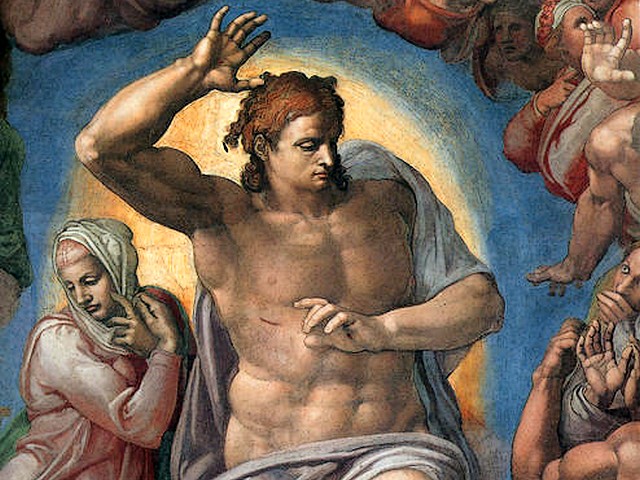
There is an urgency and clarity about Sunday’s Gospel that is often lacking in modern Christians, including the clergy. The message is urgent, provocative, and clear: there is a day of judgment coming for every one of us and we must be ready for it. The message is a sobering one for a modern world that is often dismissive of judgment—and certainly of Hell. Jesus clearly says that the Kingdom of God can be taken from us for our refusal to accept its fruits in our life.

The parables that Jesus related to teach about judgment and the reality of Hell are often quite vivid, even shocking in their harsh imagery; they are certainly not stories for the easily offended. They are also difficult to take for those who have tried to refashion Jesus into a pleasant, affirming sort of fellow rather than the uncompromising prophet and Lord that He is.

No one spoke of Hell more often than Jesus did. Attempting to reconcile these bluntly presented teachings with the God who loves us so much points to the deeper mysteries of justice and mercy and their interaction with human freedom. This point must be clear, however: no one loves us more than Jesus does and yet no one spoke of Hell and its certainty more often than Jesus did. No one warned us of judgment and its inescapable consequences more often than did Jesus. Out of love for us, Jesus spoke of death, judgment, Heaven, and Hell. As one who loves us, He wants none of us to be lost. So He warns us; He speaks the truth in love.

Historically, this parable had meaning for the ancient Jews that had already come to pass. God had established and cared for his vine, Israel. He had given them every blessing; He had led them out of slavery and established them in the Promised Land. Yet when searching for the fruits of righteousness He found little. God sent many prophets to warn them and to call forth those fruits, but they were persecuted, rejected, and even murdered. Finally, God sent His Son, but He too was murdered. There comes forth a sentence: He will put those wretched men to a wretched death and lease his vineyard to other tenants who will give him the produce at the proper times … Therefore, I say to you, the Kingdom of God will be taken away from you and given to a people that will produce its fruit. By 70 A.D., Jerusalem was destroyed; the Temple was never to be rebuilt.

The Jewish people are not singled out in the Scriptures., All of us, like them, are a vineyard. If we are not careful, their story will be ours. Like the ancients, we have a decision to make. Either we accept the offer of the Kingdom and thereby yield to the Lord’s work and bring forth a harvest, or we face judgment for rejecting that offer. God will not force us to accept His Kingship or His Kingdom. We have a choice to make and that choice will be at the heart of the judgment we will face.

Let’s take a closer look at today’s Gospel and apply it to the vineyard of our lives.

I.  THE SOWING – The text says, There was a landowner who planted a vineyard, put a hedge around it, dug a wine press in it, and built a tower. Then he leased it to tenants and went on a journey.

Note the care and providence of the landowner (God), who has given each of us life and every kind of grace. The image of the vineyard indicates that we have the capacity to bear fruit. This signifies the many gifts, talents, and abilities that we have been given by God.

The hedge calls to mind the protection of His grace and mercy. Though the world can be a tempting place, God has put a hedge of protection around us that is sufficient to keep us safe from serious sin, if we accept its power.

But a hedge implies limits. Although God’s protective graces are sufficient, we must live within limits, within the hedge that keeps the wild animals of temptation from devouring the fruits of our vine.

The tower is symbolic of the Church, which stands guard like a watchman warning those who live within the boundaries of the hedge of dangers. The tower (the Church) is stands as a sign of contradiction to the hostile world outside, which seeks to devour the fruit of the vineyard.

That the landowner leases the vineyard is a reminder that we are not our own; we have been purchased at great cost. God and God alone created all these things we call ours. We are but stewards, even of our own lives. We belong to God; we must render an account to Him and show forth fruits.

This point must be emphasized: God has given us great care. He has given us His grace and mercy—His very self. As the text from Isaiah says, What more was there to do for my vineyard that I had not done? God loves us and does not want us to be lost. He gives us every grace and mercy we need. The Lord says, As surely as I live, declares the Sovereign LORD, I take no pleasure in the death of the wicked, but rather that they turn from their ways and live. Turn! Turn from your evil ways! Why will you die, O house of Israel? (Ez 33:11) This must be emphasized because we grumble too quickly about the coming judgment. God offers every possible grace to save us. It is up to us to accept or reject His help.

II.  THE SEEKING – The text says, When vintage time drew near, he sent his servants to the tenants to obtain his produce.

There come moments in our lives when God looks for fruits. Remember that He is the owner and the fruits are rightfully His. He has done everything to bring forth the fruit and now deserves to see the produce of His grace in the vineyard of our life, which is His own.

What fruits does the Lord seek? The values and fruits of the Kingdom: faith, justice, mercy, peace, forgiveness, chastity, faithfulness, generosity, love of the poor, love of one’s family and friends—even love of one’s enemy—kindness, truth, sincerity, courage to speak the truth and witness to the faith, and an evangelical spirit.

The text says that the owner sent his servants to obtain the produce. Here also is evidence of God’s mercy. Historically, God’s “servants” were the prophets. God sent them not only to bring forth the harvest of justice, but also to clarify and apply His Word, and to remind and warn sinners. God patiently sent many generations of prophets to help Israel.

It is the same for us. God sends us many “prophets.” Perhaps they are priests or religious, parents, catechists, teachers, or role models; but they are all part of God’s plan to warn us to bear fruit and to help call forth and obtain some of those fruits. Each in his own way says, as St. Paul did in today’s second reading, Whatever is true, whatever is honorable, whatever is just, whatever is pure, whatever is lovely, whatever is gracious, if there is any excellence and if there is anything worthy of praise, think about these things. Keep on doing what you have learned and received and heard and seen in me (Phil 4:8-9).

Yes, God seeks fruits, and rightfully so. He sends His servants, the prophets, to help call them forth in us.

III. THE SINNING – The text says, But the tenants seized the servants and one they beat, another they killed, and a third they stoned. Again he sent other servants, more numerous than the first ones, but they treated them in the same way. Finally, he sent his son to them, thinking, ‘They will respect my son.’ But when the tenants saw the son, they said to one another, ‘This is the heir. Come, let us kill him and acquire his inheritance.’ They seized him, threw him out of the vineyard, and killed him.

Despite all that the owner has done by sending His servants, the tenants reject them all, and with increasing vehemence; their hearts grow harder. The landowner even goes so far to demonstrate his love and his will to save that he sends his own son, but they drag him outside the vineyard and kill him. Yes, Jesus died outside the city gates, murdered for seeking the fruit of faith from the tenants of the vineyard.

What of us? There are too many who reject God’s prophets. They do so with growing vehemence and abusive treatment. Many people today despise the Church, the Scriptures, parents, friends, and Christians in general who seek to clarify and apply God’s Word and to warn of the need to be ready. Repeated resistance can cause a hardening of the heart to set in. In the end, there are some—in fact many according to Jesus—who effectively kill the life of God within them and utterly reject the Kingdom of God and its values. They do not want to live lives that show forth forgiveness, mercy, love of enemies, chastity, justice, love of the poor, generosity, kindness, and witness to the Lord and the truth.

We ought to be very sober because there are many, many people today who are like this. Some have merely drifted away and are indifferent. (Some have been hurt or are struggling to believe, but at least they remain open.) Still others are passionate in their hatred for the Church, Scripture, and anything to do with God, explicitly rejecting many of the values of His kingdom. We must continue in our attempts to reach them.

IV. THE SENTENCE – The text says, What will the owner of the vineyard do to those tenants when he comes? They answered him, ‘He will put those wretched men to a wretched death and lease his vineyard to other tenants who will give him the produce at the proper times.’ Therefore, I say to you, the kingdom of God will be taken away from you and given to a people that will produce its fruit.

Here, then, is the sentence: If you don’t want the Kingdom, you don’t have to have it. On one level, it would seem everyone wants the Kingdom. In other words, everyone who has any faith in God at all wants to go to Heaven. But what is Heaven? It is the fullness of the Kingdom of God. It is not just a place of our making. It is that place where the will of God, the Kingdom’s values, are in full flower. Many, however, do not want to live chastely, do not want to forgive, do not want to be generous, do not want to love the poor, do not want God or anyone else at the center, do not want to worship God.

Self exclusion – Having rejected the Kingdom’s values, and having rejected the prophets who warned them, many simply exclude themselves from the Kingdom. God will not force the Kingdom on anyone. If, even after God’s grace and mercy and His pleading through the prophets, you don’t want it, you don’t have to have it. It will be taken from you and given to those who do.

The existence of Hell is rooted in God’s respect for our freedom, for we have been called to love. Love must be free, not compelled. Therefore, Hell has to be a reality. It is the “alternative arrangement” that others make for themselves in their rejection of the Kingdom of God. At our death, our decision is forever fixed.

Yes, Hell and the judgment that precedes it are clearly taught in today’s Gospel and in many other places (e.g., Matt 23:33; Lk 16:23; Mk 43:47; Matt 5:29; Matt 10:28; Matt 18:9; Matt 5:22; Matt 11:23; Matt 7:23; Matt 25:41; Mk 9:48; Luke 13:23; Rev 22:15). These teachings come from a Lord who loves us and wants to save us, but who is also well aware of our stubborn and stiff-necked ways.

What is a healthy response to this teaching? To work earnestly for the salvation of souls, beginning with our own. Nothing has destroyed evangelization and missionary activity more than the modern notion that everyone goes to Heaven. Nothing has so destroyed zeal for the moral life and hunger for the Sacraments, prayer, and Scripture. And nothing is so contrary to Scripture as the dismissal of Hell with the false notion that all are going to Heaven.

But rather than panic or despair, we must get to work and be more urgent in our quest to win souls for Christ. Whom does the Lord want you to work with to draw back to Him? Pray and ask Him: “Who, Lord?” The Lord does not want any to be lost. He still sends His prophets (this means you) to draw back anyone who will listen. Will you work for the Lord? Will you work for souls?

There is a day of judgment looming and we must be made ready for it by the Lord. Will you be urgent about it, for yourself and others?

The Disruption of Extreme Individualism, as Seen in a Commercial

The commercial below is a humorous illustration of the clash of cultures. As the scene opens, we see a formally clad orchestra performing the famed Brandenburg Concerto. The focus then shifts to a percussionist at the back of the orchestra. The man proceeds to bring the entire orchestra to a halt by engaging in a wild solo reminiscent of the excesses of a 20th century rock guitarist.

While the ad is humorous, it also is a sad commentary on what has happened to our culture. The orchestra bespeaks a kind of order, one that stays within a framework so that the musicians can work together and make beautiful music. To some this may seem stuffy and confining, but the rules make the game; the boundaries make it possible to move forward together.

The over-the-top solo illustrates the modern tendency to emphasize wild eccentricities, to focus on the one rather than the group. The entire solo performance says, Look at me!

We see a lot of this today. Strange, problematic, egocentric, and even bizarre behaviors demand attention and are celebrated. Just as the commercial illustrates, though, the effect is that the collective “music” ends and the everyone is forced to focus on the one, the individual—and the individual gets more bizarre by the day.

Individuality has its place in any culture, but too often today wild excess means that our collective song is stopped and the stage is commandeered by ever wilder and more excessive displays.

Something to ponder as you enjoy this amusing commercial. It helps us to be able to laugh at ourselves just a bit.

A Sobering Reminder on the Liturgy from the Book of Leviticus

There is a sobering passage in the Book of Leviticus that speaks to the need for priests to be faithful to the prescribed liturgical norms. While the offense described in this passage is complex, the main point is clear enough: The liturgy is revealed by God and is not the personal plaything of the priest or the congregation. Although some of the liturgical edicts of the Old Covenant have been fulfilled and are therefore no longer binding, only the Church, in careful discernment, can set liturgical norms; God’s priests and people must not stray from them.

Let’s take a look at the text consider its sobering reminder:

Now Nadab and Abihu, the sons of Aaron, each took his censer and put fire in it and laid incense on it and offered strange fire before the Lord, which he had not commanded them. And fire came out from before the Lord and consumed them, and they died before the Lord. Then Moses said to Aaron, “This is what the Lord has said: ‘Among those who are near me I will be sanctified, and before all the people I will be glorified.’” (Leviticus 10:1-3).

Wow, two priests struck dead by God for a liturgical violation! The severity of this moment ought to make us more cautious about brushing off liturgical abuses as “no big deal.” And while not all liturgical errors are equally serious, intentionally dispensing with sacred norms is highly displeasing to God.

The sin of Nadab and Abihu is complex and the nature of their offense is somewhat debated. A common explanation sets forth the following problems with what they did:

  1. Although the wording is not completely clear, it is likely that Nadab and Abihu each took “his” own censer rather than the sacred thurible of the sanctuary. However, it is also possible that the “his” referred to Aaron, and that Nadab and Abihu each took Aaron’s censer (see # 3 below).
  2. They seem to have offered it together, whereas the incense was generally offered by only one priest at a time.
  3. They intruded upon the functions of the high priest, who alone burnt incense in a censer (see Leviticus 16:12-13; Numbers 17:11). (Although ordinary priests sometimes burnt incense, it was only on the golden altar in the holy place (Exodus 30:7-8) or on the brazen altar as a part of the memorial (See Leviticus 2:2-3; Leviticus 2:16).)
  4. They offered the incense at an unauthorized time (apart from the morning and evening sacrifice).
  5. They offered “strange fire,” meaning that they filled their vessels with common fire instead of taking it from the holy fire of the altar, which was always to be used in burning incense. (Others think that the phrase “strange fire” denotes fire not offered according to the prescribed law (see Leviticus 9:24; Leviticus 16:12).)
  6. Later on in Leviticus, the text indicates that Nadab and Abihu had partaken too much of the drink offering and were likely intoxicated (see Leviticus 10:9).

The above enumeration may seem like “inside baseball” and the technicalities described arcane, but we should be most concerned about the last line of the Scripture passage: Then Moses said to Aaron, “This is what the Lord has said: ‘Among those who are near me I will be sanctified, and before all the people I will be glorified.’”

In other words, the purpose of the liturgy is not to glorify man. It is not to entertain. It is not to serve as an occasion for priests to boast or to engage in unauthorized and egocentric displays. The purpose of the liturgy is that God be glorified and known as holy.

Sadly, many people today see the liturgy as a stage upon which man is to be exalted and entertained. Much time is devoted to announcements, self-referential hymns, self-congratulatory outbursts. Liturgical norms are often set aside in service of human preference or the ego of a priest who thinks his own words and gestures far outshine what the “institutional” Church and sacred tradition have directed. Speed, convenience, and comfort seem to far outweigh any notion that the liturgy involves offering a sacrifice to God in gratitude and obedience.

This does not mean that the sacred liturgy has to be unreasonably severe, slavishly robotic, or wholly unconcerned with the good of God’s people. Charity and prudence both require that the liturgy also manifest God’s mercy, goodness, and truth in ways that are intelligible and helpful to God’s people. In general, though, the balance has tipped so far away from glorifying God that we must constantly reminded ourselves that God is the point, not us. When He is the point we are blessed, for we look beyond our often petty and vain pursuits and come to find our true selves in God.

This passage from Leviticus should remind us that misconstruing the sacred liturgy is displeasing to God—not because He has a big ego, but because such abuse harms us. We were made to glorify God and find true happiness in so doing. Liturgical abuse in service of anthropocentric interests makes our liturgies small-minded and insular. Ultimately it is we who are deprived of our truer and greater joy, which is God Himself.

Things We Can Learn from Dogs and Cats

Here at Holy Comforter-St. Cyprian Parish in Washington, D.C., we celebrate the Feast of St. Francis of Assisi with the blessing of the animals. Although most folks bring dogs to be blessed, there are usually some who bring cats and a few other animals like ferrets. Once, someone even brought a snake!

In the past I have shared a list of things we can learn from dogs. When I was growing up, we always had a dog, so although I did not compose the list below, I can vouch for its accuracy.

Over my years of city living as an adult, I have grown accustomed to having cats (they are great mousers in old rectories). So I set my thoughts toward composing a similar list of what I have learned from cats. They are such independent and self-assured animals! They really let you know who’s boss, but mitigate their arrogance somewhat with clownish play and affectionate “head-butts.”

God speaks to us in all of creation, including our pets, to whom we are often so close. What is God saying? Many things!

So here is my list of what I have heard God say through the cats I have loved over the years: Tupac, Katy Bell, Jenny June, Gracie Girl, Rita Hayworth, Ellen Bayne, Jerry McGuire, Benedict (Benny), Daniel, and Jewel. Some of them lived in the alley and a few in the house, but they have all taught me things. Here are a few pearls of wisdom they conveyed:

  1. If you can’t get your way, lie across the keyboard until you do. (Be persistent.)
  2. Keep them guessing with meows and long looks to keep their attention. (Mystery attracts.)
  3. When you’re hungry, meow loudly so they feed you just to shut you up. (Get your needs met.)
  4. Always find a good patch of sun to lie in. (Simple pleasures have their place.)
  5. Life is hard and then you nap. (Be well-rested.)
  6. Climb your way to the top; that’s why the curtains are there. (Be resourceful and creative.)
  7. We are Siamese if you please. We are Siamese if you don’t please. (Be yourself.)
  8. Purr often and use head-butts judiciously. (Express gratitude.)
  9. Sleep on their clothes and personal items so as to leave your scent. (Forget-me-nots have their place.)
  10. Use your litter box. (Be clean and polite.)
  11. Be a mouser. (Earn your keep.)
  12. Clown around and do silly stuff. (Be humble.)
  13. Run around wildly for no apparent reason; chase toys and laser pointers. (Exercise often.)
  14. Rest in hidden places. (Solitude has its place.)

The following list of things we can learn from dogs has been making the rounds on the Internet for years, but it really is rather instructive. Dogs do have a lot to teach us, and I thank God for the dogs to whom I have been close over the years: Prince, Missy, Molly, Taco, Salsa, Chili, Kaila, Lucy, Clancy, and many others. And again, although others compiled this second list, I can affirm through much experience how true it is!

Fifteen things we can learn from dogs:

  1. Never pass up the opportunity to go for a joy ride.
  2. Allow the experience of fresh air and the wind in your face to be pure ecstasy.
  3. When loved ones come home, always run to greet them.
  4. Let others know when they’ve invaded your territory.
  5. Take naps and stretch before rising.
  6. Run, romp, and play daily.
  7. Eat with gusto and enthusiasm.
  8. Be loyal.
  9. If what you want lies buried, dig until you find it.
  10. When someone is having a bad day, be silent. Sit close by and nuzzle them gently.
  11. Thrive on attention and let people touch you.
  12. Avoid biting when a simple growl will do.
  13. When you’re happy, dance around and wag your entire body.
  14. No matter how often you’re scolded, don’t buy into the guilt thing and pout. Instead, run right back and make friends.
  15. Delight in the simple joys of a long walk.

Happy Feast of St. Francis!

All creatures of our God and king
Lift up your voice and with us sing,
Alleluia! Alleluia!

God Can Make a Way Out of No Way: A Meditation on the Role of Adversity

St. Paul in Prison, Rembrandt

Adversity comes to every one of us. The word’s Latin roots speak to the way in which things can turn against us; the winds, instead of moving us along, turn toward and against us and our progress seems stalled or even reversed.

But has it? Or does adversity have a hidden, benign, or even good purpose?

Consider the following teach from St. Paul, which arose from his own adversity. He is in prison, yet writes this:

I want you to know, brothers, that what has happened to me has really served to advance the gospel, so that it has become known throughout the whole imperial guard and to all the rest that my imprisonment is for Christ. And most of the brothers, having become confident in the Lord by my imprisonment, are much more bold to speak the word without fear. … Yes, and I will rejoice, for I know that through your prayers and the help of the Spirit of Jesus Christ this will turn out for my deliverance, as it is my eager expectation and hope that I will not be at all ashamed, but that with full courage now as always Christ will be honored in my body, whether by life or by death (Phil 1:12-14, 19-20).

One can hardly imagine a set of circumstances more adverse for a missionary on the move than to be confined to a prison cell, unable to preach freely. Nevertheless, with the Holy Spirit to teach him, St. Paul can say that what seems adverse has actually served to advance the Gospel. His willingness to suffer for the truth of the faith both gives him credibility and bestows boldness upon others.

By God’s grace, the most adverse and paradoxical of situations can bear fruit. The blood of martyrs is the seed of Christians. Find a place where the Church is being persecuted and you will find a place where she is growing. At the cross, Satan thought he could kill Christ and be done with Him, but instead, he released Christ’s full power. This is a lesson that seems to continually escape Satan and the world: God can make a way out of no way! When Satan does his worst, God releases the best.

What in our life has at the time seemed adverse but has actually turned out to be a blessing? It is important to reflect on this often because adversity takes an initial emotional toll. Discouragement, anger, fear, or depression can result if we do not quickly recall the paradox of the cross and God’s ability to write straight with the crooked lines of this word and to advance through even the strongest of headwinds. Adversity can help to clarify and strengthen. Persecution can purify us. Those who scoff at and challenge our beliefs can help us to clarify the truth even more. The lamp of truth is most precious and shines most gloriously in the deepest darkness.

While irksome, what seems adverse can still advance the cause of the Gospel. We need not desire adversity, but when it comes we should trust that God has permitted it, for a season and for a reason. If the greatest paradox of all, the cross, could release glory and open a way out of no way, so can our sufferings and adversities if we unite them to that cross.

God can make a way out of no way.

Lessons from the Life of St. Francis

Many fine histories exist on the life of St. Francis of Assisi so there is no need to replicate that information in this post. (Here is a recently published one that is particularly good.) As we prepare for the Memorial of St. Francis of Assisi (Oct. 4), let’s reflect on a few lessons from his life.

1. On the possibility of radical conversion and the role of affliction and humiliation – The son of a successful cloth merchant, St. Francis enjoyed a very affluent, easy life growing up and partook of the permissiveness of the times. He was a natural leader and drew to himself a crowd of young people who spent their nights in wild parties. His biographer, Thomas of Celano, wrote this of him: “He attracted to himself a whole retinue of young people addicted to evil and accustomed to vice.” Francis had visions of grandeur and became a knight. Perhaps the horrors of battle and a year as a prisoner of war began a gradual conversion in him. The Fourth Crusade was called in 1205 and Francis impulsively bought new armor and sallied forth. He turned back, however, perhaps as a result of his own anxiety, and more surely due to a vision he had in which God rebuked his manner of life. When he returned home, Francis was derided as a coward and suffered the great anger of his father.

This crisis in Francis’ life ultimately led to his conversion—and a dramatic one at that. The Book of Psalms says, Before I was afflicted I strayed. But now I have kept your word, O Lord (Psalms 119:67). We all know people whose conversion seems unlikely, but God may yet humble them and draw them to conversion. Further, we ought never to underestimate the fact that affliction and humiliation may be necessary components of conversion for many of us. At times we may feel as though God has abandoned us or others whom we love. In fact, He may be doing some very important work. Our greatest enemy is pride and our best friend is humility. Humility and affliction may be gifts in strange packages. Learn to trust in God’s ways, painful though they may sometimes be. God may be drawing us to deeper conversion.

2. On the freedom of poverty and simplicity – Francis and his early companions embraced a life of radical poverty. So severe was this poverty that some thought them mad and rebuked them as irrational. To this, St. Francis responded, If we had any possessions we should need weapons and laws to defend them. One hagiographer wrote, Possessing something was the death of love for Francis. Also, Francis reasoned, what could you do to a man who owns nothing? You can’t starve a fasting man, you can’t steal from someone who has no money, you can’t ruin someone who hates prestige. They were truly free [1]. Not all of us may be able to embrace such severe poverty due to our obligations to others. More and more, though, we ought to experience a growing simplicity of life that frees us from the power of this world. Poverty and simplicity are powerful and fruitful gifts of God. They, too, are gifts in strange packages. If we can learn to embrace them, we will discover greater freedom.

3. On the Love of God’s Church and how reform is best accomplished – During St. Francis’ lifetime the Church was in need of reform. Greed, worldliness, and scandal were problems among both the clergy and laity. Heresies were abundant. Some, noting sin in the Church, chose to hate the Church and leave her. Others, like Francis, heard the call of God, who never ceases to love His Church; they intensified their love for the Church and worked for her reform. In a vision, St. Francis sensed this call from God: “Francis, repair my Church.” Gradually he deepened his understanding of the Lord’s call and began that reform by seeing first to his own life.

It is possible for critics of the Church to decry the sins of others yet not see their own. Francis began in the vineyard of his own life and then went forth, gently preaching conversion to his neighbors through personal example. The movement for reform spread. It was a grassroots effort; it was personal. Within ten years there were more than 5,000 men in Francis’ community; the Poor Clares (which he founded with St. Clare of Assisi) were also growing.

True reform begins with us. Simply denouncing the sins of others or of the Church, real though they may be, seldom has lasting effect. The best reform starts with personal conversion. Personal conversion spreads to others and then reform is underway. It works. If we allow God to set us on fire, then we can spread that fire.

4. On unity with all creation and the gift of wonder and awe – St. Francis thought of nature—all of God’s creation—as part of his brotherhood. In some sense, the sparrow was as much his brother as was the Pope.

There is a tendency today among some in the radical environmental movement to see man as the enemy of the natural world rather than an integral part of it, to view man as an outsider with respect to the natural world rather than as a partaker and member of it. For St. Francis, though, there was brotherhood.

In brotherhood there are legitimate needs we satisfy for one another. Nature supplies us and we in turn help to perfect nature. We have done this in our best moments by helping to increase the yield of our fields and bringing far greater bounty to the earth through advances in agriculture and animal husbandry. We also seek to master disease and push back the destructive boundaries of what is unruly in nature (e.g., infestation). Although we have often transgressed through unnecessary pollution, in the end we are not the enemies of nature but companions and brethren to the natural world.

St. Francis can help us to find this balance. He surely exhibited a sense of gratitude for God’s creation and a deep wonder and awe at all that God has given. We, too, ought to develop a deep appreciation for the beauty of God’s work and we should reverence our very selves as a part of that creation.

5. On the Need to Evangelize the Muslim World – We may think that the struggle with the Muslim world is new, but it is not. In his life, St. Francis decided to go to Syria to convert the Moslems (the preferred term until about 1940) while the Fifth Crusade was being fought. In the middle of a battle, Francis decided to do the simplest thing and go directly to the sultan, Melek-el Kamel, in order to make peace. He and his companion were captured and Francis was taken to the sultan. Francis challenged the Moslem scholars to a true test of religion by fire, but they refused. Francis proposed to enter the fire first, under the condition that if he left the fire unharmed, the sultan would have to recognize Christ as true God. Although the sultan turned down the challenge, he was so impressed that he allowed Francis to preach to his subjects. While Francis did not succeed in converting him, the sultan’s last words to Francis were these: Pray for me that God may deign to reveal to me that law and faith which is most pleasing to him. This work of Francis’ and his attempted rapprochement with the Moslem world had far reaching consequences, long past his own death: after the fall of the Crusader Kingdom, it was the Franciscans, of all Catholics, who were allowed to stay on in the Holy Land and were recognized as “Custodians of the Holy Land” on behalf of Christianity [2].

Today, with the emergence of extremist forms of Islam, we need more than ever to have the courage of St. Francis to engage the Muslim world and try to bring them to Christ. It may be difficult work and successes may be few at this stage, but God calls us to be faithful, not necessarily successful. Ultimately, success is up to God. We who are Catholics have a special role in this evangelization because the Muslim world shares with us a respect for Mary, Mother of Jesus our Lord. I’ll elaborate more on that point in a future post.

This first video below attempts to capture the magnificence of creation. It is set to the hymn “All Creatures of Our God and King,” whose lyrics are based on a poem by St. Francis known as “The Canticle of the Sun” (Canticum Fratris Solis (Canticle of Brother Sun)).

Here is a video of a dog whose owner taught him to pray!

https://youtu.be/tN5Ype29zuM

(Unfortunately, the coding from YouTube will not allow embedding of this second video.)