The Seven Deadly Sins: Pride

Pride is a sin that is so pervasive, runs so deep within us, that we often don’t even sense it is there. Not only is it a sinful drive in itself, it also plays a role in every other sin we commit. Pride is the sin we most share with Satan and the fallen angels. Satan refused to serve God or to submit to His plan; these are strong tendencies in every human person as well. Satan planned his strategy well as he tempted Eve. You will be like God, he told her. Both Eve and Adam falsely reasoned that in order to be free they should not be told what to do; they should do as they pleased. They claimed the right to determine good and evil for themselves rather than trusting God. This prideful pronouncement has gone forth from human hearts ever since: “I will not be told what to do.”

Let’s take a brief look at the primordial sin of pride.

I. The Definition of Pride – Pride is inordinate esteem for one’s own excellence. It is a habit or vice that disposes us to think more of ourselves than we ought. There is a proper esteem we should have for ourselves, but it is rooted in an appreciation for the gifts we have received from God.

Humility, the virtue that is opposed to pride, is not a hangdog disdain for ourselves; it is a reverence for the truth about who and whose we are. We do have gifts, but they are gifts, gifts that God has given us. These gifts are usually given to us through others. We should be humbly grateful for the gifts and talents that God has given us. In contrast, pride sets aside proper and grateful esteem in favor of excessive esteem that is often self-referential and unappreciative of what God and others have enabled us to become.

On the one hand, pride is one particular vice, sinful in itself. On the other hand, it is a more general vice that is involved directly or indirectly in most other sins. Pride plays an especially large role in sins of malice. Sins of malice are those in which one directly and defiantly refuses to obey God, or refuses to be told what to do, or willfully insists that one knows better than God, the Church, or those entrusted with one’s instruction and guidance. Pride plays a more indirect role in sins of weakness. Sins of weakness are those in which one acts sinfully not so much out of defiance as out of a weak inability to do what one admits is right. Pride may be more indirectly present through careless neglect of growing in virtue or failure to seek God’s help.

Pride is directed not only at God but also at our neighbor. There are times when we refuse to submit to the instruction or authority of others who rightfully have that position. There are other times when we refuse to admit that others have gifts and abilities that we do not possess and that we may in fact need in order to be completed. Further, we sometimes refuse to admit that others are just better at certain things than we are. In this way, pride is both impoverishing and isolating.

II. The Distinctions Regarding Pride – In modern English usage as well as in pagan philosophy, the word “pride” can have a positive meaning. The pagan philosophers often thought of pride as a good thing. Before it becomes sinful, pride inspires us to strive not merely for the ordinary but for loftier things. In this sense, pride pushes us to be more than we currently are; it inspires effort.

The use of the word “pride” in a positive sense is much less common in Christian moral theology, which typically speaks of pride only as a vice; it categorizes striving for the difficult but possible under the virtues of fortitude and hope.

Note that pride is not the same as vanity. Vanity actually shows some humility because in manifesting it, one shows the need for the admiration of another. For the same reason, pride is also not the same as pleasure at being praised.

St. Gregory lists four types of pride:

  1. Thinking that one’s good is from oneself
  2. Thinking that one’s good is from God but that it is as a consequence of one’s own merits
  3. Boasting of excellence that one does not possess
  4. Despising others and wishing to appear the sole possessor of what one has (this is related to the sin of envy)

III. The Dangers of Pride – The central effect of pride is to push God to the periphery of our moral, spiritual, and temporal existence. God is either shunned directly or becomes increasingly irrelevant to us. Man necessarily moves to the center and, even more egotistically, I move to the center. If God exists at all to the prideful person, it is only to gratify his pleasures and confirm his preconceived notions.

Having moved God to the periphery, the prideful person focuses more on his own power and exaggerated notions of control. Money, prestige, power, access, and possessions become his focus. It is himself on whom he relies, not God.

This of course is the height of foolishness because no human being can save himself. The relegation of God to the margins of our life is the chief danger of pride because He alone can save us. It is said that pride looks down, but no one can see God except by looking up. Pride turns us inward and downward!

Because pride involves entertaining the illusion of self-sufficiency and omits or minimizes God, it can be a serious or mortal sin. However, it is frequently not mortal, as that would require a conscious and fully willed discounting of God. Most individual acts of pride are venial by reason of this deficiency of awareness or full consent of the will.

Even though culpability may be less than mortal, the harm caused by marginalizing God cannot be overstated. The damage grows both individually and collectively until the most foolish things become daily fare. Further, a culture dominated by people who “forget” that God sees all and that they will have to render an account to Him will suffer increasingly from tyrannical, vicious, and destructive behaviors. Such a culture is dominated in growing measure by those who exercise little or no restraint on their behavior and who act imperiously — even despotically.

Pride can get very dark very quickly because it involves a direct turning away from God. In this sense pride is the first and worst of all sins.

So serious is pride that, as a remedy, God allows us to fall into other sins, especially those of the flesh. Thus, though God does not cause acts of fornication, drunkenness, or gluttony in us, He often permits their stubborn presence in order to save us from pride, which is a more serious sin. Sins of the flesh, especially those related to sexuality, often bring great shame, which is related to humility. And though it is strong medicine, God permits it in order to save us from the sin of pride, which is even more deadly.

IV. The Disease of Pride Pride is the source of many other sins. Not only is it their source, it is in those sins. Pride conquers at the root because it conquers the heart of man and disposes him to the other capital sins. St. Gregory does not even account pride as a capital sin, for it is the mother of them all!

A widespread modern form of pride, even among believers, is the reduction of God from the Holy One to a “harmless hippie” or a doting Father. Further, the awareness of final judgment and that we will one day have to render an account to God is not a significant factor in the thinking of most moderns. God is trivialized and man is exalted. To many, God exists to please and validate them on their own terms; His role is to affirm and console (but never challenge) them. In a certain sense, the ugliest and most self-serving form of pride is refashioning God in our own image. Making your own god and worshipping it used to be called “idolatry.”

Today, many assert the right to fashion their own god: the god within, the god of their own understanding. This is pride writ large and ugly. It is idolatry, somewhat veiled, but idolatry just the same; it is a violation of the First Commandment. Such pride cries out for correction and punishment. Yes, pride is ugly — a deadly disease.

Cross-posted at the Catholic Standard: The Seven Deadly Sins: Pride

An Overview of the Seven Deadly Sins

Do you know what the Seven Deadly Sins are? It is valuable to name and begin to understand these deep drives of sin within us because the more we do so the more we can grow in self-knowledge. Further, it helps us to “know their moves” and gain mastery over them. As they stir deep within us we can recognize evidence of this and begin to take greater authority over them.

Too many Christians know little about twisted nature of sin. They just know they’re a little (or very!) messed up and can’t seem to figure out why. Have you ever gone to the doctor, not knowing what was wrong with you, and left feeling better just because you finally knew that what ailed you had a name and a cure? Being able to name our demons is an essential part of growth and healing.

Here are the Seven Deadly Sins, with a brief description of each:

  • Pride – the quality of loving and esteeming oneself more than is proper and at the same time denigrating the goodness of others
    • Pride also stirs us to reject the lawful authority of others, including God, over us and to refuse appropriate submission.
  • Greed – excessive desire for wealth and possessions
    • It is not wrong to desire what we need, but through greed we acquire far beyond what is reasonable and fail to be generous. Through greed we can also come to see the things of this world as more precious than the things of Heaven. Greed has been well described as the insatiable desire for more.
  • Lust – excessive or inappropriate desires or thoughts of a sexual nature
    • It is not wrong to experience sexual desire per se but Lust moves this to become excessive (all that matters), or for the object of it to be inappropriate (g. sexually fantasizing about someone other than a spouse). More broadly, lust is thought of as an excessive love of others that makes the love of God secondary.
  • Anger – inordinate and uncontrolled feelings of hatred and wrath
    • It is not always wrong to experience anger, especially in the presence of injustice. But anger here is understood as a deep drive which we indulge and wherein we excessively cling to angry and hateful feelings for others. This kind of anger most often seeks revenge.
  • Gluttony – overindulgence in or overconsumption of anything to the point of waste.
    • We usually think of gluttony in terms of food and drink, but it can extend to other areas as well. This sin usually leads to a kind of laziness and self-satisfaction that allows little room for God and the spiritual life. It may also cause us to be less able to help the poor.
  • Envy – sorrow or sadness at the goodness or excellence of another person because one believes it makes him appear to be less so.
    • If I envy someone I want to diminish or undermine his excellence. Note that envy is not the same as jealousy. If I am jealous of you I want what you have. In contrast, if I am envious of you, I want to diminish or destroy what is good or excellent in you. St. Augustine called envy the diabolical sin because of the way it seeks to eliminate excellence and goodness in others.
  • Sloth – sorrow or sadness at the good things God wants to do in one’s life
      • Most people think of sloth as laziness, but it is really an avoidance of God. In sloth, I avoid God because I fear or dislike what He can do for me. Some people avoid God through laziness, but others avoid Him by becoming workaholics, claiming that they are too busy to pray, to attend Mass, or to think about spiritual things.


Cross-posted at the Catholic Standard: An Overview of the Seven Deadly Sins

There Was a Man Who Had Two Sons – A Homily for the 4th Sunday of Lent

The Gospel this Sunday is about a man who had two sons, both of whom forsook him and refused to relive in relationship with him. Although the sons seem to have very different personalities (one outwardly rebellious, the other outwardly obedient), their internal struggles are similar. In effect, neither of them really wants a relationship with his father. Both prefer what their father has or can give them to their father himself.

In the end, one son repents and finds his way to the father’s heart. We don’t find out what happens to the second son. The parable didn’t tell us what happened to him because the story is really about us; it is we who must finish it. The question we must answer is this: What do I really want? Do I want the consolation of God, or the God of all consolation; the gifts of God, or the giver of every good and perfect gift?

Let’s look at this Gospel in four parts.

Renegade Son – Most of us are familiar with the Parable of the Prodigal Son. We tend to focus on the younger (and obviously sinful) son rather than the older one. This is interesting because the Lord Jesus seems to have His focus on the older son (the parable is addressed to the scribes and Pharisees, who see themselves as obedient). Nevertheless, let’s observe three things about this renegade son, this prodigal son.

Corruption – This is an angry young man, alienated from his father. He wants what his father has yet wants nothing to do with him. In effect, he tells his father, “You’re not dying fast enough. I want to be done with you and get what’s coming to me right now.”

His effrontery is even more astonishing given where and when it happened. Today, reverence for parents and elders is sadly lacking, but if our times are extreme in the one direction, ancient times in the Middle East were so in the other. In telling this parable as He does, Jesus shocks His listeners, who lived in a culture where no son would dream of speaking to his father in this way. Indeed, a son could be killed by his father for such insolence! Even to this day, so-called “honor killings” still occur in parts of the Middle East. If a child brings dishonor to the family, it is not unheard of for the father to kill him or her. While most governments forbid these practices, in many cultures people will look the other way and the perpetrators are seldom prosecuted.

Yes, Jesus must have shocked His listeners with such a parable. Here was a son who did something so insolent, ungrateful, and daring as to be practically unthinkable.

Even more astonishing than the son’s behavior, however, is the fact that the father actually gives him his inheritance and allows him to leave.

This is Jesus’ veiled description of the patience and mercy of the Father, who endures even greater insolence from us, His often-ungrateful children. We demand His gifts and take them with ingratitude; we want what God gives us but do not want Him.

Consequences – The renegade son sets off to “a distant country.” It is always in a distant country that we dwell apart from God. The consequences of the son’s behavior are great indeed.

This parable does not make light of sin. The Lord Jesus describes well a young man who chooses to live apart from God and in sinful rebellion. The result is that this renegade son lives in anguish and depravity. When he runs out of money, he finds he has no friends, no family, and no experience of his father.

So awful is his state that he becomes hungry for the disgusting mash that pigs eat. Yes, he is lower than the most unclean animal Jews can imagine: a swine.

Sin debases the human person and if its effects are not avoided, it orients us increasingly toward depravity. What was once unthinkable becomes easier and easier.

St. Augustine wrote of sin’s hold on individuals in his Confessions: “For of a forward will, was a lust made; and a lust served, became custom; and custom not resisted, became necessity. By which links, as it were, joined together (whence I called it a chain) a hard bondage held me enthralled” (Confessions, 8.5.10).

The renegade son is suffering the consequences of his sinful choices. He is debased, debauched, and nearly dead.

Conversion – In an almost miraculous turn of events, he comes to his senses. Too many, especially today, suffer a darkened intellect due to the debasing effects of their sin; it would seem that no matter how debased, confused, and even enslaved they become, they still do not come to their senses, for their senseless minds have become darkened (cf Romans 1:21).

Thanks be to God, the renegade son does come to his senses, thinking, I shall arise and go to my father. In this passage, the Greek text uses the word anistemi, here translated as “arise”—the same word used to describe the resurrection of Jesus. The young man’s father will later joyfully describe him as having been dead but then coming back to life.

St. Paul reminds us that we were dead in our sins, but God made us alive in Christ (cf Col 2:13). Thanks be to God for His mercy and for the conversion that He alone can effect in all of us, His renegade children, who ourselves have been debased and debauched and are dead in our sins. The conversion of this renegade son, we pray, is also our conversion, our rising and going back to the Father.

Rejoicing Father – The astonishing nature of this parable is only just beginning, for Jesus goes on to describe a father who is shockingly merciful. He does things that no ancient father would ever do. As Jesus describes this father, so filled with love and mercy that he sacrifices his personal dignity, we must remember that He is telling us that this is what His Father is like.

As the parable continues to unfold, we hear that the father sees the son while he is still a long way off. This tells us that he was looking for his son, praying and hoping for his return.

Such mercy is rare. Most people who are hurt and have their dignity scorned would be resentful, saying, “Never darken my door again!”

How shockingly different this father is, lovingly and longingly awaiting the day when his son will appear on the horizon.

Upon seeing his son, the father runs out to meet him, something no ancient nobleman would ever do. Running was a sign of being in flight or of being a slave out on an errand. Further, in order to run, the ancients (who wore long garments) had to bare their legs—a disgraceful thing for nobility. Only common workers and slaves had their legs exposed.

Yes, this is the portrait of a father willing to debase himself so that he can run and greet his returning son. When we take one step, God takes two or more; He comes running to us!

In the parable, the robe and the ring that the father puts on his son are signs of family belonging or restoration. This is the full restoration of a young man willing to live as a slave in his own father’s house. The father will have none of it. “You are my son whatever your sins. They are forgotten. You are my beloved son!”

What kind of father is this? No earthly father would behave this way. This is the heavenly Father. Jesus is saying, “This is what my Father is like!”

Resentful Son – Now we turn our attention to the older brother. His sinfulness is more subtle. Outwardly, he follows his father’s rules; he does not sin overtly. Unlike his prodigal brother, he has never openly rejected his father; inwardly, though, he is not so different. Like his younger brother, the older son wants his father’s goods, not his father himself. To understand the subtlety of his struggle, let’s look at some of the details of the story. Notice the following fundamental issues with the resentful older son:

He is distant. It is interesting that the older son is the last person to find out about the feast. This is a son who is distant from his father, unaware of the happenings in his father’s life.

Off on some far-flung part of the property, he is going about his duties, which he seems to fulfill adequately. However, we get the feeling that there is a sense of distance between father and son.

Why doesn’t he know that his father, worried about his younger brother, has been looking for him each day? Even the slaves in the household are drawn into the preparations for this celebratory feast; the older son is the only one who knows nothing about it. Even more telling is that he is unaware of his father’s joy at his brother’s return.

Yes, the resentful son is distant, miles away from the heart of his father.

He is disaffected. When the older son learns of the feast and the reason for it, he becomes sullen, angry, and resentful. He is disaffected. He stays away from the feast, refusing to enter.

So bitter is he that his father hears of it and comes out to plead with him.

Do not be too quick to scorn him, however, for we are too like him. We die the death of a thousand cuts as we see other sinners finding mercy. We become envious when others are blessed.

He is disconsolate. The father emerges from the feast to plead with his older son to come in. Again, such a thing would be unheard of in the ancient world! Any father in those days would have commanded his son to come in to the feast, expecting immediate obedience.

This father is different, for he represents the heavenly Father, rooted in love more than in prerogatives and privileges. He has already demonstrated his love for his renegade son and now does so for his resentful older son.

The fact is, he loves both of his sons. Yes, the heavenly Father loves each one of us.

Tragically, the resentful son is unmoved by this demonstration of love. He remains disconsolate and must be confronted in his resentful anger.

He is disrespectful. Now we see the ugly side of the apparently obedient son. He doesn’t truly love or respect his father; he doesn’t really know him at all. He disrespects his father to his face. He speaks of him as if he is a slave master, saying, I have slaved for you … I have never disobeyed any one of your orders.

Orders? I have slaved for you? Where is his love for his father? He does not see himself as a son but rather as an unwilling slave, one who follows orders only because he must. In effect, he calls his father a slave master, a despot.

Further, he accuses his father of injustice. He views the mercy his father has shown to his brother as evidence of a lack of due mercy shown to himself. He considers his father unreasonable, unjust—even despicable. How dare his father show mercy to someone that he, the “obedient” son, does not think deserves it!

In calling his father an unjust slave owner and taskmaster, the son disrespects him to his face. The father stays in the conversation, though, pleading with his son to reconsider.

He is disordered. Among the older son’s complaints is that his father never gave him so much as a kid goat so that he could celebrate with his friends. Our goal in life is not to celebrate with friends; it is to celebrate with the heavenly Father.

Note how similar the two sons actually are. Previously, the renegade son saw his father only in terms of what his father could give him; his father was only valuable in terms of the “stuff” he could provide. Despite his outward obedience, the older son has the same problem, seeming to value only what his father can give him. It is not his father he really loves or even knows. He is interested only in what his father can give him.

In this way, the resentful son is disordered. He misses the whole point, which is not the “things” his father can give him but their relationship. The goal in life is to live with the Father forever in a relationship of love.

Again, be careful before you condemn the resentful son. It is so easy for us to want the good things of God but not God Himself, to want God’s blessings and benefits but not His beloved self, to want the gifts of God but not Him who is the giver of every good and perfect gift.

Yes, the disorder of this resentful son is too easily our disorder. There is something about our flesh that wants God to rain down blessings, yet once we have received them, we want to keep our distance from God. Relationships are complicated and dynamic. Our flesh prefers trinkets. We prefer to receive gifts on our own terms. Our flesh says, “Give me the priceless pearls, but begone with the powerful person who gives them!”

Response – The father is outside pleading with his resentful son to enter the feast. At this point, Jesus abruptly ends the parable. Yes, the story ends! Does the resentful son enter the feast or not? Why is the story left unfinished?

Simply put, it is because we must finish the story, for we are so easily the resentful son.

Right now, the heavenly Father is pleading with us to enter the feast. Too easily we brood and say that we have our reasons for not wanting to go. After all, that renegade son is in there, our enemy is in there. If Heaven involves meeting our enemies and celebrating with them, we don’t want anything to do with it.

Here is the great drama: will we enter the real Heaven? The real Heaven is not of our own making, defined by our own parameters.

Are we willing to enter on God’s terms, or will we stand outside resentfully, demanding that Heaven be on our own terms? Further, do we see Heaven as being with the Father, or do we just view it as a place where we get the things we want?

The heart of Heaven is to be with the Father, with the Holy Trinity. The danger, even for the religiously observant, is becoming the resentful son. The Father is pleading with us to enter the feast, to set aside our prejudices and notions of exclusivity.

To the resentful son the father says, your brother was lost and is found, was dead, and has come back to life.

The Father is pleading with us to enter the feast—not some made-up feast where we choose the attendees—but the real, actual feast of Heaven, where some surprising people may be in attendance.

This parable is unfinished; you and I must finish it. Will you enter the feast? The Father is pleading with you, saying, “Come in before it’s too late.” What is your response to His plea? Answer Him!

Just for fun, here is a retelling of the parable in the “key” of F:

Feeling footloose and frisky, a feather-brained fellow forced his fond father to fork over the farthings and flew to foreign fields and frittered his fortune, feasting fabulously with faithless friends.

Fleeced by his fellows, fallen by fornication, and facing famine, he found himself a feed-flinger in a filthy farmyard. Fairly famishing, he fain would have filled his frame with foraged food from fodder fragments. “Fooey! My father’s flunkies fare finer,” the frazzled fugitive forlornly fumbled, frankly facing facts. Frustrated by failure and filled with foreboding, he fled forthwith to his family. Falling at his father’s feet, he forlornly fumbled, “Father, I’ve flunked and fruitlessly forfeited family favor!”

The farsighted father, forestalling further flinching, frantically flagged the flunkies to fetch a fatling from the flock and fix a feast.

The fugitive’s fault-finding brother frowned on fickle forgiveness of former folderol. But the faithful father figured, “Filial fidelity is fine, but the fugitive is found! What forbids fervent festivity? Let flags be unfurled. Let fanfares flare.”

And the father’s forgiveness formed the foundation for the former fugitive’s future faith and fortitude.


Cross-posted at the Catholic Standard: There Was a Man Who Had Two Sons

Behold the Stars

The video below is another one for your wonder and awe file. It is a time lapse of the stars as they move across the sky. While their movement is due more to the spinning of Earth on its axis at nearly 1000 miles per hour (at the equator, less north or south of it), if you think they are just standing still out there, you are mistaken. At the same time, our rotating planet is orbiting the Sun at approximately 66,000 miles per hour, while the Sun around which we move so rapidly is itself revolving around the center of the Milky Way Galaxy at about 483,000 miles per hour. Finally, the Milky Way Galaxy is moving through the universe at about 1.3 million miles per hour [1].

It is all dizzying to say the least. Most of us in or near light-polluted cities see little of the stars, but all around us are billions of galaxies each with billions of stars. I am not sure why God made a universe that is so immense; perhaps it is just His immense love.

Enjoy this video and be amazed.

Cross-posted at the Catholic Standard: Behold the Stars

Choices Have Consequences: A Lenten Meditation on a Warning From Moses

The themes of early Lent are pretty basic. The ashes of Ash Wednesday announce the simple truth that we are going to die, and thereafter we will face judgment. Hence we need to repent and come to believe the good news that only Jesus can save us.

The reading for Thursday after Ash Wednesday features Moses laying out the basic reality that all of us have a choice to make. He says to us,

Today I have set before you
life and prosperity, death and doom…

I call heaven and earth today to witness against you:
I have set before you life and death,
the blessing and the curse. (Dt 30:15, 20)

So there it is, our choice: life or death, prosperity or doom. An old Latin expression says, Tertium non datur (no third way is given). We often like to think that we can plow some middle path. But in the matter of the last things, there is no middle path, no third way. Either we choose God and his kingdom, and then reflect that choice in all of our smaller decisions, or we do not.

To those who think that a middle path is possible, I would say that it is in effect the way of compromise, ambivalence, and tepidity. Walking such a path shows a lack of real commitment and a refusal to witness to Christ. These are not virtues that belong to God’s Kingdom; they pertain more to the kingdom of darkness. Jesus says, Let what you say be simply ‘Yes’ or ‘No’; anything more than this comes from evil. (Matt 5:37). He also says, No one can serve two masters. Either you will hate the one and love the other, or you will be devoted to the one and despise the other. You cannot serve both God and money. (Matt 6:24)

So we are back to a choice: for the Kingdom of Light or for the kingdom of darkness; for the world and its ways, or for God and His ways. Do we choose to gratify the flesh or nourish the spirit, to serve Satan and his agenda or to serve Christ and His will and plan?

You are free to choose, but you’re not free not to choose. That is to say, you must choose. And if you think that you can go on simply not choosing one or the other, I’ve got news for you: not choosing is choosing the kingdom of darkness.

While it is true that many do not directly choose Satan, but rather indirectly choose him by following his ways, we are asked to directly choose God by accepting the gift of faith and basing our life on what the Lord commands. Faith is not some sort of “default position” we can have by accident. Faith is the supernaturally-assisted and transformed human decision for God and all that that choice implies. Faith is a gift freely offered, and one that we must also freely accept; it is a choice that will not be forced on us. And through many daily choices, we are called to reaffirm, by grace, the choice we have made for God.

So again, life is about choices: the fundamental choice of Faith, and all the daily choices that either affirm or deny the reality of our faith.

We live in times in which people like to demand free choice, but also like to evade the responsibilities that come with making choices. Moses goes on in the reading today to describe the fact that the choice we make for or against God will have consequences:

If you obey the commandments of the LORD, your God,
which I enjoin on you today,
loving him, and walking in his ways,
and keeping his commandments, statutes and decrees,
you will live and grow numerous,
and the LORD, your God,
will bless you in the land you are entering to occupy.
If, however, you turn away your hearts and will not listen,
but are led astray and adore and serve other gods,
I tell you now that you will certainly perish;
you will not have a long life
on the land that you are crossing the Jordan to enter and occupy. (Dt 30)

Yes, choices have consequences. And even little daily choices have the cumulative affect of moving us in one direction or the other, toward God and our goal or away.

Many little choices also have a way of forming our hearts. Deeds become habits; habits become character; character becomes destiny. Many little choices form our hearts, establish our character, and move us into one future or another.

And while it is true that sudden and dramatic conversions are possible as long as we are still living, it is more common that, as we make our journey, our hearts become more fixed, and our fundamental character becomes less and less likely to change. As we get older, it’s harder to change because that’s what choices do to us: they move us in a certain direction, down a certain path. And the further along that path we go, the less likely we are to turn back.

Therefore daily choices are important, and making frequent examinations of conscience and frequent confession are essential. Each day we ought to ask and consider the question, “Where am I going with my life?” If we go on too long living an unreflective life, it is easy to find ourselves deeply locked in sinful habits and patterns that are harder and harder to break. Thus frequent reflection is necessary, and we ought not make light of small daily decisions.

We live in times in which, to some degree, it is easier to insulate ourselves from the immediate consequences of many choices we make. Medicine, technology, social safety nets, etc. are all good things in and of themselves, but they do tend to shield us from immediate consequences, and they help cultivate the illusion that consequences can be forever evaded.

We also live in times in which, perhaps more than ever before, the community is often willing to bear the burden of many bad individual choices. Again, this is not in and of itself a bad thing, but it does become an enabler of bad behavior, and fosters the illusion that consequences can be avoided forever. They cannot.

Our own culture is currently under the weight of a colossal number of poor individual choices, ones that have added up to a financial, spiritual, moral, and emotional debt that we cannot pay. Sexual misconduct, divorce, cohabitation, abortion, STDs, the use of hallucinogenic and addictive drugs, the casting off of of discipline and parental responsibility, the rejection of faith and ancient and tested wisdom, rebellion, silence in the face of sin and injustice, greed, consumerism gone mad, factions, envy discord and on and on… all of this is creating a tremendous toll. The consequences are mounting and it is becoming clear that even the most basic functions of society such as raising the next generation, preserving order and stability, and ensuring the common good are gravely threatened.

And what is true collectively is also true for us as individuals. Lots of bad little choices quickly draw us into self-destructive patterns that get deeper and deeper. And without regular reflection and penitential seasons like Lent, we lose our way too easily! St. Augustine noted this in his Confession, in which he described himself as being bound, “not by another’s irons, but by my own iron will…For in truth lust is made out of a perverse will, and when lust is served, it becomes habit, and when habit is not resisted, it becomes necessity” (Conf 8.5.10)

Moses’ warnings are before us as never before.

Back in 1917, a beautiful and holy Woman (Our Lady) appeared to three little children. She explained that the horrifying war (WW I) was finally coming to an end. But, she warned, if people did not turn back to her Son Jesus and start praying, a worse war would ensue; Russia would spread her errors and great disaster would befall this world. Do I need to tell you what happened? Of course not! Any even casual assessment of the 20th Century would find it hard to conclude that the century was anything but satanic.

Life and Death, prosperity and doom. What will you choose? What will we choose?

Choices! Consequences!

From heavy to a little humor:

Cross-posted at the Catholic Standard: Choices Have Consequences: A Lenten Meditation on a Warning From Moses

How Gratitude Equips Us for Many Other Virtues

The Gospel for Mass on Tuesday (of the third week of Lent) featured the parable of the servant who owed a large sum to the king that he could not repay. The generous and kind king forgave him the entire debt. Strangely, the man then proceeded to treat a fellow servant who owed him a small amount with severity. When the king learned of the servant’s behavior, he grew angry and sentenced him to the very punishment he had meted out to his debtor.

For our mid-Lent purposes, let’s consider the heart of the parable, for it is aimed at our hearts!

The Lord’s parable begins by describing a man who owes a huge amount, one that is completely beyond his ability to repay.

This man represents each one of us. The Greek text says that he owes ten thousand talents (μυρίων ταλάντων). This is a Jewish way of saying that this fellow owes a great deal of money, too much to be able to repay by working a little overtime or taking on an additional job; the situation is hopeless. This is our state before God. We have a debt of sin so high and so heavy that we can never hope to be rid of it on our own. I don’t care how many spiritual pushups we do, how many novenas, chaplets, and rosaries we pray, how often we go to Mass, how many pilgrimages we undertake, or how much we give to the poor. We can’t even make a noticeable dent in what we owe.

We really must get this through our thick skulls! We are in real trouble without Christ. The more we can grasp our profound poverty and understand that without Jesus Hell is our destination, the more we can appreciate the gift of what He has done for us. We are in big trouble; our situation is grave. There’s an old song that says, “In times like these, you need a savior.”

One day it will finally dawn on us that the Son of God died for us. When it does, our stone hearts will break, and love will pour in. With broken, humbled hearts, we will find it hard to hate anyone. In our gratitude we will gladly forgive those who have hurt us, even those who still hate us. With the new heart that the Lord can give us, we will forgive gladly, joyfully, and consistently out of gratitude and humility.

It is difficult to overstate how essential gratitude is for good mental, moral, spiritual, and emotional health. Grateful people are different people. They possess a joy that changes them, making them more joyful, confident, serene, generous, forgiving, and patient. It is hard to despise people when we are filled with grateful joy.

Apparently, this wicked servant never got in touch with his true poverty; he refused to experience the gift that he himself had received. As a result, his heart remained unbroken; it remained hard. Having experienced no mercy (though immense mercy had been extended to him) he was willfully ill-equipped to show mercy to others. Callously unaware of the unbelievable gift he had been given, he remained unchanged. In so doing and being, he was unfit for the Kingdom of God, which can only be entered by gladly receiving mercy.

Many Christians are like this. They go through their life unaware of their need for mercy or unappreciative of the fact that incredible mercy has been extended to them. Unaware, they are ungrateful. Ungrateful, their hearts are unbroken; no light or love has been able to enter. Hurt by others, they respond by hurting back, holding grudges, or growing arrogant and unkind. They lack compassion for or understanding of others and consider themselves superior to those whom they view as worse sinners than they are. They think that forgiveness is either a sign of weakness or something that only foolish people offer. They don’t get angry; they get even.

Beware. The Lord says that the measure we measure to others will be measured back to us. If we are wise, we realize that we are going to need a lot of grace and mercy to stand a chance before the holiness of God. The Lord makes it clear both in this parable and elsewhere that it is those who show mercy who will receive mercy (see also Matt 5:7; and James 2:13).

In order to show mercy, you must first receive it. Go every day to the foot of cross and be astonished at what the Lord has done for you. He forgave you a debt you can never repay, and He has given you myriad other graces and blessings as well. If you let this gratitude melt your heart, being merciful to others will be the (super)natural result, and even when rightly rebuking sin in others you will do so without smug superiority. You will do it in love and true mercy for the sinner and for the common good.

Grateful people are different. Be different!

Cross-posted at the Catholic Standard: How Gratitude Equips Us for Many Other Virtues

The Ancient Mass in “House Churches” Was Not as Informal as Many Think

The Catholic Faith was illegal in the Roman Empire prior to 313 A.D., when the Emperor Constantine issued the Edict of Milan permitting it to flourish publicly. Prior to that time, Church buildings as we know them today were rare – Mass was usually celebrated in houses.

These “houses” were usually rather sizable, with a central courtyard or large room that permitted something a little more formal than Mass around the dining room table. I remember being taught (incorrectly) that these early Masses were informal, celebrated facing the people, and had a relaxed, communal atmosphere. In fact, the people didn’t just sit around a table or on the floor in circle – not at all. They sat or stood formally, with everyone faced in one direction: east.

The drawing above shows the layout of an ancient house church (more often called a Domus Dei (House of God)), based on an excavated 3rd century house church in Dura-Europos (located in what is now Syria).

Baptistry at Dura Europos

The assembly room is on the left, and a priest or bishop is depicted conducting a liturgy (facing east) at an altar against the east wall. A baptistry is on the right, and a deacon is shown guarding the entrance. The lonely-looking deacon in the back of the assembly hall is there to “preserve good order,” as you will read below.

What is remarkable about these early liturgies is how formal they were despite the less-than-ideal circumstances. The following text is from the Didiscalia, a document written in about 250 A.D. Among other things, it gives rather elaborate details about the celebration of the early Catholic Mass in these “house liturgies.” I have included an excerpt below (in bold italics); my comments are shown in red text.

Now, in your gatherings, in the holy Church, convene yourselves modestly in places of the brethren, as you will, in a manner pleasing and ordered with care.

These “house liturgies” were not informal; good order and careful attention to detail were essential.

Let the place of the priests be separated in a part of the house that faces east.

Even in these early house Masses, the sanctuary (where the clergy ministered) was distinct from where the laity gathered. People were not all just clustered around a dining room table.

In the midst of them is placed the bishop’s chair, and with him let the priests be seated. Likewise, and in another section let the lay men be seated facing east. For thus it is proper: that the priests sit with the bishop in a part of the house to the east and after them the lay men and the lay women,

Everyone faced east, laity and clergy. Notice that men and women sat in separate sections, which was the tradition in many churches until relatively recently (the last 150 years or so).

and when you stand to pray, the ecclesial leaders rise first, and after them the lay men, and again, then the women. Now, you ought to face to east to pray for, as you know, scripture has it, Give praise to God who ascends above the highest heavens to the east.

Again, note that Mass was not celebrated facing the people, as some suppose of the early Church. Everyone faced in the same direction: east. The text cites Scripture as the reason for this: God is to the east, the origin of the light.

Now, of the deacons, one always stands by the Eucharistic oblations and the others stand outside the door watching those who enter,

Remember that this was a time of persecution; the early Christians were careful to allow only baptized and bona fide members to enter the sacred mysteries. Only the baptized were permitted to enter the Sacred Liturgy. This was called the disciplina arcanis (discipline of the secret), and deacons guarded the door to maintain it.

and afterwards, when you offer let them together minister in the church.

Once the door was locked and the Mass began, it would seem that the deacons took their place in the sanctuary, with one remaining outside it to maintain “good order” among the laity.

And if there is one to be found who is not sitting in his place let the deacon who is within, rebuke him, and make him to rise and sit in his fitting place … also, in the church the young ones ought to sit separately, if there is a place, if not let them stand. Those of more advanced age should sit separately; the boys should sit separately or their fathers and mothers should take them and stand; and let the young girls sit separately, if there is really not a place, let them stand behind the women; let the young who are married and have little children stand separately, the older women and widows should sit separately.

This may seem a bit complicated, but the upshot is that seating was by sex and age. Note that those with young children were to stand in a separate area (the cry rooms of the day!).

And a deacon should see that each one who enters gets to his place, and that none of these sits in an inappropriate place. Likewise, the deacon ought to see that there are none who whisper or sleep or laugh or nod off.

The early Christians did such things? Say it isn’t so! Today, ushers preserve “good order.”

For in the Church it is necessary to have discipline, sober vigilance, and attentive ear to the Word of the Lord.

Well, that is clear and to the point – and the advice is still needed. It is also a fitting way to end today’s post.


Cross-posted at the Catholic Standard: The Ancient Mass in “House Churches” Was Not as Informal as Many Think

The Gifts of Wonder and Awe Are More Necessary Than Ever

There is a remarkable interaction with God in the Book of Exodus that shows the balance we must develop in how we understand and relate to Him. Many of us get the balance wrong by turning God into a doting grandfather figure or seeing Him as an angry despot just waiting for any misstep. Trivializing or domesticating God is the more common error today, but we ought not to underestimate the number of people who struggle to find in God a loving Father.

Therefore, consider the passage from Exodus. It begins with a description of God’s loving tenderness for Israel.

In the third month after their departure from the land of Egypt, on its first day, the Israelites came to the desert of Sinai. After the journey from Rephidim to the desert of Sinai, they pitched camp.

While Israel was encamped here in front of the mountain, Moses went up the mountain to God. Then the Lord called to him and said, “Thus shall you say to the house of Jacob; tell the Israelites: You have seen for yourselves how I treated the Egyptians and how I bore you up on eagle wings and brought you here to myself. Therefore, if you hearken to my voice and keep my covenant, you shall be my special possession, dearer to me than all other people, though all the earth is mine. You shall be to me a kingdom of priests, a holy nation. That is what you must tell the Israelites” (Exodus 19:1-7).

Yes, they are a people dear to Him, His special possession, holy and set apart. The Lord did not just lead them out of Egypt; He carried them. Later, through Hosea, God spoke of His tender love in similar language: I led them with cords of human kindness, with ties of love. To them I was like one who lifts a little child to the cheek, and I bent down to feed them (Hosea 11:4).

Yet, as God descends upon Mount Sinai, the Israelites do not experience a tender Father stopping to feed them; their reaction might better be described as terror.

Moses led the people out of the camp to meet God, and they stationed themselves at the foot of the mountain. Mount Sinai was all wrapped in smoke, for the Lord came down upon it in fire. The smoke rose from it as though from a furnace, and the whole mountain trembled violently. Trumpet blasts grew louder and louder, while Moses was speaking and God answering him with thunder.

When the people witnessed the thunder and lightning, the trumpet blast and the mountain smoking, they all feared and trembled. So they took up a position much farther away and said to Moses, “You speak to us, and we will listen; but let not God speak to us, or we shall die.” Moses answered the people, “Do not be afraid, for God has come to you only to test you and put his fear upon you, lest you should sin.” Still the people remained at a distance, while Moses approached the cloud where God was (Exodus 19:15-20:18-21).

It was surely frightening for them. Yet recall that in the Garden of Eden, Adam and Eve experienced intimacy with God. Scripture spoke of God as walking in the garden in the breezy time of the day (Genesis 3:8). How different that experience was from the one described in Exodus! Had God changed? No, we had changed. On account of sin and its debilitating effects, the evening walks with God ended. After sinning, when Adam and Eve heard God walking, they hid from Him. Although created in the image of God, they could no longer endure His presence; almost as if in mercy, God let them live at a distance. So the Lord drove out the man and stationed cherubim on the east side of the Garden of Eden, along with a whirling sword of flame to guard the way to the tree of life (Genesis 3:24). Ever since, we have yearned to see God’s face (e.g., Ps 27:8). Yet Scripture warns, For who can look on the face of God and live? (Ex 33:20)

Only with the coming of Christ and His reparative grace could we ever hope to see the face of God again and walk with Him. Indeed, Christ did open the way to the Father. At the moment of His death, the veil of the temple was torn in two from top to bottom (Mat 27:51). Jesus restored access to the Father. The Book of Hebrews says, Therefore, brothers, we now have confidence to enter the Most Holy Place by the blood of Jesus, by the new and living way opened for us through the veil of His flesh (Heb 10:19-20). As the Centurion pierced the veil of Christ’s flesh with a lance, the very heart of God was revealed. Through Jesus we will one day enter into the Holy of Holies in Heaven and forever behold God’s radiant and beautiful face. St. Paul says beautifully, And we all, with unveiled faces, beholding the glory of the Lord, are being transformed into the same image with ever-increasing glory. For this comes from the Lord who is the Spirit (2 Cor 3:18).

In all these texts there is for us a tension that must be held, a balance that must be found. There are some who are overly scrupulous and must often be reminded that God loves them—even likes them! God wants to save us and so loved us that he sent his only Son. More common, though, are those who too easily dismiss the reverence that is due to God. They have trivialized and domesticated God, forgetting that He dwells in “inapproachable” light such that none of us, in our current state of imperfection, can endure it. Their tendency is to reduce God to a doting grandfather, diminish Jesus to a harmless hippie, and think that the Holy Spirit exists only to console and affirm us. This made-up, “designer God” just happens to agree with everything they think and do. He never challenges, rebukes, or sets expectations of beyond what they already want.

Back in the day of “that old time religion,” making up and worshiping your own god was called idolatry. In these days of wordsmithing and euphemisms we prefer to speak of the “god within” or the “god of my own understanding.” The idea that God would reveal Himself on His own terms and expect us to respect who He is—this is contrary to the notion of the modern anthropocentric “god” whom we contrive. This manufactured god is not the God of the universe but rather a personal deity who serves only us—and “serve” is just the word, for this “god” is more of a butler does things for us and offers sage advice but asks nothing much in return except that we follow some vague ethic like empathy.

I exaggerate somewhat, but only a little. Even some Catholics find the biblical God—who punishes, warns of Hell, has set high standards, and expects better of us because of His grace—to be a God they can’t accept. If the real Jesus of Scripture were to step into a Catholic pulpit today, He would unsettle many with His talk of repentance, parables of warning, and assertions that if we do not have faith in Him, we will die in our sins. “Doesn’t he know that we’re a welcoming community? We don’t upset people by talking about sin and judgment! Who does this guy think he is?”

Yes, we have lost the balance that reveres God and takes Him seriously, while gratefully acknowledging His grace, mercy, and love for us. The real God has shown us mercy; He offers us grace because we need it, lots of it, if we are to stand a chance of being able to endure His presence.

Recall that even St. John, the beloved disciple, fell on his face before the glorified Lord Jesus (Rev 1:17). The heavenly Jesus He encountered was no hippie; He was and is the Lord of Glory. Of Him, John says,

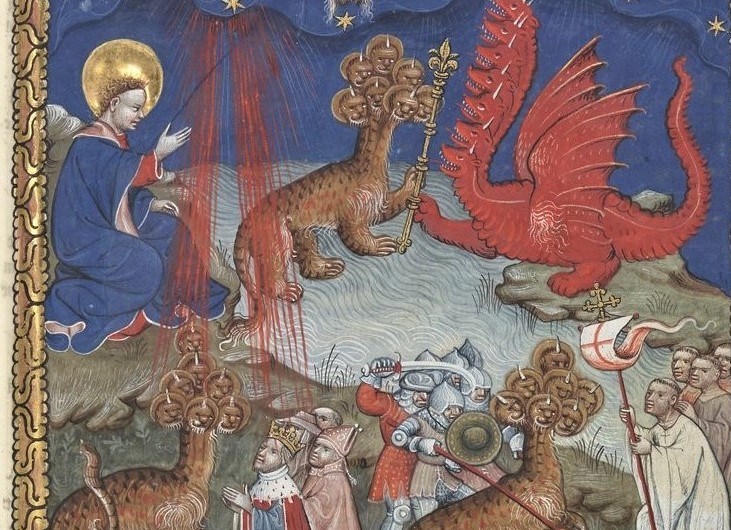
He had a loud voice like a trumpet … He was One like the Son of Man, dressed in a long robe, with a golden sash around His chest. The hair of His head was white like wool, as white as snow, and His eyes were like a blazing fire. His feet were like polished bronze refined in a furnace, and His voice was like the roar of many waters. He held in His right hand seven stars, and a sharp double-edged sword came from His mouth. His face was like the sun shining at its brightest …. “I am the Alpha and the Omega,” says the Lord God, who is and was and is to come—the Almighty (Rev 1:12-16).

The same passage also says,

To Him who loves us and has released us from our sins by His blood, who has made us to be a kingdom, priests to His God and Father—to Him be the glory and power forever and ever! Amen. (Rev 1:5-6).

Does your prayer and understanding of the Lord have this balance? Do you love Him and know that He loves you? Do you also revere Him and hold Him in awe? Do you rejoice in His saving love while also realizing the gratitude, worship, and praise you owe Him? Do you render to Him the obedience of faith and gratefully receive from Him the fruits of faith or do you view Him as merely a butler who serves you on your terms?

When you pray or go to Mass are you aware of the glory of being in His presence? Personal prayer can be a little less formal and impromptu, but do you ever just tremble in awe as you approach His Church and His presence? Do you ever kneel, stand, or even sit in His presence, saying, “Speak, Lord, your servant is listening”? Do you bring to Mass a joyful and grateful sacrifice of praise to God, who has been so good to you, or is Mass for you more an egocentric event at which you demand to be entertained? Is your parish a clubhouse, or a lighthouse? Is it a cruise ship or a battleship? Is God on the throne in your life or do you imagine him more as your butler, stepping and fetching for you?

The Lord Jesus has opened the way to the Father, but not to trivialize or domesticate Him. Rather, it is so that we can enter the narrow path that stretches on a thrilling journey toward wonder and awe, toward unspeakable joy and untold glories. Rejoice in God’s love for you, but let it be a joy that is wrapped in reverence, one that makes us fall down in awe before so great a God. Indeed, our God is an awesome God.

Cross-posted at the Catholic Standard: The Gifts of Wonder and Awe Are More Necessary Than Ever