One of the things that I have learned about myself, and humans in general, is that our strengths are very closely related to our struggles. Some people are very passionate; this makes them dedicated and driven to make a difference. But it also makes them prone to anger or depression. Their passion in one area (e.g., truth, justice) can cause difficulties with passions in other areas such as sexuality, food, or drink. Passionate people can inspire others and are often great leaders. But they also run the risk of crashing and burning, whether emotionally or morally.
At the other end of the spectrum, consider those who are very relaxed and steady emotionally. They are thoughtful, thinking and acting deliberately. They are calm under pressure, not easily excited. They make good diplomats; they are the sort to bring conflicting parties together. But such people may often struggle to maintain integrity. Sometimes they make too many compromises and forget that there are things that are worth being angry about, worth fighting for. If a person never gets worked up, it could be because he doesn’t care enough about important issues. There’s a saying that the opposite of love isn’t hate; it’s indifference.
This is part of what makes human beings complex and fascinating. There is a certain tipping point at which a virtue becomes a vice either by excess or defect. St. Thomas Aquinas said, In medio stat virtus (Virtue stands in the middle).
And thus in our example here of the passion of anger, the virtue to be sought is meekness. Aristotle defined meekness as the proper middle ground between too much anger and not enough.
The unusual commercial below shows an example of underwhelming joy. It is humorously portrayed in a perfectly deadpan way. But like anger, joy indicates a zeal for what is good, true, and beautiful (even if the subject is just shoes). It is certainly a virtue to be emotionally balanced, avoiding silliness and frivolity. But the strength of a stable and balanced personality can too easily become indifference about things that are important and should bring joy.
Think of someone you love. I’ll bet the thing you like most about him or her is often the very thing that frustrates you the most. Now think about yourself. What are your strengths? Are they not in fact closely related to the areas in which you struggle the most?
Enjoy this humorous commercial. In his subdued joy, is he exhibiting admirable control or is his heart dull? Is this virtue (balance) or is it a defect?
In the Office of Readings this week we read from a sermon of St. Bernard, who was preaching to his monks and priests. He called them to mount the watchtower of their pulpits and, having listened to the Word of God, warn His people of threats to their salvation. Let’s sample from the sermon and ponder its meaning for us.
I assure you, my brothers, that even to this day it is clear to some that the words which Jesus speaks are spirit and life, and for this reason they follow him. To others these words seem hard, and so they look elsewhere for some pathetic consolation. Yet wisdom cries out in the streets, in the broad and spacious way that leads to death, to call back those who take this path (Sermo 5 de diversis,1-4; Opera omnia. Edit. Cisterc. 6, 1 [1970] 98-103).
St. Bernard reminds these ancient preachers that some people will accept the words of the Lord while others will condemn them as foolish, hard, unreasonable, and harsh. Today it is common for many in the world to attack teachings of the Church and Scripture—particularly those regarding human life and sexuality—as harsh, unkind, and even hateful. They flee to what St. Bernard calls the “pathetic consolations” of the world, which affirm and even celebrate deeply sinful things such as abortion, fornication, homosexual acts, euthanasia, and physician-assisted suicide.
What are we to do in the face of this widespread rejection of the Lord’s words? St. Bernard says that we should imitate Lady Wisdom, who cries out to call us back. we must cry out in the “broad and spacious way” that leads to the damnation of the second death; we must call them back and away from the pathetic lies and false consolations of a world gone mad.
[The Lord] calls upon sinners to return to their true spirit and rebukes them when their hearts have gone astray, for it is in the true heart that he dwells and there he speaks, fulfilling what he taught through the prophet: Speak to the heart of Jerusalem (Ibid).
Too many bishops, priests, deacons, and parents fear rejection and fail to rebuke. “Someone might get upset or angry,” we say. Too easily do we fear losing the esteem of man and fret over being in conflict with others. Courage, fortitude and serene confidence in the Word of God seem to be gone from the heart of too many Catholic leaders.
St. Bernard says that we should speak to the heart of others. This means that we should appeal to a person’s conscience, to that better self that is buried beneath rationalization, deception, and self-justification. Deep down inside everyone is his conscience, where the voice of God echoes; to that we must consistently appeal.
St. Paul says, We do not practice deceit, nor do we distort the word of God. On the contrary, by open proclamation of the truth, we commend ourselves to every man’s conscience in the sight of God. (2 Cor 4:2). This is the work, the battle, of every preacher, parent, and leader.
Hear also the prophet Habakkuk. Far from hiding the Lord’s reprimands, he dwells on them with attentive and anxious care. He says: I will stand upon my watchtower and take up my post on the ramparts, keeping watch to see what he will say to me and what answer I will make to those who try to confute me (Ibid).
The image of a watchtower reminds me of a pulpit. Our pulpits used to be high places; we had to climb up a good number of stairs to reach them. While this was often necessary for audibility before there were microphones in every pulpit, there was more to it than that. Standing in those older pulpits above the congregation as if in a watchtower, we warned of approaching dangers and summoned our people to battle, describing the enemy, his tactics, and the weapons to be used against him.
Today’s pulpits look more like lecterns; there is little that seems prominent about them. This both affects and reflects modern preaching, which so often fails to warn of the approaching wolf. The good shepherd sees the wolf coming and drives it away, but as for the fearful shepherd, when he sees the wolf coming, he abandons the sheep and runs away. Then the wolf pounces on them and scatters the flock (John 10:12). This is emblematic of our times.
I beg you, my brothers, stand upon our watchtower, for now is the time for battle. Let all our dealings be in the heart, where Christ dwells, in right judgment and wise counsel, but in such a way as to place no confidence in those dealings, nor rely upon our fragile defenses (Ibid).
We must reengage the battle that too many of us have set aside, and this battle must be engaged on every level. Priests have the watchtowers of their pulpits; parents have the watchtower of their table during dinner and of their car when driving with their children. These pulpits must resound again with instruction in the Word of God, with right judgment, with wise counsel, and with sober warning about impending foes and moral dangers.
Use whatever “pulpit” you have as a watchtower. Moral error and foes abound; sound the trumpet of warning. Bestow the medicine of God’s teaching, drawing the faithful to the sacraments, to prayer, and to all that is holy and true.
Cross-posted at the Catholic Standard: An Admonition from St. Bernard and a Summons to Priests and Parents Alike
The first reading at Mass this past Sunday (23rd Sunday of the Year C) speaks to our limitations and need for humility.
Who can know God’s counsel,
or who can conceive what the LORD intends?
For the deliberations of mortals are timid,
and unsure are our plans.
For the corruptible body burdens the soul
and the earthen shelter weighs down the mind that has many concerns.
And scarce do we guess the things on earth,
and what is within our grasp we find with difficulty;
but when things are in heaven, who can search them out?
Or who ever knew your counsel, except you had given wisdom
and sent your holy spirit from on high?
And thus were the paths of those on earth made straight (Wisdom 9:13-18).
Let’s ponder three reasons for humility and then a prescription for the humble.
1. Our Perceptions – The text says, Who can know God’s counsel, or who can conceive what the Lord intends? … and what is within our grasp we find with difficulty; but when things are in heaven, who can search them out? Or who ever knew your counsel, …?
Living in a scientific age and having explained many things that were once mysterious to us, we tend to have an exaggerated idea of what we know. Teenagers often protest to their parents: “I know a few things, too!” Yes indeed, they (and we) do know a few things—a very few things. This is especially true when it comes to the hidden knowledge and counsel of God.
God sees things comprehensively. He lives in the “eternal now”: past, present, and future are all together. Nothing escapes His grasp, and He is able to draw good even out of the great evil we hurl at Him.
The paradox of the cross stands in stark contrast to the thinking of the world. As St. Paul says, the cross is foolishness to the Gentiles and a stumbling block to the Jews, but to us who believe, it is the wisdom and the power of God (see 1 Cor 1:23-24).
Though at times we are puzzled, none of us can rightfully rebuke God saying, “What are you doing?” God’s ways are often mysterious to us, but He can make a way out of no way and do anything but fail.
We must make frequent acts of humility, especially when things don’t make sense to us. Yes, we must be very humble before God.
2. Our Plans – The text says, For the deliberations of mortals are timid, and unsure are our plans.
Here, too, there is a tendency for us in the modern age to think that our scientific theories are certain, but over the years many things that were once considered “settled science” have given way in the face of new evidence.
Our plans are often disrupted by external events. The control we crave is ultimately an illusion. So many things we think are under our control are affected by things we cannot control, such as other people or even the next beat of our heart.
Therefore, we must be humble about our plans and deliberations. The Book of James says,
Come now, you who say, “Today or tomorrow we will go to this or that city, spend a year there, carry on business, and make a profit.” You do not even know what will happen tomorrow! What is your life? You are a mist that appears for a little while and then vanishes (James 4:13-14).
3. Our Passions – The text says, For the corruptible body burdens the soul and the earthen shelter weighs down the mind that has many concerns.
The body can preoccupy us with lesser things. Under the influence of our passions, we are inclined to approve what is pleasing but sinful. We often seek to be affirmed in our errors and predispositions in order to indulge our passions; we deceive ourselves and permit others to do so as well. In humility, we must be willing to be corrected by the Lord through His Word and the teachings of the Church.
Our Plea – Given this threefold basis for humility, the text from Wisdom sets forth our plea, our request for God’s help. Admitting our weakness, we ask for His assistance.
The text says, Or who ever knew your counsel, except you had given wisdom and sent your holy spirit from on high? And thus were the paths of those on earth made straight.
While it is possible to know many things without special graces from God (for we are naturally endowed with an intellect), we are limited and often get things wrong. Hence, we seek God’s grace through His Holy Spirit.
Note that four of the seven gifts of the Holy Spirit pertain to the intellect: wisdom, knowledge, understanding, and counsel. The other three pertain to the will or heart: piety, fortitude, and fear of the Lord. If we receive these gifts, the text assures us that our paths will be made straight. It does not say that we will become omniscient or even come close to the glory of God’s knowing, but we are assured that we will not utterly lose our way if we are docile to the teaching and promptings of the Holy Spirit.
A very common word in the New Testament is “deceived.” In English we tend to think of this word as referring to someone who has been tricked or fooled. And thus the emphasis is on intellectual terms. The Greek and Latin roots, however, have an almost physical dimension to them.
The Latin roots for “deceived” or “deception” arede- (from) + capere (to take or carry away). The Greek word in the New Testament that is translated as “deceived” is πλανάομαι (planaomai) and means more literally “to be carried off” or “to be led astray.”
Thus, those who are deceived are those who have been carried off or carried away by false teachings, trends, or the ways of this world.
Perhaps another biblical image relating to this is the one in which St. Peter speaks of “your adversary the devil [who] prowls around like a roaring lion, seeking some one to devour” (1 Peter 5:8). One can almost see in one’s imagination a lion with his limp and dying prey hanging from his mouth as he carries it off. And thus one who has been deceived is like one who has been stalked, attacked, and stunned or killed, and is being carried off in the mouth of the lion (Satan).
This is deception; this is what it means to be deceived, to be stalked and through various means grasped, stunned, and carried off as prey.
Over and over again Scripture warns us not to be deceived, that is, not to become prey for Satan, for demons, and for all those who consort with him to capture us and carry us off. A plain warning comes in the Letter to the Hebrews:
Jesus Christ is the same yesterday and today and for ever. Do not be led away by diverse and strange teachings (Heb 13:8-9).
Another text warns that there are many who wish to deceive us and their teachings are called the doctrines of demons:
Now the Spirit expressly says that in later times some will depart from the faith by giving heed to deceitful spirits and the doctrines of demons, through the hypocrisy of liars whose consciences are seared (1 Ti 4:1–2 ).
Indeed, this is a common human problem, especially today. There are many plausible liars going about today who seek to confuse, to stun, and to carry off faithful Catholics. They do this with hypocrisy. To say that something is done with hypocrisy means literally that it is done by “actors,” since hypocrite in Greek means “actor.” In a more extended sense it means that when we say something with hypocrisy we are being insincere. These plausible liars, as actors, are well skilled at being pleasing, at appearing pleasant, reasonable, sophisticated, and “free.” But this is an act. They are in bondage to the sins they seek to glorify. The scriptural text here says that their consciences are seared; that is, they are branded, burned, and hypnotized by the sins they commit. They are not smart; they are lost and confused. They are to be prayed for, but not listened to.
Many of them are very good actors, playing the role of plausible liars. Some have many letters after their name (PhD, D.D., M.D., etc.). Some have advanced degrees and high positions in academia or in the media. Some of them teach in Catholic institutions; some even wear Roman collars. Most of them achieve their plausibility by appealing to innocuous themes such as tolerance, patience, kindness, and that most vacuous and currently ill-defined idea called “love.” Surely tolerance, patience, kindness, and love all have their places. And being agreeable, pleasant, soft-spoken, and reasonable in tone are all good things in and of themselves. But they can also become a cloak for a false plausibility and are, as the text above says, the “hypocrisy of liars.” In other words, these people are actors; they play the role of tolerant and enlightened experts but in reality are desperately trying to justify sinful behavior and quiet their seared (though still troubled) consciences.
And thus Scripture warns us not to be deceived, not to be carried off, not to be carried away by plausible liars who say exactly the opposite of what God’s Word says, who call good or “no big deal” what God calls sin. Thus, with their distorted understanding of tolerance and love they promote and even celebrate acts of sodomy, fornication, abortion, and euthanasia. They promote religious syncretism and construct a fake Jesus and a designer God through their “God-within” movements and their statements that “I’m spiritual but not religious.” They substitute their own doctrines for the revealed ones of Scripture. If they reference Scripture at all it is only to declare that it does not say what it plainly does say.
Regarding all these erroneous stances and appeals, Scripture announces again and again, do not be deceived; do not be carried away; do not be carried off. Here are just a few of the texts that warn us:
Rom 16:17-21 I appeal to you, brethren, to take note of those who create dissensions and difficulties, in opposition to the doctrine which you have been taught; avoid them. 18 For such persons do not serve our Lord Christ, but their own appetites, and by fair and flattering words they deceive the hearts of the simple-minded. 19 For while your obedience is known to all, so that I rejoice over you, I would have you wise as to what is good and guileless as to what is evil; 20 then the God of peace will soon crush Satan under your feet. The grace of our Lord Jesus Christ be with you.
1 Cor 3:18–21 Let no one deceive himself. If any one among you thinks that he is wise in this age, let him become a fool that he may become wise. 19 For the wisdom of this world is folly with God. For it is written, “He catches the wise in their craftiness,” 20 and again, “The Lord knows that the thoughts of the wise are futile.” 21 So let no one boast of men.
1 Cor 6:9–10 Do you not know that the unrighteous will not inherit the kingdom of God? Do not be deceived; neither fornicators, nor idolaters, nor adulterers, nor homosexual offenders, 10 nor thieves, nor the greedy, nor drunkards, nor revilers, nor robbers will inherit the kingdom of God.
1 Cor 15:33–34 Do not be deceived: “Bad company ruins good morals.” 34 Come to your right mind, and sin no more. For some have no knowledge of God. I say this to your shame.
2 Cor 11:3–4 But I am afraid that as the serpent deceived Eve by his cunning, your thoughts will be led astray from a sincere and puredevotion to Christ. 4 For if someone comes and preaches another Jesus than the one we preached, or if you receive a different spirit from the one you received, or if you accept a different gospel from the one you accepted, you submit to it readily enough.
Gal 6:7–8 Do not be deceived; God is not mocked, for whatever a man sows, that he will also reap. 8 For he who sows to his own flesh will from the flesh reap corruption; but he who sows to the Spirit will from the Spirit reap eternal life.
Eph 5:5–8 Be sure of this, that no fornicator or impure man, or one who is covetous (that is, an idolater), has any inheritance in the kingdom of Christ and of God. 6 Let no one deceive you with empty words, for it is because of these things that the wrath of God comes upon the sons of disobedience.
2 Ti 3:12–13 Indeed all who desire to live a godly life in Christ Jesus will be persecuted, 13 while evil men and impostors will go on from bad to worse, deceivers and deceived.
1 Jn 2:24–27 If what you heard from the beginning abides in you, then you will abide in the Son and in the Father. 25 And this is what he has promised us, eternal life. 26 I write this to you about those who would deceive you.
1 Jn 3:7–9 Little children, let no one deceive you. He who does right is righteous, as he is righteous. 8 He who commits sin is of the devil; for the devil has sinned from the beginning. The reason the Son of God appeared was to destroy the works of the devil.
2 Jn 7–10 For many deceivers have gone out into the world, men who will not acknowledge the coming of Jesus Christ in the flesh; such a one is the deceiver and the antichrist. 8 Look to yourselves, that you may not lose what you have worked for, but may win a full reward. 9 Anyone who goes ahead and does not abide in the doctrine of Christ does not have God; he who abides in the doctrine has both the Father and the Son. 10 If any one comes to you and does not bring this doctrine, do not receive him.
Other texts warn us against deceiving ourselves. For at times we entertain lies and thereby allow ourselves to be entrapped by Satan and carried off by our own deceit.
Jas 1:22 But be doers of the word, and not hearers only, deceiving yourselves.
Jas 1:26–27 If any one thinks he is religious, and does not bridle his tongue but deceives his heart, this man’s religion is vain. 27 Religion that is pure and undefiled before God and the Father is this: to visit orphans and widows in their affliction, and to keep oneself unstained from the world.
1 Jn 1:8 If we say we have no sin, we deceive ourselves, and the truth is not in us.
And here are some texts that tell us who is really behind all deception:
Rev 12:9 And the great dragon was thrown down, that ancient serpent, who is called the Devil and Satan, the deceiver of the whole world—he was thrown down to the earth, and his angels were thrown down with him.
Rev 19:20 And the beast was captured, and with it the false prophet who in its presence had worked the signs by which he deceived those who had received the mark of the beast and those who worshiped its image. These two were thrown alive into the lake of fire that burns with sulphur.
Rev 20:1–10 Then I saw an angel coming down from heaven, holding in his hand the key of the bottomless pit and a great chain. 2 And he seized the dragon, that ancient serpent, who is the Devil and Satan, and bound him for a thousand years, 3 and threw him into the pit, and shut it and sealed it over him, that he should deceive the nations no more, till the thousand years were ended. After that he must be loosed for a little while …7 And when the thousand years are ended, Satan will be loosed from his prison 8 and will come out to deceive the nations which are at the four corners of the earth … but fire came down from heaven and consumed them, 10 and the devil who had deceived them was thrown into the lake of fire and sulphur where the beast and the false prophet were, and they will be tormented day and night for ever and ever.
OK, clear enough? Do not be deceived; do not be carried away or carried off by errors or by the sinful lies of this present evil age. As St. Paul says elsewhere, Test everything; hold fast what is good, abstain from every form of evil (1 Thess 5:21-22). Yes, square everything with the Word of God in Sacred Scripture and Sacred Tradition. Know the catechism; know your faith. Know the true Lord, the real Jesus of Scripture (not the fake Jesus of convenience). Test everything, everything by these standards. Do not be deceived.
For the preacher, the teacher and the parent comes this instruction from St. Paul:
I charge you in the presence of God and of Christ Jesus who is to judge the living and the dead, and by his appearing and his kingdom: 2 preach the word, be urgent in season and out of season, convince, rebuke, and exhort, be unfailing in patience and in teaching. 3 For the time is coming when people will not endure sound teaching, but having itching ears they will accumulate for themselves teachers to suit their own likings, 4 and will turn away from listening to the truth and wander into myths. 5 As for you, always be steady, endure suffering, do the work of an evangelist, fulfil your ministry. (2 Tim 4:1-6)
Here is an allegory on the rejection of truth and the complete ruin the rejection brings:
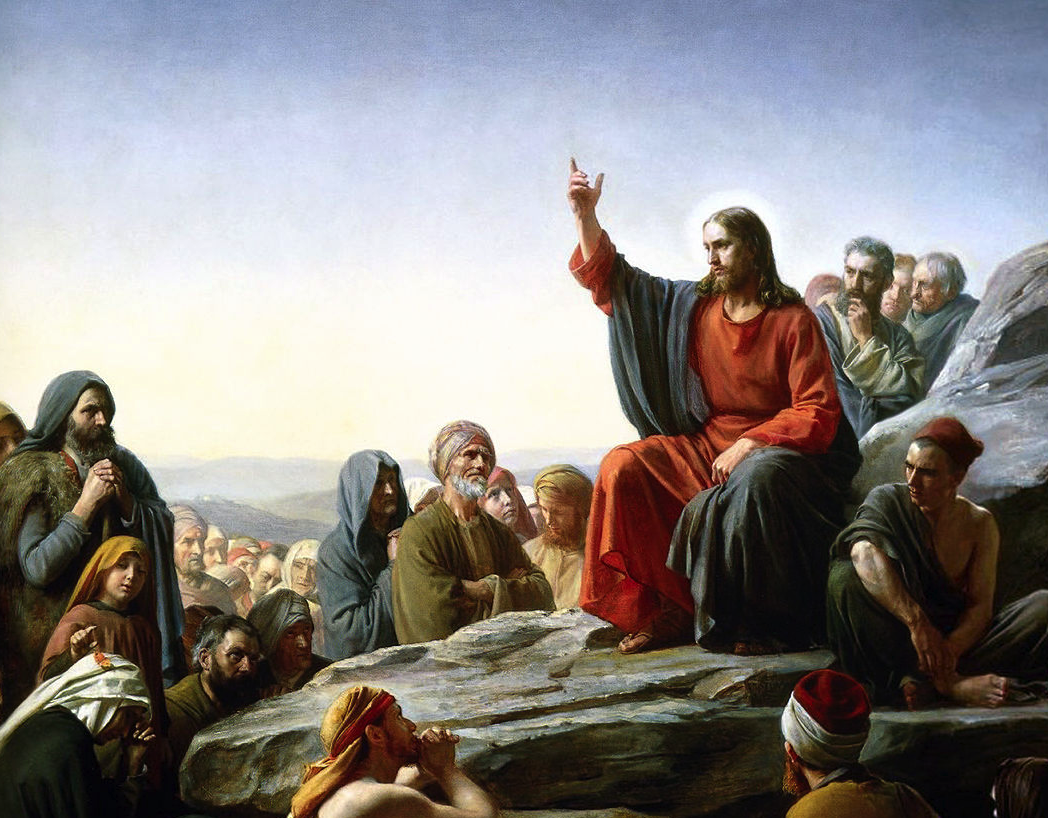
This week at daily Mass we touch briefly on the Beatitudes from Luke’s Gospel. This is one of the most famous texts of Scripture. Despite their familiarity, though, they are poorly understood by many people.
Let’s begin by exploring the word “beatitude.” Sometimes it is defined as happiness, but happiness is too transitory and dependent upon external factors to fully convey its meaning. In Latin, the word is beatus, and it signifies a long-lasting, abiding happiness. It refers to a deep, serene, stable, and confident joy that is not easily affected by external events or circumstances.
The Greek word translated as beatus in Latin and “happy” or “blessed” in English is makarios. It in turn is a translation of the Hebrew word ashere. The Hebrew word is really more of an expression or exclamation that could be translated in English in this way: “O, the blessedness of ….” In this sense ashere emphasizes that something is being described more than prescribed.
In ancient Greek times, makarios was most often used to refer to the happiness of the gods. They had achieved a state of happiness and contentment that was beyond all cares and labors—even beyond death. They lived in another world away from the problems and worries of ordinary people. Translating the Hebrew ashere to the Greek makarios in the New Testament emphasizes the stability of beatitude, which is from God.
Sometimes the concept of beatitude is translated as “flourishing.” For example, “How flourishing your life will be when you are merciful.”
Beatitude is not wealth, fame, honor, power, pleasure, or physical attractiveness. These are external and passing things that can easily be lost. They can also be arbitrary and rooted as much in luck as in virtue.
Happiness is “an inside job.” According to the Beatitudes, one is blessed even if poor, mourning, and persecuted. Even more, such a one is confirmed in his blessedness by such realities, because they are reminders that this world is not our home; its trinkets are passing and its “happiness” unstable.
Finally, beatitude is not something we simply learn, practice, or do; it is something we receive. The Beatitudes declare an objective reality as the result of a divine act. The indicative mood of the Beatitudes should be taken seriously: Our life is blessed and flourishing when we are poor in spirit, pure of heart, etc. The Beatitudes are not an imperative of exhortation, as though Jesus were saying, “Start out by being poor or meek, and then God will bless you.” Rather, He is saying that when the transformative power of the cross brings about in us a greater meekness, poverty of spirit, and so forth, we will experience that we are being blessed, that our life is flourishing, and that we are happier. Beatitude is a work of God and results when we yield to His saving work in us. The Beatitudes are not merely a prescription of what we must do, but more a description of what a human being is like who is being transformed by Jesus Christ.
The Lord teaches us these things:
Our life will be flourishing and happier when we let go of our attachment to worldly wealth and by God’s grace are poor in spirit and content with what He has given us.
Our life will be flourishing and happier when we are no longer addicted to pleasant emotions but by God’s grace can accept that there is a time for mourning, and it is important for our growth.
Our life will be flourishing and happier when, by God’s grace, we are no longer consumed by the desire for revenge but rather have authority over our anger.
Our life will be flourishing and happier when, by God’s grace, our desires are set on good things rather than sinful ones and eternal things rather than transitory ones.
Our life will be flourishing and happier when, by God’s grace, we are able to be merciful with the very mercy we have received from Him.
Our life will be flourishing and happier when, by God’s grace, we are single-hearted (pure of heart); our life will then be about one thing rather than hundreds of contradictory things.
Our life will be flourishing and happier when, by God’s grace, we want the things that make for peace.
Our life will be flourishing and happier even when we are persecuted, for by God’s grace this means that we are no longer addicted to the honors and love of this world and are free of its grasp.
In Sunday’s Gospel, Jesus defines four demands of discipleship. Let’s look at them one by one.
I.The CONTEXT of discipleship – The text says that large crowds were following Jesus and so He turned to address them. Just about any time you find mention of a big crowd in the Bible, fasten your seat belt and prepare for a hard teaching. Jesus didn’t trust large crowds, who were often merely after what they could get out of Him. They were looking for miracles, for multiplied (and free) bread, for physical healing, and for a fiery sermon.
So, upon sensing a large crowd of people, Jesus turned to address them. He then gives a series of hard teachings, which almost seem designed to thin the ranks and distinguish true disciples from ones who are merely giving “lip service.”
Before discussing what Jesus says to them, let’s examine some other incidents in the Gospels that also illustrate His tendency to distrust big crowds:
Enter by the narrow gate; for the gate is wide and the way is easy, that leads to destruction, and those who enter by it are many. For the gate is narrow and the way is hard, that leads to life, and those who find it are few (Matt 7:13).
For many are called, but few are chosen (Matt 22:14).
Woe to you, when all men speak well of you, for so their fathers did to the false prophets (Luke 6:26).
Often the mention of a large crowd is followed by a hard teaching:
When Jesus had finished saying these things, he left Galilee and went into the region of Judea to the other side of the Jordan. Large crowds followed him, and he healed them there. Some Pharisees came to him to test him. They asked, “Is it lawful for a man to divorce his wife for any and every reason?” “Haven’t you read,” he replied, “that at the beginning the Creator ‘made them male and female,’ and said, ‘For this reason a man will leave his father and mother and be united to his wife, and the two will become one flesh’? So they are no longer two, but one. Therefore, what God has joined together, let man not separate” (Matt 19:1-6; Mark 10).
As the crowds increased, Jesus said, “This is a wicked generation. It asks for a miraculous sign, but none will be given it except the sign of Jonah” (Luke 11:29).
Large crowds were traveling with Jesus and turning to them he said: “If anyone comes to me and does not hate his father and mother, his wife and children, his brothers and sisters—yes, even his own life—he cannot be my disciple. And anyone who does not carry his cross and follow me cannot be my disciple” (Luke 14:26-27).
… and a great crowd of people followed him because they saw the miraculous signs he had performed on the sick … and He said to them, “I am the living bread come down from heaven” … the crowds murmured (John 6:2).
So, the context of discipleship is not usually with the crowd. Though many are called—indeed, all are called—few make the cut and become true disciples. There is a kind of remnant theology at work here, to be sure, but it is a common pattern that Jesus thins the ranks and distinguishes the many who are called from the few who are chosen.
This is not just a fact in the Scriptures; the Lord has often had to prune His Church. Even now we are seeing a large falling away, a pruning, as many who are not able to accept the hard sayings of Jesus and the Scriptures (about sexuality, forgiveness, love of one’s enemies, heroic charity, and generosity) depart. The context of discipleship is with the few rather than the many.
This insight about the context is also important today because there are many who argue that the Church should “get with the times,” that she should listen to the people, that she should give them what they want, that she should reflect the views of the faithful. The role of the Church is not to reflect the views of its members, as if it were some political party. Rather, it is to reflect the views of its Founder, Jesus Christ, who handed on His teachings through the apostles and evangelists. More often than not, these teachings will not be in lockstep with what is popular or current.
The context of discipleship is often at odds with great crowds of people. We see this when Jesus turns on them. The first reading today reminds us: For the deliberations of mortals are timid, and unsure are our plans. For the corruptible body burdens the soul and the earthen shelter weighs down the mind that has many concerns. And scarce do we guess the things on earth, and what is within our grasp we find with difficulty (Wisdom 9:13-16).
II. The CENTRALITY of discipleship– Jesus indicates that if we are going to be His disciples, we can love no one more than we love Him. This extends even to our family relationships: If anyone comes to me without hating his father and mother, wife and children, brothers and sisters, and even his own life, he cannot be my disciple.
The use of the word “hate” here does not mean that we are to have contempt for others or to nourish unrighteous anger toward them. Rather, this is a Jewish idiom. For some reason, the Hebrew language has very few comparative words such as more/less and greater/ fewer. If one preferred vanilla ice cream to chocolate, one would say (in ancient Hebrew), “I love vanilla but hate chocolate.” This would mean that I prefer vanilla to chocolate, not that I actually hate chocolate.
So, what Jesus means is that we cannot prefer anyone or anything to Him. He is first; He is number one. Jesus says that He must have absolute priority over even the closest human relationships in your life.
If there’s anyone in your life who can talk you out of obeying God, forget ’em! Anyone who keeps you away from God has too much power. Anyone who can keep you from your Christian walk has too much power. Anyone who can pull you into unrighteousness has too much power.
If your boss instructs you to do something immoral, just say, “Sorry, Boss.” If your accountant advises you to save money by paying unjust wages or cutting necessary benefits, say “Sorry, no.” If your boyfriend or girlfriend pressures you to have sex, say, “Sorry, Dear.” If your “friend” pressures you to use drugs, abuse alcohol, skip school, or steal, say, “Sorry, Buddy.” If your spouse calls you away from teaching your children the ways of faith, tell him/her “Sorry, Honey.” If your child pressures you to give him something unwise or sinful, say, “Sorry, child of mine.”
Do you get it? No one is to have priority over Jesus Christ and what He teaches. The word “hate” here may not be meant literally, but if Jesus really does have priority in our life it may cause some people to say to us, “You’re so devoted to Him that I think you hate me!”
We need to attend to this, because too many of our human relationships cause us to compromise our walk with Jesus. Some people have too much power over us, a power that belongs to the Lord.
III. The CROSS of discipleship – Jesus says, Whoever does not carry his own cross and come after mecannot be my disciple. If we want to be a disciple, we must be willing to carry the cross.
The cross comes in many forms, but in the end, being a disciple does not mean that we are in any way exempt from the troubles and trials of this world. Jesus indicates that we will be hated (cf Jn 15:20), persecuted, and sorely tempted by the world. If we hold out, though, victory will be ours.
It is a simple rule: No cross, no crown. There are some who want to preach a prosperity gospel. There are others who demand a gospel stripped of its moral imperatives. Still others demand an updated faith that tickles their ears and affirms their sinful behavior.
Jesus points to the cross not to torture us but because it is the only way to glory.In the world ye shall have tribulation: but be of good cheer; I have overcome the world (John 16:33). Now, for a little while you may have to suffer various trials (1 Peter 1:6). This wisdom is already evident if we consider that even in this world, all of what we value most (family, talents, career, achievements) comes at the cost of sacrifice. Sacrifices bring blessings. Jesus is not into pain for its own sake but because sacrifice brings blessings.
IV. The COST of discipleship –Which of you wishing to construct a tower does not first sit down and calculate the cost to see if there is enough for its completion? Otherwise, after laying the foundation and finding himself unable to finish the work the onlookers should laugh at him and say, “This one began to build but did not have the resources to finish.” Or what king marching into battle would not first sit down and decide whether with ten thousand troops he can successfully oppose another king advancing upon him with twenty thousand troops? But if not, while he is still far away, he will send a delegation to ask for peace terms. In the same way, anyone of you who does not renounce all his possessions cannot be my disciple.
In this teaching, Jesus asks us to count the cost. Discipleship is costly. Jesus gives the images of someone building a tower and of a king going into battle. These examples may seem distant to us, so Jesus “brings it home” by saying, anyone of you who does not renounce all his possessions cannot be my disciple.
The Greek word ἀποτάσσω (apotasso), translated here as “renounce,” also means “to say farewell.” The Lord is reminding us that Heaven costs everything. Ultimately, we must say farewell to everyone and everything we consider precious in this world in order to inherit Heaven. This is not something that happens all at once when we die.
On one level, we give back everything to God little by little as we go through life. We have all given back loved ones. Perhaps we have already given back our youthful physique, strength, or good health. Ultimately, though, we will give it all back.
On another level, the Lord is saying that we must be willing to part now with anything that hinders discipleship. Many things attach us to this world and make discipleship difficult. Are we willing to simplify our life and focus on being a disciple? Or will we continue setting down roots here and amassing a worldly kingdom?
What’s it going to be: the world or the Kingdom? Count the cost. See what it costs and then decide. In the end, Heaven costs everything—but you’re going to lose it all anyway. It is a wise man who gives away what he cannot keep in order to gain what he could never buy.
What Jesus is looking for are disciples who, having counted the cost and realistically assessed it, are nonetheless ready to be His disciples. Tag-alongs, lip-service Christians, and fair-weather friends need not apply. In today’s Gospel Jesus is teaching a big crowd in a way that is meant to distinguish true disciples from those merely giving lip service. We are asked to ponder in which category we fall.
The commercial below contrasts two worlds. The first is the loud, chaotic world, of which Satan is prince—and he wants all your attention. The second is the quieter, more serene, more beautiful world of the Kingdom, of which Christ is King and Mary is Queen Mother. Choose for yourself.
St Anselm writes:
Insignificant man, escape from your everyday business for a short while, hide for a moment from your restless thoughts. Break off from your cares and troubles and be less concerned about your tasks and labors. Make a little time for God and rest a while in him. Enter into your mind’s inner chamber. Shut out everything but God and whatever helps you to seek him. And when you have shut the door, look for him, speak to God … (Proslogion, Chapter 1).
There is wide interest today in the topic of exorcism. Numerous books and news stories have helped to fuel this. Another reason for the interest is that as our world becomes more secular, families disintegrate, the outright celebration of sinful practices spreads, and there is an increase in psychological trauma, bondage to sinful drives, and openness to demonic influence.
An entire generation of priests were taught to distrust the traditional understandings of trauma and dysfunction, which gave significant weight to spiritual causes. These priests were often trained to view most such things as merely psychological in nature. Thus, parishioners were often sent off on a recommended course of psychotherapy without so much as a prayer being said.
The tide is turning back to a more balanced approach. Catholics are rightly asking for spiritual help along with other approaches (e.g., psychotherapy, psychotropic medicines). However, it must be saidthat some of the increasing number of people requesting the formal Rite of Exorcism manifest a misunderstanding of that rite as well as a lack of knowledge about other avenues of healing.
Demonic possession remains rare and that is what the formal Rite of Exorcism is meant to address. Most people who present themselves (or someone they love) to the Church are not in fact possessed by the devil or demons. There may be obsession, oppression, or torment at work, along with psychological trauma, and other more natural sources of struggle.
For people who are not possessed, what is needed is deliverance, not exorcism.
What is deliverance? Deliverance is prayer and ongoing ministry that uses numerous approaches to bring healing and wholeness to those who, after baptism, have come to struggle significantly with bondage to sin and sinful drives, the influence of demons, or the effects of psychological and/or spiritual trauma.
Deliverance involves taking hold of the full freedom that God is given us, of helping the faithful who struggle to lay hold of the glorious freedom of children of God (cf Rom 8:21). St. Paul says that the Father has rescued us from the power of darkness and has brought us into the kingdom of his beloved Son, in whom we have redemption, the forgiveness of our sins (Colossians 1:13 – 14).
There is also a magnificent passage in the Acts of the Apostles in which St. Paul is told of his mission to the Gentiles by the Lord: I am sending you to [the Gentiles] to open their eyes and turn them from darkness to light, and from the power of Satan to God (Acts 26:17–18).
Fundamentally, this is a description of the ongoing work of deliverance, which the whole Church must accomplish for God’s chosen people. Deliverance seeks to take people out from under Satan’s power and place them under the authority and Lordship of Jesus Christ, to bring people to, or restore them to, their true identity as sons and daughters of God.
Even after baptism, it is possible that we open doors to Satan enabling him some degree of access to our heart and mind. When this is the case, a Christian, working with clergy and fellow believers alike, must take a stand against the schemes of the devil by repenting of sin and renouncing any form of agreement with the deceptions of the enemy.
So, deliverance first involves coming to an understandingof the tactics of the evil one and recognizing the flawed thinking that often infects our mind. It involves coming to know and name these tactics and the deep drives of sin within us. It involves repenting of them and steadily renouncing their influence so that we come to greater serenity, peace, and healing—to deliverance.
The general deliverance we all need is effected in many ways: by the Word of God proclaimed and devoutly read; through the frequent reception of sacraments of Holy Communion and confession; through spiritual direction; through the experience of the Sacred Liturgy, praise, and worship; through authentic, close fellowship with other believers; through personal prayer; and even through good psychotherapy (when necessary).
For those who are suffering acutely from oppressions (and most of us do at some point on our spiritual journey), a more focused deliverance is often needed. It is usually called “deliverance ministry,” which often involves both clergy and lay praying with those who struggle and offering support and encouragement. It is different from majorexorcism in two ways. First, it focuses more on the person than on the demons. There may be some minor exorcistic prayers directing demons to depart, but overall deliverance ministry involves praying with and for the one afflicted helping him identify issues and lay claim to the graces God is offering. Second, it is gentler, and the person and those who pray for him are encouraged to pay little attention to any unusual manifestations such as shuddering or shaking, which sometimes occur in the course of deliverance and healing ministry. Deliverance ministry seeks to broaden healing to the large number of people who need healing and deliverance, who may be going through a crisis, a transition, or just a difficult time; who may be oppressed but are in no way possessed.
Major exorcism, in contrast, is a fierce combat directed against demons. There is nothing gentle about it, and like major surgery it is invasive and wrenching. It should only be used for those who are definitely possessed, as determined by a skilled and appointed exorcist who looks for required evidence and has eliminated other lesser or natural causes.
Most often, deliverance takes time and involves a multidisciplinary approach. Most people just want relief, but God is in the healing business; healing takes time, courage, prayer, patience, and waiting for the Lord. It is linked to uncovering and naming sinful drives and distorted thinking, which provide doorways for the devil to rob us of our freedom. God proceeds very delicately and deliberately in these matters. Healing takes courage and God often waits until we are ready.
So, while recent interest in exorcism is encouraging, we must be careful not to focus too much on what is rare (demonic possession), overlooking what is often more necessary and applicable to most cases: deliverance prayer and ministry.
Here a few resources I would recommend:
Two excellent books on deliverance have been written by Neal Lozano:
Here are some deliverance prayers that I and others in this work often pray with the faithful, encouraging them to pray with others as well: Deliverance prayers.
Submit yourselves, then, to God. Resist the devil, and he will flee from you (James 4:7). I am a witness.