 Here is a brief video that needs little commentary from me. It is Canadian Tire’s Christmas commercial. It reminds us that the most important things at Christmas aren’t things at all.

Blog of the Archdiocese of Washington
Here is a brief video that needs little commentary from me. It is Canadian Tire’s Christmas commercial. It reminds us that the most important things at Christmas aren’t things at all.
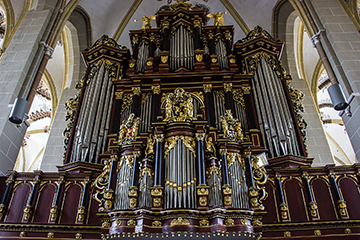
For my money, the best Advent hymn ever is Veni Redemptor Gentium (Come Redeemer of the Nations), written by St. Ambrose in the 4th century. It is known more widely by the title “Come Thou Redeemer of the Earth.” Sadly, it is not widely sung in Catholic parishes. Most Catholics I’ve asked have never even heard of it.
One of the beautiful things about the ancient Latin hymns is how richly theological they are. Not content to merely describe an event, they give sweeping theological vision and delve into its more hidden mysteries.
So here we are in Advent, and Jesus is coming. Get ready! Well, yes, but He’s not just coming; He’s redeeming, dying, rising, ascending, and reigning at the Father’s right hand! But how can you get all that into an Advent hymn? Well, just below you can read the text and see.
Full vision – For now, ponder the theological point that hymns like this make: no act of God can be reduced merely to the act in itself. Everything God does is part of a sweeping master plan to restore all things in Christ, to take back what the devil stole from us! Too often we see the events of our redemption in a disconnected sort of way. But it is all really one thing and the best theology connects the dots. It is not wrong for us to focus on one thing or another, but we must not forget that it is all one thing in the end.
Without this reminder, we can develop a kind of myopia that overemphasizes one aspect of redemption at the expense of others. In the 1970s and 1980s it was “all resurrection all the time,” but no passion or death.
Christmas, too, has its hazards. We get rather sentimental about the “baby Jesus” but miss other important aspects of his incarnation. The passion and death are present in His birth in homeless poverty, the swaddling clothes, the flight into Egypt, and so forth. The Eucharist is evident in His birth at Bethlehem (House of Bread) and His being laid in a manger (a feed box for animals). His glory as God and His ultimate triumph are manifested in the star overhead and the angels’ declaration of glory! You see, it is all tied together, and the best theology connects the dots.
So with that in mind I present this wonderful Advent hymn, so seldom sung in our Catholic parishes. It can be sung to any Long Meter (LM) tune but is usually sung to its own melody (“Puer Natus”). I provide below only the English translation, but both the Latin and the English are available in this document: Veni Redemptor Gentium. I think the poetic translation reprinted below is a minor masterpiece of English literature and hope you’ll agree. Enjoy this sweeping theological vision of the mystery of Advent caught up into the grand and fuller vision of redemption.
Among the theological truths treated in this brief hymn are these: His title as Redeemer, His birth to a virgin, His inclusion of the Gentiles, His sinlessness, His two natures in one person, His incarnation at conception, His passion, His death, His descent into Hell, His ascension, His seat at the Father’s right hand, His divinity and equality with the Father, His healing and sanctification of our humanity so wounded by sin, His granting us freedom and eternal life, His renewing of our minds through the light of faith, and His opening of Heaven to us.
Not bad for seven verses! St. Ambrose, pray for us!
Come, thou Redeemer of the earth,
Come manifest thy virgin birth:
All lands admire, all times applaud:
Such is the birth that fits our God.
Forth from his chamber goeth he,
That royal home of purity,
A giant in twofold substance one,
Rejoicing now his course to run.
The Virgin’s womb that glory gained,
Its virgin honor is still unstained.
The banners there of virtue glow;
God in his temple dwells below.
From God the Father he proceeds,
To God the Father back he speeds;
Runs out his course to death and hell,
Returns on God’s high throne to dwell.
O Equal to thy Father, thou!
Gird on thy fleshly mantle now;
The weakness of our mortal state
With deathless might invigorate.
Thy cradle here shall glitter bright,
And darkness breathe a newer light,
Where endless faith shall shine serene,
And twilight never intervene.
All laud, eternal Son, to thee
Whose advent sets thy people free,
Whom with the Father we adore,
And Holy Ghost, for evermore.
This video gives you an idea of what the tune for Veni Redemptor Gentium sounds like. The words in this version are slightly different from what is shown above, but the hymn tune is perfect. Just try not to dance as it is sung! You can find the melody for this hymn tune, “Puer Natus,” in the index of most hymnals. The words to the hymn, however, can be sung to any Long Meter (LM) hymn tune.
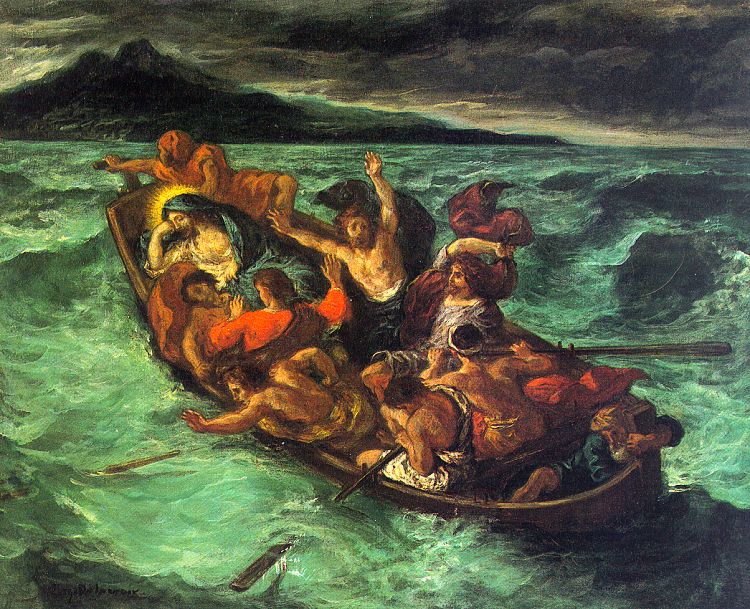
One of the great cries of Advent is for God to rend the heavens and come down (Is 64:1), for Him to stir up his mighty power and come to save us (Ps 80:2). But what is it that we really seek? Is it armies with thunder and lightning? Is it vindication and peace on our terms? In a way, it is a dangerous cry if we mean it that way, for who of us can say that no wrath should come to us but only to those other people who deserve it? If God should come in thunderous judgement, are you and I really so sure we could endure and be numbered among the just?
It is clear that we need the Lord to save us, but is that salvation seen only in earthly terms where salvation is from my enemies and I myself remain largely unharmed?
In the final essay of volume 11 of his collected works (which I just finished reading), Joseph Ratzinger (Pope Emeritus Benedict) ponders a similar Advent theme. I’d like to present his reflections, and add a few of my own. In a sermon from December 2003, Joseph Cardinal Ratzinger taught,
Stir up your might O Lord and come! This was the cry of Israel in exile … this was the cry of the disciples on the Sea of Galilee [in the storm] “Wake up O Lord and help us!” … And throughout all of history, the little bark of the Church travels in stormy waters … Stir up your might and come!
… What really is this might of God that seems to be asleep and must be wakened? St. Paul gives the answer in 1 Corinthians when he says that Christ the Crucified One, who is foolishness and weakness to men, is the wisdom and power of God.
Therefore, when we ask for this real power of God, we are not asking for more money for the Church, for more buildings, for more structures, for more political influence. We are praying for this special, entirely different power of God. We are praying with the awareness that he comes in a powerful way that seems to the world to be weakness and foolishness (Joseph Ratzinger, Collected Works, Vol 11: 595-596).
Yes, here is the paradox of God’s power: He defeats Satan’s pride by the humility of His Son; disobedience and the refusal to be under any authority are defeated by the obedience and submission of Jesus.
Once stirred, God’s power will not always—or even often—manifest itself in thunder and lightning or in armies that shatter and destroy. Rather, His “strong and outstretched arm” is often found nailed and bloody on the cross. Yet here, and in this way, he defeats Satan. How? Darkness cannot drive out darkness; only light can do that. Hatred cannot drive out hatred; only love can do that. And pride cannot drive out pride; only humility can do that.
And thus the Lord defeats Satan; not by the becoming a bigger, fiercer, more vengeful version of Satan, but by canceling Satan’s grievous stance with its opposite. It is the Lord’s refusal to meet Satan’s terms, to become anything like him or in any way enter his world. In this way, the Lord conquers pride with humility and hate with love. I am mindful of some of the words from an old hymn, “When I Survey the Wondrous Cross.”
See from His head, His hands, His feet,
Sorrow and love flow mingled down!
Did e’er such love and sorrow meet,
Or thorns compose so rich a crown?
The hymn concludes with these words:
Love so amazing, so divine,
Demands my soul, my life, my all.
Cardinal Ratzinger continues his essay as follows:
He does not come with military divisions; he comes instead with a wounded heart that apparently has nothing more to say, yet then proves to be the true and wholly other power and might of God.
This paradox should challenge us mightily, because it means that God’s help will often not be on our terms. We would like to have every foe vanquished and every harmful sorrow of our life removed. No cross at all; just stir up your power Lord and take it all away. But that is not usually how God’s power stirs in this “paradise lost,” which we chose by our own ratification of Adam and Eve’s sinful choice. We preferred a tree and its fruit to God and He does not cancel our choice. Instead, He plants the tree of the Cross and saves us by the very suffering and death we chose in the ancient Garden of Eden.
Here is God’s true power at work in this sin-soaked and rebellious world: the power of Cross. And if you didn’t know what you were asking for when praying, “Stir up your power, Lord, and come to save us,” now you do. We might prefer that God save us on our terms, by the mere vanquishing of our foes and the removal of our suffering, but (as St. Paul teaches) power is made perfect in weakness; it is when we are weak that we are strong, for then the power of God rests on us (cf 2 Cor 12:9-10).
Cardinal Ratzinger then sets forth the challenge of this prayer for us:
[Hence our true declaration is] “Lord wake us up from our drowsiness in which we are incapable of perceiving you, in which we conceal and impede the coming of your holy power.
… Christianity is not a moral system in which we may merely roll up our sleeves and change the world. We see in the movements that have promised us a better world how badly that turns out!
… But [on the other hand] Christians are not merely spectators … rather [the Lord] involves us; he desires to be efficacious in and through us … And so the in this cry we pray to him for ourselves and allow our own hearts to be touched: Your power is in us, rouse it and help us not to be an obstacle to it, but, rather, its witnesses [to its] vital strength.
That may well mean suffering, martyrdom, and loss. It may not, and often does not, mean that God will simply vanquish our foes and remove all our suffering. In this world the saving remedy is the Cross; not just for others but for us, too. On Good Friday, Christ looked like a “loser.” Satan and the world danced. But on Sunday, the Lord got up. Friday was first, Saturday lingered, and then came Sunday. As for Christ, so also for us: always carrying in our body the death of Jesus, so that also the life of Jesus may be manifested in us (2 Cor 4:10). The victory will come but it comes through the paradoxical power of the Cross.
Does this Advent reflection sound too much like Lent for you? Why do you think we are wearing purple?
Now pray with me (but be sure to understand what you are asking): Stir up your power, Lord, and come to save us!
Here is the common Psalm for Advent: Lord make us turn to you, let us see your face and we shall be saved.
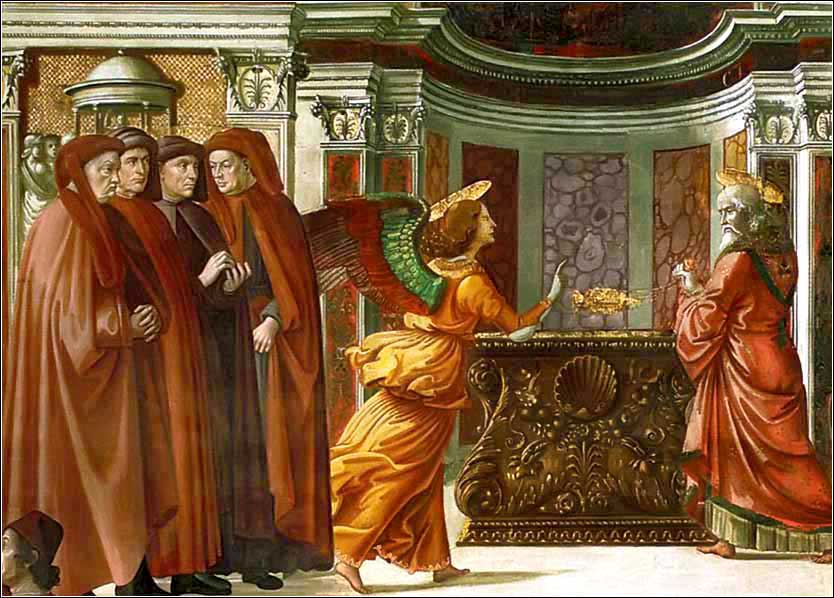
As we move toward the conclusion of the Advent season, we ponder the events surrounding Christ’s birth. The penultimate focus is the events leading up to the birth of St. John the Baptist, and in particular, the narrative of Zechariah and Elizabeth. While there are certainly many teachings to be drawn from this passage, there is value in pondering the imposition of silence upon Zechariah. This aspect of the story is particularly applicable to us because we live in an age marked by a lack of reflection and silence, of often stridently expressed opinions, and of opposition to the hidden things of God.
The Gospel opens with a description of Zechariah and Elizabeth as devout observers of the Law who have reached their later years without having children. Zechariah, in his priestly ministry, is selected to enter the Temple and offer incense at the designated hour. There, he encounters the Archangel Gabriel, who announces the birth of John the Baptist. Zechariah wonders,
How shall I know this? For I am an old man, and my wife is advanced in years.
For this question, he is rebuked by Gabriel for his lack of faith:
You will be silent and unable to talk until the day these things take place, because you did not believe my words, which will be fulfilled at their proper time (Luke 1:19).
This rebuke causes some bewilderment on our part because Zechariah’s response is not unlike that of the Blessed Mother, who said, How will this be, since I know not man? (Lk 1:34) In our puzzlement, we must remember that we have before us only a written text. We cannot hear the tone of voice that was used or see other clues that might indicate the attitude of Zechariah as he expresses this wonder. There must have been differences, for Mary’s question brings reassurance from Gabriel, while Zechariah’s question is met with rebuke.
Whatever the reason, let us ponder the punishment declared by the Archangel Gabriel.
It seems a mistake to regard Gabriel’s reaction as merely punitive. Rather, we ought also to see it as a kind of remedy. In effect, The Archangel draws Zechariah into a kind of holy silence in the face of the great mystery of John the Baptist’s conception. This silence will give him time to reflect without speaking.
There is a human tendency to be analytical. Our intellect is central to our glory and we have well used it to master nature and unlock many aspects of the created world. And yet glorious though our intellect is, it is also something over which we tend to stumble. There is a time to become quiet and ponder in reverent silence the fact that there are many mysteries beyond our ability to analyze or dissect.
For many who think merely in the flesh, mysteries are something to be solved, something to be conquered. We moderns, especially, presume that anything we do not currently understand, anything currently mysterious, we will one day fully understand; it is just a matter of time.
But the Christian tradition speaks more cautiously about mystery. Mystery is something that commands reverence. Mysteries are often something meant to be appreciated and respected, not merely to be set upon in order to be solved or unraveled. This is especially true with mysteries related to God, and to some extent those related to the human person.
Consider, for example, the mystery of your own person. Although you know much about yourself, much lies hidden. Many things about us defy simple analysis or categorization. In the face of this mystery, silence and reverence are essential. And while our insights about our inner self grow deeper with the passing years, we can never really say that we have conquered the mystery. Scripture says,
More tortuous than all else is the human heart, and beyond cure. Who can understand it? “I the Lord search the heart and examine the mind (Jer 17:9-10).
And if we are to have this reverence for our very self, we must also have it for one another. We must reverence the mystery of one another, never demanding to know things that are not ours to know. And we must never arrogantly presume that we have someone “figured out.” To claim this trivializes the human person.
Using an a fortiori argument, then, if reverence and a holy silence are appropriate before human mysteries, how much more so toward the mysteries of God and His ways? In many places, Scripture commands us to a holy silence before the mystery of God:
And thus we see in today’s Gospel that Zechariah has imposed upon him a holy silence in order that he might reflect more deeply and reverently on the mysteries of God. He is not to speak; he is to be still and silent before the Lord, who stirs from His holy dwelling. Words reduce mystery and seek to capture it. Zechariah is to ponder in reverent silence. Not one word will he utter until it all comes to pass.
Zechariah also manifests another common human tendency: the tendency to scoff at things we do not understand. Rather than drawing back and seeking to learn in holy silence and docility, we scoff at how unlikely or uncertain things are. Because we cannot understand something, we declare that it cannot possibly be so. Never mind that with God all things are possible or that over time our sciences have shown us things we never dreamed possible, discoveries of processes in nature that boggle the mind.
Yes, there is a time to speak, a time to ask, and a time to open our mouth in teaching. But there is also a time to sit quietly, to listen, to learn, and to ponder in silence. There is a time to reverence mystery in quiet, wordless admiration. There is a time to accept humbly that there are many things beyond our ability to know or understand.
In this reverent silence there comes forth a kind of holy wisdom, a wisdom not easily reduced to words. It is the wisdom that appreciates that the acceptance of mystery is itself an insight. It is a silence that opens us upward and outward, away from the tinier world of things that we have “all figured out.”
Zechariah is reduced by Gabriel to silence, a holy and reflective silence before the mysterious and merciful work of God.
And what of us who are approaching the mystery of the incarnation and who live in a world steeped in mystery? Do we scoff at what we do not understand? Do we rush to open our mouth in doubt or ridicule, or do we silently ponder and listen, seeking to be taught? Do we accept that humility both opens the door to wisdom and is a kind of wisdom itself?
Find silence before Christmas. God stirs from His holy dwelling.
He is one of the more curious figures of the Bible; the details of his life and story are caught up in textual complexities in the Book of Numbers. Though a prophet, he was not even an Israelite. He wrote no book and is not counted among Israel’s prophets. And yet a prophet he was, for he spoke the oracles of God and brought blessings to Israel at a critical time in its history.
His story appeared briefly in the readings for daily Mass today (Monday of the 3rd week of Advent). Perhaps in honor of this we should consider him and his story.
Perhaps no prophet spoke so eloquently of the glory that would come from Israel: like a star rising in the East, and a king who shall rise higher and whose abode shall endure. Yes a star would rise from Jacob! (Num 24)
Yes, no prophet spoke more highly or more purely. Though he was paid to curse, he would only bless, not counting the cost; he would only say what God commanded and revealed.
And yet arguably no prophet fell more mightily or caused more harm in Israel. So egregious was his crime that his act merited special condemnation from Jesus himself. Great was his glory and mighty his fall.
Who was this prophet? Balaam, son of Beor. Strangely enough, his name means “devourer.” Though he was sent to curse, this devourer could only bless and thus build up. But eventually Balaam lived up to his name.
Balaam’s fame was widespread among the many nations that stretched from Mesopotamia to the modern-day Holy Land. His home was far off to the east in northern Mesopotamia, near the Euphrates River. As we shall see, his journey from being a false prophet of false gods to becoming (for a time) a true prophet of the one true God was an odd one, often marked by comic interlude.
The story begins in the 22nd chapter of the Book of Numbers. King Balak of Moab was confronted with the arrival of the Israelites, who had begun their entrance into the Promised Land. Unsettled by their vast numbers and unnerved by their power and the blessing of God that they seemed to possess, Balak sent for the famed Balaam, asking him to curse the Israelites so that the Moabites could defeat them. The King said with great trust, For I know that whoever you bless is blessed, and whoever you curse is cursed (Num 22:7).
To his credit, despite being offered a large sum of money, Balaam refused to go with the men who were sent to fetch him. Balaam prayed to the Lord, who warned him not to go. Now Balaam had never even heard of the Israelites, but God said, Do not go with these men and do not curse the people they fear, for they are blessed (Num 22:13). Despite more entreaties from the officials, and an even higher sum of money that was offered, Balaam responded, Even if Balak gave me his house full of gold and silver, I could not do anything, small or great, contrary to the command the Lord my God (Num 22:19).
It is a remarkable testimony to Balaam that he so quickly learned of the True God and was willing to obey Him!
But Balaam’s faith, though growing quickly, still needed to be purified. The next day, God came to Balaam and said to him, If these men have come to you, you may go with them; but only on the condition that you do exactly as I tell you (Num 22:21).
And so Balaam went forth with the men who had summoned him. But God, who knows the secrets of the heart, knew that as Balaam went forth he actually had the intention of cursing this nation as had been requested. Perhaps Balaam feared the king’s emissaries. Perhaps he was enticed by the rich profit he was offered. We do not know the reason. God had only given him permission to go with these men if he agreed to do exactly as the Lord instructed. Balaam did not have permission to curse Israel. And so the anger of the Lord flared against him as he seemingly violated his vow of obedience.
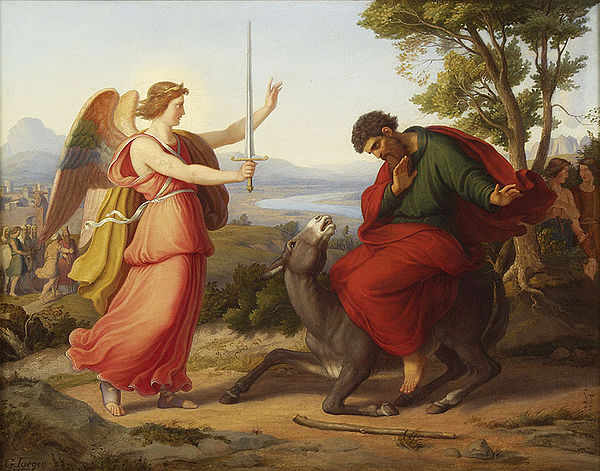
In a comic turn of events, God sent an angel to block the way. But this “seer” (a word that literally means “one who sees”) could not see the angel. Yet the donkey upon which Balaam rode was able see the angel! And, seeing the angel, the donkey stubbornly refused to proceed.
When the frustrated Balaam began to beat the animal, comic paradoxes ensued. Balaam, a prophet who supposedly spoke for God, was now spoken to by God through his donkey! The donkey rebuked Balaam: What have I done to you that you should beat me these three times? Am I not your own beast, and have you not always ridden upon me until now? Have I been in the habit of treating you this way before? (Num 22:30). Not only was the donkey more reasonable than Balaam, not only did he rebuke him rightly, but he even seemed to psychoanalyze him! It is rich in comedy and dripping in paradox.
Finally, the angel of the Lord revealed himself to Balaam. Balaam fell to his knees, admitted he had sinned, and promised to return home immediately. But through the angel, God, who purifies our hearts, bid him to go forward anyway, but with this warning: you may say only what I tell you (Num 22:35).
In this way, God warns every prophet, including you and me, who are prophets through our baptism. As prophets, we are to say only what God tells us to say: what God teaches us through His Scriptures and through the holy teachings of the Church.
Pay attention, fellow prophet—if you won’t speak rightly, God can speak to you through a donkey! But He shouldn’t have to. If you don’t praise Him, the very rocks will cry out. But they shouldn’t have to. Never let it be said that donkeys and rocks are smarter and more useful to God than you are! Yes, God can raise up children for the kingdom from the very rocks (cf Luke 3:8). But He shouldn’t have to.
Upon seeing Balaam, Balak ran to him, relieved. Balak wanted him to go right to work, cursing the Israelites. But Balaam, now properly chastised and having made the journey from a false prophet of false gods to a true prophet of the true God, said this profound, yet simple, thing to the powerful king: But what power have I to say anything? I can speak only what God puts in my mouth … I will tell you whatever he lets me see (Num 22:38; 23:3).
Still confident that Balaam would curse the Israelites, Balak ordered many rituals and sacrifices. Then, perhaps presuming Balaam would give way to greed and accept the bribe, or give way to fear, Balak orders him to utter the cursing oracle.
Yet out of Balaam’s mouth came not a curse but resounding blessings on Israel! Enraged, King Balak ordered a new and “correct” oracle that would send curses on Israel. Again from Balaam’s mouth proceeded only another even more powerful blessing that foretold of Israel’s eventual triumph over its enemies, including Moab!
Then Balak ordered a third oracle, and then a fourth. But the result was always the same: a profound blessing rather than a curse. Only the words of the true God could come forth from Balaam’s mouth!
Yes, Balaam’s transformation was at its peak; he was now a true prophet of the true God. Balaam gave perhaps the most profound declaration that any prophet has ever given. To a king who promised him riches and favor, and could also destroy him, Balaam would only declare, I can speak only what God puts into my mouth.
Pay attention, fellow prophet by baptism—is it true that nothing can come forth from your mouth except what God has put there? Really?
So here was Balaam at his zenith, at the time he was most conformed to God! He uttered blessings that were critical to Israel as she prepared to enter the Promised Land. It is astonishing that God would use a pagan “prophet” to utter His blessings. But I suppose that if God can use a donkey, he can use Balaam—he can even use me.
After this, mighty and steep was Balaam’s fall from grace and away from his duty to speak only that which God told him to speak. His crime is not explicitly recorded in Numbers, but it is described elsewhere. It is Jesus Himself who best summarized what Balaam did. He mentioned it in his rebuke of the Church at Pergamum:
Nevertheless, I have a few things against you: There are some among you who hold to the teaching of Balaam, who taught Balak to entice the Israelites to sin so that they ate food sacrificed to idols and committed sexual immorality (Rev 2:14).
And so it would seem that although Balaam would not curse Israel, he encouraged Balak to insinuate Moabite women into Israel in order to seduce the men there to false worship and fornication. Since he could not weaken them from without, perhaps Balak could weaken them from within, or so Balaam taught and advised.
The result was a grave falling away from the faith such that 24,000 men were killed to purge the evil within Israel (cf Num 25).
Why did Balaam do it? It is not clear. One text from the New Testament suggests it was greed:
With eyes full of adultery, [these wicked men] never stop sinning; they seduce the unstable; they are experts in greed—an accursed brood! They have left the straight way and wandered off to follow the way of Balaam son of Bezer, who loved the wages of wickedness (2 Peter 2:14-15).
Another text ascribes it to envy:
Woe to them! For they have gone the way of Cain, and for pay they have rushed headlong into the error of Balaam (Jude 1:11).
Whatever the cause, the wound in Israel was deep and never forgotten. When Israel finally conquered the Moabites, they sought out Balaam and executed him. Thus the one who blessed them so profoundly, and who could only obey God, now lay dead; a traitor to his office and an enemy to God’s people. Corruptio optime pessima (the corruption of the best is the worst).
And yet, good reader and fellow prophet, lest we think Balaam’s fate unique to him, we ought to take heed so that we do not fall.
Consider a brief incident in today’s Gospel (Monday of the 3rd week of Advent). It is a classic and memorable exchange between Jesus and some of the religious leaders of his day.
When Jesus had come into the temple area, the chief priests and the elders of the people approached him as he was teaching and said, “By what authority are you doing these things? And who gave you this authority?” Jesus said to them in reply, “I shall ask you one question, and if you answer it for me, then I shall tell you by what authority I do these things. Where was John’s baptism from? Was it of heavenly or of human origin?” They discussed this among themselves and said, “If we say ‘Of heavenly origin,’ he will say to us, ‘Then why did you not believe him?’ But if we say, ‘Of human origin,’ we fear the crowd, for they all regard John as a prophet.” So they said to Jesus in reply, “We do not know.” He himself said to them, “Neither shall I tell you by what authority I do these things” (Matt 21:23-27).
They are such a sad and pathetic lot. Note that Jesus catches them in the classic trap that ensnares all false prophets: preferring their own safety and benefit to the truth that they are bound to proclaim.
See how different they are from Balaam at his best? Balaam stood before a powerful king, who had the power to bless or curse him, and yet feared God more than man and loved the truth more than his own life. Balaam spoke the truth, whatever the cost. For at least that brief moment, Balaam risked everything for the truth that God had revealed.
And lest we scorn these religious leaders who were compromised so easily before Jesus, we ought to know well that this is a very common human struggle. Most of us face a very grave temptation to navigate life in such a way that we avoid trouble, and maximize our blessings and access to money and power. Most human beings are more than willing to compromise the truth—even wholly set it aside—in order to take this path.
It is a great human struggle to avoid deciding that the truth just “costs too much.”
Pray for bishops, priests, and deacons, who have the first obligation to speak God’s truth. Too easily we seek to avoid difficulties and maximize personal blessings at the cost of compromising the gospel message. Too easily we avoid controversy, challenging texts, and confronting sin. Too easily we fear man more than God, for whom we should speak.
Pray, too, for parents and family leaders, who often do these same things, sometimes by silence, sometimes by tolerating sinful and bad behavior, sometimes by teaching that which is popular but contrary to God’s will.
Yes, too often all of us seek to navigate life in such a way as to avoid trouble and maximize blessings or access. But in doing so we are scorning the prophetic office to which we have been called by baptism.
Thanks be to God for those who have spoken the truth to us whatever the cost. For indeed many suffered in order to hand on the Faith to us. Some even made the ultimate sacrifice to summon us to the repentance that we did not, and often do not, want to hear.
Yes, you and I are to be willing to suffer and to preach the truth, whatever the cost.
The tragic story of Balaam reminds us that we must keep constant vigil over our weak and fearful nature. For even if at one moment we stand strong in the face of evil and proclaim the truth, too easily in the next do we fall back into fear and compromise.
It is not clear what led Balaam back into the darkness, but let that be a warning to us. For in any number of ways we, too, can be compromised. Our only refuge can be to beg God for His grace and mercy: Lord make me strong and keep me strong. Give me courage and keep me courageous. Let my zeal be for your whole law and not just part of it. Let there be no openings that divide or compromise my heart, or my zeal for you and your kingdom.
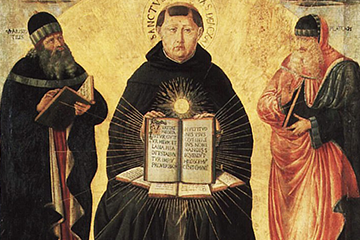
 In his Summa Theologica, St. Thomas Aquinas discusses the virtue of religion within his treatise on justice. This surprises some, who expect it to be treated under the theological virtue of faith. But Thomas clearly states that religion is not a theological virtue. Theological virtues have God Himself for their object, whereas religion has as its object the reverence, worship, and honor due to God (cf IIa, IIae 81.5). Religion is a matter of justice because we owe God a debt of honor, worship, and gratitude (cf IIa, IIae 81.2).
I would like to briefly consider an extended notion of this concept (that the virtue of religion is a part of justice), drawing it out in a way that St. Thomas permits but does not himself develop (likely due to the fact that atheism and other forms of irreligion were less widespread in his times).
We can see how religion and the internal and external acts associated with it (devotion, prayer, adoration, sacrificial offerings, tithes, vows, etc.) are a matter of justice in relation to God. God is worthy of our praise. As the author, sustainer, and giver of every good and perfect gift, He is owed a great debt of gratitude from us. It is our duty to praise Him.
In an extended sense, there is also some duty we have to one another and to the common good by the virtue of religion and its acts. St. Thomas admits this, but does not develop it as such when he says,
Religion is referred to those things one exhibits to one’s human kindred if we take the term religion in a broad sense, but not if we take it in its proper sense (IIa, IIae 88.1 ad 2).
St. Thomas goes on to say that in its strict and proper sense, the virtue of religion is primarily directed to God alone, to whom we owe the debt of honor, reverence, and gratitude. But he does permit a secondary and/or broader understanding of religion that includes certain duties to one another. It is this that I would like to develop, given the modern tendency to marginalize religion as a real duty to God or to one another.
The usual notion today about belief and religion is who cares whether someone goes to church or not, or whether someone believes in God and worships Him or not? This attitude is common even among churchgoing Catholics. Whether or a not a person believes and observes religious duties is relegated to the purely private realms of who they are. Religious practice is not considered essential in the process of sizing up the character of a particular person or of people in general. Note, however, that this is very different from a mere sixty years ago, when Church attendance was considered an essential aspect of a person’s character.
I would argue that we need to rediscover religious practice as an aspect of justice for several reasons, not the least of which is the accountability to which it summons us. Let’s look at several reasons why religious practice and faith are important and related to justice.
I. It indicates some knowledge that we are accountable to someone higher than ourselves, someone to whom we must render an account – This assists us and motivates us to consider more seriously the consequences of our actions on others. This works in both directions. We are encouraged to acts of altruism by the reward that such acts will bring to us on the Day of Judgment. We are dissuaded from evil acts because we know that we will one day have to account for them before a just God, who does not leave malicious acts unpunished.
Although today many like to say that it doesn’t matter whether or not a person believes in God, we are courting danger when increasing numbers of people in our culture conduct their lives thinking that they will never have to account to God for what they have done or what they have failed to do. Such a world can become very dark and evil, as any study of the godless regimes of Nazi Germany, or the atheistic communist regimes of the U.S.S.R. and China (among others) will show. In our own post-Christian culture, things have gotten dark very quickly as God has been marginalized and “re-imagined” through many modern heresies. Many no longer worship the God of the Scriptures but rather a personally fashioned god (an idol who is made in their image and just happens to agree with them on everything). A world in which many live in a way that effectively denies that they will ever have to render an account is an increasingly dark and dangerous world.
Someone may object by saying, “I know some atheists and some people who aren’t religiously observant, but who are good people.” Even if it can be demonstrated that a certain individual is “good” due to natural virtues, it still remains a dangerous situation when increasingly large numbers of a culture, community, or nation do not think that they will ever have to account to someone who has the power to reward or punish them justly.
Irreligion and unbelief are an injustice not only to God but also to fellow human beings, who are endangered by the spread of unbelief and lack of accountability. To be religiously observant renders a debt not only to God but to one another. To report regularly for religious instruction and be admonished and reminded of the requirements of justice and charity is itself an act of justice toward others. When I submit myself to holy instruction that admonishes me to remain within the bounds set for me by God, when I submit to being reminded that I will one day be accountable to God, I justly partake of a remedy for bad behavior that harms both me and others. I owe a certain debt to others to partake of such remedies.
Clearly, then, the battle against irreligion, atheism, and false religion is also part of justice. None of these are part of a healthy culture and it is unjust to allow them to go unchecked or unaddressed.
II. Religion is at the heart of culture – The English world “culture” has at its root the word “cult.” While the word “cult” has taken on negative connotations, it originally referred simply to faith or worship. What makes for a culture is a common set of beliefs and practices and the looking above to God, to whom we must render an account.
We in the West are currently engaged in an experiment that seeks to assert that a culture can exist and be healthy without a shared “cultus” (i.e., a shared worship and reference to one God). So far, the experiment is yielding poor results. Something higher than we are (i.e., a shared doctrine to which there is basic agreement), someone higher than we are, must serve as the basis for unity in a culture. Without this we have what we have today: power struggle, confusion, and the tyranny of relativism. When reason and a body of shared faith no longer serve as reference points, the result is ever-deepening confusion about even the most basic truths (e.g., who is male, who is female, what is marriage, and why these things matter).
This confusion and refusal to admit what even common sense reveals also results in power struggles and the tyranny of relativism, because the ones who “win” these debates are not those who appeal best to reason and a shared body of truth, but rather those who have the most money, power, access, and influence. And when they have it, watch out if you don’t agree with them! The PC police will be coming to get you to force your compliance.
Religion and its cultivation are part of justice because we look above to God and His revealed truth as a way to unite us. This forms the basis of wider peace and understanding. Until recently, although there were sectarian differences in America, most Christians and Jews were in agreement on the basic moral vision of the Scriptures: duty to God, worship of and accountability to Him, duty to parents and authority, respect for life, the purpose of sex and its relationship to marriage and family, the duty to respect the property of others and to be just to the poor, the duty to tell the truth, and the need to avoid greed. Even if we did not live these out perfectly, the basic agreement was there and a culture could be experienced out of a shared “cultus.” Even in our most serious flaws (e.g., slavery and racism) it was ultimately the appeal to the deepest notions of faith and biblical justice that prevailed.
Beginning with the cultural revolution of the 1960s, much of this basic consensus has disappeared. Today our culture has arguably become an “anti-culture” that promotes chaos, confusion, decadence, and darkness.
The refusal to be instructed and to submit to religious truth means being willing to inflict injustice on others. Living selfishly with no relation to a body of time-tested truth, and encouraging others to do so, ushers in great dangers and divisions and thus serves injustice.
This understanding of culture (shared beliefs) precisely explains the terrible clash between Islam and Christianity, especially in places like Europe and Africa. While some still hope for a pluralistic basis for culture in such places, the very word “culture” suggests that two such very different notions of God cannot likely co-exist within one culture; one will ultimately win. This is all the more reason for us to intensify our adherence to the Christian faith and to strengthen Christian culture; as an act of justice to one another and an act of honor to God, who gave us the truth of our faith.
III. Religion assists holiness – At the heart of true religious observance is the quest for holiness. As we become more holy we become ipso facto more just, kind, and charitable to others. We have duties not only God and to our own self to pursue holiness, but also to others, since our improved sanctity is a blessing to all. Refusing to pursue this is an injustice.
Therefore, have little to do with notions that marginalize faith and the role of the Judeo-Christian vision. Religion is about justice. St. Thomas rightly places it there. And though my reflection here is about a secondary sense of religion and its justice, that sense has risen to the fore in an age of increasing unbelief.
Naysayers will often point to “religious wars” of the past. But a more careful analysis of those wars shows more of a focus on land, money, power, and past grievances (all the typical causes of war), even if cloaked in religious language. Our darkest and most hideous wars came in the 20th century, as unbelief and atheism rose. Nothing from the more distant past remotely compares with the bloodshed, genocide, and body counts of 20th century conflicts; the numbers reach into the hundreds of millions.
Thus, note well the relationship of religion to justice. There is justice to God, but also justice to one another, as we work to preserve the concept of accountability to God, the true basis of culture, and to grow in personal holiness that of its nature loves both God and neighbor and so fulfills the law.
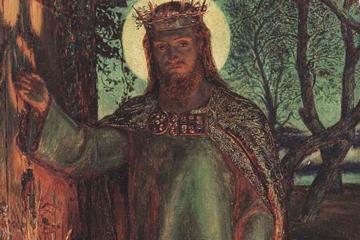
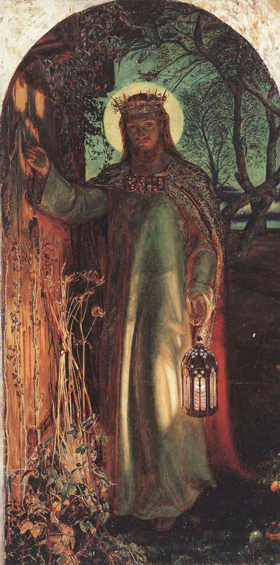 It may seem odd to say, “Let God find you.” After all, God knows just where we are. But there is something very respectful about a God who, as Jesus says in the Book of Revelation, stands at the door and knocks. Even back in the Garden of Eden, as sinful Adam and Eve hid, God walked through the garden and called, “Where are you?”
Yes, God waits until we let him find us, until we open the door of our heart where he knocks, or until we decide to come out of hiding.
But God does knock. He sends us prophets and speaks through creation and His Word to establish a connection with us. He seeks a connection. Let God find you. Open the gift of His offer.
Something of this dynamic occurred to me while watching the John Lewis Christmas commercial below. And while the roles seem reversed, the dynamic is the same. A little girl spies a lonely man on the moon and seeks to get his attention, to connect with him somehow. But the man seems lost in his loneliness. Through perseverance, she reaches him and the connection is opened.
Let God find you. Let Him connect with you this Christmas.
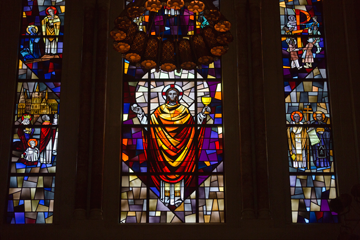
In recent years Fr. John Zuhlsdorf has made famous the liturgical instruction, “Say the black; do the red.” In other words, say the prayers as written in black ink (with no embellishments or deletions) and follow the instructions printed in red ink. After too many decades of liturgical errors—even outright disobedience—this is a pithy and memorable way to encourage proper demeanor and invoke the obedience that is due the Sacred Liturgy.
Recently I read an interesting remark from (then) Cardinal Joseph Ratzinger about the “red and the black” of the Missal. As always, he plumbs the spiritual depths in his commentary; he also introduced me to a word I never knew: nigrics. Pope Emeritus Benedict (then Joseph Ratzinger) wrote the following:
Participation [in the Sacred Liturgy] … is a question of what my professor of liturgics Joseph Pascher expressed in these words: “It is not enough to observe the rubrics—the external ceremonial directions; much more important is the claim of the nigrics—the inner demand made by what is printed in black, that is, by the liturgical text itself, which as such includes interaction in hearing and responding in prayer, acclamation, and song.” [Address on the Fortieth Anniversary of the Constitution on the Liturgy. Joseph Ratzinger, Collected Works, Vol 11, pp 585-586]
It was a new word—for me, anyway. Nigrics are the black words in the Missal, as distinct from “rubrics,” which are the red words in the Missal. Sure enough, the Latin word for black is nigra.
But more spiritually, Cardinal Ratzinger was recalling the admonition of his teacher to meditate on and penetrate to the deeper meaning of the text of the Sacred Liturgy. It is the lex orandi (the law of prayer) expressing the lex credendi (the law of belief).
These are precious words, many of them quite ancient and time-tested. They are words that deserve our deepest respect and devotion. They are worthy of pondering in one’s private prayer and of being said with deep and prayerful attentiveness in the liturgical moments.
The Mass is to be prayed, not merely recited or executed. Even simple instructions such as “Let us pray” should incite us to do just that: pray! And the rubric of the collect admonishes just that: “He pauses for a brief time …”
On the table where my current spiritual reading is stacked is a book that has a semi-permanent place: Oremus. Let Us Pray. The Collects of the Roman Missal. It contains them all, in both Latin and English, for study and devotion.
To participate in the liturgy is not just to talk, move about, or sing. It is to plumb its depths through prayer and meditation on the very texts proposed for our worship. The nigrics (the black words) are surely the precious treasure, along with the sacred action of worship that the rubrics seek to preserve from profanation and personal embellishment.
The “inner demand” of the black text is the faith to which we are summoned. As we “say the black” exactly as worded, we must also pray it, plumb its depths, ponder its inner demand, and obey the faith it summons us to act upon. As we “do the red,” we serve the faith announced by the black.
This is a good and salutary remind for clergy and laity alike.
Below is a clip from the movie True Confessions (1981). One of the main characters is played by Robert DeNiro, a method actor. As such, he set about studying the precise details of the life of a priest, including the celebration of the Sacred Liturgy. DeNiro says that he studied very carefully the sacred actions and words of the Mass and that very much shows in this clip. If an actor can develop such a devotion to carefully studying the Mass, how much more we who are priests in fact!