
A Reflection on a Sermon of Dr. Martin Luther King Refuting Atheistic Materialism

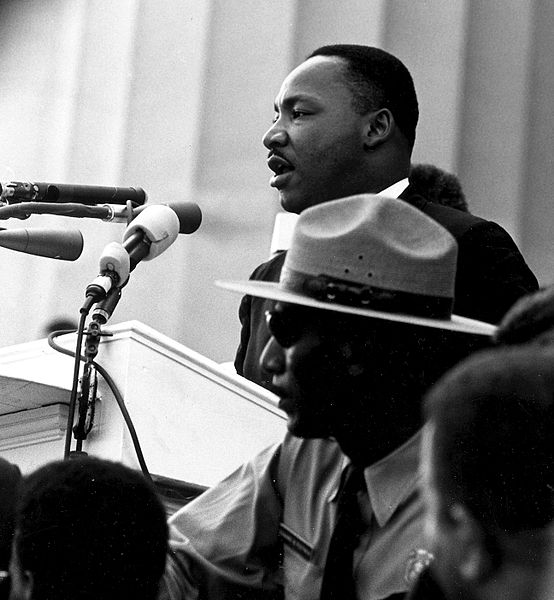
MLK-blog.17Dr. Martin Luther King, Jr., whose birthday we commemorate this weekend, is best known as a civil rights leader who worked to end racial injustice. But Dr. King had other things to say as he preached each Sunday, first in his own assembly and later as he moved about.

Among his recorded sermons is one in which Dr. King addresses the problem of unbelief, of materialism and atheism. His reflections are well worth pondering today because the issues he addresses are more widespread now than when he made these remarks in 1957. A transcript of the full sermon is available here: The Man Who Was a Fool.

In this sermon, Dr. King commented on Jesus’ parable of the wealthy man who had a huge harvest and, instead of sharing, just built bigger barns to hold the excess. The Lord called him a fool for thinking that his material wealth could supply his needs and give him security. Dr. King also addressed the problem of unbelief in this sermon, and pointed out its foolishness.

Following are excerpts from this sermon, with Dr. King’s words shown in black, bold, italics and my comments in plain red text. After discussing several reason why the man was a fool, Dr. King said,

Jesus [also] called the rich man a fool because he failed to realize his dependence on God. He talked as though he unfolded the seasons and provided the fertility of the soil, controlled the rising and the setting of the sun, and regulated the natural processes that produce the rain and the dew. He had an unconscious feeling that he was the Creator, not a creature.

Having discovered the inner realities of many processes, the materialistic atheist fails to ask the more fundamental questions such as “Where does the cosmos ultimately come from?” and “What is the ultimate destiny of all things?” Having found some answers, they mistake these answers for the ultimate answers. They are not.

There is no problem with a scientist saying that these sorts of questions lay beyond science, that science is only focused on material and efficient causality. That is fine; each discipline has its area of focus. But the modern error of scientism is in its claims that science alone explains all reality. It does not.

The usual response of those who ascribe to scientism (not all scientists do) to questions that science cannot answer is to dismiss them or to say that one day science will find an answer. When we, who are obviously creatures and contingent beings, dismiss a Creator, we are displaying a form of madness or of hardness of heart. Such a dismissal is neither rational nor reasonable.

This man-centered foolishness has had a long and oftentimes disastrous reign in the history of mankind. Sometimes it is theoretically expressed in the doctrine of materialism, which contends that reality may be explained in terms of matter in motion, that life is “a physiological process with a physiological meaning,” that man is a transient accident of protons and electrons traveling blind, that thought is a temporary product of gray matter, and that the events of history are an interaction of matter and motion operating by the principle of necessity.

Dr. King describes here the problem of modern reductionism, in which things are reduced to matter alone and attributed entirely to material causes. Thus even concepts such as justice, meaning, and beauty must somehow be explained materially in terms of their cause. The human soul that knows immaterial things does mediate its thoughts through the brain and central nervous system, but it does not follow that the medium is the cause. For it does not pertain to matter to be the cause of what is immaterial or spiritual.

Having no place for God or for eternal ideas, materialism is opposed to both theism and idealism. This materialistic philosophy leads inevitably into a dead-end street in an intellectually senseless world. To believe that human personality is the result of the fortuitous interplay of atoms and electrons is as absurd as to believe that a monkey by hitting typewriter keys at random will eventually produce a Shakespearean play. Sheer magic!

Many atheists think they have solved this conundrum, but I think that they “solve” it with a set of assumptions so outlandish and unproven that it requires far more “faith” to accept them than to believe in an intelligent designer and creator.

The statistical possibility that things could come together “by chance” to form complex life—let alone intelligent life—and not just once but at least twice (for reproduction’s sake) is minuscule! (As Dr. King says, “Sheer magic!”) Those who demand we accept this explanation are far more credulous than are believers, who observe creation and its intricately design and conclude (reasonably) that there is an intelligent creator.

It is much more sensible to say with Sir James Jeans, the physicist, that “the universe seems to be nearer to a great thought than to a great machine,” or with Arthur Balfour, the philosopher, that “we now know too much about matter to be materialists.” Materialism is a weak flame that is blown out by the breath of mature thinking. Exactly! The universe shouts design and intelligence.

Another attempt to make God irrelevant is found in non-theistic humanism, a philosophy that deifies man by affirming that humanity is God. Man is the measure of all things. Many modern men who have embraced this philosophy contend, as did Rousseau, that human nature is essentially good. Evil is to be found only in institutions, and if poverty and ignorance were to be removed everything would be all right. The twentieth century opened with such a glowing optimism. Men believed that civilization was evolving toward an earthly paradise.

The Catholic Faith defines this error as utopianism and pseudo-messianism.

Before Christ’s second coming the Church must pass through a final trial that will shake the faith of many believers. The persecution that accompanies her pilgrimage on earth will unveil the “mystery of iniquity” in the form of a religious deception offering men an apparent solution to their problems at the price of apostasy from the truth. The supreme religious deception is that of the Antichrist, a pseudo-messianism by which man glorifies himself in place of God and of his Messiah come in the flesh. The Antichrist’s deception already begins to take shape in the world every time the claim is made to realize within history that messianic hope which can only be realized beyond history through the eschatological judgment. The Church has rejected even modified forms of this falsification of the kingdom to come under the name of millenarianism, especially the “intrinsically perverse” political form of a secular messianism (Catechism of the Catholic Church #675-676).

We all know what a bloodbath the 20th century became. So much for man being his own measure!

Herbert Spencer skillfully molded the Darwinian theory of evolution into the heady idea of automatic progress. Men became convinced that there is a sociological law of progress which is as valid as the physical law of gravitation. Possessed of this spirit of optimism, modern man broke into the storehouse of nature and emerged with many scientific insights and technological developments that completely revolutionized the earth. The achievements of science have been marvelous, tangible and concrete. …

[But] Man’s aspirations no longer turned Godward and heavenward. Rather, man’s thoughts were confined to man and earth. And man offered a strange parody on the Lord’s Prayer:

“Our brethren which art upon the earth, Hallowed be our name. Our kingdom come. Our will be done on earth, for there is no heaven.”

Those who formerly turned to God to find solutions for their problems turned to science and technology, convinced that they now possessed the instruments needed to usher in the new society.

Scripture says, Claiming to be wise they became fools and their senseless minds were darkened (Rom 1:22).

Then came the explosion of this myth. It climaxed in the horrors of Nagasaki and Hiroshima and in the fierce fury of fifty-megaton bombs. Now we have come to see that science can give us only physical power, which, if not controlled by spiritual power, will lead inevitably to cosmic doom.

Atheists are forever noting how many lives were lost in the name of religion. Frankly, those numbers are not even close to those claimed in the bloodbath ushered in by atheistic materialists.

The words of Alfred the Great are still true: “Power is never a good unless he be good that has it.” We need something more spiritually sustaining and morally controlling than science. It is an instrument that, under the power of God’s spirit, may lead man to greater heights of physical security, but apart from God’s spirit, science is a deadly weapon that will lead only to deeper chaos. Make it plain, Dr. King!

Why fool ourselves about automatic progress and the ability of man to save himself? We must lift up our minds and eyes unto the hills from whence comes our true help. Then, and only then, will the advances of modern science be a blessing rather than a curse. Without dependence on God our efforts turn to ashes and our sunrises into darkest night. Unless his spirit pervades our lives, we find only what G.K. Chesterton called “cures that don’t cure, blessings that don’t bless, and solutions that don’t solve.” “God is our refuge and strength, a very present help in trouble.”

Note that Dr. King has called upon two Catholic intellectuals (St. Alfred the Great and G.K. Chesterton) to be his witnesses.

Unfortunately, the rich man [in the parable] did not realize this. He, like many men of the twentieth century, became so involved in big affairs and small trivialities that he forgot God. He gave the finite infinite significance and elevated a preliminary concern to ultimate standing. After the rich man had accumulated his vast resources of wealth—at the moment when his stocks were accruing the greatest interest and his palatial home was the talk of the town—he came to that experience which is the irreducible common denominator of all men, death.

At every funeral I say to the mourners, “You are going to die.” And then I tell them that we must get ready, not with more things but with more God.

The fact that he died at this particular time adds verve and drama to the story, but the essential truth of the parable would have remained the same had he lived to be as old as Methuselah. Even if he had not died physically, he was already dead spiritually. The cessation of breathing was a belated announcement of an earlier death. He died when he failed to keep a line of distinction between the means by which he lived and the ends for which he lived and when he failed to recognize his dependence on others and on God.

May it not be that the “certain rich man” is Western civilization? Rich in goods and material resources, our standards of success are almost inextricably bound to the lust for acquisition.

The means by which we live are marvelous indeed. And yet something is missing. We have learned to fly the air like birds and swim the sea like fish, but we have not learned the simple art of living together as brothers. Our abundance has brought us neither peace of mind nor serenity of spirit.

An Oriental writer has portrayed our dilemma in candid terms:

“You call your thousand material devices ‘labor-saving machinery,’ yet you are forever ‘busy.’ With the multiplying of your machinery you grow increasingly fatigued, anxious, nervous, dissatisfied. Whatever you have, you want more; and wherever you are you want to go somewhere else. You have a machine to dig the raw material for you, a machine to manufacture [it], a machine to transport [it], a machine to sweep and dust, one to carry messages, one to write, one to talk, one to sing, one to play at the theater, one to vote, one to sew, and a hundred others to do a hundred other things for you, and still you are the most nervously busy man in the world. Your devices are neither time-saving nor soul-saving machinery. They are so many sharp spurs which urge you on to invent more machinery and to do more business.” So true!

…The means by which we live have outdistanced the ends for which we live. Our scientific power has outrun our spiritual power. We have guided missiles and misguided man. Like the rich man of old, we have foolishly minimized the internal of our lives and maximized the external. We have absorbed life in livelihood.

We have maximized the minimum and minimized the maximum.

We will not find peace in our generation until we learn anew that “a man’s life consists not in the abundance of the things which he possesses,” but in those inner treasuries of the spirit which “no thief approaches, neither moth corrupts.” Our hope for creative living lies in our ability to re-establish the spiritual ends of our lives in personal character and social justice. Without this spiritual and moral reawakening we shall destroy ourselves in the misuse of our own instruments. Our generation cannot escape the question of our Lord: What shall it profit a man, if he gain the whole world of externals—airplanes, electric lights, automobiles, and color television—and lose the internal—his own soul? Amen!

Not All Lawful Pleasures Are Necessarily Helpful, As Seen in a Cartoon

blog.1.15.16St. Paul wrote, All things are lawful for me, but not all things are expedient (1 Cor 6:12). The word “expedient” in this context means useful, profitable, or helpful.

In this verse, when St. Paul says that “all things are lawful” he does not refer to things that violate the moral law of God, but rather to those that, while lawful, may not be helpful. For it sometimes happens that what is fine for one causes harm to another. A glass of wine may be good for most, but not for an alcoholic. A few potato chips are a tasty treat, but are not a wise choice for those who struggle to eat them in moderation. Salt and sugar are both gifts of God, but they are not helpful for those with hypertension or diabetes. I love peanut butter, but I cannot eat it in moderation so I don’t eat it at all. Extensive traveling may be fun and enriching, but perhaps not such a good idea for someone who has duties at home to care for children.

Learning that not all things are helpful or expedient saves us a lot of trouble.

Again, St. Paul is not saying that transgressions of the moral law are lawful. He is not saying that promiscuity, wrathful anger, greed, etc. are above criticism. These sorts of things ought to be critiqued, and those who engage in them should be corrected and called to repentance.

But even in the case of lawful pleasures, care should be taken. And thus St. Paul speaks of accepting the fact that not all pleasures are for appropriate for us or to be indulged in just because we want to. Other factors such as health, safety, charity toward others, cost, and the relationship of pleasure to duty may make a particular lawful pleasure inexpedient for us.

I thought of all this as I watched the video below. It features a youngster with a strange horn protruding from his head (perhaps it is the devilish horn of some sin or addiction). He sees others eating ice cream and wants some for himself. But the ice cream man warns the boy that this pleasure is not for him (for some unknown reason related to the horn). This pleasure is lawful, but for the boy it is not expedient.

The youngster has a meltdown in response and the ice cream man relents. As you will see, the boy suffers the ill effects. For as St. Paul says, “All things are lawful for me, but not all things are expedient.”

Scripture’s Sober Assessment of the Hardness of Many Human Hearts and What It Means for Evangelization

blog.1.14.16It is rather a typical assumption of the modern Western mind that differences and hostilities are due mainly to misunderstandings or a lack of proper information; that if we would discuss (“dialogue”), share information, respect pluralism (diversity), and overcome misunderstandings, all would be well and there would be peace.

Missing in this approach is the more sober notion of the hardness of human hearts. Information alone does not usually bring peace and an end to trouble. Rather, transformation effected by repentance and conversion is the truer and more biblical answer. But repentance and conversion usually require a lot more than dialogue or the sharing of information.

Biblically, repentance is usually effected by a combination of instruction and admonition. Teaching and the setting forth of doctrine are essential, but warning about the consequences of disregarding the truth must also take place. As He taught, Jesus consistently warned that in the end there will be sheep and goats, those to the right and those to the left, the wise and foolish virgins, those who will hear “Come blessed of my Father ..” and those who will hear, “Depart from me you evil doers.” Yes, His parables are filled with warnings as are his more discursive teachings, in which He warns that no one will come to the Father except through Him and that Unless you come to believe that I AM, you will die in your sins (Jn 8:24).

The Catholic columnist Joseph Sobran spoke to the sober reality that in our national conversation today we are quite often dealing with hardened sinners. He writes,

We are not dealing with conscientious differences, but with hardened consciences. [For example] such people are willing to pretend that killing isn’t killing; they shrink from using the word “kill” to describe what abortion does, though they would presumably acknowledge the bug sprays kill bugs and weed killers kill weeds.  

Christ himself expected everyone to recognize and acknowledge the truth. He didn’t speak of pluralism and religious differences; he was quite in emphatic that if men rejected the truth—his truth—when it was offered to them, they condemned themselves … Forgiveness, yes, even for those who crucified him; but tolerance in the modern sense, no. His truth was so authoritative, so compelling, that he seemed to assume that nobody who encountered it, simple peasant or learned epistemologist could deny it in good faith. He [also] warned that rejection and persecution would be the normal a lot of Christians, because the world would hate the light and willfully refuse to convert, not because it might be innocently misinformed (Subtracting Christianity, page 84).

Sobran gives a rather succinct statement of the problem as well as the biblical response to it. In the face of hardened hearts we cannot merely presume a lack of information. Rather, we must vigorously insist on the truth, warn others of their obligation to obey it, and be ready to accept persecution on account of our stance. Serious pathologies require strong medicine. And while tactful and pleasant approaches have their place, so does a vigorous and unambiguous statement of the problem and a clear call to repentance. Simply “inviting” people to the truth is not enough; we need to insist on it. This is especially the case within the Church. It is something that clergy (in parish settings) and parents (in the home) need to do in a better and more balanced way. Teaching must include not only information, but also a proper dose of warning, reproof, and admonition. This is often lacking today.

Fr. Thomas Dubay, in his book Authenticity (pp. 186-195), also explored the problem of hardened hearts and the rather stark, sober, biblical assessment of it. In what follows, I summarize Fr. Dubay’s material by weaving together his thoughts with some of my own. Though I do not quote him exactly, I want to be clear that the insights and the gathering of the material are his work more so than mine.

Fr. Dubay introduces the problem by stating that the typical theologian or moralist today often assumes that most (if not all) disagreements are due to insufficient data and or inadequate analysis.

Fr. Dubay states bluntly that this was emphatically not the biblical worldview. Indeed, when we look at biblical discussions of religious and moral disagreements we find a worldview almost totally at odds with this modern notion of mere misunderstanding or lack of information. The sacred text of Scripture is far more sober about the hardness of the human heart and about the sad reality that many reject the truth not out of ignorance or poor information but out of willful resistance and refusal to come to the light, which they have grown to hate.

Fr. Dubay presents a number of explanations for this hardness that are advanced by the Scriptures.

I. There is an inner darkness caused by unrepentant sin. Sin darkens the mind and brings obscurity (Wisdom 2:21). Not only does the man of the flesh, the stubbornly worldly person, fail to understand the things of the spirit; he simply cannot understand them (1 Corinthians 2:14). The fleshly and worldly do not know God at all (1 Corinthians 15:33–34). The “god of this world” blinds the eyes of obstinate unbelievers and prevents them from seeing (2 Corinthians 4:4). Such sinners avoid the light, for it exposes their evil lifestyle (John 3:20). They stumble about in the darkness not even knowing over what they stumble (Proverbs 4:19). And all the while they refuse to listen; they stubbornly turn their backs and stop up their ears, hardening their hearts against the truth (Zechariah 7:11–12). They have closed their minds. Jesus says of many, For this people’s heart has become calloused; they hardly hear with their ears, and they have closed their eyes. Otherwise they might see with their eyes, hear with their ears, understand with their hearts and turn, and I would heal them (Matthew 13:15). 

Note that this inner darkness is not just something that happens by accident or through a mere lack of information that simple dialogue will clear up. Rather, it is the result of obstinate sin and the refusal to repent. As the darkness grows deeper, the ability to see is lessened and the light of truth comes to seem harsh and obnoxious. Such souls are largely closed to mere exhortation or instruction and require stronger medicine: firm teaching, warning, and the grace of repentance to remove the darkness. This will usually be no friendly dialogue! It must be a convicted and urgent proclamation that will often bring persecution—even martyrdom—to those who undertake it (John 15:18; Acts 7).

Today we prefer to think that most people who are in error are sincere. While not excluding some degree of this in a few, Scripture is far less sanguine. Scripture gives as a more routine diagnosis: many simply prefer the darkness because their deeds are wicked (John 3:20). This will bring judgement on them. Jesus says, He who does not believe has been judged already, because he has not believed in the name of the only begotten Son of God. This is the judgment, that the Light has come into the world, and men loved the darkness rather than the Light, for their deeds were evil (John 3:18-19). This inner darkness is without excuse and is rooted in obdurate hearts that prefer sin to holiness, darkness to light.

II. Though sin darkens the intellect, the problem is rooted in a stubborn will, not simply in misinformation or lack of intelligence. Many are simply rebels, refusing to listen to the Lord or His representatives (Ezekiel 2:1–7). They do not listen because their hearts are evil (Jeremiah 6:10; 7:24). They have hardened their hearts (Zechariah 7:11–12).  Not even resurrection from the dead will convince the one who does not want to believe (Luke 16:31; John 15:24).

Scripture speaks harshly of them and warns that they will undergo a harsh judgment for this refusal to believe, worse than that of Sodom and Gomorrah (Matthew 10:14–15). Prostitutes can get into the kingdom before them (Matthew 21:31–32). They refused to listen to Jesus because their father is the devil and they live as he wants them to live (John 8:43–44). They do not listen because they are not Jesus’ sheep (John 10:26–27).  The rejection of Jesus and His representatives is not due to misinformation or poor judgment; it is a sin for which there is no excuse (John 15:20–22, 24; John 16:9; 1 John 3:1).

A perverse spirit has come upon them leading them to give credence to falsehood (2 Thessalonians 2:10, 11, 12). In their perversion they have condemn themselves (Titus 3:10–11). They are without excuse because the truth is evident to them, even apart from Scripture, in the things that have been made. At some point they are handed over to their perversions permitting them to experience the full and due penalty (Romans 1:18ff).

III. Repentance and conversion are necessary to come to the light of truth. As noted, instruction alone is not enough; one must repent in order to believe the good news (Matthew 4:17). St. Peter insists that repentance is a necessary prerequisite for receiving the Holy Spirit (Acts 2:38).

Further, the person without love simply does not know God, for God is love (1 John 4:7–8).  And yet many, even whole nations, have a mysterious obduracy. Even entire cultures can become dull and shut their eyes lest they be converted and healed (Isaiah 6:9–10; Matthew 13:14–15).

To modern ears, much of this seems shocking and insensitive. We have come to prefer explanations that emphasize good will and openness, explanations that posit that those in doctrinal error and who approve of moral confusion and sin do so largely due to a lack of information, invincible ignorance, or to the sins of the Church.

While not wholly setting aside such notions, Scripture puts emphasis on the hardness of human hearts that prefer the darkness because their deeds are wicked.

And if this be the case (and Scripture says it is), then our notions of preaching and evangelizing need adjustment. Invitation, gentle dialogue, providing information, and the like all have their place. But so do a vigorous call to repentance (so often lacking today) and stern warnings of the consequences of unrepentant sin.

Warnings of punishment make many modern people wince. But these warnings are part of the biblical witness and preachers like Paul, Peter, James, John, Jude, and Jesus Himself never got the memo that such warnings should be soft-pedaled. They were more sober about the fallen human condition than most of us are today.

The error of universalism (the unbiblical notion that just about everyone is going to Heaven) has infected modern thinking as well. This is simply not what Scripture teaches. It is often rooted in a false and soft notion of love. No one loves you more than Jesus does and yet no one warned more of judgement and Hell than He did. Most of the teaching on Hell and judgment comes right from the mouth of Jesus.

Given the rather sober portrait that Scripture paints of the stubborn preference of many for darkness (because their deeds are wicked), such a teaching makes sense and calls us to combine clear teaching with an unambiguous call to repentance, and a warning about what sin brings and about the awful destiny of the stubbornly unrepentant.

But, Father, but Father, what about the Year of Mercy? Well, this why we need mercy! We are hard to save. Only boatloads of grace and mercy are going to break through the stubbornness of some. But mercy is accessed through repentance. The Lord is knocking but we have to answer through repentance. Oh, sinner, why don’t you answer? Someone is knocking at your door!

What the Book of Proverbs Has to Say About the Current Age

ProverbsIn the Divine Office, we are currently reading from the Wisdom Tradition. Thus our daily fare consists of passages from Sirach, Wisdom, Proverbs, etc. Praise the Lord. They have a lot to say about the times in which we live.

I’d like to review a few of the sayings in the Book of Proverbs. But before doing so, I’d like to explain the use of the word fool in the Wisdom Tradition (as contrasted with the wise one). Without a richer understanding of the term fool it is possible to think it a mere ad hominem attack, or a dismissal of opponents through name-calling and ridicule.

To the modern mind, the term fool is demeaning and hurtful. In modern usage, fool tends to refer to one who is irredeemably stupid, buffoonish, and lacking in common sense—one who is “dumb as a rock.”

However, when the Scriptures use the term fool it is set forth in contrast with the wise and wisdom. Its meaning is more nuanced, more descriptive of a rejection of wisdom rather than merely pejorative. There are several Hebrew words in Proverbs and other places that are translated as fool. Let’s look at two of those.

The first Hebrew root of fool is אֱוִיל (ewil), which means to be perverse and lacking in reflection. In context, the word refers to

  1. those who despise wisdom and discipline (Proverbs 1:7, Proverbs 15:5);
  2. those who mock at guilt (Proverbs 14:9);
  3. those who are quarrelsome (Proverbs 20:3);
  4. those who are licentious (Proverbs 7:22); or
  5. those for whom attempted instruction is folly (Proverbs 16:22, Proverbs 27:22, Jeremiah 4:22, Job 5:2-3, Isaiah 19:11, Psalm 107:17).

Another Hebrew root is כְּסִיל (kasal), which means a stupid fellow, a dullard. In context, the word refers to

  1. those who hate knowledge (Proverbs 1:22);
  2. those who delight not in understanding (Proverbs 18:2);
  3. those who love to do mischief (Proverbs 10:23, Proverbs 12:23, Proverbs 15:2); or
  4. those who feed on the mischief of others (Proverbs 15:14).

Thus we are not dealing with someone who is stupid, but rather one whose stance is against what is reasonable, holy, orderly, and wise. Such people may in fact have intelligence and wide knowledge about many things of the world. But their stance is against Godly Wisdom; they are set against what matters to God; they are rooted in the passing things of the world that are of darkness. They base their lives on transitory and frivolous things, which cannot be the true basis for salvation.

The Latin Vulgate often uses the word insipiens (unwise) to refer to foolishness, i.e., the setting of oneself against wisdom.

Hence simply thinking that fool means stupid fails to grasp the nuance of what is said. And while it is not a flattering portrayal, neither is it mere name-calling. Rather, it is descriptive. Fools are those who set themselves against wisdom; they are not merely stupid people.

With that in mind, let’s examine a few of the proverbs that we are reading at this time in the Divine Office. They help to explain what God’s Church and those who seek wisdom are up against. The maxims are all from the 10th chapter of Proverbs. My comments are presented in red text.

  1. Blessings are for the head of the just, but a rod for the back of the fool (Prov 10:6).

God’s law is a great blessing to those who love wisdom. His commandments are not prison walls; they are defending walls. His commands do not limit freedom so much as they frame it within necessary limits.

But to the foolish, to those who hate and despise God’s wisdom, to those who hate discipline and reasonable limits; God’s law—any authority that tries to limit behavior—is hateful and punishing, like a rod on the back.

And thus many today are not simply indifferent to God’s wisdom as proclaimed by the Church and Scripture, they are openly hostile to it!

It is like the reaction of someone who has been sitting in a very dark room and is suddenly overwhelmed by bright light: he cries out in protest. He despises the light and protests its presence as something hateful and hurtful. Jesus lamented, And this is the judgment: the light has come into the world, and people loved the darkness rather than the light because their deeds were evil (Jn 3:19).

To those who despise God’s wisdom, it is seen not as a brilliant and beautiful light, a blessing for the mind to contemplate; rather, it feels like a punishing rod on the back.

  1. A wise man heeds commands, but a prating fool will be overthrownA path to life is his who heeds admonition, but he who disregards reproof goes astray (Proverbs 10:8, 17).

The wise man listens to instruction and strives to base his life upon it. The wise humbly accept that they do not know all things and must be taught by God.

But fools, those who hate wisdom, prattle on and on about their own opinions. They believe anything is true simply because they think it.

It is difficult to reason with them, for although they scoff at religious truth as mere “religion,” it is really they who exhibit a far more extreme version of “blind faith” than any Christian believer who sees faith and reason as compatible.

The text says that their end is destruction. Many political ideologies, errant trends, and misguided philosophies have come and gone over the years, yet the Church remains. The wisdom and the Word of the Lord endure forever.

  1. He who walks honestly walks securely, but he whose ways are crooked will fare badly (Prov 10:9).

Evil has its hour. It rises, seems glamorous to many, and is praised and paraded about as some sort of new form of liberation.

But evil cannot last, and those who practice it will fare badly. It may come in the form of addiction, disease, strife, inner conflict, or any number of resentments rooted in false hope; but those who practice it will fare badly.

Only those who walk in honesty and in the truth—time-tested truth taught by God Himself—will walk securely. They will have trials to be sure, but even these difficulties will help them to reach their goal if they follow time-tested wisdom.

  1. He who winks at a fault causes trouble, but he who frankly reproves promotes peace (Prov 10:10).

There is great pressure from many sectors today to remain silent about sin and evil. Those who do speak of sin are called judgmental and intolerant. Sadly, many Christians have succumbed to the pressure and started winking at faults. Nothing but trouble results from this. The moral cesspool of the modern age shows this.

The correction of faults, frankly and with love, is an act of charity (St. Thomas Aquinas). Error and sin bring war and division, both individually and collectively. But God’s truth, lovingly proclaimed, brings peace by insisting on what is good, right, true, and beautiful.

We live in an age that winks at evil. In other words, the world finds evil funny and often celebrates it in visual entertainment, written media, music, and other ways. The destructiveness of glamorizing evil is apparent if one simply reads a newspaper or turns on the news.

God’s law is His peace plan for this broken world of ours; it is His wisdom that will bring us peace. 

  1. A fountain of life is the mouth of the just, but the mouth of the wicked conceals violence (Proverbs 10:11).

Jesus warned that Satan and those who are evil often masquerade in sheep’s clothing, but underneath are ravenous wolves (see Mat 7:15). And hence many in our world today who despise God’s wisdom conceal their violence with euphemisms such as pro-choice, no-fault divorce, reproductive freedom, euthanasia, death with dignity, and so forth.

Despite the euphemisms and their cloak of pseudo-compassion, they ultimately peddle death and division. God’s wisdom, on the other hand, speaks to the dignity of every human life, hope, and promise of life—despite any difficulties.

  1. The just man’s recompense leads to life, the gains of the wicked, to sin (Proverbs 10: 16).

For those who are striving to be just and to follow God’s wisdom, the rewards received are to be shared generously with others. The gains of the wicked, however, lead to sins such as gluttony, greed, hoarding, and other excesses. Rather than sharing their abundance with others, they spend it on the flesh and they place their trust and reliance on the creature rather than on the Creator, who is blessed forever, amen.

  1. Where words are many, sin is not wanting; but he who restrains his lips does well (Proverbs 10:19).

In an age of non-stop communication and 24/7 news reporting, the sin of gossip is almost endlessly available. Discretion is lost. Almost everyone thinks he has a right to know everything about everyone else. The people’s “right to know,” seems to have no limits.

And in our age of many words and many media (visual, verbal, musical, etc.), sin is not wanting on account of this. We talk endlessly about other people’s business and often ignore our own issues. Why stay in our own lane when we can “tune in at 11” or go to a scandal sheet or website for the latest gossip?

Rare indeed are those who “restrain their lips” and cover their eyes and ears to what is sinful or merely intriguing.

  1. Crime is the entertainment of the fool; so is wisdom for the man of sense (Proverbs 10:23).

Our culture celebrates the sins of others as entertainment. On television, in the cinema, and in many other forms of communication, fornication, adultery, and other kinds of sexual misconduct are normalized—even celebrated.

It is the same with violence. Most adventure movies today glamorize the use of violence to solve problems. An injustice occurs and the “hero” (after 90 minutes of killing people, breaking things, and blowing up buildings) has a final showdown with the unambiguously evil enemy, killing him and walking away with the girl on his arm and the burning city in the background—roll credits.

We also glorify mobsters and others who participate in crime and violence.

Some will argue that movies should reflect life. That is fine, but most people are not killing other people, burning cities, crashing cars, or blowing up buildings. Most people are not Mafiosi. Sadly, however, there is a lot of fornication, adultery, and participation in homosexual acts. But in real life these actions are not without consequence, as movies depict.

Where are the movies that depict wisdom, beauty, love, truth, chastity, and strong families? They are out there, but too often are eclipsed at the box office by the far more numerous ones that celebrate crime, violence, dysfunction, and sinfulness.

  1. When the tempest passes, the wicked man is no more; but the just man is established forever (Proverbs 10:25).

The Church alone is indefectible, by the promise of Jesus Christ. Although evil movements, political forces, sinful regimes, etc. rise and boast of their power, they eventually fall. As noted, the Church has seen empires rise and fall and philosophies come and go. Evil men have threatened the Church with destruction for thousands of years now, but we have read the funeral rites over every one of them.

The truth will out. Evil will not remain; it cannot last. Christ has already won the victory.

The foolish keep resisting; they laugh at God’s wisdom, dismiss the Scriptures, and ridicule the Church. But when they are gone, we will still be here proclaiming Christ crucified, gloriously resurrected, and ascended to glory.

Those who mock this resist the consistent message of history. Jesus is Lord, and though He permits His enemies time to repent, their days are ultimately numbered—evil cannot last.

These are just a few proverbs that speak to our times and help us to decode what God has to say of many modern trends.

Here’s a video with some other sayings. In posting this I do not mean to affirm every saying presented, but some of them do make good sense!

What We Can Learn About Suffering in the Story of Joseph the Patriarch

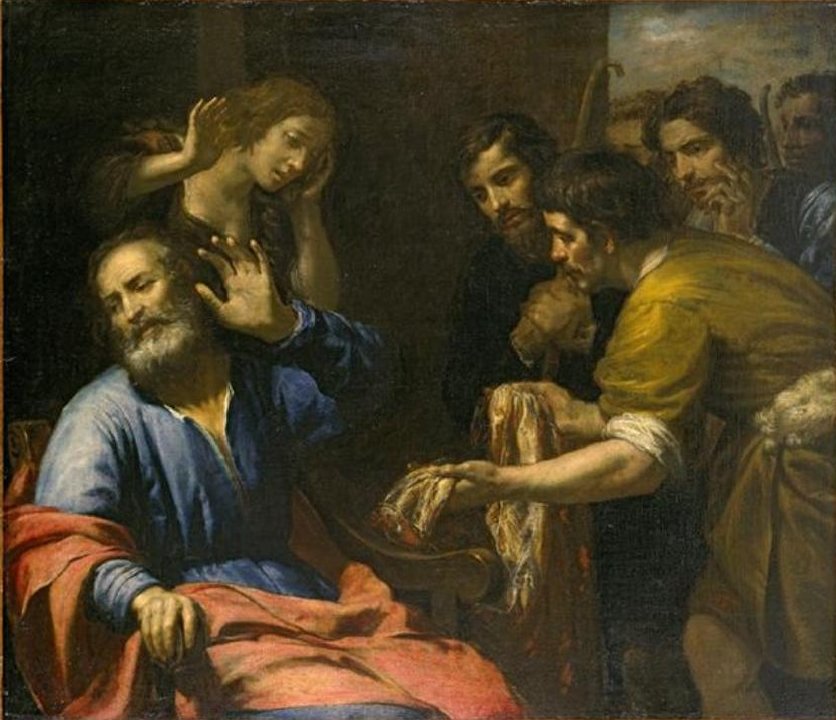
blog.1.12.16 2One of the greatest (but most painful) of mysteries is that of suffering and evil in the world. I was meditating with my Sunday school parents this past weekend on the Old Testament patriarch Joseph. His story is rich with lessons about family struggles, envy, jealousy, pride, mercy, and forgiveness. But it also has a lot to say about suffering and the way that God can use it to bring blessings.

While there are many layers to Joseph’s story, both personal and communal, it is clear that God often allows great injustice and suffering only to produce great glory and healing on account of it. Let’s weave the story together with some basic teachings about suffering.

A. Structures of sin bring suffering – The story of Joseph begins with a dysfunctional household. Joseph’s father, Jacob, had two wives (Leah and Rachel) and twelve sons with his wives and their maids (Zilpah and Bilhah). Polygamy and adultery are not part of God’s plan! To be outside of God’s will is always to ask for trouble. Having sons by four different women produces no end of internecine conflicts. Sure enough, Jacob’s sons all vie for power and have divided loyalties because they have different mothers.

And in this matter we see that much suffering is ushered in by human sinfulness. When we are outside of God’s will we invite trouble. Sadly, the trouble affects not only the sinners, but many others as well.

Thus the sons of Jacob have been born into a mess, and into what moralists describe as the “structures of sin.” In these broken situations of structural sin, sin and suffering multiply.

And it is often the children who suffer. Having inherited a mess, the children begin to act badly and disdainfully. Suffering and evil grow rapidly in these settings.

In the world today, it is probably not an exaggeration to say that 80% of our suffering would go away if we all just kept the commandments. But, sadly, we do not repent, either individually or collectively.

And thus the first answer to why there is suffering is sin. Original Sin ended paradise. Individual sin brings dysfunction and a host of social ills. And while this does not explain all suffering (e.g., natural disasters) it does explain a lot of it.

Joseph is about to suffer on account of a structurally sinful situation brought about by Jacob, his wives, and his mistresses, and contributed to by all the members of the household. It’s not his fault but he will suffer.

B. Suffering can bring purification and humility – Though Joseph’s brothers all fought among themselves, they did agree on one thing: Jacob’s youngest son, Joseph, just had to go. Jacob’s favorite wife was Rachel, and when she finally bore a son (Joseph) he became Jacob’s favorite. Jacob doted on him, praised him, and even gave him a beautiful coat that inflamed his brothers with jealousy. They were also enraged and envious because Joseph had many gifts: he was a natural leader; he was able to interpret dreams. Joseph had the kind of self-esteem that perhaps celebrated his gifts too boldly. Among the dreams that he had (and related) was that he would one day rule over his brothers. This was altogether too much for them. Even Jacob had to rebuke Joseph for speaking in this manner.

Here we see a possible flaw or character defect in Joseph. It is hard to know if Joseph actually crossed the line. After all, his dreams were true. He was a gifted young man and would one day rule over his brothers. Someone once said, “It’s not boasting if it’s true.”

And while this has some validity, it is possible for us to conclude that Joseph was awfully self-assured and may have lacked humility, something that required purification.

Surely, as a young man he had a lot to learn. Suffering has a way of both purifying us and granting us humility and wisdom. If Joseph was going to be a great leader, he, like Moses before him, needed some time in the desert of suffering. And thus we sense that God permitted trials for him in order to prepare him for wise, effective, and compassionate leadership.

And so, too, for us. Trials and sufferings prepare us for greater things and purify us of pride and self-reliance. Woe to the man who has not suffered, who is unbroken. God permits us trials and difficulties in order to help us hone our skills, know our limits, grow in wisdom, and develop compassion and trust.

C. Suffering opens doors – On account of all of this, Joseph’s brothers plot to kill him. But, figuring that they can make some money, they instead sell him to the Ishmaelites as a slave. Joseph ends up in Egypt, in the house of the wealthy Potiphar. His natural leadership skills earn him quick promotions and he soon comes to manage Potiphar’s extensive household.

It is true that Joseph had a disaster befall him: he was sold into slavery. It is hard to imagine a worse fate. Yet strangely God permitted that in order to open a door. When Joseph was being carted off to Egypt in chains, it would have been hard to convince him that his life was anything but a disaster. Yet God was up to something good.

Within months Joseph is in a good spot, working for a wealthy man as a trusted adviser and manager. As we shall see, more still will be required in order for Joseph to be prepared for his ultimate work.

But at this point in the story, the lesson is clear enough: God permits some sufferings in order to get us to move to the next stage. He closes one door but opens another. There is pain in the closing of the door to the familiar, but there is greater joy beyond in the door He opens.

How about for you? What doors has God closed in your life, only to open something better? At the time a door closes we may suffer and wonder if God cares. But later we see what God was doing, for the new door opens to things far greater.

D. Suffering helps summon courage – In a tragic way, sorrow comes again to Joseph. Potiphar’s wife takes a liking to Joseph and tries to seduce him. Joseph refuses her advances out of fear of God and respect for Potiphar. But in her scorn she falsely accuses Joseph of having made advances on her and Joseph is thrown in jail! More misery, more suffering, on account of the sins of others, not his own! Joseph was suffering for doing the right thing!

One of the great virtues that we must all develop is that of courage. In a world steeped in sin it takes great courage to resist the tide.

But courage, like any virtue cannot simply be developed in the abstract. Rather, it must be developed. It must quite often be refined in the crucible of opposition and persecution.

And thus we see how God helps Joseph to develop his courage and trust by permitting this trial. Many centuries later, Jesus would say, In this world you shall have tribulation, but have confidence, I have overcome the world (Jn 16:33). He also said, Blessed are those who are persecuted for the sake of righteousness, for the kingdom of heaven is theirs (Matt 5:10).

As for Joseph, so also for us. If we are going to make it through this sinful world with our soul intact, we are going to need a lot of courage. The Lord often develops courage via the crucible, asking us to trust Him that we will be vindicated, whether in this world or the next.

E. Suffering builds trust – While in prison, Joseph meets two other prisoners from Pharaoh’s household: the cup-bearer, and the baker. In prison, they witness Joseph’s ability to interpret dreams and observe his natural leadership skills. In accordance with a prophecy given by Joseph, the cup-bearer is restored to Pharaoh’s service. He reports Joseph’s dream-interpretation skills to Pharaoh, who is having troubling dreams.

God humbles us only to exalt us. As Joseph has learned, God can make a way out of no way. He can do anything but fail, and He writes straight with crooked lines.

In jail Joseph, has his trust in God confirmed. Through his connections in jail, of all places, he will rise to become the prime minister of all Egypt. Having come through the crucible, Joseph is now ready for the main work that God has in store for him.

Consider how God’s providence has prepared you for something that you wouldn’t have been able to handle at an earlier stage in your life. Surely he prepared you in many ways, but among them was through humility and suffering. Setbacks or failures have a way of teaching us and preparing us for some of the greatest things that we enjoy. In our struggles we learn the essential truth. We come to trust and depend on God, who knows what we need, what is best for us, and how to prepare us for the work He expects from us.

F. Suffering produces wisdom – Joseph is brought to Pharaoh, and not only does he powerfully interpret Pharaoh’s dreams, but also presents a 14-year plan that will lead them through a looming crisis. Pharaoh is impressed and appoints Joseph as the equivalent of prime minister of all Egypt.

Joseph is able to interpret Pharaoh’s dream. But he doesn’t simply interpret what it means, he also sets forth a wise plan. He explains to Pharaoh that the next 14 years will have their ups and downs. And where might Joseph have learned this truth? In the crucible of his own life, of course.

There is great wisdom in grasping that what is seen and experienced in this world is transitory. We do well to listen to the Lord’s wisdom, which is eternal.

Centuries later, the Lord related a parable of a wealthy man who had a great harvest and thought he was set forever. Lord called him a fool for thinking this way. Our abundance is not meant to be hoarded for ourselves. Excess food is not to be stored away for ourselves, but rather “stored” in the stomachs of the hungry.

And thus Joseph has been prepared for this moment by God. Joseph is no fool; he has learned God’s wisdom and direction. Whatever abundance occurs in the next seven years must be set aside for those who will be hungry in the years that follow.

Joseph’s wisdom is no accident, no mere hunch; it has come from the crucible of suffering. Suffering does that. It helps us to become wise, to get our priorities straight. In this case it helps us to understand that our wealth depends on the “commonwealth.” We cannot live merely for ourselves; that is foolishness. We are called to live for others.

What wisdom has God taught you through suffering? How has suffering helped you to get your priorities straight? How has it helped you to see the passing quality of life in this world and to set your sights on the world to come and on the judgment that awaits you? On the Day of Judgment will God call you foolish or wise? If you are wise, how did you get there?

G. In our suffering, we learn that our lives are not about us – Joseph predicted seven years of plenty followed by seven years of famine. Under Joseph’s direction, grain was stored in abundance during the years of plenty. So plentiful were the harvests during those years that the stored grain saved Egypt and many neighboring lands saved from famine. In a plot twist, Joseph’s brothers come to Egypt seeking food during those lean years. His anxious brothers recognize him and fear for their lives. Joseph reassures them by remarking that though their actions were intended for evil, God intended them for good. Joseph saves the very brothers who wanted to kill him.

In our suffering, we learn that our lives are not about us. Joseph was not purified and prepared for this moment simply for his own sake, but for the sake of others as well (or maybe even more). God has led Joseph, often through terrible suffering, in order to prepare him to help save others.

God did not simply prepare him to be a big cheese. God did not prepare him for glorious leadership for his own sake, but for the sake of others.

One of the lessons that we learn in Joseph’s story is that our life is interconnected with that of many other members of the Body of Christ, all of whom are precious and important to God.

God had to put Joseph through a lot in order to prepare him for his role of helping others. We are not called to live only for our own self. God loves us individually, but he also loves others through us. And he loves them enough that sometimes he is willing to make us wait for their sake, or to cause us to suffer in order to groom us to help them. The same is true of them toward us. All of us have benefited from the sacrifices of others and are called to make sacrifices for others.

It is a hard truth that God sometimes asks us to accept suffering for the sake of others, and we are blessed by the sufferings of others who made many sacrifices for the things that we enjoy.

This is the communal dimension of suffering. How has God prepared you, through sufferings today, to be able to help others?

Biblical stories have a wonderful way of teaching truth and of teaching us about our own life. And thus the Patriarch Joseph speaks to us from antiquity, from the pages of God’s holy Word. Somehow, I can hear Joseph saying that God can make a way out of no way. Somehow, I can hear him calling us to courage in our sufferings, and to perspective. Somehow, I can hear him singing the words of an old gospel hymn: “God never fails. He abides in me, give me the victory for God never fails!”

Who or What is the Antichrist? A reflection on the Biblical teaching.

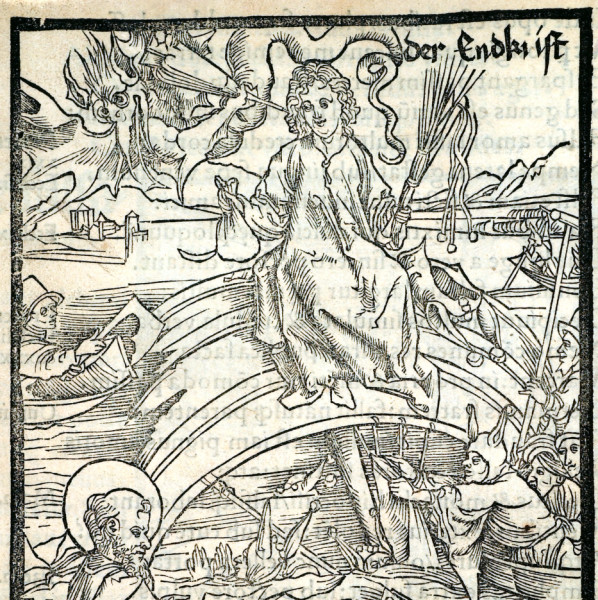
blog-011016There is much lore about the antichrist, especially among certain Evangelicals that is often out of proportion to the attention scripture pays to the concept, and more importantly is at possible variance from what is actually and certainly taught. It easily becomes the stuff of movies and novels wherein the antichrist figure steps on the scene, deceiving many and mesmerizing the whole world with apparent miracles and a message of false peace.

But is this really what or who the Scriptures call the antichrist? I would argue not, for in order to create this picture, its artists must splice in images from the Book of Revelation and the Letter to the Thessalonians which do not likely apply to the mention of antichrist(s) in Scripture.

In fact, the use of the term “antichrist(s)” occurs only in the Johannine epistles. It does not occur in the Book of Revelation at all though many have mistaken notions that it does. There are plenty of beasts and dragons and harlots, demons and Satanic legions there, but no antichrist(s) is (are) mentioned there.

As mentioned, many also stitch the teaching of antichrist together with St. Paul’s teaching on the “man of lawlessness” who is to appear just before the end. The lawless one may well be the stuff of movies. But calling the “man of lawlessness” the antichrist may be to borrow too much from a concept that is more distinct. While it is not inauthentic to make a connection (some the Fathers seem to), neither is it necessarily correct to do so.

In this reflection on the antichrist I would be of the school of thought that it is improbable that the antichrist and the man of lawlessness are the same. In order to explain why let’s first look at the occurrences of the term antichrist in St. John’s Epistles:

  1. Little children, it is the last hour: and as you have heard that antichrist shall come, even now are there many antichrists; whereby we know that it is the last time. (1 John 2:18)
  2. Who is the liar but the one who denies that Jesus is the Christ? This is the antichrist, the one who denies the Father and the Son. (1 John 2:22)
  3. By this you know the Spirit of God: every spirit that confesses that Jesus Christ has come in the flesh is from God, and every spirit that does not confess Jesus is not from God. And this is the spirit of the antichrist, of which you have heard that it is coming; and now it is already in the world (1 John 4:2–3)
  4. Many deceivers have gone out into the world, those who do not confess that Jesus Christ has come in the flesh; any such person is the deceiver and the antichrist! (2 John 1:7)

Note here, two things about the antichrist. First of all, St. John, writing in the First Century teaches “he” has already appeared. In calling this the “last hour” St. John and the Holy Spirit do not mean to indicate that the second coming will take place in the next 60 seconds, or even in the next few years. Rather it is a teaching that we are in the Last Age, the “Age of the Messiah,” also called the “Age of the Church” where God is sending out his angels to the four winds to gather all the elect from the ends of the earth (cf Mark 4:21) Sadly as well, St. John teaches that “antichrist” has come.

But secondly, in saying that “antichrist” has come, he immediately clarifies saying that (actually) many antichrist have appeared.

And thus, St John does not seem to present the antichrist is a solitary figure who comes, but notes that there are many antichrists.

And what do these antichrists do? They perpetrate heresy, error, and false teaching. He notes in particular that heretics who deny that Jesus is the Christ, (the Messiah) are antichrists. He also terms antichrists those who deny Christ having come in the flesh.

What does it mean to deny Christ having come in the flesh? It means that these antichrists reduce the saving work of God to mere appearances, that Jesus did not actually take up a human nature but only appeared to do so. These same antichrists, by extension, reduce the Christian moral and spiritual life to mere gnostic ideas rather than a true flesh and blood, body and soul change in our lives.

Many today extend these denials of the incarnation by undermining the historicity of the Gospels, doubting or outright denying what Jesus actually said and did, his bodily resurrection, and so forth. Some of them will say that his resurrection was not a bodily resurrection, but rather that his “ideas live on.” Now of course there can be no more fundamental heresy that to deny the bodily resurrection of Christ. As St. Paul says, And if Christ has not been raised, then our preaching is in vain and your faith is in vain….if Christ has not been raised, your faith is futile and you are still in your sins….[and] we are of all people most to be pitied. (1 Cor 15:14-17)

Thus, St. John along with all the early Church emphatically upholds an incarnational faith. We could actually touch our God and he touched us taking up our human nature. He suffered on the cross and died. And though his suffering was tied to his human nature (for his divine nature is impassible), but the Second Person of the Blessed Trinity, Jesus, hypostatically united to his human nature suffered and died for us. It was this same human nature that God raised from the dead, gloriously transformed.

John takes this theme up elsewhere when he says the Christ came in water and in blood, not in water only (cf 1 John 5:6); for a certain heretic of that day named Cerinthus, held that the second person of the Blessed Trinity departed just before the passion of Jesus set in. John says, “No!” and insists that just as at his baptism the divine Nature of Jesus was affirmed “This is my beloved Son in whom I am well pleased,” it is no less true during the shedding of his blood on Calvary, for the inspired word of God records the Centurion, on seeing the manner of Jesus’ death as saying, “Surely this was the Son of God!” (Mat 27:54). Jesus Christ, the Son of God, though of two natures is one person, did in fact die suffer and die for us.

Thus the essence of antichrist or St. John was anyone who denied Jesus come in the flesh; any who would relegate his presence among us to mere appearances, or his teachings to mere abstractions or ideals rather than transformative realities.

By extension it can be argued that the term “antichrist” refers to all deceivers, though only logically, not textually. St. John does not specifically indicate he means it this broadly. But in this wider sense all heresy pertains to antichrist since Jesus Christ is the truth. And to deny the truth Jesus teaches through his apostles is to deny Christ himself, who is truth itself, and thus to be “antichrist.”

Perhaps this is not the stuff of movies and novels. Sorry! And too bad because the title “antichrist” is so catchy! But this brings us to the man of lawlessness (also called the lawless one).

What or who is the “man of lawlessness” that Paul mentions and how is he related to the antichrist? As already stated, I do not think there is a connection. To see why lets consider what St. Paul teaches:

  1. As to the coming of our Lord Jesus Christ and our being gathered together to him, we beg you, brothers and sisters, not to be quickly shaken in mind or alarmed, either by spirit or by word or by letter, as though from us, to the effect that the day of the Lord is already here. Let no one deceive you in any way; for that day will not come unless the rebellion comes first and the Man of lawlessness is revealed, the one destined for destruction. He opposes and exalts himself above every so-called god or object of worship, so that he takes his seat in the temple of God, declaring himself to be God. (2 Thessalonians 2:1–4)
  2. For the mystery of lawlessness is already at work, but only until the one who now restrains it is removed. And then the lawless one will be revealed, whom the Lord Jesus will destroy with the breath of his mouth, annihilating him by the manifestation of his coming. The coming of the lawless one is apparent in the working of Satan, who uses all power, signs, lying wonders, and every kind of wicked deception for those who are perishing, because they refused to love the truth and so be saved. (2 Thessalonians 2:7–10)

Note the following crucial differences between antichrist and the lawless one:

  1. John speaks in the plural of “antichrists” whereas St. Paul speaks in the singular of the “Man of lawlessness,” or “lawless one.”
  2. The Lawless One’s deceptions are far less specified as “every kind of wicked deception” whereas the antichrists are more specified as related to a denial of the incarnation of the Son of God.

Jesus too speaks of those who will lead many astray, though he speaks in the plural and is likely referring to the First Century and the travails leading up to the War with the Romans in 70 AD: For false messiahs and false prophets will appear and produce great signs and wonders, to lead astray, if possible, even the elect. (Matthew 24:24)

So, as you can see there are a lot of moving parts here as well as a lot of singulars and plurals to sort out, and time frames to consider. Permit the following conclusions from me.

  1. Antichrist is more restrictive notion that most think today. Antichrist is not a single person at all, but any number of people. The concept of antichrists seems limited specifically to those who deny that Jesus is the Christ, come in the flesh, and can possibly be applied to heresy in general.
  2. Jesus warns of false prophets and messiah’s but the context of his warning seems to be the First Century and the looming destruction of Jerusalem. Not the end times per se. Further he speak of many false prophets, not a solitary figure.
  3. It is the “man of lawlessness” spoken of by St. Paul that most fits our “movie script” of a charismatic figure, able to unite the world in a false peace by mesmerizing and deceiving the nations. This lawless one will signal the end times. And while not saying these are the end times, it is notable that the advent of instant worldwide communications has made possible the lawless one as never before. One individual could actually mesmerize and deceive all the nations right on the world-wide-web.
  4. All that said, to equate this “lawless one” with one of the beast of Revelation, or with antichrist, may be too speculative and possible inaccurate for all the reasons stated.

I hope I haven’t toyed with your movie script version too much. But Scripture is nuanced in these matters and we do well to avoid reducing its teachings to popular concepts and catchy notions.

Scripture does speak to us of end times and of difficult times preceding them. But the information given is often in general, even cryptic terms. It is as if Scripture wants to say, be ready, you don’t need (or want to know) all the details. Just be ready and know that when they set in, Christ has already won the battle! Viva Christo Rey.

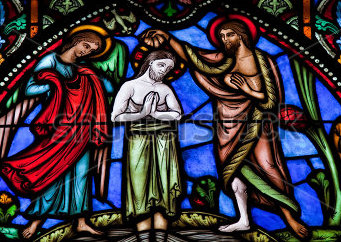
Jesus Does Not Go into the Water Alone; He Takes Us with Him – A Reflection on the Baptism of the Lord

baptToday’s feast of the Baptism of the Lord is a time to reflect not only on the Lord’s baptism but on our own. In an extended sense, when Christ is baptized so are we, for we are members of His Body. As Christ enters the water, He makes holy the water that will baptize us. He enters the water and we follow. In these waters, He acquires gifts to give us.

Let’s examine today’s gospel in three stages.

  1. The Fraternity of Baptism – The text says, After all the people had been baptized and Jesus also had been baptized …

Luke mentions Jesus’ baptism in passing, in the middle of a sentence. Perhaps he, like many of us, is puzzled as to why Jesus would request baptism. John’s baptism of repentance presumes the presence of sin. But the scriptures are clear: Jesus had no sin.

For we have not a high priest who is unable to sympathize with our weaknesses, but one who in every respect has been tempted as we are, yet without sin (Heb 4:15).

You know that he appeared to take away sins, and in him there is no sin (1 John 3:5).

Even though He never sinned, Jesus identifies with sinners. As He comes to the bank of the river He has no ego concerns. He is not embarrassed or ashamed that some might think Him a sinner (though He was not). He accepts remarkable humiliation in being found in the company of sinners like us, or in being seen as one of us. Jesus freely enters the waters knowing that anyone who does not know Him will number Him among the sinners.

Consider how amazing this is. Scripture says, He is not ashamed to call us his Brethren (Heb 2:11). Elsewhere it says, God made him who had no sin to be sin for us, so that in him we might become the righteousness of God (2 Cor 5:21).

Jesus ate with sinners, something many of the religious leaders found scandalous. This man welcomes sinners and eats with them” (Lk 15:2). Jesus was known as a friend of sinners. He had pity on the woman caught in adultery. He allowed a sinful woman to touch Him and anoint His feet. He cast out demons and fought for sinners. He suffered and died for sinners in a manner reserved for the worst of criminals. He was crucified between two thieves and He was assigned a grave among the wicked (Is 53).

Praise God, Jesus is not ashamed to be found in our presence and to share a brotherhood with us. There is a great shedding of His glory in His doing this. Scripture says, [Jesus], being in very nature God, did not consider equality with God something to be grasped, but made himself nothing, taking the very nature of a servant, being made in human likeness. And being found in appearance as a man, he humbled himself (Phil 1:3).

  1. The Foreshadowing of our BaptismIn accepting baptism, Jesus does not enter the water alone. He takes us with Him, for we are members of His Body. As the Head of the Body, He goes where the members will follow. St. Maximus says,

I understand the mystery as this. The column of fire went before the sons of Israel through the Red Sea so that they could follow on their brave journey; the column went first through the waters to prepare a path for those who followed … But Christ the Lord does all these things: in the column of fire He went through the sea before the sons of Israel; so now in the column of his body he goes through baptism before the Christian people … At the time of the Exodus the column … made a pathway through the waters; now it strengthens the footsteps of faith in the bath of baptism (de sancta Epiphania 1.3).

So what God promised in the in the Old Testament by way of prefigurement, He now fulfills in Christ. They were delivered from the slavery of Egypt as the column led them through the waters. But more wonderfully, we are delivered from the slavery to sin as the column of Christ’s Body leads us through the waters of baptism. God’s righteousness is His fidelity to His promises. In His baptism and all it signifies (His death and resurrection) Jesus has come to fulfill all righteousness, and thus fulfills the promises made by God at the Red Sea and throughout the Old Testament.

  1. The Four Gifts of Baptism The text says, heaven was opened and the Holy Spirit descended upon him in bodily form like a dove. And a voice came from heaven, “You are my beloved Son; with you I am well pleased.”

Scripture says, we are members of Christ’s body (Eph 5:30). Thus when Jesus goes into the water, we go with Him. In going there He acquires four gifts on our behalf:

Access the heavens are opened – The heavens and paradise were closed to us after Original Sin, but at Jesus’ baptism, the heavens are opened. Jesus acquires this gift for us. At our baptism, the heavens open for us and we have access to the Father and to the heavenly places. Scripture says, Therefore, since we are justified by faith, we have peace with God through our Lord Jesus Christ. Through him we have obtained access to this grace in which we stand (Romans 5:1). Elsewhere, Scripture says, For through Jesus we have access in one Spirit to the Father. So then you are no longer strangers and sojourners, but you are fellow citizens with the saints and members of the household of God (Eph 2:17).

Anointing the Spirit of God descends on him like a dove – Here, too, Jesus acquires the gift of the Holy Spirit for us. In baptism we are not just washed of sins, but we also become temples of the Holy Spirit. After baptism there is the anointing with chrism, which signifies the presence of the Holy Spirit. For adults, this is Confirmation. But even for infants there is an anointing at baptism to recognize that the Spirit of God dwells in the baptized as in a temple. Scripture says, Do you not know that you are God’s temple and that God’s Spirit dwells in you? (1 Cor 3:16)

AcknowledgmentYou are my beloved Son – Jesus receives this acknowledgment from His Father for the faith of those who heard it, and also to acquire this gift for us. In our own baptism we become the children of God. Since we become members of Christ’s Body, we now have the status of sons of God. On the day of your baptism the heavenly Father acknowledges you as his own dear child. Scripture says, You are all sons of God through faith in Christ Jesus, for all of you who were baptized into Christ have clothed yourselves with Christ (Gal 3:26).

ApprovalWith you I am pleased Jesus had always pleased His Father, but now He acquires this gift for us as well. Our own baptism gives us sanctifying grace, the grace to be holy and pleasing to God. Scripture says, Blessed be the God and Father of our Lord Jesus Christ, who has blessed us in Christ with every spiritual blessing in the heavens, as he chose us in him, before the foundation of the world, to be holy and blameless in his sight (Eph 1:1-3).

Thus at His baptism Christ acquires these gifts for us so that at our own baptism we can receive them. Consider well the glorious gift of your baptism; if you don’t know the date, do some research and find out. It should be a day as highly celebrated as your birthday. Christ was baptized for our sake, not His own. All these gifts had always been His. In His baptism, Jesus fulfilled God’s righteousness by going into the water to get them for you. It’s alright to say, “Hallelujah!”

https://youtu.be/BXsoSRzApZY

Why Did Jesus “Mean to Pass by” His Disciples When He Was Walking on the Water?

blog1-7The gospel for daily Mass on Wednesday recounted the familiar story of Jesus walking on the water after having multiplied the loaves and fishes.

There is an odd turn of phrase (to modern ears) midway through the gospel: About the fourth watch of the night, [Jesus] came toward them, walking on the sea. He meant to pass by them (Mark 6:48).

This seems odd. Why would Jesus approach them, walking on the water (astounding miracle that it is), and simply mean to pass on by?

We may think that this means that Jesus will not to stop, but will keep on walking past them. However, this is not what it means.

This expression of God “passing by” is a common one in the theophanies of the Old Testament. For example, when Moses was up on the mountaintop, God revealed himself by “passing by.” The text says,

Then Moses said, “Now show me your glory.” And the Lord said, “I will cause all my goodness to pass in front of you, and I will proclaim my name, the Lord, in your presence. I will have mercy on whom I will have mercy, and I will have compassion on whom I will have compassion. But,” he said, “you cannot see my face, for no one may see me and live.” Then the Lord said, “There is a place near me where you may stand on a rock. When my glory passes by, I will put you in a cleft in the rock and cover you with my hand until I have passed by. Then I will remove my hand and you will see my back; but my face must not be seen” (Exodus 33: 18-23).

Another example of this is in the appearance the Lord made to Elijah, who was hiding in a cave after his flight from Jezebel. At one point, God called him out of the cave so that He could “pass by.” The text says,

The Lord said, “Go out and stand on the mountain in the presence of the Lord, for the Lord is about to pass by.” Then a great and powerful wind tore the mountains apart and shattered the rocks before the Lord, but the Lord was not in the wind. After the wind there was an earthquake, but the Lord was not in the earthquake. After the earthquake came a fire, but the Lord was not in the fire. And after the fire came a gentle whisper. When Elijah heard it, he pulled his cloak over his face and went out and stood at the mouth of the cave (1 Kings 19:11-13).

Here are some other example of this “passing by.”

  1. When John the Baptist saw Jesus passing by, he said, “Look, the Lamb of God!” (Jn 1:36)
  2. Now hearing a crowd going by, [the Blind Man] began to inquire what this was. They told him that Jesus of Nazareth was passing by. And he called out, saying, “Jesus, Son of David, have mercy on me!” (Lk 18:37-38)

Hence, for Jesus to “pass by” is not for Him to walk past us in hiding. Rather, it is for Him to reveal Himself to us and summon us to faith. Similarly, in the Old Testament texts God “passes by” not to hide but to reveal Himself and summon us to faith.

Some may argue that these phrases should be translated differently so that we can better grasp their meaning. Why not just say, “He came toward them to reveal himself to them?”

Perhaps there is some merit in this argument. But I would counter that a text often has a greater effect on us if it causes us to ponder and pray. Consider that in trying to “decode” this text, we have looked at four other passages. Further, we have deepened our appreciation of what it means for God to “pass by.”

What is easy is not always what is best for us.