People oversimplify Original Sin in various ways. Some reduce it to the mere eating of a piece of fruit rather than the act of disobedience, mistrust, and ingratitude it really was.
Others miss the subtle but important difference in the descriptions of Adam’s sin compared to Eve’s. Of Eve’s sin, Eve herself is a witness. She said, The serpent tricked me and so I ate it (Gen 3:13). But of Adam’s sin God said, Because you listened to your wife and ate fruit from the tree about which I commanded you, ‘You must not eat from it …’ (Gen 3:17). Eve’s sin lay in her allowing Satan to deceive her. Adam’s sin lay in his willingness to allow his wife to tempt him.
A final misconstruing of Original Sin is to label it “the Sin of Adam and Eve.” But Scripture calls it “The Sin of Adam.” For while both our first parents sinned, Original Sin comes to us from Adam who, as head of the first family and primogenitor of us all, conveyed it to us.
As is typical for my Saturday blog, today’s post is a lighthearted one in which I find something of the Scriptures in a video. Now some object to my taking biblical stories (especially one as dark as the story of Original Sin) and making light of them. But my prudential judgment on such things is that they are acceptable and that sometimes we can best process sad and serious things through humor and playful reimagining.
In the video below we see a playful “what if” scenario. In effect it poses these questions: What if Adam, when presented the forbidden fruit by his wife, found it less enticing than what God offered? What if there had been something to remind him of God’s greater offer?
Of course there was something greater and it was all around him! It was called paradise. Now the writers of this commercial want us to think that if only Adam had had Doritos at hand he would clearly have preferred them to the forbidden fruit. In other words, they present their product a metaphor for paradise. Nice try, and very creative I might add! But God offers even more than Doritos.
In the end, though, the insight is important. Like Adam, we are tempted to forget the blessings of God and become mesmerized by some lesser pleasure (represented by the forbidden fruit). The key is to remember the greater gift of God and His Kingdom, not choosing anything that might interfere with that. Remember the gifts of God!
Enjoy the video and remember that far greater visions await you if you are faithful!
(And by the way, thank you, Frito-Lay, for the affirmation of human life displayed in your recent Doritos commercial (that aired during the Super Bowl)! I am not focusing on that commercial here today because many others have already commented on it quite well.)
Are these the last days? In some sense the planets are aligning. But hold your horses; let’s speak carefully of these matters.
Last week in the Breviary we read First and Second Thessalonians, which are important source texts for such considerations. I’d like to look at a critical passage from Second Thessalonians, which lays out some important principles for us in the last days, balancing caution with teaching us about the signs that will point to His coming (though not the exact date).
The passages from 2 Thessalonians are presented in bold italics; my commentary follows each selection.
I. Reserve – Now concerning the coming of our Lord Jesus Christ and our being gathered together to him, we ask you, brothers, not to be quickly shaken in mind or alarmed, either by a spirit or a spoken word, or a letter seeming to be from us, to the effect that the day of the Lord has come. Let no one deceive you in any way.
We begin with the need for reserve. St. Paul is teaching that we are not to rush to judgment, concluding that the Day of the Lord is at hand. And this remains true today, some 2000 years later. He teaches that in these matters we are easily deceived.
If we do give way to rash conclusions and hold to a certainty of the Day of Judgment, we violate the most basic principle of eschatology.
But concerning that day and hour no one knows, not even the angels of heaven, nor the Son, but the Father only. For as were the days of Noah, so will be the coming of the Son of Man. For as in those days before the flood they were eating and drinking, marrying and giving in marriage, until the day when Noah entered the ark, and they were unaware until the flood came and swept them all away, so will be the coming of the Son of Man … Therefore, stay awake, for you do not know on what day your Lord is coming … You also must be ready, for the Son of Man is coming at an hour you do not expect (Matt 24: 36-44).
That said, there are certain signs that the Lord gave concerning the close of the age. St. Paul speaks of some of them in Thessalonians. The catechism enumerates them as follows:
1. the going forth of the Gospel to the ends of the earth,
2. a widespread conversion of the Jews,
3. a significant trial and persecution of the Church,
4. a great and widespread rebellion or apostasy,
5. the arising of a “man of lawlessness,” who will deceive the nations and lead many astray, including many Christians who will reject the faith (apostasy), and
6. a final unleashing of grave evil for a brief time.
I have written extensively about the Catechism’s teaching HERE.
II. Rebellion – For that day will not come, unless the rebellion comes first.
St. Paul speaks of a widespread rebellion that must first take place. This suggests that the faith has been accepted, but is now cast off. Those who rebel are those who, once having the law, cast it aside.
We are without doubt living in times of a great falling away from the faith that can be called, properly understood, a great apostasy. Again, to say that there is a falling away from faith means that, at one time, the faith was possessed but then later rejected.
In our times this is true of both individuals and cultures. Indeed, many of us lament the decline in Mass attendance and express dismay that so many who were raised as Catholics have not only left the practice of the faith but also live apart from her moral and doctrinal teachings, which have been handed on from ancient times. This is not just a statistic; it affects many in a deeply personal way. Many parents lament the departure from the faith of their children, for whom they sacrificed so that they could attend Catholic schools, and to whom they sought to hand on the faith they themselves had received.
Yes, these are difficult times, times of a great rejection of the very faith that made the culture. Many now live off the carcass of a culture built by the Christian vision of sacrifice, discipline, tolerance (properly understood), family, generosity, and accountability to God.
But is this the rebellion of which St. Paul speaks? That remains to be seen, but it is without doubt a rebellion that is wide and deep in the formerly Christian West. Arguably, the rebellion extends far beyond the Christian West, to the Far East and deep into the southern hemisphere. Surely the ease with which we communicate around the globe today has assisted in making this rebellion so widespread.
III. Revelation – And then the lawless one will be revealed … The coming of the lawless one is by the activity of Satan with all power and false signs and wonders, and with all wicked deception … And the man of lawlessness [will be] revealed, the son of destruction, who opposes and exalts himself against every so-called god or object of worship, so that he takes his seat in the temple of God, proclaiming himself to be God.
And after or perhaps in the midst of this rebellion, the lawless one will be revealed. Whoever he is, he will have widespread, worldwide appeal as well as the ability to mislead many if not the vast majority.
Here, too, we see the ominous fact that the modern age has made possible such a leader who could have worldwide impact.
But this does not mean that he is here now, or that he will be here soon, only that the capacity for instant worldwide communication has made this possible. While some have wanted to identify the man of lawlessness (sometimes called the antichrist) as Hitler, or the President of the United Nations, or certain United States presidents, none of these figures seem to qualify. None of them have led the whole world astray; their impact has been limited chronologically and geographically. For example, Hitler did lead many astray and conquered large parts of Europe, but entire nations together rose up against him. They were not deceived by Hitler, who is now in a stone-cold tomb.
So it would seem that the lawless one has yet to appear.
Yet it must also be said that with the rise of secularism, atheism, and strident anti-theism, the stage is increasingly being set for someone who can easily oppose himself (as St. Paul says) to every aspect of God and worship of God and who will be able to exalt himself in the place of God. Perhaps he will be a great scientist who claims to be able to create life and to explain every aspect of what we ascribe to God.
In so doing, he will deceive many. Science can say what and how, but it cannot say why. And no matter how advanced science or industry gets, it can never make something from nothing. But many are easily deceived by those who use existing matter and claim they have “created.”
Whatever the deception that comes, there’s clearly a lot of groundwork that is been laid for such a man of lawlessness: instant worldwide communication, rampant secularism and atheism, and arrogant anthropocentrism.
IV. Remember – Do you not remember that when I was still with you I told you these things?
Paul simply asks us to remember, to allow these teachings to be present to our mind and heart so that when these things unfold we will not be deceived. Jesus also instructed the disciples as to what was to come so that when these things did come they would not be led astray: These things I have spoken to you so that you may be kept from stumbling (Jn 16:1).
V. Restraint – And you know what is restraining him now so that he may be revealed in his time. For the mystery of lawlessness is already at work. Only he who now restrains it will do so until he is out of the way.
Here St. Paul teaches us that something is currently restraining the lawless one from appearing. If he could, Satan would push the matter right now, but something is restraining him. What is it? Certainly it is God. But the means by which God accomplishes this is most likely the Church. Through grace, the power of the Sacraments, the proclaimed Word, and the liturgy, Satan’s power is restrained in certain ways.
But at some point known only to God, even this restraining power will no longer be enough and the lawless one’s time will come; he will appear.
Does this mean that the Church will grow weak? Perhaps, but not in any absolute sense, for the Lord has said, I am with you all days, unto the end of the age (Mat 28:20). But arguably, if a large number of Catholics fall away from the faith, there will be fewer prayers being said, fewer graces bestowed, and less light in a dark world. Jesus did ask, poignantly, When the Son of Man comes, will he find any faith on earth? (Lk 18:8) But even if we do shrink in numbers, the Church is indefectible; she will be here to the end.
So the best explanation seems to be that there will come a time when the Lord will no longer restrain the evil one from making his final attack.
Why God allows this is even more mysterious; it is somehow tied up in our freedom and in a certain Job-like purification that God permits for the Church. And this leads to St. Paul’s stated reason for the coming of the lawless one.
VI. Reason – [This lawless one will come] for those who are perishing, because they refused to love the truth and so be saved. Therefore God sends them a strong delusion, so that they may believe what is false, in order that all may be condemned who did not believe the truth but had pleasure in unrighteousness.
The text speaks of God as sending a strong delusion on many so that they may believe what is false. We must be careful in interpreting these sorts of descriptions. They certainly refer to the primary causality that God has in everything that happens. Being the sustainer of all things, God is always the first cause of everything that takes place.
However, a text like this should not be seen to mean that God forces people to believe error. Rather, He is allowing to become plainly visible what was already the case in the will and the mind of those who are rebellious. Prior to the strong delusion that God permits, they had already (as St. Paul says) taken pleasure in unrighteousness and did not believe the truth. These are descriptions of the human will; God permitting the strong delusion simply makes plain but was already operative.
VII. Result – the Lord Jesus will kill with the breath of his mouth and bring to nothing by the appearance of his coming.
So in the end God wins. God always wins; the truth always conquers. Many today are easily bewildered by the apparent triumph of evil in our world, but it is only temporary; it is but a watch in the night that the dawn will scatter. The light shines in the darkness, and the darkness has not overcome it (Jn 1:5). One of the Psalms says, I have seen my enemy towering and triumphant; I passed by again and he was gone, I looked for him but he could not be found (Ps 37:36). Yet another Psalm says, Weeping may endure for a night, but joy will come with the morning light (Ps 30:5).
Do not be dismayed, fellow Catholics, at the current darkness. Whether this is the final end, or merely another ripple in the storm-tossed sea of history is yet to be known. But this much is clear: the darkness cannot endure; dawn inevitably comes. The cross always wins; Satan always loses. Satan will have his moments, but God has have His day. Satan may be the prince of this world, but Jesus is the Lord of history and all creation. The victory is already His. It’s just that the news has not yet leaked out to his persistent enemies, who are playing for the losing team.
This text is clear: whatever the apparent glamour of evil, Jesus, by His glorious appearance, will bring Satan and all of his works to nothing.
There is a phrase in the Scriptures that, while speaking of mystery, is itself a bit mysterious and is debated among scholars: the “mystery of iniquity.” St. Paul mentions it in Second Thessalonians and ties it to an equally mysterious “man of iniquity” who will appear before the Second Coming of Jesus. Many modern translations (accurately) render it as the “mystery of lawlessness” but that has less of a ring to it.
The Latin root of the English word “iniquity” is iniquitas (in (not) + aequus (equal)), meaning unjust or harmful. But the Greek μυστήριον τῆς ἀνομίας (mysterion tes anomias) is probably best rendered as “mystery of lawlessness.”
Language issues aside, Paul almost seems to be writing in a kind of secret code:
Concerning the coming of our Lord Jesus Christ and our being gathered to him, we ask you, brothers and sisters, not to become easily unsettled or alarmed by the teaching allegedly from us—whether by a prophecy or by word of mouth or by letter—asserting that the day of the Lord has already come. Don’t let anyone deceive you in any way, for that day will not come until the rebellion occurs and the man of lawlessness is revealed, the man doomed to destruction. He will oppose and will exalt himself over everything that is called God or is worshiped, so that he sets himself up in God’s temple, proclaiming himself to be God. Don’t you remember that when I was with you I used to tell you these things? And now you know what is holding him back, so that he may be revealed at the proper time. For the mystery of lawlessness is already at work; but the one who now holds it back will continue to do so till he is taken out of the way. And then the lawless one will be revealed, whom the Lord Jesus will overthrow with the breath of his mouth and destroy by the splendor of his coming (2 Thess 2:1-8).
Although St. Paul tells the Thessalonians that they know what is holding back the lawless one, we moderns struggle to know. Some scholars say that Paul is referring to the Roman government (which I doubt). Others say that it is the power of grace and God’s decision to “restrain” the evil one and thereby limit his power a bit for the time being. Of course if Satan is limited now, what horrifying things will be set loose when he is no longer restrained! Can it get any worse? Apparently it can!
But there it is in the seventh verse; even before the lawless one is set loose there already exists the “mystery of iniquity,” the mystery of lawlessness. That phrase comes down through the centuries to us, provoking us to ponder its rich meaning.
Yet the danger is that we can focus too much on the “man of iniquity,” who is not yet fully here, and fail to ponder the present reality, which is already operative. As St. Paul says, For the mystery of lawlessness is already at work. Yes, the danger is that we focus on the future, which is murky, and ignore the present, which is already here and operative.
Hence I propose that we ponder the “mystery of iniquity,” which is already here. I’d like to explore how it affects us, both personally and collectively. In doing so, we cannot ignore the operative word “mystery.” We must ponder with humility, realizing that we are confronting a mystery, some of which is revealed but much of which is hidden. Therefore I do not propose to “explain” this phrase to you, but rather to ponder its mystery and confront its questions so as to draw us to reverence and a deeper sense of our need for salvation.
Let’s look at the mystery of iniquity in five parts, wherein we ponder the mysterious reality of lawlessness that seems so operative among us, individually and collectively.
I. The Strange Mystery of “Rational” Man’s Irrationality – Why do we, who are otherwise rational creatures, choose to do that which we know is wrong? Why do we choose to do that which we know causes harm to ourselves and others, which endangers us, threatens and compromises our future, and further weakens us? Why do we choose evil, knowing that it is evil? This is mysterious.
Some argue that, on account of Original Sin, our will has been weakened and thus we easily give way to temptation. While this offers some further insight into what we do, it does not ultimately solve the mystery. For at the end of the day, there is still the deeply mysterious truth that we consistently choose to do that which we know is wrong and harmful.
Some argue that we are actually choosing what we perceive to be good. But here, too, despite our darkened intellects and our tendency to lie to ourselves, deep down we really know better. We know that choosing evil leads to harm in the long run, and our conscience tells us, “This is wrong. It’s a lie. Don’t do it.” And knowing this, we still do it.
Are we weak? Yes, but that is not the complete answer. Deep down we know this and thus we stare once again into the face of the “mystery of iniquity.”
II. The Even Stranger Mystery of the Angelic Rebellion – The mysteries only deepen when we consider that this is not just a human problem; it is also an angelic one. The presence of demons, revealed to us by Scripture and by our own experience, speaks to the reality of fallen angels.
Yes, among the angels, too, there was a great rebellion. Scripture more than hints at the fact that a third of the Angels fell from Heaven in a war of rebellion, before the creation of man (cf Rev 12:4).
Thus, ascribing iniquity and lawlessness to human weakness is not and cannot be a complete answer.
It is exceedingly hard and mysterious to ponder how Angels, with a nature and intellect far more glorious than ours, would knowingly reject what is good, true, and beautiful. Here is the deep “mystery of iniquity” having nothing to do with the flesh, or with sensuality, or with human limits. It is raw, intellectual, willful rebellion against the good by intellects and creatures far superior to us. The mystery only deepens.
III. The Awful Mystery of the Corruption of What is Best and Brightest – The intellect and free will are arguably God’s greatest gifts. But why then do they come with such a high price for both God and for us? Surely God foresaw that huge numbers of angels and human beings would reject Him. It is a seemingly enormous price to pay for free intellect and will.
Some will answer that God also saw the magnificent love and beauty that would be ushered in by those who accepted Him and the glorious vision of His truth. Perhaps God, who is love, saw love as so magnificent that even its rejection buy some could not overrule its glory in those who accepted it. Seeking beloved children rather than robots or animals was so precious to God that he risked losing some, even many, in order to gain some.
Others speculate that, at least in this fallen world, contrast is necessary to highlight the glory of truth. For what is light if there is no darkness to contrast with it? What is justice if there is no injustice to contrast with it? What is the glory of our yes if there is not a no that can also be uttered?
Even these reasonable speculations cannot fully address the mystery of why so many men and angels reject what is good, true, and beautiful; why so many prefer to reign in Hell rather than to serve in heaven; why so many obstinately refuse to trust in God and obey even simple commands that they know are ultimately good for them. The glory of our freedom and our intellect are abused. Our greatest strengths are also our greatest struggles. Liberty becomes license; lasciviousness and intellect become insubordination and intransigence. Corruptio optime pessima! (The corruption of the best is the worst!)
IV. The Deepest Part of Mystery: the final Refusal to Repent. Many today like to blame God for Hell, and they particularly scoff at the notion that Hell is eternal. But as the Catechism teaches, the eternity of Hell is not due to a defect in Divine Mercy (# 393). Rather, Hell is eternal because the decision of the damned is irrevocable.
Mysteriously, the stubbornness and hardness of heart of the damned reached a point of no return. How does a soul end up in this state? It is mysterious but surely it happens gradually. Sin is added upon sin and the hardness of heart grows. The demands of God’s justice seem to be increasingly more obnoxious. The hardened soul starts to sneer at God’s law as intolerant, backwards, and simplistic. Of course God’s law is none of these things, but as the darkness grows within a heart, the light seems more and more obnoxious and hateful. Soon enough, concepts such as forgiveness, love of enemies, generosity, and chastity seem wildly “unrealistic,” even ludicrous.
When does a soul reach the point of no return? Is it at death or sometime before? It is hard to say. But here we reach the deepest part of the mystery of iniquity: the permanently unrepentant heart. It is very dark and very, very mysterious.
V. So we are back to the “mystery of iniquity.” Our little tour of “explanations” has yielded only crumbs. We are back to confronting our mysterious rebelliousness, stubbornness, and hardness of heart; our almost knee-jerk tendency to bristle when we are told what to do, even if we know it to be good for us and others. Even the most minor prohibition makes the thing seem all the more desirable to us. There lurks that strange rebellious voice that says, “I will not be told what to do! I will do what I want to do, and I will decide whether it is right or wrong.”
Yes, at the end of the day, we are left looking squarely at a mystery. It is the deep, almost unfathomable mystery of our very own iniquity, our lawlessness, our irrational refusal to be under any law or restraint.
Like all mysteries, perhaps it is not meant to be solved. Rather, it is meant to be accepted and to cause us to turn to God, who alone understands. The mystery of iniquity is so profound and so terrifying that it should send us running to God as fast as we can exclaiming, “Lord save me from myself: my obtuseness, my hardened heart, my rebelliousness, my iniquity. Save me from the lawlessness in me! I cannot understand it, let alone save myself from it! Only you, Lord, can save me from my greatest threat, my greatest enemy: my very self.”
Yes, the great mystery of iniquity! St. Paul says only this: the mystery of iniquity is already at work. But he does not say why or even how. He only says that God can restrain it.
Yes, only God can restrain and explain.
More tortuous than anything is the human heart, beyond remedy; who can understand it? I, alone, the LORD, explore the mind and test the heart (Jer 17:9-10).
Here is a song from my youth that celebrates rebellion, iniquity, and lawlessness. The refrain admits that we are “fooling no one but ourselves.” But we do it anyway. It’s foolish and mysterious!
Many groups have a tendency to use words that make sense to their members but are unintelligible to outsiders. I have sometimes had to decode “Church-speak” for recent converts.
For example, one time I proudly announced, “RCIA classes will begin next week, so if you know anyone who is interested in attending please fill out an information card on the table just outside the sacristy door.” I thought I’d been perfectly clear, but then a new member approached me after Mass to inquire about the availability of classes to become Catholic and when they would begin. Wondering if she’d forgotten the announcement I reminded her what I had said about RCIA classes. She looked at me blankly. “Oh,” I said, “Let me explain what I mean by RCIA.” After I did so, I mentioned that she could pick up a flyer over by the sacristy door. Again I got a blank stare, followed by the question “What’s a sacristy?” Did I dare tell her that the classes would be held in the rectory?
I’ve had a similar reaction when announcing CCD classes. One angry parent called me to protest that she had been told by the DRE (more Church-speak) that her daughter could not make her First Holy Communion unless she started attending CCD. The mother, the non-Catholic wife of a less-than-practicing Catholic husband, had no idea what CCD meant and why it should be required in order for her daughter to receive Holy Communion. She had never connected the term CCD with Sunday school or any form of religious instruction.
Over my years as a priest I have become more and more aware that although I use what I would call ordinary terms of traditional Catholicism, given the poor catechesis (another Church word, meaning religious training, by the way) of so many, the meaning of what I am saying is lost. For example, I have discovered that some Catholics think that “mortal sin” refers only to killing someone. Even the expression “grave sin” is nebulous to many; they know it isn’t good, but aren’t really sure what it means. “Venial sin” is even less understood!
Other words such as covenant, matrimony, incarnation, transubstantiation, liturgy, oration, epistle, gospel, Collect, Sanctus, chalice, paten, alb, Holy Orders, theological, missal, Monsignor, and Eucharistic, while meaningful to many in the Church, are often only vaguely understood by others in the Church, not to mention the unchurched (is that another Church word?).
Once at daily Mass I was preaching based on a reading from the First Letter of John and was attempting to make the point that our faith is “incarnational.” I noticed vacant looks out in the pews. And so I asked the small group gathered that day if anyone knew what “incarnational” meant; no one did. I went on to explain that it meant that the Word of God had to become flesh in us; it had to become real in the way we live our lives. To me, the word “incarnational” captured the concept perfectly, but most of the people didn’t even really know for sure what “incarnation” meant, let alone “incarnational.”
Ah, Church-speak!
During my years in the seminary the art of Church-speak seemed to rise to new levels. I remember that many of my professors, while railing against the use of Latin in the liturgy, had a strange fascination with Greek-based terminology. Mass was out, Eucharist was in. “Going to mass” was out, “confecting the synaxis” was in. Canon was out, “anamnesis” and “anaphora” were in. Communion was out, koinonia was in. Mystagogia, catechumenate, mysterion, epikaia, protoevangelion, hapax legomenon, epiklesis, synderesis, eschatology, Parousia, and apakatastasis were all in. These are necessary words, I suppose, but surely opaque to most parishioners. Church-speak indeed, or should I say ekklesia-legomenon.
Ah, Church-speak! Here is an online list of many other Church words for your edification (and amusement): Church words defined
At any rate, I have learned to be a little more careful when speaking so as to avoid too much Church-speak, too many insider terms, too many older terms, without carefully explaining them. I think we can and should learn many of them, but we should not assume that most people know them.
The great and Venerable Archbishop Fulton Sheen once said that he discovered early on that he often got credit for being learned when in fact he was merely being obscure. And for any who knew him in his later years, especially through his television show, he was always very careful to explain Church teaching in a way that made it accessible to the masses. It’s good advice for all of us: a little less of the CCD and RCIA jargon and little more of the clear “religious instruction” can help others to decode our Church-speak.
I would not argue that we should “dumb down” our vocabulary, for indeed it is a precious patrimony in many cases. But we need to do more explaining rather than merely presuming that most people will know what some of our terms mean.
This video has a lot of gibberish in it, but it illustrates how we can sound at times if we’re not careful!
The following question comes up frequently whenever I teach moral theology classes and we cover the issue of lying. In a way it is remarkable that the format of the question almost never changes, and that the usual (and I would argue questionable) answer has taken such deep root in Catholic thinking.
Here is the question followed by my answer to it. (Note that the answers I provide in that venue are required to be brief.)
Q. Is every lie intrinsically evil? I remember 60 years ago, when the Jesuits were still faithful teachers of Holy Mother Church, being taught that if a person was not entitled to the truth, one could, in fact, lead them away from the truth, by lying. For example, if I knew the hideout of Anne Frank and the Gestapo asked me if I knew her whereabouts, according to this theory, if I said I did not that would [not] be intrinsically evil. Ed S., Muscatine, IA
A: Permit a personal reply to this, with the understanding that reasonable people may differ with some aspects of my answer.
Unfortunately, the approach that you cite is a widespread notion related to a questionable concept called “mental reservation.” I call it “unfortunate” because it seems to say that a lie is not a lie.
But in the common example you cite, you clearly wouldbe lying since it meets the definition of lying: speaking that which is untrue with the intention of deceiving. Indeed, the entire purpose of the lie is to deceive the officials by saying what is untrue.
It will be granted that the situation described is dreadful and fearsome. But I, like many moral theologians, am not prepared to say that it is not a lie simply because the situation is fearful and the authorities are bad people.
Perhaps the better approach is to say that it is a lie and that, as a lie, it is intrinsically wrong. However, when one is under duress or sees no clear way to avoid a consequent grave evil or injustice, one’s culpability for such a lie is lessened. It seems rather doubtful that God would make a big deal of the sort of lie you describe on Judgment Day.
But to call any lie good or justifiable is to harm a moral principle unnecessarily. Call it what it is: a lie. It is not good. And it is not permitted to do evil in order that good may come of it.
With this in mind it is better to say that what you describe would constitute a lie, lamentable but understandable. And given the gravity of the situation, there would not likely much if any blame incurred.
Life sometimes presents us with difficulties that are not easily overcome. But to adjust moral principles to accommodate anomalies is to engage in a kind of casuistry that does harm to moral principles. Sometimes the best we can do is to shrug humbly and say, “Well it’s wrong to lie, but let’s trustingly leave the judgment on this one up to God, who knows our struggles and will surely factor in the fearsome circumstances.”
So there’s my view, succinctly stated. There was no room in the column to address the questions that might arise based on my answer, but I will do so here:
Is this the case even if someone does not have the right to know the truth?
I am not sure it is right to say that someone does not have the right to know the truth. Certain matters may be no one’s business, but if that is the case then you should respond, “This is not for you to know and I will not answer.” But lying to such a person would not make the lie something other than what it is: a lie.
What about state-sponsored lying in matters of national security?
Don’t ask me to call it good or not a lie. But the fact that every nation knows that the others are lying is a factor. This does not make it good or not a lie, but would tend to make the practice less egregious and lessen the culpability of the officials who engage in it. In a big, bad world, permit me to shrug on this one—but don’t ask me to call it good, or virtuous, or not a lie.
What about undercover investigations by the police or journalists that use assumed identities or present false information or intentions?
Here, too, don’t ask me to say that telling a lie is really telling the truth. The fact is, it’s a lie. One should always seek to gather information in a straightforward manner. In criminal investigations the lie may be less egregious since most criminals are on their guard for exactly these sorts of tactics. But here, too, I would request that you not insist I call such practices good or even justifiable. I just don’t like being asked to say that it is permissible to do evil in order that good may come of it. The best I can do is to shrug and say, “Even though we live in a big, bad world, this is still lying. But it may not be the most serious sort of lying given the circumstances.” We all know it goes on. Let’s not call it good, but other things being equal, let’s not lose a lot of sleep over it either. There are big lies that cause grave harm and there are smaller lies that cause less harm. Not every lie is a mortal sin or equally harmful.
OK, now it’s your turn. But before answering, remember your Catechism:
A lie consists in speaking a falsehood with the intention of deceiving … To lie is to speak or act against the truth in order to lead someone into error … The gravity of a lie is measured against the nature of the truth it deforms, the circumstances, the intentions of the one who lies, and the harm suffered by its victims. If a lie in itself only constitutes a venial sin, it becomes mortal when it does grave injury to the virtues of justice and charity (CCC 2482 – 2484).
For my first assignment as a priest I was sent to a large parish located in a suburb just inside the Washington Beltway. At the time it was flourishing, with four well-attended masses each Sunday. The people there loved their parish and spoke with devotion of the former pastor who, though he had died a dozen years before, loomed large in the memories of both Church and neighborhood. He was from that generation of pastors who had an almost kingly status. He stood 6’4” and his physical stature was matched by his personality. He was so strong a leader and had such a booming voice that people swore you could hear him from outside the Church when he preached. Parishioners loved or feared him; city/county officials respected him and knew that little would be politically feasible without his support.
When I arrived, the congregation consisted mostly of older families headed by World War II veterans, many of them retired. They had worked at blue-collar and white-collar jobs, government jobs and industrial jobs at the nearby Navy Yard. They were proud and remembered the sacrifices it had taken to build the parish “after the War.” Indeed, the parish was one of those “factories” we used to build. The grammar school, a three-story solid brick structure, had once been filled with 1500 children. The church seated over a thousand and in the halcyon days of late 1950s and early 1960s the rectory housed five priests; the convent was built for 25 religious sisters and was full. Right next door was the high school, staffed by another religious order. In all, the parish stretched two blocks along the main street of that town. Thousands moved through its facilities each day.
But by the time I arrived in the late 1980s an era was ending. The demographics of the neighborhood had already begun to change in the early 1970s. A white (Caucasian), blue-collar community became steadily black (African-American) and blue-collar. Many longtime parishioners began to locate south of the Washington Beltway into southern Prince George’s County and northern Charles County. Yet through the 1980s, even though they moved farther and farther away, older parishioners and even their children (now adults with families of their own) remained intensely loyal to the parish. They often drove past several other parishes to come back to the family parish. When I arrived in the late 1980s, the neighborhood was 90% African-American but the parish was 85% white.
I learned over the years that when a parish starts to rely on “commuter” parishioners instead of those who actually live within its boundaries, two things happen. First, necessary changes to reach new neighbors are resisted. Second, attendance erodes as older members die. And while the children of the founding families may still have some loyalty to the parish, it tends to fade when the matriarch or patriarch dies; and the loyalty is seldom shared by the grandchildren.
Add to all this the fact that during the 1970s and 1980s large numbers of Catholics fell away from the practice of the faith. With each passing year the numbers dropped significantly. By 1995 the average Sunday attendance had fallen below 1000 and the downward trend continued from there; today 400 is typical.
The scenario above has been repeated in countless congregations throughout the country, especially in the Northeast and Midwest where demographic shifts have been seismic.
Demographic shifts are generally not something that parishes can control. However, there are internal issues that can help or harm, especially when the issue is not depopulation but rather changing ethnicity or race in the neighborhood.
Avoid merely lamenting the passage of the “good old days.” Scripture says, “For here we have no lasting city” (Heb 13:14). Change is part of life. The parish may once have been Polish, or Italian, or black, or white, but now it is changing. One thing, however, has not changed: there are still human beings who need to hear the Gospel and be saved. No less than in the past, we need to go out and meet our new neighbors, welcome them, and proclaim the primordial call: Come to Jesus.
Catechesis is critical. Most Catholics have little instruction that the entire world is divided up into parishes. Every parish has a pastor and a territory. Since there is only once Church, the Pastor (together with his parish to help) is the shepherd of every human person within those boundaries: Catholic or Protestant, Christian, Muslim, Jew, or atheist. The parish has a responsibility to connect with every man, woman and child in their boundaries and invite them to know Christ, through his Word, Sacraments and his Body the Church.
Connecting with actual neighbors is crucial. In my own parish, due to demographic shifts involving race, we became very disconnected from our neighborhood. Most parishioners were “commuting.” Our actual neighbors knew little about us and we knew little about them. In order to try to address that, twenty teams of us went out to meet our neighbors and listen to them. It meant reaching across racial divides and generation gaps (most of the neighbors were young, single adults). Older African-Americans met with younger, single white neighbors and invited them to come and see our parish. One thing we learned was that our Mass schedule was not convenient for many of our new neighbors. In response, we added a Sunday evening Mass, which has become very popular and is growing. In so doing, we showed our neighbors that we heard their concerns and cared about them.
Challenges are not always bad; they can help people and parishes gain strength. I have seen parishes, including my own, rise to the challenges. We grew stronger in witness and we reached people we might never have reached had we not been called out our comfort zone. I know of one parish in nearby Maryland that became quite empty and sleepy when demographic change swept away many of its original members (blue-collar, ethnic whites). But today it is a bursting at the seams; there is standing room only at the main Sunday Masses and hundreds of children attend Sunday school. Parishes have lifecycles if they are willing to adapt, retool, reach out and welcome new members, speak new languages, and listen to the needs of new neighbors.
Organic change and growth is usually best. While parishes should not be overly resistant to change, it does not follow that radical change is healthy either. Adding new things that reach new people and groups need not mean neglecting those who have been the bread and butter of the parish. Respecting those who have loyally attended over the years is important. People matter, not just numbers. In my own parish, adding a new Sunday evening Mass has meant that the liturgical format at our principal Mass can continue as well.
Continuing to rely on “commuter parishioners” and niche marketing alone is not healthy. The genius of Catholicism, and its mainstay, has been geographically based parishes that minister to and are responsible for their neighbors. Some parishes can survive for a time on folks who have moved away but come back each Sunday, but they are living on the fumes of a receding past; I have never seen this model work for more than 15 – 20 years. Other parishes seek to survive through niche marketing; some examples of this are offering special forms of the Mass such as Latin, or Gospel Music, or certain special language or ethnic outreach. Here, too, such things seldom last and cannot survive personnel changes or further demographic shifts. The prevailing model has been and continues to be that parishes must be connected to neighborhoods. Since human beings have bodies, proximity matters. Getting to a distant parish becomes problematic over time and is affected by things like weather, age, gas prices, and the general hurried pace of modern life. There may always be some who willingly drive past five other parishes in order to come to their favorite one (with a liturgy or pastor they like), but in general this sort of model cannot sustain parishes for long.
I know that posts like this provoke controversy. People and priests get very attached to particular parishes and formats and to what is familiar. But after forty years of working in parishes as choir director, organist, seminarian, priest, and pastor, I can say that all of them have changed in profound ways over the decades. I have seldom found a parish locked in commuter mode or niche marketing that remains strong and healthy for long without deep connections to their actual neighbors.
It is true that certain parishes (e.g., shrines, or those in downtown settings with few Catholic residents) may have a stable focus or need to do specific things to attract congregations. But for most parishes the meat and potatoes is going to have to be the people who actually live in the area. They are, after all, the people a parish is supposed to reach. When a parish prefers to reach other people, or despairs of reaching its actual neighbors, it strays from the will of Christ, who bids us to go unto all people and nations and make disciples. And if a parish strays from its job as Christ has set it forth, can it expect to be blessed? Well, you decide.
I suspect that some of the comments to this post will be ones that defend a particular scenario that is at variance with the “neighborhood model.” You are free to do so, but at least factor in the traditional stance of the Church: divide the world into territorial parishes and ask each parish to tend to its particular vineyard first. Does your parish meet that goal? Even if you are from a “national parish” (which is rare today), the mandate to go into the whole world, starting at our front door, cannot be set aside. The Church should never be a “strange building” in a neighborhood. It is not an island set apart. Rather, it is an oasis in the desert of every neighborhood, deeply connected to its neighbors and their salvation.
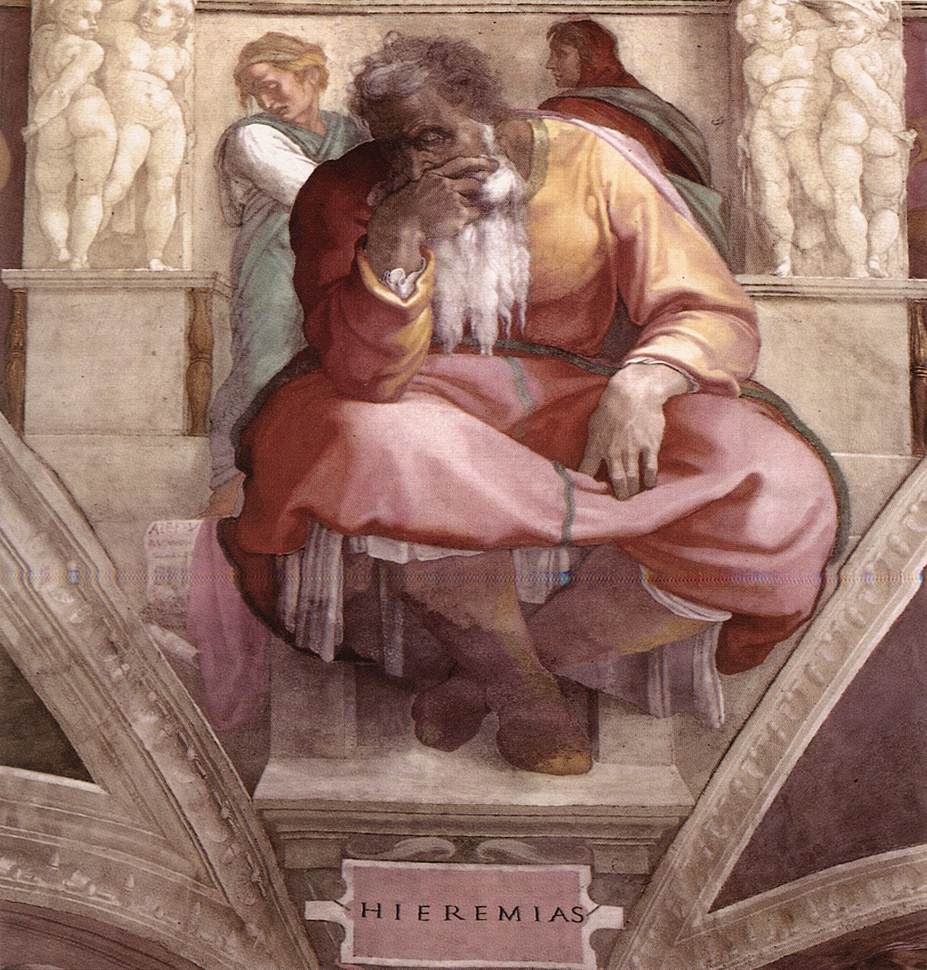
Prophets are those who speak for God. They Love God and His people; they speak the (often painful) truth of God to His people. They do so not to win an argument, but because of their love and conviction that only the undiluted truth of God can save us in the end.
People-pleasing and other forms of human respect cannot supplant reverence for God and His truth. Prophets are willing to endure pain and suffering in order to proclaim God’s truth to an often-unappreciative segment of God’s people. But out of love for God and His people they press on to proclaim His truth willingly, even knowing that they may face death for their personal, persistent, and prophetic proclamation.
Today’s readings set forth a kind of “rule for life” for prophets. And we, who are baptized into the order of the prophet, do well to listen to the teachings of these readings. Let us examine them in three stages.
I. The Call that is Declared – The text says, In the first reading God says to Jeremiah (and to us): The word of the LORD came to me, saying: Before I formed you in the womb I knew you, before you were born I dedicated you, a prophet to the nations I appointed you. But do you gird your loins; stand up and tell them all that I command you.
We ought to note four things about our call as prophets.
1. The Prevenient nature of our Call – The word “prevenient” is an adjective describing something that comes before, something that is anticipatory. God has not chosen us on a whim, as if to say, “I suppose you’ll do.” Before He made us, He considered our call and then equipped, empowered, and enabled us for our work.
God tells Jeremiah (and us) that He knew, loved, and cherished us long before He ever made us. And thus He made us in a way that prepared and equipped us for the very work of being a prophets.
“How?” you ask. The answer to that is as variable as is each person. There is no one who can proclaim God or announce the kingdom the way you can. Perhaps He has especially equipped you to evangelize certain individuals whom no one else can reach. Just know this: God thought a long time about you and prepared you in very specific and thoughtful ways. Whatever you need has “come before,” is “prevenient.”
2. The Purview of our Call – The text tells Jeremiah (and us) that we are appointed unto the nations. Now Jeremiah himself did not journey beyond Israel. But since then, the Word of the Lord uttered through him has reached every nation.
Never doubt the influence you can exert by the grace of God. Even in and through reaching one person you can change the destiny of many. Stay in your lane and do your work, but remember that God can accomplish through you more than you ask or imagine. By His grace, your influence can reach the nations.
3. The Preparation of our Call – The Lord tells Jeremiah (and us) to “gird our loins.” This is an ancient way of saying, “roll up your sleeves.” In other words, prepare to work by assembling what you need and being ready to expend effort.
For us this surely means daily prayer, weekly Eucharist, and frequent confession. It means prayerfully reading God’s Word and the teaching of the Church. It means keeping fellowship with the Church and with fellow believers. All of this equips, empowers, and enables us for the work God has called us to do: being prophets.
Beyond this there may be other specific gifts God calls us to develop: music, a second language, healing, preaching, or administration. God will show you what those gifts are and help you to grow the talents you have received.
In all this you “roll up your sleeves” for the work God has given you (and prepared you for) so that you will be an ever more effective prophet.
4. The Prescription of our Call – The text says, “[T]ell them all that I command you.” In other words, leave nothing out; proclaim the whole counsel of God. Don’t just proclaim what appeals to you or jibes with your politics and worldview. Don’t just say what is popular or agrees with currently worldly thinking. Tell them the whole message, in season or out of season.
II. The Courage that is Demanded – The text says Be not crushed on their account, as though I would leave you crushed before them; for it is I this day who have made you a fortified city, a pillar of iron, a wall of brass, against the whole land: against Judah’s kings and princes, against its priests and people.
And here note three qualities of a prophet:
Strong – A prophet needs to be strong, for people are stubborn and hesitant to change. Indeed, we are collectively a stiff-necked people; we have necks of iron and foreheads of brass. We are thick-headed, willful, and obdurate. A prophet must be willing to endure a lot to move the ball even a few inches. If you don’t think we’re a hard case, look at the cross and see what it took to save us. Prophets need strength and persistence.
Supporting – The prophet is called “a pillar of iron.” That is, he is to lend support to a crumbling nation and culture. Whether our culture likes to admit it or not, it is crumbling and collapsing. If it is to stand any chance at all, we must be willing to be pillars of iron, calling this culture back to modesty, decency, chastity, self-control, maturity, obedience to God, and generosity to the poor. Otherwise, everything is destined for ruin.
Sadly, the Church has often had to pick up the shattered pieces of fallen cultures, nations, and eras that refused to repent. But this is what prophets must do: they must be pillars of iron when cultures go weak and soft, or crumble under the weight of pride, sin, and unrepentance.
And failing that, we must become, by God’s grace, the new foundation and pillar of what rises from the ashes. All of this takes great courage.
Sanctifying – Jeremiah is told that the priests, kings, and princes have all been corrupted and that he must speak the truth to them and summon them to repentance.
This is the hardest work of the prophet: to call those who most benefit from the current status quo to change and repentance. This is hard not only because they are at the top” of the current system, but it is also because, to one degree or another, they are owed respect and obedience as lawful superiors.
Finding the balance between respecting authority figures and summoning them to repentance is not easy and only God can really pull it off. Nevertheless, speaking the truth to powerful people is the unenviable lot of the prophet.
Well, fellow prophets, all of this refers to you and me. I would only urge prayer here. Bishop-bashing and ridiculing political leaders is not the solution. But neither is quiet acquiescence when those in authority need to hear a call from the Lord. Lots of prayer and a general tone of respect will surely lead the way. Practice clarity with charity, and light with love.
III. The Conclusion that is Determined – The text says, They will fight against you but not prevail over you, for I am with you to deliver you, says the LORD.
In the end, the truth will out. The Light wins; He always wins. Every night gives way to day, when the light scatters the darkness. Darkness has its hour, but truth has eternity. Good Friday only points to Easter Sunday, when death is cast off like a garment. In the end, every true prophet is on the winning team. While he may face jail, laughter, ridicule, persecution, setbacks, and trials, what every true prophet announces will come to pass. History bears this out and it will be made definitively manifest on the Last Day. The darkness cannot prevail; it always gives way to the light.
The conclusion for the prophet, the Church, the Gospel, and the Lord is total victory. It cannot be any other way. God has spoken it and He will do it.
The Lord Jesus shows us this in today’s Gospel, even if only in a small way. The text says, They rose up, drove him out of the town, and led him to the brow of the hill on which their town had been built, to hurl him down headlong. But Jesus passed through the midst of them and went away.
This is a preview of Easter: just when Satan is running his victory lap, the Lord casts off death and stands as Light in the shadow of the Cross. Satan loses; Jesus wins. That is the conclusion.
So get on the winning team. Pay little heed to the current struggle; it cannot last or win. Jesus has already won.
In today’s gospel the Lord gives us a very practical reminder: “The measure that you measure to others will be measured back to you.” What does this mean?
Well, if you were on your way to court and you received advice as to how you could influence the judge to be less severe in your case would you not seriously consider following that advice? Surely you would—unless of course the “advice” involved bribery or some other corrupt activity.
And in fact Jesus, our judge, has described an upright way by which we can avoid severity on the Day of Judgment. Simply put, the way is for us to show mercy to others.
Now I don’t know about you, but I am going to need a lot of mercy on the Day of Judgment! So I am very glad that the Lord has shown us how we can positively influence the outcome on Judgment Day. Consider some of the following texts:
Blessed are the merciful, for they will be shown mercy (Matt 5:7).
For if you forgive men when they sin against you, your heavenly Father will also forgive you. But if you do not forgive men their sins, your Father will not forgive your sins (Matt 6:14-15).
Speak and act as those who are going to be judged by the law that gives freedom, because judgment without mercy will be shown to anyone who has not been merciful. But mercy triumphs over judgment (James 2:12-13).
If a man shuts his ears to the cry of the poor, he too will cry out and not be answered (Proverbs 21:13).
Do not condemn, and you will not be condemned. Forgive, and you will be forgiven (Luke 6:37).
For the measure with which you measure others, will be the measure by which you are measured (Mark 4:24).
And finally there is the terrifying parable (too long to quote here) of the man who owed a huge debt to the king that he could never repay. And although the king cancelled the entire debt, the man refused to cancel the debt of a man who owed him a smaller amount. To this unmerciful man the king then decreed: ‘You wicked servant,’ he said, ‘I canceled all that debt of yours because you begged me to. Shouldn’t you have had mercy on your fellow servant just as I had on you?’ In anger his master turned him over to the jailers to be tortured, until he should pay back all he owed. “This is how my heavenly Father will treat each of you unless you forgive your brother from your heart” (Matt 18:32-35).
So the basic point is clear enough: if we want to be shown mercy when we are judged (and trust me, we’re all going to need a lot of it), then we need to pray for a merciful heart.
Let’s even go so far as to say that if anyone is harsh, mean-spirited, unforgiving, hypercritical, or condemning, he is a fool. He is simply storing up wrath for himself on the Day of Judgment. Now why would anyone want to do that?
Mercy is our only hope of avoiding strict judgment. And these texts show us that mercy here in this world will lead to mercy on Judgment Day.
It is true that there are times in this world when punishments must be issued and penalties assessed. Further, correction must be given to those in error. But to the degree that these are made with an eye to correction and reform, they are part of love and relate to mercy. Fraternal correction is a work of charity. It is better to suffer punishment in this world that leads to reform, than to evade punishment here and possibly end up in Hell. Thus, not all punishment/correction is excluded by the edict of mercy, but let love and mercy be the sources from which it comes.
So here is some advice to the wise: bury the hatchet now. Ask the Lord for a merciful and forgiving heart or else suffer the full force of a strict judgment. Pay attention! The judge is willing to be influenced on our behalf and has told us what will move him in our direction. Why hesitate any longer? The merciful are blessed because will be shown mercy. And without mercy, we don’t stand a chance.

 People oversimplify Original Sin in various ways. Some reduce it to the mere eating of a piece of fruit rather than the act of disobedience, mistrust, and ingratitude it really was.