Who Is Your Real Enemy and What Are His Tactics?

nov10-blogIn the aftermath of the recent election, our country and our parishes are divided. Some people are hurt and angry while others are jubilant and hopeful. But although we often square off in opposing corners and stare fearfully at each other, we should remember our common enemy, the Devil. There’s a saying that warring brothers reconcile when there’s a maniac at the door; and the Devil is surely a maniacal and cunning opponent.

One of the key elements in any battle is understanding the strategy and tactics of your opponent. In the spiritual battle of life, we need to develop some sophistication in recognizing, naming, and understanding the strategies and common tactics of the Devil.

A 2011 book by Fr. Louis J. Cameli, The Devil You Don’t Know, can be of great assistance in this matter. In the book, Fr. Cameli breaks the Devil’s tactics down into four broad categories. I highly recommend reading the book, where Fr. Cameli expounds on the topic much more fully than I can do here.

While the categorization comes from Fr. Cameli, the reflections that follow are largely my own, although surely rooted in his excellent work.

I. Deception Jesus says, The Devil was a murderer from the beginning he does not stand in the truth, because there is no truth in him. When he lies he speaks according to his own nature, he is a liar and the father of lies (John 8:44).

The Devil attempts to deceive us with many false and empty promises. Most of these center around the lie that we will be happier and more fulfilled if we sin or deny aspects of the truth. Whatever passing pleasures come with sin, they are just that—passing. Great, accumulated suffering eventually comes with almost all sinful activity. Yet, despite this experience, we human beings remain very gullible; we seem to love empty promises and put all sorts of false hopes in them.

The Devil also tries to deceives us by suggesting that we introduce all sorts of complexities into our thinking. He seeks to confuse us and to conceal the fundamental truth about our action from us. Our minds are very wily; we love to indulge complexity as a way of avoiding the truth and/or making excuses. Conniving with the Devil, we entertain endless complications in our minds by asking “But what if this?” or “What about that?” Along with the Devil, we project all sorts of possible difficulties, exceptions, or potential sob stories, in order to avoid insisting that we (and/or others) behave well and live according to the truth.

The Devil also seeks to deceive us with “wordsmithing.” The dismemberment and murder of a child through abortion becomes “reproductive freedom” or “choice.” Engaging in sodomy is called being “gay” (a word which used to mean happy). Our luminous Faith and ancient wisdom is called “darkness” and “ignorance.” Fornication is called “cohabitation.”  The redefinition of marriage as it has been known for some 5000 years, is labeled “marriage equality.”  And thus through exaggerations and outright false labeling, the Devil deceives us. We too easily connive by calling “good,” or “no big deal,” what God calls sinful.

Finally, the Devil deceives us through the sheer volume of information and with selective use of it. Information is not the same is truth, and data can be assembled very craftily in order to make deceptive points. Further, certain facts and figures can be emphasized while other balancing truths are omitted. And thus even information that is true in itself can become a means of deception. The news media and other sources sometimes exercise their greatest influence in what they choose not to report.

We do well to assess very carefully the many ways Satan seeks to deceive us. Do not believe everything you think or hear. While we ought not to be cynical, we should be sober, seeking to verify what we see and hear and square it with God’s revealed truth.

II. Division One of Jesus’ final prayers for us was that we would be one (cf John 17:22). He prayed this at the Last Supper, just before He went out to suffer and die for us. This highlights that a chief aspect of His work on the cross was to overcome the divisions intensified by Satan. Some argue that the Greek root of the word “diabolical” (diabolein) means to cut, tear, or divide. Jesus prays and works to reunify what the Devil divides.

The Devil’s work of division starts within each one of us, as we experience many contrary drives: some noble, creative, and edifying; others base, sinful, and destructive. So often, we struggle within and feel torn apart, much as St. Paul describes in Romans chapter 7:  The good that I want to do, I do not do …, and when I try to do good, evil is at hand. This is the work of the Devil, to divide us within. And as St. Paul lays out in Romans chapter 8, the chief work of the Lord is to establish within us the unity of soul and body, in accordance with the unity of His truth.

The Devil’s attack against our inner unity of course spills out into many divisions among us externally. So many things help to drive this division and the Devil surely taps into them all: anger, resentment, fear, misunderstanding, greed, pride, and arrogance. There is also the impatience that we so easily develop with those we love, as well as the flawed notion that we should seek out other more perfect and desirable people instead. This leads many to abandon their marriages, family, churches, and communities; always in search of the elusive goal of finding better, more perfect people and situations.

Yes, the Devil has a real field day tapping in to a plethora of sinful drives within us. His goal is always to divide us within and to divide us among ourselves. We do well to recognize that regardless of our struggles with others, we all share a common enemy who seeks to divide and destroy us. St. Paul writes, For our struggle is not against flesh and blood, but against the rulers, against the authorities, against the powers of this dark world and against the spiritual forces of evil in the heavenly realms (Eph 6:12). Yes, feuding brothers reconcile when there’s a maniac at the door. Step one is to notice the maniac and step two is to set aside our lesser divisions.

III. Diversion For all of us, our most critical focus is God and the good things awaiting us in Heaven. Faith, obedience to the truth, love of God, and love of neighbor lead us on the path toward Heaven. The Devil does all that he can to divert us away from our one true goal.

Perhaps he will do this by making us overly absorbed in the passing things of this world. So many people claim that they are too busy to pray, attend Mass, or seek other forms of spiritual nourishment. They become absorbed in worldly things, which pass, ignoring the lasting reality that looms.

Anxieties and fears also cause us to be distracted. The Devil causes us to fixate on fears about passing things while neglecting to have a proper fear of the judgment that awaits us. Jesus says, Do not be afraid of those who kill the body but cannot kill the soul. Rather, be afraid of the One who can destroy both soul and body in hell (Matt 10:28). In other words, we should have a holy reverence and fear directed towards the Lord. If we do this, many of our other fears will be put into better perspective or will go away altogether. In this matter of fear, the Devil says just the opposite: we should fear the myriad things that might afflict us in this passing world and not think at all about the most significant thing that awaits us—our judgment.

At the heart of all diversion is the fact that the Devil wants us to focus on lesser things so that we avoid focusing on greater things, such as making moral decisions and attending to the proper overall direction of our life.

We must learn to focus on what matters most and decisively refuse to be diverted by lesser things.

IV. Discouragement As human beings, and certainly as Christians, we ought to have high aspirations; this is good. But as with all good things, Satan often seeks to poison them. With our high aspirations, sometimes we lack the humility to recognize that we must make a journey in order to achieve that which is good or best. Too easily, Satan tempts us to impatience with our own self or with others. Expecting to achieve our aspirations unreasonably quickly, we can be uncharitable toward our own self or others. Some grow discouraged with themselves or with others and just give up on the pursuit of holiness. Others give up on the Church because of the imperfections found there, as are found in any institution with humans.

The Devil discourages us with open-ended aspirations. There is always room for improvement; we can always do more. When we can always do more, it is easy to think that we’ve never done enough. And thus the Devil discourages us, sowing thoughts of unreasonable demands within us about we can or should be able to achieve each day.

The Devil also discourages us through simple things like fatigue, minor personal failings, setbacks, and other obstacles that are common to our human condition living in a fallen world with limited resources.

In all these ways the Devil seeks to discourage us, to make us want to give up. Only a properly developed sense of humility can save us from this discouragement by Satan. Humility—which is reverence for the truth about ourselves—teaches us that we grow slowly and in stages and helps us to recognize that we will always have setbacks and that we live in a world that is hard and far from perfect. With humility we can learn to lean more on the Lord and trust in His providential help, which grows in us incrementally.

Here, then, are four common tactics of the Devil. Learn to recognize and name them. In this way, we can start to gain authority over them. Consider reading Fr. Cameli’s book to learn more.

Why Do So Many Miss Experiencing Jesus in Our Parishes and How Can We Change This?

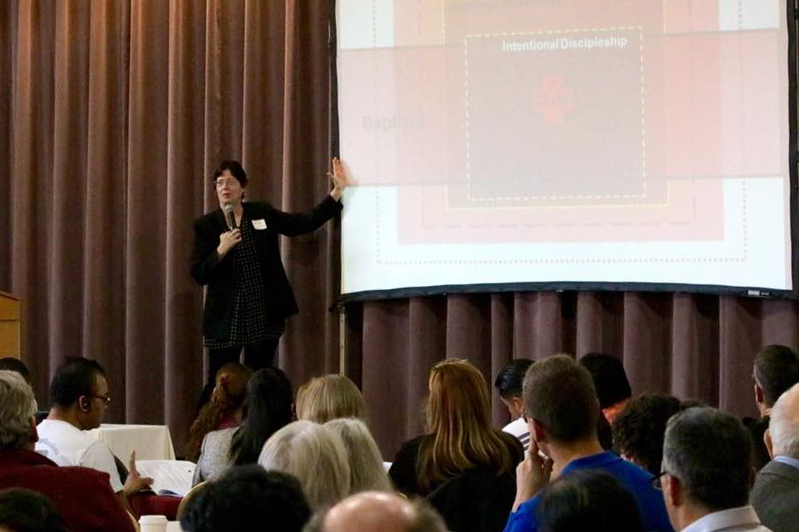
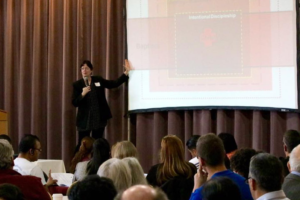
We were blessed this past weekend to have Sherry Weddell, author of Forming Intentional Disciples, visit the Archdiocese of Washington and speak to priests and lay leaders. Her work is a great blessing to the Church in calling us back to “job one,” which is to make disciples. In Catholic parishes evangelization is too often relegated to committees or tossed into the “we’ll get to that next year” file. Weddell’s mission is to create greater urgency in this most central work of the Church.

Rather than present her thoughts (which are admirably stated in her books) in this blog, I would like instead to put forth a few of my own (which echo hers, and I would argue, those of Jesus Himself). Sadly, there are many issues that keep people from experiencing Jesus powerfully in our parishes. There are also some practices we ought to better observe in order to better manifest the presence and person of Jesus. Let’s consider first some problems and then some remedial practices.

I. Problems – If Jesus is present in His Church, then this is most evident in His action and presence in the Liturgy and Sacraments of the Church. Yet any cursory look into the typical Catholic parish would reveal little to indicate an awareness of this.

A. Bored and disengaged The assembled people, including the clergy, often look bored, distracted, and mildly irritated at having to endure the event. Where is the alert joy that one sees at sporting events or at the appearances of celebrities? If people believe that Jesus is alive and ministering in this moment, why do so many of them look as if they’re waiting for a root canal? It’s as though they wish the whole thing would be over as quickly and painlessly as possible.

Some argue that many people are just reserved by nature, but most of these same people are animated enough at football games or in political discussions. The answer seems to be more due to a lack of vivid faith and a failure to understand that the Liturgy and Sacraments are encounters with the Risen Lord Jesus.

B. Perfunctory Further, in terms of the spiritual life of many of the faithful, it seems that even where there is observance of norms (e.g., attendance at Sunday Mass, or confession on at least an annual basis), it is done more out of a sense of duty than with eager love. The bare minimum is all that is done, only enough to “check off the God box.” It is almost as though they are placating the deity rather than worshipping and praising the God to whom they are grateful and whom they love. The upshot is that the sacraments are considered tedious rituals rather than transformative realities or true encounters with Jesus.

C. Low Expectations Many people place more trust in Tylenol than they do in the Eucharist. When they take Tylenol they expect something to happen; they expect there to be healing, for the pain to go away or the swelling to go down. But do these same people have any real expectations about the Eucharist or the other sacraments? Almost never.

Much of the blame for these low expectations lies with priests and catechists who have never really taught the faithful to expect much. At best there are vague bromides about “being fed.” Little is taught about radical transformation and healing.

D. Unevangelized The general result is that many in the pews have received the sacraments, but have not been evangelized. Many have gone through Catholic rites of passage but have never really met Jesus. They have gone through the motions for years but are not really getting anywhere when it comes to being in a life-changing, transformative relationship with Jesus Christ. To a large degree, the Lord is a stranger to them. They are far from the normal Christian life of being in personal, living, and conscious contact with the Lord.
Given these common problems, what are we to do?

II. Principles and Practices

A. Clarity as to the fundamental goal of the Church – The fundamental mission of the Church is to go to all the nations, teach them what the Lord commands, and make disciples of them through Baptism and the other sacraments (cf Matt 28:20).

But making disciples and being disciples is about more than just “membership.” To become a true disciple is to have a personal, life-changing, transformative relationship with Jesus Christ. It is to witness to the power of the cross to put sin to death, to bring every grace alive, and to make of us a new creation in Christ. We cannot and should not reduce discipleship to mere membership.
The goal is to connect people with the Lord Jesus Christ so that He can save them and transform their lives in radical and powerful ways.

B. Conviction in Preaching – Those who preach, teach, and witness to others cannot simply be content to pass on formulas or to merely quote others. Priests, parents, catechists, and others must begin to be firsthand witnesses to the power of God’s Word, not only to inform, but to perform, and to transform. They must bear witness to how the Lord is doing this in their own lives.

If they are in touch with God, they ought to exhibit joy, conviction, and real change. They must be able to preach and teach with “authority,” in the richer Greek sense of the word. Exousia (authority) means more literally to preach “out of one’s own substance.” The summons is to speak from one’s own experience as a firsthand witness who can say with conviction, “Everything the Church and Scriptures have always announced is true, because in the laboratory of my own life I have tested them and found them to be true and transformative. I who speak these things to you, along with every saint, swear to you that they are true and trustworthy.”

A firsthand witness knows what he saying; he does not merely know about it. The video below from Fr. Francis Martin speaks to this practice. Preaching, teaching, and witnessing with conviction are essential components of renewal in the Church.

C. Cultivate Expectation! – Most people expect to meet, and have met, people who have changed their lives, and yet they don’t expect much from their relationship with Jesus Christ.

If ordinary people can change our lives, then why can’t the Lord Jesus Christ? Most people seem to think that having a tepid spiritual life, experiencing spiritual boredom, and having only a vague notion about the truths of faith are all normal. Really? Is that the best that the death of the Son of God can do for us? That we should be bored, lukewarm, uncertain, and mildly depressed? Of course not!

We need to lay hold of the glorious life that Jesus died to give us, to have high expectations, and to start watching our lives be transformed.

Consider the woman who came up to Jesus in the crowd thinking that if she just touched the hem of His garment she would get well. Jesus was amazed that one woman among the large crowd had actually touched Him. After she explained He said to her, “Your faith has healed you” (Luke 8:47). Who has such faith? Who has the expectation to be healed, to be delivered? King Jesus is a-listenin’ all day long!

D. Catechetical refocus – We have tended to teach the faith more as an academic subject than as a relationship. And hence we have focused on and measure success based on whether we can do things like list the seven gifts of the Spirit or the four marks of the Church. Certainly there is content that must be mastered, but without relationship to Jesus, most people lose command of the facts shortly after the test.
We need to begin with relationship. We need to get people (children and adults) excited about Jesus and joyful about what He has done. Then the motivation to learn will come naturally.

Back in the late 1960s I became a fan of Star Trek. Captain James Tiberius Kirk was all the world to me. Even though he was a fictional character, I wanted to know all about him: where he was born, what he did, and what he thought. When I discovered the actor who played Kirk, I joined the William Shatner fan club. Then I wanted to know all about Shatner: what he thought about important issues, when he was born, and what his favorite hobbies were. Fascination drew me to a mastery of all sorts of facts about Captain Kirk and William Shatner. You didn’t have to make me learn this stuff; I sought it out eagerly!

Do people think this way about Jesus? Usually not. And why not? Because we do very little to cultivate this fascination and joy. We teach more about structures, rules, and distinctions than about Jesus. Although our intellectual tradition is important and essential, without starting from a relational interest, we might as well be attempting to build on no foundation at all.

Jesus said, “Come and see” as an initiation. The details of the creed came later and were important, but relationship was first. Friendship precedes all the facts; they can come later.

Where in our catechism do we inculcate a love for, respect of, and fascination with Jesus?

E. Come on, Testify! – Catholics are terrible at testimony and witness. What is your story? How did you meet Jesus? What has He done in your life? What is He doing in your life now? Have your children ever heard you say that you love Jesus? Do they know what He has done for you? Do parishioners ever hear their priests testify? Arguments and proof have their place, but without personal testimony and conviction, these truths remain abstractions.
There may come a time when, through argument, you are actually get someone to “buy in.” But then comes the tough question: “Well, that’s all good news, but how do I know it’s true?” And that is when you have to be able to answer, convincingly, “Look at me!” It’s not enough to state the facts and to quote others. You have to know what you’re talking about, and relate it personally and convincingly to others.

The bottom line is that we have to be converted, and having experienced conversion, go forth as those who know the Lord, not just know about Him.

Recent Vatican Guidelines on Cremation, Though Helpful, Require Follow-up

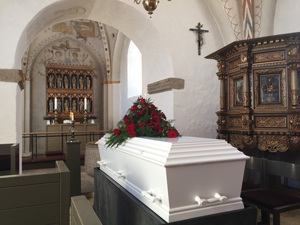
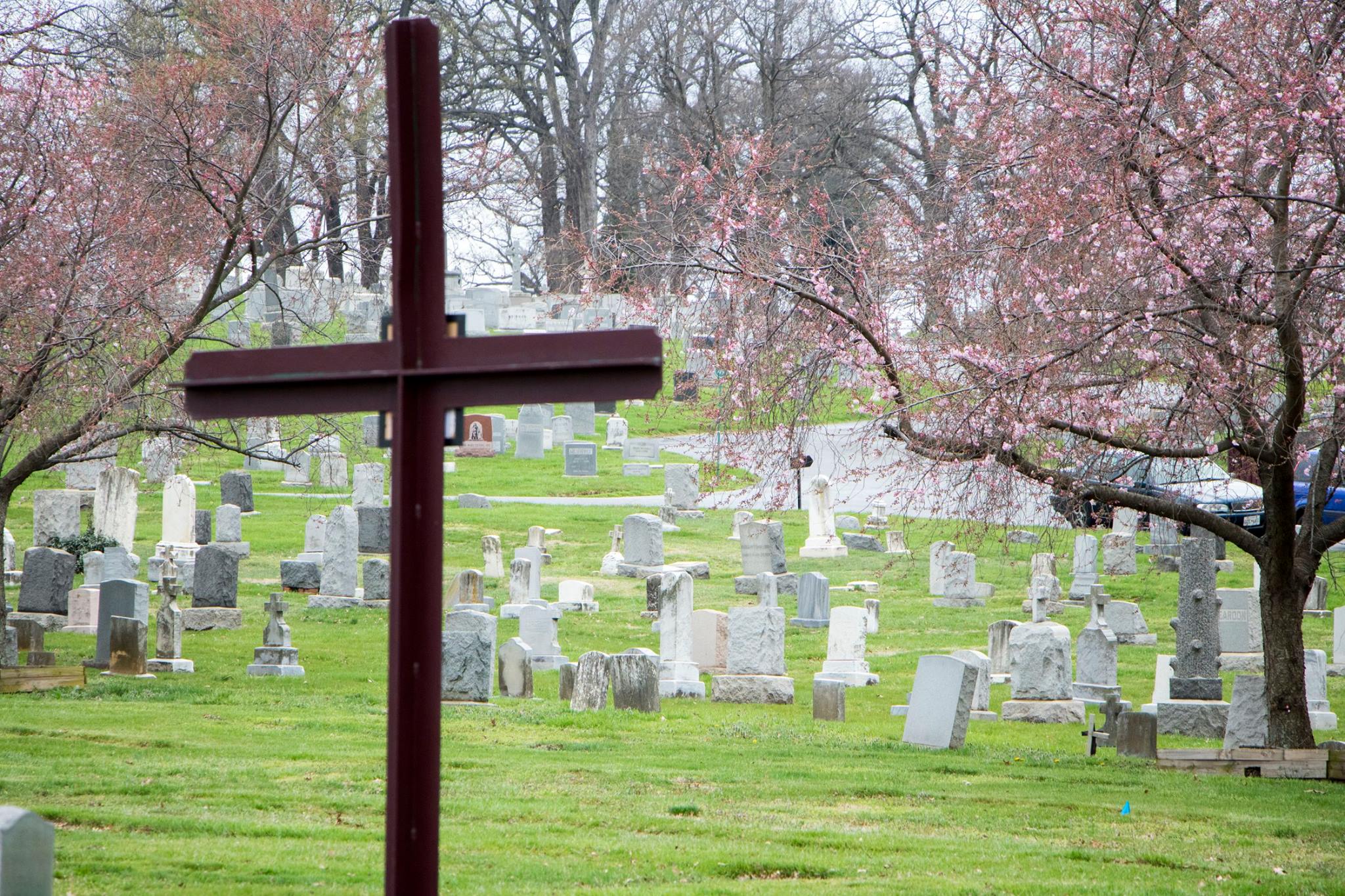
nov7-blogI was happy to hear that the Vatican recently reminded the world’s Catholics of some important matters concerning cremation. As cremation has become more common in recent decades, many significant problems have emerged.

  1. Cremated remains not being buried or placed in a mausoleum,
  2. Cremated remains being scattered,
  3. Cremated remains being divvied up among relatives,
  4. And strangest of all, cremated remains being fashioned into or incorporated within jewelry.

Cremated remains should be treated with the same respect and reverence as bodily remains. For indeed cremated remains are in fact what does remain of the body. While many people refer to them merely as “ashes,” they are remains of a human body and should be treated as such.

Notably, the new instructions reiterate the consistent norms of the Church in the following ways:

  1. Cremated remains, must be laid to rest in a sacred place, that is, in a cemetery or, in certain cases, in a church or an area, which has been set aside for this purpose, and so dedicated by the competent ecclesial authority.
  2. With rare exceptions requiring the permission of the bishop, the conservation of the ashes of the departed in a domestic residence is not permitted.
  3. It is not permitted to scatter the ashes of the faithful departed in the air, on land, at sea, or in some other way, nor may they be preserved in mementos, pieces of jewelry or other objects.

Grateful though I am for these reminders, I know that the Church too often begins to permit once-forbidden things (things forbidden for many good reasons) without providing a real pastoral plan that both sets limits and educates God’s people. And while our norms are published in various liturgical books, most people don’t read liturgical books let alone the norms that are tucked away in the introduction and instructions. All they hear is that something that used to be forbidden is now allowed. This can lead to abuses cropping up that get overlooked by weary or obsequious clergy and norms being are unevenly enforced from parish to parish. A pastoral plan needs to be diocesan and nationwide.

As a pastor, I think that some of the following things will be helpful going forward:

  1. Bishops should ensure that clergy are properly instructed in the norms and then insist that those norms are enforced and the faithful are educated.
  2. Dioceses should consider enacting a policy requiring parishes to ensure that proper interment of cremated remains is arranged before the celebration of the funeral Mass.
  3. Catholic cemeteries should consider “amnesty” offers, wherein inexpensive communal burial sites are made available for the interment of cremated remains for families that might have trouble affording a private niche or gravesite. Many families have kept cremated remains on mantles or in closets for years. Even if they know they should provide a decent burial for these remains, some resist due to the cost. We can work with them to end this problem. My own parish owns several burial sites at a local Catholic cemetery and I am pursuing an arrangement to offer at least one of them for this very purpose. In the Archdiocese of Washington, our cemeteries offer space for cremated remains. We have also begun offer burial space for miscarried infants.

The bottom line is that these norms need a national and diocesan focus as well as enforcement. Leaving it all up to the individual parishes leads to uneven practices that confuse the faithful and cause factions to develop. A pastoral plan is necessary both at the level of the local bishop and the Bishop’s Conference. Otherwise, I am convinced that abuses (intentional or not) will continue.

I have published a flyer on this subject (for use in my own parish) that you might find helpful (Considering Cremation?).

I’m Gonna Ride the Chariot in the Morning, Lord! A Homily

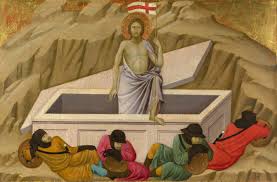
resurrectionIn the readings today the Church presents us with a strong reminder and teaching on the resurrection. Jesus Himself leads the charge against those who would deny the resurrection from the dead, and the seven brothers and their mother from the first reading bring up the rear. Let’s take a look at what we are taught.

I. Ridicule of the Resurrection – The Gospel opens with the observation that Some Sadducees, who deny there is a resurrection, came forward and put [a] question to Jesus. They propose a hypothetical situation in which a woman is married seven times, to brothers who successively die, having no children by any of them. They suggest that at the resurrection there will be confusion as to whose wife she really is! We’re supposed to laugh, according to these Sadducees, and conclude that the idea of resurrection is absurd.

Jesus will dismiss their absurdity handily, as we shall see in a moment, but let’s consider why the Sadducees disbelieved the resurrection.

Fundamentally, they rejected the resurrection because they only accepted the first five books of the Bible: Genesis, Exodus, Leviticus, Numbers, and Deuteronomy. This is point is debated among scholars, but we can surely say that if something was not explicitly in the Law of Moses, the Sadducees were unlikely to accept it. All the other Old Testament books such as the prophets, the historical books, the psalms, and the wisdom tradition, were not considered authoritative sources.

They claimed that the resurrection of the dead was not taught in these first five books. While most other Jews of Jesus’ time did accept the complete Old Testament (and teachings such as the resurrection of the dead which are set forth there), the Sadducees simply did not. They were a small party within Judaism (Josephus said that they were able to persuade none but the rich). Nevertheless, they were influential due to their wealth and to the fact that they predominated among the Temple leadership. You can read more about them here: Sadducees.

Hence, the Sadducees approached Jesus to poke fun at Him and all others who believed that the dead would rise.

They are no match for Jesus, who easily dispatches their arguments using the Book of Exodus (a book they accept) to do it. In effect, Jesus’ argument proceeds as follows:

  1. You accept Moses, do you not?
  2. (To which they would surely reply yes)
  3. But Moses teaches that the dead will rise.
  4. (Jesus must have gotten puzzled looks but He presses on).
  5. You accept that God is a God of the living and not the dead?
  6. (To which they would surely reply yes).
  7. Then why does God (in Exodus) identify Himself as the God of Abraham, Isaac, and Jacob, all of whom have been dead some 400 years? How can He call himself their God if they are dead?
  8. Obviously they are alive or He could not call Himself their God, for He is not a God of the dead but of the living.
  9. Therefore, they are alive to God; they are not dead.

In this way, Jesus dispatches their view. For us, the point is to see how forcefully and clearly Jesus upholds the fact that the dead are alive in the Lord. He powerfully asserts an essential doctrine of the Church. We should rejoice at how firmly Jesus rebukes their disbelief in the resurrection of the dead.

Rejoice, for your loved ones are alive before God! To this world they may seem dead, but Jesus tells us firmly and clearly that they live. And we, who will also face physical death, will live on. Let the world ridicule this, but hear what Jesus says and how he easily dispatches them. Though the idea is ridiculed, the resurrection is real.

II. Resplendence of the Resurrection – Jesus also sets aside the absurd hypothetical scenario that the Sadducees pose, by teaching earthly realities cannot simply be projected into Heaven. Marriage scenarios, perceived in earthly ways, cannot be used to understand heavenly realities. The saints in Heaven live beyond earthly categories.

Heaven is more than the absence of bad things and the accumulation of good things. It is far beyond anything this world can offer. Scripture says, No eye has seen, no ear has heard, and no human mind has conceived—the things God has prepared for those who love him (1 Cor 2:9). The sufferings of this world cannot compare to the glory that will be revealed in us (Rom 8:18).

Do you see the majesty of this teaching? We have a glory waiting for us beyond imagining. Consider your greatest pleasure, your happiest experience, your most fulfilled moment. Then multiply it by a thousand, or a million, or a trillion, and you are still not even close understanding the glory that awaits.

And this glory will transform us. The Lord once told Catherine of Siena that if she ever saw the glory of a saint in Heaven she would fall down and worship, because she would think she was looking at God. This is our dignity: to be transformed into the very likeness of God and reflect His glory. The following is a summary of St. Catherine’s vision of the soul of a saint in Heaven:

It was so beautiful that she could not look on it; the brightness of that soul dazzled her. Blessed Raymond, her confessor, asked her to describe to him, as far as she was able, the beauty of the soul she had seen. St. Catherine thought of the sweet light of that morning, and of the beautiful colors of the rainbow, but that soul was far more beautiful. She remembered the dazzling beams of the noonday sun, but the light which beamed from that soul was far brighter. She thought of the pure whiteness of the lily and of the fresh snow, but that is only an earthly whiteness. The soul she had seen was bright with the whiteness of Heaven, such as there is not to be found on earth. “My father,” she answered. “I cannot find anything in this world that can give you the smallest idea of what I have seen. Oh, if you could but see the beauty of a soul in the state of grace, you would sacrifice your life a thousand times for its salvation. I asked the angel who was with me what had made that soul so beautiful, and he answered me, “It is the image and likeness of God in that soul, and the Divine Grace which made it so beautiful.” [1].

Yes, Heaven is glorious and we shall be changed. Scripture says, we shall be like the Lord for we shall see him as he is (1 John 3:2). He will change our lowly body to conform with his glorified Body by the power that enables him also to bring all things into subjection to himself (Phil 3:19). I have written more on our resurrected bodies here: What will our resurrected bodies be like?

Too many people have egocentric notions of Heaven, where I will have a mansion, I will see my relatives, and I will be able to play all the golf I want. But the heart of Heaven is to be with God, for whom our heart longs. In God we will experience fulfillment and peace that is beyond earthly imagination. Heaven is far greater than golf, mansions, and family reunions. There is certainly more to it than clouds and harps. Heaven can never be described because it is beyond words. St Paul speaks of a man (himself) who was caught up into Heaven; he affirms that it cannot be described; it is ineffable; it is unspeakable.

I know a man in Christ who fourteen years ago was caught up to the third heaven …. And I know that this man—whether in the body or apart from the body I do not know, but God knows—was caught up to paradise and heard inexpressible things, things that no one is permitted to tell (2 Cor 12:2-3).

Do you long for heaven? Do you meditate on it? Is there a part of you that can’t wait to get there? There’s an old spiritual that says, “I’m gonna ride the Chariot in the morning, Lord. I’m gettin’ ready for the judgment day, my Lord, my Lord!”

III. Response to the Resurrection – What difference does the resurrection make other than to give us joy if we meditate upon it? To see that answer, consider today’s first reading, in which the seven brothers are willing to accept torture and death rather than violate God’s Law. If there is a great reward awaiting those who remain faithful, then we will endure anything to get there. Notice how the vision of Heaven inspires them stand firm in their refusal to deny their faith:

We are ready to die rather than transgress the laws of our ancestors. … [Y]ou are depriving us of this present life, but the King of the world will raise us up to live again forever. It is for his laws that we are dying. … Even the king and his attendants marveled at the young man’s courage, because he regarded his sufferings as nothing (2 Maccabees, 7:2,9, 12).

Their vision of the rewards awaiting them motivated them to endure the awful sufferings described in the 7th Chapter of 2nd Maccabees.

And what of us? Do we meditate on Heaven and value its reward enough to be willing to endure suffering to get there? We need a strong vision of Heaven to be able to endure and stand firm. Too many people today have lost a deep appreciation of Heaven. Too many pray to God merely for worldly comforts and rewards—but these will pass. We ought to ask God for a deep desire for Heaven and the things awaiting us there.

What athlete would discipline his body as severely as he does without the deep motivation of the satisfaction and rewards that will come upon meeting his goals? What college student would attend hundreds of hours of classes, read scores of books, and write lengthy papers if it were not for the rewarding career at the end of the trail? Who of us will endure the trials of faith if we are not deeply imbued with the vision of glory and deeply desirous of its fulfillment no matter the cost? Without this, our spiritual life becomes tepid and our willingness to endure trials falls away. An old hymn says,

When peace, like a river, attendeth my way,
When sorrows like sea billows roll;
Whatever my lot, Thou has taught me to say,
It is well, it is well, with my soul.

And Lord, haste the day when my faith shall be sight,
The clouds be rolled back as a scroll;
The trump shall resound, and the Lord shall descend,
Even so, it is well with my soul.

Meditate on Heaven often. Although we can never fully grasp its glory, we ought not to let that stop us from imagining it as best we can. In particular, read Revelation chapters 4,5, 8, 21, and 22. But above all, ask God for an ever-deepening desire for Him and the good things that await you in Heaven. Look to Heaven; long for Heaven. Desire God and deeply root your life in Him. Heaven will not disappoint!

This African-American spiritual says,

I’m gonna ride the chariot in the morning, Lord.
I’m getting’ ready for the judgment day, my Lord, my Lord!
Are you ready my brother? (Oh yes!)
Are you ready for the journey? (Oh Yes!)
Do you want to see Jesus (Yes, Yes!)
I’m waiting for the chariot ’cause I ready to go.
I never can forget that day,
(Ride in the chariot to see my Lord!).
My feet were snatched from the miry clay!
(Ride in the chariot to see my Lord!)

St. Charles Borromeo – A Model for All Clergy in Troubled Times

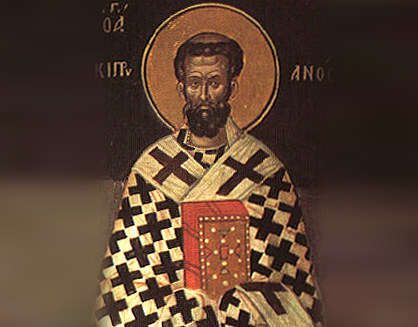
st-charles-borromeoToday is the feast day of my patron saint, Charles Borromeo. The times in which he lived were not so different from the current ones and the leadership he exemplified is sorely needed today. And although I am not a bishop as he was, I am a pastor; I pray that in some small way I may be like him.

St. Charles Borromeo was born in 1538, a time when the Church was in the midst of perhaps her greatest crisis. Martin Luther had begun his revolt in 1522 with the publication of his 95 Theses. In the aftermath of the Protestant revolt, some 12 million Europeans (a very large number for those days) left the Church; more would follow in successive waves.

The medieval Church was breaking up and suffering schism. Indeed, the whole medieval synthesis of Christendom was in turmoil, hopelessly intertwined with politics and intrigue both within the Church and outside.

The clergy especially were in great crisis and in tremendous need of reform. It was an era of absentee bishops and clergy. Wealthy European families collected parishes, monasteries, and other benefices more as a kind of stock portfolio rather than out of any spiritual love or interest. It was common that these benefices were given to the sons in these families. And although ordained as priests, they seldom served as such; instead they farmed out the pastoral duties of their many parishes (and even dioceses) to other priests (often poorly trained ones). Knowledge of Latin, Scripture, and indeed the Lord Himself, was notably absent in many of these “clergy for hire.” Preaching was poor, the moral life of the clergy was degraded, and the faithful had little leadership.

In this climate it is no wonder that Luther and other so-called reformers were so easily able to attract large numbers of the laity, who were not only poorly served, but also poorly catechized.

The Council of Trent – Recognizing the criticality of the revolts (by Luther and others) and her own need for internal reform, the Church summoned the Council of Trent, which met sporadically between 1545 and 1563.

Into this period of crisis for both Europe and the Church, St. Charles Borromeo was born. He was the third of six children in a noble family in Milan. His parents were notably pious and well known for their care for the poor. Their sober and religious demeanor goes a long way toward explaining the piety and appetite for reform that St. Charles would later develop.

Reform starts at home. All that said, the wealthy and prominent Borromeo family were well woven into the difficulties and problems of the late medieval Church, themselves owning large numbers of ecclesiastical benefices. At a very young age Charles Borromeo was given a large and wealthy Benedictine abbey by his uncle, Julius Caesar Borromeo. And so at the tender age of 12, Charles Borromeo found himself the abbot of a large monastery. His age and the fact that he was not even an ordained priest are representative of the serious abuses that were common at the time.

Despite these impediments, St. Charles showed an inclination for reform. He specified that his income from the abbey should only be enough to support his education, with the sizeable remainder given to the poor. Further, he promoted reform at the monastery by insisting on a return to a purer monastic environment.

At the age of 16, he was sent to Pavia to study Canon Law. Although he found his studies difficult, he was noted for his piety, his refusal to indulge in the frivolities of university life, and his devotion to the rosary and private prayer. He even dismissed two of his tutors (both of them priests) because he considered them too secular, found them lax in saying their Office, and objected to the fact that they did not wear clerical attire.

Papal Secretary of State at age 22! Just after Charles completed his studies, Pope Pius IV was elected. The new pope was Charles’ uncle and as a gift to his nephew, summoned him to Rome to be his Secretary of State. And so at the age of 22 (and only a sub-deacon, not a priest) Charles Borromeo became the Secretary of State at the Vatican and personal assistant to the pope, and was named a cardinal deacon. It is perhaps ironic that all this was technically as a result of nepotism, because Charles would become one of the leading proponents of Church reform.

Perhaps his chief work (under the direction of Pope Pius IV) was to reconvene the Council of Trent, which had been suspended due to war. After many months of difficult negotiation and political intrigue, the Council reconvened in 1561. Charles Borromeo not only coordinated the activities of the Council sessions but also engaged in many delicate negotiations as the Pope’s personal representative. He had to work carefully to overcome the differences among certain delegates. The Council of Trent finally concluded in December of 1563, just prior to the death of Pope Pius IV.

The importance of the Council of Trent cannot be overstressed. Its decrees rejuvenated the huge and complex medieval Church and would serve as a guiding light for the next four centuries. But then, as now, the decrees of a council are not always welcomed, understood, or well applied. The work of Charles Borromeo was just beginning.

St. Charles lost no time in applying the decrees of the Council wherever his authority extended.

The next step for Cardinal Borromeo was to have a catechism written and published. He appointed three Dominican theologians to work under his supervision and the Catechism of the Council of Trent was completed within a year. He then ordered it translated into the vernacular in order that it be taught to the faithful by all pastors. Charles also set to work founding seminaries and colleges for the clergy, who were woefully undertrained.

St. Charles was also involved in implementing liturgical norms and even took a hand at reforming the music, encouraging the development of sacred polyphony. It needed a guiding hand to ensure that it did not become too florid and that the sacred text did not become buried in musical flourish and performance. In this matter he worked closely with Palestrina.

Time to get personal – Having used his position of influence in Rome to help implement the Council, he now petitioned Pope Pius V that he might implement it in his own life. For although Pius IV had named him Cardinal Archbishop of Milan, he had been an absentee bishop, remaining in Rome as papal Secretary of State.

This was a common abuse at the time, as already noted. In fact, it was rare in the larger cosmopolitan dioceses that the bishop would be present at all. These larger dioceses were usually benefices for rich families whose sons merely collected the income and did not actually serve in any pastoral capacity. Dioceses were usually administered by underlings.

It does not take much to understand why abuses flourished under this system. With no actual resident bishop, no true shepherd in place, errors went unaddressed and corruption abounded.

After some months of negotiation with the new Pope Pius V (who was resistant to the idea), St. Charles was finally permitted to take up residence in his diocese of Milan. He went with great eagerness to implement the reforms of the Council of Trent. He called several local councils of the church there and set up seminaries for the training of clergy. Charles insisted that priests be present in, and minister to, their own parishes. He also established the Confraternity for Christian Doctrine (CCD) for the training of children in the faith, enrolling some 40,000 children in the first few years. He set about visiting every parish in his archdiocese, even the small ones up in the remote alpine regions.

Not everyone appreciated the reforms Charles sought to institute. Some of the greatest resistance came from his own clergy and monks, one of whom pulled out a gun and shot him at Vespers (luckily, the bullet only grazed him)! Despite the resistance, St. Charles began many successful reforms in the Church at Milan. These reforms centered on the liturgy; the life, training and discipline of the clergy; and the training of the laity in the ways of faith.

As can be seen, St. Charles lived during difficult times for the Church. Millions had left and corruption abounded in what remained. Many people would have despaired in the face of so many deep problems. Indeed, many would have wondered how the Church could ever recover from such losses in numbers and regain her capacity to preach the Gospel and reach the faithful.

And yet, as the example of St. Charles shows, reformers can and do make a lasting difference. Changes for the better may come slowly, but they do come.

Pray for zealous pastors and reformers like St. Charles Borromeo. It goes without saying that the Church is in a great crisis today. Millions have left the Church. Confusion among the faithful and the clergy abounds. Many of the faithful are poorly catechized. And there are often grave moral, spiritual, and leadership issues among the clergy. At times the situation seems bad—very bad.

Yet inside the Church things are already better now than they were in the late 1970s and the 1980s. The reform-minded Pope St. John Paul II and his successor Pope Benedict XVI, along with many zealous clergy and faithful, have begun a reform that may take many years to see fully. But God has not forsaken his Church; He will purify her and ensure her ultimate indefectibility.

God still has His saints, His reformers, His St. Charles Borromeos. Many of them are already known to us and many more are yet to come. But come they will, for God will reform, establish, and cause to flourish, the Church He loves.

At the age of 46, St. Charles Borromeo died in the early hours of November 4th, 1584. He had been on his way to visit a parish in the Alps and was stricken with a high fever. I have written more of him here: St Charles Borromeo.

St. Charles Borromeo, pray for us.

Praying for the Living and the Dead – A Spiritual Work of Mercy

all-soulsWhat is the value of one prayer? I suspect it is far greater than any of us imagine. Prayer changes things, sometimes in obvious ways, more often in subtle and even paradoxical ways. But prayer is surely important, even when we don’t experience its immediate effects. Perhaps this is why Jesus taught us to pray always and never to lose heart (cf Luke 18:1). St. Paul echoed this with the simple exhortation, “Pray without ceasing” (1 Thess 5:17). St. James also warned, “You have not because you ask not” (James 4:2).

Perhaps one of the greatest joys of Heaven will be seeing how much of a difference our prayers made, even the distracted and perfunctory ones. Perhaps our simple utterances at the end of a decade of the rosary to “Save us from the fires of Hell” and “Lead all souls to Heaven” will reach the heart of one lost soul, prompting him to answer the gentle call of God to return. Imagine that in Heaven that very sinner comes up to you and says, “Though we never met, your prayer reached me and God applied His power to me.” Imagine the joy of many such meetings in Heaven. Imagine, too, whom you will joyfully thank for their prayers, people you know and some you never met. But they prayed and the power of their prayers reached you.

To pray for the living is a great and wondrous spiritual work of mercy; its value is beyond that of gold or pearls. Yes, what is the value of one prayer? The effectual fervent prayer of a righteous man is powerful in in its effects (James 5:16). Prayer can avert war, bring healing, cause conversion, bestow peace and serenity, and call down mercy—sweet, necessary, and beautiful mercy. Prayer is inestimable; its value can never be told.

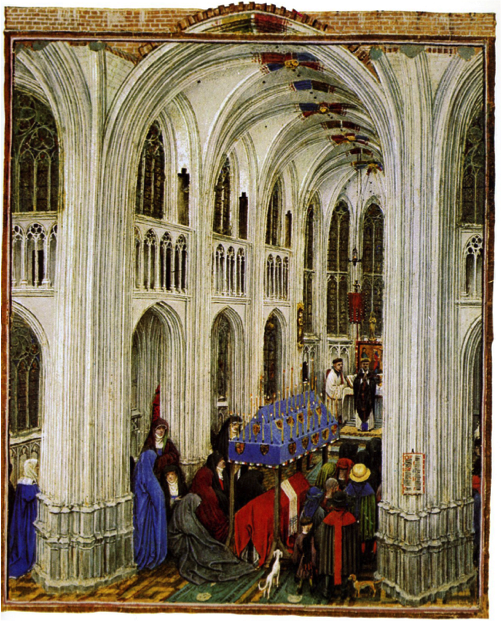
Praying for the dead, however, is a spiritual work of mercy that has suffered in recent decades. Too many Catholics today “miss a step” when a loved one dies. There are often immediate declarations that the deceased is “in Heaven” or “in a better place.” But Scripture doesn’t say that we go right to Heaven when we die. No, indeed, there is a brief stopover at the judgment seat of Christ.

The Letter to the Hebrews says, It is appointed for men to die once and after this comes judgment (Heb 9:27). And St. Paul writes, For we must all appear before the judgment seat of Christ, so that each of us may receive what is due us for the things done while in the body, whether good or bad (2 Cor 5:10).

Our deceased loved ones go to the judgment seat of Christ, and that is worth praying about!

But what is the judgment for those who lived faithful lives? In such cases, the judgment is not merely about the ultimate destination of Heaven or Hell. The judgment would seem to be “Is My work in you complete?”

Indeed, the Lord has made all of us a promise: You therefore must be perfect, as your heavenly Father is perfect (Mat 5:48). Such a beautiful promise! And yet most of us know that we are not in such a state now. If we were to die today it is clear that much work would still be required. Thus when we send our faithful loved ones to judgment, although we send them with hope, we are aware that finishing work may be necessary. Purgation and purification are necessary before entering Heaven, of which scripture says, Nothing impure will ever enter it (Rev 21:27).

Again, this is worth praying about. It is a great work of mercy we can extend to our deceased loved ones, to remember them with love and to pray, in the words of St. Paul, May God who has begun a good work in you bring it to completion (Phil 1:6). Pray often for the souls in Purgatory. Surely there are joys there for them, knowing that they are on their way to Heaven. But surely there are also sufferings that purgation must cause. St Paul says of Purgatory, Each one’s work will become manifest, for the Day will disclose it, because it will be revealed by fire, and the fire will test what sort of work each one has done. If the work that anyone has built on the foundation survives, he will receive a reward. If anyone’s work is burned up, he will suffer loss, though he himself will be saved, but only as through fire (1 Cor 3:13-15). Yes, there is fire, but thank God it is a healing fire. There are tears, too, for Scripture says (regarding the dead) that Jesus will wipe every tear from their eyes (Rev 21:4).

How consoling and merciful our prayers must seem to our beloved who have died! How prayers must seem like a gentle wind that speeds them along, onward and upward toward Heaven!

Praying for the dead, then, is the last and greatest spiritual work of mercy. By the grace of it, and through its help, souls attain the glory God has prepared for them from the foundation of the world.

Some Thoughts on the Feast of All Saints

communion-of-saintsToday is the Feast of All Saints. Some saints of the Church have a particular day on the calendar associated with them and are commonly recognized by name. Many more, though not as familiar to us, are still known by God and have been caught up with Him to glory. Today is their day, the day of the countless multitude who have made it home to glory by God’s grace and by their “Amen” to the gracious call of God. Let’s consider these saints under three headings, based on today’s readings.

I. Their Privileged Place: The first reading today, from Revelation, speaks to us of saints: from every nation, race, people, and tongue. They stood before the throne and before the Lamb, wearing white robes and holding palm branches in their hands. They cry out in a loud voice, “Salvation comes from our God, who is seated on the throne, and from the Lamb.” … They prostrated themselves before the throne, worshiped God, and exclaimed, “Amen. Blessing and glory, wisdom and thanksgiving, honor, power, and might be to our God forever and ever. Amen.”

Note how liturgical the description is. In fact, the most common way that Heaven is described is in liturgical imagery. The liturgy is a kind of “dress rehearsal” for Heaven. To those who find Mass “boring,” this description can be challenging.

Indeed, many people today have rather egocentric notions of Heaven. Heaven is a place where I will be happy, where I will see my family, where I will take leisure. I will have my mansion; I will no longer get sick; I can play all the golf I want, etc. Heaven is a “better place.” But this better place is generally understood in very personal terms; it’s a kind of “designer Heaven.” But Heaven is what it is, not what we conceive it to be.

As for the real Heaven, the heart of it is being with God, looking upon His glorious face and thereby having all our inexpressible longings satisfied. In Heaven, the saints behold the glorious face of God and rejoice. It is their joy to praise Him and to rejoice in His truth, goodness, and beauty.

Note, too, both the sense of communion of the saints with God and with one another. The biblical portraits present a multitude, a vast crowd. The biblical way to understand the multitudes in Heaven is not to envision physical crowding but rather deep communion. In other words, the Communion of Saints is not just a lot of people standing around talking or moving about.

St Paul teaches, So we, who are many, are one body in Christ, and individually members, one of another (Rom 12:5). And though we experience this imperfectly here on earth, we will experience it perfectly in Heaven. As members of one another, we will have deep communion, knowing and being known in a deep and rich way. Your memories, gifts, and insights will be mine, and mine will be yours. There will be profound understanding and appreciation, a rich love, and sense of how we all complete one another and are one in Christ.

Imagine the glory of billions of new thoughts, stories, and insights that will come from being perfectly members of Christ and of one another. Imagine the peace that will come from understanding and being understood. This is deep, satisfying, wonderful communion—not crowds of strangers.

St. Augustine had in mind the wonderful satisfaction of this deep communion with God and with one another in Christ when he described Heaven as Unus Christus amans seipsum (One Christ loving Himself). This is not some selfish Christ turned in on Himself. This is Christ, the Head, in deep communion with all the members of His body. This is all the members in Christ experiencing deep mystical communion with Him and one another, all swept up into the life of the Trinity. Again, as St. Paul says, and you are Christ’s, and Christ is God’s (1 Cor 3:23).

II. Their Prize of Perfection: The second reading, from the First Letter of John, says, Beloved, we are God’s children now; what we shall be has not yet been revealed. We do know that when it is revealed we shall be like him, for we shall see him as he is.

We cannot even imagine the glory of the saints in Heaven. The Heavenly Father once said to St. Catherine that if she were ever to see a saint in his or her transformed heavenly glory, she would fall down and worship because she would think she was looking at God.

This is our future, if we are faithful. We will reflect the glory of God and be transformed by the look of love and glory. Just one look, and oh, the glory we will reflect, God’s very own glory!

III. The Picture to Ponder: The Gospel today (the Matthean beatitudes) sets forth a kind of picture of what sanctity looks like. The beatitudes are the description of the transformed human person; they describe what happens to us as Jesus begins to live His life in us through the Holy Spirit.

This picture is not one that merely waits for Heaven, but one that is true of us even now as we grow into the likeness of Christ.

I have written more on the beatitudes HERE and HERE. For the purposes of today’s feast, we need to acknowledge that a beatitude is not something we do but rather something we receive. A beatitude declares an objective reality as the result of a divine act.

The present indicative mood of the beatitudes should be taken seriously and not transformed into an imperative of exhortation, as though Jesus were saying, “Start being poor or meek and then God will bless you.” Rather, He is saying that when the transformative power of the cross brings about in us a greater meekness, poverty of spirit, and so forth, we will experience that we are being blessed.

Beatitude is a work of God and results when we yield to His saving work in us. We are blessed when we accept and yield to the work that God alone can do. With this understanding, we see the beatitudes not as a prescription of what we must do per se, but as a description of what a human being is like whom Jesus Christ is transforming into a saint! And this transformation is a growing, stable, deep, and serene beatitude and holiness.

Therefore, today’s feast of all saints does not merely point to the completed saints in Heaven, but to us who would be saints, not just someday in the future but beginning now and in increasing degree.

At the end there will be saints and ain’ts. Which do you choose?


A Sobering Scriptural Warning to Rulers and Leaders

Photo by Jacyln Lippelmann for the Catholic Standard.

During the current political period, when many leaders will be elected, we do well to recall the strong admonitions of God to those who attain to leadership, whether as politicians, community leaders, teachers, or others of significant influence.

The Book of Wisdom (6:1-25) contains a stern warning for those of authority and influence. I present it here along with a few comments (in red) of my own.

In my commentary, I deliberately do not mention specific leaders or parties. This problem is older than the current year; it is a human problem that has beset every age. But I would also argue that it is a particularly serious issue today. To be fair, though, it has been emerging in stages and growing in severity for several decades now, since the cultural revolution.

With those disclaimers in mind, consider with me this admonition from the Lord in the Book of Wisdom.

Hear, therefore, kings, and understand;
learn, you magistrates of the earth’s expanse!
Hearken, you who are in power over the multitude
and lord it over throngs of peoples!
Because authority was given you by the Lord
and sovereignty by the Most High,
who shall probe your works
and scrutinize your counsels!

We live in times when government officials often rule more than they serve. Laws are passed that are increasingly burdensome. And many of these laws are coming, not from elected officials who must answer to their voters, but from unelected judges and government bureaucrats. Some of these new policies violate religious liberty and impose obligations that violate the consciences of many. But these considerations are set aside and those in power lord it over the people they serve, forcing them to comply with unjust and immoral laws or else face fines and/or jeopardize their careers. To the degree that those leaders transgress the proper bounds for a ruler, they will answer to God for what they do.

Because, though you were ministers of his kingdom,
you judged not rightly, and did not keep the law,
nor walk according to the will of God,

Consider how many laws are proudly passed today that are direct violations of God’s moral law (e.g., legalization of abortion, same-sex “marriage,” and euthanasia/assisted suicide). Those who craft such laws, support them, and/or fund them, will answer to God.

Terribly and swiftly shall he come against you,
because judgment is stern for the exalted—
For the lowly may be pardoned out of mercy
but the mighty shall be mightily put to the test.
For the Lord of all shows no partiality,
nor does he fear greatness,
Because he himself made the great as well as the small,
and he provides for all alike;
but for those in power a rigorous scrutiny impends
.

Yes, many seek power in this world without recalling the important truth proclaimed here. Judgment is indeed weightier for those who are powerful, wealthy or influential. We seek these things even though the Scriptures warn that it is hard for the rich to inherit the kingdom (Matthew 19:23), that not many of us should be teachers (James 3:1), and that to whom much is given much is expected (Luke 12:48). Those who attain to such levels must be very humble before God, seek his help and remember that they will answer to him.

To you, therefore, O princes,  are my words addressed
that you may learn wisdom and that you may not sin.
For those who keep the holy precepts hallowed shall be found holy,
and those learned in them will have ready a response.
Desire therefore my words;
long for them and you shall be instructed
.

Fear God, not man. Seek his wisdom, not what is merely politically advantageous. Yet sadly most of our leaders, powerful though they are, do fear man more than God. To attain to high positions, many have made serious moral compromises and been willing to dismiss divine mandates in favor of often immoral demands of sinful human beings. Rare indeed is the ruler that recalls divine judgments and refuses to compromise God’s law, or teaches his people to do the same.

If, then, you find pleasure in throne and scepter, you princes of the peoples,
honor Wisdom, that you may reign as kings forever….
A great number of wise men is the safety of the world,
and a prudent king, the stability of his people;
so take instruction from my words, to your profit
.

How are we doing, America? Not so well, if you ask me. Our current leaders (political, judicial, and academic) have diverged severely from the Law and Wisdom of God. Any examination of recent legislation, legal decisions, or academic offerings will reveal this. A tyranny of relativism has been created and leaders lord it over others through law and political correctness. Punitive laws and executive fiats oppress. College campuses are beginning to resemble indoctrination camps rather than places where debate and discussion of ideas can take place.

Even more sadly, our leaders indicate the moral condition of our country. True leaders should lead and answer to God, but our modern leaders often cater to the whims and unseemly demands of their people. Americans are demanding many excessive and immoral things; we get the leaders we deserve because they emerge from who and what we are.

This is tragic on two counts. It is tragic for the leaders, who will answer to God for what they do; it is also tragic for us, who can only be further dragged down by poor and immoral leaders.

Consider, well, this admonition from Sacred Scripture. Consider its message to us, both as individuals and as a country.

Pray and heed!