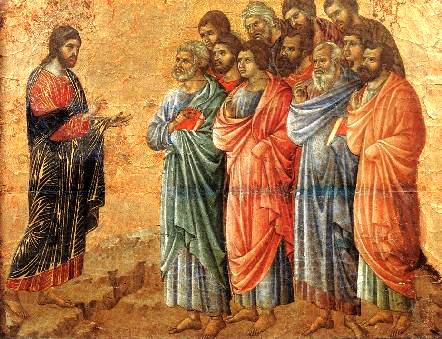
I would like to take a line from Wednesday’s Gospel and apply to it to us today:
When Jesus heard that John had been arrested, he withdrew to Galilee. … He went to live in Capernaum by the sea, in the region of Zebulun and Naphtali (Matt 4:12-13).
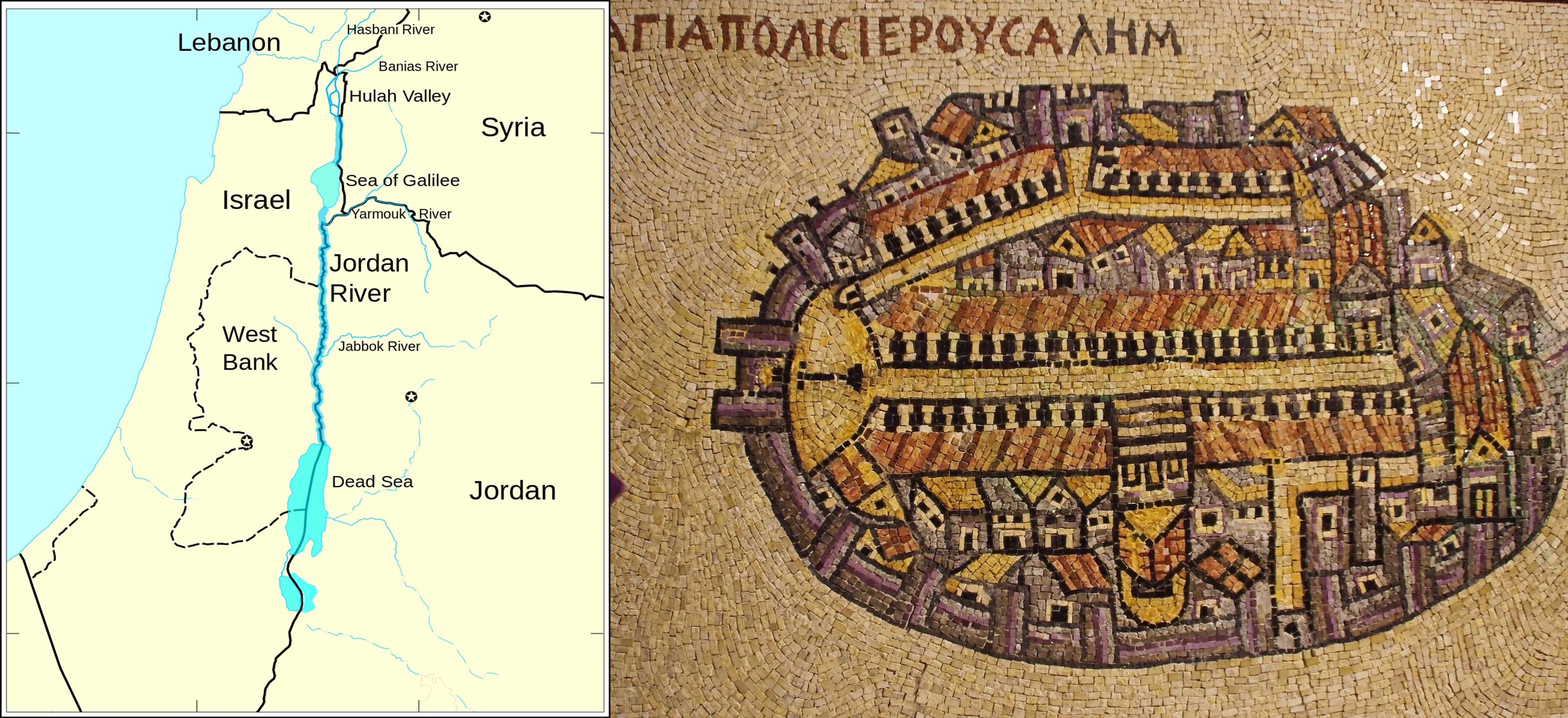
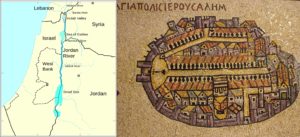
John had been ministering well south of Galilee, in a region many scholars think is now on the West Bank. These were desert regions not far from Jericho and Jerusalem. It is this area in which Jesus likely spent forty days preparing for His ministry.
Regions near Jerusalem were troublesome at that time; the arrest of John the Baptist simply confirmed this. John had been arrested for telling Herod that he had no business living in adultery with his brother’s wife. Soon enough, he would lose his life because of it. With John the Baptist under arrest, the Lord Jesus concluded that it would not be prudent to fill that gap. Instead, He headed to the area north and west of the Sea of Galilee, the regions named for the Jewish tribes of Zebulun and Naphtali.
It amounts to a tale of two cities (or regions), Jerusalem and Galilee.
Jerusalem represents a hardened heart. It was a place of great contention, of unyielding positions and spiritual pride. It was the religious and political center as well as a kind of university town. There were good people to be found there, but overall the region had a hostile and poisonous mix of political and religious factions, of stubbornness, dispute, violence, and scorn. Regarding Jerusalem, Jesus lamented, Nevertheless, I must keep going today and tomorrow and the next day, for it is not possible for a prophet to perish outside of Jerusalem. O Jerusalem, Jerusalem, who kills the prophets and stones those sent to her! How often I have longed to gather your children together as a hen gathers her chicks under her wings, but you were unwilling (Luke 13:33-34). Yes, Jerusalem was stubborn, contentious, hard-hearted, and prideful.
Galilee, though not free from sin or without stubborn tendencies (e.g., John 6:66, Luke 4:29), represents a softer heart, one open to teaching; less contentious, political, elitist, and stubborn. Surely some did contend with Jesus, but He felt the region was a better environment in which to plant the Gospel. Thus, Jesus went there to begin the work of gathering disciples. In the synoptic tradition, He went to Jerusalem to die, encountering increasing resistance the nearer He got. Galilee seemed a bit more open. Galileans were less cosmopolitan. They lived close to the earth and the rhythms of life. They were farmers, fishermen, shepherds, vine dressers, laborers, tradesmen, and shop owners. They had less time to debate the details of the Mosaic law and divide into contentious factions.
The people of Jerusalem often looked down on those from Galilee. Among other things, the Galileans spoke with what many in Jerusalem considered a “hick” accent. Peter was called out by a servant girl for having such an accent. This, along with the fact that Galileans were not well-educated in religious matters, led to a dismissive condescension by those living in the region of Jerusalem toward those from the north. The religious leaders in Jerusalem scoffed at Nicodemus’ suggestion that they actually investigate what Jesus was teaching before condemning Him. They replied, Are you from Galilee too? Search and see that no prophet arises from Galilee (Jn 7:52).
So here is a tale of cities: one is prideful, arrogant, unbending in its views, and unteachable; its soil is hard. The other is more open and teachable; its soil is better able to nurture the seed of the Gospel.
You may argue that this is too simplistic; symbols often are. If you do, though, then please propose your own explanation as to why Jesus did not go to the very heart of the Jewish religion and its religious and political capital, Jerusalem, instead withdrawing to Galilee to begin His ministry and gather His disciples.
But for us, let’s take and apply this image to ourselves and allow it speak to our times.
In the first place we must ask, which city best reflects my heart? Is my heart the rich and softer soil of Galilee or is it Jerusalem, hardened, unreasonably certain, and elitist?
Too many people are like Jerusalem. They are not docile or teachable; they have hardened their hearts against any teaching of God that does not agree with their ideas. Too many do not want to be told what to do or think. They are dismissive of biblical and Church teaching without ever having really taken the time to examine the reasons that such things are taught or even considering that they might be true. They simply reject them because such teachings do not fit in with their views or are not convenient to their preferred behavior. They likely have not likely read the catechism or consulted a priest, catechist, or apologist; they just reject the teaching because someone or something in the world scoffs at or disagrees with it. This behavior is “Jerusalem,” figuratively speaking. Such hearts are not fertile soil for the gospel; and if Jesus goes there, it more likely means death to Him and His word, than converted minds or hearts.
Fewer today are like Galilee, with its fertile, receptive soil; open to being taught and willing to accept the need for conversion.
So, the first question is, which city are you? If we are honest, we will likely see a little of both in us. In some ways we are easily taught, but in others we are stubbornly resistant. But overall, are you in a humble conversation with the Lord? Do you seek to better understand the teachings that challenge you and your views?
This tale of two cities also speaks to our times, which increasingly resemble the Jerusalem mentality: proud, hardened, factious, and highly political. Too often we collectively think that we have “come of age”, scoffing at previous eras as unenlightened, less intelligent, sexually immature, and repressed. We confuse technology with wisdom and conclude that because we can split the atom, have been to the moon, and carry incredibly advanced gadgets, that we can simply dismiss the collected wisdom of the ages. Ancient biblical and Church teaching, which has stood the test of time, is dismissed as irrelevant, even scoffed at as merely the teachings of “dead white men.”
The various “academies” of ancient Jewish law (the scribes, Pharisees, and Sadducees) scoffed at whatever was not theirs and scornfully rejected the Messiah from Galilee. Many today also reject the Lord from Galilee. He’s not one of them. He doesn’t belong to the right party or hold the right views. Therefore, He is dismissed, and if He continues to pester, He must be marginalized, discredited, and destroyed.
We are clearly living in times in which political lines have become very hardened. Many opponents barely speak to one another, instead seeking legally and even physically destructive ways to silence them.
Yes, welcome to Jerusalem. Ponder what an ancient and perhaps obscure text has to teach us about our hearts, our culture, and our nation. The Lord withdrew from Jerusalem as a prudential judgment that there were more fertile fields elsewhere. And when He rose, He told His brothers to meet Him in Galilee (e.g., Mat 28:10).
Where do you chose to live? What is the condition of your heart? What will your stance be?
In these early weeks of “ordinary” time, we are being introduced to Jesus and the beginnings of His public ministry. Matthew’s Gospel today describes how Jesus began His public ministry in the wake of the arrest of John the Baptist. Matthew tells us four things about Jesus’ ministry: its context, its content, its call, and its comprehensiveness. Let’s look at each in turn.
I. The CONTEXT – When Jesus heard that John had been arrested, he withdrew to Galilee. He left Nazareth and went to live in Capernaum by the sea, in the region of Zebulun and Naphtali, that what had been said through Isaiah the prophet might be fulfilled: Land of Zebulun and land of Naphtali, the way to the sea, beyond the Jordan, Galilee of the Gentiles, the people who sit in darkness have seen a great light, on those dwelling in a land overshadowed by death light has arisen.
The relocation of Jesus northward from Judea up to Galilee coveys some important truths. First, it tells us of the hostility of the southern regions to the message of John the Baptist and Jesus. The area in and around Judea (which included, principally, Jerusalem) was controlled by a sort of religious ruling class (the Sadducees, especially, and to a lesser extent, the Pharisees). Because they were in strong but often controversial control in these areas, they were far less open to ideas that in any way threatened their leadership or questioned the rituals related to the Temple.
As we know, Jesus did not come to abolish the Law; He came to fulfill it. This was threatening to those tied to the status quo, most of whom did not distinguish fulfillment from abolition. Further, the Herodian dynasty was also a danger, especially in the south, and had arrested John the Baptist.
And so Jesus moved north to more fertile territory in order to begin His public ministry; the Jewish people in Galilee were less hostile. In fact, the people of Jerusalem often looked down upon them for their simple, agrarian ways and their “rural accent.” But it was more fertile ground for Jesus to begin His work.
There is an important lesson in this: While we must carefully preserve Christian orthodoxy and only accept doctrinal development that is organic and faithful to the received Apostolic Tradition, we can sometimes inadvertently stifle the Holy Spirit, who speaks to us through unexpected people and in unexpected ways.
The Pharisee leaders simply rejected the notion that any prophet could come from Galilee. When Nicodemus encouraged them to give Jesus a hearing they scoffed, Are you from Galilee too? Search and see that no prophet arises from Galilee (Jn 7:52). Sometimes we can insist upon a single position in matters in which Christians are allowed freedom. For example, there are various degrees of expression permitted in the liturgy; there are also different schools of theological thought that are allowed by the Church.
Balance is required of us. We may prefer Thomistic formulations, Carmelite spirituality, charismatic worship, or the traditional Latin Mass. Such things are legitimate matters for discussion; we ought not to feel threatened by what the Church currently deems to be legitimate diversity. Discovering the range and limits of diversity is an ongoing matter for the Church; we should not permit the field of our own soul to be hostile to Jesus and His ministry, which may come to us in more diverse ways than we would prefer.
How tragic it was for Judea that Jesus thought He had to move on to more fertile territory, and what a blessing it was for Galilee that He moved there. Unfounded stubbornness can hinder the Word of God in us. Jesus moved on to a more accepting area where His ministry could bear the most fruit. St. Gregory the Great had this to say about the context for preaching and necessary fertility of the field:
For frequently the preacher’s tongue is bound fast on account of his own wickedness. as the psalmist says: But God asks the sinner: Why do you recite my commandments? (Ps 50:16) On the other hand it sometimes happens that because of the people’s sins the word of preaching is withdrawn from those who preside over the assembly as the Lord tells Ezekiel: I will make your tongue cleave to the roof of your mouth, so that you shall be dumb and unable to reprove them, for they are a rebellious house (Ez 3:26). He clearly means this: the word of preaching will be taken away for they are unworthy to hear the exhortation of truth. It is not easy to know for whose sinfulness the preacher’s word is withheld, but it is indisputable that the shepherd’s silence while often injurious to himself will always harm his flock (St. Gregory the Great Homily 17,3, 14).
For Galilee there was this boon: The people who walked in darkness have seen a great light; those who dwelt in a land of deep darkness, on them has light shined Is 9:2). But for others, Jesus had only this to say, Therefore I tell you that the kingdom of God will be taken away from you and given to a people who will produce its fruit (Matt 21:43).
II. The CONTENT –From that time on, Jesus began to preach and say, “Repent, for the kingdom of heaven is at hand.”
We have discussed before the careful balance of Jesus’ preaching. He is willing to challenge and so to say, “Repent.” But He also declares the good news that the Kingdom of Heaven is at hand. Accepting the ministry of Jesus requires that we avoid the two extremes of presumption and despair.
To those who make light of sin and their condition as sinners, Jesus says, “Repent.” It is wrong to presume that we do not need continual healing power from the Lord in order to overcome our sin. Perhaps our greatest sin is our blindness to it. Most do not seem to comprehend how serious their condition is. The word translated here as “repent” is μετανοεῖτε (metanoeite), which means more literally “to come to a new mind,” or “to come to a new way of thinking.” In our sin-soaked world, a world in which sin is so pervasive as to almost go unnoticed, Jesus says, “Come to a new mind. Understand your condition and your need for mercy and grace. Come to understand that without the rescue that only God can provide, you are lost.” And hence we are told to reject presumption.
But we are also told to reject despair, for the Kingdom of God is at hand. In other words, the grace and mercy of God are available to rescue us from this present evil age and from our carnal condition. Through Christ we are granted admittance to the Kingdom. The Spirit of God can overcome our carnal, sinful nature and bring us to true holiness.
The proper balance between presumption and despair is the theological virtue of hope. By hope we confidently expect God’s help in attaining eternal life. By proper metanoia (repentance) we know that we need that help; by hope we confidently reach for it.
In our own proclamation of the Kingdom we also need the proper balance exhibited by Jesus. Consider that if children hear nothing but criticism they become discouraged (they despair), but if all they hear is praise they become spoiled and prideful, presuming that everything should be just as they want it.
For the Church, too, balance is necessary. Many people expect the Church only to affirm and “be positive.” This leads to a selfish and incorrigible world and to the presumption that nothing matters (as we can plainly see today). Thus the Church must announce the call to repentance, but must also offer hope and mercy to sinners. She must offer grace though the Sacraments and her preaching, which, with God’s power, makes the Kingdom of God to be “at hand.”
III. The CALL – As he was walking by the Sea of Galilee, he saw two brothers, Simon who is called Peter, and his brother Andrew, casting a net into the sea; they were fishermen. He said to them, “Come after me, and I will make you fishers of men.” At once they left their nets and followed him. He walked along from there and saw two other brothers, James, the son of Zebedee, and his brother John. They were in a boat, with their father Zebedee, mending their nets. He called them, and immediately they left their boat and their father and followed him.
In building His Kingdom, Jesus summons men to follow Him. He will train them to be the leaders of His Church as Apostles. The Kingdom of God is not just concerned with calling disciples, but also with developing leaders to provide order and authority in the Church.
Even the most “democratic” of organizations requires authority and leadership. Without these there is anarchy and a battle of wills. Hence, in the early stages of His public ministry, the Lord calls disciples and also grooms leaders. Consider three things about the Lord’s call.
A. His ARTICULATENESS – He says to these apostles, Come, Follow me. His announcement is unambiguous. Good leaders make clear what they ask, indeed, what they demand. Jesus is clear to set the course and point the way; He is that way.
B. His APPEAL – Jesus must have had tremendous personal appeal and exuded a strong, reassuring authority. His appeal to them was personal: “Come, follow Me.” He did not merely say come and “learn my doctrine,” or “accept my vision.” He said, “Follow Me.” So, as we hand on the faith to our children and others, we cannot simply say, “Here is the Catechism; follow it.” Each of us must also take the next step and tell them to follow the Lord with me. We cannot simply parrot what a book says, correct though that book might be. Ultimately we must be able to say, “I am a personal witness to the fact that God is real and that the truth He has given to the Church is authentic and is changing my life.” Our appeal must include the personal testimony that what we proclaim is real and is changing our life: “Come, and go with me to my Father’s house.”
C. His APPROACH– Note that the Lord builds on something they know: fishing. He starts with the familiar in order to draw them to the less familiar. In a way, He is saying that the gifts they are currently using are just the ones they need to use as leaders in God’s Kingdom. Fishermen are
Patient – They often wait long hours for the fish to bite. Apostles and bishops must also be patient and have the ability to wait for long periods before there is a catch for the Lord.
Perceptive – They learn to know the fish, their behavior, and what attracts them. Apostles and clergy must learn about their people and what will attract them to Christ.
Persevering – They must go through many days in which they catch very little; only through perseverance is there real gain in fishing. So it is with the work of the clergy, who may go long stretches with little to show for it. The Gospel may go “out of season,” even for decades in certain cultures (like our own). The good leader will persevere, will stay at the task.
IV. The COMPREHENSIVENESS – He went around all of Galilee, teaching in their synagogues, proclaiming the gospel of the kingdom, and curing every disease and illness among the people.
Note that all of Galilee was His mission field and He covered it comprehensively. He also cured people of every disease and illness. And thus the Church is catholic, and must address every part of the world, providing a comprehensive vision for life. We may not have the power to solve every problem, but we can provide the vision of the Paschal mystery, which sheds light and brings spiritual healing to every affliction. If we are suffering and dying, we must remember that Jesus did as well, but only to rise and be glorified on account of his fidelity and obedience.
For the Church and for the Christian, the comprehensive answer to every affliction is that we are always carrying about in our bodies the dying of Christ so that the rising of Christ may also be manifest in us (2 Cor 4:10). We seek to bring healing to everyone we can, and where physical remedies are not possible, the truth of the Gospel reassures us that every Friday, faithfully endured, brings forth an Easter Sunday.
Here, then, are four crucial insights from the beginning of Jesus’ public ministry. They are important for us to acknowledge and to imitate.
Journey with me back to 1971 (a year of funny hair, to be sure) and listen to this old classic: “Come and Go with Me to My Father’s House.”
I miss the snow this year. All the cold air is staying out West and Washington DC is just wet a dreary most days. Maybe February will bring a pattern change. For now, I miss the cold and snow.
Call me crazy if you wish. I know that not everyone likes snow but it is an amazing work of God. He takes a barren winter landscape and creates it anew. I can almost hear the Lord saying, “Behold, I make all things new!”
In the modern world we often walk past the glory of God hardly noticing the gifts that He provides every day. Tonight and tomorrow I don’t want to miss God’s gifts. It is true that these gifts come along with weather-related hardships, but maybe—just maybe—God can get a few of us here on the East Coast to stop for just a minute, rest a while, and behold His glory.
Getting “snowed in” provides a wonderful chance to become reacquainted with our family and even with our very selves. Just looking out the window and marveling at the snow as it falls with hypnotic and calming steadiness can be a prayer, if we think of God who sends it. Wherever you are, don’t walk through life and miss the glory of God!
In the Book of Sirach there is a beautiful and poetic description of God and the majestic work He creates even in the “dead” of winter. Enjoy this excerpt from Sirach and reflect spiritually on the glory of God in winter.
A word from God drives on the north wind.
He scatters frost like so much salt;
It shines like blossoms on the thornbush.
Cold northern blasts he sends that turn the ponds to lumps of ice.
He freezes over every body of water,
And clothes each pool with a coat of mail.
He sprinkles the snow like fluttering birds.
Its shining whiteness blinds the eyes,
The mind is baffled by its steady fall.
(Sirach 43, selected verses)
Enjoy this video, which reminds many of us of the joy and wonder of a snowfall like some of the ones we experienced when we were young.
There are many questions related to the problem of suffering and of evil: Why does God permit evil? Why does He not intervene? Why does He delay? Is God really good if He permits such things? Is He really omnipotent?
I have covered some of them in the past (e.g., HERE and HERE).
The answers we can propose address some but not all aspects of the problem of evil. Suffering and evil are not meaningless, as the cross of our Lord shows, but we must humbly and reverently acknowledge that there will remain mysterious aspects.
One of our chief problems is that we often rush to call something “bad,” “unfortunate,” or “evil,” without recognizing that there are some aspects of it that bring blessings. For example, one cause of suffering and tragedy in our world is the fiery center of our planet. We live on a thin crust of cooled rock that floats on top of a cauldron of melted rock or magma; this causes suffering but also brings blessings. Volcanoes, earthquakes, and occasional climatic shifts are among the effects of living above a molten sea; they can bring suffering and loss of life. And yet without these realities life would not be possible here. Volcanic explosions produce important gases for our atmosphere, essential for life. They also produce valuable nutrients to the surrounding soil. Even more, the movement of the molten mantle beneath us is essential in developing the magnetic field that surrounds Earth and helps to deflect the harmful effects of solar winds.
So the burden of volcanic activity also brings blessings. Fearful as eruptions and earthquakes can be, we probably wouldn’t be here without them. One might still ask, “Could not God have come up with a less deadly way of dispensing blessings?” Arguably He did: in offering us the paradise of Eden, where we would be protected. But as we know, Adam and Eve sought a “better deal.” Ever since, we’ve been living in a “Paradise Lost.”
In this “Paradise Lost,” we must learn to look for blessings in strange packages; we should not assume that things or events that cause suffering are wholly lacking in value or bereft of any good at all. God may close one door as a way to open others. He permits affliction in order to bestow other blessings. We do well to avoid hasty conclusions when pondering the problem of evil.
This leads me to a memorable story from the tradition of the Eastern Desert Fathers. I am indebted to Bishop Robert Barron for reminding me of the story via his book, Vibrant Paradoxes (p. 233). I recount the story here in slightly greater detail than did the good Bishop, but I would recommend you read his thoughtful commentary. The story teaches on the often ambiguous qualities of events and problems:
There was a man who was a farmer, and one day the wind blew the gate of his field open and his valued and only horse escaped, and was not to be found. His friends came to commiserate with him at this loss, but he only said to them, “We’ll see.”
Several days later, the horse returned with a wild stallion and a mare. And his friends came to rejoice with him in his good fortune, but he only said to them, “We’ll see.”
Several days later, his son was breaking in the new horses and was cast from the back of the wild stallion and suffered a broken arm and leg. And the farmer’s friends came and commiserated with him at the injuries of his son, but he only said to them, “We’ll see.”
Several days later, troops of the emperor came to the area to draft and compel the young men of the village in the army. But the farmer’s son was exempted due to his injuries. And the farmer’s friends came to rejoice with him that his son was not taken away, but he only said to them, “We’ll see.”
Yes, in so many events of life we lack the comprehensive view to sit in judgment on their full meaning. Blessings are not always as they seem; neither are burdens. Sometimes the best we can do is to say, “We’ll see.”
As a priest, I am called to preach and teach. As such, I must look to Jesus Christ as my model. In this, I refer to the real Jesus of Scripture. Too many people today have refashioned Jesus into a sort of “harmless hippie,” an affable affirmer, a pleasant sort of fellow who healed the sick, blessed the poor, and talked about love, but in a very fuzzy, “anything goes” manner. But absent from this image is the prophetic Jesus, who accepted no compromise and called out the hypocrisy in many of His day.
Thus I must look to the real Jesus of Scripture. The real Jesus clearly loved God’s people, but on account of that love could not suffer some limited notion of salvation and healing for them. Rather, He zealously insisted that they receive the whole counsel of God. He insisted that dignity for them was nothing less than the perfection of God Himself (cf Mat 5:41).
As a teacher, Jesus often operated in the mode of the prophets. Prophets have a way of comforting the afflicted and afflicting the comfortable. Truth be told, each of us is in both categories. We must be able to accept the Jesus who one moment says, “Blessed are you,” and the next adds, “Woe to you.” Jesus the teacher and prophet will affirm whatever truth there is in us, but, like any good teacher, He will put a large red “X” beside our wrongful answers and thoughts.
Yet despite Jesus’ often fiery and provocative stance, Scripture speaks of His renown as a preacher and the eagerness with which many heard Him.
And when Jesus finished these sayings, the crowds were astonished at his teaching, for he taught them as one who had authority, and not as their scribes (Mat 7:28).
Sent to arrest him the temple guard returned empty handed saying: No one ever spoke like that man (Jn 7:46).
And all spoke well of him, and wondered at the gracious words which proceeded out of his mouth (Luke 4:22).
And the common people heard him gladly (Mark 12:37).
But even Jesus could have a bad day in the pulpit. In Nazareth, they tried to throw Him off a cliff for suggesting that Gentiles might have a place in the Kingdom (Lk 4:29). In Capernaum, many left Him and would not follow Him any longer because of His teaching on the Eucharist (Jn 6:66). In Jerusalem, the crowd said that He had a demon because He called Himself “I AM” (Jn 8:48). And thus Jesus warns all who would teach and preach: Woe to you when everyone speaks well of you, for that is how their ancestors treated the false prophets (Lk 6:26).
And thus Jesus was a complex preacher and teacher. He was no mere affirmer. He often unsettled and troubled people, even though He consoled and comforted them at other times.
Let’s consider some of the qualities of Jesus as a teacher and ponder the sort of balance that He manifests. It is a balance between His love for us, His students, and His zeal to tolerate no lasting imperfection or error in the pupils whom He loves too much to deceive. I present these qualities of Jesus as a teacher in no particular order. Some are “positive” in the sense that they are aspects of His kindness and patience; others are “negative” in the sense that they illustrate His refusal to accept anything less than final perfection in us.
I. His authority – The Scriptures often speak of the “authority” with which Jesus taught. For example, Scripture says of Jesus, he taught as one who had authority, and not as their teachers of the law (Mat 7:29). For indeed the teachers of Jesus’ time played it safe, quoting only reputable authorities in a wooden sort of way; but Jesus taught with authority.
The Greek word translated as “authority” is exousia, meaning to teach out of (one’s own) substance, to speak to the substance of what is taught. Jesus would often say, “You have heard that is was said … But I say to you” (cf Mat 5 inter al). And so Jesus spoke from His experience of knowing His Father and of knowing and cherishing the Law and its truth in His own life. He brought a personal weight to what He said. He “knew” of what He spoke; He did not merely know “about” it.
This personal authority was compelling. Even today, those with this gift stand apart from those who merely preach and teach the “safe” maxims of others without adding their own experience to the truth that they proclaim. Jesus personally bore witness in His own life to the truth He proclaimed; and people noticed the difference.
How about you? Each of us is called to speak out of the experience of the Lord in our own life and to be able to say with authority, “I can verify that everything declared by the Lord and His Body, the Church, is true because in the laboratory of my own life I have tested it and come to experience it as true and transformative!”
II. His witness – A witness is one who recounts what he has seen and heard with his own eyes and ears, what he himself knows and has experienced. Jesus could say to the Jews of his time, If I were to say that I do not know him, I would be a liar like you, but I do know him and I keep his word (Jn 8:55). He thus attests to what he personally knows. He is not just reciting facts that others have said.
In a courtroom, a witness must attest to what he has seen and heard for himself; if he merely recounts what others have said it is called “hearsay.” A witness can raise his right hand and say, “It is true, and I will swear to it. I have seen it for myself.”
Jesus could witness to what He had heard and seen, of His Father and of us.
We cannot witness immediately to all that Jesus could, for He had lived with the Father from all eternity, but we can speak to what the Lord has done in our life and how we have come to know Him in conformity with His revealed Word.
III. His respect for others – The Latin root of the word “respect” gives it the meaning “look again” (re (again) + spectare (to look)). Frequently in Scripture, especially in Mark’s Gospel, there appears the phrase, “Jesus looked at them and said …”
In other words, Jesus was not merely issuing dictates to an unknown, faceless crowd; He looked at them. And He looks at you and me as well. It is a personal look, a look that seeks to engage you and me in a very personal way. He is speaking to you, to me. His teaching is not just for the ancient crowd; it is for you and for me. He looks to you, and He looks again. Are you looking? Are you listening?
Do you look with respect to those whom you are called to teach, or to the children you are called to raise? Do you engage them by your look of respect and love?
IV. His love and patience for sinners – Jesus could be very tough, even exhibiting impatience. But in the end, He is willing to stay with us in a long conversation. One text says, When Jesus went ashore he saw a great crowd, and he had compassion on them, because they were like sheep without a shepherd. And he began to teach them at great length (Mk 6:34). Yes, He teaches us at great length; He stays in long conversations with us. He knows that we are dull of mind and hard of heart, so He persistently and consistently teaches.
Do we do that? Or do we quickly write people off? Jesus had a long conversation with a Samaritan woman who, frankly, was quite rude to Him at first (John 4). He had a long conversation with Nicodemus, who also was at times resistant and argumentative (Jn 3). He had a long conversation with His Apostles, who were slow and inept.
How about us? Are we willing to experience the opposition of sinners, the resistance of the fleshly and worldly? Do we have love and patience for those whom we teach? I have met some great Catholics who were once enemies of the Faith. Someone stayed in a conversation with them. What about us?
V. His capacity to afflict and console – Jesus said, “Blessed are you,” but just as often He said, “Woe to you.” Jesus comforted the afflicted and afflicted the comfortable. Each of us falls into both categories. We need comfort but are often too comfortable in our sins. A true prophet fears no man and speaks to the truth of God.
Thus for a true prophet (like Jesus) there are no permanent allies to please and no permanent enemies to oppose. The determination of every moment is based on conformity or lack of conformity to the truth of God. Jesus said to Peter, “Blessed are you, Simon bar Jonah” (Mat 16:17), and He gave him the keys to the Kingdom and the power to bind and loose. But in the very next passage, Jesus says to him, “Get behind me, Satan!” (Mat 16:23)
No true prophet or teacher can say, “Correct,” or “Blessed are you” every moment, because we all fall short of the glory of God. Jesus had absolute integrity when it came to assessing everything by the standard of God’s truth and Word. Do we?
VI. His parables – Stories are an important way to teach. A story that registers with us will rarely be forgotten. It is said that Jesus used more than 45 parables; some are full stories while others are just brief images. He used parables to link His sometimes-complex teaching to everyday life and to plant a seed of truth for our further reflection.
What stories and examples do you use? Teachings that consistently fail to make use of these risk being seen as merely abstract and can easily be forgotten.
That said, parables are somewhat like “riddles.” They admit of various understandings and interpretations. A good parable leaves its listener wanting more, seeking a definitive interpretation.
For example, a movie will sometimes have an ambiguous ending, stirring up hope for a sequel that will provide more information. Some stories and parables are compact and definitive; others are open-ended and ambiguous, almost begging for an ending.
Consider that the parable of the Prodigal Son is not really finished. It ends with the Father pleading for the second son to enter the feast. Does the son enter or does he refuse to do so? This detail is not supplied, because you are the son and you have to supply the answer. Will you enter or will you stay outside sulking that if the kingdom of Heaven includes people you don’t like then you’d just as soon stay outside?
Parables are powerful, but for different reasons. Learn stories and learn to share them!
VII. His questions – Jesus asked well over a hundred questions in the Gospels. Here are just a few: “What did you go out to the dessert to see?”, “Why do you trouble the woman?”, “How many loaves do you have?”, “Do you say this of me on your own, or have others told you of me?”.
Good teachers ask questions and do not rush supply the answer to every question. A question is pregnant with meaning; it invites a search. The “Socratic method” uses questions to get to the truth, especially on a personal level: “Why do you ask that?”, “What do you mean by this?”, “Do you think there are any distinctions needed in your claim?”.
This method makes a person look inward to his attitudes, prejudices, and presumptions. Good teachers ask their students a lot of questions; questions make people think.
Here is a list of one hundred questions that Jesus asked: 100 Questions Jesus Asked. Read them; they will make you think—a lot!
VIII. His use of “focal instances”– Jesus does not propose to cover every moral situation a person might encounter or teach every doctrinal truth in a single afternoon.
For example, many today say that Jesus never mentioned homosexual acts and from His silence conclude that He must therefore approve of them. Really? He also never mentioned rape. Do you suppose that He approves of rape? Further, He did speak of homosexual acts, through His appointed spokesmen (the Apostles) who condemned them.
No teacher can cover every possibility, every sin, or every scenario. So Jesus uses “focal instances,” in which He illustrates a principle.
This is most obvious in the Sermon on the Mount (Matthew 5-7) where, to illustrate the principle that we are to fulfill the law and not merely keep its minimal requirements, He uses six examples or “focal instances.” Jesus speaks to anger, lust, divorce, oaths, retaliation, love of enemies, prayer, fasting, and almsgiving. And in Mathew 25:31ff, the Lord uses the corporal works of mercy to illustrate the whole of the Law.
These are not an exhaustive treatments of the moral life. Through the use of illustrations, the Lord asks us to learn the principle of fulfillment and then apply it to other instances.
Good teachers teach principles, since they cannot possibly envision every scenario or situation. Having instructed their students in first principles, they can trust that their students will make solid decisions in many diverse situations.
Good teachers teach students to think for themselves, not in isolation, but in ongoing communion with the principles learned, and through dialogue with authorities when necessary for assistance and accountability.
IX. His use of hyperbole – Jesus uses a lot of hyperbole. It is easier, He tells us, for a camel to go through the eye of a needle than for a rich man to enter Heaven (Mk 10:25). If your eye scandalizes you, gouge it out (Mat 5:29). There was a man who owed ten thousand talents (the equivalent of a trillion dollars today) (Mat 18:24). It would be better for you to be cast into the sea with a great millstone about your neck than to scandalize one of my little ones (Mat 18:6).
Hyperbole has memorable effect. Who of us can forget Jesus’ parable about a man with a 2×4 coming out of his eye who rebukes his neighbor for the splinter in his? I often tell my congregation, “Go to church or go to Hell,” which is my way of saying that missing Mass is a mortal sin.
Once, one of my seminary professors signaled me that I was giving an incorrect and heretical answer to a complex theological issue by saying, “Charles, you are on the edge of an abyss.” His response made me stop immediately and give the correct and orthodox answer!
Good teachers use hyperbole at the right moments.
X. His use of servile fear – Jesus made frequent use of “fear-based arguments.” He warned of Hell, of unquenchable fire, and of the worm that does not die. His parables feature many summary judgements in which people are found unprepared, are excluded from Heaven, or are cast into darkness. One parable ends with a king burning the town of those who failed to accept his invitation to his son’s wedding banquet (Mat 22:7). Another has a king summoning those who rejected him so that they could be slain before his eyes (Lk 19:27). Jesus warns of the wailing and grinding of teeth. He also warns of a permanent abyss between Heaven and Hell that no one will be able to cross.
Many people today are dismissive of fear-based arguments, but Jesus used them—He used them a lot. So Jesus never got the memo that this is a poor way to teach. While the spiritually mature can respond to loving arguments, many are not that mature, and thus a healthy dose of fear and the threat of unending regret is often necessary.
We ought not to exclude, as many do, the myriad verses in which Jesus warns in vivid language of the consequences of repeated, un-repented sin. He is not playing games; He is speaking the truth.
To teach as Jesus did is to include warnings of judgment and of Hell.
XI. His anger and zeal – Jesus does not hesitate to express His anger and grief at the hardness and stubbornness of many. One day He said, You unbelieving and perverted generation, how long shall I be with you? How long shall I put up with you? (Matt 17:17) And in Mark’s Gospel we read, And they were bringing children to Him so that He might touch them; but the disciples rebuked them. But when Jesus saw this, He was furious and said to them, “Permit the children to come to Me; do not hinder them” (Mk 10: 13-14). Another day, in the synagogue, Jesus expressed anger at their unbelief: After looking around at them with anger, grieved at their hardness of heart, He said to the man, “Stretch out your hand.” And he stretched it out, and his hand was restored (Mk 3:5).
Yes, Jesus memorably cleansed the temple and drove out iniquity there. He engaged in heated debates with the Jewish leaders and with unbelievers. He did not hesitate to call them hypocrites, vipers, liars, and the sons of those who murdered the prophets.
This is another teaching moment that renders what is taught memorable and meaningful. Parents who never react with anger risk misleading their children into making light of or not being serious enough about wrongdoing, disrespect, or stubborn unrepentance.
We must be careful of our anger. We do not have the kind of sovereignty over it that Jesus did; neither are we as able to see into people’s hearts as He was.
But there is a place for anger. Jesus uses it—a lot, actually. Anger signals an important teaching and rebukes a lighthearted response.
XII. His refusal to compromise – There was in Jesus very little compromise about the serious teachings of doctrine or those issues related to our salvation. He said that either we would believe in Him or we would die in our sins (Jn 8). Jesus also said that He was the only way to the Father and that no one would come to the Father except through Him. He declared that no one who set his hand to the plow and looked back was fit for the reign of God. Jesus said that no one who would not deny himself, take up his cross, and follow Him was worthy of Him. We are told to count the cost and decide now, and we are warned that delay may be deadly.
Much of this is countercultural today, a time of uncertainty in which there is an inappropriate sort of pluralism that thinks that there are many ways to God. Many insist on a “softer” Christianity, in which we can love the world and also love God. Sorry, no can do. A friend of the world is an enemy to God.
Jesus teaches His fundamental truths in an uncompromising way because they are truths for our salvation. Following these truths vaguely or inconsistently will not win the day. Some disciplines need to be followed precisely.
To teach as Jesus did involves insisting that the fundamental doctrines of our faith be accepted fully and wholeheartedly.
XIII. His forgiveness – Forgiveness may not at first seem to be an obvious way of teaching, but consider that teachers often have to accept that students don’t get everything right the first time. Teaching requires a patient persistence as students first acquire skills and then master them.
A good teacher does not compromise the right method or the correct answer; He assists students who fall short rather than immediately excluding them. In an atmosphere where there is no room for error, very little learning can take place.
Forgiveness does not deny that which is correct; it continues to teach what is correct. Forgiveness facilitates an environment in which learning can thrive and perfection can at last be attained.
Jesus, while setting high standards, offers forgiveness, not as a way of denying perfection but as a way to facilitate our advancement by grace and trust.
XIV. His equipping and authorizing of others – Good teachers train new teachers. Jesus trained the Twelve and, by extension, other disciples as well. He led and inspired them. He also prepared them for a day when He would hand on the role of teacher to them. We who would teach need to train our successors and inspire new and greater insights.
Teach me, Lord, by your example, to teach as you taught and to preach as you would have me preach.
One of the signs of orthodoxy is the ability to hold competing truths in tension, realizing that they are there to balance each other. For example, on the one hand God is sovereign and omnipotent, but on the other we are free to say no to Him. Both of these are taught in Scripture. Our freedom mysteriously interacts with God’s sovereignty and omnipotence, but how?
Heresy will not abide any tension and so it selects one truth while discarding others meant to balance or complete it. For example, is God punitive, or forgiving; is he insistent or patient? Too often we focus on one while downplaying or dropping the other. In some eras, the notion of a harsh, strict God was so emphasized that His mercy was all but lost. Today, the tendency is to stress His mercy and kindness while nearly dismissing His role as the sovereign Judge who will set things right by upholding the just and punishing the wicked.
A recent reading from the Letter to the Hebrews at daily Mass (Saturday of the First week of the Year) presents us with a balance. It speaks of two very different experiences of God, both of which are needed to balance each other.
The word of God is living and effective,
sharper than any two-edged sword,
penetrating even between soul and spirit,
joints and marrow,
and able to discern reflections and thoughts of the heart.
No creature is concealed from him,
but everything is naked and exposed to the eyes of him
to whom we must render an account.
Since we have a great high priest who has passed through the heavens, Jesus, the Son of God, let us hold fast to our confession. For we do not have a high priest who is unable to sympathize with our weaknesses, but one who has similarly been tested in every way, yet without sin. So let us confidently approach the throne of grace to receive mercy and to find grace for timely help (Heb 4:12-16).
The two parts of this passage are very different. The first uses somewhat violent imagery in describing how closely the Word of God examines us, exposing our hidden thoughts and actions. It speaks to God’s justice, His passion to set things right. The emphasis is on the sobering and frightening truth that we will have to render an account to the Lord for every word, thought, and action, no matter how hidden. Jesus is our savior and brother, but He is also sovereign Lord and judge of the world. He is not to be trivialized, minimized, or domesticated. He is the Lord and we will have to answer to Him.
In contrast, the second half of the passage bids us to remember that we have a compassionate Lord, one who sympathizes with our weakness and offers us mercy, grace, and help. We are encouraged to approach the throne of grace. The emphasis here is on a merciful and kind Lord, ready to be approached and to give us every assistance we need in order to be saved.
So, notice the balance in this passage between God’s justice and His mercy. Remember that both are necessary. God’s mercy is needed now because there is a day of judgment. God is not going to stop being God. He is all-perfect and all-holy. He is the Truth Himself, the refulgent light of all glory. We cannot simply walk into His unveiled presence without first being prepared and purified. And thus He makes every help and grace available to us. He is good to us and patient with us. He is merciful and kind.
In this way, God’s mercy and grace prepare us for us his Justice. But there is no justice if sin is unanswered, or injustice is not rectified. That is why we need both His grace and His mercy. Their purpose is to bring the needed changes so that we can be ready for the day when we shall see the Lord.
As a whole, the text therefore speaks of the Lord Jesus in tightly woven tapestry of darker and lighter themes. It requires careful balance.
Too easily in our times we set mercy and justice in opposition to each other. But where is mercy if justice is absent? Could the victims of genocide really be said to experience mercy if their unrepentant killers were ushered past them into the Kingdom of Heaven? Could Heaven even be Heaven if unrepentant sinners dwelled there? At some point, mercy demands that justice rightly separate what is stubbornly evil from what is good; that is why the balance of this passage is necessary. For now, there is a time of mercy and access to the throne of mercy, but there comes a day when justice requires a final answer and verdict. It is mercy that accompanies us to justice of the final judgement. Mercy and grace prepare us.
So, orthodoxy is in the balance. Both visions of the Lord in the reading from Hebrews above are accurate and necessary. To overemphasize or minimize one is to harm the other.
A mercy that would cancel the requirements of justice would not be mercy at all. It would leave us deformed and incomplete; it would mean that injustice would continue forever. Neither of these outcomes is merciful.
Further, a justice that did not rely on grace and mercy would not be justice at all. This is because without grace and mercy, we are dead in our sins; justice is unattainable.
So, balance is the stance of orthodoxy. We cannot ever hope to attain to the glory of God without both the justice and mercy of God.
Last week at daily Mass (Thursday of the First Week of the Year) we read from the Letter to the Hebrews. In it was an important admonition, especially appropriate for our times:
Encourage yourselves daily while it is still today, so that none of you may grow hardened by the deceit of sin (Heb 3:12).
Collectively speaking, we been hardened by the deceit of sin. Many of us who are older remember times when sins that are openly practiced (and even celebrated) today were considered shameful a mere fifty years ago. Pre-marital sex (fornication), living together before marriage (which many called “shacking up”), and divorce were considered scandalous. “Gay” was a word that meant happy or joyful, and condoning (let alone celebrating) homosexual acts would have been inconceivable to most Americans. The concept of same-sex marriage was foreign and not even imaginable to most. Up through the 1950s, even contraception was considered by most Americans to be a loathsome practice and was often associated with prostitution.
This is not to say that it was a sinless time; it was not. There were indeed some who transgressed. Young, unmarried girls who got pregnant were generally sent to live with relatives or taken into the care of religious sisters until they gave birth; children born under such circumstances were usually given for adoption. But those cases were relatively rare and handled discreetly. There certainly weren’t child care centers in public high schools! So while some did stray, there was general agreement that such behavior was wrong.
Many of these attitudes began to shift in the cultural revolution of the 1960s. Although the tumultuous change of that decade was already brewing in the 1950s it is rightly said that we entered the 1960s through one door and came out a very different one.
The cultural revolution had different aspects. There was a revolution against authority and tradition, including religious faith; a steep drop in church attendance began. There was the feminist revolution, proper in some of its concerns, but also beset by a growing radicalism that ridiculed motherhood and men. And there was the rampant use of hallucinogenic drugs, which devastated the intellect and judgment of many young people. The hardening of hearts by the deceit of sin was underway.
The most long-lasting and devastating aspect of the 1960s was the sexual revolution. The spread of revolutionary sexual attitudes was facilitated by the availability of “the pill.” Thus there arose the evil and erroneous notion of “sex without consequences.” This notion has ultimately led to widespread fornication, consumption of pornography, adultery, abortion, divorce, sexually transmitted diseases, and large numbers of children being raised by single mothers.
The resistance to divorce rooted in religious concerns and the common-sense notion that divorce was harmful to children, had been eroding through the decade as many celebrities began flying to foreign countries in order to be divorced. Slowly, the shock that divorce once caused, began to give way. Prior to 1969, obtaining a divorce was a difficult, lengthy, legal process. But due to growing pressure, states began to pass “no-fault” divorce laws, making marriage one of the easiest contracts to break. The hardening of hearts by the deceit of sin was growing worse. Jesus Himself attributed the desire to divorce to hard hearts (See Matt 19:8).
A nation increasingly hypnotized by fornication and the evil deception of sex without consequences began to show a decline in the rightful indignation at killing babies in the womb. Legal maneuverers to permit abortion had already been underway, but abortion remained illegal in most of the United States until 1973, when the dreadful, immoral Roe v. Wade decision of the Supreme Court made abortion the “law of the land.” The hardening of hearts by the deceit of sin was by now full.
Things have generally worsened over the decades that followed. And the hardening of hearts has seen added to it the darkening of our intellects (see Romans 1:21). Rational conversations about moral topics are becoming nearly impossible.
Added to all of this the is the recent, bewildering rise in the outright celebration of homosexual acts and subsequent approval of same-sex “marriage,” along with the latest cause célèbre, “transgenderism.”
And thus the words of the Letter to the Hebrews ring true:
Encourage yourselves daily while it is still today, so that none of you may grow hardened by the deceit of sin (Heb 3:12).
Sin hardens the heart and darkens the intellect. Many people today hold deeply and stubbornly to errors and are lost in moral confusion. Attempts to disabuse them of such deceptions often leads to venomous accusations of intolerance, bigotry, and hatred. The hardness is deep; the deception is dark. When one grows accustomed to the darkness, the light seems harsh and painful in comparison. The protests get louder as the years go by because as the darkness deepens, the light seems increasingly intolerable.
The text says that it is the deceit of sin which does this. The Latin roots of the word “deceive” present a picture of being pick up and carried off (de (from) + capere (to take or carry away)). The image of one who has been deceived is that of a small animal hanging limply from the jaws of a predator. To be deceived is a very dangerous thing. It means that the devil has us in his grasp; the end will come soon unless we can unlock the jaws of the evil dragon through the grace of mercy that comes from repentance.
Our age, like few others, demonstrates just how bad things can get when we are individually and collectively hardened by the deceit of sin. This has happened to us fairly quickly. It was not that long ago when we were still shocked by the things that many celebrate today with “pride” parades and divorce “parties.” Fornication and shacking up were once considered scandalous. A sex scene in a movie was considered indecent. Many other sins today, such as greed and disrespect for elders and leaders, are also glamorized. That this no longer shocks or surprises us shows the hardening that the deceit of sin can bring.
Ask the Lord for a sensitive conscience. It is a precious gift that is not to be confused with scrupulosity. A sensitive conscience is one that loves what God loves, that values what God values, and that shares His priorities. A sensitive conscience loves God’s law and His truth, and is saddened and productively mournful at the reality of sin, whether personal or collective.
Ask also for the gift to mourn. Scripture says, “Blessed are those who mourn, for they shall be comforted” (Mat 5:4). Who are those who mourn? They are those who see the awful state of God’s people (that they do not know God or glorify Him in their lives and that they are locked in sin and its deceptions) and are motivated to pray and speak the truth. They will even endure suffering in order that some may be snatched away from the evil dragon and from the hardening that comes from the deceit of sin.
Lord, heal our land; for we are surely hardened by the deceit of sin. Help us to turn to you. May you use our holy tears to wash away our sins and give us new and tender hearts.
As Ordinary Time (tempus per annum) opens up, the lectionary continues to “introduce” Christ to us. The Christmas cycle now done, we must ask, “Who is Jesus Christ? Who is this savior who has been born for us?”
In today’s Gospel, John the Baptist elaborates on this. John’s words are brief, but they are packed with Christological teaching. In this Gospel we learn at least five things about Jesus. We learn that He is prefigured, preexistent, preeminent, powerful, and is the presence of God. Let’s look at each one.
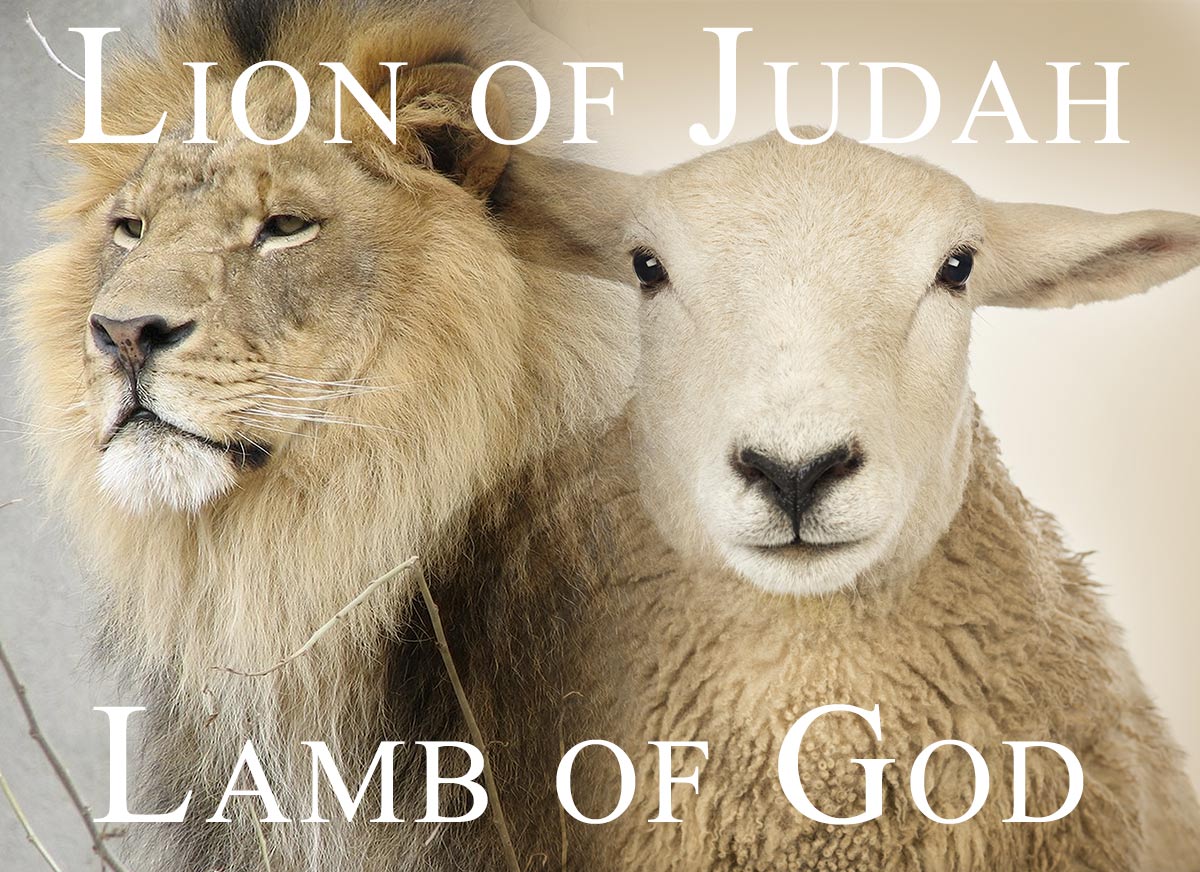
I Prefigured – John the Baptist saw Jesus coming toward him and said, “Behold, the Lamb of God, who takes away the sin of the world.” Unless you know the history of this moment, it seems a little odd.
But for those who know Scripture, it is clear that John is really answering a question that was asked by Isaac some 1800 years prior to this event. Abraham had received from God a strange and terrible command: that he take his son to Mt. Moriah (present day Jerusalem) and there offer him in sacrifice.
And Abraham took the wood of the burnt offering, and laid it on Isaac his son; and he took in his hand the fire and the knife. So they went both of them together. And Isaac said to his father Abraham, “My father!” And he said, “Here am I, my son.” He said, “Behold, the fire and the wood; but where is the lamb for a burnt offering?” Abraham said, “God will provide himself the lamb for a burnt offering, my son.” So they went both of them together (Gen 22:6ff).
Do you get it? A promised son had wood laid upon his shoulder and was made to carry it up a hillside, the same hillside where Golgotha would one day be found. There, on the top of that hill he was to be laid on the wood and killed. Sound familiar? Of course Isaac is a prefigurement of Christ. Things were starting to look grim for Isaac, who got nervous and asked his father, “Where is the Lamb?” You know the rest of the story. It is true that God provided a ram caught in the thicket that day, but that ram pointed to Christ.
And so the question “Where is the Lamb?” wafted up on the breeze and was repeated down through the generations. Some five hundred years later, at the end of the period of slavery in Egypt, the blood of the lamb also protected Isaac’s descendants from death. Every Passover the question was still asked, “Where is the Lamb?” referring to the Passover lamb. Here, too, the Passover lamb was but a symbol, a prefigurement of Christ.
Now, standing on the banks of the Jordan, John the Baptist answers Isaac’s question, the question repeated down through the centuries: “Where is the Lamb?” John answers, “Behold the Lamb of God.” So the first thing we learn of Christ is that He was prefigured, here and in many other places in the Old Testament.
II Preexistent– He is the one of whom I said, “A man is coming after me who ranks ahead of me because he existed before me.” Now this, too, is a strange thing for a man to say about his younger cousin. Jesus was born six months after John the Baptist, yet John says that Jesus existed before him. John is clearly teaching us here of Christ’s pre-existence. Before assuming a human nature, Jesus existed eternally with the Father.
There never was a time when Jesus the Son was not. He is eternally begotten by the Father; He existed before all ages. Scripture says the following of Him:
For in him all things were created, in heaven and on earth, visible and invisible, whether thrones or dominions or principalities or authorities—all things were created through him and for him. He is before all things, and in him all things hold together (Col 1:16).
In the beginning was the Word, and the Word was with God, and the Word was God. He was in the beginning with God; all things were made through him, and without him was not anything made that was made (John 1:1).
Your father Abraham rejoiced that he was to see my day; he saw it and was glad. The Jews then said to him, “You are not yet fifty years old, and you have seen Abraham?” Jesus said to them, “Truly, truly, I say to you, before Abraham was, I am” (John 8:56).
III. Preeminent –I did not know him, but the reason why I came baptizing with water was that he might be made known to Israel. In effect, John is saying, “I exist for Him. My purpose is to reveal Him.” He must increase, but I must decrease (John 3:30). Jesus is greater than John or any prophet or world leader. Jesus is the Groom; John is but the best man.
IV Powerful –John testified further, saying, “I saw the Spirit come down like a dove from heaven and remain upon him. I did not know him, but the one who sent me to baptize with water told me, ‘On whomever you see the Spirit come down and remain, he is the one who will baptize with the Holy Spirit.’”
The baptism of John could only announce repentance and call for it. It could not truly wash away sins; the Baptism of Jesus can.
Even more, not only does Jesus’ Baptism take away sins; it confers the Holy Spirit. In Baptism, we are given a whole new life. Sin is taken away and in its place grace upon grace is given: grace to restore us, renew us, and refashion us; grace that equips, empowers, and enables us; grace that sanctifies, gives sonship, and seals us with the Holy Spirit.
All this is in fulfillment of this passage from Ezekeiel:
I will sprinkle clean water upon you, and you shall be clean from all your uncleannesses, and from all your idols I will cleanse you. A new heart I will give you, and a new spirit I will put within you; and I will take out of your flesh the heart of stone and give you a heart of flesh. And I will put my spirit within you, and cause you to walk in my statutes and be careful to observe my ordinances (Ezekiel 36:25ff).
Scripture also says, But to all who received him, who believed in his name, he gave power to become the children of God (Jn 1:12).
V. Presence of God– Now I have seen and testified that he is the Son of God. Jesus would say elsewhere, To see me is to have seen the Father; the Father and I are one (John 14:9). As the Son of God, He manifests the Father; He is the presence of God in this world. He shares fully in the one divine essence and as Son, shows us the Father. He is the presence of God among us.
So a brief passage from the Gospel of John contains five important teachings about Jesus Christ. He has existed forever. He was prefigured in the Old Testament. He has priority above and beyond anyone we know or think important. He has the power not only to save us from sin but to give us the very life of God. And as Son of God, He is God, and thus is God’s very presence among us. Jesus is not just the man from Galilee; He is very God from Heaven.

 I would like to take a line from Wednesday’s Gospel and apply to it to us today: