Sizing Up a (Silly?) Christian Slogan and Listening to a Very Angry Man

The video at the bottom of this page is a rather angry discourse by a non-believer. Watch it with care and caution as he uses some profanity and a degree of uncharitable discourse, and unfair stereotyping  that is hard to take if you haven’t prayed prior to viewing it. He does disclaim at the beginning that “Not everyone who has religious faith is a complete idiot” but then goes on to so fundamentally attack the very notion of faith that he ends up saying we’re “complete idiots.”

I call the video to your attention however because it is valuable at times to hear and then address criticisms leveled at us. What sets this non-believer (I don’t know his name) off is the use of a common slogan among some Christians: “God said it. I believe it. And that settles it.” I’d like to assess the slogan that we have all heard and then address some of the criticisms leveled in the video about the act of believing.

God said it. I believe it. And that settles it.– Like all slogans, there is some element of truth here and yet, because it is a slogan, refinements and distinctions are necessary that are lost in the sound-bite quality of a slogan.

Let’s look at what is true about the statement.  The Catechism of the Catholic Church says, Faith is the theological virtue by which we believe in God and believe all that he has said and revealed to us, and that Holy Church proposes for our belief, because he is truth itself. By faith “man freely commits his entire self to God.”  (CCC 1814) The Book of Hebrews says, Now faith is the substance of things hoped for, the evidence of things not seen (Heb 11:1). There is an old definition of faith I memorized years ago where faith is defined as: The theological virtue by which one, through grace, adheres in the intellect to a truth revealed by God because of the authority of God who reveals rather than the evidence given.

Now what seems to unite all these definitions is that the Theological Virtue of  Faith is rooted essentially in the grace given for us to believe something on the authority of God. That is the acceptance of a truth revealed to us rests not so much on extrinsic evidence but on the fact that God has revealed it. There may be,  and most often are,  motives of credibility in regard to the truth of faith. God has given us minds and proposes himself and his truths to us in a way that respects our mind. But many of the truths of faith surpass the capacity of the mind to fully comprehend and material evidence is often not present in regards to spiritual truth. Hence the grace of faith enables us to accept the truths of faith on the authority of God revealing.

So the slogan contains an element of the truth: God said it, I believe it. This is the gift of Faith, rather simply stated, to be sure but accurate in what it says. The gift of faith does not require that God supply vast amounts of evidence and explanations that appeal to us. The Gift of Faith as Hebrews states is its own evidence for God gifts the individual to accept what He reveals by his authority.

The problem with the slogan seems to come more with the final phrase: “and that settles it.” Now in itself the phrase is not problematic if by “settle” we mean that it is enough that God has revealed something for me to believe it. But the expression “that settles it” usually carries other connotations as well that are problematic. Consider for example:

  1. “That settles it” could be interpreted as a discussion-ender with some one as in: “God said it, I believe it and I am not going to discuss this with you any further.” Hence our opponents hear an arrogance and unwillingness to discuss something and this is problematic for a Christian who ought Always be prepared to render an account for the hope that is in you. (1 Peter 3:15)
  2. “That settles it” could be interpreted as meaning, “I don’t have to think about this any more.”  Here too our opponents may interpret the phrase to refer to a blind, unthinking, marching in thoughtless lock-step kind of faith. But of course God has given us a mind and wants us to come to a deeper understanding of our faith than mere creeds or scriptural phrases may contain. St. Anselm spoke of theology as fides quaerens intellectum (faith seeking understanding). St Augustine said, crede, ut intelligas (believe that you may understand).  While faith may gift us to accept the truth of what God reveals, this is not the end of thought, but it is the beginning of it as we connect the dots of our faith and grab a deeper hold of the full meaning and implication of what is revealed. Catholicism is a smart and thoughtful religion in that we have pondered and prayed over the meaning of what God reveals for centuries. Our rich theology and tradition is testimony to a deeply thoughtful intellectual discipline and treasure. That theological tradition began with Mother Mary who, treasured up all these things and pondered them in her heart(Luke 2:19). It continued with the Fathers of the Church, the great philosophers, theologians  and doctors of the Church and stretches down to this very day. The deposit of faith may be said to be “settled” but its understanding and depths continue to be sounded.
  3. “That settles it” could be interpreted as a mere dismissal of one’s opponent in a conversation. In this sense it amounts to an ad hominem argumentum (an argument directed to the person rather than to the issue). Such arguments are disrespectful of the unbeliever or the one who struggles to understand. Again quoting the text from Peter: Always be prepared to give an answer to everyone who asks you to give the reason for the hope that you have. But do this with gentleness and respect (1 Pet 3:15)

So the slogan, like any slogan needs to be properly understood. And, frankly most non-believers and those outside the Christian Tradition see the slogan as a mere rebuke and a conversation stopper. We may do well to use this slogan sparingly and carefully, if at all.

That leads to the rather angry video below where the author of it lets loose with a rather unkind description of faith. I’d like to isolate a few things he says and then carefully invite you to view it. I will list his quotes and then offer a brief response. The italics are his words, the red plain text is my response.

  1. Believing is easier than thinking. It takes time and effort to acquire knowledge whereas any fool can acquire faith instantly and effortlesslyWell, our interlocutor is wrong to divorce believing from thinking. Faith is a way of knowing, faith supplies knowledge. When God draws us to faith he imbues our mind substantial truth that summons forth a thoughtful response. Believing involves a great deal of thinking. I have spent years, decades, pondering my faith and striving to understand what God is teaching me. As regards his statement that any fool can acquire faith instantly and effortlessly, he has surely not discussed how faith is experienced with a believer. While it is true that God could just zap us with doctrine, it seldom works that way at all. Faith is something in which we must grow. Grace builds on nature and most people who have faith have it at great cost and experience it’s growth incrementally. There is nothing effortless about it at all. Most all of us who have faith have struggled to grasp it, accept it and submit to it. Often faith comes through suffering which causes us to reflect more deeply on the truer meaning of life and things. Understanding deepens in the crucible of real life with its joys and losses, it happiness and its hardship. There is nothing effortless or instant about true faith.
  2. Faith is all about lazy stuff: submission, surrender, don’t ask questions, let your moral values be handed to you on a plate like a babyWell again, there is nothing lazy about submission and surrender, it is hard work. It is much harder than just going off and doing what I please. Obedience is hard, disobedience is easy. As for not asking questions, again, I wonder where he gets this vision of faith? Christians struggle all the time to understand and often ask, “Why?” I suppose there is a stereotype out there of the unquestioning believer, but I have seldom met one. The scriptures are filled with believers who asked questions. Many of the Psalms begin with words and phrases like: why, how long O Lord, when. The disciples and apostles were asking Jesus questions all the time. Paul asked questions of God, once three times in a row (2 Cor 12:8). Most of the Scriptures are dealing with the questions of faith and the whys and wherefores of God’s ways. As for my moral values being handed to me on a plate – I wonder how he got his moral values handed to him? All of us receive what we know from others (on a plate or otherwise). Someone has influenced this man. With me it happens to be God and the Church. Not sure who it is with him but some one influenced him as to his thoughts and values. This does not make him a baby any more than it makes me one. So really his last point is moot.
  3. The expression “God said it, I believe it and that settles it” means to me “This mind is closed for business. We are not currently accepting any new ideas here” – Well as I said above, our interlocutors often interpret this slogan just as this man states and for that reason we do well to limit or end it’s use except in restricted places where fellow believers can interpret it as we intend. That said, his notion that belief closes the mind to new ideas is in need of distinctions. First it must be said that every discipline has some boundaries wherein it cannot admit certain premises. For example Science deals with the physically measurable and observable phenomena. For me to insist that science accept and include the God of the Bible in its discipline and attribute every unknown cause to the Trinity is to ask science to do what is beyond what it can do. Hence Science would rightly reject my insistence that the Trinity be accepted as a premise in a scientific conclusion. It is outside the discipline of science. Now the same is true for a believer who might, in certain circumstances indicate that a proposed idea is unacceptable. For example, the “new idea” that the only reality is the material and that the spiritual is thus unreal and non-existent is rejected by the Christian since it contains an a-priori assumption we cannot accept. So, it seems unreasonable to demand that anyone ought to be open , without stipulation, to any “new idea” by itself. That said, Christians and non-Christians generally ought to be open to discuss new ideas and I think we Christians usually are. The whole field of apologetics seeks to engage the modern world, a world full of new (or recycled) ideas (If you think you really have a new idea, go and see how the Greeks put it). It is the very purpose of evangelization to go forth into the world and engage it. The best evangelizers and missionaries make use of the culture, affirming what is good and critiquing what is problematic. There is an old Dominican saying, “Never deny, seldom affirm, always distinguish.” In a way I find his notion that we don’t accept new ideas funny since one of the critiques of the modern Church is that we have accepted far too many “new ideas” and lost our traditions.

Well then here is the video. Pray before you watch it. I invite your comments as always. If you comment PLEASE do NOT do what this man does. Do not call names, ridicule, use profanity etc. As angry as this man may make you, remember he is known by God who sustains and loves him. Perhaps we can pray that his anger at us will abate and that he might be able to receive the gift of faith. So pray, watch and, if you wish, comment. Warning, there are some profanities toward the end.
The Feminine Genius

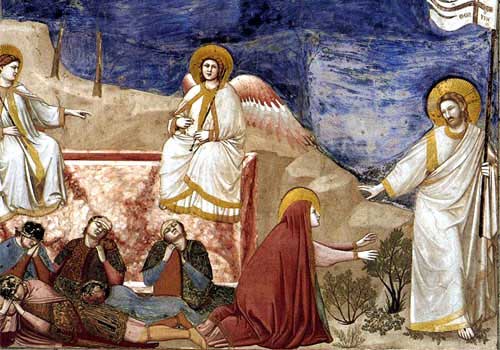
I have written before on this phrase chosen by Pope John Paul II, to speak of the gift of women to the world and to the church. Over the next week we will celebrate the feasts of a number of women who were followers of Jesus and who set the standard for women of faith.  On July 22, we honor Mary Magdalene, called the “Apostle to the Apostles,” because it was she who first announced the fact of Jesus’ resurrection. On July 23, we reflect on Bridget of Sweden (1303-1373),  Co-Patron of Europe. Bridget was a lay woman, a wife and mother of eight, whom after her husband’s death embraced the ascetical life and a life of good works. She founded a community of sisters whose mission is the promotion of Christianity through hospitality and good works. Indeed, the sisters offer excellent hospitality in Rome and in many other cities around the world to this day! 

 July 26, we lift up the sacrament of marriage and the witness of Ann and Joachim who in their love for one another and for their daughter Mary, who became the mother of God, give witness to family life as a school of love. Then on July 29, it is the feast of Martha, sister of Mary and Lazarus, who loved the Lord as a friend and came to believe in him as her Lord and Savior. Martha believed in and proclaimed Jesus’power to raise her brother from the dead.

Under Fire

 These feasts could not come at a better time. Once again in the secular press, the role of women in the church is under fire. Watch here. The issue is a revision that Pope Benedict XVI has made to a document titled Sacramentorum sanctitatis tutela.  Arguably, it is easy to wonder at how women’s ordination and child sexual abuse are connected or what would bring them together in a single document. One can also see the temptation of the press to jump right on it because it makes a great headline.  It instantly gets the– live chat, send link, add to F,acebook, add your comment– applications working.

Particularly Roman

The link between the two issues is not relational but rather in the nature of the document. The document is an omnibus document that includes both grave crimes against the sacraments, which now includes the attempt to ordain women along with such things as desecration of the Eucharist and grave crimes against morals, which now includes involvement with child pornography as well as sexual abuse of a minor.  With regard to the revisions to crimes related to the use of pornography and sexual abuse of minors, it ought to be noted that the Church continues to take steps to expand its commitment to protect minors and to deal effectively with abusers by allowing the Congregation for the Doctrine of the Faith to move more quickly in helping the Church deal with the abuse of minors by its clerics.

Women and Ordination

It ought to make sense to people that because of the nature of the sacraments that any offense against them would be a serious one. What this document is saying is feigning the conferral of the Sacrament of Holy Orders is a grave violation like breaking the seal of confession. If ordination is attempted, it will result in excommunication. Why the clarification now? Some might wonder if there an increasing number of cases of the attempt to ordain women?   Fortunately, not. Present cases involve a very small number of people. Clearly stating the serious nature of the abuse reminds people of the harm that can be done to the structure of the Church itself.

The Catholic church is unequivocal in its teaching about the ordination of women as it is unequivocal in its teaching about the feminine genius and the gift of women to the church and to the world. I was very happy to see that Archbishop Wuerl, in his Press Conference on July 15 at the US Conference of Catholic Bishops specifically stated that “women have responded with extraordinary generosity to Christian service.” He references not only the essential role women have played historically in the life of the church (as we celebrate this week) but that today, “women serve in leadership positions at all levels in the Church. Women hold nearly half of the diocesan administrative and professional positions and about one-quarter of the top diocesan positions, such as chancellor, school superintendent or chief financial officer. About 80 percent of lay parish ministers are women.” These are not the kind of facts that support accusations of sexism or misogyny.  It is these facts that support the thought with which Archbishop Wuerl end his statement. “The Church’s gratitude to women cannot be stated strongly enough. Womenoffer unique insight, creative abilities and unstinting generosityat the very heart of the Catholic Church. Their activity and determinative participation explains much of what makes the Catholic Church the powerful force for goodness and holiness that it is.”

Sisters know best!

Today, July 11 is the feast of St. Benedict. Saint Benedict is a giant in the Western spiritual tradition. Benedict was born in Umbria, Italy in 450 AD. He desired to live the contemplative life and with a group of disciples established the first monastery in Western Europe. The rule he established to guide his life and the life of his brothers became the foundational rule for all monastic living and for that he is often called the Father of Western Monasticism.

A sister’s love

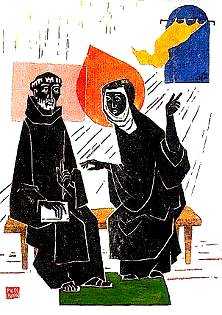
I am spending a lot of quality time with my siblings this summer and when I saw it was Benedict’s feast, it made me think immediately of his sister Scholastica, who following her brother’s inspiration founded a community of women and brought a feminine expression to the Benedictine rule. The story I want to share however, is more like the feature in one of the popular celebrity magazines called “They are just like us.” In this feature the magazine shares photos of stars doing ordinary things: grocery shopping, hailing a taxi, calming a crying child. In the lives of the saints, we might call the series, “Siblings just like us, “or in this case, “Sisters know best.” Pope Gregory tells the story much better than I could and here it is from his Dialogues.

Now Benedict had a sister named Scholastica, who had been consecrated to the Almighty Lord from the time of her childhood. She had the custom of visiting him once a year and the man of God would come down to meet her at a place belonging to the monastery not far beyond the gate. One day she came, as was her custom, and her venerable brother came down to meet her with his disciples. They spent the whole day in the praise of God and in holy conversation. The darkness of night was already falling when they took their meal together. The hour grew later and later as they sat there at table carrying on their holy conversation. His sister, a holy monastic woman, then made a request: “I beg you. Do not leave me this night so that we may talk until morning more about the joys of heavenly life. But he responded, “What are you talking about, my sister? Under no circumstances can I stay outside my cell.”

Now the heavens were so calm that no cloud appeared in the sky. When this holy monastic woman heard her brother’s refusal, she folded her hands and put them upon the table. Leaning down, she put her head on her hands to make a prayer to God. When she raised her head from the table, there broke forth such powerful lightning and thunder and such a flood of rain that neither the venerable Benedict nor the brothers with him could set foot outside the door of the place where they were sitting. Indeed, while resting her head on her hands, this holy monastic woman had poured out a flood of tears on the table, and in this way she had attracted the rain to the calm skies. The flood followed her prayer in an instant. The connection between the prayer and the storm was such that her head rose from the table together with the thunder as if both the raising of her head and the falling of the rain were one and the same action.

 When the man of God saw that he could not get back to the monastery because of the lightning and thunder and the great flood of rain, he was irritated and began to complain: “May God have mercy on you, my sister. Why have you done this?” And she replied to him: “See, I asked you, and you would not listen to me. So I asked my Lord, and he has listened to me. Now then, go, if you can. Leave me, and go back to the monastery.” But unable to go outside, he stayed against his will in a place where he had been unwilling to stay on his own. So it happened that they spent the whole night in vigil, and during their holy conversation about the spiritual life they found fulfillment for themselves in their relationship with one another.

I have told this story about what the venerable man wanted but was unable to have. And when we examine his mind, there can be no doubt that he had wanted the sky to remain calm, as it had been when he had come down. But contrary to what he wanted, he found a miracle worked by a woman’s heart with the power of the omnipotent God. It is no wonder that the woman who had desired to see her brother that day proved at the same time that she was more powerful than he was. For as John says: “God is love,” and according to that most just precept, she proved more powerful because she loved more.

Benedict returned to his monastery and three days later, he had a vision of his sister’s soul going to heaven and indeed learned shortly after that she died on that day.

The Rule of Saint Benedict and Lay Life

If you would like to explore the Rule of Saint Benedict, it is possible to buy a copy of this concise 73 page rule.  Esther DeWaal, in her book, Seeking God looks at the the rule can offer for lay people living in the world. The American writer, Kathleen Norris also has written a few books including The Cloister Walk, about her experience living a praying with a community of Benedictine monks.

Sizzling Summer Spirituals

 Last year when I published suggestions for summer reading, I got a number of positive comments and so I thought that I would do a Summer 2010 list.

Most Influential book

In my graduate class at CUA , I asked students to name the most influential spiritual book they have read and their favorite spiritual classic.  Not surprisingly, there were some titles that I expected to hear; Introduction to the Devout Life, by St. Francis De Sales and The Interior Castle, by St. Teresa of Avila.  However, there were some “lesser known” titles some of you may find quite interesting.

Of local interest

Two students named My Other Self, by Deacon Clarence Enzler. Deacon Enzler was in the first class of men ordained permanent deacons in the Archdiocese of Washington. He is also famous for being the father of Msgr. John Enzler, pastor at Blessed Sacrament Parish! This book is currently out of print, but if you belong to a parish in the archdiocese and it has a  library, I bet you will find the book on the shelf.

All kinds of classics

Another student, who was raised in a small farming village in northern Greece, said that the only book his family owned during his childhood was the Bible and so he would have to name that as the most influential spiritual book of his youth. Can’t go wrong with that! If you have never read the Bible and you are looking for something with drama, love, intrigue, war, peace;  this is the book for you. While I don’t recommend reading it cover to cover, moving around the books of the Old Testament, the Gospels and the letters and epistles can bring a new appreciation for the Good News.

New to me is Five Loaves and Two Fish.  It is the spiritual memoir of Francis Xavier Van Thuan.  Five Loaves explores the faith that saw Van Thuan through house arrest in North Vietnam, missionary work in China and service as a bishop and Cardinal in the Roman Catholic Church.

If you like Medieval spirituality, consider Practice of the Presence of God. Written in the 17th century by Brother Laurence of the Resurrection it explores how we can keep our conversation with God going strong.  That certainly ranks high as a timeless topic!

The final recommendation that came from the class is In the Midst of our World: Forces of Spiritual Renewalby Paul Josef Cordes.

In my beach bag

I am working my way through Francis Cardinal George’s The Difference God Makes: Catholic Vision of Faith, Communion and Culture. It’s not exactly beach reading but it is a very interesting look at the opportunities and challenges for evangelization in the U.S..  On a lighter note, I am also reading Abbess of Andalusiaby Lorraine Murray. It is a look at the spiritual life of Flannery O’Connor. Written in a very conversational tone, it brings alive both the quirkiness and wit of O’Connor as well as her deep and abiding faith and love of the Eucharist.

If none of these peak your interest,  explore the books  in the Catholic Life-time Reading Plan selected by the Catholic Information Center in DC.

Keeping a Promise: Since 1633

All of you, who pass this way, stand still, pay attention, and see! Where can one find the kind of love, that can compare to this?”

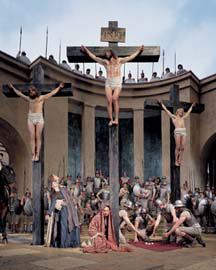
This is the refrain of the chorus of  the Bavarian town of Oberammergau’s Passion Play.

In 1633, the Black Plague was raging through Europe and it had come to Oberammergau with a vengeance. People were dying and the residents of this small town knelt in prayer before the crucifix in the parish church. One can imagine it was a prayer of great desperation. They made a vow that if they were spared any more deaths they would portray the “passion, death, and resurrection of our Lord Jesus Christ every ten years.” From that day, not another person died and the people of Oberammergau have faithfully kept the promise. What was for a century or so a small production staged in the cemetery of the parish has become a 500 person production staged in a theatre that sits 5,000 and welcomes visitors from all over the world. I was fortunate enough to be one of those visitors two weeks ago. While the amptheatre is state-of-the art and the staging contemporary, it remains a home-grown production. In order to be part of the cast you need to have been born in Oberammergau or be a resident for at least 20 years. More than half of the town’s 5300 residents are directly involved in the production.  Currently, the play is staged four-days a week from May through October for a total of 100 shows, though the cast and production team are at work two-years ahead of time preparing for the play season.

Evangelizing at its Best

From the opening lines of the play “Welcome to all, who with us follow the Savior, who came to heal what was wounded, to save what is lost”  it is clear that this play is about sharing the good news of Jesus’ life, death and resurrection. The director has taken great pains to be faithful to the original text written by Fr. Jospeh Daisenberger in the 18thcentury and adapted to represent the best of biblical scholarshipsince that time. More importantly, the director is also committed to taking full advantage of the opportunity for evangelization.  It is a grand expression of the laitys’ full and active participation in the evangelizing mission of the church.

Ancient yet ever New

Ten years ago, they made a decision to incorporate into the play more of Jesus’ teaching, for example the Beatitudes and the Our Father because they are aware that many people who come to the play today may not be familiar with the Gospel story or even believers.  In an effort to trace the story of salvation the play combines tableaus of key moments from the Old Testament that are made complete in the life and death of our Lord.

For me it was the chorus that brought the production alive and made it more like a mini-retreat than theatre. As Judas betrays Jesus, the chorus sings “Oh Lord, whoever loses you, and leads a life removed from you, proudly rejecting your grace, will walk the darkest of paths! Woe to us, if we apostatize! Woe to us! Have mercy on us all!”  I found myself listening intently as I watched this most familiar of stories unfold before me. I think that knowing that the actors are amateurs who have made an enormous commitment to tell this story,you can’t help but see in them a glimpse of their own faith, their desire to reflect their own experience of  Jesus mercy and therefore think about my commitment to telling my story of of my experience of Jesus. At the end of the play, everyone exits the stage. The applause begins and one expects the cast to return to take a bow. They do not return. This is not about a production but rather about keeping a promise to tell a story.

Take a peek @ passionsspiele

Deacons – Heralds of the Gospel!

“Receive the Gospel of Christ whose herald you have become”  – From the Rite of Ordination of a Deacon

This morning, 20 men were ordained as permanent deacons for the Archdiocese of Washington. Only two years removed from my own ordination to the diaconate, this was my first opportunity to witness a diaconal ordination that wasn’t my own. As these men were called from the congregation, prayed over, made a promise of obedience to the Archbishop and received the Holy Spirit through the laying on of hands, I was in a state of perpetual awe and joy.

Though we are clergy in every sense of the word, deacons are not “mini priests.” We have a vocation that is uniquely our own. We are ordained to the service of God’s people rather than to the service of the Sacraments. This is most visibly symbolized by the fact that we wear our stole in such a way to keep our right arm free to serve the people of God.

In most dioceses including Washington, those admitted to the Order of Deacon do so after at least five years of prayer and theological study. However, for these men, the hard work has only begun. Please join me in praying for my brother deacons as they begin their careers as “Heralds of the Gospel”

The Archdiocese of Washington Diaconate Class of 2010

Deacon Alfred Manuel Barros
Deacon Thomas Dwyer
Deacon Dan Finn
Deacon Barry Levy
Deacon Don Longana
Deacon Stephen Maselko
Deacon Albert L. Opdenaker III
Deacon Gerard (Stephane) Philogene
Deacon William (Bill) Stevens
Deacon Brandon Justice
Deacon Patrick Christopher (Chris) Schwartz
Deacon Desider Vikor
Deacon Francis Edward (Ed) Baker, Jr.
Deacon Joel Carpenter
Deacon David Divins
Deacon Richard Dubicki
Deacon Robert Leo Martin
Deacon Ammon Ripple
Deacon Kenneth Lee
Deacon Timothy E. Tilghman

Happy Fathers’Day, Father

As we bring the year of the priest to a close, I wanted to bring to your attention a habit that I have had since I was a child.

Happy Fathers’ Day, Father

On Father’s Day, I make it a point of wishing every priest whom I encounter a Happy Father’s Day. I must admit that I enjoy the mix of reactions I get when I do this. The priests who know me have come to expect it and welcome my lauds with grace. Others – in their humility I suspect – are more reticent to except my compliment because they are not biological fathers.  To these priests, I love explaining the importance of spiritual fatherhood.  Even more remarkable, some parishioners overhear my Father’s Day wish and invariably add their own.

Spiritual Fatherhood

Father’s Day is a wonderful celebration and biological fathers who are faithful to their vocation as parents are certainly deserving of special recognition on this day. However, I submit to you that spiritual fathers – namely our priests and bishops – deserve a thank you as well.

Thank you!

In my life, these men we call priests have been guides, supporters, cheerleaders, teachers, mentors and now, as an adult, friends. I may not go out and get them a card, I may not buy them a gift but, I certainly enjoy wishing them, and all priests and bishops, a Happy Father Day!

Welcome to”Ordinary Time”

It is a rather sad sounding description isn’t it? “Ordinary Time” hmm… The Latin title for this time period isn’t all that impressive either: Tempus per annum (Time through the year). But maybe there IS some inspiration here after all. The faith is not just something reserved for extraordinary moments and seasons. It is meant to be lived in all the ordinary moments of life too, it is meant to be lived through the year.

The liturgical readings and prayers of Ordinary Time emphasize discipleship. What does it mean to be a disciple of Jesus in matters such as decisions, money, use of time, priorities, etc? How to do we encounter the Kingdom of God and perceive it in our daily lives? What are the conditions of discipleship? How will we ultimately be judged? These are some of the themes of Ordinary Time.

So, encounter God in the “ordinary” in the time through the year, even on vacation this summer. There is no vacation from our vocation. Do miss what God is doing, even in the ordinary.