Train a child in the way he should go, and when he is old he will not turn from it.

I had the opportunity to have dinner a few weeks ago with some friends I haven’t seen in a long time. Among them were two men who made a tremendous difference in my life as mentors and teachers, back when I was in high school and college. I was so glad I had the opportunity to express to them my gratitude for a gift that ultimately knows no bounds, and has a value beyond estimation. Theirs was the gift of teaching, mentoring, giving an example of Christian manhood, and drawing from me gifts I did not know I had.

Scripture says, Train up a child in the way he should go, and when he is old he will not turn from it (Proverbs 22:6). And I want to say that, to a large degree, I have seen that happen for me. And as I look back over my life, and I think things over, I can truly say that I was blessed with strong men who guided me in the right way. Both of them had their own wife and children, but they were like fathers and mentors to me too.

High School and college were not easy years for me. I had a rebellious streak, as do many young men of that age. And frankly, I was having a tough time with my own father, again, as most young men do. It was during this time that Col. Leonard Loomis (United States Army) encouraged me to join the High School Choir he was organizing in the parish I attended. Not being able to sing well, I balked at the notion but he assured me that a good number of very pretty girls had already signed up, and that sealed the deal, I was in. At that same time I also met Col. Wayne Kastl (United States Air Force) who was the organist and accompanist for the choir. And thus began a journey for me that would ultimately lead to the priesthood.

I was these two men, along with my Father and also my track coach (who I will mention more specifically in a moment) who ultimately summoned me to manhood. Theirs were the lessons of discipline, responsibility, confidence, meeting challenges, facing down fears, and stepping up and out into life. These were men who called gifts out of me that I never knew I had. In the span of the five years I knew them, I discovered not only musical abilities, but also leadership, and even my own faith.

I cannot say to you that when I joined the choir I even believed in God. I was in something of an angry, agnostic phase, questioning everything, and only going to Church because my mother made me. But through music and witness, a door I had shut, eased opened. Cols. Loomis and Kastl did not only teach music they spoke of the faith that underlay what we sang. And they spoke as men. That was important to me since I had come to see spirituality as a sissified thing (frankly, a lot of it was in the early 1970s, if you ask me). But they modeled Christian manhood in a way that I, a young man could aspire to. And as I learned to trust them, I started to listen. Their words and the power of the music working with God’s grace gradually curbed my anger and clarified my doubts.

They also summoned me and the other members of the choir to discover our gifts and to learn about leadership. Soon enough that had me doing some cantoring. I remember how terrified I was at first, but there’s just something about two military colonels designating a young man leader and telling me I could do it. So I did and eventually mastered it.

In those years, inspired by Col Kastl, I also learned to play the organ and Col. Loomis taught me how to tune and repair the pipe organ. I got good enough that a local pipe organ builder offered me a job which I had for two summers. I would also go on in later years to be the organist at the seminary I attended.

Leadership and a path the priesthood took a leap forward when I was appointed director of the choir. Col. Loomis had been transferred and I, by that time in college, was asked to take the lead. Again, I was terrified but I was assured by two men that I was ready. Col Kastl really saw me through in the early years of directing and we had long talks on the faith and the Church. Here too he led me by stages to ever greater challenges, and my first experiences of real leadership. It was good to have a strong and steady presence gently urging me on. I had gone from a rebellious, agnostic, and angry teenager to a more faith-filled and steady young man by stages under the care of some very good and solid men.

I am also most grateful to my Track and Cross country Coach Paul Syzmonski. He too, helped summon me to manhood. Sports have a way of testing you. And as every good coach, he demanded discipline, dedication, and determination. And he modeled all those as well. He ran with us every day and was able to combine humor with serious and sober instruction. He was a friend, but always in a proper way that never surrendered his role as teacher and elder. He expected the best from us, and was willing to rebuke us when we needed it, but always added praise for what we did well.

His nick-name for me was gutbustius clenchfistae (that’s “pig” Latin for the fact that I ran with an often pained look on my face, looking like I was about to bust a gut).

Some of those ten mile runs in the heat of the summer were quite the test, but Mr Syzmonski never sent us on a run he wasn’t willing to make, and he often boasted he would outrun us all. The challenge laid out, we hit the trail and some of us got good enough to beat him. Under his leadership I lettered in track for three years and was made captain of the Cross Country Team. My best time in the mile was 4:44; not record setting, but not bad for the scrawny teenager I was.

Train a child in the way he should go, and when he is old he will not turn from it.

I am grateful for these men who made such a difference in my life. My father too, though I was often stubborn with him, pointed the way.

If you’re raising children, don’t give up, don’t despair, and certainly don’t stop insisting or challenging. There were times in my teenage years when, if you saw me, you’d wonder how I ever got to be a priest. It did not look so good for a while, or  that I’d amount to anything. But God sent men like these, and many others beside. And though I often balked, and was slow to learn, though I made mistakes, and did not always follow the sound advice I was given, I actually was listening. And, having been trained up in a godly way, I have not turned from it now that I am old(er).

Thank you Lord for these good men. Thank you for all those who showed me the way. Help me to do the same for others. And when I get discouraged Lord, help me remember that these men did not give up on me, and neither should I give up on those you send me. Thank you Lord. Thank you!

Photos:

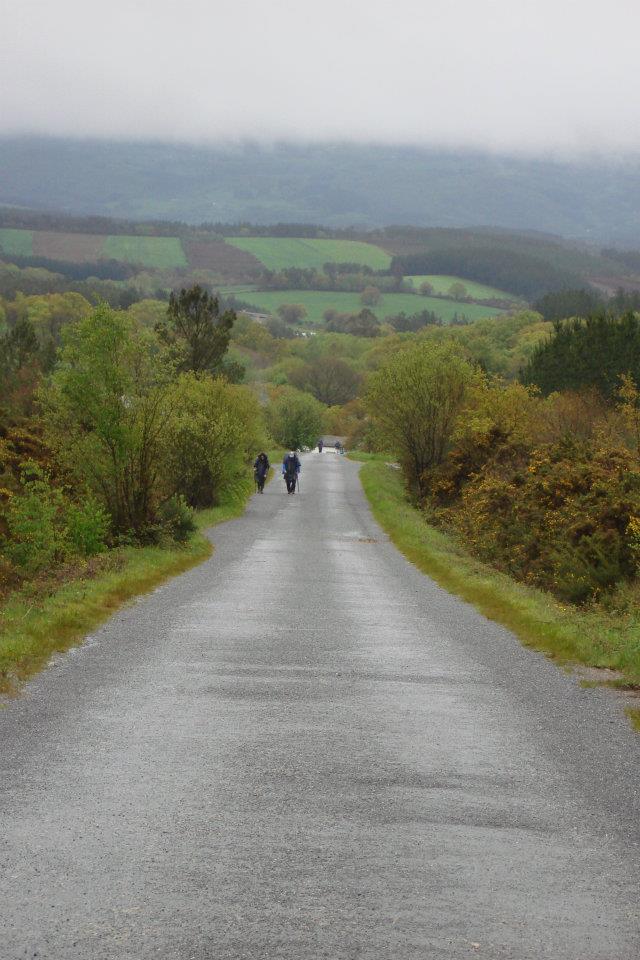
Bottom Right: Me (center photo) running so as to win.
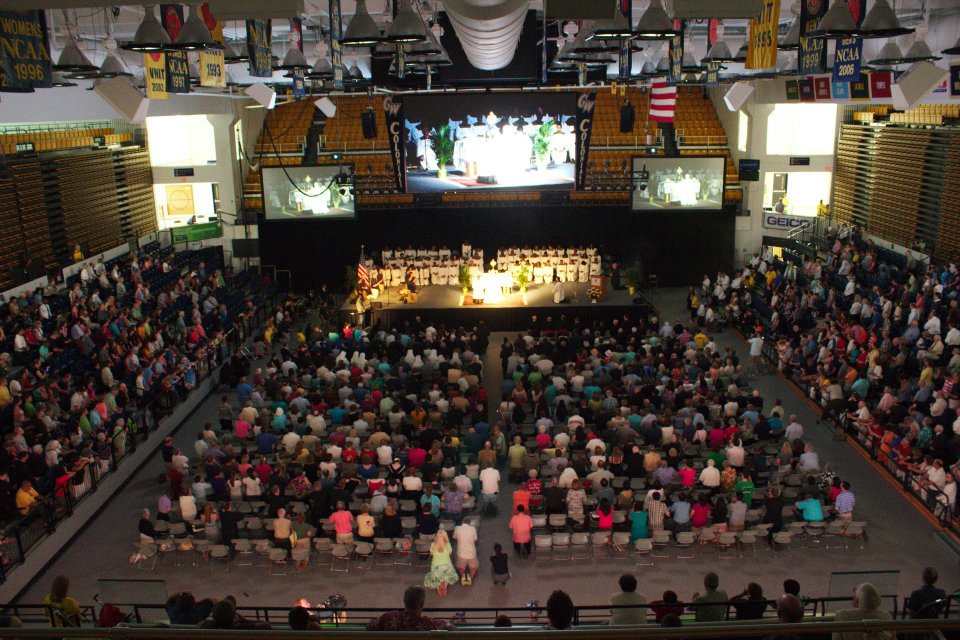
Middle Left: Me as Organist at Seminary (looking very serious).
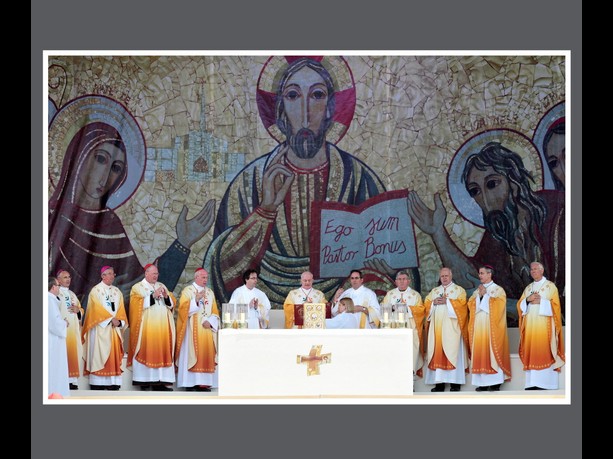
Top Right: Me, all grown up, exhorting youth at the rally for life, trying to return the favor and lessons.

Here’s an inspirational video about the next generation, (if we train em up).

Testing the fruitfulness of your Lenten discipline

A Note: For regular followers of our archdiocesan blog, you may be wondering why I have re-appeared on “Msgr. Pope’s blog page!”  The blog is the effort of a team of people but due to a major reorganization of staff at the Pastoral Center and the appointment of Fr. Hurd to a new position, we have been somewhat distracted. Msgr. Pope has carried the blog for us and we are enormously grateful for that. Thank you Msgr. Pope.

Today,  we  are introducing a new format, I will be writing regularly, but also inviting colleagues to write on timely topics from the perspective of their ministry or on a particular theme. I hope you enjoy the format and a variety of voices.

Lent Check

Has Lent begun well for you?  Is Lent already feeling long?  I for one, appreciate the length because it does give us a chance to change course if we feel what we hoped to make work by way of spiritual disciplines is  not really working at all.  What will make Lent “successful” is not the perfect execution of a plan but a change of mind and heart. I offer these words from Blessed Mother Theresa as the test of the fruitfulness of Lent.

The Fruit of Prayer.

The fruit of silence is prayer

the fruit of prayer is faith

the fruit of faith is love

the fruit of love is service

the fruit of service is peace.

Directions for Disciples when Dealing with Difficulties – A Meditation on the Readings for the 5th Sunday of the Year

In life we face many difficulties, and these difficulties challenge not only us, but our faith. Deep struggle can lead us to question God, or his love, or even his existence. The readings today speak to us of these sorts of difficulties and prophetically interpret them for us. Let’s take a look at these readings in three stages.

This homily is recorded here: Recorded Sermon mp3

I. The Disillusionment of Deep Despair – The reading from the book of Job articulates clearly the feeling we have all experienced at one time or another: Job spoke, saying: Is not man’s life on earth a drudgery?… I have been assigned months of misery, and troubled nights have been allotted to me… then the night drags on; I am filled with restlessness until the dawn. My days…come to an end without hope… I shall not see happiness again.

Job is weary and worried, angry and anxious, depressed and discouraged. We have all been there, and pray not, but life sometimes cycles back to difficulties, even if these are good now.

Notice Job’s disillusionment. He says, “I shall not see happiness again.” Suffering has a way of drawing us into the illusion that things will never be good again, that we will never again be happy or content. In effect, “My life is over.” Yet Scripture says, trouble don’t last always, that weeping may endure for a night, but joy will come with the morning light (Psalm 30:5). And even for those of us who are soon to die, if we are faithful, even death opens to a new and lasting joy.

But Job is caught in the illusion that his life is over, will never be good again. Those of us who know the story of Job realize that this is not the case and that Job will once again be blessed, blessed with an even greater abundance than he once had.

And we too, can often be lost in illusion when suffering sets in. A thousand questions, usually starting with “why” will beset us. And while the mystery of suffering cannot be fully explained we ought to remember that God permits some trouble in our life. For by it certain purposes can be accomplished if we are faithful. God permits trouble to:

  1. DIRECT us.  – Sometimes God must light a fire under us to get us moving. Problems often point us in a new directions and motivate us to change. “Sometimes it takes a painful situation to make us change our ways,” Proverbs 20:30 says …blows and wounds cleanse away evil, and beatings purge the inner most being. when our way gets a little too easy, you know we tend to stray from God.
  2. INSPECT us.  – Our problems have a way of helping to see what we’re really made of. I have discovered many strengths I never knew I had through trials and testings. There is a test in every testimony and trials have a way of purifying and strengthening our faith as well as inspecting our faith to see whether it is really genuine. 1 Peter 1:6 says,  Trials are only to test your faith, to see whether or not it is strong and pure.
  3. CORRECT us. Some lessons we learn only through pain and failure. Sometimes we only learn the value of something … health, money, a relationship by losing it. Scripture says in Psalm 119:71-72 says It was good for me to be afflicted so that I might learn your decrees. Psalm 119:67 Before I was afflicted, I strayed. But now I keep you word.
  4. PROTECT us. A problem can be a blessing in disguise if it prevents you from being harmed by something more serious. It might be as simple as being caught in traffic but thereby avoiding a terrible accident had you been in the intersection at your usual time. It might be something more serious like loosing health but also, thereby losing my ability to sin so seriously. In Genesis 50:20 as Joseph said to his brothers who had sold him into slavery…You intended to harm me, but God intended it for good to accomplish what is now being done, the saving of many lives.”
  5. PERFECT us. Problems, when responded to correctly, are character builders. God is far more interested in your character than your comfort. Romans 5:3 says We can rejoice, too, when we run into problems and trials, for we know that they are good for us they help us learn to be patient. And patience develops strength of character. And 1 Peter 1:7 says You are being tested as fire tests gold and purifies it.

So Job’s disillusionment needs a little correction. God hasn’t given up on Job. There is no doubt Job is in trouble. But trouble doesn’t last always and God is permitting it for a reason, and a season. But seasons change.

II. The Destination of Distressed Disciples – Simply put, when troubles come, run to the Lord in prayer. In today’s Gospel we are told: Simon’s mother-in-law lay sick with a fever. They immediately told him about her.… We are next told, When it was evening, after sunset, they brought to him all who were ill or possessed by demons. The whole town was gathered at the door. He cured many who were sick with various diseases, and he drove out many demons.

Note the instinct of the people to turn to the Lord “immediately.” A couple of old songs come to mind:

  1. I love the Lord, he heard my cry and pitied every groan. Long as I live and troubles rise, I’ll hasten to his throne.
  2. What a friend we have in Jesus, All our sins and griefs to bear. What a privilege to carry everything to God in prayer! Oh what peace we often forfeit, oh what needless pain we bear, all because we do not carry, everything to God in prayer.
  3. King Jesus is a listening all day long to hear some sinner pray.

Indeed, while God may have reasons for permitting us to experience difficulties, that does not mean he does not want us to ask for grace and strength and healing. The Book of James says simply, “Ye have not because ye ask not” (4:2).

In our seeking of the Lord we ought to remember that perseverance is also an important aspect of prayer.

  1. Luke 18:1 Then Jesus told his disciples a parable to show them that they should always pray and not give up.
  2. Luke 11:8 I tell you, though [the grouchy neighbor]  will not get up and give [his neighbor] bread because he is his friend, yet because of the man’s persistence he will get up and give him as much as he needs.
  3. James 5:16 The effectual fervent prayer of a righteous man availeth much.

Here too another song comes to mind: If I hold my peace my Jesus will be coming for me one day, King Jesus is a listening when you pray. Thus in times of distress and difficulty the instinct of a true disciple is to hasten to the Lord in prayer; to seek comfort, consolation, healing and peace.

III. The Doctrine of Divine Decision – We have reviewed two truths that are in some tension: That God sometimes permits trouble for a season and a reason, and that we ought to run to the Lord in prayer when trouble comes seeking help and relief. One teaching (understandably) seeks immediate relief, and the other teaches that weeping may endure for a night, or for a season, but always for a reason, deemed by God to be both necessary and productive.

In the end, the “Doctrine of Divine Decision” accepts with trust that God knows what is best. We run to him for relief and permit him to say now or later in answer to our prayers.

In the gospel today we see both teachings illustrated and held in tension. First, as we saw above, many came to Him for healing and He healed them all. But then we read further:

Rising very early before dawn, he left and went off to a deserted place, where he prayed. Simon and those who were with him pursued him and on finding him said, “Everyone is looking for you.” He told them, “Let us go on to the nearby villages that I may preach there also. For this purpose have I come.” So he went into their synagogues, preaching and driving out demons throughout the whole of Galilee.

Therefore note that some remained back in the town seeking immediate healing, but Jesus chooses to move on. For he is not here simply to be a medical miracle worker but, as he says, to preach the Kingdom, and ultimately to die for our real problem, which is our sin. It may be difficult for us to hear Jesus say no to this town and move on. In fact, Peter indicated some frustration at Jesus’ having moved out of the town to pray and ultimately to move on. Nevertheless, to those back in Capernaum, Jesus said to some, now, and to others, wait. This is his decision and he knows what is best.

But consider this, either way we are blessed. Either we experience healing now and we have a testimony to give. Or, we receive the Good News that Jesus has come to preach that everything is going to be alright and our faith is strengthened. Consider that Scripture says,

Romans 8:28 And we know that all things work together for good to them that love the Lord, to them who are the called according to his purpose.

In other words, even the difficult things in your life, by God’s grace work unto good, bring some benefit, a benefit that God knows and thus he permits the struggle for now. Scripture also says,

1 Peter 1:6 In this you rejoice, though now for a little while you may have to suffer various trials, so that the genuineness of your faith, more precious than gold which though perishable is tested by fire, may redound to praise and glory and honor at the revelation of Jesus Christ.

Thus our sufferings have a place to strengthen us and purify us as we saw above.

The Doctrine of Divine Decision leaves things up to God. Whether now, or later, everything is going to be alright if we trust in God. If there is a delay, he has his reasons. And even if these reasons are mysterious and irksome for us, the decision is God’s.

Here then are some Directions for Disciples when dealing with difficulties. Briefly put, Reject Disillusionment, Run to Jesus, Respect his decision.

This song says, You don’t have to worry, And don’t you be afraid, Joy comes in the morning, Troubles they don’t last always, For there’s a friend in Jesus Who will wipe your tears away. And if your heart is broken, Just lift your hands and say, Oh I know that I can make it; I know that I can stand; No matter what may come my way; My life is in your hands.

A Little Parable on the Lies of the Devil and the False Promises of the World

One of the great illusions under which we labor is, that if we just get one more thing from this world, then we will be happy. Perhaps we think that if we just had a little more money, or a better job, or the latest iPad, or if we were married to so and so, or if we just lived in a better neighborhood….then we would be satisfied and content, at last. But “at last” never comes, even if we do get some of the things on our list. As Ecclesiastes puts it: The eye never has enough of seeing, nor the ear its fill of hearing (Ecc 1:8). Or again, Whoever loves money never has money enough; whoever loves wealth is never satisfied with his income (Ecc. 5:8).

Though we know this, somehow we continue to buy into the lie, again and again, that just one more thing will do it. So we lay out the money, and spend the time, and the delight lasts twenty minutes, max. The world just can’t close the deal.

There is a little preacher’s parable that illustrates the endless treadmill the world has us on, and how it endlessly seduces us for “just one more thing.” In the end this seduction leads us to neglect the one thing most necessary. Here is the parable, then some commentary:

There was a man who was lonely and thought, perhaps, that buying pet would help his loneliness. At the pet store he looked at many animals, and found himself drawn to one in particular. The sign over the cage said, “Talking Parrot: Guaranteed to talk!” This will surely solve my problem,” thought the man,” For here is an animal that can even talk!”

“That’ll be $250,” said the merchant.

One week later the man returned saying, “This Parrot isn’t talking!”
“You mean to say,” said the Merchant, “He didn’t climb the Ladder and talk?”
“Ladder?” You didn’t tell me about a ladder!”
“Oh, sorry.” said the Merchant, “That’ll be $10.”

One week later the man returned saying, “This Parrot still isn’t talking!”
“You mean to say,” said the Merchant, “He didn’t climb the Ladder and look in the mirror and talk?”
“Mirror?” You didn’t tell me about a Mirror!”
“Oh, sorry.” said the Merchant, “That’ll be $10.”

One week later the man returned saying, “This Parrot still isn’t talking!”
“You mean to say,” said the Merchant, “He didn’t climb the Ladder and look in the mirror, peck the bell and talk?”
“Bell?” You didn’t tell me about a Bell!”
“Oh, sorry.” said the Merchant, “That’ll be $10.”

One week later the man returned saying, “This Parrot still isn’t talking!”
“You mean to say,” said the Merchant, “He didn’t climb the Ladder and look in the mirror, peck the bell, Jump on the swing and talk?”
“Swing?” You didn’t tell me about a Swing!”
“Oh, sorry.” said the Merchant, “That’ll be $10.”

One week later the man came to the shop and the merchant asked, “How’s the Parrot?”
“He’s dead!” said the man.
“Dead?!” said the Merchant…Did he ever talk before he died?”
“Yes! He finally talked” said the man.
“Well, what did he say?”
“He said, ‘Don’t they sell any birdseed at that store?'”

Lesson 1: Promises, Promises – And thus this parable teaches us in a humorous kind of way that the world, and the “prince of this world” are always promising results, yet when those results are lacking, the practice is simply to demand more of the same. The bird, the ladder, the bell, the mirror, the swing…. Always something more, and then the perfect result will surely come! This is a lie. The lie comes in many forms: just one more accessory, just go from the free to the paid version, the upgrade solves the difficulty, just one more drink, one more failed diet, a newer car, a bigger house, a face lift, bariatric surgery, just one more thing…then you’ll make it, happiness is just past the next purchase.

Jesus, in speaking the woman at the well said of the water of that well (which represents the world),  Everyone who drinks this water will be thirsty again (Jn 4:13). And that is the sober truth about this world, it cannot finally quench our thirst, which is a thirst for God and heaven. But time and time again we go back to the world and listen to the same lie, thinking, this time it will be different.

Surely it is sensible that we make use of the things of this world, insofar as they aid us to accomplish our basic duties. But they are not the answer to our deeper needs. The big lie is that they are the answer. And when they fail, the lie just gets bigger by declaring that a little more of the failed product will surely close the deal. It’s a big, and bigger lie.

Lesson 2: The One thing Most Necessary – In all the pursuit of the mirrors, bells and ladders, the one thing most necessary was neglected: the food. Here too for us. We seek to accumulate worldly toys and trinkets that are passing away, and neglect eternal and lasting realities. There is time for TV, sports, gossip, shopping, you name it. But prayer, Scripture, Sacraments, Liturgy, worship, and developing any kind of relationship with the Lord,  is most often neglected or wholly forgotten in our pursuit of mirrors, bells and ladders. We are staring into the mirror focused so much on our self. The bells of this world summon us to endless things, mostly trivial in the long run, and we are climbing the ladder of success with little care as to what wall it is leaning against.

And all of these less important matters divert us from the one thing necessary: which is to feed our souls on the Lord: Whoever eats my flesh and drinks my blood remains in me, and I in him…the one who feeds on me will live because of me... (Jn 6:56-58).

Ah, but no time for all that….getting to Church, praying, receiving communion….? No time! For, I hear a bell summoning me to just one more diversion, one more meeting, I am too busy climbing the ladder of success, and looking at myself in a mirror to make sure I fit in, and that everyone likes me.

Did [the bird] ever talk before he died?”
“Yes! He finally talked” said the man.
“Well, what did he say?”
“He said, ‘Don’t they sell any birdseed at that store?”

Just a little parable on the lies of the devil and the false promises of this world.

Advent 2011: Live Anew

Written by Br. Gabriel Torretta, OP

When we pray for peace at mass, the most graphic images that come to mind are usually the wars in the Middle East, unrest in Egypt, or the like. But the chaos of war and social turmoil is not the only offense against peace. For most of us, the peace we need most desperately is far closer to home: peace with my family, peace with myself, peace with God.

We often don’t notice when peace has left; after some time we may simply wake up, aware that something is wrong but unable to explain when or how or why it started. When peace is gone, confusion reigns. We might feel estranged from a wife or husband, or perhaps just unsettled in ourselves, or uncomfortable at the thought of prayer to God, even if we can’t put our finger on why. Nothing works anymore, and nothing makes it better.

Christ came into the world to heal this disquietude, the unsettled ennui and emptiness that strike when we least expect them. Isaiah prophesied that the Messiah would be the Prince of Peace because he would restore the harmony between God and man. Sin—sometimes our own sin, sometimes others’, sometimes the wounds of original sin—has set us on edge against God and our fellow men; Christ, who restores all things, forgives us, bringing us his peace.

The seventh beatitude promises something surprising: “Blessed are the peacemakers, for they shall be called sons of God.” Jesus does not promise the peacemakers peace in any worldly sense. Being a peacemaker does not primarily mean being someone who arbitrates international disputes or conducts conflict resolution, and the peace that results from the Christian peacemaker will not put an end to war, violence, and killing throughout the earth.

Rather, the peacemaker—the one through whom others see the Prince of Peace—is promised an eternal gift, the gift for which we have been preparing through the course of Advent: being a son of God through unity with Jesus Christ. And this is the only true peace.

Today’s meditation: Reflect on the sign of peace at mass. Ask God to heal the wounds of sin in your life and in those whom you love.

Advent 2011: Live Anew

Written by Br.  Gabriel Torretta, OP

The world tears us in a thousand different directions, and gives us a million different opinions about every subject, most of which contradict. Marketing, newspapers, blogs, and the like churn out a constant stream of facts and emotions that can be hard to make sense of, and even harder to sort by importance: Is Caribou Coffee better than Starbucks? Is global warming real? Is Facebook’s new look better than the old one? Is faith really opposed to reason? Does my mom want a Kindle or a Nook for Christmas? Should I marry my girlfriend? How can we answer any of these questions?

There is a solution to all this chaos in a surprising place: the sixth beatitude, “Blessed are the pure in heart, for they shall see God.” The pure of heart are those whose lives are totally integrated, who live with one goal in mind: God. The pure of heart see God in every person and in every deed, no matter how small; St. Therese of Lisieux spoke about how she wanted to praise God when she picked up a pin.

Advent is especially a time to pray for purity of heart, because in this season we prepare for the coming of Jesus, the Word of God, in whom God says everything there is to say about himself. Jesus is the Truth—not part of the truth, not one truth among many, but the Truth. The welter of the world’s questions finds its answer in the Truth, in Jesus Christ.

To the pure, the infinite good and bad questions of the world are only interesting insofar as they show us the face of God, in whatever surprising or familiar way. Sometimes the truth about a question is that it doesn’t matter much, even when it feels like it does; at other times, the issue might matter a lot, even when it feels trivial. Jesus’ invitation to purity of heart is the invitation to see the world around us with God’s eyes, and to trust him who is the Way, the Truth, and the Life.

Today’s meditation: Give God all your desires. Ask him to purify your mind, so that you might desire everything for his sake.

Advent 2011: Live Anew

Written by Br.  Gabriel Torretta, OP

Mercy is a funny thing. We all expect other people to show us mercy, but only rarely do we think other people are right to expect us to show them mercy. If someone cuts me off in traffic, I’m likely to scream and curse; if I cut someone else off, I get angry at him for honking at me—he should have known I didn’t do it maliciously. We are generally convinced that our own good intentions are so obvious that everyone should be able to see them, but other people can’t be trusted with so much confidence.

The fifth beatitude teaches us how to escape the selfish trap of one-way mercy: “Blessed are the merciful, for they shall obtain mercy.” Jesus isn’t turning mercy into a spiritual brokerage deal—you give me thirty units of mercy and I give you thirty back. Rather, he’s pointing to the core meaning of mercy. Mercy means love for the other—not stinting, begrudging, or partial love, but love in good measure, pressed down, shaken together, and overflowing.

When we ask for mercy, we are asking to be treated according to what is most deeply true about us: that we are children of God. Mercy does not mean overlooking injustice or turning a blind eye to sin; it means loving the other enough to desire his highest good, to treat him as a son of God. This love is from God, drawing the other out of himself, and simultaneously drawing us out of ourselves. When we show mercy, we receive it because God loves through our love.

Advent is the season of mercy. Each of us is marred by sin, each of us has turned away from God’s love to his own selfish desires, each of us has tried to live by his own strength. Yet in his love God did not demand that we mend our ways before he saved us; he sent his Son to us because he loves us and wants to bring us back to himself. We look forward to the day when his Son will come again, bringing the sons and daughters of God to the kingdom of mercy in heaven.

Today’s meditation: Reflect on the mercy God shows us in the sacraments of Penance and the Eucharist. Ask him to increase your devotion to those sacraments.