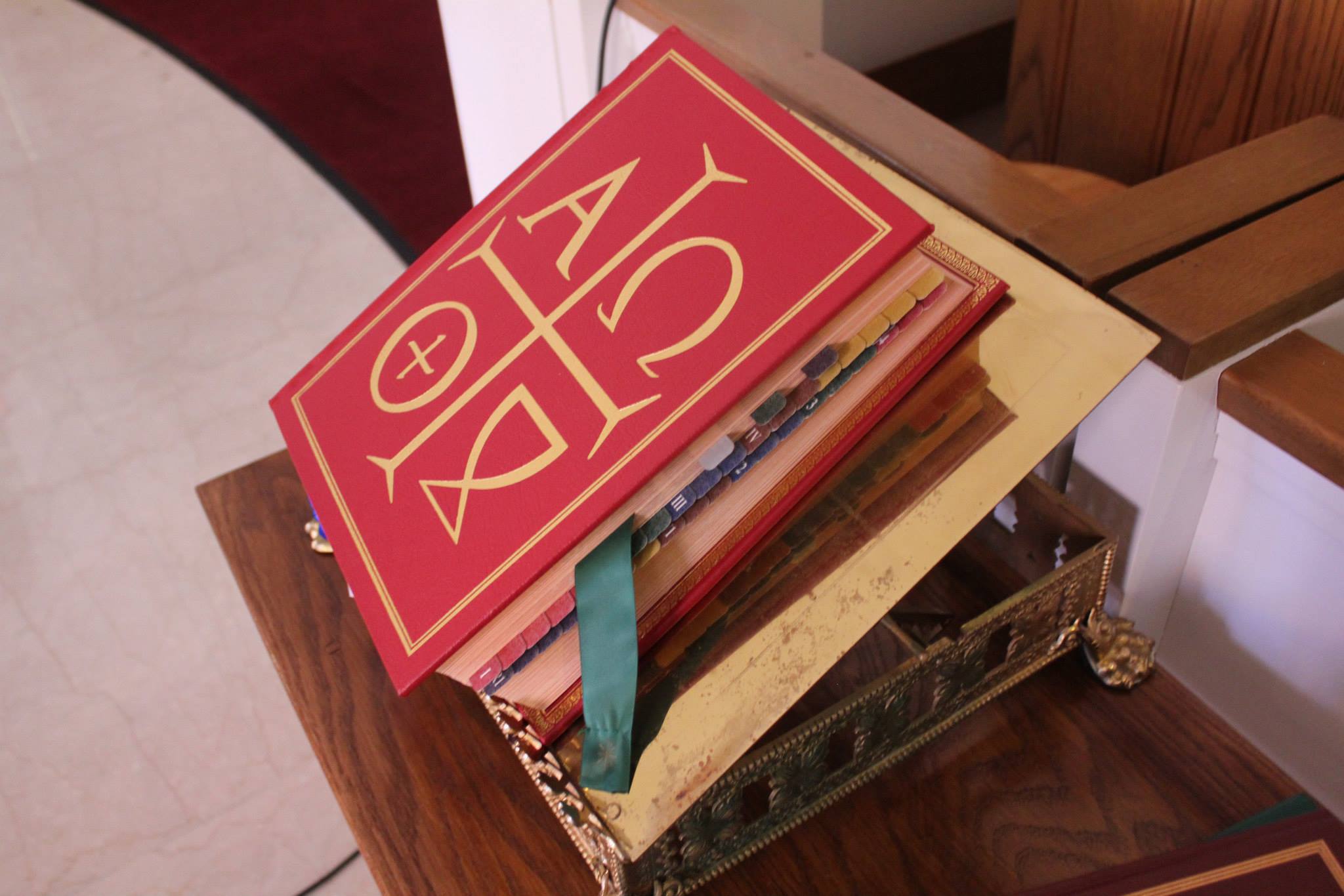
How NOT to do Eucharistic Adoration

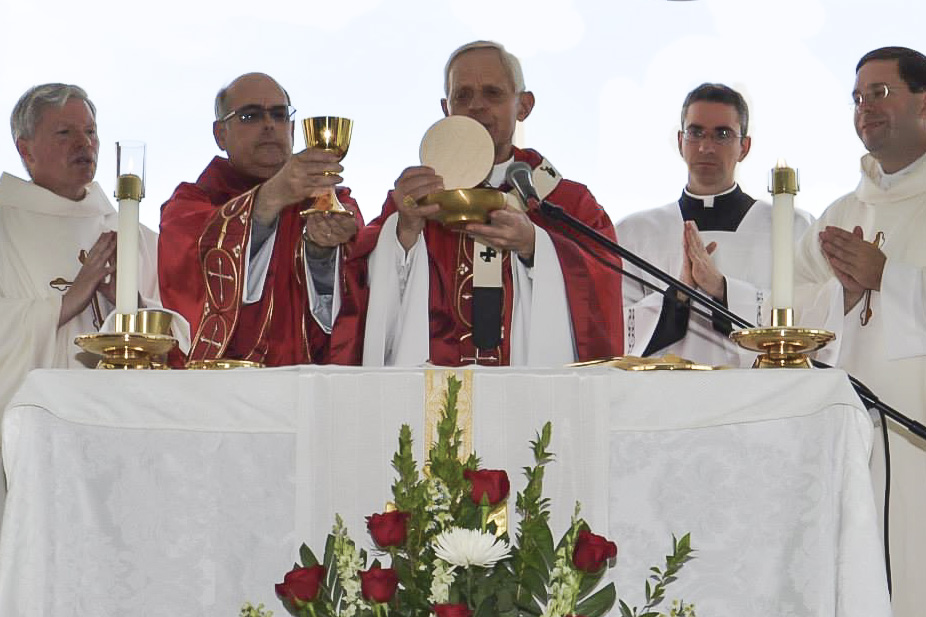
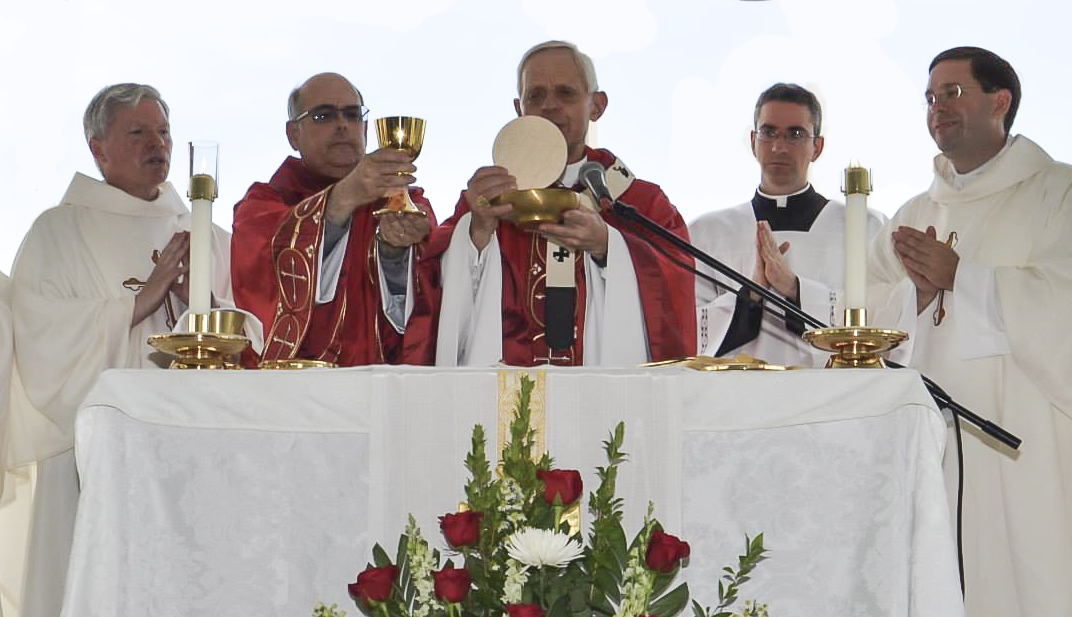
050814The video below is, well, a very poor example of Eucharistic Adoration. I suppose the most charitable thing that we can say is that it’s good to see Catholics rejoicing and happy. However, as with most things, there is a proper time and place for the particular sort of rejoicing seen here, but this is not one of those times.

In Eucharistic Adoration, the fundamental focus is Jesus himself. The norms generally indicate

Exposition of the holy eucharist, either in a ciborium or in a monstrance, leads us to acknowledge Christ’s marvelous presence in the sacrament and invites us to the spiritual union with him that culminates in sacramental communion. Therefore it is a strong encouragement toward the worship owed to Christ in spirit and in truth.

In such exposition care must be taken that everything clearly brings out the meaning of eucharistic worship in its correlation with the Mass. There must be nothing about the appointments used for exposition that could in any way obscure Christ’s intention of instituting the eucharist above all to be near us to feed, to heal, and to comfort us (CDW. Eucharistiae Sacramentum, 82).

It is also interesting to note that the word “monstrance” (the large and usually golden sunburst in which the Host is placed in order to be seen) comes from the Latin verb monstrare,  meaning “to show.” Hence one of the main points is to see the Lord, to see the Sacred Host.

The word “adoration” also bespeaks a very personal, intimate relationship between the believer and the Lord. As Pope Benedict noted in the encyclical Deus Caritas Est, the word adoration bespeaks a sort of kiss (ad (to) + oro (the mouth). Etymologically then, adoration paints a picture of a kiss on the lips. It thus bespeaks intimacy.

So the key concepts in Eucharistic Adoration are visibility and intimacy.

Another interesting historical fact is that until recently, when preaching took place during Eucharistic Adoration (say during the Forty Hours’ Devotion), the Sacred Host was veiled while the preaching took place. The thought was that when Jesus was so visibly present in the Sacred Eucharist, it would be irreverent to turn our attention elsewhere, in this case toward a preacher. And while this practice is no longer required, it is still widely followed, and it emphasizes reverence and the kind of instinct that our focus should be wholly on the Lord when He is exposed for adoration.

Unfortunately, all these principles seem set aside in the video below. As our Lord is placed in the monstrance, dancers and waving, gesticulating clergy vie for attention. Meanwhile, seemingly no attention at all is upon the Sacred Host. The altar servers seem to have a hard time getting through to bring incense, and though they finally do, the celebrant seems to have no interest in reverencing the sacred host with the incense, as is properly done.

Whatever the focus is supposed to be in this rather chaotic scene, it is clearly not on Jesus.

I do not wish to speak uncharitably of anyone in this video (and ask that you do not either). It does not seem to me that anyone is being intentionally irreverent. But liturgical sensibilities are clearly poor, and the actions are inappropriate to the setting. None of what is taking place here fits the purpose, meaning, or focus of Eucharistic Adoration.

Charismatic forms of worship, while not preferred by everyone, do have a place in the Church. But even those who appreciate such forms of worship will surely admit that this is not the proper context for charismatic worship of this sort. Time and purpose are important governing principles for Liturgy.

None of this is to insist that there be tomb-like silence during the entirety of Eucharistic Adoration. Here too the norms generally state,

During adoration with a group present, there should be prayers, hymns and readings to focus the faithful on worshipping God. To further encourage a prayerful spirit, there should be readings from Scripture with a homily or brief exhortations to help develop a better understanding of the Eucharistic mystery. The Church also recom- mends periods of silence and the faithful’s singing in response to the Word of God (Eucharistiae Sacramentum, 95).

Thus there is some place for hymns, readings, and prayers to be spoken aloud. However, one will note that the purpose is “to focus the faithful on worshipping God.” This would seem to preclude chaotic activities that block the view of the faithful and vie for attention with the Sacred Host, Jesus, who is set forth to be seen and adored and is the specific focus of Eucharistic Adoration.

OK, please be careful  in the combox. Caritas suprema lex! Let us not exhibit hateful or ridiculing language even as we talk about the adoration of one Jesus! It’s OK to mention preferences and what seems suitable or not. But try to avoid hurtful denunciations and divisiveness (pre-VCII vs. Post-V II, EF vs OF). The norms from any era call for great reverence in the Adoration of the Eucharist; let’s also show a little reverence for one another, who are made in the image of God.

But let all things be done decently, and according to order (1 Cor 14:40).

Can Anything Good Come from Temptation? Yes, Here are Five Things

050714One thing that is common to every human person is the reality of temptation. At times we may wonder why God permits it. Why does he allow mortal and spiritual dangers to afflict us? Could he not by word of command prevent every temptation that afflicts us? And if he can, why does he not? Is he just setting us up for a fall?

Of course there are many mysterious dimensions to God’s will, to what he prevents and what he does not, to what he permits and what he does not. However, there are some explanations that can be advanced that at least partially answer the mysterious presence of temptation.

On the one hand, temptation is a necessary result of there being choice. God has willed that some of his creatures (angels and men), should be free in order that they might love. God seeks sons and daughters, not inanimate objects, animals, or slaves. He wants sons and daughters who love him freely. Love presupposes freedom. Our “Yes” only has meaning if we have the capacity to say “No.” So freedom presupposes choices.

Temptation emerges from the “no” side of the equation. It is among the characteristics of sinful choices that they contain something appealing to us. Now it does not pertain to us to be drawn to that which is wholly unappealing. Thus, there is something in sin that at least partially appeals,  otherwise it would not really seem to us as being a choice at all.

So temptation, in a certain sense, is necessary if choices are to exist, and freedom is to be real. God permits temptation as a necessary condition for freedom and choice.

Beyond this we can consider that God never permits something troublesome except that a greater good will come from it. Hence, it is perhaps striking but true to recognize that there are some good things that come from temptation. Let’s consider some of them.

1. Temptation can teach humility. Origin says in his commentary on prayer, Temptation has its usefulness. … It teaches us to know ourselves in such a way that we discover the fullness of our misery, and it leads us to give thanks for the benefits conferred upon us (De Oratione, 29).

If we have any conscience at all, nothing can humble us more than temptation. Through it we realize how easily we can be tempted, how easily we can be drawn away, how easily we stray! We are like sitting ducks. We live by the mercy of God! Were it not for His grace how much more sinful and lost we would be!

Just thinking about temptation for a moment shows how crazy we are! Even when we know how harmful things are for us, we still desire them! We’re a hundred pounds overweight and yet we still want four doughnuts for breakfast. We know the harm of illicit sexual activities but still lust burns away within us! We know we are headed for bankruptcy yet we can’t seem to stop spending! Yes, we are more than half-crazy. We think we know so much; we think we are so smart, and yet we are drawn to do the stupidest things. So often the slightest breeze of temptation can knock us over.

If we are honest with ourselves, we realize that our temptation shows how miserably weak, pitiful, and poor we are. All we can do is cry to God for help, and pray that he will build virtue in our life, slowly but surely. Help us Lord, save us from ourselves and our foolish desires!

Yes, temptation can make us very humble.

2. Temptation also discloses our hearts. We often like to think highly of ourselves and tell ourselves how much we love God and so forth. But temptation has a way of disclosing the more honest truth. Yes, we love God—but not nearly enough.

Frankly, temptation discloses that our hearts are very divided. The ugly truth is, if we’re not careful, we have many lovers. The book of James says it plainly, Adulterers! Do you not know that a friend of the world is an enemy to God? (James: 4:4)

Yes, we have many lovers. One moment we sing of our love for God, but truth be told,  temptations remind us that we are also very enamored of the world and its passing glories. Yes we love God, but oh how we also love our little trinkets, love our sinful pleasures, love our opinions, love our anger (and we feel so right as it courses through us)! And yes we say, “Lord how beautiful your dwelling places,” and then lust cries out “Yet how much more beautiful are things on the Internet late at night.”

So, whatever your temptations are, they tend to disclose the heart! And if we are honest, we must realize that all the little lies we tell ourselves like, “I’m basically a good person,” have to yield to a more honest assessment as our hearts are disclosed by temptation. Truthfully, we’re all a very mixed bag; our hearts are easily duplicitous, divided, obtuse, and just plain sinful. Yes we love God, but we also lust after and pine for many inappropriate people and things. Yes we are grateful to God and know how good he’s been to us, but so easily we retreat in fear and become stingy and unforgiving.

Temptation teaches. Certain things tempt us more than others. Why is this? Learn from what tempts you as to the true condition of your heart. Some things don’t tempt us as much as they used to, thanks be to God! Why is this? And how has God accomplished it?

Yes, one advantage of temptation, is that it discloses the heart. Here too, if we’re smart, we will run to God and fall to our knees saying, “Help me Lord; save me; have mercy on me and keep me by your grace!

3. Temptation can teach us of the oppressiveness of sin and Satan. Although there are aspects of temptation that seem pleasurable to us (otherwise it would not be temptation), temptation is also a crushing burden (for anyone who has a conscience—and we all do).

Nothing teaches us more about the oppressiveness of the world, the flesh, and the devil than temptation. Temptation is like a weight that we have to carry about. It is like hammer blows or loud overwhelming noise. Satan, the world, and the flesh oppress us, annoy us, pick at us, and with unrelenting pressure seek to destroy us. Temptation is intrusive, burdensome, and just plain annoying. Temptation is filled with lies, half-truths, empty promises, and fleeting pleasures. At the end of the day, it offers nothing but a train wreck and all the disaster that sin brings.

If we will but take a moment and reflect, it is not hard to see how true all of this is. Temptation discloses just how awful, annoying, and just plain irritating Satan is.

How this contrasts with the gentle, unobtrusive, whispering voice of God, who respects our freedom! God seldom, if ever, shouts or gets in our face and pressures us; He does not lie to us.

Temptation discloses how awful and oppressive the world, the flesh, and the devil ultimately are.

4. Temptation can strengthen us. An old hymn says, Yield not to temptation, for yielding is sin, each victory will help you, some other to win.

The Greek word for temptation can also be translated “test.” And the tests and challenges of life can strengthen us if we engage them properly. Standing down one threat encourages us to meet the next one with greater strength and wisdom. In weightlifting and athletics, training brings improvement. Lifting ten pounds strengthens us to lift twenty. Walking one mile prepares us to walk two.

Fighting temptation, while at times wearying, also strengthens us to win more readily in the future. Scripture says, Resist the devil and he will flee (James 4:7). Therefore, God permits some temptations in order that they might strengthen us for even greater wins.

5. Temptation can show forth the genuineness of our faith. Scripture says, You may for the time have to suffer the distress of many trials. But this is so that your faith, which is more precious than fire tried gold, may by its genuineness, lead to praise, honor, and glory when Christ Jesus appears (1 Peter 1:6-7). Yes, coming through a world of temptations with our faith still intact shows the genuineness of that faith. It is a faith that has been tested and tried, but that has endured.

Here is real faith! In the world of temptation, in a world of many possible “Nos,” our “Yes” stands forth ever more gloriously. We said “Yes” when it was hard to say “Yes”!

So temptation, properly endured and overcome, shows forth the glory and genuineness of our faith.

Yes temptation is mysterious, but it has its place. And by God’s grace, it even brings benefits!

Why Does Satan Hate You?

Portrait of dangerous man hiding under the hood in the forestMost of us take it for granted that Satan hates us. But why does he hate us? That question recently came up in my Our Sunday Visitor column. It is a very different kind of writing than I do here, in that it requires me to provide very brief answers. But I’m sure you sometimes appreciate brevity on the blog! Thus consider a brief post today on a mysterious question:

Q: In the sermon the other day, the priest said Satan hates us. It occurred to me to ask, why does Satan hate me, what did I ever do to him? – John Smoot, Bayonne NJ.

A: To be sure, there are very deep mysteries involved in the motives for Satan’s hatred. We struggle to understand our own human psyches, let alone trying to understand the psyche of a fallen angelic person.

However, an important clue to Satan’s hatred is contained in the third temptation he makes to Jesus in the desert. Showing Jesus all the kingdoms of the world he says, “All these I will give you, if you will but fall down and worship me” (Matthew 4:10).

Here we see the curtain pulled back, and we glimpse for a moment the kind of inner torment that dominates Satan. He seems desperate to be adored. He cannot bear that he is a creature and that there is another, other than himself (God), who is ever to be adored.

Thus in his colossal pride Satan hates, first of all, God. And by extension, he hates everyone and everything that manifests the glory of God. Even more, he hates those who seek to adore God rather than him. In his venomous pride, Satan seeks to destroy the Church, which declares the glory of God and reminds us that God alone is to be adored. Surely he hates and seeks to destroy those who even try to adore God, and who do not accord him, Satan, the worship and pride of place for which he ravenously hungers.

Hence, as the text from the temptation in the desert suggests, Satan is tormented by pride, and his torment is filled with deep hatred for all who worship God and all who draw others to the worship of the one, true God.

For blog readers I might also suggest several sources on demonology that I have found helpful:

An Interview with an Exorcist by Fr. Jose Antonio Fortea
The Devil you Don’t Know By Fr. Louis Cameli
The Deceiver – Our Daily Struggle with Satan by Fr. Livio Fanzaga

This video is criticized by some for being a bit too light-hearted, but it does a very good job of showing the subtleties of Satan’s work.

Saying No to Divorce is Just Another Way of Saying Yes to the Glory of True Marriage

050514The Church is often perceived (unfairly) by what we are against, more so than what we are for. But saying to “No” to one thing is usually just another way of saying “Yes” to another. Sadly, most miss the important point and get stuck on what is denied, rather than consider what is affirmed. It is this way with the divorce question. Today, let’s look at what is affirmed.

We pondered yesterday how Jesus sets forth Divine Law and forbids divorce and remarriage. That much is rather clear. But what is Jesus setting forth more positively? Is it enough simply to say Jesus that forbids divorce and therefore so does the Church? It is not. Jesus actually paints a powerful portrait of love, fidelity, and the capacity of the human heart for tender, forgiving love. In this positive light, let us consider the teaching of Jesus, using Matthew 19 as our source.

Some Pharisees came to him to test him. They asked, “Is it lawful for a man to divorce his wife for any and every reason?” “Have you not read,” he replied, “that at the beginning the Creator ‘made them male and female,’ and said, ‘For this reason a man will leave his father and mother and cling to his wife, and the two will become one flesh’ ? So they are no longer two, but one flesh. Therefore what God has joined together, let no one separate.” “Why then,” they asked, “did Moses command that a man give his wife a certificate of divorce and send her away?” Jesus replied, “Moses permitted you to divorce your wives because your hearts were hard. But it was not this way from the beginning. I tell you that anyone who divorces his wife, except for sexual immorality, and marries another woman commits adultery.” (Matthew 19:3-9)

I do not intend here to provide a line-by-line commentary of this passage, but rather to draw from it some fundamental gifts that the Lord highlights. For, more than forbidding divorce, the Lord is painting a picture of the human person, transformed by His grace, loving his wife tenderly and preserving union with her. Divorce is from the reign of sin; faithful, loving marriage is the fruit of the new life of grace fully embraced. These are not abstract gifts the Lord offers; they are real and true gifts that He died to give us. Let us consider the “positive” teachings that are set forth in the forbidding of divorce and remarriage.

1. A New Heart – Note that the Lord teaches these men of old that Moses permitted them to divorce their wives because their hearts were hard. Here Jesus taps into an old Rabbinic interpretation wherein Moses reasoned that if he were to require that marriage were “until death do them part,” the men of his time might well arrange the death of their wives in order to be free. Thus he reluctantly permitted the lesser evil of divorce to prevent the great evil of uxoricide (the killing of one’s wife).

Now this bespeaks a very hard heart. Jesus traces the problem of divorce to hard, mean, and unforgiving hearts, and these come from sin.

Jesus also says that at the beginning it was not this way. The “beginning” refers to God’s original plan for marriage in the Garden before Adam and Eve sinned (Gen 1 & 2). Prior to sin, their marriage was described poetically but idyllically. Adam speaks tenderly of Eve as “bone of my bone and flesh of my flesh” and also thereby expresses his unity with her. That they are naked but do not know it speaks to a relationship devoid of lust and exploitation. It also speaks to a marriage wherein nothing is hidden; there are no coverups, no masks, and no fear of ridicule; there is openness, communication, trust, assurance, and comfort in the presence of each other.

This was marriage “in the beginning” before the long reign of sin. It is a portrait of tender love, and a relaxed, joyful, and grateful acceptance of the other as from the hand of God.  Here are two hearts, alive and open, tender and accepting.

But no sooner do they sin than their marriage is affected. The coverup begins as fig leaves are sewn together. The trust gives way to fear as important aspects of the other are covered, hidden from ridicule, exploitation, and abuse. There are now things with which they will not trust each other. Adam now speaks to God of Eve as “that woman you put here with me.” Here is distance, anger, and bitterness. Eve is told by God that though she will depend on and desire her husband, he will lord it over her and she will suffer the abuse of power.

Here is a sad portrait of how marriage suffered in the reign of sin.

But Jesus announces a great return! Now, on account of the healing He effects by dying and rising for us to new life, God’s original plan for marriage is again available. We can return to the way things were “in the beginning.” Our hearts, hardened by sin, can be healed by His grace. It is now possible for spouses to love each other with tender hearts freed from the hardness of sin. Through grace, the Lord Jesus can make it for couples more and more the way it was for Adam and Eve before the Fall. With new minds and hearts, husband and wife are now equipped to forgive, to trust, to cherish, and to love with great tenderness. Why would such spouses want to divorce at all?

Thus in forbidding divorce, the Lord Jesus paints a picture of transformed human beings and summons us to the new life he died to give us. It is a magnificent pictures of hearts set free to love and to abide in that love with tenderness and deep affection.

2. The Capacity to Cling – In quoting Genesis, the Lord says that a man “clings to his wife.” The Greek word used is κολληθήσεται (kollēthēsetai) which means (more literally) “to stick like glue,” to bond, cleave, adhere, be joined or connected, etc. This is strong language in the Greek. It bespeaks a man who works hard to preserve love with his wife, who says to her in effect, “Honey, if you ever leave me, I’m going with you!” And while the text speaks to the man as head of the home, it surely also refers to a wife who does the same.

And why do they do this? Because they want to! They love each other and cannot dream of being apart. Here too are tender hearts full of love, and love seeks union with the beloved. Here too is a work of God available to us on account of the new life Jesus died to give us. Here is the positive picture of hearts no longer hardened by sin, but set free to love and to seek union joyfully.

3. Become what you are! Jesus says they are no longer two, but one flesh. They are this because God has made them so, and what God has joined no one can separate.

We are never more content than when we are what we have been made to be. And here Jesus says to every truly married husband and wife, “I joined you. I have made you one. You are no longer two; you are one. Now allow me to deepen your experience of this as the years go by. Become what you are by my grace! You will never be more happy than when you become what you are. There will be growing pains, but never forget who you are, and allow me to accomplish this miracle of unity for you. It will complete you and sanctify you.”

4. The Fruit of Love – Elsewhere the Lord also commands the fruit of love when He says, “Be fruitful and multiply” (Genesis 1:22) And thus husbands and wives are called to celebrate and rejoice in their mutual love with great intimacy and joy, and in the context of that marital joy, rejoice to see their love bear fruit in their children. They can say to each other, “See how we love each other. These children are the fruit of our love.”

And thus we see in the commands of marriage that the couple is to cling, to reject divorce, and to bear the fruit of children. These are the promises of God and the glorious vision of lives transformed by grace. For God does not command what he does not empower. In Jesus’ every command is presumed the grace to accomplish it abundantly.

In upholding the Divine Law of Jesus against divorce, the Church is not merely enforcing “rules,” she is pointing to the magnificent portrait of the human being transformed by the grace of Jesus Christ. She is saying, “There is the life that Jesus died to give you. Now go lay hold of it!”

Here is a video I put together back in 2009 to commemorate my parents’ 50th Wedding Anniversary. They had both passed away by that time, but it still had to be celebrated. I will not say that they had an easy marriage. There were struggles and tragedies. But through the years, my parents came to be what they always were: one. And when my mother died suddenly and tragically my Father wondered how he could go on living when half of him was gone. He died less than two years later. The two had become one flesh. This commemorates his sorrow at her passing.

The Church Cannot Change Her Doctrine on Marriage and Divorce. Concerns for the Upcoming Synod

Over the past several months there has been a lot of speculation on if and how the Church should change her teaching on marriage and divorce. Ross Douthat recently wrote a thoughtful column that sums up recent debates and concerns. (Here: More Catholic than the Pope?)

But those who seriously think that the Church can execute a fundamental change in our stance on divorce and remarriage will get a simple answer from me: “Impossible.” To the inevitable follow-up question, I can be equally brief in my response: “Divine Law.”

The Church’s teaching and concerns about divorce and remarriage do not have their origin in some sort of “uptight” Church with a bunch of “uptight rules,” (to use an unfair characterization).   The forbiddance of divorce and remarriage is Divine Law; that is, it comes from the very lips of Jesus.

Despite the widespread allowance of divorce in His own culture, and even some allowance of it in the Mosaic Law, Jesus, when asked if divorce and remarriage were permissible, simply says, “No” (Mat 5:32; Mat 19:9; Mark 10:11Lk 16:18;).   He goes even further and says that those who do so commit ongoing adultery in their second marriages.  This teaching is repeated several times in Jesus’ ministry.

This is Divine Law, sovereignly stated by Jesus. No Pope, no Council, no Synod, no priest in any confessional—no one has any right or capacity to set aside Divine Law.  Those who argue that the Church should change her teaching on this matter are asking the Church to do something she cannot do. They are asking her to overrule Jesus. Appeals to culture, pointing out what certain Protestant denominations do or don’t do, even the practice of the Orthodox churches—none of these can or should overrule the stance of the Roman Catholic Church. We have held, properly, that Jesus’ teaching on the matter cannot be set aside by formulas, human rituals, human judges, human clerics, or any number of euphemisms.

Jesus is clear: to be validly married and then to divorce and marry someone else is to be an ongoing state of adultery. If this does not seem “nice” or “pastoral,” let the complainant  talk to the chief Shepherd, Jesus, because He is the one who said it.  Whatever pastoral stance the Church adopts, whatever language she employs, she cannot adopt any sort of stance that overrules this clear teaching of Jesus’.

But of course this brings forth the next question: What about annulments? Are they not a breaking of Jesus’ teaching? No, at least not according to the very words of Jesus himself. Let’s consider the matter a little further.

The Biblical Root of Annulments. The Lord says this in regard to marriage: “What God has joined together, let no one divide (Mat 19:6). On the face of it, divorce or any sort of annulment would seem forbidden by this. But actually the text serves as a basis for the Church’s allowance of annulment under certain circumstances.

The text says “What GOD has joined together” cannot be divided. Now just because two people stand before a Justice of the Peace, or a minister, or even a priest and swear vows, it does not mean that what they do is a work of God. There have to be some standards that the Church insists on in order for us to acknowledge that what they do is “of God.”

There are a number of impediments that can render what they do ipso facto invalid. Things such as prior bond (married before), consanguinity (related by blood too closely), minor status (under legal age), incapacity for the marital act (i.e., cannot have sexual intercourse), and the use of crime or deceit to obtain consent—any of these things can render a “marriage” invalid. Further, it is widely held that if one or both parties were compelled to enter the marriage (e.g., by social or financial pressure), or if they display(ed) a grave lack of due discretion on account of immaturity or poor formation, such marriages are nullified on these grounds.

All these are ways that the Church, based on evidence, can come to a determination that what appeared to be a marriage externally was not in fact so. Put more biblically, the putative marriage was not “what God has joined together.”

One may ask, “Who is the Church to make such a determination?” She is in fact the one to whom the Lord entrusted, through the ministry of Peter and the Bishops, the power to bind and loose (Mt 18:18) and to speak in His name (Lk 10:16).

Thus, Annulments are not Divorces. A decree of nullity from the Church is a recognition, based on the evidence provided, that a marriage in the Catholic and biblical sense of the word never existed. Hence, since a person has not in fact been joined by God to another, he or she is free to marry in the future. In such a case a person does not violate our Lord’s declaration that one who divorces his spouse and marries another commits adultery (cf Matt 19:9).

Hence the Church does not set aside the Lord’s teaching by her teaching on annulment. Rather she has reflected on His teaching and seeks to apply the Lord’s premise for a valid marriage, namely, that it is “what God has joined together.”

But here then comes the basis for the great debate: are we giving too many annulments? While it is clear that the Church has some pretty precise canonical norms regarding marriage, like any norms, they have to be interpreted and applied. Certain American practices and norms have evolved over the last thirty years that many think are too permissive and thus no longer respectful of the binding nature of marital vows.

Many troubling statistics could be presented to show that there has been a true explosion in the number of annulments granted. In the early 1960s, there were about 300 annulments granted per year in the United States. Today that number is over 60,000!

When it comes to annulments, I as a Catholic pastor am somewhat torn. Permit me two thoughts on both sides of the question.

Issue # 1 – Somewhere we have lost our way. As a Church that forbids divorce and remarriage, historically we have insisted on the fact that marriage is an unbreakable bond. Our straightforward insistence on this actually led Henry VIII to found his own “church” when the Pope refused to allow him to divorce and remarry.

In recent decades I fear we have become an “uncertain trumpet” on this topic. We still say “no divorce and remarriage,” but we don’t really seem to mean it, at least not in the minds of most people, who do not have command of the finder points of canon law. If one does go the route of divorce and remarriage, routinely we seem to “work it all out for them.”

That so few annulment requests are refused makes it seem a bit of a charade to say that we teach against divorce and remarriage. Now I said it makes it SEEM this way; I did not say that we in fact DO teach that divorce and remarriage is OK. But our teaching forbidding it surely seems an abstraction to many; for in the end and there appear to be no real consequences for anyone who divorces, other than having to go through a tedious and legalistic process that almost always ends in the granting of the annulment.

Hence our pastoral practice does not seem to reflect our faith and doctrine vigorously. Pastorally, this is troubling, and it has grave effects on marriage in the Church and on how people regard it. Are we really serious about upholding the Lord’s strict doctrine on marriage? Though doctrinally I think we are, pastorally I think most Catholics don’t think we are all that serious about it in the end. What we do speaks more loudly than what we say. And this is a big problem.

Issue # 2- Many pastors struggle with Annulment, not as an abstract debate about policy, but rather as a problem that affects real people who come to them with needs. Often it isn’t as crass as somebody coming in and saying, “Well I got rid of my first wife and have got me another I want to marry; let’s get the paperwork going, Father.” It is usually far more poignant than that. Perhaps someone married early, before he or she was really very serious about the faith, and married someone abusive. Now, years after the divorce, he or she has found someone supportive in the faith. Perhaps they even met right in the parish. Should a marriage that was entered into in the young and foolish years, and lasted all of six months, preclude entering into a supportive union that looks very promising? Maybe so, some still say.

Another common scenario is a person showing up at RCIA who has recently found the Catholic faith and wants to enter it. However, he or she was married 15 years ago in a Protestant Church to someone who had been married before. Now, mind you, the current marriage is strong and they have both been drawn to the Catholic faith. They have four children as well. What is a priest to do? Well, I can tell you that this priest will help the one who needs an annulment to get it.

And I can tell you, a lot of cases come to the Church this way. It’s hard and perhaps even unjust to say to someone like this that there is nothing the Church can do—he or she will never qualify for the Sacraments. No, we just don’t do that; we take such individuals through the process for annulment.

Perhaps too, another person shows up at the door: a long lost Catholic who has been away for 30 years. During that time he or she did some pretty stupid stuff, including getting married and divorced—sometimes more than once. Now he or she shows up at my door in a current marriage that seems strong and helpful, and which includes children. The person is in desperate need of Confession and Holy Communion. What is a pastor to do? He takes him or her through the process of annulment to get access to those Sacraments.

So there it is. There are very grave pastoral issues on both sides. On the one side, we lack coherence for many when we say we are against divorce and remarriage, but then grant so many annulments. On the other side are tens of thousands of people whom we seek to reintegrate into the life of the Church and her Sacraments.

Frankly, some of the reports (and they are only reports) of the upcoming Synod have been a bit discouraging. Many influential leaders, Bishops among them, have suggested a further watering down (my assessment) of the teaching of Jesus (who himself refused to water it down when pressured to do so) on divorce and remarriage. My own prayer is that we would move more in the direction of internal clarity regarding valid grounds for annulment. Right now the lack of clarity over what is meant by “grave lack of due discretion” (a.k.a. “immaturity”) sows confusion and even cynicism among the faithful.

It will be granted that some degree of maturity is required to enter into sacramental marriage. We don’t let 10-year-olds marry for good reasons. And when someone turns 18, he or she doesn’t magically reach the maturity required to enter into a valid Catholic marriage.  However, when does one reach maturity? What are the signs of or criteria for such maturity? Exactly how much maturity is required for one to enter into a valid marriage? On what grounds can a priest refuse to marry a couple he deems to be immature? As you can see, nailing down the concept of “maturity” may seem easy, but it is not.

This is significant because many, if not most annulments are rendered on the grounds of grave lack of due discretion (a.k.a. lack of full maturity).

If there could be any reform that might be helpful coming from the Synod, it would be to order further clarity and reflection over what we mean by “due discretion” and proper maturity. Sadly, I do not see such a proposal on the table. If reports are true, it sounds like many are looking for (hoping for) a solution that, to my mind, makes things far more murky, and may even set aside or weaken what Jesus taught without compromise.

Thanks be to God for the Holy Spirit, who I am sure will prevent the Synod from teaching outright error. But protection from error is a “negative protection” in that it only prevents error. And thanks be to God for that! But is it too much for me to pray for greater clarity, for me to pray that the Spirit will lead us to become clearer and more prophetic in our teaching? Veni Sancte Spiritus!

Reorienting Repast and Mass on the Move: A Homily for the 3rd Sunday of Easter

050314In today’s gospel we encounter two discouraged and broken men making their way to Emmaus. The text describes them as “downcast.” That is to say, their eyes are cast to the ground; their heads are hung low. Their Lord and Messiah has been killed—the one they had thought would finally liberate Israel. Yes, it is true that some women claimed he was alive, but these disciples have discredited those reports and are now leaving Jerusalem. It is late in the afternoon; the sun is sinking low.

The men cannot see or understand God’s plan. They cannot “see” that he must be alive, just as they were told. They are quite blind to the glorious things that have already happened, just hours before. Their eyes are cast downward. And in this they are much like us, who also struggle to see and understand that we have already won the victory. Too easily we are discouraged, our eyes cast downward in depression rather than upward in faith.

In effect, if you are prepared to “see” it, the Lord will celebrate Holy Mass with them. In the context of the sacred meal we call the Mass, he will open their eyes and they will recognize him; they will see glory and new life.

These men are also heading in the wrong direction. They need to be reoriented by the Lord. They need to turn around and go back to the Liturgical East, back to Jerusalem, back toward the resurrection, back to the light, away from the setting sun to the West where they are currently headed.

The Lord will open their eyes and reorient them with the repast we have come to know as the Holy Mass. Through this celebration, he will open their eyes and reorient them. He will, in the words of today’s Psalm, “Show them the path of life.”

Note that the whole Gospel, not just the last part, is in the form of a Mass. There is a gathering, a penitential rite, a Liturgy of the Word, Intercessory prayers, a Liturgy of the Eucharist, and an Ite Missa est. And in this manner of a whole Mass, they have their eyes opened to Him and to glory; the Lord reorients them, turning them around in the right direction. So too for us who attend Mass, if we are faithful.

Let’s look at this Mass and see how the Lord uses it to accomplish these ends.

Stage One: Gathering Rite – The curtain rises on this Mass with two disciples having gathered together on a journey: Now that very day two of them were going to a village seven miles from Jerusalem called Emmaus (Lk 24:13). We have already discussed above that they were in the midst of a serious struggle and are downcast. We only know one of them by name: Cleopas. Who is the other? If you are prepared to accept it, the other is you. So they (this means you; this means me) have gathered. This is what we do as the preliminary act of every Mass. We who are pilgrims on a journey come together.

It so happens for these two disciples that Jesus joins them: And it happened that while they were conversing and debating, Jesus himself drew near and walked with them (Luke 24:15). The text goes on to inform us that they did not yet recognize Jesus.

The Lord walks with us too. For us who gather at Mass, it is essential to acknowledge by faith that when we gather together, the Lord Jesus is with us. Scripture says, For where two or three are gathered in my name, there am I among them (Matt 18:20). It is a fact for many of us too, that Jesus, though present, is unrecognized! Yet he is no less among us than he was present to these two disciples who fail to recognize him.

Liturgically, we acknowledge the presence of the Lord at the beginning of the Mass in two ways. First, as the priest processes down the aisle the congregation sings a hymn of praise. It is not “Fr. Jones” they praise, it is Jesus (whom “Fr. Jones” represents) that they praise. Once at the Chair, the celebrant (who is really Christ) says, “The Lord be with you.” And he thereby announces the presence of Christ among us as promised by the Scriptures.

The Mass has begun; our two disciples are gathered, and the Lord is with them. So too for us at every Mass. The two disciples still struggle to see the Lord; they struggle to experience new life and to recognize that the victory has already been won. And so too do some of us who gather for Mass. But the simple fact that these disciples (we) are gathered is already the beginning of the solution. Mass has begun; help is on the way!

Stage Two: Penitential Rite – The two disciples seem troubled and the Lord inquires of them the source of their distress: What are you discussing as you walk along? (Lk 24:17) In effect, the Lord invites them to speak with him about what is troubling them. It may also be a gentle rebuke from the Lord that the two of them are walking away from Jerusalem, away from the site of the resurrection.

Clearly their sorrow and distress are governing their behavior. Even though they have already heard evidence of his resurrection (cf 24:22-24), they seem hopeless and have turned away from this good news. As we have noted, the text describes them as “downcast.” (24:17)

Thus the Lord engages them in a kind of gentle penitential rite and wants to engage them on their negativity.

So too for us at Mass. The penitential rite is a moment when the celebrant (who is really Christ) invites us to lay down our burdens and sins before the Lord, who alone can heal us. For we too often enter the presence of God looking downcast and carrying many burdens and sins. We too, like these disciples, may be walking in wrongful directions. And so the Lord says to us in effect, “What are thinking about and doing as you walk along? Where are you going with your life?

The Lord asks them, and us, to articulate our struggles. This calling to mind of our struggles in the penitential rite is a first step toward healing and the recovery of sight.

And thus we see again, in this story about two disciples on the road to Emmaus, the Mass that is so familiar to us.

Stage Three: Liturgy of the Word – In response to their concerns and struggles, the Lord breaks open the Word of God—the Scriptures. The text says, Then beginning with Moses and all the prophets, he interpreted to them what referred to him in all the scriptures (Luke 24:27).

Notice that not only does the Lord refer to Scripture, he interprets it for them. Hence there is not just the reading of the Word, there is a homily as well: an explanation of the Scripture and the application of it to the struggles these men have. The homily must have been a good one too, for later the disciples remark: Were not our hearts burning (within us) while he spoke to us on the way and opened the scriptures to us? (Luke 24:32)

And so too for us at Mass. Regardless of what struggles we may have brought to the Mass, the Lord bids us to listen to His Word as the Scriptures are proclaimed. Then the homilist (who is really Christ) interprets and applies the Word to our life. It is true that the Lord works through a weak human agent (the priest or deacon), but God can write straight with crooked lines. As long as the homilist is orthodox, it is Christ who speaks. Pray for your homilist to be an obedient and useful instrument for Christ at the homily.

Notice too, that although the disciples do not yet fully see, their downcast attitude has been abated. Their hearts are now on fire. Pray God, too, for us who come to Mass Sunday after Sunday and hear from God how victory is already ours in Christ Jesus. God reminds us, through successive Sundays and through passages that repeat every three years, that though the cross is part of our life, the resurrection surely is too. And we are carrying our crosses to an eternal Easter victory. If we are faithful in listening to God’s Word, hope and joy build within our hearts and we come, through being transformed by Christ in the Liturgy, to be men and women of hope and confidence.

Stage Four: Intercessory Prayers – After the homily, we usually make requests of Christ. We do this based on the hope, that His Word provides us, that He lives, He loves us, and He is able. And so it is that these two disciples make a request of Christ: Stay with us, for it is nearly evening and the day is almost over. (Luke 24:29)

Is this not what we also say in so many words? “Stay with us Lord, for it is sometimes dark in our lives and the shadows are growing long. Stay with us Lord and with those we love so that we will not be alone in the dark. In our darkest hours, be to us a light O Lord—a light that never fades away.”

And indeed it is already getting brighter, for we are already more than halfway through the Mass!

Stage Five: Liturgy of the Eucharist – Christ does stay with them. And then come the lines that no Catholic could miss: And it happened that, while he was with them at table, he took bread, said the blessing, broke it, and gave it to them (Luke 24:30). Yes, it is the Mass to be sure. All the basic actions of the Eucharist are there: he took, blessed, broke, and gave. It is the same activity as took place at the Last Supper and occurs at every Mass. Later, the two disciples will refer back to this moment as the breaking of the bread (Luke 24:35), a clear biblical reference to the Holy Eucharist.

And so the words of the Mass come immediately to mind: “While they were at supper He took the bread, and gave you thanks and praise. He broke the bread, gave it to his disciples and said, take this all of you and eat it: this is my Body which will be given up for you.”

A fascinating thing happens though: With that, their eyes were opened and they recognized him, but he vanished from their sight (Luke 24:31).

Note that it is the very act of consecration that opens their eyes. Is this not what Holy Communion is to do for us? Are we not to learn to recognize Christ by the very mysteries we celebrate? Are we not to Taste and See?

The Liturgy and the Sacraments are not merely rituals; they are encounters with Jesus Christ. Through our repeated celebration of the holy mysteries, our eyes are increasingly opened if we are faithful. We learn to see and hear Christ in the Liturgy, to experience His ministry to us.

The fact that Jesus vanishes from their sight teaches us that he is no longer seen by the eyes of the flesh, but by the eyes of faith, the eyes of the heart. So though he is gone from our earthly, fleshly, carnal sight, he is now to be seen in the Sacrament of the Altar, and experienced in the Liturgy and other Sacraments. The Mass has reached its pinnacle for these two disciples and for us: they/we have tasted and now see.

Consider these two men (and us) who began this Gospel quite downcast. Now their hearts are on fire and they see. The Lord has celebrated Mass to get them to this point. And so too for us, the Lord celebrates Mass to set our hearts on fire and to open our eyes to glory. We need to taste in order to see. Ponder these verses from Psalm 34:

I sought the Lord, and he answered me; he delivered me from all my fears. Those who look to him are radiant; their faces are never covered with shame. This poor man called, and the Lord heard him; he saved him out of all his troubles. …Taste and see that the Lord is good; blessed is the man who takes refuge in him (Psalm 34:4-8).

Yes, blessed are we if we taste faithfully in order to see, every Sunday at Mass.

Stage six: Ite Missa est – Not able to contain their joy or hide their experience, the two disciples run seven miles back to Jerusalem to tell their brethren what has happened and how they encountered Jesus in the breaking of the bread. They want to, they have to speak of the Christ they have encountered, what he said and what he did.

How about us? At the end of every Mass, the priest or deacon says, “The Mass is ended; go in peace.” This does NOT mean, “OK, we’re done here; go on home and have a nice day.” What it DOES mean is, “Go now out into the world and bring the Christ you have received to others. Tell them what you have heard and seen here, what you have experienced. Share the joy and hope that this Liturgy gives with others.”

Did you notice part of the word MISSion in the word disMISSal? You are being commissioned—sent on a mission to announce Christ to others.

The Lucan text we are reviewing says of these two disciples, So they set out at once and returned to Jerusalem where they found gathered together the eleven and those with them…Then the two recounted what had taken place on the way and how he was made known to them in the breaking of the bread (Lk 24:33,35). Note that they have turned around now and are heading in the right direction: back to the Liturgical East, back to the light, back to the resurrection, back from the West and the darkness.

How about us? Does our Mass finish as well, as enthusiastically? Can you tell others that you have come to Christ in “the breaking of the bread,” in the Mass?

So Jesus has used the Mass to draw the disciples from gloom to glory, from downcast to delighted, from darkness to light, from disorientation to orientation. It was the Mass; do you “see” it there? It is the Mass. What else could it be?

Find Your Gifts and Be What You Are – As Seen in a Commerical

Tall and short basketball playersOne of our tasks in life is to discover what our gifts are and what they are not. Having discovered our gifts, we do well to rejoice in them and not try to be what we are not.

An old story is told about Rabbi Eleazar who once said,

Every now and then I think to myself, “Eleazar, Why are you not more like Moses? Moses was a great man.” But then I think again, “If I try to be like Moses, when I die God will say to me, ‘Eleazar! Why were you not more like Eleazar?‘”

In other words, God already has a Moses. He needs an Eleazar. And from me he needs a Charles. Whatever Moses was, that has been accomplished. It is for you and me to become the man or woman that God made us to be.

St. Paul also writes of the need for diversity in gifts and teaches that God distributes them accordingly:

There are different kinds of gifts, but the same Spirit distributes them. There are different kinds of service, but the same Lord. There are different kinds of working, but in all of them and in everyone it is the same God at work. Now to each one the manifestation of the Spirit is given for the common good. To one there is given through the Spirit a message of wisdom, to another a message of knowledge by means of the same Spirit, to another faith by the same Spirit, to another gifts of healing by that one Spirit, to another miraculous powers, to another prophecy, to another distinguishing between spirits, to another speaking in different kinds of tongues, and to still another the interpretation of tongues.All these are the work of one and the same Spirit, and he distributes them to each one, just as he determines.… (1 Cor 12:4-11)

Then St. Paul goes on to say that none of us should denigrate our gifts just because we admire a gift that someone else has:

Now if the foot should say, “Because I am not a hand, I do not belong to the body,” it would not for that reason stop being part of the body. And if the ear should say, “Because I am not an eye, I do not belong to the body,” it would not for that reason stop being part of the body. If the whole body were an eye, where would the sense of hearing be? If the whole body were an ear, where would the sense of smell be? But in fact God has placed the parts in the body, every one of them, just as he wanted them to be. If they were all one part, where would the body be? As it is, there are many parts, but one body. (1 Cor 12:15-19)

He also teaches that none of us should regard our gifts as superior to others, or to think that somehow we do not need the gifts of others:

The eye cannot say to the hand, “I don’t need you!” And the head cannot say to the feet, “I don’t need you!” so that there should be no division in the body, but that its parts should have equal concern for each other.If one part suffers, every part suffers with it; if one part is honored, every part rejoices with it. (1 Cor 12:21-22)

So there it is. I do not have all the gifts, and you do not have all the gifts. But together, we have all the gifts. And a certain combination of gifts works well in certain situations, while another set might work well in others.

At times people admire my ability to write with ease. OK, fine. That is a gift I have: to write almost without effort. But don’t ask me to try to raise children, or even to try to teach little kids for more than 15 minutes—I don’t have any skill in that! I’m also lousy at math, and my parish staff will affirm that my administrative skills leave something to be desired. But, thanks be to God, my staff DOES have those skills and they do a great job. That frees me to write, preach, teach, and celebrate the Sacraments. Yes, together we have all the gifts.

Enjoy this video, which teaches that certain combinations of gifts work well in certain settings but poorly in others. It is not just that we each have particular skills, but also that different situations often require different gifts.

Recent Studies on Pot and Brain Damage Need to be Given”Sober”Attention

050114A study recently came out analyzing the damage to the brain caused by pot smoking. Unfortunately, it came out during the week of the Triduum, and a Catholic blog like this had another focus at that time. But it’s time to circle back and have a look.

I wrote some time ago of my anecdotal observation that the pot smokers I knew all developed serious problems with motivation, and that the effects of being “high” lingered long after toking a joint and went on to become semi-permanent. It involved a glazed look, a shuffling gait, and a lethargic attitude largely exemplified by the phrase: “Hey man…I ain’t gotta do what the man says; I ain’t gotta go to the man’s class…” When some of the kids I grew up with started using pot, there was a very noticeable change in their personalities.  Again, I have written more on that here: The Problem of Pot

Now comes a more scientific study from Harvard that affirms what experience has taught. Below are some pertinent excerpts (in bold) along with my brief commentary (in red). The full article is here: Harvard Study links Pot and Brain Damage

According to a new study published in the Journal of Neuroscience, researchers from Harvard and Northwestern studied the brains of 18- to 25-year-olds, half of whom smoked pot recreationally and half of whom didn’t. What they found was rather shocking: even those who only smoked few times a week had significant brain abnormalities in the areas that control emotion and motivation.

Exactly. But I wonder why the author of the article used the word “shocking”? As I have said, and many of you have commented, getting stoned makes you groggy, unmotivated, and induces a sort of personality change. I think it would have been shocking not to find any brain abnormalities. The phenomenon of becoming unmotivated is very observable.

Note too the phrase  “significant brain abnormalities.”

Similar studies have found a correlation between heavy pot use and brain abnormalities, but this is the first study that has found the same link with recreational users.

The study described “recreational users” as those who smoked pot between one and four times a week.

Using three different neuroimaging techniques, researchers then looked at…areas [of the brain] … responsible for gauging the benefit or loss of doing certain things, and providing feelings of reward for pleasurable activities such as food, sex, and social interactions. “This is a part of the brain that you absolutely never ever want to touch,” said [Hans] Breiter, co-author of the study….These are fundamental in terms of what people find pleasurable in the world and assessing that against the bad things.”

Pay attention! Pot affects judgment. The study seems to make clear that not only are pot smokers damaging their motivation, they are also affecting their ability to make sound judgments about what is good vs. bad, helpful vs. harmful.

This may go a long way to affirm another connection I have made anecdotally between drug use and the cultural revolution. How else can we describe the cultural and sexual revolutions of the 1960s and 1970s other than as a long stream of bad decisions, poor judgment, the abandonment of common sense, and just plain stupid and foolish thinking? In other words, an awful lot of the leaders, drivers, and participants in this these revolutions were stoned and their brains were damaged.

And even today, when there is so much evidence of the social harm caused by these revolutions, many still can’t make the connections; they want more of the same; they want to drive us deeper into revolution. Are their brains damaged? I don’t know. You decide.

But the widespread lack of common sense in our culture, especially among the Baby Boomers, has a kind of surreal quality to it. It’s a little like a bad dream that you’d expect people to eventually wake up from—but many don’t. Perhaps their brains are too damaged to wake up or to think clearly. I don’t know. You decide.

Shockingly, every single person in the marijuana group, including those who only smoked once a week, had noticeable abnormalities.

OK, so at least according to this study, even “moderate” use causes harm. Studies will continue, but honestly, the data have been pretty clear to me for a long time just from my personal experience with pot smokers. It ain’t cool or pretty. They just look glazed, stoned, unmotivated, and “dulled out.” Their whole sad demeanor shouts to me: “Don’t do drugs!”

I am not going to address here the issue of how drug use should be dealt with by the legal system. I am not certain that putting users in jail is the answer. But the legalization push that is rampaging through this country is yet another example of bad judgment. Let’s slow down the train and at least adopt the same attitude toward pot that we have toward cigarettes.

Pot should barely be tolerated within fifty miles of where anyone lives. And if it is “legal” it ought to be pushed to the margins of our society with no less scorn than tobacco has recently been given. When I see a tobacco smoker I think, “How sad. How foolish…given all we now know.” There is no less reason to consider pot smokers in this same manner. They are not cool, hip, or glamorous. Smoking pot is sad and foolish behavior.

To address the “Yeah, but what about alcohol?” objection, I will make a few quick observations:

  1. Drunkenness is a sin.
  2. Would our society be better off without any alcohol? Probably. But if so, why would we want to add another substance with problematic associations to the mix?
  3. I am not aware of any study that says that moderate or occasional use of alcoholic beverages permanently damages the human brain. But it is clear that excessive use of alcohol has severe bodily consequences, including effects on the brain.
  4. The Bible, while condemning drunkenness, does not forbid the use of alcohol and even commends the proper use of wine, etc.
  5. The moderate use of alcohol is not in the same category as pot smoking and the two should be discussed as separate matters. The expression “Drugs and Alcohol” is an equivocation that lumps together two different realities that are separated by wide gulfs of culture, history, experience, and medical study.

When I was growing up in the 60s and 70s, a lot of music “celebrated” pot. Here is one of those popular “songs.” It made a joke out of being stoned. At the end of the day though, it was just dumb.