In November, Catholics are encouraged to meditate on the “Last Things.” As you know, I write quite often on Hell. But I have written on Heaven, too. In this post I propose simply to set forth how much of our liturgy is a kind of dress rehearsal for Heaven.
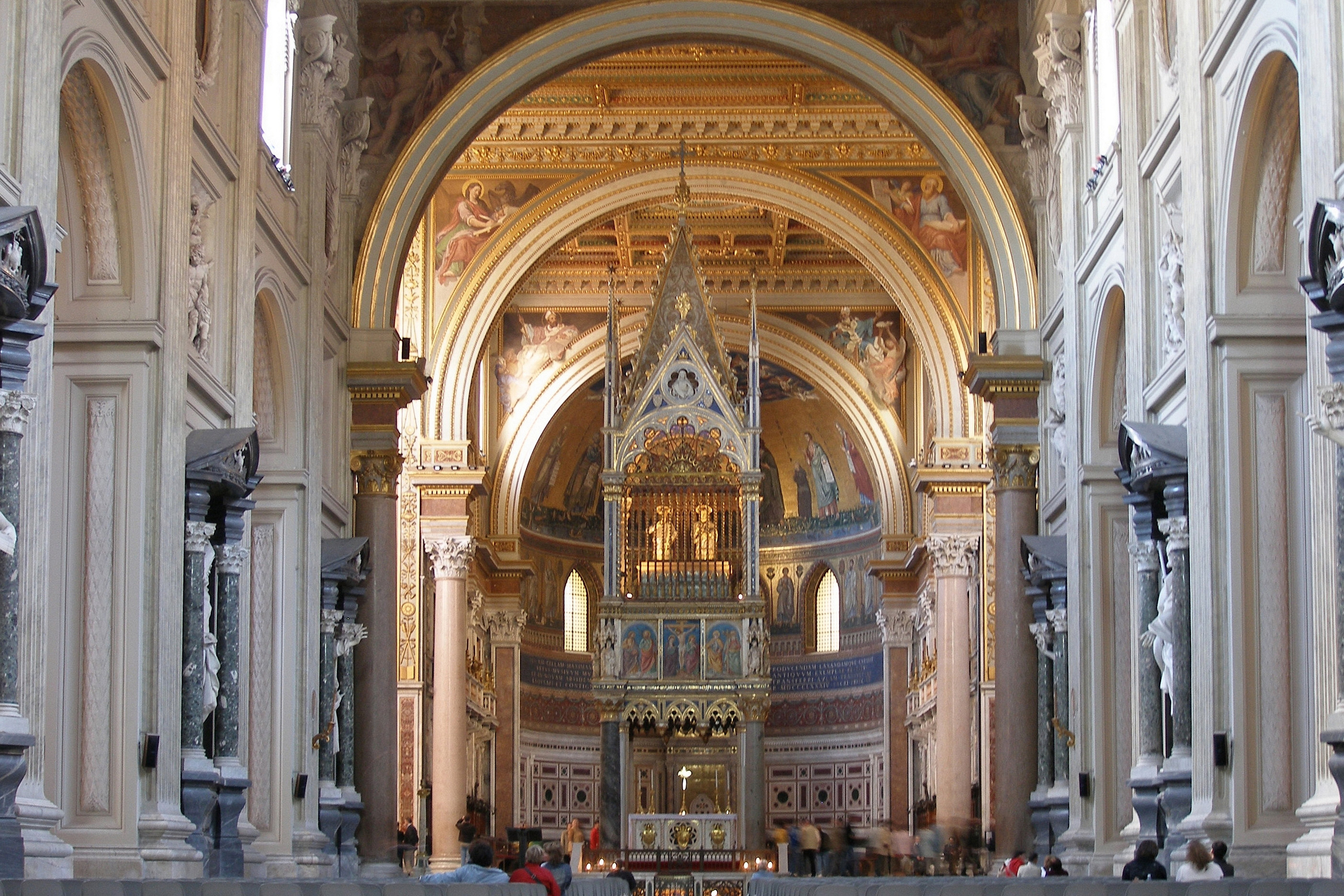
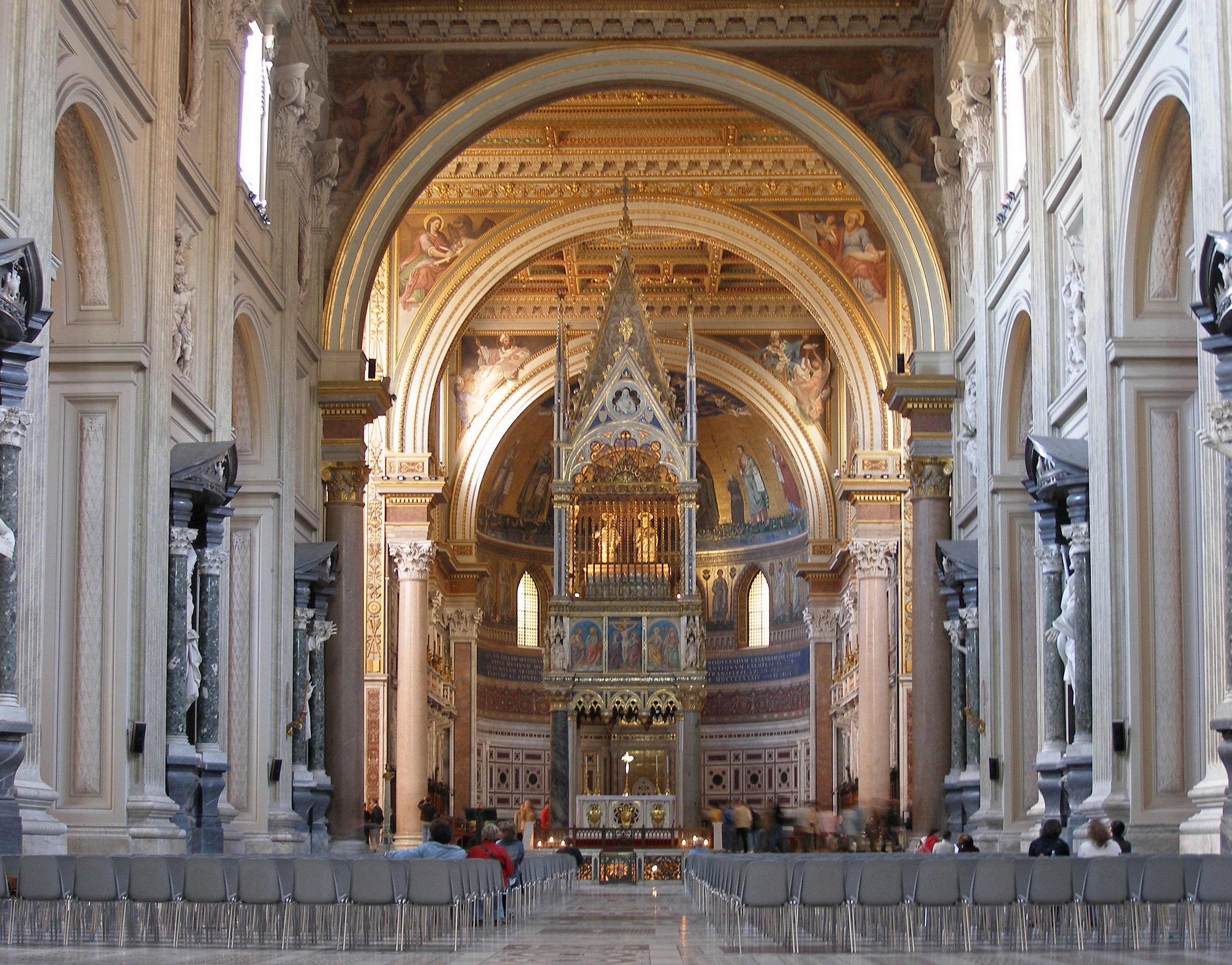
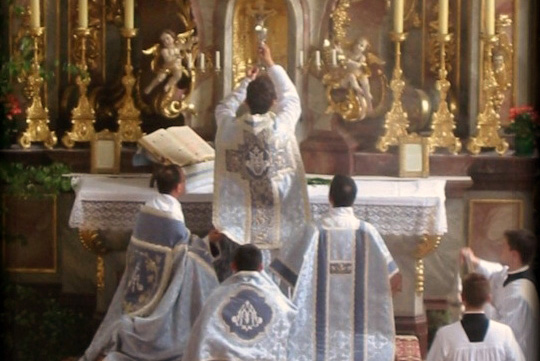
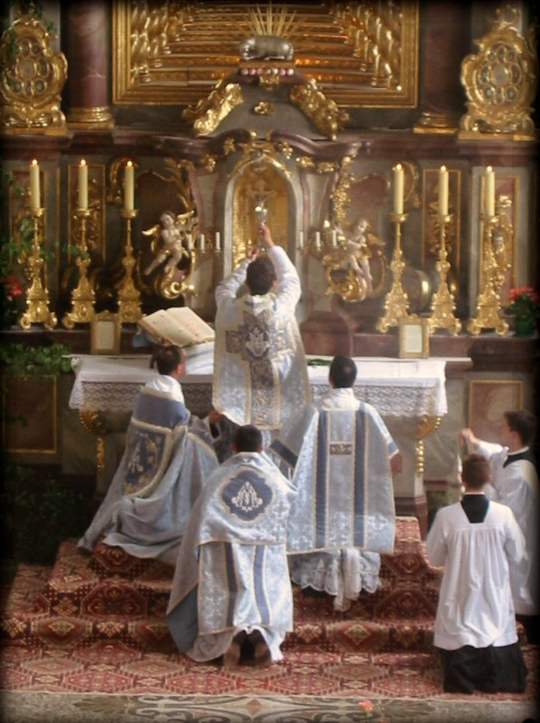
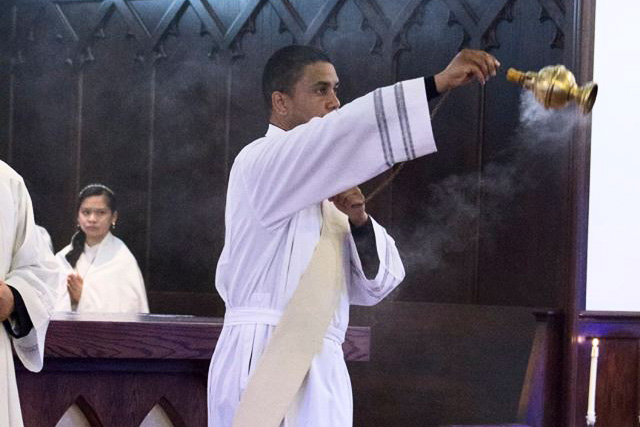
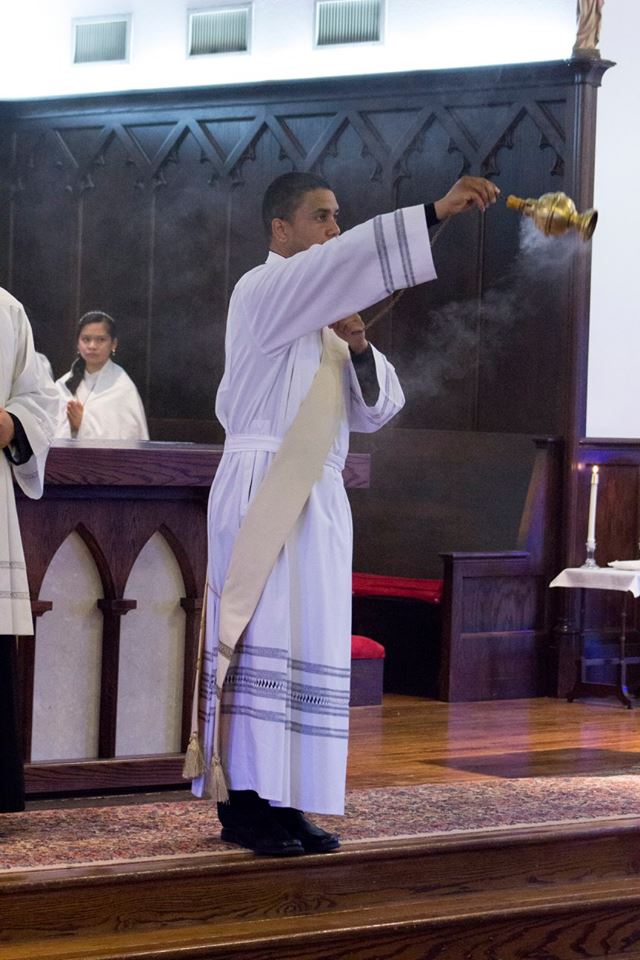
Indeed, Catholics are often unaware just how biblical the Sacred Liturgy is. The design of our traditional churches; the use of candles, incense, and golden vessels; the postures of standing and kneeling; the altar; the singing of hymns; priests wearing albs and so forth are all depicted in the Scriptures. Some of these details were features of the ancient Jewish Temple, but most are reiterated in the Book of Revelation, which describes the liturgy of Heaven.
The liturgy here on earth is modeled after the liturgy in Heaven; that is why it is so serious to tamper with it. The Book of Revelation describes the heavenly liturgy and focuses on a scroll or book that contains the meaning of life and the answers to all we seek. It also focuses on the Lamb of God, standing but with the marks of slaughter upon it. Does this not sound familiar? It is the Liturgy of the Word and the Liturgy of the Eucharist.
We do well to be aware of the biblical roots of the Sacred Liturgy, not only for our own edification but also as an answer to those Protestant Christians who have largely set aside these rituals and criticize our use of them. Many people consider our rituals to be empty and vain, “smells and bells.” Some consider austere liturgical environments devoid of much ritual to be “purer” and closer to the worship in “spirit and in truth” that Jesus spoke of in John 4.
To such criticisms we must insist that these rituals, properly understood, are mystical and deeply biblical. Further, they are elements of the heavenly liturgy since almost all of them are mentioned as aspects of the worship or liturgy that takes place in Heaven. In this light, it is a serious mistake to set them aside or have a dismissive attitude toward them.
With that in mind we ought to consider the biblical references to the most common elements of Catholic and Orthodox liturgies. I have added my own occasional note in red.
Candles –
- Rev 1:12-13 Then I turned to see the voice that was speaking to me, and on turning I saw seven golden lampstands, and in the midst of the lampstands one like a son of man. In traditional catholic parishes, there are six candles on the high altar and a seventh candle is brought out when the bishop is present.
- Rev 4:6 Seven flaming torches burned in front of the throne.
Altar –
- Rev 9:13 The sixth angel sounded his trumpet, and I heard a voice coming from the horns of the golden altar that is before God.
- Rev 8:3 Another angel, who had a golden censer, came and stood at the altar. He was given much incense to offer, with the prayers of all the saints, on the golden altar before the throne.
Chair –
- Rev 4:1 and lo, a throne stood in heaven, with one seated on the throne! And he who sat there appeared like jasper and carnelian, and round the throne was a rainbow that looked like an emerald …
- Daniel 7:9 As I looked, thrones were placed and one that was ancient of days took his seat; … In the Sacred Liturgy, the chair of the priest is prominent. But, as he takes his seat, we are invited to see not Father Jones, but rather the Lord Himself presiding in our midst.
Priests (elders) in Albs –
- Rev 4:4 the elders sat, dressed in white garments …
Bishop’s miter, priest’s biretta –
- Rev 4:4, 10 With golden crowns on their heads … they cast down their crowns before the throne … In the Liturgy, the Bishop may only wear his miter at prescribed times. But when he goes to the altar he must cast aside his miter. The priest who wears the biretta in the Old Mass is instructed to tip his biretta at the mention of the Holy Name and to lay it aside entirely when he goes to the altar.
Focus on a scroll (book), The Liturgy of the Word –
- Rev 5: 1 And I saw in the right hand of him who was seated on the throne a scroll written within and on the back, sealed with seven seals; and I saw a strong angel proclaiming with a loud voice, “Who is worthy to open the scroll and break its seals?” And no one in heaven or on earth or under the earth was able to open the scroll or to look into it, and I wept much that no one was found worthy to open the scroll or to look into it. Then one of the elders said to me, “Weep not; lo, the Lion of the tribe of Judah, the Root of David, has conquered, so that he can open the scroll and its seven seals.” In the ancient world, books as we know them now had not been invented. Texts were written on long scrolls and rolled up.
Incense, Intercessory prayer –
- Rev 8:3 another angel came and stood at the altar with a golden censer; and he was given much incense to mingle with the prayers of all the saints upon the golden altar before the throne; and the smoke of the incense rose with the prayers of the saints from the hand of the angel before God …
- Rev 5:7 and the twenty-four elders fell down before the Lamb, each holding a harp, and with golden bowls full of incense, which are the prayers of the saints;
Hymns –
- Rev 5:8 And they sang a new hymn: Worthy are you O Lord to receive the scroll and break open its seals. For you were slain and with your blood you purchase for God men of every race and tongue, and those of every nation.
- Rev 14:1 Then I looked, and lo, on Mount Zion stood the Lamb, and with him a hundred and forty-four thousand who had his name and his Father’s name written on their foreheads … and they sing a new song before the throne and before the four living creatures and before the elders. No one could learn that song except the hundred and forty-four thousand who had been redeemed from the earth.
- Rev 15:3 And they (the multitude no one could count) sing the song of Moses, the servant of God, and the song of the Lamb, saying, “Great and wonderful are thy deeds, O Lord God the Almighty! Just and true are thy ways, O King of the ages! Who shall not fear and glorify thy name, O Lord? For thou alone art holy. All nations shall come and worship thee, for thy judgments have been revealed.”
Holy, Holy, Holy –
- Rev 4:8 and day and night they never cease to sing, “Holy, holy, holy, is the Lord God Almighty,
Prostration (Kneeling) –
- Rev 4:10 the twenty-four elders fall down before him who is seated on the throne and worship him who lives for ever and ever; they cast their crowns before the throne …
- Rev 5:14 and the elders fell down and worshiped In today’s setting, there is seldom room for everyone to lie prostrate, flat on the ground. Kneeling developed as a practical solution to the lack of space, but it amounts to the same demeanor of humble adoration.
Lamb of God –
- Rev 5:6 And between the throne and the four living creatures and among the elders, I saw a Lamb standing, as though it had been slain …
Acclamations –
- Rev 5:11 Then I looked, and I heard around the throne and the living creatures and the elders the voice of many angels, numbering myriads of myriads and thousands of thousands, saying with a loud voice, “Worthy is the Lamb who was slain, to receive power and wealth and wisdom and might and honor and glory and blessing!”
Amen! –
- Rev 5:14 And the four living creatures said, “Amen!”
Silence –
- Rev 8:1 When the Lamb opened the seventh seal, there was silence in heaven for about half an hour. (And you thought your priest paused too long after communion?)
Mary –
- Rev 12:1 And a great portent appeared in heaven, a woman clothed with the sun, with the moon under her feet, and on her head a crown of twelve stars; 2she was with child and she cried out in her pangs of birth, in anguish for delivery.
Happy are those called to His “supper” –
- Revelation 19:6 Then I heard what seemed to be the voice of a great multitude, like the sound of many waters and like the sound of mighty thunder peals, crying, “Hallelujah! For the Lord our God the Almighty reigns. Let us rejoice and exult and give him the glory, for the marriage of the Lamb has come, and his Bride has made herself ready; … And the angel said to me, “Write this: Blessed are those who are invited to the marriage supper of the Lamb.”
Golden vessels, vestments –
- Rev 1:12 And when I turned I saw seven golden lampstands,
- Rev 1:13 and among the lampstands was someone “like a son of man,” dressed in a robe reaching down to his feet and with a golden sash around his chest
- Rev 5:8 the twenty-four elders fell down before the Lamb. Each one had a harp and they were holding golden bowls full of incense
- Rev 8:3 Another angel, who had a golden censer, came and stood at the altar. He was given much incense to offer, with the prayers of all the saints, at the golden altar before the throne.
- Rev 15:16 The angels were dressed in clean, shining linen and wore golden sashes around their chests.
- Rev 15:17 seven golden bowls
Stained Glass –
- Rev 21:10 [The heavenly city] had a great, high wall, with twelve gates, … The foundations of the wall of the city were adorned with every jewel; the first was jasper, the second sapphire, the third agate, the fourth emerald, the fifth onyx, the sixth carnelian, the seventh chrysolite, the eighth beryl, the ninth topaz, the tenth chrysoprase, the eleventh jacinth, the twelfth amethyst. (The image of stained glass in our Church walls is hinted at here.)
Here is but a partial list, drawn only from the Book of Revelation. I invite you to add to it. You might also read The Lamb’s Supper, by Scott Hahn, and The Mass: A Biblical Prayer, by Fr. Peter Stravinskas.