In a courtroom, the judge can bring an unruly outburst to an end by shouting, “Order! Order in the court!” I often feel the same urge in the debates of our time about God’s existence and His role in the created universe. It is not so much that the debates can get unruly, but that I, with the insistence of a town crier, want to shout, “Order! Order, there IS order the universe!” And I want to ask everyone to be quiet and listen to the universe herself declaring, “I am ordered! I am designed! I am remarkably complex, from the largest galaxies to the smallest atoms! And even what you think is chaos is but an order currently hidden from your limited view.”
As a prelude to a series of articles I plan to post this week on cosmology, liturgy, and Sacraments, I would like to begin with a summons to this call: “Order! Order in the universe!” I want to apply some of the insights of creation, a kind of root “sacrament” that underlies the seven Sacraments, and the reason for liturgy. For our seven Sacraments presuppose that matter and creation are not just dumbly present but that they bespeak order and purpose, and manifest God, their maker. Today I’d like to simply ponder order and then listen to a liturgical hymn that celebrates, in the Wisdom tradition, the One who in His wisdom designed and ordered the cosmos.
It is a strange and remarkable thing to me that in this day and age, when we have discovered magnificent realities that show a universe steeped in order and unbelievable size, increasing numbers of people claim that the whole thing is just dumbly there, that it’s all the result of a series of random mutations. In other words, to more and more people today, the obvious order of the universe is accidental; we human beings are simply the result of random, blind, unguided mutations. All the order of creation we can plainly observe and all the sophisticated, interdependent systems that give rise to complex life are all just accidental. We are asked to believe that all this obvious order, order that no one can miss, somehow leapt together, unguided and accidentally, from a primordial soup; that from disorder came order.
Although things tend to fall apart and go back to their basic components (the Law of Entropy), we are asked to believe that in this case, in a random and accidental way, things actually moved from disorder to order all on their own, even though, as some insist, no outside force, energy, or intelligence acted on them.
To me, this sort of belief requires more “faith” than simply believing that a higher and intelligent being (whom we call God) both created and introduced the order that is so obvious in the universe, not to mention in our bodies, down to the smallest cells and atoms. And to be sure, the atheist/secularist notion of random, unguided, accidental order is itself a belief, for its conclusion is outside of what science can study or demonstrate. For all the denunciation by many atheists of philosophy, theology and metaphysics, those who deny God’s role in creation are not making a scientific claim; they are staking out their own philosophical, theological, and metaphysical claim and asking others to believe it. To me, such a “belief” in the random, unguided, and accidental existence of things, in the face of such overwhelming and consistent order, is unreasonable in the extreme.
The whole universe shouts, “Order! Consistency! Intelligibility!” Our bodies and every delicately functioning system on this planet echo back the refrain, “Order! Consistency! Intelligibility!” And while I cannot, and do not, ask scientists to specifically affirm the biblical and Christian God and our whole Catholic theological tradition, the existence of consistent order in the universe is obvious and serves as the basis of the whole scientific method. For if things were truly random, rather than orderly, intelligible, and predictable, science could not propose theories, test results, or verify them. No experiment would produce similar results if everything acted randomly. The scientific method presupposes order and consistency within a verifiable range. Thus while science need not draw conclusions as to how this order came about, it is wholly inappropriate (as some scientists have done) to be dismissive of believers, who conclude from order that someone ordered it so.
Yes, what a glorious and magnificent thing creation is! And to this believer, it loudly proclaims the God who made it.
There is a beautiful hymn, one that I have seldom heard sung in Catholic parishes, that takes up the voice of creation, especially that part of creation we call the stars (firmament) and the planets. The hymn is based on Psalm 19, and I think it is a minor masterpiece of English poetry. It was written by Joseph Addison in 1712.
It comes from a time before skeptical agnosticism and hostility to the very notion (let alone existence) of God had taken deep root in our culture. And, frankly, it also comes from a more sober time, when people accepted the plainly obvious fact that creation is ordered, and therefore that it was ordered by someone in a purposeful and intelligent manner. That someone we believers call God.
Consider the beautiful words of this song and its reasoned conclusion that, as Psalm 19 notes, creation shouts its Creator.
The spacious firmament on high,
with all the blue ethereal sky,
and spangled heavens, a shining frame,
their great Original proclaim.
The unwearied sun from day to day
does his Creator’s power display;
and publishes to every land
the work of an almighty hand.
Soon as the evening shades prevail,
the moon takes up the wondrous tale,
and nightly to the listening earth
repeats the story of her birth:
whilst all the stars that round her burn,
and all the planets in their turn,
confirm the tidings, as they roll
and spread the truth from pole to pole.
What though in solemn silence all
move round the dark terrestrial ball?
What though no real voice nor sound
amid their radiant orbs be found?
In reason’s ear they all rejoice,
and utter forth a glorious voice;
for ever singing as they shine,
“The hand that made us is divine.”
Yes, the hand that made us is divine, and He has done a marvelous thing!
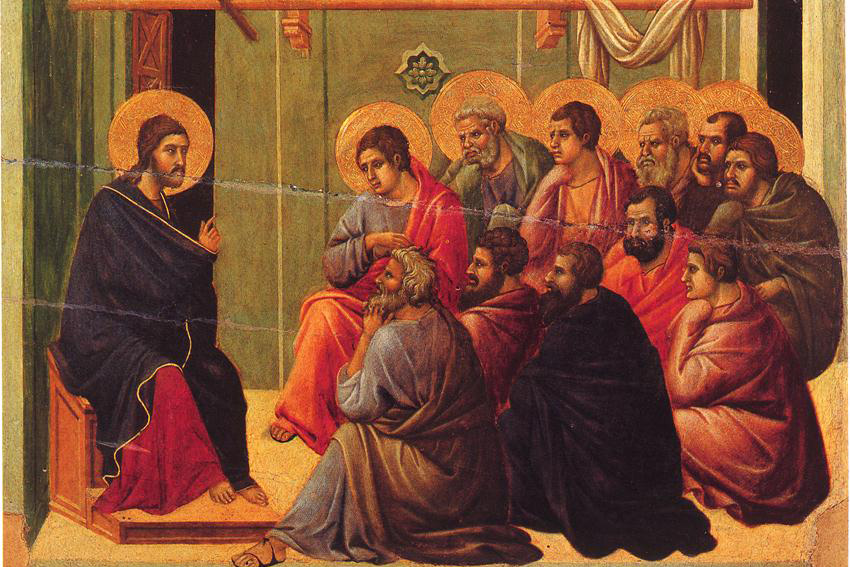
What is it that gives hope, peace, and serene joy to the Christian life? Briefly, it is the vision of glory, a glimpse into the Promised Land of Heaven, which the Lord can and does give to His people. Today’s gospel shows forth a kind of process wherein the Lord lays the foundations of hope, peace, and joy for His disciples and for us. Let’s look at four aspects of how the Lord lays this foundation.
I. The Paradoxical Prelude – The text says, Jesus took Peter, James, and John and led them up a high mountain apart by themselves. Note how the Lord, in order to get them to a place where they can see glory, must first lead them “up a high mountain.”
Now we often pass over this fact: they had to climb that mountain. And the climb was no easy task. Anyone who has been to the site of Tabor knows what a high mountain it is. The climb was almost 2000 feet, and it is both high and steep. It may have taken the better part of a day and probably had its dangers. Once at the top, one feels as if one is looking from an airplane window out on the Jezreel Valley (a.k.a. Megiddo or Armageddon). So here is a symbol of the Cross and of struggle. It was a difficult, exhausting climb up the rough side of the mountain, and it tested their strength.
I have it on the best of authority that as they climbed they were singing gospel songs: “I’m comin’ up on the rough side of the mountain, and I’m doin’ my best to carry on!” Another song says, “My soul looks back and wonders how I got over!” Yet another says, “We are climbing Jacob’s ladder, every round goes higher, higher.”
Now this climb should remind us of our life. For often we’ve had to climb, to endure, and we’ve had our strength tested. Perhaps it was the climb of earning a college degree, or raising children, or building a career. What do you have that you really value that did not come at the price of a climb, of effort, and of struggle? And most of us know that although the climb is difficult, there is glory at the top. We have to endure and push through. Life’s difficulties are often the prelude to success and greater strength.
And herein lies the paradox: peace, joy, and hope are often the products of struggles, climbs, and difficulties. These things are often the prelude, the paradoxical prelude, to seeing and experiencing glory. Scripture says,
We can rejoice, too, when we run into problems and trials, for we know that they are good for us—they help us learn to be patient. And patience develops strength of character in us and helps us trust God more each time we use it until finally our hope and faith are strong and steady (Romans 5:3-4).
In this you greatly rejoice, though now for a little while you may have had to suffer grief in all kinds of trials. These trials are only to test your faith, to see whether or not it is strong and pure. It is being tested as fire tests gold and purifies it—and your faith is far more precious to God than mere gold; so if your faith remains strong after being tried in the test tube of fiery trials, it will bring you much praise and glory and honor on the day of his return (1 Peter 1:6).
Yes, there is a paradoxical prelude to glory and it can only come through God’s wisdom, for human beings just don’t think this way. An old hymn says,
“Trials dark on every hand. And we cannot understand, all the ways that God will lead us to that blessed promised land. But he guides us with his Eye and we follow till we die and we’ll understand it better by and by.”
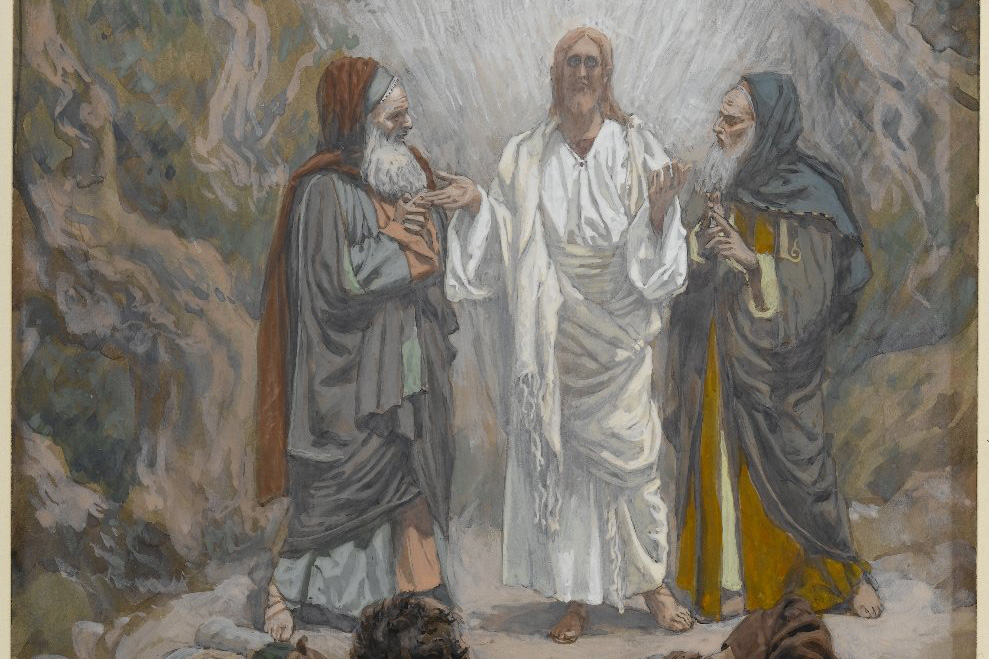
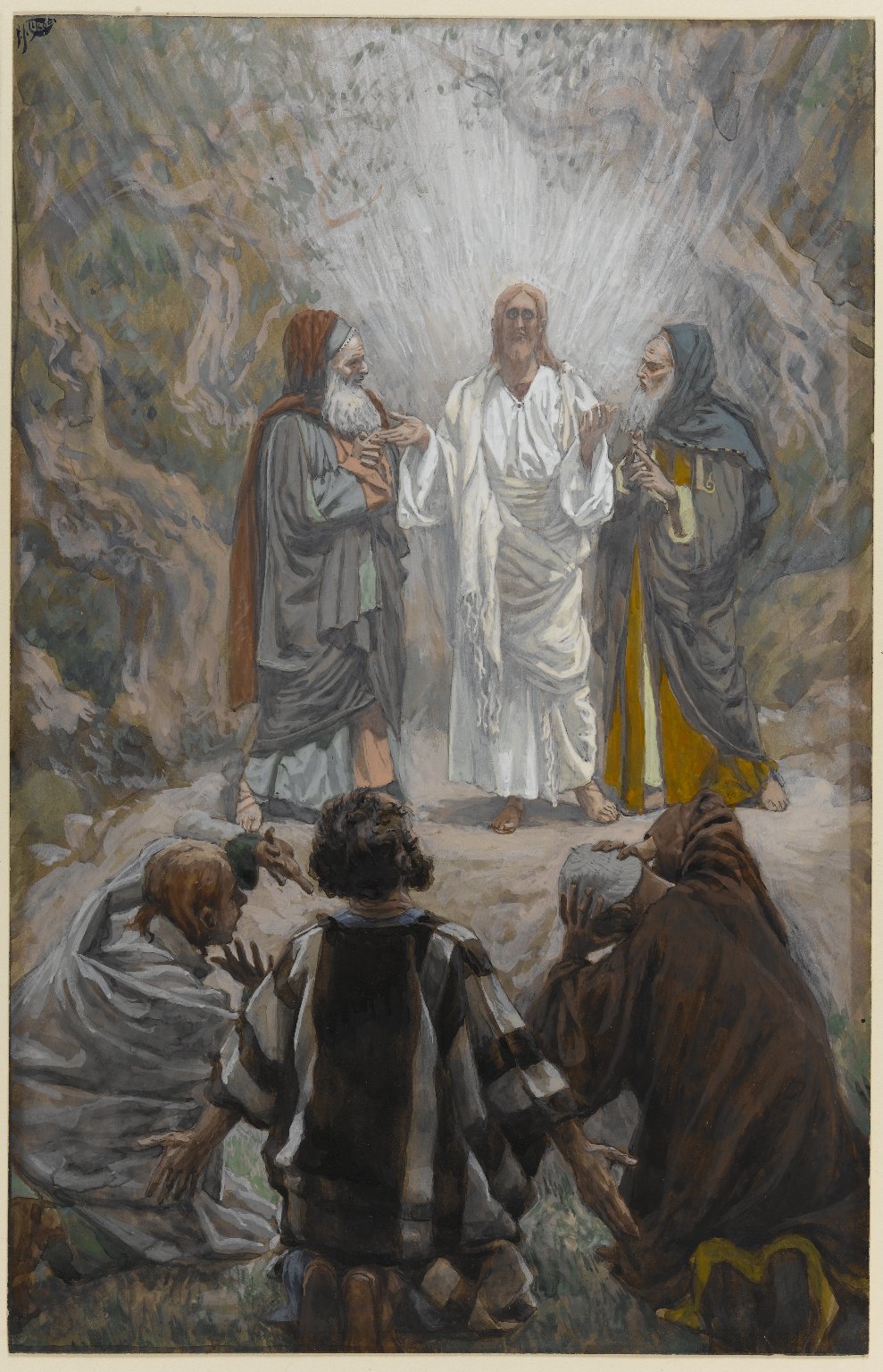
II. The Practices Portrayed – The text lays out various aspects of how Peter, James, and John come to experience a joyful peace in the presence of the Lord’s glory. The text says, And he was transfigured before them, and his clothes became dazzling white, such as no fuller on earth could bleach them. Then Elijah appeared to them along with Moses, and they were conversing with Jesus. Then Peter said to Jesus in reply, “Rabbi, it is good that we are here! Let us make three tents: one for you, one for Moses, and one for Elijah.” In effect we can see three ways that they come to this joyful peace:
1. They are those who see.The text speaks first of the event itself that they see. It uses a word that says the Lord was μετεμορφώθη (metemorphothe), that He was “transfigured,” that His appearance was gloriously altered. In many ways, this word, while common in the Christian vocabulary, is mysterious and difficult to understand. The text supplies some information, telling us of a brightness that shone through the Lord, a kind of dazzling light.
But we ought not get lost in speculation and miss the point. And the point is that Peter, James, and John are given a glorious vision. Beams of heaven! Yes, this is Jesus. This is who He really is. And the magnificence of His glory so astounds them that they fall down in reverence.
Have you ever seen or experienced glory? Maybe it was at the birth of a child, or upon hearing some wonderful news. Perhaps it was a profound experience of relief, or a deep vision in prayer, or at the Liturgy. Yes, look for glory and rejoice when it comes! Ask God to open your eyes to that glory, a glory we often walk right by with barely a notice. We’re all in a big hurry. Or we’re fumbling with our camera to capture the moment, but we’re actually missing the moment.
We have got to learn to see things as they really are. Regardless of the trials and struggles we must endure on the way, if we are faithful our end is glory.
So look for glory and expect to find it. The Lord can and does give us glimpses of glory in our life, beams of Heaven as we go! Do not minimize glories when they are revealed, and cultivate a spirit of wonder and awe at what God has done and continues to do in creation and in your life. Glory is all around us. Learning to see this glory is one of the ways God produces peace in us.
2. They are those who are scriptural. Do you notice that the text says that Moses and Elijah appeared with Him? Why Moses and Elijah? Because Moses and Elijah represent the Law and the Prophets, which is a Jewish way of speaking of the Bible. And thus another way of having peace produced in us is to search the Scriptures. The other day, I “cheated” and looked at the last page of the Bible. I know, we are not there yet, but I looked anyway. Guess what it says? It says that Jesus wins and so does everyone who is with Him. We have to stay rooted in our story. At the end of our story, if we stay with Jesus, is glory. Know your Scriptures, and thereby know your story, a story that ends with glory.
3. They are those who savor. Peter wants to stay on the mountaintop, to pitch tents and stay put. Some preachers give him a hard time for this, but I see it as a good thing, even if excessive. The point is to savor glory, to store good memories and experiences of joy and glory deep in our soul, to cultivate a deep gratitude for the good things the Lord has done for us, to savor deeply our experiences of glory.
III. The Prescription Proclaimed – The text then says, Then a cloud came, casting a shadow over them; from the cloud came a voice, “This is my beloved Son. Listen to him.” Suddenly, looking around, they no longer saw anyone but Jesus alone with them.
The prescription couldn’t be simpler and yet how poorly we often follow it. Listen to Jesus! In other words, carefully ponder every word of His teaching and begin to base your life on what He says.
How much pain, anxiety, and strife come into this world and our lives simply because we do not listen to the Lord and obey His teachings. Our stubbornness, our lack of forgiveness, our unchastity, our greed, our lack of concern for the poor, our idolatry, our lack of spirituality, and the fact that we are often just plain mean, bring enormous suffering to us and to others.
If we would but give our life to the Lord and ask Him to conform us to His word, so much suffering would vanish. We would have so much more peace and would experience greater joy and hope.
Listen to Jesus and by His grace conform your life to what you hear Him say. There is no greater source for joy, peace, and hope.
IV. The Persevering Purpose – The text says, As they were coming down from the mountain, he charged them not to relate what they had seen to anyone, except when the Son of Man had risen from the dead.
There is fairly universal agreement that the purpose of this mountaintop experience of glory was to prepare the apostles for the difficult days ahead. And thus, while Jesus tells them to keep it to themselves, He wanted them to keep it, to remember it! Having seen and savored glory, having “seen what the end shall be,” having been bathed in beams of Heaven, they need to keep this memory alive and remember who Jesus is as the Passion begins. If they do this, they will be able to endure the folly and suffering of the Cross.
Did they successfully persevere in keeping the memory alive? Well, only John made it to the foot of the Cross, but, frankly, one out of three isn’t so bad. Having experienced peace and joy, and having seen the Lord’s glory, John made it to the Cross, enduring its shame and remembering the glory he had seen.
What of us? Have you seen the glory of the Lord? Have you experienced His love and glory deeply enough that, when difficulties come, you don’t allow them to overwhelm you? Have you come to experience and possess a peace and joy that the world did not give and hence cannot take away? Have you allowed the Lord to lay a foundation of hope in your life? Have you let Him take you up the mountain and show you glory? Have you seen the promised land and have you seen what the end shall be? This is what this gospel describes and promises.
There is an old hymn by Charles Tindley that says,
“Beams of Heaven, as I go, / Through this wilderness below / Guide my feet in peaceful ways / Turn my midnights into days / When in the darkness I would grope / Faith always sees a star of hope / And soon from all life’s grief and danger / I shall be free some day.”
Notice what it is that gets us through: beams of Heaven! Yes, it was those same beams of Heaven that Peter, James, and John saw on the mountaintop. And those beams, having been experienced and remembered, shine on every darkness and show the way. Those beams of Heaven give us hope and turn our midnight into day.
Let the Lord show you His glory; savor every moment and never forget what the Lord has done for you. The light of His Glory will lighten every way. The hymn goes on to say,
“Burdens now may crush me down / Disappointments all around / Troubles speak in mournful sigh / Sorrow through a tear stained eye / There is a world where pleasure reigns / No mourning soul shall roam its plains / And to that land of peace and glory / I want to go some day.”
Some years ago, the movie Bruce Almighty was near the top of the box office charts. Unfortunately, one of my favorite scenes was cut from the released version of the movie. I was only able to see it in the “deleted scenes and outtakes” section of the DVD version. Why they deleted the scene is unfathomable to me, since I think it really decodes the whole movie.
The movie features a prideful man (Bruce) who has complaints about how God runs the universe. “God” shows up and turns the tables on Bruce, “permitting” him to be “God” for a day. As you might expect, Bruce makes a real mess of the whole thing. He abuses his power and plays with a lot of people.
Even worse, he just gets tired of considering requests (prayers) and says “Yes” to every one. Before you know it, the whole world is so messed up that only the real God could ever sort things out.
In one deleted scene, which you will see in the video below, “God” explains to Bruce that simply relieving people’s burdens means that they are not able to reach their full potential and in fact may even self-destruct. “God” shows Bruce how interference and simply removing struggles actually destroyed the lives of several people. Here are the key points of “God’s” discourse:
1. Triumph is born of struggle.
2. Faith is the alchemist (i.e., it produces gold from less valuable things).
3. If you want to paint [beautiful] pictures, you have to use some dark colors.
Great wisdom here! Apparently too great for Hollywood, since the scene ended up on the cutting room floor. Nevertheless, it was a powerful outtake.
We might always wish and pray that God would “answer our prayers” by taking away our struggles. But God knows that sometimes the best answer is “No,” for out of our struggles, our strengths emerge and our faith is made stronger and more genuine.
I have cued this clip to the critical scene, in which “God” teaches Bruce these truths. If you watch the whole clip, you might get more context. Remember, because it is an outtake reel, it jumps around and not all the scenes are filled in or finished. But you’ll get the point.
Some of God’s greatest gifts are unanswered prayers.
Some forty years ago, the Venerable Bishop Fulton J. Sheen admonished the priests of his day with these words:
We become real priests when we empty ourselves, and no longer seek our [own] identity, and where we are lifted up to the cross, not going “down to people.” Too many of us today feel we have to be loved … [thinking] the young will not love us unless we talk like them, eat like them, drink like them, clothe ourselves like them. No! They will not love us simply because we go down; they will love us when we lift them up. Else, the world will drag them down … (Retreat for priests, “The Meaning of Being a Priest”)
I remember especially my teenage years (the seventies), when priests, religious sisters, and adult parish leaders wore jeans, sandals, and flashy sweaters. The men grew their hair long and the parish leaders recast “Sunday school” as a “rap session.” (In those days, to “rap” did not mean anything related to music; it meant to “talk,” but in a way that was “real” and “down with the struggle.”)
The goal, it would seem, was not for the clergy, religious, or adult leaders to teach, but rather to “relate” and to “facilitate a discussion.” I remember it was considered “hip” (i.e., cool, popular, etc.) to have the class sit on the floor in a circle. The “teacher” was “one of us” and would often start off by saying something like, “I don’t have the answers, but together we can explore the questions.”
Even those of us in our rebellious teens knew there was something amiss. I wonder if the “hip” priests, nuns, and youth leaders knew that we laughed at them behind their backs. Frankly, they DID look strange trying to dress and act like us. And though we humored them, we knew that we had them in our back pockets. They were not to be taken seriously, and so we didn’t.
I will not excuse our violations of the 4th commandment, but it was hard not to laugh and even mock them behind their backs. We used to laugh at one cleric in particular, who showed up with a guitar strapped to his back. He thought he did a pretty swift “Peter, Paul, and Mary” gig; he didn’t. And when he left the room, convinced that he had “reached us,” we would “imitate” him derisively (I am sad to say), playing our air guitars and changing the lyrics to the silly songs he sang.
Ah, the ’70s; a sad and “dorky” time that endured well into the ’90s and is still operative in some places today.
I think most younger priests today are clear enough that people, both young and old, are appreciative when we dress and act as clergy. Religious Sisters, too, are far more respected and appreciated when they wear the full habit and exhibit the qualities of dignity and grace that go with their honored state. It is no coincidence that the traditional orders are attracting vocations, while the secularly clad, “aging hippie” orders are all but dead.
We serve a Lord who, while popular at times, made a journey to the Cross that few, even among his 12, were willing to follow or found pleasing. They were looking for a Messiah who was “down with the struggle” on their terms, who would usher in a new worldly kingdom of power and prosperity. Yes, this is what it meant for them that Jesus be “down with the struggle.” But when Jesus went up to the Cross, few would follow him. Only St. John, Mother Mary, and several other women made it there.
Those of us who lead (clergy, religious, parents, and laymen) must point to the Cross and be willing to shepherd others there. As for pointing to what is popular and what will make us seemingly “loved” and accepted, any newscaster or Hollywood star can do that.
It is true that we ought not engage in all-or-nothing thinking or set up a false dichotomy. Being “up with the Cross” is not in absolute conflict with being “down with the folks.”
We preach the Cross not as an abstraction, but as focused on very real and sometimes difficult choices. We preach a Cross that includes turning away from the pleasures of sin and of the flesh, embracing chastity, self-control, and openness to life, even in difficult circumstances. The Cross means there is to be no abortion, even in cases of rape and incest. It means we are to work out our marital difficulties instead of splitting up. We hold up the Cross in calling the unmarried to chastity and homosexuals to perpetual continence. We preach the Cross of enduring persecution, forgiving our enemies, humbling ourselves through confession, atoning for our sins, and obeying the Commandments. We hold up the Cross when we insist upon generosity to the poor and the forsaking of greed and the accumulation of so many unnecessary things. We hold up the Cross when we remind others of their duty to family, community, the Church, and the nation.
This goes not only for clergy but for parents as well. We are to preach His gospel, the whole counsel of Christ, in season or out-of-season, popular or unpopular. We point the way of Christ.
And Christ had this “crazy” way of the Cross. The Cross is like a tuning fork for us. It is the “A 440” that helps us to know if we are in tune with Jesus or just reflecting the world, if we are just “down with the people” or “up with Christ” on the Cross.
On that Good Friday, many told Christ that they would be believe if He came down from His Cross. But He would not come down from the Cross just to save Himself. He stayed … to save you and me. Had He been “down with the people” where they wanted Him, He could not have saved them or lifted them up.
Here are a few quotes from Scripture to finish:
Then he called the crowd to him along with his disciples and said: “Whoever wants to be my disciple must deny himself and take up his cross and follow me. For whoever wants to save his life will lose it, but whoever loses his life for me and for the gospel will save it … If anyone is ashamed of me and my words in this adulterous and sinful generation, the Son of Man will be ashamed of him when he comes in his Father’s glory with the holy angels” (Mk 8:34-38).
Jesus said, “I do not accept glory from human beings” (John 5:41).
Where is the philosopher of this age? Has not God made foolish the wisdom of the world? For since in the wisdom of God the world through its wisdom did not know him, God was pleased through the foolishness of what was preached to save those who believe. Jews demand signs and Greeks look for wisdom, but we preach Christ crucified: a stumbling block to Jews and foolishness to Gentiles, but to those whom God has called, both Jews and Greeks, Christ the power of God and the wisdom of God. For the foolishness of God is wiser than human wisdom, and the weakness of God is stronger than human strength (1 Cor 1:20-25).
You foolish Galatians! Who has bewitched you? Before your very eyes Jesus Christ was clearly portrayed as crucified (Gal 3:1).
If anybody is preaching to you a gospel other than what you accepted, let him be under God’s curse! Am I now trying to win the approval of human beings, or of God? Or am I trying to please people? If I were still trying to please people, I would not be a servant of Christ (Gal 1:9-10).
We speak as those approved by God to be entrusted with the gospel. We are not trying to please people but God, who tests our hearts. You know we never used flattery, nor did we put on a mask to cover up greed—God is our witness. We were not looking for praise from people, not from you or anyone else … (1 Thess 2:4-6)
Are we with Christ, or just “down with the people”? If we are with others, as we should be, are we there with Christ? Do we preach His way of the Cross, or do we seek merely to please men?
Are we up with Christ and the Cross, or merely down with the people and the pillow of popularity and the esteem of men?
Here is a favorite video of mine, one I have used here before. It illustrates both the silly ’70s and the dark side of “tolerance.” Meet Professor “Stanford Nutting” (i.e., stand for nothing):
In yesterday’s post, we considered the twelve steps of pride set forth by St. Bernard of Clairvaux. In escalating ways, the twelve steps draw us to an increasingly mountainous and enslaving pride.
St. Bernard also enumerates the twelve steps to deeper humility (I am using the list from Vultus Dei HERE) and it is these that we consider in today’s post. As with yesterday’s post, the list by St. Bernard is shown in red, but the commentary on each step is shown in plain, black text and represents my own poor reflections. Take what you like and leave the rest. To read St. Bernard’s reflections, consider purchasing his book Steps of Humility and Pride.
(1) Fear of God– To fear the Lord is to hold God in awe. It is to be filled with wonder and awe at all God has done, and at who He is.
Cringing, servile fear is not recommended here. Rather, the fear rooted in love and deep reverence for God is what begins to bring us down the mountain of pride.
It is a look to God, and away from ourselves and our egocentric tendencies, that begins to break our pride.
Scripture says, The fear the Lord is the beginning of wisdom (Prov 9:10). To fear the Lord is to turn to the Lord, seeking answers, seeking meaning, realizing that in God is all wisdom and knowledge. To fear the Lord is to hunger and thirst for His truth and righteousness. To fear the Lord is to look outside and upward from myself to God.
Here begins our journey down the mountain of pride, a simple and loving look to God, who alone can set us free from the slavery that pride and sinfulness created for us.
(2) Abnegation of self-will – In the garden, Jesus said to his father, Father, not as I will, but as you will (Lk 22:42). And this is what abnegation of the will means. It means to be willing to surrender my will to God’s will, to allow His decisions to subsume mine.
Pride demands to do what it pleases and to determine whether it is right or wrong. But in this stage of humility, I am willing to look to God.
The saints say, “If God wants it, I want it. If God doesn’t want it, I don’t want it.” The prideful person says “How come I can’t have it? It’s not so bad. Everybody else is doing it.”
But on the journey away from pride, having come to a fear of the Lord, we are now more joyfully ready to listen to God, and to submit to His vision for us.
(3) Obedience – And now, having attained a more humble disposition of heart, we are more able and willing to obey. Obedience moves from hearing God’s word to heeding it, to obeying God’s holy will, to being willing to surrender our stubborn wills to His. We are made ready, by God’s grace, to execute that will, to obey and put into action the will of God. And thus the descent of the mountain of pride begins, toward the freedom of children of God, little by little.
(4) Patient endurance – Embarking on this journey down the mountain of pride and striving to hear and understand God’s will and to obey Him, one can surely expect obstacles, both internally and externally.
Our flesh, that is, our sinful nature, does not simply and wholeheartedly surrender, but rather continues to battle. Our flesh resists prayer, resists being submitted to anything other than its own wishes and desires. And thus, internally, we suffer resistance from our sinful nature.
But little by little, we gain greater self-discipline and authority over our unruly passions. This is truly a struggle, requiring patience and an enduring spirit and will.
Externally, too, we often encounter resistance as we try to come down from the mountain of pride. Perhaps old friends seek to seduce us back to former ways. Perhaps, too, the structures of our pride remain standing, structures such as willfulness, self-reliance, powerful positions, etc. They continue to draw us away from our intentions: to come down the mountain of pride and further embrace humble submission to God. Perhaps the world continues to demand that we think and act out of old categories that are not of God, and still hold us bound to some extent.
Patient endurance is often required to see such things borne away. Yes, it often takes years, even decades, of patient and persistent action, for the sinful world to lose its grip on us.
(5) Disclosure of the heart – As we come down the mountain of pride, perhaps the most humble journey is the one into our wounded hearts. Scripture says, More tortuous than all else is the human heart; beyond remedy; who can understand it? I, alone, the LORD, explore the mind and test the heart (Jer 17:10).
Making this journey requires a lot of humility, as we recognize our sinful drives, and misplaced priorities. We must often uncover unpleasant memories and even traumas from the past, ones that we have experienced ourselves or have inflicted on others. And in that place of our heart, we are called to repent and show forgiveness and mercy, or to accept that we must be forgiven and shown mercy.
We may be asked to remember and to realize that we have not always been 100% right, that we have sometimes acted unjustly and sinfully toward others, that we have at times been insensitive. This is a very humbling, but necessary journey, as we continue to come down from the mountain of pride.
(6) Contentedness with what is – Contentedness is a form of acceptance and is a very great gift to seek and to receive. We can distinguish between external and internal contentedness:
External contentedness is rooted in the capacity to live serenely in the world as it is and to realize that God allows many things that we don’t prefer for a reason and a season. Acceptance does not connote approval of everything. Indeed there are many things in the world that we ought not approve of. But acceptance is the willingness to live and work humbly in a world that is neither perfect nor fully according to our preferences. Some things we are called to change, other things to endure. And even in those things we are called to change, we may have to accept that we cannot change them quickly or even at all right now. Jesus told a parable about the wheat and tares and cautioned us not to act precipitously to remove the tares lest the wheat be harmed as well. It is a mysterious fact that God leaves many things unresolved. Part of our journey in humility is to discern what we are empowered to change and what we must come to accept as beyond our ability to change.
Internal contentedness is gratitude for what we have and freedom from resentment about what we do not. In pride, we demand that our agenda, our menu be fully followed. In our journey toward humility, we come to be more content with gratefully accepting what God offers and saying, “It is enough, O Lord. I am most grateful!”
(7) Lucid self-awareness – In pride, we are often filled with many delusions about ourselves and think more highly of ourselves than we ought. We are often unaware of just how difficult it can be to live or work with us.
But as we continue down the mountain of pride, fearing the Lord, submitting our will to His in docility and obedience, being more honest about what is in the deep recesses of our heart, our disordered drives and unrealistic agendas, we become increasingly prepared to embrace true humility.
Humility is reverence for the truth about ourselves. It is a lucid self-awareness that appreciates our gifts, remembering that they ARE gifts. It is also an awareness of our struggles and our ongoing need for repentance and for the grace of God.
With lucid self-awareness, we increasingly learn to know ourselves more the way God knows us (cf 1 Cor 13:12). This is because, as we come down from the mountain of pride into deeper humility, God discloses more to us about just who we really are. We become more and more the man or woman God has made us to be, and our self-delusions and the unrealistic demands of the world begin to fade. The darkness of these illusions is replaced by the lucidity of self-awareness. We are able to see and understand ourselves in a less egocentric way. We are mindful of what we think and do, and how we interact with God and others. But we do this in a way that we are strongly aware of the presence and grace of God. We come to self-awareness in the context of living in conscious contact with God throughout the day.
(8) Submission to the common rule – The egocentric and prideful person resists being told what to do and is largely insensitive to the needs of others and the common good. The proud man thinks he knows better than the collective wisdom of the community.
But as our journey down the mountain of pride into deeper humility continues, we become more aware of the effects we have on others and understand that we must learn to interact and cooperate with others for goals larger than ourselves. Humility teaches that the world does not revolve around me and what I want; sometimes the needs of others are more important than my own. Humility helps me to accept that although my individual rights are important, laws exist most often to protect the common good. Humility also makes me more willing to submit my personal needs and agenda to the needs of others and the wisdom of the wider community.
(9) Silence – Silence is a respectful admission that other people have wisdom to share and important things to say. The proud person interrupts frequently, thinking either that he already knows what the other person is going to say, or that what he has to say is more important. But as humility grows, we become better listeners, appreciating that others may be able to offer us knowledge or wisdom that we currently lack.
(10) Emotional sobriety – Many of our emotional excesses are rooted in pride and egocentricity. When we are proud we are easily offended, easily threatened. For fear begets anger.
And, as we saw yesterday, the initial stages of pride are often rooted in inordinate curiosity, mental levity, and giddiness. All of these things cause our emotional life to be excessive and disordered.
But as we now grow deeper in humility we are less egocentric and thus less fearful and less easily offended.
Having our mental life focused on more substantial and less frivolous things adds stability to our thought life. We are less carried off into gossip, intrigue, rumor, and so forth. We are less stirred up by the machinations of advertisers and less disturbed by the 24/7 “breaking news” cycles of the cable news marketers. We are more thoughtful and less likely to rush to judgments that often unsettle us.
The humble person trusts God more and is thus not easily unsettled by all these mental machinations. And it is thoughts that generate feelings.
Thus as our thought life becomes more measured, and our conclusions more humble and careful, our emotions are less volatile and we attain greater emotional serenity and sobriety.
This is a very great gift to seek and cultivate by God’s grace.
(11) Restraint in speech – As we become more emotionally stable and less anxious and stirred up, we see that serenity reflected in our speech and demeanor. We are less likely to interrupt, to speak in anger, or to be unnecessarily terse or harsh. We don’t need to “win” every debate. Rather, we are content to stay in the conversation or to just sow seeds and leave the harvest for later or even for others. Our serenity tends to lower our volume and speed in talking and we are more able and content to speak the truth in love, with clarity, and also with charity.
(12) Congruity between one’s inside and one’s outside – We saw in yesterday’s post on pride the problem of hypocrisy. The Greek word “hypocritas” refers to acting. Hypocrites are actors playing a role that is not really who they are.
The proud and fearful are always posturing, trying to align themselves with what makes for popularity and profit. But as humility reaches its goal, integrity, honesty, and sincerity come to full flower.
This is because, by the gift of humility, we open ourselves to be fully formed by God. Having turned our gaze to God and made the journey into our heart, we discover the man or woman God has made us to be. We begin to live out of that experience in an authentic and unpretentious way. In humility we are more focused on God and less nervously self-conscious.
By the gift of lucid self-awareness described above, we are comfortable in our own skin. We do not need to posture, dominate, compare, or compete. Rather, our inner spiritual life and focus on God now inform our whole self.
Humility has now reached its goal: reverence for the truth about our very self. We are sinners who are loved by God. And as we make the journey to discover our true self before God, we become ever more grateful and serene. Living out of this inner life with Him, we are enabled to walk humbly with our God (Micah 6:8).
Thanks be to God for these insightful lists of St. Bernard of Clairvaux and St. Benedict, which have so aided in this reflection! Pray God that we are all able to make the journey down from the mountain of pride and into deeper humility.
So you think the idea of the “Twelve Steps” is new? Well, if you think you’ve got a new idea, go back and see how the Greeks put it, or in this case how the Medieval Latins put it. St. Bernard of Clairvaux identified twelve steps up the mountain of pride in his work Steps of Humility and Pride.
In today’s post, we focus on the Twelve Steps of Pride. Tomorrow, we’ll tackle the Twelve Steps of Humility (from St. Benedict’s rule). Below, I list the Twelve Steps of Pride briefly and then provide some commentary (it’s my commentary, so don’t blame St. Bernard :-)). Again, the list is his; the inferior comments are mine.
Note how the twelve steps grow progressively more serious and lead ultimately to the slavery of sin. The steps tend to build on one another, beginning in the mind, moving to behavior, then to deepening attitudes of presumption, and ultimately bringing forth revolt and slavery. For if one does not serve God, he will serve Satan.
There are twelve steps up the mountain of pride. Think of these like escalating symptoms:
(1) Curiosity – Although there is such a thing as healthy curiosity, we often delve into things we ought not: other peoples affairs, private matters, sinful situations, and so forth. What makes such curiosity to be annexed to pride is that so often we think we have a right to know things we do not. And hence we pridefully and indiscreetly look into things that we ought not: things that are not for us to know, or that are inexpedient and distracting for us, or perhaps that are beyond our ability to handle well. But casting all caution aside, and with a certain prideful and privileged sense, we pry, meddle, and look into things we ought not, as if we had a right to do so. This is sinful curiosity.
(2) Levity of mind – Occupying our mind with inappropriate things grows, and we tend to become playful in wider matters. Here, too, a reasonable sense of humor and some recreational diversion have their place. A little light banter about sports or pop culture may provide momentary diversions that are relaxing. But too often, this is just about all we do, and we pridefully cast aside matters about which we should be serious, instead pursuing only light and passing things. In ignoring or making light of serious things pertaining to eternity and delving only into entertaining and passing things, we pridefully ignore things to which we ought to attend. Watching sitcoms and “reality” TV for hours with no time for prayer, study, instruction of children in the faith, caring for the poor, and so forth, shows a lack of seriousness that manifests pride. We lightly brush aside what is important to God and substitute our own foolish priorities. This is pride.
(3) Giddiness – Here, we move from levity of mind to the frivolous behaviors it produces, behaviors in which we overemphasize lightweight experiences or situations at the expense of more important things having to do with profundities. Silly, vapid, foolish, and capricious behaviors indicate a pride wherein one is not rich in what matters to God. We pridefully maximize the minimum and minimize the maximum. We find plenty of time for frivolity but no time for prayer or study of Holy Truth.
(4) Boasting – Increasingly locked into our own little world of darkened intellect and foolish behavior, we begin to exult in baser, carnal activities and consider them a sign of greatness; we begin to boast of foolish things. To boast is to speak and think of oneself more highly than is true or reasonable. While we should learn to appreciate the gifts we have, we ought to recall that they ARE gifts given to us by God and often developed through the help of others. St. Paul says, What have you that you have not received? And if you have received it, why do you boast as though you had not? (1 Cor 4:7) But the boaster thinks too highly of himself, either asserting gifts he does not have, or forgetting that what he does have is a grace, a gift. This is pride. In addition, as we have seen, our boasting tends to be about foolish and passing things.
(5) Singularity– Our world gets ever smaller and yet we think ourselves even greater. We are king, all right, king of an ant hill, rulers of a tiny speck of dust sweeping through the immensity of space. But as our pride grows, we too easily forget our dependence on God and others for who and what we are. There is no such thing as a “self-made man.” We are all contingent beings, dependent on God and others. Further, we also too easily withdraw into our own little mind and world, tending to think that something is so just because we think it to be so. Withdrawing only to our own counsel, we discount the evidence of reality and stop seeking information and advice from others. The man who seeks only his own counsel has a fool for an adviser, and a prideful one at that! Singularity is pride. Yet this pride swells in us as our world gets ever smaller and more singular, focused increasingly only on our own self.
(6) Self-conceit – Here is described an unjustly favorable and unduly high opinion of one’s own abilities or worth. As our world gets ever smaller and our pride ever greater, our self-focus and delusion grows ever stronger and we become increasingly self-referential. Now, something is so merely because I say so. I am fine because I say so. Never mind that all of us are a mixture of strengths and weaknesses, sanctity and sinfulness. Too easily we grow blind to just how difficult we can be to live with. Too easily we find faults in others but fail to see them in ourselves. Further, we too easily seek to compare ourselves to others favorably, thinking, “Well, at least I am not like that prostitute or drug dealer over there.” But being better than a prostitute or a drug dealer is not the standard we must meet. Jesus is the standard we must meet. Rather than comparing ourselves to Jesus and seeking mercy, we compare ourselves to others on whom we look down, and give way to pride.
(7) Presumption – At this stage, even God’s judgements must cede to ours. I am fine and will be saved because I say so. This is a sin against hope, wherein we simply take salvation as granted and due to us no matter what we do. In effect, we already claim to possess what we do not. It is right for us to confidently hope for God’s help in attaining eternal life; this is the theological virtue of hope. But it is pride that makes us think we have already accomplished and possess what we in fact do not already have. It is further pride for us to set aside God’s Word, which over and over teaches us to walk in hope and seek God’s help as beggars rather than as possessors or as ones legally entitled to glory in Heaven. Presumption is pride.
(8) Self-justification – Jesus must now vacate the judgment seat because I demand His place. Not only that, He must also vacate the Cross because I don’t really need His sacrifice. I can save myself, and, frankly, I don’t need a lot of saving. Self-justification is the attitude that says I am able, by my own power, to justify (that is, save) myself. It is also an attitude that says, in effect, “I will do what I want to do and I will decide if it is right or wrong.” St. Paul says, I do not even judge myself. My conscience is clear, but that does not make me innocent. It is the Lord who judges me (1 Cor 4:3-4). But the prideful person cares only for his own view of himself and refuses to be accountable, even to God. The prideful person forgets that no one is a judge in his own case.
(9) Hypocritical confession – In Greek, the word hypocrite means “actor.” In certain settings, some degree of humility and acknowledgement of one’s faults is “profitable.” One can get “credit” for acknowledging certain faults humbly and calling oneself a “sinner.” But the prideful man is just acting. He’s merely playing a role and doing his part, more for social credit than out of real contrition or repentance. After all, he’s really not that bad off. But if posturing and playing the role of the humble and contrite sinner will get him somewhere, he’ll say his lines, play the part, and look holy. But only if the applause from the audience is forthcoming …
(10) Revolt – Pride really begins to get out of control when one revolts outright against God and His lawful representatives. To revolt means to renounce allegiance to or any sense of accountability or obedience to God, his Word, or His Church. To revolt is to attempt to overthrow the authority of others, in this case God and His Church. It is prideful to refuse to be under any authority and to act in ways that are directly contrary to what lawful authority rightly asserts.
(11) Freedom to sin – Here, pride reaches its near conclusion, as it arrogantly asserts and celebrates that it is utterly free to do what it pleases. The prideful man increasingly rejects any restraints or limits. But the freedom of the proud man is not really freedom at all. Jesus says, Whoever sins is a slave to sin (John 8:34). The Catechism echoes, The more one does what is good, the freer one becomes. There is no true freedom except in the service of what is good and just. The choice to disobey and do evil is an abuse of freedom and leads to the slavery of sin (Catechism 1733). But the proud man will have none of this, arrogantly asserting his freedom to do as he pleases, even while descending deeper and deeper into addiction and slavery.
(12) The habit of sinning – Here we see pride’s full and ugly flower: habitual sin and slavery to it. As St. Augustine says, For of a forward will, was a lust made; and a lust served, became custom; and custom not resisted, became necessity (Conf 8.5.10).
And thus we have climbed the twelve steps of the mountain of pride. It begins in the mind with a lack of sobriety, rooted in sinful curiosity and frivolous preoccupation. Next come frivolous behavior and excusing, presumptive, dismissive attitudes. Last come outright revolt and slavery to sin. The slavery results because if one refuses to serve God out of pride, he will serve Satan. Pride is now in full flower.
We have seen an escalation in these steps that is not far from an old admonition: sow a thought, reap a deed; sow a deed, reap a habit; sow a habit, reap a character; sow a character, reap a destiny.
Is there a way down this mountain of pride? Tune in tomorrow …
The themes of early Lent are pretty basic. The ashes of Ash Wednesday announce the simple truth that we are going to die and thereafter face judgment. Hence, we need to repent and come to believe the good news that only Jesus can save us.
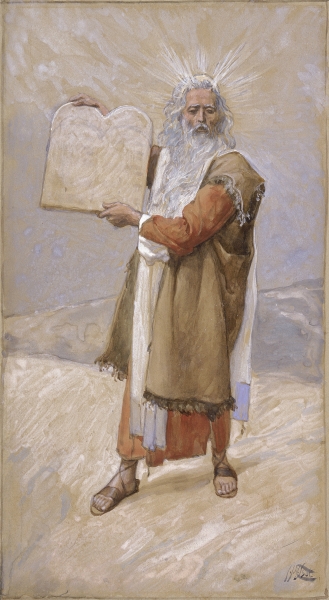
Another early reading from Thursday after Ash Wednesday featured Moses laying out the basic reality that all of us have a choice to make. He says to us,
Today I have set before you life and prosperity, death and doom …
I call heaven and earth today to witness against you: I have set before you life and death, the blessing and the curse (Dt 30:15, 20).
So there it is, our choice: life or death, prosperity or doom. An old Latin expression says, Tertium non datur (no third way is given). We often like to think that we can plow some middle path. But in the matter of the last things, there is no middle path, no third way. Either we choose God and His kingdom, reflecting that choice in all of our smaller decisions, or we do not.
To those who think that a middle path is possible, I would say that it is in effect the way of compromise, ambivalence, and tepidness. Walking such a path shows a lack of real commitment and a refusal to witness to Christ. These are not virtues that belong to God’s Kingdom; they pertain more to the kingdom of darkness. Jesus says, Let what you say be simply ‘Yes’ or ‘No’; anything more than this comes from evil (Matt 5:37). He also says, No one can serve two masters. Either you will hate the one and love the other, or you will be devoted to the one and despise the other. You cannot serve both God and money (Matt 6:24).
So we are back to a choice: for the Kingdom of Light or for the kingdom of darkness, for the world and its ways or for God and His ways. Do we choose to gratify the flesh or nourish the spirit, to serve Satan and his agenda or Christ and His will and plan?
You’re free to choose, but you’re not free not to choose. That is to say, you must choose. And if you think that you can go on simply not choosing one or the other, I’ve got news for you: not choosing is choosing the kingdom of darkness.
While it is true that many do not directly choose Satan, but rather indirectly choose him by following his ways, we are asked to choose God explicitly, by accepting the gift of faith and basing our life on what the Lord commands. Faith is not some sort of “default position” we can have by accident. Faith is the supernaturally assisted and transformed human decision for God and all that that choice implies. Faith is a gift freely offered, and one that we must also freely accept; it is a choice that will not be forced on us. And through many daily choices we are called to reaffirm, by grace, the choice we have made for God.
So again, life is about choices: the fundamental choice of faith and all the daily choices that either affirm or deny the reality of our faith.
We live in times in which people like to demand free choice but at the same time want to evade the responsibilities that come with making choices. Moses goes on in the reading today to describe the fact that the choice we make for or against God will have consequences:
If you obey the commandments of the LORD, your God, which I enjoin on you today, loving him, and walking in his ways, and keeping his commandments, statutes and decrees, you will live and grow numerous, and the LORD, your God, will bless you in the land you are entering to occupy. If, however, you turn away your hearts and will not listen, but are led astray and adore and serve other gods, I tell you now that you will certainly perish; you will not have a long life on the land that you are crossing the Jordan to enter and occupy (Dt 30).
Yes, choices have consequences. And even small daily choices have the cumulative effect of moving us in one direction or the other, toward God and our goal or away.
Many little choices also have a way of forming our hearts. Deeds become habits; habits become character; character becomes destiny. These choices move us into one future or the other.
And while it is true that sudden and dramatic conversions are possible as long as we are still living, it is more common that, as we make our journey, our hearts become more fixed and our fundamental character becomes less likely to change. As we get older, it’s harder to change because that’s what choices do to us: they move us in a certain direction, down a certain path. And the further along that path we go, the less likely we are to turn back.
Therefore, daily choices are important, and making frequent examinations of conscience and frequent confession are essential. Each day we ought to ask the question, “Where am I going with my life?” If we go on too long living an unreflective life, it is easy to find ourselves deeply locked in sinful habits and patterns that are harder and harder to break. Thus, frequent reflection is necessary and we ought not make light of small daily decisions.
We live in times in which, to some degree, it is easier to insulate ourselves from the immediate consequences of many of the choices we make. Medicine, technology, social safety nets, etc. are all good things in and of themselves, but they do tend to shield us from immediate consequences and they help cultivate the illusion that consequences can be forever avoided.
We also live in times in which, perhaps more than ever before, the community is willing to bear the burden of many bad individual choices. Again, this is not in and of itself a bad thing, but it does become an enabler of bad behavior and fosters the illusion that consequences can be avoided forever. They cannot.
Our own culture is currently struggling under the weight of a colossal number of poor individual choices, ones that have added up to a financial, spiritual, moral, and emotional debt we cannot pay. Sexual misconduct, divorce, cohabitation, abortion, STDs, the use of hallucinogenic and addictive drugs, the casting off of of discipline and parental responsibility, the rejection of faith and ancient and tested wisdom, rebellion, silence in the face of sin and injustice, greed, consumerism gone mad, factions, envy, discord, and on and on … all of this is taking a tremendous toll. The consequences are mounting and it is becoming clear that even the most basic functions of society such as raising the next generation, preserving order and stability, and ensuring the common good are gravely threatened.
And what is true collectively is also true for us as individuals. Lots of bad little choices quickly draw us into self-destructive patterns that become more and more ingrained. And without regular reflection and penitential seasons like Lent, we lose our way too easily! St. Augustine noted this in his Confessions, in which he described himself as being bound, “not by another’s irons, but by my own iron will … For in truth lust is made out of a perverse will, and when lust is served, it becomes habit, and when habit is not resisted, it becomes necessity” (Conf 8.5.10).
Moses’ warnings are before us as never before.
Back in 1917, a beautiful and holy Woman (Our Lady) appeared to three young children in Portugal. She explained that the horrifying war (World War I) was finally coming to an end. But, she warned, if people did not turn back to her Son Jesus and start praying, a worse war would ensue; Russia would spread her errors and great disaster would befall this world. Do I need to tell you what happened? Of course not! Any even casual assessment of the 20th century would find it hard to conclude that the century was anything but satanic.
Life and death, prosperity and doom. What will you choose? What will we choose?
In the Beatitudes, and indeed in the whole Sermon on the Mount (Matthew 5-8), the Lord is painting a picture of the transformed human person. The Sermon on the Mount is the Lord’s great moral treatise. But it is not to be understood so much as a list of things to do (out of our own fleshly power) but as gifts to receive from God’s grace. This is what happens to the human person in whom the Lord lives this life through the Holy Spirit.
I have written on aspects of the Sermon on the Mount before, but for Lent this year it may be good to review its essential points little by little throughout the season.
Today, let’s consider the Beatitudes. I want to use here the insights of Fr. Reginald Garrigou-Lagrange in his treatise The Three Ages of the Interior Life (Vol 1, pp 165-173). I include many thoughts of my own as well, rooted in other studies and in my experiences as a spiritual director and directee.
Following St. Augustine and St. Thomas, Lagrange sees the Beatitudes as following the petitions of the Our Father in reverse order and to be divided into the classic categories of the spiritual life: the purgative, illuminative, and unitive ways. Consider, then, some brief reflections on each of the Beatitudes with this schema in mind. Seen in this way, the Beatitudes build on one another and lead us deeper into the spiritual life.
I. The Beatitudes of the Purgative Way – wherein we see sin put to death as the Lord forgives us our sins and delivers us from temptation and evil.
A. Blessed are the poor in Spirit for the Kingdom of Heaven is theirs. The Lord delivers us from the lie of the world that happiness consists in an abundance of possessions and instead roots our joy in the spiritual riches of His Kingdom, which lasts forever. The poor in spirit are those who are poor, but without murmuring, impatience, or jealousy. Blessed too are those who, though more materially fortunate, have not the spirit of riches with pomp and pride, but are detached from the riches of the world, which so easily enslave.
For indeed, the desire for riches divides us; it fosters quarrels, lawsuits, and even violence and war among nations. Such things must be purged from our hearts if we are to find the joy of God’s Kingdom. The transformed human person is increasingly purged of the desire for things that do not ultimately satisfy, and grows in a desire for God and the things of God that await in Heaven (and are available to some extent even now).
B. Blessed are the meek, for they shall inherit the land. Having been purged of the aggressive desire for riches and fearful grasping for what is “mine, not yours,” the faithful are purged of wrathful anger by the Lord.
Meekness is the virtue that moderates anger and preserves the middle ground between too much anger and not enough (for there are things (e.g., injustice) that should incite anger). The meek are given the gift of authority over their anger. They are purged of anger rooted in obsession with improper objects. They possess the land but are not possessed by it.
Purged of excessive and inappropriate anger, they do not seek vengeance nor do they wish to dominate others. They do not judge rashly and do not see in their neighbor a rival to be overcome, but rather a brother to be helped and to be a source of support. The meek are not stubbornly attached to their own judgment. Because they are not dominated by egocentric anger, they are able to express themselves simply and straightforwardly. They do not need to call Heaven to witness in trivial matters. There is little need for a person purged of this sort of anger to feel he must return anger to the angry, or crush a vulnerable oppressor.
To say that the meek are purged of unrighteous anger is also to say that they are purged of the most common root of anger: fear. The first Beatitude removes a good bit of this by purging from us our obsession with worldly and passing matters. No longer obsessed with having more, we are purged of many of our fears as well. And thus the way for meekness is paved. As fear is purged, meekness grows.
C. Blessed are those who mourn for they shall be comforted. Here the Lord delivers us from the lie of the world that pleasures are the source of happiness.
Who are those who weep? First, they are those who weep for love at the recognition of the mercy, love, and goodness of God, who has saved them. They are those who weep for their own sin and ingratitude.
Those who mourn are also those who see the awful state of God’s people. They see that many do not know God, for whom they were made. They see that many, blinded by their sin, are locked in fruitless and sinful patterns and neither glorify God nor experience the true glory of God.
Yes, having come to know the beauty of God and His Kingdom, and having been purged of being enamored with the passing world, the blessed mourn for their own sins and attachments as well as for others who often seem lost and perversely attached to the mere trinkets of this world.
But they are comforted (strengthened) because their purgation helps them to see even more poignantly the beauty of God and His Kingdom. If they weep, they weep over what really matters, not lesser things. Their mourning is a motivating mourning, one that makes them dedicated to making a difference. Their tears come from being purged and lead to deeper purging so that greater blessings can take the place of what has been purged away.
II. The Beatitudes of the Illuminative Way – whereby we learn to see God and His wisdom more deeply and brightly, whereby we receive our daily bread, whereby God’s will is understood more deeply and appreciated more richly.
A. Blessed are those who hunger and thirst for righteousness, for they will be filled. Having been purged of the obsessions and slaveries of the world, our heart is freed. No longer sick on the candy of the world, no longer filled with fattening appetizers, the heart hungers for the true food of God’s Word, Wisdom, and Sacraments.
Through purgation, the Lord creates in us a desire for the better things. He also dilates (enlarges) our heart.
Hunger is very motivating. Seeking the illumination of God’s truth and righteousness is the usual result of a hunger that will not be satisfied by the snacks and empty calories of this world. Once one has read great literature, dime-store novels and formulaic sitcoms no longer satisfy. Higher forms are sought. Milk will no longer satisfy; the true meat of God’s truth is now necessary.
Now that God has purged us and we have reached this stage, He gives us a deepening desire for the very things He wants to give us: the righteousness and holiness of His Holy Spirit. Increasingly, we are satisfied, filled with God, because in our hunger we seek earnestly the things of God. We long for prayer and do not have to be dragged to it. We long for Scripture and the gifts of the Spirit.
Thus, we seek. And having sought, we find and are filled.
B. Blessed are the merciful, for they shall obtain mercy. Having found God and come to know and love Him, we love also the things and people He loves. As it pertains to God to have endless mercy for us who seek it, so too for us: as we are further illumined by God and grow in union with Him, we also grow in abundant mercy for others.
We are able to love, show mercy, and bless others, not because we have to but because we want to. It is increasingly in our reformed, purged, and now illumined nature to do so. We love with the love of God in us; we are merciful with the mercy of God in us.
The merciful obtain mercy because as God sees how His graces abound in us, He is prone and happy to share more and greater graces and mercy. Scripture says, Give and it shall be given unto you in good measure. Why? Because when God can trust us with His gifts, He gives us more, knowing that we will share them.
Since we are all going to need mercy on the day of judgment, here then is a gift of God to particularly benefit us in what we need most: the grace of mercy, in abundance.
III. The Beatitudes of the Unitive Way – wherein, having been purged and illumined, we now enter into deeper union with God, who is our Father, whose name is holy, and whose kingdom has come for us in abundance.
A. Blessed are the pure of heart, for they shall see God. The Greek word καθαροὶ (katharoi) more literally means to be without admixture. Hence the Beatitude can be phrased, “Blessed are the single-hearted.” To be single-hearted is to be focused on one thing. St. Paul says, This one thing I do: forgetting what lies behind and reaching forward to what lies ahead, I press on toward the goal for the prize of the upward call of God in Christ Jesus (Phil 3:13-14).
The pure (single-hearted), having been purged of obsession with the things of this world and having been illumined more fully in the things of God, hungering for them and being filled with them, now see their hearts become more pure, less admixed with the things of this world. Their hearts are singularly focused. Here are the clear waters of a mountain lake; contradictions and hypocrisy are less and less present; the many divisions of heart, the feeling of being pulled in many directions and of having divided loyalties, are largely removed.
Such a blessing to have a “single heart,” a heart set on one thing! Jesus says, If your eye be single, the whole body will be lightsome (Matt 6:22).
And thus, that they “shall see God” means that they will be filled with His light. It is not understood as a mere intellectual seeing. Rather, one who is deeply immersed in the experience of God “sees” Him, experiences Him deeply, and increasingly sees Him everywhere. Cor ad cor loquitur: heart speaks to heart! God is seen by the heart everywhere and in everyone, even amidst trials.
Blessed, happy is such a one!
B. Blessed are the peacemakers for they shall be called sons of God. Souls in this purged, illumined, and increasingly unitive state are at peace and bestow peace on those around them. Since they are docile to the providence of God and the wisdom of the Cross, they are not easily unsettled or fearful. They are serene even in the face of unexpected and troubling events. In their serenity, they are able to confer a calm on troubled souls, to radiate peace. They are not easily troubled by their enemies because, being more united to God and trusting in His providence, they do not fear whatever God allows. Thus they fear their enemies less, and without fear there can be no unrighteous anger. Hence they seek no vengeance, but only peace with their neighbor.
Ah, the blessed peace of those who know they are the children of God! And knowing this, they do not need to have their dignity affirmed by others. Neither can others harm it. If God is for us, who can be against us? If I am God’s child, what harm can anyone do to my dignity?
Ah, the blessed assurance of those who are the sons and daughters of God! Being at peace with God through our Lord Jesus Christ, we radiate that peace to others.
C. Blessed are those who are persecuted because of righteousness, for theirs is the kingdom of Heaven. We become most configured to Christ on the Cross. We are able, by the gift of God, to remain humble and meek in the midst of persecution, even toward the persecutors themselves. In this way, our love of neighbor is perfected. We conquer our pride and the pride of the world by humility and by not being unsettled by the worst it can dispense: loss, torture, and death.
How does the Lord accomplish this? By the grace of having us know and experience that the kingdom of Heaven is ours. Souls that reach this stage have become deeply immersed in the things of God and in God Himself. There is little effect the world can have at this point; God is all.
St John Chrysostom, exhibiting this Beatitude, says,
The waters have risen and severe storms are upon us, but we do not fear drowning, for we stand firmly upon a rock. Let the sea rage, it cannot break the rock. Let the waves rise, they cannot sink the boat of Jesus. What are we to fear? Death? Life to me means Christ, and death is gain. Exile? The earth and its fullness belong to the Lord. The confiscation of goods? We brought nothing into this world, and we shall surely take nothing from it. I have only contempt for the world’s threats, I find its blessings laughable. I have no fear of poverty, no desire for wealth. I am not afraid of death nor do I long to live, except for your good. I concentrate therefore on the present situation, and I urge you, my friends, to have confidence … (Ante exsilim 1)
Here, then, are the supreme gifts of the Beatitudes. They build as God first purges us, then illumines us, then unites us more and more fully to Him, so that finally nothing can shake us. Please see the Beatitudes not as works of your flesh, but as gifts of God’s Spirit, gifts to be supremely desired. During Lent, we realize our poverty and run to God’s wealth. The Beatitudes paint a picture of what God’s grace can accomplish if we but run to Him in repentance and ask Him to accomplish what He died to give us.