The Cycle of Hatred and Retribution Ends with Me – A Homily for the 7th Sunday of the Year

In today’s Gospel the Lord is teaching us, by His grace, to break the cycle of hatred and retribution. When someone harms me I may well become angry, and in my anger seek to get back at the offender. If I do that, though, then Satan has earned a second victory and brought the anger and retribution to a higher level. Most likely, the one who originally harmed me will then take exception to my retribution and try to inflict more harm on me. And so the cycle continues and escalates. Satan loves this.

Break the cycle. The Lord has dispatched us onto the field to turn the game around and break this cycle of retribution and hatred. The “play” He wants us to execute is the “it ends with me” play.

Don’t play on Satan’s team. To hate those who hate me, to get back at those who harm me, is to work for Satan, to play on his team. Why do that?

To advance the ball for Jesus is to break the cycle of retribution and hatred by taking the hit and not returning it. By loving our enemy, we break the cycle of hate. By refusing retribution, we rob Satan of a double victory.

Recall the words of Dr. Martin Luther King, Jr.:

Darkness cannot drive out darkness; only light can do that. Hate cannot drive out hate; only love can do that. Hate multiplies hate, violence multiplies violence, and toughness multiplies toughness in a descending spiral of destruction. … The chain reaction of evil—hate begetting hate, wars producing more wars—must be broken, or we shall be plunged into the dark abyss of annihilation (From Strength to Love, 1963).

Christ, living in us, wants to break the cycle.

The Necessity of Grace – Recall as well a point made in last Sunday’s reflection: that the antitheses contained in chapter 5 of the Gospel of Matthew are pictures of the transformed human person. Jesus is describing here what happens to a person in whom He has begun to live through the Holy Spirit. The verses are a description more so than a prescription. Jesus is not merely telling us to stop being so thin-skinned, easily offended, and retaliatory. He’s not just telling us to stop hating people. If that were the case, it would be easy for us to get discouraged or to write them off as some impossible ideal. No, the Lord is doing something far greater than just giving us a set of rules. He is describing what will happen to us more and more as His grace transforms us.

With this in mind, let’s look at the particulars in three sections.

I. Regarding Retaliation – The first of the antitheses reads as follows:

You have heard that it was said, “An eye for an eye and a tooth for a tooth.” But I say to you, offer no resistance to one who is evil. When someone strikes you on the right cheek, turn the other one to him as well. If anyone wants to go to law with you over your tunic, hand him your cloak as well. Should anyone press you into service for one mile, go with him for two miles. Give to the one who asks of you, and do not turn your back on one who wants to borrow.

Behind this text is the gift from the Lord of a generous heart. Psalm 118 says, In the ways of your precepts I run O Lord for you have enlarged my heart. It takes a large heart not to retaliate, to go the extra mile, to give alms. The transformed mind and heart that Jesus gives us is like this. It is a big heart, able to endure personal slights and attacks, refuse retaliation, and let go of personal possessions in pursuit of a higher goal.

That said, there are surely many questions that arise out of these sayings of Jesus’. Most of them, however, come from seeing Jesus’ words as a legalistic prescription rather than as a descriptive example. Nevertheless, they are important questions.

  • What does it mean to offer no resistance to injury?
  • Does it mean that there is no place for a criminal justice system?
  • Should police forces be banned?
  • It there no place for national defense or armed forces?
  • Should all punishment be banned?
  • Should bad behavior never be rebuked?
  • Am I required to relinquish anything anyone asks me for?
  • Must I always give money to beggars?
  • Is it always wise to give someone whatever he asks for?
  • Should I agree to accept every task that is asked of me?

To answer some of these questions, we do well to recall that the Lord is speaking to us as individuals. The state, which has an obligation to protect the innocent from enemies within and without, may be required to use force to repel threats. Further, it has an obligation to secure basic justice and may therefore be required to impose punishment on those who commit crimes. This has been the most common Catholic understanding of this passage. The New Testament seems to accept that the state does have punitive powers, to be used for the common good.

But don’t miss Jesus’ main point, which is directed to us as individuals. He testifies that, to the degree that we are transformed, we will not seek to retaliate or avenge personal injuries. Rather, due to our relationship with God the Father, we will be content to leave such matters to God. As Scripture testifies, Beloved, never avenge yourselves, but leave it to the wrath of God; for it is written, “Vengeance is mine, I will repay, says the Lord” (Rom 12:19). Further and even more important, to the degree that Jesus lives in us, we will be less easily offended. This is because our sense of our dignity is rooted in Him, not in what some mere mortal thinks, says, or does.

Jesus goes on to give four examples of what He means by us becoming less vengeful and retaliatory.

  1. When someone strikes you on the right cheek, turn the other one to him as well. In ancient times, striking someone in this manner was a sign of disrespect, just as it would be today. There is an intended humiliation when someone strikes another on the cheek. By turning the other cheek, one would then be struck with the back side of the striker’s hand. This was an even greater indignity in the ancient world! But as a Christian in whom Christ is really living, who can really dishonor me? God is the source of my dignity; no one can take it from me. By this grace, I can let any slight pass, because I have not been stripped of my dignity. The world did not give me my dignity and the world cannot take it away. From this perspective, Jesus is not offering us merely the grace to endure indignity, but the grace not to suffer or experience indignity at all.
  2. If anyone wants to go to the law with you over your tunic, hand him your cloak as well. In ancient times, it was forbidden to take someone’s tunic in pledge for a loan. Thus Jesus would seem to be using this example as a symbol of our rights. There are some people who are forever demanding and clinging to their rights. They clutch their privileges and will not let them go even if the common good would require it. They will go to the law rather than suffer any infringement upon their rights. The true Christian thinks more in terms of duties than rights, more of responsibilities than privileges. All this
    “personal honor” stuff is unimportant when Christ lives in us. To be sure, there are some rights necessary for the completion of our duties or for meeting our basic needs. It is unlikely that Jesus has in mind to forbid this. But as a general rule, Jesus is indicating that we can be freed of obsession over our “rights,” “dignity,” and also our personal possessions. Increasingly, we can be freed of the anger that can arise when someone might even think of touching anything that is “ours.” The more we are detached from earthly possessions, the less we get anxious or angry when these things are somehow threatened or used without our permission, or when our precious “rights” are trampled upon.
  3. Should anyone press you into service for one mile, go with him for two miles. It was legal for a Roman solider to press a person into service for one mile to carry things. Some might be bent out of shape over such indignities. Jesus offers us a generous heart that will go the extra mile. Jesus came as the servant of all; He came to serve rather than to be served. To the degree that He lives in us, we will willingly serve and not feel slighted when someone asks us to do something. Neither will we cop the “Why me?” attitude that commonly afflicts the ungenerous soul. The key gift here is a generous heart, even in situations in which others do not assign work to us fairly or appreciate our efforts sufficiently. This is of little concern for us, because we work for God.
  4. Give to the one who asks of you, and do not turn your back on one who wants to borrow. Many questions arise related to indiscriminate giving. In some cases, it may not be wise thing to give money simply because someone asks. But don’t miss the main point here: when Jesus lives in us, we will be more generous. We will give cheerfully and assist others gladly. We will not get bent out of shape when someone asks us for help. We may not always be able to help, but our generous heart will not begrudge the beggar; we will remain cheerful and treat him or her with respect.

Here, then, is a description of a transformation of the mind and heart. We will view things differently. We will not be so easily bent out of shape, retaliatory, or vengeful. We will be more patient, more generous, less grasping, and more giving. This is what happens when we live in a transformative relationship with Jesus.

II. Radical Requirement – Love your enemy.

You have heard that it was said, “You shall love your neighbor and hate your enemy.” But I say to you, love your enemies, and pray for those who persecute you, that you may be children of your heavenly Father, for he makes his sun rise on the bad and the good, and causes rain to fall on the just and the unjust. For if you love those who love you, what recompense will you have? Do not the tax collectors do the same? And if you greet your brothers only, what is unusual about that? Do not the pagans do the same?

This is the acid test, the hallmark of a true Christian: love of one’s enemy. Note that the Lord links this to being a true child of God. Why? Because God loves everyone and gives gifts of sun and rain to all. If we are a “chip off the old block,” we will do the same. It’s easy to love those who love us, but a Christian is called to fulfill the Law and exceed it.

If Christ lives in us, then we will love even our enemy. Recall that Jesus loved us even when we hated Him and killed Him. Jesus said, Father, forgive them; for they know not what they do (Luke 23:34). Elsewhere in Scripture is written, While we were his enemies we were reconciled to God by the death of his Son (Rom 5:10).

We should be careful not to make love an abstraction. The Lord is talking about a real transformation of our hearts. Sometimes we say silly things like this: You don’t have to like everyone but you have to love them. This turns love into something of an abstraction. God doesn’t just love me; he even likes me. The Lord is talking about a deep love that wills good things for our enemy and even works toward them.

We are called to have compassion, understanding, and even affection for those who hate us and will us evil. We may wonder how this can happen in us. How can we have affection for those who hate us? It can be so when Christ lives His life in us. We will good and do good to them who hate us, just as Jesus did.

It is also important not to sentimentalize this love. Jesus loved His enemies but did not coddle them. He spoke the truth to the Scribes and Pharisees of His day, often forcefully and uncompromisingly. We are called to a strong love, one which wants the truth for everyone, but we must give this testimony with understanding and true (not fake or false) compassion.

III. Remarkable Recapitulation – Finally, the Lord says,

So be perfect, just as your heavenly Father is perfect.

Here is the fundamental summary, the recapitulation: God-like perfection! Nothing less will do. How could there be anything less when Christ lives His life in us? To the degree that He lives in us and the old Adam dies, we become perfect. This is the state of the saints in Heaven: they have been made perfect. Christ’s work in them is complete. The Greek word used here is τέλειός (teleios) which means complete or perfect. Thus, the emphasis is on the completion of a work in us more so than mere excellence in performance. Paul writes to the Philippians, And I am sure that he who began a good work in you will bring it to completion at the day of Jesus Christ (Phil 1:6).

This sentence also serves as an open-ended conclusion to the antitheses today’s Gospel. It’s almost as if Jesus says, “I’ve only given you a few examples here. The point is to be perfect, complete in every way, totally transformed in your mind, heart, and behavior.”

And thus we return to the original theme: it ends with me. In these final two antitheses the Lord wants to break the cycle of anger, retribution, and violence. He wants the downward spiral of hatred and vengeance to end with me. When, on account of His grace, I do not retaliate, I break the cycle. When I do not escalate the bitterness or return the spite, when I refuse to allow hate to take possession of me, the cycle ends with me. Only God can do this for me.

But He does do it. I promise you in the Lord Jesus Christ that He can deliver us from anger, wrath, vengefulness, and pettiness. I can promise you because He is doing it in me. I do not boast; I am only telling you what the Lord has done. For the most part, I have been delivered from my anger, something that was once a major struggle for me. It is not any longer. I did not deliver myself—Jesus did. The promise of the Lord here is true. Only God can do it. He has said it and He will do it—if we let Him.

This song says, “I Look to you. After all my strength is gone, in you I can be strong. I look to you!”

King of Thieves and King of the Universe – A Homily for the Solemnity of Christ the King

nov19Jesus Christ is King of Thieves, though He never stole. He is savior of sinners, though He never sinned.

Today’s Gospel chosen presents Jesus as reigning from the cross. Nothing could be more paradoxical. Let’s look at it from four perspectives: 

I. Vision Today’s Gospel presents a vision or image of the Church. We like to think of more pleasant images: the Church is the Bride of Christ or the Body of Christ. Today’s image is more humbling to be sure: the Church is Christ, crucified between two thieves. 

Yes, this is the Church too. In a way, we are all thieves. We are all sinners and have used the gifts and things that belong to God in a way contrary to His will. To misuse things that belong to others is a form of theft.

Consider some of the things we claim as our own and how easily we misuse them: our bodies, our time, our talents, our money, the gift of our speech, and the gift of our freedom. We call them ours but they really belong to God, and if we use them in ways contrary to His intention we are guilty of a form of theft.

II. Variance Consider, also, that the two thieves were very different. In the Church we have saints and sinners, and in the world there are those who will turn to Christ and be saved and others who will turn away and be lost.

  1. One thief (the “bad thief”) derides Jesus and makes demands of Him. Are you not the Christ? Save yourself and us! The text says that this thief “reviles” Jesus, treating him with contempt.
  2. The other thief (the “good thief”) reverences Christ and rebukes the other, saying, Have you no fear of God? The good thief recognizes his guilt: We have been condemned justly. He asks, Jesus remember me when you come into your kingdom, but he leaves the terms of it up to Christ. He acknowledges that he is a thief and now places his life under the authority of Christ the King. 

Christ came to call sinners—thieves, if you will. Yes, we are all thieves, but pray God that we are the good thief, the repentant thief, the thief who is now ready to submit himself to the authority of Christ, who is King of all creation.

Heaven is a real steal, something we don’t deserve; it is only accessed through repentance and faith. The bad thief wants relief but will not open the door of his heart so that Jesus can save him. Mercy is offered and available to him, but it is accessed only through repentance and faith. The good thief does open the door of his heart and thereby is saved.

III. Veracity Is Christ really your king? A King has authority, so another way of posing this question is, “Does Christ have authority in your life?” Consider whether you acknowledge that everything you call your own really belongs to God and think about how well you use those gifts.

  1. How do you use our time?
  2. Are you committed to pray and to attend Mass every Sunday without fail?
  3. Do you use enough of your time to serve God and others, or merely for selfish pursuits?
  4. Do you use the gift of your speech to witness and evangelize, or merely for small talk and gossip?
  5. Do you exhibit proper care for your body?
  6. Are you chaste?
  7. Do you observe proper safety or are you sometimes reckless?
  8. Do you reverence life?
  9. Are you faithful to the Lord’s command to tithe?
  10. Do you spend wisely?
  11. Do you pay your debts in a timely way?
  12. Are you generous enough to the poor and needy?
  13. Do you love the poor and help them to sustain their lives?

It is one thing to call Christ our King, but it is another to be truly under His authority. The Lord is clear enough in telling us that he expects our obedience: Why do you call me, “Lord, Lord,” but do not do what I tell you? (Luke 6:46)

Is Christ your King? Which thief are you, really?

IV. Victory – The thief who asked Jesus to remember him manifested repentance, faith, and a kind of baptism of desire. In so doing, he moved into the victor’s column. Jesus’s words, Today you shall be with me in paradise, indicate a dramatic shift in the thief’s fortunes.


To be with Jesus—wherever He is—is paradise and victory. Soon enough, the heavens will be opened, but the victory is now and paradise begins now.


Thus the good thief claims the victory through his choice for Jesus Christ. Will you have the victory? That depends on whether you choose the prince of this world or the King of the Universe, Jesus. Some think that they can tread some middle path, choosing neither Jesus nor Satan. But if you do that, you’ve actually chosen the prince of this world, who loves compromise. Jesus says, Whoever is not with me is against me, and whoever does not gather with me scatters (Matt 12:30).


As for me, I’ve decided to make Jesus my choice. I pray that he will truly be my King in all things and that my choice will be more than mere lip service. Come, Jesus, reign in my heart. Let me begin to experience victory and paradise, even now!

A Funeral Sermon Designed to Teach on the Last Things and Inspire Prayer

funeral-homilyIn Monday’s post, I discussed some of the more common problems with funerals; it provides background for the homily I summarize in today’s post. In it, I tried to teach on what I think are the central themes that should be emphasized in Christian funerals. I do not necessarily preach every word you see here at every funeral, but I do address these basic themes.

The homily I typically give at funerals is broken into three main parts:

  1. Praise of the divine goodness of God – At every liturgy, funerals included, the first and primary work is the praise and worship of Almighty God, who has been good to us and through faith has saved us. It is appropriate for us to render praise and thanks for the gifts that the deceased received from God and to properly acknowledge, with respect, some aspects of his or her life.
  2. Prayers for the deceased – Too often, on account of universalism (the notion that all men are saved), prayers for the deceased (and for the dead in general) are often neglected; the dead are inappropriately assumed to have been “promoted” to Heaven immediately upon death.
  3. Preparation for death – Many people today are not properly preparing for death; they do not live as though they must one day render an account to God and are destined to be judged under the law of freedom.

No homily I have ever preached has been perfect and neither was this one. It merely represents my own meager attempt to teach more fully on the many truths regarding death, judgment, Heaven, and Hell that are too often neglected in funeral masses today.

I preached the following sermon on Nov. 11, 2013, at the Funeral Mass for James Cade. The audio recording is a little more than twenty minutes long. The following is a rough transcription:

Introduction Joan, Robert, Joseph, and all who are here for our brother James: I first of all share with you my condolences at his passing. I know that he had a battle with cancer. I know how he fought to live. He certainly wanted to see his son’s (Joseph’s) wedding, and thanks be to God, that took place. And I know all that Robert said to me about the great love for all of you, unto the very end … and the kiss goodbye. It was a beautiful sign of his love for you (Joan) and his family.

I. Praise of Divine Goodness We come to gather in this church today, and the first thing I hope you came to do is to praise the Lord, to worship God. I think sometimes when we come to a funeral our first instinct is to think, I’ve come to pay my respects (to James); I’ve come to honor and support the family. And that’s all good and beautiful. But our first instinct in walking into God’s House should always be to worship, to give glory, to praise, and to give thanksgiving to God, who is the giver of every good and perfect gift.

There’s a lot to be grateful for, yes, even at a funeral. All of you have in your minds some things that James Cade gave to you: gifts, words of encouragement, support, even the gift of life. You all have memories and you’re grateful! But remember, as Scripture says, Every good and perfect gift, comes from above, comes from the Father of Lights, in whom there is no variableness, neither shadow of turning (James 1:17).

I certainly know that this country owes a debt of gratitude to our brother James, who served for over twenty years in the United States Air Force. We need to remember that those who serve in the military are peacemakers. Scripture says, Blessed are the peacemakers, for they shall be called the sons of God (Matt 5:9). Because, you see, they put their lives on the line to make those who would disturb the peace or would rob us of justice think twice. In so doing, they preserve the peace. Scripture also says, Greater love hath no man than he would lay down his life for his friends (Jn 15:13). All those who serve in the military, including our brother James, put their lives on the line so that you and I can live in greater security, freedom, and peace. Those in our military don’t just protect this country; they go all over the world (and I know, not without some controversy). They go there; they obey their orders; and they take care of the people in each region.

And so all of us bring with us blessings from and memories of James: all that he was to us, to this country, to his community. We remember his life of service overseas and at home, his love for God, his love for family, his more than forty years of faithful marriage. And oh, what an important witness that is today!

I know we all bring with us many great memories, many thoughts of gratitude for our brother, for all that he was and is for us.

But I also hope you will remember that whatever James had to offer, he received from God. So we are here today to say thank you, Lord. We worship you, we praise you, and we thank you. You are the giver of every good and perfect gift. It all comes from you! Everything our brother James was, came from you. Thank you, Father. We love you, we worship you, and we praise you through your Son, Jesus.

We thank you, Jesus, for dying for our brother. The greatest truth I have to say to you all today about our brother James is not about any good work of his. It is simply this: Jesus Christ loves our brother, died for him, and went to Heaven to prepare a place for him. As Jesus said to Martha in today’s Gospel, and to us here today, Your brother will rise. … I am the Resurrection and the Life, and whoever believes in me (and our brother James believed in Him) will rise!

And so we’ve gathered today to praise the Lord.

Even our brother James’s sufferings at the end of his life are something for which we should praise and thank God. The same is true of any sufferings that you are enduring. In the Second Letter to the Corinthians, St. Paul said, Therefore, we not discouraged. Although our outer self (our body) is wasting away, our inner self is being renewed, day by day. For this momentary affliction is producing fro us a weight of glory beyond all compare (2 Cor 4:16-17). Even at the end of James’s life, as he suffered with cancer and the effects of surgery, I tell you that his suffering was a gift, though in a strange package!

Scripture says, in Romans 8:28, All things work together for good, to them that love and trust the Lord and are called according to his purposes. Notice it says, ALL things, not just the good things…but even the difficult and the painful things work for our glory, if we give them to God, as our brother did. I say this to you again, whatever sufferings he endured, they produced glory. Again, St. Paul says, This momentary afflicting is producing a weight of glory beyond compare.

And so if you brought any suffering with you into this Church today, remember that the devil wants you to be discouraged. You just tell him, “I’m encouraged! I’m going to praise the Lord anyway! Because whatever I am going through, it’s producing a glory for me far greater than any suffering I must endure. I’m not discouraged; I’m encouraged. Because whatever I’m going through, it’s productive!”

So today, I hope and pray that you came to praise the Lord. Every good and perfect gift comes from Him! And we’ve come to praise Him.

II. Prayers for the Deceased I also hope that you came today to pray for our bother, James. A lot of times in Christian funerals today we skip a step. Very often when someone passes away we hear statements that he is “in Heaven now,” or “in a better place.” We need to be careful not to miss a step.

The Bible does not teach that you die and go straight to Heaven. Rather, it says that there’s a little “pit stop” first. The book of Hebrews says, It is appointed to us to die once, and thereafter the judgment (Hebrews 9:27). Similarly, St. Paul said, We must all appear before the judgment seat of Christ and render an account for what we have done, whether good, or evil, and receive recompense or punishment for what we have done (2 Cor 5:10).

All of us need to remember that when someone dies, his first destination is the great judgment seat of Christ. And brothers and sisters, that is worth praying about! I’m not planning to die today, but if I do, would you please pray for me? Because when I go to judgment, I go to render an account. I am a believer. I love Jesus Christ and I know that He loves me and that He died for me. But I need to go and have an honest conversation with the Lord. And I would ask you to pray for me. I know, then, that our brother James both wants and needs our prayers, because he has gone to that judgment seat.

What is the judgment in question for a believer? Does not the Lord say, If you believe I will raise you up on the last day? So what, then, is this judgment?

It is based on a promise the Lord made to our brother James and to all of us at our baptism. It is at the end of the 5th chapter of Matthew’s Gospel: You must be perfect as the Heavenly father is perfect (Matt 5:48). Hmm … Has anyone been able to do that yet? Me neither!

Although it may sound like a threat, it’s not a threat; it’s a promise. The Lord says that when He has fully accomplished His work in you, when His grace has had its full effect, you will be perfect. And not just humanly perfect, but with a Godly perfection!

The Lord said to St. Catherine of Siena, “Catherine, if you were ever to see a soul up here with Me in glory and perfected, you’d fall down and worship, because you’d think that you were looking at Me.” Do you understand? That is our dignity. One day we will share a perfection that is the perfection of God Himself.

If I were to die today, I would go to the Lord knowing that perfection isn’t done yet, that there are still a few things to be accomplished; I’m sure that the Lord would show me some things that still needed to be completed.

The judgment in question for our brother James is this: “James, is my work in you accomplished?” St. Paul wrote to the Philippians, May God who has begun a good work in you bring it to completion (Phil 1:6).

The judgment in question for each of us will be this: Is the Lord’s work in you complete? What remains to be done? The Lord will say, “Now I will bring it to completion.” How exactly the Lord does that, I can’t say. Does it happen quickly? Does it take time? I don’t even know if there is such a thing as time after we die.

All I know is that we are commissioned by the Church and by Sacred Scripture to pray for those who have died, to lift them up in prayer. We ought to pray for the dead as they go to the judgment seat. There they have that conversation with Christ. Whatever is incomplete must be completed. For Jesus, who loves us, will leave nothing incomplete. He will accomplish the promises He gave to our brother James, and make him perfect. And for our part, we give him to Jesus and say, Jesus, we love our brother James and we entrust him now to your care.

And this isn’t just about our sins. Honestly, is there anyone here who isn’t carrying baggage with us that we know we can’t take to Heaven? I’m not just talking about sins; I’m also talking about heartaches, hurts, and regrets we might be carrying. We can’t take those things to Heaven or else it wouldn’t be Heaven! There is a beautiful line in the Book of Revelation that says of Jesus regarding death, He will wipe every tear from their eyes (cf Rev 21:4). This is part of what we call in the Catholic Tradition the process of purgation. The Lord wipes the tears from our eyes: sorrows, regrets, rough edges of our personality, the effects of sin that still cling to us. The Lord takes good care of it all. He wipes the tears and purifies us with holy fire.

Now whatever James brought to the judgment seat, if he had any tears still in his eyes, that’s between him and Jesus. But we pray and we say thank you, Jesus. Thank you, Lord. We give you back our brother, whom you gave to us. We give him back to you with love and prayers. We call upon your mercy and judgment and ask you to bring to completion anything that was incomplete. We do this, knowing by faith that You are rich in mercy. And so we have hope and confidence as we make that prayer.

III. Preparation for Death I want to say one final thing today. I asked you to make sure that you came to this Church to praise the Lord and pray for our brother James. I am also going to ask you to pray for yourself, and to ask you this: Are you prepared?

Now please know that I say this at every funeral. I call it my “Come to Jesus talk.” I do it because I often meet people at funerals that I never meet anywhere else. I don’t know everyone’s walk and where they are in it.

I want to use this opportunity to tell you this powerful truth. Our brother is teaching us even now; the Lord is teaching us. I’m not going to dress it up in any way. I’m just going to say it, plain and simple:

You are going to die. Yes, you are going to die. And you don’t get to say when. You might be thinking, I’m planning to live a good number of years more, preacher; I’ve got it all figured out. Listen, I can’t promise you the next beat of your heart! I did check before Mass and the roof is in pretty good condition, so it probably won’t crash in during the funeral, but really, I can’t promise you anything. I can’t promise you that you’ll live to see the end of this day. Sometimes we say, “I’ll take care of that tomorrow.” But tomorrow isn’t promised.

I hope and pray that each one of you has given your life to Jesus, that you’re repenting of your sins, that you’re serious about preparing for your own death and your appointment at the judgment seat of Christ.

And even if you don’t need to hear what I am saying, there are others here who do. There are just too many people today who are not serious about their spiritual walk. They’re running around as if life is just some big game. They’re not thinking about their destiny to appear before the judgment seat. They’re not praying. They’re not reading Scripture. They’re not growing in their faith. They’re are not going to Mass on Sundays. And many of them are stubbornly locked in very serious and unrepentant mortal sin. They are not going to be ready! I pray that is not true of anyone here, but if it is, I simply say, Turn to Jesus. Repent. Give Him your life.

Pray every day. Some folks tell me that it’s hard to pray, or that they don’t know how to pray. Well do you know what you’re doing when you say that? You’re already praying! But don’t tell me, tell God. If that’s where you’ve got to begin with your prayer, say to Him: “Lord, I don’t like to pray. I struggle to pray. Prayer is boring.” Tell Him whatever you need to tell Him. Prayer isn’t reading words that somebody else wrote that you don’t mean. Prayer is talking to the Lord and telling Him what’s going on in your life. Prayer is paying attention to God.

I hope that you read Scripture every day and study the teachings of the Church. Brothers and sisters, there is too much stinking thinking out there for us to believe that our minds will be anything but polluted if we don’t cleanse them every day with God’s Word and the teachings of the Faith. Some folks say its hard to understand Scripture. But there are so many aids available: “My Daily Bread,” “Magnificat” magazine. Some folks even get the Word sent to their cell phones each day along with some commentary. You say, “I can’t figure all that out.” Well, then, get a fifth grader to help you set it up! But somehow, get with God’s Word every day. After all, we seem to be able to find time for everything else.

I also say to you, get to Church every Sunday. I hope that you all have a church that is home to you. I hope that each one of you is in God’s house every Sunday. God is worthy of our praise. For us not to praise Him displays an egregious lack of gratitude. But also, we need to come to God’s house so that we can be instructed and then fed with the Body and the Blood of the Lord. Jesus says, If you do not eat my flesh and drink my blood, you have no life in you (Jn 6:53). Some people say, “Oh, I watch the Mass on TV.” But you can’t get Holy Communion through the television. And you can’t get real fellowship. If you don’t have a church you call home, please find a parish and go to Mass there. Receive Communion every Sunday, provided that you are in a state of grace. God put it in the Ten Commandments: Remember to keep holy the Sabbath. He knows that we need it!

If you are aware of any serious or unrepented mortal sin in your life, I beg of you, repent and call on the Lord’s mercy. Some folks tell me, “I’m in such a mess that I don’t know how to get out of it.” Go to the Lord and talk to Him about it. Say, “Help me, Lord!” But please, do not go on calling “good,” or “no big deal” what God calls sin! The Lord says, No one who calls on me will I ever reject (Jn 6:37).

Too many people today say, “I will not be told what to do. I will not be told what is right and wrong.” The one thing that God can’t really save us from is that kind of pride, because with it we don’t want to be forgiven. And so again I say to you, be urgent about it. I hope that no one here today needs to hear this, but then tell someone who does.

No one loves you more than does Jesus Christ, and yet no one warned about judgment and Hell more than He did. Many people today are dismissive about judgment and Hell. They say, “Jesus would never do that.” But Jesus told us over and over again that there will be a judgment, and it’s not so much about what He decides, but what we decide through the way we live our life. Jesus says this: Here is the judgment in question, that the Light has come into the world, but many prefer the darkness, because their deeds are sinful (Jn 3:18). So there is a judgment coming. The Lord warns us in parable after parable. I simply ask you to be ready.

I know that many of you are solid and strong in your faith. Thanks be to God for that. That is His gift. But if anyone here needs to hear this message, please listen! As an ambassador for Christ I cry out, be reconciled with God!

Summation So today, we’ve come together first of all to praise the Lord. Thank you, Lord, for our brother, James Cade. Thank you for all he did. Thank you for all he was and still is. Thank you, Lord. We praise you. You are the giver of every good and perfect gift.

We also pray for our brother: Receive him now, Lord. Receive him into your mercy. If there are any struggles or sins he brought with him to the judgment seat, purify him, Lord. Cleanse him of that; wipe every tear from his eyes. We give him to you, Jesus. We know you’ll be good to him because he had faith in you.

And to ourselves, we say it’s time to get ready. I’m going to die and I don’t get to say when. Do I need to repent? Do I need to pray? Do I need to prepare more? Do I need to be more serious? Please, Lord, help me to get ready.

The greatest way to honor our brother James is to imitate his example and get ready to meet Jesus. The very last food that James received was the Eucharist. In the Catholic Tradition, this is called the viaticum, which means “I (the Lord) am with you on your way (via tecum).” Our brother did not leave this world on his own; he went with his guardian angel. But Jesus led him with that viaticum. He led James across the valley of the shadow of death with His rod and staff to give him courage. James went with the prayers of Mary and all the angels and saints, to be led toward paradise. The Lord has had that honest conversation of judgment with him.

And now we simply say, thank you, Lord. Thank you for your love for our brother, James. Take good care of him now, Lord. We pray for him, and we ourselves keep watch over our own souls. Amen.

Our Journey Through a Passing World – A Homily for the 33rd Sunday of the Year

nov12-blogDuring the month of November, the Church has us ponder the Four Last Things: death, judgment, Heaven, and Hell. As the golden gown of autumn gives way to the lifeless look of winter, we are encouraged to see that our lives are on a trajectory that leads to autumn and then to the winter of death. But those who have faith know that this passage to death ultimately leads to glory. Scripture says, And the world passes away, and the lust of it; but he who does the will of God abides forever (1 John 2:17).

In today’s Gospel, the Lord Jesus gives us a kind of road map of life and calls us to be sober about the passing and perilous nature of this world.

There is an historical context in which our Lord speaks. There were political rumblings in Israel in the early 30s AD that would eventually lead to war. Hatred of the Romans was growing among the Jews. The Zealot party and other factions were gaining power. In today’s Gospel, Jesus prophesies that war will come and lead to Jerusalem’s ultimate destruction; everything that the people know will pass away. By the summer of 66 AD, a three-and-a-half-year war was underway that resulted in the complete destruction of Jerusalem and the death of 1.2 million Jews. Josephus recorded the war in great detail in his work The Jewish War.

That is what this text meant historically. But we also need to understand what it means for us today. So let’s look at the text from that perspective. Today’s Gospel can be seen in three major sections.

I. Portrait of Passing ThingsWhile some people were speaking about how the temple was adorned with costly stones and votive offerings, Jesus said, “All that you see here—the days will come when there will not be left a stone upon another stone that will not be thrown down.” Then they asked him, “Teacher, when will this happen? And what sign will there be when all these things are about to happen?” Notice how they admire the temple and its beauty. But the Lord reminds them that although it is glorious now, it will all be destroyed. We, too, must understand that whatever glory we see or experience in this world will not last; in the end it will all pass away.

The Temple is a symbol of passing things. Just as it was once in splendor and now is gone, so everything we see today will pass. This is a sober truth that we must come to accept, difficult though it may be. Other Scriptures also remind us of this truth: The world as we know it is passing away (1 Cor 7:29). And the world passes away, and the lust of it; but he who does the will of God abides forever (1 John 2:17). This world is passing and we, too, will pass from it one day.

Note, however, that for them as well as for us, although one world ends, another begins. The Old Testament, Old Covenant, and ritual order of the Temple was ending, but the New Testament age of the Church was beginning. It was already breaking forth even as the old was coming to an end.

And so we should not lament the end of this world or even our own death. A newer, greater world—that of Heaven—awaits those who are faithful. In fact, through the liturgy and the sacraments, that new world is already breaking forth for those who partake of it.

II. Points of Passage to Promised Things – Having been informed that all things will pass, the disciples ask for signs that will precede the coming end. We can learn from what Jesus teaches them and apply it to our own lives today.

Jesus warns them of four perils on the passage to the promised land of the New Testament age of the Church. We, too, will experience dangers in our journey to the promised land of Heaven.

A. False Messiahs “See that you not be deceived, for many will come in my name, saying, ‘I am he,’ and ‘The time has come.’ Do not follow them!” If you want Jesus Christ to be the Lord of your life, then you’ve got to get rid of false messiahs.

Too many people give greater authority in their life to people and worldly things than they do to Jesus Christ and His teachings. We submit our lives to all sorts of fads, fashions, philosophies, and people in hopes that we will be happy.

Perhaps it is someone in power whom we admire, or someone in the media whom we allow to influence us inordinately. Perhaps it is political positions that we allow to trump the Scriptures and the teachings of the Church. Perhaps it is just our personal convictions or ideas that we allow to overrule God’s teachings.

A false messiah is anything or anyone other than Jesus Christ telling you how to organize your life. Before Christ can reign unambiguously in your life, false powers and influences have to go.

Too many people look only to science, popular culture, economics, medicine, education, politics, and the like for guidance; they have been deceived.

It is not that we can’t use these things at all, but they are not a replacement for the Messiah. None of these things or people died for you. Only Jesus did that.

The power to save you is not in the statehouse, the courthouse, or the White House—it is in the saving blood, of the Lamb, our Lord Jesus Christ.

B. Fierce Militarism “When you hear of wars and insurrections, do not be terrified; for such things must happen first, but it will not immediately be the end.” Then he said to them, “Nation will rise against nation, and kingdom against kingdom.” A war was looming for those ancient people.

We, too, are in a war, a battle. Before Christ can reign unambiguously within you, the false powers in you must be defeated. But they will not go without a fight. The world, the flesh, and the devil can be expected to wage a fierce battle in order to keep their power.

Are you in a battle? You should be! Too many Christians have lost the sense of battle. Scripture says, Resist the devil and he will flee from you (James 4:7). Yet not only do too many people not resist him, they welcome him! Scripture also says, Stand therefore, having girded your loins with truth, and having put on the breastplate of righteousness, and having shod your feet with the equipment of the gospel of peace; besides all these, taking the shield of faith, with which you can quench all the flaming darts of the evil one. And take the helmet of salvation, and the sword of the Spirit, which is the word of God (Eph 6:14).

An old hymn says, I’ve seen lightning flashing, and hear the thunder roll, I’ve felt sin-breakers dashing, which tried to conquer my soul; I’ve heard the voice of my savior, he bid me still to fight on. He promised never to leave me never to leave me alone.

On our way to the promised land of Heaven, we will encounter necessary battles: battles for what is right, battles against sin, battles for proper priorities.

C. Far-flung Marvels“There will be powerful earthquakes, famines, and plagues from place to place; and awesome sights and mighty signs will come from the sky.” In the time of Jesus and the era just preceding the war, there were in fact many earthquakes, droughts, and even heavenly signs. Historians of the time wrote of a comet and strange views of what we know today as the Aurora Borealis.

But what of us? What are the earthquakes of our life? Earthquakes involve the shaking of the ground, the shaking of that which seems most stable to us. What is the foundation of your life?

For most of us, the foundations of this world are things like money, politics, friends, family, and our own skills. All of these things are shaken in life and all of them will eventually fail. Our talents and abilities fade as we age. Friends and family members move away, fail us, and eventually die. Political power and worldly access ultimately fails. Haven’t we all experienced our world shaken, our soul famished, the plagues of sin infecting our world and ourselves?

Furthermore, haven’t stars grown cold, meteors fallen from the sky, the sun been hidden from our eyes from time to time? Has not our world at times been “turned upside down”? Maybe it was the sudden death of a loved one, the loss of a job, or a diagnosis of cancer.

This is why God must be our ultimate foundation, the star by which we navigate. If Jesus is not our foundation, then something else is. Without God as our foundation, we cannot last. The foundations of this world will all ultimately crumble. Christ must be our sure foundation.

D. Fearful Malice Before all this happens, however, they will seize and persecute you, they will hand you over to the synagogues and to prisons, and they will have you led before kings and governors because of my name. It will lead to your giving testimony. Remember, you are not to prepare your defense beforehand, for I myself shall give you a wisdom in speaking that all your adversaries will be powerless to resist or refute. You will even be handed over by parents, brothers, relatives, and friends and they will put some of you to death. You will be hated by all because of my name, but not a hair on your head will be destroyed.” The early Christians were greatly persecuted. Most of us in the Christian West have had less to suffer, more difficult days may well be ahead as the secular West grows increasingly hostile to traditional Christianity.

Persecution, however, is an expected part of the Christian journey to the promised land of Heaven. Even if we are not “handed over,” many of us today are not taken seriously, are written off, or are called names even by our friends and family.

Christ tells us not to worry about such things because they are part of the normal Christian life. Even if some of us eventually lose our life for the faith, the Lord promises that not a hair of our head will be harmed. That is, our souls will be saved. The world can only harm our body; it cannot harm our soul unless we allow it to do so.

III. Prescription for the Passage to Promised Things By your perseverance you will secure your lives.” We must always journey on and not lose faith or lose heart. There is glory waiting for us if we persevere.

Scripture says, But he who endures to the end will be saved (Mat 10:22). For yet a little while, and the coming one shall come and shall not tarry; but my righteous one shall live by faith, and if he shrinks back, my soul has no pleasure in him.” We are not of those who shrink back and are destroyed, but of those who have faith and keep their souls (Heb 10:37).

An old spiritual says, “Hold on just a little while longer; everything’s gonna be all right.”

In this regard, the end of the Book of Daniel also seems pertinent: [Daniel asked the Archangel Gabriel], My lord, what will the outcome of all this be?” He replied, “Go your way, Daniel, because the words are rolled up and sealed until the time of the end. Many will be purified, made spotless and refined, but the wicked will continue to be wicked. None of the wicked will understand, but those who are wise will understand. … As for you, go your way till the end. You will die, yet at the end of the days you will rise to receive your reward” (Daniel 12:8-10, 13).

Yes, on our journey through this passing world it is necessary to persevere unto the end. If we do not, greater woes will come. If we do, there will be glory for us on the other side.

Enigmatic Yet Enduring – A Homily for the Feast of the Dedication of the Lateran Basilica in Rome

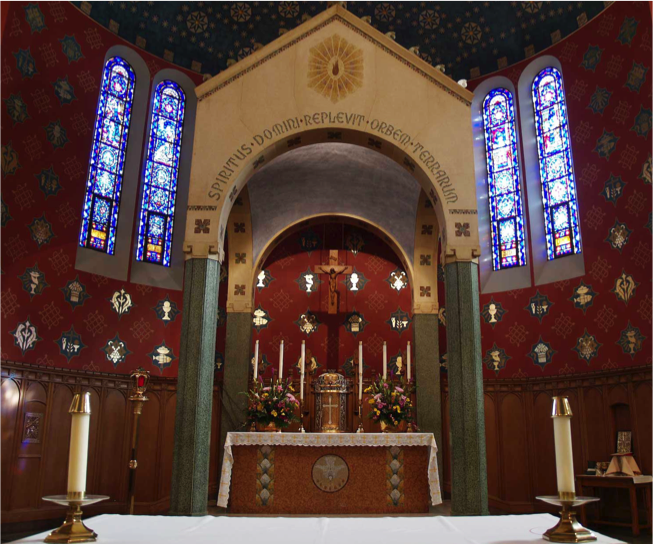
st-john-lateran-basilica-in-romeToday is the Feast of St. John Lateran Basilica in Rome. This, not St. Peter’s is the Pope’s true Cathedral. And thus in celebrating this Feast, we celebrate the unity of the Church. The Pope’s work is to unite and strengthen the members of the Church, whom the devil would like to sift (divide) like wheat (see Lk 22:31ff). On this feast, we do well to examine a few teachings about the Church from today’s readings.

I. The Shock of the Church One of the more puzzling aspects of God’s approach to reaching us is His subtlety. Considering that God could thunder from the heavens and visibly, forcefully interject Himself into the doings of this world, His quiet and more subtle methods surprise and even shock us. In terms of entrusting His message to the world, His methods seem even stranger to us. Jesus never wrote a book or left anything physical behind that related to His person. Instead, He taught disciples and entrusted His teachings specifically to twelve rather ordinary men, telling them to go out into the whole world! So much of the Lord’s plan seems to depend upon weak human beings. Scripture says,

For, “everyone who calls upon the name of the Lord will be saved.” But how are men to call upon him in whom they have not believed? And how are they to believe in him of whom they have never heard? And how are they to hear without a preacher? And how can men preach unless they are sent? … So faith comes from what is heard, and what is heard comes by the preaching of Christ (Rom 10:13,14).

But what if preachers are unholy or lazy? What if they are weak or ineffective? Are you shocked and scared that God would make your faith depend upon the preaching of the Church? Or do you trust that God can work even through weak, sinful, inconsistent human agents to accomplish His mission?

We might speculate that the Lord chooses not to overwhelm us (as Satan does) since His call is one of love. He seeks sons and daughters who love Him, not slaves who cower in fear and say yes more to escape His wrath than to enjoy His love. Perhaps He uses this quieter and less overwhelming way so as to propose rather than impose. The Feast of St. John Lateran Basilica commemorates the Pope’s Cathedral in Rome and is a symbol of the endurance of this unlikely system. During the age of the Church, nations have risen and fallen, and empires have come and gone, yet we are still here. The Psalm today says, The LORD of hosts is with us; our stronghold is the God of Jacob (Ps 46:8).

Many today express shock and horror at sin and weakness within the Church. And it is a disgrace when the charges are accurate. But remember, Jesus was found in some pretty strange company as He walked this earth. He dined with sinners and spoke the truth to them. He compared Himself to a doctor caring for the sick. It is no surprise, then, that the Church (a hospital, really) would care for sick sinners.

Whatever His reasons, the Lord does not follow the usual “marketing plan” of the world, what with all its loud and intrusive methods. He did not write a book; rather, He founded a community, the Church, which is His body. It is quite a shocking departure from worldly ways and expectations. It requires a lot of trust to understand how such an unlikely method could succeed.

II. The Surety of the Church Another shocking truth that we express every Sunday in the Nicene Creed is that the Church is an object of faith. We say, “I Believe in one, holy, catholic, and apostolic Church.” Many will say that they have faith in God, not in man. And yet every Sunday, there it is: I believe in the Church. How and why can we say this? Because the Church is not merely a human institution; the Church is also divine. The Church is the Body of Christ; He is the head of the Body, the Church, and the Holy Spirit indwells it.

Others say, “I don’t believe in the Church, I believe in the Bible.” But of course we would not have a Bible without the Church. Scripture itself speaks of the Church, not the Bible, as the pillar of the truth. St. Paul wrote, If I am delayed, you may know how one ought to behave in the household of God, which is the church of the living God, the pillar and bulwark of the truth (1 Tim 3:15).

So again, the Church is an object of faith. But how can we trust the Church, the Apostles, and their successors? Here, too, Scripture is replete with teachings showing that the Lord will guide His Church and preserve her from error:

  • But the Counselor, the Holy Spirit, whom the Father will send in my name, he will teach you all things, and bring to your remembrance all that I have said to you (John 14:26).
  • When the Spirit of truth comes, he will guide you into all the truth; for he will not speak on his own authority, but whatever he hears he will speak, and he will declare to you the things that are to come (John 16:13).
  • He who hears you hears me, and he who rejects you rejects me, and he who rejects me rejects him who sent me (Luke 10:16).
  • And Jesus answered him, “Blessed are you, Simon Bar-Jona! For flesh and blood has not revealed this to you, but my Father who is in heaven. And I tell you, you are Peter, and on this rock I will build my church, and the powers of death shall not prevail against it. I will give you the keys of the kingdom of heaven, and whatever you bind on earth shall be bound in heaven, and whatever you loose on earth shall be loosed in heaven” (Mat 16:17).
  • Simon, Simon, behold, Satan demanded to have you, that he might sift you like wheat, but I have prayed for you that your faith may not fail; and when you have turned again, strengthen your brethren (Luke 22:31).
  • Go therefore and make disciples of all nations, baptizing them in the name of the Father and of the Son and of the Holy Spirit, teaching them to observe all that I have commanded you; and lo, I am with you always, to the close of the age (Mat 28:19).

So here is a call to faith. Do you believe that Christ speaks through His Church? Works through His Church? Teaches through His Church? If not, you are an orphan; you don’t even have Scriptures, because although the Scriptures derive their origin and delineation from God, it is through the Church.

Stand with Jesus today and say of the Church, “Zeal for your house will consume me.”

III. The Sanctification of the Church The Gospel today clearly shows that the Church, like any group that includes human beings, is always in need of cleansing and purification. Ecclesia semper reformanda. (The Church is always in need of reform.) On one level we can become too worldly; on another we can allow the sins of our own members and clergy to go unaddressed. On yet another level we can become timid and fearful, not living the radical call to the Gospel or proclaiming it to others.

Frankly, Jesus needs to “rough us up” at times. He needs to come in and tip over a few tables, even slaughter a few “sacred cows.”

It is hard to know exactly the origin of our current struggles. Some of us who are older remember the times of packed churches, Catholic schools with waiting lists, and filled convents and seminaries. Some blame Vatican II; others think we would be worse off without it. Whatever the case, the robust Church of 1950s and 1960s collapsed quickly and seemed ill-prepared for the cultural tsunami that hit in multiple waves. The Church did not have the loyalty of the faithful, who largely departed to the ranks of the revolutionaries.

Today, a painful purification is going on. The answers as to why and how much longer this will continue are not clear. But in my own life I can say that the persecution has sharpened my faith and forced me to be clearer about what I believe and why. I know many others who have had the same experience.

But just as on the day that Jesus overturned the tables, the purification is painful and unsettling. Let Him do His work. Stay faithful and do not lose heart. Some—indeed many—have departed. But as for you, stay faithful; stay in the conversation with Jesus and His Church.

IV. The Situation of the Church Where is the Church to be found? Jesus was once asked this same sort of question by the Pharisees. Scripture records, Being asked by the Pharisees when the kingdom of God was coming, he answered them, “The kingdom of God is not coming with signs to be observed; nor will they say, ‘Lo, here it is!’ or ‘There!’ for behold, the kingdom of God is in the midst of you” (Lk 17:20-22). And in today’s second reading, St Paul says, You are God’s building … Do you not know that you are the temple of God, and that the Spirit of God dwells in you? (1 Cor 3:16)

Therefore, travel on a plane to find the Church. It is as near as our very self. As we shall see, that is not all that the Church is, but remembering that the Church does not start and end in some distant land, or reside merely among the clergy, is an important summons to responsibility. Sometimes we let the concept of the Church become abstract or institutional. But in a very real way, you and I are the Church.

And how have you done? Have you proclaimed the faith to your children and grandchildren? To your spouse? Have you been a good influence on friends and co-workers? Or do you think that is that the job of the clergy?

But note, too, that St. Paul warns us that our membership in Christ and His Body the Church is not an individualistic notion: But each one must be careful how he builds upon it, for no one can lay a foundation other than the one that is there, namely, Jesus Christ (1 Cor 3:11). In other words, as members of Christ’s Body, we must function under the authority of the Head of the Body, Jesus. We are not to be among those who simply cast aside what He has taught.

This is especially important today because many demand that the Church reflect the views of its members. Some will, with great indignation, cite polls that x% of Catholics do not agree with this or that teaching. But such polls are irrelevant in determining what the Church should teach. The job of the Church is not to reflect the views of its members. The job of the Church is to reflect the views of its Head and Founder, Jesus Christ.

Consider that in a physical body, if the members were not following the directives of the head, we would rightly assume that the body was sick with epilepsy or some neuromuscular disease. And so it is with the Church. A group (or individual) within the Church cannot really say “We are the Church” unless, as St. Paul says, they are building on the foundation of Christ, unless they are following the directives of the Head of the Body, Christ.

These are four basic teachings on the Church. I pray you, do not consider such things as being merely esoteric. So many problems today center on questions of ecclesiology. What is the Church? What is her nature and purpose? Who has authority to teach and speak in Jesus’ name? How do we sort out the competing claims of some groups to be or speak for the Church? What are the different gifts and roles in the Church? These are just a few teachings to help us reflect more accurately on the Church.

I know that the Church is not buildings, but we do have some very nice ones! Enjoy these videos.

Standing in Need of Prayer – Homily for the 30th Sunday of the Year

Man Of PrayerThere’s an old saying that goes, “Faults in others I can see, but praise the Lord, there’s none in me.” But one is snared in sin by the very act of claiming to have no sin! In fact, it’s the biggest sin of all: pride.

In today’s Gospel, the Lord illustrates this very point in speaking to us of two men who go to the temple to pray. One man commits the greatest sin of all, pride, and leaves unjustified. The other, though a great sinner, receives the gift of justification through humility. Let’s look at what the Lord teaches us.

1. Prideful Premise Jesus addressed this parable to those who were convinced of their own righteousness. When it comes to parables, it is easy for us gloss over the introductory statement, which often tells us what prompted Jesus to tell the parable. Many people simply see this parable as being about arrogance, but there is more to it than that.

Jesus is addressing this parable to those who are convinced of their own righteousness. They are under the illusion that they are capable of justifying and saving themselves. They think that they can have their own righteousness and that it will be enough to save them.

But there is no saving righteousness apart from Christ’s righteousness. I do not care how many spiritual pushups you do, how many good works you do, or how many commandments you keep; it will never be enough for you to earn Heaven. On your own you are not holy enough to enter Heaven or to save yourself. Scripture says, One cannot redeem himself, pay to God a ransom. Too high the price to redeem a life; he would never have enough (Psalm 49:8-9).

Only Christ and His righteousness can ever close the gap, can ever get you to Heaven. Even if we do have good works, they are not our gift to God, they are His gift to us. We cannot boast of them because they are His. Scripture says, For by grace you have been saved through faith, and this is not from you; it is the gift of God; it is not from works, so no one may boast. For we are his handiwork, created in Christ Jesus for the good works that God has prepared in advance, that we should walk in them (Eph 2:8-10).

The Pharisee in today’s parable has a prideful premise: he is convinced of his own righteousness. In his brief prayer, notice that he uses the word “I” four times.

  • I thank you
  • I am not like the rest of humanity—greedy, dishonest, adulterous
  • I fast
  • I pay tithes

It is also interesting that the Lord indicates that the Pharisee “spoke this prayer to himself.” Some think that this merely means that he did not say the prayer out loud. But others suspect that more is at work here, that there is a double meaning, if you will. In effect, the Lord is saying that the Pharisee’s prayer is so self-centered, so devoid of any true appreciation of God, that it is actually spoken only to himself. He is congratulating himself more than he is praying to God, and his “thank you” is purely perfunctory and is more for his own prideful self-adulation. He is speaking to himself, all right. He is so prideful that even God can’t even hear him!

Hence we see a prideful premise on the part of the Pharisee, who sees his righteousness as his own, as something that he has achieved. He is badly mistaken.

2. Problematic Perspective and despised everyone else. To despise others means to look down on them with contempt, to perceive them as beneath us. Notice that the Pharisee is glad to report that he is not like the rest of humanity.

Not only is his remark foolish, it is also impertinent. One will not get to Heaven merely by being a little better than someone else. No indeed, being better than a tax collector, prostitute, drug dealer, or dishonest businessman is not the standard we must meet. The standard we must meet is Jesus. He is the standard. Jesus said, Be perfect, therefore, as your heavenly Father is perfect (Matt 5:48). Now, somebody say, “Lord, have mercy!” It is dangerous (and a waste of time) to compare oneself with others because it misses the point entirely.

The point is that we are to compare ourselves to Jesus and be conformed to Him by the work of His grace. Any honest comparison of ourselves to Jesus should make us fall to our knees and cry out for grace and mercy, because it is the only way we stand a chance.

It is so silly, laughable really, to compare ourselves to others. What a pointless pursuit! What a fool’s errand! What a waste of time! God is very holy and we need to leave behind the problematic perspective of looking down on others and trying to be just a little better than some other poor (fellow) sinner.

There’s a lot of talk today about being “basically a nice person.” But being nice isn’t how we get to Heaven. We get to Heaven by being like Jesus. The goal in life isn’t to be nice; the goal is to be made holy. We need to set aside all the tepid and merely humanistic notions of righteousness and come to understand how radical the call to holiness is and how unattainable it is by human effort. Looking to be average, or a little better than others, is a problematic perspective. It has to go; it must be replaced by the Jesus standard.

Let’s put it in terms of something we all can understand: money. Let’s say that you and I are on our way to Heaven; you have $50, while I have $500. Now I might laugh at you and feel superior to you. I might ridicule you and say, “I have ten times as much as you do!” But then we get to Heaven and find out the cost to enter is $70 trillion. Oops. Looks like we’re both going to need a lot of mercy and grace to get in the door. In the end, we are both in the same boat; we’re both woefully short. All my boasting was a waste of time and quite silly, to boot. We have a task so enormous and unattainable that we simply have to let God grant it and accomplish it for us.

3. Prescribed Practice But the tax collector stood off at a distance and would not even raise his eyes to heaven but beat his breast and prayed, “O God, be merciful to me a sinner.” Given everything we have reflected on, we can only bow our head and cry from the heart, “Lord have mercy!” Deep humility coupled with lively hope are the only answers.

Being humble isn’t something we can do on our own. We have to ask God for a humble and contrite heart. Without this gift we will never be saved. In our flesh, we are just too proud and egotistical. God needs to give us a new heart, a new mind. Notice that the tax collector in today’s parable did three things; we should do these things as well:

  1. Realize your distancehe stood off at a distance. He realizes that he is a long way from the goal. He knows how holy God is, and how distant he himself is. Let’s be clear: the image of a tax collector is shocking. Such men did not get their posts by being “nice guys.” They were often ruthless thugs who didn’t hesitate to use fear and extortion. But his recognition of his distance is already a grace and a mercy. God is already granting the humility by which he stands a chance.
  2. Recognize your disabilityhe would not even raise his eyes to heaven. Scripture says, No one can see on God and live (Ex 33:20). We are not ready to look on the face of God in all its glory. That is evidenced by the fact that we are still here on earth. Scripture also says, “Blessed are the pure of heart for they shall see God” (Matt 5:8). This tax collector recognizes his disability, his inability to look on the face of God, for his heart is not yet pure enough. In humility, he looks down. His recognition of his disability is already a grace and a mercy. God is already granting him the humility by which he stands a chance.
  3. Request your deliverancehe beat his breast and prayed, “O God, be merciful to me, a sinner.” Notice that the tax collector’s humility is steeped in hope. He cannot save himself, but God can. He cannot have a saving righteousness of his own, but Jesus does. This tax collector summons those twins called grace and mercy. In this man’s humility, a grace given him by God, he stands a chance. For by this humility, he invokes Jesus Christ, who alone can make him righteous and save him. Scripture says, The humble, contrite heart the Lord will not spurn (Ps 51:17). Jesus says, whoever humbles himself will be exalted.

Beware of pride, our worst enemy. Beg for the gift of humility, for only with it do we even stand a chance.

I have it on the best of authority that as he left the temple, the tax collector sang this spiritual: “It’s Me, Oh Lord, Standing in the Need of Prayer.” In the video below it is sung by a German choir, which explains their unusual pronunciation of the word “prayer.” I can’t complain, though; I don’t pronounce “Geschwindigkeitsbegrenzung” (speed limit) very well either!

The Practices of Prayer

blog-10-15Today’s readings speak to us of the power of persistent prayer. The first reading (Exodus 17:8-13) in particular depicts prayer quite powerfully. In it, we can discern six fundamental teachings on prayer.

I. The Problem for Prayer In those days, Amalek came and waged war against Israel. None of us like problems, but one good thing about them is that they help to keep us praying. Israel was at war and their enemies were strong; it was time to pray.

In today’s Gospel concerns a widow who is troubled about something; this problem keeps her coming back to the judge. Sometimes God allows us to have problems in order to keep us praying. Problems also keep us humble and remind us of our need for God and others.

Problems aren’t the only reason we pray, but they are one important motivator. It shouldn’t be necessary for us to have problems before we pray, but if we’re honest we’ll probably admit that they certainly have a way of summoning us to prayer.

II. The Priority of Prayer Moses, therefore, said to Joshua, “Pick out certain men, and tomorrow go out and engage Amalek in battle. I will be standing on top of the hill with the staff of God in my hand.” So Joshua did as Moses told him: he engaged Amalek in battle after Moses had climbed to the top of the hill with Aaron and Hur.

Notice that Joshua and the army did not go forth until after Moses took up his position of prayer. Prayer ought to precede any major decision or action.

We often rush into things without praying. We should begin each day with prayer. Important decisions should also elicit prayer from us. Prayer needs to come first; it has priority over.

Too many people use prayer as a kind of rear-guard action through which they ask God to clean up the messes they’ve made. We end up doing a lot of things we shouldn’t because we didn’t pray first. We also end up doing a lot of things poorly that prayer might have clarified or enriched.

Prayer isn’t just about asking for this or that specific thing. Prayer involves an ongoing relationship with God, through which we gradually begin to receive a new mind and heart, and our vision and priorities are clarified and purified. The new mind and heart that we receive through prayer and the study of our faith are an essential part of the prayer that precedes decisions and actions.

III. The Power of Prayer As long as Moses kept his hands raised up, Israel had the better of the fight, but when he let his hands rest, Amalek had the better of the fight.

As long as Moses prayed, Israel got the better of the battle, but when fatigue caused his prayer to diminish, Israel began to lose.

Prayer changes things. Here in this world, we may never fully know how our prayers helped to change history, but I am sure that one of the joys of Heaven will be to see what a difference our prayers, even the distracted and poor ones, made. In Heaven, we’ll tell stories of prayer’s power and will be able to appreciate the difference it made for us and for others. For now, much of this is hidden from our eyes, but one day, we’ll see with a glorious vision what prayer accomplished.

I suppose, too, that one of the pangs of purgatory might be to see how our failure to pray had negative effects, and how it was only God’s mercy that overruled our laziness.

In this passage, Moses struggles to pray; so do we. Remembering prayer’s power is an important motivator to keep us on our knees and at our beads. Pray!

IV. The Partnership of PrayerMoses’ hands, however, grew tired; so they put a rock in place for him to sit on. Meanwhile Aaron and Hur supported his hands, one on one side and one on the other.

Moses knew that because of his fatigue, he needed the assistance of Aaron and Hur. They all prayed together and, once again, Israel was strengthened and regained the upper hand.

Prayer is not supposed to be merely a solitary experience. While personal prayer is important, so is communal and group prayer. The Lord says, Where two or three are gathered in my name, there am I in the midst of them (Matt 18:20). He also says, Again, I tell you that if two of you on earth agree about anything you ask for, it will be done for you by my Father in heaven (Matt 18:19).

Hence, we are taught to gather in prayer liturgically and also to find partners for prayer. Because prayer is so essential and we are individually so weak, we ought not have it all depend on us. We need our own Aaron and Hur to support us in prayer and to help make up for our weakness.

Do you have some spiritual friends who help you, not only to pray but also to walk uprightly? Scripture says, Woe to the solitary man! For if he should fall, he has no one to lift him up. … where a lone man may be overcome, two together can resist. A three-ply cord is not easily broken (Ecclesiastes 4:10,12).

Do not pray or journey alone. Find some spiritual friends to accompany you.

V. The Persistence of Prayer so that [Moses] hands remained steady till sunset.

With Aaron and Hur to help him, Moses prayed right through until sunset. They prayed right up to the end— and so must we. There is a mystery as to why God sometimes makes us wait; pray on anyway. We may get frustrated by the delay; pray on anyway. We may get fatigued or even lose heart; pray on anyway. Like Moses, we should get friends to help us, be we must pray on. Pray, pray, pray!

Be like the woman in today’s Gospel, who just kept coming to that judge until he rendered justice for her. I have brought people back into the Church long after the spouse or mother who prayed for them has died. Keep praying until sunset.

VI. The Product of Prayer And Joshua mowed down Amalek and his people with the edge of the sword.

The text says that the enemies of Israel were utterly defeated. This shows the product and the power of persistent prayer.

We may not fully see the results of prayer on this side of the veil, but on glory’s side one day we will. We may not need God to mow down a foreign enemy, but how about enemies like fear, poverty, illness, and sin? Yes, we have enemies and God answers prayers. Pray and then wait for the product of prayer.

So there you have it, six practices and teachings on prayer.

Five Fundamentals for a Firm Faith – A Homily for the 27th Sunday of the Year

blog-10-01The readings for today’s Mass richly describe some essential qualities of faith. There are five fundamentals that can be seen:

1. Wanting The apostles said to the Lord, “Increase our faith” (Luke 17:5-6). There’s an old saying, “What you want, you get.” Many doubt this, thinking that they have wanted many things that they did not get. But it is likely that they just didn’t want it enough. When we really want something (provided it is not an impossibility) we usually get it. That’s because we work at it and have a passion for it.

Many people who say that they don’t have time to pray or to go to Mass still find time to golf, watch TV, and eat. They find the time because they want to do these things. They don’t find time to pray or to go to Mass because they do not want to do these things enough.

Hence, the apostles ask the Lord to increase their faith. In effect, they ask for a deeper desire to know the Lord. Too often we miss a step in our prayer. We might ask the Lord to help us to pray when we really should be asking Him to give us the desire to pray. For when we want to pray, we will pray. When we want to be holy, we will naturally strive for holy practices. It is about what we desire, what we want. Ask the Lord to help you want Him and His kingdom. Ask the Lord for a new heart that has proper wants and desires. Ask the Lord for a new mind that has proper priorities and that prefers to think on what is good, true, and beautiful. What you want, you get.

2. Waiting – Today’s first reading speaks of our need to wait for the Lord’s action: How long, O LORD? I cry for help but you do not listen! I cry out to you, “Violence!” but you do not intervene. Why do you let me see ruin; why must I look at misery? Destruction and violence are before me; there is strife, and clamorous discord. … Then the LORD answered me and said, Write down the vision clearly upon the tablets, so that one can read it readily. For the vision still has its time, presses on to fulfillment, and will not disappoint; if it delays, wait for it, it will surely come, it will not be late. The rash one has no integrity (Hab 1:2-3; 2:2-4).

Waiting is one of the great mysteries of the Christian life. It is not always clear why God makes us wait. Perhaps He is trying to strengthen our faith. Perhaps He is helping us to clarify or confirm our desires. Yes, waiting for the Lord has a lot of mystery about it. Nevertheless, Scripture consistently tells us that we must learn to wait for the Lord and that there are blessings for those of us who do. Here are some examples:

  1. Fret not yourself; it tends only to evil … those who wait for the LORD shall possess the land (Ps 37:8).
  2. Those who wait for me shall not be put to shame (Is 49:23).
  3. The LORD is good to those who wait for him, to the soul that seeks him. It is good that one should wait quietly for the salvation of the LORD (Lam 3:25).
  4. But they who wait for the LORD shall renew their strength, they shall mount up with wings like eagles, they shall run and not be weary, they shall walk and not faint (Is 40:31).

Yes, waiting is a fundamental of firm faith. Gospel music is replete with waiting themes. One song says, “You can’t hurry God, you just have to wait, trust and never doubt him, no matter how long it takes. He may not come when you want him but he’s always right on time.” Another song says, “Weeping may endure for a night but joy will come with the morning light.” Other songs counsel that we must hold on and hold out:

  1. “I promised the Lord that I would hold out, he said he’d meet me in Galilee.”
  2. “Hold on just a little while longer, everything’s gonna be all right.”
  3. “Keep your hand on the plow. Hold on!”
  4. “Lord help me to hold out until my change comes!”

The reading from Habakkuk above warns that the rash man has no integrity. That is another way of saying that waiting is integral to the Christian life; it is a fundamental of faith. To have integrity means to have all the necessary parts that make up the whole. To lack patience, then, is to lack integrity, to lack a fundamental of the Christian faith.

3. Withstanding – Today’s second reading counsels us, God did not give us a spirit of cowardice but rather of power and love and self-control. So do not be ashamed of your testimony to our Lord, nor of me, a prisoner for his sake; but bear your share of hardship for the gospel with the strength that comes from God (2 Tim 1:6-8).

This passage tells us that life has difficulties and challenges. Becoming a Christian does not necessarily make things easier. In fact, things often get harder, because we must endure the hatred and ridicule of the world. Thus a fundamental of the Christian Faith is that we be able to withstand such trials with courage.

Notice that this courage, power, and love come from God, not from us. Hence it is grace that is being described here. This is not a moralism or a slogan. Withstanding means that God is “standing with” us, and we with God. Such withstanding is only possible by the relationship with God that comes by faith. In this way, we discover the power, the capacity to withstand, to live the Christian faith courageously in a hostile world.

4. Working – Today’s Gospel teaches, Who among you would say to your servant who has just come in from plowing or tending sheep in the field, “Come here immediately and take your place at table”? Would he not rather say to him, “Prepare something for me to eat. Put on your apron and wait on me while I eat and drink. You may eat and drink when I am finished”? Is he grateful to that servant because he did what was commanded? So should it be with you. When you have done all you have been commanded, say, “We are unprofitable servants; we have done what we were obliged to do” (Luke 17:6-10).

This teaching of the Lord’s can irritate us and even seem hurtful if we misunderstand grace and seek to understand this text by the flesh. Our flesh is self-centered and thinks we deserve praise and good things from God in return for the good things we do. The flesh expects, even demands, rewards. But God can never be indebted to us, never. If we have good works, they are not our gift to God; they are His gift to us.

All our works of charity and faith, for which our flesh wants credit, are God’s work and God’s gift. This is made clear in this passage from the Letter to the Ephesians:

For by grace you have been saved through faith; and this is not your own doing, it is the gift of God– not because of works, lest any man should boast. For we are his workmanship, created in Christ Jesus for good works, which God prepared beforehand, that we should walk in them (Eph 2:8-10).

If I think that I did something deserving of praise and reward, I am thinking in terms of the flesh, not the Spirit. When I have done something good all I can really do is to say, “Thank you” to God. His grace alone permitted me to do it. God may speak elsewhere of rewarding us, but that is His business. He is not indebted to us in any way. When we have done everything we ought, our one disposition should be gratitude. We are useless servants in the sense that we can do nothing without God’s grace. We can only do what we are told and what He enables us to do.

That said, it is clear that work is a pillar of faith. The text from today’s Gospel and the text from Ephesians just above both make clear that work is something God has for us. So faith by itself, if it has no works, is dead (James 2:17). Likewise, Jesus says, “It was not you who chose me. It was I who chose you that you should go and bear fruit that will last” (Jn 15:16). Work is a fundamental of faith.

5. Winning – We conclude with a reference back to the first reading:  For the vision still has its time, it presses on to fulfillment and it will not disappoint. If it delays, wait for it, it will surely come, it will not be late (Hab 2:3).

See what the end shall be! It is true that we must want, wait, withstand, and work, but we do not do so for no reason. We have a cross to carry, but if we carry it with the Lord, we carry it to glory. There is an old gospel song that says,

Harder yet may be the fight, Right may often yield to might, Wickedness awhile may reign, Satan’s cause may seem to gain, There is a God that rules above, With hand of power and heart of love, If I am right, He’ll fight my battle, I shall have peace some day. I do not know how long ’twill be, Nor what the future holds for me, But this I know, if Jesus leads me, I shall get home someday.

This is just what Habakkuk describes: we will win with Jesus. He describes a victory that is

  1. Future – the vision still has its time; it presses on to fulfillment
  2. Fantastic – it will not disappoint
  3. Firm – it will surely come
  4. Fixed – it will not be late.

For all those who walk with Jesus on the way of the cross, there is victory ahead. Even here in this life we already enjoy the fruits of crosses past. Our withstanding in the past has given us strength for today. Our waiting in the past has had its fulfillment and provides the hope that our current waiting will also have its fruit. Our past work, by God’s grace, has already granted benefits to us and to others.

These are but a small foretaste of a greater glory to come, the glory that waits for us in Heaven. Yes, if we want, wait, withstand, and work, we will win! I promise it to you in the Lord Jesus Christ.