On the Wonder of the Word of God – A Homily for the 3rd Sunday of the Year

The Gospel for this Sunday is continued next week, so I will postpone its analysis until then. Instead, I will focus on the first reading, which is from Nehemiah chapter 8. It is a wonderful meditation on the glory and wonder of the Word of God, and it deserves our attention.

The background of the text is that in 587 B.C., Israel had been conquered by the Babylonians and the survivors of the war led into exile in Babylon. After 80 years, the Persians conquered the Babylonians. Cyrus, the king of Persia, permitted the Jews to return to the Promised Land. Sadly, only a small number chose to return and rebuild the ruined land and city. Among them was Nehemiah, a Jew and a royal official, who led the small band back and oversaw the rebuilding of Jerusalem.

Along with Ezra the priest, Nehemiah led a spiritual renewal that was spurred on not only by the purification of exile but by the rediscovery of certain lost or forgotten sacred books. On one occasion the people gathered to hear the proclamation of one of the lost books. That is where we pick up today’s reading.

HUNGER for the Word of God – The text says, And all the people gathered as one man into the square before the Water Gate; and they told Ezra the scribe to bring the book of the Law of Moses which the LORD had given to Israel.

Note that the people are hungry for the Word of God. They have gathered together and now make the unified request (as one man) that the Book of the Law be brought and proclaimed to them.

The book that is likely referred to here is the Book of Deuteronomy. It would seem that the book had either been lost or at least severely neglected in the preaching of the time prior to the Babylonian exile of Israel. Deuteronomy contained not only a development of the Law but also a list of blessings for following it and grave warnings for not doing so. After the painful experience of exile, the people gathered are painfully aware that had they heeded Deuteronomy, they could have avoided the terrible events of the Babylonian conquest and the captivity of Israel.

Chastised and sober, they are hungry for this Word from God. As the Book of Psalms says, Before I was afflicted I went astray, but now I obey your word (Psalm 119:67).

Are you hungry for the Word of God? More so than for money? More so than for bodily food? Scripture says,

  • The ordinances of the LORD are true, and righteous altogether. More to be desired are they than gold, even much fine gold; sweeter also than honey and drippings of the honeycomb (Psalm 19:19).
  • Man does not live by bread alone, but that man lives by everything that proceeds out of the mouth of the LORD (Deut 8:3).
  • I have esteemed the words of his mouth more than my necessary food (Job 23:12).
  • I rejoice at thy word like one who finds great spoil (Psalm 119:162).

Are we hungry for the Word like this? It seems that we won’t miss a meal for our bodies, but we’ll go days without the Word. Obesity is widespread in our culture, but our souls too easily languish because we are starved for the Word of God and the Sacrament of Holy Communion.

Are you hungry for His Word? An old song says, “More about Jesus in his word, holding communion with my Lord, hearing his voice in every line, making each faithful saying mine. More, more about Jesus, more of his saving fullness, see more of his love who died for me.”

HEARING of the Word of God – The text says, And Ezra the priest brought the law before the assembly, both men and women and all who could hear with understanding, on the first day of the seventh month. And he read from it facing the square before the Water Gate from early morning until midday, in the presence of the men and the women and those who could understand; and the ears of all the people were attentive to the book of the law. And Ezra the scribe stood on a wooden pulpit which they had made for the purpose.

Notice these two things:

ASSEMBLY – There is a communal dimension to the celebration of God’s Word here. It’s not just a private celebration or reading. While it is easy today to read the Scriptures alone, we should not neglect to gather with the Church and be taught the Word of God by others—especially the clergy—who are trained and anointed unto this task. Scripture says, And let us consider how to stir up one another to love and good works, not neglecting to meet together, as is the habit of some, but encouraging one another, and all the more as you see the Day drawing near (Heb 10:24). Too many people think that all they need is the Bible, but notice that the proclamation of the Word is communal here.

AMOUNT of time – The text says that the proclamation and explanation of this Word took place from “morning to mid-day.” This is no seven-minute sermon; it is an extended time spent studying, praying, and hearing the Word of God. Many today consider a Mass that runs longer than 45 minutes to be counterproductive. It’s funny how excited we get when a three-hour football game goes into overtime, but then we complain when a sermon lasts longer than “regulation” time. We find so much time for other things and our attention span for them is long, yet we have so little time for the Word of God, and we are so impatient for the reflection to be over sooner. Yes, we find time for everything else. You can blame the preacher—and we may deserve it—but there’s usually more to the picture than just the preacher.

HONOR for the Word of God – The text says, And Ezra opened the book in the sight of all the people, for he was above all the people; and when he opened it all the people stood. And Ezra blessed the LORD, the great God; and all the people answered, “Amen, Amen,” lifting up their hands; and they bowed their heads and worshiped the LORD with their faces to the ground.

Note the remarkable honor given to the Word through active listening. While many people today (especially more traditional Catholics) see silent and passive listening as the proper, pious, and respectful demeanor during the readings and homily, this is not the cultural setting described in this passage. Neither is a quiet demeanor the ubiquitous norm in the Church today. It is not a question of which is right and which is wrong but of whether or not the Word of God is being honored.

The listeners that morning some 2,500 years ago stood and said “Amen, Amen!” They lifted up their hands and even prostrated themselves on the ground while the Word was read. They were engaged in active listening, giving the Word their undivided attention and interacting with its sounds as it resonated within them. This is attentive listening, reflective and responsive; it is hearing with thoughtful attention.

Different cultures express attentiveness in different ways, but you can tell a lot by looking at people’s faces. Even in cultures in which people exhibit prayerful silence during Mass, these same people get excited at sporting events, even jumping to their feet. Excitement and exuberant joy are not unknown in cultures in which religious reserve is the norm. One would hope to rule out that such reservation indicates boredom. Those who are more reserved don’t want to come off as sour-faced saints, bored believers, distracted disciples, or cold Christians. Reverence can be expressed prayerful and attentive silence, but we want to be sure it is not simply the face of the “frozen chosen.”

Those who are more demonstrative want to be sure those outpourings are not formulaic recitations of “Amen” or a sort of egocentric, theatrical acting. One shouldn’t just seek to get everyone in the pew “pumped up.” The “Amen corner,” where it exists, should be sincere.

The key point is to honor the Word of God, whether by reverent silence or exuberant response; in no way should the Word of God leave one bored and unmoved.

HELP unto the Word of God – The text says, The Levites also, helped the people to understand the law, while the people remained in their places. And they read from the book, from the law of God, clearly; and they gave the sense, so that the people understood the reading.

The Word is not alone; it is explained and interpreted. We need the Church in order to properly understand the Word of God, to have it authentically interpreted. While devotional reading is to be encouraged, the Word of God is not meant to be read apart from the Church. As the Protestant experiment has shown, attempting to have the Scriptures without the Church and the Magisterium brings disastrous, never-ending division. This truth is expressed well in the story about the Ethiopian official: So Philip ran to him, and heard him reading Isaiah the prophet, and asked, “Do you understand what you are reading?” And he said, “How can I, unless some one guides me?” And he invited Philip to come up and sit with him (Acts 8:30).

The authoritative preachers of God’s Word—the bishops, priests, and deacons—have the task to read, analyze, organize, illustrate, and apply the Word of God in the liturgical setting. In the task of proclaiming the Word of God, there is a need beyond that for authoritative teachers; there is also the need for the pastoral assistance of others. In my own community there are excellent lectors who often read the Word with such power and inflection that I hear it as I have never heard it before. Further, I have a wonderful choir that often sings hymns and passages rooted in the Scripture such that I come to know them as never before. It’s really pressed to my heart. My congregation, too, by its lively response to the proclaimed Word and the preaching, brings forth insight and makes the Word of God an experienced reality.

HEARTFELT reaction to the Word of God – The text says, And Nehemiah, who was the governor, and Ezra the priest and scribe, and the Levites who taught the people said to all the people, “This day is holy to the LORD your God; do not mourn or weep.” For all the people wept when they heard the words of the law. Then he said to them, “Go your way, eat the fat and drink sweet wine and send portions to him for whom nothing is prepared; for this day is holy to our Lord; and do not be grieved, for the joy of the LORD is your strength.” So the Levites stilled all the people, saying, “Be quiet, for this day is holy; do not be grieved.”

They are moved to tears by what is proclaimed. They weep because they realize what their stubbornness has brought about: disaster, decline, and exile. Had they but heeded God’s Law, this terrible period of Israel’s history could have been avoided.

True listening to the Word of God should bring forth a response. The desired outcome of preaching the Word is to elicit a response. The purpose of the Word of God is not only to inform but to transform. It might make you mad, or sad, or glad, but if you are really listening to the authentic Word of God, you cannot be unmoved. Scripture says,

For the word of God is living and active, sharper than any two-edged sword, piercing to the division of soul and spirit, of joints and marrow, and discerning the thoughts and intentions of the heart. And before him no creature is hidden, but all are open and laid bare to the eyes of him with whom we have to do (Heb 4:12).

HEEDING of the Word of God Nehemiah chapter 8 continues beyond the passage in the lectionary today. It goes on to say, On the second day the heads of fathers’ houses of all the people, with the priests and the Levites, came together to Ezra the scribe in order to study the words of the law. And they found it written in the law that the LORD had commanded by Moses that the people of Israel should dwell in booths during the feast of the seventh month, and that they should publish and proclaim in all their towns and in Jerusalem, “Go out to the hills and bring branches of olive, wild olive, myrtle, palm, and other leafy trees to make booths, as it is written.” So the people went out and brought them and made booths for themselves, each on his roof, and in their courts and in the courts of the house of God, and in the square at the Water Gate and in the square at the Gate of Ephraim. And all the assembly of those who had returned from the captivity made booths and dwelt in the booths; for from the days of Jeshua the son of Nun to that day the people of Israel had not done so. And there was very great rejoicing. And day by day, from the first day to the last day, he read from the book of the law of God. They kept the feast seven days; and on the eighth day there was a solemn assembly, according to the ordinance.

Among the things they discovered was that Israel had not been celebrating an important and appointed feast day: the Feast of Tabernacles (or Booths). This feast, while a harvest festival, was also a celebration that acknowledged the gift of the Law on Mt. Sinai. It is quite symbolic that they had stopped celebrating this particular feast. The leaders, having studied the Word of God, reestablished it and commanded the people to observe it carefully. This illustrates heeding the Word of God.

Notice all the respect we’ve seen for the Word of God: they hungered for it, heard it, honored it, helped in its proclamation, and had a heartfelt reaction to it. The real honor, though, is given when they heed it. There’s a lot of “lip service” paid to the Word of God, a lot of empty praise; some even shout “Amen” at Mass. The real acid test is whether we heed the Word. An old spiritual says, “Some go to Church for to sing and shout. Before six months they’s all turned out.” Another says, “Some seek God don’t seek him right, they fool all day and pray at night.”

We are warned of the danger of failing to heed:

  • And every one that hears these sayings of mine, and does them not, shall be likened unto a foolish man, who built his house upon the sand: And the rain descended, and the floods came, and the winds blew, and beat upon that house; and it fell: and great was the fall of it (Mat 7:26).
  • And that servant who knew his master’s will but did not make ready or act according to his will shall receive a severe beating. But he who did not know, and did what deserved a beating, shall receive a light beating. Everyone to whom much is given, of him will much be required; and of him to whom men commit much they will demand the more (Luke 12:47).
  • An hour is coming, has indeed come, when the dead shall hear the voice of the Son of God, and those who have heeded it shall live (John 5:25).

There is wonder in the Word of God, but only if we heed it.

Cross-posted at the Catholic Standard: On the Wonder of the Word of God

Biblical Basics about Mother Mary – A Homily for the Second Sunday of the Year

Sanctuary of Our Lady of Lourdes

In this Sunday’s Gospel passage of the wedding feast at Cana, there is a theological portrait of both Mother Mary and prayer. Let’s look at the Gospel along five lines:

I. The place that Mary has – The text says, There was a wedding at Cana in Galilee and the mother of Jesus was there. Jesus and his disciples were also invited to the wedding.

A fascinating thing about these opening verses is that Mary almost seems to dominate the scene; the presence of Jesus is mentioned only secondarily. St. Thomas Aquinas notes that at Cana, Mary acts as the “go-between” in arranging a mystical marriage (Commentary on John, 98; and 2, 1, n.336, 338, and 343, 151-152). Once the marriage is arranged, she steps back; her final words to are these: “Do whatever he tells you.”

How many of us has Mary helped to find her Son and to find our place at the wedding feast of the Lamb? I know that it was Mary who drew me back to her Son when I had strayed.

II. The prayer that Mary makes – The text says, When the wine ran short, the mother of Jesus said to him, “They have no wine.”

Notice another central role that Mary has: intercessor. She is praying to her Son for others. There are three qualities to her prayer:

Discernment – Mary notices the problem, probably even before the groom and bride do. Indeed, mothers often notice the needs of their children before they do. Why didn’t Jesus notice? Surely, as God, He knew, but He waits for us to ask. Yes, God waits for us; He expects us to ask Him. In part this is respect; not all of us are ready to receive all His gifts. This expectation that we ask is also rooted in God’s teaching that we must learn to depend on Him and to take our many needs to Him. The Book of James says, You have not because you ask not (James 4:2).

Diligence – Simply put, Mary prays. Rather than merely fretting and being anxious, she goes directly to her Son out of love for the couple (us) and trust in her Son. She sees the need and gets right to the work of praying, of beseeching her Son.

Deference – Mary does not tell Jesus what to do, she simply points out the need: “They have no wine.” Mary is not directive, as if to say, “Here is my solution for this problem. Follow my plans exactly. Just sign here at the bottom of my plan for action.” Rather, she simply observes the problem and places it before her Son in confidence. He knows what to do and will decide the best way to handle things.

In this way Mary, models prayer for us. What wine are you lacking now? What wine do your children and grandchildren lack? Do you notice your needs and the needs of others and consistently pray? Or must things get critical for you to notice or pray? When you pray, do you go to the Lord with trust or with your own agenda?

So, Scripture teaches that Mary is the quintessential woman of prayer, a paragon of prayer. Not only does she intercede for us, she teaches us how to pray.

III. The portrait of Mary – The text says, Woman, how does this concern of yours affect me? My hour has not yet come. His mother said to the servers, “Do whatever he tells you.” Notice three things about this brief dialogue:

The title of Mary Jesus calls her “woman.” In Jewish culture this was a respectful way for a man to address a woman, but it was unheard of for a son to address his mother in this fashion.

Hence, this text stands out as unusual and signals that Jesus is speaking at a deeper level. In the Johannine texts, Jesus always calls his Mother, “Woman.” This is in fulfillment of Genesis 3:15, which says, I will put enmity between you and the woman, and between your seed and her seed; he shall crush your head, while you strike at his heel. Thus, Jesus is saying that Mary is this woman who was prophesied.

Far from being disrespectful to Mary, Jesus is exalting her by saying that she is the woman who was prophesied; she is the woman from whose “seed” comes forth the Son destined to destroy the power of Satan.

In this sense Mary is also the new Eve. Jesus also calls her “Woman” at the foot of the cross; He is the new Adam while Mary is the new Eve, and the tree is the cross. Thus, just as humans got into trouble by a man, a woman, and a tree, so now we get out of trouble through the same path. Adam’s no is reversed by Jesus, who saves us by his yes. Eve’s no is reversed by Mary’s yes.

The tenacity of Mary – In Greek, Jesus’ words to his mother are these: τί ἐμοὶ καὶ σοί, γύναι – ti emoi kai soi, gunai (What to me and to thee, Woman?). When this phrase appears elsewhere in the Scriptures (e.g., Gen 23:15; 1 Kings 19:20) it usually indicates tension between the interlocutors. On the surface, it would seem that Jesus is resisting his mother’s attempt to involve him in this matter. What makes this interpretation odd, though, is that Mary doesn’t appear to interpret Jesus’ response as resistance.

Perhaps there was something in the tone of voice that Jesus used, or perhaps there was a look between them that resolved the tension and evoked Jesus’ sympathy for the situation. Whatever the case, Mary stays in the conversation with Jesus and overcomes whatever tension or resistance existed. In this we surely see her tenacity.

We can see Mary’s tenacity at other times: Though startled by the presence of the angel Gabriel, she engaged him in a respectful but pointed conversation in which she sought greater detail. Mary also hastened to visit her cousin Elizabeth, and in the dialogue that followed she proclaimed a Magnificat that was anything but a shy and retiring prayer. She joyfully acknowledged the Lord’s power in her life and all but proclaimed a revolutionary new world order.

To be tenacious means to hold fast despite obstacles or discouragements. However we interpret Jesus’ initial resistance to Mary’s concern, it is clear that she does not give up; she expects the Lord to answer her favorably. This is made clear by her confident departure from the conversation, when she turns to the stewards with this instruction: “Do whatever he tells you.”

The trust of Mary – She simply departs, telling the stewards, “Do whatever he tells you.” She does not hover. She does not come back and check on the progress of things. She does not try to control or manipulate the outcome. She simply departs and leaves it all to Jesus.

IV. The power of Mary’s prayer – Whatever his initial concerns regarding Mary’s request, Jesus goes to work. Now there were six stone water jars there for Jewish ceremonial washings, each holding twenty to thirty gallons. Jesus told them, “Fill the jars with water.” So they filled them to the brim. Then he told them, “Draw some out now and take it to the headwaiter.” So they took it. And when the headwaiter tasted the water that had become wine, without knowing where it came from—although the servers who had drawn the water knew—the headwaiter called the bridegroom and said to him, “Everyone serves good wine first, and then when people have drunk freely, an inferior one; but you have kept the good wine until now.”

If we do the math, we can estimate that Jesus produced almost 150 gallons of the best wine. Mary’s prayer and tenacity produced abundant results.

Sometimes the Lord tells us to wait so that He can grant further abundance. Scripture says, But they who wait for the LORD shall renew their strength; they shall mount up with wings like eagles; they shall run and not be weary; they shall walk and not faint (Isaiah 40:31).

The Catholic tradition of turning to Mary and regarding her as a special intercessor with particular power is rooted in this passage. Mary is not merely an intercessor for us, though; she is also a model. Following her example, we should persevere in prayer and go to the Lord with confident expectation of His abundant response. The effectual fervent prayer of a righteous man availeth much (James 5:16).

V. The product of Mary’s prayer – The text says, Jesus did this as the beginning of his signs at Cana in Galilee and so revealed his glory and his disciples began to believe in him.

At the conclusion of this Gospel is the significant result that many began to believe in the Lord as a result of this miracle. This is Mary’s essential role with reference to Jesus, that she should lead many souls to a deeper union with her Son. Having done so, she leaves us with this instruction: “Do whatever he tells you.”

Mary’s role is to hold up Christ for us to see, as she did at Bethlehem for the shepherds (and later the Wise Men) and for Simeon and Anna at the Temple. Her role is to point to His glory as she does here at Cana. Ultimately, Mary’s role is to hold Jesus’ body in her arms at the foot of the cross after He is taken down.

As a mother, Mary has a special role in the beginnings of our faith, in the infancy and childhood of our faith. The text says that many “began to believe.” In Greek grammar, this phrase is an example of an inceptive aorist, often used to stress the beginning of an action or the entrance into a state. Thus, Mary has a special role in helping to initiate our faith, in helping (by God’s grace) to birth Christ in us. As St. Thomas Aquinas says, she is the “go-between,” the great matchmaker in the mystical marriage of Christ and the soul. Having done that, her final words are these: “Do whatever he tells you.” And while she may draw back a bit, she continues to pray for us.

Here, then, are some biblical basics about Mother Mary, gleaned from this Gospel passage of the wedding feast at Cana.

Cross-posted at the Catholic Standard: Biblical Basics about Mother Mary – A Homily for the Second Sunday of the Year

Jesus Does Not Go into the Water Alone; He Takes Us with Him – A Reflection on the Baptism of the Lord

Baptism of Christ – Piero Della Francesca (1450)

This Sunday’s Feast of the Baptism of the Lord is a time to reflect on not only the Lord’s Baptism but our own. In an extended sense, when Christ is baptized, so are we, for we are members of His Body. As Christ enters the water, He makes holy the water that will baptize us. He enters the water and we follow. In these waters, He acquires gifts to give us.

Let’s examine the Gospel in three stages.

The Fraternity of Baptism – The text says, After all the people had been baptized and Jesus also had been baptized …

Luke mentions Jesus’ Baptism in passing, in the middle of a sentence. Perhaps he, like many of us, is puzzled as to why Jesus would request baptism. John’s baptism of repentance presumes the presence of sin, but the scriptures are clear that Jesus had no sin.

  • For we have not a high priest who is unable to sympathize with our weaknesses, but one who in every respect has been tempted as we are, yet without sin (Heb 4:15).
  • You know that he appeared to take away sins, and in him there is no sin (1 John 3:5).

Even though He never sinned, Jesus identifies with sinners. As He comes to the bank of the river, He has no ego concerns. He is not embarrassed or ashamed that some might think Him a sinner (though He was not). He accepts the humiliation of being seen in the company of sinners. Jesus freely enters the waters knowing that anyone who does not know Him will count Him among the sinners.

Consider how amazing this is. Scripture says, He is not ashamed to call us his Brethren (Heb 2:11). Elsewhere it says, God made him who had no sin to be sin for us, so that in him we might become the righteousness of God (2 Cor 5:21).

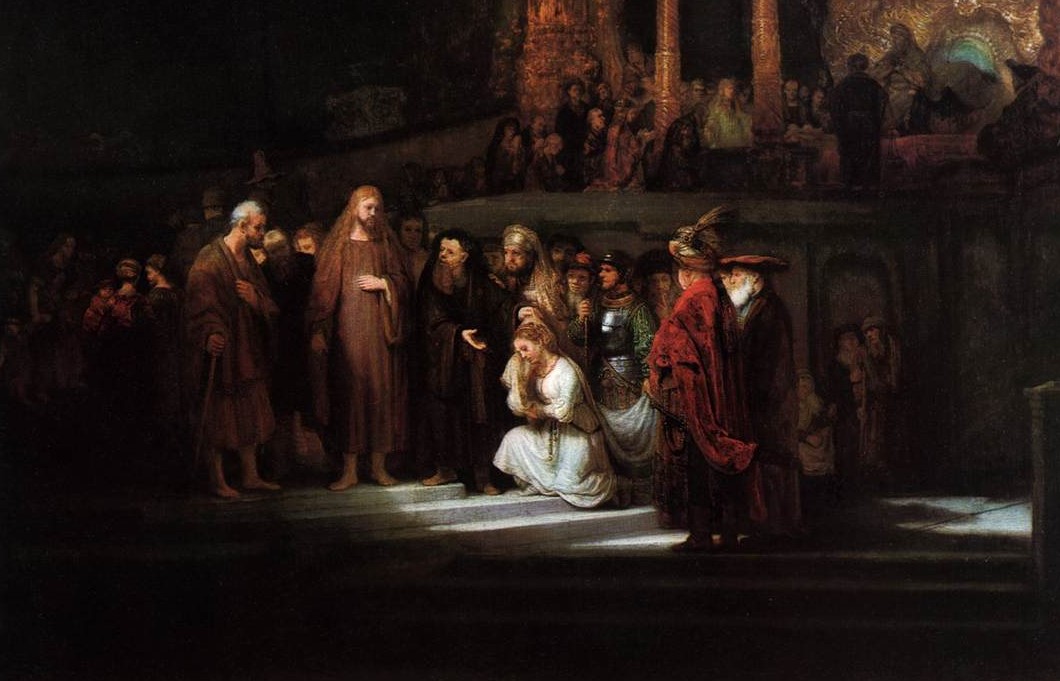
Jesus ate with sinners, something many of the religious leaders found scandalous. This man welcomes sinners and eats with them (Lk 15:2). Jesus was known as a friend of sinners. He had pity on the woman caught in adultery. He allowed a sinful woman to touch Him and anoint His feet. He cast out demons and fought for sinners. He suffered and died for sinners in a manner reserved for the worst of criminals. He was crucified between two thieves and was assigned a grave among the wicked (Is 53).

Praise God, Jesus is not ashamed to be found in our presence and to share a brotherhood with us. There is a great shedding of His glory in doing this. Scripture says, [Jesus], being in very nature God, did not consider equality with God something to be grasped, but made himself nothing, taking the very nature of a servant, being made in human likeness. And being found in appearance as a man, he humbled himself (Phil 1:3).

The Foreshadowing of our BaptismIn accepting baptism, Jesus does not enter the water alone. He takes us with Him, for we are members of His Body. As the Head of the Body, He goes where the members will follow. St. Maximus says,

I understand the mystery as this. The column of fire went before the sons of Israel through the Red Sea so that they could follow on their brave journey; the column went first through the waters to prepare a path for those who followed … But Christ the Lord does all these things: in the column of fire He went through the sea before the sons of Israel; so now in the column of his body he goes through baptism before the Christian people … At the time of the Exodus the column … made a pathway through the waters; now it strengthens the footsteps of faith in the bath of baptism (de sancta Epiphania 1.3).

So what God promised in the Old Testament by way of prefigurement, He now fulfills in Christ. They were delivered from the slavery of Egypt as the column led them through the waters. More wonderfully, we are delivered from the slavery to sin as the column of Christ’s Body leads us through the waters of baptism. God’s righteousness is His fidelity to His promises. In His Baptism and all it signifies (His death and resurrection), Jesus has come to fulfill all righteousness, and thus fulfills the promises made by God at the Red Sea and throughout the Old Testament.

The Four Gifts of Baptism – The text says, heaven was opened and the Holy Spirit descended upon him in bodily form like a dove. And a voice came from heaven, “You are my beloved Son; with you I am well pleased.”

Scripture says, we are members of Christ’s body (Eph 5:30). Thus, when Jesus goes into the water, we go with Him. In going there, He acquires four gifts on our behalf:

  1. Access The heavens are opened. The heavens and paradise were closed to us after Original Sin, but at Jesus’ Baptism, they are opened. Jesus acquires this gift for us. At our Baptism, the heavens open for us and we have access to the Father and to the heavenly places. Scripture says, Therefore, since we are justified by faith, we have peace with God through our Lord Jesus Christ. Through him we have obtained access to this grace in which we stand (Romans 5:1). Scripture also says, For through Jesus we have access in one Spirit to the Father. So then you are no longer strangers and sojourners, but you are fellow citizens with the saints and members of the household of God (Eph 2:17).
  2. Anointing The Spirit of God descends on him like a dove. Here, too, Jesus acquires the gift of the Holy Spirit for us. At our Baptism we are not just washed of sins, but we also become temples of the Holy Spirit. After our Baptism we are anointed with chrism, signifying the presence of the Holy Spirit. For adults, this happens at Confirmation, but even for infants there is an anointing at Baptism to recognize that the Spirit of God dwells in the baptized as in a temple. Scripture says, Do you not know that you are God’s temple and that God’s Spirit dwells in you? (1 Cor 3:16)
  3. AcknowledgmentYou are my beloved Son. Jesus receives this acknowledgment from His Father for the faith of those who heard it and to acquire this gift for us. In our own Baptism we become the children of God. Because we become members of Christ’s Body, we now have the status of sons of God. On the day of your Baptism, the heavenly Father acknowledges you as His own dear child. Scripture says, You are all sons of God through faith in Christ Jesus, for all of you who were baptized into Christ have clothed yourselves with Christ (Gal 3:26).
  4. ApprovalWith you I am well pleased. Jesus had always pleased His Father, but now He acquires this gift for us as well. Our own Baptism gives us sanctifying grace, the grace to be holy and pleasing to God. Scripture says, Blessed be the God and Father of our Lord Jesus Christ, who has blessed us in Christ with every spiritual blessing in the heavens, as he chose us in him, before the foundation of the world, to be holy and blameless in his sight (Eph 1:1-3).

Thus, at His Baptism Christ acquires these gifts for us so that we can receive them at our own Baptism. Consider well the glorious gift of your Baptism. If you don’t know the date, find out. It should be a day as highly celebrated as your birthday. Christ was baptized for our sake, not His own. All these gifts had always been His. In His Baptism, Jesus fulfilled God’s righteousness by going into the water to get them for you. It’s all right to say, “Hallelujah!”

Cross-posted at the Catholic Standard: Jesus Does Not Go into the Water Alone; He Takes Us with Him

The Journey of Faith – A Homily for the Feast of Epiphany

There are so many wonderful details in the Epiphany story: the call of the Gentiles, their enthusiastic response, the significance of the star they seek, the gifts they bring, the dramatic interaction with Herod, and their ultimate rejection of Herod in favor of Christ.

In this meditation, I would like to follow these Magi in their journey of faith to become “Wise Men.” As magi, they followed the faint stars, distant points of light; as wise men, they follow Jesus, who is the ever glorious Light from Light, true God from true God.

We can observe how they journey in stages from the light of a star to the bright and glorious Light of Jesus Christ. And, of course, to authentically encounter the Lord is to experience conversion. All the elements of this story ultimately serve to cause them to “return to their country by another route.” Let’s look at the stages of their journey from being mere magi to becoming, by God’s grace, wise men.

Stage 1: The CALL that COMPLETES – The text says, When Jesus was born in Bethlehem of Judea, in the days of King Herod, behold, magi from the east arrived in Jerusalem, saying, “Where is the newborn king of the Jews? We saw his star at its rising and have come to do him homage.”

Notice the identity of these individuals: they are labeled magi (μάγοι (magoi) in Greek) and are from the East.

Exactly what “magi” are is not clear. Perhaps they are learned men; perhaps they are ancient astronomers. We often think of them as kings, though the text of this passage does not call them that. It also seems likely that Herod would have been far more anxious had they been actual potentates from an Eastern kingdom. We often think of them as kings because Psalm 72 (read in today’s Mass) speaks of kings coming from the East bearing gifts of gold and frankincense. However, for the record, the text in today’s Gospel does not call them kings, but rather “magi.”

Yet here is their key identity: they are Gentiles who have been called. Up until this point in the Christmas story, only Jews had found their way to Bethlehem. This detail cannot be overlooked, for it is clear that the Gospel is going out to all the world. This call completes the Church, which needs both Jews and Gentiles.

In today’s second reading, St. Paul rejoices in this fact, saying, the Gentiles are coheirs, members of the same body, and co-partners in the promise in Christ Jesus through the gospel (Eph 3:6). Because most of us are not Jewish by ancestry we ought to rejoice, for the call of these Magi prefigures our call.

Notice that God calls them through something in the natural world: a star. God uses something in creation to call out to them.

We do well to wonder what is the “star” that God uses to call each of us? Perhaps it is Scripture, but more typically God uses someone in our life in order to reach us: a parent, a family member, a friend, a priest, a religious sister, or a devoted lay person. Who are the stars in your life through whom God called you?

God can also use inanimate creation, as he did for these Magi. Perhaps it was a magnificent church, or a beautiful painting, or an inspirational song that reached you. Through something or someone, God calls each of us; He puts a star in our sky. These Wise Men, these Magi, followed the call of God and began their journey to Jesus.

Stage 2: The CONSTANCY that CONQUERS – Upon arriving in Jerusalem, the Magi find a rather confusing and perhaps discouraging situation. The reigning king, Herod, knows nothing of the birth of this new King. The Magi likely assumed that the newborn King would be related to the current king, so Herod’s surprise may have confused them. And Herod seems more than surprised; he seems threatened and agitated.

Even more puzzling, Herod calls in religious leaders to get further information about this new King. They open the sacred writings and the Magi hear of a promised King. Ah, so the birth of this King has religious significance! How interesting!

But these religious leaders seem unenthusiastic about the newborn King, and after providing the location of His birth, make no effort to follow the Magi. There is no rejoicing, no summoning of the people to tell them that a longed-for King has finally been born, not even further inquiry!

So the wicked (Herod and his court) are wakeful while the saints are sleepy. How odd this must have seemed to the Magi! Perhaps they even thought about abandoning their search. After all, the actual king knew nothing of this new King’s birth, and those people who did know about it seemed rather uninterested.

Ah, but praise the Lord, they persevered in their search; they did not give up!

Thanks be to God, too, that many today have found their way to Christ despite the fact that parents, clergy, and others who should have led them to Jesus were either asleep, ignorant, or just plain lazy. I am often amazed at some of the conversion stories I have heard: people who found their way to Christ and His Church despite some pretty daunting obstacles (e.g., poor religious upbringing, scandalous clergy, and poor role models). God sometimes allows our faith and call to be tested, but Those who persevere to the end will be saved (Matt 24:13).

To persevere is to open the door to wisdom, which often must be sought in spite of obstacles. This constancy is often what it takes to overcome the darkness and discouragements of the world.

Stage 3: The CONDESCENSION that CONFESSES – The text says, After their audience with the king they set out. And behold, the star that they had seen at its rising preceded them, until it came and stopped over the place where the child was. They were overjoyed at seeing the star, and on entering the house they saw the child with Mary his mother. They prostrated themselves and did him homage.

With what little information they have, the Magi set out and continue to follow the call of God through the star.

Note that they enter a “house.” We often think of the Magi as coming that same Christmas night to the cave or stable, but it seems not; Mary, Joseph, and Jesus are now in a house. Apparently they have been able to find decent lodging. Has it been days or weeks since Jesus’ birth? Regardless, it is likely not Christmas Day itself.

Notice, too, that they “prostrate” themselves before Jesus. The Greek word used is προσεκύνησαν (prosekunēsan), which means “to fall down in worship” or “to give adoration.” This word is used twelve times in the New Testament and each time it is clear that religious worship is the reason for the prostration.

This is no minor act of homage or sign of respect to an earthly king; this is religious worship. It is a confession of faith. The Magi manifest faith! The beginning of wisdom is the fear of the Lord. And these Magi are well on their way from being mere magi to being wise men!

But is their faith a real faith or just a perfunctory observance? It is not enough to answer an altar call or to get baptized. Faith is never alone; it is a transformative relationship with Jesus Christ. So let’s look for the effects of a real and saving faith.

Stage 4: The COST that COMES – There is a cost to discipleship. The Magi are moved to give three symbolic gifts that show some of what true faith includes. They are costly gifts.

Gold symbolizes all of our possessions. In laying this gift before Jesus, they and we are saying, “I acknowledge that everything I have is yours. I put all my resources and wealth under your authority and will use them only according to your will.” A conversion that has not reached the wallet is not complete.

Frankincense is a resin used in incense and symbolizes the gift of worship. In the Bible, incense is a symbol of prayer and worship (e.g., Psalm 141). In laying down this gift, we promise to pray and worship God all the days of our life, to be in His holy house each Sunday, to render Him the praise and worship He is due, to listen to His word and consent to be fed the Eucharist by Him, to worship Him worthily by frequent confession, and to praise Him at all times.

Myrrh is a strange gift for an infant; it is usually understood as a burial ointment. Surely this prefigures Jesus’ death, but it also symbolizes our own. In laying this gift before Jesus we are saying, “My life is yours. I want to die so that you may live your life in me. May you increase and may I decrease. Use me and my life as you will.”

Yes, these three gifts are highly symbolic.

The Magi manifest more than a little homage to Jesus. They are showing forth the fruits of saving faith. And if we can give these gifts, so are we.

In their holy reverence for God is wisdom in its initial stage!

Stage 5: The CONVERSION that is CLEAR – The text says, And having been warned in a dream not to return to Herod, they departed for their country by another way.

Here, then, is essential evidence for faith: conversion. It is not enough to get “happy” in Church; we have to obey. These Wise Men are walking differently now. They are not going home by the same way they came. They’ve changed direction; they’ve turned around (conversio). They are now willing to walk the straight and narrow path that leads to life rather than the wide road that leads to damnation. They are going to obey Christ. They are going to exhibit what St. Paul calls the “obedience of faith” (Rom 1:5; 16:26). They have not just engaged in perfunctory worship; they are showing signs of a true and saving faith. They are not just calling out to Jesus, “Lord, Lord!” They are doing what He tells them (cf Luke 6:46).

No longer mere magi, they are now wise men!

So there it is. Through careful stages, the Lord has brought the Gentiles (this means you and me) to conversion. He called these Magi to wisdom. They remained constant, confessed Him to be Lord, accepted the cost of discipleship, and manifested conversion. Have you? Have I?

Walk in the ways of these Wise Men! Wise men still seek Him; even wiser ones listen to and obey Him. Are we willing to go back to our country by another route? Is ongoing conversion part of our journey home to Heaven? Epiphany means “manifestation.” How is our faith made manifest in our deeds and conversion?

I have it on the best of authority that as the (now) Wise Men went home by another route, they were singing this gospel song:

It’s a highway to heaven!
None can walk up there
but the pure in heart.
I am walking up the King’s highway.
If you’re not walking,
start while I’m talking.
There’ll be a blessing
you’ll be possessing,
walking up the King’s highway.

Cross-posted at the Catholic Standard: The Journey of Faith – A Homily for the Feast of Epiphany

A Homily for the Feast of the Holy Family

Christ Among the Doctors of the Temple, by Giotto (1304-06)

Here in the middle of the Christmas Octave, the Church bids us to celebrate the feast of the Holy Family. On the old calendar, the feast of the Holy Family falls on the Sunday after Epiphany, which makes some sense. It is a bit odd to read, a mere five days after celebrating Jesus’ birth, a Gospel in which He is 12 years old. And then, next week, we have the Feast of Epiphany in which Jesus is an infant again.

Nevertheless, here we are. Perhaps, it is a good time to reflect on family life, as immediate and extended family often gather together during the Christmas season. Let us consider the family and marriage along three lines: structure, struggles, and strategy.

I. Structure All through the readings for today’s Mass we are instructed on the basic form, the basic structure of the family.

  • God sets a father in honor over his children; a mother’s authority he confirms over her sons (Sirach 3:2).
  • May your wife be like a fruitful vine, in the recesses of your home; your children like olive plants, around your table (Psalm 128:3).
  • Wives, be subordinate to your husbands, as is proper in the Lord. Husbands, love your wives, and avoid any bitterness toward them. Children, obey your parents in everything, for this is pleasing to the Lord. Fathers, do not provoke your children, so that they may not become discouraged (Colossians 3:20–21).
  • Each year, Jesus parents went to Jerusalem for the feast of Passover … Your father and I have been looking for you with great anxiety … (Luke 2:45, 51).
  • And he was obedient to them … And Jesus advanced in age and wisdom and favor before God and man (Luke 2:51–52).

In these passages we see the basic structure of the family:

  • A father in honor over his children
  • A wife and mother who is supportive of her husband and his authority
  • A husband who supports, loves, and encourages his wife
  • A mother in authority over her children
  • Children who honor and obey their parents
  • Fathers, and by extension mothers, who instruct and admonish their children, not in a way that badgers or discourages them, but rather encourages them and builds them up
  • A family structure that helps children to advance in wisdom and age and in favor before God and man
  • A father, a mother, and children, all reverential and supportive of one another in their various roles and duties

Here, then, is God’s basic teaching on family and marriage. Here is the basic structure for the family as God sets it forth: a man who loves his wife and a woman who loves her husband. Within this stable, lasting, and faithful union of mutual support and love, they conceive and raise their children in the holy fear of the Lord.

Add to this the principal description of the book of Genesis, which describes how God sets forth marriage: A man shall leave his father and mother, cling to his wife, and the two of them shall become one flesh (Genesis 2:24). To this first couple, God gave the mandate, Be fruitful and multiply (Genesis 1:22).

Thus, we have set forth biblically the basic structure of the family: a father, a mother, and children, all reverential and supportive of one another in their various roles and duties.

Note how the structure of the family take its basic form in terms of its essential fruit: procreation and rearing of children. Why should marriage be a stable and lasting union? Why is Adam told to cling to his wife and to form a stable and lasting union with her?

Because this is what is best and most just for children! Children both need and deserve the stable and lasting union of a father and a mother, the complementary influences of the two sexes. This is the best environment in which to raise and form children. Hence, the family structure of a father and a mother, a male and female parent, flows from what is best and most just for children. The structure of the family, as set forth by God, is rooted in what is best and most just for children. It is what is sensible and what is best, sociologically and psychologically, for the proper development of children.

Even without looking in the Bible, one can see how sensible it is for a child to have the influence and teaching of both a father and a mother, a male and a female. There are things that a father can teach and model for his children that a mother is not as well-suited to impart; conversely, a mother can teach and model for her children things that only she knows best.

This much is clear: both male and female influences are essential for the proper psychological and sociological development of children. Clearly, then, God’s biblical mandate that marriage should consist of a father and a mother is not without basis in simple human reason and common sense.

To intentionally deprive a child of this environment is both unwise and unjust to children. Hence, we see that the basic structure for marriage takes its shape from what is best and most just for children. Both God and nature provide for a father and a mother, a male and a female, to conceive and raise a child.

It also makes sense based on simple human reasoning that the marital relationship should be stable, something that children can depend on from day to day, month to month, and year to year.

Here, then, is the proper structure for marriage. It is set forth both by God and supported by human reason.

II. Struggles – Yet what should be obvious seems to be strangely absent from the minds of many. Sin clouds our judgment and makes some think that what is sinful and improper is in fact acceptable or even good. It is not. In our current modern culture, we gravely sin against God and against our children through consistent misconduct and by refusing to accept what is obviously true. The words of St. Paul are fulfilled in our modern times: their senseless minds were darkened, and they became vain and foolish in their reasoning (Rom 1:21).

It is clear that the family is in crisis today, and it is also clear that it is children who suffer the most. The modern Western world displays a mentality that is both deeply flawed and gravely harmful to children.

Marriage and family are in crisis due the willfully sinful habits of many adults in the areas of sexuality, marriage, and family life. This includes sins such as cohabitation, fornication, abortion, adultery, homosexual acts, pornography, the sexualization of children, and the sexual abuse of children. Add to this the widespread acceptance of contraception, which has facilitated the illusion of sex without consequences and promoted the lie that there is no necessary connection between children and sexual relations. The rebellion of adults against the plan and order of God has caused endless grief and hardship and created a culture that is poisonous to the family, the dignity of the individual, and the proper raising and blessing of children.

III. Strategy What are we to do? Preach the Word! Whatever the sins of this present generation (and there are many), we must be prepared to unambiguously re-propose the wisdom of God’s Word to our children, grandchildren, and great-grandchildren.  Even if we have fallen short personally, we cannot hesitate to announce God’s plan for sexuality, marriage, and family.

Our strategic proclamation must include these key elements:

  • There must be no sex before marriage, ever, under any circumstances. Sexual intercourse is rooted in the procreation of children and there is no legitimate engagement in it outside of the bonds of marriage. There are no exceptions to this.
  • Children deserve and have the right to expect two parents, a father and mother, committed to each other until death do them part. Anything short of this is a grave injustice to children and a mortal sin before God.
  • Neither homosexual unions, nor single parent households are an acceptable alternative to biblical marriage. To allow children to be subjected to such environments for the sake of political correctness does them a grave injustice.
  • Marriage is about what is best for children, not adults.
  • Married couples must learn to work out their differences (as was done in the past) and not resort to divorce, which offends God (cf Malachi 2:16).
  • The needs of children far outweigh the preferences, “rights,” and needs of adults.

Whatever the personal failings of any of us in this present evil age (cf Gal 1:4), our strategy must be to preach the undiluted plan of God for sexuality, marriage, and family to our children, grandchildren, and great-grandchildren.

 Back to the Bible! Back to the plan of God! Away with modern experiments and unbiblical schemes! God has given us a plan. Thinking that we know better, we have caused great sorrow and hardship for our descendants. We have acted unjustly; we have murdered our children through abortion. Sowing in the wind, we have caused those who have survived our misbehavior to inherit the whirlwind. It is time to repent and help our heirs to rejoice in chastity, marriage, and biblical family. Otherwise, we are doomed.

God has a plan and it must be our strategy, our way out of our struggles and back to His structure for our families.

This song says,

So, humbly I come to you and say
As I sound aloud the warfare of today
Hear me, I pray
What about the children?

I Hear Music in the Air – A Homily For Christmas Midnight

The mysteries of Christmas are many. Among them is the mystery of the music heard that night. The angels shouted the great declaration, “Glory to God in the highest,” and creation took it up as a song. Why this music? Is it merely window dressing, or does it disclose a mystery to us? Is the declaration only for us, or do the angels also need it?

As always with the things of God, there are realities far deeper than most of us imagine. Tonight’s Christmas feast weaves together, among many other mysteries, those of music and descent, and it points up to music and ascent. You see, over my head I hear music in the air; there must be a God somewhere.

Let’s explore this key point: The Lord descends (to one song) so that we might ascend (to a new song) to the highest heavens.

I. Divine Descent The text says, Now there were shepherds in that region living in the fields and keeping the night watch over their flock. The angel of the Lord appeared to them and the glory of the Lord shone around them, and they were struck with great fear. The angel said to them, “Do not be afraid; for behold, I proclaim to you good news of great joy that will be for all the people. For today in the city of David a savior has been born for you who is Christ and Lord. And this will be a sign for you: you will find an infant wrapped in swaddling clothes and lying in a manger (Lk 2:8-12).

We look first to Jesus’ divine descent. Note that Jesus, who is called Savior, Anointed One, and Lord, is said to be found wrapped in swaddling clothes and lying in a manger, a trough from which animals are fed.

What sort of king and Lord is this? It is almost a divine comedy. Imagine the shepherds quaking in fear at the presence of an awesome angel, who then says that they will find the Christ lying in a feed box inside a nearby stable.

Indeed, there is a remarkable divine condescension here! The Lord did not merely descend from Heaven to earth but to one of the lowest places on the earth: a smelly cave among animals. His bed a feeding trough not a cozy cradle. Yet how fitting, that He who is the Bread of Life would be born in Bethlehem (which means “House of Bread”) and be found lying in a manger.

Why this descent? The Lord descends today to one song in order that we may ascend with Him one day to a new place and sing a new song. To what song does He descend and to what song will we ascend? Let’s read on.

II. Delighted Declarations  The text says, And suddenly there was a multitude of the heavenly host with the angel, praising God and saying, “Glory to God in the highest and on earth peace to those on whom his favor rests.”

The angels rejoiced in God’s plan and longed for its day! One of the Church Fathers, Eusebius, spoke of discouragement among the lower angels at the advance of evil in the world that had been entrusted to their care. Even the giving of the law and the sending of prophets had done little to stem its tide. Now, God himself would intervene!

Thus, as Christ descends at the Annunciation and is manifest today at Christmas, the Church Father Origen has some of the higher angels say,

“If he has put on mortal flesh, how can we remain!? Come, Angels, let us descend from heaven!” That is why [Scripture says] there was a multitude of the heavenly Hosts praising and glorifying God when Christ was born. Everything is filled with angels! (Hom in Ex. 1:7)

As the Lord is made manifest to the world on this day, the highest angels who descended with Christ at the Annunciation now send word through and to the lower ranks of angels, and a great heavenly throng makes the declaration, Glory to God in the Highest, and on Earth peace!

Another Church Father, Pseudo-Dionysius, says of this Gloria,

The highest order composed of Seraphim, Cherubim, and Thrones, and which is closest of all, by reason of its dignity, to the secret sanctuary of God [instructs] the second order, composed of Dominations, Virtues and Powers. This order in turn reveals the mysteries to the lower tier of angels the Principalities, Archangels and Angels who are set in charge of the human hierarchies (Hier Ceol. 9,2).

This great sung hymn is not just for the human family. According to the Fathers of the Church it is also a signal to the lower ranking angels from the higher-ranking angels: Lift up your heads, Ye ancient Gates, that the King of Glory may come in! Of this mystery, St. Peter would later say, … The things which have now been announced to you by those who preached the good news to you … are things into which angels longed to look (1 Peter 1:12).

An ancient hymn from the Liturgy of St. James says of this moment,

Rank on rank the host of heaven
spreads its vanguard on the way,
as the Light of light descendeth
from the realms of endless day,
that the powers of hell may vanish
as the shadows clear away.

Why all this music at the divine descent? Because the music (Gloria in Excelsis) and the descent are related and are meant to lead us higher. Christ descends to one song in order to lead us to an even nobler, higher song.

III. Dignity of our Destiny – The Psalm for tonight says, Sing to the LORD a new song, sing to the LORD, all you lands. Sing to the LORD; bless his name (Ps 96:1-2).

So again, this music (Gloria in Excelsis) and the descent are related and meant to lead us higher. Christ descends to one song in order to lead us to an even nobler, higher song—a song sung in the highest heavens! Without this descent and this first song, the second song and our ascent would be impossible. Christ descends to the song of the lower heavens so that we, by his saving grace, may ascend to the place and song of the higher heavens.

What is this new song and where is this place? Isaiah heard the music and saw the place:

I saw the Lord sitting upon a throne, high and lifted up; and his train filled the temple. Above him stood the seraphim; each had six wings: with two he covered his face, and with two he covered his feet, and with two he flew. And one called to another and said: “Holy, holy, holy is the Lord of hosts; the whole earth is full of his glory” (Isaiah 6:1-3).

Here is our new song, a higher song, one sung only in the highest heavens before the throne of God, one sung only by the redeemed: Holy, Holy, Holy Lord, God of Hosts! At every Mass, our High Priest, Jesus, speaking through His ministerial priest, says, “Lift up your hearts.” The congregation replies, “We lift them up to the Lord.” In other words, we are told to come higher, to come into the Holy of Holies in Heaven, to come before the throne and sing the hymn of the highest in Heaven.

Our ascent to this highest place is made possible only by the Lord’s descent to the lowest places on earth: the manger, the cross, and Sheol. In the early Church, only the baptized were permitted to sing the Sanctus at Mass. The unbaptized were not allowed to attend. The catechumens, though permitted to sing the hymn announced to the lower realms (The Gloria), were dismissed prior to the singing of the Sanctus, the song of the highest heavens. Only when we are caught up higher by grace can we hear and join the Sanctus. One day it will be fully our song when God says to us, “Come up higher.” By Him who descended, we will then ascend and sing a new song to the Lord!

Over my head I hear music in the air; there must be a God somewhere. The Lord descends to one song that we might ascend to a new song in a new place, in the highest heavens. May He who descends to the manger today cause you to ascend to the highest heavens to sing that new song.

Five Steps to Better Mental Health – A Homily for the Third Sunday of Advent

In modern times, we tend to link our notions of happiness and inner well-being to external circumstances and happenstance. We think that happiness will be found when the things of this world are arranged in the way we like. If we can just accumulate enough money and creature comforts, we think we’ll be happy and have a better sense of mental well-being.

Yet many people can endure difficult external circumstances while remaining inwardly content, happy, and optimistic. Further, many who have much are still not content but rather are plagued by mental anguish, anxiety, and unhappiness. Ultimately, happiness is not about good fortune or circumstances; it is an “inside job.”

St. Paul wrote,

For I have learned to be content whatever the circumstances. I know what it is to be in need, and I know what it is to have plenty. I have learned the secret of being content in any and every situation, whether well fed or hungry, whether living in plenty or in want (Phil 4:11-12).

It is interesting to note that Paul wrote these words, as well as those of today’s second reading, from his jail cell! It’s not just a bunch of slogans.

In today’s second reading, Paul tells us the “secret” to his contentedness, to joy and mental well-being regardless of the circumstances. He gives us a plan that (if we work it) will set the stage for a deeper inner peace, a sense of mental well-being and contentedness that is not easily affected by external circumstances. Let’s review what St. Paul has to say as a kind of “five-point plan.” (I am indebted to Rev. Adrian Rogers for the alliterative list, though the substance is my own reflection.)

Here is the text of St. Paul’s “five-point plan” for better mental health:

Rejoice in the Lord always. I will say it again: Rejoice! Let your moderateness be evident to all. The Lord is near. Do not be anxious about anything, but in everything, by prayer and petition, with thanksgiving, present your requests to God. And the peace of God, which transcends all understanding, will guard your hearts and your minds in Christ Jesus. [Finally, brothers, whatever is true, whatever is noble, whatever is right, whatever is pure, whatever is lovely, whatever is admirable—if anything is excellent or praiseworthy—think about such things. Whatever you have learned or received or heard from me or seen in me—put it into practice. And the God of peace will be with you] (Phil 4:4-9).

Note that the final two sentences (shown above enclosed in [square brackets]) are not included in today’s liturgical proclamation, but I feel that they add to the overall picture so I include them here.

Step I. Rejoice in the Presence of the Lord Rejoice in the Lord always. I will say it again: Rejoice! Let your moderateness be evident to all. The Lord is near.

Of supreme importance in the Christian life is requesting, receiving, and cultivating the gift of the Lord’s presence. We are too easily turned inward and become forgetful of God’s presence. To become more consciously and constantly aware of His presence is to be filled with joy and peace.

As an aside, note that the text mentions joy (χαίρω – chairoo) but also moderateness. The Greek word used is ἐπιεικὲς (epieikes), which means to be gentle, mild, forbearing, fair, reasonable, or moderate. Epieíkeia relaxes unnecessary strictness in favor of gentleness whenever possible. Such an attitude is common when one is joyful and unafraid. By contrast, an unbending and unyielding attitude often bespeaks fear.

There are of course times when one should not easily give way, but often there is room for some leeway and the assumption of good will. A serene mind and spirit, which are gifts of the presence of God, can often allow for this; there is an increasing ability to allow things to unfold rather than to insist on controlling outcomes and winning on every point.

The central point is that as we become more aware of God’s presence and thus more serene and less inwardly conflicted; we no longer need to shout others down or to win all the time. We can insist on what is true but can express ourselves more moderately and calmly. We are able to stay in the conversation, content to sow seeds rather than insisting on reaping every harvest of victory.

Cultivating a joyful sense of the presence of God and seeing the serenity and moderateness that are its fruits is a first step toward, and a sure sign of, better mental health and greater contentment.

Step II. Rely on the Power of the Lord Do not be anxious about anything, but in everything, by prayer and petition … present your requests to God.

There are very few things as destructive to our mental health as worry. Worry is like sand in a machine. Not only does it hinder the workings of the machine, it damages it. Simply being told not to worry, though, isn’t very helpful. St. Paul is not simply saying, “Don’t worry.”

Paul has already laid groundwork for the diminishment of worry by telling us to cultivate a sense of the presence of God. When I was a young boy, my father left for the Vietnam War. During the year he was away, I spent many anxious nights worrying about a lot of things. As soon as my father returned, my fears went away. Daddy was home, and everything was all right.

To the degree that we really experience that God is near, many of our fears subside. My own experience is that as my awareness of God’s presence has grown, my anxieties have significantly diminished.

Paul also says that the power of God is only a prayer away. Here, too, I (and many others) can testify that God has a way of working things out. However, He may not always come when you want Him or handle things exactly as you want. When I reflect on my life, I can truly say that God has always made a way for me. None of my struggles and disappointments ever destroyed me; if anything, they strengthened me.

Whatever it is, take it to the Lord in prayer. Ponder deeply how He has delivered you in the past, how He has made a way out of no way, how He has drawn straight with crooked lines.

Let the Holy Spirit anoint your memory to make you aware of God’s saving power in your life and recall how God has delivered you. Because prayer is both effective and an ever-present source of power, these memories should provide serenity.

Prayer is the antidote. So much worry, which is a kind of mental illness, dissipates when we experience that God is present and that His power is only one prayer away.

So, the second step to better mental health is knowing by experience that God can and will make a way.

Step III. Remember the Provision of the Lord … with thanksgiving …

Thanksgiving is a way of disciplining the mind to count our blessings. Why is this important? Because we become negative too easily. Every day billions of things go right while only a handful go wrong, but what do we tend to focus on? The few things that go wrong! This is a form of mental illness that feeds our anxiety and comes from our fallen nature.

Gratitude disciplines our mind to count our blessings. As we do this, we begin to become men and women of hope and confidence. Why? Because what you feed, grows. If you feed the negative, it will grow; if you feed the positive, it will grow. God richly blesses us every day; we need but open our eyes to see it.

Step three is disciplining our fallen mind to see the wider reality of our rich blessings. This heals us and gives us great peace and a serene mind.

Step IV. Rest in the Peace of the Lord And the peace of God, which transcends all understanding, will guard your hearts and your minds in Christ Jesus.

As we begin to undertake these steps, our mental outlook and health improve. Gradually, serenity becomes a deeper and more stable reality for us. The text here says that this serenity will not only be present, it will “guard” (or as some translations say, “keep”) our hearts and minds in Christ Jesus. In other words, as this serenity grows it screens out the negativity of this world and the demons of discouragement. Having this peace allows us to see the Lord; seeing the Lord deepens that peace—and the cycle grows and continues!

It has been my experience that the profound anxiety and anger that beset my early years has not only gone away but is unlikely to return given the serenity I now increasingly enjoy. I am guarded and protected increasingly by the serenity God gives.

Step V. Reflect on the Plan of the Lord Finally, brothers, whatever is true, whatever is noble, whatever is right, whatever is pure, whatever is lovely, whatever is admirable—if anything is excellent or praiseworthy—think about such things. Whatever you have learned or received or heard from me or seen in me—put it into practice.

A maintenance plan – As this serenity, this sense of well-being, comes to us, St. Paul advises a kind of maintenance plan wherein we intentionally and actively focus our thoughts and attention on what is godly, true, good, and beautiful.

What you feed, grows. While we may need to stay informed about the news of the world, beware a steady diet of the 24/7 news cycle. The media tend to focus on the bad news, on what is controversial and/or adversarial. If it bleeds, it leads. Too much exposure to that and you’re unsettled before you know it. Limit your portions of this and focus on the greater, better, and lasting things of God. Ponder His plan, His truth, His glory, and His priorities.

An old song says, “More about Jesus would I know, more of his saving mercy show, more of his saving fullness see, more of his love who died for me.”

Yes, more about Jesus and less about this world. How can we expect to maintain our mental health and serenity on a steady dose of insanity, misplaced priorities, adversity, darkness, chaos, and foolishness?

Do you want peace? Reflect on the Lord’s plan for you.

So, then, here are five steps to better mental health. It all begins with the practice of the presence of the Lord, calling on His power and being grateful for His providence, savoring His peace (which inevitably comes), and turning our attention more to the things of God and less to the things of this world.

Here’s to good mental health for us all! In times like these, we need to balance our sorrow with rejoicing in God’s ability to draw good from even the worst of circumstances.

A Recipe for Readiness – A Homily for the First Sunday of Advent

As we begin the Advent Season, we are immediately drawn into its principal theme of preparation and readiness for the coming of the Lord. His first coming has already been fulfilled at Bethlehem, and while we should prepare spiritually for the coming Christmas Feast, these first weeks of Advent bid us to focus even more on His second coming in glory.

As the curtains draw back on the opening scene of Advent, we are warned by the Lord that He will come on the clouds with great power and glory and that we must be prepared. He says, “Beware … Be vigilant at all times and pray that you have the strength to escape the tribulations that are imminent and to stand before the Son of Man.”

Today’s Gospel is taken from the Mt. Olivet discourse. The historical context in which the Lord was speaking was not the end of the world, but the destruction of the Temple and Jerusalem. For those ancient Jews, however, it was the end of the world as they knew it. The destruction of Ancient Jerusalem is also symbolic of the end of the world. The world will end for us either by our own death or by His coming to us in the second coming. Either way, the message is the same: Be ready!

With that in mind we do well to study this Gospel and heed its message, set forth in two stages.

DOUBLE VISION – The Gospel opens with a description of tribulations that are about to come on the land and two different reactions to it.

There will be signs in the sun, the moon, and the stars, and on earth nations will be in dismay, perplexed by the roaring of the sea and the waves. People will die of fright in anticipation of what is coming upon the world, for the powers of the heavens will be shaken. And then they will see the Son of Man coming in a cloud with power and great glory. But when these signs begin to happen, stand erect and raise your heads because your redemption is at hand.

Many will be frightened, shocked, bewildered, and dismayed when fixed points in this world such as the sun, moon, stars, and sea are shaken,

There is a second reaction that is prescribed:

But when these signs begin to happen, stand erect and raise your heads because your redemption is at hand.

Yes, it is a very different reaction, one of expectant joy and serene confidence. So, we see here a kind of double vision.

  • Some cry out with fear and say, “He is wrathful!” Others with faith say, “He is wonderful!”
  • To some He is frightening, to others He is fabulous.
  • To some these events are awful, to others they are awe-inspiring.
  • Some shout, “Horror on every side!” others sing, “Hallelujah to the King of Kings!

In order for us to celebrate on that day when the Lord shall come, there are prerequisites that must be met. That leads us to the next stage of this Gospel.

DIRECTIVE The Lord goes on to instruct us in how to be ready for the great and terrible day of the Lord:

Beware that your hearts do not become drowsy from carousing and drunkenness and the anxieties of daily life, and that day catch you by surprise like a trap. For that day will assault everyone who lives on the face of the earth. Be vigilant at all times and pray that you have the strength to escape the tribulations that are imminent and to stand before the Son of Man.

Notice that the Lord announces the effect (drowsiness) and then the causes (carousing, drunkenness, and anxieties of daily life). This is typical of ancient practice. In modern times, however, it is more common to speak of the causes and then describe the effects. Hence, we will proceed with our study in a slightly different order than that in which it was presented.

Cause 1: DEBAUCHERY The Lord warns of the problem of “carousing.” The Greek word used is κραιπάλῃ (kraipale), meaning most literally the giddiness and headache caused by drinking wine to excess. More generally it means the excessive indulgence of our passions or living life to excess. Other translators render the Greek word as “dissipation,” referring to the general squandering and loss of resources resulting from excessive indulgence.

We, of course, live in times that make it easy to (over)satisfy our every need. At the market there is not merely bread, there are fifty different types of bread. Our oversupply and overindulgence are literally reflected in our bodies: obesity, high blood pressure, diabetes, high cholesterol, and heart disease plague us.

It is not just food that is excessive; it is everything. We are excessively busy with the nonessentials of life. There are innumerable ways to occupy our minds. Our minds are so overstimulated that we cannot hear that “still, small voice.” Most people have a very short attention span due to this overstimulation. All day long the noise from the radio, mp3 player, TV, DVD player, CD player, PC, iPad, and cell phone compete for our attention. It jams our mind and breaks our union with Christ and even with our very self. Then there are the 24-hour news channels generating hype about even ordinary events: “Breaking news!” Our e-mail is flooded with junk mail and spam, offering false hopes and products and services we don’t really need. There are endless money-making schemes, lotteries, and sweepstakes. And oh, the sales: Black Friday, Cyber Monday, pre-holiday, post-holiday! It makes me think of the carnival hucksters calling, “Step right up!” It is worse than that, though, because it seems we cannot get away from it.

We spend, spend, spend and then borrow, borrow, borrow to support our spending. We need two incomes and 60-hour work weeks so that we can afford our lifestyle. Once we have acquired “the goods,” we’re never there to enjoy them. We sacrifice family on the altar of pleasure. We have an excess of everything except children, because they cost money and thus impede our ability to consume.

Even our recreation is excessive. Our weekends and vacations often leave us exhausted, disquieted, and unprepared for the coming week. A simple, quiet weekend, spent reflecting on God’s wonders or spending time at home with family? No way! It’s off to watch the myriad activities of our overscheduled children. The weekends meant for rest instead feature distinctly unrestful activities such as shopping, dancing in loud bars, watching football games, and drinking.

Yes, it’s all excess. It weighs us down, wearies us, costs a lot of time and money, and isn’t really all that satisfying anyway. It is dissipation. In the end, we are left with something like that headache and hung-over feeling of which the Greek word kraipale speaks. Up goes the cry anyway: “One more round!” Excess, dissipation, carousing; more, more, more!

Cause 2: DIVISIONS The Lord warns of the “anxieties” of daily life. The Greek word used is μερίμναις (merimnais), meaning more literally “a part separated from the whole,” “that which divides and fractures a person into parts.” The human person, overwhelmed with excess, becomes incapable of distinguishing the urgent from the important, the merely pleasurable from the productive. On account of our overstimulation, our excess, we are pulled in many different directions. We can’t decide; our loyalties are divided and conflicting. We are endlessly distracted by a thousand contrary drives and concerns.

Anxiety is the condition of being overwhelmed and divided by many and contrary drives, demands, and priorities. Anxiety freezes and perplexes us. There is too much at stake and no central governing principle to direct our decisions. All of this overwhelms us and clouds our mind and heart. We are anxious about many things and cannot determine the “one thing necessary” that will order all of the details (cf Luke 10:42). The Lord lists anxiety as among those things that destroy our readiness to stand before Him with joy.

Cause 3: DRUNKENNESS Here the Greek word used is straightforward: μέθῃ (methe), meaning drunk on wine. Why do we drink? We drink to medicate our anxiety. Overwhelmed by the excess that leads to anxiety (inner division and conflict) we drink to medicate our sense of being overwhelmed. Something has to soothe us. Instead of slowing down and seeking God, we drink. We anesthetize our mind. Alcohol is not the only thing we use. We use things, people, power, sex, entertainment, diversions, and distractions; all to soothe our tense, anxious mind.

This, of course, only deepens the central problem. All these things only add to the very problem that has disturbed us in the first place: the kraipale that is excess and dissipation. The solution is to get clear about our priorities, to seek God and allow Him to order our life. Instead of seeking a clear mind, however, we do the opposite and tune out. A little wine is a gift from God (cf Psalm 104:15) to cheer our hearts, but with excess, we go beyond cheer to dull our mind.

To be sober is to have a clear mind, one that knows and is in touch with reality and final ends. To be sober is to be alert, honest, and reasonable; to act in a way that bespeaks thoughtful and deliberate movement toward a rational and worthy goal. The sober person acts consciously and with purpose toward a unifying goal: being with God. St. Paul says, But this one thing I do: Forgetting what is behind and straining toward what is ahead, I press on toward the goal to win the prize for which God has called me heavenward in Christ Jesus (Phil 3:13-14).

Lacking the one unifying thing, torn apart within, and anxious on account of our excesses, we dull our mind with alcohol. The Lord calls us to clarity, but we retreat into insobriety. We are, in effect, “hung over” from indulging in the excesses of this world and then “medicating” the resulting inner divisions. Our minds go dull and we tune out.

The Effect: DROWSINESS The Lord says, Beware that your hearts do not become drowsy. The Greek word used here is βαρηθῶσιν (barethosin), meaning “burdened, heavily laden, overcome, or weighted down.” Thus, we see that the effect that all the above things have is to weigh us down, to burden our heart. Laden with excess, divided by contrary demands, and medicating the stress with insobriety, our heart becomes tired and burdened. Our heart is no longer inflamed and animated with love. It has become weary, distracted, bored, and tired of holy things and of the Lord. Instead of being watchful in prayer, our heart sleeps on, weighed down in sin, excess, division, and insobriety. It no longer keeps watch for the Lord, whom it is called to love.

Yes, the world, and our sinful preoccupation with it weighs our hearts down. It captures our love and attention and we become drowsy toward spiritual things.

In the garden, the Lord asked the apostles to pray, but they had spent their energy that evening arguing with Jesus and debating among themselves about who was greatest. Divided within, they wanted Jesus, but they also wanted the world and its fame and power. Struck by the conflict and tension that Jesus’ words about suffering and dying brought, they were divided and anxious. So, they medicated themselves and tuned out. They likely had more than a few drinks of wine that night. Weighed down and exhausted by worldly preoccupations and priorities, their burdened hearts were too drowsy to pray; and so they slept. (Satan, however, did not sleep that night.)

Consider the words of Jesus to the Church at Ephesus: You have forsaken your first love. Remember the height from which you have fallen! Repent and do the things you did at first. If you do not repent, I will come to you and remove your lampstand from its place (Rev 2:5-6). Jesus also warns, Because of the increase of wickedness, the love of most will grow cold (Mat 24:12). Yes, sinful indulgence divides and stresses us. Because it is too much, we tune out and dull our mind; thus, our heart grows cold, burdened, and heavy with sin. Heavy and weary, our heart goes to sleep, and we lose our first love. Jesus described the pattern: Beware that your hearts do not become drowsy from carousing and drunkenness and the anxieties of daily life, and that day catch you by surprise like a trap. This is the cycle.

What to do about this awful cycle?

The Directive: DUE DILIGENCE The Lord says, Be vigilant at all times and pray that you have the strength to escape the tribulations that are imminent and to stand before the Son of Man.

The Lord does not describe this terrible cycle of debauchery (excess), division (anxiety), drunkenness (self-medication), and drowsiness (heavy hearts) merely to define the problem. Having diagnosed our condition, He prescribes the remedy of prayerful vigilance.

To be vigilantly prayerful is to be in living, conscious contact with God. It is to have our heart and mind focused on the one thing necessary (cf Luke 10:42), and thus to have our life ordered. With this order properly established, our excesses fall away, and the many associated anxieties and divisions depart. Once they are gone, we no longer need to medicate and soothe our anxious mind. This lightens our heart; its heaviness goes away. It is free to love and desire with well-ordered love.

Once we have set our sights on God through vigilant prayer, everything else in our life becomes ordered. Then, when Christ comes, He will not disrupt our world but confirm what we are already used to: Jesus Christ as the center and meaning of our life.

Through prayerful vigilance we can stand erect and raise [our] head because [our] redemption is at hand. Why? Because we are used to seeing Him and experiencing His authority. He thus comes not to destroy and usurp our disordered life, but to confirm and fulfill what has always been true for us: that Jesus is the center of our life.