Three Insights of Pope Leo XIII That Diagnose Our Cultural Malaise

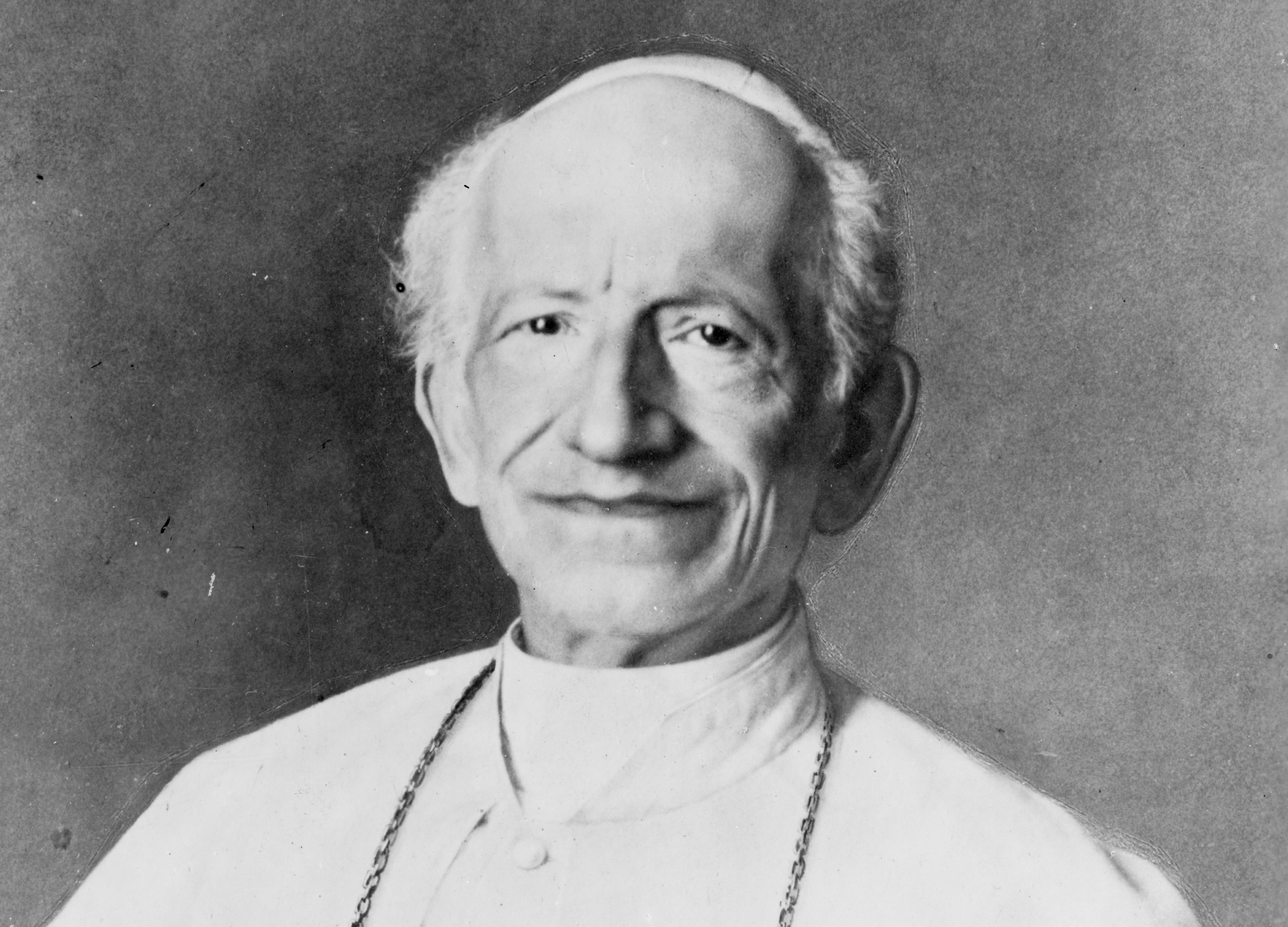
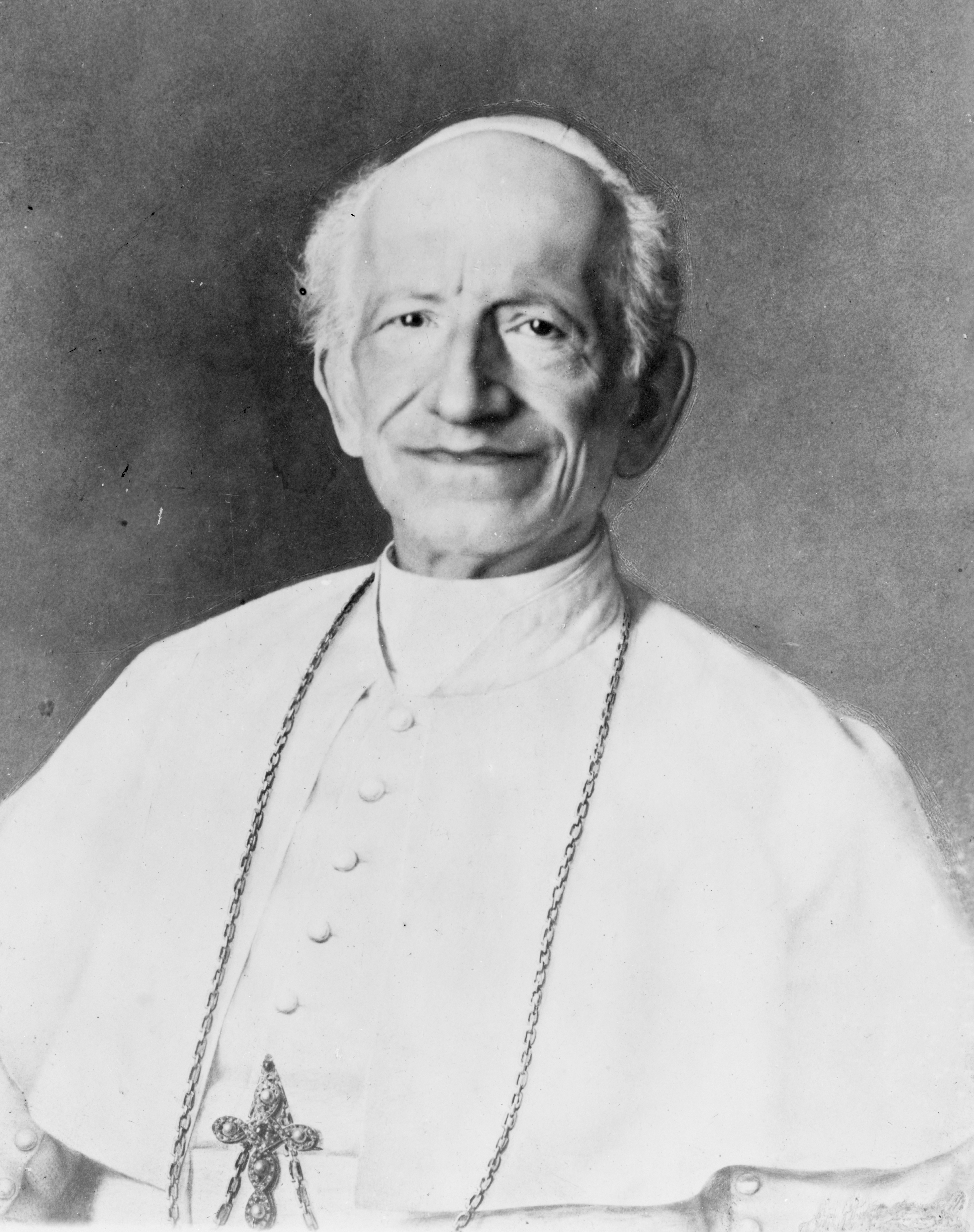
Pope Leo XIII penned an insightful analysis of three trends that both alarmed him and pointed to future problems. He wrote of these three concerns in 1893 in the Encyclical on the Holy Rosary entitled Laetitiae Sanctae (Of Holy Joy). The Pope laid out these three areas of concern and then offered the Mysteries of the Rosary as a remedy. Let’s look at how he described the problems and then consider what he proposed as a solution. His teaching is presented in bold, black italics. My remarks are shown in plain, red text.

There are three influences which appear to us to have the chief place in effecting this downgrade movement of society. These are—first, the distaste for a simple and laborious life; secondly, repugnance to suffering of any kind; thirdly, the forgetfulness of the future life (# 4).

Problem 1: The distaste for a simple and laborious lifeWe deplore … the growing contempt of those homely duties and virtues which make up the beauty of humble life. To this cause we may trace in the home, the readiness of children to withdraw themselves from the natural obligation of obedience to the parents, and their impatience of any form of treatment which is not of the indulgent and effeminate kind. In the workman, it evinces itself in a tendency to desert his trade, to shrink from toil, to become discontented with his lot, to fix his gaze on things that are above him, and to look forward with unthinking hopefulness to some future equalization of property. We may observe the same temper permeating the masses in the eagerness to exchange the life of the rural districts for the excitements and pleasures of the town … (#5).

One of the truths that set us free is that life is hard. Along with the progress we can and do experience come trials, arduous work, and setbacks. Few things of true value come to us without significant cost. Coming to realize and accept that life is hard is freeing, for it minimizes or even removes many of our resentments. Many today expect that life should be peachy all the time and when it is not become angry and resentful; some even threaten lawsuits. It is common today to think of happiness as a God-given right. Our Founding Fathers recognized the pursuit of happiness as a right, but many think happiness itself is a right. When they are not happy, the system has somehow failed them. Many today expect to live lives in which there is little risk and things come easily. This has been one of the factors influencing the growth of government. As insistence on a comfortable life grows and hard work begins to seem an unreasonable demand, we expect government to ease our burdens and provide comfort and happiness; we are less willing to work hard for these things. Rather, we see happiness and comfort as things to which we are entitled.

Unrealistic expectations are premeditated resentments. With unrealistic expectations, people quickly grow resentful. Our ancestors of a mere 150 years ago had different notions. They looked for happiness, too, but largely expected to find that in Heaven. Many of the old Catholic prayers bespeak a vision that this world was a place of travail and exile, a valley of tears where we sighed and longed to be with God. Many Catholics of those earlier times lived lives that were both difficult and short; they lived with far fewer creature comforts than we do today. There was no electricity or running water; medicines were few and far less effective. Entertainment was limited, houses were smaller, and transportation was far more restricted.

We live so well in comparison, yet despite being more comfortable, there is little evidence that we are happier. Indeed, we seem more resentful, probably because we expect more—a lot more. As Pope Leo noted, young people resent discipline and seem to expect to be spoiled. Most parents seem more than willing to indulge them while shirking their duty to correct, as that would bring tension and difficulty.

The value of hard work and the satisfaction that comes from it seem lost on many today. Cardinal Theodore McCarrick used to counsel us priests that if we did not go to bed tired, something was wrong. All of us need some rest and relaxation, but hard work actually brings greater satisfaction to times of rest.

The high expectations we have today breed discontent. We really insist on living in a fantasy that this world is, or can be, paradise; it cannot. A better strategy is to accept that life is at times difficult and to meet its difficulties with courage. Though this is a hard truth, accepting it brings peace.

In response to this first error, Pope Leo commended to our attention the Joyful Mysteries of the Rosary and in particular a meditation on the implicit lessons of the home at Nazareth:

Let us take our stand in front of that earthly and divine home of holiness, the House of Nazareth. How much we have to learn from the daily life which was led within its walls! What an all-perfect model of domestic society! Here we behold simplicity and purity of conduct, perfect agreement and unbroken harmony, mutual respect and love … devotedness of service. Here is the patient industry which provides what is required for food and raiment; which does so “in the sweat of the brow,” which is contented with little …. These are precious examples of goodness, of modesty, of humility, of hard-working endurance, of kindness to others, of diligence in the small duties of daily life, and of other virtues …. Then will each one begin to feel his work to be no longer lowly and irksome, but grateful and lightsome, and clothed with a certain joyousness by his sense of duty in discharging it conscientiously … home-life … loved and esteemed … (# 6).

Problem 2: Repugnance to suffering of any kindA second evil … is to be found in repugnance to suffering and eagerness to escape whatever is hard or painful to endure. The greater number are thus robbed of that peace and freedom of mind which remains the reward of those who do what is right undismayed by the perils or troubles to be met with in doing so …. By this passionate and unbridled desire of living a life of pleasure, the minds of men are weakened, and if they do not entirely succumb, they become demoralized and miserably cower and sink under the hardships of the battle of life (# 7).

Today more than ever there is almost a complete intolerance of any sort of suffering. This has been fueled by the fact that we have been successful in eliminating much suffering from daily life.

We are largely protected from the elements, medicines alleviate much of our pain and bodily discomfort, appliances and advanced technology provide unprecedented convenience and make most routine manual labor all but unnecessary.

This leads to the unrealistic expectation that all suffering should be eliminated. There is almost an indignity expressed when one suggests that perhaps some things should be endured or that it is unreasonable to expect government, or science, or “someone” to eliminate every evil or all forms of suffering.

Further, we seem unwilling to accept that accidents happen, and unfortunate circumstances occur. Instead we demand more and more laws, some of which are intrusive and oppressive; we undertake lawsuits that discourage the very risk-taking that makes new inventions, medical breakthroughs, and scientific techniques possible.

We often hold people responsible for things over which they have little to no control. Economies have cycles as do climates. Governments and politicians cannot be expected to solve every problem or alleviate every burden. Sometimes things just happen and there’s no one to blame and no one that can fix it.

Life is not a cushioned room. While we can and should try to fix unnecessary hazards and seek to ease one another’s burdens, suffering, sorrows, accidents, and difficulties are all part of life in this valley of tears. Acceptance of this truth leads to a kind of paradoxical serenity. Rejection of it and indulgence in the unrealistic notion that all suffering is unreasonable leads to resentment and further unhappiness.

In response to this second error, Pope Leo commended to our attention the Sorrowful Mysteries of the Rosary.

If from our earliest years our minds have been trained to dwell upon the sorrowful mysteries of Our Lord’s life … we [may] see written in His example all the lessons that He Himself had taught us for the bearing of our burden of labor– and sorrow, and mark how the sufferings…He embraced with the greatest measure of generosity and good will. We behold Him overwhelmed with sadness, so that drops of blood ooze like sweat from His veins. We see Him bound like a malefactor, subjected to the judgment of the unrighteous, laden with insults, covered with shame, assailed with false accusations, torn with scourges, crowned with thorns, nailed to the cross, accounted unworthy to live …. Here, too, we contemplate the grief of the most Holy Mother … “pierced” by the sword of sorrow … (# 8).

Then, be it that the “earth is accursed” and brings forth “thistles and thorns,”—be it that the soul is saddened with grief and the body with sickness; even so, there will be no evil which the envy of man or the rage of devils can invent, nor calamity which can fall upon the individual or the community, over which we shall not triumph by the patience of suffering …. But by this patience, we do not mean that empty stoicism in the enduring of pain which was the ideal of some of the philosophers of old, but rather …. It is the patience which is obtained by the help of His grace; which shirks not a trial because it is painful, but which accepts it and esteems it as a gain, however hard it may be to undergo. [Men and women of faith] re-echo, not with their lips, but with their life, the words of [the Apostle] St. Thomas: “Let us also go, that we may die with him” (John xi., 16) (# 9).

The cross is part of this life, but Christ has made it clear that it yields ultimately to glory if we carry it willingly and with faith.

Problem 3: Forgetfulness of the future lifeThe third evil for which a remedy is needed is one which is chiefly characteristic of the times in which we live. Men in former ages, although they loved the world, and loved it far too well, did not usually aggravate their sinful attachment to the things of earth by a contempt of the things of heaven. Even the right-thinking portion of the pagan world recognized that this life was not a home but a dwelling-place, not our destination, but a stage in the journey. But men of our day, albeit they have had the advantages of Christian instruction, pursue the false goods of this world in such wise that the thought of their true Fatherland of enduring happiness is not only set aside, but, to their shame be it said, banished and entirely erased from their memory, notwithstanding the warning of St. Paul, “We have not here a lasting city, but we seek one which is to come” (Heb. xiii., 4) (# 11).

I am increasingly amazed at how infrequently most people think of Heaven. Even Churchgoing believers talk little of it; priests rarely preach on it. Our main preoccupation seems to be making this world a more comfortable and pleasant place. Even in our so-called spiritual life, our prayers bespeak a worldly preoccupation: Lord, fix my money problems; improve my heath; get me a better job. It is almost as though we are saying, “Make this world pleasant enough and I’ll just stay here.” It is not wrong to pray for these things, nor is it wrong to work to make this world a better place, but our true home is in Heaven and we ought to seek its shores eagerly. We should meditate on Heaven frequently and the deepest longing of our soul should be to be with God forever. Instead we fear getting older; our culture tries to keep death hidden away. It ought to be that we can’t wait to see God. Sure, it would be nice to finish a few things we’ve started, but as Heaven and being with God draw closer, we should be happy that the years are flying by faster. Each day means we are one day closer to God!

Our prosperity has misled us into having an unhealthy love of this world. A friend of the world is an enemy to God (James 4:4). We are distracted and too easily forget that this world is passing away; we are all going to die. Only a proper longing for Heaven can correct the absurdity that an obsessive love for this world establishes in our soul.

Meditate on Heaven frequently! Read the scriptures, such as Revelation 1, & 4-5, 20-21. Ask for a deeper longing from God.

In response to this third error, Pope Leo commended to our attention the Glorious Mysteries of the Rosary as a medicine for both our absurd attachment to this passing world and our forgetfulness of Heaven:

These mysteries are the means by which, in the soul of a Christian, a most clear light is shed upon the good things, hidden to sense, but visible to faith, “which God has prepared for those who love Him.” From them we learn that death is not an annihilation which ends all things, but merely a migration and passage from life to life. By them we are taught that the path to Heaven lies open to all men, and as we behold Christ ascending thither, we recall the sweet words of His promise, “I go to prepare a place for you.” By them we are reminded that a time will come when “God will wipe away every tear from our eyes,” and that “neither mourning, nor crying, nor sorrow, shall be any more,” and that “We shall be always with the Lord,” and “like to the Lord, for we shall see Him as He is,” and “drink of the torrent of His delight,” as “fellow-citizens of the saints,” in the blessed companionship of our glorious Queen and Mother. Dwelling upon such a prospect, our hearts are kindled with desire, and we exclaim, in the words of a great saint, “How vile grows the earth when I look up to heaven!” Then, too, shall we feel the solace of the assurance “that this momentary and light affliction produces for us an eternal weight of glory beyond measure, exceedingly” (2 Cor. iv., 17).

Here, then, are three diagnoses and three remedies. It is interesting that the roots of these problems were already evident in 1893. How much more they press upon us over a century later! It is helpful to have a doctor of souls to help us name the demons that afflict us. Having named a demon, we have more power over it and can learn its moves more easily.

  • Demon, your name is “laziness” and “distaste for hard work.” By the joyful mysteries of the Lord’s life, be gone.
  • Demon, your name is “refusal of any suffering” and “resentment at the cross.” By the sorrowful mysteries of the Lord’s life, be gone.
  • Demon, your name is “forgetfulness of Heaven” and “obsession with the passing world.” By the glorious mysteries of the Lord’s life (and our Lady’s, too), be gone.
God Has His Seven Thousand: A Word of Encouragement from the Life of Elijah

This week in daily Mass we read of the struggles of Elijah the Prophet, who spent his life fighting the influence of the Canaanite god Baal in Israel. Up on Mt. Carmel, Elijah was strong and fearless, but he also had moments of deep discouragement.

Many of us today are discouraged in these times of cultural confusion, times when so many Catholics have fallen away from the practice of the faith or so easily dissent. It makes me think of the prophet Elijah at his lowest moment: he was in a cave, anxious and fretting, so depressed he could barely eat.

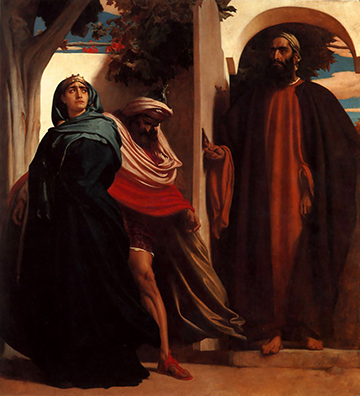
Those were very dark times, when huge numbers of Jews fell away from the exclusive worship of the LORD and bent the knee to Baal. Jezebel, the foreign wife of the Jewish King Ahab, was instrumental in spreading this apostasy. Elijah fought against it tirelessly and at times felt quite alone.

There he was, fleeing from Queen Jezebel (who sought his life) and deeply discouraged by his fellow Jews, who were either too confused or too fearful to resist the religion of the Baals demanded by Jezebel. Perhaps he thought he was the last of those who held the true religion. In the cave, Elijah pours out his lament.

And there he came to a cave, and lodged there; and behold, the word of the LORD came to him, and he said to him, “What are you doing here, Elijah?” He said, “I have been very jealous for the LORD, the God of hosts; for the people of Israel have forsaken thy covenant, thrown down thy altars, and slain thy prophets with the sword; and I, even I only, am left; and they seek my life, to take it away” (1 Ki 19:9–10).

God will have none of this despair or complaining. He says to Elijah,

Go, return on your way to the wilderness of Damascus; and when you arrive, you shall anoint Hazael to be king over Syria; and Jehu the son of Nimshi you shall anoint to be king over Israel; and Elisha the son of Shaphat of Abel-meholah you shall anoint to be prophet in your place. And him who escapes from the sword of Hazael shall Jehu slay; and him who escapes from the sword of Jehu shall Elisha slay. Yet I have seven thousand in Israel, that have never bent the knee to nor bowed to Baal, nor kissed him with the mouth (1 Ki 19:15–18).

There are others after all! It is a small remnant to be sure, but Elijah is not alone. A small remnant remains faithful and God will rebuild, working with them.

Elijah is commanded not to give way to discouragement, but rather to keep preaching and to anoint leaders and a prophet who will keep preaching after him.

This is a lesson for all of us.

In times like these, it is hard not to feel like Elijah: deeply disappointed and even discouraged in the face of our current cultural decline. How many of our countrymen and even fellow Catholics have bent the knee to the Baals of our time, accepting the doctrines of demons? How many have been led astray by the Jezebels and the false religion of the Baals of our time, setting aside the cross and substituting the pillow of comfort and selfish desire? Now, like then, many are told to immolate their children, to kill the innocent through abortion (and call it “choice,” “women’s healthcare,” or “reproductive freedom”). There is widespread misunderstanding of marriage, rampant divorce, cohabitation, fornication, children being born out of wedlock, sweeping approval for same-sex unions, and even the open celebration of homosexual activity. All of this causes grievous harm to children by shredding the family—the very institution that needs to be strong if they are to be raised well.

Euthanasia is back in the news, and the legalization of polygamy may be on the horizon.

So here we are today in a culture of rebellion. Sadly, too many in the Church (including clergymen and those in the Church hierarchy) seem bewitched, succumbing to false compassion.

Lest we become like Elijah in the cave, discouraged and edging toward despair, we ought to hear again the words of God to Elijah: I have seven thousand in Israel that have never bent the knee to nor bowed to Baal.

God has a way of working with remnants in order to rebuild His Kingdom. Mysteriously, He allows a kind of pruning, a falling away of what He calls the cowards (e.g., Judges 7:3, Rev 21:8). With those who are left, He can achieve a great victory.

Consider that at the foot of the cross there was only one bishop (i.e., one priest, one man) who had the courage to be there. Only four or five women possessed such courage. But Jesus was there; and with a remnant, a small fraction of His followers, He won thorough to the end.

Are you praying with me? Stay firm! Stay confident! Do not despair! There are seven thousand who have not bent the knee to the Baals of this age. With a small group, the Lord can win through to the end. Are you among the seven thousand? Or do the Baals hold some of your allegiance? Where do you stand?

Elijah was reminded that he was not alone. Hearing of the faith of so many of you readers reminds me that I am not alone. When I hear the Amens coming from my congregation as I preach the “old time religion,” I remember that I am not alone. When I gather with other coalitions of believers, I am reminded that there are many good souls still to be found. Seek them out. Build alliances, and stand ready to resist, to fight the coming and already-present onslaughts.

I cannot be certain of the fate of Western culture (frankly, it doesn’t look good). I am not sure if these are the end times or just the end of an era. But of this I am sure: Jesus wins and so do all who stand with Him and persevere to the end. Get up, Elijah. Go prophesy, even if you are killed for it. Keep preaching until the last soul is converted..

On the “Memorare” of Memorial Day

Memorial Day for many means the beginning of summer. To others, it is a day off to go shopping. But as I am sure you know, Memorial Day is really a day to honor those who have died in the service of this country. Here are some thoughts based on two words that arise on a day like this: “memorial” and “monument.”

The word “memorial” comes from the Latin memorare, an imperative that means “Remember!” Therefore, Memorial Day is “Remember!” Day. To remember something is to allow it to be present to our mind and heart so that we are grateful, sober, aware, and different because of it.

This is a day to remember that there are men and women who died so that you and I are able to live with greater security, justice, and peace. May these fallen soldiers rest in peace. We owe them both a debt of gratitude and our prayers.

In a secondary sense, we can also honor today those who currently serve in the military because they also place their lives on the line for our security and peace. On Veterans Day we will have a second opportunity to thank those in the military who are still living.

God bless them all and may the dead rest in peace. We must remember that freedom is not really free—others paid the price for our freedom.

The second word is “monument,” which comes from the Latin words monere (to warn, remind, or advise) and mens (mind).  Hence a monument exists to admonish or advise us to remember the dead and/or what they have done. Not only do we owe a debt of gratitude to our fallen soldiers, but we must also hold in our memories all they have done for us.

There are many memorials and some monuments as well honoring our fallen soldiers. Here in Washington, D.C. and in most cities, there are memorials to the soldiers who died during World War I, World War II, the Korean War, and the War in Vietnam. Soon enough there will be monuments to the fallen from the Gulf War and to those who gave their lives in other wars. The Tomb of the Unknowns is a poignant monument to the many fallen who remain unknown to us. And who can forget the deep impression that the rows of white crosses in a military cemetery make?

Love of one’s country, patriotism, is related to the fourth commandment. The Catechism teaches,

It is the duty of citizens to contribute to the good of society in a spirit of truth, justice, solidarity and freedom. The love and service of one’s country follow from the duty of gratitude and belong to the order of charity (CCC # 2239).

The Lord Himself makes it plain: No one has greater love than this, to lay down one’s life for one’s friends (John 15:13).

We must never forget the price that others have paid for our freedom. Pray for our fallen soldiers from every generation and for their families.

Here is the text of the song “Mansions of the Lord”:

To fallen soldiers let us sing,
Where no rockets fly nor bullets wing,
Our broken brothers let us bring
To the Mansions of the Lord

No more weeping,
No more fight,
No prayers pleading through the night,
Just Divine embrace,
Eternal light,
In the Mansions of the Lord

Where no mothers cry
And no children weep,
We shall stand and guard
Though the angels sleep,
Oh, through the ages safely keep
The Mansions of the Lord

Perhaps you might use the following video as a way to meditate on the sacrifices they have made:

A New Movie: Paul, Apostle of Christ

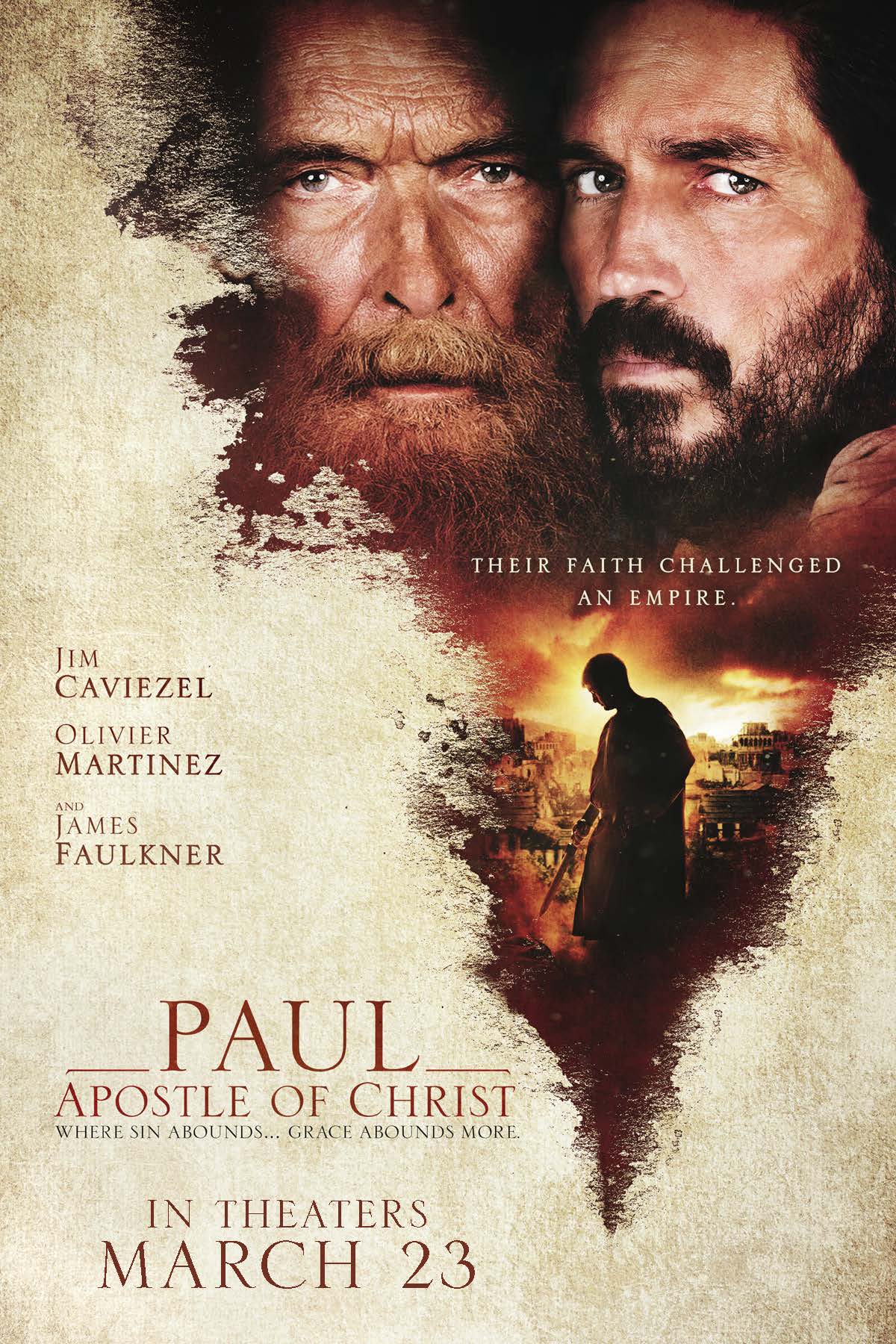
Over a month ago I was blessed to get an early view of the new movie, Paul, Apostle of Christ. It is indeed wonderful — beautifully filmed and with a moving ending. It is not a simple retelling of the Acts of the Apostles; such films have already been made. Instead, it is a moving portrait of St. Paul (James Faulkner) and St. Luke (Jim Caviezel).

The setting is Rome during St. Paul’s last days. Great persecutions are underway, taking a heavy toll on the Christians there. The movie presents the humanness of these struggles, both individually and communally. It weaves many of Paul’s writings in, but not in an artificial way. It also depicts a personal dimension of Paul by developing certain painful memories he carried with him. While these memories are mentioned in Paul’s writings, their creative treatment in the movie leads to its powerful conclusion.

To avoid having to issue a “spoiler alert” I will not say any more about the movie, but I strongly encourage you to see it. Expect less of a retelling of Acts or a presentation of Paul’s writings and more of a treatment of Paul, Luke, and the early Christians, who endured so as to hand the faith on to us.

On Presidents Day We Should Remember That Washington and Lincoln Often Called us to Prayer

We live in a secular age. Religious utterances by government officials are greeted with surprise or even indignation by some. While the primary role of civil leaders is not a religious one, insisting that never express religious sentiment is a form of extremism rooted in exaggerated conception of the idea of the separation of Church and State. In fact, “separation of Church and State” appears nowhere in the United States Constitution.

On Presidents’ Day we do well to look to history to clarify that these extreme, modern concerns were not shared by Washington, Lincoln, and many other leaders.

Religion and the First Amendment

Congress shall make no law respecting an establishment of religion, or prohibiting the free exercise thereof; or abridging the freedom of speech, or of the press; or the right of the people peaceably to assemble, and to petition the Government for a redress of grievances.

While the First Amendment prohibits Congress from passing a law respecting an establishment of religion (the “Establishment Clause”), but it also specifies that it shall pass no law prohibiting the free exercise of religion (the “Free Exercise Clause”). This second pillar, protecting the free exercise of religion, has been eroding over the years, with the definition of “exercise” ever-narrowing. Increasingly, the claim is made that religious bodies (especially the Catholic Church, it seems) are seen to have no right to attempt any influence in the legislative process. This, of course, would limit our ability to freely exercise our faith, a major tenet of which is that we should evangelize, be a light to the world, and testify to the truth. More and more, secularists are proposing that the only acceptable place for religious expression of any kind is within the four walls of a church building.

Many argue that America’s founding fathers wanted it this way, that they wanted a “wall of separation” because most of them were either irreligious or deists. It is interesting to note that despite this most of them spoke freely of God, including appeals to Him and His will in their remarks. This is true even of Thomas Jefferson (who famously referred to a “wall of separation between Church and State” in a letter). Of the five inscriptions on the walls of the Jefferson Memorial, culled from his writings, three refer God and one to the Creator. Most of the founding fathers (who purportedly wanted this dramatic separation of Church and State) were involved in drafting the Constitution.

Many people love to point out that God is never mentioned in the Constitution. Oh, but He is! The final line of the Constitution reads as follows:

Done in Convention by the Unanimous Consent of the States present the Seventeenth Day of September in the Year of our Lord one thousand seven hundred and Eighty-seven and of the Independence of the United States of America the Twelfth. In Witness whereof, We have hereunto subscribed our Names

“In the year of our Lord …” where did that come from? I guess the drafters of the Constitution never got the memo that God is not to be mentioned in government documents or at government functions. The Lord referenced here is none other than Jesus Christ, for the year corresponds to the number of years since His birth.

The first signature on the Constitution is that of George Washington. Apparently he also never got the memo about keeping God and religion out of all things governmental because he mentioned God frequently in his writings and speeches. Below are just three examples. The first speaks of our obligation to give thanks to God; it is a decree declaring a Day of Thanksgiving in the United States on November 26, 1789. The second is from a speech to an assembly of Delaware Indian Chiefs in 1779 (it would be considered highly politically incorrect today). The third is from his last speech to the U.S. Legislature.

  1. Whereas it is the duty of all nations to acknowledge the providence of Almighty God, to obey His will, to be grateful for His benefits, and humbly to implore His protection and favor; and Whereas both Houses of Congress have, by their joint committee, requested me to “recommend to the people of the United States a day of public thanksgiving and prayer, to be observed by acknowledging with grateful hearts the many and signal favors of Almighty God, especially by affording them an opportunity peaceably to establish a form of government for their safety and happiness:” Now, therefore, I do recommend and assign Thursday, the 26th day of November next, to be devoted by the people of these States to the service of that great and glorious Being who is the beneficent author of all the good that was, that is, or that will be; that we may then all unite in rendering unto Him our sincere and humble thanks for His kind care and protection of the people of this country previous to their becoming a nation; for the signal and manifold mercies and the favorable interpositions of His providence in the course and conclusion of the late war; for the great degree of tranquility, union, and plenty which we have since enjoyed; for the peaceable and rational manner in which we have been enabled to establish constitutions of government for our safety and happiness, and particularly the national one now lately instituted for the civil and religious liberty with which we are blessed, and the means we have of acquiring and diffusing useful knowledge; and, in general, for all the great and various favors which He has been pleased to confer upon us. And also that we may then unite in most humbly offering our prayers and supplications to the great Lord and Ruler of Nations and beseech Him to pardon our national and other transgressions; to enable us all, whether in public or private stations, to perform our several and relative duties properly and punctually; to render our National Government a blessing to all the people by constantly being a Government of wise, just, and constitutional laws, discreetly and faithfully executed and obeyed; to protect and guide all sovereigns and nations (especially such as have shown kindness to us), and to bless them with good governments, peace, and concord; to promote the knowledge and practice of true religion and virtue, and the increase of science among them and us; and, generally to grant unto all mankind such a degree of temporal prosperity as He alone knows to be best. Given under my hand, at the city of New York, the 3d day of October, A.D. 1789 George Washington, President.
  2. You do well to wish to learn our arts and ways of life, and above all, the religion of Jesus Christ. These will make you a greater and happier people than you are (Speech to the Delaware Indian Chiefs on May 12, 1779).
  3. I now make it my earnest prayer that God would … most graciously be pleased to dispose us all to do justice, to love mercy, and to demean ourselves with that charity, humility, and pacific temper of the mind which were the characteristics of the Divine Author of our blessed religion (Last Official Address of George Washington to the Legislature of the United States).

Abraham Lincoln also often referred to God and faith:

  1. On Faith as among the civic virtues – Intelligence, patriotism, Christianity, and a firm reliance on Him, who has never yet forsaken this favored land, are still competent to adjust, in the best way, all our present difficulty (First Inaugural Address, March 4, 1861).
  2. On Divine ProvidenceIn the very responsible position in which I happen to be placed, being a humble instrument in the hands of our Heavenly Father, as I am, and as we all are, to work out his great purposes, I have desired that all my works and acts may be according to his will, and that it might be so, I have sought his aid—but if after endeavoring to do my best in the light which he affords me, I find my efforts fail, I must believe that for some purpose unknown to me, He wills it otherwise. If I had had my way, this war would never have been commenced; If I had been allowed my way this war would have been ended before this, but we find it still continues; and we must believe that He permits it for some wise purpose of his own, mysterious and unknown to us; and though with our limited understandings we may not be able to comprehend it, yet we cannot but believe, that he who made the world still governs it (Letter to Eliza Gurney, October 26, 1862).
  3. On Religious Liberty – But I must add that the U.S. government must not, as by this order, undertake to run the churches. When an individual, in a church or out of it, becomes dangerous to the public interest, he must be checked; but let the churches, as such take care of themselves. It will not do for the U.S. to appoint Trustees, Supervisors, or other agents for the churches (Letter to Samuel Curtis, January 2, 1863).
  4. On the Justice of God – Fondly do we hope—fervently do we pray—that this mighty scourge of war may speedily pass away. Yet, if God wills that it continue, until all the wealth piled by the bond-mans two hundred and fifty years of unrequited toil shall be sunk, and until every drop of blood drawn with the lash, shall be paid by another drawn with the sword, as was said three thousand years ago, so still it must be said “the judgments of the Lord, are true and righteous altogether” (Second Inaugural Address, March 4, 1865).

These are just a few samples showing that the aversion to any religious reference is relatively new and is a disposition largely unknown to our founding fathers as well as to those of Lincoln’s era. These quotes do not “prove” that Presidents Washington and Lincoln were perfect Christians or that they were never critical of any aspects of religion, but they do indicate that they both understood the importance of religious faith to our country and were quite comfortable articulating both the need for faith and its benefits.

Extremism – Recent attempts to completely ban any religious expression, any spoken appreciation for religion, or any encouragement of its practice, would surely seem extreme to these men—extreme and far removed from the embrace our country has historically extended to faith.

Washington and Lincoln did not hesitate to invoke God, ask His blessings, and exhort their fellow citizens to prayer. Let us pray for our country and for all of our leaders. Happy Presidents’ Day!

Has Jesus Saved You from This Present Evil Age?

Jesus Christ came to save us from our sins; that is certainly true. St. Paul said, The saying is trustworthy and deserving of full acceptance, that Christ Jesus came into the world to save sinners, of whom I am the foremost (1 Tim 1:15).

St. Paul mentioned another truth, however, one we too often forget. It came during a benediction to the people Galatia:

We wish you the favor and peace of God our Father and of the Lord Jesus Christ, who gave himself for our sins, to rescue us from this present evil age, as our God and Father willed—to him be glory for endless ages. Amen (Galatians 1:3-4).

So Jesus came to rescue us from “this present evil age.” What is this evil age? It is more than a mere period of time. It is the collection, the confluence of philosophies, ideologies, powers, illusions, and sinful attitudes that are arrayed against us. The world and its prince seek to draw us into their realm, to win our loyalty, our very heart.

This is our foremost daily battle. We live in a world filled with loud sounds, flashy lights, vivid imagery, and enticing morsels. In an age dominated by various media, there is rarely a moment that is not filled with distractions and “come hither” seductions that appeal to our fallen nature. Although it is orchestrated by Satan, the prince of this world, many willingly connive in the deal, for there is enormous profit to be made and the glory of power to be had by those who participate in the system.

Behind the bait of glittering lights and tempting morsels is a hook that easily ensnares us and can only be removed with pain. While there are lawful pleasures from God to be enjoyed, too often what is offered is not from Him. This can be discerned by the fact that the fake gifts of this evil age are distorted by excess or are directed to the wrong end.

Christ Jesus came to save us from our sins as well as from this present evil age. Is this clear to us? Does the idea even appeal to us? Most Christians seem quite content to expose themselves completely to the age and accept even its most sinful propositions without question. These views are accepted uncritically because they seem popular, while the gospel is criticized as irrelevant or even hateful. We willingly spend hours exposing our minds and hearts to this world and its values yet find it challenging to pray for even ten minutes a day.

St. John said,

Do not love the world or the things in the world. If anyone loves the world, the love of the Father is not in him. For all that is in the world—the desires of the flesh and the desires of the eyes and pride of life—is not from the Father but is from the world. And the world is passing away along with its desires, but whoever does the will of God abides forever (1 John 2:15-17).

St. James added,

Adulterers! Do you not know that friendship with the world is hostility with God? Therefore, whoever has chosen to be a friend of the world is an enemy of God (James 4:4).

Thus we do indeed need to be saved from this present evil age. Our hearts are weak and we are easily swayed by apparent, passing goods away from what are true, lasting, true goods. Without Christ we are easy targets.

Help us, Lord; our wounded hearts pine for all the wrong things in all the wrong places. Save us, Lord, from this present evil age!

Can We Talk? A Brief List of Annoying Expressions and Verbal Fumbles

100213We all have certain phrases that annoy us; oddities creep into the language that invite comment or could use correction. To that end, I propose below a list of ten annoying and/or misused words and expressions.

Please accept this list in the humorous vein in which it is intended. I am playing the role of an irritated curmudgeon, but it’s just my shtick. Have some fun with me as I complain and then feel free to add to my list.

So, can we talk? He’s my list of annoyances.

1.  “With all due respect …” This phrase is typically followed by something that isn’t going to respect the recipient at all! When you open an e-mail and it begins, “With all due respect, Mr. Jones, …,” don’t you just wince at what you just know is coming? In a way, the expression is a form of lip service. It’s a way of saying, “I want to dispense with that silly tradition of having to accord you a modicum of respect and get on to what’s really on my mind, namely, that you’re wrong and probably clueless as well.”

2.  Decimate Today the word has come to mean “to destroy completely.” For example, “Our culture has been decimated by no-fault divorce.” The original meaning, to reduce something by a tenth, has been relegated to a secondary definition in many dictionaries. The word came from the Roman practice in which, after conquering a town that was guilty of some sort of uprising, the Romans would line up all the men of that town in the public square, and kill every tenth one. In effect, the message was, “This is what you get if you mess with us. It’ll be worse next time.” Alas, trying to recover the original meaning of this word may be a lost cause at this point. It may be destined to go the way of other Latin-based words such as “manufacture,” the literal meaning of which is handmade (manu = hand, facere = to make). Today something referred to as manufactured is typically not handmade. There are other English words that seem to have reversed meanings. For example, we drive on parkways and park on driveways.

3.  ServiceThere is a tendency today to take the noun “service” and turn it into a verb. It is common to hear someone say, “We service our clients.” or, “We serviced fifty people last month.” No! People are served, not serviced. Perhaps you may speak of a car as being serviced, but people are served. It’s hard to know where this manner of speaking came from, but I suspect it crept in from the world of prostitution, where prostitutes often speak of “servicing” their “Johns” (i.e. clients). We do not service people, we serve them; people are not serviced they are served.

4.  Not unlike This strange expression, in a way, cancels itself out as a double negative. For example, someone may say, “This car is not unlike that one.” If you put a few of those sorts of expressions into a sentence, trying to figure out exactly what the sentence means can make your head explode. In fact, it strains the meaning of the word “sentence,” which refers to a string of words that makes sense. Unless the person misspoke, this seems to just be a fancy way of saying, “This car is like that one.” Try to avoid making heads explode by not using the expression, “not unlike.”

5.  Proactive – This is another strange word that has crept into our vocabulary. How is “proactive” different from active? One might argue that there’s a temporal dimension here: one who is “proactive” is one who is ahead of his time. To be honest, I’m not sure what is meant when someone is called “a proactive person.” I think it is a compliment, in that the person is “ahead of the curve” or something, but it’s just not all that clear to me — but maybe I’m just being reactive.

6.  Utilize Why not just say “use”? This oddity seems to be waning in usage, and not a moment too soon as far as I’m concerned. I live for the day when we no longer use “utilize” things.

7.  Intellectually dishonest How is being “intellectually dishonest” different from being just plain dishonest? Is not honesty or dishonesty rooted in the intellect and manifested in speech? I’ve never heard other qualifiers attached; I haven’t heard of physical dishonesty or verbal dishonesty. “You’re being intellectually dishonest” seems to me to be just a highfalutin’ way of saying “You’re being dishonest.”

8.  Dialogue Why not just say “discussion”? Instead of saying, “I’m having a dialogue with him,” why not just say, “I’m having a discussion with him”? An even more egregious abuse of this word is to “verbify” it: “Let’s dialogue about this problem.” Why not just say, “Let’s discuss this problem?” Even worse is “We’re dialoguing about this issue” instead of “We’re discussing this issue.” Turning nouns into verbs or verb forms generally produces strange results. To quote a classic line from Calvin and Hobbes, “Your verbing is weirding me out.” So, let’s talk; let’s have a discussion, but let’s limit our usage of the noun “dialogue” and certainly avoid using it as a verb or using the strange construction “dialoguing.”

9.  Using “so” as an interjection I have seen this most often in academic settings. Typically, the word “so” tends to be placed at the beginning of the answer to a question. For example, “What do the data show in relation to this problem?” The response might be, “So … the data seem to indicate that things are going to get worse.” (People sometimes use an interjection as a delaying tactic while feverishly formulating an answer in their head, but that’s not the usage to which I’m objecting.) In this case, though, I’m suspicious that it is emblematic of the relativistic climate that pervades today’s academic settings. The interjection “So …,” expressed gently and slowly, seems rather more designed to make the person seem thoughtful and somehow not arrogantly certain of what he is about to say. So … I don’t want to come off is too nasty, but would you please stop saying “so” all the time?

10.  “Are you suggesting …?” This is a preamble to a question and is often used by members of the mainstream media to indicate incredulity at an outlandish statement or position. A reporter writing a piece on the Catholic Church might ask me, “Are you suggesting that people who don’t follow the teachings of the Church are in error?” There’s a part of me that wants to answer, “I’m not suggesting anything; I’m saying it outright!” Here, too, the relativistic climate rears its head. People don’t say things or claim things; they “suggest” them. Let me be clear: as one not heavily influenced by relativism, I can say that when I am asked a question, I state an answer. I do not “suggest” an answer—and neither should you, at least when it comes to faith or morals. Do not suggest the faith, say it. Say what you mean and mean what you say, but don’t say it mean.

OK, can we talk? This is my short list; what do you want to add?

Where Are You from? A Reflection on Recent Tensions over Immigration, Race, and Ethnicity

A priest friend of mine who immigrated to this country from Jordan back in the 1970s is often asked, “Where are you from?” He humorously answers, “I am from my mother’s womb.”

True enough! There is an even more fundamental answer, rooted in Scripture, which speaks to the origin of every human person: You are from the loving will and heart of God. Before you were ever formed in your mother’s womb, God knew you and thought about you (see Jeremiah 1:5). He set into motion everything necessary to create you. He didn’t just get your parents to meet, but your grandparents and great-grandparents, going all the way back. All of this so that you could exist just as you are. Having thought of you and conceived you in greatest love, He knit you together in your mother’s womb. You were skillfully wrought in that secret place of the womb and you are wonderfully, fearfully made. Every one of your days was written in God’s book before one of them ever came to be (See Psalm 139).

This biblical answer is true of every one of us. Whatever our nationality, ethnicity, or race, our truest origin is from God, from His heart and His loving “yes” to our existence. This means that I am your brother and you are my brother or sister. The Catechism of the Catholic Church has this to say:

Respect for the human person proceeds by way of respect for the principle that “everyone should look upon his neighbor (without any exception) as ‘another self,’ above all bearing in mind his life and the means necessary for living it with dignity.” … [F]ears, prejudices, and attitudes of pride and selfishness … will cease only through the charity that finds in every man a “neighbor,” a brother.

The duty of making oneself a neighbor to others and actively serving them becomes even more urgent when it involves the disadvantaged, in whatever area this may be. “As you did it to one of the least of these my brethren, you did it to me” (CCC # 1931-1932).

This is Catholic and biblical teaching. One day we shall have to account for how we recognized and treated the Lord in others. God is our Father; you are my brother or sister. Christ the Lord is our brother, too, for He joined our human family; He is not ashamed to call us His brethren (Hebrews 2:11). Wherever you’re from in this world, this origin from God is deeper and older than any earthly origin.

Here on this earth, human movement is constant. We emigrate and immigrate, as individuals, families, and groups. Wars, famines, persecution, economic conditions, the desire for freedom, and educational opportunity all play a role in this movement. Although the phrase seems clichéd, we really are a nation of immigrants. Most of us are from somewhere else, often only a couple of generations back.

Catholics bring a significant experience and witness to immigration to the United States. Many came here during a huge wave of immigration that lasted from about 1880 to 1950. When we came in those years, we were often coming from troubled lands and were extremely poor. There was famine in Ireland; economic and political turmoil in Poland, Lithuania, Italy, and parts of Germany. Many came here not knowing English and at first lived in tenements in large cities. With that poverty went many of social problems: crime, drinking, and so forth. The work of those first generations was anything but easy: laboring in coal mines, laying railroad tracks, working in steel mills, tedious work in textile factories mills. The jobs paid poorly and required long hours; they were jobs that no one really wanted. Additional scorn was heaped upon Catholics due to our faith. The Protestant majority of the time was troubled to see the country suddenly teeming with Catholics, whose religion they often scorned and whose loyalty to the United States they doubted. Slowly, that first wave of Catholics took its place and moved up into better paying jobs. They moved into more slowly into positions of political leadership. Yes, Catholics have endured great scorn in this land, both on account of their religious as well as their status as European peasants.

Prior to 1865, most African-Americans in this country had been brought here against their will. They then suffered great disdain and racism at the hands of the very country that brought them here in chains. The many Black Catholics I have known over the years, especially the older ones, remember well the double scorn they felt for being Black and Catholic.

The most recent wave of immigration into our country is largely from the south. Similarly, poverty and/or persecution are often part of what draws them here. Most of them are Catholic, and like so many immigrants before them, they perform essential services and often take jobs that no one else wants. As was the case during the 19th and 20th centuries, there is crime. And yes, some immigrants are successful, and others remain trapped in poverty.

It is alleged that recently our President, in a moment of anger, said some unacceptable, hurtful things. He spoke not only of nations, but implied that certain nations bring us better immigrants than others. I am not so sure that we have the scales to say who is “better.” Man sees the appearance, but God looks into the heart. It is true that people with technical, scientific, or academic knowledge contribute a lot to our country, but it is also true that we need immigrants at every level of the economy. We need those willing to do all sorts of work, and those with all different kinds of practical know-how.

Personally, I am quite happy with the immigrants who have come to the United States in recent decades. I think that they have added a lot to the economy and to the Church. They are hardworking and want to share in the American experience. By the second generation, most of them speak English well. While I cannot countenance those who enter the country illegally, I am perhaps more willing than many to view their illegal entry as stemming from desperation rather than flippant disregard for our laws.

I recognize that immigration reform is needed. It is a complex issue and concerns for border security are legitimate. We cannot take the whole of the world’s poor or be overrun with every refugee crisis, but we also cannot ever forget that these are our brothers and sisters. Whatever dysfunctional countries or economies they come from, remember that many of us came from similar ones. People don’t typically leave an idyllic environment.

I do not know all the possible legal and social solutions, but something of a picture emerges in Catholic parishes of what things could look like. Cardinal Wuerl paints this picture:

The sight from the sanctuary of many a church in our archdiocese offers a glimpse of the face of the world. On almost any Sunday, we can join neighbors and newcomers from varied backgrounds. We take great pride in the coming together for Mass of women and men, young and old, from so many lands, ethnic heritages, and cultural traditions. Often we can point to this unity as a sign of the power of grace to bring people together (The Challenge of Racism).

Indeed, our parishes are ethnically and racially diverse. The rich beauty of diversity in the unity of our faith is manifest everywhere. “Catholic” means “universal” and it could not be more obvious in Washington, D.C (as in many other regions) that Catholics come from everywhere! This diversity is from God Himself, who has not only created the rich tapestry of humankind but also delights to unite us all in His Church.

“Babylon and Egypt I will count among those who know me; Philistia, Tyre, Ethiopia, these will be her children and Zion shall be called ‘Mother’ for all shall be her children.” It is he, the Lord Most High, who gives each his place. In his register of peoples, he writes: “These are her children,” and while they dance they will sing: “In you all find their home” (Psalm 87:1-7).

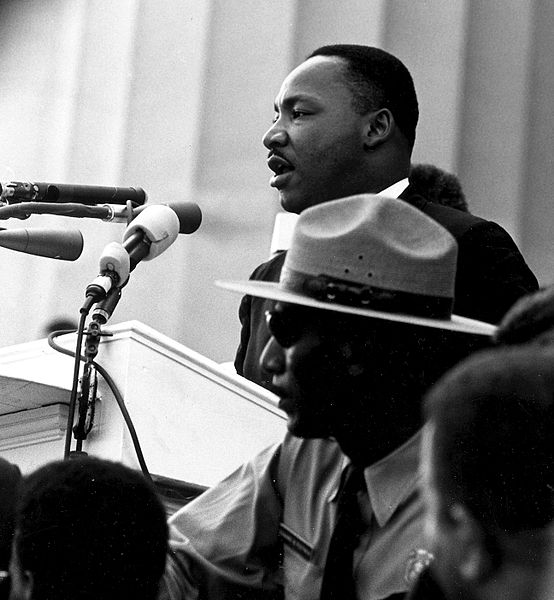
Dr. Martin Luther King remarked on the role of the Church back in the days of the civil rights movement:

There is a more excellent way, of love and nonviolent protest. I’m grateful to God that, through the Negro church, the dimension of nonviolence entered our struggle. If this philosophy had not emerged, I am convinced that by now many streets of the South would be flowing with floods of blood (Letter from Birmingham jail).

We are currently locked in many fierce debates. Our discourse grows ever more contentious, our language ever coarser. Anger (some of it quite understandable) reaches new levels. In the midst of the ugliness, consider this reminder:

Therefore, each of you must put off falsehood and speak truthfully to his neighbor, for we are members of one another. … Let no unwholesome talk come out of your mouths, but only what is helpful for building up the one in need and bringing grace to those who listen. … Get rid of all bitterness, rage and anger, outcry and slander, along with every form of malice. Be kind and tender-hearted to one another, forgiving each other just as in Christ God forgave you (Eph 4:26-32).

We who are Christians should lead the way in helping to lower the temperature. We are past the boiling point now and we are getting scalded more and more.

Maybe the answer begins in asking this simple question: “Where are you from?” Know the answer to this question theologically and religiously rather than nationally. The truest answer is this: “You are from God and so am I.”

If what I have written angers you, I am sorry. If you think me naïve, I ask you to remember something else about me: I am Charles, your brother.