
The Biblical Root of Annulments. The Lord says this in regard to marriage: “What God has joined together, let no one divide (Mat 19:6). On the face of it, divorce and any sort of annulment is forbidden would seem forbidden by this. But actually the text serves as a basis for the Church’s allowance of annulment under certain circumstances. The text says What GOD has joined together cannot be divided.
Now just because two people stand before a Justice of the Peace, or a minister or even a priest and swear vows, does not mean that what they do is a work of God. There have to be some standards that the Church insists on for us to acknowledge that what they do is “of God.”
There are a number of impediments that can render what they do ipso facto invalid. Things such as prior bond, consanguinity, minor status, incapacity for the marriage act, and crime to obtain consent. There are others as well. Further, it is widely held that when one or both parties are compelled to enter the marriage or that they display a grave lack of due discretion on account of immaturity or poor formation, that such marriages are null on these grounds. All these are ways that the Church, using her power to bind and loose, comes to a determination that what appeared to be a marriage externally was not in fact so based on evidence. Put more biblically, the putative marriage was not “what God has joined together.”
You may ask, “Who is the Church to make such a determination?” I answer that, “She is in fact the one to whom the Lord entrusted, through the ministry of Peter and the Bishops the power to bind and loose (Mt 18:18) and to speak in His name (Lk 10:16).
Annulments are not Divorces– A decree of nullity from the Church is a recognition, based on the evidence given, that a marriage in the Catholic and Biblical sense of the word never existed. Hence, since a person has not in fact been joined by God they are free to marry in the future. In such a case a person does not violate our Lord’s declaration that one who divorces their spouse and marries another commits adultery (cf Matt 19:9).
There are some who wonder: Are we giving too many annulments? While it is clear that the Church has some pretty clear canonical norms regarding marriage, like any norms they have to be interpreted and applied. Certain American practices and norms have evolved over the last thirty years that some question as being too permissive and thus no longer respectful of the binding nature of marital vows. I am not without my concerns that we may give too many annulments but there is nothing intrinsically flawed with the Church teaching here, concern is directed only to the prudential application of the norms.
Annulment cases vary greatly. Often it isn’t as cras as somebody coming in and saying, “Well I got rid of my first wife and have got me another I want to marry, let’s get the paperwork going Father.” It is usually far more poignant than that.
Perhaps someone married early, before they were really very serious about the faith and they married someone who abused them. Now, years later after the divorce they have found someone who is able to support them in their faith. Perhaps they met them right in the parish. Should a marriage that was in young and foolish years and lasted all of six months preclude them from entering a supportive union that looks very promising? Maybe so, some still say.
Another more common scenario is often the case where in a person shows up at RCIA who has recently found the Catholic faith and wants to enter it. However, they were married 15 years ago in a Protestant Church to their current spouse who had been married before. Now, mind you, their current marriage is strong and they have both been drawn to the Catholic Faith. They have four kids as well. What is a priest to do? Well I can tell you that this priest will help the one who needs an annulment to get it. I can tell you a lot of cases come to the Church this way. It’s hard and perhaps even unjust to say to someone like this that there is nothing the Church can do for them, they will never qualify for sacraments. No, we just don’t do that, we take them through the process for annulment.
Perhaps too another person shows up at the door, A long lost Catholic who has been away 30 years. During that time he or she did some pretty stupid stuff including getting married and divorced, sometimes more than once. Now they show up at my door in a current marriage that seems strong and helpful and which includes children. The person is in desperate need of confession and Holy Communion. What is a pastor to do? He takes them through the process of annulment to get them access to those sacraments.
So there it is. There are very grave pastoral issues on both sides. The current instinct of the Church, given the poisonous quality of the culture toward marriage is to be more willing to presume there were problems.
If you are in a second marriage, please consider contacting your parish priest. Don’t presume you’re unwanted, or can never receive the sacraments. The tribunal process isn’t that difficult and the Church stands ready to assist you.
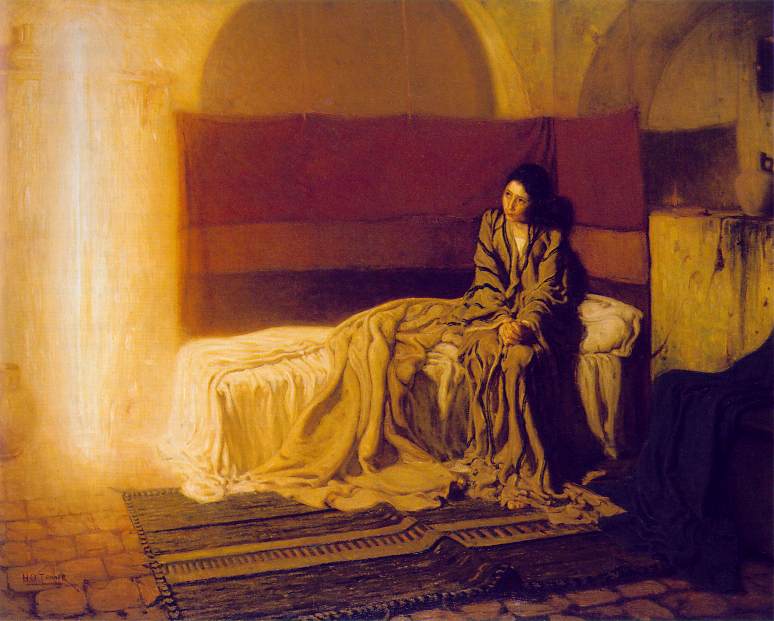 We are in the heart of Lent but for one day we step back into the Christmas cycle. It is nine months before Christmas and today we celebrate the true feast of the Incarnation. December 25 is the Lord’s birth but today is His incarnation as he is conceived in his Mother’s womb. TODAY the Word becomes flesh.
