All of us ponder why God permits suffering. By faith we acknowledge that God never permits it except that a greater good may come from it. Perhaps He permits that we suffer loss in order to bestow some new gift in its place. Even beautiful relationships may hinder some new growth that God wants to bestow. For example, the death of a loved ones creates a space for the new and different while not canceling the gifts of the one who passed.
Suffering brings sobriety by reminding us that this world is not Heaven and its joys can neither last nor ultimately satisfy.
In addition, in the crucible of suffering we are tested and our faith can be strengthened and purified.
Suffering brings wisdom, which differs from mere human knowledge or experience in that it is from God. Wisdom sees past the apparent and is as much a “sense” or “disposition” as it is a body of knowledge. There is something about wisdom, so often acquired in pain, that enables us to embrace the paradoxes and riddles of life in this perplexing world, a long way from our eternal home. In wisdom we cling to God and grow more silent; we avoid simple explanations and do not demand exact answers. It is enough that God knows and that He will reveal to us only as much as we can endure now.
Yes, suffering is painful; it is a fearsome grace of God but it is a grace.
For now, the Spirit tells me that I’ve said enough, except to indicate what drew forth this meditation: an ancient maxim, an utterance of truth from ancient Greece.
He who learns must suffer.
And even in our sleep, pain that cannot
forget falls drop by drop upon the heart,
and in our own despair, against our will,
comes wisdom to us by the awful grace of God. – Aeschylus, c.a. 500 B.C.
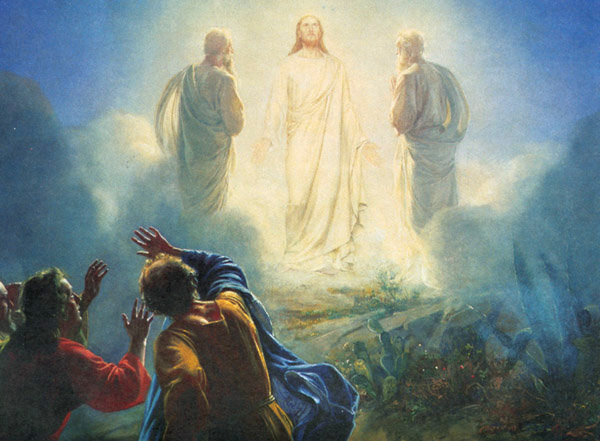
The Feast of the Transfiguration is ultimately about vision. The Lord brought Peter, James and John up a high mountain in order that they might come to see. Even the word that describes this day bespeaks vision. It is from the Latin Transfiguratione. Trans means “across” and by extension “change” and figura, means “shape” or “form.” The suffix “ation” takes a verbal action and makes it a noun. Putting it all together transfiguration means a process by which Christ changed form or appearance. Christ gave them a glimpse of his true glory, he allowed them to see across (trans) to the other shore, to the true glory of Christ.
So the Feast of the Transfiguration is about vision. Have you seen the glory of Christ? Have you glimpsed God’s glory? Have you looked across to the other shore? It is so essential for us to have this experience! Otherwise the discouragements and disappointments of life can easily overwhelm us. Only when we glimpse the glory and experience the joy of God can we truly say, by experience that our sufferings are more than worth it; That the sufferings of this world cannot even been compared to the glory that waits (Rom 8:18); that our momentary afflictions are producing for us a weight of eternal glory beyond compare (2 Cor 4:17). Have you glimpsed the glory of God and Is this something you even expect to experience in your life? We ought to asked for this wondrous gift for it is essential for us.
Now of course, heavenly visions are not something we order like pizza. We can and must ask God for this vision but we must also understand that there are things God does to give us this vision, to make this vision grow and sharpen. Notice in the Gospel for today’s Mass four basic ways in which God ushers in this vision, clarifies it, grants it and helps it grow:
The CLIMB– Jesus took Peter, John, and James and went up a mountain to pray. The other Gospels describe this as a “high” mountain. Tradition assigns Mt Tabor as the place of the Transfiguration. This is no small hill! It is indeed quite a climb to the top. I have visited there twice and, after the long drive to the top in buses with special transmissions designed for the climb, the view of the Jezreel Valley is like being up in an airplane. It probably took the four of them the better part of a day, maybe two to get to the top on foot. They must have been hardy men for such a climb. Consider too that they had to carry water and other provisions up with them. Now the point is, the vision they will experience comes only after a hard and difficult climb. It is true fact in my life and your too, I am sure, that suffering and difficulty usually gives new vision, opens new vistas, brings deeper understanding. Suffering is not something we enjoy to be sure, but it is part of the climb. There is an old Gospel song that says, “I’m coming up on the rough side of the mountain!” The paradox announced by the song is that it is easier to climb on the rough side of the mountain. That’s where the climbing is to be had. That’s where the progress is possible. The smooth side provides little footing and is more dangerous. We like a smooth and pleasant life, but in fact, it is a more dangerous climb. Now at the top there is a vision to be had! But to get us there the Lord often has to have us climb and bring us up the rough side of the mountain. This is what it often takes to give us vision.
The CLARIFICATION – While he was praying his face changed in appearance and his clothing became dazzling white. And behold, two men were conversing with him, Moses and Elijah, who appeared in glory and spoke of his exodus that he was going to accomplish in Jerusalem. Now I have chosen the word clarification to do double duty here. One the one had it refers to brilliant glory shining forth from Christ. Clarus in Latin means “bright” and hence clarification refers to his shining splendor. But I also use the word clarification in the more common English sense which means to make clear. Now notice that Moses and Elijah are present and conversing with the Lord. Moses and Elijah are historical persons to be sure but they also represent the Law and the Prophets. In other words they represent Scripture. Part of what the Lord needs to do for us to give us heavenly vision is to teach us his Word. As we grow in knowledge of Scripture, our vision grows, our understanding deepens, and we see things differently. Immersion in the Scriptures disposes us for heavenly vision. Notice too how Moses and Elijah (personifying Scripture) give the vision for what Christ is about to do in his final journey to Jerusalem. The vision is of a new Exodus. Just as Moses led the ancient people out of slavery in Egypt by the Blood of the Lamb at Passover and the parted waters (baptism) of the Red Sea. So now Jesus would lead his people out (exodus) from slavery to sin by the blood of the Lamb (Jesus is the Lamb of God) and the Baptismal waters flowing from his parted and pierced side. Do you see what Scripture does? It gives us vision. It sheds light on the meaning of our life. Scripture is our story and it shows again and again how God can make a way out of no way, that He can do any thing but fail. Do you want to see the heavens open and the glory of God be revealed? Then immerse yourself in scripture. Through Scripture God clarifies all things.
The CONTEMPLATION – Peter and his companions had been overcome by sleep, but becoming fully awake, they saw his glory and the two men standing with him. As they were about to part from him, Peter said to Jesus, “Master, it is good that we are here; let us make three tents, one for you, one for Moses, and one for Elijah.” But he did not know what he was saying. And now comes the vision! Through the difficult climb and suffering, and after being immersed in God’s word, God often grants us this vision. When we see his glory we become fully awake. So great is this glory that they do not know what to say! Those who have every really experienced a glimpse of God’s glory know that the experience cannot be reduced to words. It is ineffable, unsayable, unspeakable! There is an old saying: “Those who know, do not say, Those who say, do not know.” Peter is babbling at this point and thinks to build booths or tents to capture this glory. He probably had in mind the Feast of Booths wherein the Jewish people remembered the great Exodus, the time in the Desert and the giving of the Law. It was one of the great festivals of the year. And hence Peter’s suggestion is a way of saying, “Let’s celebrate this!” “Let’s extend the time in a week-long feast!” But Peter needs to understand that this is but a brief glimpse. There are still troubles ahead and another mountain to climb (Golgotha). But for now the vision is wonderful. So to for us who are privileged to get a glimpse of glory. It does not mean we are fully in heaven yet. For us too there are other mountains to climb, valleys to cross. But oh the glimpse of glory, do not forget it. Let it sustain you in difficult times and it must have sustained Jesus in his passion.
The COMMAND – While [Peter] was still speaking, a cloud came and cast a shadow over them, and they became frightened when they entered the cloud. Then from the cloud came a voice that said, “This is my chosen Son; listen to him.” – And now comes the great glory cloud (the shekinah) that overshadows them. This vision has been wonderful but God has more than bright lights to show them. The vision he confers gives direction as well as light. His direction is clear: “Listen to my Son.” Not only does this instruction complete the vision but it also ensures greater visionin the future. If we obey Jesus Christ, we will see greater and greater things (Jn 1:50). If we follow him he will lead us to the light and we will see all things by it. But note this, where Jesus leads is not always easy. In order to obey the Father’s command that they listen to Jesus, they are going to have to accept Christ’s instruction that they follow him to Jerusalem and the cross. Only in this way will they see all things by the light of Easter glory.
Do you want to see? Then be willing to make the climb with Jesus. He gives vision if we climb. He gives vision if we are immersed in his Word, which is Scripture and Church Teaching. But his greatest vision lies ahead if we but take up our cross and follow him through his passion death and resurrection. Happy feast of the Transfiguration. May God grant us vision.
The first reading for Mass on Tuesday (Tuesday of the third week of Lent) was striking in its relation to the current time of turmoil. It reminds us of our vulnerability. Despite all our strength, we are individually and collectively in need of tremendous grace and mercy from God. Thanks be to God and a good cooperation between government and the private sector a vaccine is now at hand. Perhaps this plague will pass. But sin always remains and for all our concern about the physical threat of this virus, we should be even more concerned about our spiritual vulnerability. In the reading, from 2 Kings 5, we are told of the great strength and wealth of Naaman, the Assyrian commander:
Naaman, the army commander of the king of Aram,
was highly esteemed and respected by his master,
for through him the LORD had brought victory to Aram.
Of his wealth it is said:
So Naaman set out, taking along ten silver talents,
six thousand gold pieces, and ten festal garments.
Despite this wealth we are told:
But valiant as he was, the man was a leper.
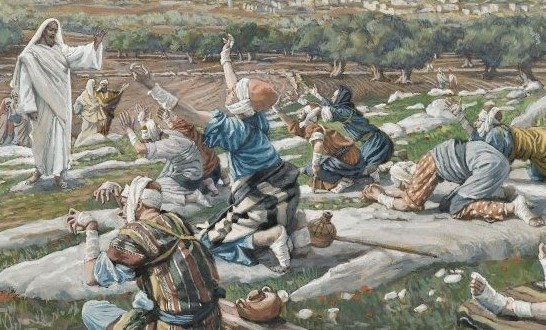
In Scripture, leprosy is not merely a physical disease; it is a symbol of sin, which disfigures as it eats away at us.
In this time of vulnerability to disease and fear, consider this brief reflection:
Yes, Lord, Naaman was a gifted man. He was a strong man and yet a leper, a sinner in need of Your mercy. Help me, O Lord, to see in him an image of myself: gifted by you, undeservedly so, and yet still a leper in great need of your mercy. Help me to see myself as I really am: a man loved by you, gifted by you, but ultimately a leper, a sinner in need of your mercy. Like Naaman, I need Your perfect mercy. Just as Naaman washed himself in the river seven times, I need Your seven sacraments, Your seven gifts of the Holy Spirit, Your seven cardinal virtues, and Your seven beatitudes. Above all, I need You.
May all of us who are making this journey through disease, vulnerability, and fear see beyond the merely physical dangers to the far worse spiritual dangers with which sin imperils us.
The first reading for Mass on Monday (Monday of the third week of Lent) was striking in its relation to the current time of turmoil. It reminds us of our vulnerability. Despite all our strength, we are individually and collectively in need of tremendous grace and mercy from God. For all our concern about the physical threat of this virus, we should be even more concerned about our spiritual vulnerability. In the reading, from 2 Kings 5, we are told of the great strength and wealth of Naaman, the Assyrian commander:
Naaman, the army commander of the king of Aram,
was highly esteemed and respected by his master,
for through him the LORD had brought victory to Aram.
Of his wealth it is said:
So Naaman set out, taking along ten silver talents,
six thousand gold pieces, and ten festal garments.
Despite this wealth we are told:
But valiant as he was, the man was a leper.
In Scripture, leprosy is not merely a physical disease; it is a symbol of sin, which disfigures as it eats away at us.
In this time of vulnerability to disease and fear, consider this brief reflection:
Yes, Lord, Naaman was a gifted man. He was a strong man and yet a leper, a sinner in need of Your mercy. Help me, O Lord, to see in him an image of myself: gifted by you, undeservedly so, and yet still a leper in great need of your mercy. Help me to see myself as I really am: a man loved by you, gifted by you, but ultimately a leper, a sinner in need of your mercy. Like Naaman, I need Your perfect mercy. Just as Naaman washed himself in the river seven times, I need Your seven sacraments, Your seven gifts of the Holy Spirit, Your seven cardinal virtues, and Your seven beatitudes. Above all, I need You.
May all of us who are making this journey through disease, vulnerability, and fear see beyond the merely physical dangers to the far worse spiritual dangers with which sin imperils us.
We live in a world of unprecedented comfort: electricity, indoor plumbing, heating and air-conditioning, medicine, healthcare, abundant food, myriad consumer products, and entertainment available with the click of a button. Despite this we do not seem more grateful or at ease than our forebears. If anything, we aremoreanxious. For example, though people have never lived so long nor been so healthy, we have never been more worried about our health.
One would think that such abundance and comfort would lead us to be exceedingly grateful and to overlook small setbacks, remembering how much more difficult life was for our ancestors—but the opposite seems more often to be the case. We seem to be easily frustrated and to have little tolerance for enduring even the most minor suffering. Our comfortable couches have made us soft and our countless options have made us overly particular and easily annoyed. There is an old saying that “Expectations are premeditated resentments.” We certainly have a lot of expectations these days, many of them unrealistic in the long run. The insistence on everything being perfect seems to rob us of the happiness we should enjoy. Everyone wants the ideal, and if there is any ordeal, they want a newdeal.
We seem to have lost the idea the idea that life is a time of testing for us. We live in paradise lost, and there are going to be difficulties. St. Augustine reminds us that trials have their purpose:
Our pilgrimage on earth cannot be exempt from trial. We progress by means of trial. No one knows himself except through trial, or receives a crown except after victory, or strives except against an enemy or temptations. [From a commentary on the psalms by Saint Augustine, bishop (Ps. 60, 2-3: CCL 39, 766)].
Yes, trials and tests help us to gain self-knowledge and self-mastery. Trials also have purifying and humbling effects. So good is God to us that He allows His graces to become our merits. For, having engaged the battle of life and undergone its trials, the crown of victory will be granted to us. St. Augustine surely has in mind St. Paul’s confident hope:
I have fought the good fight, I have finished the race, I have kept the faith. From now on the crown of righteousness is laid up for me, which the Lord, the righteous judge, will award to me on that day—and not only to me, but to all who crave His appearing(2 Tim 4:7-8).
Where would you and I be today without the trials of the past? We do not seek out suffering, but the suffering that inevitably comes in both small and large doses helps to form our character, make us stronger, and give us wisdom.
We who live in the developed world today have, for the most part, “First World problems,” and we do well to remember the inevitability of trials in this life. We don’t have to like them, but when they come, we should accept and endure them graciously. Resentment and anger at such trials do not bespeak spiritual maturity. Enjoy the good things and comforts of this life but beware the tendency to become soft and overly fussy. Remember, too, that this world is passing away.
The song “We’ll Understand It Better By and By” has these appropriate lyrics:
Trials dark on every hand
And we cannot understand,
All the ways that God will lead us
To that blessed Promised Land.
But He guides us with His eye,
And we follow till we die,
And we’ll understand it better by and by.
All of us ponder why God permits suffering. By faith we acknowledge that God never permits it except that a greater good may come from it. Perhaps He permits that we suffer loss in order to bestow some new gift in its place. Even beautiful relationships may hinder some new growth that God wants to bestow. For example, the death of a loved ones creates a space for the new and different while not canceling the gifts of the one who passed.
Suffering brings sobriety by reminding us that this world is not Heaven and its joys can neither last nor ultimately satisfy.
In addition, in the crucible of suffering we are tested and our faith can be strengthened and purified.
Suffering brings wisdom, which differs from mere human knowledge or experience in that it is from God. Wisdom sees past the apparent and is as much a “sense” or “disposition” as it is a body of knowledge. There is something about wisdom, so often acquired in pain, that enables us to embrace the paradoxes and riddles of life in this perplexing world, a long way from our eternal home. In wisdom we cling to God and grow more silent; we avoid simple explanations and do not demand exact answers. It is enough that God knows and that He will reveal to us only as much as we can endure now.
Yes, suffering is painful; it is a fearsome grace of God but it is a grace.
For now, the Spirit tells me that I’ve said enough, except to indicate what drew forth this meditation: an ancient maxim, an utterance of truth from ancient Greece.
He who learns must suffer.
And even in our sleep, pain that cannot
forget falls drop by drop upon the heart,
and in our own despair, against our will,
comes wisdom to us by the awful grace of God. – Aeschylus, c.a. 500 B.C.
There is wide interest today in the topic of exorcism. The publication in 2010 of Matt Baglio’s The Rite: The Making of a Modern Exorcist and the subsequent movie and interviews with Fr. Gary Thomas have sparked some of this interest. Prior to this, books such as An Exorcist Tells His Story, by Fr. Gabriele Amorth, had paved the way.
Frankly, another reason for the interest is that as our world becomes more secular, families disintegrate; the outright celebration of sinful practices spreads and there is an increase in bondage to sinful drives, psychological trauma, and openness to demonic influence.
A whole generation of priests were often taught to distrust the traditional understandings of trauma and dysfunction, which gave significant weight to spiritual causes. These priests were often trained to view most such things as merely psychological in nature. Thus, parishioners were often sent off on a recommended course of psychotherapy without so much as a prayer being said.
The tide is turning back to a more balanced approach. Catholics are rightly asking for spiritual help along with other approaches such as psychotherapy and psychotropic medicines.
With the renewed emphasis on exorcism in both the news and other sources, it must be said that some of the increasing number requesting the formal Rite of Exorcism manifest a misunderstanding of that rite as well as a lack of knowledge about other avenues of healing.
Demonic possession is rare and that is what the formal Rite of Exorcism is meant to address. Most people who present themselves (or someone they love) to the Church are not in fact possessed by the devil or demons. There may be obsession, oppression, or torment at work, along with psychological trauma, and other more natural sources of struggle.
For people who are not possessed, what is needed is deliverance, not exorcism.
What is deliverance? Deliverance is prayer and ongoing ministry that uses numerous approaches to bring healing and wholeness to those who, after baptism, have come to struggle significantly with bondage to sin and sinful drives, the influence of demons, or the effects of psychological and/or spiritual trauma.
Deliverance involves taking hold of the full freedom that God is given us, of helping the faithful who struggle to lay hold of the glorious freedom of children of God (cf Rom 8:21). St. Paul says that the Father has rescued us from the power of darkness and has brought us into the kingdom of his beloved Son, in whom we have redemption, the forgiveness of our sins (Colossians 1:13 – 14).
There is also a magnificent passage in the Acts of the Apostles in which St. Paul is told of his mission to the Gentiles by the Lord: I am sending you to [the Gentiles] to open their eyes and turn them from darkness to light, and from the power of Satan to God (Acts 26:17–18).
Fundamentally, this is a description of the ongoing work of deliverance, which the whole Church must accomplish for God’s chosen people. Deliverance seeks to take people out from under Satan’s power and place them under the authority and Lordship of Jesus Christ, to bring people to, or restore them to, their true identity as sons and daughters of God.
Even after baptism, it is possible that we open doors to Satan enabling him some degree of access to our heart and mind. When this is the case, a Christian, working with clergy and fellow believers alike, must take a stand against the schemes of the devil by repenting of sin and renouncing any form of agreement with the deceptions of the enemy.
Deliverance involves coming to an understandingof the tactics of the evil one and recognizing the flawed thinking that often infects our minds. It involves coming to know and name these tactics and the deep drives of sin within us. It involves repenting of them and steadily renouncing their influence so that we come to greater serenity, peace, and healing—to deliverance.
This deliverance is effected in many ways: by the Word of God proclaimed and devoutly read; through the frequent reception of sacraments of Holy Communion and confession; through spiritual direction; through the experience of the Sacred Liturgy, praise, and worship; through authentic, close fellowship with other believers; through personal prayer; through psychotherapy (where necessary); and through what might be called “deliverance ministry,” which often involves both clergy and lay praying with those who struggle and offering support and encouragement.
This is the description of a wider ministry of deliverance that looks past exorcism (which only applies in rather rare circumstances of possession). Deliverance ministry seeks to broaden healing to the large number of people (to some extent all of us at certain times) who need healing and deliverance.
Who needs deliverance? While everyone can benefit from such a ministry in a general sort of a way, there are those among us who go through intense crises and need special, focused ministry. This ministry may occasionally involve formal exorcism, but it usually addresses a more general need for deliverance. This deliverance should be a multidisciplinary approach, as described just above.
My own experience with the need for deliverance ministry is quite personal. Some of you already know my story, but here it is for those who do not: At a critical point in my life, I needed deliverance. Specifically, I experienced grave and increasingly debilitating bouts of severe anxiety.
This significant torment began for me at about age 10, when I began to experience long periods of sleeplessness due to extreme worry. At the time, there were many crises underway in my family related to my sister’s severe mental illness and my parents’ struggles with alcohol. The episodes of extreme anxiety lasted for months at a time but were sporadic, coming and going somewhat mysteriously.
Throughout my teenage years, the frequency and intensity of these episodes increased, eventually spurring my parents to place me in outpatient psychotherapeutic counseling, through which I was prescribed psychotropic medicines. This was somewhat beneficial and my college and seminary years were largely serene.
I experienced a major crisis at age 33 when, as a young priest, I was asked to take a very challenging assignment. While I initially agreed to it, I was soon assailed by debilitating anxiety, sleeplessness, panic attacks, and almost non-stop rumination and depression. I was certain that I was losing my mind. This led to brief hospitalization and the need to step back from the assignment.
However, my crisis only worsened, descending into post-traumatic stress syndrome and deeper, darker depression. I also began to experience a demonic presence. Even on sunny days my peripheral vision was shrouded in a palpable darkness. I experienced demonic presence in my bedroom, a dark, brooding presence that tormented me throughout the night. I found it necessary to sleep in my outer room with the door open for fear of this presence.
Knowing and seeing my declining condition, a brother priest prayed with me and insisted that I seek help. It was clear that I was in need of deliverance, that I was not living the normal and promised Christian life. I was tormented by fear and locked in depression and self-loathing. My accuser, the evil one, had shown his face and largely robbed me of the glorious freedom of a child of God. Deliverance was needed, but I knew it wasn’t going to be easy.
More than twenty years later, I can tell you I have been delivered. Thank you, Jesus! I rarely worry about things now.
I also want to say that deliverance takes time and involves a multidisciplinary approach. Unfortunately, most people just want relief. But God is in the healing business; healing takes time, courage, prayer, patience, and waiting for the Lord.
The elements of my deliverance and healing included daily Mass, daily prayer and reading of Scripture, spiritual direction, psychotherapy, group therapy, weekly Al-Anon meetings, weekly confession, deliverance prayers, and walking in fellowship with the people of God. Gradually, through all these means, the dark moments grew briefer and the light grew brighter. My priestly ministry also grew richer. I became more compassionate and more able to help others in their struggles.
One of the things I had to discover was that my deliverance was linked to uncovering and naming sinful drives and distorted thinking, which provided doorways for the devil to rob me of my freedom.
The primary sinful drive with which I struggled was that of control, which is a form of pride. Growing up in an often-troubled home, one of my survival strategies had been to carve out small areas in my life that I could strictly control. For example, I kept my bedroom very clean, even locking it when I was away from the house. There were many similar things that I did; the little areas of life that I could control gave me some sense of safety.
As I grew older and my responsibilities increased, I brought this desire for control into those areas and often insisted on being in control of things that could not reasonably be controlled. Finally, struggling in the face of this challenging assignment I was given, I realized that I could never possibly keep everything under control; I spiraled into great crisis.
Ultimately I needed to repent of my strong drive to control. I had to see it for the pride that it was. I needed to learn to rely more on God. But striving to rely on someone other than myself—even God—was terrifying. It took lots of repentance, growing self-knowledge, and learning “the moves” of pride and control. In addition, I had to develop better and more reasonable strategies for dealing with these situations, accepting the fact that there are many things I cannot control.
Through it all, there were great battles with Satan, who did not want to easily relax his grip on me. Thanks be to God, I had many helpers, counselors, and people who prayed for me. Deliverance did come, slowly at first, but with increasing speed as time went on.
This is deliverance ministry. It takes time and many helpers from many different disciplines. Sacraments are essential and fundamental, as are prayer and the Word of God, but in most cases deliverance cases also requires psycho-therapeutic and medical intervention. This was my journey to deliverance.
In my years as a priest I have also walked with others, slowly helping them to find serenity and to appreciate that there is a big difference between relief and healing. Little by little, building trust and striving to increase the “healing team,” I have seen many make progress similar to my own—but it takes time; it is a journey. God proceeds very delicately and deliberately in these matters. Healing takes courage and God often waits until we are ready.
So, while recent interest in exorcism is encouraging, we must be careful not to focus too much on what is rare (demonic possession), overlooking what is often more necessary and applicable to most cases: deliverance prayer and ministry.
Here a few resources I would recommend:
Two excellent books on deliverance have been written by Neal Lozano:
Here are some deliverance prayers that I and others in this work often pray with the faithful, encouraging them to pray with others as well: Deliverance prayers.
An Unbound: Freedom in Christ Conference will be held in the Washington, D.C. area on August 11-12, 2017. More information is availablehere.
Submit yourselves, then, to God. Resist the devil, and he will flee from you (James 4:7). I am a witness.
Writing as I am on the Feast of Saint James, likely the first Apostle to be martyred, I’d like to ponder the kinds of sufferings the Apostles endured in order to announce the Gospel and win souls for Christ. In the “softer” Church of the declining West, it is hard for us even to imagine. How many Catholics today can barely rouse themselves to get to an hour-long Mass on Sunday? How many of us clergy will not risk so much as a raised eyebrow in order to speak the truth?
Yet all but one of the first Apostles suffered martyrdom as well as countless other sufferings before their lives were brutally ended. Arguably, 30 of the first 33 popes died as martyrs. Two others died in exile. Only one died in his bed.
We should never fail to thank God for the heroic ministry of the early Christians, clergy and laity alike, who risked everything to believe and to announce the Gospel. Having encountered Christ, they were so transfixed by His truth and His very person, that they could not remain silent. Even in the face of persecution and death, the Apostles declared, simply and forcefully, we cannot stop speaking about what we have seen and heard (Acts 4:20).
In tribute to them and to the early Church I want to present a kind of catalogue of the sufferings of St. Paul. Of him we know the most, but surely many others suffered as he did. As you read of what Paul endured, remember the many others as well, and when discomfited by a mere inconvenience or minor persecution, consider the price that others paid so that we could know Christ and be saved.
In this first passage, Paul’s sufferings were announced by God to Ananias:
• Acts 9:15-16 – For he is a chosen vessel of mine to bear My name before Gentiles, kings, and the children of Israel. I will show him how many things he must suffer for My name’s sake (Acts 9:15-16).
Here are some of Paul’s own descriptions of what he endured:
• 2 Corinthians 4:8-12 – We are perplexed, but not in despair; persecuted, but not forsaken; struck down, but not destroyed — always carrying about in the body the dying of the Lord Jesus, that the life of Jesus also may be manifested in our body. For we who live are always manifesting the death of Jesus’ sake, that the life of Jesus also may be manifested in our mortal flesh. So then death is working in us, but life in you. • 2 Corinthians 11:23-27 – … in labors more abundant, in stripes above measure, in prisons more frequently, in deaths often. From the Jews five times I received forty stripes minus one. Three times I was beaten with rods; once I was stoned; three times I was shipwrecked; a night and a day I have been in the deep; in journeys often, in perils of waters, in perils of robbers, in perils of my own countrymen, in perils of the Gentiles, in perils in the city, in perils in the wilderness, in perils in the sea, in perils among false brethren; in weariness and toil, in sleeplessness often, in hunger and thirst, in fasting often, in cold and nakedness—besides the other things, what comes upon me daily: my deep concern for all the churches. • 2 Corinthians 6:3-20 – … in much patience, in tribulations, in needs, in distresses, in stripes, in imprisonments, in tumults, in labors, in sleeplessness, in fasting; by purity, by knowledge, by longsuffering, by kindness, by the Holy Spirit, by sincere love, by the word of truth, by the power of God, by the armor of righteousness on the right hand and on the left, by honor and dishonor, by evil report and good report; as deceivers, and yet true; as unknown, and yet well known; as dying, and behold we live; as chastened, and yet not killed; as sorrowful, yet always rejoicing; as poor, yet making many rich; as having nothing, and yet possessing all things. • Galatians 5:11 – Why do I still suffer persecution? [For, if not] the offense of the cross has ceased. • 2 Corinthians 12:10 – Therefore I take pleasure in infirmities, in reproaches, in needs, in persecutions, in distresses, for Christ’s sake. For when I am weak, then I am strong. • 2 Timothy 3:10-11 – … my doctrine, my manner of life, purpose, faith, longsuffering, love, perseverance, persecutions, afflictions, which happened to me at Antioch, at Iconium, at Lystra—what persecutions I endured. And out of them all the Lord delivered me. • 1 Corinthians 15:30-32 – And why do we stand in jeopardy every hour? I affirm, by the boasting in you which I have in Christ Jesus our Lord, I die daily …. [Indeed] I have fought with beasts at Ephesus. • 2 Corinthians 12:7-10 – And lest I should be exalted above measure by the abundance of the revelations, a thorn in the flesh was given to me, a messenger of Satan to buffet me, lest I be exalted above measure. Concerning this thing I pleaded with the Lord three times that it might depart from me. And He said to me, “My grace is sufficient for you, for My strength is made perfect in weakness.” Therefore, most gladly I will rather boast in my infirmities, that the power of Christ may rest upon me. Therefore, I take pleasure in infirmities, in reproaches, in needs, in persecutions, in distresses, for Christ’s sake. For when I am weak, then I am strong. • Galatians 4:13 – You know that because of physical infirmity I preached the gospel to you at the first …. • Galatians 6:7 – From now on let no one trouble me, for I bear in my body the brandmarks of the Lord Jesus. • Romans 9:1-2 – I tell the truth in Christ, I am not lying, my conscience also bearing me witness in the Holy Spirit, that I have great sorrow and continual grief in my heart. • 2 Timothy 4:10-17 Demas, in love with this present world, has deserted me and gone to Thessalonica. Crescens has gone to Galatia, Titus to Dalmatia. Luke alone is with me …. Tychicus I have sent to Ephesus …. Alexander the coppersmith did me great harm; the Lord will repay him according to his deeds. Beware of him yourself, for he strongly opposed our message. At my first defense [in Jerusalem] no one came to stand by me, but all deserted me. May it not be charged against them! But the Lord stood by me and strengthened me, so that through me the message might be fully proclaimed and all the Gentiles might hear it. So I was rescued from the lion’s mouth. • 2 Timothy 4:6-8 – For I am already being poured out as a drink offering, and the time of my departure is at hand. I have fought the good fight, I have finished the race, I have kept the faith. Finally, there is laid up for me the crown of righteousness, which the Lord, the righteous Judge, will give to me on that Day, and not to me only but also to all who have longed for His appearing.
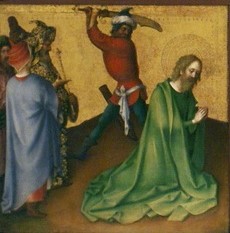
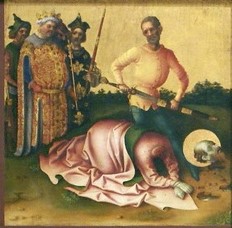
Death of St. Paul by Stefan Lochner
And lest we think that St. Paul may have exaggerated his sufferings, consider the following occurrences documented by Luke in the Acts of the Apostles:
• Acts 9:23 – Fellow Jews plot to kill him in Damascus, must be lowered in a basket from city walls to escape • Acts 9:29 – Hellenists seek to kill him in Jerusalem, must flee to Caesarea • Acts 13:15 – Persecuted and run out of Antioch in Pisidia • Acts 14:5 – Facing likely arrest and stoning at Iconium, flees to Lystra and Derbe • Acts 14:19 – Stoned, dragged out of Lystra and left for dead • Acts 15:11 – Opposed by elders and others in Jerusalem • Acts 16:23 – Arrested as a disturber of the peace, beaten with rods, and imprisoned at Philippi • Acts 16:39 – Ordered by Roman officials to leave Philippi • Acts 17:5-7, 10 – Attacked where he lodged in Thessalonica, must be secreted away to Beroea • Acts 17:13-15 – Forced out of Beroea, must flee to Athens • Acts 17:32 – Mocked in Athens for teaching about the resurrection • Acts 18:12 – Apprehended by fellow Jews and taken before the judgment seat of Gallio in Corinth • Acts 19:23-41 – Opposed by the silversmiths in Ephesus, who riot against him • Acts 20:3 – Plotted against by the Jews in Greece • Acts 21:27-30 – Apprehended by the mob in Jerusalem • Acts 22:24 – Arrested and detained by the Romans • Acts 22:24-29 – Barely escaped being scourged • Acts 23:1-10 – Rescued from the Sanhedrin and Pharisees during their violent uprising in Jerusalem • Acts 23:12-22 – Assassination plots made against him by fellow Jews, who swear an oath to find and kill him • Acts 23:33-27:2 – Two-year imprisonment in Caesarea • Acts 27:41-28:1 – Shipwrecked on the island of Malta • Acts 28:3-5 – Suffered a snakebite • Acts 28:16-31 – Imprisoned in the Rome
Paul was executed by decapitation ca. 68 A.D.
Never forget the price that others have paid in order that we may come to saving faith. Each Sunday, remember that the Creed was written in the blood of martyrs.
Warning: the following video graphically depicts the sufferings of the early martyrs in the arena:

 All of us ponder why God permits suffering. By faith we acknowledge that God never permits it except that a greater good may come from it. Perhaps He permits that we suffer loss in order to bestow some new gift in its place. Even beautiful relationships may hinder some new growth that God wants to bestow. For example, the death of a loved ones creates a space for the new and different while not canceling the gifts of the one who passed.